Home Blog Page 1245

NFTs as Status Symbols: The New Face of Luxury | NFT News Today

NFTs as Status Symbols: The New Face of Luxury | NFT News Today


Luxury has always been about prestige—Swiss watches, designer handbags, and rare sports cars. But now, digital assets are entering the game. NFTs are no longer just speculative investments; they’re becoming modern status symbols, rivaling legacy brands like Rolex and Hermès. The question is, can a digital collectible ever match the exclusivity of a physical luxury item? And how are high-end brands making that happen? Let’s dive into this shift and see if NFTs are redefining luxury or just another passing trend.

NFTs and the Digitalization of Luxury

The luxury landscape is undergoing a significant transformation, with digital assets like NFTs emerging as modern status symbols. This shift is not confined to traditional luxury brands; it extends into the realm of online entertainment, high-end real estate, fine art, and even exclusive travel experiences. This shift is also evident in the gaming sector, where highly rated crypto casino sites are leveraging blockchain technology to enhance exclusivity, offering users seamless transactions and VIP experiences that rival traditional high-end entertainment. This blend of digital assets with elite industries—ranging from luxury real estate and fine art to exclusive travel and high-end gaming—elevates their prestige while signaling a larger shift. Digital ownership is no longer just a novelty; it’s reshaping the very definition of exclusivity in today’s luxury landscape.

This growing intersection between digital assets and luxury industries highlights a fundamental truth: exclusivity has always been at the heart of prestige. Whether in fashion, fine art, or blockchain-based collectibles, the rarer the asset, the greater its status.

Luxury Has Always Been About Exclusivity – NFTs Fit Right In

Luxury has always been about more than just quality—it’s about rarity. A Birkin bag or a Patek Philippe watch isn’t just valuable because of its craftsmanship, but because so few people can own one. The same dynamic applies to high-end NFTs, where scarcity fuels demand and enhances prestige. This is evident in collections like CryptoPunks, which have maintained their elite status in the NFT world due to their limited supply and cultural significance. Recent rumors of a CryptoPunks IP sale have sparked discussions about the future of digital collectibles and how ownership rights could further shape their exclusivity.

Some of the world’s most renowned luxury brands are diving headfirst into NFTs, embracing digital collectibles to connect with a new generation of high-net-worth individuals. These brands aren’t just experimenting—they’re reshaping how exclusivity is defined in the digital age.

Louis Vuitton’s VIA Trunk NFT – This isn’t just another digital asset. Louis Vuitton’s “Treasure Trunks” function as VIP keys to future exclusive drops, merging the world of NFTs with high-end luxury perks. More than just a collectible, these NFTs provide real-world access to a club only a select few can enter.

Gucci’s Collaboration with Christie’s – Gucci has taken NFTs beyond fashion, venturing into fine art with Christie’s. Their auction of generative digital artwork reinforces the idea that NFTs aren’t just novelties—they’re becoming culturally and artistically significant, much like traditional masterpieces displayed in galleries.

Porsche’s NFT Experiment – The luxury automaker isn’t just creating digital art; they’re bridging the gap between virtual and real-world exclusivity. Their NFT collection is tied to custom car designs, offering collectors a unique way to engage with the brand beyond the showroom floor.

Clearly, luxury brands see potential in NFTs—not just as collectibles, but as new-age status markers.

How NFTs Differ from Traditional Luxury Items

Physical luxury has always had an advantage—it exists in the real world. A watch can be worn, a handbag displayed, a car driven through city streets. NFTs, by contrast, exist in digital wallets and metaverses. The challenge is visibility. How do you showcase an asset that doesn’t physically exist?

Authenticity sets NFTs apart. Traditional luxury items need certificates of authenticity, expert verification, and careful preservation to maintain their value. NFTs, however, don’t rely on external validation. Blockchain technology provides an immutable record of ownership, making counterfeiting virtually impossible. In many ways, this makes NFTs a more transparent and secure option for high-end collecting than physical luxury goods.

Accessibility is another key difference. Buying a Rolex or an Hermès bag isn’t just about the price—it’s about gaining entry into an exclusive world, whether through invitation-only boutiques or elite auctions. NFTs, however, operate on a completely different playing field. Digital assets are available 24/7, allowing instant transactions from anywhere in the world—no waiting lists, no gatekeepers.

Exclusivity in the Digital Age

While this opens up new opportunities, it also raises a question: Is true luxury defined by limited access? Traditional high-end goods are often reserved for an elite few, reinforcing their desirability. But in the world of NFTs, anyone with an internet connection can join a drop. 

Does this accessibility dilute their exclusivity? Not necessarily. Tracking NFT whales—high-profile collectors who hold significant assets—provides insight into how exclusivity is still shaping the digital luxury market. Understanding their strategies can reveal how rarity and prestige continue to drive value in the NFT space.

Despite these differences, the psychology behind both remains strikingly similar. People don’t just buy expensive things—they buy what those things represent. A luxury purchase isn’t just about the object itself. It’s about the statement it makes. The same logic applies to NFTs, but the medium is still finding its footing.

Owning an NFT: The New Social Currency?

Luxury today isn’t just about physical possessions—it’s about digital identity. Social media has reshaped the way status is displayed, where a profile picture or NFT-based fashion asset can be as much of a statement as a luxury car or designer handbag. This transformation is particularly evident in the fashion industry, where brands are integrating NFTs into luxury collections to maintain exclusivity in the digital age.

Owning a Bored Ape Yacht Club NFT isn’t just about digital art. It’s about being part of an elite group. Eminem, Snoop Dogg, and Madonna all own Apes, not because they need the investment, but because they understand that status is increasingly tied to digital spaces. Just as a Rolex signifies wealth in the physical world, a high-value NFT conveys the same status online.

This shift in perception is why luxury brands are integrating NFTs into their strategy. Some NFTs now act as VIP memberships, granting exclusive access to events, private clubs, or early product releases. Others are tied to physical items, adding another layer of prestige. Tiffany & Co., for example, created a limited edition of CryptoPunk pendants, connecting the world of fine jewelry with digital collectibles.

Another advantage NFTs hold over traditional luxury items is liquidity. A Birkin bag, once purchased, loses some of its resale value unless kept in pristine condition. NFTs, in contrast, can be resold seamlessly on blockchain marketplaces, often appreciating in value. This ability to trade high-end assets effortlessly could be a game changer for the concept of digital luxury.

Challenges: Can NFTs Really Match the Prestige of Physical Luxury?

Despite their potential, NFTs still face hurdles in becoming true status symbols. One of the biggest challenges is tangibility. Luxury has always been tied to sensory experience—the feel of a handcrafted leather bag, the weight of a gold watch, the roar of an engine. NFTs lack this physical presence. While digital spaces are becoming more immersive, there’s still a gap between the physical and the virtual when it comes to luxury appeal.

Market stability is another issue. The NFT world is volatile, with prices swinging wildly. While a classic Rolex or a Hermès bag tends to retain or even increase in value, NFTs are still speculative. One day, a digital collectible might be worth millions; the next, it could be practically worthless. This uncertainty makes it difficult for NFTs to carry the same long-term prestige as physical luxury goods.

There are also legal and authenticity concerns. The ongoing MetaBirkins lawsuit, in which Hermès took legal action against an NFT artist for using its Birkin name, highlights the complications of digital ownership. Brands are still figuring out how to protect their intellectual property in the NFT space. Until clearer regulations emerge, the legitimacy of luxury NFTs will remain a subject of debate.

That said, these challenges aren’t dealbreakers. They’re growing pains. Every new market faces skepticism before achieving mainstream acceptance. The luxury world itself has evolved over centuries—what was once a symbol of status may not hold the same value today. NFTs may be undergoing the same process of transformation.

The Future of NFTs as Luxury Status Symbols

So, where is all this headed?

Luxury brands aren’t just experimenting with NFTs—they’re shaping a new hybrid model of digital and physical exclusivity. Future trends could include:

Phygital Luxury – Combining physical luxury items with exclusive NFT counterparts (e.g., buy a Rolex, get a digital twin).

Metaverse Showrooms – Virtual spaces where owners can showcase their NFT collections just like they would display artwork in a mansion.

Next-Gen Personalization – NFTs that allow for fully customizable, one-of-a-kind luxury items—blurring the lines between digital and real-world status symbols.

In the end, NFTs aren’t replacing luxury—they’re evolving it. The elite of the future won’t just flaunt their wealth in the physical world but in digital realms as well.

Are NFTs the Future of Status?

NFTs are redefining modern luxury, moving beyond physical items to digital assets that showcase status and identity. Traditionally, wealth and exclusivity have been signaled through tangible possessions—designer handbags, luxury cars, and rare watches. But as our world becomes increasingly digital, the way people express prestige is evolving.

With the rise of NFTs, status symbols have expanded into the virtual realm, offering a new way for individuals to showcase their exclusivity. These digital assets are not just collectibles; they represent membership in elite communities, access to exclusive events, and even ownership of rare virtual spaces. Whether it’s an ultra-rare Bored Ape Yacht Club NFT or a high-value piece from a luxury brand’s digital collection, owning these assets signals influence in the growing Web3 ecosystem.

This shift reflects a broader transformation in how prestige is perceived and displayed. Just as social media has altered how people present their lifestyles, NFTs provide a digital-first method of curating identity. In some circles, a profile picture featuring a sought-after NFT holds the same prestige as a designer outfit in the real world. As blockchain technology continues to develop, digital luxury will likely become even more sophisticated, merging the worlds of physical and virtual exclusivity in ways we are only beginning to understand.


Source link

NFT Trading Volume Drops 63% Since December | NFT News Today

NFT Trading Volume Drops 63% Since December | NFT News Today


The non-fungible token (NFT) market has experienced a significant contraction, with trading volumes decreasing by 63% since December. This phenomenon aligns with the historical volatility observed within the NFT sector and the broader cryptocurrency market. While such declines may seem concerning at first, historical trends suggest this downturn is a temporary deviation rather than a sign of permanent market failure.

NFT trading volumes have exhibited cyclical behavior in the past, influenced by various factors such as overarching crypto market trends, fluctuations in investor sentiment, and macroeconomic conditions. The latest decline is consistent with these historical fluctuations and does not necessarily indicate a long-term downward trajectory. Multiple indicators suggest that the market will recover in due course.

NFTs and the Broader Blockchain Economy

Despite the observed decline in trading volume, NFTs remain an integral component of the blockchain economy. Their utility extends beyond digital collectibles, encompassing applications in virtual real estate, gaming, intellectual property rights, and identity verification. The growing adoption of blockchain-based solutions across multiple industries reinforces the long-term viability of NFTs.

Cryptocurrencies, as a means of transaction, continue to gain acceptance across various industries, including digital commerce and entertainment services. Numerous platforms facilitate cryptocurrency transactions for goods and services, reflecting the increasing integration of digital assets into mainstream commerce. For instance, international online iGaming platforms like Discasino exemplify this trend by leveraging cryptocurrency payment solutions, demonstrating the expanding role of digital assets in the financial landscape. Ultimately, this not only indicates the widespread adoption of decentralized finance instruments but also shows the resilience of blockchain ecosystems in general.

Factors Behind the Drop in NFT Trading Volume

The reduction in NFT trading activity can be attributed to several contributing factors, including overall market corrections and inherent crypto volatility. As the value of key digital assets such as Ethereum experiences fluctuations, the purchasing power of investors within the NFT ecosystem is directly affected. A decline in cryptocurrency prices often results in decreased NFT trading activity due to reduced liquidity and risk aversion among investors.

Investor sentiment plays a crucial role in determining market activity. During periods of heightened enthusiasm, NFT trading volumes expand as speculative interest drives purchasing behavior. Conversely, when market sentiment shifts toward caution, a contraction in trading activity follows as speculative traders exit the space. This cyclical pattern is not exclusive to NFTs, but is observable across multiple asset classes, including equities and commodities.

Regulatory uncertainty represents an additional variable influencing market behavior. Governments and regulatory bodies continue to evaluate the legal framework surrounding NFTs and cryptocurrencies. The absence of clearly defined regulations introduces an element of uncertainty, which can lead to reduced investment activity as stakeholders await regulatory clarity.

The emergence of alternative blockchain applications has also diverted attention away from NFTs. The Web3 ecosystem is expanding rapidly, with developments in decentralized finance (DeFi), blockchain gaming, and metaverse projects attracting substantial capital inflows. This diversification of interest has contributed to a temporary redistribution of investment focus within the broader blockchain economy.

The Role of Community and Innovation in NFT Growth

Community engagement constitutes a critical component of the NFT ecosystem. Enthusiasts, developers, and creators actively contribute to the continuous evolution of NFT projects through online platforms such as Discord, Twitter, and Reddit. These communities foster discussion and innovation, leading to the development of novel use cases beyond traditional digital art and collectibles.

Technological innovation remains a driving force behind NFT expansion. Developers are exploring blockchain-integrated governance models, decentralized social networks, and enhanced metaverse applications. These innovations enhance the practical utility of NFTs, ensuring their relevance even in bearish market conditions. Continued technological progress will further reinforce NFTs’ role within the digital economy.

Institutional Adoption and the Future of NFTs

Corporations and major brands are increasingly engaging with NFTs, recognizing their potential as digital assets. Fashion companies, entertainment conglomerates, and sports franchises have introduced NFT-based initiatives, further integrating them into mainstream commerce. The sustained involvement of high-profile entities suggests that NFTs will continue to hold value within the broader market structure.

Advancements in blockchain infrastructure will enhance the efficiency and scalability of NFT transactions. The implementation of Layer-2 scaling solutions, cross-chain interoperability protocols, and improved smart contract functionality will facilitate increased adoption and user participation in NFT-related activities.

Market cycles dictate that a resurgence in NFT trading activity is highly probable. Historically, the cryptocurrency market has exhibited periodic bullish and bearish phases, with recovery and expansion typically following downturns. As investor confidence is restored and technological advancements continue, NFT trading volumes are expected to recover.

Expanding use cases will also contribute to sustained demand for NFTs. Applications beyond digital collectibles, including tokenized assets, event ticketing, and decentralized identity management, are expected to drive market expansion. Increased integration with real-world utility will solidify NFTs as a long-term fixture in the digital asset ecosystem.

The Intersection of NFTs and Traditional Finance

The intersection between NFTs and conventional financial markets is an area of increasing interest. Institutional investors and financial service providers are evaluating potential applications of NFT technology in asset tokenization, intellectual property rights management, and digital asset-backed securities. This convergence between decentralized and traditional finance underscores the potential for NFTs to play a significant role in the future financial landscape.

Moreover, as regulatory frameworks evolve, traditional financial institutions may seek to integrate NFT-based products into their service offerings. The ability to tokenize and trade assets on blockchain networks presents opportunities for enhanced liquidity, fractional ownership models, and novel investment vehicles. These developments could further establish NFTs as a recognized and valuable asset class.

Conclusion: A Temporary Setback Before Possible Growth

While NFT trading volumes have exhibited a 63% decline since December, this downturn aligns with historical market patterns and should be interpreted within the context of broader cryptocurrency market fluctuations. Previous downturns in the NFT sector have been followed by substantial recoveries, reinforcing the cyclical nature of the market. The integration of blockchain technology across multiple industries, including commerce, gaming, and financial services, highlights the increasing role of digital assets in the global economy.

The continued advancement of blockchain technology, coupled with increased institutional engagement and expanding use cases, suggests that NFTs are poised for long-term growth. Market participants should view the current downturn as a transitional phase rather than a structural decline. Given the historical resilience of NFTs and the broader cryptocurrency ecosystem, a future resurgence in trading volume appears highly probable.

Main Image Source: Unsplash


Source link

Building the Future: GCC Smart Cities Market to Grow 25.70% CAGR to $907B By 2032 | Most Leading Companies – Honeywell International, Inc., Microsoft, IBM, Alfanar Group, TATA Consultancy Services Limited, AstraTech | Web3Wire

0
Building the Future: GCC Smart Cities Market to Grow 25.70% CAGR to 7B By 2032 | Most Leading Companies – Honeywell International, Inc., Microsoft, IBM, Alfanar Group, TATA Consultancy Services Limited, AstraTech | Web3Wire


CC Smart Cities Market

Latest Market Updates & Research Study on GCC Smart Cities & Digital Transformation Market

GCC Smart Cities & Digital Transformation Market reached US$ 145.54 billion in 2024 and is expected to reach US$ 907.12 billion by 2032, growing with a CAGR of 25.70% during the forecast period 2025-2032.

GCC Smart Cities and Digital Transformation Market report, published by DataM Intelligence, provides in-depth insights and analysis on key market trends, growth opportunities, and emerging challenges. Committed to delivering actionable intelligence, DataM Intelligence empowers businesses to make informed decisions and stay ahead of the competition. Through a combination of qualitative and quantitative research methods, it offers comprehensive reports that help clients navigate complex market landscapes, drive strategic growth, and seize new opportunities in an ever-evolving global market.

Get a Free Sample PDF Of This Report (Get Higher Priority for Corporate Email ID):- https://datamintelligence.com/download-sample/gcc-smart-cities-and-digital-transformation-market?kb

GCC Smart Cities and Digital Transformation refer to the integration of advanced technologies such as AI, IoT, big data, and blockchain to enhance urban living and infrastructure across the Gulf Cooperation Council (GCC) countries, including Saudi Arabia, UAE, Qatar, Kuwait, Bahrain, and Oman. These initiatives focus on sustainability, efficient governance, smart mobility, digital economy, and improved public services. Governments and private sectors are heavily investing in smart grids, intelligent transportation, cybersecurity, and smart buildings to drive economic growth and enhance quality of life.

List of the Key Players in the GCC Smart Cities and Digital Transformation Market:

Honeywell International, Inc., Microsoft, IBM, Alfanar Group, TATA Consultancy Services Limited, AstraTech, TECOM Group PJSC, Wipro, Solutions by stc, Ericsson etc

Industry Development:

For example, Saudi Arabia’s Vision 2030 and the UAE’s National Innovation Strategy highlight the importance of integrating digital technologies to improve public services and promote sustainable development.

Growth Forecast Projected:

The Global GCC Smart Cities and Digital Transformation Market is anticipated to rise at a considerable rate during the forecast period, between 2025 and 2032. In 2023, the market is growing at a steady rate, and with the rising adoption of strategies by key players, the market is expected to rise over the projected horizon.

Research Process:

Both primary and secondary data sources have been used in the global GCC Smart Cities and Digital Transformation Market research report. During the research process, a wide range of industry-affecting factors are examined, including governmental regulations, market conditions, competitive levels, historical data, market situation, technological advancements, upcoming developments, in related businesses, as well as market volatility, prospects, potential barriers, and challenges.

Make an Enquiry for purchasing this Report @ https://www.datamintelligence.com/enquiry/gcc-smart-cities-and-digital-transformation-market?kb

Segment Covered in the GCC Smart Cities and Digital Transformation Market:

By Type: Hardware, Smart Sensors, Smart Cameras, IoT devices, Smart Meters, Others, Software, AI Platforms, IoT Platforms, Digital Twin Technology, Cloud Platforms, Cybersecurity Solutions, Others, Services

By Technology: Artificial Intelligence (AI), 5G Technology, Big Data Analytics, Internet of Things (IoT), Cloud Computing, Edge Computing, Robotic Process Automation (RPA), Others

By Application: Transportation, Buildings & Infrastructure, Energy & Utilities, Healthcare, Retail, Education, Others

By End-User: Residential Sector, Commercial & Industrial Sector, Government Authorities

Regional Analysis for GCC Smart Cities and Digital Transformation Market:

The regional analysis of the GCC Smart Cities and Digital Transformation Market covers key regions including North America, Europe, Asia Pacific Middle East and Africa and South America. The North America with a focus on the U.S., Canada, and Mexico; Europe, highlighting major countries like the U.K., Germany, France, and Italy, along with other nations in the region; Asia-Pacific, covering India, China, Japan, South Korea, and Australia, among others; South America, with emphasis on Colombia, Brazil, and Argentina; and the Middle East & Africa, which includes Saudi Arabia, the U.A.E., South Africa, and other countries. This comprehensive regional breakdown helps identify unique market trends and growth opportunities specific to each area.

⇥ North America (U.S., Canada, Mexico)

⇥ Europe (U.K., Italy, Germany, Russia, France, Spain, The Netherlands and Rest of Europe)

⇥ Asia-Pacific (India, Japan, China, South Korea, Australia, Indonesia Rest of Asia Pacific)

⇥ South America (Colombia, Brazil, Argentina, Rest of South America)

⇥ Middle East & Africa (Saudi Arabia, U.A.E., South Africa, Rest of Middle East & Africa)

Benefits of the Report:

➡ A descriptive analysis of demand-supply gap, market size estimation, SWOT analysis, PESTEL Analysis and forecast in the global market.

➡ Top-down and bottom-up approach for regional analysis

➡ Porter’s five forces model gives an in-depth analysis of buyers and suppliers, threats of new entrants & substitutes and competition amongst the key market players.

➡ By understanding the value chain analysis, the stakeholders can get a clear and detailed picture of this Market

Speak to Our Analyst and Get Customization in the report as per your requirements: https://datamintelligence.com/customize/gcc-smart-cities-and-digital-transformation-market?kb

People Also Ask:

➠ What is the global sales, production, consumption, import, and export value of the GCC Smart Cities and Digital Transformation market?

➠ Who are the leading manufacturers in the global GCC Smart Cities and Digital Transformation industry? What is their operational status in terms of capacity, production, sales, pricing, costs, gross margin, and revenue?

➠ What opportunities and challenges do vendors in the global GCC Smart Cities and Digital Transformation industry face?

➠ Which applications, end-users, or product types are expected to see growth? What is the market share for each type and application?

➠ What are the key factors and limitations affecting the growth of the GCC Smart Cities and Digital Transformation market?

➠ What are the various sales, marketing, and distribution channels in the global industry?

Contact Us –

Company Name: DataM IntelligenceContact Person: Sai KiranEmail: Sai.k@datamintelligence.comPhone: +1 877 441 4866Website: https://www.datamintelligence.com

About Us –

DataM Intelligence is a Market Research and Consulting firm that provides end-to-end business solutions to organizations from Research to Consulting. We, at DataM Intelligence, leverage our top trademark trends, insights and developments to emancipate swift and astute solutions to clients like you. We encompass a multitude of syndicate reports and customized reports with a robust methodology.

Our research database features countless statistics and in-depth analyses across a wide range of 6300+ reports in 40+ domains creating business solutions for more than 200+ companies across 50+ countries; catering to the key business research needs that influence the growth trajectory of our vast clientele.

This release was published on openPR.

About Web3Wire Web3Wire – Information, news, press releases, events and research articles about Web3, Metaverse, Blockchain, Artificial Intelligence, Cryptocurrencies, Decentralized Finance, NFTs and Gaming. Visit Web3Wire for Web3 News and Events, Block3Wire for the latest Blockchain news and Meta3Wire to stay updated with Metaverse News.


Source link

Amanda Owen urged to take care of herself by worried fans as she shares update from farm

    0
    Amanda Owen urged to take care of herself by worried fans as she shares update from farm


    Fans of Amanda Owen think she’s in dire need of rest as the Our Yorkshire Farm star revealed she has “so much to do”.

    The 50-year-old reality TV star posted on Instagram a series of pictures sharing insights of her farm life. But fans are concerned after seeing the endless tasks Amanda is keeping herself occupied with.

    Amanda is co-parenting her children with her ex-husband Clive. The couple divorced in 2022 after two decades of marriage.

    Amanda Owen has her hands full (Credit: Channel 5)

    Our Yorkshire Farm star Amanda Owen has a very full schedule

    The star shepherdess has her hands full. In her latest Instagram post, she revealed she’s living a busy life with “little time” to do everything.

    Amanda and Clive share nine children – Raven, Reuben, Miles, Edith, Violet, Sidney, Annas, Clementine and Nancy.

    Meanwhile, the pictures depict a landscape, sheep from her farm, and one of her daughters with the farm animals.

    The caption reads: “There’s so much to do and so little time. Dawn ‘til dusk. Farming, shepherding, parenting (loosely), fetching, carrying, writing and digging.”

    The TV star has also taken on the role of a teacher, as she’s homeschooling her kids  “Also now homeschooling a certain somebody too. It’s keeping me busy…. if not out of mischief,” reads the caption.

    Amanda’s tight schedule has left her followers concerned, with many urging her to take time for herself.

    One of her followers said: “Please look after yourself too Amanda.”

    Please look after yourself too Amanda.

    Adding to the above comment, another said: “Take care Amanda try and have a little time for yourself which I’m sure is impossible most of the time.”

    A third person suggested: “That’s a full schedule! Sounds like you deserve a cuppa tea and a nap.”

    Amanda and Clive Owen smiling

    Amanda and Clive were married for 22 years (Credit: Channel 5)

    Co-parenting has been challenging

    Amanda has admitted that co-parenting her nine children with Clive has been challenging, despite sharing the parental duties.

    Juggling between work and family, the TV star said she’s “spinning plates”. Still, she continues to work with her former husband for the sake of their children.

    Amanda was on Lorraine a few months ago when she explained their co-parenting situation. She said: “We’ve got a lot of room and we’ve got a lot of distractions; there’s just so much going on.”

    The TV star added: “I mean, first and foremost, we’re farming trying to keep everything going and in a way, it’s another diversification.”

    Our Yorkshire Farm is on Channel 5 Sunday March 16 at 3.25pm.

    Read more: Amanda Owen shares her shock over new arrival on her farm

    YouTube video player


    Source link

    Why Black Ops 4’s The Order May Return in Black Ops 6 Zombies

    0
    Why Black Ops 4’s The Order May Return in Black Ops 6 Zombies


    Call of Duty: Black Ops 6 appears to be bringing back The Order in its Zombies storyline – a villainous organization first seen in Black Ops 4.

    As Treyarch ramps up its marketing for Season 3, some of the more attentive fans have noticed an intriguing reference to Zombies’ past.

    More specifically, as we prepare to return to Liberty Falls for our fifth Black Ops 6 Zombies map, it appears that Treyarch is teasing the return of an old enemy we haven’t seen since 2018.

    Who Are The Order in COD Zombies?

    The Order is a religious organization that first appeared in Black Ops 4 Zombies, acting as the primary antagonists of Voyage of Despair, IX, and Dead of the Night.

    They are a fanatical cult led by the High Priest of Chaos, whose goals involve using the Sentinel Artifacts to manipulate Prima Materia to force humanity to evolve.

    High Priest of Chaos Gold Mask Black Ops 4 Zombies

    After being killed and later revived using the Scepter of Ra, the High Priest became seemingly immortal, founding The Order during the early days of the Roman Empire, and later re-founding it in the early 1900s.

    However, the High Priest was later killed by Scarlett Rhodes, one of the playable protagonists in Black Ops 4 Zombies.

    The Order in Black Ops 6

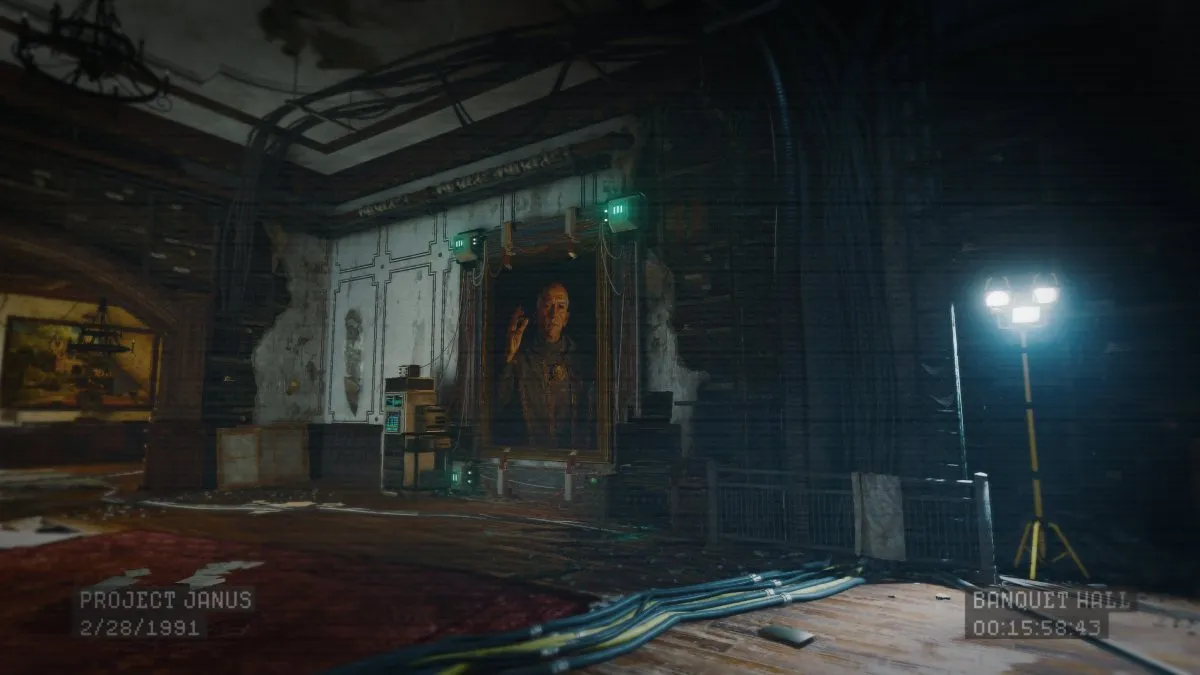
    In one of the first screenshots released for Black Ops 6 Zombies’ upcoming Season 3 map, fans have spotted what looks to be a member of The Order in a portrait on the wall.

    Although the man in the painting isn’t someone we recognize, it’s clear as day that the painting portrays a member of The Order. The robes are identical, meaning this can only be a deliberate reference to the Black Ops 4 antagonists.

    What’s also interesting about this teaser image is that the frame appears to be surrounded by some high-tech machinery, hinting that there’s more to this painting than meets the eye.

    Liberty Falls Mansion Banquet HallLiberty Falls Mansion Banquet Hall

    Seeing as Treyarch is pulling our attention to this section of the map in particular, we can’t wait to check out the Banquet Hall for ourselves!

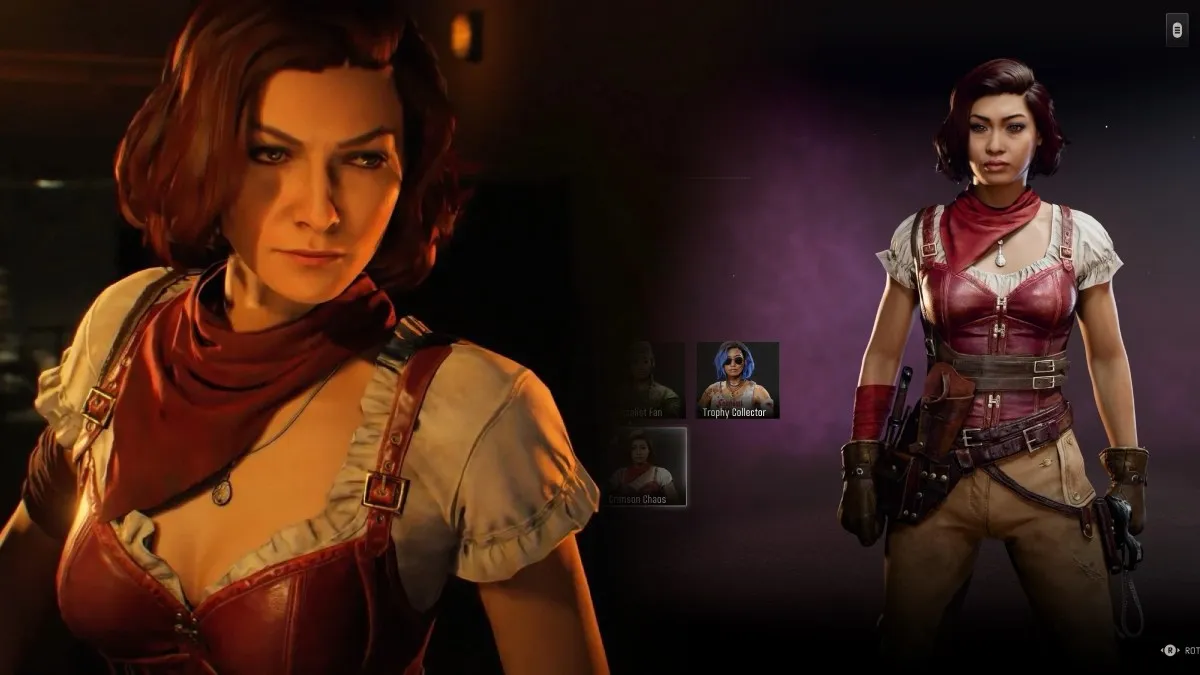
    This isn’t the only reference to the Chaos storyline present in Black Ops 6 either. Scarlett Rhodes herself is referenced in a piece of intel found in The Tomb map.

    Black Ops 6 Scarlett Rhodes SkinBlack Ops 6 Scarlett Rhodes Skin

    And there’s even an Operator skin for Maya named ‘Crimson Chaos’ that is heavily inspired by the Black Ops 4 Zombies protagonist!

    And Then There’s the Small Matter of the Sentinel Artifact…

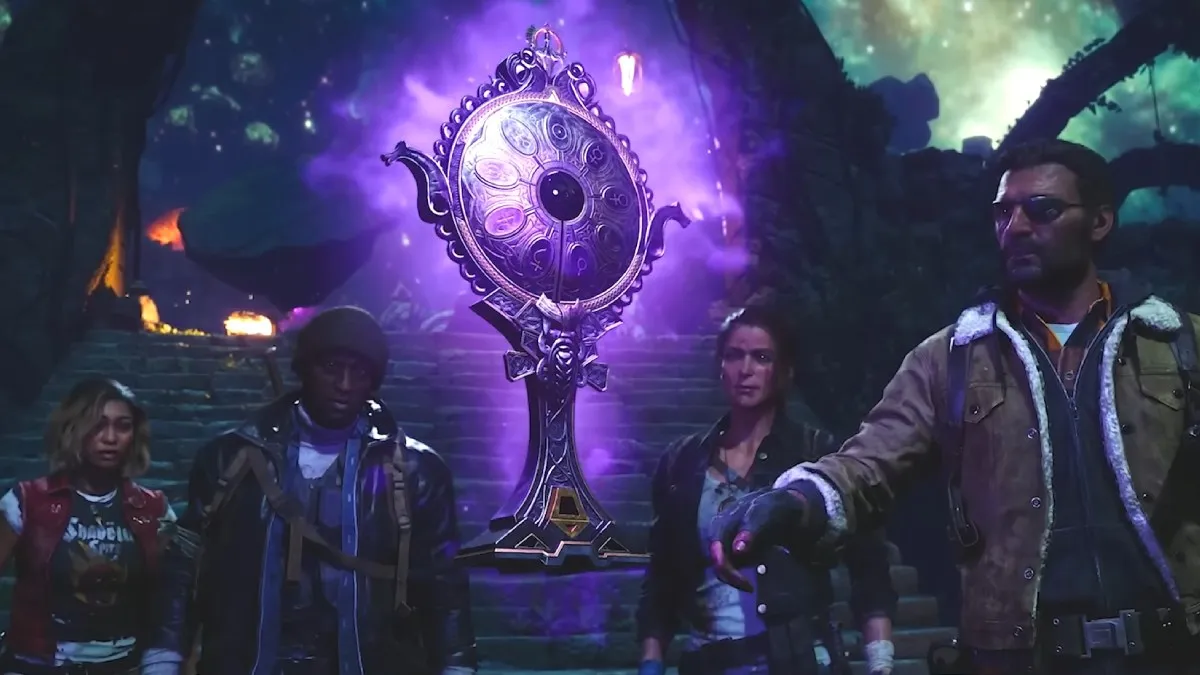
    On top of that, the Sentinel Artifact that we recovered from the dig site was one of the relics used by The Order in order to bring about their goals.

    We know that Richtofen, who was residing in the Liberty Fall mansion in question, was also on the hunt for the relic.

    Sentinel Artifact in Black Ops 6 Zombies The Tomb Final CutsceneSentinel Artifact in Black Ops 6 Zombies The Tomb Final Cutscene

    Therefore, perhaps we can assume that he has been following The Order’s research to some degree, in order to help recover the ancient Artifact.

    But with us bringing the Sentinel Artifact directly to the Liberty Falls mansion, are we playing right into Richtofen’s hands? Or is S.A.M. the true villain of Black Ops 6 Zombies?

    For now, we’ll have to wait until Black Ops 6 Season 3 arrives on April 3 in order to find out the truth!


    Source link

    Top NFT Collections – March 16, 2025 | NFT CULTURE | NFT News | Web3 Culture | NFTs & Crypto Art

    0
    Top NFT Collections – March 16, 2025 | NFT CULTURE | NFT News | Web3 Culture | NFTs & Crypto Art


    Top NFT Collections (Last 24h)

    Here are the hottest NFT Collections of the day.

    Rank

    Name
    Volume
    Transactions
    Chains
    URL

    1

    Good Vibes Club
    394.86 ETH
    1294
    ethereum
    View

    2
    SMB Gen2
    SMB Gen2
    0.00 ETH
    111
    solana
    View

    3
    Azuki
    Azuki
    166.98 ETH
    25
    ethereum
    View

    4
    Pudgy Penguins
    Pudgy Penguins
    90.53 ETH
    10
    ethereum
    View

    5
    Skulls of Luci
    Skulls of Luci
    88.88 ETH
    1
    ethereum
    View

    6
    CryptoPunks
    CryptoPunks
    77.39 ETH
    2
    ethereum
    View

    7
    Doodles
    Doodles
    77.33 ETH
    26
    ethereum
    View

    8
    OnChainShiba
    OnChainShiba
    59.00 ETH
    5
    ethereum
    View

    9
    Mutant Ape Yacht Club
    Mutant Ape Yacht Club
    54.73 ETH
    22
    ethereum
    View

    10
    Bored Ape Yacht Club
    Bored Ape Yacht Club
    53.00 ETH
    4
    ethereum
    View

    The post Top NFT Collections – March 16, 2025 appeared first on NFT CULTURE.


    Source link

    AMD or NVIDIA? A Complete Guide to Selecting the Right Server GPU

    0
    AMD or NVIDIA? A Complete Guide to Selecting the Right Server GPU


    AMD and NVIDIA are the industry titans, each vying for dominance in the high-performance computing market. While both manufacturers aim to deliver exceptional parallel processing capabilities for demanding computational tasks, significant differences exist between their offerings that can substantially impact your server’s performance, cost-efficiency, and compatibility with various workloads. This comprehensive guide explores the nuanced distinctions between AMD and NVIDIA GPUs, providing the insights needed to decide your specific server requirements.

    Architectural Foundations: The Building Blocks of Performance

    A fundamental difference in GPU architecture lies at the core of the AMD-NVIDIA rivalry. NVIDIA’s proprietary CUDA architecture has been instrumental in cementing the company’s leadership position, particularly in data-intensive applications. This architecture provides substantial performance enhancements for complex computational tasks, offers optimized libraries specifically designed for deep learning applications, demonstrates remarkable adaptability across various High-Performance Computing (HPC) markets, and fosters a developer-friendly environment that has cultivated widespread adoption.

    In contrast, AMD bases its GPUs on the RDNA and CDNA architectures. While NVIDIA has leveraged CUDA to establish a formidable presence in the artificial intelligence sector, AMD has mounted a serious challenge with its MI100 and MI200 series. These specialized processors are explicitly engineered for intensive AI workloads and HPC environments, positioning themselves as direct competitors to NVIDIA’s A100 and H100 models. The architectural divergence between these two manufacturers represents more than a technical distinction—it fundamentally shapes their respective products’ performance characteristics and application suitability.

    AMD vs NVIDIA: Feature Comparison Chart

    FeatureAMDNVIDIA

    ArchitectureRDNA (consumer), CDNA (data center)CUDA architecture

    Key Data Center GPUsMI100, MI200, MI250XA100, H100

    AI AccelerationMatrix CoresTensor Cores

    Software EcosystemROCm (open-source)CUDA (proprietary)

    ML Framework SupportGrowing support for TensorFlow, PyTorchExtensive, optimized support for all major frameworks

    Price PointGenerally more affordablePremium pricing

    Performance in AI/MLStrong but behind NVIDIAIndustry-leading

    Energy EfficiencyVery good (RDNA 3 uses 6nm process)Excellent (Ampere, Hopper architectures)

    Cloud IntegrationAvailable on Microsoft Azure, growingWidespread (AWS, Google Cloud, Azure, Cherry Servers)

    Developer CommunityGrowing, especially in open-sourceLarge, well-established

    HPC PerformanceExcellent, especially for scientific computingExcellent across all workloads

    Double Precision PerformanceStrong with MI seriesStrong with A/H series

    Best Use CasesBudget deployments, scientific computing, open-source projectsAI/ML workloads, deep learning, cloud deployments

    Software SuiteROCm platformNGC (NVIDIA GPU Cloud)

    Software Ecosystem: The Critical Enabler

    Hardware’s value cannot be fully realized without robust software support, and here, NVIDIA enjoys a significant advantage. Through years of development, NVIDIA has cultivated an extensive CUDA ecosystem that provides developers with comprehensive tools, libraries, and frameworks. This mature software infrastructure has established NVIDIA as the preferred choice for researchers and commercial developers working on AI and machine learning projects. The out-of-the-box optimization of popular machine learning frameworks like PyTorch for CUDA compatibility further solidified NVIDIA’s dominance in AI/ML.

    AMD’s response is its ROCm platform, which represents a compelling alternative for those seeking to avoid proprietary software solutions. This open-source approach provides a viable ecosystem for data analytics and high-performance computing projects, particularly those with less demanding requirements than deep learning applications. While AMD historically has lagged in driver support and overall software maturity, each new release demonstrates significant improvements, gradually narrowing the gap with NVIDIA’s ecosystem.

    Performance Metrics: Hardware Acceleration for Specialized Workloads

    NVIDIA’s specialized hardware components give it a distinct edge in AI-related tasks. Integrating Tensor Cores in NVIDIA GPUs provides dedicated hardware acceleration for mixed-precision operations, substantially increasing performance in deep learning tasks. For instance, the A100 GPU achieves remarkable performance metrics of up to 312 teraFLOPS in TF32 mode, illustrating the processing power available for complex AI operations.

    While AMD doesn’t offer a direct equivalent to NVIDIA’s Tensor Cores, its MI series implements Matrix Cores technology to accelerate AI workloads. The CDNA1 and CDNA2 architectures enable AMD to remain competitive in deep learning projects, with the MI250X chips delivering performance capabilities comparable to NVIDIA’s Tensor Cores. This technological convergence demonstrates AMD’s commitment to closing the performance gap in specialized computing tasks.

    Cost Considerations: Balancing Investment and Performance

    The premium pricing of NVIDIA’s products reflects the value proposition of their specialized hardware and comprehensive software stack, particularly for AI and ML applications. Including Tensor Cores and the CUDA ecosystem justifies the higher initial investment by potentially reducing long-term project costs through superior processing efficiency for intensive AI workloads.

    AMD positions itself as the more budget-friendly option, with significantly lower price points than equivalent NVIDIA models. This cost advantage comes with corresponding performance limitations in the most demanding AI scenarios when measured against NVIDIA’s Ampere architecture and H100 series. However, for general high-performance computing requirements or smaller AI/ML tasks, AMD GPUs represent a cost-effective investment that delivers competitive performance without the premium price tag.

    Cloud Integration: Accessibility and Scalability

    NVIDIA maintains a larger footprint in cloud environments, making it the preferred choice for developers seeking GPU acceleration for AI and ML projects in distributed computing settings. The company’s NGC (NVIDIA GPU Cloud) provides a comprehensive software suite with pre-configured AI models, deep learning libraries, and frameworks like PyTorch and TensorFlow, creating a differentiated ecosystem for AI/ML development in cloud environments.

    Major cloud service providers, including Cherry Servers, Google Cloud, and AWS, have integrated NVIDIA’s GPUs into their offerings. However, AMD has made significant inroads in the cloud computing through strategic partnerships, most notably with Microsoft Azure for its MI series. By emphasizing open-source solutions with its ROCm platform, AMD is cultivating a growing community of open-source developers deploying projects in cloud environments.

    Shared Strengths: Where AMD and NVIDIA Converge

    Despite their differences, both manufacturers demonstrate notable similarities in several key areas:

    Performance per Watt and Energy Efficiency

    Energy efficiency is critical for server deployments, where power consumption directly impacts operational costs. AMD and NVIDIA have prioritized improving performance per watt metrics for their GPUs. NVIDIA’s Ampere A100 and Hopper H100 series feature optimized architectures that deliver significant performance gains while reducing power requirements. Meanwhile, AMD’s MI250X demonstrates comparable improvements in performance per watt ratios.

    Both companies offer specialized solutions to minimize energy loss and optimize efficiency in large-scale GPU server deployments, where energy costs constitute a substantial portion of operational expenses. For example, AMD’s RDNA 3 architecture utilizes advanced 6nm processes to deliver enhanced performance at lower power consumption compared to previous generations.

    Cloud Support and Integration

    AMD and NVIDIA have established strategic partnerships with major cloud service providers, recognizing the growing importance of cloud computing for organizations deploying deep learning, scientific computing, and HPC workloads. These collaborations have resulted in the availability of cloud-based GPU resources specifically optimized for computation-intensive tasks.

    Both manufacturers provide the hardware and specialized software designed to optimize workloads in cloud environments, creating comprehensive solutions for organizations seeking scalable GPU resources without substantial capital investments in physical infrastructure.

    High-Performance Computing Capabilities

    AMD and NVIDIA GPUs meet the fundamental requirement for high-performance computing—the ability to process millions of threads in parallel. Both manufacturers offer processors with thousands of cores capable of handling computation-heavy tasks efficiently, along with the necessary memory bandwidth to process large datasets characteristic of HPC projects.

    This parallel processing capability positions both AMD and NVIDIA as leaders in integration with high-performance servers, supercomputing systems, and major cloud providers. While different in implementation, their respective architectures achieve similar outcomes in enabling massive parallel computation for scientific and technical applications.

    Software Development Support

    Both companies have invested heavily in developing libraries and tools that enable developers to maximize the potential of their hardware. NVIDIA provides developers with CUDA and cuDNN for developing and deploying AI/ML applications, while AMD offers machine-learning capabilities through its open-source ROCm platform.

    Each manufacturer continually evolves its AI offerings and supports major frameworks such as TensorFlow and PyTorch. This allows them to target high-demand markets in industries dealing with intensive AI workloads, including healthcare, automotive, and financial services.

    Choosing the Right GPU for Your Specific Needs

    When NVIDIA Takes the Lead

    AI and Machine Learning Workloads: NVIDIA’s comprehensive libraries and tools specifically designed for AI and deep learning applications, combined with the performance advantages of Tensor Cores in newer GPU architectures, make it the superior choice for AI/ML tasks. The A100 and H100 models deliver exceptional acceleration for deep learning training operations, offering performance levels that AMD’s counterparts have yet to match consistently.

    The deep integration of CUDA with leading machine learning frameworks represents another significant advantage that has contributed to NVIDIA’s dominance in the AI/ML segment. For organizations where AI performance is the primary consideration, NVIDIA typically represents the optimal choice despite the higher investment required.

    Cloud Provider Integration: NVIDIA’s hardware innovations and widespread integration with major cloud providers like Google Cloud, AWS, Microsoft Azure, and Cherry Servers have established it as the dominant player in cloud-based GPU solutions for AI/ML projects. Organizations can select from optimized GPU instances powered by NVIDIA technology to train and deploy AI/ML models at scale in cloud environments, benefiting from the established ecosystem and proven performance characteristics.

    When AMD Offers Advantages

    Budget-Conscious Deployments: AMD’s more cost-effective GPU options make it the primary choice for budget-conscious organizations that require substantial compute resources without corresponding premium pricing. The superior raw computation performance per dollar AMD GPUs offers makes them particularly suitable for large-scale environments where minimizing capital and operational expenditures is crucial.

    High-Performance Computing: AMD’s Instinct MI series demonstrates particular optimization for specific workloads in scientific computing, establishing competitive performance against NVIDIA in HPC applications. The strong double-precision floating-point performance of the MI100 and MI200 makes these processors ideal for large-scale scientific tasks at a lower cost than equivalent NVIDIA options.

    Open-Source Ecosystem Requirements: Organizations prioritizing open-source software and libraries may find AMD’s approach more aligned with their values and technical requirements. NVIDIA’s proprietary ecosystem, while comprehensive, may not be suitable for users who require the flexibility and customization capabilities associated with open-source solutions.

    Conclusion: Making the Informed Choice

    The selection between AMD and NVIDIA GPUs for server applications ultimately depends on three primary factors: the specific workload requirements, the available budget, and the preferred software ecosystem. For organizations focused on AI and machine learning applications, particularly those requiring integration with established cloud providers, NVIDIA’s solutions typically offer superior performance and ecosystem support despite the premium pricing.

    Conversely, for budget-conscious deployments, scientific computing applications, and scenarios where open-source flexibility is prioritized, AMD presents a compelling alternative that delivers competitive performance at more accessible price points. As both manufacturers continue to innovate and refine their offerings, the competitive landscape will evolve, potentially shifting these recommendations in response to new technological developments.

    By carefully evaluating your specific requirements against each manufacturer’s strengths and limitations, you can make an informed decision that optimizes both performance and cost-efficiency for your server GPU implementation, ensuring that your investment delivers maximum value for your particular use case.


    Source link

    Layer-3s are a necessary innovation in crypto

    0
    Layer-3s are a necessary innovation in crypto


    The following is a guest post from Rob Viglione, CEO at Horizen Labs.

    If we had stopped at dial-up internet, we’d never have gotten Netflix, real-time gaming, or cloud computing. The evolution of internet infrastructure paved the way for mass adoption. In the same way, Layer-3s are an inevitable evolution of blockchain infrastructure—removing friction, lowering costs, and making blockchain truly ready for mainstream users. Yet, critics continue to argue that they add unnecessary complexity.

    This debate about the role of Layer-3s is an active one for us at Horizen Labs. The Horizen DAO has recently passed a vote to join the Base ecosystem, a pivotal governance decision that marks the beginning of Horizen’s transition to Base, Coinbase’s Layer 2 network, as an appchain specialized in privacy-preserving applications. We’re convinced by the Layer-3 thesis and believe that Layer 3s represent the next evolution in blockchain scalability.

    Horizen’s move to Base isn’t just about following trends, it’s about recognizing that a more modular, interoperable blockchain stack is the key to driving real-world adoption. We’re not just theorizing; we’re building.

    The History

    For crypto to reach a billion users, transactions need to be fast, cheap, and seamless. Layer-3s aren’t an academic exercise—they’re a practical response to the fact that even Layer-2s aren’t cheap enough for mass adoption. Layer-3s also optimize for special features that are not currently possible on Layer-1s and Layer-2s—such as enhanced ZK capabilities.

    Fundamentally, Layer-3s address a core problem: If Ethereum (Layer-1) is expensive, Layer-2s help by processing transactions off-chain and only committing final state proofs to Layer-1. Layer-3s take this further by settling on Layer-2s instead of directly on Ethereum, creating a hierarchical model that minimizes costs at each level.

    Layer-3s emerged naturally as blockchain architects sought greater efficiencies. StarkWare first outlined the concept in late 2021 under the term “fractal scaling.” Vitalik Buterin explored Layer-3 designs in 2022, suggesting specialized purposes beyond simple scaling. By 2023, major Ethereum scaling teams began implementing Layer-3 frameworks. Arbitrum introduced Orbit for launching Layer-3 “Orbit chains.” Matter Labs released ZK Stack for building zk-rollups as either Layer-2s or Layer-3s. These developments have pushed Layer-3s from theory to practice.

    Not Everyone Is a Fan

    Critics argue several points against Layer-3s: many believe Layer-2 solutions haven’t reached full maturity yet, and making Layer-3s is premature. Some argue Layer-3s add complexity. But great technology is about making complexity invisible to users—just like the internet did. Some view Layer-3s as redundant, arguing their goals could be achieved by optimizing Layer-2 solutions.

    However, a crucial realization is emerging that makes Layer-3s even more timely: even Layer-2s, built to enable faster, cheaper transactions, might still fall short.

    In some cases, a Layer-3 can abstract costs even further, ensuring near-zero gas fees. This cost abstraction is vital. Blockchain adoption requires transactions that are nearly free to the end user, and Layer-3s provide precisely this capability.

    That brings a chain-abstracted future closer. Ultimately, that is better for onboarding new users, better for liquidity, and better for incentivizing the building of new dApps onchain. When users can transact without worrying about gas fees, adoption accelerates. Developers can build applications that wouldn’t be economically viable on higher-fee networks, and liquidity flows more freely when not constrained by transaction costs. The entire ecosystem benefits.

    But abstraction isn’t just about cost savings; it’s also about usability and customization.

    Customization and Connectivity

    Layer-3s are also a natural response to the fear of ecosystem isolation. Chains don’t want to be siloed. Standalone Layer-1 blockchains face significant challenges: they must bootstrap their own security, attract users from scratch, and build an entirely new infrastructure. Many “Ethereum killers” like Cardano, Fantom, or Tezos have discovered how difficult this journey can be. 

    Layer-3s offer an alternative path where chains can remain connected to established ecosystems while providing better customization options: this is where their true potential lies.  Application-specific chains can optimize for their unique use cases, whether it’s zero-knowledge proofs, gaming, DeFi, social networks, or enterprise applications. They can implement custom virtual machines, consensus mechanisms, or privacy features tailored to their needs, all while staying connected to the broader ecosystem, benefiting from its liquidity and security. 

    This blend of customization and connectivity makes these application-specific apps excel at what they do, ultimately benefiting the end users.

    A Pathway to Abstraction

    People may claim that Layer-3s make web3 too complicated, but there’s a good chance that it could solve its own problem. The complexity will be invisible to end users if implemented correctly. 

    Modern dApps can abstract away the underlying layers through smart wallet designs and intuitive interfaces. Users needn’t know which layer they’re transacting on any more than internet users need to understand TCP/IP protocols. They simply experience faster, cheaper transactions, and better products.

    This natural evolution in blockchain architecture is a positive step. Layer-3s balance sovereignty with interoperability. They maximize cost efficiency without sacrificing security. They enable specialized optimization while maintaining ecosystem connections. These aren’t just nice-to-have features. They’re essential for blockchains to achieve mainstream adoption. 

    The internet didn’t take off because users understood packet-switching or HTTP protocols. It took off because it just worked. Layer-3s bring us closer to a blockchain world that ‘just works’—seamless, fast, and cost-effective. And that’s how crypto wins.

    Mentioned in this article

    XRP Turbo


    Source link

    Jerry Seinfeld Only Quotes One Line From His NBC Sitcom – SlashFilm

      0
      Jerry Seinfeld Only Quotes One Line From His NBC Sitcom – SlashFilm


      At the beginning of the “Seinfeld” episode “The Pie” (February 17, 1994), Jerry (Jerry Seinfeld) tries to feed a bite of apple pie to his date, Audrey (Suzanne Snyder), but she refuses without giving a reason. The refusal to eat something offered by a peer becomes a motif of the episode. Later on, the pair go to a restaurant owned by Audrey’s father, but refuses to eat a slice of pizza she offers him. She understands immediately that this small social slight is a form of revenge. Like in all episodes of “Seinfeld,” something tiny and incidental is, through a vast network of neuroses, turned into a massively awkward faux pas. 

      Later still, George (Jason Alexander) is having dinner with a prospective employer at a restaurant. George notices that a rival of his is in the restaurant’s kitchen, and begins to suspect that his food might have been tainted in some way. When his potential employer, MacKenzie (Lane Davies), offers George a bite of chocolate cream pie, he refuses. This is baffling to MacKenzie, as he was just telling George how important it was to conform and to be a team player. One of MacKenzie’s compatriots leans forward and says, with intense portent, “If you’re one of us, you’ll take a bite.” Needless to say, George’s refusal to eat the pie loses him the job. 

      It seems that “If you’re one of us, you’ll take a bite” is a line of dialogue that Jerry Seinfeld, even to this day, uses in casual conversation. “Seinfeld,” although initially hated, has since introduced a lot of casual colloquialism into the pop lexicon, of course. “Close-talker,” “Hello, Newman,” “fancy boy,” “sponge-worthy,” “soup Nazi,” etc. But in a Reddit AMA from 2013, Jerry Seinfeld admitted that the “take a bite” line stayed with him. He repeats it whenever he shares a meal with his kids. 

      If you’re one of us, you’ll take a bite.

      Seinfeld admitted that it was a strange line to take away from a zeitgeist-altering mega-hit series that lasted 180 episodes over nine seasons. Nonetheless, “take a bite” is the one that stuck. He likes to use it when his kids. As he wrote: 

      “The only line I quote from the show (and I’ll be very impressed if anybody out tehre remembers this line) is ‘If you’re one of us, you’ll take a bite.’ I find myself saying that to my kids a lot. It’s a very obscure line, but George was working at some company where they all had lunch together, and he wasn’t trying the apple pie, and the boss finally says ‘If you’re one of us, you’ll take a bite.’ A lot of times kids won’t want to try certain foods, and so I’ll use that line. Sometimes I’ll quote Newman in flames screaming ‘Oh, the humanity.'”

      “Oh, the humanity!” was, of course, the infamous phrase shouted by journalist Herbert Morrison as he witnessed the Hindenburg exploding on that fateful day back in 1937. But the phrase was repeated by Newman (Wayne Knight, fond of his courtroom work) in the “Seinfeld” episode “The Pothole” (February 20, 1997). In that episode, Newman was driving his mail delivery truck when he hit a sewing machine in the middle of the road (and we needn’t get into how it got there). He began to drag the machine under the car, creating a shower of sparks. He then drove over a puddle of paint thinner, spilled by Kramer (“The Michael Richards Show” star Michael Richards). As the underside of his truck burst into flame, he screamed, “Oh, the humanity!” Yeah, Seinfeld took that one. 

      Curiously, Seinfeld didn’t take any of his own dialogue out into the real world. 


      Source link

      Kim Kardashian Under Fire For Intimate Pose With Tesla Robot

        0
        Kim Kardashian Under Fire For Intimate Pose With Tesla Robot


        Kim Kardashian is facing huge backlash online for posing in a sultry manner with a Tesla robot and a Cybertruck.

        Fans slammed her for the photoshoot, with many accusing her of misreading the room amid the Elon Musk-owned company’s recent controversies.

        The backlash comes after Kim Kardashian hinted that she’ll marry “a fourth” time after admitting that she’s “secretly” dating.

        Article continues below advertisement

        Kim Kardashian Poses With Tesla Robot

        Musk’s Telsa products have become very popular among Hollywood stars, and SKIMS founder Kardashian is notably one of its biggest fans.

        The reality TV star recently took to her Instagram page on Friday evening to share stunning images from a recent photoshoot for Perfect Magazine.

        In the snaps, Kardashian posed in the back of a Tesla Cybertruck, while in others, she can be seen embracing a Tesla robot.

        One particular photo that has set tongues wagging featured the mother of four and the Tesla robot lying on a mattress next to the ocean in an embrace.

        Kardashian placed her head on its chest region with one of her legs on top of it as she cozied up to the robot with her derierre on full display.

        She captioned the photos with the news outlet’s name and tagged the photographer, Steven Klein.

        Article continues below advertisement

        Fans Call Out The Reality TV Star Over The Photoshoot

        On social media, fans came down heavy on Kardashian, with many questioning the reasoning behind the shoot.

        A fan wrote, “Weird. I thought you cared about civil rights, and that’s why you did that whole law school thing. Guess that wasn’t for serious or something.”

        Another said, “You can always find the money where Kim Kardashian is at,” while a third noted, “That’s so embarrassing for your life and your soul.”

        On the Elon Musk-owned X platform, someone wrote, “This billionaire is serving mad schizo [right now]. After all these years, all these kids, she’s still showing her a-s for clout and insinuating sexaroid dystopia. I want it to end, please, Jesus.”

        Article continues below advertisement

        Another person shaded Kardashian, commenting, “Damn, I really can’t believe it’s come down to this.. even Kim can’t find a good man to be with.”

        “This reminds me of that post that says women will have sex with robots by 2025,” an X user penned.

        “She pushing 50 [by the way]… embarrassing,” another fan added.

        Article continues below advertisement

        Kim Kardashian Was Pulled Over By A Cop While Driving Her Cybertruck

        MEGA

        Kardashian has long been a fan of Tesla, often seen driving her custom vehicles, including the Cybertruck.

        She once had a minor run-in with the law while driving her Cybertruck along the Pacific Coast Highway.

        According to TMZ, the reality star was pulled over by police due to her front windshield tint being too dark, violating California’s vehicle regulations.

        The mother of four was reportedly given a fix-it ticket due to the violation.

        This was not Kardashian’s first time getting pulled over for having an overly dark windshield, as she had been warned by police in Calabasas back in 2013 for the same issue.

        Article continues below advertisement

        Kim Kardashian Hints At ‘A Fourth’ Marriage

        Kim Kardashian at Vanity Fair Oscar Party 2025
        CraSH/imageSPACE / MEGA

        Meanwhile, Kardashian has hinted at her plans to walk down the aisle again after having been married thrice before.

        In the latest episode of her show “The Kardashians,” the businesswoman shared that she’ll marry for “a fourth” time after admitting that she’s “secretly” dating.

        Kardashian’s ex-husbands include Damon Thomas, Kris Humphries, and Kanye West.

        The conversation surfaced as she and her sister Khloe attended the July 2024 wedding of Anant Ambani and Radhika Merchant in Mumbai, India, where she wondered what her engagement ring for her fourth and final marriage would be like.

        “I wonder what my next ring shape will be?” Kardashian asked, per the Daily Mail. “For my last and final hurrah.”

        It comes after she admitted in a January episode that she’s “secretly” dating someone. It remains unclear if she is planning on marrying again or if she is just hoping she will.

        Article continues below advertisement

        She Claimed Her Ex-Husband, Kris Humphries, Took Back Her Engagement Ring

        Kim Kardashian at MET Gala 2024
        ZUMAPRESS.com / MEGA

        Elsewhere on the show, the “Keeping Up With The Kardashians” alum discussed her various engagement rings and revealed which one of her ex-husbands took back a ring after divorce.

        “Number one was a cushion cut, 14-karat,” she said of the rock Thomas gave her. “I still have it.”

        Her second ring was an 18-karat emerald cut from Lorraine Schwartz, reportedly worth about $2 million. However, she couldn’t keep it as Humphries demanded she return it before ending their 72-day marriage.

        “I didn’t keep that [ring],” she said on her show. “I was pregnant with North, still married to him. And in order to divorce him, he said I had to give him the ring in my divorce — that I bought. He contributed a fifth.”

        Kardashian’s third ring from West was a cushion cut. “That was the only piece of jewelry that I owned that I didn’t take to Paris,” she noted.

        The reality TV star famously suffered a robbery attack at her hotel in Paris in 2016. Since then, she has stopped wearing her expensive jewelry piece in public.

        Kardahisan also stated that she’s keeping the ring for her eldest daughter, North, because she was there for the engagement.


        Source link

        Popular Posts

        My Favorites