Home Blog Page 1092

Tim Draper: Bitcoin to Hit $250,000 and Replace the Dollar in a Decade

Tim Draper: Bitcoin to Hit 0,000 and Replace the Dollar in a Decade


Billionaire Tim Draper predicts Bitcoin will reach $250,000 by the end of 2025 and replace the U.S. dollar within a decade, sparking discussions on the future of global finance.

Tim Draper’s Bold Bitcoin Predictions

In a recent interview on CoinDesk, billionaire venture capitalist Tim Draper made headlines with his audacious predictions about Bitcoin. Draper, known for his early investments in Bitcoin BTC and other transformative technologies, reiterated his belief that Bitcoin will hit $250,000 by the end of 2025. 

This forecast aligns with his long-standing optimism about the cryptocurrency’s potential to disrupt traditional financial systems. Furthermore, Draper envisions Bitcoin replacing the U.S. dollar as the dominant global currency within the next ten years, a prediction that has ignited fervent debate among economists and investors alike.

Draper’s confidence in Bitcoin’s future is rooted in his analysis of current economic trends and the inherent properties of the cryptocurrency. He argues that the U.S. dollar’s dominance is waning due to persistent inflation and geopolitical uncertainties, which Bitcoin’s decentralized nature and fixed supply can counteract. 

Tim Draper's Bold Bitcoin Predictions

Draper’s vision extends beyond mere price speculation; he sees Bitcoin as a catalyst for a broader shift towards a global, trustless financial system. 

Bitcoin will Replace the Dollar in a Decade

binance-logo-2binance-logo-2

If Bitcoin were to reach $250,000, it would signify an unprecedented surge in value, likely driven by institutional adoption and increased retail interest. This surge could lead to a reevaluation of traditional investment portfolios, with Bitcoin becoming a staple asset class. 

Moreover, the idea of Bitcoin replacing the U.S. dollar within a decade suggests a seismic shift in international trade and reserve currencies. Countries and corporations might start holding Bitcoin reserves, as Draper recommends, to hedge against fiat currency devaluation.

Read more: Coinbase: Bitcoin is Superior to USD

Draper’s forecast also raises questions about the role of central banks and the stability of existing financial infrastructures. As Bitcoin gains traction, it could challenge the monopoly of state-issued currencies, prompting governments to reconsider their monetary policies. 

Bitcoin will Replace the Dollar in a DecadeBitcoin will Replace the Dollar in a Decade

Source: TradingView

This shift might accelerate the development of other cryptocurrencies and blockchain technologies, fostering a more diversified and resilient global financial ecosystem.

Implications for the Global Economy

As of May 2025, Bitcoin’s price has been volatile, reflecting broader market uncertainties. Bitcoin is trading around $102,991.26, with a market cap that underscores its significance in the global financial landscape. Looking ahead, several macroeconomic events are poised to influence the global economy and, by extension, Bitcoin’s trajectory. 

The International Monetary Fund (IMF) has revised its global growth forecast downward to 2.8% for 2025, citing concerns over inflation and geopolitical tensions. This revision suggests a cautious outlook that could impact investor confidence in traditional assets, potentially driving interest towards Bitcoin as a hedge.

Implications for the Global EconomyImplications for the Global Economy

Source: IMF

Additionally, the World Economic Outlook for 2025 highlights divergent growth paths among major economies, with the United States seeing an upward revision while others face downturns. Such disparities could lead to increased volatility in currency markets, further fueling the debate on Bitcoin’s role as a global currency. 

Learn more: Bitcoin ETFs Reach All-Time High with Over $41 Billion in Inflows

Implications for the Global EconomyImplications for the Global Economy

Moreover, upcoming policy decisions from central banks, particularly regarding interest rates and inflation control measures, will be critical. These decisions could either stabilize traditional financial systems or exacerbate the shift towards decentralized alternatives like Bitcoin, as predicted by Draper.


Source link

7 Free AI-Powered Resume Builders That Make CV Creation Easier Than Ever

7 Free AI-Powered Resume Builders That Make CV Creation Easier Than Ever


Crafting a compelling CV is no longer just about listing experience—it’s a strategic part of job hunting. In a world where automated systems screen candidates before a human ever reads their resume, standing out is critical. Fortunately, AI-powered CV tools now offer an easier, faster, and more intelligent way to create and tailor resumes.

Forget spending hours starting from scratch or customizing your CV for every job posting. With the help of artificial intelligence, you can build polished resumes, write optimized cover letters, and tailor applications in minutes. Below are 7 of the best free AI resume builders that help job seekers save time and boost their chances of getting hired.

1.Canva – AI Resume Builder with Personalization Tools

Canva’s AI-powered CV generator helps you create stunning, professional resumes in just a few steps. After uploading your existing resume and job description, Canva’s AI analyzes the content and generates a customized, well-structured CV and cover letter.

Key AI Features:

Personalized CV and cover letter creation

Smart layout and design suggestions

Job description alignment

Pricing:

✅ Free plan available

Premium design elements available via Canva Pro starting at $12.99/month

2.Resume.io – Fast and Structured Resume Creation

Resume.io offers a large collection of ATS-friendly templates and AI-powered suggestions, helping users build effective resumes in minutes. It’s designed for clarity and impact, featuring pre-written phrases, job-specific prompts, and layout guidance.

Key AI Features:

Pre-filled sentences based on job title

Automated summaries

Smart formatting tools

Pricing:

✅ Free plan available (with limitations)

Full access for $24.95/month (includes unlimited resume downloads and extra templates)

3.Kickresume – CV and Cover Letter Generator Using GPT-4

Kickresume stands out for its simplicity and powerful integration with OpenAI’s GPT-4. It enables fast generation of both resumes and cover letters with coherent design and content alignment. Ideal for those who want an AI-assisted draft instantly.

Key AI Features:

AI-powered content generator

Matching resume and cover letter creation

User-friendly editing and layout tools

Pricing:

✅ Free plan available

Premium starts from $5/month

4.Rezi – Job-Specific Resume Tailoring with AI Keywords

Rezi focuses on tailoring resumes for specific job listings. You can upload an existing resume or start from scratch—Rezi’s AI identifies and integrates the right keywords for applicant tracking systems (ATS).

Key AI Features:

Job-specific keyword matching

Instant resume + cover letter generation

Unlimited draft creation with the free plan

Pricing:

✅ Free plan with unlimited drafts

Pro version available for $29/month

5.Resume Worded – Resume Scoring and AI-Based Feedback

Unlike others, Resume Worded is geared towards improving existing resumes. Its AI engine analyzes your content for clarity, tone, and impact, offering detailed feedback to optimize your chances of getting shortlisted.

Key AI Features:

AI Resume Checker for keyword relevance

Grammar and clarity suggestions

Instant improvement tips based on recruiter preferences

Pricing:

✅ Free version with resume scoring

Full features with $19/year premium upgrade

6.Enhancv – Creative CV Design Meets Smart Structuring

Enhancv is a favorite among creatives. It combines visually rich templates with AI guidance to help users express their personality and experience more effectively. It includes ATS compatibility analysis and grammar correction tools.

Key AI Features:

Sentence rewriting and word alternatives

Storytelling-focused layout

20+ creative templates and visual elements

Pricing:

✅ Free plan available (limited features)

Pro plan costs $11.66 for 3 months

7.Teal – AI Resume Builder with Job Tracking Tools

Teal is more than a CV builder—it’s a job search assistant. With its AI-enhanced tools, you can match resumes to job descriptions, highlight key achievements, and even manage applications in a centralized dashboard.

Key AI Features:

Keyword scanner

Impact-focused bullet point generator

Application tracker dashboard

Pricing:

✅ Free plan includes 11 templates and AI suggestions

Paid plan starts at $9/month

✅ Conclusion: Let AI Do the Heavy Lifting in Your Job Hunt

Creating the perfect resume no longer requires hours of manual editing or professional design tools. These free AI-powered resume builders not only save time but also help you stand out in a competitive job market.

Whether you’re a recent graduate, a seasoned professional, or a freelancer pivoting careers, using the right tool can make all the difference. Let AI streamline your CV process—because your time is better spent preparing for interviews than formatting your experience.

You Might Also Like;

Follow us on TWITTER (X) and be instantly informed about the latest developments…

Copy URL


Source link

Fashion Shows in the Metaverse Era

Fashion Shows in the Metaverse Era


Whether it’s Alexander McQueen’s iconic No.13 or Plato’s Atlantis collection, Gucci’s legendary Fall/Winter 1995 show, or Maison Margiela’s unforgettable 2024 couture presentation, some fashion shows have etched themselves into our collective memory. Chanel’s elaborate Grand Palais settings or Hussein Chalayan’s culturally rich, historically inspired narratives transport us to otherworldly realms season after season. These moments are more than visual spectacles—they are cultural references that continue to influence the zeitgeist and shape the future of fashion.

But fashion, as ever, is in a constant state of transformation.

Today, there are over 150 fashion weeks held globally. Flagship events like New York Fashion Week host more than 300 shows annually, while the average fashion week features around 50. That totals over 7,500 fashion shows per year—a staggering number that inevitably raises a critical question:Where are fashion shows heading in an age where every moment is instantly broadcasted to the world?Are they shifting into digital experiences, or will they continue to exist in their traditional forms?

A Century of Fashion Shows: From Silent Elegance to Global Spectacle

How the Metaverse Is Revolutionizing the Fashion Industry

Fashion shows began in earnest in the 1910s when Paul Poiret transformed presentations into social events. Until the 1950s, shows were held in salons, where models glided silently past the audience, the only sounds being the rustle of fabric and whispered model names. Often, their grand skirts would tip over champagne glasses or ashtrays in the cramped spaces.

By the mid-century, the narrative changed. Fashion entered a more professional realm—luxury retailers discovered the marketing power of frequent, prestigious shows. The 1960s saw the rise of ready-to-wear fashion and dynamic presentations driven by designers like Mary Quant, turning runways into stages for the modern woman’s energy and freedom.

In the 1980s, Thierry Mugler and Gianni Versace elevated fashion shows to theatrical extravaganzas, merging fashion with pop culture in dazzling, arena-style events.

The 1990s and 2000s: Fashion Goes Global

In the decades that followed, fashion became a global phenomenon. Houses like Fendi staged shows on the Great Wall of China, Chanel turned Grand Palais into a cathedral of creativity, and Dior blurred the lines between dream and reality in its storytelling.

Meanwhile, the rise of social media began to reshape the industry entirely. What was once reserved for elite audiences could now reach millions of viewers instantly on platforms like Instagram, TikTok, and YouTube. A show wasn’t just a performance anymore—it was a shareable, viral event. Likes, comments, and shares began influencing how success was measured.

Today, digital engagement is as important as physical attendance, with brands focusing on lasting online impressions and maximizing reach across platforms.

The Pandemic as a Digital Turning Point

The COVID-19 pandemic accelerated this digital shift. With physical shows canceled, fashion turned to virtual spaces for survival. Livestreams, interactive digital shows, and virtual presentations became the new norm.

Creative adaptations like Moschino’s puppet runway or Maison Margiela’s cinematic presentation revealed the artistic potential of digital formats. These weren’t just contingency plans—they were reimaginings of how fashion could be expressed.

Post-pandemic, fashion shows have evolved into hybrid experiences, combining physical presence with the unlimited reach of digital platforms.

The Rise of Immersive Fashion

Fashion is entering a new era—one that transcends clothing and catwalks to deliver multi-dimensional storytelling. The aim is no longer just to showcase a collection, but to immerse the viewer in a sensory journey.

For example, Balenciaga has developed an app compatible with Apple Vision Pro, offering 4K resolution runway footage, interactive lookbooks, and mixed reality experiences. Imagine watching an Alaïa show from your living room, feeling as though you’re in the front row, examining each fabric texture in stunning clarity.

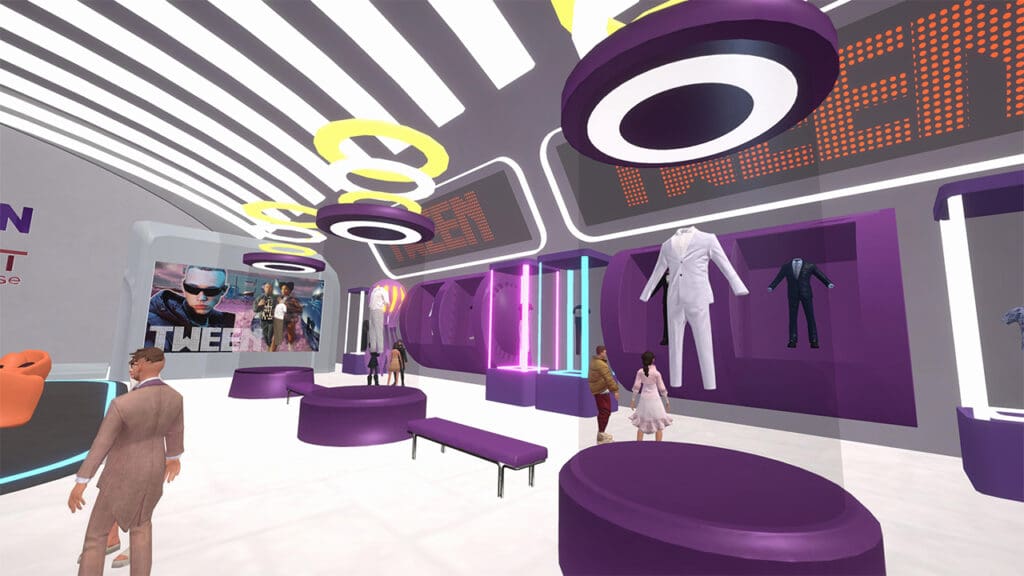
As a result, venue design is also transforming. Grand halls and historic buildings may give way to limitless virtual landscapes. Picture Louis Vuitton presenting a collection on a Martian backdrop, or Dior unveiling a dreamlike universe that morphs in real time with each model’s step. These scenarios combine art, technology, and narrative to deliver deeply immersive storytelling.

A Lifeline for Independent Designers

As economic pressures mount globally, digital fashion shows have become a promising alternative for emerging designers and small brands.Traditional shows are expensive and logistically complex. Even renowned designers like Dilara Fındıkoğlu have had to cancel shows due to high production costs.

Digital platforms lower these barriers. With tools like VR (Virtual Reality) and AR (Augmented Reality), young creatives can present visionary collections to global audiences without the burden of physical venue costs. Platforms such as ShowStudio and Instagram Live have become launchpads for new talent, offering freedom from traditional constraints.

The Counter-Trend: The Return to Presence

Despite the digital boom, some brands are pushing back.The Row, known for its minimalist luxury, has enforced a strict no-phone policy at recent shows to encourage mindful presence. Similarly, during his tenure at Bottega Veneta, Daniel Lee famously deleted the brand’s social media accounts, inviting speculation on how fashion can exist outside the algorithm.

These approaches create a kind of digital detox, allowing attendees to truly experience the garments and atmosphere. They invite us to question whether screens can ever replace the electricity of being there, in the moment, as the lights dim and the first model steps out.

A Question of Balance: Digital vs. Physical

As fashion embraces digital freedom, the question remains—can virtual experiences recreate the iconic moments of past decades? Can they replace the thrill of seeing Naomi, Linda, and Christy strut down a runway, or the goosebumps of attending a Karl Lagerfeld spectacle at Grand Palais?

Digital shows allow for global participation and endless creativity, but can they replicate the communal spirit, the shared breathlessness of a live audience?

Traditional fashion shows have long combined art, community, and live storytelling in a way that’s hard to reproduce virtually. Whether or not digital formats can capture that deep emotional resonance remains to be seen.

Conclusion: The Future Is Hybrid

a white hoodie with a dinosaur on it

Fashion shows are no longer confined to runways or screens—they are evolving into cross-platform experiences. Whether you’re donning a VR headset at home or sitting in the front row at Grand Palais, the goal is the same: to feel the story, not just see the clothes.

The future may lie in finding the balance—between the tactile richness of the physical world and the infinite potential of the digital one. Whichever path fashion takes, one thing is certain: the show must go on—everywhere.

You Might Also Like;

Follow us on TWITTER (X) and be instantly informed about the latest developments…

Copy URL


Source link

ChatGPT’s New Model GPT-4.1 Released: Here Are All the Details!

ChatGPT’s New Model GPT-4.1 Released: Here Are All the Details!


OpenAI has officially announced the release of its latest AI model, GPT-4.1, now available to paid ChatGPT users following high demand. Starting today, ChatGPT Plus subscribers can access GPT-4.1 by going to the ChatGPT interface and selecting it from the model selector in the top-left corner.

According to OpenAI’s statement, ChatGPT Plus, Pro, and Team subscribers can now access GPT-4.1 via the “More models” option in the model picker menu. As for Enterprise and Edu users, access to GPT-4.1 will roll out in the coming weeks.

✅ Current Access Levels:
User TierGPT-4.1 AvailabilityFreeLimited (GPT-4.1 mini as backup)Plus✅ Available nowPro✅ Available nowTeam✅ Available nowEnterpriseComing soonEducation (Edu)Coming soon

🆓 What’s New for Free Users?

There’s also a notable change for free-tier users. The GPT-4o mini has now been replaced with GPT-4.1 mini as an alternative model. However, GPT-4o will remain the default model for free users. When usage limits are reached, the system will automatically switch to GPT-4.1 mini, ensuring continued access to AI features without interruption.

What’s Special About GPT-4.1?

When OpenAI first introduced GPT-4.1 last month, the model was described as “a major step forward in practical AI applications.” Designed to meet the growing demands of developers and advanced users, GPT-4.1 is particularly strong in:

Coding and software development

Data analysis and chart generation

Understanding and summarizing long texts

Advanced reasoning and logic

Building intelligent agent systems

These capabilities make GPT-4.1 a powerful tool for both casual users and professionals looking to push the boundaries of what AI can do in daily workflows, research, and business applications.

💡 Extra Highlights & Features of GPT-4.1

FeatureDescriptionImproved Context UnderstandingBetter handling of complex and lengthy promptsMore Accurate Code GenerationImproved support for multiple programming languagesHigher Reliability in Math & Reasoning TasksBetter consistency in structured problem solvingBetter Integration for Custom GPTsEnhanced performance in ChatGPT’s custom botsFaster Response TimesCompared to GPT-4 Turbo, with improved latency in usage

💳 Pricing Overview

ChatGPT Plus: $20/month

ChatGPT Pro: $50/month (includes priority access, faster response, and API credits)

Team & Enterprise: Custom pricing based on organization size and usage needs

Free users don’t need to subscribe to benefit from GPT-4.1 mini support when available.

🔚 Final Thoughts

The release of GPT-4.1 represents a significant milestone in OpenAI’s roadmap. With enhanced practical use cases, deeper reasoning, and powerful developer tools, it aims to deliver better performance than any previous version. Whether you’re writing code, summarizing documents, or developing AI agents, GPT-4.1 is set to redefine productivity.

Want to try it? If you’re a Plus, Pro, or Team subscriber, just open ChatGPT and switch to GPT-4.1 today!

You Might Also Like;

ChatGPT’s New Model GPT-4.1 Released: Here Are All the Details!
Gemini AI Comes to Android Auto, Wear OS, Google TV & XR Devices
ChatGPT May Soon Offer a Lifetime Subscription

This content was originally published on %ChatGPT’s New Model GPT-4.1 Released: Here Are All the Details!% by YourSiteName.


Source link

CoreWeave Revenue Soars on AI Demand, But Heavy Spending Hits Profit – Decrypt

CoreWeave Revenue Soars on AI Demand, But Heavy Spending Hits Profit – Decrypt


In brief

CoreWeave reported $981.6 million in Q1 revenue, a fivefold increase from the same period last year, but its net loss also deepened to $314 million.
Shares rose 6.6% to $67.46 following the report but dropped 7.8% in after-hours trading; the company went public in March at $39 per share.
The company forecast up to $23 billion in capital expenditures for 2025, well above analyst expectations, as it races to meet surging AI demand.

AI infrastructure firm CoreWeave reported revenue more than five times higher than a year ago, fueled by surging demand for computing power across the sector.

In the company’s first earnings report since going public in March, released Wednesday, CEO Mike Intrator said CoreWeave is “scaling as fast as possible” to meet “accelerating” needs for the booming AI sector. 

The New Jersey-based AI builder brought in $981.6 million in revenue for the first quarter this year, up roughly $793 million from 2024, according to its earnings report.

CoreWeave’s stock (NASDAQ: CRWV) closed higher on the day, up 6.6% to $67.46. The stock quickly gave up those gains in after-hours trading, falling 7.8% to $62.20, per Google Finance.

The stock had opened at $39 on March 28, marking one of the year’s biggest tech IPOs.

While its quarterly revenue has swelled, the company also reported a steeper net loss of $314 million, or $1.49 per share, compared to a $129.2 million loss in Q1 2024.

Those losses are compounded by its heavy spending, expected to run up to $23 billion in capital expenditures for the year. The figure is well above Bloomberg consensus estimates of $18.3 billion.

AI infrastructure deals would keep growing due to “soaring demand for AI,” Jay Jo, senior analyst at Tiger Research, told Decrypt.

“But for the flywheel to keep turning, the AI market needs to generate real profits and build a solid, recurring revenue base, not just rely on investment,” Jo noted. “Without that, long-term momentum could stall.”

Most AI firms, including OpenAI, which made a $12 billion deal with CoreWeave in March, “heavily depend on external funding” to cover their operating costs, Jo said.

In the same month, it began the acquisition of Weights & Biases, a software deal that further catapulted it to the forefront of AI infrastructure.

Still, CoreWeave threaded full-year revenue between $4.9 billion and $5.1 billion, beating analyst projections, per the earnings report.

For now, CoreWeave’s expanding partnerships and backlog illustrate a solid market position, yet questions persist regarding sustainable profitability amid aggressive infrastructure growth.

“Everyone paints a rosy picture of the future, but profitability is the real foundation,” Jo said.

Edited by Sebastian Sinclair

Generally Intelligent Newsletter

A weekly AI journey narrated by Gen, a generative AI model.


Source link

Free AI-Powered Photo Editing Apps You Can Use Today – Metaverseplanet.net

Free AI-Powered Photo Editing Apps You Can Use Today – Metaverseplanet.net


Editing photos has become easier than ever thanks to artificial intelligence (AI) tools. In this article, we explore the best free AI photo editing apps you can use to enhance and transform your images—even without any prior design skills.

Thanks to advances in AI technology, users can now edit photos exactly the way they want with just a few clicks. So, what are the best AI tools you can use to edit photos for free?

Below, we’ve listed some of the top AI-powered photo editing applications that allow free use. If you’re looking for ways to edit your images without paying a dime, you’re in the right place.

1.Pixlr

Pixlr is one of the most popular free photo editors on the web. It offers a wide range of AI-supported features, such as background remover, AI-powered cutout tools, smart resize, and object removal.

You can save three images for free per day, but you can bypass this limit by using an incognito browser tab, allowing virtually unlimited usage.

AI Features:

Background remover

One-click filters and retouch

AI cutout tool

Object eraser

Pricing:

Free version available

Paid plans start from $1.99/month for premium tools and ad-free experience

2.Google Photos

While originally intended as a backup tool, Google Photos now offers several AI editing features such as Magic Editor, Magic Eraser, and enhancements for brightness and sharpness—all for free.

AI Features:

Magic Editor for one-tap enhancements

Magic Eraser for removing background or objects

Auto adjustments for lighting and colors

Pricing:

Free for all users

Google One subscription needed for some advanced features on Pixel or other Android devices

3.Remini

Remini is widely known for enhancing image quality. While it doesn’t focus heavily on editing like others, it excels in photo restoration, portrait enhancement, and even video improvement using AI.

AI Features:

Photo upscaling and sharpening

Enhance blurry portraits

Improve video quality

AI image generation

Pricing:

Free version with limited daily credits

Subscription starts from $4.99/week for unlimited use

4.Fotor

Fotor is available on Android, iOS, and Web, and provides one of the most intuitive AI photo editing experiences. It includes tools like AI background removal, photo enhancer, and AI image generator.

AI Features:

AI background remover

AI photo enhancer

AI image generator

Social media templates

Pricing:

Free plan includes most tools (with watermark)

Pro starts at $3.33/month

Pro+ from $7.49/month for advanced access

5.Canva

Canva is a favorite among non-designers and professionals alike. Known primarily for its design templates, Canva also includes powerful AI photo editing features, especially under its Magic Studio umbrella.

AI Features:

Magic Edit to add or remove objects

Background remover

AI text-to-image

AI presentation maker

Pricing:

Free for most tools

Pro plan starts at $12.99/month for advanced features

6.Lensa AI

Lensa AI offers extensive editing tools that allow users to fine-tune their portraits and selfies. It includes filters, object removal, avatar creation, and more.

AI Features:

AI avatar creator

Face retouching

Object and background removal

Artistic filters and effects

Pricing:

Free trial available

Subscription starts from $3.99/week or $19.99/year

7.Photoroom

Ideal for e-commerce and content creators, Photoroom focuses on product image editing with AI. It allows users to remove/change backgrounds, enhance image quality, and even generate virtual human models for product showcasing.

AI Features:

Background remover and changer

Smart resize and expand canvas

Text-to-image AI

Product shot generator

Pricing:

Free version includes watermark

Pro plan at $9.99/month

8.Adobe Photoshop (7-Day Free Trial)

No list is complete without Adobe Photoshop, the industry leader in photo editing. While it’s a paid tool, Adobe offers a 7-day free trial, giving access to all its AI-powered tools, including Generative Fill.

AI Features:

Generative Fill (text-to-image within images)

Smart Object Removal

Neural Filters

AI sky replacement

Content-aware fills

Pricing:

Free 7-day trial

Monthly plan starts at $22.99/month

We’ve explored some of the best free AI photo editing tools available in 2025. Whether you’re a beginner or a seasoned editor, these tools help you create stunning visuals effortlessly, thanks to the power of artificial intelligence. If you have any favorite AI photo editors not listed here, feel free to share them in the comments!

You Might Also Like;

Follow us on TWITTER (X) and be instantly informed about the latest developments…

Copy URL


Source link

How Will Layer 3 Change the Future of Blockchain Gaming? | NFT News Today

How Will Layer 3 Change the Future of Blockchain Gaming? | NFT News Today


Layer 3 protocols are designed to fix many of the performance issues that plague the blockchain gaming space. With increased scalability, speed and flexibility, they open up possibilities that could reshape our gaming experiences.

Key Takeaways

Layer 3 is considered the next milestone for blockchain gaming due to better scalability and user-centric features.

It leverages advanced interoperability, connecting multiple chains for seamless in-game transactions.

Recursion-based scaling delivers compressed proofs, reducing fees while increasing speeds.

Application-specific customization helps game creators set unique parameters for tokens, fees, and gameplay.

Leading Layer 3 protocols include zkSync Hyperchains, and Arbitrum Orbit, each offering innovative solutions.

What Is Layer 3 in Blockchain Gaming?

Layer 3 is often referred to as the “application or customization layer” in the blockchain stack. It builds on top of the base layer (Layer 1) and the scaling layer (Layer 2) to provide extra functionality and specialized frameworks for projects such as blockchain gaming.

Some indie game developers mention that the ease of customizing their own Layer 3 environment saves time and energy. They appreciate being able to fine-tune everything from tokenomics to game logic within a single environment. Community testers have also noted fewer slowdowns when high numbers of users join a game simultaneously.

Key benefits of Layer 3 for gaming include:

Enhanced interoperability: Facilitating communication across multiple blockchains to reduce siloed ecosystems.

Recursive scaling: The ability to bundle and compress transactions to reduce costs and increase speed.

Specialized environments: Allowing game developers to configure every detail of their chain for unique gameplay features.

These elements can greatly benefit blockchain gaming by delivering faster transaction times, lower fees, and more flexible infrastructure.

Comparing Layer 1, Layer 2, and Layer 3

Below is a concise overview that highlights the main differences:

Aspect

Layer 1 (Base)

Layer 2 (Scalability)

Layer 3 (Application & Customization)

Primary Focus

Core security, consensus, and decentralization

Off-chain transaction processing to enhance speed and reduce fees

Specialized frameworks, cross-chain communication, and advanced customization

Examples

Bitcoin, Ethereum

Rollups (e.g., Optimistic, ZK), Sidechains, State Channels

Orbs, zkSync Hyperchains, Arbitrum Orbit, Appchains

Scalability Approach

Processes transactions on-chain with limited throughput

Processes transactions off-chain or in batches, then settles on Layer 1

Uses recursive proofs and extra compression for additional speed and efficiency

Fees

Generally higher due to on-chain computation

Reduced fees by offloading much of the workload

Further reduced fees by performing execution and batching at an additional layer

Use Cases

Core settlement, global digital currency

Fast payments, simpler dApps needing speed and cost efficiency

Fully customizable environments for gaming, finance, and other specialized applications

Some users have remarked that once you see how well Layer 3 optimizes fees, it’s hard to go back. Speed and cost savings seem to be the biggest crowd-pleasers in gaming communities looking to incorporate on-chain mechanics.

Practical How-To: Onboarding Into Layer 3 Gaming

Below is a step-by-step outline to help game developers and players make the most of Layer 3 technologies:

Select a Suitable Platform

Choose a Layer 3 solution that fits your needs. Projects like zkSync Hyperchains, or Arbitrum Orbit cater to different use cases. Developers often compare user feedback and performance benchmarks before settling on a platform.

Set Up Developer Tools or Wallets

Use official developer kits and wallets provided by Layer 3 protocols. This ensures smooth integration of their features, including cross-chain transfers and lower fees. Early adopters appreciate the user guides and community forums which can speed up the learning curve.

Test and Deploy Smart Contracts

Experiment in a sandbox environment to confirm that your in-game mechanics function properly. Once tested, deploy smart contracts that can leverage advanced Layer 3 features such as recursive proofs or custom token economics. Several indie studios have praised how straightforward it is to execute large volumes of transaction logic without crippling gas fees.

Launch the Game and User Onboarding

Introduce simple interfaces. Provide tutorials or guides within your gaming platform to help new users grasp how Layer 3 works without getting lost in technical details. Some community members emphasize that a well-designed onboarding process is key to retaining players on any new blockchain solution.

Stay Informed on Upgrades

Layer 3 is still evolving, so monitor protocol updates. Adopting new improvements early can keep your project at the forefront of blockchain gaming advancements. A few developers have likened it to staying updated on traditional game engine releases—they believe new features often translate into a more compelling user experience.

Real-World Use Cases and Examples

Layer 3 solutions are steadily gaining momentum in gaming. Developers and players alike share anecdotal evidence of smoother gameplay and cheaper transactions:

zkSync Hyperchains

zkSync Hyperchains are a next-generation scaling solution developed by zkSync, designed to enable hyperscalability, interoperability, and customization within the Ethereum ecosystem. They are built using the open-source ZK Stack framework, allowing developers to launch their own sovereign ZK-powered chains called Hyperchains-that can function as Layer 3 networks.

Arbitrum Orbit

Arbitrum Orbit is a framework developed by Offchain Labs that enables developers to create highly customizable Layer 3 (L3) blockchains within the Arbitrum ecosystem. Orbit chains can settle to Ethereum (as L2s) or to existing Arbitrum L2s (as L3s), offering flexibility, scalability, and a wide range of customization options for game developers.

Appchains

Appchains are application-specific blockchains designed to optimize every aspect of their architecture for a particular use case. They offer superior scalability, performance, and customizability compared to general-purpose blockchains, making them an increasingly popular solution for gaming developers.

Frequently Asked Questions (FAQ)

1. How does Layer 3 improve blockchain gaming performance?

Layer 3 applies extra compression and off-chain execution on top of Layer 2. This streamlines network traffic, accelerates transactions, and lowers costs, which significantly enhances gaming speed and user experience. Gamers often describe it as finally feeling “responsive” compared to previous on-chain games.

2. Are Layer 3 gaming projects secure?

They inherit security from underlying layers—Layer 1 and Layer 2. However, each extra layer introduces new considerations. Audits and rigorous testing are vital to maintain a secure gaming environment.

3. Can Layer 3 gaming solutions connect multiple blockchains?

Yes. Interoperability is a key feature of Layer 3. It allows seamless communication between different chains which improves asset movement and user engagement in multi-chain gaming platforms.

4. Why is onboarding crucial in blockchain gaming?

User adoption often hinges on a smooth onboarding process. Streamlined approaches—like intuitive wallets and easy tutorials—help players jump into gaming without wrestling with technical obstacles.

5. Will Layer 3 protocols replace Layer 2?

They act more as an extension than a replacement. Layer 3 depends on Layer 2 innovations for many of its capabilities, but it adds specialized frameworks and advanced scalability for projects that need more customization.

Summary

Layer 3 provides a forward-thinking step for the blockchain stack. t solves the scalability and interoperability issues by introducing a special application layer that is particularly relevant for gaming. By reducing fees, speeding up transactions and offering custom features, Layer 3 opens up blockchain adoption to more people.

As more projects embrace Layer 3, it is poised to shape blockchain gaming’s future and fulfil the demand for interactive, cost-effective environments.


Source link

Hideo Kojima Has A Crazy Idea For a “Forgetting Game”

Hideo Kojima Has A Crazy Idea For a “Forgetting Game”


Summary

Kojima’s game ideas involve innovative concepts about life and aging as mechanics.

Players age in-game and gradually lose abilities, requiring continuous play.

Kojima also proposed a “forgetting game” where character abilities deteriorate with time away.

Legendary game creator Hideo Kojma might have shot to fame with the Metal Gear Solid franchise, but the artist is also known for pushing game ideas that are so far out, that they are considered either crazy or genius.

While Death Stranding 2: On the Beach is still in the oven, Kojima has discussed some of his game ideas, and hearing about them will make you appreciate Kojima’s brilliance even more.

Related

Hideo Kojma

Kojima is one of the gaming industry’s most trusted names. Here are all the games he’s mainly responsible for creating.

Kojima Has Game Ideas Based On Concepts About Life

Hideo Kojima

Kojima aired the latest episode of his podcast KOJI10 and in it, he gave listeners an insight on how he thinks when it comes to game design.

One of Kojima’s ideas involved the passing of time as a game mechanic. “It starts out with the player being born, you’re a child and then gradually over time you become an adult. In the game, you fight various enemies. Like with the previous example (MGS3’s The End), if you keep playing the game, you will become a 70 or 80 year old man. However, at this age you will be weaker, your eyesight will worsen. When you are a teenager you’ll be able to run faster but by the time you reach 60 you’ll slow down a bit,” Kojima shared (via IGN).

Kojima explains that while your character might be in better physical condition when they are younger, they will have more knowledge and experience as they get older. This will, in turn, affect your strategy for dealing with enemies. Kojima thinks that no would buy this kind of game, though people in his podcast rightfully expressed interest in it.

Another game concept he has is when the player creates something that takes time to age/mature such as wine or cheese. This will require the player to continue gradually playing the game over a long period of time.

The last idea is possibly the best one, and it’s about a “forgetting game” where the player have to “play through quickly.” The core concept of this is the main character gradually forgets important info and abilities if the player takes too long of a break from the game. For example: if you don’t play the game every day, the main character will gradually forget things such as how to fire their gun or even what their job is. This would build up until the player is finally unable to move. “Players would have to take a week off work or school to play it,” Kojima joked.

Related

Death Stranding 2 Implementing Surprising Feature To Help New Players

Hideo Kojima just made new players unafraid of boss fights.

I have to admit, those are games I’d be interested in playing — especially the one about the aging thing. Of course, Kojima has to release Death Stranding 2 first, before he can even consider developing some of those concepts into actual games.

Given how Kojima has already said he wants to hand off the next Death Stranding game to someone else, perhaps he’ll have time to do some of those games. I mean, he still has a feature film, a horror game for Xbox and that espionage game for Sony to go through, but maybe after? Maybe we’ll see these concepts into one of his games, even.

As for Death Stranding 2: On the Beach, it’s set for release on June 26, 2025 on the PS5, and it’s been confirmed recently that it will feature multiple graphical modes.

Related

Death Stranding 2 Doesn’t Feature Solid Snake, Lookalike Explained By Hideo Kojima

Hideo Kojima said he wanted the casting to surpass Mads Mikkelsen from DS1.

death-stranding-2-on-the-beach-tag-page-cover-art.jpg

Death Stranding 2: On the Beach

Released

June 26, 2025

ESRB

Mature 17+ // Violence, Blood and Gore, Partial Nudity, Strong Language

Engine

Decima

Franchise

Death Stranding

Number of Players

Single-player

PS5 Release Date

June 26, 2025


Source link

Sueprman | Official Trailer | Warner Bros.

    0
    Sueprman | Official Trailer | Warner Bros.


    Genre:

    Superhero, Action, Adventure, Fantasy, Sci-fi

    Release Date:

    July 11, 2024

    Director:

    James Gunn

    Cast:

    David Corenswet, Nicolas Hoult, Rachel Brosnahan

    Plot Summary:

    Superman must reconcile his alien Kryptonian heritage with his human upbringing as reporter Clark Kent. As the embodiment of truth, justice and the human way he soon finds himself in a world that views these as old-fashioned.

    FILM RATING

    The post Sueprman | Official Trailer | Warner Bros. appeared first on Coastal House Media.


    Source link

    Cassie Tried Walking Into Traffic Amid Diddy PTSD Battle

      0
      Cassie Tried Walking Into Traffic Amid Diddy PTSD Battle


      Cassie got candid about how the aftermath of her relationship with Sean “Diddy” Combs took a heavy mental and emotional toll on her.

      “I was spinning out,” the singer, 38, tearfully testified on Wednesday, May 14, during her second day on the stand in Diddy’s sex trafficking trial. “I didn’t want to be alive anymore at that point.”

      Cassie (real name Casandra Ventura) explained that years after the alleged abuse by Diddy, 55, she hit a breaking point while shooting a music video in 2023. She shared that she kept having flashbacks from her time with Diddy.

      After coming home from the set, she told her husband, Alex Fine, “You can do this without me. You don’t need me anymore.”

      Related: Cassie Gives Emotional Testimony About Diddy Allegedly Raping Her

      Cassie emotionally recounted allegedly being raped by ex-boyfriend Sean “Diddy” Combs during the mogul’s sex trafficking trial. During the singer’s testimony on Wednesday, May 14, Cassie, 38, recalled a dinner she had with Diddy, 55, in 2018 after she had already begun dating her now-husband, Alex Fine. After Diddy brought Cassie (real name Casandra Ventura) […]

      Cassie shared that she then tried to walk out the door and into oncoming traffic but Fine, 32, stopped her. (Fine and Cassie, who tied the knot in 2019, share daughters Frankie, 5, and Sunny, 4, and are currently expecting baby No. 3.)

      Following the incident, Cassie entered rehab and “trauma therapy.” During her recovery, Cassie began writing a book about her time with Diddy as part of her therapy process. She claimed that she gave a copy of some of the chapters she wrote to Diddy.

      “I really wanted Sean to read the information,” she said from the stand. “I wanted him to understand what I had to learn to understand over that period.”

      Upon reviewing the content, Cassie claimed that she had a lawyer reach out to Diddy’s team to pay her $30 million for the rights to her story.

      Cassie Details Trying to Walk Into Traffic as She Struggled With PTSD From Diddy Relationship 890
      Mike Coppola/Getty Images for People.com

      “I wanted to be compensated for the time, the pain,” she said, noting that she did not receive any money at that time.

      The same year Cassie began her therapeutic treatment, she filed a lawsuit against Diddy accusing him of sexual and physical abuse throughout their relationship, which lasted off and on from 2007 to 2018. Diddy denied her claims in a statement shared by his attorney.

      “Mr. Combs vehemently denies these offensive and outrageous allegations,” Diddy’s lawyer Ben Brafman said at the time.

      One day after the suit was filed, Diddy and Cassie settled out of court. Cassie stated during her Wednesday testimony that she received $20 million from the settlement.

      In May 2024, CNN published a hotel surveillance video of Diddy physically abusing Cassie in the hallway of a hotel room in 2016. He later apologized for his actions in a video shared via Instagram.

      Diddy was arrested in September 2024 and charged with sex trafficking, racketeering conspiracy and transportation to engage in prostitution. He pleaded not guilty to all charges and has denied all of the allegations against him.

      “We are disappointed with the decision to pursue what we believe is an unjust prosecution of Mr. Combs by the U.S. Attorney’s Office,” Diddy’s attorney Marc Agnifilo said in a statement at the time. “He is an imperfect person, but he is not a criminal. To his credit Mr. Combs has been nothing but cooperative with this investigation and he voluntarily relocated to New York last week in anticipation of these charges. Please reserve your judgment until you have all the facts. These are the acts of an innocent man with nothing to hide, and he looks forward to clearing his name in court.”

      Since his arrest, Diddy has been held at the Metropolitan Detention Center in Brooklyn. His four requests for bail were denied by Judge Arun Subramanian.

      If you or someone you know is struggling or in crisis, help is available. Call or text 988 or chat at 988lifeline.org. If you or someone you know has been sexually assaulted, contact the National Sexual Assault Hotline at 1-800-656-HOPE (4673). If you or someone you know is experiencing domestic violence, please call the National Domestic Violence Hotline at 1-800-799-7233 for confidential support. If you or someone you know is a human trafficking victim, contact the National Human Trafficking Hotline at 1-888-373-7888.


      Source link

      Popular Posts

      My Favorites

      ‘Some Studios Won’t Survive’ as AI Takes Over Gaming, Says Google...

      0
      In brief Google Cloud exec Jack Buser warned that rising costs and stagnant play time have left studios with a broken business model. A recent...