Home Blog Page 1070

Yield Guild Games Launches YGG Play, Debuts ‘LOL Land’ on Abstract

Yield Guild Games Launches YGG Play, Debuts ‘LOL Land’ on Abstract


Yield Guild Games (YGG) has launched its own publishing division named YGG Play to develop and distribute games directly under its own brand.

The first release under this new initiative is LOL Land, a browser-based board game that went live this week on Abstract Chain, with over 100,000 users pre-registered ahead of launch. The game incorporates token rewards and features characters from the Pudgy Penguins community.

The shift in strategy follows years of volatility in the blockchain gaming sector, with many projects struggling to retain long-term users. YGG’s new approach is focused on targeting existing crypto users, rather than attempting to appeal to broader gaming audiences.

Yield Guild Games Launches YGG Play, Debuts 'LOL Land' on Abstract Source: LOL Land

What is YGG Play?

YGG Play is the new publishing arm of Yield Guild Games but unlike YGG’s previous model, which centred on asset delegation and game investment, this division focuses on producing and distributing games internally.

The goal, according to YGG, is to design games that reflect the behaviours and interests of people already active in cryptocurrency, NFT trading, and blockchain-based platforms.

Co-founder Gabby Dizon said the move reflects lessons learned since YGG’s founding in 2020. The company believes its experience in both traditional and blockchain gaming has informed a more targeted strategy that focuses on simpler, shorter-form games.

Yield Guild Games Launches YGG Play, Debuts 'LOL Land' on Abstract
Yield Guild Games Launches YGG Play, Debuts 'LOL Land' on Abstract Source: Yield Guild Games

What games are on the platform?

The first title to launch on YGG Play is LOL Land, a web-based board game with four themed maps: YGG City, Beach Day, Carnival, and Ice World Wonderland. In the game, players can choose between a free mode, which allows unlimited rolls, or a premium mode that includes token rewards. Points earned in premium mode are tied to a $10 million pool of YGG tokens, which can be used within the broader YGG ecosystem.

YGG has not yet announced additional titles under the YGG Play label, but it has indicated that future projects will continue to prioritise crypto-native users over conventional gaming audiences. The company is not positioning itself to compete with large-scale game studios, but rather to provide lightweight, blockchain-based games for a niche but active user base.

Dizon noted that whilst developing games on emerging technologies is challenging, YGG sees continued potential in the space. Future releases from YGG Play are expected to build on the lessons of LOL Land and further explore how blockchain mechanics can be integrated into simple, accessible game formats.


Source link

Spheron X OpenLedger: Powering the Future of Decentralized AI

Spheron X OpenLedger: Powering the Future of Decentralized AI


AI has advanced rapidly, but much of it remains hidden behind closed ecosystems. Today, most models are built, trained, and deployed without transparency, traceability, or fair attribution. The datasets used in training are often unclear, the contributors go uncredited, and a handful of centralized players control the resulting models.

This opaque structure stifles innovation and limits opportunities for collaboration, open verification, and decentralized monetization. As the need for explainable, transparent, and community-owned AI grows, the current infrastructure is clearly ill-equipped to support it.

Enter OpenLedger: The AI Blockchain

OpenLedger is purpose-built to change this. Unlike general-purpose blockchains, OpenLedger is designed specifically for AI workflows, focusing on the monetization, attribution, and security of data, models, and intelligent agents.

With OpenLedger, users can contribute data to collaborative datasets (Datanets), fine-tune and deploy models through the Model Factory, and benefit from a Proof of Attribution system that tracks and rewards every contribution along the AI development lifecycle. From dataset creators to model trainers, everyone in the value chain receives credit and can share in the upside.

OpenLedger also introduces OpenLoRA, a cost-optimized engine for deploying AI models on-chain, reducing the expense of inference and model hosting by orders of magnitude. This makes decentralized AI development not only possible but economically sustainable.

Why Infrastructure Matters

While the vision is ambitious, scaling it requires significant computational resources. Training and running machine learning models—especially on-chain, is resource-intensive and demands powerful GPU infrastructure. Traditional cloud providers are often prohibitively expensive and centralized by nature, making them an imperfect fit for OpenLedger’s decentralized ethos.

This is where Spheron comes in.

How Spheron Powers OpenLedger

Spheron provides a decentralized GPU infrastructure network optimized for AI, ML, and high-performance computing workloads. By aggregating underutilized compute resources across the globe and making them accessible through a unified interface, Spheron significantly reduces the cost of AI compute.

OpenLedger leverages this infrastructure to power its AI studio, Datanets, and model deployment stack. Instead of relying on expensive and centralized cloud providers, OpenLedger can tap into a flexible, decentralized, and censorship-resistant compute network through Spheron.

This improves economic efficiency and aligns with OpenLedger’s values of transparency, decentralization, and inclusivity. Builders, researchers, and contributors on OpenLedger can now access high-quality GPU resources at lower costs, accelerating experimentation and real-world deployment.

The Road Ahead

Together, Spheron and OpenLedger are creating a future where AI is open, explainable, and monetizable by all. The collaboration unlocks infrastructure that supports decentralized AI development at scale, making it viable for grassroots innovators, not just big tech.

As AI continues to reshape industries, the need for trust, provenance, and equitable value distribution becomes critical. OpenLedger provides the framework for this future. Spheron ensures the infrastructure is there to support it.

This is more than a partnership. It’s a foundational step toward building a new AI economy—one that is transparent, collaborative, and fair by design.


Source link

Binance’s Changpeng Zhao rebuffs WSJ ‘fixer’ role assertion for Trump-affiliated World Liberty Financial

Binance’s Changpeng Zhao rebuffs WSJ ‘fixer’ role assertion for Trump-affiliated World Liberty Financial


Changpeng Zhao, founder and former CEO of Binance, has pushed back against a recent Wall Street Journal (WSJ) article that claims he is acting as a “fixer” for World Liberty Financial (WLFI), a DeFi venture linked to the Donald Trump family.

The WSJ report alleged that Zhao facilitated international introductions for WLFI, including engagements in countries like Pakistan.

However, in a May 23 post on X, Zhao stated that the article was misleading and accused the publication of intentionally distorting facts to fit a narrative.

‘Fixer’ allegations

The former Binance executive addressed the report’s suggestion that he arranged introductions between Bilal Bin Saqib, head of the Pakistan Crypto Council, and WLFI.

The article indicated that this connection led to Saqib’s appointment as an advisor to the group and the signing of a memorandum of understanding with the Pakistani government.

However, Zhao rejected the alleged connections, saying:

“I am not a fixer for anyone. I did NOT ‘connect Mr. Saqib with the WLF team.’ They had known each other way back, whereas I only met with Mr. Saqib for the first time in Pakistan. I did NOT make any ‘introductions for World Liberty’s foreign travels.’”

The former Binance CEO also dismissed claims that he had a role in organizing WLFI’s foreign visits, adding that the report was built on false premises. He noted:

“If you get a couple of factual errors wrong, it’s possible to fix. When you make up a story with negative intentions to begin with, there is no way to fix the ‘inaccuracies.’ It’s the entire story.”

Binance’s Zhao vs WSJ

This marks the latest dispute between Zhao and WSJ over what he claims are misleading reports about him.

In April, Zhao dismissed claims that he had agreed to cooperate against Justin Sun as part of a plea deal with US authorities. He also denied prior reports suggesting that President Trump had sought an investment in Binance.

Considering this, the Binance founder likened WSJ’s reporting approach to Cunningham’s Law, which says that the best way to get the correct answer is to post the wrong one.

But Zhao lampooned the traditional media house, saying:

“WSJ instead of doing journalism, has pretty much resorted to Cunningham’s Law, with negative intentions…This is NOT how journalism should work.”

He also concluded that the WSJ stories are being used by anti-crypto interests to undermine the industry, its global leaders, and pro-crypto movements in the US.

He said:

“WSJ is just the mouthpiece. There are forces in the US that want to hinder efforts in making the US the capital of crypto.”

Mentioned in this article


Source link

Ethereum, XRP Drop as Altcoins Brace for New Trump Tariffs on EU, Apple – Decrypt

Ethereum, XRP Drop as Altcoins Brace for New Trump Tariffs on EU, Apple – Decrypt


In brief

Altcoins were hit especially hard on Friday after Trump threatened new tariffs against Apple and the EU.
A renewed trade war would “likely support Bitcoin adoption over the medium term,” according to Grayscale’s Zach Pandl.
Although Bitcoin retreated from its recent all-time high, the price of gold jumped.

The price of various altcoins fell on Friday after U.S. President Donald Trump threatened to impose new tariffs on the European Union and Apple, the $3 trillion iPhone maker.

Ethereum was recently changing hands around $2,550, a 4.1% decrease over the past day, according to crypto data provider CoinGecko. XRP and Dogecoin fell around 3.6% to $2.35 and $0.23, respectively, while Solana edged down 0.8% to $177.

The EU, one of America’s largest trading partners, should face 50% tariffs on goods imported to the U.S., starting in no less than nine days, Trump said in a post on Truth Social. Apple should also pay 25% tariffs on iPhones that aren’t manufactured in the U.S., the president suggested in a separate post, although he did not specify when the new levies could take effect.

“Altcoins have more downside in an escalating trade conflict because they are fundamentally riskier than Bitcoin,” Zach Pandl, head of research at crypto asset manager Grayscale, told Decrypt. “Most altcoins will not benefit from reserve diversification away from the Dollar.”

Trump’s return to trade-related threats immediately punctured a risk-on sentiment that had prevailed for weeks as his administration took a de-escalatory approach to trade negotiations with nations affected by his “reciprocal” tariffs. The price of gold spiked as Treasury yields moved lower, while Wall Street indices opened in the red on Friday.

Meme coins, including Official Trump ($TRUMP), fell hardest. A day after the president hosted a private dinner for top $TRUMP holders, the asset showed a 13% decrease to $13.47.


Bitcoin’s price fell to 2.7% to $108,500, retreating from an all-time high of $111,800 a day before. Still, Pandl said that “the trade conflict will likely support Bitcoin adoption over the medium term,” echoing the asset’s performance as a safe-haven asset this year.

As markets wavered in April on tariff-related uncertainties, Bitcoin’s correlation with gold strengthened.  Investors turned to both non sovereign assets, amid growing risks to the U.S. dollar and the prevailing global economic order. The trend continued into early May.


Bitcoin’s dominance ticked up on Friday, representing over 62% of the crypto market’s entire value, according to CoinGecko. That measure had softened recently amid risk-on-sentiment, retreating from a high of around 63% at the start of this month.

Conceptually, a renewed trade war could benefit altcoins, if it provokes greater interest in decentralized systems, Pandl said. However, he acknowledged that “the implications are much less direct,” and a reduced risk appetite among investors is likely to impact valuations more.

Edited by James Rubin

Daily Debrief Newsletter

Start every day with the top news stories right now, plus original features, a podcast, videos and more.


Source link

Check Out The Best Cosplay From Il Volta Italy 2025

Check Out The Best Cosplay From Il Volta Italy 2025


Image: Mineralblu / Kotaku

Il Volta is an event that takes place in Italy, dedicated to the photography of cosplay. It’s not a convention, there’s no show floor—instead it’s about capturing the best cosplay outfits in beautiful locations.

So who better than the team at Mineralblu to send? The results are some stunning photos of an array of gaming fits, with a lot of focus on Soulslikes in opulent settings, and Final Fantasy characters out in the wild. Alongside them are some less often seen nods, including Darkstalkers, Fire Emblem and Black★Rock Shooter.

Take a look at the video of the occasion below, and then click on to see the best of the best photographs from the event.


Source link

JPMorgan Chase, BoA, Citigroup Plan USD-Backed Stablecoin Initiative

JPMorgan Chase, BoA, Citigroup Plan USD-Backed Stablecoin Initiative


Leading U.S. banks are in early talks to launch a joint stablecoin venture, while the Trump family’s USD1 stablecoin surges to prominence, highlighting blockchain’s growing role in reshaping digital payments and raising ethical concerns.

A Stablecoin Project Backed by America’s Top Banks

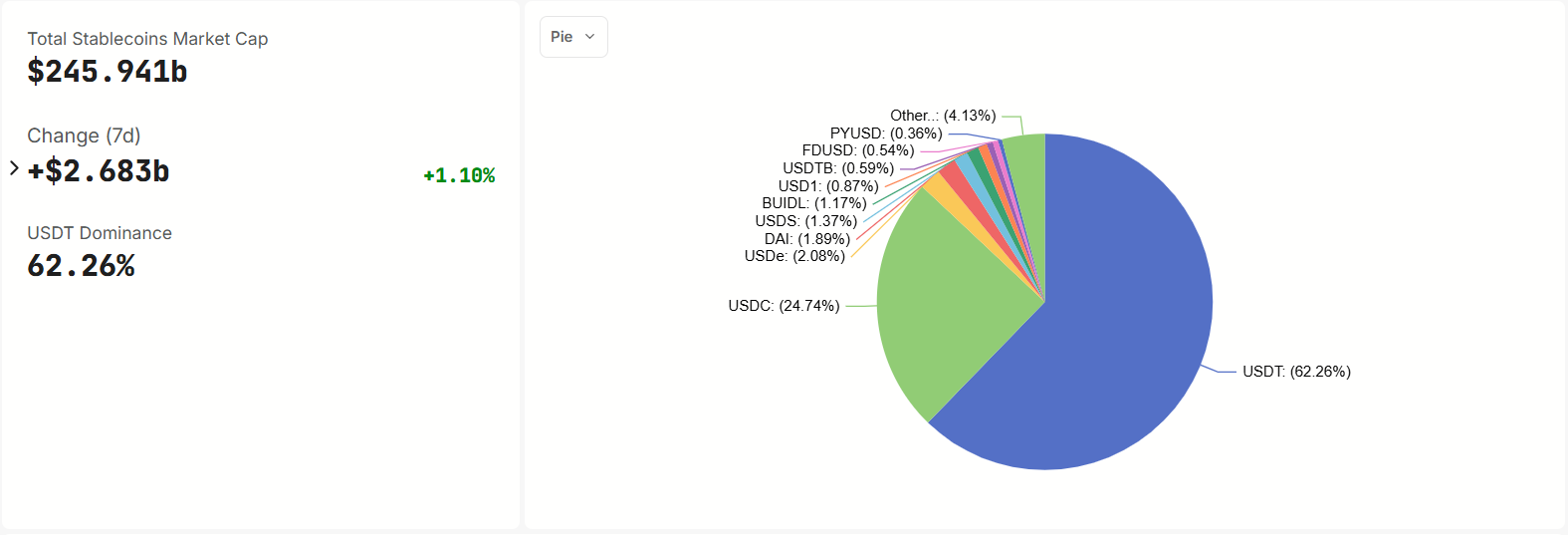
Major U.S. banks, including JPMorgan Chase, Bank of America, Citigroup, and Wells Fargo, are exploring a collaborative stablecoin initiative to compete in the $245 billion stablecoin market, currently led by Circle’s USDC and Tether’s USDT.

A Stablecoin Project Backed by America’s Top Banks

Source: DefiLlama

According to The Wall Street Journal, these discussions involve payment firms like Early Warning Services (Zelle’s operator) and The Clearing House, co-owned by the banks. The move aims to counter the growing influence of crypto-based digital payments, which threaten traditional banking’s deposit bases and transaction volumes. 

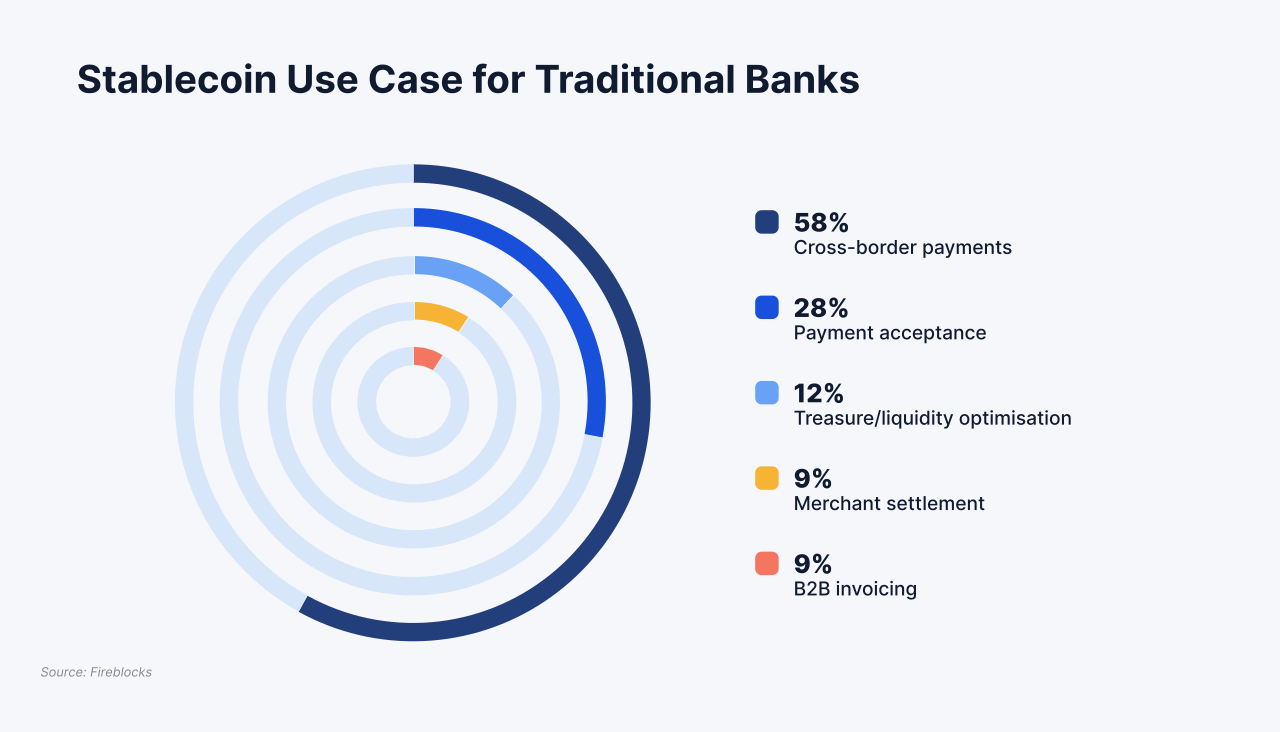
Stablecoins, pegged to the U.S. dollar, offer fast, low-cost cross-border transfers, making them attractive for global finance. A Fireblocks survey notes that 58% of traditional banks already use stablecoins for such payments, reflecting institutional adoption.

A Stablecoin Project Backed by America’s Top BanksA Stablecoin Project Backed by America’s Top Banks

Source: Fireblocks

The banks’ consortium model could enable broader participation from other financial institutions, enhancing the stablecoin’s reach. However, the venture’s progress depends on U.S. stablecoin legislation, particularly the GENIUS Act, which recently cleared a Senate procedural vote with bipartisan support. The Act requires stablecoins to be 1:1 backed by liquid reserves, addressing regulatory concerns like anti-money laundering and consumer protections. 

USD1 Stablecoin by World Liberty Financial Fuels Growth and Debate

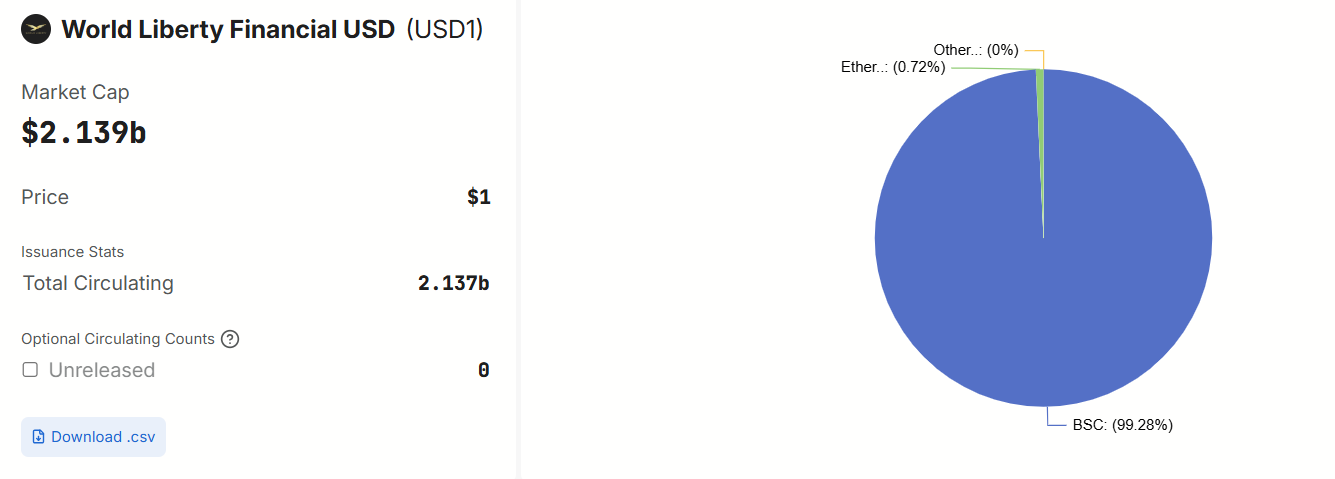
Parallel to the banks’ efforts, the Trump family’s World Liberty Financial has launched USD1, a dollar-backed stablecoin that has rapidly gained traction. Issued by BitGo Trust Company under U.S. regulatory compliance, USD1 has surged to a $2.14 billion market cap, ranking as the second-largest stablecoin on BNB Chain after USDT.

USD1 Stablecoin by World Liberty Financial Fuels Growth and DebateUSD1 Stablecoin by World Liberty Financial Fuels Growth and Debate

A significant boost came from a $2 billion investment by Abu Dhabi’s MGX fund to acquire a stake in Binance using USD1, highlighting its global appeal. The Trump family holds a 60% stake in World Liberty Financial, raising ethical concerns about potential conflicts of interest, especially given President Trump’s crypto-friendly policies.

Learn more: World Liberty Financial Launches Stablecoin USD1

Critics, including Senator Elizabeth Warren, argue that USD1’s rise, fueled by foreign investments like the UAE deal, risks corruption, especially as the GENIUS Act progresses. The stablecoin’s integration with Chainlink for multi-chain transfers further enhances its utility, but concerns persist about transparency and regulatory oversight.

The U.S. aims to dominate the crypto sector, echoing President Trump’s remarks at a TRUMP token holders’ event, where he likened crypto leadership to America’s global economic dominance through the USD. The banks’ stablecoin venture and USD1’s rise reflect this ambition, positioning the U.S. to shape the future of digital finance. By leveraging blockchain’s efficiency, banks aim to modernize payments, while USD1’s rapid growth signals crypto’s mainstream potential. 

However, challenges like regulatory clarity, public trust, and financial stability risks, highlighted by critics comparing stablecoins to volatile money-market funds, could hinder progress. Both initiatives underscore blockchain’s transformative power, but their success depends on navigating ethical concerns and regulatory hurdles.


Source link

Cambridge Cracks the Code: $2.3B VC Boom, Deep Tech Surge — But Inclusion Gaps Remain – Web3oclock

Cambridge Cracks the Code: .3B VC Boom, Deep Tech Surge — But Inclusion Gaps Remain – Web3oclock


Science Meets Startups: The Deep Tech Flywheel

Deep Tech Champions: Nyobolt’s Rapid Rise

Diversity: The Multiplier Cambridge Must Prioritize

Barriers to Scale: Housing, Growth Capital & Regulation

What’s Next? Engineering an Inclusive, Innovation-Driven Economy


Source link

Best-Selling Wireless Earbuds of Q1 2025 – Apple, Xiaomi & More

Best-Selling Wireless Earbuds of Q1 2025 – Apple, Xiaomi & More


Global market research firm Canalys has analyzed the world’s best-selling wireless earbuds brands. The study’s official results for the first quarter of Q1 2025 have just been released. So, which brands topped the global wireless earbuds market?

According to the Canalys report, the wireless earbuds market experienced significant growth in Q1 2025. Year-on-year shipments rose by approximately 18%, reaching 78 million units in the first three months of 2025. Let’s take a closer look at the top-selling wireless earbuds brands and some of their flagship products. The leading brands are:

BrandUnits SoldMarket ShareApple18.2 million23.3%Xiaomi9 million11.5%Samsung5.6 million7.1%Huawei4.7 million6.0%boAt3.9 million4.9%Others36.9 million47.2%

The table above highlights Apple’s clear dominance in the wireless earbuds market. Controlling nearly a quarter of total shipments, Apple has more than doubled the sales of its closest rival, Xiaomi. This is hardly surprising, given the widespread popularity of Beats, another brand under the Apple umbrella.

In the smartphone arena, Samsung competes head-to-head with Apple, but in the wireless earbuds segment it holds just 7.1% of the market share. Huawei trails closely behind Samsung, while boAt secures the fifth position.

Apple Wireless Earbuds Recommendations

AirPods Pro (2nd generation)Launched in 2022, the AirPods Pro (2nd generation) remain among the most sought-after wireless earbuds. They deliver up to 6 hours of listening time on a single charge (up to 30 hours with the charging case). Powered by the H2 chip, they support spatial audio and feature advanced Active Noise Cancellation.

AirPods MaxFor those who prefer over-ear headphones, the AirPods Max is an excellent choice. Introduced last year, they offer up to 20 hours of battery life, Active Noise Cancellation, and a USB Type-C port.

Xiaomi Wireless Earbuds Recommendations

Xiaomi Buds 5 ProAs of May 22, 2025, the Xiaomi Buds 5 Pro is the best Xiaomi model you can purchase. Released a few months ago, it provides up to 8 hours of playback and stands out with Hi-Res audio and Wi-Fi audio transmission for a stable connection.

Redmi Buds 6Redmi, Xiaomi’s sub-brand, is also popular in the wireless earbuds market. The Redmi Buds 6, one of its latest offerings, supports up to 55 dB of noise cancellation and delivers up to 42 hours of total battery life with the charging case. Additionally, the Redmi Buds 6 is noted for its affordable price.

Samsung Wireless Earbuds Recommendations

Samsung Galaxy Buds3 ProLaunched last year, the Samsung Galaxy Buds3 Pro combines top-tier features, offering Hi-Fi audio, intelligent Active Noise Cancellation managed by AI, and integration with Galaxy AI features. Their sleek design also makes them a standout choice.

Samsung Galaxy Buds FEIf you’re looking for Samsung earbuds on a budget, consider the Galaxy Buds FE. Released in 2023, they feature Active Noise Cancellation and provide up to 30 hours of battery life.

You Might Also Like;

Follow us on TWITTER (X) and be instantly informed about the latest developments…

Copy URL


Source link

LMArena Secures $100M Seed Funding to Establish the Definitive Gold Standard for AI Reliability Evaluation – Web3oclock

LMArena Secures 0M Seed Funding to Establish the Definitive Gold Standard for AI Reliability Evaluation – Web3oclock


Building Critical Infrastructure for Trustworthy AI:

Trusted by the Best, Driven by Principles:

A Long-Term Vision for AI Accountability:

About LMArena:


Source link

DeLorean Drives Into the Future: Tokenized Car Reservations on Sui Blockchain | NFT News Today

DeLorean Drives Into the Future: Tokenized Car Reservations on Sui Blockchain | NFT News Today


DeLorean Motor Company has launched a blockchain-powered reservation system for its Alpha 5 EV, making it the first automaker to tokenize car reservations using NFTs on the Sui network.

Key Takeaways

DeLorean uses Build Slot NFTs on the Sui blockchain to secure Alpha 5 EV reservations, enhancing transparency and traceability.

These NFTs are tradable on a dedicated marketplace using the USDC stablecoin, allowing flexible reservation management.

Vehicle data—like maintenance history and battery health—is stored immutably onchain via the FLUX protocol for buyer assurance.

Introducing the DeLorean ($DMC) utility token adds an incentive layer to user engagement and ecosystem participation.

This approach marks DeLorean as the first to tokenize reservations on Sui.

What Is DeLorean’s Blockchain Initiative?

DeLorean’s blockchain project integrates digital innovation with its automotive heritage. Through the Sui network, the company introduces Build Slot NFTs—unique digital tokens that give holders priority purchase rights for the upcoming Alpha 5 electric vehicle.

These NFTs are stored on a secure, object-oriented blockchain, ensuring verifiable ownership and reducing ambiguity in reservations.

Accompanying this is the $DMC utility token, which expands the brand’s blockchain functionality and incentivizes community participation. According to the DeLorean Labs website, $DMC combines real-world utility with cultural appeal and the credibility of an iconic Web2 brand. Beyond future rewards and access, it may be used to purchase DeLorean vehicles and participate in limited-edition product collaborations with major global brands.

By embedding vehicle data into the FLUX protocol—a decentralized framework for storing vehicle information—DeLorean also aims to ensure a tamper-resistant, transparent vehicle history.

Source: DeLorean

How DeLorean’s Tokenized Reservation System Works

NFT Reservations: Buyers purchase Build Slot NFTs, which serve as digital placeholders granting the right to buy the Alpha 5 EV.

Marketplace Activity: These NFTs are listed on a proprietary marketplace where users can trade or sell their slots using USDC.

Data Integrity: Every Alpha 5 vehicle is paired with onchain data such as maintenance history, battery performance, and odometer records.

User Incentives: $DMC tokens may be used to unlock future benefits or services. Specific use cases are yet to be detailed.

This system digitizes the purchase process and adds flexibility and potential resale value compared to traditional reservation models.

How Blockchain Could Rewire Car Ownership

DeLorean’s implementation reflects some broader Web3 adoption trends.

By recording performance metrics and ownership history onchain, the secondary car market benefits from improved data verification. Buyers can assess a vehicle’s condition more reliably than through centralized service records alone.

This use of NFTs aligns with other blockchain applications like property tokenization and digital ticketing, where verifiable digital ownership supports more secure and efficient exchanges.

Frequently Asked Questions

What makes the DeLorean blockchain system different from traditional car reservations?

Traditional reservations offer limited visibility or transferability. DeLorean’s NFT-based model enables transparent, verifiable, and transferable ownership rights.

Can reservation holders sell or trade their NFT slots?

Yes. NFT holders can trade Build Slot NFTs on a dedicated marketplace using USDC, offering flexibility for both end-users and speculators.

What kind of data is stored on the blockchain for each Alpha 5 vehicle?

Data includes battery health, accident records, maintenance logs, and odometer readings—secured via the FLUX protocol. The FLUX protocol is a decentralized storage method that maintains immutable, timestamped vehicle data.

Are there any risks to using this system?

Yes, such as regulatory ambiguity, technical learning curves, and price volatility. DeLorean must address these by educating users and maintaining platform stability.

What is the $DMC token used for?

The $DMC token is expected to provide rewards and access to services within DeLorean’s blockchain platform. However, comprehensive use cases and tokenomics are pending formal release.

Conclusion

DeLorean’s approach to blockchain-based car reservations offers a practical example of how digital tools can improve the way vehicles are reserved and sold. By using NFTs, a utility token, and secure onchain records, the company is testing a new model for ownership and data transparency.

There are still open questions—especially around regulation and how easily people can adopt this technology—but the effort points to a broader shift. As more industries explore decentralized solutions, DeLorean’s system could be an early step in rethinking how we manage car ownership.


Source link

Popular Posts

My Favorites

Can Bitcoin Go to Zero in 2026? Realistic Scenarios Explained

0
You’ve seen the headlines. Bitcoin crashes 80%. Governments threaten to ban it. Critics call it worthless. And every few months, someone declares it...