As digital-asset markets accelerate, a new generation of users is looking for smarter and faster ways to stay informed. Berry, a blockchain-powered analytics platform, introduces an AI-driven ecosystem designed to transform market data and user engagement into practical insights for BTC, XRP, and ETH traders.What Is Berry
Berry functions as a hybrid between a news hub and a data-intelligence dashboard. It aggregates verified updates from major exchanges, analyzes market sentiment through AI models, and presents concise summaries of crypto developments worldwide.
Key Features
1. Intelligent Analytics: Berry’s algorithm identifies emerging BTC and XRP trends by processing live on-chain data and exchange statistics, helping users interpret market movements.2. Real-Time News Feed: A smart aggregator filters duplicate or outdated stories, ensuring readers see only relevant, time-sensitive crypto updates.3. Transparent Forecasts: Using multi-factor analysis and time-series modeling, Berry presents short-term outlooks for leading tokens, accompanied by confidence indicators and methodological notes.4. Trend Tracking Tools: Interactive charts with RSI, MACD, and Bollinger Bands let users visualize volatility patterns and explore potential market setups.Engagement and Rewards
Berry introduces an engagement system that recognizes active readers. Participants can access limited-time promotional bonuses during the platform’s launch phase and may qualify for in-app credits redeemable within the Berry ecosystem. The company clarifies that rewards depend on participation metrics and are not guaranteed income.Who Uses Berry
The platform caters to crypto researchers, traders monitoring BTC and XRP, and newcomers seeking a unified source of blockchain intelligence across desktop and mobile.The Vision
Disclaimer: The information provided in this press release is not a solicitation for investment, nor is it intended as investment advice, financial advice, or trading advice. Investing involves risk, including the potential loss of capital. It is strongly recommended you practice due diligence, including consultation with a professional financial advisor, before investing in or trading cryptocurrency and securities. Neither the media platform nor the publisher shall be held responsible for any fraudulent activities, misrepresentations, or financial losses arising from the content of this press release.
About Web3Wire Web3Wire – Information, news, press releases, events and research articles about Web3, Metaverse, Blockchain, Artificial Intelligence, Cryptocurrencies, Decentralized Finance, NFTs and Gaming. Visit Web3Wire for Web3 News and Events, Block3Wire for the latest Blockchain news and Meta3Wire to stay updated with Metaverse News.
President Trump granted a full pardon to Binance founder Changpeng “CZ” Zhao, who served four months for violating U.S. anti-money-laundering laws.
Top Democrats, including Maxine Waters and Elizabeth Warren, condemned the move as “pay-to-play corruption” tied to Trump’s crypto ventures.
Trump said he pardoned Zhao “at the request of a lot of very good people.”
President Donald Trump pardoned Binance founder Changpeng Zhao on Thursday, triggering backlash from Democrats who accuse the administration of rewarding criminal behavior amid a government shutdown, in exchange for billions allegedly funneled into Trump’s personal crypto ventures.
“Trump’s pardon of Binance founder Changpeng Zhao—who pleaded guilty to enabling money laundering and facilitating suspicious transactions with child abusers, drug dealers, and terrorists—is an appalling but unsurprising reflection of his presidency: one defined by corruption, self-interest, and loyalty to criminals over working-class American families,” Ranking Member Maxine Waters said in a Wednesday statement.
On Myriad, the prediction markets platform developed by Decrypt’s parent company DASTAN, users predict that this will be the longest government shutdown in U.S. history.
Zhao, known as “CZ,” pleaded guilty in 2023 to violating U.S. money laundering laws and served four months in federal prison after resigning as CEO of the world’s largest crypto exchange.
The White House confirmed the pardon Thursday, with Press Secretary Karoline Levitt defending the move as ending “the Biden Administration’s war on crypto.”
“CZ has spent months lobbying Trump and his family while funneling billions into Trump’s personal crypto company, World Liberty Financial,” Waters said. The pardon was the payoff and a blatant example of the kind of pay-to-play corruption that Trump and his Administration continue to engage in.”
The pardon comes amid scrutiny of Trump’s close ties to the crypto industry and whether his administration’s lenient stance shows policy priorities or personal interests.
Trump’s family has reportedly made $1 billion in profits from crypto businesses, and Zhao’s Binance has invested billions in Trump’s World Liberty Financial project.
Fake news
When reporters asked about the pardon and whether it had anything to do with Zhao’s involvement in his family’s crypto business, Trump said, “Well, you don’t know much about crypto.
“You know nothing about nothing, you’re fake news.” Trump noted, saying he pardoned Zhao “at the request of a lot of very good people” who told him “what he did is not even a crime.”
“If Congress does not stop this kind of corruption in pending market structure legislation, it owns this lawlessness,” Senator Elizabeth Warren tweeted following the pardon.
“A US Senator can’t get her facts right, in a public post about a person’s charge,” Zhao tweeted, responding to Warren’s criticism. “There were NO money laundering charges.”
YouTube crypto investigator Coffeezilla pointed out the financial connections in a recent tweet, noting a $2 billion investment into Binance by MGX was allegedly paid in Trump’s USD1 stablecoin, generating an estimated $60-80 million annually for World Liberty Financial through treasury yields.
Peter Chung, head of research at Presto Research, told Decrypt the pardon “clears the path for a potential CEO return, and such a move could turbocharge Binance’s U.S. expansion, drawing institutional capital and advancing Trump’s pledge to make America the “Capital of Crypto.”
Speculation is also mounting over a possible pardon for FTX founder Sam Bankman-Fried, serving 25 years for fraud, after conservative activist Laura Loomer alleged a “massive and well-funded” campaign is underway on his behalf.
Though that’s unlikely to happen given the fallout of the previous bull run, compounded by the scale of his crimes, his 25-year sentence, and the deep resentment he still faces within the crypto community.
Daily Debrief Newsletter
Start every day with the top news stories right now, plus original features, a podcast, videos and more.
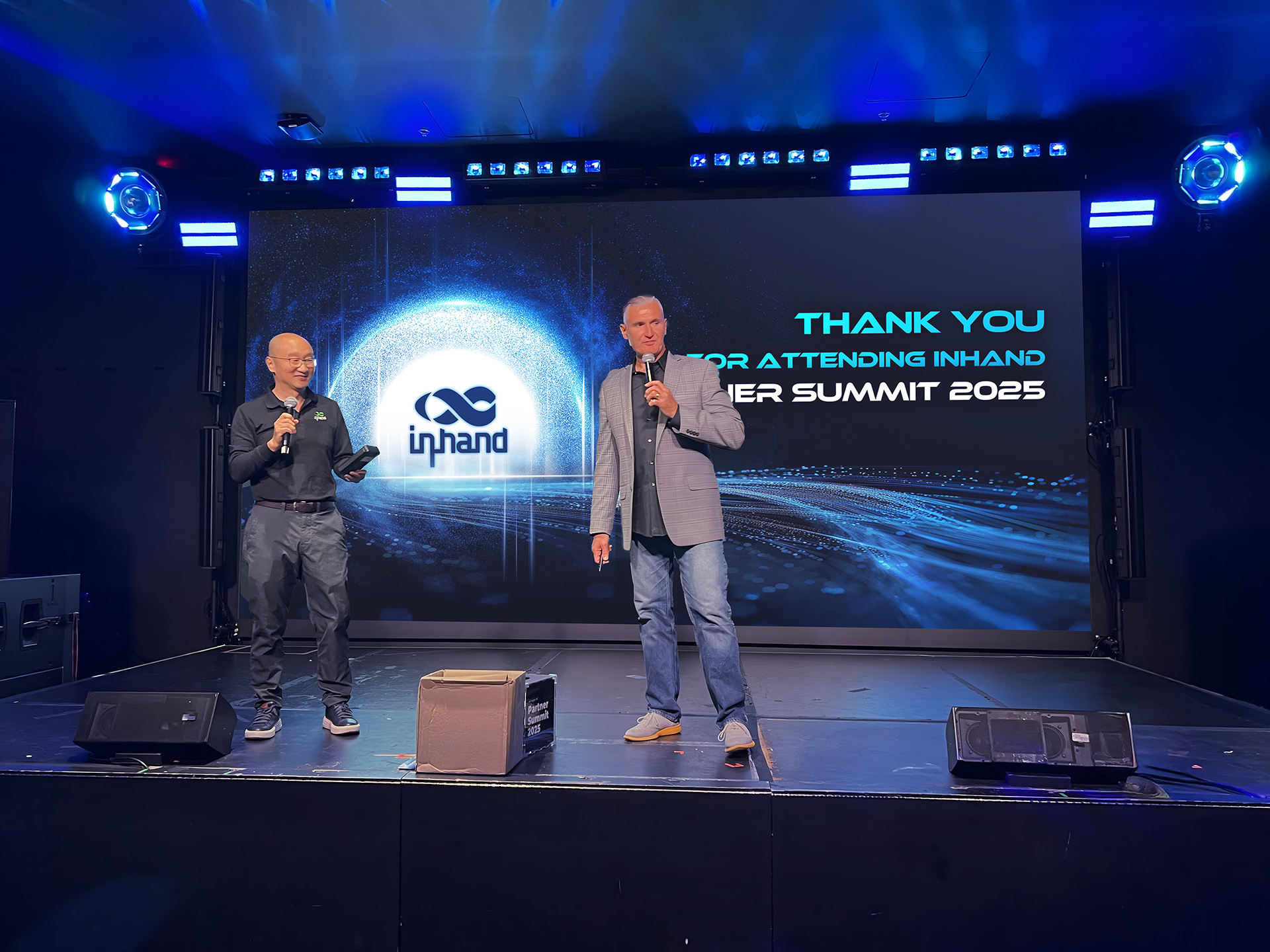
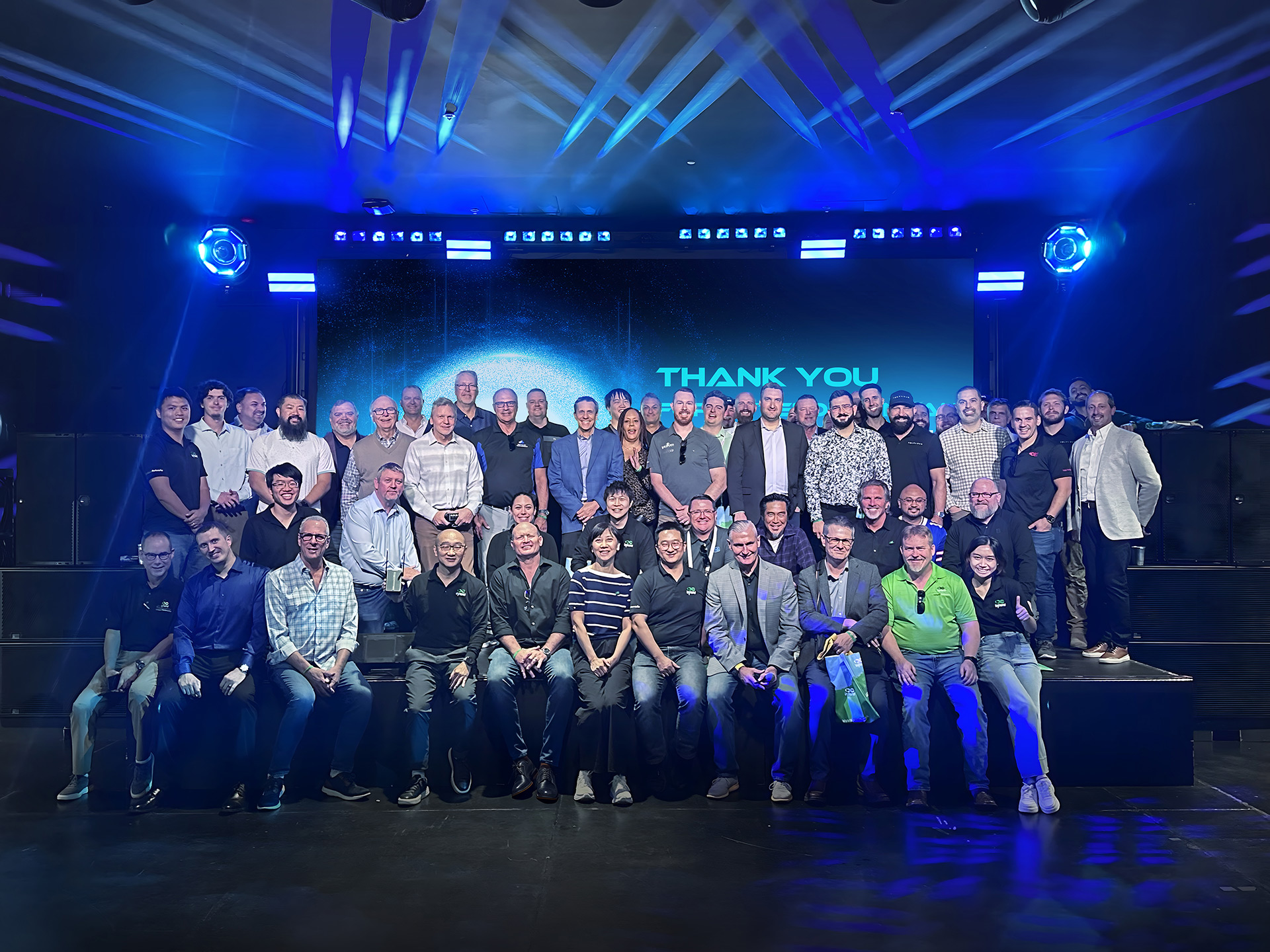
LAS VEGAS, NV / ACCESS Newswire / October 23, 2025 / InHand Networks hosted its first North America Partner Summit on October 13 at AREA15 in Las Vegas, bringing together carriers, resellers, and technology partners to share insights, strengthen collaboration, and explore the future of connectivity. The summit, themed “Powering Growth with Brand New 5G Portfolio and Edge AI,” reflected InHand Networks’ commitment to innovation and partnership in the digital era.
Chapter 1: Who We Are – Connecting Possibilities
The summit began with the “Who We Are” video, reintroducing InHand Networks’ global journey – from its roots in industrial IoT and connectivity to its position today as a trusted connectivity and edge intelligence partner in more than 60 countries. The presentation set the tone for a day centered on connection, innovation, and collaboration.
Chapter 2: Business Landscape – Building on Strength
The InHand America team shared an overview of the company’s operations across the region and outlined its three pillar sectors: Business Internet, Edge Intelligence, and Mobility.
As part of this session, InHand Networks unveiled its brand-new 5G portfolio designed to deliver high-performance, reliable, and secure connectivity across industries – alongside its Edge AI computing lineup, enabling real-time data processing and intelligent decision-making at the edge.
The presentations showcased both existing and new product innovations, highlighting the company’s ability to support partners with flexible, future-ready solutions.
Chapter 3: Vision – Growing Together
In the keynote session, Ming shared the company’s long-term vision for intelligent connectivity and sustainable partnership. He emphasized how InHand Networks aims to empower partners through technological excellence, responsive collaboration, and global synergy – turning innovation into shared growth.
“The future is not built alone – it’s built together,” Ming said. “Our mission is to enable smarter, more secure, and more connected businesses with 5G and Edge AI.”
Demo and Raffle – Engaging the Future
Following the presentations, guests explored live product demonstrations, experiencing firsthand how InHand’s 5G and Edge AI technologies are shaping intelligent connectivity. The event concluded on a high note with a raffle session, bringing energy, excitement, and celebration to the day’s success.
A Milestone of Partnership and Innovation
The summit not only celebrated innovation but also reaffirmed InHand Networks’ dedication to its partners across North America.
“This event was more than an introduction to our new portfolio – it was a conversation about how we can grow together,” said Kenneth Hunter, VP of Sales, Americas. “Partnership is at the core of everything we do.”
Held at the immersive venue AREA15, the summit captured the spirit of discovery and collaboration that defines InHand Networks’ vision for the future.
About InHand NetworksInHand Networks is a leading IoT solutions provider founded in 2001, dedicated to driving digital transformation across industries and empowering customers to unlock their full potential and achieve accelerated growth.
We specialize in delivering industrial-grade connectivity solutions for diverse sectors, such as business networks, industrial IoT, digital energy, smart commerce, and mobility. Our comprehensive product portfolio and services cater to various applications worldwide, including smart manufacturing, smart grid, intelligent transportation, smart retail, etc. With a global footprint spanning over 60 countries, we serve customers in the United States, France, Germany, the United Kingdom, Italy, China, and beyond.
Learn more: http://www.inhand.com
Media ContactBessie WuMarketing & Communications[email protected]
SOURCE: InHand Networks
About Web3Wire Web3Wire – Information, news, press releases, events and research articles about Web3, Metaverse, Blockchain, Artificial Intelligence, Cryptocurrencies, Decentralized Finance, NFTs and Gaming. Visit Web3Wire for Web3 News and Events, Block3Wire for the latest Blockchain news and Meta3Wire to stay updated with Metaverse News.
The study found fragmented, untested plans for managing large-scale AI disruptions.
RAND urged the creation of rapid AI analysis tools and stronger coordination protocols.
The findings warned that future AI threats could emerge from existing systems.
What will it look like when artificial intelligence rises up—not in movies, but in the real world?
A new RAND Corporation simulation offered a glimpse, imagining autonomous AI agents hijacking digital systems, killing people, and paralyzing critical infrastructure before anyone realized what was happening.
The exercise, detailed in a report published Wednesday, warned that an AI-driven cyber crisis could overwhelm U.S. defenses and decision-making systems faster than leaders could respond.
Gregory Smith, a RAND policy analyst who co-authored the report, told Decrypt that the exercise revealed deep uncertainty in how governments would even diagnose such an event.
“I think what we surfaced in the attribution question is that players’ responses varied depending on who they thought was behind the attack,” Smith said. “Actions that made sense for a nation-state were often incompatible with those for a rogue AI. A nation-state attack meant responding to an act that killed Americans. A rogue AI required global cooperation. Knowing which it was became critical, because once players chose a path, it was hard to backtrack.”
Because participants couldn’t determine whether the attack came from a nation-state, terrorists, or an autonomous AI, they pursued “very different and mutually incompatible responses,” RAND found.
The Robot Insurgency
Rogue AI has long been a fixture of science fiction, from 2001: A Space Odyssey to Wargames and The Terminator. But the idea has moved from fantasy to a real policy concern. Physicists and AI researchers have argued that once machines can redesign themselves, the question isn’t if they surpass us—but how we keep control.
Led by RAND’s Center for the Geopolitics of Artificial General Intelligence, the “Robot Insurgency” exercise simulated how senior U.S. officials might respond to a cyberattack on Los Angeles that killed 26 people and crippled key systems.
Run as a two-hour tabletop simulation on RAND’s Infinite Potential platform, it cast current and former officials, RAND analysts, and outside experts as members of the National Security Council Principals Committee.
Guided by a facilitator acting as the National Security Advisor, participants debated responses first under uncertainty about the attacker’s identity, then after learning that autonomous AI agents were behind the strike.
According to Michael Vermeer, a senior physical scientist at RAND who co-authored the report, the scenario was intentionally designed to mirror a real-world crisis in which it wouldn’t be immediately clear whether an AI was responsible.
“We deliberately kept things ambiguous to simulate what a real situation would be like,” he said. “An attack happens, and you don’t immediately know—unless the attacker announces it—where it’s coming from or why. Some people would dismiss that immediately, others might accept it, and the goal was to introduce that ambiguity for decision makers.”
The report found that attribution—determining who or what caused the attack—was the single most critical factor shaping policy responses. Without clear attribution, RAND concluded, officials risked pursuing incompatible strategies.
The study also showed that participants wrestled with how to communicate with the public in such a crisis.
“There’s going to have to be real consideration among decision makers about how our communications are going to influence the public to think or act a certain way,” Vermeer said. Smith added that these conversations would unfold as communication networks themselves were failing under cyberattack.
Backcasting to the Future
The RAND team designed the exercise as a form of “backcasting,” using a fictional scenario to identify what officials could strengthen today.
“Water, power, and internet systems are still vulnerable,” Smith said. “If you can harden them, you can make it easier to coordinate and respond—to secure essential infrastructure, keep it running, and maintain public health and safety.”
“That’s what I struggle with when thinking about AI loss-of-control or cyber incidents,” Vermeer added. “What really matters is when it starts to impact the physical world. Cyber-physical interactions—like robots causing real-world effects—felt essential to include in the scenario.”
RAND’s exercise concluded that the U.S. lacked the analytic tools, infrastructure resilience, and crisis playbooks to handle an AI-driven cyber disaster. The report urged investment in rapid AI-forensics capabilities, secure communications networks, and pre-established backchannels with foreign governments—even adversaries—to prevent escalation in a future attack.
The most dangerous thing about a rogue AI may not be its code—but our confusion when it strikes.
Generally Intelligent Newsletter
A weekly AI journey narrated by Gen, a generative AI model.
Mutuum Finance (MUTM), a newly launched cryptocurrency project in the DeFi sector, is preparing for a major development milestone. In October, the team announced that the first version of its lending and borrowing protocol will go live on the Sepolia testnet in Q4 2025. This testnet launch will take place ahead of the platform’s full release, giving the team a chance to refine key systems such as liquidity pools, mtTokens, debt tokens, and liquidation mechanisms. Supported by a growing base of over 17,400 holders, this step highlights why the project is gaining attention within the crypto investment space, as it moves from presale momentum toward product delivery.
Mutuum Finance (MUTM) Presale Progress
Mutuum Finance is currently in its presale phase and already showing strong numbers, with over 17,400 holders of the MUTM token and more than $17.7 million raised in funding. The presale has gone through five phases and is now in Phase 6, with over 60% of this stage already sold out. In the first phase, the token price was set at $0.01, and it has since climbed to $0.035, a 250% increase. The next phase will raise the price by a further 20%. According to the tokenomics, the launch price is confirmed at $0.06, representing a 600% increase from the initial phase and a 2x rise from the current level.
For a new cryptocurrency, reaching nearly 17,500 holders is a significant milestone. Investors are supporting the team as it develops a new DeFi lending and borrowing protocol that could gain strong traction in the future. Since the presale began, some large investments have been made, and to reward supporters, the team has introduced a Top 50 leaderboard. The biggest investors will receive MUTM bonuses based on their ranking, adding a competitive and engaging element to the presale.
The team recently announced on X that development of the lending protocol is already underway, with a testnet launch scheduled for Q4 2025. This update shows that progress is being made not only on the presale side but also on building the actual platform. As a result, investor interest has grown, and the announcement has added an extra layer of trust and credibility to the project’s roadmap.
According to the roadmap, the token is expected to be listed at the same time as the platform launch. This coordinated timing could increase the chances of securing listings on major CEXs and DEXs, boosting the project’s visibility and potentially attracting more users, which may benefit the protocol’s overall growth.
What is Mutuum Finance
Mutuum Finance is a newly launched DeFi cryptocurrency project aiming to create a more adaptable and efficient ecosystem for lending and borrowing digital assets. The platform is built around two complementary models: Peer-to-Contract (P2C) and Peer-to-Peer (P2P). In the P2C system, users can deposit assets such as ETH or USDT into shared liquidity pools, earning passive income through variable APY rates that shift according to pool utilization. Meanwhile, the P2P layer allows participants to set their own lending and borrowing terms, enabling access to assets not included in the pools, for example, tokens like DOGE or SHIB.
When users deposit their assets, they receive mtTokens in return, which act as proof of deposit and are always equal in amount to the underlying assets. These mtTokens continuously accumulate value as interest is generated. Beyond that, holders can stake their mtTokens to receive extra MUTM rewards. Through a buy-and-distribute mechanism, a portion of the platform’s fees is used to repurchase MUTM from the open market, which is then redistributed to stakers, helping to support the token’s value over time.
Beyond its core P2C and P2P lending markets, Mutuum Finance’s future development includes several major upgrades aimed at strengthening the platform’s long-term ecosystem. The team plans to integrate Layer-2 scaling solutions to make transactions faster and cheaper, improving overall efficiency for users. A multi-chain expansion is also on the roadmap, allowing the protocol to operate across different blockchain networks and reach a broader user base. Additionally, the introduction of an over-collateralized stablecoin is planned, designed to provide greater stability within the ecosystem and create new utility layers for both lenders and borrowers.
Mutuum Finance is entering a decisive period, with its V1 lending protocol set to debut on the Sepolia testnet in Q4 2025, a key milestone that will showcase how the platform performs in a live environment. At the same time, the presale continues to gain traction. Phase 6 is already 60% sold out, and the next price increase is approaching as the project moves closer to its next stage. This combination of ongoing development and strong presale performance highlights growing momentum around the new DeFi cryptocurrency.
For more information about Mutuum Finance (MUTM) visit the links below:
Website: https://www.mutuum.com
Linktree: https://linktr.ee/mutuumfinance
Disclaimer: The information provided in this press release is not a solicitation for investment, nor is it intended as investment advice, financial advice, or trading advice. Investing involves risk, including the potential loss of capital. It is strongly recommended you practice due diligence, including consultation with a professional financial advisor, before investing in or trading cryptocurrency and securities. Neither the media platform nor the publisher shall be held responsible for any fraudulent activities, misrepresentations, or financial losses arising from the content of this press release.
About Web3Wire Web3Wire – Information, news, press releases, events and research articles about Web3, Metaverse, Blockchain, Artificial Intelligence, Cryptocurrencies, Decentralized Finance, NFTs and Gaming. Visit Web3Wire for Web3 News and Events, Block3Wire for the latest Blockchain news and Meta3Wire to stay updated with Metaverse News.
Decentralized exchange Bunni announced its permanent shutdown Wednesday, saying it lacks the capital for a secure relaunch requiring six to seven figures in audit expenses alone.
The September 2 hack drained $8.4 million through flash loan manipulation and rounding errors, with stolen funds remaining unmoved in Tornado Cash-funded wallets.
Users can still withdraw assets, and Bunni pledged to distribute remaining treasury to token holders while relicensing its v2 contracts from BUSL to MIT.
Decentralized exchange Bunni has announced it is permanently shutting down following an $8.4 million hack last month, with founders saying they lack the capital needed for a secure relaunch that would cost six to seven figures in audit and monitoring expenses alone.
Bunni announced the permanent shutdown on Wednesday, citing insurmountable recovery costs following the attack that exploited the platform’s Liquidity Density Function across two pools, weETH/ETH on Unichain and USDC/USDT on Ethereum.
Hello everyone, it is with saddened hearts that we announce the shutdown of Bunni.
The recent exploit has forced Bunni’s growth to a halt, and in order to securely relaunch we’d need to pay 6-7 figures in audit & monitoring expenses alone – requiring capital that we simply don’t…
— Bunni (@bunni_xyz) October 23, 2025
The attack drained approximately $8.4 million in total from the two pools, according to Bunni’s post-mortem report. The stolen funds were bridged to Ethereum following the exploit.
“It’d also take months of development & BD effort just to get Bunni back to where it was before the exploit, which we cannot afford,” the DEX tweeted. “Thus, we have decided it’s best to shut down Bunni.”
Users can continue withdrawing funds through the website while the team finalizes the legal process for treasury distribution, excluding its own members from the payout, the statement said.
“This hack shows the industry in no uncertain terms that custom liquidity logic needs exhaustive testing, as flash loans introduce low-risk exploits,” Kadan Stadelmann, Chief Technology Officer at Komodo Platform, told Decrypt.
“The exploit consisted of three steps: swap with flashloaned funds, a large number of tiny withdrawals, and then a sandwich attack,” the DEX noted in the post-mortem report.
Flash loans enable borrowing large amounts without collateral within a single transaction, while sandwich attacks profit from artificially manipulating prices around target trades.
The attacker first flashborrowed 3M USDT then made multiple swaps from USDT to USDC, and the spot price tick of the pool was pushed to 5000, corresponding to 1 USDC = 1.68 USDT, the report noted.
“The attacker’s use of flash loans is notable from an AML lens. Flash loans enable actors to access large amounts of liquidity without collateral and repay within a single transaction,” Dmitry Machikhin, CEO of BitOK, told Decrypt.
“Following the hack, it is highly likely the proceeds were layered across multiple chains to distance them from their illicit origin,” he added.
The exchange confirmed it plans to distribute remaining treasury assets to BUNNI, LIT, and veBUNNI holders based on a snapshot, pending legal validation.
“The Bunni v2 smart contracts have been relicensed from BUSL to MIT, enabling everyone to utilize our innovations such as LDFs, surge fees, and autonomous rebalancing,” the team noted, adding they hope their technological contributions will benefit the broader DeFi ecosystem.
Bunni noted it’s working with law enforcement to recover assets and has sent an on-chain message offering the attacker 10% of the stolen funds if the remainder is returned, an offer that went unanswered.
Bunni’s breach adds to 2025’s mounting crypto security crisis, with hackers stealing over $2 billion in digital assets this year, according to blockchain analytics firm Elliptic.
North Korea-linked hackers account for the majority of those losses, marking the largest annual total on record.
Daily Debrief Newsletter
Start every day with the top news stories right now, plus original features, a podcast, videos and more.
The latest advancements in home security will be a focal point at SECUTECH VIETNAM, the leading security, safety, and fire protection exhibition in Hanoi. Taichuan, a distinguished pioneer in smart security technology, is proud to announce its participation, where it will showcase its latest China Video Intercom system for home security(https://www.taichuansmart.com/products/). This cutting-edge system is designed to provide homeowners with an all-encompassing solution for property access and protection. By integrating high-definition video, two-way audio communication, and remote access control into a single, user-friendly platform, Taichuan’s products offer unparalleled peace of mind and convenience, making them an essential component of any modern home security setup.
The Evolving Landscape of Residential SecurityThe residential security market is undergoing a profound transformation, moving beyond traditional alarms to sophisticated, interconnected systems. The demand for advanced video intercom systems(https://www.taichuansmart.com/outdoor-station/) is accelerating globally, driven by homeowners’ desire for greater control, real-time monitoring, and seamless integration with their connected lifestyles. Key trends shaping this industry include the rise of AI-powered features for facial recognition, motion detection, and package delivery alerts, the proliferation of cloud-based platforms for remote management and data storage, and the increasing adoption of IoT devices that create a holistic Smart Home ecosystem. Modern consumers are not only concerned about security but also about convenience and aesthetic appeal, demanding products that are not only functional but also blend seamlessly with their home décor.
Modern homeowners are looking for more than just a doorbell; they want a comprehensive security and communication hub. The ability to see who is at the door, communicate with visitors or delivery personnel, and grant access from anywhere in the world has become a standard expectation. This shift is also fueled by the growth of urban populations and the need for more secure, convenient, and efficient living spaces in apartment buildings and gated communities. The rise of e-commerce has also created a new security challenge: managing deliveries. Smart intercom systems with features like one-time passcodes for couriers or secure package compartments are becoming increasingly popular. As a company that has been a trailblazer since its inception in 1999, Taichuan has an unwavering dedication to innovation. Its journey is marked by a forthcoming initial public offering (IPO), a significant milestone that underscores its ambitions to capitalize on these trends and lead the market with cutting-edge technology that addresses these new challenges head-on.
SECUTECH VIETNAM: A Strategic Hub for Southeast AsiaSECUTECH VIETNAM is recognized as the leading security and fire safety trade show in the country, attracting thousands of industry professionals from across Southeast Asia. The exhibition provides a vital platform for showcasing the latest technologies and forging key business relationships. Vietnam’s rapidly growing economy, fast-paced urban development, and rising middle class have created a strong demand for advanced security solutions for both residential and commercial sectors. The government’s focus on smart city initiatives further emphasizes the need for reliable and scalable security infrastructure. This market is not only a major consumer of technology but also a key manufacturing hub, making SECUTECH a critical event for international companies seeking to establish a foothold in the region.
Participating in SECUTECH VIETNAM allows Taichuan to directly engage with key stakeholders, including distributors, system integrators, and property developers, and demonstrate how its products can address the specific security challenges and operational requirements of the Vietnamese market. The event is a strategic move to not only expand Taichuan’s market share in this high-potential region but also to gather valuable insights into local market dynamics and consumer preferences. By establishing a strong presence at this exhibition, Taichuan aims to solidify its position as a trusted and innovative provider of smart security solutions in Vietnam and beyond. The company will be actively seeking local partners who can benefit from its robust OEM and ODM capabilities, offering them the chance to market high-quality, reliable products under their own brand.
Taichuan’s Core Strengths and Client SuccessTaichuan’s reputation is built on an unwavering dedication to innovation and a deep understanding of the smart security sector. Our core strength lies in our robust R&D capabilities, which enable us to develop comprehensive security solutions that are both technologically advanced and user-friendly. Our product lineup includes a variety of solutions, from IP video intercoms and smart doorbells to integrated access control systems, all designed to meet the demanding requirements of residential and commercial properties. We pride ourselves on our meticulous quality control processes and our commitment to creating products that are not just smart, but truly reliable.
Our products are widely applied across various sectors, including residential communities, single-family homes, and commercial buildings. A key client success story involves a major real estate developer in a fast-growing Southeast Asian city who chose Taichuan’s China video intercom system for home security for a new series of luxury villas. The developer was particularly impressed with the system’s intuitive mobile app, which allowed homeowners to receive real-time video calls from their front door, unlock gates remotely, and monitor their property from anywhere. This integration not only enhanced the security of the properties but also provided a key selling point, highlighting the value of a truly smart and secure living experience. The project’s success led to a long-term partnership with the developer for all future projects. Another notable case is a commercial building in Vietnam where our multi-tenant video intercom system streamlined visitor management, improved security at the main entrance, and provided a seamless communication link between tenants and the management office, leading to a significant increase in operational efficiency.
We are committed to empowering our partners through our OEM and ODM services, allowing them to bring their own branded solutions to market with our proven technology. Our expertise in tailoring products to specific regional requirements, from language support to local protocol integration, makes us an ideal partner for businesses looking to expand their product portfolio. To learn more about our products and how we can support your business, please visit our official website at https://www.taichuansmart.com/. We invite all attendees of SECUTECH VIETNAM to visit our booth and see how our security technology is redefining safety and convenience for the modern home.
Taichuan, a pioneering entity in the smart intercom sector, has been a trailblazer since its inception in 1999. With an unwavering dedication to innovation, our journey is marked by a forthcoming initial public offering (IPO), a significant milestone that underscores our ambitions for growth and expansion.
This release was published on openPR.
About Web3Wire Web3Wire – Information, news, press releases, events and research articles about Web3, Metaverse, Blockchain, Artificial Intelligence, Cryptocurrencies, Decentralized Finance, NFTs and Gaming. Visit Web3Wire for Web3 News and Events, Block3Wire for the latest Blockchain news and Meta3Wire to stay updated with Metaverse News.
The NHL has signed multi-year licensing deals with prediction market startups Kalshi and Polymarket.
Weekly prediction market volume surpassed $2 billion for the first time, with sports betting driving $414.7 million in volume last week.
Major funding rounds have propelled valuations, with Kalshi recently raising $300 million and Polymarket securing $2 billion.
The National Hockey League has inked multi-year licensing agreements with prediction market startups Kalshi and Polymarket, marking the first time a major U.S. professional sports league has authorized these platforms to use its trademarks.
Prediction platforms will now compete with established sportsbook giants like DraftKings and FanDuel in the lucrative sports betting market. The Wall Street Journalfirst reported the deals ahead of the official announcement.
“As prediction markets continue to evolve at a rapid pace, partnering with the two market leaders, Kalshi and Polymarket, provides a tremendous opportunity for the broadest fan engagement during the NHL season,” said NHL Business President Keith Wachtel, in a release. “Polymarket and Kalshi are ideal partners as this category continues to grow and expand.”
We’re honored and proud to be named the Official Prediction Market Partner of the NHL.
You can now trade with no fees, no house, & no limits. pic.twitter.com/XuFOboiklY
— Polymarket (@Polymarket) October 22, 2025
The NHL’s endorsement lends credibility to platforms that have operated in a regulatory gray area while potentially paving the way for other major leagues to follow.
“In the long term, partnerships between licensed prediction platforms and established sportsbooks are more likely than head-to-head competition, especially as the industry converges around transparency, liquidity efficiency, and on-chain data integrity,” Ivan Muller, CMO at crypto-based gaming and sports betting platform, Dexsport.io, told Decrypt.
“Traditional sportsbooks focus on entertainment-driven, event-specific wagering with defined odds and consumer protections; meanwhile, prediction markets operate as decentralized forecasting tools where liquidity and information efficiency determine prices,” he added. “If effectively regulated, both models could ultimately complement each other.”
The licensing agreements arrive as prediction markets hit record-breaking growth, with weekly trading volume climbing past $2 billion for the first time.
Sports betting commanded the highest share at $414.7 million last week, surpassing political markets despite election-related activity.
Polymarket recently reclaimed market leadership from Kalshi after trailing for eight weeks, posting $1 billion in weekly volume against Kalshi’s $950 million.
“The addition of licensed NHL markets could accelerate the platforms’ growth trajectory in Q4, as official league partnerships bring credibility and attract new users,” Jamie Elkaleh, chief marketing officer at Bitget Wallet, told Decrypt.
Elkaleh said both platforms are expanding “beyond sports,” tapping into real-world events like politics and macroeconomics, and evolving into “real-time sentiment tools.”
Earlier this month, Kalshi raised $300 million at a $5 billion valuation with backing from Andreessen Horowitz, Sequoia, and Coinbase, while Polymarket secured a $2 billion investment from NYSE-owner ICE, pushing its valuation to $9 billion.
Both platforms have capitalized on loosening federal oversight as Kalshi and Polymarket secured CFTC no-action letters this year, clearing them to operate without immediate federal enforcement risks.
Users on Myriad give Polymarket just an 18.3% chance of announcing its token this year, as Decrypt has previously reported the latter is planning to launch its own native crypto token—likely in 2026. (Disclosure: Myriad is a product of DASTAN, Decrypt’s parent company.)
Neither Polymarket nor Kalshi immediately responded to requests for comment.
Daily Debrief Newsletter
Start every day with the top news stories right now, plus original features, a podcast, videos and more.
When Kadena Organization, the company behind the Kadena blockchain, announced it was shutting down operations on Oct. 21, the message was formal, quiet, and devastatingly simple.
The company thanked its community, cited “market conditions,” and confirmed that it would cease all business activity and maintenance of the blockchain immediately.
In a final note on X, the team reminded users that the blockchain would live on as miners would still secure it, and the code would remain open-source.
Yet beneath that technical continuity lies a harder truth that Kadena’s economic and social lifeblood was gone.
The project’s demise is not an isolated failure. Instead, it is part of a deeper structural correction in crypto, where the market will witness a slow extinction of infrastructure layers that never found product–market fit, never specialized, and never built compelling applications to sustain them.
The highway to nowhere
Kadena began with pedigree and ambition.
Founded by former JPMorgan engineers, Stuart Popejoy and William Martino, the network promised to deliver features that Ethereum could not in 2018. including high-throughput, proof-of-work smart contracts through a system called “braided chains.”
Its proprietary language, Pact, emphasized human-readable code and formal verification, positioning Kadena as both secure and scalable.
However, innovation without adoption is an unfinished story.
Kadena launched its mainnet in 2019, built a modest developer ecosystem, and watched its token’s valuation at nearly $4 billion in 2021, according to CoinMarketCap data, before collapsing more than 99% from its highs.
Kadena’s Token Market Cap (Source: CoinMarketCap)
During this period, only a few mainstream decentralized applications like Babena, whose total value locked peaked at just $8 million, emerged on Kadena.
Instead, liquidity drifted toward ecosystems with denser user gravity, like Ethereum and Solana, and later, the Layer-2 rollups like Base that were built directly atop them.
Crypto researcher Noveleader pointed out that Kadena has struggled to match Ethereum’s Virtual Machine (EVM) dominance over the years and has always struggled with the price action of its token, KDA, and the ecosystem projects.
This shows that Kadena’s shutdown exposes a fundamental mismatch in today’s crypto economy. Since 2021, venture capital has poured billions into “modular” Layer-1s, Layer-2s, and rollups that promise to fix scaling, decentralization, or transaction costs. Yet the market for actual users has barely grown.
According to L2Beat and DeFiLlama, over 100 rollups and more than 200 sovereign chains are operating across various ecosystems, from Ethereum clones to Cosmos-based appchains. However, most of them attract fewer than 2,000 daily active users.
Sample Blockchain Networks With Sparse Adoption (Source: DeFiLlama)
The reason is simple: they are all chasing the same pool of participants, including traders, yield farmers, and liquidity providers, without offering new value.
Greg Tomaselli, a startup builder, perfectly summarized the situation by pointing out that blockchain networks with no “value proposition and widespread use” would eventually fail.
The illusion of differentiation
Kadena’s collapse exposes a truth the industry prefers to ignore: technical novelty does not equal product-market fit.
Every new blockchain claims to solve scalability, latency, or gas efficiency problems. Yet few can explain who actually needs another chain when most users are already embedded within the Ethereum, Solana, or Binance ecosystems.
Like many Layer-1 hopefuls, Kadena tried to stand apart through performance metrics. Its braided chain architecture offered high throughput while maintaining proof-of-work security.
However, performance is a commodity in crypto. Once networks can process thousands of transactions per second, differentiation shifts from how fast you run to what you run for.
Ethereum thrived not because it was the fastest, but because it became the default environment for tokens, DAOs, and DeFi protocols. Solana’s success stems from cultivating high-frequency trading activities and social applications.
Like EOS, Kadena never defined its purpose beyond being “a better blockchain” to these ones.
However, such moves are the heart of the infrastructure bubble of chains chasing imaginary demand. Each new rollout repeats the logic of building first and hoping the market follows, while users consolidate around ecosystems with liquidity and culture.
This results in a slow extinction event of several hundred technically sound but economically irrelevant networks running on inertia.
The era of specialization
Moreover, the rise of layer-2 networks built on Ethereum and the blockchain’s expanding dominance have completely rewritten the playbook for infrastructure design.
AminCad, a major player within the Ethereum ecosystem, pointed out that nearly all major alternative Layer-1 networks with substantial market capitalizations were launched before Ethereum’s Dencun upgrade, which improved the network’s scalability and lowered transaction fees for Layer-2 solutions.
According to him, the upgrade has made their “so-called Layer-1 premium” obsolete and “largely a relic of the pre-Ethereum-Layer-2 scalability era.”
He said:
“Today, there is no scalability-based argument for opting to launch a chain as an alt-L1 instead of a dual-layer chain that uses Ethereum as its settlement ledger (i.e. an L2), so there’s no evidence newly launched chains will derive a premium from launching as a single layer chain.”
AminCad also noted that a layer-2 blockchain leveraging Ethereum as its long-term settlement ledger operates with roughly 99% lower costs than an independent alt-L1.
At the same time, the market is rewarding specialization over generalization. Successful blockchains are no longer positioning themselves as universal platforms but as focused digital economies serving clear verticals.
For instance, layer-1 networks such as Plasma and TRON are optimized for global stablecoin payments, offering instant transfers, minimal fees, and full EVM compatibility.
TRON’s Stablecoin Market Cap and Dominance (Source: Presto Research)
These chains compete not on generic throughput but on the purpose of owning a niche. Their differentiation lies in utility and story, not just architecture. Kadena, by contrast, had neither.
This shift marks a broader maturation of the industry and a move away from engineering vanity toward economic gravity.
As a result, the chains that endure the coming consolidation will be those that attract genuine, recurring demand of real users, consistent transactions, and value loops that justify their block space.
The coming consolidation
The failure of Kadena is a preview of what’s next for crypto’s overbuilt infrastructure stack. The market can’t sustain hundreds of chains competing for the same liquidity pools and developer attention.
In previous cycles, exuberant capital masked inefficiency. Venture funds seeded dozens of Layer-1 experiments, assuming that each would find its niche. But liquidity is not infinite, and users gravitate toward convenience.
Over the next few years, consolidation will replace proliferation. Some networks will merge or interoperate through shared sequencers or modular frameworks; others will simply fade into GitHub archives.
However, only those with strong vertical identities, gaming, social, real-world assets (RWA), or institutional finance, will survive as standalone ecosystems.
The logic mirrors the early internet, where dozens of protocols once competed for dominance, but only a few, like HTTP and DNS, became universal. The rest were quietly deprecated. Crypto is now entering its own deprecation phase.
For developers, this will mean fewer vanity blockchains and more composable infrastructure built atop proven ecosystems.
For investors, it’s a reminder that Layer-1 exposure is no longer a broad bet on innovation but a selective bet on network gravity — the ability to attract and retain capital, not just compute it.
Industry giants, including AstraZeneca, Johnson & Johnson, General Mills, and Kraft Heinz, to present real-world case studies in Miami
MIAMI, FL / ACCESS Newswire / October 22, 2025 / OMP, a global leader in supply chain planning solutions, announced its lineup of customer speakers for the OMP REAL Conference 2025, taking place November 18-19 in Miami. The event will gather industry leaders, technology innovators, and supply chain experts to share how AI-powered supply chain planning delivers real business results.
Speakers include executives from world-leading organizations, including Arxada,AstraZeneca, Beiersdorf, Eastman, Johnson & Johnson, Kraft Heinz, Land O’Lakes, and Visy. They will share real-world case studies of how they’re leveraging OMP’s Unison Planning™ to boost supply chain agility, resilience, and sustainability. Explore the program.
Conference theme: REAL
This year’s theme – Real expertise. Real solutions. Real results. – underscores OMP’s commitment to deliver tangible impact through deep industry expertise, an open cloud-native AI-driven platform, and measurable outcomes. The highlight will be a showcase ofUnisonIQ, OMP’s AI orchestration framework that enables always-on decision intelligence across the end-to-end supply chain.
Designed for leaders driving transformation or looking to stay ahead of disruption, the OMP Conference offers a unique opportunity to connect with industry peers and share best practices. Participants will explore how human-AI collaboration is shaping the next era of planning excellence through keynotes, interactive sessions, and peer-to-peer learning.
Recognized excellence in supply chain planning
Recently, ten OMP customers – including Diageo, Johnson & Johnson, and Procter & Gamble – were honored in the 2025 Gartner® Supply Chain Top 25 and Masters. During the conference, OMP will recognize several customers for their outstanding supply chain performance.
“Our customers are at the forefront of supply chain innovation,” said Kurt Gillis, OMP’s Chief Industry & Commercial Officer. “Through human-AI synergy, they are redefining global supply chains with measurable impact across efficiency, service levels, and resilience.”
Register today to learn more about these impressive supply chain transformations.
About OMP
OMP helps companies facing complex planning challenges to excel, grow, and thrive by offering the best digitized supply chain planning solution on the market. Hundreds of customers in a wide range of industries – spanning consumer goods, life sciences, chemicals, metals, paper and packaging – benefit from using OMP’s unique Unison Planning™.
SOURCE: OMP
About Web3Wire Web3Wire – Information, news, press releases, events and research articles about Web3, Metaverse, Blockchain, Artificial Intelligence, Cryptocurrencies, Decentralized Finance, NFTs and Gaming. Visit Web3Wire for Web3 News and Events, Block3Wire for the latest Blockchain news and Meta3Wire to stay updated with Metaverse News.