Web3

Home Web3 Page 77

DreamersLB LTD Expands Global Media Production, Distribution, and Broadcasting Services from Lebanon and the United Kingdom | Web3Wire

0
DreamersLB LTD Expands Global Media Production, Distribution, and Broadcasting Services from Lebanon and the United Kingdom | Web3Wire


DreamersLB LTD expands global production, distribution, and broadcasting operations from Lebanon and the United Kingdom.

Dreamers Production & Distribution (DreamersLB LTD), led by Founder & CEO Ihab El Siblani, announces the global expansion of its media production, distribution, and broadcasting services to support a growing international network of partners, creators, and TV platforms across the Middle East, Europe, and beyond.

Operating from Lebanon and the United Kingdom, DreamersLB delivers complete end-to-end solutions that cover every stage of the content lifecycle – from concept development, filming, and post-production to localization, marketing, and multi-platform distribution. The company’s broadcasting division also provides full technical and creative support for launching and managing satellite TV channels and OTT/VOD platforms under client or partner brands.

By combining regional creativity with international expertise, DreamersLB bridges MENA and global media markets, offering scalable production services, transparent business models, and a trusted distribution network. Its partnerships with regional studios in Egypt and collaboration with European technology partners further enhance its ability to deliver content seamlessly across TV, digital, and cinematic platforms.

DreamersLB continues to position itself as a cross-border media hub – connecting creators, broadcasters, and audiences worldwide through innovation, storytelling, and broadcast excellence.

For more information, visit https://www.dreamerslb.com

DreamersLB LTD61 Bridge StreetKington, HerefordHR5 3DJ, EnglandEmail: info@dreamerslb.comPhone (UK): +44 7853 753 607Phone (Lebanon): +961 70 389 618Website: https://www.dreamerslb.comPress Contact: Ihab El Siblani

DreamersLB LTD is an international media production, distribution, and broadcasting company operating from Lebanon and the United Kingdom. It provides end-to-end solutions in film and TV production and distribution, digital content creation, TV channels creation and management, and OTT/VOD platform development. DreamersLB connects regional creativity with global audiences through innovative storytelling, professional production, and reliable worldwide distribution.

This release was published on openPR.

About Web3Wire Web3Wire – Information, news, press releases, events and research articles about Web3, Metaverse, Blockchain, Artificial Intelligence, Cryptocurrencies, Decentralized Finance, NFTs and Gaming. Visit Web3Wire for Web3 News and Events, Block3Wire for the latest Blockchain news and Meta3Wire to stay updated with Metaverse News.


Source link

Microsoft Values $135 Billion Stake in OpenAI as Firms Face Legal Pressure – Decrypt

0
Microsoft Values 5 Billion Stake in OpenAI as Firms Face Legal Pressure – Decrypt


In brief

Microsoft valued its OpenAI stake at $135 billion and extended exclusive rights to frontier models through 2032.
OpenAI can now work with outside developers and release open-weight models, while Microsoft can pursue AGI independently.
The update comes as Microsoft faces an antitrust suit alleging it used Azure’s dominance to inflate ChatGPT prices.

On Tuesday, Microsoft and OpenAI announced a restructured partnership that values the Redmond giant’s stake at $135 billion, roughly 27% of OpenAI’s new public-benefit company, even as both firms navigate antitrust scrutiny and a federal lawsuit alleging compute monopolization.

The reworked pact supports OpenAI’s conversion into OpenAI Group PBC under the nonprofit OpenAI Foundation, and positions Microsoft as the company’s “frontier model partner” through 2032, according to a Tuesday statement.

Board chair Bret Taylor and CEO Sam Altman can now control appointment and removal powers over the PBC’s board, consolidating Altman’s authority. 


OpenAI will continue channeling roughly 20% of revenue to Microsoft, though both parties expect that flow to end once an independent panel certifies that artificial general intelligence has been achieved.

Microsoft retains exclusive IP licenses to OpenAI’s models and products through 2032, including post-AGI systems, but holds no rights to any consumer hardware OpenAI produces, according to the statement.

The AI giant can collaborate with third-party developers on joint products, deploy open-weight models that meet safety thresholds, serve U.S. national security agencies on any cloud infrastructure, and independently pursue its own AGI research capabilities, previously blocked by Microsoft’s exclusivity provisions.

API products developed with third parties will be exclusive to Azure, while non-API products may be served on any cloud provider.

Microsoft and OpenAI did not immediately respond to Decrypt’s request for comment.

The announcement arrives amid mounting legal pressure as a class-action suit filed two weeks earlier alleges Microsoft weaponized its 2019 Azure exclusivity arrangement to throttle computational capacity for ChatGPT, artificially maintaining subscription rates at “100 to 200 times” competitors’ levels during February’s AI pricing conflict. 

“The AI we build today will shape our tomorrow. The path we are currently on, dominated by centralized AI, is fraught with peril,” Jiahao Sun, CEO of FLock.io, told Decrypt. “When a few powerful entities control AI, we risk creating systems that reflect a narrow worldview, perpetuating biases, and eroding trust. 

OpenAI has also committed to purchasing $250 billion in additional Azure services, though Microsoft surrendered first-refusal rights as compute provider. 

The requirement that OpenAI source all computational resources exclusively from Microsoft had become a major friction point as ChatGPT’s 800 million weekly users and research demands drove up infrastructure costs.

The partnership began in July 2019 with a $1 billion investment that made Microsoft OpenAI’s exclusive cloud provider, and deepened in January 2023 with a multi-billion-dollar expansion that positioned Microsoft as OpenAI’s primary backer.

The latest announcement also lands as OpenAI disclosed concerning mental-health signals among its user base, about 1.2 million weekly users, or roughly 0.15% of actives, showed explicit indicators of suicidal planning or intent.

Generally Intelligent Newsletter

A weekly AI journey narrated by Gen, a generative AI model.


Source link

BELEVE VISION(R) Launches with Signature Platform “G.E.M.” | Web3Wire

0
BELEVE VISION(R) Launches with Signature Platform “G.E.M.” | Web3Wire


Pioneering the Future of Gaming & Entertainment Through Holographic Immersion

LOS ANGELES, CA / ACCESS Newswire / October 28, 2025 / Beleve Vision, the multi-award-winning Los Angeles-based immersive technology company behind the patented Portalgraph™ platform, has unveiled G.E.M. (Gaming Entertainment Metaverse) – a revolutionary headset-free holographic system transforming how people play, learn, and experience digital worlds.

Currently raising funds on PicMii Crowdfunding https://www.picmiicrowdfunding.com/deal/beleve%20vision/, Beleve Vision invites the public to join its mission to democratize holographic entertainment.

“We’re rewriting the rules of immersive entertainment,” said Joe Wallace, Founder of Beleve Vision and an early investor in Proto Hologram. “G.E.M. removes the friction-no wires, no heavy headsets, no barriers-just pure, shared immersion.”

Revolutionizing How We Experience Reality

Unlike traditional VR and AR systems that isolate users, G.E.M. delivers true 3D depth without goggles or wearables, projecting vivid holographic content through standard displays using the Portalgraph™ engine’s real-time perspective tracking.

Built on Unity (with Unreal Engine integration underway), G.E.M. enables developers to create games, live shows, educational modules, and brand activations that merge seamlessly into real-world environments.

Key Breakthroughs

Headset-Free Immersion: 3D content visible from any angle, enabling natural social interaction

Accessible Hardware: Works on existing screens and projectors-no expensive rigs required.

Multi-Industry Applications: Gaming, education, art, live events, and retail experiences.

Momentum & Market Impact

Poised within the booming immersive-tech sector, Beleve Vision stands apart with a patented, scalable platform that bridges digital and physical spaces. Its innovations have earned multiple awards and industry recognition for advancing the frontier of spatial entertainment.

Funds raised through PicMii will accelerate production, expand content partnerships, and grow the creator ecosystem powering G.E.M.’s evolution.

About Beleve Vision®

Beleve Vision is an award-winning immersive-technology company redefining how humans interact with digital worlds. Its flagship Portalgraph™ engine transforms ordinary displays into holographic gateways-eliminating headsets while enhancing comfort, accessibility, and connection.

Contact

Natasha JuneProject Manager, Beleve VisionPhone: 310‑926-1204Email: [email protected]https://www.picmiicrowdfunding.com/deal/beleve%20vision/

SOURCE: Beleve Vision

About Web3Wire Web3Wire – Information, news, press releases, events and research articles about Web3, Metaverse, Blockchain, Artificial Intelligence, Cryptocurrencies, Decentralized Finance, NFTs and Gaming. Visit Web3Wire for Web3 News and Events, Block3Wire for the latest Blockchain news and Meta3Wire to stay updated with Metaverse News.


Source link

Major AWS Outages and How Neo Clouds Are Changing the Scenario

0
Major AWS Outages and How Neo Clouds Are Changing the Scenario


On October 21, 2025, Amazon Web Services experienced a catastrophic outage that affected millions of users and businesses worldwide. Beginning at approximately 3:11 AM ET in the US-EAST-1 region (Northern Virginia), the outage triggered a cascade of failures that exposed a critical vulnerability in our digital infrastructure: excessive dependence on a single cloud provider. Within the first two hours, Downdetector registered over one million reports from the United States alone, with more than 400,000 additional reports from the United Kingdom, ultimately accumulating to approximately 6.5 million reports within the first phase and escalating to 17 million global reports over the complete incident duration.

The Scale of Impact

The financial toll of this incident was staggering. According to industry estimates, global businesses lost approximately $75 million per hour during the outage, with Amazon itself bearing the brunt of the damage at $72.8 million per hour. The impact extended far beyond Amazon’s operations. Prominent companies, including Snapchat ($611,986 per hour), Zoom ($532,580 per hour), Roblox ($411,187 per hour), Fortnite ($399,543 per hour), Canva ($342,466 per hour), Slack ($194,064 per hour), and Reddit ($148,402 per hour) all suffered significant revenue losses.

The disruptions affected over 1,000 companies globally, impacting critical services including Disney+, Reddit, Snapchat, PlayStation, UK government websites (Gov.uk and HM Revenue and Customs), cryptocurrency exchange Coinbase, graphic design tool Canva, cryptocurrency platform Perplexity, gaming platforms Roblox and Fortnite, and numerous financial institutions and airlines.

According to Ookla’s comprehensive analysis of the incident, Downdetector captured 17 million user reports globally across 60 countries, with the US (6.3 million reports) and UK (1.5 million reports) leading outage volumes. Services with the most reports included Snapchat (approximately 3 million reports), AWS itself (2.5 million reports), Roblox (716,000 reports), Amazon retail (698,000 reports), Reddit (397,000 reports), Ring (357,000 reports), and Instructure Canvas learning platform (265,000 reports).

AWS October 2025 Outage Global Impact by Region

Even Amazon’s own internal systems were compromised. Warehouse employees were unable to access the Anytime Pay app, and Seller Central, the platform for third-party vendors to manage their businesses, experienced an outage. Some workers were instructed to wait in break rooms as they could not access essential internal systems.

AWS’s Dominance and Vulnerability

AWS accounts for 29 to 30 % of the global cloud market share, maintaining its position as the dominant cloud provider despite slight declines year-over-year. In Q2 2025, AWS held 30 % market share, ahead of Microsoft Azure at 20 % and Google Cloud at 13 %. Combined, these “Big Three” providers control 63 % of the global cloud infrastructure market

Global Cloud Infrastructure Market Share Q2 2025

The company operates over 6 million kilometres of fibre optic cabling, maintains 38 geographic regions, and generates $132 billion in annual revenue from AWS operations alone. AWS accounts for nearly 20% of Amazon’s total sales but represents 60% of the company’s operating profit. Major clients, including Disney, the US Army, Capital One, United Airlines, and the NFL, depend on AWS infrastructure. This concentration of digital infrastructure creates systemic risk. When AWS fails, the entire internet feels the effects.

The Hidden Costs of Downtime

The financial exposure extends far beyond obvious lost revenue figures. Research reveals staggering costs associated with cloud outages across different organization sizes and industries:

According to Oxford Economics research, downtime costs an organization an average of $9,000 per minute or $540,000 per hour. A more recent report from Ponemon Institute raises this to nearly $9,000 per minute for large enterprises. For small businesses, that number drops to the lower but still-significant tune of $137 to $427 per minute.

The Uptime Institute’s 2022 Outage Analysis Report found that downtime costs exceed $300,000 per hour for 91 % of small and medium enterprises and large enterprises combined. A critical finding indicates that 44 % of mid-sized and large enterprise respondents reported that a single hour of downtime can potentially cost their businesses over one million dollars. For Fortune 1000 companies, downtime could cost as much as $1 million per hour, according to IDC survey data.

Hourly Cost of Downtime by Organization Size and Industry

High-risk industries experience even more severe impacts. Banking and finance, government, healthcare, manufacturing, media and communications, and retail sectors report average downtime costs upward of $5 million per hour.

The reputational damage compounds financial losses significantly. An Oxford Economics poll of chief marketing officers found that companies spend an average of $14 million on brand trust campaigns to repair their image after an outage. End users blame the business they interact with, not the infrastructure provider, even though the fault lies entirely with AWS. A single outage can undermine customer confidence and result in long-term revenue erosion.

Research from LogicMonitor shows that companies with frequent downtime have 16 times higher costs than those who do not. According to Siemens research, the costs of unplanned downtime are escalating, with manufacturers reporting that an hour of unplanned downtime now costs at least 50 % more than it did two years prior. Fortune Global 500 industrial organizations lose almost $1.5 trillion per year through unplanned downtime, representing a 65 % rise in two years and constituting 11 % of these firms’ turnover.

Essential Tips for Surviving AWS Outages

Diversify with Multi-Cloud Strategies Incorporating Neoclouds: Reduce dependency on AWS by integrating Neocloud providers into your architecture. For AI workloads, shift critical tasks like model training or inference to neoclouds, ensuring they run independently. This acts as a failover mechanism during AWS disruptions.

Opt for Specialized GPU Resources for AI Resilience: If your operations rely on AI, use Neocloud’s optimized GPUs to handle demanding workloads. Providers like Spheron AI offer high-performance alternatives that bypass AWS bottlenecks, maintaining best uptime even if AWS experiences outages.

Implement Hybrid Setups with Neoclouds for Redundancy: Combine Neoclouds with your existing AWS setup in a hybrid model. For instance, use Neoclouds for warm standby environments where AI components can scale quickly during an outage, minimizing recovery time and costs

Test Your Escape Plan: Just like fire drills, simulate an AWS outage and watch how your stack behaves. Can your workloads migrate seamlessly to a neocloud provider? If not, you’ve got work to do.

Think Resilience, Not Loyalty: Vendor loyalty costs more than downtime. The cloud is evolving fast, and neoclouds offer flexibility, transparency, and often 60%+ cost savings while making you immune to single-provider failures.

The Rise of NeoClouds: Transforming the Cloud Landscape

While AWS remains the dominant cloud provider with legitimate strengths, a transformative new category of cloud infrastructure is fundamentally changing how organizations approach cloud architecture: NeoClouds.

NeoClouds are growing at 35 % annually, significantly outpacing traditional hyperscaler growth rates. According to Credence Research, this growth trajectory reflects a fundamental market shift toward specialized infrastructure designed for AI and compute-intensive workloads.

The GPU cloud infrastructure market alone was valued at $3.2 billion in 2023 and is expected to grow to $25.5 billion by 2030, representing a 34.8 % compound annual growth rate. This accelerated growth is driven primarily by artificial intelligence adoption, with genAI-specific services growing at 160 to 200 % year-over-year in 2025.

Global GPU Cloud Market Expansion 2023 to 2030

Perhaps the most compelling advantage of NeoClouds is cost efficiency. An analysis from the Uptime Institute comparing pricing for NVIDIA DGX H100 nodes found that NeoClouds delivers equivalent infrastructure at 66 % lower cost than hyperscalers. Specifically.

Hyperscaler average hourly cost: $98 per DGX H100 instanceNeoCloud average hourly cost: $34 per equivalent instance

For data centers running thousands of GPUs for AI training, this translates to $1.2 million in annual savings compared to AWS, with minimal operational changes.

How Spheron AI NeoCloud is changing the Scenario

Spheron AI is an aggregated GPU cloud platform that empowers CTOs, ML teams, and startup founders to run AI workloads with higher performance and over 60% cost savings compared to traditional and specialized cloud providers. You can now lease enterprise-grade GPUs as VMs and bare metal – all from a single unified dashboard, Spheron AI delivers enterprise-grade reliability and scalability at a fraction of the cost.

No need to manage complex infrastructure, simply deploy your machine learning models on Spheron AI and scale on demand, with pay-as-you-go pricing and zero hidden fees.

Full VM Access – Complete Control: Run your AI workloads as if on your own machine. Spheron gives you root access to full virtual machines, allowing custom OS setups, driver installations, and system-level optimizations. No more container or managed sandbox limitations – you can SSH in and configure everything freely. This level of control is crucial for complex AI pipelines that may require custom libraries or GPU kernel tweaks.

Bare-Metal Performance – No Virtualization Overhead: Spheron’s infrastructure runs directly on bare metal GPU servers, eliminating hypervisor latency and “noisy neighbor” interference. Your models get 100% of the hardware’s capabilities with consistent, peak throughput. Unlike typical cloud VMs, there’s zero container or virtualization overhead to slow down training. This translates to 15–20% faster compute performance versus virtualized setups and up to 35% higher network throughput for multi-node jobs.In short, Spheron lets your GPUs run at full throttle for maximum AI performance.

Unified, Aggregated GPU Network: Spheron unifies capacity from multiple GPU providers into a single platform. Through this global aggregated network, you can deploy across enterprise data centers and independent operators alike with one interface. This architecture boosts resilience (no single point of failure) and avoids cloud vendor lock-in. It also drives costs down: by tapping underutilized GPUs worldwide, Spheron cuts compute costs by up to 80% compared to traditional clouds – all while maintaining high performance. (For example, IBM notes that its bare-metal GPU servers outperform AWS’s virtual instances on ML benchmarks, underscoring the advantage of direct hardware access.

Broad Hardware Support – From SXM5 InfiniBand to PCIe: Whether you need the latest HPC-grade accelerators or affordable retail GPUs, Spheron AI has you covered. The platform supports cutting-edge NVIDIA HGX systems (SXM form-factor GPUs with NVLink/NVSwitch and InfiniBand interconnect) for multi-GPU, multi-node training, as well as standard PCIe-based GPUs. This flexibility means you can choose the right hardware for each workload from an SXM5 H100 cluster with InfiniBand for large-scale model training, to a single PCIe GPU for dev testing.

Spheron AI’s unified console makes deploying to any of these resources seamless. (Not all GPU clouds offer this range – e.g., CoreWeave specializes in bare-metal Kubernetes with InfiniBand for high-end training, while some clouds like GCP lack any bare-metal option) With Spheron AI, you get the best of both worlds: extreme performance when you need it and cost-efficiency when you scale down.

Cost Comparison: Spheron vs. Other Providers

Dramatic Cost Savings: Spheron AI’s aggregated network is priced at roughly one-third the cost of traditional clouds. This translates to 60–75%+ lower GPU runtime expenses for your AI workloads. For example, an NVIDIA A100 GPU that costs ~$3.30/hour on Google Cloud can run for about $1.00/hour on Spheron a ~65% cost reduction

Beating Specialized GPU Clouds: Even against niche AI infrastructure providers, Spheron leads on price. Its GPU rental rates (e.g. ~$0.52/hr for an RTX 4090) are 37.05% cheaper than Lambda Labs, 44.63% cheaper than GPU Mart, and about 7.69% less than Vast.ai’s marketplace. Bottom line: you get the same or better GPUs for well over 60% cost savings in most cases.

Third-Party Validation: Independent analyses confirm that specialized GPU clouds offer huge savings over Big Tech clouds & Spheron is at the forefront of this trend. (CoreWeave, for instance, touts up to 80% savings vs. AWS) Spheron’s own users report 60%+ cost reductions after migrating intensive ML training jobs to our platform.

Every dollar saved on compute is a dollar you can reinvest in innovation.

Return on Investment Calculation

For enterprises running significant GPU workloads, shifting even 40 % of compute to NeoClouds while maintaining AWS for other services can pay for redundancy infrastructure within 12 to 18 months through savings alone, with the added benefit of eliminating catastrophic outage risk. When factoring in the potential financial exposure from a single outage (potentially $10 million to $100 million+ for large enterprises), the ROI becomes dramatically more compelling.

NeoClouds Capturing AI Infrastructure Demand

As enterprises seek to optimize costs and avoid vendor lock-in, NeoClouds are capturing an increasing portion of the GPU compute market. Morgan Stanley estimates that the GPU Infrastructure-as-a-Service (IaaS) opportunity for hyperscalers will reach $40 billion to $50 billion by 2025. If 30 % of GPU compute is resold through secondary marketplaces (NeoClouds and DePIN platforms) at a 30 % discount, this represents a $10 billion revenue opportunity.

Adding another $5 billion revenue opportunity from non-hyperscaler sources (pure DePIN networks) would yield a $15 billion revenue opportunity. Assuming NeoClouds capture 33 % market share of this opportunity ($5 billion of Gross Merchandise Value) at a 20 % take rate, this would translate to $1 billion of net revenue potential, with some projections suggesting nearly $10 billion market cap outcomes..

The Bottom Line: Resilience Through Diversification

The question is no longer “Can we afford redundancy?” but “Can we afford not to have it?” The October 2025 AWS outage potentially cost global businesses hundreds of millions of dollars in direct losses, with reputational damage extending far beyond the measurable financial impact. Organizations that had already implemented multi-cloud or decentralized strategies weathered the storm with minimal disruption, gaining a competitive advantage that only widens as digital infrastructure becomes more critical to business operations.

NeoClouds platforms represent not simply alternatives to traditional cloud providers, but a fundamental reimagining of how infrastructure resilience can be achieved through specialization, transparency, and decentralization. The next major cloud outage (and history suggests there will be one) will separate organizations that were prepared from those that were not.

The convergence of three trends in 2025 reinforces this imperative: 92 to 85 % enterprise adoption of multi-cloud strategies, 35 % annual growth rates for specialized NeoClouds.. These numbers reflect not hype but industry consensus that infrastructure concentration represents a systemic risk requiring active mitigation.

Organizations that begin their multi-cloud and NeoCloud journey now will establish competitive advantages in cost, resilience, and operational flexibility that single-cloud strategies cannot match.


Source link

Rent NVIDIA H200 GPUs: High-Memory Hopper Compute with Spheron AI

0
Rent NVIDIA H200 GPUs: High-Memory Hopper Compute with Spheron AI


The NVIDIA H200 exists for one very specific reason. Modern AI workloads are no longer compute-bound. They are memory-bound. Large language models, long-context inference, retrieval-augmented generation, and multi-modal pipelines all hit memory limits before they hit raw FLOPS. The H200 solves that problem by pushing memory capacity and bandwidth far beyond what H100 offers, while keeping the same Hopper architecture and software ecosystem.

Spheron AI gives teams direct access to H200 GPUs across spot, dedicated, and reserved configurations. You do not need to negotiate with hyperscalers, wait for allocation windows, or lock yourself into long contracts just to get usable H200 capacity.

If your models no longer fit cleanly on H100, H200 is not a luxury upgrade. It is the correct tool.

Why H200 Exists at All

From the outside, H200 looks like a small step from H100. Same Hopper architecture. Same Tensor Cores. Similar power envelope. The difference is memory.

H200 ships with 141GB of HBM3e memory and 4.8 TB per second of memory bandwidth. That is a 76% jump in capacity and over 40% more bandwidth compared to H100. For memory-bound workloads, this changes everything.

Models that previously required tensor parallelism across multiple H100s now fit on fewer GPUs. Inference pipelines can run larger batch sizes without spilling to host memory. Long-context workloads stop thrashing memory and start behaving predictably.

This is why H200 often delivers up to 1.9x faster LLM inference than H100, even though raw compute is similar.

NVIDIA H200 vs H100: Detailed Comparison for AI Training and Inference

CategoryNVIDIA H100NVIDIA H200Why it matters in practice

GPU ArchitectureHopperHopper (HBM3e upgrade)Same core architecture, but H200 removes memory bottlenecks

Memory TypeHBM3HBM3eHBM3e delivers much higher bandwidth and efficiency

VRAM Capacity80 GB141 GBLarger models fit fully in memory without sharding

Memory Bandwidth~3.0 TB/s~4.8 TB/sBandwidth dominates LLM performance at scale

Compute (FP16 / BF16 Tensor)~1,000 TFLOPS (with sparsity)~1,000 TFLOPS (same)Raw compute is similar; memory is the real upgrade

FP8 Tensor PerformanceSupportedSupported (same)Training efficiency stays similar

NVLink / NVSwitchYesYesMulti-GPU scaling remains identical

PCIe / SXM Form FactorsPCIe & SXM5Primarily SXMH200 targets large-scale data center clusters

Typical Cluster Size1–8 GPUs common8–64+ GPUs commonH200 shines in large, distributed training

Power Consumption~700 W (SXM)~700–750 W (SXM)Slightly higher power for major memory gains

Primary BottleneckMemory capacity & bandwidthCompute-bound in many workloadsH200 removes memory as the limiter

Best Use CasesTraining mid to large LLMs, inference at scaleTraining very large LLMs, high-throughput inferenceH200 unlocks new model sizes and batch configs

H200 Is Built for Inference First, Training Second

H200 can train large models, but its real strength shows up in inference and memory-heavy workloads.

If you serve large models like LLaMA-class systems, DeepSeek variants, or long-context RAG pipelines, memory capacity dictates throughput and latency. With 141GB available per GPU, H200 allows you to keep more weights, KV cache, and intermediate activations on-device.

This directly improves token throughput and reduces tail latency. It also simplifies system design. You need fewer GPUs, less sharding logic, and fewer failure points.

For training, H200 shines when batch sizes or model states exceed H100 limits. It does not replace B200 or multi-node Blackwell systems for massive pre-training. But for fine-tuning, continued training, and research-scale runs, it removes painful memory constraints.

Why Teams Choose Spheron AI for H200? Most H200 availability today sits behind enterprise sales processes. You get quoted pricing only after weeks of calls. Capacity depends on vendor allocation. Even then, utilization terms are unclear.

Spheron AI takes a different approach.

You see availability upfront.You see whether an instance is spot, dedicated, or reserved.You know the region before deployment.You know the hourly price before you talk to sales.

More importantly, Spheron aggregates H200 capacity across multiple providers. This avoids single-vendor bottlenecks and keeps pricing closer to real supply and demand instead of artificial scarcity.

H200 Configurations Available on Spheron AI

Spheron AI provides NVIDIA H200 GPUs across multiple deployment models, allowing teams to balance performance, availability, and cost as their workloads mature.

For teams that require maximum stability and sustained performance, Spheron AI offers H200 SXM reserved clusters delivered as full NVIDIA HGX systems. Each node runs 8 H200 SXM GPUs, connected via NVLink and high-bandwidth InfiniBand networking. Reserved pricing improves with longer commitments, making this option well suited for long-running training jobs, large-scale inference pipelines, and production workloads with predictable demand.

For teams that need flexibility or are still scaling usage, H200 SXM virtual machines are available as both spot and dedicated instances. Spot instances provide access to H200 at significantly reduced rates, while dedicated instances guarantee availability and consistent performance without interruption.

This tiered model lets teams start cost-efficiently and move to reserved capacity only when utilization becomes steady, avoiding unnecessary upfront commitments.

H200 SXM Reserved HGX Cluster

The reserved H200 offering is delivered as a full NVIDIA HGX H200 8-GPU SXM system, designed for sustained, high-throughput AI workloads.

Hardware configuration

Users will get dual Intel Xeon Platinum 8468+ processors and paired with 2 TB of system memory, configured as 32 × 64 GB DIMMs. The operating system runs on 2x 980 GB SSDs, while data workloads use 2x 7.68 TB NVMe drives for high-throughput storage.

At the core of the system is the NVIDIA HGX H200 SXM platform, with 8 H200 GPUs, each providing 141 GB of HBM3e memory. NVLink interconnect ensures high-bandwidth, low-latency communication across all GPUs.

Networking is designed for multi-node scale. Each node includes eight CX7 NDR 400 Gbps adapters for distributed training, an additional CX6 HDR 200 Gbps dual-port adapter for fabric compatibility, and a dual-port 10 Gbps adapter for management and auxiliary networking.

Reserved pricing (per GPU)

Pricing is billed per GPU per hour and improves with longer commitments:

1-month commitment: $1.95/hr per GPU

3-month commitment: $1.85/hr per GPU

6-month commitment: $1.80/hr per GPU

This configuration is intended for organizations that need predictable throughput, extremely high memory bandwidth, and reliable multi-GPU scaling over long periods.

H200 SXM Virtual Machines (Spot and Dedicated)

Spheron AI also offers H200 SXM GPUs as virtual machines for teams that need more deployment flexibility.

Spot instances

Spot instances provide the lowest-cost access to H200 capacity and are suited for fault-tolerant workloads.

Best available spot price: $1.87/hr per GPU

Availability: 31 GPUs

Typical configurations include around 44 vCPUs, 182 GB RAM, and 200 GB of storage, delivered as virtual machines using the SXM5 interconnect.

Dedicated instances

Dedicated H200 SXM instances guarantee capacity and stable performance without interruption. Pricing starts from $3.23/hr per GPU, with availability across two providers.

Sesterce offers the lowest starting price at $3.23/hr across eight regions, while Data Crunch starts at $3.75/hr across two regions. Supported configurations range from single-GPU deployments to full multi-GPU clusters, allowing teams to scale from development and inference to larger production workloads.

Supported GPU counts

1× GPU: from $3.23/hr

2× GPUs: from $7.34–$9.00/hr

4× GPUs: from $14.52–$15.84/hr

8× GPU cluster: from $31.68/hr

Example configurations

16 vCPUs, 200 GB RAM, 465 GB storage

44 vCPUs, 182 GB RAM, 500/1000 GB storage

Multiple operating systems are supported, including Jupyter-based environments.

Networking and Scaling Matter More Than FLOPS

H200 systems on Spheron AI support modern high-speed networking, including 200G and 400G fabrics in reserved configurations. This matters when you scale inference across multiple GPUs or nodes.

Memory-heavy inference pipelines often saturate interconnects before compute. Proper networking ensures that tensor parallelism and pipeline parallelism do not collapse under load.

This is one of the reasons cheap-looking H200 offers elsewhere often disappoint. The GPU is powerful, but the surrounding system is weak. Spheron exposes system-level details so you can make informed decisions.

Cost Efficiency Comes From Using Fewer GPUs

One mistake teams make is comparing hourly GPU prices in isolation. H200 often reduces total cost because you need fewer GPUs to do the same job. Larger memory means fewer shards. Higher bandwidth means higher utilization. Better throughput means fewer replicas.

When you factor in system complexity, orchestration overhead, and engineering time, H200 frequently wins for large inference systems even if the hourly rate looks higher on paper.

Spot, Dedicated, and Reserved: When to Use Each

Spot H200 instances work well for research, experimentation, and burst inference. They are cost-effective but not guaranteed.

Dedicated H200 instances suit production workloads that need stability without long commitments. You pay more per hour but avoid interruptions.

Reserved H200 clusters make sense when you know your workload will run continuously. Long-term reservations on Spheron AI bring per-hour pricing down significantly and give you full control over hardware.

This flexibility is critical. Most providers force you into one model. Spheron lets you evolve as your workload matures.

Software Compatibility and Ecosystem

H200 runs on the same Hopper software stack as H100. CUDA, cuDNN, TensorRT-LLM, PyTorch, JAX, and vLLM all work without changes.

This matters more than it sounds. Teams can move from H100 to H200 without rewriting pipelines or retraining staff. The performance gain comes from hardware, not refactoring.

That continuity reduces risk, especially in production environments.

When H200 Is the Right Choice

H200 is the right GPU when memory dictates performance. Choose H200 if you run large LLM inference, long-context workloads, retrieval-heavy systems, or memory-bound training. Choose it if H100 feels cramped even after optimization. Do not choose H200 just because it is newer. If your workloads are compute-bound or small enough to fit comfortably on H100, you will not see meaningful gains.

Spheron AI supports both, which means you do not have to guess. You can test, measure, and choose based on data.

Getting Started with B200 on Spheron

Deploying a GPU instance is simple and takes only a few minutes. Here’s a step-by-step guide:

1. Sign Up on the Spheron AI Platform

Head to app.spheron.ai and sign up. You can use GitHub or Gmail for quick login.

Article content

2. Add Credits

Click the credit button in the top-right corner of the dashboard to add credit, and you can use a card or crypto as well.

Article content

3. Start Deployment

Click on “Deploy” in the left-hand menu of your Spheron dashboard. Here you’ll see a catalog of enterprise-grade GPUs available for rent.

Article content

4. Configure Your Instance

Select the GPU of your choice and click on it. You’ll be taken to the Instance Configuration screen, where you can choose the configurations based on your deployment needs. For this example, we are using RTX 4090. You can use any other GPU that is suitable for you.

You can use any GPU of your choice.

Article content

Based on GPU availability, select your nearest region, and in the Operating system, select Ubuntu 22.04.

Article content

5. Review Order Summary

Next, you’ll see the Order Summary panel on the right side of the screen. This section gives you a complete breakdown of your deployment details, including:

Hourly and Weekly Cost of your selected GPU instance.

Current Account Balance, so you can track credits before deploying.

Location, Operating System, and Storage associated with the instance.

Provider Information, along with the GPU model and type you’ve chosen.

This summary enables you to quickly review all details before confirming your deployment, ensuring full transparency on pricing and configuration.

Article content

6. Add Your SSH Key

In the next window, you’ll be prompted to select your SSH key. If you’ve already added a key, simply choose it from the list. If not, you can quickly upload a new one by clicking “Choose File” and selecting your public SSH key file.

Once your SSH key is set, click “Deploy Instance.”

Click here to learn how to generate and Set Up SSH Keys for your Spheron GPU Instances.

That’s it! Within a minute, your GPU VM will be ready with full root SSH access.

Step 2: Connect to Your VM

Once your GPU instance is deployed on Spheron, you’ll see a detailed dashboard like the one below. This panel provides all the critical information you need to manage and connect to your instance, and the SSH command to connect.

Article content

Open your terminal and connect via SSH; enter the passphrase when prompted. If you have not added a passphrase, simply press Enter twice.

ssh -i sesterce@

Article content

Now you’re inside your GPU-powered Ubuntu server.

Final Thoughts

The NVIDIA H200 is not a flashy upgrade. It is a practical one.

It exists because AI workloads outgrew memory limits faster than compute limits. Spheron AI makes that upgrade accessible without forcing teams into hyperscaler pricing or opaque contracts.

If memory is your bottleneck today, H200 on Spheron AI is one of the most straightforward ways to remove it and move forward.



Source link

Western Union to Launch USDPT Stablecoin on Solana – Decrypt

0
Western Union to Launch USDPT Stablecoin on Solana – Decrypt


Western Union said Tuesday that it release a stablecoin via the Solana blockchain in 2026.

The international payments company said in a joint announcement with the Solana Foundation that the new digital token will be called USDPT and issued by Anchorage Digital Bank.

“Western Union will provide users with access to digital assets, and we look forward to enabling the ability to send, receive, spend and hold USDPT through a seamless user experience supported by our global compliance and risk capacities,” the announcement read.

This is a breaking news story and will be updated. 

Daily Debrief Newsletter

Start every day with the top news stories right now, plus original features, a podcast, videos and more.


Source link

WEI Recognized by Palo Alto Networks as a NextWave Diamond Innovator | Web3Wire

0
WEI Recognized by Palo Alto Networks as a NextWave Diamond Innovator | Web3Wire


Landmark designation affirms WEI’s leadership in delivering enterprise‑wide cybersecurity outcomes across

SALEM, NH / ACCESS Newswire / October 28, 2025 / WEI today announced it has become a Palo Alto Networks NextWave Diamond Innovator. WEI joins a select group of channel partners who have met the Diamond Innovator performance, capabilities, and business requirements of the Palo Alto Networks NextWave Partner Program.

WEI achieved this milestone through its deep technical bench of 100+ certified engineers, 36 years of growth, and extensive deployment experience across healthcare, financial services, higher education, retail, manufacturing, and more. Coupled with a state‑of‑the‑art integration and testing lab, these capabilities allow WEI to help organizations improve overall cybersecurity across all cloud, network, and endpoint environments. Every day, WEI is leveraging significant expertise in Palo Alto Networks Next-Generation Firewalls, Prisma SASE, and Cortex XDR, Cortex XSOAR, and Cortex XSIAM.

“Achieving Diamond Innovator status is a proud milestone for WEI,” said Belisario Rosas, President of WEI. “It validates the trust our clients place in us and our ability to align Palo Alto Networks leading security platforms with their business and risk‑management objectives, helping them stay ahead of next-gen cyber threats.”

“NextWave partners play a critical role throughout the customer lifecycle, from the initial qualifying stage to ultimately ensuring successful deployment and adoption of our technology,” said Michael Khoury, VP, Ecosystem Partners, Palo Alto Networks. “As a NextWave Diamond Innovator, WEI is a cybersecurity advisor our customers can trust.”

This designation also provides WEI with enhanced program resources and alignment with Palo Alto Networks, enabling the company to deliver even greater value through lifecycle support, specialized enablement, and joint go‑to‑market initiatives.

“Our customers need cyber experts that can help them achieve better security outcomes, protecting them from today’s sophisticated threats,” said Anar Desai, VP of Americas Channel Sales at Palo Alto Networks. “Our Diamond Innovator NextWave partners have deep Palo Alto Networks expertise to help solve complex security challenges with robust solutions and services. As a NextWave Diamond Innovator, WEI is helping redefine what it means to be secure.”

“Our team’s hands‑on experience across Palo Alto Networks full portfolio, including Next-Generation Firewalls, Cortex Cloud, and SASE allows us to modernize security operations and deliver measurable outcomes for our customers,” said Todd Humphreys, Cybersecurity GTM Leader at WEI. “Diamond Innovator status reinforces our proven capability to provide enterprise-grade protection at scale.”

About the NextWave Partner Program

The Palo Alto Networks NextWave partner program encompasses an innovative ecosystem of partners who help customers around the world succeed with Palo Alto Networks technology and solutions, redefining what it means to be secure.

Palo Alto Networks continues to invest in, grow with, and optimize for partners with one partner program that offers five paths to capitalize on what’s next in security. The evolving NextWave program embraces all partner types, providing partners with a clear blueprint for success to enhance profitability, enable differentiation, and expand opportunities.

About WEI

WEI is an innovative, full-service, customer-centric IT solution provider. It is an expert in business technology improvement, helping clients optimize their technology environments and work efficiently. WEI works with clients to understand goals, integrate strategy with technology solutions, and leverage their current IT environment into one company-wide model to increase utilization and efficiencies around their unique business processes.

WEI’s clients benefit from a strong focus on customer satisfaction and attention to detail. They combine cutting-edge technology with architectural design, value-added services, onsite training, integration, testing labs, and a commitment to quality. From solution design through implementation, WEI’s sales and technical team remains focused on providing unwavering support throughout a project.

Media Contact:

Erika MontgomeryThree Girls Media, Inc.[email protected]

SOURCE: WEI

About Web3Wire Web3Wire – Information, news, press releases, events and research articles about Web3, Metaverse, Blockchain, Artificial Intelligence, Cryptocurrencies, Decentralized Finance, NFTs and Gaming. Visit Web3Wire for Web3 News and Events, Block3Wire for the latest Blockchain news and Meta3Wire to stay updated with Metaverse News.


Source link

Kalshi Sues New York Regulators After Crypto.com’s Nevada Loss – Decrypt

0
Kalshi Sues New York Regulators After Crypto.com’s Nevada Loss – Decrypt


In brief

Kalshi has filed a federal lawsuit against New York regulators seeking to block the state from treating its sports prediction markets as illegal gambling.
The suit came after an October 24 cease-and-desist letter from New York’s gaming commission threatening civil penalties unless Kalshi halted sports-event contracts.
Judge Andrew P. Gordon previously denied Crypto.com’s injunction, the same judge who ruled in Kalshi’s favor in a similar case.

Event-contract platform Kalshi filed a federal lawsuit against New York regulators on Monday, seeking to block the state’s gaming commission from treating its sports prediction markets as illegal gambling, striking preemptively just weeks after rival Crypto.com lost a similar battle in Nevada.

The Manhattan-based company says the federal law preempts state gambling regulations for contracts traded on platforms overseen by the Commodity Futures Trading Commission in its filing.

Kalshi sued after receiving a cease-and-desist letter from the New York State Gaming Commission on Friday, demanding that it halt its sports-event contracts or face civil penalties and potential criminal liability.


“In five out of six cases, Kalshi took the initiative and sued first because most states require advance notice before filing lawsuits against businesses that engage in repeated and persistent violations of state law,” Daniel Wallach, founder and principal of Wallach Legal LLC, a law firm specializing in sports wagering and gaming law, told Decrypt

This advance notice became “a heads up for Kalshi” to reach federal court first and “narrowly frame the lawsuit” around whether federal law preempts state authority, rather than whether the contracts are legal gambling, he added.

By filing first, Kalshi avoids the state court, where “the cases would be about whether these contracts are legal, not who gets to have jurisdiction,” Wallach explained.

Win some, lose some

Kalshi won preliminary injunctions in New Jersey and Nevada, but lost in Maryland, where a judge ordered it to halt sports-event contracts. Yet, officials have allowed operations to continue while the case is resolved.

Two weeks ago, U.S. District Judge Andrew P. Gordon in Nevada denied Crypto.com’s request for an injunction, a reversal from the same judge who had previously ruled in Kalshi’s favor in similar circumstances.

Initially, “Kalshi has been able to effectively persuade two courts preliminarily that the broad definition of a swap coupled with the exclusive jurisdiction language gives the CFTC exclusive regulatory authority over any contract traded on CFTC-designated exchanges,” Wallach said. 

Judge Gordon accepted this argument in Kalshi’s case, focusing simply on whether the contracts could technically qualify as swaps.

But in Crypto.com’s case, the judge determined that the outcomes of sporting events do not qualify for treatment as a swap, “because to be a swap under the Commodity Exchange Act, it depends on the occurrence or non-occurrence of an event,” Wallach explained.

The courts analyzed the question through congressional intent, he added, and concluded it did not intend the CFTC’s exclusive swaps jurisdiction to cover sports event contracts, citing legislative history and lawmakers’ comments.

Crypto.com must geofence Nevada by November 3 and close all open sports-event positions for state residents pending its appeal, according to a Nevada Gaming Control Board notice.

Wallach predicts Arizona and Illinois, which have issued cease and desist letters and warned state-licensed operators against prediction markets, will likely be next to litigate with Kalshi. 

He expects more states to file cases against Kalshi, Robinhood, and Crypto.com in the coming months, as recent court decisions have favored the states.

Kalshi and Crypto.com did not immediately respond to Decrypt’s requests for comment.

Daily Debrief Newsletter

Start every day with the top news stories right now, plus original features, a podcast, videos and more.


Source link

InHand Networks Launches InVision ADAS Solution at the ATA Management Conference & Exhibition 2025 | Web3Wire

0
InHand Networks Launches InVision ADAS Solution at the ATA Management Conference & Exhibition 2025 | Web3Wire


New Edge AI-based ADAS solution integrates driver monitoring, 360° vision, and real-time analytics for smarter, safer fleet operations.

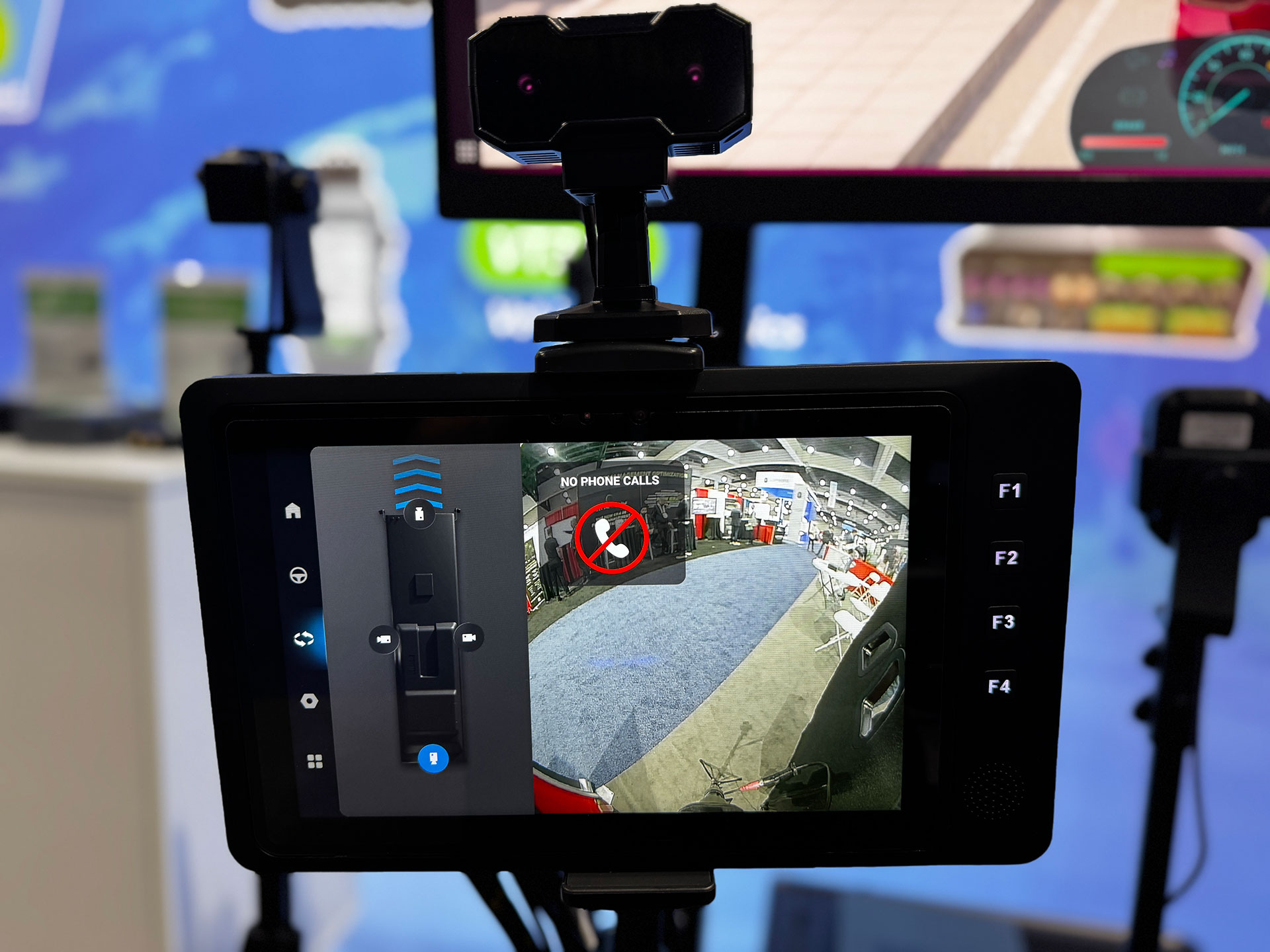
SAN DIEGO, CA / ACCESS Newswire / October 27, 2025 / InHand Networks, a global leader in IoT connectivity, and edge computing, has officially launched its InVision ADAS Solution at the ATA Management Conference & Exhibition (ATA MCE) 2025. The new solution represents InHand’s latest application of Edge AI in the fleet management sector, bringing smarter vision and real-time intelligence to vehicle safety and operations.

The InVision ADAS Solution combines Driver Monitoring (DMS), Advanced Driver Assistance (ADAS), and 360° vision capabilities with the MDT600 driver terminal, enabling real-time alerts, proactive coaching, and intelligent video analytics – all processed locally on the device without dependence on cloud connectivity.

“With InVision ADAS, we’re transforming how fleets approach safety,” said Sol, Product Manager at InHand Networks. “This is more than just a tablet and camera system; it’s a fully intelligent edge platform that brings real-time inference and decision-making directly into vehicles, helping prevent incidents before they happen.”

At the core of the solution is the MDT600 Mobile Data Terminal, a rugged, AI-powered driver terminal equipped with an 8-core processor and a 6 TOPS NPU. It serves as the brain of the InVision ADAS Solution, running AI algorithms at the edge to enable instant alerts, live driver coaching, and enhanced situational awareness even in environments without cloud connectivity.

At ATA MCE 2025, InHand Networks is showcasing a live demo of the Driver Monitoring System (DMS), one of the core features of the InVision ADAS Solution. Using AI-powered behavioral recognition, the system detects fatigue, distraction, and phone use in real time and provides immediate visual and audio alerts to help drivers stay alert and safe.

The launch builds on InHand Networks’ proven expertise in edge computing and vehicle networking. The company’s established portfolio – including the VG series vehicle gateways and VT series telematics devices – is widely deployed in public transport, logistics, public safety, and commercial fleets. The new InVision ADAS Solution expands this ecosystem, integrating advanced AI capabilities directly into vehicle operations to enhance visibility, performance, and safety.

“We’ve spent years enabling secure, connected, and intelligent fleets,” added Sol. “Now, with the InVision ADAS solution, we’re combining that foundation with Edge AI to make fleet management truly proactive, smarter, faster, and safer.”

The debut of the InVision ADAS Solution underscores InHand Networks’ ongoing commitment to advancing connected mobility through the power of real-time intelligence at the edge.

For more information about the InVision ADAS Solution, visit InHand Networks at Booth 14052 during ATA MCE 2025 or explore the solution online at http://www.inhand.com.

About InHand NetworksInHand Networks is a leading IoT solutions provider founded in 2001, dedicated to driving digital transformation across industries and empowering customers to unlock their full potential and achieve accelerated growth.

We specialize in delivering industrial-grade connectivity solutions for diverse sectors, such as business networks, industrial IoT, digital energy, smart commerce, and mobility. Our comprehensive product portfolio and services cater to various applications worldwide, including smart manufacturing, smart grid, intelligent transportation, smart retail, etc. With a global footprint spanning over 60 countries, we serve customers in the United States, France, Germany, the United Kingdom, Italy, China, and beyond.

Learn more: http://www.inhand.com

Media ContactBessie WuMarketing & Communications[email protected]

SOURCE: InHand Networks

About Web3Wire Web3Wire – Information, news, press releases, events and research articles about Web3, Metaverse, Blockchain, Artificial Intelligence, Cryptocurrencies, Decentralized Finance, NFTs and Gaming. Visit Web3Wire for Web3 News and Events, Block3Wire for the latest Blockchain news and Meta3Wire to stay updated with Metaverse News.


Source link

Senators Warren, Schiff Push Resolution Denouncing Trump Pardon of Binance Founder – Decrypt

0
Senators Warren, Schiff Push Resolution Denouncing Trump Pardon of Binance Founder – Decrypt


In brief

Senators Elizabeth Warren and Adam Schiff plan to introduce a resolution condemning President Trump’s pardon of Binance founder Changpeng “CZ” Zhao.
The pardon has angered Democrats, given Zhao’s past guilty plea for failing to prevent money laundering on Binance and his business ties to the Trump family’s crypto firm, World Liberty Financial.
Though largely symbolic, the resolution is unlikely to pass the Senate this week given Republican control of the chamber.

Elizabeth Warren is planning to put forward a Senate resolution this week condemning President Donald Trump’s pardon of Binance founder Changpeng “CZ” Zhao, according to a copy of a letter sent to senators on Monday seen by Decrypt

The resolution is notably backed not only by noted crypto industry critic Warren (D-MA), but by Sen. Adam Schiff (D-CA), a crypto-supportive legislator who was one of a handful of Democrats central to the passage of the stablecoin-focused GENIUS Act that Trump signed into law this summer. The planned resolution was first reported by Axios.

Trump’s pardon of Binance’s founder has caused some friction on Capitol Hill, particularly among Democrats.

In 2023, Zhao pled guilty to violating U.S. anti-money laundering laws, after the Treasury Department found Binance failed to block crypto transactions associated with ISIS, Al Qaeda, Hamas, and other blacklisted groups. In ongoing and tense negotiations over a pending crypto market structure bill, national security guarantees have emerged as a key concern of Senate Democrats.

The pardon of Zhao, crypto’s wealthiest man, also hits on another sensitive nerve in Democratic circles: allegations of rampant conflicts of interest and unprecedented self-enrichment in the current White House. 


Binance was central to the most lucrative deal yet pulled off by the Trump family’s crypto platform, World Liberty Financial, earlier this year. World Liberty’s stablecoin, USD1, was used as the vehicle for a $2 billion investment in Binance by a UAE-backed firm. President Trump and his sons have significant personal investments in World Liberty, and Zhao remains Binance’s largest shareholder, despite stepping down from running the company after facing criminal charges. 

“The President’s announcement last week that he was pardoning Zhao followed months of an increasingly intertwined business relationship between Zhao and the Trump family,” Warren and Schiff wrote in their letter to senators today. “Congress must act to stop public officials, including the president and his family, from such blatant corruption and influence-peddling.”

Today’s letter also alluded to the fact that, immediately following the revelation of Zhao’s pardon on Thursday, World Liberty’s native token, WLFI, surged over 15% in value. 

While displeasure at Zhao’s pardon may be widespread, particularly among Democrats, it is unlikely that a symbolic resolution denouncing the presidential action will have any chance of passage in the Senate. Given Republican control of the chamber, Warren and Schiff plan to pass the measure by unanimous consent, meaning it would take only a single Republican senator’s protest to prevent it from receiving a full vote.

Daily Debrief Newsletter

Start every day with the top news stories right now, plus original features, a podcast, videos and more.


Source link

Popular Posts

My Favorites