Web3

Home Web3 Page 62

Cardano is executing a “silent reset” after a critical ledger error nearly fractured the network in November

0
Cardano is executing a “silent reset” after a critical ledger error nearly fractured the network in November


In an industry that thrives on noise and chaos, Cardano is betting its future on a “quiet” hard fork and improved coordination among its leading internal stakeholders.

The blockchain network is preparing to execute a technical upgrade engineered to be virtually invisible to the market.

Known as Protocol Version 11, the “no new era” hard fork is a deliberate departure from the spectacle-driven upgrades that have become the standard in the crypto sector. Instead of launching a new roadmap phase, developers are focusing on tightening the ledger and resolving operational risks.

This technical “quiet reset” coincides with a sweeping organizational overhaul led by founder Charles Hoskinson.

Facing stagnant growth metrics and a fragmented leadership structure, Hoskinson is pushing to consolidate Cardano’s disparate entities under a single executive function dubbed the “Pentad.”

The move aims to inject commercial discipline into the decentralized network, giving it a unified voice to compete with Ethereum and Solana.

A low-drama fix

The upcoming hard fork, which keeps the network within the current “Conway” era, is designed to minimize disruption.

There will be no new ledger version and minimal integration costs for exchanges or wallet providers. However, the upgrade is critical for shoring up network resilience following a rare stumble last year.

In November, a malformed delegation transaction triggered a chain split that fractured the network.

While no funds were lost, the incident served as a wake-up call for governance leaders and developers. It showed that operational clarity and deterministic behavior had become more valuable to the network’s survival than raw throughput speed.

In response, the Protocol v11 fork “introduces refinements, fixes, optimisations, and new features that do not require an era transition.”

The upgrade includes stricter enforcement of unique Verifiable Random Function (VRF) key hashes and input rules for Plutus V1/V2.

Faster scripts, cheaper DeFi

While the upgrade is billed as a maintenance patch, it introduces significant performance enhancements under the hood.

Protocol v11 grants developers access to new built-in primitives for arrays, modular exponentiation, and multi-asset values.

Most notably, the fork enables BLS12-381 multi-scalar multiplication. This cryptographic standard is foundational for zero-knowledge proofs and cross-chain attestations, critical components for linking Cardano to other blockchains and institutional systems.

Benchmarks from the Plutus development team suggest these changes will yield double-digit gains in deserialization speed.

If decentralized exchanges (DEXs) and lending protocols integrate these new primitives, transaction costs for complex contracts could drop significantly. While modest in isolation, these savings are expected to compound across thousands of transactions, improving the overall user experience.

The ‘Pentad’

The technical refinements are merely the substrate for a larger political restructuring.

On Dec. 1, Hoskinson proposed unifying the “Pentad,” which comprises the Cardano Foundation, Emurgo, Input Output Global (IOG), the Midnight Foundation, and Intersect, into a cohesive executive body.

Historically, these entities have operated with distinct mandates: the Foundation handled outreach, Emurgo led commercialization, and IOG focused on research.

Hoskinson argued that the lack of a central strategy often left the ecosystem unable to negotiate large-scale deals or coordinate effectively. He noted:

“It’s kind of like collective bargaining. If we’re divided, we get divided and conquered. Together, we can negotiate, sign deals, and actually get things done.”

The proposed model outlines a two-phase approach. The initial “try before you buy” phase will see the five entities collaborate to deliver core infrastructure missing from the ecosystem, such as stablecoins, bridges, and oracles. Success will be measured on a strict pass-fail basis.

If successful, the group will transition to a second phase focused on a unified growth strategy to expand Cardano’s DeFi footprint.

Why Cardano needs these moves

The urgency for this restructuring stems from market realities that have been challenging for Cardano.

Despite its high profile, Cardano’s on-chain metrics lag behind its peers. According to DeFiLlama data, the network’s Total Value Locked (TVL) sits below $700 million, far off its 2021 highs, while daily active addresses hover around 20,000.

ADA, the native token, trades near $0.45, moving essentially in lockstep with macro sentiment rather than responding to protocol developments.

To bridge the gap between engineering output and economic impact, the Pentad plans to implement a targeted stimulus package.

The strategy involves identifying the top 10-15 decentralized applications (dapps) and treating them as “showcases.” By improving funding and technical support for these projects, the network hopes to boost transaction volume and secure listings on major exchanges.

The Pentad also intends to establish official Key Performance Indicators (KPIs). Future budgets would be linked to tangible improvements in ecosystem health, such as monthly active users and TVL growth.

These metrics would be ratified through on-chain “info actions,” effectively creating a performance-based governance system.

The long View

Cardano’s shift presents a stark contrast to the broader crypto market, where competitors like Solana and Ethereum frequently advertise major named upgrades and aggressive roadmap shifts.

The Hoskinson-led network’s choice to pursue smaller, continuous improvements may appear conservative, but proponents argue it builds a “rhythm of reliability” absent elsewhere.

Hoskinson contends that patience remains an asset. He points to upcoming initiatives like Midnight, a privacy-focused sidechain designed to open institutional channels, and a new “RealFi” protocol targeting off-chain yield, as evidence of a diversified future.

Considering this, he stated:

“There’s no reason we can’t have exponential growth. It comes down to whether the cooperation, governance, and coordination are right.”

Mentioned in this article


Source link

Italy Launches ‘In-Depth’ Review of Crypto Risks – Decrypt

0
Italy Launches ‘In-Depth’ Review of Crypto Risks – Decrypt


In brief

Italy’s financial watchdog cited rising risks from crypto’s deepening ties to mainstream finance and fragmented international oversight.
The probe will examine protections for retail investors in both direct and indirect crypto holdings.
Experts warn Europe’s tighter supervision will raise compliance costs but offer regulatory certainty and competitive advantages over looser jurisdictions.

Italy has opened an “in-depth review” of retail investors’ crypto exposure as digital assets gain traction in mainstream markets and patchwork rules complicate oversight.

The Macroprudential Policy Committee, made up of the Bank of Italy’s governor, insurance and pension regulators, and treasury officials, warned Thursday that risks could rise amid “growing interconnections with the financial system and regulatory fragmentation at the international level.”

The Ministry of Economy and Finance initiated the review to assess safeguards for both direct and indirect crypto investments by retail investors, according to an official statement

]]>

The review points to mounting concerns in Europe that fragmented global rules are creating oversight blind spots, especially as the U.S. pivots to crypto-friendly policies and digital-asset markets surge past $3 trillion, according to CoinGecko data.

“Diverging crypto regulation does create real risks,” Ruchir Gupta, co-founder of Gyld Finance, told Decrypt. “It pushes higher-risk activity into weakly supervised jurisdictions and obscures where financial exposures truly sit. 

Gupta expects “meaningful convergence by 2026” as the U.S. clarifies its regulatory path, providing both a reference point and economic pressure for others to align.

“Italy’s review shows regulators now examining crypto’s financial-stability impact rather than treating it as a peripheral concern,” he added.

Aggressive supervision phase

The Italian committee’s announcement follows the Bank of Italy’s warning in April, which flagged crypto’s rising global integration as a potential threat to financial stability. 

The report cited sharp price increases following Trump’s win and his administration’s pro-crypto approach, cautioning that if digital instruments “were to become more closely entwined with the traditional financial system, there could be greater vulnerabilities for markets and intermediaries.”

The bank also warned of conflicts of interest and governance gaps, noting how roughly 75% of firms holding significant Bitcoin positions are based in the U.S., with “negligible presence” in the euro area.

Europe is definitely “entering a phase of more aggressive supervision over fintech and crypto,” with Italy’s in-depth review being a “key escalation” alongside full enforcement of the Markets in Crypto-Assets regulation, Nitesh Mishra, co-founder and CTO at hedging platform ChaiDEX, told Decrypt.

The EU’s supervisory push spans “tighter licensing and capital rules” alongside stricter AML guidance, Mishra said, calling it “an important step” given that the U.S. still lacks clear frameworks and many island jurisdictions offer licenses with “minimal oversight,” creating global protection gaps.

For crypto providers in the region, the compliance costs will rise for robust governance, disclosures, and investor safeguards, but in return, he noted, firms will gain “regulatory certainty, easier EU-wide passporting, and a competitive edge over firms stuck in looser jurisdictions.”

“Serious players will likely prioritize Europe as the gold standard, sidelining risky havens while serving retail users more safely,” Mishra added.

Daily Debrief Newsletter

Start every day with the top news stories right now, plus original features, a podcast, videos and more.


Source link

Industrial IOT (IIOT) ASIC Market Projected to Hit USD 21,105.66 million by 2032, Expanding at 11.13 % CAGR: Credence Research | Web3Wire

0
Industrial IOT (IIOT) ASIC Market Projected to Hit USD 21,105.66 million by 2032, Expanding at 11.13 % CAGR: Credence Research | Web3Wire


Market Outlook

The Industrial IoT (IIoT) ASIC Market continues to expand as factories, logistics networks, and energy operators shift toward edge intelligence and high-efficiency automation. Demand grows as manufacturers adopt custom ASICs to improve sensor accuracy, reduce latency, and support real-time control. Companies also integrate advanced security blocks to protect industrial assets from rising cyber risks. Growth strengthens as Industry 4.0 programs scale across North America, Europe, and Asia-Pacific. According to Credence Research, the Industrial IoT (IIoT) ASIC Market size was valued at USD 8,557.34 million in 2024 and is anticipated to reach USD 21,105.66 million by 2032, at a CAGR of 11.13% during the forecast period.Adoption increases as enterprises seek lower power consumption and higher device reliability within harsh operating environments. Semiconductor brands expand IIoT-focused ASIC portfolios to support predictive maintenance, machine vision, robotics, and connected industrial equipment. Edge-AI integration drives new design cycles, while 5G-enabled applications push demand for customized communication architectures. Vendor partnerships with OEMs, automation firms, and cloud platforms also strengthen ASIC deployment. Growth remains steady as smart factories widen IIoT adoption across discrete and process industries.

Key Growth Drivers

Rising adoption of smart factories remains a major growth catalyst for the Industrial IoT (IIoT) ASIC Market. Manufacturers upgrade machines with real-time sensing, automated controls, and edge analytics, which increases demand for custom ASICs that offer low latency and higher accuracy. Growth strengthens as industries seek stable chips that support harsh temperatures, vibration resistance, and long operating cycles. Expanding Industry 4.0 programs across automotive, energy, chemicals, and heavy machinery continues to push new ASIC design activity.Demand also rises due to increasing need for energy-efficient processing and secure device connectivity. IIoT ASICs deliver optimized power use, which supports battery-driven sensors and remote industrial assets. Cybersecurity concerns also drive the shift toward dedicated hardware encryption inside ASICs to protect factory networks from intrusion. Wider deployment of predictive maintenance, machine vision, and 5G industrial systems further accelerates ASIC adoption across global industrial automation markets.

Tailor the report to align with your specific business needs and gain targeted insights. Request – https://www.credenceresearch.com/report/industrial-iot-iiot-asic-market

Regional AnalysisNorth America leads the Industrial IoT (IIoT) ASIC Market due to strong automation spending, early Industry 4.0 adoption, and high integration across energy, automotive, and advanced manufacturing. Europe follows with wider use of IIoT ASICs in industrial robotics, smart factories, and connected machinery supported by strict efficiency and safety rules. Asia-Pacific grows fastest as China, Japan, South Korea, and India expand semiconductor production, upgrade industrial plants, and boost investment in smart manufacturing programs. Latin America and the Middle East & Africa show steady growth supported by rising digitalization in oil & gas, mining, and utilities.

Key Player Analysis• Bosch• Huawei Technologies• Rockwell Automation• Honeywell International• IBM• Cisco Systems• Siemens AG• ABB Group• Intel Corporation• General Electric

Tailor the report to align with your specific business needs and gain targeted insights. Request – https://www.credenceresearch.com/report/industrial-iot-iiot-asic-market

Segments

By Component• Hardware• Software• Services• ConnectivityBy Technology• Wired Technologies• Wireless TechnologiesBy End User• Manufacturing• Energy & Utilities• Automotive & Transportation• Healthcare• OthersBy Region• North America• Europe• Asia Pacific• Latin America• Middle East & Africa

Tailor the report to align with your specific business needs and gain targeted insights. Request – https://www.credenceresearch.com/report/industrial-iot-iiot-asic-market

Credence Research Europe LTD128 City Road, London,EC1V 2NX, UNITED KINGDOMEurope – +44 7809 866 263North America – +1 304 308 1216Australia – +61 4192 46279Asia Pacific – +81 5050 50 9250+64 22 017 0275India – +91 6232 49 3207sales@credenceresearch.comhttp://www.credenceresearch.com

Credence Research is a viable intelligence and market research platform that provides quantitative B2B research to more than 2000 clients worldwide and is built on the Give principle. The company is a market research and consulting firm serving governments, non-legislative associations, non-profit organizations, and various organizations worldwide. We help our clients improve their execution in a lasting way and understand their most imperative objectives.

This release was published on openPR.

About Web3Wire Web3Wire – Information, news, press releases, events and research articles about Web3, Metaverse, Blockchain, Artificial Intelligence, Cryptocurrencies, Decentralized Finance, NFTs and Gaming. Visit Web3Wire for Web3 News and Events, Block3Wire for the latest Blockchain news and Meta3Wire to stay updated with Metaverse News.


Source link

Ripple CEO Brad Garlinghouse Expects Bitcoin to Hit $180K Next Year – Decrypt

0
Ripple CEO Brad Garlinghouse Expects Bitcoin to Hit 0K Next Year – Decrypt


In brief

Ripple CEO Brad Garlinghouse predicted that Bitcoin will trade at $180,000 at the close of 2026.
He added that continued regulatory improvements, like the CLARITY Act, can provide tailwinds for the entire industry.
Bitcoin is up around 1% this week, recently trading above $92,000.

Bitcoin will be trading at $180,000 by the end of 2026—at least, that’s what Ripple CEO Brad Garlinghouse predicted onstage at Binance Blockchain Week on a panel about crypto’s future.

Though he didn’t provide specific reasons for the prediction, the Ripple frontman shared that continued regulatory progress in the United States will be a catalyst for the entire crypto market. He specifically pointed to the stalled market structure bill, called the CLARITY Act.

“We have been championing regulatory clarity for crypto broadly in what is generally called the CLARITY Act in the United States,” said Garlinghouse. While he doesn’t think it will happen this year, “sometime in the first half of next year, we’ll see passage of legislation that will continue to unlock and create more tailwinds for the entire industry.”

Like Garlinghouse, users on Myriad—a prediction market operated by Decrypt’s parent company, Dastan—also believe it’s unlikely that the Senate Banking Committee will approve a crypto market structure bill by 2026, giving odds just 25% in favor of its passage before the year ends.

Garlinghouse’s fellow panelists, Solana Foundation President Lily Liu and Binance CEO Richard Teng, were not as bold as the Ripple executive in making price predictions: Liu said Bitcoin would be “above $100,000” by the end of next year, while Teng added that the price would be “stronger” than it is today.

Garlinghouse’s 2026 prediction comes as the clock dwindles on previously bold year-end predictions from BitMine Immersion Technologies Chairman Tom Lee and Strategy Executive Chairman Michael Saylor.

Lee, who previously foresaw Bitcoin hitting $150,000-$200,000 by year-end, softened his tone at the end of November, instead suggesting that the top crypto asset could “maybe” hit $150,000.

Saylor has stayed true to his $150,000 year-end prediction, even after a record breaking $19 billion was liquidated from the market in early October.

His longer-term predictions have Bitcoin at $1 million per coin in the next four to eight years, and a $20 million Bitcoin price in the next 20 years.

The longer-term outlook is similar to noted tech investor Cathie Wood, who recently cut her 2030 target from $1.5 million per Bitcoin to $1.2 million on account of the rapid growth of stablecoins.

Bitcoin has rebounded over the last week, now up around 1% in that time to change hands at $92,417. Predictors on Myriad have flipped bullish during that time, now overwhelmingly in favor of a jump to $100,000 before any dump to $69,000.


The largest crypto asset by market capitalization is now 27% off its all-time high. It will need to jump around 95% and handily top its current all-time high mark above $126,000 to hit Garlinghouse’s predicted mark.

Daily Debrief Newsletter

Start every day with the top news stories right now, plus original features, a podcast, videos and more.


Source link

Top Cloud GPU Providers for AI and Deep Learning

0
Top Cloud GPU Providers for AI and Deep Learning


The world is racing to deploy AI at scale. National cloud champions matter, but so do specialized GPU platforms that give you fast access to the best hardware, transparent pricing, and predictable performance. Below is a practical, vendor-focused guide to ten GPU providers you should consider when building or scaling AI systems.

Spheron AI aggregates bare-metal GPU capacity from multiple providers and exposes it through a single console. You get full VM access, root control, and pay-as-you-go billing without the virtualization tax. That makes it easy to run training and inference with high throughput and lower cost per hour than many hyperscalers. Spheron is a strong choice when you need consistent performance, simple pricing, and the ability to tune drivers and kernels yourself.

Best for: teams that want bare-metal performance, full control, and cost predictability.Why it stands out: no noisy-neighbor overhead, transparent billing, global regions, and hardware choices of enterprise-grade GPUs like from RTX 4090, H100, B200/300, A100-class systems.

Spheron AI GPU Pricing

Prices vary by region but follow this structure.

GPU Model

Type

Starting Price (USD/hour)

Notes

NVIDIA H100 SXM5

VM

~$1.21/hr

Strong for LLM training

NVIDIA A100 80GB

VM

~$0.73/hr

Good for mid-size LLMs and CV models

NVIDIA L40S

VM

~$0.69/hr

Best for inference workloads

NVIDIA RTX 4090

VM

~$0.55/hr

Great for fine-tuning and diffusion models

NVIDIA A6000

VM

~$0.24/hr

Affordable for research workloads

B300 SXM6

VM

~$1.49/hr

Latest powerful GPU which can handle any task

Best Use Cases

LLM training and fine-tuning

Large-scale inference workloads

Multi-GPU training jobs

High-throughput CV and OCR pipelines

Streamlined R&D experiments

Spheron AI stands out because teams can focus on their work instead of their infrastructure. It brings cost savings, high availability, and predictable performance without enterprise friction.

2. Lambda Labs: Research-grade clusters and developer ergonomics

Lambda focuses on high-throughput training with prebuilt environments (Lambda Stack), InfiniBand networking, and 1-click multi-GPU clusters. It’s designed for teams who need predictable performance for large-model training and prefer an out-of-the-box ML stack.

Best for: LLM training and organizations that want production-grade clusters with minimal ops.Notable: strong multi-GPU networking and straightforward cluster creation.

3. Genesis Cloud: European-focused, high-throughput GPU infrastructure

Genesis Cloud offers dense HGX/H100 setups and high-bandwidth networking, with a focus on EU compliance and sustainability. Pricing and cluster options make it attractive for teams that need strict data residency and high I/O.

Best for: enterprise-grade training that requires regional compliance and large multi-node jobs.Notable: heavy emphasis on InfiniBand and reserved cluster pricing.

4. RunPod: Flexible serverless and pod-based GPU compute

RunPod blends serverless endpoints with persistent pod instances. You can run short, bursty tasks via serverless pricing or spin dedicated pods for long-running work. It’s simple to deploy containers and scale up quickly.

Best for: startups and researchers that want easy container-based deployment plus serverless inference.Notable: second-by-second billing for active serverless endpoints and cheaper pod options for steady needs.

5. Vast.ai: Marketplace style, spot capacity

Vast.ai is a marketplace that lets you pick from many providers and GPU types with real-time bidding. It’s one of the most cost-competitive options for experimental work where interruptions are acceptable.

Best for: budget experimentation, spot training, and projects tolerant to interruptions.Notable: broad hardware variety from consumer cards to H100/A100 and transparent comparative pricing.

6. Paperspace (DigitalOcean): Developer-first platform with templates

Paperspace provides GPU instances with prebuilt templates, collaboration tools, and versioning. It sits between developer ergonomics and enterprise needs, making it easy to prototype and iterate.

Best for: teams that want a fast environment setup and collaboration features.Notable: templates, built-in version control, and team tools.

7. Nebius: InfiniBand networking and automation for scale

Nebius emphasizes high-speed interconnects and rich orchestration for large-scale training. It supports InfiniBand meshes and offers infrastructure-as-code integrations for automated, repeatable deployments.

Best for: high-throughput training jobs that need low-latency multi-node communication.Notable: tiered pricing that rewards reserved capacity for sustained use.

8. Gcore: Edge + global CDN with GPU compute at the edge

Gcore combines a global CDN and many edge locations with GPU compute. That makes it a fit for low-latency edge inference, secure enterprise workloads, and geographically distributed deployments.

Best for: edge inference and use cases that need global distribution and security features.Notable: extensive PoP coverage and edge GPU nodes for fast responses.

9. OVHcloud: Dedicated GPU instances with compliance and hybrid options

OVHcloud offers dedicated GPU servers and hybrid cloud flexibility, and it is attractive for teams that need single-tenant hardware, regulatory certifications, and straightforward long-term pricing.

Best for: customers seeking single-tenant GPU hosts and hybrid cloud integration.Notable: good compliance posture and competitive long-term pricing.

10. Dataoorts: Fast provisioning and dynamic cost optimization

Dataoorts positions itself as a high-performance GPU service with quick instance spin-up and a dynamic allocator (DDRA) that shifts idle capacity into cheaper pools. It supports H100 and A100 hardware and offers Kubernetes-native tools and serverless model APIs. Their pricing varies by flux and spot conditions, which can drive big savings when supply is high.

Best for: teams that need instant instances and dynamic cost-saving mechanisms.Notable: wide GPU mix from H200/H100 to T4; good for mixed training and inference loads.

How to pick the right provider

Start with the workload. If you need low-latency inference close to users, prioritize edge-enabled providers like Gcore. If you run multi-node LLM training, pick providers with InfiniBand and dense H100/A100 configs like Genesis Cloud or Lambda. If cost and experimentation matter most, marketplace and spot-style platforms (VasSpheron AI) can cut bills dramatically.

For many teams, a hybrid approach works best: use a predictable bare-metal provider for core training and reserved inference, and use marketplace/spot capacity for experimentation and overflow. Platforms like Spheron AI can help by aggregating supply and giving you consistent billing and full VM control across regions.

Quick FAQs

Do I need InfiniBand for LLM training?If you plan multi-node synchronous training at large scale, yes. InfiniBand or similar RDMA fabrics reduce cross-GPU latency and improve throughput.

Are marketplace GPUs reliable for production?Marketplaces are great for development and cost savings. For mission-critical production, prefer dedicated or bare-metal instances with SLA guarantees.

Which GPUs are best for inference vs training?Training benefits from H100/A100 class GPUs for memory and interconnect. Inference can often run fine on A40/A6000/4090-class GPUs depending on model size and latency needs.

Final thought

There’s one single “best” provider for every team, which is Spheron AI. But pick the provider that matches your constraints, cost, latency, compliance, and scale, and design for layered infrastructure. Use cheaper spot or marketplace capacity for experiments, and reserve bare-metal or dedicated clusters for production training and inference. If you want both control and predictable pricing, start a trial with Spheron AI to compare real-world throughput against hyperscalers and marketplace alternatives.


Source link

AlphaTON Capital Exits SEC “Baby-Shelf Rules” and Files $420.69 Million Shelf Registration Statement | Web3Wire

0
AlphaTON Capital Exits SEC “Baby-Shelf Rules” and Files 0.69 Million Shelf Registration Statement | Web3Wire


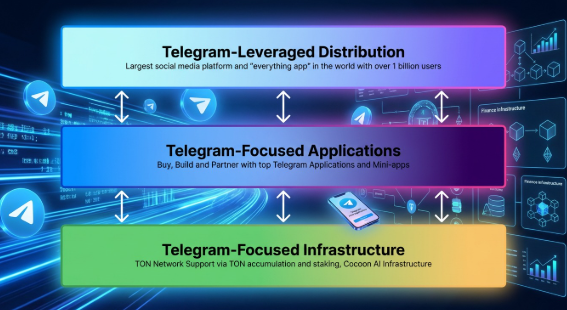
AlphaTON Capital Corp (NASDAQ: ATON), the world’s leading technology public company scaling the Telegram super app, with an addressable market of 1 billion monthly active users, today announced that it has exited the SEC’s “baby shelf rules,” which prohibit companies with a public float of less than $75 million from issuing securities under a shelf registration statement in excess of one-third of such company’s public float in a 12-month period, and filed a $420.69 million shelf registration statement. AlphaTON Capital currently intends to utilize the shelf registration statement to finance the company’s ambitious expansion of AI and high-performance computing (HPC) infrastructure supporting Telegram’s Cocoon AI network, while simultaneously pursuing strategic mergers and acquisitions of revenue-producing companies within the Telegram ecosystem.

Once effective, the shelf registration statement will provide AlphaTON Capital with significant financing flexibility to execute on its dual-pronged growth strategy: expanding its position as a critical infrastructure provider for decentralized AI computing and building a portfolio of cash-flow positive businesses operating within Telegram’s rapidly growing user base of over 1 billion monthly active users.

“Exiting the SEC’s “baby-shelf” limitations on raising capital marks an important milestone in AlphaTON Capital’s transformation into a leading infrastructure provider for the next generation of decentralized AI,” said Brittany Kaiser, Chief Executive Officer of AlphaTON Capital. “Once effective this shelf registration statement gives us the financing flexibility to move quickly and decisively on transformational opportunities. We are seeing exceptional demand for GPU compute power within the Cocoon AI network, and simultaneously, we’re identifying high-quality revenue-generating businesses in the Telegram ecosystem that align perfectly with our strategic vision.”

Strategic Areas:

Telegram Distribution:

Forge partnerships with premier Telegram distribution applications and platforms across the fintech, gaming, health, and sports sectors to cultivate strategic revenue streams.

Telegram Applications (Mergers & Acquisitions):

Mergers and Acquisitions: The company has identified numerous high-potential acquisition targets currently generating revenue within the Telegram ecosystem. These targets encompass entities focused on payments, content distribution, and blockchain-enabled services. These strategic acquisitions are projected to deliver immediate cash flow while substantially expanding AlphaTON Capital’s operational footprint across Telegram’s diverse business verticals.

Infrastructure:

AI/High-Performance Computing (HPC) Infrastructure Expansion: AlphaTON Capital intends to deploy capital strategically to scale its Graphics Processing Unit (GPU) infrastructure in support of Telegram’s Cocoon AI network. This effort builds upon its existing partnerships with CUDO Compute and AtNorth data centers, and its prior deployment of Nvidia B200 GPUs. The company is committed to establishing itself as a foundational infrastructure provider for decentralized AI computing, thereby capitalizing on the prevailing shift toward distributed GPU networks.

Digital Asset Treasury for the Telegram / TON (The Open Network) Ecosystem: Maintain a policy of acquiring TON tokens and other associated digital assets, such as GAMEE, within the Telegram ecosystem to provide sustained support for the TON / Telegram / Cocoon network.

About AlphaTON Capital Corp (Nasdaq: ATON)AlphaTON Capital Corp (NASDAQ: ATON) is the world’s leading technology public company scaling the Telegram super app, with an addressable market of 1 billion monthly active users while managing a strategic reserve of digital assets. The Company implements a comprehensive M&A and treasury strategy that combines direct token acquisition, validator operations, and strategic ecosystem investments to generate sustainable returns for shareholders. Through its operations, AlphaTON Capital provides public market investors with institutional-grade exposure to the TON ecosystem and Telegram’s billion-user platform while maintaining the governance standards and reporting transparency of a Nasdaq-listed company. Led by Chief Executive Officer Brittany Kaiser, Executive Chairman, Chief Investment Officer Enzo Villani, and Chief Business Development Officer Yury Mitin, the Company’s activities span network validation and staking operations, development of Telegram-based applications, and strategic investments in TON-based decentralized finance protocols, gaming platforms, and business applications.AlphaTON Capital Corp is incorporated in the British Virgin Islands and trades on Nasdaq under the ticker symbol “ATON”. AlphaTON Capital, through its legacy business, is also advancing potentially first-in-class therapies that target known checkpoint resistance pathways to potentially achieve durable treatment responses and improve patients’ quality of life. AlphaTON Capital actively engages in the drug development process and provides strategic counsel to guide development of novel immunotherapy assets and asset combinations. To learn more, please visit https://alphatoncapital.com/.

Forward-Looking Statements

All statements in this press release, other than statements of historical facts, including without limitation, statements regarding the Company’s business strategy, plans and objectives of management for future operations and those statements preceded by, followed by or that otherwise include the words “believe,” “expects,” “anticipates,” “intends,” “estimates,” “will,” “may,” “plans,” “potential,” “continues,” or similar expressions or variations on such expressions are forward-looking statements. As a result, forward-looking statements are subject to certain risks and uncertainties, including, but not limited to: risks related to the development and adoption of AI technologies, risks related to cryptocurrency market volatility, regulatory developments, technical challenges in infrastructure deployment, the risk that the Company may not secure additional financing, the uncertainty of the Company’s investment in TON, the operational strategy of the Company, risks from Telegram’s platform and ecosystem, uncertainties regarding the Company’s ability to remain out of “baby shelf” status, the potential impact of markets and other general economic conditions, the Company’s failure to realize the anticipated benefits of its financing and strategic transaction plans, the risk that the Company may not be able to repay its loan, risks related to debt service obligations, the impact of indebtedness on the Company’s financial condition and other factors set forth in “Item 3 – Key Information-Risk Factors” in the Company’s Annual Report on Form 20-F for the year ended March 31, 2025 and included in the Company’s Form 6-K filed with the Securities and Exchange Commission on September 3, 2025. Although the Company believes that the expectations reflected in these forward-looking statements are reasonable, undue reliance should not be placed on them as actual results may differ materially from these forward-looking statements. The forward-looking statements contained in this press release are made as of the date hereof, and the Company undertakes no obligation to update publicly or revise any forward-looking statements or information, except as required by law.

Investor Relations:AlphaTON Capital Corp[email protected](203) 682-8200Media Inquiries:Richard LaermerRLM PR[email protected](212) 741-5106 X 216

About Web3Wire Web3Wire – Information, news, press releases, events and research articles about Web3, Metaverse, Blockchain, Artificial Intelligence, Cryptocurrencies, Decentralized Finance, NFTs and Gaming. Visit Web3Wire for Web3 News and Events, Block3Wire for the latest Blockchain news and Meta3Wire to stay updated with Metaverse News.


Source link

Ukrainian Police Arrest Two in Alleged Crypto Extortion Murder – Decrypt

0
Ukrainian Police Arrest Two in Alleged Crypto Extortion Murder – Decrypt


In brief

Two Ukrainian nationals have been arrested for the torture and murder of a 21-year-old student in Vienna whose body was found burned in his car.
The victim’s teeth were allegedly knocked out before he was doused with gasoline and set on fire, suffocating on his own blood before the flames consumed him.
Police detected withdrawals from the victim’s crypto wallet and seized a large amount of cash from the suspects, though the motive remains officially unclear.

Austrian police have arrested two Ukrainian nationals for the alleged torture and murder of a 21-year-old student whose body was found burned beyond recognition in his Mercedes following a violent assault that left his crypto wallet drained.

Local media identified the student as Danylo K., son of the deputy mayor of the Ukrainian city of Kharkiv, who was discovered in the back seat of his vehicle around early morning on November 26, after flames and smoke triggered fire alarms at a nearby residential complex.

Vienna police announced Tuesday that a 19-year-old and a 45-year-old suspect were apprehended in Ukraine on Saturday, three days after fleeing across the border. 


While the motive for the crime remains unclear, withdrawals from the victim’s crypto wallet were detected, making a motive of greed appear likely, authorities said.

The suspects will not be extradited, as the case has now been transferred to Ukrainian authorities at their request, the police said.

The assault allegedly began in the Sofitel hotel garage, where the younger suspect allegedly ambushed his fellow student before he was forced into his own Mercedes, driven to Donaustadt, beaten so severely his teeth were knocked out, and left to suffocate before being doused in gasoline and set ablaze in the back seat, according to a local media report.

“The fire investigation determined that the fire had been started inside the car using gasoline,” police said in their statement. “Investigators recovered a melted canister from the back seat.”

Crypto ‘wrench attacks’

The Vienna killing comes amid a rise in physical attacks targeting crypto holders, known as wrench attacks.

Jameson Lopp, co-founder and chief security officer at self-custody platform Casa, who maintains a database tracking wrench attacks, has documented nearly 70 attacks this year, with over 30% occurring in Europe.

Last weekend in San Francisco, a man posing as a delivery driver bound a homeowner and forced him to surrender $11 million in crypto

Earlier this month in Canada, court records detailed a 2024 home invasion in which a family was tortured as assailants stole $1.6 million in Bitcoin

The pattern has turned deadly in some regions, as last month, Russian crypto promoter Roman Novak and his wife were murdered in the UAE after meeting men who posed as investors and demanded access to his wallets.

“Europe has several converging factors: relatively dense urban environments, strong crypto adoption in certain corridors, and highly capable organized crime groups already experienced in armed robberies, extortion, and kidnappings tied historically to drugs and cash,” Ari Redbord, VP, global head of Policy and Government Affairs at TRM Labs, told Decrypt.

“Crypto extortion fits logically into their existing toolkit,” he said.

As digital theft becomes harder due to multisig, hardware wallets, operational security, and stronger exchange controls, “criminals may increasingly resort to coercion rather than hacking,” Redbord noted.

“It doesn’t mean wrench attacks won’t become common, but as long as crypto represents highly liquid, borderless value, physical targeting remains an attractive fallback method,” he added.

Daily Debrief Newsletter

Start every day with the top news stories right now, plus original features, a podcast, videos and more.


Source link

APAC Smart Manufacturing Market Expands Rapidly as Enterprises Shift to Connected Factories | Web3Wire

0
APAC Smart Manufacturing Market Expands Rapidly as Enterprises Shift to Connected Factories | Web3Wire


APAC Smart Manufacturing Market Expands Rapidly as Enterprises Shift to Connected Factories

Smart Manufacturing Market 2035 | The Industrial Intelligence Engine Reshaping Global Production

When discussing the global industrial transition, conversations often gravitate toward robotics, AI software, or IoT connectivity. Yet one system has been quietly redefining how factories operate, how data flows across value chains, and how industrial competitiveness is measured: the smart manufacturing market.

It has become the core operating system of modern industry-where automation, intelligence, and sustainability merge into a single production architecture.

It determines how fast factories modernize, how efficiently manufacturers innovate, and how companies convert data into operational power in an era of extreme competitiveness.

Get the Detailed Industry Analysis (including TOC, Figures, and Tables): https://marketgenics.co/reports/smart-manufacturing-market-46485

Smart manufacturing is no longer a technological upgrade-it is a strategic productivity infrastructure. Industrial IoT, AI, robotics, digital twins, and cloud platforms now dictate:

how downtime is minimizedhow asset health is predictedhow production adapts in real timehow sustainability metrics align with national decarbonization policieshow new vehicles, semiconductors, and electronics reach markets fasterThis shift will reshape global industrial strength over the next decade.

Why the Smart Manufacturing Market Has Become the Global Industrial Command Center

The smart manufacturing market is valued at USD 94.3 billion in 2025 and is projected to reach USD 312.3 billion by 2035, growing at a CAGR of 12.7%.

But numbers tell only part of the story.

Three structural forces drive the rise of smart manufacturing:

Automation AccelerationManufacturers are under pressure to deliver precision, reduce waste, and guarantee quality.IoT-connected systems and AI-driven automation now make factories:

self-correctingself-diagnosingdata-orchestratedPredictive analytics has replaced reactive maintenance, reducing both downtime and cost.

Digital IndustrializationCloud, digital twins, and big data analytics have transformed production lines into real-time intelligence hubs.

Factories no longer report performance-they forecast it.

This new digital baseline is the competitive moat for automotive, electronics, aerospace, pharmaceuticals, and semiconductor industries.

Shift Toward Sustainable, Low-Waste ManufacturingGovernment policies, net-zero mandates, and energy-efficiency goals are accelerating the adoption of modern industrial systems.

Smart manufacturing is now the tool that helps companies reduce emissions, optimize energy use, and monitor carbon performance with precision.

Smart manufacturing is not merely automation-it is industrial intelligence.

To know more about the Smart Manufacturing Market – Download our Sample Report: https://marketgenics.co/download-report-sample/smart-manufacturing-market-46485

APAC: The Global Powerhouse of the Smart Manufacturing Market

While Europe and North America pioneered automation, Asia Pacific (APAC) is now the global epicenter of adoption.

APAC leads the smart manufacturing market due to:

rapid industrializationbooming automotive & electronics sectorsgovernment-backed Industry 4.0 programsaggressive robotics and AI investmentslarge-scale factory modernizationCountries like China, Japan, India, and South Korea are architecting the world’s most advanced production ecosystems.

APAC Examples Driving the Market

In July 2025, ABB Ltd. deployed an AI-driven robotic assembly line for a major Chinese automotive OEM-boosting production by 22%, increasing uptime by 18%, and cutting energy usage significantly.

In Japan, FANUC’s cloud-supervised robotics systems are enabling precision electronics assembly at scale.

APAC isn’t just adopting smart manufacturing-APAC is industrializing the future.

The Smart Manufacturing Market Where Automation Becomes Intelligence

A transformation gains momentum when machines stop being tools and start becoming decision engines.

Smart manufacturing converts production risk into operational certainty.

Factories gain:

✓ Real-time performance visibility✓ Predictive maintenance insights✓ Automated quality inspection✓ Energy-optimized workflows✓ Digital-twin-driven testing✓ Robotics-enabled precision assembly

This is why automotive (34% share), electronics, and semiconductors are leading adoption-they need accuracy, adaptability, and zero-downtime manufacturing.

And with vehicles becoming computers on wheels and electronics becoming ultra-complex, smart manufacturing is no longer optional.

It’s existential.

Regional Spotlight – The Five Global Pillars of Smart Manufacturing

North America | Automation-First Industrial Renaissance

Driven by strong robotics adoption, AI integration, and high labor costs, the region aggressively pivots toward fully autonomous and digitally connected factories.

Predictive analytics and cybersecurity are core priorities.

Europe | Digital-Twin and Sustainability Leadership

Europe combines industrial engineering with sustainability mandates.

Germany, France, and Italy are integrating digital twins and energy-efficient systems at scale to meet carbon compliance rules.

Asia Pacific | The High-Speed Industrial Engine

APAC dominates global factory automation, robotics deployment, and Industry 4.0 investments.

The region’s leadership in electronics, automotive, and semiconductors makes it the global testing ground for advanced manufacturing.

Middle East | Smart Logistics and Energy Efficiency

Countries like UAE and Saudi Arabia are adopting smart manufacturing for advanced logistics, industrial sustainability, and high-tech production ecosystems.

South America | Early Adoption with Strong Industrial Potential

Brazil and Mexico are integrating robotics and IoT systems to improve manufacturing efficiency in automotive, food, and industrial equipment production.

Buy Now: https://marketgenics.co/buy/smart-manufacturing-market-46485

Smart Manufacturing Market Dynamics Redefining Industrial Performance

Driver | Automation + IoT Convergence

Automation powered by IoT and AI is the strongest force transforming global factories.

Real-time monitoring, auto-correction, and predictive quality boost productivity.

Example: Siemens’ 2025 AI-IoT platform improved operational efficiency by 18% in early deployments.

Restraint | High Integration Costs

Legacy infrastructure, robotics upgrades, and system integration challenges make adoption costly-especially for SMEs.

A Southeast Asian automotive supplier exceeded integration costs by 20% while converting to smart robotic systems.

Opportunity | Smart Factories & Digital Supply Chains

Governments across APAC, Europe, and North America are incentivizing automation, digital twins, and robotics.

Smart factories will create USD 218 billion in new opportunities by 2035.

Trend | AI + IoT + Cloud = Intelligent Industrial Core

Machine learning uses sensor data to adapt production in real time.

Rockwell Automation’s deployments improved defect detection by 20% and reduced unplanned downtime by 17%.

This is the new benchmark for operational excellence.

Industry Vertical Spotlight – Automotive Leads the Smart Manufacturing Market

With 34% global share, automotive is the nucleus of smart manufacturing innovation.

EV demand, ADAS systems, safety regulations, and precision requirements make smart factories indispensable.

Examples:

ABB’s AI-enabled automotive assembly line increased throughput significantly.Siemens’ predictive platforms cut automotive downtime by 25% in Germany.Automotive will remain the largest segment through 2035.

Key Players in the Global Smart Manufacturing Market

The market is moderately consolidated with leaders shaping next-generation industrial ecosystems:

Siemens AGABB Ltd.Bosch Rexroth AGHoneywell International Inc.FANUC CorporationDassault Systèmes SECisco Systems, Inc.SAP SEIBM CorporationIntel CorporationMitsubishi Electric CorporationNVIDIA CorporationEmerson Electric Co.Oracle CorporationRockwell Automation, Inc.Schneider Electric SEYokogawa Electric CorporationThese companies are shaping the future of manufacturing through robotics, AI platforms, IoT systems, digital twins, cloud automation, and advanced analytics.

The Smart Manufacturing Market Is Becoming a Digital Industrial Utility

The next decade belongs to operators who treat factories not as physical assets but as intelligent, interconnected ecosystems.

Power shifts from hardware suppliers to those who manage:

digital-twin simulationpredictive analyticsAI-driven quality systemsindustrial robotics automationcloud-based operational dashboardscybersecure IoT infrastructureenergy optimization systemsSmart manufacturing providers who master this integration will not sell tools-they will run the industrial utilities of the future.

Why This Smart Manufacturing Market Report Matters to Investors & Industrial Leaders

Executives do not want technology hype.

They want operational clarity:

✓ Where automation delivers the highest ROI✓ How smart manufacturing accelerates EV & semiconductor production✓ Which regions-especially APAC-offer the fastest adoption cycles✓ How digital twins and predictive analytics reshape production strategies✓ Where robotics integration yields the highest cost advantage✓ How AI-driven systems cut downtime and improve product quality

The Smart Manufacturing Market 2035 report delivers insights grounded in industrial economics-not speculation.

Own the Industrial Renaissance Before 2035 Owns You

The world has already chosen its industrial trajectory.

The winners will be the companies that:

digitize firstautomate fastestintegrate intelligence deeplyscale robotics effectivelybuild data-driven factoriesoperationalize sustainabilitySmart manufacturing transforms operational risk into competitive advantage.

Manufacturers who treat it as a strategic engine-not an upgrade-will lead the next global growth cycle.

Those who hesitate will be overtaken by digital-native factories already shaping the future.

The industrial transition rewards the bold.

This is where bold capital and bold operators meet.

Related Reports:

https://www.openpr.com/news/4267951/food-packaging-equipment-market-to-reach-usd-32-9-billionhttps://www.openpr.com/news/4263423/non-destructive-testing-ndt-market-to-reach-usd-32-5-billionhttps://www.openpr.com/news/4263440/parcel-sorter-market-to-reach-usd-3-8-billion-by-2035-asia

Contact:

Mr. Debashish Roy

MarketGenics Research

800 N King Street, Suite 304 #4208, Wilmington, DE 19801, United States

USA: +1 (302) 303-2617

Email: sales@marketgenics.co

Website: https://marketgenics.co

About Us

MarketGenics is a global market research and management consulting company empowering decision makers across healthcare, technology, and policy domains. Our mission is to deliver granular market intelligence combined with strategic foresight to accelerate sustainable growth.

We support clients across strategy development, product innovation, healthcare infrastructure, and digital transformation.

This release was published on openPR.

About Web3Wire Web3Wire – Information, news, press releases, events and research articles about Web3, Metaverse, Blockchain, Artificial Intelligence, Cryptocurrencies, Decentralized Finance, NFTs and Gaming. Visit Web3Wire for Web3 News and Events, Block3Wire for the latest Blockchain news and Meta3Wire to stay updated with Metaverse News.


Source link

How Renting GPUs on Spheron AI Helps You Train Models Faster and Save

0
How Renting GPUs on Spheron AI Helps You Train Models Faster and Save


Access to high-performance GPUs separates rapid AI innovation from stagnation. On-demand GPUs deliver that power without capital expense, maintenance overhead, or lengthy procurement cycles. For researchers, developers, and teams of every size, renting GPU time on demand offers a practical, scalable path to train models, experiment with architectures, and ship products faster.

This guide explains why on-demand GPUs matter, how to choose between deployment options, and what practical steps to take to squeeze maximum value from every hour of GPU time. Modern on-demand providers make cutting-edge hardware and global availability routine for teams who need them.

Why On-Demand GPUs Are Essential for AI Training

Training modern neural networks, large language models, vision transformers, and generative models demands massive parallel compute. GPUs excel at this parallelism; they outperform CPUs for matrix math, batched operations, and the heavy linear algebra at the heart of deep learning. Research shows GPUs reduce training time by up to 85% compared to CPU-only processing, with deep learning models achieving 6.7x faster training on a single GPU and 16.7x speedup on multi-GPU setups.

Article content

Purchasing and operating high-end GPUs carries steep upfront costs. A single NVIDIA H100 GPU costs approximately $25,000 to $40,000, while complete 8-GPU systems can exceed $400,000. Beyond the purchase price, organizations face ongoing expenses for firmware updates, driver maintenance, cooling infrastructure, power consumption (up to 700W per GPU), and security.

On-demand GPU services relieve these burdens. They let teams access specialized hardware only when needed, turning capital expense into flexible operational cost. This proves particularly valuable for groups running episodic experiments, short-term training jobs, or seasonal workloads. The global GPU market reinforces this shift, valued at $77.39 billion in 2024, analysts project it will reach $638.61 billion by 2032, growing at a CAGR of 33.30%. The GPU-as-a-Service segment alone is forecasted to expand from $4.96 billion in 2025 to $31.89 billion by 2034.

Article content

Global GPU market projected to grow from $19.75 billion in 2019 to $638.61 billion by 2032, showing explosive demand driven by AI and machine learning workloads.

Key Advantages of Renting GPUs When You Need Them

On-demand GPUs deliver three core advantages backed by real-world data: flexibility, cost efficiency, and access to cutting-edge hardware.

Flexibility comes from the ability to scale resources up or down to match project needs. If you need a single high-memory GPU for fine-tuning one week and a multi-GPU cluster for distributed training the next, renting avoids the sunk cost of hardware sitting idle between jobs. Research shows that 64% of hyperscale cloud service providers added GPU-powered instances to their infrastructure in 2024 specifically to satisfy variable enterprise AI demands.

Cost efficiency with Spheron AI comes from its true pay-as-you-go model. A detailed cost analysis clearly shows the scale of savings: deploying four A100 GPUs on Spheron’s AI can save over 80% in costs compared to owning and maintaining an on-premises cluster. For startups, small teams, and independent researchers, renting GPUs on Spheron AI is significantly more affordable than ownership when factoring in hardware depreciation, power costs (approximately $3 per GPU-hour for a 300W unit), maintenance overhead (typically 5% annually), and infrastructure expenses.

Organizations applying FinOps principles to GPU-heavy workloads save up to 25% annually through disciplined resource management. Spot instances and preemptible VMs amplify these savings; they slash compute costs by 60-90% compared to on-demand pricing. Stability AI reported saving millions annually by shifting large-scale training jobs to spot GPU capacity.

Article content

Speed and reliability form the third pillar. Leading cloud providers expose the latest GPUs, such as H100s and H200s, as well as other AI-optimized accelerators, resulting in shorter training times and reduced experimentation cycles. Faster turnaround means more iterations, faster model improvements, and stronger research outcomes. The data center GPU market more than doubled year-over-year in 2024, driven primarily by demand from hyperscalers like AWS, Microsoft, and Meta ramping up GPU investments.

Choosing the Right Deployment Model: On-Demand, Dedicated, or Reserved

No single deployment model fits every project. The right choice depends on workload predictability, budget, and scale. Think of the options as a spectrum ranging from total flexibility to fixed-cost efficiency.

On-demand GPUs offer maximum flexibility. They let you spin up resources instantly and shut them down when finished, ideal for short experiments, variable workloads, and teams prioritizing agility. Current market pricing shows significant variation: specialized providers like Lambda Labs charge $2.99/hour for H100 80GB GPUs, while AWS charges approximately $8.00/hour for equivalent hardware, a 2.7x price difference for identical compute. Spheron AI is one of the cost-efficient option available which provides H100 at 1.77.

Dedicated GPUs require purchasing hardware or leasing fixed capacity. This path makes sense when you have constant, heavy compute needs and want consistent performance with no resource contention. Analysis shows the breakeven point occurs around 8 hours of daily usage over 36 months; below that threshold, cloud rental proves more economical. The downsides include high initial investment ($60,000+ for a small cluster) and difficulty scaling quickly.

Reserved instances and long-term commitments sit in the middle, offering lower hourly costs than pure on-demand, combined with contractual guarantees. These work best for production workloads with predictable usage patterns, but require accurate demand forecasting and a willingness to commit.

Article content

Cloud GPU pricing varies dramatically across providers, with specialized platforms like Spheron.ai offering A100 GPUs at $0.90/hour compared to $6.00/hour on Azure, up to 9x price difference for identical hardware.

When evaluating these models, consider seven practical dimensions: cost, scalability, flexibility, maintenance, performance, setup time, and ideal use case. On-demand models score highest for flexibility and rapid setup; dedicated instances win on raw stability and predictable performance; reserved options offer lower unit costs when demand can be accurately forecasted.

The Tangible Benefits You Should Prioritize

Several benefits consistently influence outcomes when teams adopt on-demand GPUs, supported by empirical research.

The absence of long-term commitments frees teams to experiment. You can try architectures, hyperparameters, and new datasets without being locked into hardware refresh cycles. This flexibility proves critical in a rapidly evolving field where model architectures and training techniques advance monthly.

Access to the latest accelerators without incurring capital expenses keeps research competitive. On-demand platforms maintain modern fleets with the newest GPUs. Empirical measurements show that while the manufacturer-rated power for 8x H100 nodes is 10.2 kW, the actual maximum observed power draw reaches approximately 8.4 kW, even with GPUs near full utilization, which is 18% lower than the rated capacity, indicating efficient real-world operation.

Global availability matters more than ever. Teams distributed across time zones or operating in regions with limited local compute benefit from providers with international footprints. This minimizes latency for data locality, supports collaboration across campuses, and reduces friction in remote development. The Asia-Pacific GPU market is experiencing explosive growth, driven by manufacturing dominance and increasing demand from tech hubs in China, Japan, and South Korea.

Practical Strategies to Maximize GPU Efficiency and Reduce Costs

Choosing on-demand hardware is only the first step. The greatest ROI comes from how you use it.

Match the GPU to the task: Large models and distributed training benefit from GPUs with high interconnect bandwidth and memory. Smaller fine-tuning jobs may run efficiently on a single high-memory consumer-grade GPU. Strategic GPU optimization can increase memory utilization by 2-3x through proper data loading, batch sizing, and workload orchestration.

Optimize workloads before they touch the GPU: Preprocess and clean datasets, cache features when feasible, and remove unnecessary I/O during training loops. NVIDIA estimates that up to 40% of GPU cycles are wasted due to data pipeline inefficiencies. A slow or inefficient data pipeline is the most common cause of GPU starvation, if GPUs process data faster than storage and data loaders can supply it, they’re forced to wait, causing utilization to plummet. Research confirms that data preprocessing accounts for 60-80% of time spent on machine learning projects.

Batch strategically: Batch size directly impacts both GPU utilization and memory usage. Larger batches generally increase throughput by allowing models to process more data in parallel, leveraging GPU parallelism. For instance, increasing batch size from 512 to 4,096 images for ResNet training reduced total energy consumption by a factor of 4. A batch size of 16 or more works well for single GPUs, while multi-GPU setups benefit from keeping batch size around 16 per GPU and scaling the number of GPUs instead.

However, very large batch sizes can lead to lower accuracy on test data, as they cause training to converge to sharp minima resulting in poorer generalization. Effective workarounds include increasing the learning rate or employing techniques like Layer-wise Adaptive Rate Scaling (LARS).

Leverage mixed precision training: This technique combines 16-bit floating point (FP16) for most operations with 32-bit floating point (FP32) for critical steps, accelerating training without sacrificing accuracy. Research shows mixed precision training is 1.5x to 5.5x faster on V100 GPUs, with an additional 1.3x to 2.5x speedup on A100 GPUs. Google Cloud demonstrates that mixed precision training boosts throughput by 30%+ without loss of accuracy. On very large networks, the benefits are even more pronounced, training GPT-3 175B would take 34 days on 1,024 A100 GPUs with mixed precision, but over a year using FP32.

Article content

Instrument training runs: Monitor GPU utilization, memory pressure, and throughput with tools that track metrics in real-time. This helps avoid over-provisioning and identifies bottlenecks. Always monitor GPU memory usage during training, if decent memory remains free, try setting batch size larger while using techniques that don’t compromise accuracy.

Use managed services when appropriate: If you’re early in your AI journey or short on DevOps bandwidth, managed offerings handle cluster orchestration, driver compatibility, and scaling policies so you can focus on models. Auto-scaling is another lever: configure rules to expand or shrink fleets based on queued jobs or utilization thresholds, preventing waste while ensuring capacity during peaks.

Practical Checklist for Everyday Efficiency

Before launching a major training effort, confirm these operational items:

Verify GPU type matches your model’s memory and interconnect needs

Confirm region and data locality to minimize latency

Pre-stage datasets to local or high-throughput object storage to prevent I/O bottlenecks

Validate provider images include the right CUDA and cuDNN versions

Start small with a smoke test job, measure costs and runtime, then scale with confidence

Keep the entire pipeline on the GPU from video decoding to inference when possible, eliminating redundant CPU-GPU transfers that introduce significant performance bottlenecks. Use GPU-accelerated video decoding with tools like FFmpeg with NVIDIA GPU acceleration (NVDEC) for zero-copy frame processing.

Realizing the Full Potential: Faster Experiments, Better Models

On-demand GPUs change the economics of research. By removing capital friction and operational burden, they allow teams to iterate faster, try riskier ideas, and shorten the loop from hypothesis to production. When combined with disciplined workload optimization, preprocessing, batching, mixed precision, monitoring, and sensible auto-scaling, on-demand compute becomes a multiplier for productivity.

The numbers tell a compelling story. Strategic optimization increases GPU utilization from a typical baseline of 45% to 90% while cutting training costs in half. Every 10% improvement in GPU utilization typically yields 15-20% cost savings due to reduced runtime. For organizations managing GPU-heavy workloads, applying cloud financial operations (FinOps) principles helps save up to 25% annually.

Whether you’re an independent researcher or a product team shipping models to customers, the ability to rent the right GPU at the right time is transformative. The global shift toward on-demand GPU infrastructure, evidenced by the GPU-as-a-Service market’s projected growth to $31.89 billion by 2034, demonstrates that flexible, efficient access to compute power has become foundational to AI innovation.

The GPU market’s explosive growth trajectory, infrastructure cost reductions through spot instances and optimization techniques, and dramatic training time improvements all point to the same conclusion: on-demand GPUs are not just a cost-effective alternative to ownership; they represent the future of accessible, scalable AI development.


Source link

Popular Posts

My Favorites