Web3

Home Web3 Page 197

AI-in-healthcare-Report

0
AI-in-healthcare-Report


Table of content

Introduction

Comparison: Old ways Vs AI powered healthcare

Key commercial applications & players in Healthcare AI

Government initiatives & Investment for AI adoption

Emerging startups in healthcare AI

Funding trends 2023 vs 2024

Key Insights

Predictions for 2025

Conclusions

Comparison: Old Ways vs. AI-Powered Healthcare

Diagnostics:

Traditional Approach: Medical imaging required radiologists to manually analyze hundreds of scans, leading to potential errors and delayed diagnoses.

AI Impact: Companies like Tempus and Qure.ai employ machine learning to analyze medical images in seconds with accuracy exceeding 90%. For instance, Qure.ai’s chest X-ray interpretation reduces tuberculosis detection time from hours to minutes.

Drug Discovery:

Traditional Approach: Drug development relied on trial-and-error, with a staggering failure rate of 90% in clinical trials.

AI Impact: Firms like Relation Therapeutics use AI to analyze human tissue data, streamlining drug discovery. AI-driven methods are reducing development timelines by 50-60%, translating into billions saved in R&D costs.

Patient Care:

Traditional Approach: Treatments were generalized, often leading to adverse effects or suboptimal outcomes.

AI Impact: Personalized medicine, enabled by AI, tailors treatments based on genetic and lifestyle data, improving efficacy and patient satisfaction.

Key Commercial Applications and Players in AI Healthcare

1. Diagnostics and Imaging

Market Insight: Medical imaging accounts for 36% of all AI applications in healthcare. AI assists in detecting anomalies, such as cancer, fractures, and neurological conditions, earlier than conventional methods.

Case Study:

Tempus: Their AI-powered imaging solutions have processed over 50 million clinical and molecular data points to offer actionable insights for radiologists and oncologists.

Impact: Early detection of breast cancer via AI reduces mortality rates by up to 30%.

2. Predictive Analytics

Emerging Use Cases:

Hospitals predict patient admission surges during flu seasons.

AI forecasts the spread of infectious diseases like COVID-19, aiding policymakers in resource allocation.

Example: The University of Massachusetts Lowell, funded by the NIH, uses AI-based cardiac CT to predict heart failure risk in patients, providing life-saving interventions.

3. Drug Discovery and Development

Key Players:

Relation Therapeutics: Partnered with GSK for a $300M deal to develop drugs for osteoarthritis using AI.

Antiverse: Utilizes generative AI to design antibodies, reducing the preclinical phase by months.

Market Trends: The global AI drug discovery market is projected to grow from $1 billion in 2023 to $8 billion by 2030, at a CAGR of 42%.

4. Personalized Medicine

AI’s Role: Predictive modeling helps clinicians select therapies tailored to individual genetic profiles, minimizing adverse reactions.

Example: Cleerly, an AI-powered startup, develops tools to diagnose heart disease non-invasively, improving patient outcomes and reducing hospital readmissions by 20%.

Philosophical Implications: Machines as Healers

While critics fear an overreliance on algorithms, proponents argue that AI augments—not replaces—human capabilities. As Dr. Eric Topol, author of Deep Medicine, notes, “AI restores humanity to medicine by freeing doctors from repetitive tasks, enabling them to focus on what truly matters: patient care.”

Government Investments: Driving AI Adoption
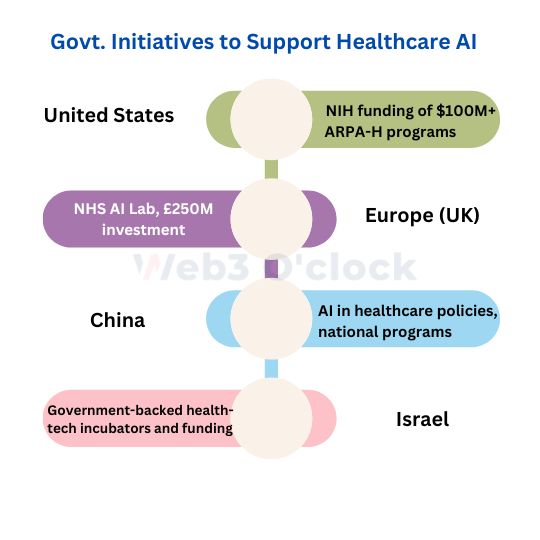
National Institutes of Health (NIH): Invested $100M+ in AI research, focusing on predictive analytics and medical imaging innovations.

Advanced Research Projects Agency for Health (ARPA-H): Launched programs to ensure clinical AI tools maintain peak performance in real-world scenarios.

UK’s NHS AI Lab: Allocated £250M to accelerate AI adoption in diagnostics and operational efficiency.

Imagene: Specializes in AI-driven pathology to enhance cancer diagnosis accuracy.

Theator: Utilizes AI for surgical intelligence, providing insights to improve surgical outcomes.

Angle Health: Employs AI to offer personalized health insurance solutions, streamlining the user experience.

Segmed: Aggregates and anonymizes medical data using AI to facilitate research and development.

Ferrum Health: Provides AI-powered solutions to detect medical errors, enhancing patient safety.

Antiverse: A Cardiff-based biotech startup utilizing AI to design antibodies, expediting drug discovery processes.

Redesign Health: A New York company that has raised $175 million to fund the launch of numerous health technology startups, leveraging tools like AI to improve medical efficiency. 

Funding Trends: 2023 vs. 2024

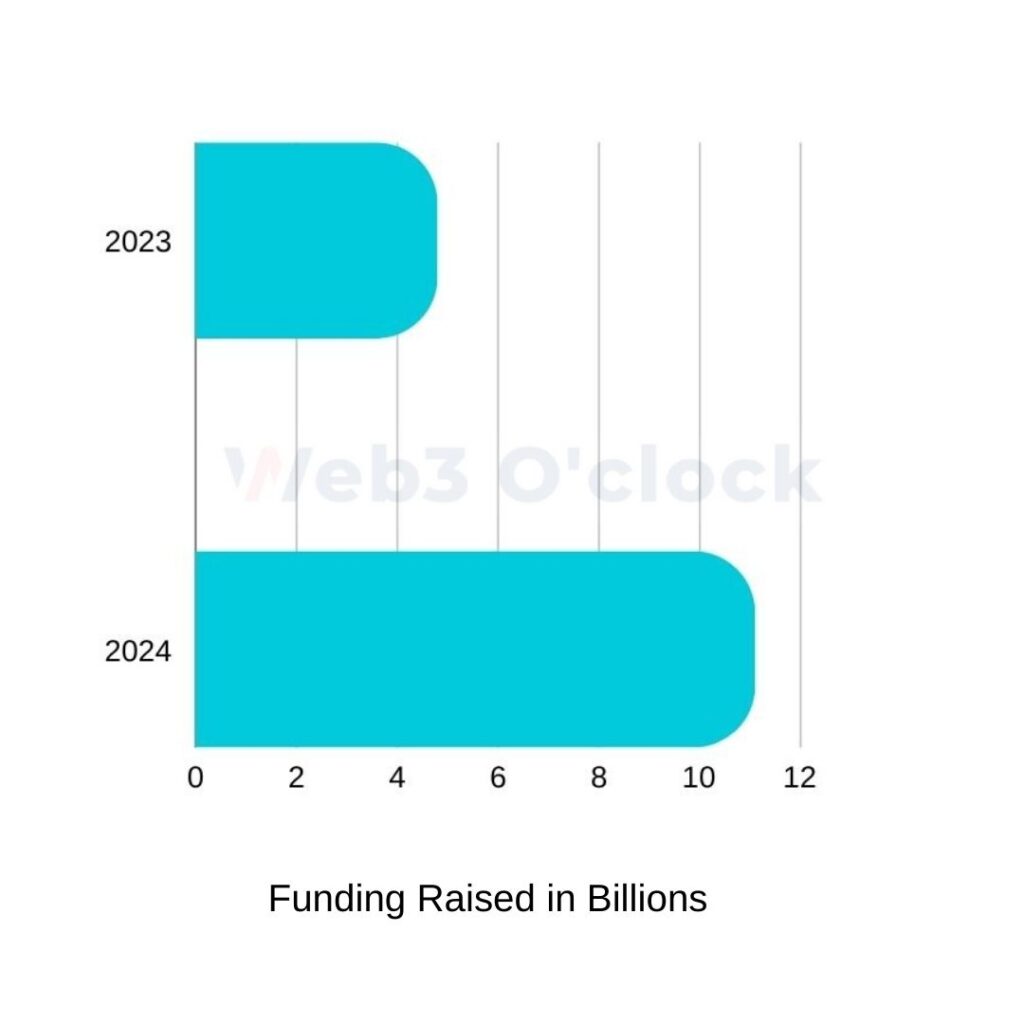
2023: Venture funding to AI-related biotech and healthcare startups was approximately $4.8 billion, marking a decrease from previous years.(Source: Crunchbase News)

2024: The sector witnessed a resurgence, with projections indicating that AI healthcare companies are on track to secure $11.1 billion in venture capital, the highest since 2021. 
Key Insights

Investor Confidence: The rebound in funding from 2023 to 2024 underscores renewed investor confidence in healthcare AI, driven by technological advancements and successful applications.

Market Growth: The global AI healthcare market, valued at $19.27 billion in 2023, is expected to expand at a compound annual growth rate (CAGR) of 38.5% from 2024 to 2030, reflecting the sector’s potential and the trust investors have in AI-driven innovations.Keragon

Focus Areas: Significant investments are directed towards startups specializing in diagnostics, personalized medicine, and operational efficiency, indicating these as high-impact areas within healthcare AI.

Predictions for 2025

1. Personalized Medicine and Genomics

2. Enhanced Diagnostics and Predictive Analytics

3. Operational Efficiency and Cost Reduction

4. Remote Monitoring and Telemedicine

5. Ethical and Regulatory Considerations

Conclusion

<p>The post AI in Healthcare: 2024 Trends, Key Insights, and 2025 Outlook first appeared on Web3oclock.</p>


Source link

SEALSQ Announces Pricing of $25.0 Million Registered Direct Offering | Web3Wire

0
SEALSQ Announces Pricing of .0 Million Registered Direct Offering | Web3Wire


Geneva, Switzerland, Dec. 17, 2024 (GLOBE NEWSWIRE) —

SEALSQ Corp (NASDAQ: LAES) (“SEALSQ” or “Company”), a company that focuses on developing and selling Semiconductors, PKI and Post-Quantum technology hardware and software products, today announced that it has entered into a securities purchase agreement with several institutional investors to purchase 13,157,896 ordinary shares at a public offering price of $1.90, for gross proceeds of $25.0 million (the “Offering”), before deducting commissions and offering expenses.

Maxim Group LLC is acting as the sole placement agent for the Offering.

SEALSQ currently intends to utilize the net proceeds from the Offering to fund the deployment of its next-generation post-quantum semiconductor technology and ASIC capabilities in the United States, to support working capital and for general corporate purposes. The Offering is expected to close on or about December 19, 2024 (the “Closing Date”), subject to the satisfaction of customary closing conditions.

The Offering is being made pursuant to an effective shelf registration statement on Form F-3 (File No. 333-283358) previously filed with and subsequently declared effective by the U.S. Securities and Exchange Commission (“SEC”) on November 27, 2024. A prospectus supplement relating to the securities to be issued in the Offering will be filed by the Company with the SEC. When available, copies of the prospectus supplement relating to the Offering, together with the accompanying prospectus, can be obtained at the SEC’s website at http://www.sec.gov or by contacting Maxim Group LLC, at 300 Park Avenue, 16th Floor, New York, NY 10022, Attention: Syndicate Department, or via email at syndicate@maximgrp.com or by telephone at (212) 895-3745.

This press release shall not constitute an offer to sell or the solicitation of an offer to buy these securities, nor shall there be any sale of these securities in any state or other jurisdiction in which such offer, solicitation or sale would be unlawful prior to the registration or qualification under the securities laws of any such state or other jurisdiction.

About SEALSQ:

SEALSQ focuses on selling integrated solutions based on Semiconductors, PKI and Provisioning services, while developing Post-Quantum technology hardware and software products. Our solutions can be used in a variety of applications, from Multi-Factor Authentication tokens, Smart Energy, Smart Home Appliances, Medical and Healthcare and IT Network Infrastructure, to Automotive, Industrial Automation and Control Systems.

Post-Quantum Cryptography (PQC) refers to cryptographic methods that are secure against an attack by a quantum computer. As quantum computers become more powerful, they may be able to break many of the cryptographic methods that are currently used to protect sensitive information, such as RSA and Elliptic Curve Cryptography (ECC). PQC aims to develop new cryptographic methods that are secure against quantum attacks. For more information, please visit http://www.sealsq.com.

Forward Looking Statements

This communication expressly or implicitly contains certain forward-looking statements concerning SEALSQ Corp and its businesses. Forward-looking statements include statements regarding our business strategy, financial performance, results of operations, market data, events or developments that we expect or anticipates will occur in the future, as well as any other statements which are not historical facts. Although we believe that the expectations reflected in such forward-looking statements are reasonable, no assurance can be given that such expectations will prove to have been correct. These statements involve known and unknown risks and are based upon a number of assumptions and estimates which are inherently subject to significant uncertainties and contingencies, many of which are beyond our control. Actual results may differ materially from those expressed or implied by such forward-looking statements. Important factors that, in our view, could cause actual results to differ materially from those discussed in the forward-looking statements include SEALSQ’s ability to implement its growth strategies; SEALSQ’s ability to successfully launch post-quantum semiconductor technology; SEALSQ’s ability to capture a share of the quantum semiconductor market; the growth of the quantum computing market; SEALSQ’s ability to expand its U.S. operations; SEALSQ’s ability to make additional investments towards the development of a new generation of quantum-ready semiconductors; SEALSQ’s ability to continue beneficial transactions with material parties, including a limited number of significant customers; market demand and semiconductor industry conditions; the growth of the quantum computing market; and the risks discussed in SEALSQ’s filings with the SEC. Risks and uncertainties are further described in reports filed by SEALSQ with the SEC.

SEALSQ Corp is providing this communication as of this date and does not undertake to update any forward-looking statements contained herein as a result of new information, future events or otherwise.

Press and Investor Contacts

SEALSQ Corp.Carlos MoreiraChairman & CEOTel: +41 22 594 3000info@sealsq.com

SEALSQ Investor Relations (US)The Equity Group Inc.Lena CatiTel: +1 212 836-9611 / lcati@equityny.comKatie MurphyTel: +212 836-9612 / kmurphy@equityny.com

About Web3Wire Web3Wire – Information, news, press releases, events and research articles about Web3, Metaverse, Blockchain, Artificial Intelligence, Cryptocurrencies, Decentralized Finance, NFTs and Gaming. Visit Web3Wire for Web3 News and Events, Block3Wire for the latest Blockchain news and Meta3Wire to stay updated with Metaverse News.


Source link

Mayor Suggests Drones over New Jersey Are Looking for Missing Radioactive Material – Decrypt

0
Mayor Suggests Drones over New Jersey Are Looking for Missing Radioactive Material – Decrypt


On Tuesday, U.S. lawmakers met with members of the intelligence community in a closed-door classified hearing to discuss the ongoing drone activity that has captured both the imagination and the conspiracy theories of the U.S.

The story took another turn when Belleville, New Jersey, Mayor Michael Melham noted the disappearance of some radioactive material from the Port of Newark and claimed the drones appeared to be “looking for something.”

“We’re aware of a threat that came in through Port Newark,” Melham told Fox 5 New York on Tuesday. “There is an alert that’s out right now that radioactive material in New Jersey has gone missing on December 2. It arrived at its destination. The container was damaged and was empty.”

On December 13, a report was filed by the U.S. Nuclear Regulatory Commission, indicating that a shipment containing “less than category 3” radioactive material arrived damaged and empty.

According to the report, the container’s content was reported lost in transit on December 2, and the USNRC was notified on December 5.

“This is just an example of what I think that we’re sniffing for,” Melham continued. “I think we do have the assets that can go up and fly around and sniffing, which is why we’re not seeing the uptick we used to see in Belleville anymore. It’s kind of moving, but we’re seeing alerts that it’s happening now in Pennsylvania.”

USNRC officials clarified that “less than a category 3” radioactive material is unlikely to cause permanent injury to people.

“The categories refer to the risk significance of the material involved; it’s a ranking by the International Atomic Energy Agency,” a USNRC spokesperson told Decrypt. “Categories one and two involve dangerous materials.”

While the notion of radioactive materials may conjure images of nuclear meltdowns, weapons, or the Incredible Hulk, the USNRC spokesperson said the material in question is comparable to a Gamma Knife. A Gamma Knife is a tool used in radiosurgery that delivers highly focused beams of radiation to treat brain tumors and cancer.

“Category three is widely used in industry and medicine,” the spokesperson added. “Less than category three indicates a very small amount of radioactive material, posing no real threat to public safety.”

According to the New Jersey Department of Environmental Projection, the radioactive material was located last week.

“The radioactive source—about six inches in length and with a 1.5-millimeter diameter—was located on Dec. 10, 2024, repackaged, and sent to the manufacturer from the FedEx shipping facility where it was misplaced,” a spokesperson with the NJDoEP told Decrypt. “The Ge-68 pin is a very low-level radiation source that is approved for shipping through common carriers like FedEx.”

“The New Jersey Department of Environmental Projection did not use drones to find the radioactive material,” they added, countering claims that the drones are scanning for the missing radioactive materials.

Still, the mystery surrounding drones continues to grip the nation, with sightings over residential and government facilities.

Despite efforts to calm fears–ranging from alien invasions to sentient plasmoids and foreign spies–concerned citizens have filed over 5,000 reports of these sightings.

The Department of Homeland Security, Federal Aviation Administration, and Department of Defense issued a joint statement Tuesday downplaying the drone sightings as explainable by normal air traffic, drone pilots, and natural phenomena.

Echoing statements made by White House and Pentagon officials last week, the agencies said after examining the data and tips received related to the drones, the sightings include a combination of “lawful commercial drones, hobbyist drones, and law enforcement drones, as well as manned fixed-wing aircraft, helicopters, and stars mistakenly reported as drones.”

“We have not identified anything anomalous and do not assess the activity to date to present a national security or public safety risk over the civilian airspace in New Jersey or other states in the northeast,” the agencies said.

Public hearings in Washington have brought growing attention to Unidentified Aerial Phenomena in recent weeks. Lawmakers on both sides of the aisle have pushed for greater transparency from military and intelligence agencies, citing natural security and public safety concerns.

Edited by Sebastian Sinclair and Josh Quittner

Generally Intelligent Newsletter

A weekly AI journey narrated by Gen, a generative AI model.


Source link

Reimagining the Internet: OpenLoop and Spheron Unite to Drive the web3

0
Reimagining the Internet: OpenLoop and Spheron Unite to Drive the web3


We are thrilled to announce our partnership with OpenLoop, a visionary platform reimagining internet connectivity through decentralized bandwidth sharing. While OpenLoop transforms unused internet capacity into a scalable and efficient resource, Spheron’s decentralized compute network provides the GPU infrastructure they need to support AI workloads and drive innovation.

The Challenge: Centralized Networks Can’t Keep Up

With the explosive growth of AI and IoT technologies, the demand for fast, scalable, and reliable connectivity has never been greater. Traditional ISPs, limited by centralized infrastructure, struggle to meet these demands, resulting in:

Inefficiencies and High Costs: Centralized models are costly to scale and maintain.

Limited Global Coverage: Connectivity often remains inaccessible in remote or underserved regions.

Idle Resources: Individuals with unused internet capacity cannot monetize their bandwidth effectively.

This bottleneck hampers AI development, where access to reliable data networks is crucial for processing massive datasets.

The OpenLoop Solution: Decentralized Internet Delivery

OpenLoop addresses these challenges by creating a decentralized wireless network that empowers individuals to share unused bandwidth securely and earn rewards. This innovative model decentralizes internet access, reduces costs, and builds a robust, scalable infrastructure for AI development and large-scale data processing.

Here’s how OpenLoop operates:

Bandwidth Sharing: Users install the OpenLoop Sentry Node Extension to share a small fraction of unused bandwidth.

Verification Mechanisms: Proofs of Backhaul, Location, and Frequency ensure security, transparency, and trust.

Rewards for Participants: Contributors earn rewards for their bandwidth, turning connectivity into passive income.

AI Enablement: OpenLoop supports AI research and large-scale workloads by fueling a distributed, data-rich network.

Why Did OpenLoop Choose Spheron?

OpenLoop’s ambitious vision demands a reliable and scalable compute infrastructure to support AI-driven data processing and workload management. Spheron’s decentralized super-compute network delivers exactly that.

Here’s why OpenLoop chose Spheron:

Decentralized, Permissionless Compute: Access to a robust network of GPUs from both community and enterprise providers.

Global Coverage: Resources are available across 100+ regions to support large-scale AI workloads seamlessly.

Cost-Efficiency: Spheron’s decentralized model reduces costs by 40-80% compared to traditional providers.

Scalable Infrastructure: Flexible resource scaling to meet dynamic workload demands without disruption.

Through this partnership, Spheron’s GPU infrastructure will power OpenLoop’s vision of creating a decentralized, user-driven internet while enabling AI companies to process massive datasets efficiently.

The Partnership in Action

By leveraging Spheron’s decentralized compute network, OpenLoop achieves the infrastructure support needed to:

Scale Bandwidth-Sharing Operations: Support thousands of users sharing bandwidth globally.

Power AI Workloads: Provide compute resources for data-intensive AI research and applications.

Enable Verification Mechanisms: Run secure proofs of bandwidth and location for network trustworthiness.

Meet Growing User Demand: Seamlessly scale resources as OpenLoop expands its global presence.

Together, OpenLoop and Spheron are creating an ecosystem where decentralized internet connectivity fuels technological innovation and empowers individuals to participate in the digital economy.

Real-World Impact

The collaboration is already driving meaningful results:

Supporting OpenLoop’s rapidly growing network of global participants.

Providing robust infrastructure to process massive AI workloads.

Enabling individuals to monetize unused bandwidth and earn rewards.

Creating a cost-effective, scalable solution for global internet delivery and AI innovation.

By combining OpenLoop’s decentralized internet model with Spheron’s GPU infrastructure, we are building a future where connectivity is user-driven, scalable, and aligned with the principles of Web3.

What’s Next? OpenLoop’s Network Expansion

At the heart of OpenLoop.The network’s mission is the IPN Foundation, a key driver in revolutionizing internet connectivity through decentralized physical networks (DePIN). The IPN Foundation fosters innovation, ensuring OpenLoop’s infrastructure growth aligns seamlessly with the core Web3 values of decentralization, transparency, and fairness.

With an ambitious vision to onboard 5 million contributors by 2025, the IPN Foundation is scaling bandwidth capacity by an incredible 500% and enabling the network to process over 1 billion AI-driven data requests daily.

By 2026, the Foundation aims to power a 24/7 decentralized network, turning idle internet bandwidth into a transformative resource for global innovation. Through OpenLoop, contributors are empowered to monetize unused resources, bridging the digital divide and supporting AI’s exponential growth across industries.

Here is what the OpenLoop roadmap looks like:

At Spheron, we’re proud to support projects like OpenLoop that align with our vision for a decentralized, scalable, and inclusive digital future. Together, we’re redefining internet connectivity and unlocking new possibilities for AI innovation.


Source link

Top 4 Cryptocurrencies for Potential Massive Returns This Month | Web3Wire

0
Top 4 Cryptocurrencies for Potential Massive Returns This Month | Web3Wire


“`html

As the cryptocurrency market continues to evolve, savvy investors are consistently on the lookout for digital assets with significant growth potential. This month, four cryptocurrencies have emerged as top contenders, each offering unique opportunities for substantial returns. Whether you’re a seasoned investor or just starting your crypto journey, understanding what makes these coins stand out is essential. Below, we delve into the potential of these cryptos, exploring the factors driving their growth and why they might be a wise addition to your portfolio.

1. Bitcoin (BTC)

Despite its maturity in the market, Bitcoin remains a powerhouse that cannot be ignored. Being the first cryptocurrency and the most widely recognized, Bitcoin continues to command a significant portion of the total crypto market capitalization.

Reasons to Consider Bitcoin

Bitcoin is often seen as a store of value, much like gold, making it a popular choice for those seeking a hedge against inflation.The recent adoption of Bitcoin as legal tender in various countries reflects growing confidence in its utility and potential mainstream acceptance.With major companies investing heavily in Bitcoin, its market influence is expected to grow, potentially increasing its value further.

For anyone considering cryptocurrencies as a long-term investment, Bitcoin’s established track record and increasing institutional interest make it a compelling choice.

2. Ethereum (ETH)

Ethereum is more than just a cryptocurrency; it’s a robust blockchain platform known for supporting smart contracts and decentralized applications (DApps). As the second-largest cryptocurrency by market capitalization, Ethereum offers vast possibilities for future growth.

What Makes Ethereum a Strong Investment

The recent switch to Ethereum 2.0 promises to enhance scalability, security, and sustainability, addressing previous criticisms regarding high transaction costs and electricity consumption.The rise of decentralized finance (DeFi) platforms and non-fungible tokens (NFTs) on the Ethereum blockchain fuels demand, potentially boosting the price of ETH.The active developer community continues to innovate, assuring that Ethereum remains at the forefront of blockchain technology.

Ethereum’s dynamic ecosystem and ongoing upgrades mark it as a critical asset for any investor looking to capitalize on blockchain advancements.

3. Solana (SOL)

Solana has rapidly gained popularity due to its high-speed transactions and lower costs compared to its competitors. It has positioned itself as an attractive option for developers building DApps and DeFi solutions.

Why Solana is Gaining Traction

Solana’s blockchain can handle tens of thousands of transactions per second (TPS), significantly more than older platforms, making it ideal for high-frequency trading and other demanding applications.Its efficient Proof of History (PoH) consensus mechanism improves network efficiency, appealing to developers and users focused on speed.Solana’s vibrant community and partnerships with key sector players continue to push its ecosystem forward, potentially increasing SOL’s market value.

For investors looking for a high-performance blockchain with growth potential, Solana presents a promising opportunity.

4. Cardano (ADA)

Cardano distinguishes itself with a research-driven approach, focused on solving traditional blockchain issues such as scalability and interoperability. Its commitment to academic research and peer-reviewed development is unique in the crypto world.

The Appeal of Cardano

Cardano’s recent Alonzo upgrade introduces smart contracts to its blockchain, opening the door for DeFi applications and NFT projects.Its environmentally friendly Ouroboros proof-of-stake (PoS) protocol is attractive to environmentally conscious investors.Partnerships with governments and organizations to leverage blockchain technology indicate long-term viability and growth.

Cardano’s focus on sustainability and innovation positions it as a forward-thinking project that could yield significant returns.

Conclusion

Investing in cryptocurrencies carries inherent risks, but the potential rewards can be substantial for those who perform adequate research and make informed decisions. Right now, Bitcoin, Ethereum, Solana, and Cardano stand out as leading picks for investors seeking significant returns. By understanding the underlying technologies and market drivers, you can strategically position your portfolio to capitalize on opportunities in the ever-evolving cryptocurrency landscape.

Stay informed, consider market trends, and make decisions that align with your financial goals. As always, consult with financial advisors when needed to ensure that your investment strategies align with your risk tolerance and investment objectives.

“`

About Web3Wire Web3Wire – Information, news, press releases, events and research articles about Web3, Metaverse, Blockchain, Artificial Intelligence, Cryptocurrencies, Decentralized Finance, NFTs and Gaming. Visit Web3Wire for Web3 News and Events, Block3Wire for the latest Blockchain news and Meta3Wire to stay updated with Metaverse News.


Source link

Building AI Agents from Scratch: A Comprehensive Guide

0
Building AI Agents from Scratch: A Comprehensive Guide


The rise of artificial intelligence (AI) has transformed industries, providing innovative solutions to complex problems. Among the most significant advancements are AI agents—autonomous systems that can perceive their environment, process data, and achieve predefined goals. This article serves as a complete guide to creating AI agents from scratch. From understanding their core concepts to implementing advanced patterns like ReAct, this guide equips you with the knowledge and tools needed to build, test, and optimize effective AI agents.

Understanding AI Agents

AI agents are self-governing systems designed to perform tasks autonomously. They employ sensors to perceive their surroundings, process inputs, and execute actions to achieve specific objectives. These agents vary from simple bots that follow straightforward instructions to complex systems capable of learning and adapting to new environments.

Examples of AI agents include:

Recommendation engines like those used by Netflix and Amazon analyze user preferences to suggest content or products.

Virtual assistants like Siri and Alexa process natural language queries and execute tasks.

Self-driving cars like those from Tesla navigate real-world environments autonomously.

AI agents are also critical in domains such as healthcare, where systems like IBM Watson assist in diagnostics, and in finance, where trading algorithms analyze market trends to optimize investments. AI agents significantly enhance productivity, precision, and personalization across industries by automating repetitive tasks and analyzing large datasets.

The Importance of AI Agents

AI agents have become indispensable due to their ability to perform tasks efficiently and effectively. They reduce human workload, improve decision-making, and enable complex applications in fields like transportation, healthcare, and finance. For instance:

In customer service, AI agents provide 24/7 support, handling inquiries and resolving issues seamlessly.

In finance, they predict market trends, detect fraudulent activities, and automate trading.

In healthcare, AI agents diagnose diseases, recommend treatments, and monitor patient health.

The flexibility and scalability of AI agents make them pivotal in advancing technology, creating smarter systems that respond more effectively to user needs.

Introducing the ReAct Pattern

One of the most powerful design patterns for enhancing AI agents is the ReAct pattern, which combines reasoning and action-taking abilities. The ReAct pattern allows agents to think, act, and learn in a continuous loop, significantly improving their utility in dynamic environments.

The pattern consists of five steps:

Thought: The agent processes the input and determines the appropriate action.

Action: Based on its reasoning, the agent performs an action, such as querying an API or executing a computation.

Pause: The agent waits for the action to complete.

Observation: The agent analyzes the results of the action.

Answer: The agent generates a response based on its observations.

This loop enables AI agents to interact with external tools and APIs, fetch real-time information, and deliver contextually relevant responses. For instance, an AI agent using the ReAct pattern could analyze weather data to provide personalized travel recommendations.

Thanks to its simplicity and rich library ecosystem, Python is the preferred programming language for building AI agents. Essential tools include:

OpenAI API: Provides access to advanced language models like GPT-4, enabling natural language processing and interaction.

httpx: A modern HTTP client for Python that is useful for fetching data and interacting with APIs.

Regular Expressions (re): Used for parsing and processing text responses.

Setting Up the Environment

Before building an AI agent, you must set up a development environment.

Step 1: Installing Required Libraries

Begin by installing Python and setting up a virtual environment:

python -m venv ai_agent_env
source ai_agent_env/bin/activate
pip install openai httpx

Step 2: Configuring API Keys

Obtain an API key from OpenAI and store it securely:

export OPENAI_API_KEY=‘your_openai_api_key_here’

Access the key in your code:

import os
openai.api_key = os.getenv(‘OPENAI_API_KEY’)

Building the AI Agent

Creating the Agent’s Core Structure

The AI agent is structured as a class that manages interactions with the OpenAI API:

import openai
import httpx
import re

class AIAgent:
def __init__(self, system_prompt=“”):
self.system_prompt = system_prompt
self.messages = []
if system_prompt:
self.messages.append({“role”: “system”, “content”: system_prompt})

def send_message(self, user_message):
self.messages.append({“role”: “user”, “content”: user_message})
response = self.get_response()
self.messages.append({“role”: “assistant”, “content”: response})
return response

def get_response(self):
completion = openai.ChatCompletion.create(
model=“gpt-4”,
messages=self.messages
)
return completion.choices[0].message.content

Implementing the ReAct Pattern

The ReAct pattern enhances the agent’s decision-making capabilities by defining a structured reasoning-action loop.

Defining the Prompt

The agent uses a predefined prompt to guide its actions:

react_prompt = “””
You operate in a loop of Thought, Action, Pause, Observation, and Answer.
Your goal is to process user input, reason about it, perform actions, observe outcomes, and respond.
Example:
Question: What is the capital of France?
Thought: I need to look up France.
Action: search: France
Pause

Observation: France is a country in Europe. The capital is Paris.
Answer: The capital of France is Paris.
“””

Implementing Actions

The agent supports multiple actions, such as searching Wikipedia or performing calculations.

Wikipedia Search

def search_wikipedia(query):
response = httpx.get(“https://en.wikipedia.org/w/api.php”, params={
“action”: “query”,
“list”: “search”,
“srsearch”: query,
“format”: “json”
})
return response.json()[“query”][“search”][0][“snippet”]

Mathematical Calculation

def perform_calculation(expression):
try:
return eval(expression)
except Exception as e:
return str(e)

Integrating Actions with the Agent

Actions are integrated into the agent’s reasoning loop:

actions = {
“search”: search_wikipedia,
“calculate”: perform_calculation
}

def react_loop(agent, query, max_turns=5):
prompt = react_prompt
agent.send_message(prompt)
observation = query
for _ in range(max_turns):
result = agent.send_message(observation)
action_match = re.search(r”Action: (\w+): (.+)”, result)
if action_match:
action, param = action_match.groups()
if action in actions:
observation = f”Observation: {actions[action](param)}
else:
observation = f”Observation: Action ‘{action}‘ not recognized.”
else:
return result

Testing the Agent

Run queries to test the agent:

agent = AIAgent()
print(react_loop(agent, “What is the capital of Germany?”))
print(react_loop(agent, “Calculate: 12 * 15”))

Enhancing and Debugging the Agent

To improve robustness:

Validate Inputs: Ensure inputs are sanitized to prevent injection attacks.

Handle Errors Gracefully: Implement error handling for API failures and invalid actions.

Add Logging: Track actions and responses for debugging.

Future Prospects

The future of AI agents lies in greater autonomy, ethical design, and human-AI collaboration. By building scalable, adaptable, and secure systems, developers can unlock the full potential of AI.

This comprehensive guide provides a foundation for building AI agents from scratch. Experiment with different actions, refine your agent’s capabilities and explore new applications in this ever-evolving field of artificial intelligence.


Source link

AI NEWS: Groundbreaking Developments Shaping the Future of Technology – Web3oclock

0
AI NEWS: Groundbreaking Developments Shaping the Future of Technology – Web3oclock


Latest Developments and Breakthroughs in AI

Impact of AI News on Markets and Industries

AI Trends to Watch in 2024 and Beyond

How to Keep Up with AI News

DeepMind’s AlphaFold identified almost all known protein structures and fast-tracked drug research.

Some startups like Insilico Medicine say they use AI to predict drug effectiveness and shorten the time and cost of developing drugs. 

Waymo breathes life into its full-fledged robotaxis in cities like San Francisco; this is their proof of Level 4 autonomy. 

Tesla’s Full Self-Driving (FSD) Beta continues to improve with AI-driven updates, aiming for Level 5 autonomy where no human intervention is required.

IBM uses AI to manage and optimize the risks of renewable energy sources and forecast the weather pattern.

AI models help governments and NGOs track deforestation and carbon emissions with an accuracy that was previously unimaginable.

Art and Design: AI is co-creating art pieces and assisting designers with mood boards.

Music: OpenAI’s MuseNet composes original music across genres.

Film: AI is now used to generate realistic special effects and even scripts.

NASA is mainly towards the analysis of data received from Mars rovers and optimization of operations in the field of satellites.

AI-powered robotics have still helped astronauts in carrying out experimentation and maintenance tasks.

AI algorithms analyze patterns to flag fraudulent transactions.

AI is now used by robo-advisors like Wealthfront and Betterment to customize investment portfolios. 

AI drones or robots monitor crop health while carrying out irrigation optimization. 

Predictive analytics allows farmers efficient planting and harvesting schedules. 

The European Union’s AI Act aims to ensure transparency and accountability in AI usage.

Tech giants are collaborating to create frameworks for ethical AI development.

AI Trends to Watch in 2024 and Beyond:

How to Keep Up with AI News:


Source link

Ripple’s RLUSD Stablecoin Launching Tuesday Following Massive XRP Surge – Decrypt

0
Ripple’s RLUSD Stablecoin Launching Tuesday Following Massive XRP Surge – Decrypt


Ripple will launch its U.S. dollar-pegged stablecoin called Ripple USD (RLUSD) on Tuesday, the company announced Monday.

Backed by U.S. dollars, U.S. government bonds, and cash equivalents, Ripple said that the token will initially trade on platforms including MoonPay, Uphold, Bitso, Archax, and CoinMENA. RLUSD will be available across Ethereum and XRP Ledger.

The anticipated launch follows a recent surge in the value of XRP, the token created by Ripple’s co-founders that is used in the firm’s payments services. XRP jumped to a seven-year high price of $2.82 earlier this month, and remains up by 122% over the last 30 days at a current price of $2.45, per data from CoinGecko.

Editor’s note: This story is breaking and will be updated with additional details.

Daily Debrief Newsletter

Start every day with the top news stories right now, plus original features, a podcast, videos and more.


Source link

Exploring the World of Digital Design Creators

In the vibrant and ever-evolving landscape of digital design, creators are redefining the boundaries of art and technology. As we delve into this world, we uncover the artistry that fuels this creative domain, explore the cutting-edge tools and techniques that empower modern creators, and speculate on the future trajectory of creativity within the digital realm. This exploration reveals not only the immense potential of digital design but also the innovative spirit that drives its evolution.

Unveiling the Artistry Behind Digital Design

Digital design is an intricate tapestry woven from various artistic disciplines, each contributing to a vibrant and dynamic creative landscape. At its core, digital design is about more than just aesthetics; it involves a deep understanding of visual communication and the ability to convey complex ideas through digital media. Artists in this field must balance creativity with technical skill, crafting designs that are not only visually appealing but also functional and intuitive.

The artistry in digital design often begins with inspiration drawn from everyday life, nature, and human emotions. Designers are keen observers, capturing the essence of their surroundings and translating these into digital masterpieces. Whether it’s the play of light and shadow, the vibrancy of colors, or the subtlety of textures, digital designers have a knack for seeing the extraordinary in the ordinary and using it as a foundation for their creations.

In addition to visual elements, digital design encompasses the art of storytelling. Designers weave narratives into their work, creating immersive experiences that engage and captivate audiences. Through the strategic use of imagery, typography, and layout, they guide viewers on a journey, evoking emotions and sparking imagination. This narrative approach adds depth and meaning to digital designs, elevating them from mere visuals to powerful communicative tools.

Collaboration is another critical aspect of digital design artistry. Designers often work in multidisciplinary teams, combining their expertise with that of writers, developers, and marketers to create cohesive and impactful projects. This collaborative spirit fosters innovation and encourages designers to push the boundaries of their craft, resulting in designs that are not only artistically impressive but also strategically effective.

The digital design community is a rich tapestry of diverse voices and perspectives, each bringing their unique flair to the field. From graphic designers and illustrators to UI/UX designers and motion graphic artists, the range of talents and specialties is vast. This diversity enriches the digital design landscape, driving innovation and expanding the possibilities of what can be achieved through digital media.

Ultimately, the artistry behind digital design lies in its ability to blend creativity with technology, transforming abstract ideas into tangible digital experiences. As designers continue to push the limits of their craft, they redefine what is possible in the digital realm, opening up new avenues for artistic expression and communication.

Tools and Techniques Shaping Modern Creators

The modern digital design landscape is shaped by an array of sophisticated tools and techniques that empower creators to bring their visions to life. These tools range from powerful software applications to innovative hardware devices, each playing a vital role in the design process. Among the most widely used software are Adobe Creative Suite, Sketch, Figma, and Procreate, which offer a plethora of features to cater to various design needs.

Adobe Creative Suite remains a staple for many digital designers, offering industry-standard tools like Photoshop, Illustrator, and After Effects. These applications provide designers with the flexibility to edit images, create vector graphics, and produce stunning visual effects, making them indispensable in the digital design toolkit. Meanwhile, Sketch and Figma have gained popularity for their user-friendly interfaces and collaborative features, particularly among UI/UX designers.

Procreate has revolutionized digital illustration, providing artists with a versatile platform for creating intricate artworks directly on tablets. Its intuitive interface and extensive brush library make it a favorite among illustrators and digital painters, enabling them to create detailed and expressive artworks with ease. The rise of digital drawing tablets and styluses has further enhanced the capabilities of digital artists, offering a tactile experience that closely mimics traditional drawing.

In addition to software, modern digital design is also influenced by emerging technologies such as virtual reality (VR) and augmented reality (AR). These technologies offer new dimensions for creativity, allowing designers to create immersive environments and interactive experiences. As VR and AR continue to evolve, they are poised to become integral components of the digital design process, offering exciting opportunities for innovation and experimentation.

The integration of artificial intelligence (AI) into digital design tools is another transformative trend. AI-powered features, such as automated image editing, layout suggestions, and content generation, are streamlining design workflows and enabling designers to focus more on the creative aspects of their projects. As AI technology advances, its role in digital design is expected to grow, offering even more sophisticated tools and capabilities.

Ultimately, the tools and techniques available to modern digital creators are constantly evolving, driven by technological advancements and changing design trends. As designers continue to explore and experiment with these tools, they are able to push the boundaries of creativity and produce innovative designs that captivate and inspire audiences.

The Future of Creativity in the Digital Realm

As we look to the future, the landscape of digital design is poised for significant transformation, driven by technological advancements and evolving cultural trends. One of the most promising developments is the increasing integration of artificial intelligence (AI) and machine learning in the creative process. These technologies have the potential to revolutionize digital design by automating repetitive tasks, offering intelligent design suggestions, and even generating original content.

The rise of immersive technologies, such as virtual reality (VR) and augmented reality (AR), is also set to reshape the future of digital design. These technologies offer new possibilities for creating interactive and immersive experiences, allowing designers to engage audiences in ways previously unimaginable. As VR and AR become more accessible and mainstream, they are likely to play a central role in the evolution of digital design, offering exciting opportunities for innovation and creativity.

Sustainability and ethical considerations are becoming increasingly important in the digital design realm. As awareness grows about the environmental impact of digital technologies, designers are exploring ways to create more sustainable and responsible designs. This includes optimizing digital assets for energy efficiency, reducing digital waste, and considering the ethical implications of design choices. The future of digital design will likely see a greater emphasis on creating designs that are not only aesthetically pleasing but also environmentally and socially responsible.

The democratization of design tools is another trend shaping the future of digital creativity. As design software becomes more accessible and user-friendly, a wider range of individuals can engage in digital design, fostering a more diverse and inclusive creative community. This democratization is blurring the lines between professional and amateur designers, allowing more voices and perspectives to contribute to the digital design landscape.

The role of collaboration in digital design is also expected to evolve, with remote work and global teams becoming more common. Advances in communication and collaboration tools are enabling designers to work seamlessly across borders, fostering a more interconnected and collaborative creative community. This global collaboration is likely to drive innovation and lead to the creation of more diverse and culturally rich designs.

Ultimately, the future of creativity in the digital realm is one of endless possibilities. As technology continues to advance and cultural trends evolve, digital designers will have more tools and opportunities than ever before to push the boundaries of their craft and create innovative designs that captivate and inspire audiences.

In conclusion, the world of digital design is a dynamic and ever-evolving landscape, shaped by the artistry of its creators, the tools and techniques they employ, and the technological advancements that continue to redefine the field. As we look to the future, the possibilities for creativity in the digital realm are boundless, driven by innovation, collaboration, and a commitment to sustainability and inclusivity. The journey of digital design is one of exploration and discovery, offering endless opportunities for designers to push the boundaries of their craft and create impactful and inspiring digital experiences.

Top 4 Altcoins to Invest in for Maximum Returns This Weekend | Web3Wire

0
Top 4 Altcoins to Invest in for Maximum Returns This Weekend | Web3Wire


The world of cryptocurrencies is vast and ever-evolving, with new opportunities emerging almost daily. For investors looking to take advantage of this dynamic market and seek maximum returns, selecting the right altcoins is crucial. As the weekend approaches, let’s delve into the top four altcoins that could potentially offer lucrative investment opportunities.

1. Ethereum (ETH)

Ethereum continues to be a dominant force in the crypto space, with its robust ecosystem and constant advancements. Known as the go-to platform for decentralized applications (dApps) and smart contracts, Ethereum has maintained its relevance despite the influx of new competitors. Here’s why Ethereum remains a promising choice:

Upcoming Upgrades: Ethereum 2.0 is on the horizon, promising enhanced scalability, security, and energy efficiency. This transition to a proof-of-stake model could significantly boost its value.DeFi and NFTs: Ethereum is the backbone for many DeFi projects and NFT marketplaces, driving immense transaction volumes and innovation.Developer Community: Its large developer base ensures continuous improvements and new use cases which can positively impact its price.

2. Cardano (ADA)

Cardano is another exciting altcoin that has gained attention due to its unique approach to blockchain technology. Known for its academic rigor and a strong focus on sustainability, Cardano offers several attractive features for investors:

Scientific Philosophy: Cardano’s development is grounded in academic research, ensuring a reliable and thoroughly vetted blockchain.Smart Contracts: The Alonzo upgrade has enabled smart contract functionality, opening the door for dApps and DeFi opportunities.Community Driven: As a proof-of-stake blockchain, Cardano offers staking rewards, fostering a dedicated and engaged community.

3. Solana (SOL)

Solana has emerged as a powerful player with its high-performance blockchain, renowned for its speed and cost-efficiency. This platform is particularly appealing to decentralized finance (DeFi) developers and investors:

Scalability: Solana boasts one of the fastest transaction speeds in the industry, thanks to its innovative Proof of History (PoH) mechanism.Low Fees: Its cost-effective nature allows for affordable transactions, making it appealing for both developers and users.Growing Ecosystem: The Solana ecosystem hosts numerous DeFi projects and NFTs, driving further interest and participation.

4. Polkadot (DOT)

Polkadot stands out with its mission to improve blockchain interoperability. Designed to allow diverse blockchains to transfer messages and value in a trust-free fashion, Polkadot is building the infrastructure for a truly decentralized web:

Interoperability: Polkadot enables different blockchains to seamlessly communicate, which is crucial for the future of decentralized applications.Parachains: Its multi-chain framework supports parachains, allowing for specialized blockchains to improve scalability and customization.Diverse Use Cases: From finance to gaming, Polkadot’s adaptable framework supports a wide range of applications.

Investment Considerations

While these altcoins hold potential for substantial returns this weekend, it’s important to keep certain considerations in mind:

Market Volatility: Cryptocurrencies are notorious for their volatile nature. Investors must be prepared for rapid price fluctuations.Risk Management: Only invest what you can afford to lose and consider diversifying your portfolio to mitigate risks.Stay Informed: Keeping abreast of news, updates, and market trends can aid in making informed investment decisions.

Final Thoughts

Investing in altcoins can be highly rewarding, but it requires careful analysis and a strategic approach. By focusing on Ethereum, Cardano, Solana, and Polkadot, investors can tap into different aspects of the blockchain ecosystem, each offering distinct features and opportunities. As we venture into another weekend, these altcoins offer a strong case for those seeking to maximize their returns. Always remember to conduct thorough research and consult with a financial advisor if necessary before making any investment decisions.

About Web3Wire Web3Wire – Information, news, press releases, events and research articles about Web3, Metaverse, Blockchain, Artificial Intelligence, Cryptocurrencies, Decentralized Finance, NFTs and Gaming. Visit Web3Wire for Web3 News and Events, Block3Wire for the latest Blockchain news and Meta3Wire to stay updated with Metaverse News.


Source link

Popular Posts

My Favorites