Web3

Home Web3 Page 190

SearchLoom.com Transforms Domain Acquisition with AI-Powered Tools and Comprehensive Domain Analysis | Web3Wire

0
SearchLoom.com Transforms Domain Acquisition with AI-Powered Tools and Comprehensive Domain Analysis | Web3Wire


In today’s competitive digital landscape, securing the right domain name is more critical than ever. SearchLoom.com is leading the charge, offering a revolutionary AI-powered domain search platform that simplifies the process of finding and securing ideal domain names.Image: https://www.globalnewslines.com/uploads/2025/01/02ad77e39ff7d0c36561c7dd9c049fb2.jpg

Revolutionizing Domain Search with Artificial Intelligence

SearchLoom.com [https://searchloom.com/] uses cutting-edge AI algorithms to deliver highly personalized domain name suggestions tailored to user input. By analyzing keywords, branding goals, and market trends, the platform provides domain options that are not only available but also optimized for branding success and long-term value.

“SearchLoom.com is more than just a domain name generator-it’s a tool that empowers businesses to make informed decisions about their online identity,” said Andrew, founder of SearchLoom.com.

Key Features of SearchLoom.com:

AI-Driven Domain Suggestions: Input your business ideas or keywords to receive curated domain name recommendations that align with your brand identity.

Real-Time Availability Checks: Instantly verify domain availability and secure your perfect domain name without delays.

Comprehensive Domain Analysis: Gain valuable insights into each domain’s potential, including branding strength, market relevance, and competitive landscape. Learn more about our domain analysis tools [https://searchloom.com/domain-analysis].

User-Friendly Interface: Enjoy a seamless and intuitive platform that makes domain selection and acquisition effortless.

Image: https://www.globalnewslines.com/uploads/2025/01/85ff32e10ec9632d540d2eb96d5b5186.jpg

Empowering Businesses to Establish a Strong Online Presence

SearchLoom.com recognizes that a domain name is the cornerstone of any online brand. The platform is committed to helping entrepreneurs and businesses secure domain names that resonate with their audience and support long-term growth. Whether you’re launching a startup or rebranding an existing business, SearchLoom.com offers the tools and insights you need to succeed.

Why Choose SearchLoom.com?

Stay ahead with an advanced AI domain name generator [https://searchloom.com/].

Get in-depth domain analysis to make data-driven decisions.

Secure your domain quickly and efficiently.

About SearchLoom.com

SearchLoom.com is an innovative AI-powered domain search platform dedicated to simplifying the domain acquisition process. By combining artificial intelligence with user-focused design, the platform provides efficient solutions for individuals and businesses seeking the perfect domain name.

Try Our AI Domain Name Generator Today!

Ready to secure your dream domain? Visit SearchLoom.com [https://searchloom.com/] today and experience the future of domain search.Media ContactCompany Name: Search LoomContact Person: AndrewEmail: Send Email [http://www.universalpressrelease.com/?pr=searchloomcom-transforms-domain-acquisition-with-aipowered-tools-and-comprehensive-domain-analysis]Phone: 1-647-254-0881Address:35 Stone Church RoadCity: HamiltonState: OntarioCountry: CanadaWebsite: https://searchloom.com

This release was published on openPR.

About Web3Wire Web3Wire – Information, news, press releases, events and research articles about Web3, Metaverse, Blockchain, Artificial Intelligence, Cryptocurrencies, Decentralized Finance, NFTs and Gaming. Visit Web3Wire for Web3 News and Events, Block3Wire for the latest Blockchain news and Meta3Wire to stay updated with Metaverse News.


Source link

How to Prepare for Abstract: The Consumer-Focused Ethereum Blockchain – Decrypt

0
How to Prepare for Abstract: The Consumer-Focused Ethereum Blockchain – Decrypt


While most blockchain launches come stockpiled with infrastructure and finance applications, the upcoming Abstract blockchain is taking a consumer-focused approach, aiming to excite and entertain active Web3 participants with “fun and viral” applications.

The Ethereum layer-2 network is being built by Igloo Inc., the parent company of Pudgy Penguins, which raised $11 million in July to “change the dynamic of how users interact with blockchain technology.”

As excitement builds for Abstract’s expected January 2025 launch, you may be wondering how you can prepare to participate on day one. Below we’ve gathered some ideas on how you can be ready.

What can you do on Abstract before launch?

Even though the Abstract mainnet is not expected to launch until later in January 2025, forward-looking participants are already readying themselves so they can hit the ground running upon launch.

Join the waitlist, claim “Early Bird” badge

The most official way to interact with Abstract before its launch is to join its email waitlist and claim a spot for the eventual “Early Bird” badge.

No benefits for the badge have been announced, and details about claiming it are still to come.

Abstract Early Bird badge. Image: Abstract

Interact with Abstract testnet

Participation in the Abstract testnet is not incentivized—in other words, performing transactions on the chain will not lead to any direct benefit like a token airdrop. However, you can familiarize yourself with the chain and its user interface and experience by interacting on testnet.

Abstract’s block explorer suggests that more than 16 million transactions have been validated to date.

A testnet bridge is open and available to users looking to move funds from Ethereum’s Sepolia testnet to Abstract testnet.

Grab your role in the Abstract Discord

The Abstract Discord is a critical hub for staying up to date with information about the chain and the projects that will be launching on it.

The Discord may also provide exclusive benefits to active users and those who are eligible for elevated roles within. For example, users with the “Elite Chad” role were eligible for an allocation of the PENGU airdrop in December and “will receive elevated chances to participate in incentives after mainnet for Abstract,” according to a message from a moderator.

Interact with apps that will migrate to Abstract

More than 350 applications are in the pipeline for Abstract, with around 120 projects expected to be live on day one, according to Abstract’s pseudonymous marketing lead Phin.

While some new apps will be built natively on Abstract, a handful of the projects committed to building on the chain are already live and may be migrating from other blockchains.

Getting to know these projects and interacting with them prior to mainnet launch could give users a head start when they ultimately find a home on Abstract.

Some examples include games like Duper and Vibes, MYRIAD’s prediction markets (Myriad Markets is a product of Decrypt’s parent company, DASTAN), and existing Web3 projects like Imaginary Ones and Dogami.

A more complete list of Abstract ecosystem additions can be found in the Abstract ecosystem-updates Discord channel.

How are others preparing for Abstract?

One popular way that users are preparing for Abstract is by whitelist hunting for NFT projects that will launch on the consumer-focused chain.

Lists are already circulating, attempting to rank the “hottest” upcoming NFT projects.

Many of these projects, like Ruyui Studios and Finalbosu, are already giving out or fielding submissions for access to their upcoming mints.

What potential benefits are there?

While early posts from the Abstract Ecosystem Twitter account mentions a native incentive system, no details have been formally shared by the Abstract team.

Nevertheless, it is heavily speculated that there will be a native Abstract token used for its unique panoramic governance and further incentivization of building the chain’s economy.

However, it is important to note that engaging with projects or communities in the ecosystem does not guarantee any eventual reward.

More information about Abstract can be found in our Learn guide about the chain.

Edited by Stephen Graves

Daily Debrief Newsletter

Start every day with the top news stories right now, plus original features, a podcast, videos and more.


Source link

Why Spheron Deserves a Closer Look for your AI Need

0
Why Spheron Deserves a Closer Look for your AI Need


Spheron is a decentralized supercompute platform that simplifies how developers and businesses use compute resources. Many people see it as a tool for both AI and Web3 projects, but there is more to it than that. It brings together different types of hardware in one place, so you do not have to juggle multiple accounts or pricing plans.

Spheron lets you pick from high-end machines that can train large AI models, as well as lower-tier machines that can handle everyday tasks, like testing or proof-of-concept work and deploying SLMs or AI agents. This balanced approach can save time and money, especially for smaller teams that do not need the most expensive GPU every time they run an experiment. Instead of making big claims about market sizes, Spheron focuses on the direct needs of people who want to build smart, efficient, and flexible projects.

Simplifying Infrastructure Management

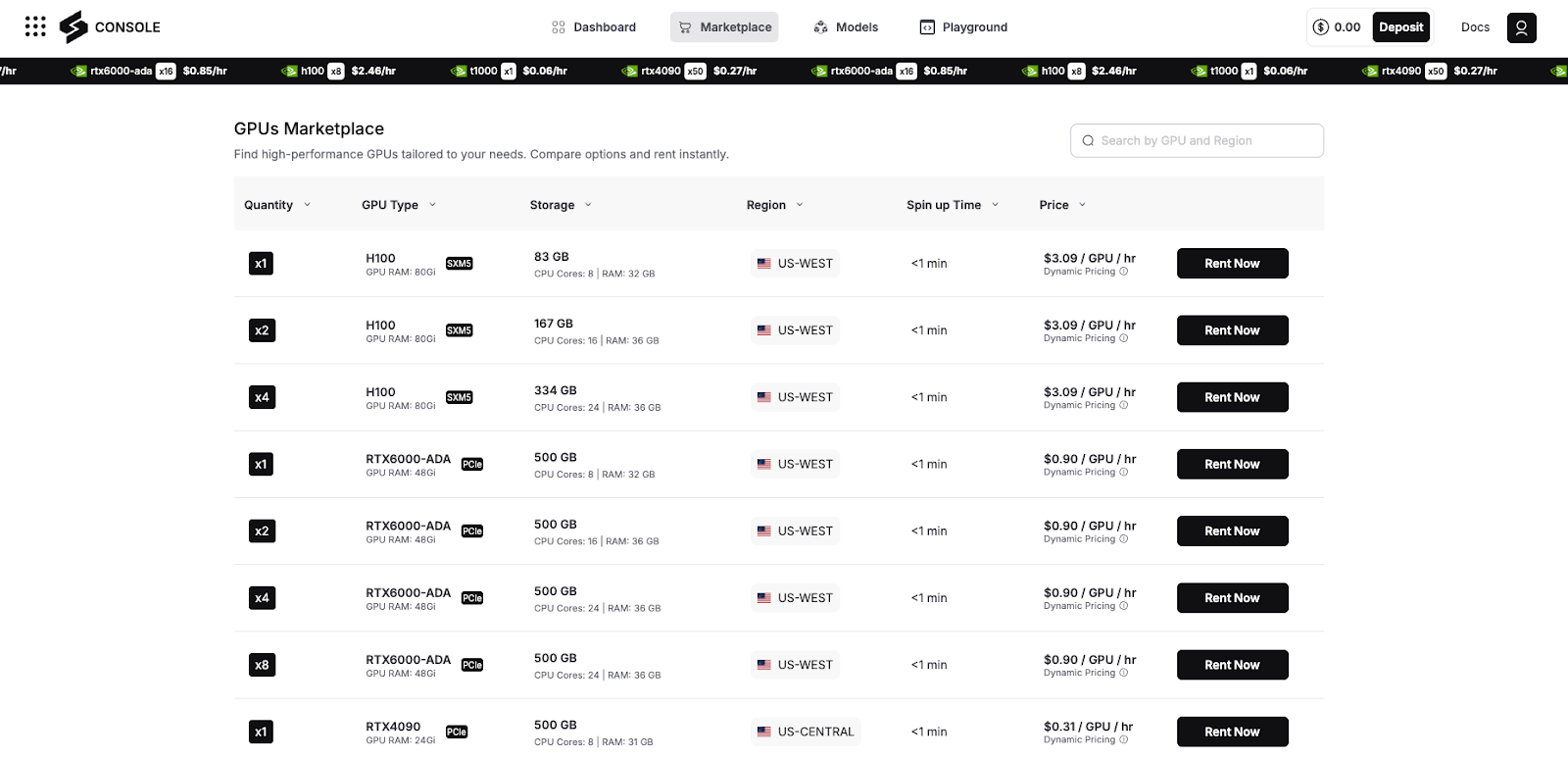
One reason to look at Spheron is that it strips away the complexity of dealing with different providers. If you decide to host a project in the cloud, you often end up navigating a maze of services, billing structures, and endless documentation. That can slow down development and force you to spend energy on system admin work instead of your core product. Spheron reduces that friction. It acts like a single portal where you see your available compute options at a glance. You can filter by cost, power, or any other preference. You can select top-notch hardware for certain tasks and then switch to more modest machines when you want to save money. This helps you avoid the waste that happens when you reserve a large machine but only need a fraction of its power.

Blending AI and Web3 Support

Spheron merges AI and Web3 by offering a decentralized compute platform that meets the needs of both communities. AI developers rely on GPUs to handle large-scale computations with speed and efficiency, often working with massive datasets that demand parallel processing. Web3 developers care about smart contracts, blockchain-based tools, and transparent workloads. Spheron unites these requirements by letting them run advanced computations in one consistent environment. You can focus on your code, data, and results without juggling separate platforms. By bridging both AI and Web3 in a single place, Spheron delivers a cohesive experience that removes the walls between traditional computing infrastructures and decentralized solutions.

Resource Flexibility

Flexibility is another key point. Technology changes fast. New AI libraries emerge, and new Web3 protocols rise. Buying your own hardware can seem risky if you worry it will become outdated soon. Spheron lowers that risk by letting you move to new machines as soon as they come to market. You just check the platform, see what offerings are available, and switch if you want. This helps you stay current without taking on big capital expenses. When you need extra power—maybe to run a special training job—you can scale up. When that job ends, you can scale down. This elasticity is a hallmark of cloud computing, but Spheron takes it further by pooling resources from different places worldwide, not just a single data center.

Fizz Node: Powering Decentralized Compute at Scale

Fizz Node is a cornerstone of the Spheron platform, designed to distribute compute power efficiently across a decentralized network. Fizz Node combines decentralized principles with practical usability. It eliminates the inefficiencies of traditional cloud services by allowing users to scale their deployments globally without being tied to a single data center. This approach not only reduces costs but also provides redundancy and reliability, ensuring uninterrupted access to resources.

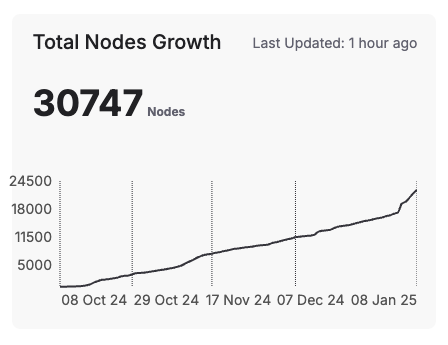
The platform has seen remarkable growth, with over 30,747 active nodes worldwide as of the most recent update. This global expansion is fueled by its ability to aggregate resources from diverse sources, offering flexibility and reliability for developers.

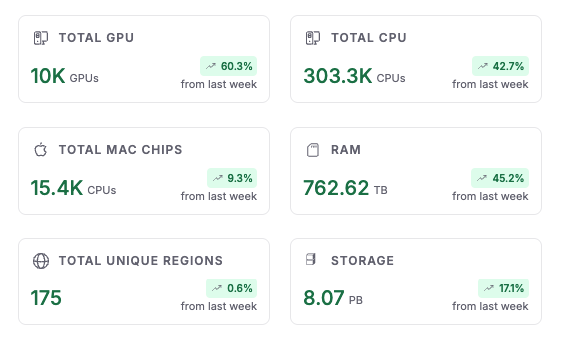
The current Fizz Node network has:

10,000 GPUs

303,300 CPU

15,400 Mac chips

762.62 TB of RAM

8.07 PB of storage

These numbers highlight the platform’s scalability and ability to support high-performance computing needs, whether for AI workloads or Web3 applications. The network spans 175 unique regions, further emphasizing its global reach and reliability.

Access to a Wide Range of AI Models

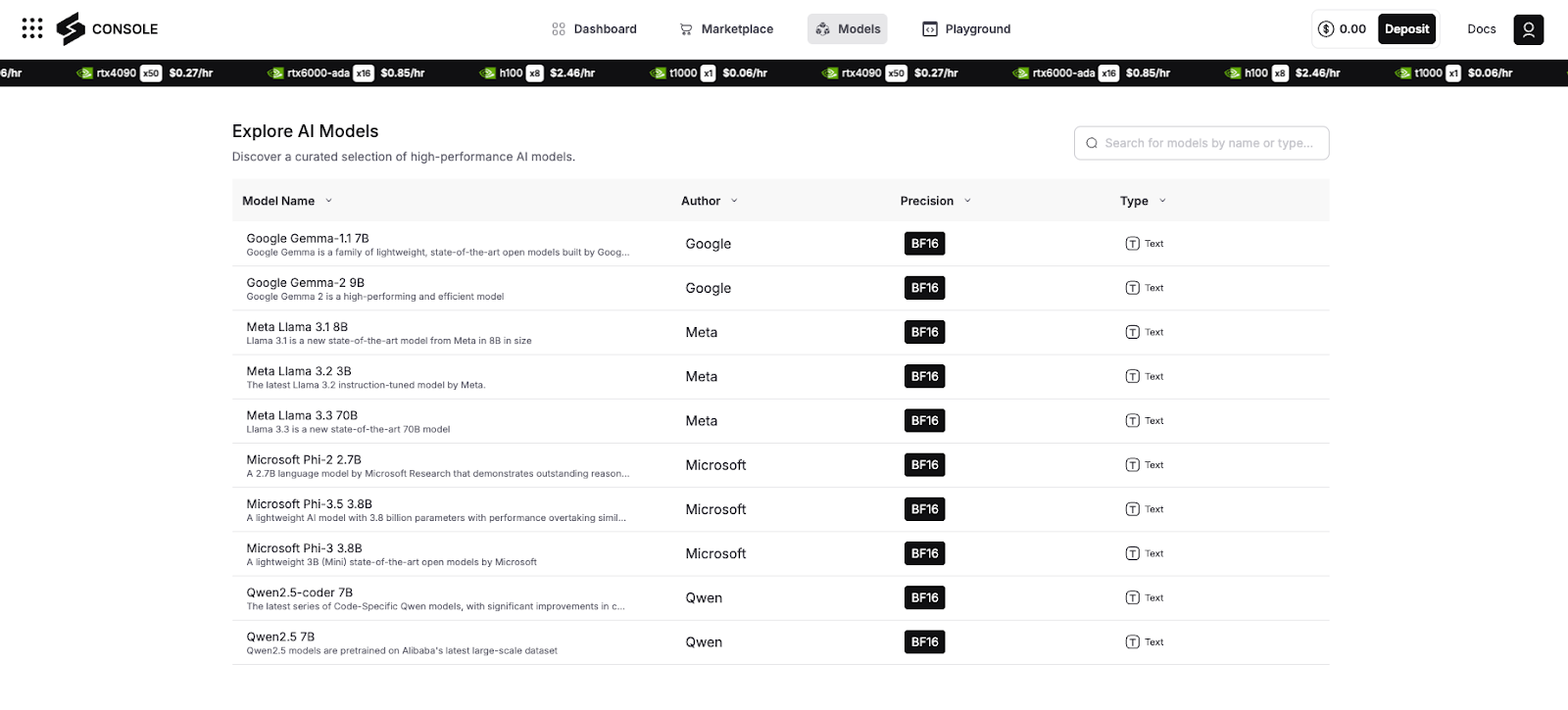
Spheron offers access to a curated list of AI models to suit different needs. These models include lightweight options like Google Gemma-1.1 (7B) and advanced ones like Meta Llama 3.3 (70B). Some models, like Qwen2.5-coder, are designed for specific tasks such as coding. All models use BF16 precision, which ensures efficient and reliable performance for both small and large computations. This variety allows you to choose the right model for your task, whether you’re building an AI agent, training a model, or running a proof-of-concept.

The platform makes it easy to explore these models, showing all the relevant details in a simple interface. This transparency helps you make informed decisions without wasting time. Whether you’re new to AI or an expert, you’ll find tools that match your skill level and project requirements.

Ease of Use

Ease of use stands out as one of Spheron’s core strengths. The platform removes barriers so you can focus on building and running your AI Agents rather than wrestling with complex technical overhead. Its interface makes it straightforward to pick the hardware you need, monitor your costs, and fine-tune your environment. If you’re new, you can follow a simple setup process. If you’re an expert, you can dive into deeper configuration details. You deal with only one tool instead of juggling various systems.

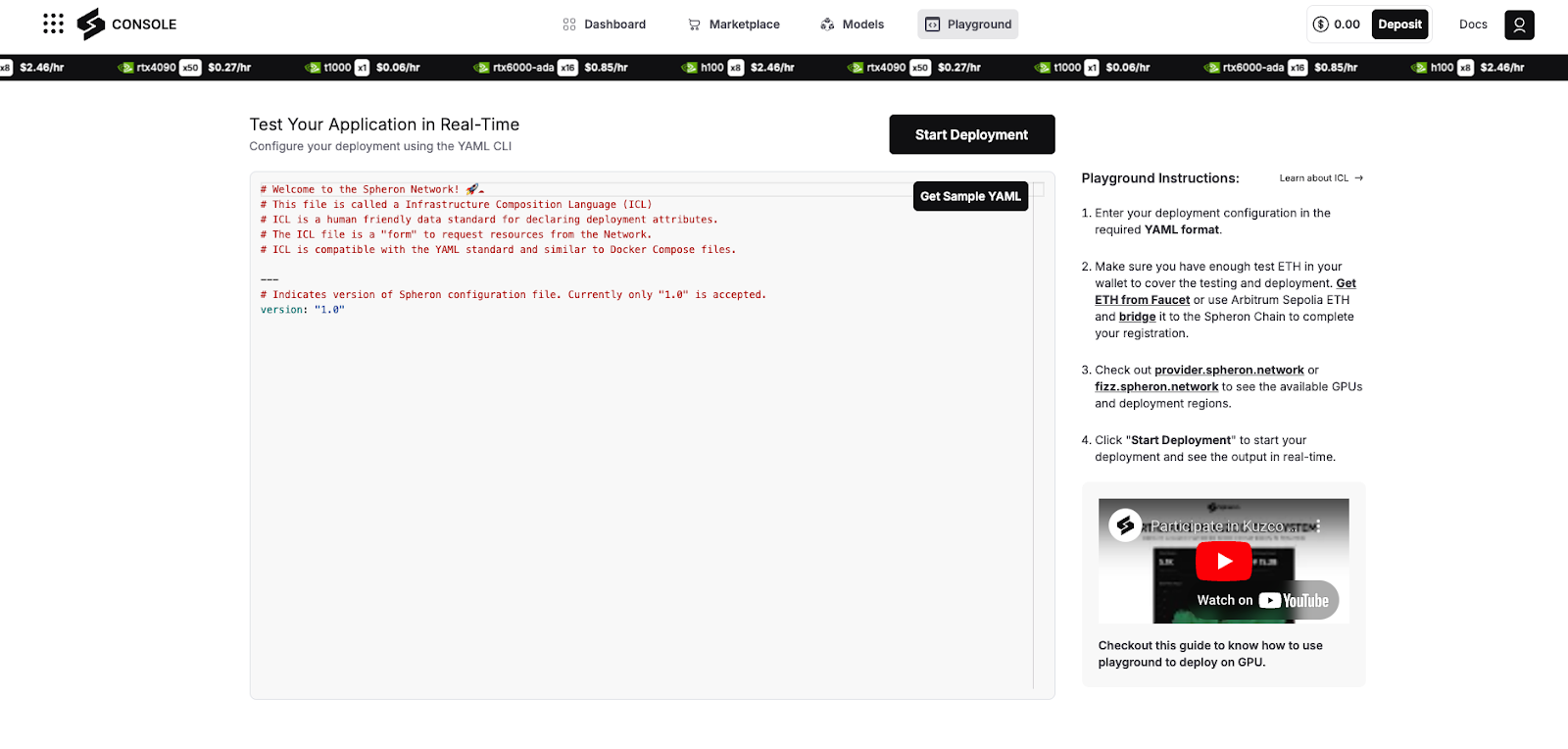
Spheron also offers a built-in Playground that guides you step-by-step:

Enter your deployment configuration in YAML. Spheron follows a standard format, so you can define your resources cleanly.

Obtain test ETH. Make sure you have enough test ETH in your wallet to cover deployment. You can use a faucet or Arbitrum Sepolia ETH and bridge it to the Spheron Chain. This funds your testing and registration.

Explore provider options. Visit provider.spheron.network or fizz.spheron.network to see available GPUs and regions.

Click “Start Deployment.” Once you finalize your setup, launch your AI Agents and view logs or errors in real time.

These steps show how simple it is to build and run AI Agents on Spheron. You skip the guesswork of configuring multiple platforms and gain a smooth path from setup to execution. The result is a user-friendly environment where you control costs, scale on demand, and bring your AI projects to life with minimal friction.

The Aggregator Advantage

The aggregator model drives many of these benefits. Spheron keeps a broad catalog of GPU types, memory sizes, and performance tiers by pooling machines from various sources. That means you can compare prices in real time and pick the hardware that works for you. Because multiple providers compete, you see fair pricing. Providers with idle resources can lower their rates to attract more users, which lowers your costs. If you have a specific GPU in mind, you can search for that. If you only care about cost, you can sort from cheapest to most expensive. This transparency is rare in single-cloud setups, where you might have only a handful of preset instance types.

Why Spheron for You?

All these points lead to the main reason why someone should explore Spheron. It is not about big market numbers or grand hype. It is about real, everyday benefits. Developers can lower infrastructure bills by matching tasks to the right hardware level. They can cut down on setup time by avoiding multiple cloud services. They can move quickly between AI and Web3 projects. They can prepare for future changes by relying on a network that grows to include new hardware and frameworks. They can also manage workloads around the globe, reducing downtime by not being tied to a single data center.

Spheron does not promise to reinvent computing or dominate every market overnight. It focuses on bridging the gap between large cloud vendors and smaller data center operators. It curates a network of reliable providers and presents it in a single interface that is easy to learn. This calm, practical approach appeals to developers who want trustworthy solutions without the hype. When you sign up, you gain a set of tools that let you deploy, monitor, and scale your work across many machines. You see direct value in saved time, clear pricing, and peace of mind. That is why people who build AI models, who create Web3 applications, or who want an all-in-one solution should take a closer look at Spheron.


Source link

SEED Secures Sui Foundation Investment to Build a 100M-User Web3 Gaming Ecosystem – Web3oclock

0
SEED Secures Sui Foundation Investment to Build a 100M-User Web3 Gaming Ecosystem – Web3oclock


Leadership Insights: SEED and Sui Share a Unified Vision


Source link

Innovaccer Raises $275 Million to Transform Healthcare with AI and Cloud Power – Web3oclock

0
Innovaccer Raises 5 Million to Transform Healthcare with AI and Cloud Power – Web3oclock


Prior authorization systems

Clinical Documentation Solutions

Advanced contact capabilities

Growth Trajectory:

Key growth highlights include:

50% year-over-year revenue growth for the past five years.

Partnership with six of the top ten U.S. health systems and increased partnerships with the public sector.

Achieving an annual recurring revenue of a run rate of $150 million as of last year.

Funding History:


Source link

Ripple and Chainlink Transform $RLUSD, Ethereum Sets Sights on $6,000, and Minotaurus Leads the Web3 Gaming Charge – Web3oclock

0
Ripple and Chainlink Transform $RLUSD, Ethereum Sets Sights on ,000, and Minotaurus Leads the Web3 Gaming Charge – Web3oclock


Ripple and Chainlink unite: a great boost for $RLUSD

Ethereum’s Ascent: Can It Hit $6,000?

Minotaurus (MTAUR): Leading the Web3 Gaming Revolution

Conclusion:


Source link

Astera Labs Announces Conference Call to Review Fourth Quarter 2024 Financial Results | Web3Wire

0
Astera Labs Announces Conference Call to Review Fourth Quarter 2024 Financial Results | Web3Wire


SANTA CLARA, Calif., Jan. 09, 2025 (GLOBE NEWSWIRE) — Astera Labs, Inc. (Nasdaq: ALAB), a global leader in semiconductor-based connectivity solutions for AI and cloud infrastructure, today announced that it will release its financial results for the fourth quarter 2024 after the close of market on Monday, Feb. 10, 2025. Astera Labs will host a corresponding conference call at 1:30 p.m. Pacific Time, 4:30 p.m. Eastern Time.

Conference Call Details

Date:Feb. 10, 2025  Time:1:30 pm PT / 4:30 pm ET  Hosts:Jitendra Mohan, Chief Executive OfficerSanjay Gajendra, President and Chief Operating OfficerMike Tate, Chief Financial Officer  Dial-in:(800) 715-9871Conference ID: 5908687  Webcast:https://ir.asteralabs.com 

About Astera LabsAstera Labs is a global leader in purpose-built connectivity solutions that unlock the full potential of AI and cloud infrastructure. Our Intelligent Connectivity Platform integrates PCIe®, CXL®, and Ethernet semiconductor-based solutions and the COSMOS software suite of system management and optimization tools to deliver a software-defined architecture that is both scalable and customizable. Inspired by trusted relationships with hyperscalers and the data center ecosystem, we are an innovation leader delivering products that are flexible and interoperable. Discover how we are transforming modern data-driven applications at http://www.asteralabs.com.

© Astera Labs, Inc. Astera Labs, and its stylized logo, are trademarks of Astera Labs, Inc. or its affiliates. Other names and brands may be claimed as the property of others.

Investor Contact:Leslie GreenLeslie.green@asteralabs.com

About Web3Wire Web3Wire – Information, news, press releases, events and research articles about Web3, Metaverse, Blockchain, Artificial Intelligence, Cryptocurrencies, Decentralized Finance, NFTs and Gaming. Visit Web3Wire for Web3 News and Events, Block3Wire for the latest Blockchain news and Meta3Wire to stay updated with Metaverse News.


Source link

Autonomous Agents Are Here—And the Agentic Mesh Is Leading the Charge

0
Autonomous Agents Are Here—And the Agentic Mesh Is Leading the Charge


In an era of rapid technological advancements, one innovation stands out for its potential to reshape how humans and machines collaborate: Autonomous Agents. As Generative AI (GenAI) capabilities evolve, these Agents are no longer merely chatbots limited to predefined conversation flows. Instead, they become self-directed problem-solvers capable of identifying objectives, formulating plans, and executing tasks independently. The question now shifts from how to build autonomous Agents to how to orchestrate and manage a burgeoning ecosystem of these computational collaborators. This is where the concept of the Agentic Mesh comes into focus.

From Chatbots to Autonomous Agents

The evolution of Generative AI has been breathtaking. Early AI systems relied heavily on machine learning algorithms such as decision trees and regression models to detect patterns in structured datasets. Over time, deep learning architectures, especially convolutional neural networks, demonstrated their power in tasks like image recognition. The next major inflection point arrived with the introduction of the transformer architecture—famously described in the 2017 paper Attention is All You Need. Transformers paved the way for large-scale language models, culminating in OpenAI’s ChatGPT, which captured the public’s imagination in late 2022.

ChatGPT and other GenAI tools expanded possibilities for conversational AI, bringing it into everyday workflows across industries. Yet, these chat-based tools generally rely on user-initiated prompts and scripts. Meanwhile, a new wave of AI—sometimes called “Agentic AI”—has emerged, featuring systems that think and act with considerable autonomy. These Agents do more than chat; they engage in iterative planning, make context-aware decisions, and even propose new tasks. Armed with large language models, specialized domain knowledge, and continuous learning capabilities, they herald a future where software systems can proactively find solutions, collaborate with other systems, and transact without human micromanagement.

A Glimpse into the Future: Many Agents, One Ecosystem

Recent headlines have highlighted that major technology firms—Microsoft, Amazon, Salesforce, and others—are pouring billions of dollars into developing and deploying AI Agents across various industries. In the near future, we will likely see hundreds, if not thousands, of these Agents working around the clock, each with its own specialized focus. Some might handle sales or finance, some coordinate logistics or inventory management, and others manage customer inquiries.

The critical challenge is no longer just building autonomous Agents but rather enabling these independent Agents to coexist safely, discover each other easily, and collaborate productively. Imagine a complex supply chain scenario: one Agent tracks raw material availability, another tracks shipping logistics, and a third manages regulatory compliance. For these Agents to collaborate and exchange data seamlessly, they need a unifying environment—a mesh—where they can discover one another, assess capabilities, and transact in a structured, trusted manner.

Introducing the Agentic Mesh

The Agentic Mesh is a conceptual framework designed to solve precisely this problem. It is an interconnected ecosystem where Autonomous Agents can register themselves, publish their capabilities, and coordinate with other Agents or humans to complete tasks. The goal is to create an environment where Agents become discoverable, trustworthy, and easy to interact with, whether by human users or by other computational entities.
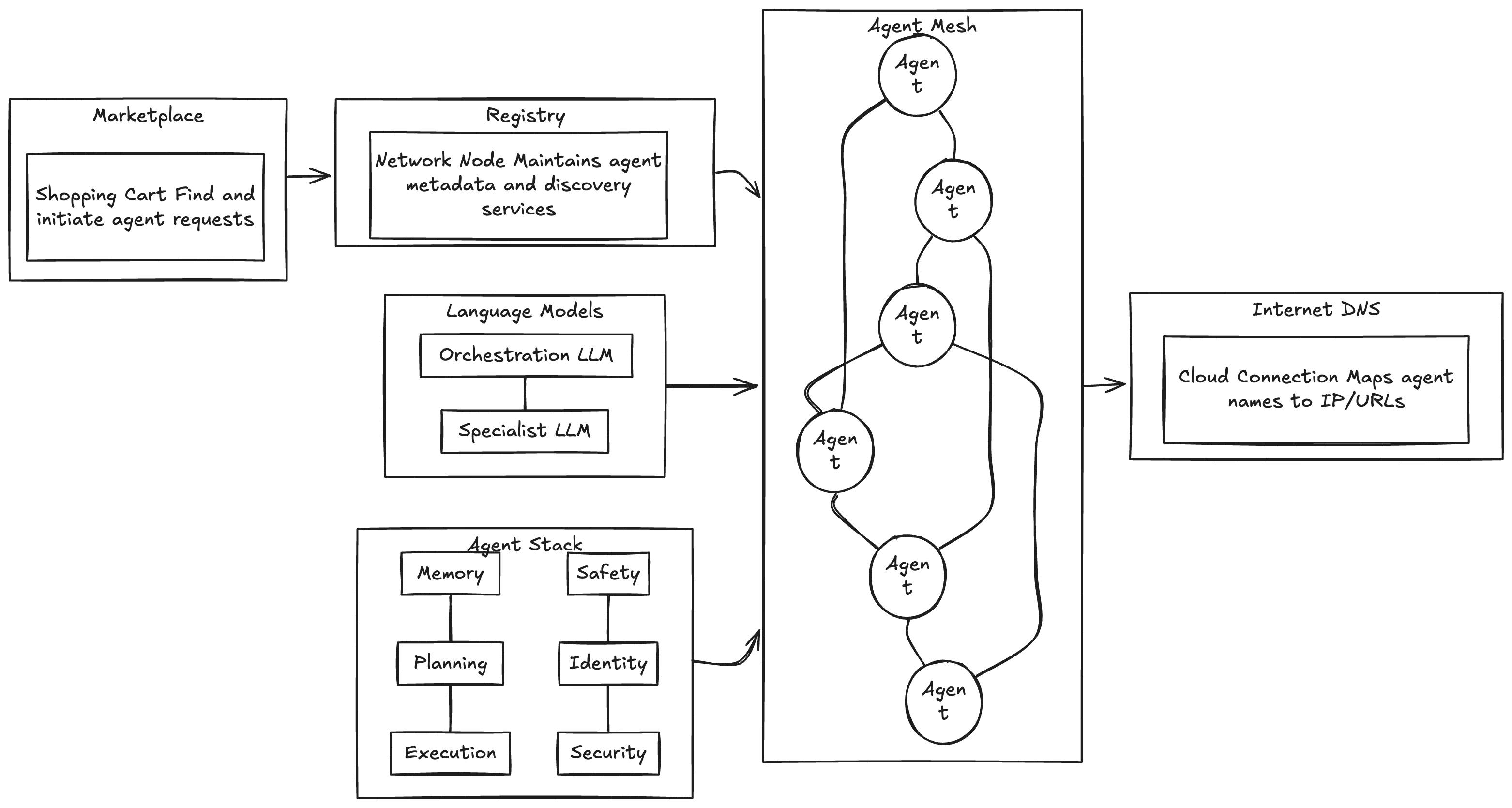
Central to this ecosystem is the Marketplace, which allows users to browse available Agents much like one would explore apps in an app store. Here, users can see what each Agent does, initiate tasks, monitor progress, provide feedback, and consult billing information. Another key pillar is the Registry, a structured repository that stores each Agent’s metadata, including purpose, capabilities, policies, and ownership details. This metadata underpins the Mesh’s ability to match tasks with the most suitable Agents and to instill confidence that Agents will behave within their defined parameters.

At the core, the Agentic Mesh aims to tackle fundamental questions:

How do I find the Agent that meets my needs?

How do I interact and transact with it?

How can I trust that it will behave ethically, securely, and reliably?

Defining Autonomous Agents in the Mesh

For an Agent to be considered “Mesh-ready,” it typically needs a set of core attributes: a clearly defined purpose, explicit ownership, built-in mechanisms for trustworthiness, sufficient autonomy, discoverability, and a level of intelligence (usually via large language models).

Purpose: Each Agent has a transparent mission that outlines its functional scope. This purpose ensures the Agent stays aligned with specific objectives and helps others verify if it fits their needs.

Ownership: Every Agent is owned by some entity—a person, a department, or an organization—accountable for its actions. Ownership is central to governance, accountability, and policy enforcement.

Trustworthiness: The Agent’s policies, certifications, and operational logs should be openly available to prospective users or partnering Agents. This transparency builds confidence that the Agent is safe, reliable, and compliant with ethical and legal standards.

Autonomy: Agents must be able to function without constant human oversight. They independently decide how to fulfill tasks within policy and scope boundaries. This independence differentiates them from traditional scripts or bots that follow rigid instructions.

Discoverability: Agents must be registered so others can locate them based on purpose, ownership, or capabilities. This is akin to how DNS finds websites by domain name.

Intelligence: Agents rely on large language models—sometimes multiple ones specialized for specific tasks—to interpret complex requests, plan solutions, and adapt to changing contexts.

Laying the Foundations: Registration, Discovery, and Execution

In the Agentic Mesh, three foundational processes enable cohesive operations among independent Agents: Registration, Discovery, and Task Execution.
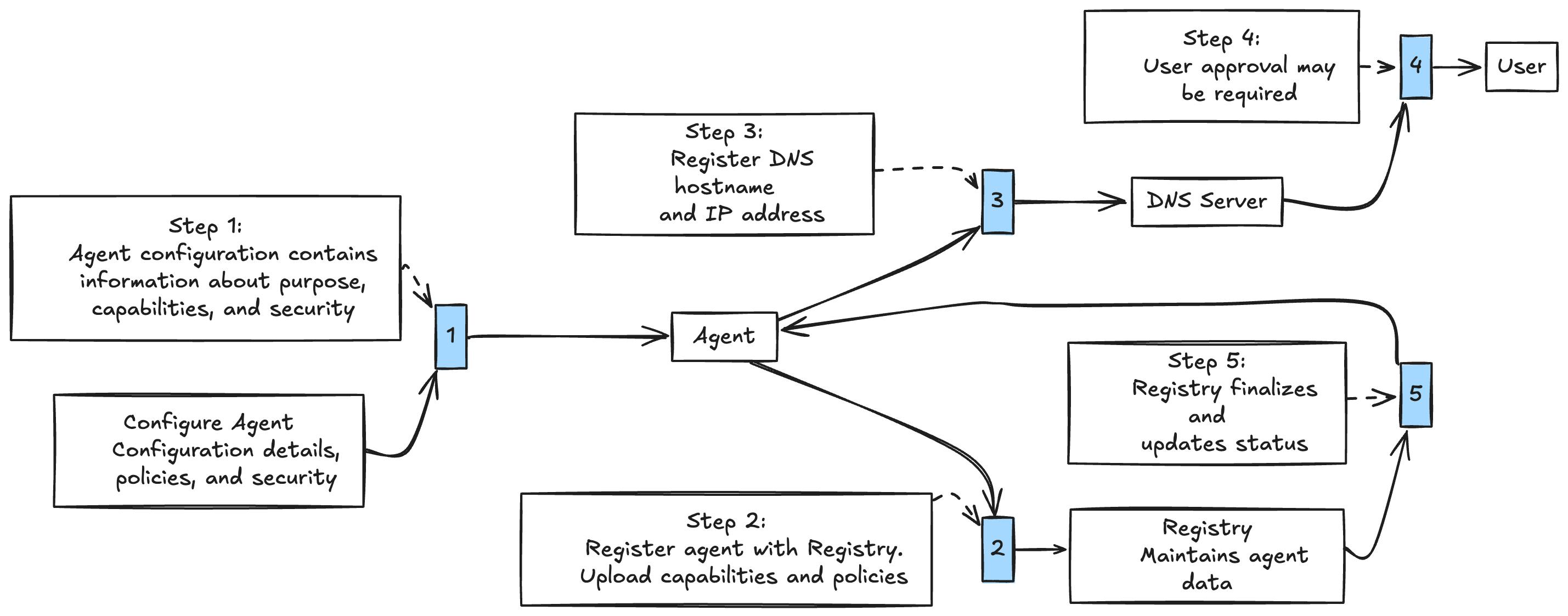
Registration is the first step. When an Agent is created, it must configure its metadata—purpose, ownership, security policies, etc.—and submit that information to the Mesh’s Registry. The Agent’s DNS name gets associated with its IP address, making it addressable over local or global networks. This metadata entry is then reviewed, possibly by a human or automated validator, before the Agent becomes “active” or “discoverable.”

Once registered, the Agent becomes visible through the Discovery process. Users or other Agents can query the Registry to find Agents that match specific criteria. The Registry returns a list, including each Agent’s name, capabilities, and relevant metadata. These Agents can then be located via DNS to initiate tasks.
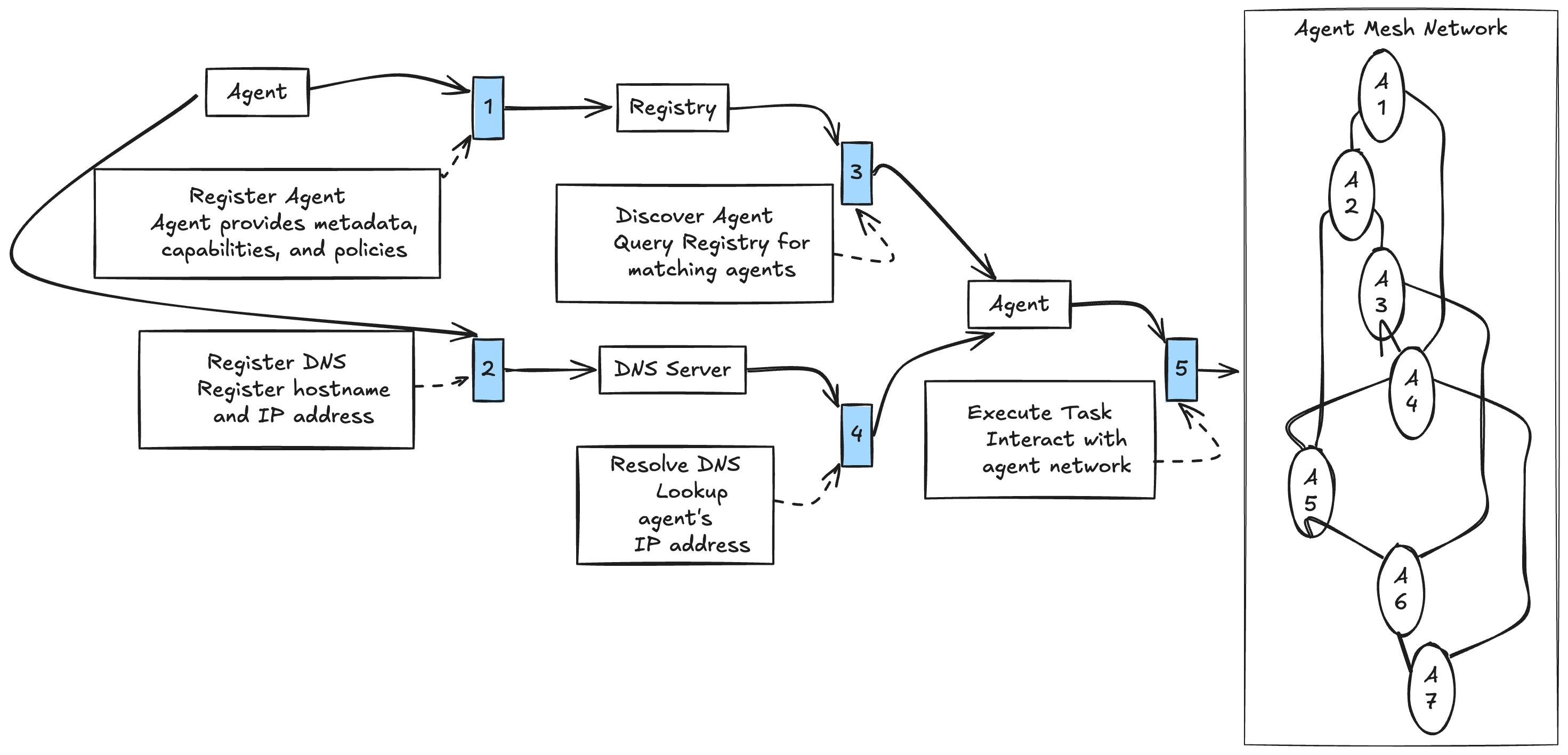
With a suitable Agent identified, Task Execution unfolds. A user may browse the Marketplace for an Agent, select it based on purpose or rating, and send instructions. The Agent then outlines a plan to accomplish the request, possibly engaging with other Agents for specialized tasks. Throughout this process, the Agent can provide updates, request clarifications, or terminate the effort if it detects anomalies.

The Three Experience Planes

To accommodate diverse stakeholders, the Agentic Mesh conceptualizes its capabilities across three “experience planes”:
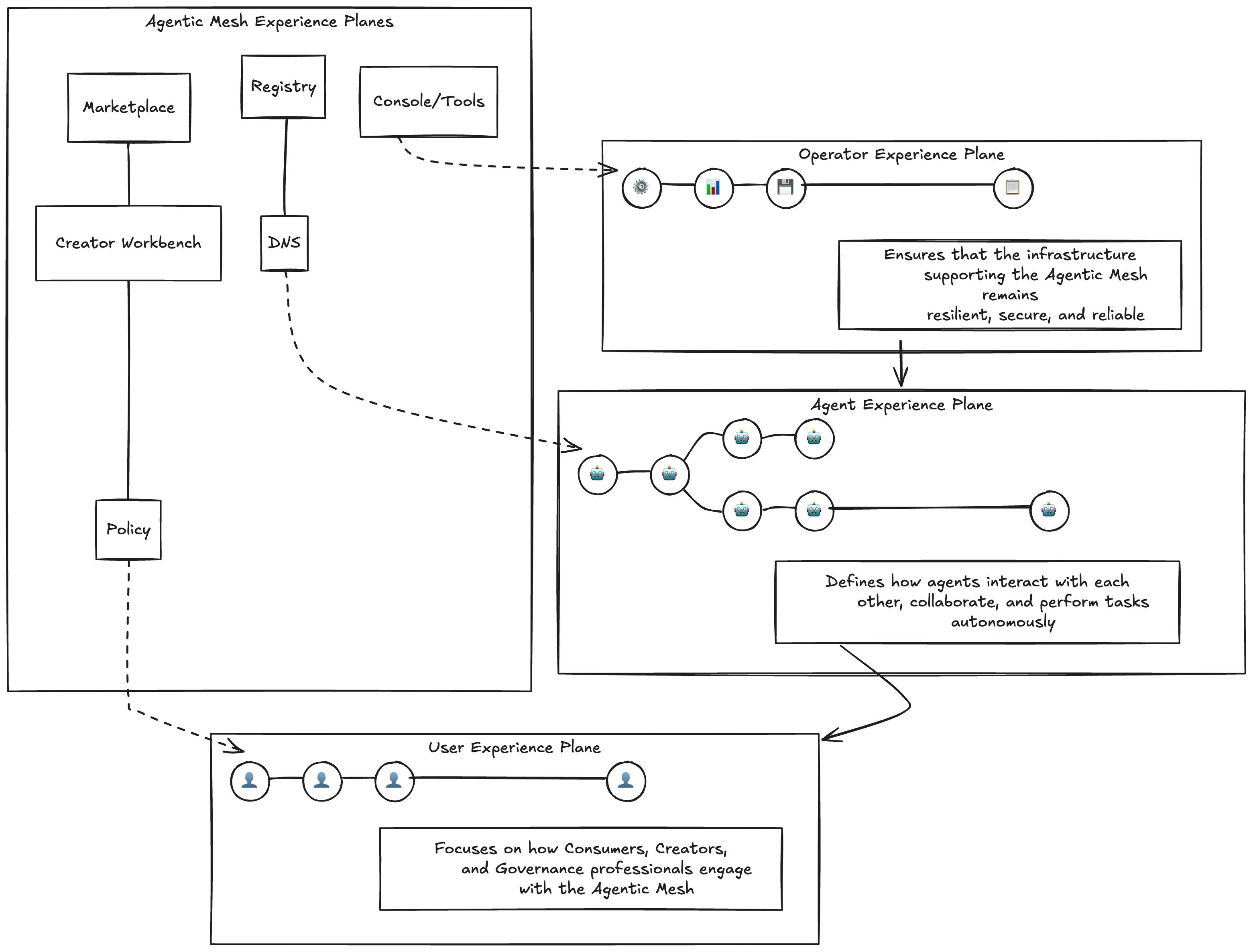
User Experience Plane: Focused on how humans interact with the system. The Marketplace is the main access point, allowing users to search and engage with Agents, track requests, and review billing. This plane also includes tools for Agent creators (to publish or update Agents) and governance professionals (to define and monitor policies).

Agent Experience Plane: Pertains to how Agents discover and collaborate with one another. Through APIs and standard protocols, Agents register themselves in the Mesh, publish capabilities, and look up other Agents to form collaborative workflows. The Registry is pivotal here, acting like a directory service for Agents while also storing relevant operational metrics and policies.

Operator Plane: Concerns about the technical infrastructure that keeps the Mesh operational. System operators monitor performance, address technical issues, and ensure stability. They use specialized consoles and tools to provision resources, manage network configurations, and maintain security.

The Agentic Stack

Beneath these experiences lies the Agent Stack, which distills the essential components each Agent needs to function:

Communications and APIs: Mechanisms for talking to other Agents, receiving tasks, and accessing external data.

Control and Management: Tools for taking in data from sensors, controlling actuators, and interpreting updates or commands from external sources.

Learning and Decisioning: The “brain” of the Agent, typically powered by large language models, rules engines, or reinforcement learning modules, enables it to reason about tasks, formulate solutions, and learn from outcomes.

Run-Time Environment: The computational and execution infrastructure that ensures the Agent can operate reliably.

Orchestration and Specialized LLMs: Large, general-purpose language models guide high-level task orchestration. Specialized models—focused on a specific domain—handle detailed execution tasks.

The Registry: The Mesh’s Nerve Center

At the heart of the Mesh is the Agentic Mesh Registry, which maintains a canonical record of all Agents and their associated metadata. Agents interface with it to register themselves, update their status, discover other Agents, and retrieve operational data. The Registry’s responsibility is broad and includes:

Securely storing Agent configurations and policies.

Managing and granting discovery requests.

Logging Agent performance metrics and usage patterns.

Facilitating task execution by directing requests to the appropriate Agent endpoints.

Providing insight into the Mesh’s overall health through alerts and logs.

Building and Maintaining Trust

In a decentralized ecosystem where Agents can initiate tasks autonomously, trust becomes paramount. If human users and collaborating Agents are to delegate work without micromanagement, the Mesh must convey clear assurances of safety, transparency, and accountability.

Several strategies reinforce trust in the Mesh. First, feedback mechanisms allow both users and Agents to rate their experiences, creating a public record of performance. Second, Agents that consistently deliver on expectations build an authoritative track record, reflected in their profiles and accessible through the Marketplace or Registry. Third, certification protocols ensure that Agents meet industry or organizational standards. Whether those standards revolve around data privacy, ethical conduct, or operational reliability, third parties can audit an Agent’s logs and behaviors. Agents who pass the audit earn a certification badge, which is publicly listed to help potential collaborators decide if they can be trusted.

Publishing trust metrics—ranging from basic uptime statistics to more advanced compliance scores—further boosts confidence. These metrics reside within the Registry and the Marketplace, enabling all participants to make informed decisions about which Agents to rely on for critical tasks.

Impact on the Future of Work

The emergence of autonomous Agents connected by an Agentic Mesh signals a seismic shift in how labor and collaboration might evolve. Instead of humans performing repetitive tasks or manually coordinating between discrete systems, Agents can manage these tasks efficiently on their own. Humans then step into higher-level roles, providing strategy, creativity, or ethical oversight.

This transformation can unlock massive productivity gains. Agents can run 24/7, continuously exploring new possibilities, anticipating needs, and improvising solutions. They can also seamlessly integrate data from multiple sources, orchestrating workflows with minimal human intervention. Beyond mere efficiency, these capabilities can spark innovation: when autonomous Agents combine talents, unexpected synergies can emerge, spawning novel products, services, or ways of working that human teams might not have discovered on their own.

The Road Ahead

Although the Agentic Mesh concept is still taking shape, it is rapidly gaining traction. Organizations that integrate autonomous Agents into their core operations will likely experience sharper competitive advantages, reaping benefits in cost savings, faster decision-making, and streamlined workflows. Yet, with these advantages come challenges. Questions of governance, data security, and ethical responsibilities loom large. Clear policies and robust oversight will be essential to ensure Agents behave responsibly and transparently.

Nonetheless, the shift is inevitable. As GenAI advances and costs fall, Agents are primed to proliferate in virtually every sector—from manufacturing and logistics to finance and healthcare. The winners in this race will be those who embrace the Mesh early, shaping its policies and standards to their benefit and effectively harnessing the countless Agents that will populate this next-generation digital ecosystem.

Conclusion: Embracing the Agentic Mesh

The Agentic Mesh stands at the intersection of AI, autonomy, and secure ecosystems. It serves as the critical backbone through which countless autonomous Agents can find each other, collaborate, and transact, all while maintaining transparency, reliability, and trust. For business leaders, developers, governance experts, and curious technologists, the call to action is clear: prepare for a new phase in AI-driven transformation.

By understanding and incorporating this Mesh paradigm, you position yourself at the forefront of the most significant shift in AI since the introduction of deep learning. Autonomous Agents and the mesh that connects them are poised to redefine jobs, workflows, and industries. Those who adopt this framework—and contribute to shaping it—will be better placed to navigate the complexities and seize the opportunities of this new frontier.

The only question that remains is: Are you ready to join the Agentic Mesh revolution?



Source link

Why DeepSeek V3 is the LLM Everyone’s Talking About

0
Why DeepSeek V3 is the LLM Everyone’s Talking About


The release of DeepSeek V3 has sent shockwaves through the world of Large Language Models (LLMs), with both open-source and closed-source communities taking note. This model launched just before Christmas in 2024, has earned attention not only for its impressive performance but also for its affordability and open-source availability.

What’s New with DeepSeek V3?

DeepSeek V3 is the latest in a series of innovations from DeepSeek.ai, a company founded in 2023 by Phantom Quant, a firm specializing in quantitative asset management. The V3 model is built on the success of its predecessors, particularly DeepSeek V2, which stood out for its strong performance and cost-effective design. Now, with V3, the company has pushed the envelope further. Key highlights include:

671B MoE Parameters: The model is based on a Mixture-of-Experts (MoE) architecture, meaning it activates only a subset of its parameters for each task. This allows it to be more efficient while maintaining high performance.

37B Activated Parameters: While the total parameters are massive, only 37 billion are activated during tasks, allowing for optimized resource usage.

Trained on 14.8 Trillion Tokens: DeepSeek V3 has been trained on an enormous amount of high-quality data, making it highly versatile and capable of performing well across various domains.

What sets DeepSeek V3 apart is that it’s 100% open-source. This is a significant development for the open-source community, especially since the model’s performance is competitive with, if not superior to, the likes of GPT-4 and Claude Sonnet 3.5 in several benchmarks. Furthermore, it has been praised for outperforming GPT-4 in tasks related to code generation, a vital aspect for many developers and tech enthusiasts.

The Cost Advantage

While the technical specifications are impressive, what truly makes DeepSeek V3 stand out is its affordability. The company has made it clear that low costs are at the core of its mission, and DeepSeek V3 delivers on this promise in two key areas: training and inference.

DeepSeek V3 was trained with just 2048 GPUs and a budget of $5.5 million. To put this in perspective, Meta’s LLaMA 3 model, one of the leading competitors, was trained using 24,000 Nvidia H100 chips and a budget of $50 million. This means DeepSeek V3’s training costs are about one-tenth of its closest rivals, making it significantly cheaper to develop and deploy.

None

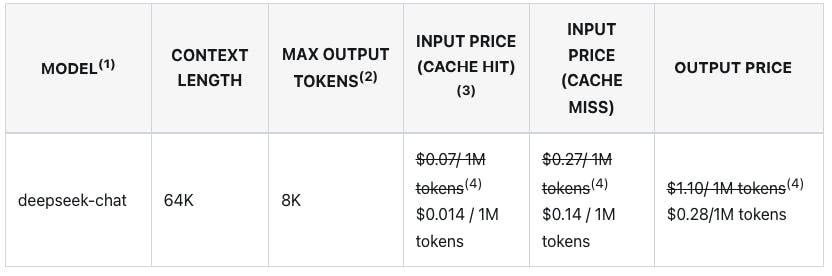
The cost efficiency continues when it comes to inference. According to the company, using DeepSeek V3 for 24 hours at 60 tokens per second would cost between $1.52 and $2.18 per day, depending on cache hits and misses. Even with these variables, DeepSeek V3 remains one of the most cost-effective models on the market. To give you an idea of how this compares to other models, using GPT-4 or Claude Sonnet 3.5 for similar tasks would cost more than ten times as much.

None

The low inference cost makes DeepSeek V3 especially attractive for developers and companies looking to deploy AI models without breaking the bank. The affordable API pricing further encourages widespread adoption, enabling anyone with a small budget to tap into the power of one of the best LLMs available today.

DeepSeek V3 and Its Impact on the Industry

DeepSeek V3 is more than just a high-performance model; it represents a shift in the balance of power in the LLM space. Open-source models have always been crucial for fostering innovation, and DeepSeek V3’s open-source nature allows anyone to access, modify, and deploy the model. This democratizes AI and ensures that even small companies or individual developers can take advantage of cutting-edge technology without the need for massive resources.

Moreover, the combination of high performance and low cost could significantly impact industries that rely on AI for tasks like content generation, data analysis, and customer service. Smaller companies and startups now have the opportunity to leverage top-tier AI technology at a fraction of the price of traditional solutions like GPT-4 or Claude Sonnet 3.5.

This focus on cost-effective models is likely to drive more competition in the LLM space. As more players enter the market with similar models, we could see further innovation and even lower costs, benefiting everyone from hobbyists to large enterprises.

What’s Next for DeepSeek and the LLM Community?

The release of DeepSeek V3 is a significant step forward, but it’s not the end of the journey. DeepSeek.ai has already proven its ability to iterate and improve quickly, and it’s likely that future versions will continue to push the boundaries of what’s possible in AI. Whether it’s expanding the MoE architecture, increasing training efficiency, or enhancing the model’s ability to perform complex tasks, the future looks bright for DeepSeek.

The low-cost, high-performance nature of DeepSeek V3 challenges other players in the field to rethink their approach. As companies like OpenAI and Meta continue to dominate the commercial LLM space, models like DeepSeek V3 provide a compelling alternative for those looking for performance without the hefty price tag. Whether this shift will lead to a more open, accessible LLM ecosystem or spark a new round of competition remains to be seen. But one thing is clear: DeepSeek V3 has made its mark, and the LLM landscape will never be the same again.

Conclusion

DeepSeek V3 offers a rare combination of high performance, low cost, and open-source availability, making it a landmark release in the world of LLMs. Its ability to outperform models like GPT-4 and Claude Sonnet 3.5, all while being a fraction of the cost, positions it as a game-changer in the field. As more developers, researchers, and businesses adopt DeepSeek V3, the impact on the AI industry will continue to grow, encouraging more innovation and making powerful AI tools more accessible than ever before.


Source link

Oklahoma Senator Proposes Bitcoin Freedom Act for BTC Payments – Web3oclock

0
Oklahoma Senator Proposes Bitcoin Freedom Act for BTC Payments – Web3oclock


Oklahoma’s Republican Senator Dusty Deevers has introduced the Bitcoin Freedom Act (SB325), a bill that would allow state employees and residents to use Bitcoin as a payment method for salaries and transactions. The legislation also enables vendors to accept Bitcoin payments.

“In a time when inflation is eroding the purchasing power of hard-working Oklahomans, Bitcoin provides a unique opportunity to protect earnings and investments,” said Deevers, announcing the bill on January 8.

He further emphasized, “As Bitcoin continues to rise and the value of the dollar continues to be printed away in Washington D.C., Oklahoma must act to protect our people.”

The proposed legislation ensures voluntary participation, respecting free-market principles and empowering employees, employers, and businesses to select their preferred payment methods.

Deevers highlighted that the legislation places Oklahoma in a leadership position nationally by embracing innovative financial technology. He added, “This act provides our citizens with more financial options and prepares the state for a rapidly evolving economic future.”


Source link

Popular Posts

My Favorites

Gaming Meets Collectibles: Leading 10 Blockchain Games You Should Try

0
Web3 gaming keeps pressing toward the mainstream as strong design and true item ownership grow side by side. The leading projects this year...