Web3

Home Web3 Page 167

Broker Complaint Alert Announces AI-Powered Solutions for Crypto Recovery | Web3Wire

0
Broker Complaint Alert Announces AI-Powered Solutions for Crypto Recovery | Web3Wire


In a significant leap forward for the cryptocurrency recovery industry, Broker Complaint Alert today announced the launch of its new AI-powered solutions, aimed at redefining the landscape of funds recovery. This innovative approach leverages cutting-edge artificial intelligence technology to enhance the efficiency and effectiveness of recovering lost or stolen digital assets. For detailed information, visit Broker Complaint Alert.

As the digital currency market continues to grow, so does the risk of fraud and theft. In response, Broker Complaint Alert has developed a suite of AI-driven tools that not only identify and combat fraudulent activities but also streamline the recovery process for victims. This initiative marks a pivotal advancement in the use of technology to safeguard and recover valuable digital investments.

“Artificial intelligence is transforming the way we address cryptocurrency recovery, providing unprecedented accuracy and speed in tracking down lost funds,” said Costigliola Romualdo, CEO and Founder of Broker Complaint Alert. “Our AI-powered solutions are designed to restore confidence in the digital finance sector by significantly enhancing our ability to detect fraud and expedite the recovery process.”

The new technology utilizes machine learning algorithms to analyze transaction patterns and detect anomalies indicative of fraudulent activity. By automating the detection process, Broker Complaint Alert can respond more swiftly and effectively than ever before, offering victims of crypto theft a greater chance of recovering their funds.

Key features of Broker Complaint Alert’s AI-powered solutions include:

Automated Fraud Detection: Advanced algorithms scan blockchain transactions to identify suspicious activity quickly.

Rapid Response Capabilities: Once potential fraud is detected, the system initiates immediate actions to halt transactions and begin the recovery process.

Enhanced Tracking Accuracy: AI-enhanced tracking tools follow the movement of stolen assets across the blockchain, increasing the likelihood of successful recovery.

“Adopting AI technologies allows us to keep pace with the increasingly sophisticated tactics used by cybercriminals,” Romualdo added. “It’s not just about reacting to threats, but proactively preventing them, ensuring our clients’ assets are secure.”

Broker Complaint Alert’s AI-driven approach also includes collaboration with blockchain forensics experts and cybersecurity professionals, ensuring a comprehensive and secure recovery process. This collaborative effort underscores the company’s commitment to taking charge of technological innovations within the crypto recovery space.

As cryptocurrency continues to be an integral part of global finance, the importance of robust, technology-driven recovery solutions becomes more apparent. Broker Complaint Alert is at the forefront of this movement, providing peace of mind to digital asset investors and redefining the standards for funds recovery in the crypto world.

For more information about Broker Complaint Alert and its AI-powered crypto recovery solutions, please visit Broker Complaint Alert’s website.

About Broker Complaint Alert: 

Broker Complaint Alert is a leader in the cryptocurrency recovery industry, specialising in AI-driven solutions to combat online fraud and secure digital assets. Their innovative approach ensures high efficiency and effectiveness in recovering stolen or lost digital currencies, setting new benchmarks for security and recovery in the digital finance industry.

Disclaimer: The information provided in this press release is not a solicitation for investment, nor is it intended as investment advice, financial advice, or trading advice. It is strongly recommended you practice due diligence, including consultation with a professional financial advisor, before investing in or trading cryptocurrency and securities.

About Web3Wire Web3Wire – Information, news, press releases, events and research articles about Web3, Metaverse, Blockchain, Artificial Intelligence, Cryptocurrencies, Decentralized Finance, NFTs and Gaming. Visit Web3Wire for Web3 News and Events, Block3Wire for the latest Blockchain news and Meta3Wire to stay updated with Metaverse News.


Source link

Holesky testnet revival bolsters Ethereum’s Pectra upgrade mission

0
Holesky testnet revival bolsters Ethereum’s Pectra upgrade mission


Holesky, an Ethereum testnet, has regained finality after nearly two weeks of instability.

The network’s disruption had stalled testing for the anticipated Pectra upgrade, delaying progress on the upcoming hard fork.

However, with Holesky now operational, EthPandaOps, a group of Ethereum developers, confirmed that validators could resume Pectra testing on the testnet.

The developers also recommended that solo stakers use the Ephemery testnet as an alternative environment for independent testing.

Holesky testnet

On March 10, EthPandaOps confirmed that Holesky finalized at Epoch 119090. This milestone was reached after more than two-thirds of the validators participated, stabilizing the network.

Holesky’s disruption began on Feb. 24 when it failed to finalize during Pectra testing.

Tim Beiko, Ethereum Foundation’s Protocol Support Lead, linked the issue to execution clients such as Geth, which used incorrect deposit contract addresses. This misconfiguration triggered an execution layer (EL) bug, causing chain splits and destabilizing the network.

An initial attempt to resolve the issue failed due to insufficient validator participation. However, with finality now restored, all test transactions on Holesky are permanent and irreversible.

EthPandaOps noted that Holesky has remained stable since its recovery, with ongoing finalizations. Some epochs have seen lower validator participation as users transition from temporary fixes to stable setups. Despite this, the network remains functional and ready for further testing.

Meanwhile, the developers also pointed out that the exit queue is filled with slashed validators and those below the required balance, amounting to nearly one million validators. However, around 700,000 remain active, with their balances expected to rise as they continue fulfilling network duties.

Other challenges

Holesky’s recovery comes as Ethereum developers address another issue on Sepolia, another test network.

Last week, Beiko reported that a custom deposit contract problem disrupted certain execution layer clients on Sepolia, affecting transactions within blocks.

Despite these challenges, Ethereum developers remain confident that Pectra could launch as scheduled in April.

XRP Turbo


Source link

AI in Frontend Automation: Transforming Coding, Testing & UI

0
AI in Frontend Automation: Transforming Coding, Testing & UI


AI Revolution in the Frontend Developer’s Workshop

In today’s world, programming without AI support means giving up a powerful tool that radically increases a developer’s productivity and efficiency. For the modern developer, AI in frontend automation is not just a curiosity, but a key tool that enhances productivity. From automatically generating components, to refactoring, and testing – AI tools are fundamentally changing our daily work, allowing us to focus on the creative aspects of programming instead of the tedious task of writing repetitive code. In this article, I will show how these tools are most commonly used to work faster, smarter, and with greater satisfaction.

This post kicks off a series dedicated to the use of AI in frontend automation, where we will analyze and discuss specific tools, techniques, and practical use cases of AI that help developers in their everyday tasks.

AI in Frontend Automation – How It Helps with Code Refactoring

One of the most common uses of AI is improving code quality and finding errors. These tools can analyze code and suggest optimizations. As a result, we will be able to write code much faster and significantly reduce the risk of human error.

How AI Saves Us from Frustrating Bugs

Imagine this situation: you spend hours debugging an application, not understanding why data isn’t being fetched. Everything seems correct, the syntax is fine, yet something isn’t working. Often, the problem lies in small details that are hard to catch when reviewing the code.

Let’s take a look at an example:

function fetchData() {
fetch(“htts://jsonplaceholder.typicode.com/posts”)
.then((response) => response.json())
.then((data) => console.log(data))
.catch((error) => console.error(error));
}

At first glance, the code looks correct. However, upon running it, no data is retrieved. Why? There’s a typo in the URL – “htts” instead of “https.” This is a classic example of an error that could cost a developer hours of frustrating debugging.

When we ask AI to refactor this code, not only will we receive a more readable version using newer patterns (async/await), but also – and most importantly – AI will automatically detect and fix the typo in the URL:

async function fetchPosts() {
try {
const response = await fetch(
“https://jsonplaceholder.typicode.com/posts”
);
const data = await response.json();
console.log(data);
} catch (error) {
console.error(error);
}
}

How AI in Frontend Automation Speeds Up UI Creation

One of the most obvious applications of AI in frontend development is generating UI components. Tools like GitHub Copilot, ChatGPT, or Claude can generate component code based on a short description or an image provided to them.

With these tools, we can create complex user interfaces in just a few seconds. Generating a complete, functional UI component often takes less than a minute. Furthermore, the generated code is typically error-free, includes appropriate animations, and is fully responsive, adapting to different screen sizes. It is important to describe exactly what we expect.

Here’s a view generated by Claude after entering the request: “Based on the loaded data, display posts. The page should be responsive. The main colors are: #CCFF89, #151515, and #E4E4E4.”

Generated posts view

AI in Code Analysis and Understanding

AI can analyze existing code and help understand it, which is particularly useful in large, complex projects or code written by someone else.

Example: Generating a summary of a function’s behavior

Let’s assume we have a function for processing user data, the workings of which we don’t understand at first glance. AI can analyze the code and generate a readable explanation:

function processUserData(users) {
return users
.filter(user => user.isActive) // Checks the `isActive` value for each user and keeps only the objects where `isActive` is true
.map(user => ({
id: user.id, // Retrieves the `id` value from each user object
name: `${user.firstName} ${user.lastName}`, // Creates a new string by combining `firstName` and `lastName`
email: user.email.toLowerCase(), // Converts the email address to lowercase
}));
}

In this case, AI not only summarizes the code’s functionality but also breaks down individual operations into easier-to-understand segments.

AI in Frontend Automation – Translations and Error Detection

Every frontend developer knows that programming isn’t just about creatively building interfaces—it also involves many repetitive, tedious tasks. One of these is implementing translations for multilingual applications (i18n). Adding translations for each key in JSON files and then verifying them can be time-consuming and error-prone.

However, AI can significantly speed up this process. Using ChatGPT, DeepSeek, or Claude allows for automatic generation of translations for the user interface, as well as detecting linguistic and stylistic errors.

Example:

We have a translation file in JSON format:

{
“welcome_message”: “Welcome to our application!”,
“logout_button”: “Log out”,
“error_message”: “Something went wrong. Please try again later.”
}

AI can automatically generate its Polish version:

{
“welcome_message”: “Witaj w naszej aplikacji!”,
“logout_button”: “Wyloguj się”,
“error_message”: “Coś poszło nie tak. Spróbuj ponownie później.”
}

Moreover, AI can detect spelling errors or inconsistencies in translations. For example, if one part of the application uses “Log out” and another says “Exit,” AI can suggest unifying the terminology.

This type of automation not only saves time but also minimizes the risk of human errors. And this is just one example – AI also assists in generating documentation, writing tests, and optimizing performance, which we will discuss in upcoming articles.

Summary

Artificial intelligence is transforming the way frontend developers work daily. From generating components and refactoring code to detecting errors, automating testing, and documentation—AI significantly accelerates and streamlines the development process. Without these tools, we would lose a lot of valuable time, which we certainly want to avoid.

In the next parts of this series, we will cover topics such as:

How does AI speed up UI component creation? A review of techniques and tools

Automated frontend code refactoring – how AI improves code quality

Code review with AI – which tools help analyze code?

Stay tuned to keep up with the latest insights!


Source link

Senate Banking Committee to Vote on Bipartisan ‘Genius’ Stablecoin Bill This Week – Decrypt

0
Senate Banking Committee to Vote on Bipartisan ‘Genius’ Stablecoin Bill This Week – Decrypt


This week, the U.S. Senate Banking Committee plans to vote on a bipartisan bill aimed at regulating stablecoins and enhancing consumer protection. 

Introduced by Senators Bill Hagerty (R-TN) and Tim Scott (R-SC), the GENIUS Act seeks to clarify the regulatory framework for stablecoins in the U.S., with provisions addressing reserve requirements, audits, transparency, and licensing for issuers.

If passed Thursday, the legislation would provide a clear path for stablecoin issuers and further advance President Donald Trump’s crypto policies as the U.S. attempts to cement regulatory clarity for the industry.

“From enhancing transaction efficiency to driving demand for U.S. Treasuries, the potential benefits of strong stablecoin innovation are immense,” Sen. Hagerty said in a statement.

“My legislation establishes a safe and pro-growth regulatory framework that will unleash innovation and advance the President’s mission to make America the world capital of crypto,” he said.

The act allows stablecoin issuers to choose federal or state charters based on market cap. It also introduces “reciprocity” agreements, requiring foreign issuers to meet U.S. standards on reserves, anti-money laundering provisions, sanctions compliance, and liquidity.

“The reserve requirements, anti-money laundering requirements, all fall neatly for RLSUD and USDC.,” Jeremy Hogan, partner at law firm Hogan & Hogan, wrote on X on Monday, pointing to issuers Ripple and Circle while echoing sentiment shared by others across the crypto community. 

He added that the bill could require issuers to comply with future orders that may instruct them to “seize, freeze, burn, or prevent the transfer of payment stablecoins” or else block digital assets and accounts with “reasonable particularity.”

That would give U.S. authorities the power to control digital assets within their jurisdiction and places additional operational burdens on existing issuers.

Another of the bill’s most significant provisions is its focus on foreign-issued stablecoins. 

Those provisions could align well with U.S.-based stablecoins, such as Circle’s USDC and Ripple’s RLUSD, which are domiciled in the U.S. and claim to already comply with many of the bill’s requirements. 

This could provide an edge over foreign-based issuers, such as Tether (USDT), the world’s largest stablecoin issuer by market cap, which some argue may struggle to adjust.

Tether, currently based in Bitcoin-friendly El Salvador, has no formal U.S. presence and has traditionally backed its USDT stablecoin with a mix of assets, including Bitcoin, U.S. Treasury bills, and corporate paper. 

Much of Tether’s reserves, particularly its Bitcoin holdings, may not meet the new compliance standards, according to a recent report from JP Morgan.

That could lead Tether to liquidate portions of its Bitcoin reserves to comply with U.S. regulations, a move that could affect its ability to maintain its peg to the U.S. dollar, the report reads.

In a bid to allay those concerns, the company has appointed a new Chief Financial Officer to forge ahead with its plans for a full audit, a long point of contention from observers critical of how the company manages its operations.

It is hoped Simon McWilliams, a seasoned finance executive with over 20 years of experience, will add to Tether’s history of quarterly attestations through auditing firm BDO.

Still, it is not yet clear how swiftly issuers will adjust to the suggested changes, as many have depended on a largely unregulated market to foster adoption and develop their businesses into multi-billion dollar enterprises.

Edited by Sebastian Sinclair

Daily Debrief Newsletter

Start every day with the top news stories right now, plus original features, a podcast, videos and more.


Source link

The Top 5 AI GPUs of 2025 Powering the Future of Intelligence

0
The Top 5 AI GPUs of 2025 Powering the Future of Intelligence


Artificial intelligence has firmly established itself as a transformative force across industries and digital domains. At the heart of this revolution lies a critical piece of hardware that has transcended its original purpose: the Graphics Processing Unit (GPU). Originally designed to enhance computer graphics and gaming experiences, GPUs have become the backbone of AI development, driving advances in machine learning, deep learning, and generative AI at unprecedented speeds.

This technological shift has profound implications for developers, researchers, and entrepreneurs working at the intersection of AI and other cutting-edge technologies, particularly those in the Web3 and blockchain spaces. As AI increasingly becomes integrated into protocols for operations, validation, and security purposes, understanding the capabilities and limitations of different GPU options has never been more important.

The Fundamental Advantage: Why GPUs Excel at AI Tasks

To appreciate why GPUs have become essential for AI development, we must first understand the fundamental differences between traditional Central Processing Units (CPUs) and Graphics Processing Units. Traditional CPUs excel at sequential processing with high clock speeds, making them ideal for handling single, complex tasks that require rapid execution of instructions in a linear fashion. In contrast, AI workloads involve massively parallel computations across enormous datasets—a scenario where GPUs demonstrate clear superiority.

The architecture of modern GPUs features thousands of smaller, specialized cores designed to handle multiple tasks simultaneously. This parallel processing capability allows GPUs to divide complex AI algorithms into thousands of smaller tasks that can be executed concurrently, dramatically reducing the time required for training neural networks and running inference on trained models. When processing the matrix operations that form the foundation of many AI algorithms, this architectural advantage translates to performance improvements that can be orders of magnitude greater than what CPUs can achieve.

Beyond the sheer number of cores, GPUs offer several other advantages that make them particularly well-suited for AI applications:

Memory bandwidth represents another crucial advantage of GPUs for AI workloads. AI processes require constant movement of large volumes of data between memory and processing units. The significantly higher memory bandwidth in GPUs compared to CPUs minimizes potential bottlenecks in this data transfer process, allowing for smoother and more efficient computation. This enhanced data throughput capability ensures that the processing cores remain consistently fed with information, maximizing computational efficiency during intensive AI operations.

More recent generations of high-end GPUs also feature specialized hardware components specifically designed for AI applications. NVIDIA’s Tensor Cores, for example, are purpose-built to accelerate matrix operations that form the foundation of deep learning algorithms. These dedicated cores can perform mixed-precision matrix multiplications and accumulations at significantly higher speeds than traditional GPU cores, providing dramatic performance improvements for AI-specific tasks. This specialized hardware enables more complex models to be trained in less time, accelerating the pace of AI research and development.

Navigating the Market: Performance vs. Budget Considerations

The GPU market offers a spectrum of options catering to various performance requirements and budget constraints. For organizations or individuals embarking on large-scale, professional AI projects that demand maximum computational power, high-performance options like the NVIDIA A100 represent the gold standard. These enterprise-grade accelerators deliver unmatched processing capabilities but come with correspondingly substantial price tags that can reach tens of thousands of dollars per unit.

For developers, researchers, or enthusiasts entering the AI space with more modest budgets, powerful consumer-grade options present an attractive alternative. GPUs like the NVIDIA RTX 4090 or AMD Radeon RX 7900 XTX offer excellent performance at a fraction of the cost of their enterprise counterparts. These consumer cards can efficiently handle a wide range of AI tasks, from training moderate-sized neural networks to running inference on complex models, making them suitable for exploring AI development or implementing AI capabilities in smaller-scale blockchain projects.

Budget-conscious individuals have additional pathways into the world of AI development. Previous generation GPUs, such as the NVIDIA GTX 1080 Ti or AMD Radeon RX 5700 XT, while lacking some of the specialized features of newer models, can still competently handle basic AI tasks. These older cards often represent exceptional value, especially when purchased on the secondary market, and can serve as excellent entry points for learning and experimentation without requiring significant financial investment.

Another increasingly popular option for accessing GPU resources is through cloud-based rental services. These platforms allow users to rent computational time on powerful GPUs on a pay-as-you-go basis, eliminating the need for substantial upfront hardware investments. This approach is particularly advantageous for occasional AI projects or for supplementing local GPU capabilities when tackling especially demanding tasks that would benefit from additional computational resources. Cloud-based options also provide the flexibility to scale resources up or down based on project requirements, optimizing cost efficiency.

AMD vs. NVIDIA: Analyzing the Two Major Contenders

The GPU landscape is dominated by two major manufacturers: AMD and NVIDIA. Both companies produce excellent hardware suitable for AI applications, but they differ in several important aspects that potential buyers should consider.

NVIDIA has historically maintained a commanding lead in the high-performance segment of the AI market. This dominance stems not just from their powerful hardware but also from their comprehensive software ecosystem. NVIDIA’s CUDA (Compute Unified Device Architecture) programming framework has become the de facto standard for AI development, with most popular deep learning libraries and frameworks optimized primarily for NVIDIA GPUs. Their specialized Tensor Cores, introduced in their Volta architecture and refined in subsequent generations, provide significant performance advantages for deep learning workloads.

AMD, while traditionally playing catch-up in the AI space, has been making substantial strides in recent years. Their latest Radeon RX 7000 series offers increasingly competitive performance, often at more attractive price points than comparable NVIDIA options. AMD’s ROCm (Radeon Open Compute) platform continues to mature as an alternative to CUDA, though it still lags behind in terms of software support and optimization across the AI ecosystem. For developers willing to navigate potential software compatibility challenges, AMD’s offerings can provide excellent value.

When choosing between these two brands, several factors should influence the decision. Software compatibility remains a primary consideration—if you plan to use specific AI frameworks or libraries, checking their optimization status for AMD versus NVIDIA hardware is essential. Budget constraints also play a role, with AMD typically offering more computational power per dollar at various price points. Finally, specific workload requirements may favor one architecture over the other; for instance, NVIDIA’s Tensor Cores provide particular advantages for deep learning applications.

Generative AI: The New Frontier Requiring Powerful GPUs

Generative AI—the subset of artificial intelligence focused on creating new content rather than merely analyzing existing data—has emerged as one of the most exciting and computationally demanding areas in the field. Applications like image generation, text-to-image conversion, music creation, and video synthesis require substantial GPU resources to produce high-quality outputs within reasonable timeframes.

The computational demands of generative AI stem from the complexity of the models involved. State-of-the-art generative models often contain billions of parameters and require significant memory and processing power to operate effectively. For these applications, GPUs with large VRAM (Video Random Access Memory) capacities become particularly important, as they allow larger portions of these models to remain resident in high-speed memory during operation.

High-end options like the NVIDIA RTX 4090 or NVIDIA A100 excel in generative AI tasks due to their ability to handle complex workloads and massive datasets simultaneously. These powerful GPUs can significantly accelerate the creative process, enabling faster iteration and experimentation. Their substantial memory capacities allow for higher resolution outputs and more complex generative models to be run locally rather than relying on cloud services.

For those specifically interested in exploring generative AI, memory capacity should be a primary consideration when selecting a GPU. Models like Stable Diffusion or DALL-E 2 benefit enormously from GPUs with 12GB or more of VRAM, especially when generating higher-resolution outputs or applying additional post-processing effects.

Top 5 GPUs for AI in 2025: Detailed Analysis

NVIDIA A100

In 2025, the NVIDIA A100 represents the pinnacle of GPU technology for professional AI applications. This powerhouse accelerator is designed specifically for data centers and high-performance computing environments and delivers exceptional processing capabilities across a wide range of AI workloads.

At the heart of the A100’s performance lies its Ampere architecture featuring third-generation Tensor Cores. These specialized processing units deliver remarkable acceleration for the mixed-precision operations that dominate modern AI frameworks. For organizations working with large language models or complex computer vision applications, the A100’s raw computational power translates to dramatically reduced training times and more responsive inference.

Memory is another area where the A100 excels. With configurations offering up to 80GB of HBM2e (High Bandwidth Memory), this GPU provides ample space for even the largest AI models while ensuring rapid data access through exceptional memory bandwidth. This generous memory allocation is particularly valuable for working with high-resolution images, 3D data, or large-scale natural language processing models that would otherwise require complex model parallelism strategies on less capable hardware.

The primary limitation of the A100 is its substantial cost, which places it beyond the reach of individual researchers or smaller organizations. Additionally, its data center-focused design means it requires specialized cooling and power delivery systems rather than functioning as a simple drop-in component for standard desktop systems. These factors restrict its use primarily to large-scale research institutions, cloud service providers, and enterprise environments with significant AI investments.

NVIDIA RTX 4090

The NVIDIA RTX 4090 represents the flagbearer of NVIDIA’s consumer-oriented GPU lineup while offering professional-grade performance for AI applications. Based on the Ada Lovelace architecture, this GPU strikes an impressive balance between accessibility and raw computational power.

With its fourth-generation Tensor Cores, the RTX 4090 delivers exceptional performance for deep learning tasks. These specialized processing units accelerate the matrix operations fundamental to neural network computations, offering substantial performance improvements over previous generations. For researchers, developers, or content creators working with AI on workstation-class systems, the RTX 4090 provides capabilities that were previously available only in much more expensive professional-grade hardware.

The substantial 24GB GDDR6X memory capacity of the RTX 4090 allows it to handle large models and high-resolution data with ease. This generous memory allocation enables work with advanced generative AI models locally, without requiring the compromises in resolution or complexity that would be necessary on GPUs with more limited memory. The high memory bandwidth ensures that this substantial memory capacity can be effectively utilized, minimizing data transfer bottlenecks during intensive AI operations.

While significantly more affordable than data center options like the A100, the RTX 4090 still represents a substantial investment. Its high power requirements—drawing up to 450 watts under load—necessitate a robust power supply and effective cooling solution. Despite these considerations, it offers arguably the best performance-to-price ratio for serious AI work in a workstation environment.

NVIDIA RTX A6000

The NVIDIA RTX A6000 occupies an interesting middle ground in NVIDIA’s professional visualization lineup, offering exceptional capabilities for both professional graphics applications and AI workloads. Based on the Ampere architecture, this GPU delivers excellent performance across a wide range of professional use cases.

For AI applications, the RTX A6000’s second-generation RT Cores and third-generation Tensor Cores provide significant acceleration for ray tracing and AI tasks respectively. The 48GB of GDDR6 memory—double that of the RTX 4090—allows for working with particularly large datasets or complex models without requiring data segmentation or optimization techniques to fit within memory constraints. This generous memory allocation is especially valuable for professionals working with high-resolution medical imagery, scientific visualizations, or other data-intensive AI applications.

The RTX A6000 also offers ECC (Error Correcting Code) memory, providing additional data integrity protection that can be crucial for scientific computing and other applications where computational accuracy is paramount. Its professional driver support ensures compatibility with a wide range of professional software packages, while still delivering excellent performance for AI frameworks and libraries.

The primary drawback of the RTX A6000 is its price point, which typically exceeds that of consumer options like the RTX 4090 without delivering proportionally higher performance in all AI tasks. However, for professionals who require the additional memory capacity, ECC support, and professional driver certification, it represents a compelling option that balances performance with professional features.

AMD Radeon RX 7900 XTX

AMD’s flagship consumer GPU, the Radeon RX 7900 XTX, has established itself as a strong contender in the AI space. Based on the RDNA 3 architecture, this card offers compelling performance at a price point that often undercuts comparable NVIDIA options.

The 7900 XTX features 24GB of GDDR6 memory, matching NVIDIA’s RTX 4090 capacity. This substantial memory allocation enables work with large datasets and complex models, making it suitable for a wide range of AI applications from computer vision to natural language processing. The GPU’s high compute unit count and memory bandwidth allow it to process complex AI workloads efficiently when properly optimized.

One of the 7900 XTX’s most significant advantages is its price-to-performance ratio. Typically priced below NVIDIA’s flagship offerings, it delivers competitive computational capabilities for many AI tasks, making it an attractive option for budget-conscious researchers or developers. Its somewhat lower power consumption compared to the RTX 4090 also means that it may be easier to integrate into existing systems without requiring power supply upgrades.

The primary challenge with AMD GPUs for AI work continues to be software ecosystem support. While AMD’s ROCm platform has made significant strides, many popular AI frameworks and libraries still offer better optimization for NVIDIA’s CUDA. This situation is gradually improving, but developers choosing AMD hardware should verify compatibility with their specific software requirements and may need to allocate additional time for troubleshooting or optimization.

NVIDIA RTX 3080 (Previous Generation)

Despite being superseded by newer models, the NVIDIA RTX 3080 remains a highly capable GPU for AI applications in 2025. Based on the Ampere architecture, it offers an excellent balance of performance and value, mainly when acquired on the secondary market or during retailer clearance events.

The RTX 3080’s second-generation RT cores and third-generation Tensor cores provide solid acceleration for AI workloads, delivering performance that remains competitive for many applications. The 10GB of GDDR6X memory in the standard model (with some variants offering 12GB) provides sufficient capacity for many common AI tasks. However, it may become a limitation when working with particularly large models or high-resolution data.

The principal advantage of the RTX 3080 in 2025 is its value proposition. As a previous-generation flagship available at significantly reduced prices compared to its original retail cost, it offers exceptional computational power per dollar for budget-conscious AI enthusiasts or those just beginning to explore the field. For students, hobbyists, or startups operating with limited resources, this GPU provides a practical entry point into serious AI development without requiring the financial investment of current-generation alternatives.

The RTX 3080’s memory capacity represents its most significant limitation for AI work. The 10GB found in standard models may prove insufficient for some of the larger generative AI models or when working with high-resolution imagery or 3D data. Additionally, as a previous-generation product, it lacks some architectural improvements and features in newer GPUs.

Conclusion

The GPU landscape for AI in 2025 offers a diverse range of options catering to various requirements and budget constraints. From the uncompromising performance of the NVIDIA A100 for enterprise-grade applications to the excellent value proposition of previous-generation cards like the RTX 3080, an appropriate choice exists for virtually every AI use case.

Several factors deserve careful consideration when selecting the ideal GPU for your AI projects. Performance requirements should be assessed based on the specific types of models you plan to work with and the scale of your datasets. Memory capacity needs will vary significantly depending on whether you work with small prototype models or large generative networks. Budget constraints inevitably play a role, but considering the long-term value and productivity gains from more capable hardware can often justify higher initial investments.

As AI continues to transform industries and create new possibilities, GPUs ro’s role as enablers of this revolution only grows in importance. By making informed choices about your hardware infrastructure, you can participate effectively in this exciting technological frontier, whether developing new AI applications, integrating AI capabilities into blockchain protocols, or exploring the creative possibilities of generative AI.

The journey of AI development is ongoing, and the GPU serves as your vehicle for exploration. Choose wisely, and you’ll find yourself well-equipped to navigate the evolving landscape of artificial intelligence in 2025 and beyond.


Source link

The Ultimate Guide to GPUs for Machine Learning in 2025

0
The Ultimate Guide to GPUs for Machine Learning in 2025


Selecting the right Graphics Processing Unit (GPU) for machine learning can substantially affect your model’s performance. Choosing the appropriate hardware infrastructure has become a critical decision that can significantly impact project outcomes. At the heart of this hardware ecosystem lies the Graphics Processing Unit (GPU), a component that has revolutionized the field by enabling unprecedented computational parallelism. As we navigate through 2025, the market offers a diverse range of GPU options, each with distinct capabilities tailored to different machine learning applications.

This comprehensive guide delves into the intricate world of GPUs for machine learning, exploring their fundamental importance, distinctive features, and the top contenders in today’s market. Whether you’re a seasoned data scientist managing enterprise-level AI deployments or a researcher beginning your journey into deep learning, understanding the nuances of GPU technology will empower you to make informed decisions that align with your specific requirements and constraints.

The Transformative Role of GPUs in Machine Learning

The relationship between GPUs and machine learning represents one of the most significant technological synergies of the past decade. Originally designed to render complex graphics for gaming and entertainment, GPUs have found their true calling in accelerating the computationally intensive tasks that underpin modern machine learning algorithms.

Unlike traditional central processing units (CPUs), which excel at sequential processing with their sophisticated control units and deep cache hierarchies, GPUs are architected fundamentally differently. Their design philosophy prioritizes massive parallelism, featuring thousands of simpler cores working simultaneously rather than a few powerful cores working sequentially. This architectural distinction makes GPUs exceptionally well-suited for the mathematical operations that form the backbone of machine learning workloads, particularly the matrix multiplications and tensor operations prevalent in neural network computations.

The implications of this hardware-algorithm alignment have been profound. Tasks that once required weeks of computation on conventional hardware can now be completed in hours or even minutes. This acceleration has not merely improved efficiency but has fundamentally altered what’s possible in the field. Complex models with billions of parameters—previously theoretical constructs—have become practical realities, opening new frontiers in natural language processing, computer vision, reinforcement learning, and numerous other domains.

The Critical Distinction: CPUs vs. GPUs in Machine Learning Contexts

To fully appreciate the value proposition of GPUs in machine learning, it’s essential to understand the fundamental differences between CPU and GPU architectures and how these differences manifest in practical applications.

CPUs are general-purpose processors designed with versatility in mind. They typically feature a relatively small number of cores (ranging from 4 to 64 in modern systems) with complex control logic, substantial cache memory, and sophisticated branch prediction capabilities. This design makes CPUs excellent for tasks requiring high single-threaded performance, complex decision-making, and handling diverse workloads with unpredictable memory access patterns.

In contrast, GPUs embody a specialized architecture optimized for throughput. A modern GPU might contain thousands of simpler cores, each with limited independent control but collectively capable of tremendous computational throughput when executing the same instruction across different data points (a paradigm known as Single Instruction, Multiple Data or SIMD). This design makes GPUs ideal for workloads characterized by predictable memory access patterns and high arithmetic intensity—precisely the characteristics of many machine learning algorithms.

This architectural divergence translates into dramatic performance differences in machine learning contexts:

For model training, particularly with deep neural networks, GPUs consistently outperform CPUs by orders of magnitude. Training a state-of-the-art convolutional neural network on a large image dataset might take weeks on a high-end CPU but just days or hours on a modern GPU. This acceleration enables more rapid experimentation, hyperparameter tuning, and ultimately, innovation.

For inference (using trained models to make predictions), the performance gap narrows somewhat but remains significant, especially for complex models or high-throughput requirements. While CPUs can adequately handle lightweight inference tasks, GPUs become essential when dealing with large language models, real-time video analysis, or any application requiring low-latency processing of complex neural networks.

Machine Learning Applications Transformed by GPU Acceleration

The transformative impact of GPUs extends across virtually every domain of machine learning. Understanding these applications provides valuable context for selecting appropriate GPU hardware for specific use cases.

Image Recognition and Computer Vision

Perhaps the most visible beneficiary of GPU acceleration has been the field of computer vision. Training convolutional neural networks (CNNs) on large image datasets like ImageNet represented a computational challenge that conventional hardware struggled to address efficiently. The introduction of GPU acceleration reduced training times from weeks to days or even hours, enabling researchers to iterate rapidly and push the boundaries of what’s possible.

This acceleration has enabled practical applications ranging from medical image analysis for disease detection to visual inspection systems in manufacturing, autonomous vehicle perception systems, and sophisticated surveillance technologies. In each case, GPU acceleration has been the enabling factor that transformed theoretical possibilities into practical deployments.

Natural Language Processing

The recent revolution in natural language processing, exemplified by large language models like GPT-4, has been fundamentally enabled by GPU technology. These models, comprising billions of parameters trained on vast text corpora, would be practically impossible to develop without the parallelism offered by modern GPUs.

The impact extends beyond training to inference as well. Deploying these massive models for real-time applications—from conversational AI to document summarization—requires substantial computational resources that only GPUs can efficiently provide. The reduced latency and increased throughput enabled by GPU acceleration have been crucial factors in making these technologies accessible and practical.

Reinforcement Learning

In reinforcement learning, where agents learn optimal behaviors through trial and error in simulated environments, computational efficiency is paramount. A single reinforcement learning experiment might involve millions of simulated episodes, each requiring forward and backward passes through neural networks.

GPU acceleration dramatically reduces the time required for these experiments, enabling more complex environments, sophisticated agent architectures, and ultimately, more capable AI systems. From game-playing agents like AlphaGo to robotic control systems and autonomous vehicles, GPU acceleration has been a critical enabler of advances in reinforcement learning.

Real-Time Applications

Many machine learning applications operate under strict latency constraints, where predictions must be delivered within milliseconds to be useful. Examples include fraud detection in financial transactions, recommendation systems in e-commerce, and real-time analytics in industrial settings.

GPUs excel in these scenarios, providing the computational horsepower needed to process complex models quickly. Their ability to handle multiple inference requests simultaneously makes them particularly valuable in high-throughput applications where many predictions must be generated concurrently.

Essential Features of GPUs for Machine Learning

Selecting the right GPU for machine learning requires understanding several key technical specifications and how they impact performance across different workloads. Let’s explore these critical features in detail.

CUDA Cores and Tensor Cores

At the heart of NVIDIA’s GPU architecture are CUDA (Compute Unified Device Architecture) cores, which serve as the fundamental computational units for general-purpose parallel processing. These cores handle a wide range of calculations, from basic arithmetic operations to complex floating-point computations, making them essential for general machine learning tasks.

More recent NVIDIA GPUs, particularly those in the RTX and A100/H100 series, also feature specialized Tensor Cores. These cores are purpose-built for accelerating matrix multiplication and convolution operations, which are fundamental to deep learning algorithms. Tensor Cores can deliver significantly higher throughput for these specific operations compared to standard CUDA cores, often providing 3-5x performance improvements for deep learning workloads.

When evaluating GPUs for machine learning, both the quantity and generation of CUDA and Tensor Cores are important considerations. More cores generally translate to higher computational throughput, while newer generations offer improved efficiency and additional features specific to AI workloads.

Memory Capacity and Bandwidth

Video RAM (VRAM) plays a crucial role in GPU performance for machine learning, as it determines how much data can be processed simultaneously. When training deep neural networks, the GPU must store several data elements in memory:

Model parameters (weights and biases)

Intermediate activations

Gradients for backpropagation

Mini-batches of training data

Optimizer states

Insufficient VRAM can force developers to reduce batch sizes or model complexity, potentially compromising training efficiency or model performance. For large models, particularly in natural language processing or high-resolution computer vision, memory requirements can be substantial—often exceeding 24GB for state-of-the-art architectures.

Memory bandwidth, measured in gigabytes per second (GB/s), determines how quickly data can be transferred between GPU memory and computing cores. High bandwidth is essential for memory-intensive operations common in machine learning, as it prevents memory access from becoming a bottleneck during computation.

Modern high-end GPUs utilize advanced memory technologies like HBM2e (High Bandwidth Memory) or GDDR6X to achieve bandwidth exceeding 1TB/s, which is particularly beneficial for large-scale deep learning workloads.

Floating-Point Precision

Machine learning workflows typically involve extensive floating-point calculations, with different precision requirements depending on the specific task:

FP32 (single-precision): Offers high accuracy and is commonly used during model development and for applications where precision is critical.

FP16 (half-precision): Provides reduced precision but offers significant advantages in terms of memory usage and computational throughput. Many modern deep learning frameworks support mixed-precision training, which leverages FP16 for most operations while maintaining FP32 for critical calculations.

FP64 (double-precision): Rarely needed for most machine learning workloads but can be important for scientific computing applications that may be adjacent to ML workflows.

A versatile GPU for machine learning should offer strong performance across multiple precision formats, with particular emphasis on FP16 and FP32 operations. The ratio between FP16 and FP32 performance can be especially relevant for mixed-precision training scenarios.

Thermal Design Power and Power Consumption

Thermal Design Power (TDP) indicates the maximum heat generation expected from a GPU under load, which directly correlates with power consumption. This specification has several important implications:

Higher TDP generally correlates with higher performance but also increases operational costs through power consumption.

GPUs with high TDP require robust cooling solutions, which can affect system design, especially in multi-GPU configurations.

Power efficiency (performance per watt) becomes particularly important in data center environments where energy costs are a significant consideration.

When selecting GPUs for machine learning, considering the balance between raw performance and power efficiency is essential, especially for deployments involving multiple GPUs or when operating under power constraints.

Framework Compatibility

A practical consideration when selecting GPUs for machine learning is compatibility with popular frameworks and libraries. While most modern GPUs support major frameworks like TensorFlow, PyTorch, and JAX, the optimization level can vary significantly.

NVIDIA GPUs benefit from CUDA, a mature ecosystem with extensive support across all major machine learning frameworks. While competitive in raw specifications, AMD GPUs have historically had more limited software support through ROCm, though this ecosystem has been improving.

Framework-specific optimizations can significantly impact real-world performance beyond what raw specifications suggest, making it essential to consider the software ecosystem when evaluating GPU options.

Categories of GPUs for Machine Learning

The GPU market is segmented into distinct categories, each offering different price-performance characteristics and targeting specific use cases. Understanding these categories can help in making appropriate selections based on requirements and constraints.

Consumer-Grade GPUs

Consumer-grade GPUs, primarily marketed for gaming and content creation, offer a surprisingly compelling value proposition for machine learning applications. Models like NVIDIA’s GeForce RTX series or AMD’s Radeon RX line provide substantial computational power at relatively accessible price points.

These GPUs typically feature:

Good to excellent FP32 performance

Moderate VRAM capacity (8-24GB)

Recent architectures with specialized AI acceleration features

Consumer-oriented driver support and warranty terms

While lacking some of the enterprise features of professional GPUs, consumer cards are widely used by individual researchers, startups, and academic institutions where budget constraints are significant. They are particularly well-suited for model development, smaller-scale training, and inference workloads.

The primary limitations of consumer GPUs include restricted memory capacity, limited multi-GPU scaling capabilities, and occasionally, thermal management challenges under sustained loads. Despite these constraints, they often represent the most cost-effective entry point into GPU-accelerated machine learning.

Professional/Workstation GPUs

Professional GPUs, such as NVIDIA’s RTX A-series (formerly Quadro), are designed for workstation environments and professional applications. They command premium prices but offer several advantages over their consumer counterparts:

Certified drivers optimized for stability in professional applications

Error-Correcting Code (ECC) memory for improved data integrity

Enhanced reliability through component selection and validation

Better support for multi-GPU configurations

Longer product lifecycles and extended warranty coverage

These features make professional GPUs particularly valuable in enterprise environments where reliability and support are paramount. They excel in scenarios involving mission-critical applications, where the cost of downtime far exceeds the premium paid for professional hardware.

For machine learning specifically, professional GPUs offer a balance between the accessibility of consumer cards and the advanced features of datacenter GPUs, making them suitable for serious development work and smaller-scale production deployments.

Datacenter GPUs

At the high end of the spectrum are datacenter GPUs, exemplified by NVIDIA’s A100 and H100 series. These represent the pinnacle of GPU technology for AI and machine learning, offering:

Massive computational capabilities optimized for AI workloads

Large memory capacities (40-80GB+)

Advanced features like Multi-Instance GPU (MIG) technology for workload isolation

Optimized thermal design for high-density deployments

Enterprise-grade support and management capabilities

Datacenter GPUs are designed for large-scale training of cutting-edge models, high-throughput inference services, and other demanding workloads. They are the hardware of choice for leading research institutions, cloud service providers, and enterprises deploying machine learning at scale.

The primary consideration with datacenter GPUs is cost—both upfront acquisition costs and ongoing operational expenses. A single H100 GPU can cost as much as a workstation with multiple consumer GPUs. This premium is justified for organizations operating at scale or working on the leading edge of AI research, where the performance advantages translate directly to business value or research capabilities.

The Top 10 GPUs for Machine Learning in 2025

The following analysis presents a curated list of the top 10 GPUs for machine learning, considering performance metrics, features, and value proposition. This list spans from entry-level options to high-end datacenter accelerators, providing options for various use cases and budgets.

Here’s a comparison of the best GPUs for machine learning, ranked by performance and suitability for different workloads.

GPU ModelFP32 PerformanceVRAMMemory BandwidthRelease Year

NVIDIA H100 NVL60 TFLOPS188GB HBM33.9 TB/s2023

NVIDIA A10019.5 TFLOPS80GB HBM2e2.0 TB/s2020

NVIDIA RTX A600038.7 TFLOPS48GB GDDR6768 GB/s2020

NVIDIA RTX 409082.58 TFLOPS24GB GDDR6X1.0 TB/s2022

NVIDIA Quadro RTX 800016.3 TFLOPS48GB GDDR6672 GB/s2018

NVIDIA RTX 4070 Ti Super44.1 TFLOPS16GB GDDR6X672 GB/s2024

NVIDIA RTX 3090 Ti35.6 TFLOPS24GB GDDR6X1.0 TB/s2022

GIGABYTE RTX 308029.77 TFLOPS10–12GB GDDR6X760 GB/s2020

EVGA GTX 10808.8 TFLOPS8GB GDDR5X320 GB/s2016

ZOTAC GTX 10706.6 TFLOPS8GB GDDR5256 GB/s2016

1. NVIDIA H100 NVL

The NVIDIA H100 NVL represents the absolute pinnacle of GPU technology for AI and machine learning. Built on NVIDIA’s Hopper architecture, it delivers unprecedented performance for the most demanding workloads.

Key specifications include 94GB of ultra-fast HBM3 memory with 3.9TB/s of bandwidth, FP16 performance reaching 1,671 TFLOPS, and substantial FP32 (60 TFLOPS) and FP64 (30 TFLOPS) capabilities. The H100 incorporates fourth-generation Tensor Cores with transformative performance for AI applications, delivering up to 5x faster performance on large language models compared to the previous-generation A100.

At approximately $28,000, the H100 NVL is squarely targeted at enterprise and research institutions working on cutting-edge AI applications. Its exceptional capabilities make it the definitive choice for training and deploying the largest AI models, particularly in natural language processing, scientific computing, and advanced computer vision.

2. NVIDIA A100

While the H100 overtakes the NVIDIA A100 in raw performance, it remains a powerhouse for AI workloads and offers a more established ecosystem at a somewhat lower price point.

With 80GB of HBM2e memory providing 2,039GB/s of bandwidth and impressive computational capabilities (624 TFLOPS for FP16, 19.5 TFLOPS for FP32), the A100 delivers exceptional performance across various machine learning tasks. Its Multi-Instance GPU (MIG) technology allows for efficient resource allocation, enabling a single A100 to be partitioned into up to seven independent GPU instances.

Priced at approximately $7,800, the A100 offers a compelling value proposition for organizations requiring datacenter-class performance but not necessarily needing the absolute latest technology. It remains widely deployed in cloud environments and research institutions, with a mature software ecosystem and proven reliability in production environments.

3. NVIDIA RTX A6000

The NVIDIA RTX A6000 bridges the gap between professional workstation and datacenter GPUs, offering substantial capabilities in a package designed for high-end workstation deployment.

With 48GB of GDDR6 memory and strong computational performance (40 TFLOPS for FP16, 38.71 TFLOPS for FP32), the A6000 provides ample resources for developing and deploying sophisticated machine learning models. Its professional-grade features, including ECC memory and certified drivers, make it appropriate for enterprise environments where reliability is critical.

At approximately $4,700, the A6000 represents a significant investment but offers an attractive alternative to datacenter GPUs for organizations that need substantial performance without the complexities of datacenter deployment. It is particularly well-suited for individual researchers or small teams working on complex models that exceed the capabilities of consumer GPUs.

4. NVIDIA GeForce RTX 4090

The flagship of NVIDIA’s consumer GPU lineup, the GeForce RTX 4090, offers remarkable performance that rivals professional GPUs at a significantly lower price point.

Featuring 24GB of GDDR6X memory, 1,008GB/s of bandwidth, and exceptional computational capabilities (82.58 TFLOPS for both FP16 and FP32), the RTX 4090 delivers outstanding performance for machine learning workloads. Its Ada Lovelace architecture includes advanced features like fourth-generation Tensor Cores, significantly accelerating AI computations.

Priced at approximately $1,600, the RTX 4090 offers perhaps the best value proposition for serious machine learning work among high-end options. Compared to professional alternatives, its primary limitations are the lack of ECC memory and somewhat restricted multi-GPU scaling capabilities. Despite these constraints, it remains an extremely popular choice for researchers and small organizations working on advanced machine learning projects.

5. NVIDIA Quadro RTX 8000

Though released in 2018, the NVIDIA Quadro RTX 8000 remains relevant for professional machine learning applications due to its balanced feature set and established reliability.

With 48GB of GDDR6 memory and solid performance metrics (32.62 TFLOPS for FP16, 16.31 TFLOPS for FP32), the RTX 8000 offers ample resources for many machine learning workloads. Its professional-grade features, including ECC memory and certified drivers, make it suitable for enterprise environments.

At approximately $3,500, the RTX 8000 is a professional solution for organizations prioritizing stability and reliability over absolute cutting-edge performance. While newer options offer superior specifications, the RTX 8000’s mature ecosystem and proven track record make it a safe choice for mission-critical applications.

6. NVIDIA GeForce RTX 4070 Ti Super

Launched in 2024, the NVIDIA GeForce RTX 4070 Ti Super represents a compelling mid-range option for machine learning applications, offering excellent performance at a more accessible price point.

With 16GB of GDDR6X memory and strong computational capabilities (44.10 TFLOPS for both FP16 and FP32), the RTX 4070 Ti Super provides sufficient resources for developing and deploying many machine learning models. Its Ada Lovelace architecture includes Tensor Cores that significantly accelerate AI workloads.

Priced at approximately $550, the RTX 4070 Ti Super offers excellent value for researchers and practitioners working within constrained budgets. While its 16GB memory capacity may be limiting for the largest models, it is more than sufficient for many practical applications. It represents an excellent entry point for serious machine learning work.

7. NVIDIA GeForce RTX 3090 Ti

Released in 2022, the NVIDIA GeForce RTX 3090 Ti remains a strong contender in the high-end consumer GPU space, offering substantial capabilities for machine learning applications.

With 24GB of GDDR6X memory and impressive performance metrics (40 TFLOPS for FP16, 35.6 TFLOPS for FP32), the RTX 3090 Ti provides ample resources for developing and deploying sophisticated machine learning models. Its Ampere architecture includes third-generation Tensor Cores that effectively accelerate AI workloads.

At approximately $1,149, the RTX 3090 Ti offers good value for serious machine learning work, particularly as prices have declined following the release of newer generations. Its 24GB memory capacity is sufficient for many advanced models, making it a practical choice for researchers and small organizations working on complex machine learning projects.

8. GIGABYTE GeForce RTX 3080

The GIGABYTE GeForce RTX 3080 represents a strong mid-range option for machine learning, offering a good balance of performance, memory capacity, and cost.

With 10-12GB of GDDR6X memory (depending on the specific variant) and solid performance capabilities (31.33 TFLOPS for FP16, 29.77 TFLOPS for FP32), the RTX 3080 provides sufficient resources for many machine learning tasks. Its Ampere architecture includes Tensor Cores that effectively accelerate AI workloads.

Priced at approximately $996, the RTX 3080 offers good value for researchers and practitioners working with moderate-sized models. While its memory capacity may be limiting for the largest architectures, it is more than sufficient for many practical applications and represents a good balance between capability and cost.

9. EVGA GeForce GTX 1080

Though released in 2016, the EVGA GeForce GTX 1080 remains a functional option for entry-level machine learning applications, particularly for those working with constrained budgets.

With 8GB of GDDR5X memory and modest performance metrics by current standards (138.6 GFLOPS for FP16, 8.873 TFLOPS for FP32), the GTX 1080 can handle smaller machine learning models and basic training tasks. Its Pascal architecture predates specialized Tensor Cores, limiting acceleration for modern AI workloads.

At approximately $600 (typically on the secondary market), the GTX 1080 represents a functional entry point for those new to machine learning or working on simple projects. Its primary limitations include the relatively small memory capacity and limited support for modern AI optimizations, making it suitable primarily for educational purposes or simple models.

10. ZOTAC GeForce GTX 1070

The ZOTAC GeForce GTX 1070, released in 2016, represents the most basic entry point for machine learning applications among the GPUs considered in this analysis.

With 8GB of GDDR5 memory and modest performance capabilities (103.3 GFLOPS for FP16, 6.609 TFLOPS for FP32), the GTX 1070 can handle only the simplest machine learning tasks. Like the GTX 1080, its Pascal architecture lacks specialized Tensor Cores, resulting in limited acceleration for modern AI workloads.
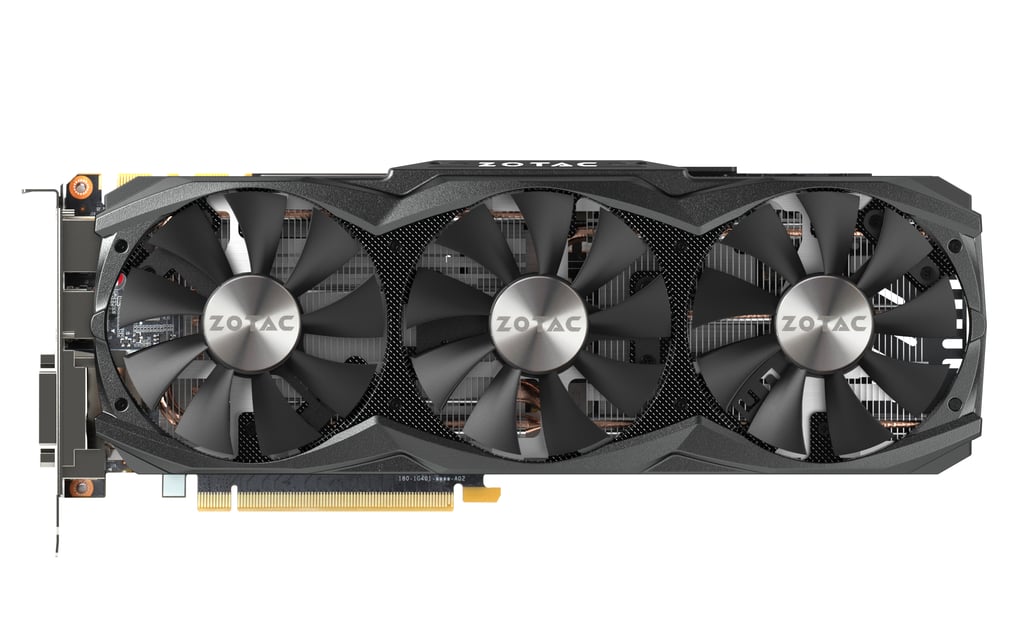
ZOTAC GeForce® GTX 1070

At approximately $459 (typically on the secondary market), the GTX 1070 offers minimal capabilities for machine learning applications. Its primary value lies in providing an essential platform for learning fundamental concepts or working with straightforward models, but serious work will quickly encounter limitations with this hardware.

Optimizing GPU Performance for Machine Learning

Owning powerful hardware is only part of the equation; extracting maximum performance requires understanding how to optimize GPU usage for machine learning workloads.

Effective Strategies for GPU Optimization

Several key strategies can significantly improve GPU utilization and overall performance in machine learning workflows:

Batch Processing: Organizing computations into appropriately sized batches is fundamental to efficient GPU utilization. Batch sizes that are too small underutilize the GPU’s parallel processing capabilities, while excessive batch sizes can exceed memory constraints. Finding the optimal batch size often requires experimentation, as it depends on model architecture, GPU memory capacity, and the specific characteristics of the dataset.

Model Simplification: Not all complexity in neural network architectures translates to improved performance on actual tasks. Techniques like network pruning (removing less important connections), knowledge distillation (training smaller models to mimic larger ones), and architectural optimization can reduce computational requirements without significantly impacting model quality.

Mixed Precision Training: Modern deep learning frameworks support mixed precision training, strategically using lower precision formats (typically FP16) for most operations while maintaining higher precision (FP32) for critical calculations. This approach can nearly double effective memory capacity and substantially increase computational throughput on GPUs with dedicated hardware for FP16 operations, such as NVIDIA’s Tensor Cores.

Monitoring and Profiling: Tools like NVIDIA’s nvidia-smi, Nsight Systems, and PyTorch Profiler provide valuable insights into GPU utilization, memory consumption, and computational bottlenecks. Regular monitoring helps identify inefficiencies and opportunities for optimization throughout the development and deployment lifecycle.

Avoiding Common Bottlenecks

Several common issues can limit GPU performance in machine learning applications:

Data Transfer Bottlenecks: Inefficient data loading can leave GPUs idle while waiting for input. Using SSDs rather than HDDs, implementing prefetching in data loaders, and optimizing preprocessing pipelines can significantly improve overall throughput. In PyTorch, for example, setting appropriate num_workers in DataLoader and using pinned memory can substantially reduce data transfer overhead.

GPU-Workload Mismatch: Selecting appropriate hardware for specific workloads is crucial. Deploying high-end datacenter GPUs for lightweight inference tasks or attempting to train massive models on entry-level hardware represent inefficient resource allocation. Understanding the computational and memory requirements of specific workloads helps select appropriate hardware.

Memory Management: Poor memory management is a common cause of out-of-memory errors and performance degradation—techniques like gradient checkpointing trade computation for memory by recalculating certain values during backpropagation rather than storing them. Similarly, model parallelism (splitting models across multiple GPUs) and pipeline parallelism (processing different batches on different devices) can address memory constraints in large-scale training.

Cloud vs. On-Premise GPU Solutions

The decision to deploy GPUs on-premise or leverage cloud-based solutions involves complex tradeoffs between control, cost structure, scalability, and operational complexity.

FactorOn-Premise GPUsCloud GPUs

CostHigh upfront investmentPay-as-you-go model

PerformanceFaster, dedicated resourcesScalable on demand

ScalabilityRequires hardware upgradesInstantly scalable

MaintenanceRequires in-house managementManaged by cloud provider

On-Premise GPU Deployments

On-premise GPU deployments provide maximum control over hardware configuration, software environment, and security posture. Organizations with consistent, high-utilization workloads often find that the total cost of ownership for on-premise hardware is lower than equivalent cloud resources over multi-year periods.

Key advantages include:

Complete control over hardware selection and configuration

Predictable costs without usage-based billing surprises

Lower latency for data-intensive applications

Enhanced data security and compliance for sensitive applications

No dependency on external network connectivity

However, on-premise deployments also present significant challenges:

High upfront capital expenditure

Responsibility for maintenance, cooling, and power management

Limited elasticity to handle variable workloads

Risk of technology obsolescence as hardware advances

Organizations considering on-premise deployments should carefully evaluate their expected utilization patterns, budget constraints, security requirements, and internal IT capabilities before committing to this approach.

Cloud GPU Solutions

Cloud providers like AWS, Google Cloud Platform, Microsoft Azure, and specialized providers like Cherry Servers offer GPU resources on demand, providing flexibility and eliminating the need for upfront hardware investment.

Key advantages include:

Access to the latest GPU hardware without capital expenditure

Elasticity to scale resources based on actual demand

Reduced operational complexity with provider-managed infrastructure

Simplified global deployment for distributed teams

Pay-as-you-go pricing aligns costs with actual usage

However, cloud solutions come with their considerations:

Potentially higher long-term costs for consistently high-utilization workloads

Limited hardware customization options

Potential data transfer costs between cloud and on-premise systems

Dependency on external network connectivity and service availability

Cloud GPU solutions are particularly advantageous for organizations with variable workloads, limited capital budgets, or rapid deployment and scaling requirements. They also provide an excellent platform for experimentation and proof-of-concept work before committing to specific hardware configurations.

Conclusion

The selection of appropriate GPU hardware for machine learning represents a complex decision involving trade-offs between performance, memory capacity, cost, and operational considerations. As we’ve explored throughout this comprehensive guide, the optimal choice depends significantly on specific use cases, budgetary constraints, and organizational priorities.

For large-scale enterprise deployments and cutting-edge research, datacenter GPUs like the NVIDIA H100 NVL and A100 deliver unparalleled performance and specialized features justifying their premium pricing. For individual researchers, academic institutions, and organizations with moderate requirements, consumer or professional GPUs like the RTX 4090 or RTX A6000 offer excellent performance at more accessible price points.

Beyond hardware selection, optimizing GPU utilization through appropriate batch sizing, mixed-precision training, and efficient data pipelines can significantly enhance performance across all hardware tiers. Similarly, workload characteristics, budget structure, and operational preferences should guide the choice between on-premise deployment and cloud-based solutions.

As machine learning advances, GPU technology will evolve to meet increasing computational demands. Organizations that develop a nuanced understanding of their specific requirements and the corresponding hardware capabilities will be best positioned to leverage these advancements effectively, maximizing the return on their technology investments while enabling innovation and discovery in artificial intelligence.



Source link

Trump’s Crypto Summit Paves the Way for a Thriving New Era in the Industry – Web3oclock

0
Trump’s Crypto Summit Paves the Way for a Thriving New Era in the Industry – Web3oclock


Source link

Cable Connector Market to Reach $175.62 Billion by 2032, Growing at a 6.93% CAGR | Web3Wire

0
Cable Connector Market to Reach 5.62 Billion by 2032, Growing at a 6.93% CAGR | Web3Wire


Cable Connector Market

March 10, 2025 – Cable Connector Market size was valued at US$ 102.74 Billion in 2023 and the Cable Connector revenue is expected to grow at 6.93% through 2025 to 2032, reaching nearly US$ 175.62 Billion. This expansion is driven by rapid advancements in telecommunications, increased deployment of fiber-optic infrastructure, and the rising adoption of high-speed data transmission technologies.

Discover In-Depth Insights: Get Your Free Sample of Our Latest Report Today @https://www.stellarmr.com/report/req_sample/Cable-Connector-Market/46

Market Estimation, Growth Drivers, and Opportunities

The global cable connector market is set to grow significantly due to several key drivers:

Expanding Telecommunications Sector: The surge in 5G deployment and fiber-optic network expansions worldwide has escalated demand for high-quality cable connectors to ensure seamless data transmission.

Industrial Automation and IoT Growth: The increasing adoption of industrial automation and the Internet of Things (IoT) in manufacturing, automotive, and healthcare sectors is fueling the need for reliable and durable cable connectors.

Automotive Electrification: The transition to electric vehicles (EVs) is boosting demand for high-performance connectors to support battery management, power distribution, and infotainment systems.

Aerospace and Defense Applications: The growing defense sector and advancements in avionics require high-performance, secure, and lightweight connectors, further propelling market growth.

Opportunities lie in the development of high-speed connectors, miniaturization, and environmentally friendly materials, enabling manufacturers to cater to the increasing demand for compact and efficient electronic solutions.

U.S. Market Trends and Investments in 2024

The United States has witnessed significant investment and innovation in the cable connector market in 2024:

5G Expansion: Major telecom providers have accelerated 5G network deployment, driving increased demand for fiber-optic connectors and high-speed data cables.

Government Infrastructure Investments: Federal funding initiatives supporting broadband expansion in rural and underserved areas have contributed to market growth.

Automotive and EV Boom: With the U.S. government promoting electric vehicle adoption, there has been a surge in demand for high-power connectors tailored for EV charging stations and battery management systems.

Market Segmentation: Dominant Segments

Among the different segments in the cable connector market, the largest market share is held by:

Type: Fiber-optic connectors dominate due to the rising demand for high-speed data transmission and 5G connectivity.

Application: The telecommunications segment leads, driven by continuous upgrades in network infrastructure and increasing data traffic.

End-User: The IT & Telecom sector commands the highest market share, as digital transformation and cloud computing fuel the demand for robust cable connector solutions.

Discover Key Insights: Request a Free Sample of Our Report Today @https://www.stellarmr.com/report/req_sample/Cable-Connector-Market/46

Competitive Analysis: Key Players and Innovations

The global cable connector market is highly competitive, with key players investing in advanced technologies and sustainability. The top five companies leading the market include:

TE Connectivity (Switzerland)

Overview: A global leader in connectivity and sensor solutions.

Recent Innovations: Focused on high-speed, miniaturized connectors for automotive and industrial applications.

Investment Strategies: Expanded manufacturing facilities and enhanced R&D for sustainable materials.

Amphenol Corporation (USA)

Overview: One of the largest manufacturers of interconnect solutions.

Recent Developments: Launched high-performance connectors for 5G and aerospace applications.

Strategic Moves: Acquired multiple companies to expand its fiber-optic product portfolio.

Molex (USA)

Overview: A major provider of innovative electronic and fiber-optic interconnect solutions.

Technological Advancements: Introduced AI-powered smart connectors to enhance real-time data analytics.

Investment Focus: Increasing investment in electric vehicle charging infrastructure.

Lapp Group (Germany)

Overview: A key player in industrial connectivity solutions.

Sustainability Initiatives: Developing biodegradable and recyclable connector materials.

Recent Expansion: Opened new production facilities in Asia to meet rising demand.

Hirose Electric Co., Ltd. (Japan)

Overview: Specializes in high-speed, high-density connectors for mobile and telecom applications.

Innovations: Released ultra-miniature connectors for next-generation smartphones and wearable devices.

Growth Strategy: Strengthened partnerships with global semiconductor manufacturers.

To delve deeper into this research, please follow this link:https://www.stellarmr.com/report/req_sample/Cable-Connector-Market/46

Regional Analysis: Market Dynamics in Key Countries

USA: The United States holds a significant share of the global cable connector market, fueled by advancements in telecommunications, 5G rollout, and the EV sector. Government policies supporting broadband expansion and electric mobility have further boosted demand.

UK: The UK market is growing steadily, with investments in smart city infrastructure and next-generation data centers contributing to the increased adoption of high-speed connectors.

Germany: As an automotive powerhouse, Germany’s emphasis on electric mobility and industrial automation is driving demand for innovative and durable connectors in automotive and industrial applications.

France: France’s focus on renewable energy and smart grid infrastructure is leading to increased demand for high-performance connectors in the energy sector.

Japan: Japan’s leadership in consumer electronics and semiconductor manufacturing has propelled the demand for miniaturized and high-speed connectors.

China: With rapid industrialization and large-scale 5G network deployment, China is emerging as the largest consumer of cable connectors. Government initiatives promoting smart manufacturing and EV adoption are key growth drivers.

To Gain More Insights into the Market Analysis, Browse Summary of the Research Report :https://www.stellarmr.com/report/Cable-Connector-Market/46

Conclusion: Future Outlook and Growth Opportunities

The global cable connector market is on a steady growth trajectory, driven by rapid digitalization, advancements in telecommunications, and the electrification of transportation. Major opportunities include:

Next-Generation 5G and AI-Powered Connectivity: The expansion of 5G networks and artificial intelligence will continue to push demand for high-speed and low-latency connectors.

Sustainable and Recyclable Materials: Companies focusing on eco-friendly materials will gain a competitive edge as industries prioritize sustainability.

Miniaturization and High-Density Solutions: As devices become more compact, the demand for miniaturized, high-density connectors will grow.

Rising Demand in Emerging Markets: Developing economies investing in digital infrastructure present significant growth opportunities for cable connector manufacturers.

In conclusion, the cable connector market is set for robust growth, with technological advancements, infrastructure investments, and sustainability initiatives shaping the industry’s future. Companies that innovate and adapt to evolving industry needs will emerge as key leaders in this dynamic market.

Explore More Reports on Our Website :

♦ USB Device Market https://www.stellarmr.com/report/USB-Device-Market/2528

♦ Electronics Ceramics and Electrical Ceramics Market https://www.stellarmr.com/report/electronics-ceramics-and-electrical-ceramics-market/2373

♦ Power Electronics Market https://www.stellarmr.com/report/Power-Electronics-Market/430

♦ Consumer Electronics Market https://www.stellarmr.com/report/Consumer-Electronics-Market/2240

♦ Wearable Electronics Market https://www.stellarmr.com/report/Wearable-Electronics-Market/1040

♦ LED Lighting Market https://www.stellarmr.com/report/LED-Lighting-Market/2236

♦ Vision Care Market https://www.stellarmr.com/report/vision-care-market/2372

Contact Stellar Market Research:S.no.8, h.no. 4-8 Pl.7/4, Kothrud,Pinnac Memories Fl. No. 3, Kothrud, Pune,Pune, Maharashtra, 411029sales@stellarmr.com

About Stellar Market Research:

Stellar Market Research is a multifaceted market research and consulting company with professionals from several industries. Some of the industries we cover include science and engineering, electronic components, industrial equipment, technology, and communication, cars, and automobiles, chemical products and substances, general merchandise, beverages, personal care, and automated systems. To mention a few, we provide market-verified industry estimations, technical trend analysis, crucial market research, strategic advice, competition analysis, production and demand analysis, and client impact studies.

This release was published on openPR.

About Web3Wire Web3Wire – Information, news, press releases, events and research articles about Web3, Metaverse, Blockchain, Artificial Intelligence, Cryptocurrencies, Decentralized Finance, NFTs and Gaming. Visit Web3Wire for Web3 News and Events, Block3Wire for the latest Blockchain news and Meta3Wire to stay updated with Metaverse News.


Source link

Connektra.io Gains Powerful Seed Investment to Scale No-Code AI Integration Platform – Web3oclock

0
Connektra.io Gains Powerful Seed Investment to Scale No-Code AI Integration Platform – Web3oclock


Source link

Utah Legislature Passes Blockchain Bill, Drops Bitcoin Reserve Provision – Decrypt

0
Utah Legislature Passes Blockchain Bill, Drops Bitcoin Reserve Provision – Decrypt


Utah lawmakers approved legislation late Friday, aimed at providing regulatory clarity but removed a pivotal provision that would have allowed the state to invest public funds directly into crypto.

H.B. 230—Blockchain and Digital Innovation Amendments passed Utah’s Senate by a 19-7 vote after legislators amended it to eliminate language that would have authorized Utah’s state treasurer to allocate state-managed funds toward a Bitcoin reserve

Later that night, the House concurred with the Senate’s revisions, approving the bill 52-19, with four abstentions.

Initially introduced by Rep. Jordan Teuscher (R-Utah) and sponsored in the Senate by Sen. Kirk Cullimore (R-Utah), the amended legislation still contains significant blockchain-friendly provisions. 

The bill explicitly prohibits state and local governments from restricting the acceptance or custody of digital assets, protects individuals’ rights to run blockchain nodes, participate in staking, and exempts such activities from state money transmitter licensing requirements.

Additionally, the legislation limits local governments from imposing zoning and noise regulations that unfairly target digital asset mining businesses operating in industrial zones.

The move comes shortly after President Trump’s March 6 executive order establishing a Strategic Bitcoin Reserve and U.S. Digital Asset Stockpile at the federal level, reflecting broader governmental interest in crypto adoption.

Governor Spencer Cox has not publicly indicated whether he intends to sign the bill into law. If approved, the measure will officially take effect on May 7, 2025.

U.S. States’ Bitcoin push

While Utah is taking a step back, several other states are now accelerating their push to integrate Bitcoin into public finances. 

Texas and Arizona remain the frontrunners of the same. 

Last Thursday, the Texas Senate approved the bill by a 25-5 vote after Senator Charles Schwertner, the bill’s sponsor, said Bitcoin’s scarcity and its potential as a hedge against inflation make it a valuable asset for the state’s financial future. 

“We don’t have stacks of dollar bills and safes like we did in medieval times,” Schwertner said. “What we have is digital currency.”

Not far behind, Arizona is also advancing its own Bitcoin reserve proposal. 

Arizona’s SB 1025, which has already passed through the Senate Finance Committee’s third reading, proposes that the state invest up to 10% of public funds in Bitcoin and other digital assets.

Following Arizona and Texas’s lead, Oklahoma’s HB 1203, the Strategic Bitcoin Reserve Act, passed the House Government Oversight Committee by a 12-2 vote.

However, not all states are as eager to embrace Bitcoin-backed reserves. 

States like Montana, South Dakota, Pennsylvania, North Dakota, and Wyoming have outright rejected similar bills due to concerns over Bitcoin’s volatility.

Roughly 18 state proposals are still pending, per Bitcoin Reserve Monitor data, with Kansas, Iowa, Missouri, Illinois, Florida, Massachusetts, Michigan, among others, all exploring the possibility of incorporating Bitcoin into their financial reserves.

Edited by Sebastian Sinclair

Daily Debrief Newsletter

Start every day with the top news stories right now, plus original features, a podcast, videos and more.


Source link

Popular Posts

My Favorites