Web3

Home Web3 Page 116

Bit Origin Buys Millions in Dogecoin After Revealing $500M Raise for DOGE Treasury – Decrypt

0
Bit Origin Buys Millions in Dogecoin After Revealing 0M Raise for DOGE Treasury – Decrypt


In brief

Bitcoin mining infrastructure firm Bit Origin acquired around $10 million in Dogecoin (DOGE).
The firm announced a raise of up to $500 million last week to fund its meme coin treasury.
Bit Origin shares are up 386% from their July starting point.

Publicly traded Bitcoin mining infrastructure firm Bit Origin purchased around $10 million in Dogecoin (DOGE) to kick-start its meme coin treasury, the firm announced on Monday. 

The Singapore-based firm detailed plans last week for a fundraise valued at up to $500 million to purchase the leading meme coin, sending shares of BTOG up more than 90% on the news. 

“From our experience in mining, we understand the trade-offs that define proof-of-work systems. We see Dogecoin’s utility potential for micropayments nearing an inflection point, driven by renewed developer activity and broader institutional interest in tokenization,” Bit Origin CEO, COO, and Chairman of the Board Jinghai Jiang said in a statement. 

Last week, Jiang highlighted the token’s potential inclusion within the financial ecosystem spawned by X Money, the X (formerly Twitter) finance and payments application that is expected to launch soon.


“While we embrace its cultural origins, which have helped drive liquidity and global familiarity, we believe current market conditions align with Dogecoin’s evolution toward decentralized finance,” he added. 

The firm’s acquisition gives Bit Origin a total of 40,543,745 DOGE, which it acquired at an average price of $0.2466 per DOGE for a total spend of around $10 million. 

That value has grown to nearly $11.5 million with the meme coin’s rise, up 8.1% in the last 24 hours and 42% in the last week.

Following in the footsteps of other crypto treasury firms, Bit Origin is tracking its Dogecoin holdings via the metric of DOGE-per-share (DPS), a ratio of the total DOGE held versus ordinary shares outstanding. After its initial purchase, the firm is reporting a DPS of 0.69, or 0.69 DOGE coins per shares of BTOG outstanding. 

Shares of BTOG are down less than a percentage point so far on Monday, trading at $0.78—a 386% gain from its July starting price of $0.16.

Daily Debrief Newsletter

Start every day with the top news stories right now, plus original features, a podcast, videos and more.


Source link

Thailand SEC Moves to Tighten ICO Rules With Investor Testing Mandates – Decrypt

0
Thailand SEC Moves to Tighten ICO Rules With Investor Testing Mandates – Decrypt


In brief

Thailand’s SEC proposes easing knowledge test rules for retail crypto investors, allowing them to skip repeat tests if already passed, replacing the current 3-month retesting requirement.
New rules would mandate suitability tests for all digital token investors, reviewed every two years, to ensure alignment between investor risk tolerance and product risk.
The proposed regulations aim to reduce burdens on investors and ICO portals while aligning with existing securities oversight standards.

Thailand’s securities regulator is seeking public input on new rules that would ease knowledge testing requirements for crypto investors while mandating comprehensive suitability assessments.

The Thai Securities and Exchange Commission announced on Friday that it is conducting public hearings on proposed initial coin offering regulations, which would allow investors to bypass repeated knowledge tests if they have previously passed such assessments.

Under current rules, investors must complete knowledge tests every three months before investing through ICO portals.

The proposed changes target two key areas of investor protection. 

First, the SEC wants non-institutional investors, those not classified as ultra-high-net-worth or high-net-worth individuals, to pass a knowledge test before investing, unless they’ve already done so in the past. 

Second, ICO portals would be required to conduct comprehensive suitability tests “to ensure that investors in digital tokens understand the investment risks and have a risk tolerance level appropriate and in alignment with the product risk.” 

These assessments must be reviewed and updated at least every two years, replacing the current quarterly requirement.

“This proposal aims to reduce the burden on both ICO portals and investors by canceling the requirement for such assessment every three months,” the SEC said in its announcement. 

The regulator noted that the new requirements align with “regulatory practices applicable to both securities and digital asset business operators.”


“Thailand has been a first mover for crypto regulations and the SEC has played a pivotal role in providing all regulated activities and licenses, much ahead of Singapore, Malaysia, Philippines, and Vietnam in South East Asia,” Jagdish Pandya, founder of Blockon Ventures and organizer of Thai Blockchain Week 2019, told Decrypt.

Pandya said the proposed knowledge and suitability tests would help keep “amateur investors” from blindly jumping into ICOs and repeating mistakes from the “old ICO scam era.”

“Their ICO portal enables raising funds, which is again a benchmark ahead of its time compared to UAE or Hong Kong too,” he noted. 

Professional investor classes would remain exempt from the knowledge testing requirements under the proposed framework.

Investors and stakeholders have until August 1 to comment on the proposal, which could change how ICOs are accessed in Thailand.

Thailand’s regulatory push extends beyond ICO portals as in June, the SEC also opened consultations on allowing exchanges to list self-issued tokens with enhanced disclosure requirements to prevent insider trading. 

The country is simultaneously preparing pilot programs for crypto tourism payments in popular destinations like Phuket and considering retail access to spot Bitcoin exchange-traded funds.

Daily Debrief Newsletter

Start every day with the top news stories right now, plus original features, a podcast, videos and more.


Source link

What the GENIUS Act Means for XRP Investors – Decrypt

0
What the GENIUS Act Means for XRP Investors – Decrypt


In brief

The GENIUS Act, now signed into law, gives stablecoin issuers like Ripple a clear regulatory path but is expected to have limited direct impact on XRP’s price.
Ripple’s new stablecoin, RLUSD, positions the company to compete domestically with USDC and PayPal USD as a native U.S. liquidity provider.
Legal ambiguity around XRP’s classification persists, with future clarity hinging on the proposed CLARITY Act’s passage.

America’s crypto landscape took a significant turn last Friday when President Donald Trump signed the GENIUS Act into law. While this legislation provides a regulated path for stablecoin issuers like Ripple, some say it has a minimal impact on XRP, at least in any meaningful way.

“Ripple is uniquely positioned to benefit from this new legislation,” Austin King, co-founder of Omni Network, told Decrypt. The law gives stablecoins like “USDC and RLUSD a competitive advantage when it comes to institutional adoption, which is where the real winners will be made,” he added.

While competitors such as Circle’s USDC and Tether’s USDT will undoubtedly push to retain their market share, Ripple’s established cross-border positioning could help its RLUSD gain traction.

“The existence of RLUSD would allow Ripple to become a native, on-shore liquidity provider in the U.S., competing directly with USDC and PayPal USD,” Yuri Brisov, Partner at Digital & Analogue Partners, told Decrypt. This, he explained, will allow Ripple to “reconfigure itself as a core infrastructure provider within the U.S. financial system.”

However, any market share gains in the stablecoin arena are unlikely to translate into substantial price movements for XRP itself, Decrypt was told.

Although every RLUSD transaction burns a small amount of XRP to cover network fees, this volume pales in comparison to XRP’s 59.1 billion coins in circulation.

For example, the XRP Ledger has cumulatively burned a negligible 14 million tokens since its inception. Ripple CTO David Schwartz tempered expectations in the past, stating, “I still don’t think burned XRP will significantly reduce the supply any time soon.”


The SEC vs. Ripple lawsuit continues to cast a shadow over XRP’s classification, with its security status remaining split. 

While XRP is not deemed a security when sold programmatically on exchanges, it “may constitute a security in institutional placements,” according to Brisov.

He said the distinction “depends on sales context and leaves future classifications vulnerable to interpretation.”

Consequently, XRP will likely continue to serve as a bridge token, with minimal direct impact on its price from the GENIUS Act, Brisov said.

Brisov elaborated that the legislation allows Ripple to strategically “reduce reliance on XRP” where regulatory uncertainty persists, particularly in the context of sales, by leveraging RLUSD. “This allows Ripple to rebalance its exposure without abandoning its core technology stack.”

If the upcoming CLARITY Act, which proposes a formal path for digital assets to transition from securities to commodities, is adopted, it would bring clarity to XRP, according to Brisov. 

That would “eliminate ambiguity” and “potentially open the door for “broader tokenization strategies for Ripple,” he said.

Daily Debrief Newsletter

Start every day with the top news stories right now, plus original features, a podcast, videos and more.


Source link

Netflix Uses Generative AI in TV Show for First Time – Decrypt

0
Netflix Uses Generative AI in TV Show for First Time – Decrypt


In brief

Streaming giant Netflix has revealed that it used generative AI for a VFX sequence in its show “The Eternaut.”
Netflix co-CEO Ted Sarandos called generative AI “an incredible opportunity to make films and series better, not just cheaper.”
There is widespread concern among film industry professionals over the threat posed by AI to their jobs.

Netflix has used artificial intelligence in one of its TV shows for the first time.

AI-powered tools were deployed during the production of “The Eternaut,” an Argentinian drama that shows the aftermath of a toxic snowfall that’s killed millions of people.

On an earnings call, the streaming giant’s co-CEO, Ted Sarandos, said the technology “represents an incredible opportunity to make films and series better, not just cheaper.”

The creators of “The Eternaut” wanted to include a scene where a building collapses in Buenos Aires, and Sarandos said AI meant “they were able to achieve an amazing result with remarkable speed.”

“In fact, that VFX sequence was completed 10 times faster than it could have been completed with traditional VFX tools and workflows,” he told analysts.

Sarandos argued that AI could prove especially useful for bringing scenes to life that otherwise wouldn’t be possible because of budget constraints.

“The creators were thrilled with the result. We were thrilled with the result. And more importantly, the audience was thrilled with the result,” he added.

Fellow co-CEO Greg Peters says generative AI could also have an impact on improving user experience—and Netflix has been trialing a new tool that allows viewers to request recommendations using their voice, such as: “I want to watch a film from the 80s that’s a dark psychological thriller.”

“If we do a better job there, that means every dollar that we spend means more value back to our members by connecting them with the titles that they’re truly going to love,” he said.

In its most recent annual filing to the Securities and Exchange Commission, Netflix warned its business could be adversely affected if competitors “gain an advantage” by using generative AI tools more effectively.

While Hollywood executives argue AI has the potential to unleash creativity, and bring ideas to life, many in the entertainment sector remain fearful of the impact it could have on their livelihoods.

Last year, a report by CVL Economics warned that generative AI could cause “significant disruption” to 204,000 film and TV jobs between now and 2027—disproportionately affecting entry-level roles.

Generally Intelligent Newsletter

A weekly AI journey narrated by Gen, a generative AI model.


Source link

Built First, Token Second: Spheron Flips the Script on TGE Models

0
Built First, Token Second: Spheron Flips the Script on TGE Models


Back in the day, you could raise millions with just a whitepaper and a Telegram group. That was the golden era of token launches, massive hype, zero revenue, and a whole lot of hope. But we’ve seen how that story ends: ecosystems with flashy promises and no real business underneath. Fast-forward to today, and the market is smarter. It demands proof.

That’s where Spheron flips the script.

While most projects wait until after their token generation event (TGE) to figure out how to make money, Spheron already did the hard part first. They built the product. They signed real customers. And Spheron Network has already hit $10 million in ARR, before the $SPON token even hits the market.

This isn’t another “maybe one day” Web3 story. It’s a network with real users, real traction, and real demand. Now ask yourself: if this is what Spheron achieved before the token launch, what happens after $SPON goes live?

A History of Post‑TGE Revenue Failures

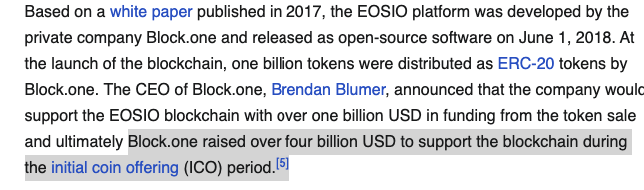
To understand why Spheron’s approach matters, look at what happened to the biggest ICOs and TGEs in history. EOS raised a staggering $4.1 billion in its ICO between June 2017 and June 2018. Block.one supported it with more than a billion dollars in funds, but the network never built a sustainable business alongside the token. Over time, developer interest waned, users dropped off, and the token lost much of its early promise.

Many examples follow the same pattern: massive capital raises before TGE, but no working revenue engine in place. The token launched, speculation peaked, and a crash followed. Users lost trust. Developer activity dried up. The next wave of hype died.

Spheron Took a Different Path

Spheron did not follow the typical pattern. Instead of selling a dream and hoping the product would come together later, Spheron focused on building first.

Spheron launched a real, working GPU and CPU marketplace. The team released ecosystem products like Fizz Nodes, Skynet, KlippyAI, Supernoderz, and developer console. They made onboarding easy and pushed adoption across 170 regions. Spheron didn’t just talk about compute. They delivered it.

As a result, Spheron now generates $10 million in annual recurring revenue. That figure came before the token launch, not after. This sets Spheron apart from 99 percent of Web3 infrastructure projects. It’s not just revenue. Spheron is already powering over $24 million worth of distributed compute. With more than 8,300 GPUs and almost 600,000 CPUs connected, the network is global and growing.

What Makes $SPON Different?

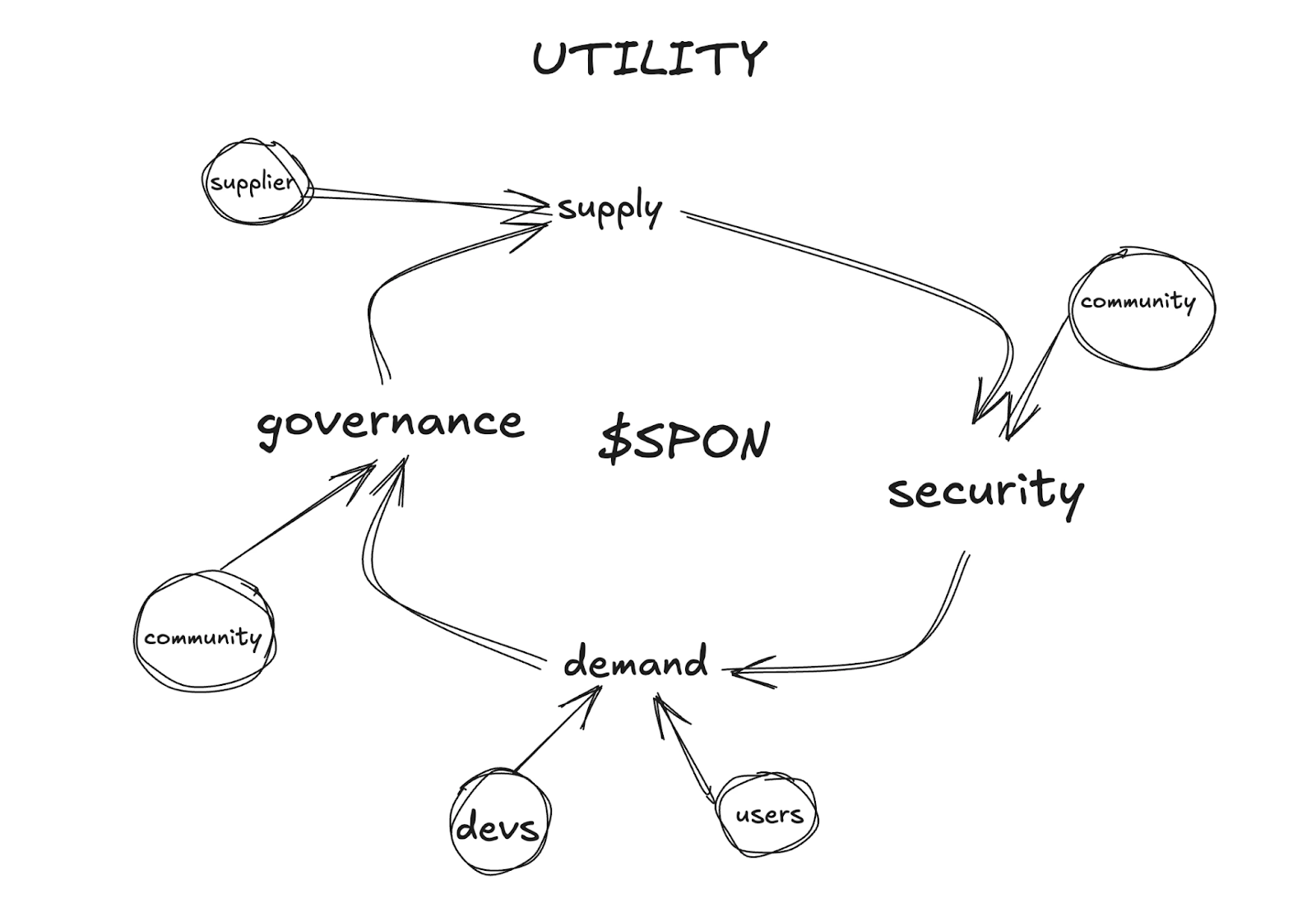
The $SPON token is not launching into a speculative vacuum. It is launching into a live, revenue-producing ecosystem. It already has clear utility and built-in demand.

$SPON will be used to pay for compute, stake for higher rewards, and govern the protocol. GPU and CPU providers will stake it to join the network. Developers will use it to run jobs. Agent frameworks like Skynet will use it to rent compute resources autonomously.

Staking will reduce the circulating supply. Spheron also plans to buy back $SPON from marketplace fees, creating natural deflation. This is not hype-first tokenomics. It is real, functional economics powered by live infrastructure. At the ”Road to TGE” launch, over 800,000 people have already signed up to be part of the TGE campaign. More than 200,000 are already whitelisted. That’s a massive base of early users and contributors ready to push adoption from day one.

Real Infrastructure, Real Flywheel

This is where the flywheel starts to spin. More agents and apps using the compute means more demand for the marketplace. More compute usage means more $SPON payments, which increases staking and scarcity. That draws more providers into the network, which makes the compute even more available and affordable.

KlippyAI already proved this at launch. In just three days, it powered nearly 5,000 AI-generated videos. That workload ran on decentralized compute. Skynet’s no-code agent platform is also ready to roll. The marketplace for autonomous agents will go live in Q3 2025.

The same underlying network powers all of these apps. That network is governed and fueled by $SPON.

The Market Is Massive

The global AI compute market is projected to surpass $1 trillion by 2030. Today, giants like Amazon, Google, and Microsoft dominate the space, charging high fees and locking developers into closed ecosystems.

Spheron offers an open alternative. It gives developers, researchers, and companies access to flexible, decentralized compute. And it gives individuals the ability to monetize idle hardware and contribute to something much bigger.

You’re Not Just Holding a Token

You’re not just going to hold a share in the network itself. When you buy $SPON, you’re not betting on speculation. You’re becoming part of the world’s largest community-powered compute stack. You’re helping fuel permissionless AI at scale, across geographies, industries, and devices.

Imagine a future where agents run tasks using your gaming PC. Or your spare server in the garage powers an AI model. And you get paid for it, all in $SPON. That’s not science fiction. That’s the near-term roadmap. You’re not just early to an idea. You’re early to a movement that’s already generating revenue, onboarding partners, and launching real products.

The Path Ahead

Spheron’s two-to-five-year plan is loaded with momentum. Spheron plans to grow Spheron AI to $30 million in ARR. The team aims to scale KlippyAI and Skynet to $2-5 million ARR each. They will launch a borrowing and lending layer for GPU providers and bring 10,000 gaming rigs online as edge compute.

All of this adds value to the network. All of it adds utility to $SPON. And all of it creates opportunity for early supporters. While most crypto projects chase hype first and try to deliver later, Spheron is already delivering. They built the hard stuff first. And now, they’re giving the community a way to own it.


Source link

$SPON: A Token Backed by Real Products and Revenue

0
$SPON: A Token Backed by Real Products and Revenue


The decentralized compute space has seen many projects try to build large-scale infrastructure powered by community hardware. Some promised to disrupt centralized cloud giants, while others aimed to create the world’s first web3 decentralized project in some niche. However, many of these projects struggled to build real demand for their tokens or networks. They lacked practical products or had incomplete ecosystems. Some fell short on delivering actual revenue, while others faced adoption problems due to poor user experience or lack of integration with applications.

Spheron stands apart because it combines a full-stack approach with real-world products that already generate revenue. Its four key components, KlippyAI, Skynet, Supernoderz, and Aquanode, are designed to create immediate and sustainable demand for $SPON, the native token powering the ecosystem. Together, these products build a powerful flywheel that links compute supply, developer demand, and user engagement. This article explores how each product contributes to $SPON demand from day one and why Spheron’s approach is more promising than past attempts in decentralized compute.

Lessons from the Past, Why Others Struggled

In recent years, many Web3 projects have attempted to build decentralized infrastructure layers for cloud compute, storage, and node services. These efforts came with bold visions: disrupt Big Tech, enable cheaper alternatives, and power the next generation of decentralized applications. While the ambition was there, the execution often fell short. These networks lacked real-world usage that would create continuous demand for the token.

One major shortcoming was the lack of an integrated product suite. Many of these Web3 infrastructure projects offered only raw compute or isolated services. They didn’t build the user-facing applications needed to drive daily activity or to give developers a reason to stay. Without real use cases layered on top of the infrastructure, tokens became speculative rather than demand-driven. Users held them, hoping for future upside, not to use the network.

There was also a lack of vertical integration. Projects built a compute layer but failed to onboard AI startups or Web3-native applications that could meaningfully use that power. They created supply without solving for demand. Others leaned too heavily on centralized intermediaries or cloud providers to fill in the gaps. This reduced the permissionlessness and decentralization that Web3 originally promised.

Despite high-profile fundraising rounds and significant capital raised from top-tier investors, many of these projects launched without live products or revenue. The result was a chicken-and-egg problem. Without usage, there was no token demand. Without token demand, the network couldn’t grow. And without growth, the ecosystem couldn’t create economic incentives strong enough to retain providers or builders.

Below are some of the Web3 infrastructure projects that aimed to establish themselves as foundational layers across compute, node hosting, or AI services. Despite receiving large amounts of venture funding, most struggled to sustain momentum or justify long-term token value.

Failure Across Projects

Such as ShuttleFlow by Conflux Network, focused on enabling cross-chain communication or multichain node services, hoping to become the backbone of decentralized application infrastructure. ShuttleFlow, launched in 2021, was meant to simplify DeFi onboarding across multiple blockchains. Yet by late 2023, the team shut it down and handed over operations to another company, Web3Q. Despite initial usage, the platform couldn’t maintain traction or justify continued funding.

In another notable failure, Cloudwatt, a French state-backed decentralized cloud initiative, was launched in 2012 with nearly €75 million in government subsidies. It aimed to achieve digital sovereignty by offering a national cloud solution. But within just a few years, the project failed to attract significant business. Revenue remained negligible, and it was eventually merged into telecom giant Orange before being shut down entirely in 2020. The gap between public investment and market adoption was staggering.

Even technically sophisticated efforts like Nebula One, a startup founded by former NASA engineers, didn’t survive. It aimed to offer private cloud appliances using open-source OpenStack tools. Despite raising over $35 million and promising a plug-and-play experience for enterprises, the company folded in under two years, by 2015. It simply couldn’t compete with the scale and pricing of established cloud providers, and adoption never reached meaningful levels.

Other decentralized infrastructure platforms like ZeroNet, launched in 2015, offered peer-to-peer website hosting using Bitcoin key-based identities. It was initially promising as an uncensorable, decentralized internet alternative. However, development stalled after its last stable release in 2019. The project eventually became inactive, with only forks maintained by the community.

Common Patterns of Failure Across Projects

Failure ReasonsDescription

No Real-World AdoptionProjects built infrastructure but failed to launch live apps or ecosystems.

Token Without UtilityTokens lacked immediate demand drivers; price was driven by speculation.

High Hardware BarriersParticipation often required expensive or complex hardware setups.

Dependence on Web2 InfraMany relied on centralized hosting or bridges, undercutting decentralization.

Lack of RevenueFew projects generated revenue early on, leading to unsustainable burn.

Failed Go-To-MarketProjects couldn’t attract Web3 or AI startups to build on top.

Over-promisingGrand claims without delivering usable, reliable products.

Short Development CyclesSeveral projects folded within 1–2 years due to poor retention or funding.

Spheron’s Different Approach

The takeaway is simple. Building a decentralized network is not enough. You need real products, real usage, and clear incentives for people to participate from day one. Spheron solves these challenges by launching a full-stack ecosystem from day one. It combines a decentralized compute marketplace with enterprise-grade infrastructure and user-friendly AI tools. The $SPON token will power all key products, creating a natural demand loop.

And this is where Spheron stands out. It launched with a live ecosystem already in motion. At the time of writing this article, the platform reached $10.6 million in annual recurring revenue before the $SPON token even went live. The compute marketplace is real. The tools are ready. KlippyAI, Skynet, Fizz Nodes, and the full developer stack are already bringing in thousands of users.

Spheron didn’t wait for a token to justify its existence. It built the engine first. Now the token becomes the fuel.

Let’s explore how each product drives $SPON demand.

KlippyAI: Democratizing AI Video Creation
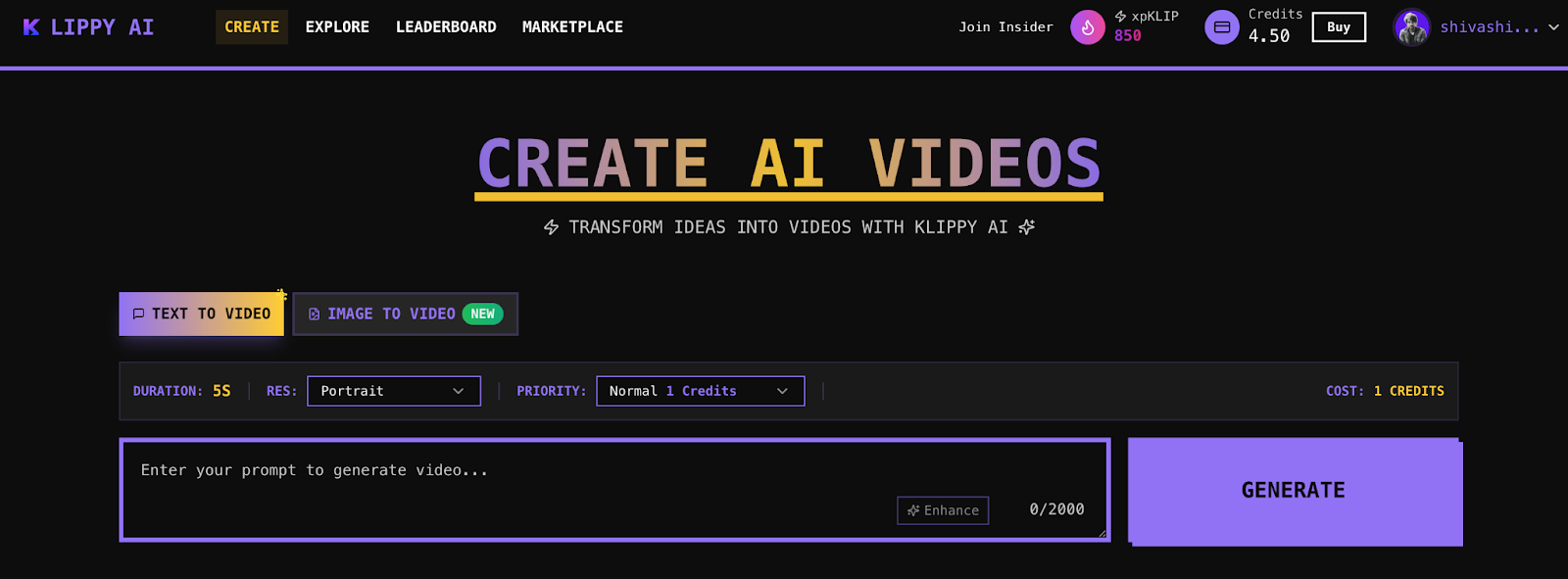
KlippyAI is an AI-powered video generation tool that lets anyone create high-quality videos from text prompts. It uses decentralized GPUs from the Spheron network to process heavy AI workloads cost-effectively. Most AI video tools today depend on expensive centralized cloud GPUs, driving high costs and limited accessibility. KlippyAI flips this by leveraging the community-powered decentralized compute layer, significantly lowering costs.

Users can pay in $SPON tokens to access KlippyAI’s video generation services. This direct token usage creates immediate demand from content creators, marketers, and educators who want affordable AI video tools.

KlippyAI users have already minted nearly 5,000 AI-generated video NFTs in just three days on the Base Layer 2 network. This success shows real user demand, not just speculation. As AI-generated content continues to grow, KlippyAI positions Spheron as a key infrastructure provider for the creator economy, driving ongoing $SPON usage.
Skynet: The No-Code Autonomous AI Agent Platform

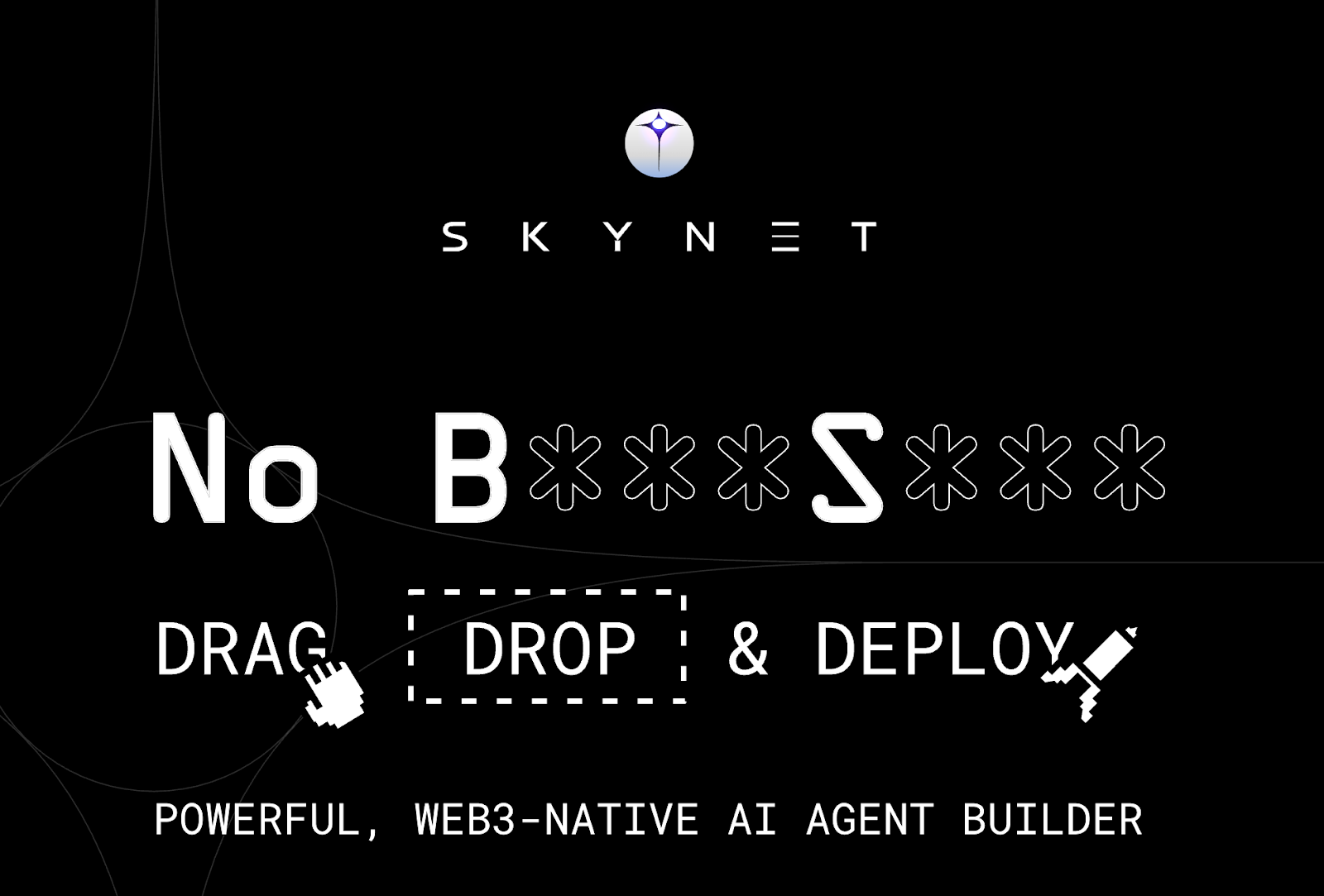
Skynet is a groundbreaking platform that allows anyone to build, deploy, and manage autonomous AI agents without coding. Autonomous agents are software that can independently perform tasks, interact with other agents, and make decisions. Many AI projects have focused only on training models or providing APIs. Skynet takes the next step by offering a no-code platform that opens AI agent development to a much wider audience.

Agents running on Skynet consume compute resources from the Spheron network, paid in $SPON tokens. This creates recurring demand from developers, businesses, and end-users who want AI-powered automation. The platform supports agent-to-infrastructure communication, enabling agents to scale GPU resources dynamically. This real-time compute orchestration ensures efficient token usage and network resource allocation.

Skynet is launching its agent marketplace in Q3 2025, where users can buy, sell, and deploy agents powered by $SPON. This marketplace will drive further token velocity and ecosystem growth.

Supernoderz: Node Deployment Made Simple
Supernoderz is a Node-as-a-Service platform that lets anyone deploy a decentralized compute node with just one click. The onboarding process is frictionless, requiring only a Gmail login or similar easy authentication. Historically, setting up decentralized nodes was technical and time-consuming. This complexity limited participation and network scale. Supernoderz eliminates those barriers, enabling thousands of new nodes to join the Spheron network quickly.

Node operators can stake $SPON tokens to join, unlocking higher reward tiers. This staking creates token demand and aligns incentives for node performance and network security.

Currently, Spheron has over 44,000 active Fizz Nodes and is growing. The network pays over 1-5 Million FN Points daily to providers, showing the ecosystem’s scale and financial flows. As more gaming rigs, data centers, and individuals join Supernoderz, token demand grows with network usage. This wide distribution also increases decentralization and robustness.

Aquanode: AI-Native Inference Workloads

Aquanode specializes in running inference workloads for AI models efficiently on decentralized hardware. Inference is the process of applying trained AI models to new data, often requiring large compute resources. While training AI models is one-time, inference is ongoing and drives sustained compute demand. Aquanode provides optimized infrastructure for AI inference, paid in $SPON tokens.

This product targets AI startups and enterprises needing scalable inference without cloud lock-in or exorbitant costs. By integrating Aquanode into the ecosystem, Spheron addresses a critical market segment often ignored by other decentralized compute projects.

Aquanode’s presence strengthens the Spheron stack and diversifies token demand across multiple use cases.

Why $SPON Will Create Real Demand from Day One

Unlike many projects that launch tokens before products, Spheron already operates a live, monetized network generating millions in annual recurring revenue.
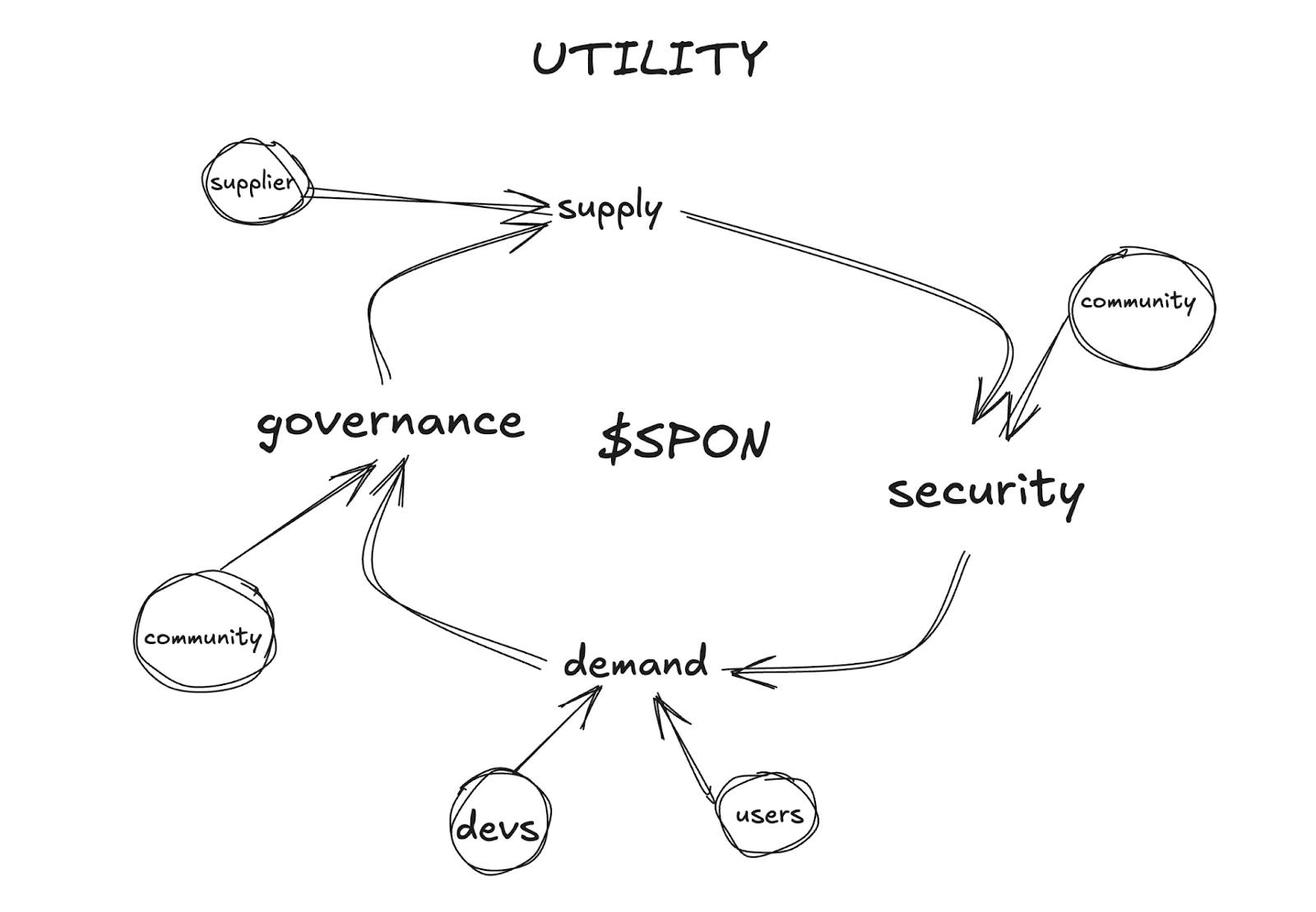
With four mature products tied to the $SPON token economics, demand is natural and continuous:

Users pay $SPON to access AI services (KlippyAI, Skynet, Aquanode).

Node providers stake $SPON to join and earn rewards (Supernoderz).

The token powers network governance and buy-back mechanisms, adding deflationary pressure.

Because $SPON integrates deeply into product usage, speculation is only a fraction of the token demand. Real economic activity underpins token value.

The Market Opportunity Is Massive

The global AI compute market is expected to reach over $1.8 trillion by 2030. Cloud providers like AWS, Google Cloud, and Microsoft Azure currently dominate with centralized infrastructure.

However, rising costs, data privacy concerns, and the need for scalable, permissionless compute are driving demand for decentralized alternatives.

Spheron is uniquely positioned to capture a significant share of this market by offering:

The lowest GPU pricing through decentralized supply

Permissionless access to compute from anywhere

Integrated AI developer tools and applications

A token-driven economic model aligning incentives

Conclusion

Spheron’s ecosystem of KlippyAI, Skynet, Supernoderz, and Aquanode creates an immediate and powerful demand engine for the $SPON token. By combining real products with an integrated decentralized compute network, Spheron overcomes the pitfalls of past projects that launched tokens without live demand.

The live revenue before TGE, broad product adoption, and massive market opportunity position Spheron to lead the decentralized AI compute revolution. For anyone looking to invest or participate in the AI infrastructure of the future, $SPON offers a real, usage-driven token with strong growth potential from day one.

This is not just speculation. It is the execution of a vision where permissionless compute and autonomous AI agents reshape the global technology landscape, powered by the world’s largest community-owned supercloud.



Source link

High yields, hidden hazards? The truth about staking in crypto

0
High yields, hidden hazards? The truth about staking in crypto


The following is a guest post and opinion of Vitaliy Shtyrkin, Chief Product Officer at B2BINPAY.

Staking has quickly become crypto’s “poster child” for easy rewards. According to on-chain data, over 35 million ETH has been staked on Ethereum alone. For many newcomers, it feels like a no-brainer: just lock up some tokens, walk away, and watch your wallet grow. No charts, no stress, no trading — all the promise of passive income without the sleepless nights.

However, staking may look like a shortcut to crypto profits, but under the hood, it’s a lot less passive than it seems. Amid market volatility, validator penalties, security risks, and regulatory crackdowns, those steady-looking returns can come with caveats.

And yet, that doesn’t mean staking should be rejected — far from it. It’s a fact that staking is becoming one of the most dynamic and misunderstood pillars of Web3. Whether you’re just stepping into the space or already reaping the benefits of staking, it’s worth asking: is it really the easiest way to earn in crypto, or is it a more complex system than it appears? Let’s dig deeper.

The Allure of Staking as a Low-Risk Crypto Entry Point

Staking is often branded as the low-risk, low-effort entry point into the crypto world. It’s even compared to a savings account: park your assets, earn interest back, and let the protocol do the work. The familiarity of that comparison makes it feel safe, especially for those coming from traditional finance.

Yes, at first glance, the concept is simple: you deposit tokens into a blockchain network and, in return, receive rewards for supporting its operations. You’re not trading. You’re not speculating. You’re helping secure the network while earning passive income in the process.

Crypto platforms, in turn, play into that appeal with various perks, such as beginner-friendly interfaces and automated staking options. A few clicks, some APY numbers, and you’re in. No need to master sophisticated concepts of tokenomics or track DeFi trends. Just stake and relax — or so the story goes.

So, for someone new to crypto, it’s hard not to be drawn by such an enticing idea — especially when friends or influencers casually mention how they’re making money “just by staking.” Compared to the chaos of NFTs, volatile trading pairs, and ever-changing protocols, staking feels like a safe harbor in a storm.

But what makes staking accessible is also what makes it misleading. Because under the surface, the risks are still present — they just look a little different.

Risks You Can’t See — and How to Stay Ahead of Them

At first, not all staking risks are obvious. While price volatility is the most talked-about threat, it’s not the only one. In fact, your staking setup is tested by what happens behind the scenes — and how prepared you are for it.

Take slashing, for example. If a validator behaves incorrectly or goes offline, the network may penalize both the validator and the user staking with it. That could mean losing a small percentage of your stake or, depending on the protocol, something much larger. Yes, it’s a harsh mechanism, but it helps keep networks honest.

Also, platforms can be just as fragile. If you’re staking through a third-party service, your rewards and your assets rely on someone else’s infrastructure and security. A sharp reminder of this risk came with the Bedrock exploit, where a vulnerability in a synthetic Bitcoin token led to losses of over $2 million. Flashy interfaces don’t guarantee safe custody.

Of course, regulation plays its part in the staking picture, too. Staking-as-a-service is drawing attention from global regulators, especially in the U.S. and EU. Platforms can be geo-blocked or shut down with little warning, leaving users locked out of their funds entirely.

Does all of this mean that staking should be avoided? Not at all — it means you need to treat it with the same seriousness as any financial decision. Know your validator. Focus on the lock-up rules. Don’t ignore platform terms. Once you understand how staking works, you can start thinking more broadly about actual utility.

Utility Over Yield

While most staking models center around earning yield, some take a different approach — one that’s less about passivity and more about utility. A good example is staking on the Tron network.

Instead of simply locking up TRX for rewards, users can stake to gain direct access to Bandwidth and Energy. These are two resources needed to process transactions and interact with smart contracts on the Tron blockchain. They refresh every 24 hours and, if used wisely, can eliminate transaction fees altogether. That turns staking into a way to reduce costs rather than just collect payouts.

Sure, the passive APY from TRX staking seems modest — often under 10% annually. But the real return comes from usage. For active users, those fee savings can add up quickly, in some cases equating to over 100% value annually in saved costs. It turns staking into a real-world tool, not just a reward mechanism.

Looking ahead, that distinction will become more important — especially given how fast the crypto ecosystem progresses. Staking shouldn’t be treated as a passive income fantasy or a high-risk gamble. It’s becoming clear that staking can be a strategy — a real way to participate in a network, secure it, and get real utility in return.

Mentioned in this article


Source link

Bitcoin Minimum Fee Rate Slashed by 90%—Is That a Good Thing? – Decrypt

0
Bitcoin Minimum Fee Rate Slashed by 90%—Is That a Good Thing? – Decrypt


In brief

You can now get Bitcoin transactions added to the blockchain for a lot cheaper than before.
Mining pools cut the rate as Bitcoin blockchain activity has been low.
Bitcoiners disagree over whether the coin should be used for everyday payments or primarily to hold value.

The debate over whether Bitcoin is best suited for payments or as a store of value is flaring up again. This time, it comes after the price to send the leading cryptocurrency has been slashed.

Top Bitcoin blockchain explorer Mempool posted this week that now users of the biggest crypto network can pay as low as 0.1 satoshi per virtual byte (sat/vByte) to get their transactions processed. A satoshi is the smallest unit of Bitcoin, with 1 satoshi equaling 0.00000001 BTC. 

Previously, it would cost 1 satoshi/vByte at minimum to get miners to process transactions. But due to a lack of activity on the leading cryptocurrency’s network, miners cut the minimum rate down by 90% in order to add more blocks to the blockchain. 

These measurements refer to the weight of a transaction and how quickly it will get processed. When a blockchain is busy, it will cost more to get transactions prioritized by miners.

The fact that the cost has been slashed so much shows that demand for blockspace has shrunk. In other words, people aren’t making a lot of transactions, prompting the move to accept much cheaper fees.

The Bitcoin network is run by miners, which today are mostly industrial operations of warehouses full of expensive computers that process transactions on the network. 

Miners are rewarded by processing blocks—which contain transaction data—and adding them to the blockchain. Per block processed, miners receive 3.125 BTC (worth $367,000 at the current price) along with transaction fees. 

But as fewer people use the Bitcoin network to send funds, inscribe Ordinals (aka NFTs), or perform other actions, transaction fees remain low—which means that miners earn less for each successful block win.


As pseudonymous Bitcoin miner Econoalchemist told Decrypt, transactions at the 0.1 sat/vByte fee rate have always been allowed by the protocol, but some node operators may choose to ignore such low fees. The moves by Mempool and others this week suggest a growing consensus movement towards accepting those lower-fee transactions.

“Over time, policy rules will trend toward matching consensus rules, lifting most relay restrictions,” he said.

Bigwigs in the crypto and payments space have previously bemoaned lack of activity on the blockchain—including Twitter founder and Square CEO Jack Dorsey. The die-hard Bitcoiner previously said that the cryptocurrency would only succeed if people used it for what it was designed for: sending and receiving money.

“I think if it doesn’t transition to payments and find that everyday use case, it just gets increasingly irrelevant,” Dorsey said of Bitcoin during an April podcast.

Though evidently, as Bitcoin hits new all-time highs, it is succeeding—albeit with a different use case: People are using it as a store of value investment. 

“I suppose time will tell, but Bitcoin seems to be moving into [a store of value asset] and not being used for any type of transactions,” Scott Norris, CEO of Bitcoin miner Optiminer, told Decrypt

He added: “As long as the upward price momentum exists, people aren’t going to use Bitcoin to transact. Bitcoin is digital land basically—it’s very valuable and the value continues to grow. It’s still very new, so it hasn’t peaked. But it’s not the best to transact with. You want to leverage your Bitcoin, not use it.”

It’s worth noting that the sender of a cryptocurrency transaction chooses the fee: If they are in a hurry to get a payment seen and processed by miners, then they can up the fee and it will be added to a block quicker. 

Still, some on Crypto Twitter (aka X) expressed delight that it was cheaper to use the top blockchain. One user, Mandrick, wrote: “I love seeing sub-1 sat/vbyte transactions in my Mempool,” adding that he wanted to “pay as little as possible.”

When challenged by someone who said that “[transaction] fees are needed to secure the network,” he added: “It’s like when rich liberals complain about not being taxed enough. Just send more money to the IRS—they’ll take it!”

Daily Debrief Newsletter

Start every day with the top news stories right now, plus original features, a podcast, videos and more.


Source link

California Sheriffs Believe 74-Year-Old’s Disappearance Linked to Son’s Crypto Fortune – Decrypt

0
California Sheriffs Believe 74-Year-Old’s Disappearance Linked to Son’s Crypto Fortune – Decrypt


In brief

A 74-year-old man disappeared in May after leaving home without his phone.
Authorities believe the disappearance is linked to the man’s family’s crypto fortune. They’ve found evidence of fraudulent activity and impersonation of him to communicate with family members.
The man’s son, a hedge fund executive, believes someone stole his father’s identity and drained over $1 million from his accounts.

Naiping Hou, 74, left home on a Monday without his phone and never came back. Local law enforcement believes the disappearance is linked to his family’s crypto holdings.

Days later, his silver Toyota Yaris was found abandoned near a hiking trail in Rancho Cucamonga.

He was declared missing on May 4 and sheriff’s deputies now suspect Hou may have been kidnapped.

By July 7, the San Bernardino County Sheriff’s Department confirmed its Specialized Investigations Division is investigating Hou’s disappearance as “suspicious,” finding evidence of “extensive fraudulent activity” related to his bank accounts.

An unnamed suspect allegedly used Hou’s phone and “impersonated him to communicate with family members,” the Sheriff’s Department statement reads. While no suspects have been named in the case, investigators have not yet ruled out foul play.

Hou’s son, Wen Hou, has offered a $250,000 reward for information leading to his father’s safe return. He believes someone stole his father’s identity and drained his accounts of over $1 million.

Wen, who made a fortune in crypto and has been CIO of investment firm and hedge fund Coincident Capital since 2019, said his father had no reason to disappear.

“I miss him a lot,” he told local media. “He’s sort of a guide to my life,” he said in an interview with KABC.

Still, wealthy crypto users often make themselves targets by “flaunting wealth online, neglecting online privacy/security, or trusting insiders,” CryptoCare’s Harris said.

Poor security habits, along with the “misconception that crypto is fully anonymous, despite traceable blockchains,” heighten a person’s vulnerability, he added.

Snir Levi, founder and CEO of compliance and threat management platform Nominis, argues many victims unknowingly expose themselves via social media, leaked data, or wallet activity, making them easy targets for threats.

“Unfortunately, even today, people don’t understand that everything they post on social media can expose their location and crypto wealth,” he told Decrypt.


Beyond individual behavior, platforms such as crypto exchanges bear responsibility for protecting users, especially when leaked data can tie identities to wallet addresses, Levi opined.

Exchanges need to protect user privacy and treat their users’ data “with the same caution they treat crypto assets,” Levi said.

Hou’s disappearance reflects a broader pattern of physical threats tied to digital asset.

A worrying trend

The trend has been dubbed as “wrench attacks” in the crypto industry, with the term used to describe how an often low-level theft can turn violent when attackers use force to extract information from victims.

There’s a marked increase in cases of “kidnapping, threatening and holding people in order to get their seed phrase or to steal their money,” Levi said.

That observation is echoed by Nick Harris, founder of blockchain forensics and asset recovery firm CryptoCare. Harris told Decrypt that attacks of this nature are “definitely on the rise,” citing 22 cases reported globally, halfway through the year.

Police and other authorities now deploy “cybercrime units and blockchain forensic teams” to trace transactions for ongoing investigations, Harris said.

Daily Debrief Newsletter

Start every day with the top news stories right now, plus original features, a podcast, videos and more.


Source link

Ethereum Treasury SharpLink Shares Plunge 20% Amid $6 Billion Plan to Buy More ETH – Decrypt

0
Ethereum Treasury SharpLink Shares Plunge 20% Amid  Billion Plan to Buy More ETH – Decrypt


In brief

SharpLink Gaming shares fell more than 20% on Friday.
The decline came a day after the company submitted a regulatory filing to increase its stock sales target by $5 billion.
The company purchased $48 million worth of ETH on Monday and $225 million on Tuesday.

SharpLink Gaming shares closed down 20% on Friday, a day after the gambling marketing company said it was looking to boost a stock sale from $1 billion to $6 billion in a regulatory filing—its latest move in an ongoing effort to build its Ethereum treasury.

SharpLink (SBET), according to Yahoo Finance, was was still up about 16% for a week that included two major ETH purchases.

The Minneapolis, Minnesota-based company’s stock has reacted positively to previous announcements tied to its strategic shift to become the world’s largest corporate accumulator of ETH, a position it now holds, based on Arkham data. SBET jumped 16% after picking up $48 million on Monday and then $225 million on Tuesday

SBET has spiked more than 330% since late May when it took initial steps to pivot its focus from affiliate marketing with a $425 million private placement largely earmarked for Ethereum buying.


With Thursday purchases of more than $115 million in ETH, the firm holds about $1.3 billion worth of the asset, according to Arkham.

In a Thursday supplement to a prospectus filed May 30 to the U.S. Securities and Exchange Commission, the company said it would increase its stock sale goal by $5 billion.

“We are increasing the total amount of common stock that may be sold under the sales agreement to $6 billion, comprising of up to $1 billion under the prior prospectus and an additional $5 billion under this prospectus supplement,” the company said in the latest filing.

Ethereum was recently trading at about $3,550, a 2% dip over the past 24 hours, according to crypto markets data provider CoinGecko. The second-largest cryptocurrency by market value has risen more than 41% over the past 14 days as a number of companies with ETH treasuries have added to their holdings, and amid rising optimism about the underlying Ethereum network’s usefulness.

On Friday, Bit Digital (BTBT), which previously focused on Bitcoin mining, announced the purchase of approximately 19,683 ETH. The company holds about 120,306 Ethereum worth nearly $70 million. BTBT’s share price sank more than 4% on Friday, although it is up about 60% this year.

On Thursday, the Peter Thiel-backed BitMine Immersion, which also moved from mining to Ethereum holding, surpassed $1 billion in Ethereum after adding $500 million in ETH to its holdings. The firm, which hopes to control 5% of all Ethereum held or staked, debuted its strategy earlier this month.

Those firms have followed a model pioneered by Strategy, formerly MicroStrategy, which shifted from software development to Bitcoin purchasing in 2020 after years of struggling and low share prices. Strategy now holds more than 601,500 Bitcoin worth over $71 billion based on BTC’s current price, according to bitcointreasuries.net.

Daily Debrief Newsletter

Start every day with the top news stories right now, plus original features, a podcast, videos and more.


Source link

Popular Posts

My Favorites

A second Kirby Air Riders Direct is airing on Thursday |...

0
Nintendo has announced a second Nintendo Direct stream will be dedicated to Kirby Air Riders, taking place this week on Thursday, 23rd October...