Metaverse

Home Metaverse Page 98

Smart Nails: The Future of Fingertips in the Age of Wearable Beauty Tech

0
Smart Nails: The Future of Fingertips in the Age of Wearable Beauty Tech


In the ever-evolving world of wearable technology, innovation is now finding its way to the most unexpected places — even our fingertips. What once seemed like a sci-fi fantasy is now becoming reality: Smart Nails. These futuristic accessories are reshaping not only the world of fashion and beauty but also how we interact with technology in our daily lives.

Imagine a manicure that can change color with your mood, track your health, control your smart devices, or even unlock your car — all with a simple tap of your fingertip. Welcome to the dawn of Smart Nails, where technology meets elegance.

From Nail Art to Nano Tech: The Evolution of Fingertip Innovation

For decades, nail art has been a creative expression of personal style. But as technology advanced, so did the possibilities. Early wearable tech — like smartwatches and fitness trackers — focused primarily on functionality. However, Smart Nails are redefining what it means to “wear” technology.

These advanced nails are embedded with microchips, sensors, and conductive materials, often powered by flexible nanobatteries. Some versions use temperature-sensitive pigments or electrochromic materials to change colors dynamically. Others are equipped with NFC (Near Field Communication) or Bluetooth connectivity, allowing them to communicate with smartphones, smart homes, and digital systems.

In essence, Smart Nails turn your fingertips into interactive smart devices, merging utility, convenience, and aesthetic appeal.

How Smart Nails Work

Smart Nails are designed using ultra-thin electronic layers integrated into artificial or gel-based nails. These layers can perform various functions depending on the embedded technology:

🎨 Color-Changing Tech: Some Smart Nails use electrochromic films that shift colors when a small electric current passes through them. This means your nails can match your outfit or mood — instantly.📱 NFC-Enabled Nails: Using near-field communication chips, Smart Nails can unlock phones, open doors, or share contact info with just a tap.💓 Health Monitoring: Future designs aim to measure biometric data like oxygen levels, hydration, or even detect hormonal changes — especially valuable for women’s health applications.💡 Self-Charging Systems: Advanced prototypes use kinetic energy — charging themselves through your natural finger movements.

This integration of aesthetics and intelligence could redefine how we view beauty — not as decoration, but as a functional interface between humans and machines.

Smart Nails and the Future of Women’s Wearable Tech

While most wearable technologies have traditionally been designed for utility — think fitness trackers or AR glasses — Smart Nails bring a new perspective: technology tailored to beauty and lifestyle.

For women, these nails could become a discreet, elegant way to interact with the digital world. Instead of bulky smartwatches or obvious gadgets, Smart Nails offer a seamless integration of fashion and function.

Imagine walking into a store and paying for your purchase by simply tapping your nail against a sensor — no phone or card needed. Or receiving subtle health feedback based on real-time biological data collected through your nails.

This is not just convenience; it’s empowerment through design.

Applications Beyond Beauty

While Smart Nails may sound like a cosmetic luxury, their potential extends far beyond aesthetics:

🧠 Healthcare: Integration with biosensors could allow for real-time monitoring of stress, hormones, or glucose levels, supporting early diagnosis and women’s wellness tracking.🏦 Security: NFC-based Smart Nails could act as digital keys, enabling secure access to personal devices, vehicles, or offices.🌍 Sustainability: Some companies are exploring biodegradable nail tech, ensuring that innovation doesn’t come at the cost of the environment.🎮 Entertainment & AR: Smart Nails could interact with AR environments, enabling gesture-based commands or color effects in virtual spaces.

This convergence of biotech, AI, and fashion is paving the way for a new ecosystem of intelligent beauty products.

Challenges and Ethical Questions

As with all new technologies, Smart Nails raise several challenges and ethical questions.

How do we ensure privacy and data security when our fingertips become connected devices? What happens if biometric data collected through nails is hacked or misused? Additionally, the use of materials like microchips and batteries raises questions about durability, safety, and environmental impact.

Moreover, as Smart Nails enter mainstream markets, issues of accessibility and affordability will play a major role. Will this technology remain a luxury item for the wealthy, or will it become an everyday tool accessible to all?

These are questions that innovators, policymakers, and consumers must navigate together as beauty tech continues to evolve.

Smart Nails and the Textiles 3.0 Revolution

Smart Nails are part of a larger movement often referred to as Textiles 3.0 — the era of intelligent fabrics and wearable systems. From self-cleaning clothes to temperature-regulating fabrics, the textile industry is undergoing a transformation similar to what smartphones did for communication.

In this context, Smart Nails are not just a beauty innovation; they’re a symbol of a new human–machine interface, where even the smallest details of our bodies can interact with digital systems.

Looking Ahead: What’s Next for Smart Nails

The next generation of Smart Nails is expected to integrate AI-driven personalization — meaning your nails could analyze your daily habits, predict color preferences, or sync with your smart home ecosystem.

Imagine waking up, and your nails automatically glowing in warm tones that match your outfit, or switching to cool colors when it’s time to relax.

The potential applications are nearly limitless — from healthcare to self-expression, from digital payments to emotional design.

As beauty and technology continue to merge, Smart Nails represent not just a product, but a philosophy: that technology should enhance human life while celebrating individuality and creativity.

Conclusion: Beauty Meets Intelligence

Smart Nails mark the next chapter in wearable innovation — a future where our fingertips become powerful tools of communication, health, and identity.

In a world increasingly defined by digital experiences, these intelligent, interactive nails redefine what it means to be connected, stylish, and smart.

The future of beauty isn’t in your makeup bag — it’s at your fingertips.

You Might Also Like;

Follow us on TWITTER (X) and be instantly informed about the latest developments…

Copy URL


Source link

Orderly: Plug-and-Play Perp DEX Infrastructure for the Omnichain Era

0
Orderly: Plug-and-Play Perp DEX Infrastructure for the Omnichain Era


In Brief

Orderly revolutionizes decentralized trading with a plug-and-play orderbook infrastructure, enabling creators, communities, and smaller DEXs to compete in a fragmented market.

Orderly is redefining decentralized trading by providing a plug-and-play orderbook infrastructure without a front-end, empowering creators, communities, and smaller DEXs to compete in a traditionally fragmented market. Co-founder Ran Yi shared how Orderly is transforming the DeFi landscape.

“Our flagship product, Orderly One, is a no-code solution for perp DEXs, live on 18 chains with low fees, good liquidity, and multi-collateral. Creators can launch their own branded DEX in just 10 minutes,” Yi explains.

Within only nine days of launch, nearly 1,000 DEXs have been established on the platform, marking the beginning of a perp DEX revolution.

Breaking the Traditional DEX Paradigm

Orderly’s approach allows anyone — from meme coin creators to community organizers — to spin up their own trading platforms without a development team.

“The major unlock with Orderly One is giving creators, KOLs, and communities the tools to build their own DEXs. Even without dev experience, they can go live in minutes,” Yi says.

The result is a shared liquidity model, aggregating liquidity across chains and collateral types, rather than fragmenting it.

Omnichain and Multi-Collateral Design

Orderly One is multi-chain and multi-collateral by design. Users can deposit and withdraw from 18 chains using native assets like BNB, SOL, and ETH, alongside various stablecoins.

“One order book ensures liquidity isn’t fragmented. This lets everyone — from smaller DEXs to wallets — compete with major exchanges on an equal footing,” Yi adds.

Developer Tools and Customization

For developers, Orderly provides SDKs and APIs, but the real innovation lies in permissionless front-ends and DEX creation.

“We call ourselves the exchange layer. All types of creators who couldn’t previously launch their own products can now do so. The future of finance will be on-chain on the back end, but AI-driven front-ends will allow fully customized user experiences,” Yi explains.

Shaping the Future of Cross-Chain DeFi

Orderly envisions an omnichain trading ecosystem where liquidity is shared, creation is permissionless, and front-ends are fully customizable.

“We see the future of DeFi as fully composable and AI-adapted. Anyone can create their own custom front-end while leveraging our infrastructure on the back-end. That’s the ultimate vision for cross-chain trading,” Yi concludes.

Disclaimer

In line with the Trust Project guidelines, please note that the information provided on this page is not intended to be and should not be interpreted as legal, tax, investment, financial, or any other form of advice. It is important to only invest what you can afford to lose and to seek independent financial advice if you have any doubts. For further information, we suggest referring to the terms and conditions as well as the help and support pages provided by the issuer or advertiser. MetaversePost is committed to accurate, unbiased reporting, but market conditions are subject to change without notice.

About The Author


Victoria is a writer on a variety of technology topics including Web3.0, AI and cryptocurrencies. Her extensive experience allows her to write insightful articles for the wider audience.

More articles


Victoria d’Este


Victoria is a writer on a variety of technology topics including Web3.0, AI and cryptocurrencies. Her extensive experience allows her to write insightful articles for the wider audience.


Source link

7 Myths About Prediction Markets That Need Debunking

0
7 Myths About Prediction Markets That Need Debunking


In Brief

Prediction markets, often misunderstood as gambling or niche tools, are increasingly recognized in 2025 as transparent, regulated, and accurate mechanisms for forecasting across finance, governance, and policy.

7 Myths About Prediction Markets That Need Debunking

Prediction markets are often misunderstood—even derided—by critics who cling to outdated assumptions. 

In 2025, as these markets gain traction in crypto, finance, and public policy, many myths persist. 

Below are just seven myths about prediction markets that deserve a second look.

“Prediction markets are just gambling”

This is perhaps the most common of all the myths about prediction markets. Yes, prediction markets allow betting on outcomes, but the intent, incentives, and regulatory framing often set them apart. 

Platforms like Kalshi in the U.S. operate under federal regulation (via the CFTC) and offer event contracts as financial instruments, not pure games of chance.

Statistically, prediction markets have outperformed public polls in multiple U.S. elections. Harry Crane’s studies comparing PredictIt and FiveThirtyEight found that markets were consistently closer to final outcomes. Crane emphasized that polls capture “sentiment,” while markets seek “accuracy and truth.”

So, the myth fails because these markets are about more than entertainment—they’re tools for forecasting risk, hedging uncertainty, and revealing aggregated belief backed by real stakes.

“They’re easy to manipulate”

Detractors warn that low-liquidity, insider trades, or coordinated manipulation can distort market prices. While no system is perfect, many platforms build in countermeasures: liquidity incentives, market-maker subsidies, stake weighting, and in regulated cases, oversight.

For example, only some U.S. states permit contracts on sports events. Kalshi has faced legal pushback in states like Massachusetts and New Jersey, but in several courts the platform has defended contracts under federal oversight. These legal rulings suggest confidence that the design and regulations can mitigate manipulation.

Expert observers argue that true manipulation is most likely only when markets are thin and localized. When liquidity, transparency, and regulatory compliance increase, these risks decline significantly.

“Only political or sports fans use them — not useful for finance or governance”

One of the most common myths about prediction markets is that it doesn’t move beyond entertainment. Real-world governance, corporate planning, DAO decisions, and risk management are increasingly woven into prediction markets’ use cases.

Kalshi offers markets on macroeconomic and regulatory outcomes, not just elections or sports. Crypto platforms like Polymarket also host varied event types, spanning finance, regulation, and global affairs. 

These allow institutions and decentralized communities to gauge probability of regulatory changes or governance votes.

Researchers affirm that markets can produce forecasts that are “actionable for institutions,” especially when they want to anticipate taxes, regulation, or government policy changes. The data shows that such markets often respond faster and with more nuance than traditional expert-derived forecasts.

“They produce black-box signals — not explainable”

It’s often believed that because prediction markets aggregate so many inputs, they become opaque. On the contrary, many markets are built on transparent mechanisms: every trade is public, price movements are traceable, and rules of settlement are known in advance.

Polymarket, for instance, settles most markets based on verifiable data sources, with dispute resolution mechanisms clearly documented. Kalshi, being regulated, has to comply with rules about disclosures and contract laws.

Harry Crane noted that prediction markets show the “weight of belief” in public form, because stakeholders must risk real funds. That visibility creates accountability. 

While markets don’t always reveal why someone made a trade, the collective outcome is “visible in trade volume, prices, and shifts,” helping users to interpret signal strength.

“Prediction markets are illegal or will always be banned”

Regulation matters, yes—but legality is far from uniform, and many prediction markets already operate under clear regulatory structures. For example, Kalshi has managed to get rulings in favor of its sports and election-event contracts in some U.S. states, and courts have blocked certain state-imposed attempts to treat such contracts as illegal gambling in other jurisdictions.

The CEO of Kalshi has also argued that its contracts for sporting events should not be classified as gambling because the business does not gain from its players’ losses, which makes a notable distinction under U.S. law.

So, legality is not a uniform prohibition—it depends on jurisdiction, contract design, and regulatory status. With the right licensing, compliance, and clarity, prediction markets can and do operate lawfully.

“Markets are worthless when liquidity is low”

Low liquidity does make markets less reliable—but again, that doesn’t mean they “fail” universally. Many platforms use tools to mitigate the problem: liquidity providers, incentive programs, AMMs (automated market makers), and cross-platform aggregation.

Evidence suggests that markets with higher liquidity and fewer fee restrictions tend to be more accurate. Crane observed that Polymarket’s smaller fee structure and higher liquidity placed it ahead of PredictIt in forecasting efficiency in recent election cycles.

Even when liquidity is low, markets can still provide directional or trend signals rather than precise probability values. For many users (protocols, funds), that is enough to move decisions.

“Prediction markets always out-perform experts and models”

One of the more dangerous myths about prediction markets. Yes, markets are powerful, but not infallible. They often outperform polls or simple models in long-horizon political or regulatory forecasting, but in near-term or highly complex technical domains, expert models can excel.

A study comparing PredictIt markets and published models for U.S. battleground states in the 2020 election showed that markets performed better several months out, but as the election drew nearer, model-based polling and statistical models sometimes became more accurate. The hybrid average often beats each component alone.

Thus, a more nuanced view: prediction markets are best used in combination with models and expert insight. They shine for long-horizon, macro, regulatory, or policy questions, while expert models might help with technical forecasting where data and domain knowledge dominate.

The Reality of Prediction Markets

Many myths about prediction markets are just not true: they’re not purely gambling, not inherently manipulable, not confined to politics or sports, nor eternally illegal. 

When well-crafted and properly regulated, they exhibit higher accuracy, transparency, probabilistic signals, and real-time adaptability—all of which traditional forecast methods find hard to match.

As regulation, design, and adoption improve, prediction markets can go from being little curiosities in 2025 to being the key forecasting infrastructure, shaping policies and governance and finance, and much more.

Disclaimer

In line with the Trust Project guidelines, please note that the information provided on this page is not intended to be and should not be interpreted as legal, tax, investment, financial, or any other form of advice. It is important to only invest what you can afford to lose and to seek independent financial advice if you have any doubts. For further information, we suggest referring to the terms and conditions as well as the help and support pages provided by the issuer or advertiser. MetaversePost is committed to accurate, unbiased reporting, but market conditions are subject to change without notice.

About The Author


Alisa, a dedicated journalist at the MPost, specializes in cryptocurrency, zero-knowledge proofs, investments, and the expansive realm of Web3. With a keen eye for emerging trends and technologies, she delivers comprehensive coverage to inform and engage readers in the ever-evolving landscape of digital finance.

More articles


Alisa, a dedicated journalist at the MPost, specializes in cryptocurrency, zero-knowledge proofs, investments, and the expansive realm of Web3. With a keen eye for emerging trends and technologies, she delivers comprehensive coverage to inform and engage readers in the ever-evolving landscape of digital finance.


More articles


Source link

Anduril Unveils AI-Powered Mixed Reality Helmet for Soldiers: EagleEye

0
Anduril Unveils AI-Powered Mixed Reality Helmet for Soldiers: EagleEye


Anduril introduced the EagleEye mixed reality helmet, developed in collaboration with Meta. The AI-powered system aims to enhance soldiers’ perception and control during missions.

Anduril, founded by Palmer Luckey, unveiled its new military helmet called EagleEye, developed as a result of a collaboration with Meta. This AI-supported mixed reality (MR) system will be integrated into soldiers’ helmets, enabling rapid access to information and control of drones during missions.

AI Support for Soldiers from Anduril

According to Anduril‘s announcement, EagleEye is designed as a modular hardware family built on the company’s command-and-control software, Lattice. The system includes features such as a heads-up display (HUD), spatial audio technology, and radio frequency detection. Through the helmet, soldiers can view mission briefings and orders, display maps and other critical information, and manage drones and military robots.

In his statement about the product, Luckey said that EagleEye is not just a new tool for soldiers, but their new teammate, stating, “The idea of integrating an AI partner into the display has been imagined for decades. EagleEye is the first product to turn this idea into reality.”

The company claims that EagleEye can integrate live video feeds, warn operators of threats using rear and side sensors, and track teammates in real-time. Variants of the product include helmet, visor, and goggle form factors.

Anduril provides software for existing MR goggles based on Microsoft HoloLens, in addition to producing border control technologies, drones, and military aircraft. The US Army has been working on the $22 billion IVAS program with Microsoft since 2018. However, due to both Microsoft moving away from HoloLens and AR businesses and persistent issues, control of the program was transferred to Anduril in February.

Moreover, the Meta collaboration, announced by Anduril in May, also brought Luckey and Mark Zuckerberg back together. Luckey, the founder of Oculus, and Zuckerberg first met when Meta acquired the Oculus startup in 2014. However, three years later, Luckey decided to leave the company to pursue new ventures.

You Might Also Like;

Follow us on TWITTER (X) and be instantly informed about the latest developments…

Copy URL



Source link

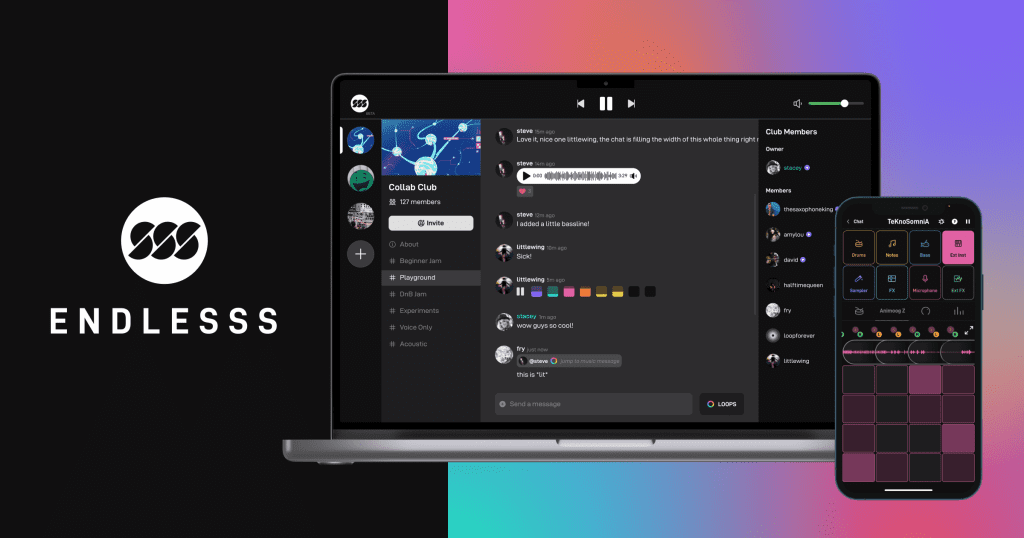
Endlesss AI Review – The Collaborative AI Music Studio Revolutionizing Real-Time Music Creation!

0
Endlesss AI Review – The Collaborative AI Music Studio Revolutionizing Real-Time Music Creation!


In the age of AI-generated music, few platforms capture the creative spirit like Endlesss AI. This powerful tool merges artificial intelligence, live collaboration, and digital music production — allowing musicians, producers, and creators to jam, compose, and remix together in real time, no matter where they are in the world. 🌍🎶

What truly impressed us during testing was Endlesss’s ability to turn spontaneous ideas into full tracks within minutes. Whether you’re a professional producer or just experimenting with beats, the platform makes the entire music-making process fast, fun, and incredibly intuitive.

💡 What is Endlesss AI?

Endlesss AI is an AI-powered collaborative music creation platform that combines beatmaking tools, real-time collaboration, and machine learning–driven suggestions.It’s designed for artists who want to create, remix, or jam with others online — powered by AI that enhances creativity rather than replacing it.

You can use Endlesss on desktop or mobile to create loops, layer instruments, and collaborate instantly with others in a shared digital studio.

Perfect for:🎧 Musicians & Producers – Create new tracks and loops effortlessly🎵 Collaborative Teams – Jam live with bandmates or other artists remotely📱 Content Creators – Produce unique background music for videos or streams🎮 Game Developers – Generate AI-assisted soundtracks and ambient scores

🔑 Key Features of Endlesss AI

🧠 AI Music Suggestions – Get intelligent chord progressions, melodies, and beats from AI in real time🎛️ Loop-Based Workflow – Build songs using loop stacks that are instantly editable and shareable🎤 Real-Time Collaboration – Jam live with creators across the globe🎹 Built-In Instruments & Effects – Access synths, samplers, and drum machines directly in the app📱 Cross-Platform Sync – Switch seamlessly between desktop and mobile devices🌍 Cloud-Based Projects – Store, sync, and revisit your music anytime🔗 DAW Integration – Export your creations into Logic Pro, Ableton Live, or other major DAWs🎵 Remix & Share – Collaborate, remix, and publish instantly to the Endlesss community

🌟 Why We Loved Endlesss AI

Endlesss isn’t just another AI music generator — it’s a creative ecosystem built for collaboration and spontaneity.The platform encourages real-time musical dialogue, where artists feed off each other’s ideas with AI as the ultimate jam partner.

Other highlights include:⚡ Speed – Turn musical ideas into full compositions in seconds🎶 Collaboration – Connect with creators globally in shared jam sessions🎧 Flexibility – Works equally well for pros and beginners🎛️ AI Support – The AI enhances creativity, offering suggestions without limiting your originality📈 Scalability – Ideal for solo creators or entire music collectives

⚠️ Areas for Improvement

While Endlesss AI delivers a truly creative experience, there are a few areas that could evolve further:💵 Pricing Tiers – Advanced collaboration features can be behind premium plans🎚️ Learning Curve – Beginners may need time to master the full toolset🌐 Latency – Real-time sessions depend on internet quality🎵 AI Customization – More control over AI’s musical style would be a great addition

🚀 How to Use Endlesss AI

1️⃣ Sign Up – Create an account at endlesss.fm2️⃣ Start a Jam – Create a private or public session3️⃣ Add Loops – Record or generate beats, melodies, and samples4️⃣ Collaborate – Invite others to join your session and build together5️⃣ Refine with AI – Use AI tools for chord, rhythm, or mix suggestions6️⃣ Export or Share – Download your creation or publish it to the Endlesss feed

💡 Pro Tip: Combine human creativity with AI’s suggestions — Endlesss works best when you let it inspire, not dictate, your sound.

🏁 Final Verdict

Endlesss AI redefines what it means to create music collaboratively in the digital age.By merging real-time creativity, AI-enhanced production, and global connection, it empowers artists to make, remix, and share music instantly — from anywhere.

Whether you’re producing your next hit track, collaborating with friends, or experimenting with new sounds, Endlesss AI is a must-have tool for modern musicians and creators who want to stay in the creative flow.

✅ Our Favorite Feature: The Real-Time Collaborative AI Jam Engine, which lets multiple users create music together — assisted by intelligent AI suggestions that keep the groove alive. 🎶🤖🎛️

You Might Also Like;

Follow us on TWITTER (X) and be instantly informed about the latest developments…

Copy URL



Source link

Vanar Unveils MyNeutron Decentralized AI Memory Layer For Portable And Permanent AI Context

0
Vanar Unveils MyNeutron Decentralized AI Memory Layer For Portable And Permanent AI Context


In Brief

Vanar has launched MyNeutron, a decentralized AI memory layer that transforms knowledge into user-owned, verifiable Seeds for seamless, permanent, and portable integration across AI models.

Vanar Unveils MyNeutron Decentralized AI Memory Layer For Portable And Permanent AI Context

Network developing a comprehensive AI infrastructure stack for Web3, Vanar announced the launch of MyNeutron, the first decentralized AI memory layer. MyNeutron introduces a new concept called Seeds, which are compressed, verifiable knowledge capsules that provide users with full ownership of their data and context across different AI models.

For years, AI assistants such as ChatGPT, Claude, and Gemini have struggled with “AI amnesia,” requiring users to repeatedly provide the same information and depend on centralized servers. MyNeutron addresses this limitation by leveraging Vanar’s Neutron technology to convert knowledge into Seeds that can be securely stored in the cloud, on platforms like Google Drive, or permanently on-chain, creating a new category of AI memory assets fully controlled by the user.

“AI is only as good as what it remembers,” said Jawad Ashraf, Co-founder and CEO of Vanar, in a written statement. “Seeds are portable, verifiable, and composable across chains and apps—your AI context finally belongs to you,” he added.

MyNeutron: Decentralized AI Memory Layer Enabling User-Owned, Verifiable Knowledge Assets

MyNeutron allows users to capture content from a variety of sources, including webpages, PDFs, Gmail, Drive, Slack, and LLM chats, with a single click. The system automatically organizes this information into semantic, searchable memory units, which can then be integrated seamlessly into AI models such as ChatGPT, Claude, or Gemini. For long-term preservation, Seeds can be anchored on-chain, providing permanent and verifiable storage.

Neutron introduces a novel category of memory assets known as Seeds, which can be owned, shared, or incorporated into AI agents and decentralized applications. By applying semantic compression, documents are transformed into AI-readable capsules without loss of meaning. Seeds are cryptographically tied to the user, ensuring that knowledge remains intact when switching devices, applications, or even blockchain networks. 

All prompts, insights, and ideas are securely retained under the user’s control and can be reused across AI workflows. By integrating Vanar’s on-chain semantic data layer through the Model Context Protocol (MCP) or a Chrome extension, MyNeutron makes verifiable AI memory broadly accessible, enabling a new era of user-owned, agentic intelligence.

Disclaimer

In line with the Trust Project guidelines, please note that the information provided on this page is not intended to be and should not be interpreted as legal, tax, investment, financial, or any other form of advice. It is important to only invest what you can afford to lose and to seek independent financial advice if you have any doubts. For further information, we suggest referring to the terms and conditions as well as the help and support pages provided by the issuer or advertiser. MetaversePost is committed to accurate, unbiased reporting, but market conditions are subject to change without notice.

About The Author


Alisa, a dedicated journalist at the MPost, specializes in cryptocurrency, zero-knowledge proofs, investments, and the expansive realm of Web3. With a keen eye for emerging trends and technologies, she delivers comprehensive coverage to inform and engage readers in the ever-evolving landscape of digital finance.

More articles


Alisa, a dedicated journalist at the MPost, specializes in cryptocurrency, zero-knowledge proofs, investments, and the expansive realm of Web3. With a keen eye for emerging trends and technologies, she delivers comprehensive coverage to inform and engage readers in the ever-evolving landscape of digital finance.


More articles


Source link

Veridise’s AuditHub: Bringing Continuous Security to Web3 Development

0
Veridise’s AuditHub: Bringing Continuous Security to Web3 Development


In Brief

Veridise’s AuditHub is a continuous security platform that embeds protection directly into the development process, addressing the issue of late audits in Web3.

In Web3, audits often arrive too late. Teams build, test, and deploy for months — only to find critical vulnerabilities when they finally hit the auditing phase.For Jon Stephens, Co-founder and CEO of Veridise, that cycle needed to change.

“People would get to the auditing phase, there would be substantial issues,” he explains. “That would cause delays — or worse, teams would ship without the features they intended to.”

The solution Veridise built is AuditHub — a continuous security platform that embeds protection directly into the development process.

Security That Starts at Commit

AuditHub isn’t just another scanner. It’s a new kind of assurance layer built on formal methods, a branch of computer science that allows software to be reasoned about mathematically.

“Formal methods let us make very strong statements about code,” says Stephens.“If a bug isn’t found, it doesn’t exist. If a bug is found, it’s definitely there — and here’s what it is.”

By integrating into a project’s CI/CD pipeline, AuditHub runs automatically every time a developer pushes code. It catches issues early — both common vulnerabilities and those unique to each project — and reports them directly inside GitHub.

“It doesn’t change your workflow,” Jon explains. “Developers can stay inside their usual process, but now every pull request comes with built-in security validation.”

Tools for DeFi and ZK Builders

AuditHub isn’t one tool — it’s a suite.

On the DeFi side, it includes Vanguard, a static analyzer that identifies common smart contract vulnerabilities, and a fuzzer that detects invariant violations in projects.

On the ZK (zero-knowledge) side, there’s a static analyzer and a formal verifier that ensures circuits behave deterministically — a critical guarantee for cryptographic applications.

“Almost all our tools can be tailored to the project itself,” Jon notes. “You can describe your intended behavior, and AuditHub will reason about whether the code actually does that.”

From One-Time Audits to Continuous Assurance

Traditional audits provide a snapshot in time — but in a world where code is shipped daily, that’s not enough. AuditHub aims to make security continuous.

“We want developers to think about security as early as possible,” says Stephens. “Tools like AuditHub don’t just find bugs — they provide guarantees.”

The platform’s core philosophy is simple: integrate security before the audit, not after it.

“We’re making sure people consider security at every step,” he adds. “That means developers can ship faster, with higher confidence, and without compromising safety.”

A Safer Development Loop for Web3

In an industry where vulnerabilities can cost millions overnight, AuditHub isn’t just a tool — it’s a mindset shift.

By embedding formal verification, continuous scanning, and developer-first integration into one platform, Veridise is redefining what it means to build securely in Web3.

“Security shouldn’t be a final checkbox,” Stephens says. “It should be part of every commit.”

Disclaimer

In line with the Trust Project guidelines, please note that the information provided on this page is not intended to be and should not be interpreted as legal, tax, investment, financial, or any other form of advice. It is important to only invest what you can afford to lose and to seek independent financial advice if you have any doubts. For further information, we suggest referring to the terms and conditions as well as the help and support pages provided by the issuer or advertiser. MetaversePost is committed to accurate, unbiased reporting, but market conditions are subject to change without notice.

About The Author


Victoria is a writer on a variety of technology topics including Web3.0, AI and cryptocurrencies. Her extensive experience allows her to write insightful articles for the wider audience.

More articles


Victoria d’Este


Victoria is a writer on a variety of technology topics including Web3.0, AI and cryptocurrencies. Her extensive experience allows her to write insightful articles for the wider audience.


Source link

OpenAI CEO Sam Altman Lists His Massive Estate for $49 Million: What Makes This Mansion So Valuable?

0
OpenAI CEO Sam Altman Lists His Massive Estate for  Million: What Makes This Mansion So Valuable?


OpenAI CEO Sam Altman has put his massive estate up for sale with a $49 million price tag. In this article, we take a closer look at the mansion.

Sam Altman, CEO of OpenAI and the most recognizable name in the world of Artificial Intelligence (AI), has brought his tech-world dynamism to the real estate market. Altman has listed his 22-acre oceanfront estate on Hawaii’s Big Island, which resembles a personal resort, for a record price of $49 million.

This piece of paradise, which he purchased for $43 million in 2021 from the estate of the late Microsoft co-founder Paul Allen, stands out not only for its location but also for the incredible amenities it offers.

More Than Just a Home: Private Marina and Helipad

The most striking features that set this property apart from ordinary luxury residences are undoubtedly its private marina and helipad. The private marina, which provides direct access to the turquoise waters of the Pacific Ocean, also hosts a man-made beach. This allows the residents of the estate to enjoy the ocean and the sun in complete isolation from the rest of the world. The helipad stands out as an indispensable luxury for billionaires seeking privacy and easy access.

This massive property, located on Hawaii’s prestigious Kailua-Kona coastline, houses multiple structures, including a main residence, a guest house, and a beach bungalow. With a total of 10 bedrooms and 11.5 bathrooms, the mansion was designed in 2011 by the renowned architectural firm de Reus Architects. The general architectural approach in the structures is an open, flowing plan that eliminates the boundaries between indoor and outdoor spaces. This design ensures that the breathtaking view of Kailua Bay and the ocean can be felt from every corner of the house.

But is There No Technology at All?

Since the owner of the house is Sam Altman, the question that comes to mind is, “What kind of futuristic technologies is the interior filled with?” However, the sales listings and details about the property indicate that the house highlights its natural beauty, privacy, and the physical luxuries it offers, rather than technological factors. It is specifically mentioned that the entire property has “advanced security systems,” but the main appeal of the house is not as a technology demo, but as a resort-comfort sanctuary nestled within nature. It also features amenities such as a private movie theater, a library, heated pools, a spa, and tennis and basketball courts.

It Has a Personal Significance Too

This sale means that Sam Altman is leaving behind not just a real estate investment but also a personal memory. The famous CEO married his partner, Oliver Mulherin, at this estate in January 2024.

The fact that it was purchased for $43 million and then listed for $49 million a short time later once again demonstrates how valuable the ultra-luxury real estate market in Hawaii is. Who the new owner of this property, which has a massive cost like an annual property tax exceeding $630,000, will be is already a matter of curiosity.

All Features of Sam Altman’s Estate:

General Features:

Location: Kailua-Kona, Big Island, HawaiiLand Size: 21.8 acresStructures: Consists of several buildings, including a main house, a guest house, and a beach “bungalow.”Room Count: A total of 10 bedrooms and 11.5 bathrooms.

Interior:

Design: Features an open-plan design creating a seamless connection between indoor and outdoor spaces.Amenities: The house includes multiple living areas, a movie theater, a modern kitchen, and a breakfast bar.

Exterior and Amenities:

Private Marina: Has its own private marina.Man-Made Beach: A man-made beach is also located on the property.Sports and Leisure: Offers amenities such as a heated gunite pool and spa, basketball, and tennis courts.Transportation: The estate can also be accessed via a helipad.

You Might Also Like;

Follow us on TWITTER (X) and be instantly informed about the latest developments…

Copy URL


Source link

Top AI NFT Generators 2025: The Best Tools for Artists, Brands, and Collectors | NFT News Today

0
Top AI NFT Generators 2025: The Best Tools for Artists, Brands, and Collectors | NFT News Today


AI NFT generators have transformed how digital art is created and traded in 2025. These tools make it possible for anyone—whether you’re an artist, a startup, or a collector—to produce and sell unique blockchain assets in minutes. Now, the rise of AI-driven creativity is fueling growth across art, gaming, real estate, and metaverse experiences.

Key Takeaways

AI NFT generators turn text or images into ready-to-mint artwork using advanced AI models.

Top platforms like DALL·E, ChainGPT, and Midjourney cater to creators of all skill levels.

Features range from direct blockchain minting to trait-based bulk generation and commercial licensing.

The right tool depends on what you value most—art quality, automation, or blockchain integration.

What Is an AI NFT Generator?

An AI NFT generator uses artificial intelligence to create digital art from your ideas. Just type a short prompt—something like “neon samurai in a cyber city”—and the AI instantly generates a high-quality image ready for minting on Ethereum, Polygon, or Solana.

These tools rely on deep learning models such as Stable Diffusion, DALL·E 3, and transformer-based networks to interpret text, apply style, and output unique visuals. They’ve opened NFT creation to everyone, no matter their design background, and they’re widely used in gaming, digital fashion, and brand collectibles.

Why Creators Use AI NFT Generators

1. Scalability

The biggest advantage is scale. Instead of designing every image by hand, creators can spin up entire collections in minutes. Platforms such as ChainGPT handle trait randomization and rarity generation automatically, so producing a 10,000-piece drop feels more like curating than coding.

2. Accessibility

AI tools have lowered the barrier to entry for digital art. On StarryAI or NightCafe, you just type what you imagine—say, “a cosmic fox made of starlight”—and the system turns it into artwork you can mint. You don’t need a design degree or a fancy setup; curiosity is enough to get started.

3. Multi-Chain Flexibility

Creators no longer have to worry about where to mint. Most generators export files that work perfectly on Ethereum, Polygon, or Solana, and ChainGPT even connects directly to more than two dozen blockchains. That means less time converting files and more time building your audience.

4. Security and Ownership

Because every image can be registered on-chain, ownership is transparent from the start. Copyright and provenance checks are improving too, giving artists more confidence that their work—and their royalties—stay under their control.

5. Creative Freedom

Models like DALL·E 3 and Midjourney v6 allow styles that range from photo-realism to surreal fantasy. For many artists, AI has become a digital studio partner that helps bring bold ideas to life.

How We Ranked the Best Tools

I tested and compared each platform based on:

Art quality and model sophistication

Ease of use and scalability

Blockchain integration and minting options

Licensing and support

The result is a list that covers both beginner-friendly generators and professional-grade tools for full-scale NFT projects.

Top AI NFT Generators 2025

1. DALL·E (by OpenAI)

Created by OpenAI, DALL·E continues to set the bar for AI-generated art. Its integration with ChatGPT makes prompt crafting effortless—you can describe a scene in natural language and instantly refine it.

Features: DALL·E 3 diffusion model, seamless ChatGPT integration, and easy exports.

Pros: Incredible image quality, commercial-use rights, and free monthly credits.

Cons: No built-in minting; exports must be uploaded to NFT platforms.

Blockchain Support: Works with Ethereum, Polygon, and Solana through manual exports.

2. ChainGPT AI NFT Generator

Built by ChainGPT Labs, this platform focuses on scale and automation. It’s one of the few AI NFT generators offering direct minting across multiple blockchains, ideal for projects with thousands of assets.

Features: Bulk generation up to 10,000 NFTs, rarity tools, smart contract deployment, and CGPT token integration.

Pros: True end-to-end NFT creation, 25+ supported blockchains, and developer-friendly APIs.

Cons: More complex setup; advanced features require payment in CGPT tokens.

Blockchain Support: Ethereum, Polygon, BNB Chain, Avalanche, and additional L2s.

3. NightCafe Studio

NightCafe combines simplicity with community. It’s powered by Stable Diffusion XL and GAN-based models, giving users a wide choice of styles and settings while also connecting them with a creative global audience.

Features: Multi-model generation, AI upscaling, community challenges, and a credit-based system.

Pros: Beginner-friendly, active community, and wide artistic range.

Cons: No direct minting or trait automation.

Blockchain Support: Exports compatible with Ethereum, Polygon, Solana, and Tezos.

4. StarryAI

StarryAI is all about speed and simplicity. It’s perfect for creators who want to turn ideas into NFTs without learning complex settings or tools.

Features: Text-to-art creation, custom genres, and full IP ownership for users.

Pros: Fast generation, commercial-use rights, and easy onboarding.

Cons: Subscription required for bulk creation; limited detail in complex scenes.

Blockchain Support: Export-ready for Ethereum, Polygon, Solana, and BNB Chain.

5. Midjourney

Midjourney has earned its reputation for cinematic visuals and artistic depth. Run entirely through Discord, it’s used by both independent artists and global brands looking to create premium NFT collections.

Features: Diffusion model with prompt weighting, stylization sliders, and trait/layer generation.

Pros: Stunning visual output, unmatched creativity, perfect for high-end NFT art.

Cons: Paid Discord subscription; no built-in minting.

Blockchain Support: Exports compatible with all major NFT blockchains.

How to Choose the Right AI NFT Generator

Your best choice depends on what you’re creating:

For large PFP drops: Go with ChainGPT for its automation and minting features.

For artistic detail: DALL·E or Midjourney produce gallery-quality work.

For quick projects: NightCafe and StarryAI are easy to start with.

For full blockchain integration: ChainGPT stands out for direct multi-chain support.

If you’re experimenting, start with a free or low-cost plan. Once you’ve found your preferred workflow, you can upgrade to tools that fit your scale and creative goals.

Future Trends in AI NFT Creation

The next generation of AI NFT generators will focus on multi-chain minting, sustainability, and AI personalization. New models like Stable Diffusion 3 and Runway Gen-3 will deliver richer textures and more control over lighting, poses, and backgrounds.

At the same time, expect automated copyright management and on-chain provenance to become standard features. These improvements will make it easier for artists to protect their work and for collectors to verify authenticity. AI NFT tools are also expanding into gaming and metaverse spaces, powering dynamic avatars, 3D assets, and branded experiences.

Conclusion

AI NFT generators are changing how digital assets are imagined and produced. From DALL·E’s refined creativity to ChainGPT’s minting power, these tools give artists and businesses the freedom to create without limits.

Whether you’re experimenting with your first NFT or planning a full collection, there’s a platform that fits your goals. In 2025, AI isn’t replacing human creativity—it’s giving it new dimensions.

Frequently Asked Questions

Here are some frequently asked questions about this topic:

What’s the best AI NFT generator in 2025?

If you want scalability and minting automation, ChainGPT is the top choice. For artistic quality, go with DALL·E or Midjourney.

Can I sell AI-generated art as NFTs?

Yes. Most platforms include commercial-use rights, but always review the license before selling or reselling your work.

Is creating NFTs with AI legal?

Yes. Minting AI-generated art is legal in most regions. Platforms increasingly include provenance tracking to verify authorship.

Are there any free AI NFT generators?

Yes. DALL·E, NightCafe, and StarryAI offer free credits or entry-level plans to get started.

Which blockchain is best for AI NFTs?

Polygon and Solana are popular for low-cost, eco-friendly minting, while Ethereum remains the go-to for high-value collections.


Source link

Vivo TWS 5 Introduced: Hi-Fi Audio and 48 Hours of Battery Life

0
Vivo TWS 5 Introduced: Hi-Fi Audio and 48 Hours of Battery Life


Vivo has unveiled its new premium wireless earbuds, the Vivo TWS 5. Coming in two different versions, the earbuds attract attention with their high sound quality and long battery life.

Vivo officially introduced its new wireless earbud model, the Vivo TWS 5, alongside its flagship X300 smartphone series and the Vivo Pad 5e tablet. Coming in two different versions, the earbuds attract attention with their high sound quality and long battery life.

Vivo TWS 5 Features

The only difference between the Vivo TWS 5 and the Vivo TWS 5 Hi-Fi models is the codecs they support. While the standard model features LDAC, AAC, SBC, and LC3 codecs, the Hi-Fi model offers additional support for the high-quality LHDC codec. Both models come with 11mm drivers and feature DeepX 4.0 stereo sound and Hi-Res Audio certification.

With three microphones and AI support, the earbuds offer advanced noise reduction. Vivo states that the TWS 5 has ANC (Active Noise Cancellation) capability, which can reduce ambient noise by up to 60 decibels, and an average noise reduction depth of 28 decibels. Supporting Bluetooth 5.4, the earbuds also offer resistance to water and dust splashes with an IP54 certification.

The Vivo TWS 5 is also assertive with its battery life. Offering 12 hours of playback time on a single charge, the charging case extends this time up to 48 hours. The earbuds also feature a voice translation function that supports multiple languages, including Chinese, English, Korean, and French. Finally, the devices also support the multi-device connection feature.

The standard model of the Vivo TWS 5 is available for sale in China for $56, and the Hi-Fi model for $70.

You Might Also Like;

Follow us on TWITTER (X) and be instantly informed about the latest developments…

Copy URL


Source link

Popular Posts

My Favorites

The Most Trusted Cloud Mining Website – Global Cloud Mining

The most trustworthy cloud mining website allows you to easily earn thousands of dollars every day.Register to get a free permanent mining machine....