Metaverse

Home Metaverse Page 71

Abu Dhabi’s Mubadala Join Kaio To Test Tokenized Investment Funds

0
Abu Dhabi’s Mubadala Join Kaio To Test Tokenized Investment Funds


Key Highlights

Mubadala Capital tests blockchain to open private market funds to a wider audience.

Partnership with Kaio aims to simplify access for qualified investors via tokenization.

Mubadala manages $430 billion in assets, combining sovereign scale with a global alternative focus.

Abu Dhabi-based Mubadala Capital is eyeing blockchain as a potential means to open its private market investment strategies to a wider audience.

In partnership with Kaio, a provider of tokenized infrastructure for institutional investors, the asset manager will explore whether digital tokens simplify access for qualified investors.

Traditional private market funds are restricted to very high investment minimums, multiyear commitments, and regional restrictions. The hope from Mubadala in experimenting with tokenization is making such investments easier and more accessible, though no official products have been launched yet.

Mubadala’s scale and Kaio’s role

Mubadala Capital manages more than $430 billion across private equity, real estate, credit, and other alternative assets. As a part of the Abu Dhabi sovereign wealth fund, Mubadala Investment Company, it has the size of a state-backed organization and a focus on global alternative markets.

Kaio brings extensive experience in tokenizing funds for such large global managers as BlackRock, Brevan Howard, and Hamilton Lane. Kaio has moved over $200 million in institutional assets onto blockchain.

This partnership constitutes part of an increasing trend of traditional institutional capital considering routes into digital infrastructure without derogation from regulatory standards.

Mubadala Capital said the partnership with Kaio reflects its commitment to making institutional investment strategies more accessible. Fatima Al Noaimi and Max Franzetti, Co-Heads of Mubadala Capital Solutions, said the collaboration “enables new global access channels while maintaining the highest standards of governance, regulatory alignment, and investment oversight.

Kaio’s CEO, Shrey Rastogi, said the partnership shows how traditional institutional capital is starting to move onto blockchain. “Mubadala Capital is leaning into the future of how real-world assets can be tokenized and made globally accessible without compromising compliance, governance, or investor protections,” he said.

Industry context

Mubadala Capital is joining a growing number of institutional investors exploring how blockchain can make private markets simpler and more accessible.

According to CoinShares, tokenized real-world assets posted strong growth in 2025, led by US Treasurys, which rose from $3.91 billion to $8.68 billion on-chain. This growth is expected to continue in 2026 as demand for dollar-denominated yields increases. Infrastructure providers are also getting ready for this trend.

Infrastructure providers are also preparing for this trend. For example, Polygon has launched its Madhugiri hardfork to make the network faster and more stable. Block times are now just one second, transaction capacity is higher, and new Ethereum updates are added, including a special type for Ethereum–Polygon bridge transactions.

For Mubadala, this move is a key step toward modernizing private markets. It will give global investors easier access to large-scale, institutional-grade products while ensuring compliance with regulations.

Also Read: Plume Secures ADGM License in Abu Dhabi as RWA Expansion Accelerates


Source link

The Sandbox Ecosystem Welcomes Web3 Platform Corners, Beta Now Available to Coin Internet Content

0
The Sandbox Ecosystem Welcomes Web3 Platform Corners, Beta Now Available to Coin Internet Content


Sponsored

Stories and Reviews

December 09, 2025

The Sandbox Ecosystem Welcomes Web3 Platform Corners, Beta Now Available to Coin Internet Content

Los Angeles, United States, December 9th, 2025, Chainwire

The Sandbox ecosystem welcomes Corners, a new Web3 platform in invite-only beta that lets participants coin and gain value from Internet content

Expanding The Sandbox ecosystem, Corners is a new Web3 platform to coin, curate, and share the content of the Internet, allowing curators to gain value from collections of URLs from all corners of the Internet

The Sandbox and Animoca Brands welcome the new free-to-use curation platform, Corners, into their ecosystem. Corners has launched an invite-only beta where users can coin, create, and share collections of internet content. Users can join the waitlist at www.corners.market.

Corners allows anyone to create a “Corner Coin” – a user-created, transferrable digital asset based on a curated collection of internet links, conversations, and content. Once a corner is created, anyone can share and curate content for it, and contribute to its growth and value by adding links or new content.

The launch of Corners expands The Sandbox’s ecosystem beyond gaming, as previously announced as part of The Sandbox 3.0 rollout, and into a broader distribution network of culture while introducing new utility for the SAND token.

Robby Yung, CEO of The Sandbox, said: “Corners is a great example of how partners can help extend the utility of the SAND token and support the continued evolution of The Sandbox ecosystem beyond gaming. By enabling curators to tokenize the content they love, Corners opens meaningful new opportunities for creativity and participation. We’re pleased to support products that build on our foundation and bring more communities into The Sandbox’s wider ecosystem.”

Corners deeply integrates the SAND token as its main utility token, powering platform activity. Curators can earn rewards for their activity and curation. Additionally, a portion of the platform’s activity is used to reward Corner Coin holders with the SAND token, promoting its distribution and use within the ecosystem.

The SAND token will also become available on Base through an initial liquidity pool on Aerodrome. This expansion will make the SAND token and The Sandbox ecosystem accessible beyond Ethereum and Polygon, offering a new on-ramp for on-chain communities and making it easier to move the SAND token across the crypto ecosystem.

Ahead of the full public rollout scheduled for early 2026, Corners is releasing a comprehensive “How to build your corner” guide on www.corners.market to provide additional details on getting started, understanding market price, transferrable digital assets, and more.

Early adopters who wish to discover and create their own corner can join the waitlist at www.corners.market.

About Corners

Corners explores a new paradigm for digital interaction on the Internet. On Corners, communities form around a collection of links, and every community becomes a valued community collection. Communities form around a topic, idea, or niche, and others can trade those markets, curate content, and contribute to the growth of the corner via comments and upvotes. 

Corners is launched on Base, Coinbase’s layer 2 blockchain, and supported by The Sandbox and powered by the SAND token.

Users can visit corners.market for more information

About The Sandbox

The Sandbox, a subsidiary of Animoca Brands, is the leading global distribution ecosystem for digital culture and IP connecting brands, creators, institutions, and consumers worldwide. Leveraging blockchain and AI technologies, The Sandbox enables end-user creation, decentralized economies, and digital social experiences, all powered by SAND.

SAND is the utility token that powers The Sandbox ecosystem, which includes The Sandbox Game, The Sandbox DAO, SANDchain, and Corners. It fuels The Sandbox’s in-game economy and marketplace, enabling users to buy and sell digital assets, grants holders governance rights through the DAO, provides liquidity, transactions, and rewards on SANDchain and Corners.

With over 400 partners, including Warner Music Group, Gucci, Black Mirror, and NBC Universal’s Jurassic World, 8 million users, and 30 million on-chain transactions, The Sandbox ecosystem is one of the largest cultural distribution ecosystems in Web3.

For more information, users can visit www.sandbox.game and follow regular updates on X, the Blog, and Discord.

 About Animoca Brands

Animoca Brands Corporation Limited (ACN: 122 921 813) is a global digital assets leader building blockchain and tokenized assets to advance the future of Web3 innovation. It has received broad industry and market recognition including Fortune Crypto 40, Top 50 Blockchain Game Companies 2025, Financial Times’ High Growth Companies Asia-Pacific, and Deloitte Tech Fast. Animoca Brands is recognized for building digital asset platforms such as the Moca Network, Open Campus, and The Sandbox, as well as institutional grade assets; providing digital asset services to help Web3 companies launch and grow; and investing in frontier Web3 technology, with a portfolio of over 600 companies and altcoin assets. For more information users can visit www.animocabrands.com or follow on X, YouTube, Instagram, LinkedIn, Facebook, and TikTok.

Contact

Senior Vice PresidentChase Colasonno47 communications on behalf of The Sandbox and Corners[email protected]

Disclaimer

In line with the Trust Project guidelines, please note that the information provided on this page is not intended to be and should not be interpreted as legal, tax, investment, financial, or any other form of advice. It is important to only invest what you can afford to lose and to seek independent financial advice if you have any doubts. For further information, we suggest referring to the terms and conditions as well as the help and support pages provided by the issuer or advertiser. MetaversePost is committed to accurate, unbiased reporting, but market conditions are subject to change without notice.

About The Author

Chainwire is the top blockchain and cryptocurrency newswire, distributing press releases, and maximizing crypto news coverage.

More articles

Chainwire is the top blockchain and cryptocurrency newswire, distributing press releases, and maximizing crypto news coverage.


Source link

Stable and Its Mainnet Launch: A Full Guide to the Stablecoin-Focused Layer 1 Network | NFT News Today

0
Stable and Its Mainnet Launch: A Full Guide to the Stablecoin-Focused Layer 1 Network | NFT News Today


Stable’s mainnet launch has gained attention across crypto communities because it takes a different approach to blockchain design. This Layer-1 network places USDT at its center. Instead of treating stablecoins as tokens riding on top of a chain, Stable treats them as the engine that drives the entire system. That shift has appealed to analysts, payments firms, and DeFi developers who want faster, safer, and simpler ways to move digital dollars.

What Stable Aims To Solve

Cross-chain activity can be one of crypto’s most frustrating experiences. Bridges break. Wrapped assets complicate liquidity. Fees fluctuate because gas tokens rise and fall with market volatility. Stable tackles these issues with a clear focus: make USDT easy to move without extra steps or conversion layers.

After describing those headaches, three core problems stand out:

Bridge-based transfers introduce security risks and multi-step workflows

Liquidity becomes fragmented across wrapped versions of USDT

Users often need a separate token just to pay fees

Stable addresses these issues by letting USDT function as the native gas token and by unifying liquidity through an omnichain form of the asset, often referred to as USDT₀. This approach simplifies stablecoin transfers and gives developers a cleaner foundation for real payments.

How the Network Works

Stable runs on a Delegated Proof-of-Stake system. Validators secure the network, and token holders delegate to them. The design is similar to other DPoS chains, yet a few features make Stable stand out, especially for people who use stablecoins as their primary asset.

A short summary of the core mechanics helps clarify how everything fits together:

All fees are paid in USDT and collected in the protocol treasury

Validators and delegators may earn a share of those fees

An omnichain USDT format supports unified liquidity across networks

A gas-abstraction layer handles internal conversions so users don’t touch any “gas token” beyond USDT

These features work together to create a network that feels closer to a stablecoin payment rail than a traditional blockchain.

Is Stable Compatible With Ethereum Applications?

Yes. Stable is EVM-compatible, allowing developers to deploy with the same smart contract standards, tooling, and infrastructure used across the Ethereum ecosystem. No rewrites or new languages are required. This lowers integration barriers and makes it easier for existing DeFi apps, wallets, and developer teams to support StableChain.

Mainnet Launch and TGE

Stable launched its mainnet on December 8, 2025, at 13:00 UTC, alongside the Token Generation Event for $STABLE. Claiming opened immediately for early supporters, testnet contributors, and participants in the project’s pre-deposit phases.

The two-phase Pre-Deposit campaign earlier that year drew over $2 billion in deposits from more than 24,000 wallets, underscoring strong demand for dedicated stablecoin settlement rails.

Those pre-deposit rounds, held in late 2025, brought in contributions reportedly exceeding a billion dollars’ worth of USDT according to public reporting. Institutions played a noticeable role, strengthening confidence that a stablecoin-first chain could gain meaningful adoption.

Source: Stable

$STABLE Token: Purpose and Distribution

The $STABLE token serves as the governance and security asset for the network. Even though USDT handles transaction fees, $STABLE coordinates validator selection, protocol decisions, and long-term ecosystem incentives.

Its utilities can be summarized in three simple points:

Governance power over upgrades and treasury decisions

Staking to support validators and secure the chain

Access to a share of USDT-denominated rewards generated by network activity

The supply is fixed at 100 billion tokens. About 10% unlocked at launch to support liquidity and early engagement. A portion of the ecosystem fund also unlocked, while the rest vests over several years. Team and investor tokens follow structured multi-year schedules, beginning after a one-year cliff.

Initial circulating supply sat somewhere in the mid-teens billions, depending on how various unlocked allocations are assessed at launch. This created a relatively modest early float that allowed markets to establish pricing while vesting continued in the background.

Economic Design and Value Flow

Stable’s economic framework links value to actual usage. More transactions mean more USDT fees flowing into the treasury, which strengthens staking incentives. Developers can apply for ecosystem grants funded from the community allocation to support payments apps, DeFi platforms, and integrations with consumer-facing services.

The model stays simple: USDT powers activity; $STABLE governs and secures it. This clarity helps reduce confusion seen in systems with overlapping token roles.

Partnerships and Ecosystem Growth

Interest in StableChain’s model has grown across payments, infrastructure, and DeFi circles.

Recent announcements highlighted partnerships with Anchorage Digital and PayPal, reflecting growing institutional confidence in a stablecoin-native settlement layer.

Teams exploring stablecoin settlement rails have highlighted the appeal of predictable fees and USDT-native functionality. While the ecosystem is still developing, public commentary suggests many builders see value in dedicated infrastructure built around real-world stablecoin usage. Formal integrations will become clearer as partners release their own announcements.

Market Reception and Exchange Listings

Soon after the TGE, $STABLE appeared on several centralized exchanges. Early trading placed the token around a few cents, which implied an FDV in the roughly $2–3B range, depending on venue and timing. These early signals reflected curiosity about a stablecoin-first Layer 1, though firmer pricing and liquidity trends will emerge as the network matures.

Community discussion included both enthusiasm and questions. Some observers highlighted the rapid development timeline from testnet to mainnet. Others raised concerns about fairness during early phases or the future impact of insider vesting releases. These debates are common around new Layer-1 launches, especially those with ambitious missions.

Risks and Criticisms

Several risks deserve attention. Insider allocations represent a significant share of total supply, which could introduce selling pressure once vesting schedules progress. Reliance on USDT as the primary settlement asset may concern those who prefer fully decentralized collateral models. Questions about distribution fairness and development speed have also surfaced in community debates.

Even with these concerns, involvement from Tether and Bitfinex gives StableChain credibility that many new networks lack. Stablecoin-driven financial activity continues to grow worldwide, and dedicated infrastructure for digital dollars could play an important role as tokenized assets scale.

What Comes Next

Future upgrades will shape StableChain’s long-term identity. Expected advancements include improved cross-chain tooling, expanded omnichain liquidity support, and more flexible governance features. Long-term success will depend on real usage—whether StableChain becomes a preferred settlement path for USDT transfers across consumer apps, payment processors, and institutional flows.

The whitepaper provides a deeper technical overview and Stable enters the market with meaningful momentum and a clear mission: build infrastructure where stablecoin settlement isn’t an afterthought, but the primary function of the system.

Frequently Asked Questions

Here are some frequently asked questions about this topic:

1. What is StableChain?

StableChain is a Layer-1 blockchain built for stablecoin payments. It uses USDT as the core settlement currency, offering predictable fees and sub-second confirmation times.

2. Why does Stable use USDT for transaction fees?

Using USDT for gas removes the need for a second token. It keeps fees stable, familiar, and simple for users, especially in payment-focused applications.

3. Is StableChain compatible with Ethereum smart contracts?

Yes. StableChain is EVM-compatible, so developers can deploy the same contracts and tooling they use on Ethereum without rewriting code.

4. How fast is StableChain?

StableChain targets sub-second finality and high throughput, giving users fast and consistent transaction speeds even during busy periods.

5. What makes StableChain different from general-purpose blockchains?

StableChain is built specifically for stablecoin movement. It offers predictable fees, fast confirmations, and a single settlement currency across the network, reducing friction for payments and transfers.



Source link

Google Changes the Rules of Online Clothing Shopping | Metaverse Planet

0
Google Changes the Rules of Online Clothing Shopping | Metaverse Planet


Google has updated its experimental app, Doppl, which shows how an outfit looks on you. With the update, a feed page dedicated solely to clothes has been added to the app. This feed page will provide product recommendations based on the user’s style.

The US-based tech giant Google announced the new app named Doppl a few months ago. Still in the experimental stage, this app helped users understand how a garment looked on them thanks to its artificial intelligence support. Now, a brand-new development has occurred regarding this app.

A New Era in Shopping

Updating the Doppl app, Google has now started offering users a personalized feed page. The feature, which functions in direct connection with product sellers, will make it easier for users to discover brand-new clothing ideas. Users will be able to see how an outfit looks on them and, if they wish, complete the purchase transaction directly through Doppl.

Here is what Google Doppl’s new feature looks like:

Google Doppl’s new feature will work just like the Instagram algorithm. The algorithm, detecting the users’ style, will present AI-generated images of clothes suitable for that specific style. Thus, users will not get lost among millions of clothing options. Seeing the clothes directly on themselves will significantly simplify the user’s decision-making process.

Shopping standards are changing, and Google seems to be opening a brand-new page for online shopping with its AI-supported application. Although Doppl is currently only available in the USA and is in the early stages, its expansion to the global market will bring a new dimension to the competition in the textile sector. Let’s see what future developments this application will lead to.

You Might Also Like;

Follow us on TWITTER (X) and be instantly informed about the latest developments…


Source link

Xiaomi to Soon Unveil Apple AirTag-Like Tracking Device | Metaverse Planet

0
Xiaomi to Soon Unveil Apple AirTag-Like Tracking Device | Metaverse Planet


Xiaomi is rumored to be working on a device to rival Apple’s AirTag, which could be a direct alternative to tracking devices on Google’s Find My Device Network.

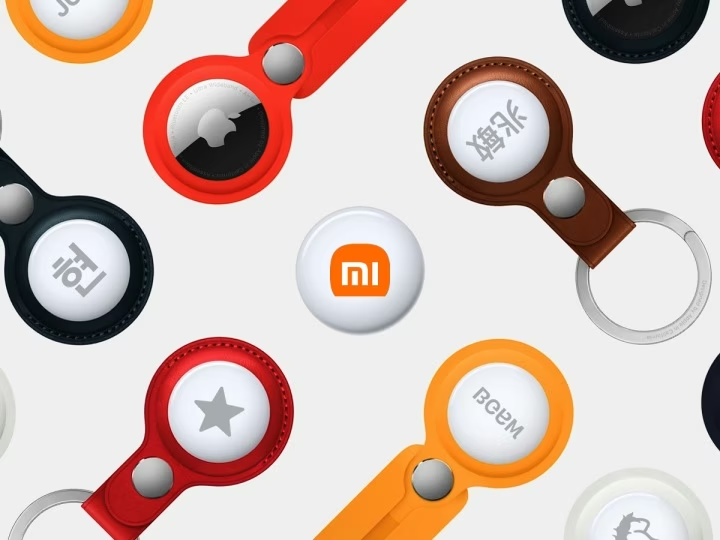
Xiaomi is preparing to release a new range of accessories, including a tracking device similar to the Apple AirTag. The device, expected to be named Xiaomi Tag, is anticipated to be released alongside the Xiaomi Watch 5, S5, and Buds 6 models.

Could Arrive as Xiaomi Tag

The Xiaomi tracking device, previously spotted in various regulatory databases, is rumored to be introduced alongside the brand’s new smartwatches and headphones. The new accessory lineup could be showcased at the Xiaomi 17 Ultra launch event scheduled to take place in China on December 26, 2025.

While the source sharing the arrival of the Xiaomi Tag did not provide specific details about the device, it is expected to feature UWB (Ultra-Wideband) support. This feature makes it easier to locate tracking devices at close range. If it arrives with Google Find My Device Network support, it will also feature offline tracking.

Currently, there are many alternatives to Apple AirTag on the market, such as Chipolo Loop, Pebblebee Clip 5, and Moto Tag. If the Xiaomi Tag comes at an affordable price, it could stand out from its competitors.

You Might Also Like;

Follow us on TWITTER (X) and be instantly informed about the latest developments…


Source link

Only 13% Of Web3 Tools Offer Real-Time Defense—Kerberus Expands Sentinel3 Protection To Solana Users

0
Only 13% Of Web3 Tools Offer Real-Time Defense—Kerberus Expands Sentinel3 Protection To Solana Users


In Brief

Kerberos’ latest report reveals that phishing and social engineering drove $594M in Web3 losses in H1 2025, with Solana users hit hardest amid fast ecosystem growth.

Kerberus Report: $594M Lost To Phishing In H1 2025 As Solana Emerges Prime Target

Web3 security firm Kerberus published a new report showing that phishing and social engineering attacks were responsible for $594 million, or 36%, of all Web3 losses in the first half of 2025, with approximately $90 million, or 15%, occurring on the Solana network. These figures are based on a total of $1.64 billion in Web3 hacks and scams during H1 2025, excluding the Bybit incident, with Solana accounting for $250 million of that total.

The Solana ecosystem has experienced significant growth and high transaction activity in recent years, which has increased its visibility to attackers. This heightened attention is not due to inherent security weaknesses but rather the larger user base and transaction volume, which create more opportunities for attacks targeting individuals. In early 2024, two drainer tools were linked to $4.17 million in losses. Even highly sophisticated threat actors have increasingly focused on user-targeted methods; for example, in May 2025, the state-sponsored Lazarus Group carried out a $3.2 million Solana wallet heist by tricking users into approving malicious transactions.

Between October 2024 and March 2025, over 8,000 phishing transactions were detected on Solana, resulting in roughly $1.1 million in confirmed losses across 64 phishing accounts. Researchers identified three attack methods specific to Solana’s architecture, including account authority transfers and system account impersonation. Attack strategies have become more complex, with fake presale websites and Telegram impersonation campaigns aimed at stealing credentials. By July 2025, CoinNess reported a surge of such impersonation scams in South Korea, with attackers posing as the Solana Foundation.

These findings indicate a clear trend: in widely used, high-activity ecosystems such as Solana, attackers tend to target users through deception and social engineering rather than exploiting technical vulnerabilities. To address this, Kerberus released a micro-brief at Solana Breakpoint, outlining the common tactics behind these thefts and providing guidance on how users can protect themselves.

“What we see on Solana matches what we see on every chain that has grown quickly,” said Alex Katz, cofounder of Kerberus, in a written statement. “Attackers go after moments of confusion. The faster an ecosystem expands, the more of those moments there are,” he added.

Kerberus Exposes Web3 Security Gap: Sentinel3 Delivers Real-Time Protection With 99.9% Accuracy

The firm’s recent report highlights a gap in the industry’s approach to security. Only 13% of Web3 security tools provide real-time protection, with the majority concentrating on audits, education, and post-incident analysis rather than intervening when a user is about to approve a risky transaction. Broader cybersecurity studies suggest that human error accounts for around 60% of breaches.

“People get scammed because they are rushed, distracted, or excited about something happening on-chain,” said Danor Cohen, cofounder of Kerberus. “Security has to work automatically in those moments.”

The Kerberus Sentinel3 browser extension analyzes Web3 transactions before they are approved, automatically preventing malicious activity with a reported 99.9% detection rate. It has maintained a record of zero user losses for nearly three years and offers up to $30,000 in coverage per transaction through a third-party provider.

In February 2025, Kerberus extended Sentinel3’s real-time protection from all EVM chains to include users on the Solana network. Following its acquisition of competitor Pocket Universe in August, Kerberus implemented the same Solana coverage for Pocket Universe users in November.

“Our goal is to ensure unsafe transactions can’t be approved in the first place,” said Alex Katz. “It’s easy to be distracted or rushed in the heat of on-chain events. That’s why Kerberos protects users at the moment they sign, so they don’t need to inspect every signature themselves,” he added.

The company is working toward a model of safer Web3 adoption, where protection operates automatically and users can focus on their intended activities.

Disclaimer

In line with the Trust Project guidelines, please note that the information provided on this page is not intended to be and should not be interpreted as legal, tax, investment, financial, or any other form of advice. It is important to only invest what you can afford to lose and to seek independent financial advice if you have any doubts. For further information, we suggest referring to the terms and conditions as well as the help and support pages provided by the issuer or advertiser. MetaversePost is committed to accurate, unbiased reporting, but market conditions are subject to change without notice.

About The Author

Alisa, a dedicated journalist at the MPost, specializes in cryptocurrency, zero-knowledge proofs, investments, and the expansive realm of Web3. With a keen eye for emerging trends and technologies, she delivers comprehensive coverage to inform and engage readers in the ever-evolving landscape of digital finance.

More articles

Alisa, a dedicated journalist at the MPost, specializes in cryptocurrency, zero-knowledge proofs, investments, and the expansive realm of Web3. With a keen eye for emerging trends and technologies, she delivers comprehensive coverage to inform and engage readers in the ever-evolving landscape of digital finance.

More articles


Source link

Humanoid Robots Started Serving as Traffic Police in China: Hangxing No. 1 | Metaverse Planet

0
Humanoid Robots Started Serving as Traffic Police in China: Hangxing No. 1 | Metaverse Planet


In Hangzhou, one of China’s most crowded and developed regions, traffic is now entrusted to a robot. The humanoid robot Hangxing No. 1 has started serving as a traffic police officer at a busy intersection in the city.

Parallel to the explosion in the field of Artificial Intelligence, significant breakthroughs in robotics have enabled humanoid robots to develop rapidly. So much so that today, they are stepping into becoming a part of the workforce. We saw one of the most striking examples of this to date in China this week. China has started using its humanoid robots as traffic police on the roads. In Hangzhou, one of the country’s technology hubs, a robot is directing the traffic flow.

Known as Hangxing No. 1, this 1.80-meter tall humanoid robot directs traffic by making gestures that mimic the standard hand signals of traffic police. Starting duty at a busy intersection, the robot performs tasks such as directing the vehicle flow, detecting rule violations, and giving voice warnings to drivers.

A New Era on the Roads: AI-Controlled Traffic Officer

Thanks to its advanced camera system and sensors, the robot can monitor all directions at the intersection simultaneously, communicating basic commands such as stop, go, and wait by copying standard police movements. It can also emit a digital whistle sound and adjust its gestures to work in synchronization with the traffic lights at the intersection.

However, the robot’s capabilities are not limited to just directing. According to information reported by NotebookCheck, the robot is equipped with an AI infrastructure capable of detecting rule violations in real-time. Many violations, from motorcycle riders not wearing helmets to pedestrians crossing on red lights, are automatically recorded by the system. When such a situation is detected, the vehicle or pedestrian is warned with a calm voice tone. The robot’s goal is to correct the behavior instantly rather than punish; therefore, the warnings are prepared in a language and tone that will not create conflict.

A swappable battery system that allows it to work for approximately 6 to 8 hours enables the robot to manage peak traffic hours in the morning and evening without interruption. When the charge runs low, it can return to the station on its own to renew its battery. Hangxing No. 1’s working model is built on a constantly flowing stream of data. While cameras at the intersection transmit instant images to the AI model, the system can detect whether vehicles have crossed the stop line, whether pedestrians are walking on a red light, or whether cyclists have deviated from the safe lane. When a violation is detected, the event is recorded and sent to the central police database. In the initial stages of the pilot application, a human officer is also present alongside the robot; however, they only intervene in cases where the robot’s voice warnings are insufficient.

According to Zhang Wanzhe, one of the project’s engineers, the robot’s decision-making system continues to learn over time. The team is trying to reduce cases where the AI gives false positives by examining footage from busy hours. Problems such as shadows or some movements caused by the wind misleading the sensors were experienced in tests conducted in October; for this reason, the system is constantly being updated.

Authorities state that the robot will become even smarter in the coming period in line with the data collected from the system. It is stated that new versions supported by Large Language Models (LLMs) in the future could give directions to drivers, provide information to tourists, and even offer mini-trainings on traffic safety on the streets.

You Might Also Like;

Follow us on TWITTER (X) and be instantly informed about the latest developments…


Source link

Moca Network Launches MocaProof Beta, the Digital Identity Verification and Reward Platform

0
Moca Network Launches MocaProof Beta, the Digital Identity Verification and Reward Platform


Sponsored

Stories and Reviews

December 08, 2025

Moca Network Launches MocaProof Beta, the Digital Identity Verification and Reward Platform

Hong Kong, China, December 8th, 2025, Chainwire

Moca Network, a flagship project by Animoca Brands to build the world’s largest chain-agnostic decentralized digital identity network, today announced the beta launch of MocaProof, a gamified digital identity verification and reward platform that leverages blockchain to simplify and advance data privacy and self-sovereignty. 

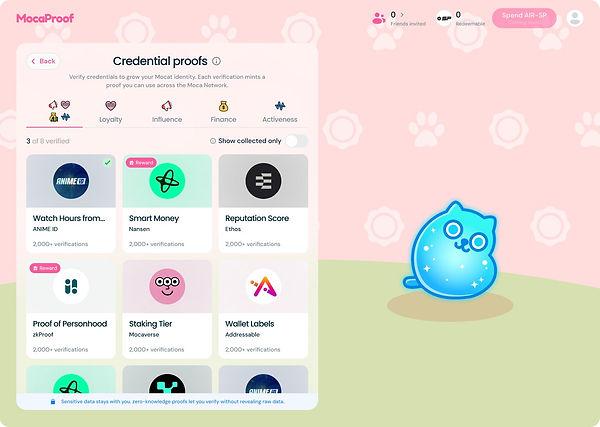
MocaProof enables privacy-preserving credential verification for participants to prove ownership, participation, and qualifications on various on-chain and off-chain ecosystems, without the need to disclose raw data or identifiable information. 

MocaProof is integrated with Moca Network’s AIR Kit and Moca Chain to enable reusable, interoperable, and verifiable identity data across its network of platforms, providing zero-knowledge proof, decentralized data storage, on-chain monetization, and single sign-on. ​

Kenneth Shek, project lead of Moca Network, said: “MocaProof establishes a foundation for verifiable, privacy-preserving digital identity, allowing users and enterprises to participate in credential-based ecosystems without compromising data ownership or compliance standards. MocaProof is where identity is created and reputation is accrued, enabling composable reward distribution through verified credentials.”

MocaProof allows users to explore and verify credentials in its credential proof marketplace across categories including influence, finance, loyalty, and activity. All credentials available through the credential proof marketplace are issued by verified partners and validated using zkProofs, ensuring both the integrity and interoperability of private data.

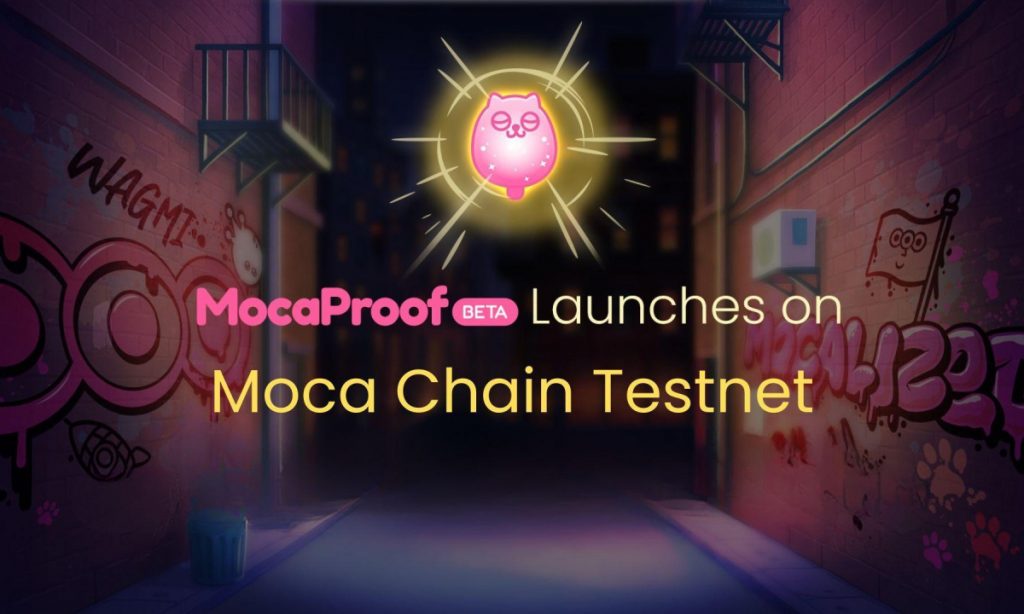
MocaProof includes a virtual companion named Mocat, a cute and friendly character within the Mocaverse. Mocat provides users of MocaProof with a personal visualization of their verified credentials. As a user verifies more credentials through MocaProof, their Mocat evolves with different traits that represent the growth and rarity of the user’s verified data. The evolution of a Mocat will also unlock rewards, depending on the Mocat’s rarity.

In addition, it is intended that MocaProof will integrate an incentive framework that enables users who verify their credentials through MocaProof to claim rewards starting from the official launch. Verified users can earn MOCA Coin (MOCA), airdrops of tokens provided by Moca Network’s partners, AIR SP (the stablecoin-backed loyalty points that can be spent in AIR Shop, Moca Network’s verifiable loyalty platform), and more. 

MocaProof beta launch is currently available on the Moca Chain Testnet, and is scheduled to transition to mainnet later in 2026. To commemorate the launch of MocaProof, a month-long campaign featuring NFT-related credentials and an NFT competition will feature a reward pool equivalent to US$50,000. For more information, users can visit app.moca.network. 

​About Moca Network

Moca Network is building the world’s largest chain-agnostic decentralized identity network, with privacy-preserved infrastructure for identity verifications, and interoperability of users and data across industries and ecosystems. As the premier identity ecosystem created by Animoca Brands, Moca Network brings together over 600 portfolio companies, more than 700 million addressable users, and a diverse range of enterprise partners. Moca Network utilizes MOCA Coin as its utility and governance token.

Moca Network Blog: https://moca.network/blog/

Website: https://moca.network

X: https://x.com/Moca_Network

Telegram: https://t.me/MocaverseCommunity 

Discord: http://discord.gg/MocaverseNFT

Contact

Liane Lau[email protected]

Disclaimer

In line with the Trust Project guidelines, please note that the information provided on this page is not intended to be and should not be interpreted as legal, tax, investment, financial, or any other form of advice. It is important to only invest what you can afford to lose and to seek independent financial advice if you have any doubts. For further information, we suggest referring to the terms and conditions as well as the help and support pages provided by the issuer or advertiser. MetaversePost is committed to accurate, unbiased reporting, but market conditions are subject to change without notice.

About The Author

Chainwire is the top blockchain and cryptocurrency newswire, distributing press releases, and maximizing crypto news coverage.

More articles

Chainwire is the top blockchain and cryptocurrency newswire, distributing press releases, and maximizing crypto news coverage.


Source link

This Week In Crypto: Bitcoin Survives The $84K Washout, But The Battle Isn’t Over

0
This Week In Crypto: Bitcoin Survives The K Washout, But The Battle Isn’t Over


In Brief

Bitcoin swung between $84K and $94K in early December, reflecting macro stress and miner pressure, but stabilized near $90K with structural signs of a potential recovery.

This Week In Crypto: Bitcoin Survives The $84K Washout, But The Battle Isn’t Over

December isn’t exactly greeting us with mulled wine and a soft up-only trendline. The first week dumped Bitcoin to the low-80Ks, yanked it back to the mid-90Ks and then left us sitting around $90K wondering whether that was “the” flush or just the dress rehearsal.

Let’s walk through what actually happened on the tape and in the headlines, and what it means for Bitcoin, Ether and TON going into the rest of the month. 

Bitcoin (BTC)

BTC spent the first week of December whipping between roughly $84,000 at the lows and $94,000 at the highs, and is now parked near $90,000. Lower highs versus November, but also a very clear refusal (so far) to break down through the low-80Ks.

Bitcoin traded violently between $84K and $94K during the first week of December, holding above the low-$80K zone but failing to reclaim November’s highs.

The opening move was classic “macro + positioning” stress. The weekend/Monday slide to around $84K came against a wall of headlines about weakening US labor data, sticky macro uncertainty and Japan’s bond market wobble and carry-trade unwind risk. That mix pushed dollar funding nerves back into the narrative and, with it, the usual “maybe risk assets need another leg lower” chatter.

Bitcoin traded violently between $84K and $94K during the first week of December, holding above the low-$80K zone but failing to reclaim November’s highs.

Into that, you had an already fragile crypto structure. November left us with:

miners in what several analysts now call the “harshest margin environment of all time,” as hashprice and payback periods compressed brutally;

treasuries and proxy stocks being repriced hard, with names like American Bitcoin and other BTC-linked equities getting halved in days;

and a series of onchain metrics showing heavy realized losses and forced de-risking rather than voluntary profit-taking.

That’s why the flush felt so sharp: a lot of over-levered and over-confident positioning was still hanging around after the summer/early-autumn euphoria, and December’s first sessions simply finished the clean-up.

A surge in Japanese bond yields reignited carry-trade fears and dollar liquidity stress, adding macro pressure to Bitcoin’s already fragile structure.

Then the bounce. The snap back toward $93–94K started, ironically, with the same macro story that had just scared everyone. Traders stopped obsessing over “will they cut this meeting?” and shifted out along the curve, toward the idea of Fed cuts coming next year instead. At the same time, the end of QT and early signs of a pickup in global liquidity gave the whole backdrop a softer edge. Into that shifted macro view came the headlines that actually put names to the bid: Texas openly buying Bitcoin for state reserves, and, on the TradFi side, Bank of America and Vanguard finally giving their mainstream clients access to spot Bitcoin ETFs instead of keeping that door shut. 

Taken together, it stopped feeling like a 2022 replay and more like a messy reset inside an ongoing cycle — enough to drag sidelined spot buyers back in and squeeze shorts who had crowded into the $84–88K pocket.

The rebound from $84K toward $94K was fueled by shifting rate-cut expectations, early 2025 liquidity hopes, and institutional headlines signaling renewed interest.

At the same time, the structural picture was quietly improving instead of cracking. Miners are still under heavy margin pressure, but ETF and ETP flows have flipped back to net positive after several weeks of steady outflows. 

ETF and ETP flows flipped positive after weeks of steady outflows, hinting that institutional demand was quietly stabilizing.

Bitcoin treasury names like Strategy have raised large cash buffers to protect dividends, rather than panic-selling coins into the weakness.

And a whole cluster of onchain indicators — liveliness, profit ratios, valuation bands — has drifted away from “blowoff” territory toward levels you normally see late in a drawdown or at the start of a reset. 

On-chain indicators like liveliness and profit ratios retreated from overheated levels, suggesting a structural reset typical of late drawdowns.

That is why more analysts are dusting off the 2023 comparison and arguing that, if this really is the same kind of clean-out, the odds of a strong recovery into 2026 are higher than the four-hour candles would have you believe.

So where does that leave us as traders?

For now, December is drawing a pretty clean battle zone. Roughly $84–85K is the line where forced sellers showed up and then got absorbed. The yearly open and recent rejection area around $93–94K is the first serious overhead test. Until one of those breaks decisively, this is range-trading country: fake breakdowns, sharp mean reversion and a market that punishes anyone who extrapolates a four-hour candle into a grand macro thesis.

If you are long-biased, this is the environment for staggered bids and disciplined invalidation rather than “all-in on the first green daily.” If you’re flat or hedged, the message from the first week of December is this: the bull-market structure may still be intact, but it’s going to extract a volatility tax before it lets anyone ride cleanly toward six figures.

Disclaimer

In line with the Trust Project guidelines, please note that the information provided on this page is not intended to be and should not be interpreted as legal, tax, investment, financial, or any other form of advice. It is important to only invest what you can afford to lose and to seek independent financial advice if you have any doubts. For further information, we suggest referring to the terms and conditions as well as the help and support pages provided by the issuer or advertiser. MetaversePost is committed to accurate, unbiased reporting, but market conditions are subject to change without notice.

About The Author

Alisa, a dedicated journalist at the MPost, specializes in cryptocurrency, zero-knowledge proofs, investments, and the expansive realm of Web3. With a keen eye for emerging trends and technologies, she delivers comprehensive coverage to inform and engage readers in the ever-evolving landscape of digital finance.

More articles

Alisa, a dedicated journalist at the MPost, specializes in cryptocurrency, zero-knowledge proofs, investments, and the expansive realm of Web3. With a keen eye for emerging trends and technologies, she delivers comprehensive coverage to inform and engage readers in the ever-evolving landscape of digital finance.

More articles


Source link

Why is Bitcoin Falling? JPMorgan Explains the Drop and Predicts $170k | Metaverse Planet

0
Why is Bitcoin Falling? JPMorgan Explains the Drop and Predicts 0k | Metaverse Planet


JPMorgan has released a new report analyzing the recent pullback in Bitcoin prices. According to the banking giant, while miner capitulation is a factor, the balance sheet fragility of Michael Saylor’s company, MicroStrategy, plays a more decisive role. Despite the volatility, the bank maintains a $170,000 price target.

JPMorgan has identified two main factors behind the recent retreat in Bitcoin prices. The report suggests that market sensitivity is currently driven more by corporate balance sheet concerns than just mining dynamics.

The “Strategy” Factor: Balance Sheet Concerns

The report emphasizes that the primary pressure on the price is not just miners selling, but the perceived fragility of MicroStrategy (referred to as “Strategy” in the report). JPMorgan highlights a few critical points regarding the company:

Cash Buffer: The company holds $1.44 billion in cash, which the bank notes reduces the immediate probability of a forced Bitcoin sale. However, JPMorgan warns that market sensitivity regarding the company’s health continues.MSCI Risk: Analysts argue that the risk of MicroStrategy potentially being removed from MSCI indices is already priced in. The report states, “A possible removal decision may not create an additional major drop; the risk is largely priced in.”

Miner Squeeze and Hash Rate Drop

The second major factor is the decline in the Bitcoin hash rate and mining difficulty. JPMorgan links this decline to two main causes:

Strict Warnings from China: New statements from Chinese officials reminding the public that mining is banned in the country caused a sudden slowdown in activities.Cost Squeeze: Operations outside of China are being squeezed between rising energy costs and low Bitcoin prices, forcing high-cost miners to cut production capacity.

Mining at a Loss? JPMorgan highlights that Bitcoin is currently trading below its production cost.

Average Production Cost: The bank estimates the average cost to produce one Bitcoin is around $90,000.Because the current price is below this level, many miners are turning to selling their holdings to provide liquidity.

Price Prediction: $170,000 in 6 to 12 Months

Despite the current selling pressure and hash rate fluctuations, JPMorgan has not changed its bullish price target for Bitcoin.

The bank predicts that if macro conditions stabilize, Bitcoin could reach $170,000 within the next 6 to 12 months. This suggests that while the short-term outlook is dominated by miner capitulation and corporate risk management, the medium-term outlook for 2025 remains highly positive.

You Might Also Like;

Follow us on TWITTER (X) and be instantly informed about the latest developments…


Source link

Popular Posts

My Favorites