Metaverse

Home Metaverse Page 40

Wallet in Telegram Launches Cross Chain Deposits in Self Custodial TON Wallet

0
Wallet in Telegram Launches Cross Chain Deposits in Self Custodial TON Wallet


Sponsored

Stories and Reviews

February 11, 2026

Wallet in Telegram Launches Cross Chain Deposits in Self Custodial TON Wallet

Ile Du Port, Seychelles, February 11th, 2026, Chainwire

Over 100 million users can now fund their TON Wallet using crypto from the most popular blockchains – no additional bridges, swaps or manual conversions required.

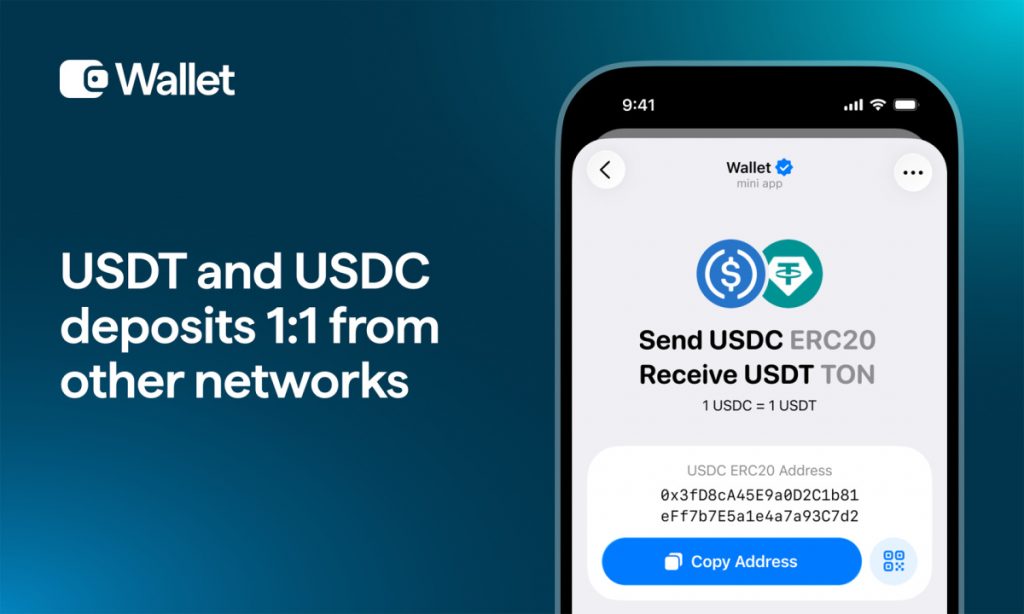
Wallet in Telegram today announced the launch of cross-chain deposits in its self-custodial TON Wallet, enabling users to fund their wallets with crypto from the most popular blockchains. Powered by MoonPay, the integration manages cross-chain transfers behind the scenes, ensuring a smooth deposit experience in TON Wallet.

With this launch, more than 100 million users can transfer their stablecoins from other chains to TON without friction or losing value. TON Wallet users can now deposit USDC or USDT from Ethereum, Solana, TRON, BSC, Polygon, Arbitrum, and Base – converted at a 1:1 rate to USDT (TON) – directly in Wallet in Telegram. This removes the need to already hold TON-native assets, opening the ecosystem to users across the broader crypto landscape. As part of the integration, users will soon be able to withdraw USDT on TON to USDT or USDC on popular blockchains with a fee and deposit BTC, ETH, and SOL, which are automatically converted into Toncoin.

This Launch Introduces the Following Functionality

Stablecoin deposits from leading blockchains, allowing users to deposit USDC or USDT with automatic 1:1 conversion into USDT (TON)
Stablecoin withdrawals from USDT (TON) to USDT or USDC on other major blockchains, processed at a 1:1 rate, subject to applicable network and service fees. Will be available soon.
Crypto deposits from BTC, ETH, and SOL, which are automatically converted into Toncoin upon arrival in TON Wallet

Removing Barriers to Web3 Adoption on Telegram

Funding a self-custodial wallet has traditionally been a complex, multi-step process. Through its collaboration with MoonPay, Wallet in Telegram removes this friction by introducing a single, seamless deposit flow that works across blockchains and assets. As a result, cross-chain transfers are now as simple as custodial ones, significantly streamlining onboarding into TON Ecosystem – while preserving value by minimizing unnecessary conversion losses and fees.

“One of the biggest challenges in crypto adoption is the first step – getting users funded and ready to participate. Until now, using TON Wallet meant already having assets on TON, which created unnecessary friction and limited access to the broader ecosystem. Now, we’re removing that barrier entirely. Users can bring their funds directly into TON Wallet from other networks, without unnecessary conversions, exchanges or lock-ins,” said Andrew Rogozov, Founder and CEO of The Open Platform and Wallet in Telegram. “Our goal is simple: make entering, and exiting, TON ecosystem as seamless as using a custodial wallet, while preserving the freedom and control of self-custody.”

Powered by MoonPay Deposits and built on MoonPay’s infrastructure, the solution supports the end-to-end flow, from deposit detection to final asset delivery, and is integrated natively into partner environments

“Users shouldn’t have to buy new assets or navigate complex steps just to fund an account,” said Ivan Soto-Wright, CEO of MoonPay. “We simplify the process by letting people use the crypto they already have while we handle the technicalities behind the scenes, making it easier to move value across the ecosystem and access a broader range of applications.”

Funding a TON Wallet now takes just a few steps

The Deposit section includes two options: Stablecoins (for 1:1 stablecoin deposits) and Other Crypto (for converting BTC, ETH, or SOL to TON).
After selecting the token and the originating network, a deposit address is generated automatically.
The deposit address can be copied or accessed via QR code.
This address is entered on the withdrawal page of the external wallet or exchange.
The transfer amount must meet the minimum deposit requirement.
Once the details are verified, the transfer is confirmed on the sending platform.

Funds arrive in the user’s selected asset, fully compatible with TON ecosystem and Telegram’s growing network of decentralized applications.

Built for Scale, Native to Telegram

The new deposit experience is available exclusively in the self-custodial TON Wallet, part of Wallet in Telegram’s dual-wallet setup, and is fully integrated into the Telegram interface. By abstracting away cross-chain complexity, Wallet in Telegram makes it easier for users to participate in DeFi, gaming, payments, and on-chain apps – without needing deep crypto expertise.

This launch marks a major step toward making Telegram the most accessible Web3 gateway in the world, combining mass-market distribution with self-custody and open blockchain infrastructure.

About Wallet in Telegram

Wallet in Telegram is a digital asset solution natively embedded into Telegram’s interface. Backed by The Open Platform, Wallet in Telegram has gained 150M+ registered users to date and continues to grow. The company offers a dual-wallet experience with Crypto Wallet (a multi-chain wallet for trading and sending crypto to contacts) and TON Wallet (a self-custodial wallet with access to TON ecosystem of apps and TON-based digital assets).

About MoonPay

Founded in 2019, MoonPay is a global financial technology company that helps businesses and consumers move value across fiat and digital assets. MoonPay has more than 30 million customers across 180 countries and supports more than 500 enterprise customers spanning crypto and fintech.

Through a single integration, MoonPay powers on- and off-ramps, trading, crypto payments, and stablecoin infrastructure, connecting traditional payment rails with blockchains. MoonPay maintains a broad regulatory footprint, including a New York BitLicense, a New York Limited Purpose Trust Charter, and money transmitter licenses across the United States, as well as MiCA authorization in the EU.

MoonPay is how the world moves value.

Contact

Masha BalanovichWallet in Telegram[email protected]

Disclaimer

In line with the Trust Project guidelines, please note that the information provided on this page is not intended to be and should not be interpreted as legal, tax, investment, financial, or any other form of advice. It is important to only invest what you can afford to lose and to seek independent financial advice if you have any doubts. For further information, we suggest referring to the terms and conditions as well as the help and support pages provided by the issuer or advertiser. MetaversePost is committed to accurate, unbiased reporting, but market conditions are subject to change without notice.

About The Author

Chainwire is the top blockchain and cryptocurrency newswire, distributing press releases, and maximizing crypto news coverage.

More articles
Chainwire is the top blockchain and cryptocurrency newswire, distributing press releases, and maximizing crypto news coverage.


Source link

Uniswap Labs and Securitize Bring BlackRock’s BUIDL Fund On-Chain

0
Uniswap Labs and Securitize Bring BlackRock’s BUIDL Fund On-Chain


Key Highlights

Securitize and Uniswap Labs partner to enable on-chain trading of BlackRock Build shares via UniswapX.

The collaboration promotes liquidity, offering quick settlement and improved market efficiency for investors.

Securitize, a leading tokenization platform, and Uniswap Labs, a leading force in decentralized finance (DeFi), have announced a partnership that allows BlackRock USD Institutional Digital Liquidity Fund (BUIDL) shares to be traded via UniswapX.

The development, announced on Wednesday, opens new liquidity channels for BUIDL holders and represents a bridge between traditional finance and DeFi.

Trading BUIDL onchain

The collaboration lets BUIDL be traded on-chain, providing investors with faster settlement and improved market efficiency. Using UniswapX’s technology, individuals can access competitive quotes in a fully automated system, enhancing liquidity while ensuring trust and regulatory compliance.

Hayden Adams, Uniswap Labs Founder and CEO, commented on the development, stating, “Our mission at Labs is simple: make exchanging value cheaper, faster and more accessible. Enabling BUIDL on UniswapX with BlackRock and Securitize supercharges our mission by creating efficient markets, better liquidity, and faster settlement. I’m excited to see what we build together.”

Also Read: Bitwise Files with the SEC to Launch First Ever Uniswap ETF

Disclaimer: The information researched and reported by The Crypto Times is for informational purposes only and is not a substitute for professional financial advice. Investing in crypto assets involves significant risk due to market volatility. Always Do Your Own Research (DYOR) and consult with a qualified Financial Advisor before making any investment decisions.


Source link

Save Your Back: The Ultimate Guide to the Best Gaming Chairs 2026 | Metaverse Planet

0
Save Your Back: The Ultimate Guide to the Best Gaming Chairs 2026 | Metaverse Planet


Let’s be honest for a second: How are you sitting right now? If you’re like me, you probably look like a shrimp curled over your keyboard. I’ve been there. After spending thousands of hours in the Metaverse, grinding rank in FPS games, and writing code, I learned the hard way that a bad chair isn’t just uncomfortable—it’s a health hazard.

In 2026, the gaming chair market is flooded. It’s a jungle of flashy racing stripes and “ergonomic” promises that fall flat. But don’t worry, I’ve dug through the specs, the comfort levels, and the user reviews to bring you the absolute best thrones for your gaming setup.

Whether you are an e-sports pro or a remote worker who games on the side, here is my curated list of chairs that actually deserve your money.

Top Picks at a Glance

Before we dive deep, here is a quick snapshot of the market leaders. I’ve converted the prices to USD ($) and EUR (€) to give you a global perspective on the value.

Brand – ModelApprox. Price (USD)Approx. Price (EUR)Best For…XPrime Titan Pro BBL~$235~€215Overall BestxDrive 15’Li~$310~€285The Classic ChoiceHawk FAB V4~$280~€255Fabric LoversRampage KL-R36~$215~€195XL / DurabilityDXRacer Craft Pro~$645~€590Premium / LuxurySeduna Champion~$180~€165Budget Friendly

1. XPrime Titan Pro BBL Edition (The MVP) 🔥

Price: ~$235 USD / €215 EUR

If I had to pick one chair that balances price, performance, and health, this is it. Designed in collaboration with BBL Esports (one of Turkey’s biggest e-sports clubs), this isn’t just a chair with a logo slapped on it. It’s an “Admiral” class seat.

What I love about this is the “Molecular Smart Sponge” technology. It sounds fancy, but in practice, it means the seat molds to your body shape without losing its firmness over time. Plus, it officially carries the “Physiotherapist Approved” badge in 2026.

Why I Recommend It:

Ergonomy 3.0: It supports your spine actively.Customization: You can get 3D or 4D armrests (I always say go for 4D if you can; your elbows will thank you).180° Recline: Perfect for those naps between matches.

What Players Are Saying:

“I researched for weeks and landed here. It’s huge, imposing, and assembling it was a breeze (just 8-10 screws). As a remote worker with physical pain issues, this chair is a savior.”

2. XPrime Titan Fabric (The Black Stealth)

Price: ~$235 USD / €215 EUR

Not everyone wants neon colors. The Titan Fabric in Black is for those who want that “Smart Sponge” comfort but in a stealthy, professional look. It shares the DNA of the Pro version but focuses on a premium fabric finish that breathes better than leather.

Key Features:

Sweat-Free: The premium fabric is a game-changer for long summer sessions.Silence: The wheels are thick and move silently.

What Players Are Saying:

“I used the King model for 4 years, and now I switched to this fabric version for the office. It is incredibly spacious. It feels like a total comfort machine.”

3. XPrime Cool (The 10th Anniversary Special)

Price: ~$250 USD / €230 EUR

The “Cool” model lives up to its name. It uses a specific “Thai Feather” fabric structure designed specifically to prevent sweating. If you live in a hot climate or your gaming room gets stuffy, leather chairs are a nightmare. This is your solution.

Why It Stands Out:

Class 4 Gas Lift: This is the industry standard for safety and durability.Design: It feels premium to the touch, not like cheap plastic-y mesh.

What Players Are Saying:

“I asked myself, ‘What was I sitting on before this?’ The fabric doesn’t make you sweat, and it’s ridiculously comfortable.”

4. xDrive 15’Li Professional (The Legend)

Price: ~$310 USD / €285 EUR

You cannot talk about gaming chairs without mentioning xDrive. The “15’Li” (15th series) is iconic. It is designed with support from orthopedics experts. Visually, it’s that classic aggressive gamer look—especially in red and black.

My Take:

It’s a bit pricier, but the 2D armrest technology and the massive 160-degree recline make it a staple. It supports up to 90kg effortlessly.

What Players Are Saying:

“I feel like I leveled up 15 times just sitting on this. Don’t ask ‘is it worth the money?’—it is. My back thanks me every day.”

5. Hawk Gaming Chair FAB V4 (Fabric Excellence)

Price: ~$280 USD / €255 EUR

Hawk has been making huge waves with their “FAB” series. The V4 is widely considered one of the most comfortable fabric chairs on the market. It uses memory foam, which means it “remembers” how you sit.

Why I Like It:

It has a distinct “woven” fabric structure that is very durable against wear and tear. Plus, the 3D armrests allow for height, depth, and angular adjustments.

What Players Are Saying:

“Great value for the price. The smell of new car when you open the box is real. The 180-degree recline is stable—you don’t feel like you’re going to tip over.”

6. Rampage KL-R36 Hectora-XL (For the Big Players)

Price: ~$215 USD / €195 EUR

Size matters. If you have a broader build or weigh above average, standard racing chairs can feel like a trap. The Rampage Hectora-XL is built like a tank. It supports up to 150kg.

My Take:

The “weight-adjusted tilt” is a great feature. It doesn’t just flop back; it adjusts the resistance based on your weight.

What Players Are Saying:

“I bought this for my husband who complained of back pain daily. Since getting this, the complaints stopped. It adjusts to you, not the other way around.”

7. Türksit ( The Budget King)

Price: ~$180 USD / €165 EUR (Estimated based on market segment)

Sometimes you don’t have $500 to drop on a chair. Türksit is the “people’s champion” here. It’s an entry-level option that gets the job done. It uses mesh fabric, comes in every color imaginable, and is surprisingly durable for the price.

What Players Are Saying:

“For the price, it’s unbeatable. It’s not leather, so no sweating. Setup took me 15 minutes.”

8. xDrive SANCAK (The Pro’s Choice)

Price: ~$330 USD / €300 EUR

Another hitter from xDrive. The SANCAK model is interesting because the leather quality is akin to automotive seats. It’s designed for body health first, looking cool second.

My Take:

The armrests here are soft plastic, not hard rubber, which is a nice touch for your elbows during long aiming sessions.

What Players Are Saying:

“If you have a car with leather seats, you know this feeling. I’m 1.84m and 90kg, and it fits perfectly. Customer support is also top-tier; they send spare parts instantly.”

9. HP OMEN Citadel (The Luxury Tank)

Price: ~$400+ USD / €370+ EUR (Global pricing varies)

This is for the setup wars. The HP OMEN Citadel is massive. It’s designed for the racing enthusiast. It supports up to 136kg and feels incredibly solid.

My Take:

It’s expensive, but users describe it as the “Ferrari” of chairs. If you have the space (it is wide), it’s a status symbol that is actually comfortable.

What Players Are Saying:

“I work 8 hours a day in this. My back pain is gone. It feels like driving a luxury car. Worth the investment.”

10. Seduna Gamer Series Blade Mood (Office Hybrid)

Price: ~$180 USD / €165 EUR

If you want something that looks good on a stream but doesn’t look out of place in a Zoom meeting, Seduna is a great middle ground. It uses polyurethane foam which is firm but forgiving.

What Players Are Saying:

“A true price/performance product. The leather quality is nice and the sitting position is solid.”

11. Calitte Samurai SS (The Unique Design)

Price: ~$300 USD / €275 EUR

Calitte prides itself on not being a replica. Their designs are patented. The Samurai SS series uses a steel skeleton system and 62 DNS high-density foam. That means this chair will likely outlast your PC.

What Players Are Saying:

“I sat in this for 8 hours straight—no pain. I’m right at the weight limit, and it feels sturdy as a rock. The ergonomics are fantastic.”

12. Hawk Future Coal (The Premium Fabric)

Price: ~$380 USD / €350 EUR

Another entry from Hawk, but this is the high-end “Future” series. It uses a 12mm iron skeleton. It is heavy, durable, and the “Coal” fabric color looks incredibly sleek.

What Players Are Saying:

“My cat loves this chair more than I do. It wraps around your back and provides great support.”

13. DXRacer Craft Pro (The Global Icon)

Price: ~$645 USD / €590 EUR

DXRacer is the grandfather of gaming chairs. The Craft Pro is their evolution. It features integrated lumbar support (no annoying pillow that slips down) and cooling gel memory foam.

My Take:

It is the most expensive on the list, but you are paying for a decade of R&D. It feels like a Mercedes.

What Players Are Saying:

“The best quality chair you can buy. The built-in lumbar support means you can finally throw away those annoying back cushions.”

How to Choose? (My Final Advice)

Buying a chair is like buying shoes; it has to fit you.

Fabric vs. Leather: If you eat at your desk or spill things, go Leather (PU) for easy cleaning. If you sweat a lot or live in a hot area, you must go Fabric.Weight Capacity: Be honest about your weight. If you are 95kg, don’t buy a chair rated for 100kg. Get the one rated for 120kg or 150kg (like the Rampage or HP Omen) to ensure the hydraulics last.The Cushion Test: Look for “molded foam” or “cold cure foam.” Avoid cheap “cut foam” (which is just sponge cut into shape)—it will flatten in 6 months.

My Verdict:

If you want the best all-rounder, the XPrime Titan Pro is the winner for 2026. If you have the budget and want luxury, go DXRacer. If you are on a budget but need quality, Hawk is your friend.

Your back will support you for the rest of your life, so treat it well!

Tell me in the comments: Are you Team Leather or Team Fabric? I’m genuinely curious which one you guys prefer for long gaming sessions!

You Might Also Like;


Source link

How to Create Long, Consistent AI Videos with Grok for Free | Metaverse Planet

0
How to Create Long, Consistent AI Videos with Grok for Free | Metaverse Planet


Let’s be honest, the biggest frustration with current AI video generators isn’t the quality—it’s the consistency. You generate an amazing five-second clip of a character, but the moment you try to generate the next scene, your protagonist suddenly has a different haircut, a new outfit, or has morphed into a totally different person.

It’s impossible to tell a story when your main character changes faces every few seconds.

But I recently stumbled upon a workflow being shared quietly among power users that completely changes the game. It turns out, Grok has a somewhat hidden capability that allows us to chain scenes together, keeping characters consistent for videos that run way longer than the usual one-minute limit.

The best part? You don’t need expensive subscriptions or a degree in prompt engineering. I’m going to walk you through the exact process I used to create a seamless, long-form AI video for free.

Here is the step-by-step breakdown of how to hack Grok’s video generation.

1. The Blueprint: Scripting and Scene Setup

Before we even touch Grok, we need a battle plan. If you just start generating random clips, you’ll end up with a mess. We need a coherent story.

For this, I turn to our trusty friend, ChatGPT.

The Strategy: I asked ChatGPT to write a short, simple story in the style of a Disney-Pixar film.

Crucial Ugu Tip: Keep your cast small. I highly recommend limiting the story to a maximum of two characters. The fewer variables you introduce, the easier it will be for the AI to maintain visual consistency later on. If you try to juggle five characters, the AI will get confused.

Once ChatGPT generated the story, I didn’t stop there. I asked it to break that story down into individual, highly detailed visual image prompts for each specific scene. This is vital. You need a clear text blueprint for every 5-10 second chunk of your final video.

2. Genesis: Creating the First Scene in Grok

Now it’s time to fire up Grok.

Switch Grok over to visual mode and paste in the prompt for your very first scene. Grok will usually give you a few image variations. Take your time here—pick the image that perfectly captures the look and feel you want for the entire video. This image sets the standard for everything that follows.

Once you have “the one,” hit the Make Video option on that image.

Important Setting: Before you generate, double-check your aspect ratio. Make sure it is set to 16:9. We want cinematic, YouTube-ready widescreen output, not vertical mobile format.

3. The “Secret Sauce”: The Infinite Loop Technique 🔄

This is it. This is the step that 90% of people miss, and it’s the key to making this whole thing work. If you just paste the next text prompt in, Grok will start from scratch and your character continuity will be destroyed.

We need to force Grok to remember what happened in the previous clip.

Step 3a: The Critical Setting Change Before you do anything else, click on your profile picture in Grok to open the settings menu. Navigate to the “Behavior” section and turn OFF “Automatic Generation.”

Why? If this is on, Grok sometimes thinks it knows better than you and will ignore your reference images to speed things up. Turning it off forces the AI to pay attention to the inputs we are about to give it.

Step 3b: The Frame-Chaining Method

Take your first completed video clip.Go to the very last second of that video and pause it.Right-click the video player and save that final frame as an image to your computer.Now, go back to the Grok prompt box. Paste that saved final frame image first.Right underneath the image, paste the text prompt for your second scene.

When you hit generate now, Grok isn’t starting from zero. It’s using that final frame of Scene 1 as the visual anchor for the start of Scene 2. It sees the character, the lighting, and the environment, and extends the action naturally.

Rinse and Repeat: When Scene 2 is done, save its final frame, and use it as the input for Scene 3. It’s like building a digital daisy chain.

4. The Voice: Generating Free Narration

Silent movies are great, but let’s add some professional polish. Since we are keeping this a “zero-budget” project, I used Google AI Studio for the voiceover.

It’s surprisingly robust. I selected the “Single Speaker” option, pasted in the full story text I got from ChatGPT earlier, and generated the audio. The result is a clean, high-quality narration file that you can download instantly.

5. The Final Cut: Bringing It All Together

By this point, you should have a folder on your computer filled with numbered video clips that visually flow into each other, and one master audio narration file.

Now we just need to assemble the puzzle pieces.

You don’t need expensive software like Adobe Premiere Pro for this (though you can use it if you have it). I used Microsoft’s built-in Clipchamp editor because it’s free and easy, but CapCut is another great option.

The Editing Process:

Import all your video clips and your audio track into the editor.Drag them onto the timeline in order.Pro Tip for Grok Users: Sometimes Grok’s video generation doesn’t perfectly fill the 16:9 canvas, leaving tiny black bars on the edges. I usually select all my video clips in the timeline and scale them up to about 120% to ensure they fill the screen completely.Sync the audio. If your narration runs longer than your video clips, just slightly slow down the playback speed of the video clips until they match the length of the voiceover.

Export your final masterpiece, and you are done!

Final Thoughts

It takes a little bit of manual effort to save those frames and chain them together, but the results are totally worth it. You are no longer limited to 5-second GIFs; you are creating actual animated sequences with consistent characters, all for free.

I’ve embedded the example video I made using this exact method at the top of this article so you can see the consistency in action.

I’m really curious to see what you guys make with this workflow. Are you planning a sci-fi epic or a cozy bedtime story for your first attempt? Let me know in the comments below!

You Might Also Like;


Source link

Sam Bankman-Fried Seeks Retrial Over ‘Bogus’ FTX Bankruptcy Claims

0
Sam Bankman-Fried Seeks Retrial Over ‘Bogus’ FTX Bankruptcy Claims


Key Highlights

Bankman-Fried’s defense has formally requested a new trial, claiming the 2023 conviction was built on a false narrative of insolvency.

The motion alleges that bankruptcy lawyers and federal prosecutors collaborated on a “bogus” filing to seize control of solvent assets for legal fees.

The legal motion contends that critical evidence proving the company’s ability to repay customers was suppressed during the initial criminal proceedings.

Sam Bankman-Fried, founder of cryptocurrency exchange FTX, formally requested a new trial on February 10 in the United States District Court. The motion challenges his earlier conviction for fraud and money laundering, arguing it was based on a mistaken story about the exchange’s financial state.

His legal team contends that the original trial suffered because important evidence about FTX’s solvency was kept out. The filing characterizes the conviction as a miscarriage of justice caused by bankruptcy lawyers and federal prosecutors.

“Exposing” FTX bankruptcy claims

The request for a retrial focuses on renewed claims that FTX was fully solvent when it collapsed and that bankruptcy filings were unnecessarily forced. Bankman-Fried went on social media to support these claims, insisting that FTX was never bankrupt and that he never personally filed for it.

SBF claimed that lawyers took control of the company and filed a false bankruptcy four hours later to take money from it. He backs this argument with testimony suggesting that FTX.us had enough assets and should have remained operational to pay shareholders, instead of being liquidated.

Allegations of political lawfare

On February 9, Bankman-Fried accused the Department of Justice of engaging in “political lawfare” to fast-track his conviction and secure a 25-year sentence. He alleged that FTX was never actually bankrupt and that the narrative of insolvency was a fabrication designed to facilitate a corporate takeover.

According to his post, internal communications showed that the tech team confirmed FTX.us was not affected by the larger deficit at FTX International. The filing quotes Bankman-Fried’s conversation with Mr. Miller, where he said FTX.us should hold off on filing for bankruptcy until it was clear there were not enough assets.

Dispute over retainer fee

However, the defense states that Mr. Miller insisted on involving the FTX.us bankruptcy because there was cash in this entity that would be used to pay the retainer fee of Sullivan and Cromwell, the case managers. Bankman-Fried said that without the retainer fee paid by FTX.us, Sullivan and Cromwell would not be filing. 

Challenging the current narrative

Through this claim that the bankruptcy was conducted to raise legal costs and not due to any necessity, Bankman-Fried is contesting important facts presented as evidence during his original criminal trial.

The question remains whether the allegations around bankruptcy and the true financial state of FTX at that time are enough for the trial to begin again.

Also Read: Why Trump Pardoned the Crypto Industry but Left SBF to Rot

Disclaimer: The information researched and reported by The Crypto Times is for informational purposes only and is not a substitute for professional financial advice. Investing in crypto assets involves significant risk due to market volatility. Always Do Your Own Research (DYOR) and consult with a qualified Financial Advisor before making any investment decisions.


Source link

Circle Ventures invests in edgeX, bringing USDC to the EDGE Chain

0
Circle Ventures invests in edgeX, bringing USDC to the EDGE Chain


In Brief

edgeX, a decentralized trading infrastructure for perpetual markets and broader trading, today announced a strategic investment from Circle Ventures.

Circle Ventures invests in edgeX, bringing USDC to the EDGE Chain

edgeX, a decentralized trading infrastructure for perpetual markets and broader trading, today announced a strategic investment from Circle Ventures.

edgeX supports perpetual trading use cases where stablecoins are used for trading and settlement, an area that aligns with Circle’s broader focus on expanding stablecoin utility within decentralized financial systems.

Circle plans to integrate native USDC and its Cross-Chain Transfer Protocol (CCTP) with the EDGE Chain, subject to completion. The EDGE Chain is a blockchain that powers edgeX, and is purpose-built for performance-intensive trading applications. The upcoming launch of native USDC and CCTP on EDGE is expected to enable new use cases for institutions, developers, traders, infrastructure providers, market makers, and other EDGE ecosystem users.

According to internal metrics, edgeX currently supports hundreds of thousands of transacting addresses and processes billions of dollars in daily trading volume, with substantial open interest and liquidity across its markets. The edgeX mobile application has seen strong adoption, particularly across Asia, reflecting a broader shift toward mobile-first trading behavior.

More recently, RWA-linked perpetual markets, such as stock and commodity perpetuals – have emerged as a key area of growth for edgeX, alongside spot trading and prediction markets. In parallel, the company continues to develop the EDGE Chain to support performance-intensive, trading-focused applications.

For more information or to access the platform, visit the edgeX website.

About edgeX

edgeX is a decentralized onchain perpetual trading platform, specializing in capital-efficient, high-frequency perpetual trading and stablecoin-native infrastructure for global retail users.

Disclaimer

In line with the Trust Project guidelines, please note that the information provided on this page is not intended to be and should not be interpreted as legal, tax, investment, financial, or any other form of advice. It is important to only invest what you can afford to lose and to seek independent financial advice if you have any doubts. For further information, we suggest referring to the terms and conditions as well as the help and support pages provided by the issuer or advertiser. MetaversePost is committed to accurate, unbiased reporting, but market conditions are subject to change without notice.

About The Author

Gregory, a digital nomad hailing from Poland, is not only a financial analyst but also a valuable contributor to various online magazines. With a wealth of experience in the financial industry, his insights and expertise have earned him recognition in numerous publications. Utilising his spare time effectively, Gregory is currently dedicated to writing a book about cryptocurrency and blockchain.

More articles

Gregory, a digital nomad hailing from Poland, is not only a financial analyst but also a valuable contributor to various online magazines. With a wealth of experience in the financial industry, his insights and expertise have earned him recognition in numerous publications. Utilising his spare time effectively, Gregory is currently dedicated to writing a book about cryptocurrency and blockchain.


Source link

Real-Life Transformers: China’s New Modular Flying Car Just Took Off | Metaverse Planet

0
Real-Life Transformers: China’s New Modular Flying Car Just Took Off | Metaverse Planet


I have a confession to make: I have been waiting for a flying car since I was five years old.

We were promised a future where we would zip out of our garages, press a button, and soar over traffic jams like The Jetsons. Instead, for the last decade, all we really got were giant, noisy drones that you can’t actually drive on the road.

But this week, something changed.

I’ve been tracking a development out of China that feels less like a standard aviation update and more like a scene from Transformers. The China Aerospace Science and Technology Corporation (CASC) just successfully test-flew a vehicle that doesn’t just fly or drive—it splits apart to do both.

This is the Modular eVTOL (electric Vertical Take-Off and Landing) vehicle, and honestly, it might be the smartest design I’ve seen in years.

Let’s break down why this strange, three-part machine has me so excited.

The “Lego” Philosophy of Transportation

Most flying car concepts fail because they try to do two things at once: be a good car (heavy, safe, wheels) and a good plane (light, aerodynamic). Usually, you end up with a terrible car and a terrible plane.

The engineers at CASC decided to cheat. Instead of making one vehicle, they made three modular components that snap together:

The Ground Module (The Chassis): This is essentially a smart, electric skateboard. It has wheels, batteries, and drives like a car.The Cabin (The Pod): This is where you sit. It’s the passenger shell.The Air Module (The Wings): This is a giant drone rig with wings and rotors.

Here is the magic:

When you are on the ground, the Cabin sits on the Chassis, and you drive normally. When you want to fly, the Air Module swoops down, locks onto the Cabin, lifts it off the Chassis, and flies away. The wheels stay on the ground.

It’s brilliant because the flying part doesn’t need to carry the heavy wheels, and the driving part doesn’t need to carry the giant wings.

The Test Flight: By the Numbers

This wasn’t just a CGI render. CASC actually flew this thing. The prototype completed its maiden flight recently, verifying that the automatic locking mechanism actually works (which is a relief, because you definitely don’t want your car falling off the wings mid-air).

Here are the specs that caught my eye:

In the Air (The Flight Module)

Speed: Up to 150 km/h (That’s faster than most highway speed limits).Altitude: Operates below 3,000 meters.Capacity: Currently tested with two passengers.

On the Ground (The Chassis)

Range: Over 300 km on a single charge.Tech: Fully electric, “smart” cable-controlled chassis.

The Rivalry: CASC vs. Xpeng

If this modular concept sounds familiar, you might be thinking of Xpeng, the Chinese EV giant. I’ve written about their “Land Aircraft Carrier” before. But there is a key difference here, and it shows two different philosophies colliding.

FeatureXpeng (Land Aircraft Carrier)CASC (New Modular eVTOL)The DesignA 6-wheeled van that carries a drone inside it.A chassis that separates from the cabin entirely.The Vibe“I have a drone in my trunk.”“My car is the drone’s payload.”OriginCommercial EV SectorState-backed Aerospace Sector

Xpeng’s approach is basically a mother-ship carrying a baby helicopter. CASC’s approach is true modularity—the cabin itself is the cargo.

To me, CASC’s approach is riskier but potentially more revolutionary. Imagine a future where you don’t own the wings or the wheels. You just own the “Cabin.” You order a “Ground Chassis” to take you to the airport, then an “Air Module” picks up your pod and flies you to another city, where another set of wheels is waiting. It’s seamless logistics.

Why Do We Need This? (Beyond the Cool Factor)

Okay, aside from looking awesome, why are they building this?

The developers are pitching this for three main areas:

Urban Commuting: Skipping the gridlock in Beijing or Istanbul.Logistics: Moving cargo containers without needing to unload/reload them—just unclip the pod and fly it.Emergency Response: This is the big one. Imagine an ambulance that can drive through a tunnel but then get picked up by a drone to fly over a blocked bridge.

The “But…” (There is Always a But)

I’m an optimist, but I’m also a realist. As much as I want to pre-order this, we are years away from seeing it in our driveways.

Regulation: Air Traffic Control for planes is hard enough. Air Traffic Control for thousands of separating car-pods? That’s a regulatory nightmare.Safety: The “docking” mechanism needs to be 100% fail-proof. If that latch fails at 1,000 meters, there is no backup plan.Certification: CASC has proven it can fly. Now they have to prove it’s safe enough for the public.

Final Thoughts

We are watching the “Cambrian Explosion” of aviation. Just like in the early days of the automobile where cars had tillers instead of steering wheels, right now nobody knows exactly what the future flying car looks like.

Is it a big drone? Is it a plane with folding wings? Or is it this modular, shapeshifting robot from CASC?

I’m betting on modularity. It makes too much sense from a physics standpoint to ignore. Why carry dead weight when you can just leave the wheels behind?

What about you?

If you had to commute tomorrow, would you trust a machine that automatically unclips your car from its wheels and lifts you into the sky? Or do you prefer your vehicle to stay in one piece?

Let me know in the comments—I’d love to hear if you’re brave enough for the maiden voyage!

Ugu.

You Might Also Like;


Source link

Claude Opus 4.6 Now Available in Microsoft Foundry

0
Claude Opus 4.6 Now Available in Microsoft Foundry


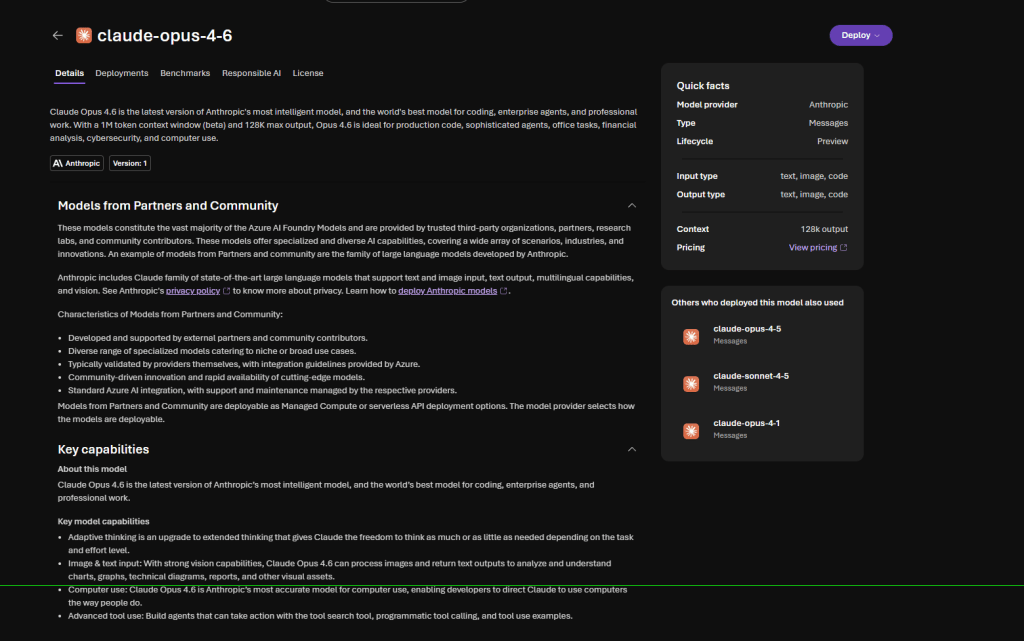
Claude Opus 4.6, Anthropic’s most intelligent model to date, is now available in Microsoft Foundry. This is superb news, this it opens up new possibilities for production-grade AI agents and enterprise workflows that demand both frontier intelligence and enterprise-grade governance.

If you’re building AI solutions that need to handle complex coding, sophisticated agents, or high-stakes enterprise work, this is a meaningful step forward.

Key Facts About Claude Opus 4.6

Claude Opus 4.6 represents a genuine advancement in what AI systems can reliably accomplish. It’s not a general-purpose model trying to do everything—it’s optimized for specific scenarios where reliability and depth of reasoning matter most.

The model brings new levels of reliability and precision to the most demanding enterprise tasks, with state-of-the-art performance across coding, agents, and professional workflows.

Key Capabilities That Set It Apart

1. Adaptive Thinking

The model dynamically decides when and how much to think based on task complexity, optimizing the balance between performance, latency, and cost. You can also manually control effort levels from low to max depending on your needs.

2. Production-Grade Coding

Opus 4.6 handles the full development lifecycle from architecture to deployment. It plans carefully, sustains effort across large codebases, and catches its own mistakes through improved code review and debugging skills. Senior engineers can delegate complex tasks with confidence.

3. Sophisticated Agents

This is the world’s best model for agentic workflows, orchestrating complex tasks across dozens of tools with industry-leading reliability. It proactively spins up sub-agents, parallelizes work, and drives tasks forward with minimal oversight.

In blind testing across 40 cybersecurity investigations, Claude Opus 4.6 produced the best results 38 out of 40 times compared to Claude 4.5 models.

4. Enterprise Workflows

Opus 4.6 sets the standard for enterprise workflows with professional polish and domain awareness. It excels at spreadsheets, slides, and documents—producing work that looks and reads like expert-created content.

5. Financial Analysis

The model surfaces insights that would take analysts days to compile, with the nuance and precision that compliance-sensitive work demands. When deployed through Microsoft Foundry, these workflows benefit from Azure’s security, compliance, and auditability.

6. Advanced Computer Use

Opus 4.6 is Anthropic’s most capable computer-use model, bringing deep reasoning to multi-step tasks that span multiple applications. It can interact with software, navigate interfaces, complete forms, and move data across applications—all running as secure, governed agents in Microsoft Foundry.

Deployment and Integration

Claude Opus 4.6 is available through serverless API or managed compute deployment options in Microsoft Foundry. The serverless API is particularly attractive for most enterprise scenarios with pay-as-you-go billing—you’re only charged for what you use.

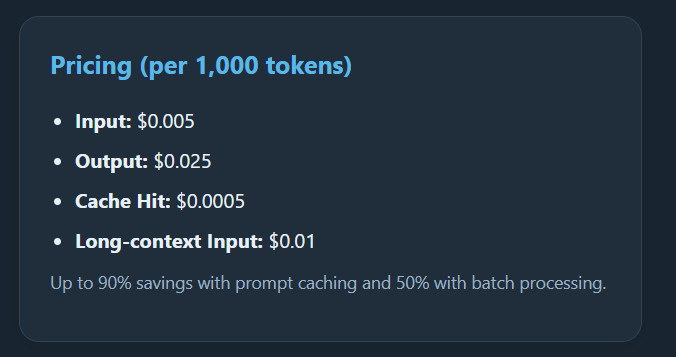
Pricing (Token-Based)

Input tokens: $0.005 per 1,000 tokens

Output tokens: $0.025 per 1,000 tokens

Cache hit tokens: $0.0005 per 1,000 tokens

Long-context input: $0.01 per 1,000 tokens

Anthropic offers up to 90% cost savings with prompt caching and 50% savings with batch processing, making it economically viable for large-scale deployments.

What Makes Foundry Deployment Powerful

The model integrates with Foundry IQ to access data from M365 Work IQ, Fabric IQ, and the web.

Key integration features:

Advanced tool use: Build agents with tool search, programmatic tool calling, and examples

Image & text input: Strong vision capabilities for charts, graphs, diagrams, and reports

Multilingual support: Works across English, French, Arabic, Mandarin, Japanese, Korean, Spanish, Hindi, and more

Azure security: Private networking, content filtering, and key-less authentication

Security and Data Handling

When you deploy Claude Opus 4.6 through Microsoft Foundry, your data stays within Microsoft’s infrastructure. Microsoft does not use your inputs or outputs to train models, and Anthropic does not have access to your data when the model is deployed in Azure.

Customer data may be processed in select regions but is only stored in US data centers. You benefit from:

Azure’s enterprise-grade security, compliance, and auditability

Private networking support

Content filtering capabilities

Enterprise governance and access controls

Use Cases Summary

ScenarioWhy Opus 4.6 ExcelsProduction CodeHandles full lifecycle from architecture to deployment with sustained effort across large codebasesSophisticated AgentsIndustry-leading reliability for orchestrating complex tasks across dozens of toolsOffice TasksProfessional polish for spreadsheets, slides, and documents with domain awarenessFinancial AnalysisSurfaces insights requiring days of analyst work with compliance-level precisionCybersecurityDeep reasoning for identifying subtle patterns and complex attack vectorsComputer UseMost capable model for complex workflows across multiple applications

The Bottom Line

The availability of Claude Opus 4.6 in Microsoft Foundry represents a genuine step forward for enterprise AI. This isn’t about incremental improvements—it’s about opening up scenarios that weren’t previously possible with the required level of reliability and governance.

For organizations building AI agents, working with production code, or deploying sophisticated workflows, this model offers a new benchmark in what’s achievable. The combination of Anthropic’s frontier intelligence with Microsoft Foundry’s enterprise infrastructure creates a compelling platform for deploying AI at scale.

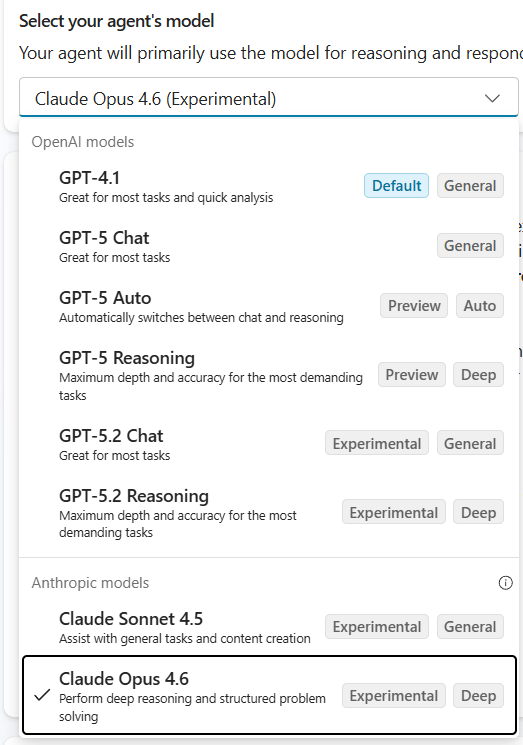
Ready to explore? You can start working with Claude Opus 4.6 in Microsoft Foundry and in Copilot Studio today.

Unknown's avatar

Published by Vesa Nopanen

Vesa “Vesku” Nopanen, Principal Consultant and Microsoft MVP (Microsoft 365 and Azure AI Foundry) working on Future Work at Sulava MEA.

I work, blog and speak about Future Work : AI, Microsoft 365, Copilot, Loop, Azure, and other services & platforms in the cloud connecting digital and physical and people together.

I have 30 years of experience in IT business on multiple industries, domains, and roles.
View all posts by Vesa Nopanen


Source link

Rosen Law Probes Balancer $100M Hack Over Possible Disclosure Gaps

0
Rosen Law Probes Balancer 0M Hack Over Possible Disclosure Gaps


Key Highlights

Rosen Law is investigating Balancer’s $100M November 2025 exploit for potential securities claims.Investors affected by the hack may be eligible to join a class action with no upfront fees.The exploit targeted Balancer V2 smart contract vulnerabilities; some funds were recovered, but full payouts are not confirmed.

The Rosen Law Firm, a US-based law firm that handles investor cases, is investigating possible claims following Balancer’s November 2025 hack. The firm says Balancer may have given wrong or misleading information to investors before the attack.

According to an official announcement, Rosen is looking into potential claims for anyone who purchased Balancer cryptocurrency (ticker: BAL) and could be entitled to compensation without paying any out-of-pocket fees.

How the hack happened

On November 3, 2025, Balancer, a decentralized finance protocol, lost more than $100 million in digital assets due to an exploit. Security firms PeckShield and Cyvers reported that the attacker’s wallet was still taking funds and that total losses had grown to around $128 million. 

The attack used weak points in Balancer’s V2 smart contracts, including calculation errors in the pools and problems with controlling access in the vault system. The hackers were able to change balances and take money across different chains very quickly.

Reimbursement plan for investors

Balancer paused some operations after the exploit and later made a plan to pay back the people who had lost their funds by giving back $8 million from the funds recovered.

The money would go only to people in the affected pools, based on how many Balance Pool Tokens they had before the attack. Some funds were also returned in-kind, and whitehat actors who helped recover funds were entitled to 10% bounties. While the reimbursement plan went through community review and governance discussions, full payouts have not been widely confirmed as of February 2026.

Rosen’s law’s role

Rosen Law encourages investors to seek qualified counsel and claims it has extensive experience in securities class actions. Since 2013, it has represented investors globally and has been ranked in the top four by ISS Securities Class Action Services. In 2019, the firm recovered over $438 million for investors, and founding partner Laurence Rosen was named a Titan of the Plaintiffs’ Bar in 2020.

Broader context 

The Balancer hack shows how risky investing in cryptocurrencies can be, especially when technical errors in smart contracts are exploited. Recovering funds through class actions gives investors a way to get some compensation when the platform fails to fully cover losses. Cases like this also push crypto companies to improve security and transparency, which could make the market safer in the future.

Also Read: Infini Hacker Reactivates Wallet to Buy Ethereum at Nine-Month Lows

Disclaimer: The information researched and reported by The Crypto Times is for informational purposes only and is not a substitute for professional financial advice. Investing in crypto assets involves significant risk due to market volatility. Always Do Your Own Research (DYOR) and consult with a qualified Financial Advisor before making any investment decisions.


Source link

xMoney Expands Domino’s Partnership to Greece, Powering Faster Checkout Experiences

0
xMoney Expands Domino’s Partnership to Greece, Powering Faster Checkout Experiences


Sponsored

Stories and Reviews

February 09, 2026

xMoney Expands Domino’s Partnership to Greece, Powering Faster Checkout Experiences

Vaduz, Liechtenstein, February 9th, 2026, Chainwire

xMoney ($XMN) is expanding its partnership with Domino’s, bringing its payment infrastructure to Domino’s Greece following a successful rollout in Cyprus.

The collaboration focuses on acquiring services, enabling Domino’s Greece to accept card payments and digital wallets, including Apple Pay and Google Pay, across both web and mobile ordering platforms.

At the core of the integration is xMoney’s embeddable checkout solution, designed to deliver a seamless payment experience without redirection. Customers complete their orders faster, while all sensitive payment data is securely handled by xMoney’s compliant infrastructure.

The expansion was announced in person at a community event hosted at SuiHub Athens – a community space established to support builders and Sui ecosystem partners – bringing together the xMoney and Sui teams, Domino’s representatives, and building on xMoney’s previously announced work with Sui to expand real-world payment access across Europe.

“Domino’s operates in a high-volume, real-time environment where speed and reliability are critical,” said Manos Tsouloufris, CTO of Daufood. “xMoney’s checkout solution supports multiple payment methods in a single, seamless flow, helping us serve customers faster at scale.”

While the current implementation focuses on fiat payments, the two teams are also exploring future possibilities around digital asset payments, where network speed, user experience, and confirmation times make sense for real-world commerce.

The launch in Greece represents the next step in a broader European expansion, reinforcing xMoney’s role as a trusted payments partner for brands that operate at scale and its presence within the Sui ecosystem reflects a growing focus on practical, consumer-facing payment experiences built for everyday use.

“When people order food, they don’t think about payments, and that’s exactly the point,” said Gregorious Siourounis, Co-Founder and CEO of xMoney. “Our role is to make checkout fast, reliable, and invisible, so brands like Domino’s can focus on their customers. Bringing this experience to Greece is a natural next step.”

As xMoney expands across markets and merchant use cases, XMN supports the broader ecosystem by aligning long-term participation and infrastructure growth across the network. Designed to sit alongside xMoney’s licensed payment rails, XMN helps structure how value, incentives, and future on-chain capabilities evolve, without impacting the simplicity of everyday checkout experiences.

Faster checkout. Less friction.

Payments that deliver.

About Domino’s

Founded in 1960, Domino’s Pizza is the largest pizza company in the world, with a significant business in both delivery and carryout pizza. It operates a network of company-owned and independent franchise stores in the United States and more than 90 international markets.

About xMoney

xMoney is revolutionizing the payments landscape with strategic European licenses, delivering a seamless, secure, and forward-thinking ecosystem powered by innovative product design, cutting-edge technology, and unwavering compliance. XMN, xMoney’s newly launched token, is natively integrated into the licensed and regulated payment infrastructure – empowering merchants and consumers with lightning-fast, trustworthy transactions underpinned by full regulatory transparency. Now trading on Kraken, KuCoin, MEXC, Bitvavo, Bluefin and other exchanges, XMN is primed for broader adoption with a robust pipeline of integrations ahead.

Contact details:

Website: www.xmoney.com 

Contact

Head of MarketingAlex RusxMoney[email protected]

Disclaimer

In line with the Trust Project guidelines, please note that the information provided on this page is not intended to be and should not be interpreted as legal, tax, investment, financial, or any other form of advice. It is important to only invest what you can afford to lose and to seek independent financial advice if you have any doubts. For further information, we suggest referring to the terms and conditions as well as the help and support pages provided by the issuer or advertiser. MetaversePost is committed to accurate, unbiased reporting, but market conditions are subject to change without notice.

About The Author

Chainwire is the top blockchain and cryptocurrency newswire, distributing press releases, and maximizing crypto news coverage.

More articles

Chainwire is the top blockchain and cryptocurrency newswire, distributing press releases, and maximizing crypto news coverage.


Source link

Popular Posts

My Favorites

How to Purchase Hyland Manor Property in Schedule 1

0
The Hyland Manor property is the new property in Schedule 1, added with the recent Cartel update. It is the most expensive property...