This page is designed to test your knowledge about Bitcoin. If you think you know Bitcoin well, try answering these questions to see how much you really understand about the cryptocurrency. Whether you are a beginner or an expert, this quiz will help you evaluate your understanding of blockchain technology, Bitcoin mining, and the history of Bitcoin. Take the quiz now and discover your level of expertise!
Follow us on TWITTER (X) and be instantly informed about the latest developments…
Alibaba has unveiled its latest artificial intelligence innovation, the “QwQ-32B” reasoning model. With an impressive 32.5 billion parameters, this model positions Alibaba as a formidable competitor to OpenAI.
Focusing heavily on AI technologies, Alibaba introduced the QwQ-32B model, which is currently in preview. According to the company, this new model outperforms OpenAI’s o1 mini model with its o1 preview version. At least, that’s the claim made by Alibaba.
The QwQ-32B boasts 32.5 billion parameters and can handle prompts of up to 32,000 words. Additionally, the model is designed to solve challenging mathematical problems using its advanced reasoning and logic capabilities.
However, It Is Not Without Problems
Despite its promising features, the QwQ-32B-Preview is not without flaws. Alibaba has acknowledged that the model occasionally suffers from freezes and low performance issues. These challenges, however, are not uncommon for advanced AI reasoning models.
Additionally, the QwQ-32B reflects the Chinese government’s views on certain topics. For instance, the model considers Taiwan to be part of China, aligning with official government policy.
Open Source Access with Limitations
Alibaba has licensed the QwQ-32B-Preview under an Apache 2.0 license, meaning organizations can utilize this AI model. However, there’s a catch: the QwQ-32B-Preview is not yet fully released. According to Alibaba, only certain components of the AI model are currently available for use.
The QwQ-32B showcases Alibaba’s commitment to advancing AI technologies, but the model’s limitations remind us that even cutting-edge AI systems have room for improvement.
You May Also Like
Follow us on TWITTER (X) and be instantly informed about the latest developments…
Tap-to-earn (T2E) has become one of the most talked-about concepts in the cryptocurrency world in 2024. As a sub-genre of the play-to-earn (P2E) model, tap-to-earn offers a new way for crypto investors and gamers to earn cryptocurrency: simply by clicking on the screen!
This concept has gained significant traction, particularly on Telegram, one of the world’s leading messaging platforms, and its associated The Open Network (TON) blockchain.
Click & Earn: What is Tap-to-Earn?
The cryptocurrency world offers numerous ways to earn income. On the serious side, there are methods like Bitcoin mining and Ethereum staking. On the fun side, there’s earning cryptocurrency through NFT games, which is part of the play-to-earn (P2E) model.
The play-to-earn model, meaning “play-to-win,” has already given rise to popular projects like Axie Infinity (AXS), Alien Worlds (TLM), Pixels (PIXEL), and Decentraland (MANA). However, this model has also inspired new variants like move-to-earn, which rewards movement. Then came tap-to-earn, which quickly became a sensation.
Tap-to-earn (T2E) refers to blockchain games where players earn cryptocurrency by simply clicking on the screen. These T2E blockchain games resemble clicker mobile games but add the exciting incentive of earning crypto.
Why Are Tap-to-Earn Games So Popular?
These projects, with their simple gameplay mechanics, aim to combine entertainment with financial rewards. They enhance playability by incorporating engaging stories and characters. The appeal of tap-to-earn games can be summarized in three main features:
Simplicity: Earning cryptocurrency with tap-to-earn games requires no special gaming skills. Anyone can earn tokens by simply clicking on the screen or an icon.
Accessibility: Most tap-to-earn games are free to play. While players can purchase items to boost their cryptocurrency earnings, these are typically bought using in-game tokens. Essentially, anyone with a smartphone can access these click-to-earn games.
Financial Incentive: Unlike competitive NFT games or those requiring significant investments, tap-to-earn games provide users with an easy and low-competition way to earn cryptocurrencies, making them appealing to a broad audience.
The Open Network (TON), Telegram, and Earning Cryptocurrencies
The most popular tap-to-earn games have been developed on the TON blockchain network, which originated from Telegram. The Telegram ecosystem has become the hub for tap-to-earn projects thanks to its user-friendly infrastructure, including features like chatbots and TON blockchain-compatible tools such as cryptocurrency wallets.
Although TON is now managed by the TON Foundation rather than Telegram, the messaging app remains a key platform for tap-to-earn games. Some of the most popular tap-to-earn games, such as Notcoin (NOT) and Hamster Kombat (HMSTR), are played via Telegram and operate on the TON blockchain.) orHamster Kombat (HMSTR), are played via Telegram and run on the TON network.
Best Tap-to-Earn Games
Among the most popular cryptocurrency projects of 2024, tap-to-earn games have made a significant impact. Here are some of the best tap-to-earn games you can explore!
Notcoin (NOT)
Notcoin (NOT), one of the first tap-to-earn games, has played a key role in increasing the popularity of the TON ecosystem. With over 6 million daily active users, the NOT token quickly became one of the most popular gaming tokens.
So, what is Notcoin? In this game, users interact with a Telegram chatbot and earn NOT tokens by clicking on an image of a gold coin. Players can exchange 1 NOT token for 1,000 in-game tokens.
Hamster Kombat (HMSTR)
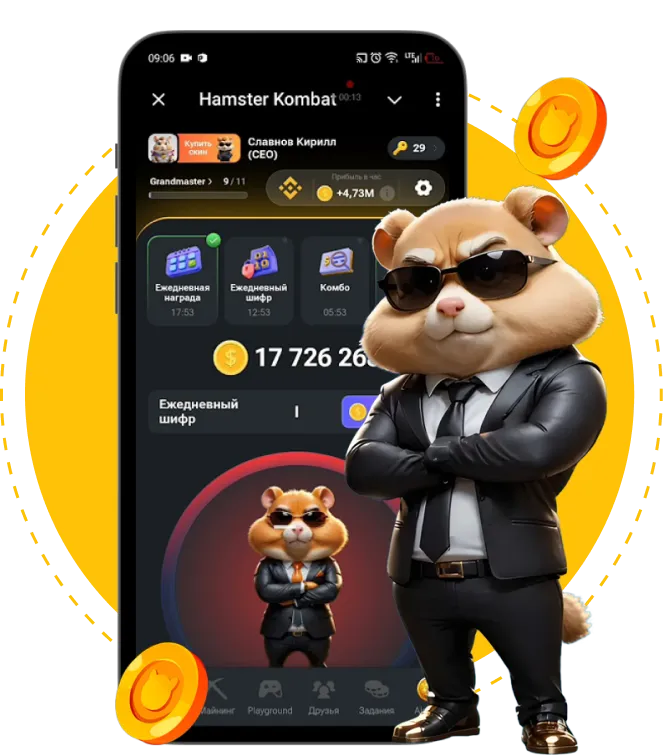
Another Telegram-based game, Hamster Kombat (HMSTR), is among the most popular tap-to-earn projects, boasting over 100 million users. Players assume the role of a hamster who is the CEO of a fictional crypto exchange. By clicking on a hamster image, they accumulate tokens, which can be used to buy boosters and multiply their income.
What sets Hamster Kombat apart is its competitive mechanics. Players can engage in battles with each other to increase their cryptocurrency income, making it more interactive than other tap-to-earn games.
TapSwap (TAPS)
TapSwap (TAPS) is another exciting tap-to-earn game, where players collect coins called “stakes” by clicking on the screen. These stakes can be converted into TAPS tokens. Like Notcoin, TapSwap is played on Telegram and has amassed over 50 million users in a short period.
Pixelverse (PIXFI)
Set in a cyberpunk-themed environment, Pixelverse (PIXFI) offers players the chance to earn cryptocurrency by clicking on the screen, completing various missions, and participating in battles.
Pixelverse also features its own NFTs, which run on the TON blockchain and add depth to the gameplay. This unique combination of missions, battles, and collectibles makes Pixelverse a standout in the tap-to-earn genre.
Yescoin (YES)
Yescoin (YES) stands out from other tap-to-earn games on Telegram by replacing “clicking” with “swiping,” introducing the innovative concept of swipe-to-earn.
Players move their fingers across the screen to collect small pixel tokens and climb the ranks in various leagues. These in-game coins can be converted into YES tokens, which can then be exchanged for fiat currencies. This fresh approach adds a dynamic twist to the tap-to-earn model.
These games highlight the growing diversity and innovation within the tap-to-earn ecosystem. Whether you’re a fan of simple mechanics or competitive strategies, there’s a tap-to-earn game for everyone!
You May Also Like
Follow us on TWITTER (X) and be instantly informed about the latest developments…
As the play-to-earn concept gains popularity, Alien Worlds (TLM) allows players to easily earn cryptocurrency. Alien Worlds, a space-themed cryptocurrency mining game, stands out with its innovative governance model and engaging gameplay.
In this article, we will first explain what Alien Worlds is and then guide you on how to play it.
What is Alien Worlds?
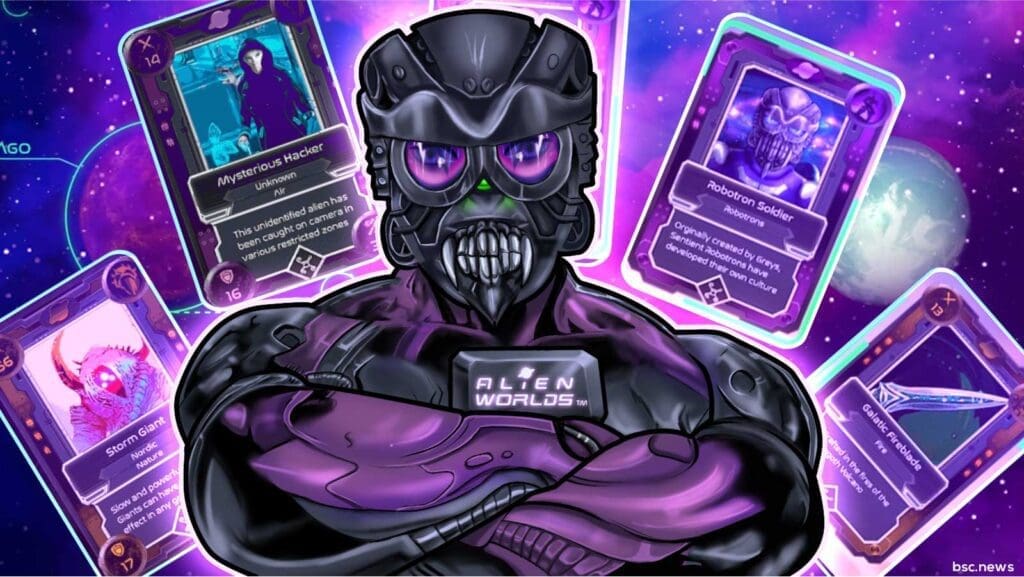
Alien Worlds (TLM) is a mining-themed play-to-earn metaverse game set in space, built on the WAX blockchain network. Set in a post-apocalyptic future where Earth is ravaged by epidemics, the game’s goal is to mine Trilium (TLM) tokens in a new star system consisting of six planets. Players mine using tools represented as NFTs.
Mining activities take place on lands located on planets, which are owned by users and can be traded as NFTs. Landowners earn a share of the income from mining conducted on their lands.
One of the most unique aspects of Alien Worlds is its governance system. Each planet operates as a DAO (Decentralized Autonomous Organization). Users who stake TLM tokens on these planets gain a voice in the planet’s governance. They can even be elected to the Planetary Council, responsible for managing the planets. In Alien Worlds, governance becomes an integral part of the game experience.
What is the TLM Token?
The TLM token is the in-game governance and utility token of Alien Worlds. Players earn TLM tokens through gameplay, which can later be converted into fiat money via cryptocurrency exchanges such as Binance or Kucoin.
The TLM token is also essential for participating in the governance system of Alien Worlds. By staking TLM tokens, players gain decision-making power in the game. Additionally, staking TLM tokens allows players to earn staking rewards. TLM token holders can also participate in tasks to win more TLM tokens or NFTs. The maximum supply of TLM tokens is set at 10 billion.
How to Play Alien Worlds?
Playing Alien Worlds is straightforward, similar to many other metaverse and play-to-earn games. All you need is a WAX cryptocurrency wallet. Once you create a WAX Cloud Wallet account, visit alienworlds.io and log in with your wallet credentials.
Alien Worlds is free to play. Upon logging in, you’ll receive an NFT shovel, which you can use to mine TLM on any planet or terrain of your choice. However, the shovel is the most basic tool in the game, making it difficult to earn significant amounts of TLM. To improve your earnings, you may need to invest in better NFT tools that suit your strategy. Players can equip up to three tools at once for mining.
Alien Worlds Mining Strategies
When playing Alien Worlds, players can choose between two primary strategies: TLM mining or NFT mining.
TLM Mining: This is the core focus of the game, where players mine Trilium tokens to earn rewards.
NFT Mining: Players can opt to mint NFTs during their mining activities. While unique NFTs are harder to obtain, they can yield significant profits.
Both tools and lands have unique characteristics that affect your mining strategy. For example, some tools and lands are better suited for NFT mining, while others may optimize TLM mining.
A critical aspect to consider is the cooldown period of tools. Tools with longer cooldowns typically extract more TLM in a single session. However, players who prefer more frequent mining may choose tools with shorter cooldowns to maximize attempts.
How to Get Alien Worlds NFTs?
Alien Worlds NFTs can be bought and sold on the Atomic Hub marketplace, which is widely used for games on the WAX blockchain.
To purchase an Alien Worlds NFT, connect to the Atomic Hub website using your WAX wallet and select Alien Worlds from the menu. You can then browse and buy any NFT with your WAX coins. Purchased NFTs will be instantly transferred to your WAX wallet and will appear in your in-game account shortly after.
You May Also Like
Follow us on TWITTER (X) and be instantly informed about the latest developments…
Bitcoin (BTC) and cryptocurrencies continue to attract the attention of governments worldwide. In Brazil, a member of the House of Representatives has drafted a bill to create a Bitcoin reserve. This bill proposes establishing a national Bitcoin reserve that would account for 5% of the South American country’s international reserves.
Bitcoin Reserve Bill in Brazil
On Nov. 25, Eros Biondini, a member of Brazil’s Chamber of Deputies from the Liberal Party, submitted a bill to the federal legislature to create a BTC reserve called the Sovereign Strategic Bitcoin Reserve (RESBit). According to the bill, RESBit will account for 5% of the country’s international reserves and diversify its assets. Biondini argues that this reserve will also support DREX, Brazil’s central bank digital currency (CBDC).
The draft law stipulates that RESBit will be managed jointly with the Central Bank of Brazil and the Ministry of Finance, and that it will be stored in cold wallets that are not connected to the internet for increased security.
In the text of the draft law, Biondini explains the strategic importance of establishing RESBit in the following words: “The establishment of RESBit is a strategic measure that positions Brazil at the forefront of the new digital economy, reduces economic risks, and expands opportunities for technological and financial development.”
Part of the bill includes efforts to increase financial literacy for digital assets. Accordingly, training programs will be organized to inform the public about digital assets, especially cryptocurrencies.
Brazil has entered the world of digital assets with its CBDC, DREX. Additionally, the country is conducting studies on artificial intelligence technologies.
You May Also Like
Follow us on TWITTER (X) and be instantly informed about the latest developments…
Published: November 28, 2024 at 2:01 am Updated: November 28, 2024 at 2:01 am
by Ana
Edited and fact-checked:
November 28, 2024 at 2:01 am
To improve your local-language experience, sometimes we employ an auto-translation plugin. Please note auto-translation may not be accurate, so read original article for precise information.
In Brief
Bitget Wallet announced a month-long event focused on Meme coin trading throughout November, with a prize pool valued at up to $350,000.
Non-custodial Web3 wallet and decentralized platform Bitget Wallet announced a month-long event focused on Meme coin trading throughout November, with a prize pool valued at up to $350,000. The event consists of two main segments: the Meme Project Competition and the Bitget Swap Trading Carnival.
For the Meme Project Competition, Bitget Wallet has partnered with Unizen to host an initiative tailored for Meme project teams. This segment will identify and reward standout Meme projects each week. Winning teams will receive a share of the allocated prize pool.
The competition will run for four weeks and is open to project teams and community members supporting their chosen Meme projects. Registered participants will compete weekly, with 2–4 projects selected as winners each round.
Each week, a prize pool of $20,000 will be available. Winning projects will claim 80% of the prize, while non-winning projects will receive the remaining 20%. Additionally, shortlisted projects will gain visibility on Bitget Wallet’s Trend List (featured for one day) and in an official Twitter announcement.
In order to participate, users are encouraged to register. Projects successfully entering the competition will undergo weekly head-to-head challenges over four consecutive weeks. Winning projects can claim the majority share of the prize pool.
‘Meme Project Tournament’: Evaluation Criteria And Reward Distribution
Evaluation criteria for shortlisted projects include factors such as market capitalization, social media engagement, 24-hour trading volume, number of token holders, and whether the project adheres to a fair-launch model.
Rewards will be distributed to projects to support continued development, enhance liquidity for smaller-cap projects, or benefit Meme projects under Community Take Over (CTO) initiatives. In these cases, key opinion leaders (KOLs) and core community builders will receive allocations. Active traders engaging through Bitget Wallet Swap may also be eligible for airdrops.
All rewards are provided by Unizen, totaling 800,000 ZCX. However, the value of rewards may fluctuate based on market conditions at the time of distribution.
Bitget Wallet is widely acknowledged as a leading non-custodial Web3 wallet and decentralized ecosystem platform worldwide. In addition to its Swap function, it offers features such as multi-chain asset management, smart money insights, a Launchpad, an Inscriptions Center, and an Earning Center. The platform supports over 100 major blockchains, more than 250,000 tokens, and a diverse range of decentralized applications (dApps).
Disclaimer
In line with the Trust Project guidelines, please note that the information provided on this page is not intended to be and should not be interpreted as legal, tax, investment, financial, or any other form of advice. It is important to only invest what you can afford to lose and to seek independent financial advice if you have any doubts. For further information, we suggest referring to the terms and conditions as well as the help and support pages provided by the issuer or advertiser. MetaversePost is committed to accurate, unbiased reporting, but market conditions are subject to change without notice.
About The Author
Alisa, a dedicated journalist at the MPost, specializes in cryptocurrency, zero-knowledge proofs, investments, and the expansive realm of Web3. With a keen eye for emerging trends and technologies, she delivers comprehensive coverage to inform and engage readers in the ever-evolving landscape of digital finance.
More articles
Alisa Davidson
Alisa, a dedicated journalist at the MPost, specializes in cryptocurrency, zero-knowledge proofs, investments, and the expansive realm of Web3. With a keen eye for emerging trends and technologies, she delivers comprehensive coverage to inform and engage readers in the ever-evolving landscape of digital finance.
Published: November 27, 2024 at 10:30 am Updated: November 27, 2024 at 10:11 am
by Ana
Edited and fact-checked:
November 27, 2024 at 10:30 am
To improve your local-language experience, sometimes we employ an auto-translation plugin. Please note auto-translation may not be accurate, so read original article for precise information.
In Brief
Sophon announced plans to launch its mainnet on December 18, providing users with access to mobile games, AI agent platforms, prediction markets, a memecoin launchpad, and more.
Entertainment-focused blockchain platform Sophon announced its plans to launch its mainnet on December 18th.
The mainnet will provide users access to a variety of features, including ticketing, mobile games, AI agent platforms, prediction markets, exchanges, bridges, a memecoin launchpad, and more. Following the launch, the platform will deliver a curated entertainment experience, with established games deploying on the blockchain.
In conjunction with the announcement, Sophon shared key dates for Guardians. Know Your Customer (KYC) registration will open on December 4th, with the Guardian application launching on December 18th. From December 18th to 31st, the window for claiming and delegating Guardian Membership will be open. Starting January 1st, Node rewards will begin accruing while claiming and delegation will remain open. The Token Generation Event (TGE) and the claim for accrued rewards are scheduled for Q1 2025.
The SOPH token will be deployed alongside the mainnet on December 18th in two phases. The first phase will provide a fully gasless experience to test the network’s stability. During the Genesis phase, SOPH will be live but non-transferable to ensure a secure and stable launch. Guardians will begin accruing rewards from January 1st, even during this non-transferable period. In the second phase, expected to start in Q1 2025, SOPH will become fully transferable and will continue to serve as the network’s gas token. The vesting period for investors and the team will commence when the official TGE begins.
What Is Sophon?
Sophon is built on the zero-knowledge stack, a technology aimed at supporting a wide range of high-throughput applications, including AI and gaming. This blockchain is designed to facilitate seamless interactions between developers and users, with support from partners like zkSync, Beam, Zentry, and Aethir.
In March, Sophon raised $10 million in funding from Paper Ventures and Maven11, with additional backing from Spartan, SevenX, OKX Ventures, and Huobi Ventures, all contributing to the development of its decentralized infrastructure.
Disclaimer
In line with the Trust Project guidelines, please note that the information provided on this page is not intended to be and should not be interpreted as legal, tax, investment, financial, or any other form of advice. It is important to only invest what you can afford to lose and to seek independent financial advice if you have any doubts. For further information, we suggest referring to the terms and conditions as well as the help and support pages provided by the issuer or advertiser. MetaversePost is committed to accurate, unbiased reporting, but market conditions are subject to change without notice.
About The Author
Alisa, a dedicated journalist at the MPost, specializes in cryptocurrency, zero-knowledge proofs, investments, and the expansive realm of Web3. With a keen eye for emerging trends and technologies, she delivers comprehensive coverage to inform and engage readers in the ever-evolving landscape of digital finance.
More articles
Alisa Davidson
Alisa, a dedicated journalist at the MPost, specializes in cryptocurrency, zero-knowledge proofs, investments, and the expansive realm of Web3. With a keen eye for emerging trends and technologies, she delivers comprehensive coverage to inform and engage readers in the ever-evolving landscape of digital finance.
Apple’s smart cameras, expected to hit the market in 2026, will not need to see people’s faces in order to recognize them.
According to recent reports, Apple is set to launch a smart camera in 2026. It has been stated that Apple Intelligence‘s artificial intelligence tools could be utilized in this camera. Newly revealed patents also indicate that Apple is planning to move in this direction. There are already security cameras that leverage artificial intelligence features, such as human recognition. Apple, however, aims to take things a step further, so much so that its cameras will be able to recognize individuals without even seeing their faces.
Will Be Able to Recognize People Without Seeing Their Faces
According to Apple’s new patent, the security camera will be more advanced than traditional facial recognition technology. It will be able to identify a person even if their face isn’t visible. The system will record the body characteristics of individuals it identifies, including recognizing clothes and learning their body shape.
According to the patent, this data will be stored in the memory of the security camera for varying periods of time. For example, clothing details will be stored in the camera’s memory for only one day, while body structure data may be stored for a longer duration. The system will also be able to analyze movement traces, such as how a person walks.
With this technology, Apple will be able to identify contacts even when their faces are not visible. However, it is important to remember that many technologies patented by Apple and other tech giants have not always made it to the final product.
You May Also Like
Follow us on TWITTER (X) and be instantly informed about the latest developments…
Artificial intelligence, which has become an integral part of our lives, seems to be making significant strides in the field of medicine with advancing technology.
This raises a critical question: Should we trust the health advice given by artificial intelligence? Let’s explore the answer together.
Concerns about the rapidly advancing artificial intelligence technology are growing in parallel.
In fact, many people are already benefiting from this technology in various ways. Recently, there has been an increasing number of people turning to AI for guidance on their diet, exercise programs, or any other health conditions. Are you one of them?
This service works quite effectively and makes our lives easier. However, there are also many areas where artificial intelligence can be wrong. The healthcare sector is one of those areas.
The fact that artificial intelligence has been frequently “hallucinating” lately only adds to the uncertainty surrounding the technology.
In other words, AI is beginning to generate non-existent or false information. This raises concerns, especially in critical sectors like healthcare, where misinformation can have serious consequences. After all, if we found out that a doctor had given us wrong or incomplete information, we would likely seek another opinion.
Optimistically, the future of AI looks promising due to the development of models trained on validated medical literature and patient data. Developing tools in this area may further support this progress.
AI aims to provide tailor-made healthcare solutions by using multiple data sources.
According to Oishi Banerjee from Harvard University, artificial intelligence could analyze patients’ medical histories and data from wearable devices to provide accurate treatment recommendations.
However, this will only be possible after implementing an accurate and secure data collection system in the future. If this technology in medicine evolves to the point where people no longer need to physically visit clinics, it could potentially threaten the future of the healthcare sector.
Do you think we should trust the health advice that AI will give?
You May Also Like
Follow us on TWITTER (X) and be instantly informed about the latest developments…
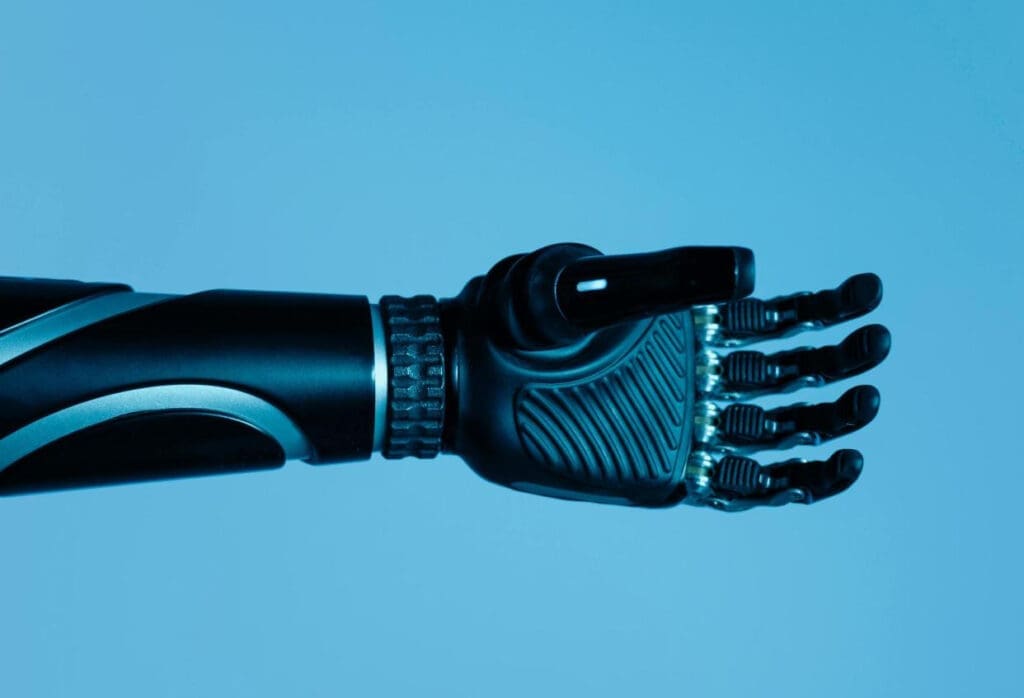
Neuralink, the company behind Elon Musk’s brain chip, has shared details about its upcoming experiment. The company plans to attempt controlling a robotic arm through the implant.
Led by Elon Musk, Neuralink set out to create a brain-computer interface and has successfully implanted chips in the brains of two individuals so far. These experiments were successful, allowing the participants to think and control computers. Now, new information has emerged about Neuralink’s next plans. The company has made a statement announcing that its implant has been approved for a brand-new trial.
The Robotic Arm Will Be Controlled
Neuralink’s new tests aim to use the brain chip to control robotic arms. In this context, researchers will attempt to control a robotic arm for research purposes using the implant. Musk refers to this experiment as the “Luke Skywalker solution,” referencing the iconic Star Wars character with a robotic arm.
Neuralink described this new experiment as “an important step towards restoring not only digital freedom, but also physical freedom.” There is no official information yet on when the experiments will begin.
It’s not surprising that this kind of initiative is coming from Neuralink. One of its main goals is to restore full body movements to individuals who have suffered from conditions like spinal cord injuries and strokes.
You May Also Like
Follow us on TWITTER (X) and be instantly informed about the latest developments…
Electronic Arts has officially announced Madden NFL 26, revealing details about the various versions you can pre-order and what platforms the football sim...