Metaverse

Home Metaverse Page 243

Crypto Whales Lose Faith In XRP Price Amid SEC Struggle, Move Into WallitIQ (WLTQ) For 6,000% Returns Over Shiba Inu

0
Crypto Whales Lose Faith In XRP Price Amid SEC Struggle, Move Into WallitIQ (WLTQ) For 6,000% Returns Over Shiba Inu


Crypto Whales Lose Faith In XRP Price Amid SEC Struggle, Move Into WallitIQ (WLTQ) For 6,000% Returns Over Shiba Inu

The lackluster XRP price action resulting from the ongoing Ripple and SEC struggle has made crypto whales wary. These crypto whales are notably shifting from the XRP price toward WallitIQ (WLTQ) for its potential to provide 6,000% returns over Shiba Inu (SHIB).

Why Wallit (WLTQ) Can Deliver 6,000% Returns To Crypto Whales

There’s been an increasing demand for an effective crypto wallet, especially among crypto whales. Wallit (WLTQ) uses AI and machine learning algorithms to provide a decentralized crypto wallet that addresses the major challenges in existing wallets.

The WallitIQ (WLTQ) wallet will be protected by intelligent security measures, such as Escrow-Connect by AI-Einstein, which will intercept connections between external dApps and users’ wallets to perform a thorough security analysis. 

The wallet will also include advanced Anomaly Detection and Behavioral Analysis. Here, its AI will create a behavior profile for each user, and any anomalies in behavior will trigger alerts, detecting potential security breaches before they occur.

WallitIQ (WLTQ) will also help crypto whales make informed investment decisions through its AI-driven crypto education and portfolio management. The wallet’s AI will conduct an analysis of users’ portfolio and market data to identify strengths, deficiencies, and potential paths to increased profits. 

Crypto whales and investors can increase their crypto knowledge through WallitIQ’s AI, which will curate education content to suit every experience level and investment goal. With many financial processes moving to DeFi, WallitIQ (WLTQ) has pioneered a Physical 2 Digital (P2D) technology that will enable users to digitize and store in their decentralized wallet vital items such as passports, driver’s licenses, and ID cards.

Despite being in the first stage of its presale, WallitIQ (WLTQ) has already received a listing on CoinMarketCap and the integrity of its smart contract verified by a SolidProof analysis. Stage 1 is close to 50% done, with WLTQ tokens selling at $0.0171 and a profit of more than 405% expected upon launch.

With its pioneering technology, low market cap, growing community of investors, and relatively low entry price, WallitIQ (WLTQ) could deliver 6,000% returns to crypto whales.

Crypto Whales Lose Faith In XRP Price Amid SEC Struggle, Move Into WallitIQ (WLTQ) For 6,000% Returns Over Shiba Inu

Crypto Whales Lose Faith In XRP Price Amid SEC Struggle

According to James K. Filan, the SEC filed a petition for a deadline extension for its appeal brief until January 15, 2025 on October 24 after missing the court’s appeal brief submission deadline. The potential delay from the SEC petition has stalled hopes of a near-term recovery for the XRP price.

Over the past month, the XRP price has declined by over 15%, trading at $0.5255 at the time of writing. The XRP price has also remained in a confined range in October, failing to break the resistance at $0.55 several times. The bearish XRP price action and SEC struggles have caused major movements among crypto whales.

According to Santiment’s data, crypto whales with between 10 million and 1 billion XRP tokens have sold 700 million XRP since October 19, valued at approximately $357 million. This extensive liquidation has pushed the crypto whales’ XRP holdings down to 15.78 billion tokens, their lowest level since early August. 

Shiba Inu (SHIB) Price Outlook

The daily chart shows that the Shiba Inu (SHIB) price has increased inside an ascending parallel channel since August. Shiba Inu (SHIB) faced a rejection from the resistance trend line on September 27, sparking a decline. While Shiba Inu (SHIB) briefly bounced from the channel’s midline, it formed a lower high on October 19, confirming the $0.0000195 level as a key resistance. 

The Relative Strength Index (RSI) for Shiba Inu (SHIB) is on the verge of dipping below 50, and the Moving Average Convergence/Divergence (MACD) has turned bearish. If Shiba Inu (SHIB) has indeed entered wave C, its price may descend to around $0.0000144 before finding support that potentially sets the stage for a renewed uptrend.

Conclusion

Crypto whales and investors who have lost faith in the XRP Price amid the SEC struggle could consider moving to WallitIQ (WLTQ) for potentially 6,000% returns over Shiba Inu (SHIB).

Join the WallitIQ (WLTQ) presale and community: 

Join WallitIQ (WLTQ) Presale

Join the WallitIQ (WLTQ) Community

Disclaimer

In line with the Trust Project guidelines, please note that the information provided on this page is not intended to be and should not be interpreted as legal, tax, investment, financial, or any other form of advice. It is important to only invest what you can afford to lose and to seek independent financial advice if you have any doubts. For further information, we suggest referring to the terms and conditions as well as the help and support pages provided by the issuer or advertiser. MetaversePost is committed to accurate, unbiased reporting, but market conditions are subject to change without notice.

About The Author


Gregory, a digital nomad hailing from Poland, is not only a financial analyst but also a valuable contributor to various online magazines. With a wealth of experience in the financial industry, his insights and expertise have earned him recognition in numerous publications. Utilising his spare time effectively, Gregory is currently dedicated to writing a book about cryptocurrency and blockchain.

More articles


Gregory, a digital nomad hailing from Poland, is not only a financial analyst but also a valuable contributor to various online magazines. With a wealth of experience in the financial industry, his insights and expertise have earned him recognition in numerous publications. Utilising his spare time effectively, Gregory is currently dedicated to writing a book about cryptocurrency and blockchain.



Source link

Layer 1 Blockchains or Layer 2 Solutions The Intense Debate Over the Future of Blockchain Scalability

0
Layer 1 Blockchains or Layer 2 Solutions The Intense Debate Over the Future of Blockchain Scalability


In Brief

The blockchain industry, initially based on Layer 1 blockchains like Bitcoin and Ethereum, is evolving with the emergence of Layer 2 solutions, addressing scaling challenges and potential drawbacks.

Layer 1 Blockchains or Layer 2 Solutions The Intense Debate Over the Future of Blockchain Scalability

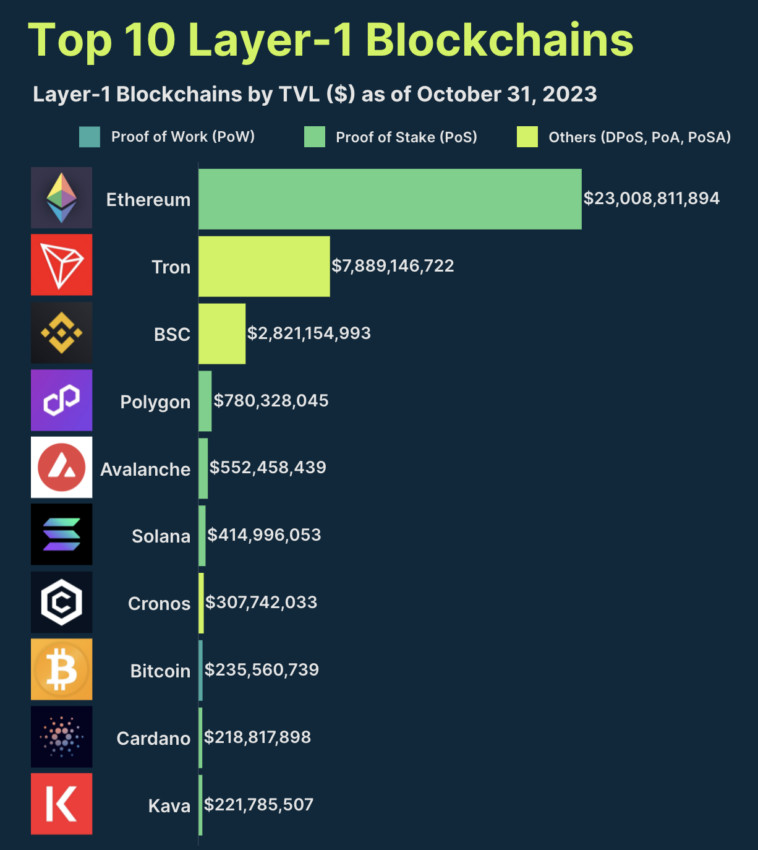
Originally based on innovative Layer 1 (L1) blockchains like Bitcoin and Ethereum, the blockchain industry has grown into a vast ecosystem with other L1 projects that all promise innovation, scalability, and decentralization. However, in a market that is becoming more and more cluttered, the growth of new L1 chains has brought up concerns over the true worth of these initiatives.

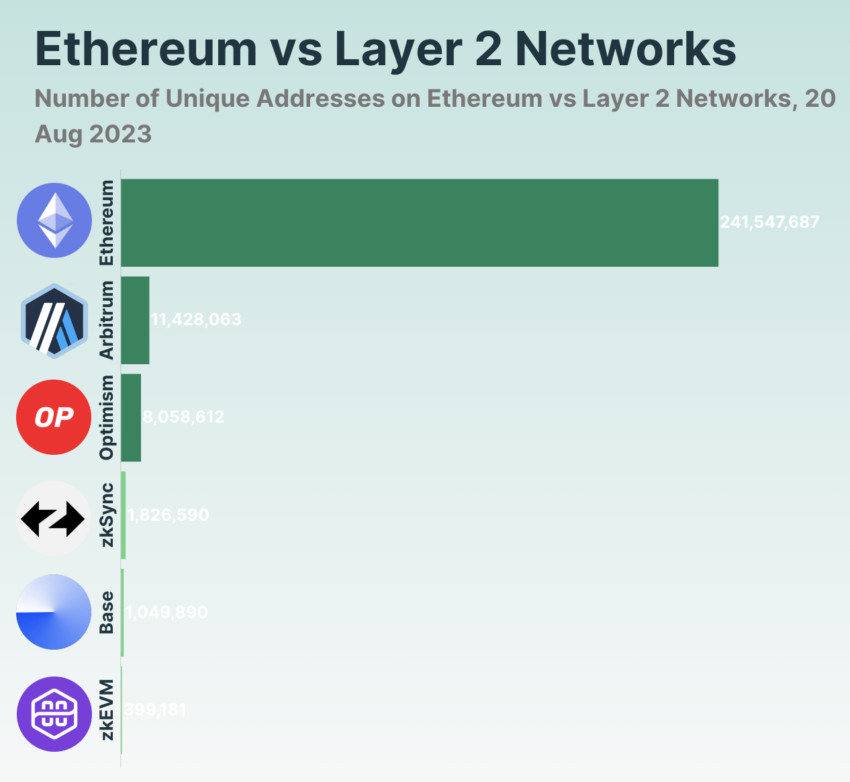
The dynamics of the area are also being altered by the emergence of Layer 2 (L2) solutions, which emphasize the possible disadvantages of an overloaded L1 environment while offering fresh answers to scaling problems.

The Purpose of Layer 1 Blockchains and Their Development

Decentralized apps (dApps) are made possible by Layer 1 blockchains, which are fundamental protocols that make up the basic layer of blockchain networks and support a variety of protocols. The emergence of the most well-known L1 blockchains, such as Ethereum and Bitcoin, opened the door for the current wide range of L1 solutions. These systems seek to address the three main issues with blockchain: decentralization, security, and scalability. Usually, every new L1 blockchain makes a claim to provide special answers to these problems, ranging from increased throughput to reduced transaction costs.

Skale Labs co-founder Jack O’Holleran draws attention to this concentration of market activity, pointing out that although the L1 ecosystem has expanded, very few initiatives have commercial momentum. Given the intense rivalry and resource-intensive difficulty of creating a blockchain from scratch, O’Holleran contends that merely releasing a new L1 chain is insufficient to garner sustained interest or participation.

Is the Ecosystem Being Overcomplicated by New Layer 1 Chains?

Some have begun to wonder if the ecosystem is getting too difficult due to the growing number of L1 blockchains. Users and developers may find it challenging to manage the fragmented environment created by the launch of each new L1 chain, which carries with it new tokens, user experiences, and frequently distinct sets of protocols. According to O’Holleran, a lot of new L1 ventures are having trouble getting off the ground and are depending on tactics like airdrops to get consumers in without attaining steady growth or a sizable market share.

Interoperability and liquidity are further complicated by an overabundance of L1 platforms. It becomes more difficult for assets to flow easily across platforms with each new chain that doesn’t mesh well with the networks that already exist.

For instance, certain L1 blockchains may unintentionally divide the liquidity offered by other platforms, even while they may address certain scalability concerns. Because users must traverse several chains to access assets and applications—often via third-party bridges that pose security risks—this fragmentation leads to a less integrated market structure.

Layer 1 Blockchains or Layer 2 Solutions The Intense Debate Over the Future of Blockchain Scalability

The natural rivalry in the L1 space might also hinder innovation. Instead of enhancing and expanding upon current platforms, the emphasis frequently moves toward developing the next “breakthrough” blockchain due to the abundance of initiatives competing for attention. This fragmented strategy may result in a vicious cycle whereby new initiatives surface, attract early enthusiasm but eventually find it difficult to stay relevant in the face of well-established behemoths like Ethereum.

The Case for L1 Development’s Ongoing Innovation

Notwithstanding these concerns, several industry insiders think that innovation depends on the ongoing development of new L1 blockchains. According to Charles Wayn, co-founder of Galxe and Gravity, the emergence of new L1 chains is a logical development in the blockchain world, giving developers a chance to tackle certain problems that more established blockchains could encounter. With an emphasis on cross-chain interactions, Wayn’s firm recently introduced Gravity, its own L1 solution, to solve scalability difficulties.

According to Wayn, newer L1 blockchains can provide reduced costs and increased transaction throughput, whereas older blockchains are limited in their usefulness by issues like congestion and high transaction fees. In order to improve security and privacy, several more recent L1 blockchains also include modern technologies such as Zero-Knowledge Proofs. These technologies make the case for new, specialized L1 blockchains by addressing certain demands that incumbent L1 blockchains would not prioritize.

Emerging L1 initiatives like Gravity seek to close the gaps left by general-purpose blockchains like Ethereum by concentrating on specialized features or applications. Wayn claims that by placing a strong focus on specialization, developers may produce apps that are suited to certain market niches while simultaneously increasing the ecosystem’s adaptability. Although these specialized blockchains may initially cater to a smaller user base, they are better able to meet niche demands than more general L1 platforms because of their concentration on certain features.

Layer 2 Solutions: A Good Substitute?

Although there is ongoing discussion on the merits of new L1 blockchains, Layer 2 (L2) solutions are becoming a more and more well-liked substitute for dealing with scalability problems. Without requiring a completely new chain, L2 solutions expand the capabilities of current L1 blockchains by operating on top of them. Caldera co-founder and CEO Matt Katz supports L2 solutions because he sees them as a workable and effective approach to solving scaling issues without the drawbacks of expanding the ecosystem with more L1s.

Layer 1 Blockchains or Layer 2 Solutions The Intense Debate Over the Future of Blockchain Scalability

Rollups and state channels are examples of L2 solutions that relieve the main chain of part of the transactional and computational burden. They can lower prices and boost throughput without sacrificing security by doing this. For instance, Katz’s business offers a “rollup-as-a-service” platform that enables programmers to swiftly build Ethereum L2 chains. This method avoids the difficulties involved in building a stand-alone blockchain while giving developers flexibility and scalability.

Katz further highlights the interoperability benefit of L2 solutions over new L1 chains. L2 solutions, like Ethereum, are intended to integrate easily with their parent chains, in contrast to the majority of L1 blockchains. This compatibility lowers the danger of liquidity fragmentation by enabling them to benefit from the security and liquidity of their parent chains without the need for independent bridges. Katz claims that this interoperability makes it possible for an environment that is more unified and easy to use, with fewer obstacles when transferring assets between chains.

Is There a Middle Ground for the Industry?

The blockchain industry must make a crucial decision in the future because both L1 and L2 solutions have unique advantages and difficulties. L1 blockchains, which offer crucial security and decentralization, are, on the one hand, the fundamental layer on which decentralized applications and protocols are constructed. However, L2 solutions offer a practical means of improving scalability without having to deal with the difficulties of developing brand-new, stand-alone blockchains.

According to O’Holleran, the market will inevitably weed out weaker L1 chains, leaving only those that provide genuine value. He believed that this self-regulating system may lessen fragmentation and simplify the environment. Wayn, however, argues that the development environment should remain flexible and dynamic and that innovation should not be constrained by the launch of additional L1 blockchains. Katz, on the other hand, believes that the emergence of L2 solutions would help to streamline the blockchain environment by reducing the need for more L1s.

Disclaimer

In line with the Trust Project guidelines, please note that the information provided on this page is not intended to be and should not be interpreted as legal, tax, investment, financial, or any other form of advice. It is important to only invest what you can afford to lose and to seek independent financial advice if you have any doubts. For further information, we suggest referring to the terms and conditions as well as the help and support pages provided by the issuer or advertiser. MetaversePost is committed to accurate, unbiased reporting, but market conditions are subject to change without notice.

About The Author


Victoria is a writer on a variety of technology topics including Web3.0, AI and cryptocurrencies. Her extensive experience allows her to write insightful articles for the wider audience.

More articles


Victoria d’Este


Victoria is a writer on a variety of technology topics including Web3.0, AI and cryptocurrencies. Her extensive experience allows her to write insightful articles for the wider audience.


Source link

How to create and use no-code SharePoint Copilot Agents 

0
How to create and use no-code SharePoint Copilot Agents 


Some of us wait eagerly for new features to appear in our tech. Be it a mobile phone, tv or any of Microsoft 365 environments we use. The last one is getting new features at amazing speed – faster than ever. And we know what is getting the most love at Microsoft at the moment: Microsoft 365 Copilot, other Copilots and everything related to Copilot. These SharePoint Copilot Agents were announced at Build 2024, and half a year after that they started to appear in tenants. These agents will be possible to be attached to Teams conversations, shared with links and later used as agents inside the Copilot. Users can have a conversation with AI about contents the agent has – for example project management manuals, project documentation, product information, employee handbook, it guidance, and so on. Combined with easy ways to attach agents to the conversation in chats and channels, this will be a nice step forward bringing AI to the collaboration – to the real work.    

Let’s take a look how you can create and use them in action!  

Create agents in multiple ways From a document library From a folder From the site home Do I always need to create a site agent? Are there more places where to create these no-code SharePoint Copilot agents? Talking with agents (= using agents )  Sharing agents Editing agents Deleting agents Conclusion and what’s next 

Create agents in multiple ways 

You don’t need any coding skills to create these agents (or bots, or Copilot extensions – as they were called before) in SharePoint. If you have create/editing permissions on the site & document library, just select the content and click Create Agent from a menu. There are multiple ways to do this: 

From a document library 

This is something I can see being used quite often. We want to select some files and folders and create a “knowledge bot” our of this information. In this case I use demo materials to create one directly in the SharePoint document library by selecting content and then clicking Create a Copilot agent. 

After this, the agent is ready. Done. Just like that. 

It automatically gets a suitable name and logo (the site logo).  I can go on and try or edit it. 

Tip: You can also click Create a Copilot agent without selecting any file or folder, while you are at Document library.

This way agent is using automatically the current document library as the content source.

Let’s continue with editing the Documents agent we created first.

Editing the agent opens a dialogue, where I can edit name, icon, description and test the agent.  

There is also an upcoming option to go to the next level by adding advanced customizations in Copilot Studio – like making these connected to more data sources and adding conversational workflows. This feature is not available yet. 

There are also tabs for editing Sources and Behavior.  

In Sources it is possible to manage contents (adding and removing contents) or adding additional SharePoint sites for agent’s knowledge sources.  

When you want to add new document libraries, folders or files , it opens a dialogue for selecting content: 

If there are more Document libraries in the site, it is possible to include content from any of them. At the moment it is possible to select only document -type libraries, so site pages can’t be included in the agent’s knowledge.    

It is not possible to switch to other sites to add content. For that you need to add links to other SharePoint sites in the Sources tab.  

In the final tab Behavior it is possible to set agent’s welcome message, starter prompts and instructions (=system prompt). Using Copilot Studio, it is possible to take conversation flows to next level.  

Editing any of these can be tested immediately and saved when you are ready. 

Where is this agent stored? In the same library and folder where you clicked Create a Copilot agent! 

The agent can be found as .copilot named file, that can be shared with others.  And if you click on the agent, it will open it to the side panel automatically.

From a folder 

Another case to create one, would be to navigate to a folder and select key files from there (perhaps only relevant product information documents) when creating an agent.  

This isn’t any different from the previous one. Why I added this to the article? So you can see it is possible to select Words, PowerPoints and Excels as the content source. 

And just like before, the .copilot file is stored in the folder where you created the agent. 

I created a Loop component in team channel and edited the Launch agent and added a Loop component to it as the source. I was happy to see that all documents I have in sources work. Word-documents ✅, PowerPoints ✅, Excel ✅ and Loop ✅ 

From the site home 

When you open the site home page, you can start agent creation from there as well. Just click the +New menu and select Copilot agent.  

Now you have an agent, that includes the whole site.  

There is a slight difference when defining content sources: 

You can select the entire site or change to the mode where you add document libraries, folders and files, like we did before. When the whole site is selected, agent uses also site pages in the content source. 

When creating a Copilot agent from the site home, the agent is stored in Site Assets to Copilots-folder, instead of a document library.  

Do I always need to create a site agent? 

Simple answer: no. All sites will have a Copilot agent pre-created, and it can answer questions related to contents of the site.  You can find it by opening Copilot from the top to the side panel and your site Agent is there by default. From the same location you can switch to other site agents.

Are there more places where to create these no-code SharePoint Copilot agents? 

Yes, there are! When you open the Copilot to the site (at the top of the page) you can create one from Copilot as well.  In the previous chapter ( Do I always need to create a site agent?  ) we just opened the Copilot to the site. From that one open the Copilot agent dropdown, and choose to create a new one. 

And it creates a new agent that contains Documents library as the source. 

This gets saved to the Document library root, just like our first test agent.  

Talking with agents (= using agents ) 

How can we use these agents? Click Copilot logo at top navigation to open the side panel Copilot. From the drop down you can select the agent you want to use.  

Other option is to just click on the agent in the document library, and it will be opened to the side panel.

We can also delete the conversation history from the same dropdown dialogue. When we have selected the agent, we just ask questions or have conversation with it.  

Now we can also see the chat history in the dropdown.  

What I found quite useful, is that I see all chats in the history – despite which agent was used. Selecting a chat from the history allows to continue the conversation – and the right agent is automatically selected alongside the chat.  

Sharing agents 

It is great to have agents on the site, but the real deal comes when it is possible to share agents to others. That can be done two ways: 

Share from the document library using share-icon or any of other share-features we use with files normally.  

Or open the agent dropdown in Copilot and select share from there. 

Fun fact: you can’t share the pre-created site level agent at all (there is no … menu and thus no share ). If you create your own site-level agent, you can share that✅.  

After getting a link to the agent, you can share it in Teams messages or channels or other ways (like.. email). It is possible to open this link in a web browser for a full page view.  

And if I have enough permissions, it is possible to edit the agent even from this view. 

At this point agents don’t work in Teams chats nor channels nor in Outlook. There are currently only two ways to use SharePoint Copilot agents: open the link to the browser or navigate to the site and use the agent there.  

Fun fact: you can attach extra files to the agent conversation, just like you do when using BizChat. It is possible to reference Files and People.  

This opens even more use cases for agents, as you can combine other files to the context – and even analyze/summarize Excel-files. I didn’t see any Loop-files in the files list, so these seem to be limited to Word, PowerPoint, Excel and at least PDF. This opens the use case to compare a vendor information to the baseline what agent contents store.  

Editing agents 

Editing agent is not done via the stored file, but through the site side-panel Copilot. Select the agent from the drop-down and click three dots (…) menu on the right. There is Share and Edit. 

Editing doesn’t differ from editing a newly created agent.  

Deleting agents 

Deleting is another easy task: just delete the .copilot file! After a browser refresh or two it disappears automatically from the site Copilot agents list.  

Conclusion and what’s next 

SharePoint Copilot Agents are a fantastic next step on the Copilot journey. Bringing AI to SharePoint sites and having a conversation about site contents is way better than searching for information: with this you can ask for the finalized / styled result that you can just copy-paste to your needs. We can also share these agents very easily to others. Just like sharing files.  

Users who use these agents are required to have Microsoft 365 Copilot license.

SharePoint Copilot Agents are still work-in-progress. Until we get AtMentions in Teams the use is limited to the site and opening the agent in web browser. This is not ideal considering the Flow of Work, but it is a start. It has never been easier to create bo…agents to Microsoft 365.  

What I was happy to see, is that how well it reads Excel and Loop files. Thinking all documents we have in our sites, this is a great addition. I didn’t test OneNote and PDFs, but I am quite sure these work as well.

SharePoint Copilot Agents will be extremely useful as simple AI buddies full of knowledge, but when Advanced editing capabilities become available it opens much more new possibilities to extend capabilities and add process flows. Today, this is the easiest way to create knowledge agents.  

As it is extremely easy to create new agents to match even smaller needs, we will be seeing AI alongside people in chats, channels and emails in the near future. Think about asking about product information, maintenance plans, project plan, or guidelines during and in your conversation. The AI will be there. I can easily see that there will be agents even covering a single meeting content, making it faster and easier to get information from the content source. In the flow of work, without switching to another app.   

The Future is Full of Agents! 


Source link

Morph Activates Mainnet On Ethereum, Accelerating Consumer Blockchain Adoption

0
Morph Activates Mainnet On Ethereum, Accelerating Consumer Blockchain Adoption


In Brief

Morph launches its mainnet, offering developers scalable, secure, and user-friendly blockchain experience while opening up possibilities for consumer app development.

Morph Activates Mainnet On Ethereum, Accelerating Consumer Blockchain Adoption

Ethereum Layer 2 consumer blockchain Morph announced the launch of its mainnet, aiming to facilitate the next generation of applications that will appeal to everyday users.

Morph’s consumer layer is designed to tackle the fundamental barriers hindering blockchain adoption. It enables participants in the ecosystem to trade real assets and conduct transactions efficiently. Projects currently in development on Morph can now migrate to the mainnet, allowing them to continue enhancing their technologies.

The Morph consumer layer represents a well-structured ecosystem that integrates various technologies, services, and features, utilizing both optimistic and zero-knowledge rollups to enhance security and performance. The newly launched mainnet provides builders with a scalable, secure, and user-friendly blockchain experience tailored for non-crypto users, opening up possibilities for consumer applications development.

The mainnet promises to deliver high performance through its implementation of optimistic and zero-knowledge rollups. It includes features such as EIP-4844 to reduce transaction costs and facilitates streamlined withdrawals via single-transaction bridging.

Furthermore, Morph aims to equip developers with essential resources to prioritize consumer needs. Its comprehensive builder ecosystem now offers direct access to leading exchanges through its Centralized Exchange Coalition, funding opportunities via its VC Alliance network, extensive incubation and acceleration support, marketing and user acquisition assistance, and technical guidance and resources.

Morph’s Mainnet Builds On Holesky Testnet’s Success With 6M Wallets And 100M Transactions

The launch of Morph’s mainnet comes on the heels of its previous Holesky Testnet, which has demonstrated strong user interest by generating over 6 million unique wallet addresses. Additionally, the testnet has facilitated more than 100 million transactions, indicating the network’s reliability. 

With over 200 projects currently in development, Morph showcases the growing demand for consumer-oriented blockchain solutions, supported by a community of more than 1 million members who align with its vision.

Disclaimer

In line with the Trust Project guidelines, please note that the information provided on this page is not intended to be and should not be interpreted as legal, tax, investment, financial, or any other form of advice. It is important to only invest what you can afford to lose and to seek independent financial advice if you have any doubts. For further information, we suggest referring to the terms and conditions as well as the help and support pages provided by the issuer or advertiser. MetaversePost is committed to accurate, unbiased reporting, but market conditions are subject to change without notice.

About The Author


Alisa, a dedicated journalist at the MPost, specializes in cryptocurrency, zero-knowledge proofs, investments, and the expansive realm of Web3. With a keen eye for emerging trends and technologies, she delivers comprehensive coverage to inform and engage readers in the ever-evolving landscape of digital finance.

More articles


Alisa Davidson


Alisa, a dedicated journalist at the MPost, specializes in cryptocurrency, zero-knowledge proofs, investments, and the expansive realm of Web3. With a keen eye for emerging trends and technologies, she delivers comprehensive coverage to inform and engage readers in the ever-evolving landscape of digital finance.


More articles


Source link

Coming to Roblox: Gaming Meets Physical Commerce with Shopify 

0
Coming to Roblox: Gaming Meets Physical Commerce with Shopify 


Shopify and Roblox unlock a new quest for innovative brands: real-world commerce capabilities on the ultra-popular gaming platform—coming in 2025. Blurring the lines between gaming and e-commerce, this new partnership enables brands on Shopify to sell physical items directly within their custom Roblox activation. While the ability to purchase real, physical items in an immersive (and/or gamified) experience is not new (peep virtual stores) this integration is a huge leap for commerce in the immersive media space. 

In a world where consumer attention spans are ever-dwindling, gamified experiences reign supreme due to the heightened level of interactivity; brands build on gaming platforms such as Roblox to deepen consumer connections and build brand affinity. With 80 million daily active users and counting, Roblox brand collaborations are a natural tactic to build online communities and cultivate brand loyalty, especially amongst young, gaming-native generations. At 2.4 hours spent daily per user—more daily time spent than YouTube, TikTok, Instagram and Netflix combined—brands are able to reach new and existing customers at scale. 

Learn how to Build Your Brand on Roblox. 

Brands can leverage Roblox’s deeply-rooted social and gaming elements to not only build community among the platform’s hyper-engaged user base, but also incentivize product discovery and encourage purchases with the launch of real-world commerce capabilities. Introducing Shopify checkout functionality into Roblox enables brands on the platform to blend entertainment and commerce. 

With the Shopify integration, Roblox becomes an innovative shopping platform for cutting-edge brands to seamlessly sell physical and digital goods—diverging from traditional e-commerce interfaces into immersive 3D environments. Rather than developing Roblox activations as solely immersive brand marketing or loyalty experiences, brands will be able to adopt gaming as a way to expand their virtual online selling channels. This integration offers brands an opportunity to tap into the lucrative (and growing) gaming market with a clear ROI: driving revenue. 

Without real-world commerce functionality, brands on Roblox are limited to selling digital products for user avatars called UGCs. These popular, digital items range from branded clothing, shoes and accessories to custom hairstyles and makeup looks, and empower user personalization. As players purchase and wear these items across brand worlds, it increases product visibility to the platform’s large, built-in user base. 

By selling physical merchandise alongside digital goods, brands can drive revenue from both realms through their Roblox activations. This is especially significant as many Roblox users emphasize the importance of digital self-expression, and how it relates to their personal, physical style. In a survey conducted by Roblox of 1,500+ Gen Z members, 84% claim their physical style is inspired by their avatar—these respondents reported they were more likely to purchase from a brand in the physical world after trying on their items in a virtual space. 

According to Roblox, 43% of Gen Z users on Roblox want to see brands create twinning items in the physical and digital worlds. This appetite for consumers to match their avatars will help inform brand strategy as the Shopify X Roblox partnership continues to be adopted; brands are likely to tie UGCs with physical goods so that shoppers are able to wear both in real life and virtually. Launching real-world commerce capabilities from Shopify makes this endeavor a seamless experience as players are able to purchase a physical copy along with the digital.

What The Shopify X Roblox Integration Means for the Future of Immersive Retail

As this integration unfolds, we can expect to see innovative retail strategies that redefine the future of commerce. For brands looking to expand their Roblox presence, the Shopify partnership will shift their metaverse strategy to include more shopping focused Roblox experiences: immersive product launch campaigns, virtual experiences for exclusive collectibles, virtual pop-up shops and more. And brands previously reluctant to develop an experience on the platform will be more open as the partnership yields a tangible ROI, with easy-to-digest KPIs.

As major players in their respective spaces, the Shopify X Roblox integration signals a rise in appetite for the immersive commerce market, bringing awareness to what’s possible even outside of the platform. Brands will eventually want to bring the gamification element inherent to Roblox back to their own websites. More control over the look and feel of brand worlds will entice brands to create their own immersive retail experiences such as virtual stores. 

How Brands Can Capitalize on Immersive Commerce

Obsess is the leading immersive shopping platform, building shopping-focused experiences for brands on Roblox. Each Obsess-powered virtual store on Roblox encourages product sales, leveraging custom branded mini-games and tactical merchandising to promote physical and digital purchases. From layout to merchandising, each aspect of design is based on 3D spatial data from over 350 virtual stores. Brands can also extend ROI and distribute their Roblox virtual store across multiple channels and devices: web-based browser experiences, spatial computers like Apple Vision Pro and VR headsets like Meta Quest.  

Whether you’re a brand looking to expand your reach or a player eager to explore new shopping experiences, this collaboration marks an exciting new chapter in the evolution of online commerce in 3D. To learn more about creating shopping-focused experiences on Roblox, book a demo or email contact@obsessvr.com. 


Source link

Engage the Copilot in Viva Engage!

0
Engage the Copilot in Viva Engage!


Did you know that you can use Copilot in Viva Engage to create more engaging posts, and get personalized suggestions how to improve your post? Or that you just can have a sparring conversation with AI when you are thinking about posting a message to your community?  Copilot in Viva Engage can help you out as it became generally available at the end of April 2024, so this is not something really new but as autumn advances it a good to remind what you can do with Copilot in Viva Engage. I don’t write about Viva Engage much, but as I had some recent work involving Viva Engage it sparked the idea for this one. Today Viva Engage integrates pretty well with Microsoft Teams, and it allows a great way to create and foster communities along with Teams teams for larger organizations.  

Copilot in Viva Engage is your personal AI assistant that can help you with post creation and recommendations to improve your online presence and engagement in the Engage Teams app or on the web. Copilot in Viva Engage is powered by large language model (LLM), which are a type of technology that can generate natural language text based on your input and context. Microsoft 365 Copilot is running GPT-4o already, so if Copilot in Viva Engage isn’t running that yet it soon will. With Copilot, you can access the power and flexibility of LLMs, with Microsoft Responsible AI protections – right inside your Viva Engage.

How Copilot in Viva Engage handles your data?

Just like all Copilots in Microsoft 365, Copilot in Viva Engage does not store or retain any of the text that you generate or edit with it. Your text or data is not used to train the model.

It only processes the text that you explicitly provide to it, such as when you type in the Copilot box, click on a suggestion, or ask for feedback.

It respects your privacy and does not share any of your text or data with third parties. Copilot in Viva Engage also follows your organization’s data governance policies and settings, such as data residency, retention, and deletion.

Read more the Learn about Data, Privacy and Security for Copilot in Viva Engage.

It is available worldwide for Viva Engage users who have a premium license, which is available with Viva Suite and Communities and Communications licenses. Here are the licensing options for Copilot in Viva Engage:

Microsoft 365 Copilot + Viva Suite = You have Copilot in Viva Engage

Microsoft 365 Copilot + Viva Engage Communications & Communities = You have Copilot in Viva Engage

Viva Suite or Viva Engage Communications & Communities = You have Copilot in Viva Engage

If you have only the Microsoft 365 Copilot license (no Viva Suite or Viva Engage C&C) then you are missing out Copilot in Viva Engage. While it is good that Copilot is available in Viva Engage with Viva Suite and Viva Engage Communications & Communities, I find it a bit odd that Microsoft 365 Copilot license alone doesn’t add Copilot to Viva Engage.

Copilot in Viva Engage is on by default. If you meet the licensing requirements and you don’t see it, it is time to contact your IT Admins and ask why they have disabled it.

You can access Copilot in Viva Engage anywhere you create posts: on the home feed, in a community, a campaign, or on your storyline. When you start writing a new post (or question, poll or any other Viva Engage post type) you can open the Copilot. Viva Engage highlights to open Copilot quite prominently when you are writing the post. Where you don’t see the Copilot, is that if you open your profile and start writing a post to your Storyline from there – probably a bug, since you can click Storyline from the left navigation and start writing a post with Copilot from there.

After clicking Open Copilot, you get a familiar view where Copilot is on the side of your post.

You just tell Copilot what you need. From the “sparkle” button you can open the Prompt guide with predefined prompts – I treat these as shortcuts and ideas. You will end up using your own prompts for the most of the time, especially when creating something unique. I can use Copilot also in Finnish, as it is one of languages Microsoft 365 Copilot 365 supports.

And as with Copilot typically, I can continue the conversation to tune the response.

And when you are happy with Copilots output, just click + Add to post and Copilot will add the text to your draft. If you already have text there, it stays as text is added and it doesn’t replace anything when used this way.

After adding the text, Copilot will notify and remind you about to Keep it authentic with some tips.

Show me how is a useful action, as you can just try it out to see what Copilot suggests.

I took the advantage of Copilot and let it invent my personal story to be added. This is just one example, how you can provide just a minimal information and use AI to create the text for you quickly in all Copilots – not just in Copilot in Viva Engage.

After each response from the Copilot, you can also see shortcuts to “Can you provide a different response?” and “Try again, but this time..”.

Let’s add that to our text. Notice, when clicking Add to post you get a reminder about keeping the text authentic.

Now, I could utilize Copilot more to get some feedback. Note: these are just ideas for you – feel free to use your own words when asking questions from Copilot!

It wasn’t the worst list of questions it predicted. Skipping those, you have of course the full freedom to edit your draft as you like. Copilot is only providing you drafts and suggestions.

Don’t drop reading, there is more! If you select a text in your post, you can tell Copilot to focus on that selected text only.

And you can also return the focus to all text with a click of a button or by pressing the shortcut CTRL+\ (in US keyboards at least, I didn’t yet find the shortcut for Finnish keyboard layout).

Now, let’s get a more click-bait starter line.

Notice that you have the option to add the new text to the post, or directly replace your selection with the generated text.

With a bit of edits, we have a post ready for publishing.

The latest addition to Copilot in Viva Engage is the Copilot adoption community, which became available July 2024. The Copilot adoption community is a community that can be set up to help people to learn more about Copilot in Viva Engage, share their experiences, ask questions, and get tips and best practices from other users and experts. It can also contain learning resources, such as videos, articles, and courses, to help employees get the most out of Copilot in Viva Engage.

Setting the community up is easy. Just create a new community with the wizard when you see it at Viva Engage.

You get default selections, which you can change as per to your needs.

And that’s it. You have a base community for driving Copilot Adoption.

In short, Copilot Adoption Community is just like any other community in Viva Engage. The added part was a wizard that setups up the community and there is also a banner “Welcome to your new community” visible, that reminds to Pin resources, Add members, Review suggested  and Write your first post.

What is cool, a standard feature in Viva Engage communities, is the Intelligent importer. You can easily bring in questions and answers from Word, PDF or .txt file. The Intelligent importer is part of Viva Answers, and is there if you have a Viva Suite or Communities & Communications license. So, if you have Copilot in Viva Engage, you also have the Intelligent importer.

Note: Copilot Adoption Community doesn’t do the adoption job for you, it is just a community that you can set up easily and start using it!

Published by Vesa Nopanen

Vesa “Vesku” Nopanen, Principal Consultant and Microsoft MVP (M365 and AI Platform) working on Future Work at Sulava.

I work, blog and speak about Future Work : AI, Microsoft 365, Copilot, Microsoft Mesh, Metaverse, and other services & platforms in the cloud connecting digital and physical and people together.

I have about 30 years of experience in IT business on multiple industries, domains, and roles.
View all posts by Vesa Nopanen


Source link

Sam’s Club Virtual Gifting & Decor Store | Obsess

0
Sam’s Club Virtual Gifting & Decor Store | Obsess


Sam’s Club delights members with their latest virtual winter wonderland, primed for gifting and festive home shopping. The warehouse retailer partnered with Obsess to launch an innovative seasonal experience that up-levels their e-commerce presence, thoroughly engaging online members and driving holiday online shopping and gift-giving from their vast inventory of family-friendly favorites. Set in a 3D pop-up card from the Sam’s Club team, the virtual experience welcomes visitors with jolly decorations, a jingly festive anthem and cozy animations. 

The virtual holiday experience enables members to purchase holiday favorites directly from the virtual store. Visitors can explore products in a charming winter wonderland filled with gently falling snow and warm holiday ambiance. With full e-commerce functionality, members can add any product to their cart directly in the experience and purchase. Those that complete the Holiday Hunt game even get 20% off their next Sam’s Club Hub order. For non-members: the experience also promotes free trials to try out the perks of membership.

Shoppers can discover something for everyone in the holiday Gift Shop—stocked with a wide range of products such as matching plaid for the whole family or LEGO sets for the kid-at-heart, this section of the experience is filled with gifts galore. Visitors can explore products from tech gadgets to luxe designer beauty (curated by influencer Remi Bader), or take a gift recommendation quiz to find the perfect presents for their loved ones. 

At the Decor Inn, users can find cozy home decorations with beautifully crafted displays fit for every style. From everyday artisan rugs to festive mini trees and nutcrackers, the room is filled with a variety of seasonal and evergreen products for members to purchase. Above a crackling fireplace, visitors can even watch Sam’s Club’s latest commercial promoting their speedy service. 

In addition to a seamless e-commerce experience, the virtual experience gives users a comprehensive view of how seasonal products fit into everyday life. Between the twinkly lights, wreath-lined mantles and complete indoor/outdoor setups, there is no shortage of holiday inspiration. Enhanced visualization in immersive environments empowers users to picture how products work for their needs, such as how a 9’ pre-lit tree can fit in their living room. 

This innovative approach to promote gifting and holiday shopping further connects members to the brand and thoroughly engages online shoppers. The Sam’s Club virtual holiday experience plans to expand, opening a Grocery store in the illustrated winter village—offering users a fuller idea of Sam’s Club’s inventory.

To learn more about how to create your own virtual brand world, email us at contact@obsessvr.com or book a demo. 


Source link

Expanding Blockchain Security Through Enhanced Privacy: How DOP is Shaping the Industry’s Future

0
Expanding Blockchain Security Through Enhanced Privacy: How DOP is Shaping the Industry’s Future


Expanding Blockchain Security Through Enhanced Privacy: How DOP is Shaping the Industry’s Future

Although blockchain technology is often praised for its decentralization and transparency, it does not inherently offer privacy. 

A distributed ledger safely keeps track of all transactions, and anyone with access to the blockchain can view them. As a result, many individuals and companies might be reluctant to use blockchain networks, especially for private financial transactions.

After all, a transaction can reveal an excessive amount of information about them. Malicious actors can track wallet addresses, keep a tab on asset transfers, and even figure out patterns of transactions. This enables them to link addresses to people, spot substantial transactions, and exploit that information for illicit activities like fraud, extortion, and data breaches.

Individuals aren’t the only ones who care about privacy; big businesses do, too, and that’s often what’s stopping them from fully adopting blockchain.

Businesses deal with several pieces of sensitive information like trade secrets, customer records, and financial information. If any such information ends up on a public blockchain, it could lead to identity theft and financial loss and might even damage their reputation.

Ensuring privacy not only helps keep all of that valuable information safe but also helps companies maintain a competitive edge by preventing competitors from accessing their plans or secrets.

On top of that, privacy rules are very strict in some sectors, such as healthcare in the United States and under Europe’s GDPR. Violating these laws can lead to heavy fines, but by integrating privacy measures on the blockchain, businesses can ensure compliance and stay out of trouble.

Privacy can also enable businesses to build trust. People who buy, work with, or invest in a business want to know that their data is safe. A big part of earning that trust is showing that you care about their privacy.

In the future, privacy will become even more important. After all, as the number of businesses adopting blockchain grows, so will the sheer amount of data. This could spell trouble as security breaches snowball into catastrophic breaches affecting millions.

Along with that, as technology advances, hackers will become even more sophisticated, so privacy safeguards need to improve as well. Additionally, consumers are now more aware of their right to privacy and prioritize businesses that can demonstrate strong privacy practices. This trend will become even more prominent in the future.

So, how can businesses using blockchain protect their privacy? By having a solid blockchain security plan. IBM defines blockchain security as a ‘comprehensive risk management system’ for a blockchain network. The tech giant believes this system should include ‘cybersecurity frameworks, assurance services and best practices to reduce risks against attacks and fraud.’

However, adopting these practices, especially at an enterprise scale and for something as complex as user identity, is a tough act to follow. Yet, one company that has been doing great work in this space is the Data Ownership Protocol.  

Selective Transparency: DOP’s Formidable Differentiator

The blockchain-based decentralized world is founded on the principles of reclaiming control and custody of personal data from monopolistic centralized institutions. However, while preserving the essence of decentralized data sharing, it is crucial to safeguard this data from external malicious actors and fraudsters.

The flexible transparency introduced by DOP ensures that users can choose what to share and with whom, including the visibility of specific tokens or the amount of assets. 

Yet, the uniqueness of DOP’s service offerings does not mean it operates outside the rule book. The company is committed to implementing regulation-friendly privacy. To deliver on its commitment, DOP has collaborated with industry leaders like Chainanalysis and zkMe. 

Chainanalysis is a forerunner in the crypto regulation space and can effectively deliver compliance management solutions for regulatory and operational safety. It also helps avoid interactions with sanctioned activities. zkMe, on the other hand, is the world’s first zk identity oracle that offers anonymous user verifications on-chain for increased security and privacy.

Altogether, DOP’s transparency stems from a robust support infrastructure. DOP is well aware of the issues institutions might face when preparing for large-scale blockchain adoption.

The world of blockchain is diverse. It has public and private networks, permissionless blockchains, and permissioned blockchains. Providers and users, keen to steer through this diverse world efficiently, can fall prey to different sorts of attacks, from code exploitation to employee computers being hacked. There could be 51% attacks, routing attacks, Sybil attacks, Phishing attacks, and more. Therefore, efficient security systems are a must.

However, often, security comes at the cost of compromised efficiency. DOP is a standout example in this aspect as well. It does not let down the users’ experience of the protocol. 

Efficiency Uncompromised: User Experience Enhanced

DOP ensures its service is fast, easy to use, highly compatible, easily accessible, and user-friendly. It prioritizes collaboration and interoperability and has made its service fit for seamless integration with leading wallets and dApps. While zkMe and Chainanalysis are DOP’s core collaborators, it has an official collaboration with Polygon and Layer. It is audited by Hacken. 

Its technology is capable of leveraging zk-SNARKS and ECDSA, the most advanced techs in this field, to give users the power to finely tailor the details they disclose about their assets and transactions while maintaining smooth compatibility with Ethereum dApps and liquidity. 

Efficient operations for DOP means tokens being managed in an external pool, facilitating transfers from external wallets and removing the information from the public, verifying token ownership and transactions without revealing sensitive information, users interacting with the protocol for wallet-to-wallet transfers, ensuring confidentiality and security, and transactions between DOP wallets not leaving on-chain records, enhancing confidentiality.

Overall, DOP envisions a future where individuals, businesses, safe havens, and even single wallets – all can benefit from its services. While users can transact with selective transparency and explore DeFi platforms without exposing them to irrelevant parties, businesses can build trust by blocking any sort of tainted funds flowing into their system. 

Disclaimer

In line with the Trust Project guidelines, please note that the information provided on this page is not intended to be and should not be interpreted as legal, tax, investment, financial, or any other form of advice. It is important to only invest what you can afford to lose and to seek independent financial advice if you have any doubts. For further information, we suggest referring to the terms and conditions as well as the help and support pages provided by the issuer or advertiser. MetaversePost is committed to accurate, unbiased reporting, but market conditions are subject to change without notice.

About The Author


Gregory, a digital nomad hailing from Poland, is not only a financial analyst but also a valuable contributor to various online magazines. With a wealth of experience in the financial industry, his insights and expertise have earned him recognition in numerous publications. Utilising his spare time effectively, Gregory is currently dedicated to writing a book about cryptocurrency and blockchain.
More articles


Gregory, a digital nomad hailing from Poland, is not only a financial analyst but also a valuable contributor to various online magazines. With a wealth of experience in the financial industry, his insights and expertise have earned him recognition in numerous publications. Utilising his spare time effectively, Gregory is currently dedicated to writing a book about cryptocurrency and blockchain.


Source link

IEEE Publishes New Paper Exploring Interoperability for an Open Metaverse

0
IEEE Publishes New Paper Exploring Interoperability for an Open Metaverse


Christine Perry presenting at 2024 IEEE International Symposium on Emerging Metaverse (ISEMV)We are excited to announce the publication of “Interoperability is a Fundamental Requirement for the Open Metaverse,” in the proceedings of the 2024 IEEE International Symposium on Emerging Metaverse (ISEMV) held in conjunction with this year’s IEEE Symposium on Mixed and Augmented Reality (ISMAR).

The paper defines technological interoperability and makes the case that an open and inclusive metaverse must prioritize interoperability in order to integrate with past, present, and future IT components. The paper advocates for collaboration within and across industries to create standards that enable innovation and integration at scale.

In the paper, Forum board member Christine Perey explores how the rapid evolution of metaverse technologies hinges on the ability to connect and integrate diverse systems at scale. Risks posed by siloed, proprietary platforms include fragmentation and barriers to innovation. Without interoperability, developers and customers will suffer from “lock in” and be unable to easily choose and personalize their user experiences. Perey outlines three zones where the Forum’s members are advancing the development of interoperability but stresses that there are many more requirements that will need similar investment for success. By identifying requirements in Forum working groups, members are helping Standards Development Organizations to prioritize their metaverse standardization efforts. These efforts are crucial in enabling the full potential of immersive experiences and digital interactions.

By bringing together over 2,600 members, including technology providers, developers, and standards organizations, the Metaverse Standards Forum acts as a hub for pre-standardization discussions, the development of interoperability frameworks, and the promotion of existing and emerging standards. Its working groups are tackling vital areas such as 3D asset interoperability, real/virtual world integration, and identity management, ensuring that the foundational building blocks of the Metaverse are open and interoperable across platforms. This work paves the way for a more inclusive, scalable, and innovative Metaverse.

The Metaverse Standards Forum is actively working on interoperability initiatives shaping the future of the Metaverse. Join us in this mission!

Please read the full paper here, this is also available in the IEEE Xplore library. Please also explore the slides from the ISEMV presentation.


Source link

CoinShares: Bitcoin Investment Products See $920M In Inflows Last Week, While Ethereum-Based Face Largest Outflows

0
CoinShares: Bitcoin Investment Products See 0M In Inflows Last Week, While Ethereum-Based Face Largest Outflows


In Brief

CoinShares noted that total inflows for the year have reached $27 billion, nearly tripling the previous record of $10.5 billion set in 2021.

CoinShares: Bitcoin Investment Products See $920M In Inflows Last Week, While Ethereum-Based Face Largest Outflows

European alternative asset manager specializing in digital assets, CoinShares, published its latest report, indicating that digital asset investment products experienced inflows of $901 million this month, accounting for 12% of the total assets under management, making it the fourth-largest month for inflows on record. Overall, total inflows for the year have surpassed $27 billion, nearly tripling the previous record of $10.5 billion set in 2021.

The United States led the way with inflows of $906 million, while other regions showed varied results. Germany and Switzerland witnessed inflows of $14.7 million and $9.2 million, respectively, but Canada, Brazil, and Hong Kong saw modest outflows of $10.1 million, $3.6 million, and $2.7 million, respectively.

Bitcoin was the primary focus, generating inflows of $920 million. Interestingly, this surge was not mirrored by inflows into short-Bitcoin positions, which experienced minor outflows of $1.3 million. CoinShares suggests that current Bitcoin prices and inflows are heavily impacted by US political dynamics, particularly the recent rise in poll numbers for the Republican Party.

In contrast, Ethereum faced the largest outflows of any asset last week, totaling $35 million, while Solana registered the second-largest inflows at $10.8 million.

Furthermore, blockchain equities are showing signs of recovery, with inflows for the third consecutive week amounting to $12.2 million last week.

Bitcoin And Ethereum Record Price Gains Amid ETF Market Activity

As of the writing time, Bitcoin is priced at $68,541, indicating an increase of 2.22% in the past 24 hours. During this period, the cryptocurrency’s trading range varied between $66,968 and $68,546. Interestingly, Bitcoin started the week positively, coinciding with considerable inflows into spot Bitcoin exchange-traded funds (ETFs).

In contrast, Ethereum has experienced a price increase of 2.60% over the last 24 hours, now trading at $2,534. The intraday trading range for Ethereum was recorded between $2,462 and $2,537, according to CoinMarketCap. However, it is noteworthy that the coin’s recent upward movement appears, despite outflows from spot Ethereum ETFs observed over the past week.

Disclaimer

In line with the Trust Project guidelines, please note that the information provided on this page is not intended to be and should not be interpreted as legal, tax, investment, financial, or any other form of advice. It is important to only invest what you can afford to lose and to seek independent financial advice if you have any doubts. For further information, we suggest referring to the terms and conditions as well as the help and support pages provided by the issuer or advertiser. MetaversePost is committed to accurate, unbiased reporting, but market conditions are subject to change without notice.

About The Author


Alisa, a dedicated journalist at the MPost, specializes in cryptocurrency, zero-knowledge proofs, investments, and the expansive realm of Web3. With a keen eye for emerging trends and technologies, she delivers comprehensive coverage to inform and engage readers in the ever-evolving landscape of digital finance.

More articles


Alisa Davidson


Alisa, a dedicated journalist at the MPost, specializes in cryptocurrency, zero-knowledge proofs, investments, and the expansive realm of Web3. With a keen eye for emerging trends and technologies, she delivers comprehensive coverage to inform and engage readers in the ever-evolving landscape of digital finance.


More articles


Source link

Popular Posts

My Favorites

The digital landscape is undergoing a transformative shift with the advent of Web3 technology, marking a new era in the evolution of the internet....