Published: November 27, 2024 at 10:30 am Updated: November 27, 2024 at 10:11 am
by Ana
Edited and fact-checked:
November 27, 2024 at 10:30 am
To improve your local-language experience, sometimes we employ an auto-translation plugin. Please note auto-translation may not be accurate, so read original article for precise information.
In Brief
Sophon announced plans to launch its mainnet on December 18, providing users with access to mobile games, AI agent platforms, prediction markets, a memecoin launchpad, and more.
Entertainment-focused blockchain platform Sophon announced its plans to launch its mainnet on December 18th.
The mainnet will provide users access to a variety of features, including ticketing, mobile games, AI agent platforms, prediction markets, exchanges, bridges, a memecoin launchpad, and more. Following the launch, the platform will deliver a curated entertainment experience, with established games deploying on the blockchain.
In conjunction with the announcement, Sophon shared key dates for Guardians. Know Your Customer (KYC) registration will open on December 4th, with the Guardian application launching on December 18th. From December 18th to 31st, the window for claiming and delegating Guardian Membership will be open. Starting January 1st, Node rewards will begin accruing while claiming and delegation will remain open. The Token Generation Event (TGE) and the claim for accrued rewards are scheduled for Q1 2025.
The SOPH token will be deployed alongside the mainnet on December 18th in two phases. The first phase will provide a fully gasless experience to test the network’s stability. During the Genesis phase, SOPH will be live but non-transferable to ensure a secure and stable launch. Guardians will begin accruing rewards from January 1st, even during this non-transferable period. In the second phase, expected to start in Q1 2025, SOPH will become fully transferable and will continue to serve as the network’s gas token. The vesting period for investors and the team will commence when the official TGE begins.
What Is Sophon?
Sophon is built on the zero-knowledge stack, a technology aimed at supporting a wide range of high-throughput applications, including AI and gaming. This blockchain is designed to facilitate seamless interactions between developers and users, with support from partners like zkSync, Beam, Zentry, and Aethir.
In March, Sophon raised $10 million in funding from Paper Ventures and Maven11, with additional backing from Spartan, SevenX, OKX Ventures, and Huobi Ventures, all contributing to the development of its decentralized infrastructure.
Disclaimer
In line with the Trust Project guidelines, please note that the information provided on this page is not intended to be and should not be interpreted as legal, tax, investment, financial, or any other form of advice. It is important to only invest what you can afford to lose and to seek independent financial advice if you have any doubts. For further information, we suggest referring to the terms and conditions as well as the help and support pages provided by the issuer or advertiser. MetaversePost is committed to accurate, unbiased reporting, but market conditions are subject to change without notice.
About The Author
Alisa, a dedicated journalist at the MPost, specializes in cryptocurrency, zero-knowledge proofs, investments, and the expansive realm of Web3. With a keen eye for emerging trends and technologies, she delivers comprehensive coverage to inform and engage readers in the ever-evolving landscape of digital finance.
More articles
Alisa Davidson
Alisa, a dedicated journalist at the MPost, specializes in cryptocurrency, zero-knowledge proofs, investments, and the expansive realm of Web3. With a keen eye for emerging trends and technologies, she delivers comprehensive coverage to inform and engage readers in the ever-evolving landscape of digital finance.
Apple’s smart cameras, expected to hit the market in 2026, will not need to see people’s faces in order to recognize them.
According to recent reports, Apple is set to launch a smart camera in 2026. It has been stated that Apple Intelligence‘s artificial intelligence tools could be utilized in this camera. Newly revealed patents also indicate that Apple is planning to move in this direction. There are already security cameras that leverage artificial intelligence features, such as human recognition. Apple, however, aims to take things a step further, so much so that its cameras will be able to recognize individuals without even seeing their faces.
Will Be Able to Recognize People Without Seeing Their Faces
According to Apple’s new patent, the security camera will be more advanced than traditional facial recognition technology. It will be able to identify a person even if their face isn’t visible. The system will record the body characteristics of individuals it identifies, including recognizing clothes and learning their body shape.
According to the patent, this data will be stored in the memory of the security camera for varying periods of time. For example, clothing details will be stored in the camera’s memory for only one day, while body structure data may be stored for a longer duration. The system will also be able to analyze movement traces, such as how a person walks.
With this technology, Apple will be able to identify contacts even when their faces are not visible. However, it is important to remember that many technologies patented by Apple and other tech giants have not always made it to the final product.
You May Also Like
Follow us on TWITTER (X) and be instantly informed about the latest developments…
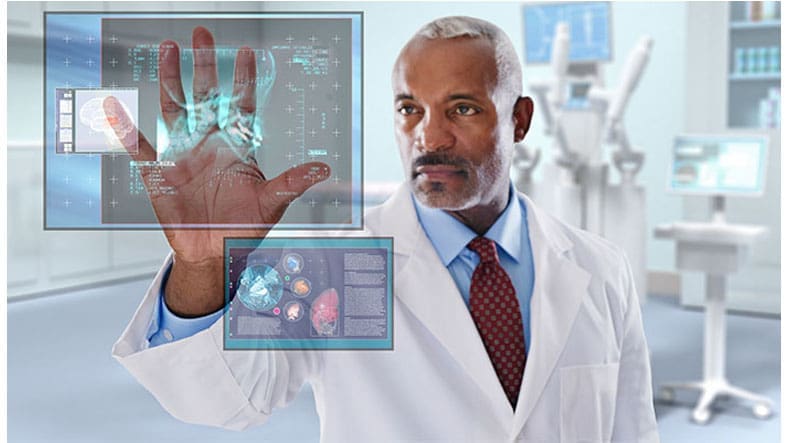
Artificial intelligence, which has become an integral part of our lives, seems to be making significant strides in the field of medicine with advancing technology.
This raises a critical question: Should we trust the health advice given by artificial intelligence? Let’s explore the answer together.
Concerns about the rapidly advancing artificial intelligence technology are growing in parallel.
In fact, many people are already benefiting from this technology in various ways. Recently, there has been an increasing number of people turning to AI for guidance on their diet, exercise programs, or any other health conditions. Are you one of them?
This service works quite effectively and makes our lives easier. However, there are also many areas where artificial intelligence can be wrong. The healthcare sector is one of those areas.
The fact that artificial intelligence has been frequently “hallucinating” lately only adds to the uncertainty surrounding the technology.
In other words, AI is beginning to generate non-existent or false information. This raises concerns, especially in critical sectors like healthcare, where misinformation can have serious consequences. After all, if we found out that a doctor had given us wrong or incomplete information, we would likely seek another opinion.
Optimistically, the future of AI looks promising due to the development of models trained on validated medical literature and patient data. Developing tools in this area may further support this progress.
AI aims to provide tailor-made healthcare solutions by using multiple data sources.
According to Oishi Banerjee from Harvard University, artificial intelligence could analyze patients’ medical histories and data from wearable devices to provide accurate treatment recommendations.
However, this will only be possible after implementing an accurate and secure data collection system in the future. If this technology in medicine evolves to the point where people no longer need to physically visit clinics, it could potentially threaten the future of the healthcare sector.
Do you think we should trust the health advice that AI will give?
You May Also Like
Follow us on TWITTER (X) and be instantly informed about the latest developments…
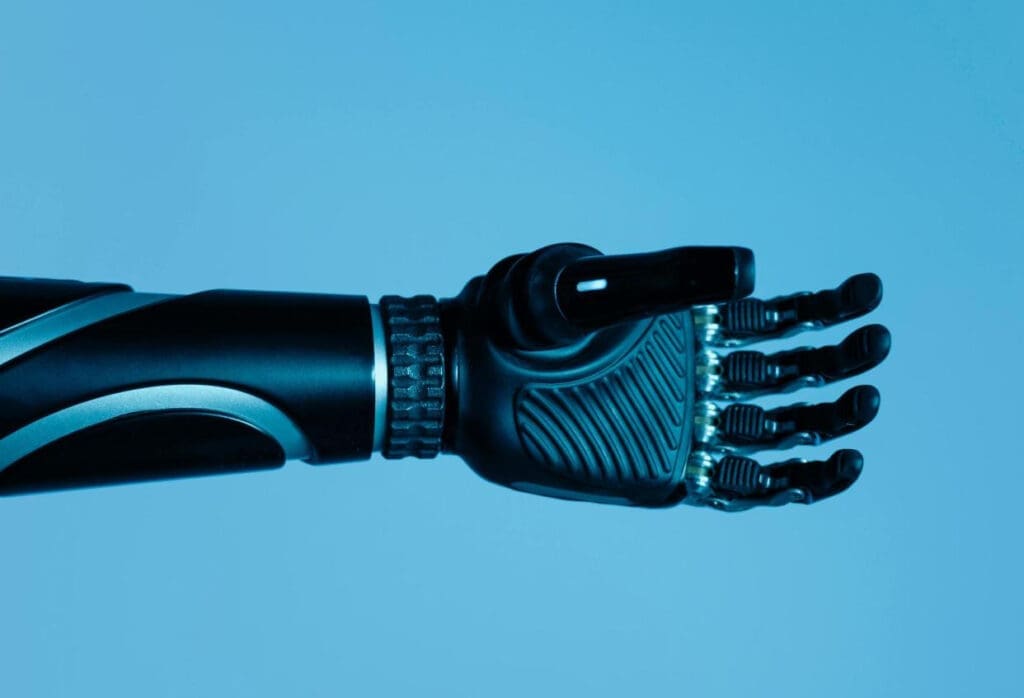
Neuralink, the company behind Elon Musk’s brain chip, has shared details about its upcoming experiment. The company plans to attempt controlling a robotic arm through the implant.
Led by Elon Musk, Neuralink set out to create a brain-computer interface and has successfully implanted chips in the brains of two individuals so far. These experiments were successful, allowing the participants to think and control computers. Now, new information has emerged about Neuralink’s next plans. The company has made a statement announcing that its implant has been approved for a brand-new trial.
The Robotic Arm Will Be Controlled
Neuralink’s new tests aim to use the brain chip to control robotic arms. In this context, researchers will attempt to control a robotic arm for research purposes using the implant. Musk refers to this experiment as the “Luke Skywalker solution,” referencing the iconic Star Wars character with a robotic arm.
Neuralink described this new experiment as “an important step towards restoring not only digital freedom, but also physical freedom.” There is no official information yet on when the experiments will begin.
It’s not surprising that this kind of initiative is coming from Neuralink. One of its main goals is to restore full body movements to individuals who have suffered from conditions like spinal cord injuries and strokes.
You May Also Like
Follow us on TWITTER (X) and be instantly informed about the latest developments…
One of the most talked-about topics in the blockchain and cryptocurrency industry today is GameFi. GameFi combines the concept of decentralized finance (DeFi) with the gaming industry, and it promises players this: not only can game companies now earn income from games, but you can too!
In this article, we’ll answer the question, what is GameFi or Gaming DeFi, and discuss the best gaming coins.
What is GameFi?
GameFi, in its simplest form, refers to blockchain-based games that follow a play-to-earn model. Unlike traditional games, blockchain-based games allow players to earn cryptocurrencies while playing. Additionally, in many blockchain-based games, players can own their in-game assets thanks to NFT technology; they can buy and sell these assets as NFTs safely and easily. All of this creates a real in-game economy, or GameFi.
Thanks to metaverse games such as Axie Infinity (AXS), Decentraland (MANA), and The Sandbox (SAND), the concept of GameFi is rapidly gaining ground in the gaming industry. Projects like Enjin Coin (ENJ) are also creating a GameFi ecosystem that brings together various blockchain games. In fact, some of the best-selling traditional online games, like Minecraft, are also embracing the GameFi concept and the blockchain world with projects like ENJ, offering players the opportunity to turn their in-game assets into NFTs. You can click here to get detailed information about Minecraft’s relationship with the GameFi concept.
Play-to-earn model
One of the most important aspects of the GameFi concept is, of course, the play-to-earn model.
Before the advent of the play-to-earn model, the game economy was one-sided. While companies made money from the games they published, players were paying to play those games. This one-sided economy grew so large that the pay-to-win model emerged. In this model, players also pay money to acquire better items and progress faster in online games.
The play-to-earn model, on the other hand, transforms this one-sided economy into a multilateral one. According to this new model, players, just like companies, can earn income from games. These revenues can come in the form of in-game cryptocurrency rewards, as well as from buying and selling in-game assets owned through NFT technology.
The cryptocurrencies of the blockchain-based games and platforms that make up the GameFi concept are referred to as game tokens or game coins. These are also known as GameFi coins.
While these cryptocurrencies support the play-to-earn model, they also serve as tools for accessing the governance of games and platforms.
Leading gaming coins include Axie Infinity (AXS), Decentraland (MANA), The Sandbox (SAND), Alien Worlds (TLM), My Neighbor Alice (ALICE), Chromia (CHR), Enjin Coin (ENJ), and Gala (GALA).
Axie Infinity (AXS)
Axie Infinity (AXS), one of the most popular and oldest blockchain-based games, was created in 2018, inspired by cult games such as Pokémon and Tamagotchi. In the Axie Infinity game, released by the Sky Mavis company, players aim to collect and evolve NFT creatures called Axies. They can then earn tokens by engaging their Axies in various battles.
Axie Infinity has two tokens. One of them is the Smooth Love Potion (SLP) token, which is part of the in-game reward system. The other is the AXS token, which is used in governance. The AXS token is among the most valuable gaming coins.
Decentraland (MANA)
Decentraland (MANA) is a blockchain-based metaverse game developed by Argentine entrepreneurs Ari Meilich and Esteban Ordano. On Decentraland, which consists of a universe of 90,601 parcels, players can acquire virtual land in the form of NFTs. On these lands, players can create content and applications.
All trading transactions in Decentraland are made with the ERC-20-based game coin MANA token.
The Sandbox (SAND)
Created by the company Pixowl, The Sandbox (SAND) is a metaverse game similar to Decentraland. In the world of The Sandbox, players can acquire a piece of land as an NFT and create their own universe using various resources on it.
All trades in The Sandbox are made with the SAND token, which is an ERC-20 standard gaming coin.
Alien Worlds (TLM)
Created in 2020 by developers at the Swiss-based gaming firm Dacoco, Alien Worlds (TLM) is a space-themed NFT mining game. Alien Worlds players try to mine Trilium (TLM) tokens on player-owned land on planets managed by players through DAO. They do this with NFT equipment.
The TLM token is the governance and utility token of Alien Worlds. The TLM token is a leading gaming coin.
My Neighbor Alice (ALICE)
Built on the Chromia (CHR) blockchain, My Neighbor Alice (ALICE) is a blockchain-based and farming-themed metaverse game. The governance and utility token of My Neighbor Alice, which plays an important role in the GameFi ecosystem, is the ERC-20-based ALICE token.
Chromia (CHR)
Creating GameFi and blockchain games requires high scalability. Chromia (CHR) is a blockchain platform that aims to solve the scalability problem for blockchain games, allowing them to be developed efficiently. My Neighbor Alice (ALICE), one of the popular metaverse games, is also built using Chromia.
The CHR token, which was launched in 2019, is the native cryptocurrency of the Chromia platform. The CHR token is used to pay transaction fees on the network.
Enjin Coin (ENJ)
Enjin is a platform that provides game developers with the ability to create and manage virtual goods on the Ethereum (ETH) blockchain. Enjin Coin (ENJ) is the ERC-20-based cryptocurrency of the Enjin project, which also supports ERC-721 and ERC-1155 smart contracts.
As a leading gaming coin, the ENJ coin can be considered a common currency for games and applications that use the Enjin platform.
You May Also Like
Follow us on TWITTER (X) and be instantly informed about the latest developments…
Thanks to blockchain technology, significant developments are taking place in the gaming industry, much like in many other sectors. One of the latest innovations in the blockchain-based gaming world is the “play-to-earn” model. So, what exactly is this “play-to-earn” model?
The gaming industry continues to evolve rapidly, driven by technological advancements. As of 2021, it is estimated that more than 2.5 billion people worldwide play mobile games and video games. While the esports industry boasts over 450 million players, the growing interest in 3D games is constantly on the rise. In 2020, the gaming industry as a whole generated approximately $162 billion in revenue.
Until recently, games were purely one-sided experiences. However, with the evolution of the industry, games have transformed into social platforms, providing new opportunities for interaction and connection. The play-to-earn system, a new gaming model, offers a unique approach to virtual sociality. The COVID-19 pandemic, which affected the entire world in 2020, played a significant role in accelerating the popularity of play-to-earn games.
The global lockdowns forced by the pandemic led people to explore the potential of the online world. During this time, many discovered that they could both work and have fun simultaneously, using internet-connected devices from anywhere in the world. As a result, play-to-earn has emerged as a trending business model and is steadily gaining traction within the DeFi gaming industry.
Play to Earn ve Metaverse
The games in the Play-to-Earn system are integrated with the Metaverse feature. The Metaverse offers users a world that goes beyond the physical universe. In the Metaverse, virtual lands, avatars, and even buildings can be bought and sold, often using cryptocurrencies. In these virtual universes, people can spend time with friends, participate in events, and buy goods or services. In other words, the Metaverse enables you to do everything that you would do in real life, but in a virtual environment.
Most of the Metaverse platforms are powered by Blockchain technology. To purchase items in these virtual worlds, you need cryptocurrencies or NFTs. Many current Play-to-Earn platforms have their own local currencies.
What is Metaverse?
To put it simply, the Metaverse is a virtual world that people can enter. It is the internet brought to life with all its subtleties. The Metaverse can be described as an infinite and interconnected world of virtual realities, where people can play, meet, work, and do whatever they want using headsets, AR devices, and other smart devices.
What is the Purpose of Play to Earn Games?
The play-to-earn game model, which embraces the idea of an open economy, financially rewards every user who adds value by playing and spending time in the gaming ecosystem. In the past, games were merely a way to have fun, but thanks to new game models, they are now transforming into an investment opportunity.
The core concept of the play-to-earn system is that players are rewarded for dedicating time and effort to the game. Consider traditional games like The Sims or World of Warcraft, where players can purchase in-game assets from the platform’s store using in-game currency. In these games, even if you spend money to buy various items, that expenditure holds no value in the real world. The reason for this is the lack of a liquidity infrastructure in such traditional games. However, Blockchain technology, combined with the play-to-earn model, has provided a solution to this issue.
How Do Play-to-Earn Games Work?
With its combination of gaming and finance, play-to-earn games fall under the GameFi category. Each game provides financial incentives to play and progress. The two main methods of generating income are as follows:
Earn in-game cryptocurrency: Completing daily tasks can reward players with the game’s native cryptocurrency.
Earn or trade in-game NFTs: Each NFT can represent an item, character, or other collectible in the game, and these can be traded between players.
A third method is staking. Some NFT games allow users to lock NFTs or cryptocurrencies in smart contracts, generating rewards. For example, staking MBOX tokens rewards users with MOMO NFT Mystery Boxes. Each box contains a random NFT of varying rarity, which can then be sold on the secondary market.
To better understand how play-to-earn games work, let’s take Axie Infinity as an example. Axie Infinity is a Blockchain game inspired by Pokémon. One of the most interesting aspects of the game, which has more than 1 million active daily users, is the cute in-game creatures known as Axies. Users can breed, buy, train, and send these creatures into battles to complete missions. The primary goal of the game is to earn an in-game token called Smooth Love Potion (SLP). With the SLP earned, players can breed their own creatures, thus generating even more value.
Another feature of SLP is that it can be traded on cryptocurrency exchanges, allowing users to earn income that holds real-world value. Players can also sell the items they create in-game to other users as NFTs.
How Does Blockchain Technology Secure Play-to-Earn Games?
A Blockchain has several features that easily prove ownership, legitimacy, and rarity. Blockchains, which can be thought of as an immutable database, are secured by a distributed network of computers that maintain a copy of all data. This means it is almost impossible for someone to modify, duplicate, or delete data on the Blockchain.
Thanks to Blockchain, games can prevent issues like item duplication, gold piracy, and other types of fraud or corruption that are common in traditional games.
Are Play to Earn Games Free to Play?
While there is ongoing debate about whether these games will be available for free or not, it is clear that each developer has chosen their own approach. Since video games are expensive to develop and require a creative team, it is entirely reasonable for developers to pursue a profit motive. Some games are free, while others may charge a small fee to play. On the other hand, the benefit of such games is that they create value that can be sold to players. Even if you have to pay something to start playing, these items can be sold for a potential profit.
How To Start Playing Play To Earn Games?
Each play-to-earn game will have different requirements for new players. At the very least, you’ll need a crypto wallet to store your cryptocurrency and connect it to the game.
You may also need to make an initial investment, such as building a team of characters to play with or purchasing in-game items. Entering a digital crypto economy usually comes with a small fee.
Play to Earn Game Examples
Play-to-earn allows players to earn a steady stream of crypto income simply by playing the game. While the mechanics of each game may vary, the rewards typically come from placing bets, collecting the game’s currency, or crafting tradable NFT items. In older Blockchain games, users mostly relied on random luck to make a profit. However, play-to-earn has introduced in-game economies and business models where players can actively work to generate revenue. Below are details of some games with the play-to-earn model:
Bloktopia
Powered by Polygon, Bloktopia is a decentralized metaverse that offers an unparalleled virtual reality experience for the crypto community. It serves as a bridge between the virtual and physical worlds within decentralized and open-source environments.
OneTo11
OneTo11 is a fantasy sports mobile application that allows players to use their sports knowledge for entertainment and profit. The game aims to enable sports fans, bettors, and players to do what they love on a single platform. On this platform, users can interact socially and compete with each other in a transparent and decentralized manner. Users can earn money by participating in fantasy sports competitions and other games on the platform.
Nakamoto Games
Nakamoto Games‘ goal is to ensure that anyone with a crypto wallet can access a wide range of play-to-earn games on the platform, enabling them to generate large and sustainable revenues.
TryHards
TryHards is an NFT-based shooter powered by the Polygon Blockchain. In TryHards, players can risk, fight, craft, and evolve their characters and weapons simply by playing the game. Known as Fanatics, these characters and their weapons are all NFT-based. Players must collect as many Fanatics as possible to upgrade their gaming power. Since it’s a play-to-earn game, there’s a monetary incentive to stake the platform’s native TRY tokens and continue playing.
Gods Unchained
Gods Unchained is a free-to-play card battle game where players buy and sell rare and valuable cards to defeat enemies.
A close copy of Blizzard’s hugely popular “Hearthstone: Heroes of Warcraft,” Gods Unchained offers Blizzard’s game players a familiar introduction to crypto and Blockchain technology with the added advantage of crypto. Although Gods Unchained itself is not based on the Blockchain, the cards are built on the Ethereum Blockchain. As a result, the cards owned by players become tradable assets in secondary markets.
Plant vs Undead
Plant vs Undead is a free-to-play tower defense game set in a post-apocalyptic world overrun by zombie attackers. Players must strategically arrange plants to defend against an invading zombie colony. The play-to-earn model in Plant vs Undead capitalizes on the game’s considerable replay value. Players can purchase seeds with PVU tokens from the platform’s marketplace to play the game.
Together With The Gods
Built on the Polygon Blockchain, Together With The Gods is a costplay P2E game that rewards players with NFTs and cryptocurrencies. The game features powerful action heroes from five different classes, each with unique traits, skills, and special abilities for battles. Players need to create and strengthen teams of heroes and use different strategies to win battles.
Farmers World
Farming games, where players can plant crops, harvest them, or build barns, have grown in popularity in recent years. Farmers World is a P2E game that allows players to choose from a variety of vehicles to grow and harvest crops. Players can also attack other farmers while waiting for the harvest period. By participating in in-game events, farmers can mine or mint GOLD, the game’s native token, and NFT-based in-game items.
Farmers must also protect their farms from wild animals and monsters. With GOLD tokens, they can create their own NFT-based farming tools to enhance their farms and improve crop production.
My Neighbor Alice
My Neighbor Alice is a multiplayer game set in Alice’s world, where players can buy and build virtual islands. Players can make in-game purchases using ALICE, the game’s native currency, and convert ALICE tokens into fiat currencies on cryptocurrency exchanges.
You May Also Like
Follow us on TWITTER (X) and be instantly informed about the latest developments…
Published: November 27, 2024 at 4:19 am Updated: November 27, 2024 at 4:19 am
by Ana
Edited and fact-checked:
November 27, 2024 at 4:19 am
To improve your local-language experience, sometimes we employ an auto-translation plugin. Please note auto-translation may not be accurate, so read original article for precise information.
In Brief
The TON Foundation launches the 7th season of the Open League, offering DeFi projects to compete for performance metrics and share a $100,000 prize pool, while users engaging with these projects will receive a $1,500,000 airdrop.
Organization dedicated to advancing The Open Network (TON), the TON Foundation, announced the launch of the 7th season of the Open League, which will run until December 17th. This season, dubbed the New Year season, provides a platform for decentralized finance (DeFi) projects to compete for top performance metrics and claim a share of a $100,000 prize pool in Adsgram credits. Additionally, users engaging with these projects will collectively benefit from a $1,500,000 airdrop.
The primary focus of this season is the DeFi League, designed to nurture early-stage TON DeFi protocols with less than $5 million in Total Value Locked (TVL) and under $50 million in monthly transaction volume. The goal is to boost the overall TVL and transaction volume on the TON blockchain, fostering growth for emerging DeFi initiatives.
The structure of the competition is organized into two squads: the TVL Squad and the Volume Squad. DeFi projects within these squads are ranked on a leaderboard based on their contributions to the total TVL or transaction volume generated during the season. This ranking is determined by user activity, irrespective of their participation in the Open League New Year airdrop. Teams can join only one squad, and the choice of metric—TVL or Volume—depends on factors such as team preferences, data tracking capabilities, and the complexity of integration with The Open League’s analytics system.
The Open League New Year Season Offers Users $1.5M Airdrop To Boost Engagement And On-Chain Activity
Additionally, to further support participating DeFi projects, active on-chain users of these projects will be invited to take part in the $1,500,000 New Year airdrop. This initiative aims to boost user engagement and on-chain activity.
In order to enroll, users must request a DeFi Badge, which is a Soulbound Token, and interact with over 20 DeFi protocols in the DeFi League. Points are awarded for each qualifying interaction, such as providing liquidity or executing trades, with clear guidelines on the points available for each activity. A user leaderboard tracks progress, enabling participants to see how their scores grow.
All projects in the TVL and Volume Squads receive rewards via an airdrop distributed to users who have minted a DeFi Badge and accumulated sufficient points. This reward system is designed to incentivize user engagement and stimulate growth for participating protocols. Furthermore, the top five teams in both the TVL and Volume Squads will share a $100,000 Adsgram credits prize pool. Teams achieving milestones of $5 million in TVL or $50 million in transaction volume during the season will graduate from the DeFi League and earn coverage for their smart contract audit costs, marking an achievement.
The Open League is a competition platform for projects within the TON ecosystem and their user communities. Its goal is to attract new, committed users to the TON network, enhance overall user engagement, and assist projects in broadening their influence. Additionally, the initiative is designed to foster the creation of appealing and functional products that serve the large and diverse user base of Telegram.
Disclaimer
In line with the Trust Project guidelines, please note that the information provided on this page is not intended to be and should not be interpreted as legal, tax, investment, financial, or any other form of advice. It is important to only invest what you can afford to lose and to seek independent financial advice if you have any doubts. For further information, we suggest referring to the terms and conditions as well as the help and support pages provided by the issuer or advertiser. MetaversePost is committed to accurate, unbiased reporting, but market conditions are subject to change without notice.
About The Author
Alisa, a dedicated journalist at the MPost, specializes in cryptocurrency, zero-knowledge proofs, investments, and the expansive realm of Web3. With a keen eye for emerging trends and technologies, she delivers comprehensive coverage to inform and engage readers in the ever-evolving landscape of digital finance.
More articles
Alisa Davidson
Alisa, a dedicated journalist at the MPost, specializes in cryptocurrency, zero-knowledge proofs, investments, and the expansive realm of Web3. With a keen eye for emerging trends and technologies, she delivers comprehensive coverage to inform and engage readers in the ever-evolving landscape of digital finance.
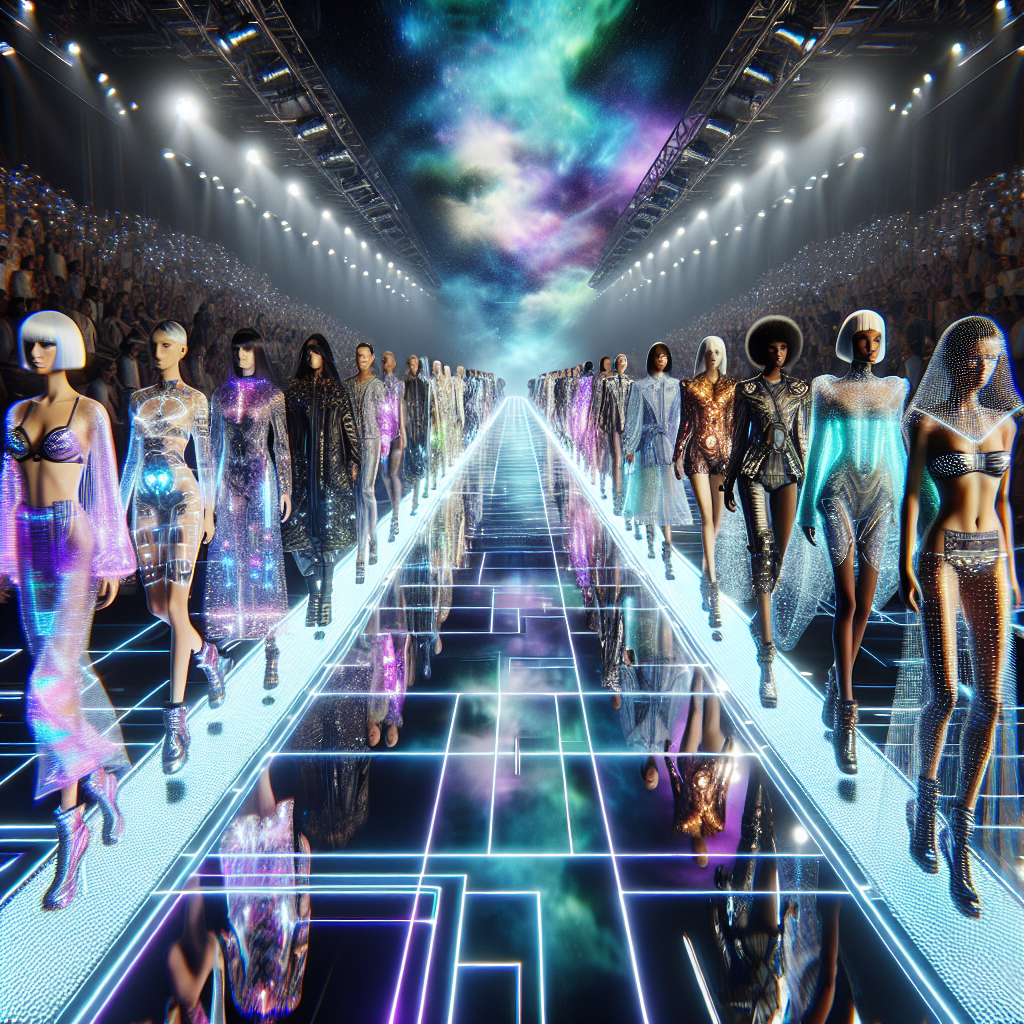
As the digital landscape continues to evolve, the fashion industry is finding new ways to innovate and captivate audiences in the metaverse. This week, the virtual fashion scene is bustling with creativity and technological advancements, offering fashion enthusiasts a glimpse into the future of style. From digital runway shows to virtual fashion collaborations, the metaverse is redefining how we experience and interact with fashion. Let’s delve into the latest trends that are shaping this dynamic digital realm.
Exploring Fashion Trends in the Metaverse This Week
This week in the metaverse, fashion is taking a bold and imaginative turn, with designers and brands experimenting with new materials and concepts that defy the limitations of the physical world. Digital fashion houses are utilizing cutting-edge technology to create virtual garments that change color or texture in response to the user’s movements or environmental factors. The trend of customizable avatars is gaining traction, allowing users to express their unique style through a vast array of digital clothing and accessories. Furthermore, sustainable fashion is making its mark in the metaverse, with designers crafting eco-friendly digital pieces that highlight the importance of environmental consciousness even in virtual spaces. As these trends continue to develop, they offer a fascinating preview of how fashion might evolve in parallel with technology.
The metaverse is rapidly transforming the fashion landscape, offering endless possibilities for creativity and self-expression. This week’s developments highlight the potential for digital fashion to break boundaries and redefine traditional concepts of style and sustainability. As technology continues to advance, the intersection of fashion and the metaverse will undoubtedly become an increasingly important area of exploration for designers, brands, and consumers alike. By embracing these innovations, the fashion industry is not only enhancing the virtual experience but also paving the way for a more inclusive and environmentally conscious future.
Published: November 26, 2024 at 11:00 am Updated: November 26, 2024 at 7:01 am
To improve your local-language experience, sometimes we employ an auto-translation plugin. Please note auto-translation may not be accurate, so read original article for precise information.
At the end of November, Galeon unveils its new platform Atlantis, in beta version accessible through a wait list. A rich, original, and immersive ecosystem that allows all members of the Galeon community, the Pioneers, to come together and promote a decentralized and community-based approach to medicine.
After a busy start to the year filled with healthcare events and meetings, Galeon unveils its brand-new ecosystem centered around its platform: Atlantis. As an innovative platform, its goal is to connect all members of the Galeon community, the ‘Pioneers’:
Hospital staff who use the software daily to provide care,
Patients who benefit from Galeon’s innovations, such as the software and electronic health records,
Innovators, and the early adopters.
Atlantis will be available online 24/7 and worldwide, as an evolutive platform. It is a gamified, simple, and accessible platform for everyone. It also has been designed to welcome the millions of pioneers who are not yet involved in crypto, creating a bridge between Web2 and Web3. All of this while ensuring a smooth and simple user experience. With the ongoing ambition to simplify healthcare, Galeon uses gamification on this application.
Galeon’s intelligent Electronic Health Record (EHR) secures and hyper-structures anonymized health data. Thanks to blockchain, Galeon enables the decentralized training of Medical AIs, all while preserving patients’ privacy. Atlantis allows everyone to invest in the future of healthcare and to bring together a community of Pioneers in healthcare.
The idea behind Atlantis is to bring together all the people who wish to engage in this new era of data-driven medicine. They will be able to invest in $GALEON and vote for non-profit scientific projects to advance science and medical research.
Atlantis reflects Galeon: innovative, unprecedented, yet simple to use.
To discover the platform and become a Pioneer yourself, join the wait list here
______________________________ About ______________________________
Galeon brings together a community of pioneers around health, medical AI, and blockchain technology. Galeon enables patients, researchers, healthcare professionals, and project investors to join forces and collaborate for more innovations in medicine. Galeon is also part of the DeSci movement by unleashing the power of AI and blockchain on health data and decentralizing science. Visit http://www.galeon.care for more information.”
In line with the Trust Project guidelines, please note that the information provided on this page is not intended to be and should not be interpreted as legal, tax, investment, financial, or any other form of advice. It is important to only invest what you can afford to lose and to seek independent financial advice if you have any doubts. For further information, we suggest referring to the terms and conditions as well as the help and support pages provided by the issuer or advertiser. MetaversePost is committed to accurate, unbiased reporting, but market conditions are subject to change without notice.
About The Author
Gregory, a digital nomad hailing from Poland, is not only a financial analyst but also a valuable contributor to various online magazines. With a wealth of experience in the financial industry, his insights and expertise have earned him recognition in numerous publications. Utilising his spare time effectively, Gregory is currently dedicated to writing a book about cryptocurrency and blockchain.
More articles
Gregory, a digital nomad hailing from Poland, is not only a financial analyst but also a valuable contributor to various online magazines. With a wealth of experience in the financial industry, his insights and expertise have earned him recognition in numerous publications. Utilising his spare time effectively, Gregory is currently dedicated to writing a book about cryptocurrency and blockchain.
Published: November 26, 2024 at 8:39 am Updated: November 26, 2024 at 8:39 am
by Ana
Edited and fact-checked:
November 26, 2024 at 8:39 am
To improve your local-language experience, sometimes we employ an auto-translation plugin. Please note auto-translation may not be accurate, so read original article for precise information.
In Brief
Gate.io has listed Lamina1’s token and launched a 10-day trading carnival, running until December 4th, to celebrate the debut of L1.
Cryptocurrency exchange Gate.io announced that it has listed Lamina1, a project aimed at reshaping the creator economy, on November 24th. Lamina1 was co-founded by acclaimed author Neal Stephenson and blockchain expert Peter Vessenes. It seeks to establish an ecosystem where creators and users can incubate and monetize intellectual property, fostering a sustainable and dynamic creator economy.
Lamina1 is designed as a creator-focused blockchain platform offering tools for content creation, sharing, and monetization. With support for multimedia formats and interactive fan engagement, it aims to diversify content opportunities and streamline monetization pathways for creators worldwide. The launch of the L1 token on Gate.io presents global investors with a unique opportunity to engage with this forward-thinking platform.
Gate.io Initiates Trading Carnival To Reward Users And Encourage Participation
In order to celebrate the L1 token’s debut, Gate.io has introduced a 10-day trading carnival, running until 10:00 UTC+8 on December 4th. This event includes various activities designed to reward users and encourage participation. Users can take part by completing trades, inviting friends to join Gate.io, or accessing bonuses available to new users. The event features a $20,000 prize pool, with rewards distributed through a system that allows participants to earn Trading Balls by completing specific tasks. Every 100 Trading Balls can then be redeemed for one L1 token, offering users a flexible and engaging way to benefit from the carnival.
Gate.io is recognized as a leading cryptocurrency exchange, offering a broad range of digital assets to its global user base. The platform supports more than 1,400 cryptocurrencies and over 2,500 trading pairs, making it a key player in the digital asset trading sector. According to CoinMarketCap, Gate.io currently boasts a daily trading volume exceeding $5 billion.
Recently, it has revealed plans to enhance its offerings in the stablecoin asset management space with the introduction of new USDE-focused products, including USDE Staking and USDE Simple Earn. Following closely, the platform will debut another addition to its product suite, USDE Flexible Staking, designed to provide users with a dynamic and high-yield investment option. This expanded product lineup is part of Gate.io’s broader strategy to offer diversified and competitive solutions for stablecoin wealth management.
Disclaimer
In line with the Trust Project guidelines, please note that the information provided on this page is not intended to be and should not be interpreted as legal, tax, investment, financial, or any other form of advice. It is important to only invest what you can afford to lose and to seek independent financial advice if you have any doubts. For further information, we suggest referring to the terms and conditions as well as the help and support pages provided by the issuer or advertiser. MetaversePost is committed to accurate, unbiased reporting, but market conditions are subject to change without notice.
About The Author
Alisa, a dedicated journalist at the MPost, specializes in cryptocurrency, zero-knowledge proofs, investments, and the expansive realm of Web3. With a keen eye for emerging trends and technologies, she delivers comprehensive coverage to inform and engage readers in the ever-evolving landscape of digital finance.
More articles
Alisa Davidson
Alisa, a dedicated journalist at the MPost, specializes in cryptocurrency, zero-knowledge proofs, investments, and the expansive realm of Web3. With a keen eye for emerging trends and technologies, she delivers comprehensive coverage to inform and engage readers in the ever-evolving landscape of digital finance.