MicroStrategy, the largest institutional Bitcoin (BTC) investor, continues expanding its cryptocurrency portfolio. The company, founded by Michael Saylor, a well-known cryptocurrency supporter, recently announced a significant Bitcoin purchase totaling $2.1 billion.
MicroStrategy’s Bitcoin Acquisition Strategy
Founded by Michael J. Saylor in 1989, MicroStrategy became publicly traded in 1998. However, the company’s global recognition stems from its active participation in the cryptocurrency market, particularly its aggressive Bitcoin purchasing strategy.
Despite sharp market downturns, MicroStrategy consistently buys Bitcoin, adhering to its long-term investment strategy. The company’s unwavering belief in Bitcoin’s future value sets it apart in the institutional investment world.
Latest Bitcoin Purchase Details
According to a filing submitted to the U.S. Securities and Exchange Commission (SEC) and a statement published on its official website, MicroStrategy purchased an additional 21,550 BTC between Dec. 2 and Dec. 8, 2024, for a total of $2.1 billion. The average purchase cost was $98,783 per BTC.
With this acquisition, MicroStrategy’s total Bitcoin holdings rose to 423,650 BTC, valued at approximately $25.6 billion based on the average purchase price of $60,324 per BTC.
Current Bitcoin Market Price
At the time of writing, Bitcoin’s price stands at $97,846, reflecting the company’s continued confidence in the cryptocurrency’s long-term potential. MicroStrategy’s strategic approach reinforces its position as a key player in the global cryptocurrency investment ecosystem.
You May Also Like
Follow us on TWITTER (X) and be instantly informed about the latest developments…
OpenAI has launched its groundbreaking tool, Sora, enabling users to create highly realistic videos by simply entering text. In an era where distinguishing between real and artificial content is becoming increasingly difficult, Sora raises the bar in video creation technology. This innovative tool is currently available to ChatGPT Pro and Plus users, offering seamless text-to-video capabilities.
How Sora Works
The “Turbo” version of Sora allows users to generate videos between 5 to 22 seconds long by typing a prompt. These videos can be produced in different aspect ratios and resolutions, depending on user preferences. However, creating videos requires credits, which vary based on the video’s duration and resolution.
Credit System
ChatGPT Plus Plan: Provides 1,000 credits per month.
ChatGPT Pro Plan: Offers 10,000 credits monthly.
Credit Renewal: Credits are renewed each month and cannot be transferred.
Credit Requirements by Resolution
480p Videos: Require 20 to 150 credits.
720p Videos: Use between 30 to 540 credits.
1080p Videos: Demand 100 to 2,000 credits.
Content Restrictions
OpenAI has set strict content guidelines for Sora:
Prohibited Content: Videos involving minors, violence, or explicit themes are strictly forbidden.
Copyright Compliance: Content infringing on third-party copyrights, public figures, recognizable characters, or logos cannot be created.
Additionally, visual watermarks are embedded in all videos generated by Sora to maintain transparency.
Availability and Regional Limitations
Sora is currently accessible only on select web and mobile platforms, excluding European Union (EU) countries. Users in unsupported regions risk account suspension or bans if they attempt to access the service.
Earlier this year, the EU was excluded from the initial rollout of Enhanced Voice Mode, a human-like speech feature for ChatGPT. OpenAI explained that external reviews and additional evaluations delayed the launch in the EU. The same applies to Sora, with OpenAI noting that they need more development time before expanding availability.
With Sora, video creation is now as easy as writing an article, marking a significant leap in AI-powered multimedia production.
You May Also Like
Follow us on TWITTER (X) and be instantly informed about the latest developments…
ERC is an acronym for Ethereum Request for Comment and refers to the token standards on theThe Ethereum (ETH) network is home to numerous token standards that guide how crypto assets are created and managed. Among these, the ERC-20 standard has been the foundation for many altcoins in the cryptocurrency market. However, a new token standard, ERC-404, has recently gained attention due to its unique features and innovative design.
In this article, we will explore:
What is ERC-404?
What are the ERC-404 features?
What are ERC-404 tokens?
Is ERC-404 worth investing in?
What Is ERC-404?
ERC-404 is an experimental and innovative Ethereum NFT standard that merges characteristics of NFTs (ERC-721), which are non-fungible tokens, and fungible tokens (ERC-20). This unique combination allows a token to be both fungible and non-fungible depending on its use case.
At the time of writing, ERC-404 is not officially listed as an Ethereum Improvement Proposal (EIP) and has yet to be approved by the Ethereum community. Its potential, however, has sparked significant interest in the cryptocurrency world.
What Are the ERC-404 Features?
The ERC-404 standard introduces a concept called semi-fungible tokens, blending the benefits of both ERC-20 and ERC-721 token standards. This unique design opens up new possibilities for developers and users by enhancing Ethereum’s functionality.
Key Features of ERC-404 Tokens:
1. Improved Interoperability
ERC-404 tokens can interact seamlessly with protocols in both the fungible token and NFT spaces, bridging these previously separate ecosystems. For instance, ERC-404 tokens can be used as collateral in DeFi protocols while also being traded on NFT marketplaces.
2. Flexibility
The ability to switch between fungible and non-fungible forms creates exciting opportunities for dynamic and interactive NFTs. Token developers can design tokens that change status and value based on specific events or actions.
3. Low Transaction Costs
ERC-404 tokens support mass transfers, allowing users to send multiple tokens to multiple addresses in a single transaction. This reduces transfer costs and enhances transaction security by verifying token ownership before executing transfers.
4. Increased Liquidity
Since ERC-404 tokens can be traded as fungible tokens on decentralized exchanges (DEXs), they offer improved liquidity compared to standard NFTs. This solves the common issue of low trading volume and high price volatility faced by conventional NFTs.
Most Popular ERC-404 Tokens
Despite being experimental, ERC-404 tokens are gaining traction among developers. Some of the most notable tokens using this standard include:
Pandora (PANDORA): Market cap over $150 million, considered the first and most popular ERC-404 token.
404 Bakery (BAKE): Known for its creative approach in DeFi.
Asterix Labs (ASTX): A promising experimental project.
DeFrogs (DEFROGS): Focused on decentralized finance.
YES (YES): A versatile token in the ERC-404 ecosystem.
What Is the PANDORA Token?
Pandora (PANDORA) is recognized as the first ERC-404 token and remains the most popular one today. Each PANDORA token holder receives a corresponding NFT collection copy for every token they own. Its detailed features and development roadmap can be explored further through its whitepaper.
Is ERC-404 Worth Investing In?
Since February 2024, ERC-404 has become one of the hottest topics in the cryptocurrency world. Naturally, many investors are asking, “Is it worth investing in ERC-404 tokens?”
At this stage, it is too early to provide a definite answer. The ERC-404 standard holds potential for expanding Ethereum’s ecosystem and unlocking new DeFi opportunities. However, its experimental nature comes with uncertainties and potential technical challenges. Investors should approach it cautiously and stay informed about its development progress.
You May Also Like
Follow us on TWITTER (X) and be instantly informed about the latest developments…
US President Donald Trump has announced a major appointment in the fields of artificial intelligence and cryptocurrency markets. Through his social media platform Truth Social, Trump revealed that David O. Sacks, a prominent figure in the tech and crypto industries, will take charge of these critical sectors.
Who Is David O. Sacks?
David O. Sacks is a well-known name in Silicon Valley, recognized for founding investment firms like Craft Ventures and contributing to the growth of platforms such as Microsoft’s corporate social network Yammer. His extensive experience in both the technology and cryptocurrency fields makes him an influential leader for this new role.
What Will David O. Sacks Do?
Sacks will spearhead the creation of a new regulatory framework for the US cryptocurrency market, aiming to make the country a global leader in the sector. Additionally, he will work to strengthen the US position in artificial intelligence development, focusing on reducing dependency on “Big Tech” companies often referred to as GAMAM.
A Vision for the Future
Expressing gratitude for the appointment, Sacks stated that he sees a bright future for the United States under Donald Trump’s leadership. He emphasized his commitment to enhancing the country’s global competitiveness through strategic advancements in AI and cryptocurrency.
You May Also Like
Follow us on TWITTER (X) and be instantly informed about the latest developments…
Earlier today, we shared that X (formerly known as Twitter), the world’s most popular micro-blogging platform, made its AI-supported chatbot Grok accessible to all users. However, there’s more exciting news: Grok now includes a powerful image generator named Aurora.
Users familiar with Grok know it can produce unrestricted results, including themes of violence, fear, and sexuality, which are typically prohibited by other AI tools like ChatGPT and Gemini. As expected, Aurora carries the same limitless capabilities in generating photorealistic images.
Aurora’s Unique Capabilities
While it’s unclear whether Aurora was developed entirely by xAI, built upon existing tools, or created through collaboration with other developers like its predecessor Flux, one fact stands out—its ability to produce hyper-realistic visuals is impressive.
Creative Image Prompts
Some intriguing commands tested with Aurora include:
“An image of a bloody Donald Trump”
“Tom Cruise and Simon Pegg with a duck joining their team of agents”
“Draw Sam Altman riding a giraffe in space”
Though Aurora’s development details remain undisclosed, its performance has already sparked significant interest among AI enthusiasts. It’s clear that X’s journey into artificial intelligence continues to evolve with bold and innovative creations.
You May Also Like
Follow us on TWITTER (X) and be instantly informed about the latest developments…
The potential of generative AI has been a topic of discussion for years, but the landscape changed dramatically after OpenAI introduced ChatGPT, making it accessible to everyday users. Today, artificial intelligence has become an integral part of many electronic devices we use daily. Recent developments suggest that AI’s impact will grow even further in the near future.
Until now, we have seen various AI-powered tools capable of generating audio from text, images from text, videos from text, and even text from audio. However, a team of researchers from the University of Texas has taken a groundbreaking step by creating a tool that can generate images from sound.
How the AI Tool Works
The system works by analyzing audio input and generating corresponding visuals. For example, when the AI listens to the sounds of a bustling city, it creates an urban street scene. Similarly, when exposed to chirping bird sounds, the AI generates a nature-inspired image featuring birds.
Advanced Sound-to-Image Conversion
Despite being experimental, the AI tool has shown impressive capabilities. The researchers trained the system using 10-second audio clips containing synchronized audio-visual data from various urban and rural environments. The AI not only generated realistic images but also factored in essential visual elements such as architectural styles, object distances, and even lighting conditions. According to the study, the AI achieved an 80% accuracy rate in generating corresponding visuals.
Potential Applications
If this AI tool is further developed, it could revolutionize various industries. In urban planning, for instance, the tool could help create better city designs by analyzing environmental sounds. It could also be used in law enforcement, assisting in crime investigations by interpreting audio evidence alongside video footage. Moreover, the possibilities for industries such as movies and gaming are practically limitless, enabling the creation of immersive audiovisual experiences.
The future of this technology promises exciting advancements, reshaping how we interact with the world through sound-based AI-generated visuals.
You May Also Like
Follow us on TWITTER (X) and be instantly informed about the latest developments…
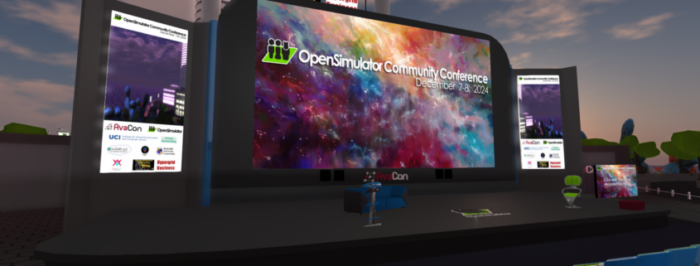
Second Life founder Philip Rosedale is coming to OpenSim tomorrow, Sunday Dec. 8, at 4 p.m. Pacific Time for a fireside chat at the OpenSimulator Community Conference.
Rosedale founded Linden Lab in 1999 and continues innovating in virtual worlds.
Watch the conversation in person at the OSCC conference grid, hypergrid address cc.opensimulator.org:8002.
The OpenSimulator Community Conference, starts today with music and celebrations, then gets off to its full start tomorrow morning with a welcome panel with OpenSim core developers at 7 a.m. Pacific time tomorrow morning.
You can see the full schedule here.
You can also watch the presentations live streamed at AvaCon’s YouTube channel.
The conference is free to attend in person on the Open Simulator Conference grid, and you can register here or hypergrid to attend.
The hypergrid address is cc.opensimulator.org:8002.
Follow @opensimcc on X or on BlueSky and use the hashtags #OSCC24 or #oscc, and post your conference pictures and snapshots on our Flickr and Facebook group, or join the Discord server where you can also chat with other attendees during and after the event.
This year’s conference features over 55 speakers sharing innovative content, dynamic short presentations, and panels that all take place on Saturday, December 7, and Sunday, December 8, within the grid’s OSCC Keynote regions.
The schedule also includes live music, community and social events, and plenty of Expo regions to explore over the weekend. Don’t miss OSCC presenter booths located in OSCC Expo Zone 3 and the special hypergrid resources located in the OSCC Expo Zone 2 region with many how-to’s and scavenger hunt landmarks to interesting destinations where you can learn to hypergrid visit throughout the OpenSimulator metaverse.
There is also the chance to attend live music during Friday afternoon and Saturday evening #OSCC24 Music Showcase and on Sunday at the virtual venue of Maritime Club Belfast, as well as many post-conference community events and simulation tours.
Read more about the conference here.
Hypergrid Business editor and publisher Maria Korolov is a science fiction novelist. During the day, Maria Korolov is an award-winning freelance technology journalist who covers artificial intelligence, cybersecurity and enterprise virtual reality. See her Amazon author page here and follow her on Twitter, Facebook, or LinkedIn, and check out her latest videos on the Maria Korolov YouTube channel. Email her at maria@hypergridbusiness.com. Her first virtual world novella, Krim Times, made the Amazon best-seller list in its category. Her second novella, The Lost King of Krim, is out now. She is also the publisher of MetaStellar, a new online magazine of speculative fiction.
The Metaverse Standards Forum is proud to introduce the Metaverse Educational Register, a dedicated initiative designed to organize and guide the rapidly growing field of Metaverse-based education and training.
As virtual and augmented reality become integral to learning environments, a centralized register of resources, trends, and best practices is essential. This Register aims to support organizations and educators seeking to leverage Metaverse tools for internal training, external educational programs, and skill development. By compiling information from diverse sources, this Register will empower stakeholders to make informed decisions, streamline their approaches, and stay abreast of challenges and emerging trends in Metaverse education. Here, “education and training in the Metaverse” encompasses both instruction conducted within the Metaverse and education about its potential.
Key goals of the Working Group include:
Developing a comprehensive list of Metaverse training use cases: Cataloging diverse applications of the Metaverse in education to serve as a reference point for educators and organizations.
Creating a registry of recognized Metaverse-specific educational resources: Compiling high-quality learning materials, platforms, and tools tailored for education.
Liaising with Metaverse educational providers: Establishing partnerships and networks with leading educational entities to exchange knowledge and best practices.Highlighting best practices in Metaverse education: Identifying and promoting effective strategies to enhance Metaverse-based learning.
Publishing case studies and white papers: Analyzing successful metaverse educational programs to provide insights and empirical evidence for future initiatives.
In addition, the Forum will also facilitate workshops, presentations, and events to promote Metaverse education, engage a broader audience, and encourage participation from various stakeholders.
Join us for our Upcoming Speaker Panel
On December 12, 2024 at 11 am Eastern US / 4 pm UTC we will host a virtual panel with experts in the field of education. This session will explore key topics around learning in virtual environments. Attendance is free. Register here.
To join the Metaverse Standards Forum and participate in the ongoing Educational Register discussions, please see the membership application form. Once you are a member you can join the Metaverse Educational Register working group. Learn more about our work.
Together, we can navigate the complexities of Metaverse education and advance the field towards greater effectiveness, interoperability and accessibility.
It’s hard to delve into the cryptocurrency market or blockchain technology without encountering the term peer-to-peer (P2P). At some point, you’ve probably asked yourself, “What is P2P?” The concept of P2P, short for “peer-to-peer,” forms the backbone of Bitcoin and numerous other decentralized cryptocurrencies. It represents a revolutionary model for data transfer and communication.
In this article, we will explore:
What is P2P?
What does P2P mean?
What is P2P trading?
Is P2P gaming the same as P2P transfer?
Is P2P legal?
What is P2P?
The term P2P, or peer-to-peer, refers to a decentralized model of communication or data transfer. In this system, two parties interact directly, eliminating the need for an intermediary. Imagine a scenario where a friend asks you for a loan. You can transfer money through a bank, involving a third party. Alternatively, you could hand over the money directly, removing the intermediary. This is the essence of P2P: direct transactions without middlemen.
However, physical handovers aren’t always feasible, especially when distance is involved. The internet revolution of the late 1990s gave rise to peer-to-peer file-sharing applications, such as BitTorrent (BTT), which remains influential today as a cryptocurrency.
In 2008, the introduction of Bitcoin, detailed in the Bitcoin whitepaper titled “Bitcoin: A Peer-to-Peer Electronic Cash Payment System”, marked a pivotal moment. It demonstrated how the blockchain—a decentralized P2P network—could facilitate secure, intermediary-free transactions. Bitcoin was soon followed by smart contract platforms like Ethereum (ETH), catalyzing the rise of the decentralized finance (DeFi) ecosystem.
What Does P2P Mean?
In the context of blockchain, P2P signifies a direct interaction between two users, facilitated by a decentralized platform. These platforms, unlike traditional centralized systems, allow for increased privacy, efficiency, and cost-effectiveness.
For instance, P2P networks enable cryptocurrency trading directly between parties, bypassing intermediaries such as banks or centralized exchanges. This mechanism has become the cornerstone of DeFi applications.
Is P2P Gaming the Same as P2P Transfer?
The term P2P in gaming usually refers to the “pay-to-play” model, where players pay a fee—either one-time or recurring—to access a game. However, this differs from the blockchain-based P2P model.
Blockchain games, especially play-to-earn (P2E) games, integrate P2P trading of in-game assets, often represented as NFTs. While P2P mechanisms exist in these games, “P2P gaming” typically describes pay-to-play games rather than blockchain-based gaming activities.
What is P2P Trading?
P2P trading, or peer-to-peer trading, refers to the exchange of assets directly between users without intermediaries. Commonly facilitated by decentralized exchanges (DEXs), P2P trading employs smart contracts to enable secure, automated transactions. For example, trading ETH for XRP without involving a centralized exchange is a classic P2P operation.
Are Decentralized Exchanges Intermediaries?
No, decentralized exchanges are platforms that facilitate direct interactions between users. Think of a DEX as a bus route where passengers buy tickets directly from the driver—no third-party involvement, much like P2P trading.
Advantages of P2P Trading
Privacy: Transactions occur directly between parties, enhancing confidentiality.
Efficiency: Removing intermediaries streamlines the process.
Cost Savings: Without third-party fees, costs are significantly reduced. Some DEXs charge minimal fees for platform maintenance or reward users with incentives.
For more details on decentralized exchanges, check out our article, “What is a DEX?“.
Is P2P Legal?
The legality of P2P trading depends on regional regulations. In USA, for instance, the Capital Markets Board (CMB) restricts P2P platforms. The CMB’s bulletin dated September 19, 2024, states:
“P2P platforms facilitating the buying, selling, or exchanging of crypto assets directly between users are deemed unauthorized crypto-asset service providers under Article 99/A of the Law. These activities must cease by December 6, 2024.”
While many countries embrace P2P technology, understanding local laws is crucial before engaging in P2P transactions.
You May Also Like
Follow us on TWITTER (X) and be instantly informed about the latest developments…
In brief
Canary Capital CEO Steven McClurg sees Bitcoin hitting $150K by year’s end before a 2026 bear market sets in.
McClurg dismissed Ethereum, backing...