Metaverse

Home Metaverse Page 231

Discovery Grid moves from OpenSim to O3DE alternative – Hypergrid Business

0
Discovery Grid moves from OpenSim to O3DE alternative – Hypergrid Business


Discovery Grid moves from OpenSim to O3DE alternative – Hypergrid Business
Discovery Grid. (Image courtesy Discovery Grid via Facebook.)

Discovery Grid, which had been in OpenSim for more than a dozen years, is moving today to the Open 3D Engine platform, also known as O3DE.

In his announcement, grid owner Rene Vega — also known as Balpien Hammerer in-world — cited declining user engagement and the limitations of OpenSim technology as key factors in the decision. Statistics showed active accounts had dropped to 26 percent of their 2019 levels, while monthly active users fell to 19 percent and total regions decreased to 55 percent of their previous numbers, he said.

“It is clear to me that this grid needs new experiences. It needs the means to ease the development effort by creatives; modern tools are required,” Vega said. “Unfortunately OpenSim lacks these tools.”

The transition to O3DE promises significant technical improvements, including more land space—equivalent to 32,768 standard-sized regions—along with advanced features like realistic ocean dynamics, volumetric clouds, and PhysX5 physics simulation.

To ensure an orderly closure, Discovery Grid implemented a 90-day transition plan, offering free region backups to all landowners and coordinating with the Utopia Skye grid to facilitate inventory transfers for users.

Rather than a complete shutdown, Vega positioned this move as a strategic pivot, stating the business would continue under a new virtual world platform based on O3DE technology. However, no specific timeline was provided for the launch of the new platform.

The closure reflects broader challenges within the OpenSimulator ecosystem, particularly regarding viewer compatibility issues and the platform’s struggle to keep pace with modern virtual world capabilities. Discovery Grid’s transition marks one of the first major moves by an established virtual world from OpenSimulator to the newer O3DE platform.

What is O3DE?

O3DE initially began as Amazon Lumberyard, built on top of the CryEngine game platform technology.

Amazon donated the project to the Linux Foundation in 2021, and O3DE became fully open sourced, with an Apache license.

It is a partner of the Linux-based Open Metaverse Foundation, which was launched in January of 2023, so, at some point, it might support teleports between worlds.


You can check out the showcase of O3DE examples here. There’s not much there yet. A couple of empty city builds, some robotics simulations, and a couple of game demos. None link to anything you can easily access online, though a couple do take you to a GitHub project page. I can’t find any examples of worlds built with O3DE that you can actually visit.

Plus, Unity and Unreal both have free options. Unreal, a high-end game development engine, is free if you have less than $1 million in annual revenues. Unity, popular for web and mobile apps, is free for individuals and companies that have less than $200,000 in revenues.

Is OpenSim losing steam?

Back in 2007, Second Life users figured out how the viewer communicated with back-end servers. This enabled people to build bots for Second Life, and to create alternative viewers to the official one.

Meanwhile, enterprises were getting very excited about the possibility of using Second Life for productivity, training, product prototyping, marketing, and customer support. However, they didn’t want their users in the public Second Life system, with all its gambling and nudity and financial scams. They needed a secure, private environment for their customers and employees.

So IBM and Intel and a few other companies and volunteer developers built a brand new server infrastructure that used the same viewer communication protocols as Second Life. That way, it could be accessed through all the Second Life-compatible viewers. On the back end, however, it was completely different and built from scratch. It even used a different programming language and architecture.

People were excited about being able to have their own private worlds — and to build commercial alternatives to Second Life.

Then, in 2008, Christa Lopes, a computing professor at UC Irvine, invented the hypergrid, and many of these new worlds became hyperlinked.

But then something bad happened.

Companies realized that there wasn’t all that much benefit to doing stuff in virtual worlds. There were better platforms for virtual prototyping and video calls were much more convenient for meetings. OpenSim had a high learning curve.

The way big, complex open source projects normally work is that they have a big community of developers that contributes new fixes and bug fixes. These developers generally come out of the user base. The more users, the more developers. Since most users are not themselves developers, and even those who are have other stuff to work on, you need a very large user base in order to continue innovating.

In particular, having large enterprises like IBM use the platform is key, because they can assign developers to work on the project. It’s not just out of the goodness of their hearts, of course — they want to make sure that a project they use a lot isn’t abandoned, and also that it evolves in a direction they like.

Without corporate backing, and without a large, passionate user base, OpenSim development slowed down significantly.

But so did Second Life.

The learning curve was too steep, the usability wasn’t there, and the benefits were not readily apparent. The technology was supposed to go viral but never did. People tried it out, says, “hey, that’s cool,” and then never went back to it.

Kind of like me with my giant collection of virtual reality headsets.

And OpenSim is way too slow and expensive to be used as a gaming engine. Successful video games need to be able to support thousands of players, at least, with no lag. And, of course, OpenSim has no built-in game mechanics.

As a result, there have been only minor, incremental improvements over the past decade. Teleportation improved. Stability improved. Graphics slightly improved. But basically, anyone who used Second Life or OpenSim ten years ago will find it pretty much the same today.

The usability hasn’t improved. The learning curve is no shorter. There’s still no decent web viewer or mobile viewer.

And, other than some kind of emotional connection to OpenSim and the desire to see it survive, there’s no real motivation for change. For current users, OpenSim and Second Life are fine the way they are. They liked it ten years ago and they still like it.

There’s no killer use case out there that people are clamoring for.

For me, OpenSim is now retro. Like text-based games or eight-bit graphics.

I’m a little sad about it. I’ve spent 15 years writing about OpenSim and used to think that it was the future of interactivity. But I don’t have my own grid anymore, and rarely go into OpenSim for meetings or events these days — so I can see why grid owners might be looking at alternatives.

The one big thing I’ll miss if there’s a big migration to something like O3DE is the hypergrid. Maybe Crista Lopes can take a look at it and see what she can do.

What about you? Are you planning to check out O3DE? What do you think about the future of OpenSim?


Hypergrid Business editor and publisher Maria Korolov is a science fiction novelist. During the day, Maria Korolov is an award-winning freelance technology journalist who covers artificial intelligence, cybersecurity and enterprise virtual reality. See her Amazon author page here and follow her on Twitter, Facebook, or LinkedIn, and check out her latest videos on the Maria Korolov YouTube channel. Email her at maria@hypergridbusiness.com. Her first virtual world novella, Krim Times, made the Amazon best-seller list in its category. Her second novella, The Lost King of Krim, is out now. She is also the publisher of MetaStellar, a new online magazine of speculative fiction.
Latest posts by Maria Korolov (see all)


Source link

Will Pepe Meme overtake Shiba Inu?

0
Will Pepe Meme overtake Shiba Inu?


Will Pepe Meme overtake Shiba Inu?

The cryptocurrency market in 2024 is experiencing a true boom, with meme tokens once again in the spotlight. Both experienced investors and newcomers are actively discussing the rapid growth of meme coins, many of which have increased in price by thousands of percent in a short period. Social media is filled with success stories and recommendations on which assets to acquire. As a result, interest in meme tokens has reached unprecedented heights, and more and more people are deciding to delve into this unstable yet appealing market.

In 2024, Shiba Inu became one of the most prominent meme tokens in the cryptocurrency market. The token’s market capitalization exceeds $16 billion, allowing it to claim an esteemed 13th place on the CoinMarketCap platform. However, the question arises: is everything as optimistic for this asset?

Over the past month, the price of the meme token has increased by only 10%. This is relatively modest, especially in light of the positive dynamics of the overall market. Trading volume has slightly increased since the beginning of the year, but this change is also not significant. Considering a market cap of over $16 billion, the prospect of the token growing by 100% is a rather risky endeavor. It should be noted that large meme tokens, such as Shiba Inu, usually do not attract the interest of short-term traders. It can be assumed that the influx of investment in this asset is primarily driven by experienced investors who still believe in its potential. What exactly do they see in its future?

Now let’s turn our attention to a new meme token, Pepe Meme, which in the long term could catch up with and even surpass Shiba Inu in market capitalization.

Key Reasons Why Pepe Meme Could Surpass Shiba Inu

Let’s examine the blockchain on which the new project is based. Solana is currently experiencing a peak in popularity due to a multitude of meme tokens and an active community that supports their development. Meanwhile, Shiba Inu operates on the Ethereum network, which unfortunately cannot effectively compete with Solana in several key aspects. The primary issues are high transaction fees and processing speed. 

Why is this important? Paying high fees and waiting for your transaction to be processed creates significant inconveniences for users, especially for newcomers.

Pepe Meme is on the cutting edge compared to Shiba Inu, as evidenced in both the realm of memes and as a full-fledged cryptocurrency project. Pepe boasts a developed ecosystem that is both extensive and useful. One of the best features is the airdrop, which truly highlights Pepe’s commitment to its investors and fans. After all, it is nice to receive something for free, isn’t it? Such moments contribute to forming closer relationships between the project and its participants, generating interest and building trust. Isn’t it important for cryptocurrency projects not only to generate income but also to show care for their users?

                                 >>>Join Pepe Meme Airdrop<<<

Growing Interest in Pepe Meme

In a relatively short period, the project has managed to attract over 500,000 followers on Pepe Meme Twitter and raise approximately $2 million in its pre-sale. 

                                >>> Pre-market sale now live!<<<

This strong momentum for growth has been driven by notable crypto influencers who have supported the project’s idea and begun sharing it with their communities. Classic examples include Elon Musk and ClayBro, who have mentioned the project in their posts.

Сonclusion

Pepe Meme is not just a meme, but a project with significant potential. It is designed to go beyond traditional memes and position itself as a serious player in the cryptocurrency market. With ongoing development and the introduction of new features, the project embodies the ambitions of a serious player. The integration with the Solana ecosystem and growing support from investors create a solid foundation for future growth. It is impossible to overlook how meme tokens are gaining increasing attention in the cryptocurrency space.

In this context, Pepe has every chance to make its mark and even compete with well-known players like Shiba Inu.

Disclaimer

In line with the Trust Project guidelines, please note that the information provided on this page is not intended to be and should not be interpreted as legal, tax, investment, financial, or any other form of advice. It is important to only invest what you can afford to lose and to seek independent financial advice if you have any doubts. For further information, we suggest referring to the terms and conditions as well as the help and support pages provided by the issuer or advertiser. MetaversePost is committed to accurate, unbiased reporting, but market conditions are subject to change without notice.

About The Author


Gregory, a digital nomad hailing from Poland, is not only a financial analyst but also a valuable contributor to various online magazines. With a wealth of experience in the financial industry, his insights and expertise have earned him recognition in numerous publications. Utilising his spare time effectively, Gregory is currently dedicated to writing a book about cryptocurrency and blockchain.

More articles


Gregory, a digital nomad hailing from Poland, is not only a financial analyst but also a valuable contributor to various online magazines. With a wealth of experience in the financial industry, his insights and expertise have earned him recognition in numerous publications. Utilising his spare time effectively, Gregory is currently dedicated to writing a book about cryptocurrency and blockchain.


Source link

BlockDAG Sees Massive Whale Action—$164M Raised as 5-Tier Bonus Closes Soon; Stacks Crypto Surges & Filecoin Climbs 

0
BlockDAG Sees Massive Whale Action—4M Raised as 5-Tier Bonus Closes Soon; Stacks Crypto Surges & Filecoin Climbs 


The crypto market is presenting huge opportunities as traders explore the best crypto investment for the current bullish cycle. Stacks crypto is surging following its transformative Nakamoto upgrade, which has boosted transaction speeds and driven smart contract deployments. Similarly, the Filecoin crypto price is climbing rapidly, eyeing the ambitious $10 milestone after a 114% surge in just a month. 

But it’s BlockDAG (BDAG) that continues to smash milestones, raising over $164 million and sparking predictions of the BDAG coin reaching $1 by 2025. The network’s viral BDAG250 bonus system, offering over 150% bonuses on the first five coin purchases, has sent demand into overdrive. Retail holders and whales alike are rushing in by the thousands daily, eager to grab the bonus before it closes on January 8.

BlockDAG Sees Massive Whale Action—$164M Raised as 5-Tier Bonus Closes Soon; Stacks Crypto Surges & Filecoin Climbs 

Stacks Crypto Gains Momentum with Nakamoto Upgrade

Stacks crypto is joining the bullish Q4 market following the launch of its Nakamoto upgrade. This development has significantly enhanced the platform’s transaction speed and security, solidifying its reputation as a smart contract leader on Bitcoin. Analysts view this as a pivotal moment, with Stacks crypto experiencing a 30% price increase over the past month.

BlockDAG Sees Massive Whale Action—$164M Raised as 5-Tier Bonus Closes Soon; Stacks Crypto Surges & Filecoin Climbs 

The upgrade has also driven record-breaking smart contract deployments, capturing the attention of developers eager to build decentralized applications. Though Stacks crypto is attracting decentralized finance (DeFi) users, its ability to expand Bitcoin’s capabilities is what makes it one of the best crypto investments for traders.

Filecoin Crypto Price Eyes $10 Milestone

The Filecoin crypto price continues to climb, capturing the attention of traders eager to see if FIL can hit the $10 mark. Over the past month, FIL has soared by 114.69%, reaching $7.97 from $3.69. This bullish trend has sparked speculation about whether FIL could surpass its short-term resistance and achieve its ambitious $10 milestone.

BlockDAG Sees Massive Whale Action—$164M Raised as 5-Tier Bonus Closes Soon; Stacks Crypto Surges & Filecoin Climbs 

Analysts attribute the current Filecoin crypto price surge to strong market fundamentals and increased global investor confidence. FIL’s open-interest funding rate has hit new highs, further reinforcing its upward momentum. While a brief consolidation might occur, many traders are optimistic about Filecoin crypto maintaining its trajectory, potentially creating new milestones in the DeFi market.

BlockDAG’s BDAG250 Bonus: Why Is It the Hottest Target for Whales?

BlockDAG has raised over $164 million in its presale by selling more than 17 billion coins. Early adopters are already enjoying a 2240% ROI, as the BDAG coin’s price rose from $0.001 in presale batch 1 to $0.0234 in the ongoing batch 26. 

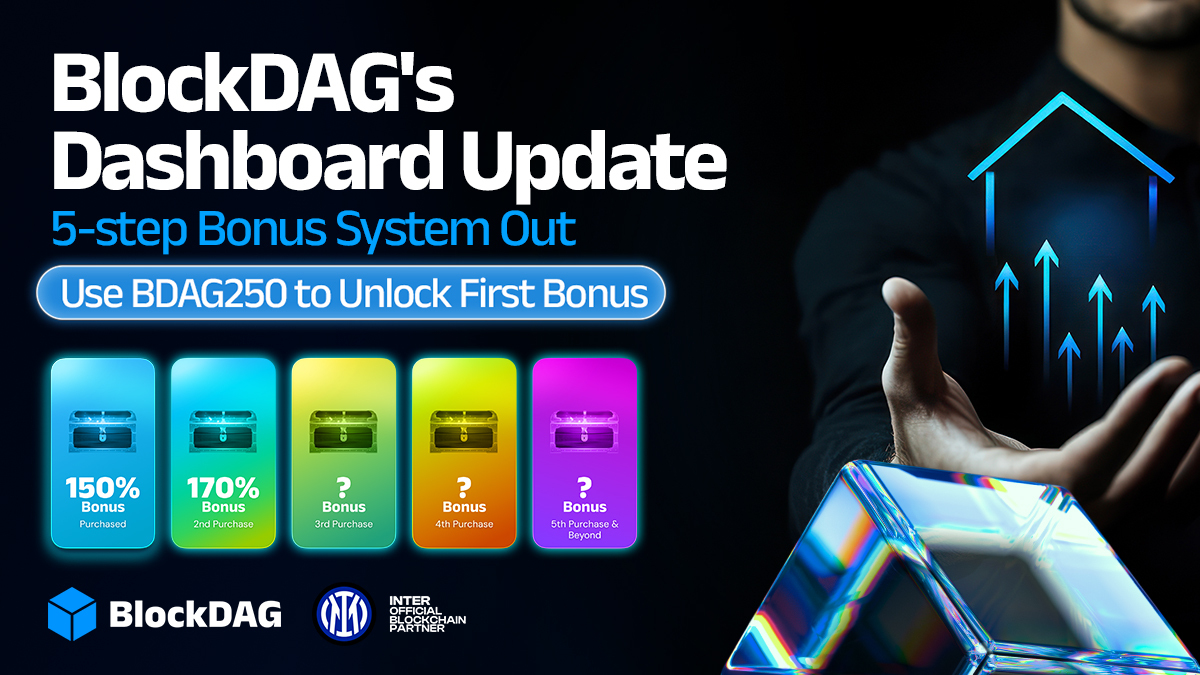
The network’s ongoing 5-stage BDAG250 bonus structure has sparked massive whale activity. BlockDAG is currently raising over $5 million daily, with the tiered bonus system attracting both new and existing BDAG holders.

Expiring on January 8, 2025, this bonus offers progressively higher rewards on the first five purchases, driving excitement and creating the perfect moment for traders who have been waiting for the right moment to enter. The tiered system also ensures that holders can maximize their returns while continuing to back BlockDAG’s meteoric rise.

BlockDAG Sees Massive Whale Action—$164M Raised as 5-Tier Bonus Closes Soon; Stacks Crypto Surges & Filecoin Climbs 

Beyond the bonus and the presale numbers, BlockDAG’s technology continues to shine. The network’s Ethereum Virtual Machine (EVM) compatibility allows seamless integration with Ethereum wallets and tools, while its WebAssembly (WASM) compatibility enables developers to easily build decentralized applications. 

Given BlockDAG’s tech muscle and presale power, Analysts speculate the BDAG coin could reach $1 by 2025, exciting current holders and enticing new buyers to jump in.

BlockDAG’s strong appeal to whales, combined with its community-focused initiatives and practical tech features, positions it as a promising choice for those seeking to benefit from a crypto presale with exponential growth potential. 

Which Is The Best Crypto Investment?

In a market overflowing with opportunities, Stacks Crypto and Filecoin have captured attention as the best crypto investments with smart upgrades and remarkable gains. But it’s BlockDAG that whales and retail holders are rallying behind, naming it the most profitable altcoin. 

While others talk potential, BlockDAG delivers action with $164 million raised, 17 billion coins sold, and a wild 2240% ROI delivered to early adopters. 

The ongoing BDAG250 bonus has helped boost these numbers even further, driving $5 million in daily inflows. BlockDAG’s tech stack, powered by WASM and EVM compatibility, is setting the foundation for the next era of blockchain. As the January 8 bonus deadline approaches, one thing is clear—BlockDAG isn’t waiting for the future—it’s creating it.

BlockDAG Sees Massive Whale Action—$164M Raised as 5-Tier Bonus Closes Soon; Stacks Crypto Surges & Filecoin Climbs 

Presale: https://purchase.blockdag.network

Website: https://blockdag.network

Telegram: https://t.me/blockDAGnetworkOfficial

Discord: https://discord.gg/Q7BxghMVyu

Disclaimer

In line with the Trust Project guidelines, please note that the information provided on this page is not intended to be and should not be interpreted as legal, tax, investment, financial, or any other form of advice. It is important to only invest what you can afford to lose and to seek independent financial advice if you have any doubts. For further information, we suggest referring to the terms and conditions as well as the help and support pages provided by the issuer or advertiser. MetaversePost is committed to accurate, unbiased reporting, but market conditions are subject to change without notice.

About The Author


Gregory, a digital nomad hailing from Poland, is not only a financial analyst but also a valuable contributor to various online magazines. With a wealth of experience in the financial industry, his insights and expertise have earned him recognition in numerous publications. Utilising his spare time effectively, Gregory is currently dedicated to writing a book about cryptocurrency and blockchain.

More articles


Gregory, a digital nomad hailing from Poland, is not only a financial analyst but also a valuable contributor to various online magazines. With a wealth of experience in the financial industry, his insights and expertise have earned him recognition in numerous publications. Utilising his spare time effectively, Gregory is currently dedicated to writing a book about cryptocurrency and blockchain.


Source link

Beyond Bots: Meta Motivo and the Dawn of Humanlike Digital Life

0
Beyond Bots: Meta Motivo and the Dawn of Humanlike Digital Life


Imagine a world where digital characters move and act just like real people. Meta’s new AI model, called Meta Motivo, aims to make that happen. It’s designed to give virtual agents more natural movements and responses, allowing them to fit smoothly into Metaverse experiences. With Meta Motivo, digital characters feel more alive, making virtual worlds richer, more inviting, and a lot more fun.

The main idea behind the Meta AI Model is to help virtual characters feel more genuine. In the past, making AI characters move or behave naturally often required lots of careful planning and fine-tuning. Meta Motivo changes that.

It learns on its own how to carry out a wide range of tasks—like walking, standing, or responding to a sudden change—without constant human input. As a result, these digital figures look and feel more like real people.

Source Meta

Full-Body Control Made Simple

One of Meta Motivo’s greatest strengths is its ability to control an entire digital body. It can track motion, achieve certain poses, and find its way around different places, all with minimal extra training.

Because it understands how bodies are supposed to move, it can jump into new situations and still behave naturally. This realistic movement makes it easier for us to connect with these virtual characters, almost as if they were right there with us.

Meta put the model to the test using datasets from all kinds of scenarios and languages. They also let human reviewers judge how well it performed. The results were impressive. Compared to other AI models, Meta Motivo handled a broad variety of tasks smoothly and didn’t need special instructions or massive rewrites of its code. This kind of testing shows that the Meta AI Model is ready to bring its realistic behaviors to the real world.

While Meta Motivo focuses on making characters feel more human, Meta is also working on tools to keep online content trustworthy. One such tool is Meta Video Seal, which helps confirm the origin of a video.

It does this by placing hidden marks in the video, acting like a signature that proves where it came from. By doing this, Meta aims to reduce misinformation and help people trust what they watch and share online.

Learning Without Labels

An important part of Meta Motivo’s learning process is something called unsupervised reinforcement learning. Instead of relying on carefully labeled examples, the model learns from raw data—like recordings of movement—and figures out what to do on its own.

By storing all this information in a shared space and understanding the rewards for certain actions, the model quickly picks up a wide range of skills. Whether it’s handling whole-body tasks or adjusting to sudden changes in its virtual world (like a gust of wind), Meta Motivo becomes more flexible and realistic simply by learning as it goes.

Editor’s note: Written with the assistance of AI – Edited and fact-checked by Jason Newey.

Jason Newey

Jason Newey is a seasoned journalist specializing in NFTs, the Metaverse, and Web3 technologies. With a background in digital media and blockchain technology, he adeptly translates complex concepts into engaging, informative articles.

View all posts


Source link

$164M Raised, $600M Coming Soon — BlockDAG Zooms Past Hedera’s Price Rally & XMR’s Target!

0
4M Raised, 0M Coming Soon — BlockDAG Zooms Past Hedera’s Price Rally & XMR’s Target!


The crypto market is filled with excitement and bullish movements as the Hedera (HBAR) price rally drives HBAR into the spotlight in Q4. HBAR is gaining momentum as its blockchain applications and enterprise partnerships drive it to the forefront of traders’ minds. Meanwhile, privacy-focused Monero (XMR) surges to new highs signaling a potential increase to $311.94 by mid-2025.

The presale success of BlockDAG (BDAG), however, has been so massive that BDAG is now officially the top trending crypto in the market. Having raised over $164 million and delivered an astounding 2240% ROI, BlockDAG is accelerating toward its $600 million target at a pace the crypto community did not see coming. 

As these three projects capture the market’s attention, savvy traders are seizing the moment to capitalize on their explosive potential.

$164M Raised, $600M Coming Soon — BlockDAG Zooms Past Hedera’s Price Rally & XMR’s Target!

Hedera (HBAR) Price Rally Unlocks a $5 Target

The Hedera (HBAR) price rally continues to attract attention in Q4, marking it as a standout performer. Recent momentum has pushed the token to a new level, with analysts projecting further growth fueled by its robust blockchain applications and partnerships. Hedera’s price rally has seen consistent gains that are creating excitement among traders waiting for a breakout.

$164M Raised, $600M Coming Soon — BlockDAG Zooms Past Hedera’s Price Rally & XMR’s Target!

Supply on exchanges has decreased, and growing utility through enterprise use cases has bolstered market confidence. HBAR’s price rally predictions further suggest that $0.83 resistance levels are within reach, with $5 as a long-term target. As the market reacts to increased activity, HBAR solidifies its position as a promising altcoin for bullish investors.

Monero (XMR) Price Surges Toward Promising Highs

The Monero (XMR) price is experiencing renewed momentum, solidifying its reputation as a top privacy-focused cryptocurrency. Currently trading around $202, the XMR price reflects steady growth driven by its unparalleled commitment to anonymity and security.

$164M Raised, $600M Coming Soon — BlockDAG Zooms Past Hedera’s Price Rally & XMR’s Target!

Projections for Monero’s price show potential increases to $311.94 by mid-2025, driven by rising demand for financial privacy. Investors have noted an uptick in Monero’s on-chain activity, emphasizing its reliability in safeguarding user transactions. As regulatory concerns continue to spotlight privacy coins, the Monero price dynamics suggest it will remain a key player in the crypto sector.

BlockDAG’s Races Toward $600M: What Can Holders Expect?

BlockDAG is generating unprecedented excitement in the crypto community, raising over $164 million with more than 17 billion coins sold since its presale began. Batch 1 presale holders have already seen an ROI of 2,240% as BDAG’s price rose to $0.0234 by batch 26. Analysts are now speculating on BlockDAG’s march toward a $600M milestone, fueled by massive whale activity and retail enthusiasm.

BlockDAG’s 5-stage BDAG250 bonus structure has been another key driver of its success, attracting a surge of buyers eager to unlock progressively higher rewards. Beginning with a 150% bonus on the first purchase, each subsequent stage offers greater benefits, prompting traders to secure their holdings before the promotion concludes on January 8, 2025. So far, the project has attracted over 170,000 unique holders, reinforcing its status as one of the top trending crypto projects today.

$164M Raised, $600M Coming Soon — BlockDAG Zooms Past Hedera’s Price Rally & XMR’s Target!

The presale numbers and the bonus system are appetizers compared to BlockDAG’s technological ingenuity. With the network’s recent integration of WebAssembly (WASM), developers can now leverage languages like Rust and C++ to build powerful dApp projects.

While traders are initially drawn by the generous offers, they stay for BlockDAG’s forward-thinking ecosystem, which combines cutting-edge technology with user-centric incentives. Its appeal extends beyond crypto presale profits, promising a strong foundation for long-term growth. As whale purchases continue to drive daily inflows of over $5 million, BlockDAG is keeping pace and building alongside its community.

As the Hedera price rally showcases its potential to redefine blockchain utility and Monero solidifies its role as a leader in privacy-focused technology, BlockDAG is charging ahead with unmatched energy. Having raised over $164 million and built an ecosystem attracting over 170,000 holders, BlockDAG isn’t simply following market trends—it is creating them. 

The BDAG250 bonus system, set to expire on January 8, has traders racing to secure their stake in a project that combines cutting-edge tech with extraordinary growth potential. 

While other cryptos gain moderate momentum, BlockDAG is barreling towards its $600 million milestone. The project’s unique vision and rapid rise set it apart as a defining force in the future of blockchain development. For those looking ahead, this top trending crypto offers a one-time opportunity to help shape blockchain’s future while securing massive returns along the way!

$164M Raised, $600M Coming Soon — BlockDAG Zooms Past Hedera’s Price Rally & XMR’s Target!

Presale: https://purchase.blockdag.network

Website: https://blockdag.network

Telegram: https://t.me/blockDAGnetworkOfficial

Discord: https://discord.gg/Q7BxghMVyu

Disclaimer

In line with the Trust Project guidelines, please note that the information provided on this page is not intended to be and should not be interpreted as legal, tax, investment, financial, or any other form of advice. It is important to only invest what you can afford to lose and to seek independent financial advice if you have any doubts. For further information, we suggest referring to the terms and conditions as well as the help and support pages provided by the issuer or advertiser. MetaversePost is committed to accurate, unbiased reporting, but market conditions are subject to change without notice.

About The Author


Gregory, a digital nomad hailing from Poland, is not only a financial analyst but also a valuable contributor to various online magazines. With a wealth of experience in the financial industry, his insights and expertise have earned him recognition in numerous publications. Utilising his spare time effectively, Gregory is currently dedicated to writing a book about cryptocurrency and blockchain.

More articles


Gregory, a digital nomad hailing from Poland, is not only a financial analyst but also a valuable contributor to various online magazines. With a wealth of experience in the financial industry, his insights and expertise have earned him recognition in numerous publications. Utilising his spare time effectively, Gregory is currently dedicated to writing a book about cryptocurrency and blockchain.


Source link

Apple and Sony have agreed, the Vision Pro is now entering the world of gaming – Metaverseplanet.net

0
Apple and Sony have agreed, the Vision Pro is now entering the world of gaming – Metaverseplanet.net


Apple and Sony, two of the world’s largest technology companies, have signed a major partnership that promises to reshape the future of mixed reality (MR) and virtual reality (VR) gaming. Here’s what this significant collaboration entails.

Vision Pro and PSVR 2 Integration: A Game-Changing Move

Since the launch of Apple’s Vision Pro, the company has taken strategic steps to expand its capabilities in the gaming world. According to a report by Bloomberg’s Mark Gurman, a notable collaboration between Apple and Sony is underway, aiming to integrate Sony’s PSVR 2 controllers with Apple’s Vision Pro.

This integration will create enhanced mixed reality and virtual reality experiences, combining the best features of both platforms.

Expanding the Gaming Ecosystem

The Apple Vision Pro and Sony PSVR 2 compatibility will offer users access to a broader range of gaming options and interactive experiences. Both companies have reportedly been working on this collaboration for a long time, focusing on ensuring seamless compatibility through technical advancements.

Apple plans to launch Sony’s VR controllers alongside the Vision Pro, a development that will especially excite gaming enthusiasts. The two tech giants are committed to creating next-generation gaming experiences by leveraging their technological expertise.

Gaming Meets Entertainment: A New Era

By integrating Sony’s PSVR 2 controllers with Apple’s Vision Pro, users will gain access to a wider game library and more immersive apps. This collaboration aims to move beyond the business-focused applications of mixed reality glasses, making them central to the entertainment sector as well.

Advanced Gaming Features

The PSVR 2 controllers were designed to offer a more realistic gaming experience. Their integration with Apple’s Vision Pro will unlock more interactive, dynamic, and seamless virtual experiences. Both companies intend to expand their presence in the gaming industry and establish a dominant position in the mixed reality market.

The partnership between Apple and Sony marks a pivotal moment in the gaming industry, blending VR and MR technologies for a new era of interactive experiences. By combining Apple’s Vision Pro with Sony’s PSVR 2 controllers, the companies aim to create an immersive entertainment ecosystem, offering gamers and tech enthusiasts a glimpse into the future of mixed reality gaming.

You May Also Like

Follow us on TWITTER (X) and be instantly informed about the latest developments…

Copy URL


Source link

How to Play Axie Infinity? – Metaverseplanet.net

0
How to Play Axie Infinity? – Metaverseplanet.net


Axie Infinity (AXS), launched in 2019, is one of the most popular blockchain NFT games. This play-to-earn game allows players to collect, breed, and battle virtual creatures called Axies, which are tradable as NFTs. Players can earn cryptocurrency by participating in in-game challenges and completing tasks. Let’s explore how Axie Infinity works and its key features.

What is Axie Infinity (AXS)?

Developed by Sky Mavis, Axie Infinity is a blockchain-based metaverse game running on the Ethereum (ETH) network. Players collect and breed Axies, digital monsters with unique characteristics represented as NFTs. The game includes play-to-earn mechanics, enabling players to earn cryptocurrency through various in-game activities like battles and quests.

How Was Axie Infinity Founded?

Sky Mavis released the alpha version of Axie Infinity in 2019. The platform’s native token, AXS (Axie Infinity Shards), was introduced through a token sale on Binance Launchpad in 2020 after a private sale for strategic investors.

AXS tokens serve as governance tokens, granting holders voting rights in the game’s decision-making process. Players can also stake AXS tokens for additional income.

What is Ronin?

To overcome Ethereum’s high gas fees, Sky Mavis developed Ronin, a custom sidechain for Axie Infinity. The Ronin Wallet, available as a browser extension and mobile app, facilitates transactions within the Axie ecosystem with minimal costs.

With Ronin, players can avoid paying Ethereum gas fees, making trading Axie NFTs more efficient and cost-effective.

How to Play Axie Infinity?

To play Axie Infinity, you’ll need an Ethereum wallet like Metamask or Ronin Wallet. Follow these steps:

Create a Wallet: Set up Metamask or Ronin Wallet and fund it with ETH coins.

Log In: Connect your wallet to Axie Infinity’s website.

Buy Axies: Purchase at least three Axie NFTs from the Axie Infinity marketplace to start playing.

Once you have your Axies, you can explore various game modes, including Adventure Mode and Arena Mode, as well as manage Axie stats like health (HP), speed, morale, and skills.

Game Modes: Adventure and Arena

Adventure Mode

Consists of 36 levels called Ruins, where players battle monsters.

Completing levels can earn players Smooth Love Potion (SLP), the game’s native currency.

Maximum daily reward: 50 SLP.

Arena Mode

A PvP mode where players face off against other Axie trainers.

Winning battles grants SLP rewards and boosts leaderboard rankings.

Daily Tasks Bonus: Players can earn an extra 25 SLP per day by completing tasks in both modes.

Breeding Axies

Breeding Axies generates new NFTs that can be used in battles, bred further, or sold. Key points about breeding:

Breeding Costs: Requires ETH and SLP tokens.

Gene System: Each Axie has three genes determining its offspring’s traits.

Breed Limits: Each Axie can be bred up to 7 times to manage supply and avoid inflation.

Lunacia: The Axie Homeland

Lunacia, the virtual homeland of Axies, consists of 90,601 NFT plots of land. Players can:

Build homes for Axies.

Upgrade land using items from the Axie Infinity marketplace.

Earn AXS tokens through land exploration and events.

How to Choose an Axie?

When purchasing Axies from the marketplace, consider these key stats:

Health (HP): Determines maximum health; improves through breeding.

Speed: Influences attack order; faster Axies strike first.

Skill: Enhances damage output and activates special skills when used with the right card combo.

Morale: Affects the chance of landing critical hits and surviving longer in battles through the Last Stand mechanic.

Axie Classes

Axies are divided into six primary classes, each offering different combat advantages:

Reptile

Plant

Dusk

Aquatic

Bird

Beast

Bug

Choosing the right Axies based on your strategy can significantly improve your gameplay and earning potential.

Axie Infinity (AXS) is a pioneering NFT game combining blockchain technology, digital asset ownership, and play-to-earn mechanics. With Axie NFTs, SLP rewards, and game modes like Adventure and Arena, Axie Infinity has become a leading force in the blockchain gaming world, offering players both entertainment and real-world income potential.

You May Also Like

Follow us on TWITTER (X) and be instantly informed about the latest developments…

Copy URL


Source link

What Are the Cryptocurrencies That Are Mined? – Metaverseplanet.net

0
What Are the Cryptocurrencies That Are Mined? – Metaverseplanet.net


The most common way to produce cryptocurrencies is through cryptocurrency mining. On many blockchains that use the Proof-of-Work (PoW) consensus mechanism, such as Bitcoin (BTC), the process of verifying transactions is known as mining. Cryptocurrency miners play a crucial role by validating transactions and adding new blocks to the blockchain, earning block rewards in return. These rewards are issued in the form of newly created cryptocurrencies, making mining an essential part of the blockchain ecosystem.

What Are Mined Cryptocurrencies?

In its simplest definition, mined cryptocurrencies are digital assets generated through the process of cryptocurrency mining. This involves using the computational power of miners’ computers to verify transactions on the blockchain. In return, miners receive block rewards, introducing new coins into circulation.

Once mined, these cryptocurrencies can be bought and sold on platforms like cryptocurrency exchanges, enabling a thriving marketplace. The majority of mined cryptocurrencies, notably Bitcoin (BTC), use the Proof-of-Work (PoW) consensus algorithm.

Proof-of-Work and Mined Cryptocurrencies

Proof-of-Work (PoW) is the most widely used consensus mechanism in the blockchain world. In PoW-based systems, miners solve complex mathematical problems using their computing power. The first miner to solve the problem successfully verifies the transaction and adds a new block to the blockchain. In exchange, they receive cryptocurrency rewards, ensuring blockchain security, decentralization, and network integrity.

Differences Between Mined and Non-Mined Cryptocurrencies

Both mined and non-minable cryptocurrencies aim to achieve the same goals:

Transaction verification on the blockchain

Community participation in network governance

The key difference lies in the consensus mechanisms they use:

Mined Cryptocurrencies: Use Proof-of-Work (PoW), where miners validate transactions through computing power.

Non-Mined Cryptocurrencies: Typically use Proof-of-Stake (PoS), where network validators are chosen based on the number of coins they hold.

Popular Mined Cryptocurrencies

Many popular cryptocurrencies are produced through mining, with some of the most notable examples being:

1. Bitcoin (BTC)

Launched in January 2009 by the mysterious Satoshi Nakamoto, Bitcoin is the first and most well-known cryptocurrency. Its primary purpose was to create a decentralized digital payment system that operates without borders or intermediaries like banks or governments.

2. Litecoin (LTC)

Created in 2011 by former Google employee Charlie Lee, Litecoin was designed as a faster and more scalable alternative to Bitcoin. It uses a modified version of Bitcoin’s code, offering quicker transaction confirmations and a more efficient network.

3. Bitcoin Cash (BCH)

Introduced in 2017 as a result of a Bitcoin blockchain fork, Bitcoin Cash (BCH) addresses Bitcoin’s scalability issues by increasing block size limits. This enhancement allows faster and more cost-effective transactions, making BCH one of the most traded cryptocurrencies.

4. Dogecoin (DOGE)

Initially created as a joke in December 2013 by Jackson Palmer and Billy Markus, Dogecoin gained immense popularity due to its community-driven development and high transaction volumes. By January 2014, its total transaction volume had surpassed that of Bitcoin.

5. Ravencoin (RVN)

Introduced on October 31, 2017, and officially launched on January 3, 2018, Ravencoin (RVN) is based on a Bitcoin code fork. Its primary purpose is to facilitate asset transfers between peers efficiently, making it a notable addition to the list of mined cryptocurrencies.

Cryptocurrency mining remains a fundamental process in the blockchain world, producing well-known assets like Bitcoin (BTC), Litecoin (LTC), Bitcoin Cash (BCH), Dogecoin (DOGE), and Ravencoin (RVN). These digital currencies are not only mined and circulated but are also integral components of a rapidly evolving digital economy. As the blockchain ecosystem continues to expand, mined cryptocurrencies will play a crucial role in shaping the future of decentralized finance (DeFi).

You May Also Like

Follow us on TWITTER (X) and be instantly informed about the latest developments…

Copy URL


Source link

Sony Launches Blockchain! What is Soneium? – Metaverseplanet.net

0
Sony Launches Blockchain! What is Soneium? – Metaverseplanet.net


Sony‘s recent announcement about entering the blockchain space has created significant buzz in the cryptocurrency world. Partnering with Web3 startup Startale, Sony is set to develop its own blockchain project, named Soneium. This move highlights Sony’s ambition to merge its expertise in entertainment, technology, and decentralized finance with Web3 technologies.

What is Sony’s Blockchain Soneium?

With Startale and Sony collaborating on this groundbreaking project, the question “What is Soneium?” has become a hot topic in the cryptocurrency community. According to an official statement from Startale on its X account, Soneium will be a robust Layer-2 blockchain network built on the Ethereum (ETH) ecosystem, offering advanced Web3 features for developers and users alike.

Key Features of Soneium

Ethereum Layer-2 Network:Soneium will operate as a Layer-2 blockchain built on Ethereum (ETH), ensuring enhanced scalability and reduced transaction fees.

Integration with Astar Network:The testnet will launch in collaboration with Astar Network, utilizing Astar zkEVM to integrate all its assets and infrastructure, particularly the ASTR token. This will provide high liquidity and a wide range of supported crypto assets, even during the testnet phase.

Smart Contract Support:Soneium will support advanced smart contracts, allowing developers to create decentralized applications (dApps) with ease.

Developer-Focused Tools:Developers will benefit from comprehensive documentation, software development kits (SDKs), and third-party tools, making it simpler to build scalable and user-friendly dApps.

OP Stack Integration:Soneium will use the Optimism (OP) platform’s OP Stack toolkit, enabling developers to build custom chains and connect them to Optimism’s Superchain Network, fostering cross-chain interoperability.

Future Integration with Sony Products:Within two years, Soneium will be integrated into Sony’s ecosystem, including products like Sony Bank, Sony Music, and Sony Pictures, creating a Web3-powered ecosystem for financial services, entertainment, and digital media.

Startale’s Statement on Soneium

Here’s an excerpt from Startale’s official statement regarding the Soneium blockchain:

“Startale and the Sony Group are developing the @Soneium blockchain, combining Startale’s Web3 expertise with Sony’s experience in entertainment, gaming, finance, and electronics.

Soneium offers a developer-focused platform with a fully-featured testnet, advanced smart contract capabilities, and scalable infrastructure for high-volume applications. This platform merges Sony’s technological prowess with Startale’s blockchain expertise.

Soneium will provide extensive documentation, third-party tools, and dedicated developer support, enabling developers of all levels to launch and grow their projects. It will also foster a user-friendly community.

This partnership is built on shared goals and a strong relationship established over 1.5 years. Startale’s vertical-integrated approach aligns with Sony’s sustainable growth vision, creating strong synergies in the blockchain ecosystem.”

Collaboration with Astar Network

Astar Network is playing a crucial role in the Soneium blockchain project, aligning its zkEVM with Soneium Layer-2. This integration will expand the functionality of the ASTR token and strengthen Astar’s position in the Web3 ecosystem.

According to Startale, this collaboration will open new growth opportunities, empower the community, and drive innovation in cutting-edge blockchain applications. This strategic partnership underscores both companies’ commitment to advancing the future of decentralized technologies.

Sony‘s entry into the blockchain world with Soneium signals a major step toward merging traditional technology with Web3 innovations. By leveraging Startale’s Web3 expertise and Sony’s technological dominance, the project promises to create a cutting-edge platform for developers and businesses. With features like Layer-2 scalability, smart contract support, and cross-chain interoperability, Soneium could become a cornerstone in the next wave of blockchain advancements.

You May Also Like

Follow us on TWITTER (X) and be instantly informed about the latest developments…

Copy URL


Source link

Who Is NFT Artist Beeple? Why is Beeple famous? – Metaverseplanet.net

0
Who Is NFT Artist Beeple? Why is Beeple famous? – Metaverseplanet.net


Beeple, one of the most renowned NFT artists, has made some of the most expensive NFT sales in history. His groundbreaking work has drawn even traditional art collectors into the world of NFT artworks, reshaping the digital art landscape.

Who is Beeple?

Beeple, whose real name is Mike Winkelmann, is an American graphic designer known for his digital artwork. Before rising to NFT fame, Beeple created visual content for concerts of global superstars like Justin Bieber, Nicki Minaj, and Childish Gambino. He also collaborated with major fashion brands such as Louis Vuitton, making a name for himself in the digital art world even before the NFT boom.

Today, Beeple has over 2 million followers on Instagram. While he was already recognized within the art community, his popularity skyrocketed after he ventured into NFT artworks in 2020, encouraged by peers who suggested exploring the emerging technology.

Beeple’s Art Style

Beeple’s art primarily focuses on visual satire of current global events. His creations often reference politicians, pop-culture icons, and pressing societal issues. He frequently uses animation to create dynamic, moving visuals in addition to static digital works, adding a unique dimension to his art.

Why is Beeple Famous?

Beeple began selling NFT artwork in February 2020, with his early works generating tens of thousands of dollars in sales. One of his initial NFT pieces, “Crossroad”, was designed to change based on the results of the 2020 US Presidential Election. Initially sold for $66,666.66, the piece was later resold for an astonishing $6.7 million.

However, the real turning point in Beeple’s career came when Christie’s, a prestigious auction house, announced it would auction one of his works, becoming the first major auction house to sell an NFT artwork and accept payment in Ether (ETH).

Everydays – The First 5000 Days

The piece auctioned by Christie’s was a digital collage titled “Everydays – The First 5000 Days”. It compiled 5,000 digital images Beeple had posted daily on Instagram over 13 years, creating a visual diary of modern history and pop culture.

In February 2021, “Everydays – The First 5000 Days” sold for an unprecedented $69.3 million worth of ETH coins, making it the most expensive NFT artwork ever sold. This sale catapulted Beeple into global fame, earning widespread recognition in both the art and crypto communities.

HUMAN ONE

Beeple continued pushing the boundaries of digital art by creating his first physical work, titled “HUMAN ONE”, paired with its corresponding NFT. The piece consisted of four digital screens displaying a constantly evolving image of an astronaut navigating the metaverse. The dynamic nature of the visuals meant the artwork was always changing, making it a living digital masterpiece.

In November 2021, “HUMAN ONE” and its NFT sold for $28.9 million, further establishing Beeple as a pioneering force in the digital art and NFT worlds.

Beeple’s Impact on the NFT World

Beeple has played a crucial role in mainstreaming digital art through his groundbreaking NFT projects. His success drew significant attention from traditional art collectors, especially after a prestigious auction house like Christie’s embraced NFT auctions.

Following Beeple’s record-breaking sales, countless artists started creating and selling NFT artworks, enabling many to earn a living without relying on physical exhibitions—a trend that gained momentum during the pandemic. Celebrities like Snoop Dogg, Paris Hilton, Edward Snowden, Eminem, and Julian Assange also joined the NFT movement, launching highly valued digital art collections.

Ultimately, Beeple’s influence has played a pivotal role in turning NFTs into a global art phenomenon, inspiring countless creators and reshaping the future of art in the digital age.

You May Also Like

Follow us on TWITTER (X) and be instantly informed about the latest developments…

Copy URL


Source link

Popular Posts

My Favorites

Why Didn’t the Emmys Nominate 3 of 2025’s Best TV Performances?

The nominations are out for this year’s Emmy Awards, and as always, one of the biggest stories is about the shows and performers who...