Metaverse

Home Metaverse Page 23

Binance Initiates Legal Action Against The Wall Street Journal Over Alleged Defamatory Reporting

Binance Initiates Legal Action Against The Wall Street Journal Over Alleged Defamatory Reporting


In Brief

Binance has filed a lawsuit against The Wall Street Journal over allegedly false reporting, highlighting its extensive compliance infrastructure and commitment to protecting its reputation and users.

Binance Initiates Legal Action Against The Wall Street Journal Over Alleged Defamatory Reporting

Cryptocurrency exchange Binance announced that it has initiated legal action against The Wall Street Journal over an article published on February 23rd, 2026, which the company claims contained false and defamatory statements. According to Binance, the reporting prompted unwarranted inquiries from government officials and caused reputational and operational harm.

The exchange stated that the lawsuit seeks to defend its reputation and hold the publication accountable for the impact of the article, which Binance says misrepresented facts and contributed to confusion and misdirected attention across public and private sectors. Binance’s Global Head of Litigation, Dugan Bliss, described the action as a necessary measure to address misinformation, reputational damage, and broader consequences for the cryptocurrency industry, emphasizing the company’s commitment to compliance and innovation.

Binance Emphasizes Industry-Leading Compliance And Rigorous Risk Oversight

According to a publication on its website, Binance highlighted the scale and scope of its compliance infrastructure, noting that the company employs more than 1,500 professionals—nearly a quarter of its global workforce—dedicated to risk management, investigations, and regulatory compliance. The firm has invested hundreds of millions of dollars in talent, processes, technology, and operational tools, covering areas such as sanctions compliance, anti-money laundering, financial crime investigations, and on-chain monitoring. Binance’s approach includes proactive customer due diligence, transaction monitoring, sanctions screening, behavioral analytics, and mechanisms to prevent access from prohibited jurisdictions, including VPN circumvention detection.

Furthermore, the company cited measurable results from its compliance efforts, including a 96.8% reduction in sanctions-related exposure as a percentage of total exchange volume between January 2024 and July 2025, a 97.3% decline in exposure to major Iranian cryptocurrency exchanges, and processing more than 71,000 law enforcement requests globally in 2025. Binance also reported supporting the freezing and recovery of hundreds of millions of dollars linked to illicit activity during the same period.

Binance emphasized that risk cannot be fully eliminated on public blockchains, as assets can be sent to exchange deposit addresses without prior approval. The company said its strategy focuses on detection, investigation, mitigation, offboarding, and reporting, backed by continuous monitoring and process improvement. The exchange holds regulatory approvals in over 20 jurisdictions and is the first to secure full authorization under the Abu Dhabi Global Market’s Financial Services Regulatory Authority framework, reflecting ongoing investment in governance and independent oversight.

The lawsuit is Binance’s effort to address reputational harm while maintaining its operational standards and user trust. The company reaffirmed its commitment to strengthening compliance measures, cooperating with law enforcement, engaging with regulators, protecting users, and correcting inaccurate reporting when it arises.

Disclaimer

In line with the Trust Project guidelines, please note that the information provided on this page is not intended to be and should not be interpreted as legal, tax, investment, financial, or any other form of advice. It is important to only invest what you can afford to lose and to seek independent financial advice if you have any doubts. For further information, we suggest referring to the terms and conditions as well as the help and support pages provided by the issuer or advertiser. MetaversePost is committed to accurate, unbiased reporting, but market conditions are subject to change without notice.

About The Author

Alisa, a dedicated journalist at the MPost, specializes in cryptocurrency, zero-knowledge proofs, investments, and the expansive realm of Web3. With a keen eye for emerging trends and technologies, she delivers comprehensive coverage to inform and engage readers in the ever-evolving landscape of digital finance.

More articles

Alisa, a dedicated journalist at the MPost, specializes in cryptocurrency, zero-knowledge proofs, investments, and the expansive realm of Web3. With a keen eye for emerging trends and technologies, she delivers comprehensive coverage to inform and engage readers in the ever-evolving landscape of digital finance.

More articles



Source link

Foundry Digital Expands Beyond Bitcoin With New Zcash Mining Pool

Foundry Digital Expands Beyond Bitcoin With New Zcash Mining Pool


Key Highlights

The upcoming Zcash pool marks Foundry Digital’s first major mining infrastructure offering for another cryptocurrency network.The new pool aims to fill a gap in the existing Zcash mining ecosystem.Foundry Digital also plans to offer operational tools and reporting systems, which are designed for larger mining firms and publicly listed companies.

Digital asset infrastructure firm Foundry Digital plans to launch a new mining pool for Zcash in April 2026, expanding its operations beyond Bitcoin mining. The company operates Foundry USA Pool, one of the largest Bitcoin mining pools globally by hash rate.

According to the official announcement, the upcoming Zcash pool marks its first major mining infrastructure offering for another cryptocurrency network.

Addressing limited mining infrastructure

Foundry said the new pool is intended to fill a gap in the existing Zcash mining ecosystem, where infrastructure tailored for institutional miners remains limited.

The company plans to provide operational tools and reporting systems designed for larger mining firms and publicly listed companies. These include auditable payout systems, compliance-oriented processes, and monitoring tools for mining operations.

Focus on U.S.-based operations

According to Foundry, the Zcash mining pool will operate from the United States, a setup the company says could help reduce counterparty and compliance risks for participating miners.

The infrastructure is expected to follow similar operational standards used in the company’s Bitcoin mining pool, which provides reporting systems and support services for miners.

Zcash’s role in privacy-focused crypto

Launched in 2016, Zcash is a cryptocurrency built around zero-knowledge proof technology, allowing transactions to be verified on a public blockchain while concealing details such as wallet addresses and transaction values. The project has often been cited as an example of privacy-preserving blockchain design within public distributed networks.

Moreover, Zooko Wilcox, chief product officer at Shielded Labs and founder of Zcash, commented on the development, stating, “This will spread out the Zcash mining hashpower from its current concentration in a single pool, and hopefully it will bring in new Zcash miners who trust Foundry to operate a high-quality service.”

Why it matters

The launch indicates a possible shift in mining infrastructure for Zcash, which has historically lacked large institutional pool operators. If major mining firms join the new pool, the network could see changes in how hash power is distributed and managed.

For Foundry Digital, the move reflects a broader effort to expand beyond Bitcoin-focused services and build infrastructure across multiple blockchain networks as the digital asset mining sector matures.

Also Read: Binance vs WSJ: Lawsuit Filed, DOJ Probe Launched on Same Day

Disclaimer: The information researched and reported by The Crypto Times is for informational purposes only and is not a substitute for professional financial advice. Investing in crypto assets involves significant risk due to market volatility. Always Do Your Own Research (DYOR) and consult with a qualified Financial Advisor before making any investment decisions.


Source link

GPT-5.4 Now Available in Microsoft Foundry

GPT-5.4 Now Available in Microsoft Foundry


The pace of AI innovation continues to accelerate. Just a few months after the release of GPT-5.2 and GPT-5.3, Microsoft Foundry now brings us GPT-5.4—OpenAI’s most capable frontier model to date to Microsoft Foundry. This release marks a significant leap forward in reasoning, agentic workflows, and professional-grade automation.

Whether you’re building AI agents, automating complex workflows, or exploring new frontiers in software development and data analysis, GPT-5.4 is designed to deliver faster, more reliable, and more intelligent results.

What’s in GPT-5.4?Introducing GPT-5.4 ProCapabilitiesPricing and AvailabilityThoughtsResources

What’s in GPT-5.4?

GPT-5.4 introduces a range of enhancements that elevate its performance across professional and enterprise scenarios:

Built-in agentic workflows for planning and execution

Native computer use capabilities (keyboard, mouse, screenshots)

Tool Search for navigating large tool ecosystems

Support for very large context windows (up to 1,050,000 tokens)

Improved token efficiency for faster, lower-cost responses

Enhanced coding and software automation reliability

Higher factual accuracy and reduced hallucinations

These capabilities make GPT-5.4 a powerful tool for document and spreadsheet creation, coding, data analysis, and long-form reasoning tasks.

Introducing GPT-5.4 Pro

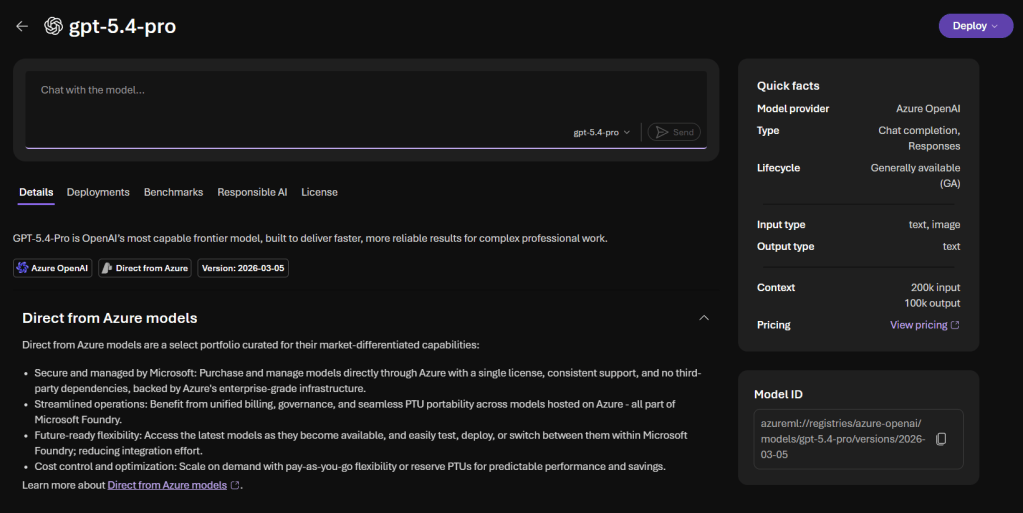
For scenarios where analytical depth and completeness are more important than latency, Microsoft Foundry also offers GPT-5.4 Pro—a premium variant of the model.

GPT-5.4 Pro is designed for deep analytical workflows, such as scientific research, strategic decision-making, and complex problem-solving. It introduces:

Multi-path reasoning evaluation to explore alternative solutions

Greater analytical depth for problems with trade-offs or multiple valid outcomes

Improved stability across long reasoning chains

Enhanced decision support where rigor outweighs speed

With a larger context window (400,000 tokens at the moment, larger context window coming soon) and the same high output capacity (128,000 tokens), GPT-5.4 Pro is the go-to model for high-assurance, high-complexity tasks.

Capabilities

To help you evaluate the evolution of these models, here’s a side-by-side comparison of GPT-5.4, GPT-5.4 Pro, and GPT-5.2:

CapabilityGPT-5.4GPT-5.4 ProGPT-5.2ReasoningStronger reasoning for complex, multi-step tasksMulti-path reasoning evaluation for deeper analysisAdaptive reasoning for complex queriesAgentic WorkflowsBuilt-in agentic workflows for planning and executionEnhanced agentic workflows with improved stabilityAccelerates agent developmentComputer InteractionNative computer use (keyboard, mouse, screenshots)Same as GPT-5.4Not availableTool ManagementTool Search for large tool ecosystemsSame as GPT-5.4Reliable tool use and governed integrationsToken EfficiencyImproved for faster, lower-cost responsesSame as GPT-5.4Improved over GPT-5.1Coding ReliabilityEnhanced software automation and code generationSame as GPT-5.4Reliable code generation and modernizationFactual AccuracyHigher factual accuracy and reduced hallucinationsSame as GPT-5.4Greater consistency and accuracyContext Window1,050,000 tokens400,000 tokens (1,050,000 coming soon)400,000 tokensContext Memory – Output128,000 tokens128,000 tokens128,000 tokensTraining Data CutoffAugust 2025August 2025August 2025Best ForReliable execution, agentic workflows, software automationScientific research, complex decision-making, deep analytical workflowsLong-form reasoning, structured content, enterprise agentsLatency vs. DepthPrioritizes speed and reliabilityPrioritizes analytical depth and completeness over latencyBalanced performance

Pricing and Availability

Microsoft Foundry offers flexible pricing for GPT-5.4 based on context length:

GPT‑5.4 (<272K input tokens):

$2.50 per million input tokens

$0.25 per million cached input tokens

$15.00 per million output tokens

GPT‑5.4 (>272K input tokens):

$5.00 per million input tokens

$0.50 per million cached input tokens

$22.50 per million output tokens

GPT‑5.4 Pro:

$30.00 per million input tokens

$180.00 per million output tokens

At launch, GPT-5.4 is available in Standard Global and Standard Data Zone (US), while GPT-5.4 Pro is available in Standard Global, with more deployment options expected soon.

Thoughts

GPT-5.4 is a great leap forward in enterprise AI. With its massive context window, built-in agentic capabilities, and native computer interaction, it’s built for the next generation of professional work. And for those who need even more analytical depth, GPT-5.4 Pro offers unmatched reasoning power.

The future of AI in the enterprise is arriving faster than ever—and Microsoft Foundry is making it easier to adopt and scale these capabilities securely and efficiently.

What are you most excited to build with GPT-5.4?

Resources

Unknown's avatar

Published by Vesa Nopanen

Vesa “Vesku” Nopanen, Principal Consultant and Microsoft MVP (Microsoft 365 and Azure AI Foundry) working on Future Work at Sulava MEA.

I work, blog and speak about Future Work : AI, Microsoft 365, Copilot, Loop, Azure, and other services & platforms in the cloud connecting digital and physical and people together.

I have 30 years of experience in IT business on multiple industries, domains, and roles.
View all posts by Vesa Nopanen


Source link

The Physics of Time Travel and the Mystery of the Tipler Cylinder | Metaverse Planet

The Physics of Time Travel and the Mystery of the Tipler Cylinder | Metaverse Planet


Have you ever wondered why scientists easily say we can travel to the future, but completely shut down the idea of going back to the past?

I was doing a deep dive into spacetime physics recently, digging through old research papers and theoretical models, and I stumbled upon something that absolutely blew my mind: The Tipler Cylinder.

For years, I’ve read about wormholes, quantum entanglement, and black holes, but the Tipler Cylinder is different. It is theoretically the only way to travel back in time without breaking every known law of physics. But there is a massive, heartbreaking catch to this machine. Let’s just say, buying a ticket to go back and safely watch the dinosaurs from a viewing deck isn’t going to happen.

Grab a cup of coffee, because we are about to go down a massive cosmic rabbit hole.

Why Traveling to the Future is Actually “Easy”

Before we look at going backward, we have to talk about going forward. Whenever I talk to people about time travel, they assume going to the future is just as impossible as going to the past. But physics heavily disagrees.

Thanks to Albert Einstein and his Theory of Special Relativity, we know that time is not absolute. It’s flexible. It stretches and compresses based on how fast you are moving through space.

Time Dilation: If I jump into a spaceship right now and travel close to the speed of light for what feels like five years to me, I might return to Earth to find that 50 years have passed for everyone else.Gravity’s Pull: The same thing happens around massive objects. If I hang out near the event horizon of a black hole, the intense gravity literally slows down time for me relative to people back on Earth.

So, forward time travel? It’s a proven fact. GPS satellites literally have to adjust their internal clocks every day to account for this time dilation, otherwise, our maps on our phones would be off by miles. We just don’t have the engineering yet to build ships fast enough to make leaps into the centuries ahead.

The Wall: Why the Past is Off-Limits

Going forward is just a matter of speed and engineering. Going backward? That is where the universe seemingly puts up a brick wall.

I’ve always found it fascinating how nature fiercely protects the Arrow of Time. Entropy—the measure of disorder in the universe—always increases. You can easily scramble an egg, but you can never un-scramble it.

Then, there are the paradoxes. The most famous is the Grandfather Paradox: If I go back in time and accidentally prevent my grandparents from meeting, how was I ever born to go back in time in the first place? To prevent the universe from breaking its own logic of cause and effect (causality), physics generally assumes the past is locked.

Until Frank Tipler came along in 1974.

Enter the Tipler Cylinder: A Loophole in Reality

When I first read Frank Tipler’s paper, Rotating Cylinders and the Possibility of Global Causality Violation, I had to re-read it three times to make sure I was understanding it correctly. Tipler, a mathematical physicist, found a mathematical loophole in Einstein’s equations of General Relativity.

He proved that you don’t need exotic “negative energy” or magical portals to go to the past. You just need a specific geometric shape spinning at terrifying speeds.

How it Works: Stirring the Spacetime Soup

Imagine spacetime isn’t an empty void, but a thick, invisible fluid—like a jar of honey.

If you take a massive object and spin it incredibly fast, it doesn’t just spin in space; it drags the actual fabric of spacetime around with it. In physics, this is called frame-dragging (or the Lense-Thirring effect). We actually observe a microscopic version of this around our own spinning Earth!

Tipler proposed taking this to the extreme:

The Build: You construct a cylinder that is unimaginably dense. We are talking about packing the mass of several suns into a tube.The Spin: You spin this cylinder on its longitudinal axis at billions of revolutions per minute—approaching the speed of light.The Twist: The cylinder spins so fast, and its gravity is so intense, that it twists spacetime around itself like a cosmic tornado.

The Flight Path to Yesterday

If I wanted to use this machine, I wouldn’t step into a glowing phone booth. I would get into a spaceship and fly toward this spinning megastructure.

Because the spacetime around the cylinder is twisted so severely, the “light cones” (the paths that light and time normally take) get tipped entirely on their sides. If I fly my spaceship in a very specific spiral trajectory around the cylinder, against the direction of the spin, I would enter what physicists call a Closed Timelike Curve (CTC).

As I fly, I wouldn’t feel anything strange. My ship’s clock would tick forward normally. But because space and time are fundamentally swapped in this twisted region, traveling through space around the cylinder actually moves me backward through time.

I could spiral around the cylinder a few times, fire my thrusters to leave its gravitational pull, and I would arrive back in normal space—years, decades, or centuries before I started the journey.

The Massive, Heartbreaking Catch

This all sounds incredible, right? A time machine made out of standard (albeit incredibly dense) matter, utilizing the known laws of gravity. So why aren’t we building one?

When I dug into the engineering side of Tipler’s equations, the heartbreaking reality of the math hit me. There are constraints that make this impossible for any human civilization to build.

The Infinite Length Problem: For the math to work perfectly without spacetime collapsing into a black hole at the edges, the cylinder must be infinitely long. Yes, you read that right. Infinite. You cannot build an infinitely long object in a finite universe.The Exotic Matter Dilemma: Later physicists, notably Stephen Hawking, looked at Tipler’s work and asked, “What if we build a finite cylinder?” Hawking proved through his Chronology Protection Conjecture that if the cylinder has ends, the time-travel effect breaks down unless you coat the ends in “exotic matter” (matter with negative energy mass). As of right now, exotic matter is purely mathematical; we aren’t even sure it exists in the universe.The Black Hole Risk: Even if you could gather the mass of ten suns and spin it at the speed of light, the sheer gravitational forces would likely cause the whole structure to collapse in on itself, crushing you into a singularity before you could ever reach the past.

Are We Stuck in the Present?

Realizing that the Tipler Cylinder is a mathematical ghost was a bit of a letdown for me. It proves that the universe’s underlying code does technically allow for past time travel, but it puts the physical requirements completely out of our reach. It’s as if the universe is saying, “Yes, the door to the past exists, but I’ve made the lock impossible to turn.”

We might not be able to build a physical time machine to visit the dinosaurs, but I find a weird sense of comfort in knowing that the math works. It shows us that spacetime is far weirder, far more fluid, and far more magical than our everyday experience lets us see.

I’d love to hear your thoughts on this. If the physical limitations were somehow solved, and you had the chance to use this machine, what specific moment in your own life would you go back to? Let’s talk about it in the comments!

If cosmic rabbit holes like this fascinate you as much as they fascinate me, make sure you stick around for the next ones.

You Might Also Like;


Source link

The Modular Blockchain Era: How Rollups and Appchains Are Reshaping Crypto Infrastructure | NFT News Today

The Modular Blockchain Era: How Rollups and Appchains Are Reshaping Crypto Infrastructure | NFT News Today


Blockchain networks have long struggled with scaling under real-world demand. During the 2020–2021 DeFi boom, Ethereum frequently faced severe congestion and triple-digit transaction fees. Other high-throughput chains, including Solana, demonstrated impressive performance but occasionally halted during periods of extreme activity. These episodes exposed a core limitation of monolithic blockchain design.

In monolithic architectures, execution, consensus, settlement, and data availability are handled within a single network layer. As usage grows, this integrated structure becomes increasingly difficult to scale. Modular architectures address the problem by separating these functions into specialised layers that interact through shared infrastructure.

By early 2026, rollups, dedicated data availability networks, shared security models, and app-specific chains are driving rapid ecosystem growth. This article looks at how modular systems differ from monolithic chains, the infrastructure enabling them, and why many applications are now choosing to launch their own blockchains.

Modular vs Monolithic Architectures: Key Differences

Monolithic blockchains operate as integrated systems. Every node in the network is responsible for processing transactions, verifying state transitions, maintaining consensus, and storing data. This model ensures simplicity and strong composability but places heavy demands on network infrastructure.

Modular architectures separate these responsibilities across multiple specialised layers. Execution can occur on rollups or appchains, settlement on a secure base layer, and data availability on dedicated networks. By distributing workload across independent layers, modular systems can scale more efficiently while allowing developers to customise infrastructure for specific applications.

The contrast between the two models can be summarised as follows:

Scalability:Monolithic chains scale within a single network. Modular systems scale by distributing tasks across layers, allowing throughput to increase without overwhelming the base layer.

Customization:Monolithic environments are general-purpose. Modular systems enable application-specific execution environments with custom block times, gas tokens, and governance rules.

Security bootstrapping:New monolithic chains must establish their own validator sets. Modular ecosystems allow smaller chains to inherit security from established networks through shared security models.

Cost efficiency:Modular architectures offload computation to rollups or specialised chains, reducing congestion and lowering transaction costs.

Examples:Examples of monolithic systems are Bitcoin and Solana. Modular ecosystems include Ethereum rollups, Cosmos appchains, and rollups built on Celestia.

Ethereum’s roadmap illustrates this shift. The Glamsterdam upgrade, expected in the first half of 2026, focuses on improving execution-layer efficiency, introducing proposer-builder separation through enshrined PBS (ePBS), and improving MEV fairness. Later in the year, the Hegota upgrade aims to further optimise node performance and expand account abstraction capabilities.

These upgrades strengthen Ethereum’s position as a settlement and security layer in a larger modular ecosystem, instead of being just an all-in-one execution platform.

Core Components of the Modular Stack

The modular model relies on several specialised infrastructure layers that work together to support scalable decentralised applications.

Rollups form the execution layer of many modular ecosystems. They process transactions off-chain and submit compressed transaction data or cryptographic proofs to a base layer such as Ethereum. Two primary rollup designs dominate the landscape:

Optimistic rollups, which assume transactions are valid unless challenged.

Zero-knowledge (ZK) rollups, which generate validity proofs that confirm correct execution.

Both types of rollups greatly increase throughput while keeping the security of the main blockchain.

Another essential component is the data availability (DA) infrastructure. DA layers ensure that transaction data remains accessible so that nodes can verify state transitions. Dedicated networks have emerged to perform this role efficiently.

Celestia has become a leading provider in this category. As of early 2026, Celestia processes more than 160 gigabytes of rollup data and accounts for roughly half of the modular data availability market, according to ecosystem metrics.

Security is addressed through shared security models. Instead of building independent validator networks, smaller chains can inherit security from established ecosystems. EigenLayer has popularised this approach through restaking, allowing staked ETH to secure multiple protocols simultaneously. Billions of dollars in restaked assets are now securing emerging networks.

Finally, app-specific chains (appchains) represent the most visible expression of modular infrastructure. These chains are optimised for a single application or vertical, allowing developers to control execution logic, fee structures, and governance.

Common 2026 use cases include:

Gaming networks are designed for sub-second block times and high transaction throughput.

DeFi and RWA platforms are implementing custom compliance logic and liquidity mechanisms.

Social and creator platforms require low-cost microtransactions.

AI-driven agent economies are processing large volumes of automated transactions.

Rollup-as-a-Service (RaaS) providers like Conduit, Caldera, and Gelato have made it much easier to launch new chains. Now, you need much less technical know-how than in earlier blockchain eras.

Drivers of the Modular Shift in 2026

There are several reasons why modular architectures have become more popular in the industry.

First, modularity helps solve the well-known scalability trilemma: balancing decentralization, security, and scalability at the same time. By splitting up tasks into layers, modular systems let networks specialize instead of making one chain do everything.

Second, modular designs cut down on operating costs. Moving execution to rollups reduces congestion on the main layer and lowers transaction fees for users.

Third, modular infrastructure enables application-specific optimisation. Applications no longer compete for block space with unrelated workloads, eliminating the “noisy neighbour” problem that often affects shared chains.

Fourth, new economic models have emerged around modular infrastructure. Projects can monetise sequencer operations, MEV capture, and protocol-level fees, creating additional incentives to operate specialised chains.

These advantages are reflected in ecosystem metrics. In early 2026, modular ecosystems have outpaced monolithic chains in both developer growth and total value locked across decentralised finance and infrastructure protocols.

Several key trends reinforce this momentum:

Rollup-as-a-Service platforms now let developers launch custom chains in just hours instead of months.

Tokenised real-world assets (RWAs) have surpassed $25 billion on-chain, excluding stablecoins, creating demand for customizable execution environments and compliance tooling.

Gaming and AI applications require transaction speeds and fee structures that modular systems can better support.

Institutional infrastructure providers increasingly favour modular designs due to their flexibility and security guarantees.

Monolithic chains still maintain advantages in some scenarios. Networks with extremely high native throughput offer simpler user experiences and strong liquidity concentration, particularly for high-frequency trading environments.

However, these advantages are increasingly specific to certain niches rather than the broader blockchain ecosystem.

Challenges and Emerging Solutions

Despite their advantages, modular architectures introduce new complexities. Fragmentation across many chains can make liquidity management and user navigation more difficult. Cross-chain interoperability also increases the attack surface for bridging and messaging systems.

Several infrastructure solutions are emerging to address these issues.

Chain abstraction protocols aim to hide the complexity of multiple networks from users. Platforms such as NEAR’s chain abstraction framework and Particle Network allow applications to route transactions across chains without requiring users to manage separate wallets or tokens.

Shared sequencing networks and cross-chain messaging protocols—including Hyperlane and LayerZero—are improving coordination between modular layers. Meanwhile, advancements in zero-knowledge proofs continue to reduce verification costs and enhance cross-chain security.

These improvements point toward a future where users interact primarily with applications rather than individual blockchains.

Conclusion

The blockchain ecosystem in 2026 increasingly resembles a layered infrastructure stack rather than a competition between individual chains. Modular architectures separate execution, settlement, security, and data availability into interoperable layers, allowing networks to scale more efficiently while supporting specialised applications.

For developers, this shift creates new strategic choices. Launching an application-specific chain through rollups or RaaS platforms may provide greater flexibility than deploying on a shared network. For investors and analysts, the most valuable opportunities may lie in the infrastructure layers enabling modular ecosystems rather than in individual application chains.

Monolithic blockchains will likely remain relevant for specific high-throughput environments. However, the broader trajectory of blockchain development points toward a modular future—one defined not by a single dominant chain, but by interconnected networks of specialised components designed for distinct use cases.


Source link

MEXC Publishes January-February Bimonthly Security Report: $4.09M in Intercepted Fraud, 266% Bitcoin Reserve Coverage

MEXC Publishes January-February Bimonthly Security Report: .09M in Intercepted Fraud, 266% Bitcoin Reserve Coverage


In Brief

MEXC, the fastest-growing global cryptocurrency exchange, redefining a user-first approach to digital assets through true zero-fee trading, today released its January-February 2026 security report.

MEXC Publishes January-February Bimonthly Security Report: .09M in Intercepted Fraud, 266% Bitcoin Reserve Coverage

MEXC, the fastest-growing global cryptocurrency exchange, redefining a user-first approach to digital assets through true zero-fee trading, today released its January-February 2026 security report. The data underscores how operational rigor in asset protection and regulatory compliance translates into measurable institutional trust.

The report documents 34 successful fraud blocks totaling $4.09 million, with 26 cases progressing through judicial channels. Activity originated from coordinated rings in CIS, East Asia, and SEA—all identified and restricted before assets moved. MEXC also processed 924 user recovery claims, returning 553,228 USDT in mistaken transfers.

MEXC maintains substantial reserve ratios across all major assets: Bitcoin reserves exceed user holdings by 266%, while Ethereum, USDT, and USDC maintain coverage of 112%, 117%, and 124% respectively. These figures are published in real time and independently verifiable through on-chain proof-of-reserves. The $100 million Guardian Fund and Futures Insurance Fund—which absorbs liquidation losses in derivatives trading—remained fully operational and transparently queryable by all market participants.

MEXC Publishes January-February Bimonthly Security Report: $4.09M in Intercepted Fraud, 266% Bitcoin Reserve Coverage

The report underscores MEXC’s commitment toward structured, verifiable security disclosures. Fraud interception data, reserve ratios, and fund status are published consistently, allowing users and institutional investors to track exchange health across two-month periods. 

About MEXC

Founded in 2018, MEXC is committed to being “Your Easiest Way to Crypto.” Serving over 40 million users across 170+ countries, MEXC is known for its broad selection of trending tokens, everyday airdrop opportunities, and low trading fees. Our user-friendly platform is designed to support both new traders and experienced investors, offering secure and efficient access to digital assets. MEXC prioritizes simplicity and innovation, making crypto trading more accessible and rewarding.

MEXC Official Website| X | Telegram |How to Sign Up on MEXC

For media inquiries, please contact MEXC PR team: [email protected]

Source

Disclaimer

In line with the Trust Project guidelines, please note that the information provided on this page is not intended to be and should not be interpreted as legal, tax, investment, financial, or any other form of advice. It is important to only invest what you can afford to lose and to seek independent financial advice if you have any doubts. For further information, we suggest referring to the terms and conditions as well as the help and support pages provided by the issuer or advertiser. MetaversePost is committed to accurate, unbiased reporting, but market conditions are subject to change without notice.

About The Author

Gregory, a digital nomad hailing from Poland, is not only a financial analyst but also a valuable contributor to various online magazines. With a wealth of experience in the financial industry, his insights and expertise have earned him recognition in numerous publications. Utilising his spare time effectively, Gregory is currently dedicated to writing a book about cryptocurrency and blockchain.

More articles

Gregory, a digital nomad hailing from Poland, is not only a financial analyst but also a valuable contributor to various online magazines. With a wealth of experience in the financial industry, his insights and expertise have earned him recognition in numerous publications. Utilising his spare time effectively, Gregory is currently dedicated to writing a book about cryptocurrency and blockchain.


Source link

Bitmine Adds 60K ETH in a Week as It Bets on Crypto Bottom

Bitmine Adds 60K ETH in a Week as It Bets on Crypto Bottom


Key Highlights

Bitmine said its recent weekly purchases had averaged between 45,000 and 50,000 ETH, making the latest addition a noticeable step up.The firm’s ETH holdings represent about 3.76% of the total supply.The strategy reflects what Bitmine leadership views as the later stages of a market downturn.

Bitmine Immersion Technologies expanded its Ethereum (ETH) reserves last week, acquiring 60,976 ETH and increasing the pace of accumulation compared with previous weeks.

According to the official announcement, the company said its recent weekly purchases had averaged between 45,000 and 50,000 ETH, making the latest addition a noticeable step up. The strategy reflects what company leadership views as the later stages of a market downturn.

As of March 8, 2026, Bitmine reported total holdings of 4,534,563 ETH.

Ethereum dominates holdings

Bitmine’s crypto portfolio is dominated by Ethereum. Based on disclosed figures, Bitmine’s ETH position represents about 3.76% of the total supply, estimated at 120.7 million ETH.

In addition to Ethereum, the company holds 195 Bitcoin. It also reported $1.2 billion in cash and several equity investments, including a $200 million stake in Beast Industries and $14 million in Eightco Holdings.

Together, the company said its crypto assets, cash, and other investments total about $10.3 billion.

Movement backed by market patterns

According to Bitmine Chairman Thomas “Tom” Lee, the company increased its buying pace after reviewing historical market comparisons shared by advisor Tom DeMark of DeMark Analytics.

Lee said the firm’s analysis compares current crypto price movements to the S&P 500 market behavior in 2011 and 1987, periods that followed sharp corrections before recovery phases.

Based on those comparisons, the company expects the market to be near the end of what Lee described as a “mini-crypto winter.”

Majority of ETH already staked

A large portion of Bitmine’s ETH holdings is already used for staking. The company stated that 3,040,483 ETH, nearly 67% of its holdings, has been staked. At the current price used in its report, the staked amount is estimated to be around $6 billion.

Bitmine stated that its staking operations currently generate nearly $174 million in annualized revenue. The firm also reported a 2.91% seven-day staking yield, slightly above the Composite Ethereum Staking Rate (CESR) of 2.84%, which tracks average returns across the network.

Previous ETH purchases

Last week, Bitmine announced acquiring 50,928 ETH. The company has been expanding its holdings despite market volatility. At the time, Tom Lee stated, “Bitmine has been buying Ethereum, as we view this pullback as attractive, given the strengthening fundamentals. In our view, the price of ETH is not reflective of the high utility of ETH and its role as the future of finance.”

Also Read: Strategy Adds 17,994 Bitcoin to Its Treasury with 11th Consecutive Weekly Purchase

Disclaimer: The information researched and reported by The Crypto Times is for informational purposes only and is not a substitute for professional financial advice. Investing in crypto assets involves significant risk due to market volatility. Always Do Your Own Research (DYOR) and consult with a qualified Financial Advisor before making any investment decisions.


Source link

Logitech Zone Wireless 2 ES review

Logitech Zone Wireless 2 ES review


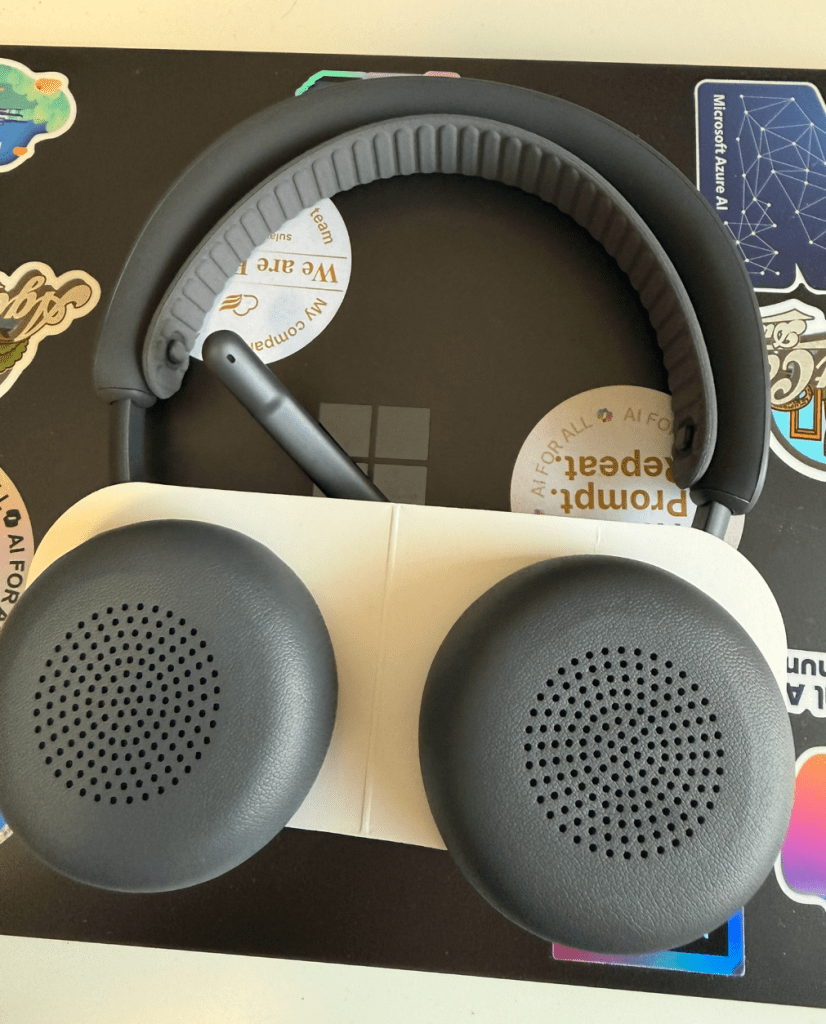
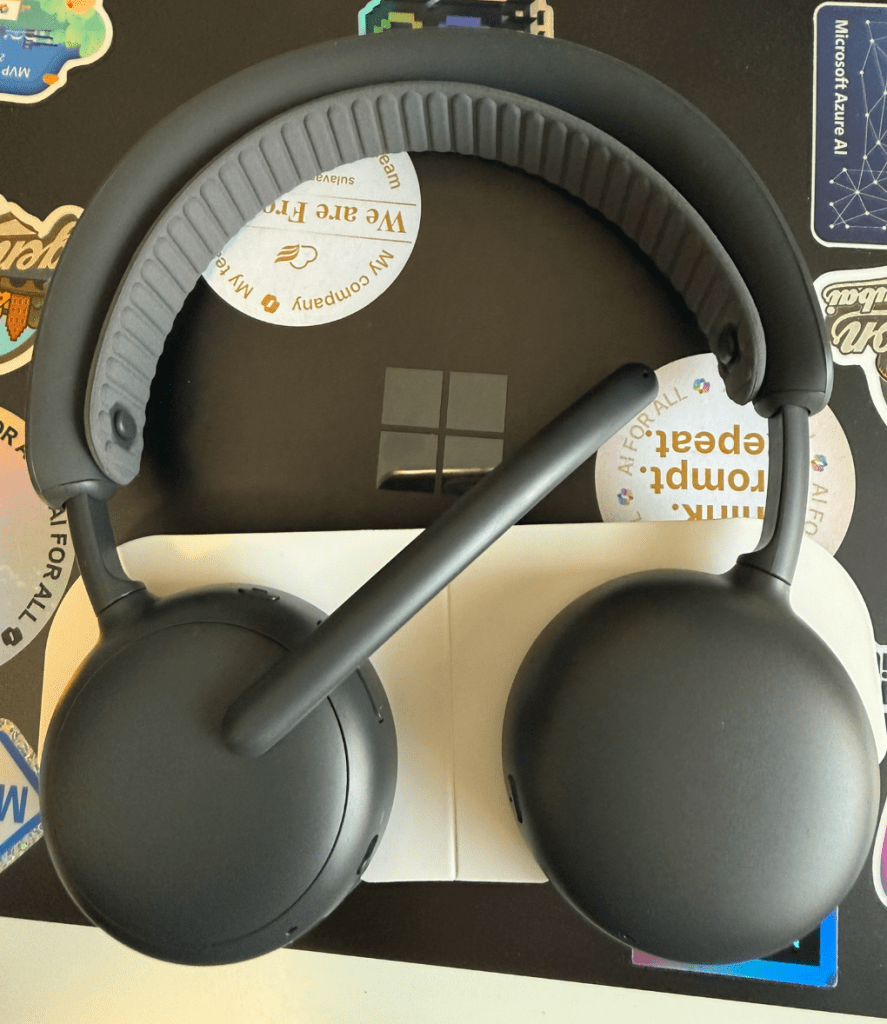
There are three things I’m unforgiving about in work headsets: comfort, microphone quality, and noise cancellation. I’ve been using Logitech Zone Wireless 2 ES at home for Microsoft Teams meetings, webinars, and some recordings — and overall I’m genuinely happy with it. Logitech provided the headset for testing, which I appreciate, and as always: opinions are my own.

TL;DR Zone Wireless 2 ES delivers where it matters: it’s very comfortable (even for longer sessions), the mic quality is excellent for Teams calls and recordings, and the noise cancellation is strong for working in a real home environment. The reversible boom mic (left or right) is one of those small details that quickly becomes a “why doesn’t everyone do this?” feature.

Why comfort mattersMicrosoft Teams call quality: clear, stable, reliableNoise cancellation necessary, not a “nice-to-have”The boom mic: small design choice, big daily benefitBattery life: good, predictable, and doesn’t demand attentionTwo minor Windows/laptop quirks I ran into (and the quick fixes)1) Bluetooth connectivity on Surface Copilot Laptop 72) Music audio sounded odd until I disabled “Audio enhancements”Zone Wireless 2 ES vs Zone Wireless 2 — what’s meaningfully different (without turning this into a full comparison)Specs & compatibility (quick reference)Verdict: a genuinely good headset

Why comfort matters

I’m not usually the best target audience for on‑ear headsets. Many on‑ear models feel fine for the first hour… and then slowly start applying pressure in exactly the wrong places. That’s why I give kudos to Zone Wireless 2 ES : it’s surprisingly comfortable, even over longer periods. The secret of this, on top of soft on-ear parts, is the extra band they included.

This matters more than people think. In modern work, comfort isn’t a “nice-to-have” — it’s the difference between “I’ll use this daily” and “I’ll keep it in the drawer for real needs.”. And yes, comfort is personal. For my ears, this is one of the few on‑ear headsets that stays comfortable through long sessions, and so far the winner in that.

Microsoft Teams call quality: clear, stable, reliable

Most of my headset testing is simple: do I trust it in a Teams meeting where I don’t have time to fight my audio?

With Zone Wireless 2 ES, the answer has been yes often. Audio has been clear and stable, and the microphone quality has been consistently strong in meetings, webinars, and recordings. People hear me clearly, and I don’t need to second-guess whether the headset is doing something strange mid-call.

The only issue there has been is related how my laptop seems to connect to this ( and some other) headsets occasionally. Looks more like the laptop issue, since this happens also with other headsets. This hasn’t been anything that an old-fashioned Bluetooth off and on (at laptop) would have not fixed.

Noise cancellation necessary, not a “nice-to-have”

I’ve used these at home only so far, and home is one place where you learn whether ANC is actually helpful.

For me, the ANC is very good — and that’s not just a technical detail. When the rest of the family is home, you don’t need silence; you need something that reduces distractions enough to let you focus and be present in meetings. Zone Wireless 2 ES does that job well.

What remains to be tested is a airport lounge, restaurant or busy office, where several people are talking loudly.. I hope this headset does a better job than what some other headsets did. But I do grant, it was a very very difficult situation for the headset when I was wishing the ANC would have been 2-3 times stronger ( multiple people talking loudly nearby) . Probably one reason I would choose over-the-ear headset..

The boom mic: small design choice, big daily benefit

One of my favorite features is the reversible boom mic. You can wear the mic on the right or the left — whichever suits your setup that day.

This is practical, not a gimmick. I prefer for my mic to be on right Desk layouts change. People have different needs and preferences. Being able to choose the mic side is simply convenient — and it’s surprisingly rare even in premium headsets.

Battery life: good, predictable, and doesn’t demand attention

Battery has been in the “no drama” category — which is the best kind of battery story.

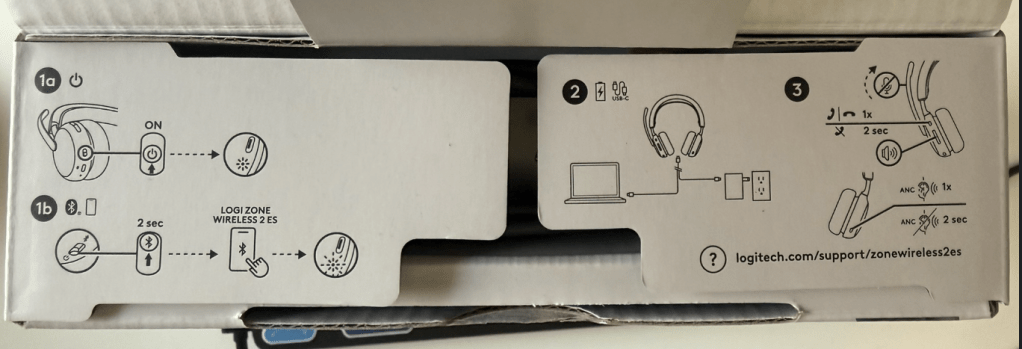
In my daily use (meetings + some music), it lasts well (ANC always on) and I’m not constantly thinking about charging. I also appreciate that USB‑C charging is standard and straightforward.

Two minor Windows/laptop quirks I ran into (and the quick fixes)

These were minor, and based on how they behave, they look like Windows/laptop-side quirks rather than anything fundamentally wrong with the headset.

1) Bluetooth connectivity on Surface Copilot Laptop 7

Occasionally, I had to toggle Bluetooth off/on on the laptop to get the headset to connect. After re-pairing the headset, it became more reliable, but I still sometimes need to restart Bluetooth.

Once it’s connected, it’s stable — so this feels like a compatibility quirk on the laptop side.

2) Music audio sounded odd until I disabled “Audio enhancements”

When listening to music, audio sometimes sounded strange — not broken, just oddly processed. Disabling Windows Audio enhancements for the device fixed it immediately.

It’s a bit unusual because I haven’t had to do this earlier, but once disabled the audio quality was good again.

Neither of these changed my overall experience with the headset — they were quick fixes and felt more like modern Windows “audio plumbing” than a headset problem.

Zone Wireless 2 ES vs Zone Wireless 2 — what’s meaningfully different (without turning this into a full comparison)

I don’t want this review to become a feature-by-feature comparison, but it’s still useful to call out a few differences that may matter if you’re choosing between models. See my review of Logitech Zone Wireless 2 in review  

From my use and from the product positioning, the theme is clear: Zone Wireless 2 ES is built as a focused, business-ready headset with great comfort and strong core performance. Zone Wireless 2 is positioned higher in the lineup, with different microphone architecture and additional “premium” features.

Here are the practical differences worth knowing:

Microphone setup differs between the models, and that shows in how the products are positioned for open office use and advanced call features.

Materials and feel are different, and for me Zone Wireless 2 ES is the more comfortable headset on my head.

There is also a price difference, which typically tracks with materials and positioning.

That’s the chapter you need. If you want deep spec-by-spec, Logitech has that — but my point here is: ES feels like the model designed to be worn all day by people who live in meetings.

Specs & compatibility (quick reference)

Here are the key specs and details from Logitech’s site.

Headset: 185.2 mm (H) × 183.6 mm (W) × 73 mm (D)

Weight: 212 g

Microphone type: 2 noise-canceling mics with AI-based algorithms and Mic EQ

Battery type: Built-in Lithium ion

Talk time: up to 20 hours (ANC on), up to 25 hours (ANC off)

Listening time: up to 25 hours (ANC on), up to 48 hours (ANC off)

Charging: USB‑C

Cable: USB‑C to USB‑C, 1.5 m

Charging time: ~2 hours full charge, and a 5‑minute quick charge can give up to 1 hour talk time (conditions vary)

Bluetooth: 5.3

Connection type: Bluetooth; also supports audio over USB (use as a corded headset with the included USB‑C cable)

Wireless range: up to 50 m (line-of-sight; real-world range varies)

Zone Wireless 2 ES includes certified post-consumer recycled plastic:

Graphite: 57%

Off‑white: 50%

Rose: 50%(Excluding printed wiring assembly, speaker, cables, and packaging.)

Verdict: a genuinely good headset

Zone Wireless 2 ES has earned a spot in my home setup because it gets the fundamentals right:

Very comfortable for long sessions (rare for me with on‑ear models)

Strong mic quality for Teams, webinars, and recordings

Very good noise cancellation for a real home environment

Solid battery life

Reversible boom mic that’s genuinely useful

If you’re looking for a headset that supports modern work without becoming something you “tolerate,” Zone Wireless 2 ES is worth a look.

Unknown's avatar

Published by Vesa Nopanen

Vesa “Vesku” Nopanen, Principal Consultant and Microsoft MVP (Microsoft 365 and Azure AI Foundry) working on Future Work at Sulava MEA.

I work, blog and speak about Future Work : AI, Microsoft 365, Copilot, Loop, Azure, and other services & platforms in the cloud connecting digital and physical and people together.

I have 30 years of experience in IT business on multiple industries, domains, and roles.
View all posts by Vesa Nopanen


Source link

Web3 Gaming Growth in 2026: How DeFi and iGaming are Reshaping GambleFi | NFT News Today

Web3 Gaming Growth in 2026: How DeFi and iGaming are Reshaping GambleFi | NFT News Today


The global digital entertainment and financial industries will hit a structural inflection point in the year 2026. This period is characterized by the increased integration of the elements of decentralized finance (DeFi) with the conventional online gambling (iGaming) industry. The convergence has led to the emergence of a new, highly profitable sub-sector called GambleFi.

With the discoveries in blockchain scalability, the omnipresent nature of smartphone technology, and a radical change in consumer demands in terms of possessing a digital asset, the old paradigm of casinos is being reconfigured at the core level.

This in-depth discussion examines the macroeconomic tailwinds driving the sector, the on-chain design of decentralized bankrolls, the quantitative yield dynamics driving these systems, and the regulatory environment that is becoming even more strict to become the future of Web3 gaming.

Macroeconomic Tailwinds and the $143 Billion iGaming Boom

In order to properly contextualize the disruptive opportunity presented by GambleFi, it is necessary to first examine the total addressable market (TAM) developed by the conventional iGaming industry. The online gambling market is projected to have reached the $143.17b mark in 2026, with an annual compound growth rate of 10.0%. It is projected that the industry will hit an all-time high of $212.44billion by 2030.

This continuous upward trajectory is fueled by several converging macroeconomic and infrastructure drivers:

Mobile-First Dominance: The mobile phone has become the main means of digital entertainment through affordable and well-endowed smartphones. In developed markets such as the United Kingdom, smartphone penetration has been close to 90 percent in recent years and is even expected to grow to over 96 percent by the year 2028.

5G Latency Reductions: International access to high-speed internet connections, 5G, has brought significant changes to digital interaction. International 5G networks are estimated to increase to 5.5 billion by 2030. As median 5G latency has fallen to less than 50 milliseconds, operators of iGaming can now maximize live-streaming dealer interactions, real-time sports betting odds, and decentralized wallet synchronizations immediately.

Emerging Market Growth: North America and Europe have historically contributed about 75 percent of the revenues, but they are experiencing a rampant acquisition customer acquisition costs. As a result, the Asia-Pacific (APAC) region will dominate the market contribution of 42 percent by 2026, due to increasing consumer discretionary spending. It can also be seen that Latin America is emerging as a critical growth driver with 18.4% CAGR, as it has new regulated markets in Brazil and Colombia.

The Paradigm Shift: From Play-to-Earn to Sustainable GambleFi

The traditional iGaming market is a linear market, whereas the Web3 gaming market is an exponentially growing market. The worldwide Web3 gaming market is estimated to have a value between 28.31 billion and 36.19 billion dollars, with the future estimates suggesting that it will have huge valuations of over 117.47 billion to 157.7 billion dollars by the middle of the 2030s.

The initial designs of blockchain gaming (20212023) were largely based on superinflationary Play-to-Earn (P2E) designs. They were economically unsustainable cost structures, which resulted in hyperinflation and crashing user bases. The market has formally reached an execution stage in 2026 because only by doing so will it stay afloat in the market.

Effective decentralized applications (dApps) are currently functioning as disciplined gaming enterprises initially and blockchain platforms subsequently. GambleFi is an extremely niche sector of this ecosystem that combines the high-volume transacting models of digital casinos with the decentralized liquidity models of DeFi.

The Evolution of the Casino Bankroll: Decentralized Liquidity

With a typical Web2 online casino, the operator has to have a huge centralized corporate bank account, the bankroll, to guarantee that they have the liquidity they need to payout the winning bets. This architecture places such a barrier around the entry of small developers that no one can overcome it, and makes the industry an oligopoly. Moreover, the gamers have no option but to blindly trust centralized random number generators (RNG) and put money in custodial wallets in which the operator holds total discretion.

GambleFi ferociously breaks this by launching novel Bankroll-as-a-Service protocols. These decentralized protocols do not have a closed corporate treasury; rather, they have an open, permissionless liquidity pool.

How Players are “Becoming the House”

Automated Market Maker (AMM) logic and liquidity pooling have been cleverly modified to address the casino counterparty risk. Users put in their capital, whether in the form of yield-producing stablecoins (such as USDC) or utility tokens native to the blockchain, into highly customized smart contracts. Such a pool of crowdsourced capital is made the common bankroll that everyone gambles on.

With the maturity of DeFi protocols, we are now witnessing the emergence of decentralized liquidity pools, driving common online slots that enable users to essentially become the house by offering bets on other participants. By having a player bet on a decentralized game, the smart contract will automatically take the payout of the deep liquidity pool and execute it upon a win using cryptographic finality as an instant payment. In case of the loss of the player, the assets bet are smoothly liquidated into the pool.

Since the casino games have a mathematically contrived advantage (the house edge), the liquidity pool is bound to inflate itself into more money than it gives back in the long term. The profits made are attributed according to the proportion of those who provided the initial liquidity.

Strategic Protocol Deep Dives: The Leaders of 2026

The GambleFi sector in 2026 is populated by a cohort of highly specialized protocols. Analyzing the diverse structural approaches reveals critical strategic variations in value accrual.

1. Rollbit ($RLB): Aggressive Deflation and Hybrid Execution

Rollbit is a hyper-successful hybrid product that combines conventional casino gaming, sportsbook business, and high-leverage crypto futures trading. Rollbit supports over $1 billion of leverage notional volume being processed every day without congesting the network by a lightning-fast off-chain centralized game engine with transparent on-chain tokenomics. The native token, which is known as $RLB, is based on a vicious hourly buyback and burn scheme. Rollbit will apply inflationary pressure by marketing 10% of casino revenue, 20% of sportsbook revenue, and 30% of futures trading revenue and then burning it.

2. WINR Protocol ($WINR): Autonomous B2B Infrastructure

The WINR Protocol is the plumbing or Bankroll-as-a-Service infrastructure on which several applications in the decentralized domain are based. The WINR Liquidity Pool (WLP) is an index of multiple ERC-20 assets, the core of the system, and which also serves as the capital reserves of a traditional gaming conglomerate. When the players lose, these assets are automatically absorbed into the WLP index, which makes the underlying fiat value of the WLP token appreciate.

3. Bitcoin.com Verse ($VERSE): DEX Liquidity and Gamification

The $VERSE token of Bitcoin.com is an example of how a casino-like liquidity pooling can be used in a Decentralized Exchange (DEX). VERSE is a rewards and utility token that is built into the Bitcoin.com Wallet and aims to gamify the conversion of retail users to DeFi. Liquidity providers are given a proportional portion of trading fees by enabling permissionless swapping, and are also motivated by gamified Verse Farms.

4. Azuro Protocol ($AZUR): The Base Layer for Prediction Markets

Whereas traditional online slots and roulette are dependent on the use of random numbers, sports betting necessitates dynamic odds pricing depending on the events happening in the real world. These complex markets are based on the decentralized base layer Azuro. It also deploys a new virtual Automated Market Maker (vAMM) architecture called the “Liquidity Tree,” which enables users to place stablecoins in one consolidated pool, which exposes their funds to thousands of active prediction markets in a way that has never been as capital efficient as this.

Quantitative Analysis of Yield Mechanics and Liquidity Risks

GambleFi yields are supported by mathematically verifiable, external sources of revenue, namely the player gambling losses and protocol trading fees. Nevertheless, financial risks are complex to negotiate for liquidity providers.

The Variance of the House

To the liquidity providers, the Annual Percentage Yield (APY) is very dynamic. Although the mathematical expectation is positive (with the help of the house edge) in the long term, short-term variance means that players may and will go through winning spurts. A new liquidity posture can give initial negative returns if bettors make a big score right after making the deposit.

The Mathematics of Impermanent Loss (IL)

The liquidity provision of the traditional dual-asset AMM pools implies the Impermanent Loss (IL). IL takes place when the price of the two deposited assets varies widely compared to the actual ratio during the original deposit.

1.25x (25% change): ~0.6% IL (Negligible)

1.50x (50% change): ~2.0% IL (Noticeable)

2.00x (100% change): ~5.7% IL (Significant)

5.00x (400% change): ~25.5% IL (Catastrophic)

To counter this, liquidity providers will target pools with very high trading volumes, where the accrued fees are significantly higher than IL, or they will use single-sided liquidity vaults (such as the WLP of WINR) to fully avoid dual-asset divergence risk.

Technological Infrastructure Powering 2026 GambleFi

The achievement of on-chain casinos with high-fidelity and full support is a direct consequence of the simultaneous progress of blockchain scaling and cryptographic infrastructure.

Layer-2 and Layer-3 Rollup Dominance

Ethernet-based Layer-1 networks that are traditionally monolithic are incapable of handling the quantity of transactions needed by a global online casino. One rotation of a decentralized online slot cannot sustain a delay of 12 seconds to complete the block. As a result of this, protocols have moved to dedicated execution environments. The WINR Protocol was, among others, ported to the WINR Chain – a custom Layer-3 rollup built on the Arbitrum Orbit framework. This shortened block times to a scalding 150 milliseconds, allowing settlement of bets instantly at insignificant on-chain expenses.

Provably Fair 2.0 and Verifiable Random Functions (VRFs)

The currency of the gambling business is trust. The standardized use of the GamblingFi has eliminated the veil of darkness in the old casinos through the use of the Provably Fair 2.0. Protocols rely on Verifiable Random Functions (VRFs) based on modern cryptography with elliptic curves to produce random values with cryptographic proofs in less than 300 milliseconds. This is to make sure that decentralized games are instant and have absolute verifiable integrity.

Account Abstraction

GambleFi platforms removed the drag of intricate crypto wallets to tap into the traditional iGaming market. In 2026, Account Abstraction (ERC-4337) allows platforms to create non-custodial smart contract wallets that a user can spin up with simple social logins, with integrated gas subsidies in the form of integrated paymasters. This results in a gasless Web2 UI and Web3 security environment.

The Regulatory Paradigm: MiCA, DAC8, and Geo-Fencing

The GambleFi maturation process is happening in the context of a broad regulatory reformation. This is the macro trend of 2026, the shift in unregulated offshore grey markets to highly scrutinized, licensed jurisdictions.

The Implementation of MiCA and DAC8

Markets in Crypto-Assets (MiCA) regulation has its full enforcement deadline for all Crypto-Asset Service Providers (CASPs) in July 2026 in the European Union. The MiCA compels digital asset platforms to adhere to stringent capital requirements and security standards of operations like a traditional financial broker. Similar to this, the DAC8 directive requires stringent tax transparency measures.

Putting in place extensive Anti-Money laundering (AML) and Know Your Customer (KYC) systems needs colossal capital investments in GambleFi protocols, which forms a harsh existential compliance filter.

The Geo-Blocking Dilemma

Decentralized smart contracts that are fully autonomous are currently not covered by MiCA, but hybrid approaches (such as Rollbit) are already subject to direct regulatory questioning. In order to evade huge fines, the non-compliant sites have to be subjected to vigorous geo-blocking measures that block the access of the IP addresses based in the EU or the US. As a reaction, progressive protocols are executing KYC-gated smart contracts and programmatically making sure that only clients with verified digital identities can place bets in liquidity pools or deposit into them.


Source link

Why Hybrid Gaming Models Are Leading Web3 Gaming | NFT News Today

Why Hybrid Gaming Models Are Leading Web3 Gaming | NFT News Today


Blockchain gaming has always carried a powerful promise that captured the imagination of both developers and players. Instead of merely accessing digital worlds owned entirely by game studios, players could finally possess a real stake in those environments. Weapons, characters, skins, land parcels, and even achievements would no longer exist only inside a publisher’s database. They could become digital assets that players truly own, trade, and manage themselves, creating a sense that the time spent inside a game actually builds something that belongs to them rather than remaining permanently under corporate control.

The explosion of NFTs in 2021 pushed blockchain gaming into the spotlight. Venture capital poured into the space, new projects launched almost daily, and the phrase “play-to-earn” quickly became the defining narrative of Web3 gaming. The idea was simple and intoxicating: players would earn tokens or NFT assets while playing, and those rewards could hold real-world value.

Yet the industry quickly ran into a hard truth.

The technology was revolutionary but the games themselves often were not.

Over the past few years, the sector has been quietly correcting course. Out of that correction has emerged one of the most important structural changes in Web3 gaming: hybrid gaming systems.

These systems do not attempt to force the entire game onto the blockchain. Instead, they blend traditional gaming infrastructure with blockchain-powered ownership and economies. The result is a design philosophy that feels much closer to how real games actually function.

The pain points that slowed blockchain gaming

To understand why hybrid systems are gaining traction, it helps to look honestly at the problems that slowed early blockchain gaming adoption. The technology itself was rarely the main issue. The challenge was how that technology was used.

One of the most common criticisms was that many early blockchain games prioritized economics over entertainment. Token mechanics often became the central design element rather than the gameplay experience. Players weren’t necessarily logging in because the game itself was compelling. Instead, they were trying to extract value from the ecosystem before the opportunity disappeared.

That dynamic worked temporarily during periods of explosive growth, but it proved difficult to sustain.

As new users slowed down, the economic models that relied on constant growth began to unravel. Reward tokens lost value, in-game economies became unstable, and many players lost confidence in the long-term viability of the systems they had invested time in.

Another major barrier was usability.

Traditional gaming is built around frictionless access. A player downloads a game, creates an account, and begins playing within minutes. Blockchain gaming, on the other hand, often required players to understand wallets, seed phrases, transaction fees, and token swaps before they could even begin.

For experienced crypto users this process felt normal. For mainstream gamers it felt unnecessarily complicated.

There was also a technical limitation that developers struggled to overcome.

Blockchains are exceptional at recording transactions and proving ownership. They are not optimized for real-time game mechanics like physics, combat calculations, or matchmaking systems. Attempting to run core gameplay directly on-chain often introduced delays and transaction costs that simply do not work in fast-paced interactive environments.

In many ways, blockchain gaming was trying to force the wrong tool into the wrong role.

Hybrid gaming systems: a more practical architecture

Hybrid gaming models emerged as a solution to this mismatch.

Rather than building entire games directly on blockchain infrastructure, developers began splitting responsibilities between traditional servers and blockchain networks. Each technology would handle the tasks it performs best.

Gameplay, graphics, and real-time interaction remain off-chain, running on conventional game engines and servers where responsiveness and scalability are critical.

Meanwhile, blockchain technology handles functions where decentralization and transparency actually create value. This includes ownership of digital assets, marketplace transactions, identity verification, and sometimes governance mechanisms for community participation.

This architectural balance might sound simple, but it represents a fundamental shift in how Web3 games are designed.

Players can still experience seamless gameplay that feels indistinguishable from a traditional title. At the same time, certain items or achievements exist as NFTs that players truly own and can trade across marketplaces.

For many players, the blockchain layer becomes something they rarely think about. The experience remains a game first and a crypto ecosystem second.

Why hybrid models are attracting developers

For developers, hybrid systems solve several strategic challenges at once.

One of the biggest advantages is distribution flexibility. Major gaming platforms have historically been cautious about blockchain integration, and policies surrounding NFTs have often limited the types of games that could appear on certain storefronts.

Hybrid designs allow developers to build games that function perfectly well without blockchain interaction while still offering optional Web3 features for players who want them. This approach keeps the door open to mainstream gaming audiences rather than limiting adoption to crypto-native communities.

Hybrid models also support more sustainable monetization strategies.

Traditional games have long relied on systems such as downloadable content, cosmetic purchases, battle passes, and seasonal updates. These models have proven resilient because they reward engagement rather than speculation.

Blockchain can enhance these structures rather than replace them. NFT ownership can introduce secondary markets, royalties, and player-driven economies without forcing developers to rely on volatile token emissions.

When implemented thoughtfully, hybrid systems create an environment where ownership enhances gameplay rather than overshadowing it.

The shift from play-to-earn to play-and-own

The new generation of hybrid gaming ecosystems often describes their approach using a slightly different phrase: play-and-own.

The distinction may seem subtle, but it reflects a major philosophical shift.

Play-to-earn systems framed games primarily as income-generating opportunities. The focus was on extracting value through participation. Play-and-own models instead emphasize that players should enjoy the experience first while still gaining ownership of meaningful digital assets.

In these environments, NFTs represent items that players might value regardless of financial incentives.

A rare cosmetic skin that commemorates a tournament victory, a character with a long competitive history, or a unique collectible earned through exploration can all hold personal significance. Ownership simply allows players to decide what happens to those assets next.

They can keep them as digital memorabilia.They can trade them with other players.Or they can sell them in open marketplaces if they choose.

The choice belongs to the player rather than the platform.

What hybrid ecosystems may look like in the future

Looking forward, hybrid gaming ecosystems could unlock entirely new forms of digital interaction.

Esports organizations may issue NFTs that represent legendary moments or championship achievements. Players might build characters whose reputations persist across multiple titles within a developer’s ecosystem.

Game studios could also collaborate to create shared identity systems where achievements, avatars, or collectibles travel between related games.

Some projects are even experimenting with phygital systems, where physical devices or real-world activities influence digital characters and economies. In these environments, players might upgrade their digital identity through physical competitions, collectibles, or hardware-linked achievements.

These ideas are still evolving, but they illustrate how hybrid systems can extend beyond simple digital marketplaces.

They open the door to experiences where digital ownership connects games, communities, and even real-world activity.

The quiet future of blockchain gaming

If hybrid gaming systems ultimately succeed, one interesting outcome is that most players may not realize they are using blockchain at all.

They will simply notice that their items belong to them. They can sell them if they want. They can move them between marketplaces or perhaps between games.

The technology that enables those features will operate quietly in the background.

In many ways, that may be the clearest sign of maturity for Web3 gaming.

Blockchain will no longer be the headline. It will simply be part of the infrastructure that makes digital worlds more open, more interoperable, and more player-centered.

Hybrid gaming systems are not trying to reinvent games from scratch.

They are trying to repair what early blockchain experiments misunderstood.

And if they succeed, the future of gaming may feel less like a financial platform and more like what players wanted all along: great games where the things we earn actually belong to us.


Source link

Popular Posts

My Favorites