Metaverse

Home Metaverse Page 220

Exploring Recent Innovations in the Metaverse World

The metaverse, a blend of the physical and digital worlds, is rapidly evolving into a space where virtual experiences are becoming increasingly immersive and transformative. As this digital frontier expands, recent innovations are pushing the boundaries of what is possible, offering new opportunities for interaction, commerce, and entertainment. This article delves into some of the cutting-edge technologies fueling the metaverse, the transformative experiences they enable, and the pivotal roles played by artificial intelligence and blockchain in this burgeoning ecosystem.

Unveiling Cutting-Edge Technologies in the Metaverse

The metaverse is a dynamic environment, constantly being reshaped by technological advancements. Among the most exciting innovations are advancements in virtual reality (VR) and augmented reality (AR) technologies. These tools have significantly improved in terms of resolution, latency, and user comfort, allowing for more seamless and realistic user experiences. Headsets are becoming lighter and more affordable, making them accessible to a broader audience, while haptic feedback devices are enhancing the sense of touch, adding a new dimension to virtual interactions.

Another significant development is the integration of spatial computing, which combines VR, AR, and mixed reality (MR) to create a more immersive environment. Spatial computing allows users to interact with digital objects as if they were part of the physical world, blurring the lines between reality and simulation. This technology is being harnessed across various sectors, from gaming and entertainment to education and healthcare, enabling new forms of engagement and interaction.

The emergence of 5G technology is also playing a crucial role in the development of the metaverse. With its high-speed, low-latency capabilities, 5G enables more complex and data-intensive applications to function smoothly, allowing for real-time interactions in virtual environments. This connectivity boost is crucial for supporting the growing demand for high-quality, interactive experiences that are central to the metaverse.

Cloud computing and edge computing are other critical technologies that are facilitating the metaverse’s growth. By distributing data processing closer to the source of data generation, these technologies reduce latency and increase the efficiency of data management. This is particularly important for supporting the vast amounts of data generated by metaverse applications, ensuring that users can access and interact with virtual environments without interruptions.

Interoperability standards are being developed to ensure that different metaverse platforms can communicate and work together seamlessly. This is essential for creating a cohesive metaverse experience, where users can move between different virtual worlds without losing their digital assets or identities. Efforts to establish common protocols and frameworks are ongoing, with industry leaders collaborating to define the future of the metaverse.

Lastly, digital twin technology is gaining traction within the metaverse. By creating virtual replicas of physical objects and environments, digital twins allow for detailed simulations and analyses, providing insights that can be applied in the real world. This technology has applications in urban planning, manufacturing, and even personal health, offering new ways to visualize and interact with data in the metaverse.

Transformative Experiences Shaping Virtual Realities

As the metaverse continues to evolve, it is transforming the way we experience digital content and interact with others. One of the most significant changes is the rise of social VR platforms, where users can meet, interact, and collaborate in shared virtual spaces. These platforms are redefining social interactions, allowing people to connect across distances in a more engaging and personal way than traditional video calls.

Virtual events and conferences are becoming more sophisticated, leveraging the immersive capabilities of the metaverse to create experiences that closely mimic real-world gatherings. From concerts and art exhibitions to business conferences and trade shows, these events offer participants a unique opportunity to engage with content and other attendees in a fully interactive environment, breaking down geographical barriers and opening up new possibilities for global collaboration.

The gaming industry is also experiencing a transformation, with the metaverse offering new ways to engage players. Games are becoming more than just entertainment; they are evolving into social hubs and platforms for creativity and self-expression. Players can create and customize their avatars, build and share their virtual spaces, and even monetize their creations, blurring the lines between player and creator and fostering a new economy within the gaming world.

In the realm of education, the metaverse is creating immersive learning experiences that engage students in ways traditional methods cannot. Virtual classrooms and laboratories allow for interactive, hands-on learning, where students can explore complex concepts in a controlled and safe environment. This approach is particularly beneficial for subjects like science and history, where simulations can provide deeper insights and understanding.

The metaverse is also impacting mental health and therapy, offering new tools for treatment and support. Virtual environments can be used to create safe spaces for individuals to confront and manage their mental health challenges, providing exposure therapy and mindfulness exercises in a controlled setting. These virtual interventions can be tailored to individual needs, offering a personalized approach to mental health care.

Lastly, the rise of virtual commerce is reshaping the way we shop and conduct business. Virtual storefronts and marketplaces allow users to browse and purchase goods in a 3D environment, often with the ability to personalize and try on products before buying. This shift is not only changing consumer behavior but also encouraging brands to rethink their strategies and embrace the opportunities offered by the metaverse.

The Role of AI and Blockchain in Metaverse Evolution

Artificial intelligence (AI) is a driving force behind the metaverse, enabling more personalized and adaptive experiences. AI algorithms can analyze user behavior and preferences to tailor content and interactions, creating a more engaging and immersive environment. This personalization extends to virtual assistants and NPCs (non-player characters), which are becoming more sophisticated and responsive, enhancing the overall user experience.

AI is also playing a crucial role in content creation within the metaverse. Machine learning algorithms can generate realistic landscapes, objects, and even characters, reducing the time and resources required for virtual world-building. This capability is democratizing content creation, allowing more users to contribute to the metaverse and expanding the diversity of experiences available.

Blockchain technology is another cornerstone of the metaverse, providing the infrastructure needed for secure and transparent transactions. With blockchain, users can own and trade digital assets, such as virtual real estate, art, and collectibles, with confidence in their authenticity and provenance. This decentralized approach is fostering a new digital economy, where creators and consumers can interact directly without intermediaries.

Smart contracts, powered by blockchain, are automating transactions and agreements within the metaverse, ensuring that they are executed fairly and transparently. These contracts can be used to facilitate everything from virtual land sales to in-game purchases, streamlining processes and reducing the potential for disputes and fraud.

Decentralized identity solutions are emerging as a critical component of the metaverse, allowing users to maintain control over their personal data and digital identities. Blockchain-based identity systems enable users to verify their identity across different platforms without revealing sensitive information, enhancing privacy and security in virtual environments.

Lastly, the synergy between AI and blockchain is opening up new possibilities for the metaverse. AI can optimize blockchain operations, making them more efficient and scalable, while blockchain can provide a secure and transparent framework for AI applications. This combination is paving the way for more advanced and reliable metaverse experiences, setting the stage for future innovations.

The metaverse is on the brink of becoming a mainstream digital ecosystem, driven by rapid technological advancements and innovative applications. As cutting-edge technologies continue to evolve, they are reshaping how we interact with digital environments and each other, creating new opportunities and challenges. The integration of AI and blockchain is further enhancing these experiences, providing a robust foundation for the future of the metaverse. As we continue to explore this digital frontier, the possibilities for innovation and transformation are virtually limitless, promising a new era of immersive and interconnected experiences.

In-Depth Analysis of Gate.io Quantitative Fund: The Logic Behind Its Popularity and Market-Leading Performance

In-Depth Analysis of Gate.io Quantitative Fund: The Logic Behind Its Popularity and Market-Leading Performance


In Brief

Digital asset investment market is expanding, with quantitative funds gaining attention. Gate.io’s Hedge Ark USDT and Smart Arbitrage USDT products sold out quickly, confirming their competitiveness and driving industry development.

In-Depth Analysis of Gate.io Quantitative Fund: The Logic Behind Its Popularity and Market-Leading Performance

The market for investing in digital assets is about to enter a period of superior expansion. In addition to looking for returns, investors are keen to discover innovative investment strategies that strike a balance between risk and reward. In light of this, the market has turned to quantitative funds, which guarantee steady returns and are fueled by data and plan optimization.

The industry took notice when Gate.io recently introduced its Hedge Ark USDT and Smart Arbitrage USDT products, which sold out in a day. This quick sell-out puts quantitative funds at the forefront of industry conversations once more and provides concrete confirmation of the product’s competitiveness.

This article will provide a deep dive into the success of Gate.io’s quantitative funds from multiple perspectives, exploring how they drive industry development and unlock new possibilities for investors.

One reliable investment vehicle that focuses on the crypto sector is the Funding Rate Arbitrage Quantitative Fund. It generates steady, neutral returns by utilizing the perpetual contract market’s funding rate mechanism. The main tactic is to maintain both hedged perpetual contracts and spot positions concurrently in order to reduce market volatility and provide returns that are mostly derived from funding rate payments.

For individuals who have a low-risk tolerance and are looking for consistent profits, this investing strategy is perfect. By efficiently offsetting market volatility, the hedging mechanism between spot and contract holdings reduces risk. Returns are mostly dependent on financing rates to generate steady earnings and are not much impacted by changes in pricing.

Core Value of Quantitative Funds: Leading Industry Growth Through Outstanding Product Design

Given its expertise and potential for large returns, quantitative funds are quickly emerging as a popular option for investors in the digital asset investing space. As a benchmark product in this space, Gate.io’s Quantitative Fund not only achieves exceptional profitability but also establishes new benchmarks for strategy, risk management, and user experience.

A top-tier quantitative team created and runs Gate.io’s Quantitative Fund. Even in volatile markets, the product uses a neutral arbitrage technique that balances low risk and high returns by fusing sophisticated algorithms with comprehensive market data.

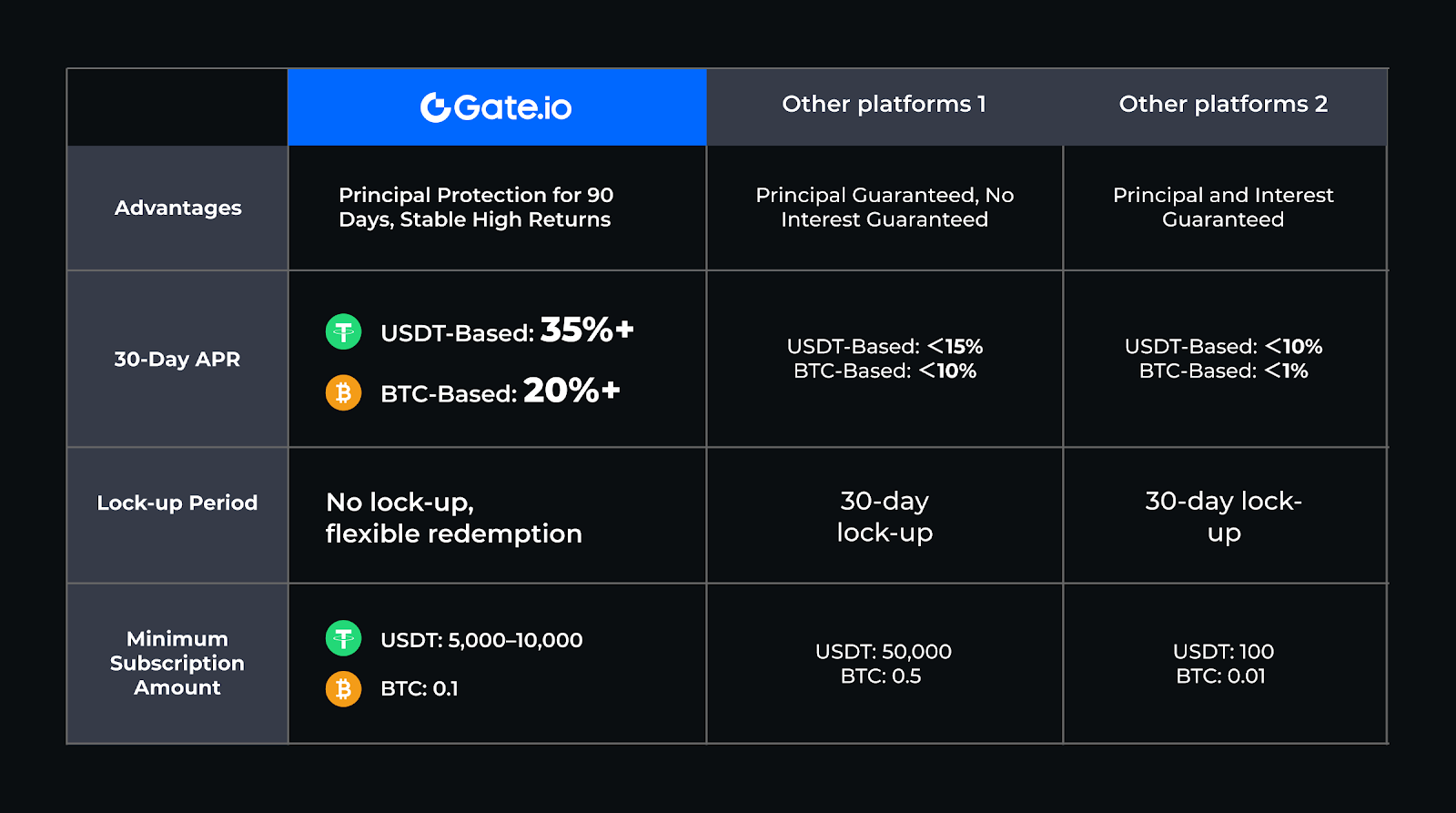
With its industry-leading performance, Gate.io’s Quantitative Fund has gained user confidence in terms of returns. Over the last 30 days, the USDT-based product has produced an annualized return of 35%, and the BTC-based product had returns of more than 25%.

The platform’s scientifically developed neutral arbitrage approach, which continuously seizes arbitrage opportunities in a variety of market settings and maximizes market advantages, is what propels this level of performance. Furthermore, comprehensive earnings data and real-time net value curves increase user trust in investment results.

The key to the success of quantitative funds is risk management. To protect investment interests, Gate.io uses a multi-layered risk management method. The quantitative team successfully reduces possible risks from sharp market swings by concentrating on neutral arbitrage solutions.

Additionally, the Gate.io platform is used for all transactions, guaranteeing optimal asset security. This strict risk management structure makes the product a great option for steady financial growth by reducing investment risks and boosting its reputation.

The Quantitative Fund from Gate.io is particularly notable for its adaptability and ease of usage. The fund has no lock-up period, so consumers may enroll or redeem their money whenever they choose with rapid processing, unlike typical investment products. This feature significantly satisfies the liquidity requirements of investors.

Furthermore, low investment limits (starting at 5,000 USDT or 0.1 BTC) and no fees reduce entry barriers, making it easier for more people to take advantage of the potential returns of quantitative funds.

Overall, Gate.io’s Quantitative Fund is not just a high-yield investment tool but also an innovative model for digital asset investment. With its rigorous product design, transparent earnings management, and flexible user experience, it drives industry growth while providing investors with a safe and high-return path to wealth accumulation.

Analyzing the Core of New Products: The Deep Logic Behind Returns and Flexibility

Gate.io’s newly launched Hedging Investment USDT and Hedge Ark Capital USDT products have drawn market attention with their impressive estimated annualized returns of 32.15% and 18.67% over the past 30 days. As quantitative investment products, the technology and strategies behind these returns extend far beyond simple arbitrage trading.

The core of the hedge arbitrage strategy lies in identifying price differences across markets, leveraging multidimensional and multi-market arbitrage mechanisms to achieve stable returns. The complexity of this strategy requires real-time monitoring of market dynamics, precise analysis of price movements, and rapid execution of trading decisions.

Gate.io’s technical team has developed a robust trading system powered by high-frequency trading algorithms and big data analytics. This system can capture optimal trading opportunities in fast-moving markets, providing a technological edge that consistently places the product’s returns among the best in the industry.

Flexible, No Lock-Up Period to Meet Diverse Needs

Many investment products in the market come with long lock-up periods, limiting liquidity for investors. Gate.io’s quantitative fund breaks this barrier with a no-lock-up design, allowing users to subscribe or redeem funds at any time with fast processing. This high degree of liquidity gives investors the freedom to manage their assets more efficiently.

Gate.io’s quantitative fund success is not limited to the performance of individual products but is reinforced by strong brand support. While the product’s returns capture attention, Gate.io’s quantitative fund builds its “Industry-Leading Returns” identity through a series of innovative services.

Take the newly launched Hedging Investment USDT as an example – its 30-day annualized return of 32.15% stands out in the market. This remarkable performance highlights Gate.io’s continuous optimization of quantitative strategies and deep insight into market trends, creating a powerful return system. The impressive yield significantly enhances the platform’s reputation, instilling confidence in investors regarding quantitative digital asset investments.

Principal Protection Initiative – The Foundation for Steady Growth

To encourage new users to explore the potential of quantitative fund returns with peace of mind, Gate.io has introduced the “Principal Protection Initiative.” Through this program, users who invest in quantitative funds receive 90-day full principal protection while earning stable annualized returns (over 20% for BTC).

This initiative addresses investor concerns about risk, extends the protection period, and enhances return potential, providing users with an ideal starting point for their investment journey.

Behind Market Popularity: A Combination of User Trust and Innovative Strategies

High Returns Drive Investor Choices

In today’s market environment, an annualized return of around 35% is highly attractive. Compared to traditional financial products, this figure prompts investors to reassess the potential of digital asset investments.

Gate.io enhances this appeal by offering transparent yield calculations and real-time visualized data, allowing users to clearly understand their returns and eliminate doubts. This transparency further fuels product demand and sales.

Building Trust Through Experience

Gate.io’s quantitative fund continuously improves the investment experience by offering zero fees, real-time interest accrual, and flexible withdrawals. These user-focused details significantly strengthen investor trust in the platform, laying a solid foundation for future product launches.

Core Advantages of Gate.io in the Industry

Competition in the digital asset quantitative investment sector is intensifying. Compared to other platforms, Gate.io secures a leading position by combining high returns with innovative services.

In-Depth Analysis of Gate.io Quantitative Fund: The Logic Behind Its Popularity and Market-Leading Performance

Yield Advantage: A Fusion of Technology and Strategy

While most competing platforms offer quantitative products with yields of around 10%, Gate.io’s quantitative fund elevates USDT-based returns to approximately 35% and BTC-based returns to 25% through its unique hedge arbitrage strategy.

Differentiated Competitive Edge in Service Design

Gate.io’s quantitative fund stands out with two key differentiators – zero fees and no lock-up period. Unlike other platforms that impose management fees and fixed lock-up periods, Gate.io’s design reduces hidden costs for users while enhancing liquidity and capital efficiency.

From Digital Asset Investment to Wealth Management

Gate.io’s quantitative fund success is no coincidence – it is the result of deep insight into digital asset investment models. By combining high returns with strong security measures, Gate.io provides investors with both confidence and a sense of security, reflecting the platform’s pursuit of excellence in technology and service.

Disclaimer

The content herein does not constitute an offer, solicitation, or recommendation. You should always seek independent professional advice before making any investment decisions. Please note that Gate.io may restrict or prohibit the use of all or a portion of the Services from Restricted Locations. For more information, please read the User Agreement via https://www.gate.io/zh/user-agreement.

Disclaimer

In line with the Trust Project guidelines, please note that the information provided on this page is not intended to be and should not be interpreted as legal, tax, investment, financial, or any other form of advice. It is important to only invest what you can afford to lose and to seek independent financial advice if you have any doubts. For further information, we suggest referring to the terms and conditions as well as the help and support pages provided by the issuer or advertiser. MetaversePost is committed to accurate, unbiased reporting, but market conditions are subject to change without notice.

About The Author


Victoria is a writer on a variety of technology topics including Web3.0, AI and cryptocurrencies. Her extensive experience allows her to write insightful articles for the wider audience.

More articles


Victoria d’Este


Victoria is a writer on a variety of technology topics including Web3.0, AI and cryptocurrencies. Her extensive experience allows her to write insightful articles for the wider audience.


Source link

3 Altcoins Ready to Surge 12000% if Bitcoin Hits $350000 as Predicted by ‘Rich Dad, Poor Dad’ Author Robert Kiyosaki

3 Altcoins Ready to Surge 12000% if Bitcoin Hits 0000 as Predicted by ‘Rich Dad, Poor Dad’ Author Robert Kiyosaki


3 Altcoins Ready to Surge 12000% if Bitcoin Hits $350000 as Predicted by ‘Rich Dad, Poor Dad’ Author Robert Kiyosaki

Bitcoin’s ascent is typically accompanied by tectonic movements in the crypto world, with forecasts suggesting a possible market price of $350,000. Robert Kiyosaki, the author of Rich Dad, Poor Dad, has rekindled interest by offering a bullish perspective. This optimism shone a spotlight on some select altcoins that have the potential for enormous ascents. Of those, Rexas Finance (RXS), Shiba Inu (SHIB), and Dogecoin (DOGE) appear to be leading candidates. Below is an analysis of their market shares and growth prospects.

Rexas Finance Transforming Real-World Asset Ownership

Rexas Finance (RXS) is reshaping how investors access and manage real-world assets (RWAs). Leveraging blockchain technology, Rexas Finance allows users to tokenize properties, commodities, and other tangible assets, breaking barriers to ownership. For example, anyone can buy a share in prime real estate or even a fraction of gold reserves from anywhere, using a single click. The platform’s Token Builder simplifies this process by enabling individuals to tokenize their assets effortlessly. Additionally, the Rexas Launchpad supports fund-raising efforts for these tokenized projects, creating a robust ecosystem for innovation. Investors gain access to high-value markets like real estate—valued at over $280 trillion globally—and commodities, enhancing liquidity and inclusivity.

3 Altcoins Ready to Surge 12000% if Bitcoin Hits $350000 as Predicted by ‘Rich Dad, Poor Dad’ Author Robert Kiyosaki

Tools such as Rexas Quickmint Bot, GenAI, and AI Shield ensure seamless integration of RWAs into blockchain networks, eliminating inefficiencies. With these features, Rexas Finance bridges the gap between traditional asset markets and blockchain, offering unmatched investment opportunities.

The RXS token, based on the ERC-20 standard, has generated significant interest. Its presale, now in stage 11, has raised $34.6 million, with prices rising nearly sixfold from $0.03 to $0.175 per token. A public presale, rather than VC funding, ensures accessibility, fostering a decentralized investment community. Adding to the excitement, Rexas Finance is listed on CoinMarketCap and CoinGecko, enhancing visibility and credibility among crypto enthusiasts. With plans to launch on top-tier exchanges and a $1 million giveaway, RXS is set to make waves in the market.

Shiba Inu Aiming for Massive Gains

Shiba Inu (SHIB) has maintained its appeal as a high-potential memecoin. Recent technical analysis shows a bullish trend, with a target price of $0.0000702—an increase of nearly 190%. Market stability around $0.000024 signals an accumulation phase, often a precursor to major price movements. SHIB’s oval trend pattern, featuring higher lows, points to growing investor interest. Analysts highlight this as a sign of an impending breakout, making SHIB a strong contender for substantial gains if Bitcoin achieves its predicted surge.

Dogecoin Charting Its Path to Growth

Dogecoin (DOGE), the original memecoin, continues to captivate investors. Analysts forecast a price target between $2.35 and $2.60 by 2025, marking a potential 570–683% increase. DOGE’s historical performance aligns with this trajectory, supported by patterns from previous bull cycles. While its short-term price hovers around $0.30, DOGE has shown resilience, maintaining key support levels. Experts believe the memecoin is in the final stages before a breakout rally, positioning it as a top altcoin to watch.

Conclusion

As Bitcoin eyes $350,000, the ripple effect might propel altcoins to new heights. Rexas Finance, with its groundbreaking approach to real-world asset tokenization, provides unrivaled investment options, while Shiba Inu and Dogecoin are notable for their bullish potential. Each cryptocurrency offers distinct advantages, making now an excellent time to investigate these intriguing assets.

For more information about Rexas Finance (RXS) visit the links below:

Website: https://rexas.com

Win $1 Million Giveaway: https://bit.ly/Rexas1M

Whitepaper: https://rexas.com/rexas-whitepaper.pdf

Twitter/X: https://x.com/rexasfinance

Telegram: https://t.me/rexasfinance

Disclaimer

In line with the Trust Project guidelines, please note that the information provided on this page is not intended to be and should not be interpreted as legal, tax, investment, financial, or any other form of advice. It is important to only invest what you can afford to lose and to seek independent financial advice if you have any doubts. For further information, we suggest referring to the terms and conditions as well as the help and support pages provided by the issuer or advertiser. MetaversePost is committed to accurate, unbiased reporting, but market conditions are subject to change without notice.

About The Author


Gregory, a digital nomad hailing from Poland, is not only a financial analyst but also a valuable contributor to various online magazines. With a wealth of experience in the financial industry, his insights and expertise have earned him recognition in numerous publications. Utilising his spare time effectively, Gregory is currently dedicated to writing a book about cryptocurrency and blockchain.

More articles


Gregory, a digital nomad hailing from Poland, is not only a financial analyst but also a valuable contributor to various online magazines. With a wealth of experience in the financial industry, his insights and expertise have earned him recognition in numerous publications. Utilising his spare time effectively, Gregory is currently dedicated to writing a book about cryptocurrency and blockchain.


Source link

Top Crypto To Watch Out For In 2025: Cardano, Shiba Inu, And Yeti Ouro

Top Crypto To Watch Out For In 2025: Cardano, Shiba Inu, And Yeti Ouro


Top Crypto To Watch Out For In 2025: Cardano, Shiba Inu, And Yeti Ouro

Investors have proven to be always on the watchout for promising tokens with strong growth potential. As the year 2025 starts, 3 coins Cardano (ADA), Shiba Inu (SHIB), and the new altcoin Yeti Ouro (YETIO) are among the assets to look out for. Yeti Ouro in particular has taken the market by surprise after exceeding expectations in presale. 

Cardano Price Prediction: ADA Poised For A Breakout

Cardano remains one of the most promising blockchain platforms for its scalability, interoperability, and sustainability. Analysts anticipate ADA price could reclaim the $1.20 mark 

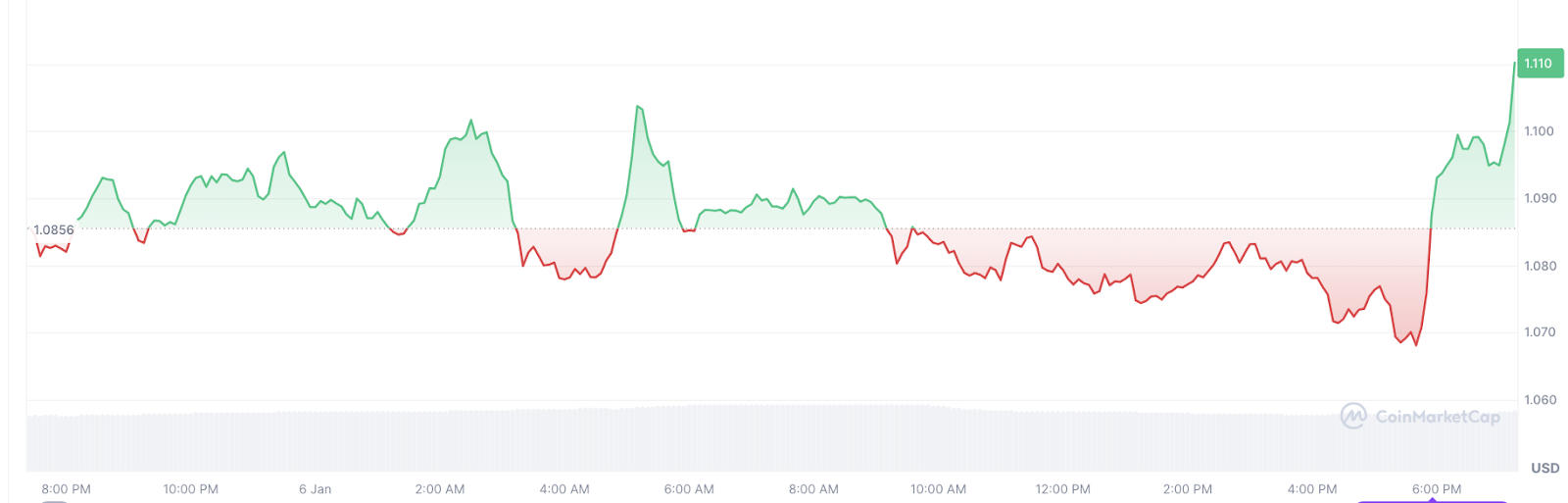
At the time of press, Cardano has shown a sharp uptick of 1.26% to push the coin marginally in profit over the last day. With Cardano price at $1.11, the coin has seen an increase in trading volume with a 24-hour $1.18 billion.

24-hour ADA Price Chart- Source: CoinMarketCap

According to data on CoinMarketCap, ADA maintains 9th position with a market cap of $38.64 billion. 

Shiba Inu Price Prediction

Shiba Inu in the passed made millionaires with a massive rally threatening to dethrone Dogecoin as the largest memecoin. While this was followed by a major decline, SHIB price is looking to reclaim these highs having managed to stay on an upward trend throughout the last 1 year. 

Right now Shiba Inu price is at $0.000024, It holds the 15th spot by market capitalization according to CoinMarketCap. Shiba Inu’s market cap stands at  $14.34 billion at the moment as the coin rallied by 2.16% in the last 24 hours.

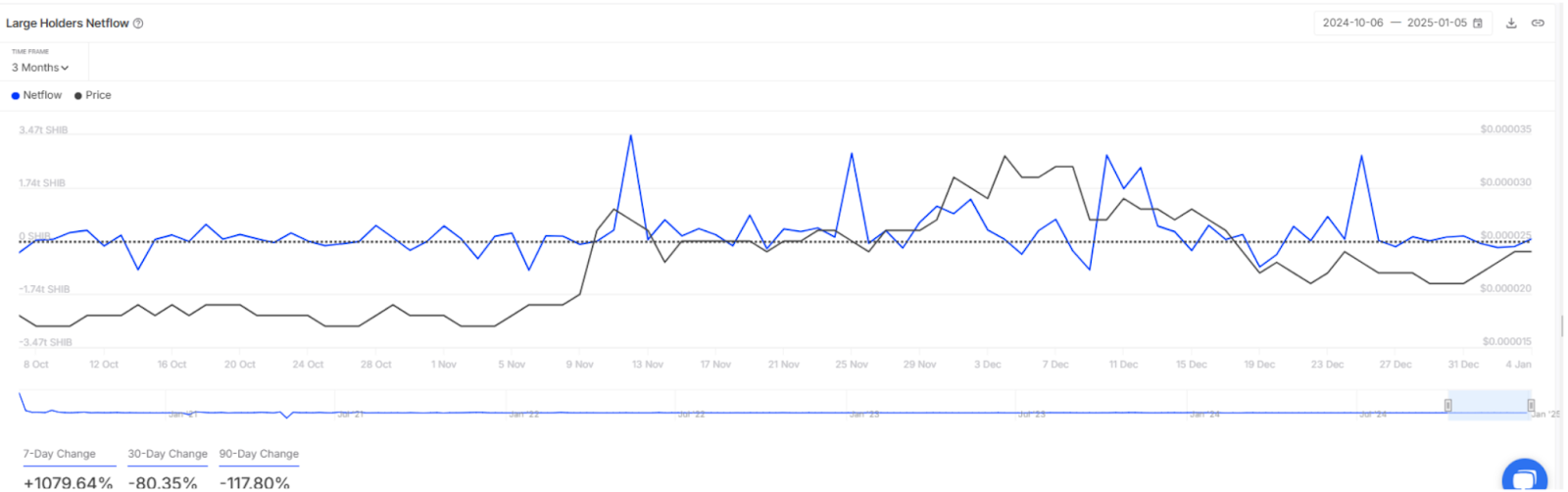
According to a chart from IntoTheBlock, On January 4, SHIB reversed negative netflows of 177.74 billion SHIB  to positive netflows of 67.52 billion SHIB. This shift highlights significant accumulation by whales, suggesting growing confidence in the token’s future.

Source: IntoTheBlock

Yeti Ouro (YETIO) Appeal 

Yeti Ouro is a new Ethereum-based altcoin that has perfected the innovative combination of cryptocurrency and gaming. As the foundation of the Play-to-Earn (P2E) ecosystem Yeti Go, the project has already captured the attention of investors and gamers despite launching a few months ago.

After raising $1.56 million in its presale so far, Yeti Ouro has already sold over 121,000,000 million tokens in total, exceeding expectations. 

Yeti Ouro provides real-world utility through in-game rewards, exclusive content, and gaming experiences in Yeti Go, a P2E racing game. The game’s mechanics and level designs are nearing completion, with industry-leading talent contributing to its assets and immersive audio design.

This uniqueness and massive adoption of Yeti Ouro positions it as a potential leader in the crypto-gaming space, a sector expected to see exponential growth by 2025.

Join The Yeti Ouro Community 

Website: https://yetiouro.io/

X (Formally Twitter): https://x.com/yetiouro

Telegram: https://t.me/yetiouroofficial

Discord: https://discord.gg/YtUsEZ2Zr

Disclaimer

In line with the Trust Project guidelines, please note that the information provided on this page is not intended to be and should not be interpreted as legal, tax, investment, financial, or any other form of advice. It is important to only invest what you can afford to lose and to seek independent financial advice if you have any doubts. For further information, we suggest referring to the terms and conditions as well as the help and support pages provided by the issuer or advertiser. MetaversePost is committed to accurate, unbiased reporting, but market conditions are subject to change without notice.

About The Author


Gregory, a digital nomad hailing from Poland, is not only a financial analyst but also a valuable contributor to various online magazines. With a wealth of experience in the financial industry, his insights and expertise have earned him recognition in numerous publications. Utilising his spare time effectively, Gregory is currently dedicated to writing a book about cryptocurrency and blockchain.

More articles


Gregory, a digital nomad hailing from Poland, is not only a financial analyst but also a valuable contributor to various online magazines. With a wealth of experience in the financial industry, his insights and expertise have earned him recognition in numerous publications. Utilising his spare time effectively, Gregory is currently dedicated to writing a book about cryptocurrency and blockchain.


Source link

Metaverse Standards Forum 2024 Annual Report

Metaverse Standards Forum 2024 Annual Report


Introduction

The Metaverse Standards Forum marked a significant milestone in April 2024 by celebrating its first anniversary as an independent non-profit industry consortium. As we reflect on our journey, we want to share our achievements with the community and express our thanks to everyone who has supported our growth. This report showcases the Forum’s key accomplishments and milestones throughout 2024.

Forum Motivation and Formation

The end of 2021 marked a pivotal moment when the technology industry recognized an extraordinary convergence of several disruptive technologies—artificial intelligence, GPU processing, XR, Web3, and advanced networking including 5G/6G. While each of these innovations is transformative in its own right, their integration represents a generational shift in how humans interact with technology, merging the connectivity of the Web with the immersiveness of Spatial Computing. This technological synthesis has come to be known as “the metaverse.”

While the future integration of these rapidly evolving technologies will unfold through a complex, evolutionary process that defies precise prediction, one fundamental imperative is immediately clear: interoperability through global open standards. This foundation of interoperability will enable companies and platforms to effectively harness emerging technologies as they become pervasive, creating market opportunities that far exceed what any system could achieve alone in its isolated silo.

The metaverse’s broad scope requires open standards developed by a diverse ecosystem of organizations—Standards Development Organizations (SDOs), consortia, non-profits, companies, and academic institutions. Yet traditionally, SDOs have operated within their specific domains of expertise, which can limit broader industry collaboration. Creating the metaverse demands cross-disciplinary communication and cooperation. The Metaverse Standards Forum emerged to address this need—not as a standards body, but as a neutral, accessible venue where standards organizations and industry can come together to collaborate.

In 2022, as interest in the metaverse grew, The Khronos Group—an SDO active in metaverse-related open standards for 3D acceleration, AI, and XR—recognized the need for a widely accessible venue where organizations could coordinate their interoperability efforts. However, no such organization existed at the time. In response, Khronos President Neil Trevett, together with Patrick Cozzi of Cesium and Marc Petit of Epic Games, initiated the Metaverse Standards Forum as a one-year funded project running from April 2022 to April 2023. The Forum launched in June 2022 with 37 founding members, comprising companies, SDOs, and industry associations, united in their mission to coordinate efforts toward building a global, open, and inclusive metaverse.

During its initial “incubation” period as a Khronos Group project, the Forum established its foundational infrastructure, including its website and support systems. The organization adopted many of the Khronos Group’s proven best practices, with Khronos leadership—including Neil Trevett and Emily Stearns—serving as Forum leaders, roles they continue to hold today. The Forum’s explosive growth to over 2,600 member organizations demonstrated the industry’s clear need for such a collaborative platform.

Plurality, inclusivity, openness, transparency, and decision-making by consensus have been key values of the Forum since its inception. In April 2023, having validated its core concepts, the Forum took a significant step forward: its membership voted to incorporate as an independent non-profit, establishing its own governance, finances, and operations under an elected leadership board. Since its incorporation as a Delaware non-profit, the Forum has maintained its founding principles of openness and pragmatic action to accelerate metaverse interoperability. With its extraordinary membership of over 2,600 organizations, the Forum holds a unique position to enhance visibility and foster cooperation on metaverse standards—creating meaningful industry-wide impact through global collaborative participation.

The Industry Role of the Metaverse Standards Forum

Since its founding, the Forum has emphasized pragmatic, industry-driven collaboration, eschewing rigid metaverse definitions and long-term roadmaps. Instead, it acknowledges that the metaverse will evolve through successive waves of innovation, propelled by emerging technologies and products. Through its bottom-up pre- and post-standardization activities, the Forum helps address urgent industry needs while fostering immediate business opportunities—steps toward an open, standards-based metaverse that many view as the internet’s natural evolution into the Spatial Web.

The Forum serves as a collaborative platform that enhances and accelerates the work of standards organizations by facilitating broader exploration of interoperability in metaverse development. While the Forum does not create standards itself, it actively supports standards organizations in their mission to build an interoperable, open metaverse. As illustrated in the figure below, the Forum’s activities are structured around two key phases: pre-standardization and post-standardization.

Figure 1: Metaverse Standards Forum pre- and post-standardization activities

The Forum fills a unique pre-standardization role by bridging a critical gap in the interoperability timeline—the period after a technology and its need have been proven but before formal standards exist. Through its post-standardization activities, the Forum helps ensure deployed standards effectively meet industry needs. By fostering communication across traditional standardization boundaries, the Forum identifies overlooked opportunities for cross-domain collaboration and supports SDOs in developing effective interoperability standards.

Forum Organization

Any young organization must organize effectively to make an impact. The Forum’s governance structure includes a board of elected directors and officers who champion the interests of its members. This board convenes monthly to strategize on optimal resource allocation to maximize return on investment for both members and the broader industry.

As a non-profit organization, the Forum is a means rather than an end in itself, and so the Forum maintains deliberately inclusive participation policies—requiring no NDAs, patent licensing obligations, or participation fees for many of its activities, including Domain Groups where detailed interoperability discussions and activities are held. While core activities remain freely accessible, the Forum requires funding to operate and achieve its goals. To this end, it offers a paid ‘Principal Member’ tier through which organizations can support Forum activities. In return, Principal Members gain a voice in guiding the Forum’s work through oversight of Domain Groups, the right to vote and stand in Board elections, and priority marketing considerations.

Figure 2: Metaverse Standards Forum Organizational Structure

The Forum has 2,613 member organizations headquartered across five geographic regions, representing international participation from a truly global ecosystem.

Figure 3. Distribution of Forum Membership by Geographic Region

The Forum’s diverse membership spans 76 major organizations, thousands of smaller entities, and over 4,000 individual professionals who have registered through the member portal—all united by their commitment to advancing interoperability and standards development.

Domain Group Process

Since its inception, the Forum has established agile, pre-standardization collaboration processes that serve its diverse membership. It focuses on practical, fast-moving initiatives through regular Working Group meetings, with priorities emerging organically from members to ensure industry relevance. As illustrated in the figure below, Forum members advance their ideas and interests through a Domain Group process, where Exploratory Groups develop Working Group charters by consensus. Through its Domain Groups, the Forum develops cross-disciplinary use cases and requirements, providing standards bodies with valuable insights to ensure their work delivers real-world impact.

Figure 4: Metaverse Standards Forum Domain Group Process

The Forum’s Domain Group Process stands as a cornerstone of its activities, ensuring all members can shape Forum priorities and activities, while maintaining the Forum’s focus on pragmatic projects and deliverables that address urgent metaverse interoperability needs. Members actively generate new ideas for Forum initiatives—in just one year, nearly 250 ideas have been organized into more than 20 domains of interest. Members can align themselves with these domains and upvote topics for Exploratory Group consideration. The figure below lists the topics for which Working Groups have formed or are being proposed. Through its pipeline of member-driven Domain Groups, the Forum has cultivated an unprecedented level of open dialogue between the standards community and broader industry.

Figure 5: Metaverse Standards Forum Domain Groups at the end of 2024

Forum Effectiveness

The Forum’s remarkable growth presents both opportunities and challenges. With our extensive membership and numerous activities, members can find it challenging to identify the groups and projects that will best serve their organizations. To streamline participation, we provide a comprehensive member website and portal detailing ongoing projects and groups. Our managing director hosts monthly orientation sessions for new members, supported by detailed guides and documented best practices to help members engage effectively.

Given the metaverse’s technological breadth and our global membership, accommodating diverse interests across time zones requires careful planning. We conduct well-attended monthly plenary meetings, twice on the same day to enable worldwide participation, while Principal Members participate in additional monthly oversight meetings to oversee Domain Group activities. All meeting materials, recordings, and minutes are openly available online to all members at any time.

We continue to strengthen coordination between Domain Groups with adjacent interests. Quarterly progress review meetings for Working Group chairs complement ongoing efforts to align and enhance Domain Group activities, ensuring effective collaboration across the Forum’s initiatives.

The Forum Standards Register Working Group plays a vital role in promoting visibility, coordination, and cooperation across Domain Groups. Through its database, the group tracks metaverse-relevant standardization activities and key standards throughout the industry, helping organizations navigate the complex standardization landscape. The Working Group is also developing a comprehensive database of metaverse use cases and a standardized glossary. This work ensures consistent terminology across Forum activities while supporting broader industry alignment through collaboration with initiatives working to establish common language for use cases, requirements, and projects.

Figure 6. Process for populating the Metaverse Standards Forum Standards Register

Global Engagement

Since its incorporation, the Forum has achieved significant milestones and emerged as a leading voice in discussions about open and interoperable metaverse technologies through media engagement, events, content creation, social media presence, and educational initiatives.

The Forum has garnered substantial industry attention, generating 1,234 pieces of global media coverage from prominent outlets including VentureBeat, Reuters, Forbes, Decrypt, and Immersive Wire. This extensive coverage across mainstream and specialized tech media demonstrates the Forum’s growing influence in metaverse development.

Forum members have shared their expertise through numerous digital platforms, participating in prominent podcasts and webinars such as Voices of VR, 80 Level, Meta Minutes, ACM Bytecast, and XR Today. The Forum’s work has been featured in major analyst research and forecast reports, with leadership maintaining active dialogue with leading industry analysts including Forrester, McKinsey, Gartner, and others. The Forum’s digital presence continues to grow, with nearly 13,000 followers across LinkedIn, Bluesky, Mastodon, and YouTube.

The Forum’s influence extends to major industry events, where members have contributed to dozens of panels, presentations, and networking sessions at prestigious gatherings including CES, Mobile World Congress, SXSW, SIGGRAPH, and SIGGRAPH Asia. Members have also presented at numerous Standards Development Organization meetings, including ISO/IEC JTC1, IEEE, ITU, and W3C, including efforts to support the UN’s Sustainable Development Goals, ensuring open metaverse standards discussions reach all stakeholders.

The Forum’s innovative work earned recognition as one of Fast Company’s ten World-Changing Ideas in the Experimental category for 2023. Its YouTube channel serves as a comprehensive public resource, featuring presentations from industry experts, events and Domain Group speakers.

In late 2024, the Forum launched a series of open Town Hall meetings focused on vital metaverse topics. The first two sessions—exploring Volumetric Media and OMA3’s Inter World Portaling System—drew significant community and attendance.

Challenges and Opportunities

Despite strong momentum and participation, the Forum is navigating challenges in its core mission: promoting cooperation to encourage and inform the development of interoperability standards for the immersive web. Looking ahead to 2025, the Forum’s leadership is committed to continue transforming these challenges into opportunities to benefit the broader industry.

The term ‘metaverse’ has weathered a significant hype cycle, where inconsistent definitions led to confusion and premature declarations of its demise. The surge in AI interest has further complicated the narrative, with some suggesting AI has superseded the metaverse as a transformative technology. However, viewing the metaverse through the Forum’s inclusive definition—the convergence of web connectivity with spatial computing—reveals that activity in this space is not only continuing but accelerating. AI serves as an enabler, enhancing metaverse capabilities, while the metaverse will often provide a natural interface for AI interactions and agents. The Forum will intensify its efforts to show how AI and the metaverse are interconnected technologies that enhance and amplify each other.

While the term ‘metaverse’ may currently carry baggage from its hype cycle, the underlying technological convergence it represents remains vibrant and growing. Until a more precise term emerges, the Forum will continue to focus on educating the industry about the concrete and significant capabilities being developed, rather than debating the term itself.

While the late 2021 surge in metaverse interest sparked numerous initiatives—many of which have since ceased—the Forum remains focused on strengthening its industry relevance through a unique approach: concentrating on pre- and post-standardization activities for the emerging immersive web. Rather than debating theoretical long-term roadmaps, the Forum encourages the natural member-driven evolution of pragmatic projects that create immediate business opportunities through growing interoperability.

Like many startups, the Forum faces ongoing funding challenges. We are focused on delivering strong, tangible value to our members to encourage Principal Member participation and financial support, while exploring additional revenue sources—including grants and collaborations for projects where the Forum’s unique capabilities and broad industry participation can create distinctive value.

The Forum’s Elected Board of Directors

In April 2024, the Metaverse Standards Forum marked its first anniversary of incorporation with the installation of a newly elected Board of Directors—a pivotal moment in its mission to advance interoperability standards for an open and inclusive metaverse.The 19-member Board brings together distinguished leaders from prominent organizations, representing a comprehensive range of metaverse-related expertise: generative AI research, 3D geospatial technology, systems architecture, standardization, network technology, AR, VR, multimedia, and the legal and privacy considerations of emerging technologies. This Board oversees the Forum’s core mission of providing a neutral venue where standards organizations and companies can collaborate to develop interoperability standards for an open metaverse.

The Board’s executive leadership comprises four officers: Neil Trevett as president, Emily Stearns as executive director, Christine Perey as secretary, and Yu Yuan as treasurer. More details on Board members are provided below:

Matt White | CEO, Berkeley Synthetic – An AI and simulation researcher, Matt is known for successfully deploying large-scale AI and simulation platforms across the telecom, gaming, media, and entertainment industries.
Patrick Cozzi | CEO, Cesium – Patrick is dedicated to advancing the field of 3D geospatial and is a recognized expert in 3D graphics and mapping technology, open standards, and open-source software.
Eric Klein | co-founder Cloudonix, Inc. – Eric has over 30 years of experience in telecommunications, mobile, and networking. He is a mentor, community advocate, writer and strategic advisor across many aspects of technology and he currently serves as the chair of the Technical Interoperability and End User Troubleshooting Exploratory Working Group at the Forum.
Leonard Daly | Daly Realism – Leonard has a long career in 3D graphics and open standards and specializes in 3D systems design.
Liam Broza | co-founder, Ethereal Engine – working on the intersection of spatial computing, computer vision, and data sovereignty, Liam’s work focuses on building the open social, spatial web for all.
Mats Lundgren | Futurewei Technologies’ director open source technology strategy – Mats has 20 years of experience in telecommunications, mobile, and wireless.
Rouslan Ovtcharoff | founder and CEO, Groovesetter – Rouslan brings a passion for blockchain technologies and expertise in film and television production, distribution, advertising, XR, and interactive media. He is also the co-founder of the Blockchain Global Entertainment Alliance, a non-profit organization dedicated to promoting blockchain education, adoption and common standards in the entertainment industry.
Paul Higgs | Huawei Vice President of Video Industry Development – Paul brings 20+ years of experience in systems architecture, engineering, and development management for next-gen technology to the table.
William Benman JD | CEO of Integrated Virtual Networks and Web3D Consortium Board Member – Bill is the inventor of multiple patents on IVN’s Silhouette® Technology and has experience in telecommunications, aerospace, and intellectual property law.
Fred Chesbro, Esq. | Co-founder, Metaverse Radio WMVR-db Chicago – Championing the intersection of creativity in the digital frontier while covering events and hosting ongoing conversations about the metaverse’s potential for advancing music, visual arts, and literature.
Ulrich Dropmann | Nokia Head of Standardization and Industry Environment – Ulrich heads external standardization engagement and is responsible for global and regional standardization, including radio spectrum aspects.
Alfred Tom | Executive Director, OMA3, President of Lumian Foundation, and CEO of Wivity – Alfred has run multiple consortia and helped create several industry standards, including SunSpec Alliance, Car Connectivity Consortium, GENIVI, PC Card, and IrDA. His current focus is assisting Web3 consortia and DAOs operate.
Christine Perey | President, PEREY Research & Consulting – Christine specializes in helping organizations identify new opportunities for Augmented Reality in industrial and enterprise use cases.
Ben Erwin | owner, Powersimple, LLC – Dedicated to the advancement of the XR industry, Ben has developed the advocacy and recognition platform The Polys – WebXR Awards, the WebXR Summit Series, and MetaTr@aversal, which have created engagement and awareness of the immersive web.
Thomas Stockhammer | Qualcomm Senior Director of Technical Standards – Thomas is an award-winning tech and standards leader in mobile multimedia, TV, adaptive video streaming, 5G Broadcast, XR technologies, and is also IEEE Fellow.
Virginie Maillard | SIEMENS Head of Technology Field Simulation and Digital Twin – Virginie leads tech research in the US and serves as the global Head of research in Simulation and Digital Twins.
Marc Petit | Principal Consultant, TRNSFRM Inc – Marc is a co-founder of Building the Open Metaverse podcast and serves as co-chair for the 3D Asset Interoperability Working Group. Marc spent 35 years in computer graphics at TDI, SOFTIMAGE, Autodesk, Fabric Engine, and most recently, Epic Games.
Yu Yuan | Co-founder of VerseMaker and CEO of 0xSenses – Yu is a visionary scientist, inventor, entrepreneur, and investor in the areas of Virtual Reality, Metaverse, and Digital Transformation. He has held a variety of leadership roles, including but not limited to Founder and Acting President of the Metaverse Acceleration and Sustainability Association (MASA), Treasurer of the Metaverse Standards Forum, President of the IEEE Standards Association, and Member of the IEEE Board of Directors.
Elizabeth Rothman | XRSI.ORG Senior Legal Affairs and Digital Trust Advisor – Elizabeth is an attorney and advisor in emerging technology, often working at the forefront of legal, privacy, and safety concerns presented by the implementation and convergence of technologies in digital environments.


The Forum sincerely thanks all Board members for their generous donation of time and expertise to further the Forum’s mission.

Looking Ahead

2024 has marked unprecedented advances in technologies and applications shaping the metaverse—a rapidly emerging global platform for connected spatial computing. The rise of AI has proved especially transformative, unlocking new applications that solve real challenges in both consumer and industrial domains. This accelerating progress strengthens our commitment to ensure the standards community comprehensively supports metaverse development, enabling its revolutionary potential to become reality.

As we mark our first year as an incorporated entity, we deeply value our members’ contributions and extend an open invitation to all organizations to join the Forum. Our Domain Groups offer members the opportunity to propose, lead, and participate in initiatives that advance both their own missions and the broader metaverse ecosystem. We particularly welcome new Principal Members who can help shape our direction and sustain our ongoing work.

Together, we will continue advancing standard protocols and interfaces for an open and interoperable metaverse in 2025 and beyond!



Source link

BlockDAG’s BDAG400 Offer Starts at 250%: What Do the Bonuses Reflect? Stellar Eyes $0.60 & Shiba Inu Targets 260% Rally!

BlockDAG’s BDAG400 Offer Starts at 250%: What Do the Bonuses Reflect? Stellar Eyes alt=


The crypto space is wide awake with optimistic updates, especially related to Shiba Inu (SHIB), Stellar coin (XLM), and BlockDAG (BDAG). 

XLM edges closer to breaking the pivotal $0.361 resistance, with projections of a surge to $0.60. Meanwhile, SHIB gains attention with a bold 260% growth forecast, spurred by whale activity and bullish technical patterns. 

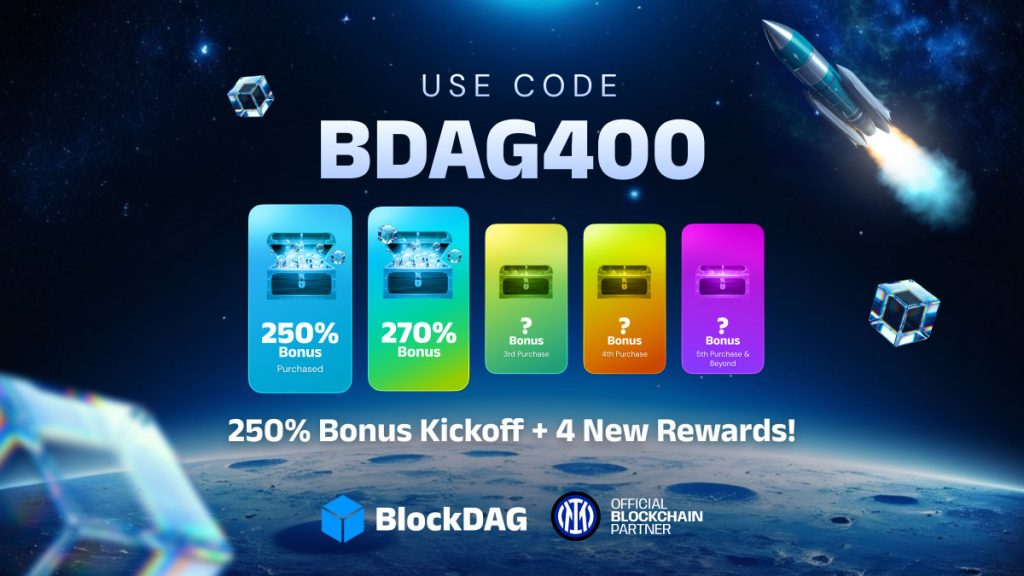
At the same time, BlockDAG’s BDAG400 bonus offer is also catching the eye of crypto buyers. This offer includes five enticing bonuses starting at 250%, whereas speculations suggest that this bonus might be the first step in something monumental. 

While optimistic trends revolve around these crypto coins, which one is turning out to be the best crypto to buy now for big returns? Let’s find out.

BlockDAG’s BDAG400 Offer Starts at 250%: What Do the Bonuses Reflect? Stellar Eyes $0.60 & Shiba Inu Targets 260% Rally!

Shiba Inu Rally: A Whale-Driven Surge?

Shiba Inu’s (SHIB) rally is making headlines with projections of a 260% price increase, reaching $0.000081 in the next few months. Analysts note “textbook bull signals” on the charts. This SHIB rally is primarily due to significant whale activity, such as a withdrawal of 220 billion SHIB tokens from Binance, which suggests growing institutional interest. 

BlockDAG’s BDAG400 Offer Starts at 250%: What Do the Bonuses Reflect? Stellar Eyes $0.60 & Shiba Inu Targets 260% Rally!

For SHIB to reach its target, it must break the key resistance level of $0.000029. Positive market sentiment and increased trading volume are encouraging. The broader cryptocurrency context, including the stabilization of Ethereum and Bitcoin, supports SHIB’s potential growth. Investors remain cautious, emphasizing informed decisions and risk management.

Stellar (XLM) Technical Analysis: Will it Hit $0.60?

Stellar (XLM) is gaining notice with the potential to hit $0.60, contingent on breaking the critical $0.361 resistance level. XLM was recently trading near $0.355 after an 8.5% rally in 24 hours, with trading volume up by 55%. Open Interest (OI) surged by 18%, indicating growing trader interest. 

BlockDAG’s BDAG400 Offer Starts at 250%: What Do the Bonuses Reflect? Stellar Eyes $0.60 & Shiba Inu Targets 260% Rally!

Stellar (XLM) technical analysis suggests that if XLM closes above $0.371, it could rise by 62%, reaching $0.60. The asset, trading above the 200 EMA, remains in an uptrend. However, significant liquidation areas near $0.339 and $0.361 reflect over-leveraged positions, highlighting the need for caution. The Stellar technical analysis reveals key price levels that traders must monitor to capitalize on potential price movements.

BlockDAG’s BDAG400 Bonus: The Start of a Blockchain Revolution?

BlockDAG, an emerging crypto project, is making waves in the crypto community with its BDAG400 offer, which starts at a 250% bonus, followed by a 270% bonus. Additionally, the scheme features three mystery boxes for additional purchases, each offering increasingly larger bonuses. 

This contemporary bonus system has significantly boosted demand for BDAG coins, drawing in thousands of new buyers eager to maximize their potential returns before the offer concludes. The bonus has propelled the presale to over $176 million, with more than 17.6 billion coins sold, underscoring significant buyer interest. The bonus structure aims to reward early supporters and create a strong foundation for the project’s long-term success. 

BlockDAG’s BDAG400 Offer Starts at 250%: What Do the Bonuses Reflect? Stellar Eyes $0.60 & Shiba Inu Targets 260% Rally!

What’s more intriguing is that the substantial bonuses may reflect more than just a presale incentive. They could signal confidence in BlockDAG’s quantum-resistant technology and decentralized vision. The platform utilizes a Directed Acyclic Graph (DAG) structure designed to enhance speed and security. This makes it a prime candidate for decentralized finance (DeFi) applications.

With the mainnet launch scheduled in 2025, early participants are in for a big ROI. Early adopters from batch 1 have already witnessed a staggering ROI of 2240% since batch 1. Buyers joining the presale right now at the current price of $0.0234 per BDAG coin in batch 26 are also in for massive ROI as analysts predict the coin will reach $1 in 2025. 

This growth suggests that BlockDAG is among the best crypto coins to buy now. The community’s adoption of the BDAG400 bonus and the ongoing successful presale signal that BlockDAG has the potential to disrupt the entire crypto space with its expansion.

Which Coin is Shaping the Future of Crypto?

As we enter 2025, Shiba Inu’s rally, Stellar’s (XLM) technical analysis, and BlockDAG’s BDAG400 bonus emerge as pivotal highlights. SHIB’s potential 260% surge, fueled by whale activity and positive sentiment, showcases its strength in the market. XLM’s promising growth towards $0.60 underscores its technical strength, emphasizing key resistance levels traders must watch. 

Meanwhile, BlockDAG’s BDAG400 bonus, with rewards starting at 270% bonus and progressing incentives—has stunned buyers, propelling its presale past $176 million and hinting at the dawn of a potential revolution in the crypto space. These developments showcase growth potential for this booming project, making BlockDAG the best crypto coins to buy now.

BlockDAG’s BDAG400 Offer Starts at 250%: What Do the Bonuses Reflect? Stellar Eyes $0.60 & Shiba Inu Targets 260% Rally!

Presale: https://purchase.blockdag.network

Website: https://blockdag.network

Telegram: https://t.me/blockDAGnetworkOfficial

Discord: https://discord.gg/Q7BxghMVyu

Disclaimer

In line with the Trust Project guidelines, please note that the information provided on this page is not intended to be and should not be interpreted as legal, tax, investment, financial, or any other form of advice. It is important to only invest what you can afford to lose and to seek independent financial advice if you have any doubts. For further information, we suggest referring to the terms and conditions as well as the help and support pages provided by the issuer or advertiser. MetaversePost is committed to accurate, unbiased reporting, but market conditions are subject to change without notice.

About The Author


Gregory, a digital nomad hailing from Poland, is not only a financial analyst but also a valuable contributor to various online magazines. With a wealth of experience in the financial industry, his insights and expertise have earned him recognition in numerous publications. Utilising his spare time effectively, Gregory is currently dedicated to writing a book about cryptocurrency and blockchain.

More articles


Gregory, a digital nomad hailing from Poland, is not only a financial analyst but also a valuable contributor to various online magazines. With a wealth of experience in the financial industry, his insights and expertise have earned him recognition in numerous publications. Utilising his spare time effectively, Gregory is currently dedicated to writing a book about cryptocurrency and blockchain.


Source link

인공지능(AI)이 게임 산업을 변화시킨 4가지 방법

인공지능(AI)이 게임 산업을 변화시킨 4가지 방법


인공지능(AI)이 게임 산업을 변화시킨 4가지 방법

현재 인공지능 기술은 비즈니스, 금융, 사회, 경제 등 다양한 분야에서 효율성과 생산성을 혁신적으로 향상하고 있습니다. 특히 게임 업계에서는 AI 기술이 도입되면서 획기적인 변화를 이끌어내고, 게임 개발사와 플레이어 모두에게 새로운 가능성을 제시하고 있습니다. 게임 산업에서 AI 기술은 빠르게 확장 중이며, VR과 같은 기술이 접목된 플레이어가 경험하는 게임 환경은 실제와 구별하기 어려울 정도로 정교해지고 있습니다. 이번 기사에서는 인공지능이 게임 산업에 가져온 변화와 앞으로 예상되는 발전 방향에 대해 살펴볼 예정입니다.

데이터 분석을 통한 맞춤형 정보 제공

게임 산업에서 인공지능 알고리즘은 플레이어의 행동과 데이터를 분석해 맞춤형 경험을 제공합니다. 이를 통해 플레이어는 효과적으로 전략을 세우거나 상대를 분석하고, 위기 상황에서 새로운 방향을 모색할 수 있습니다. 특히, 막대한 데이터를 실시간으로 분석해 필요한 정보를 제공하는 점은 큰 강점으로 작용하며, 게임 산업 전반에서 이러한 개인화 경험이 널리 활용되고 있습니다. 

온라인 카지노 게임 업계에서도 플레이어의 데이터 분석을 통해 맞춤형 정보를 제공하는 시스템이 도입되었습니다. 예를 들어, 크립토뉴스 선정 최고카지노에서는 플레이 기록과 선호도를 바탕으로 슬롯, 블랙잭, 룰렛과 같은 게임을 추천하거나 플레이에 도움을 주는 기능을 제공하고 있습니다. 이러한 개인화 경험은 플레이어가 새로운 게임을 발견하고 전략적으로 행동하는 데 도움을 주며, 게임 산업 전반에 긍정적인 영향을 미칩니다.

인공지능으로 진화하는 맞춤형 게임 경험

게임 산업에서 인공지능 기술의 적용은 플레이어의 경험을 혁신적으로 변화시키며, 가상현실과 같은 새로운 영역으로도 그 경계를 확장하고 있습니다. 기술의 발전으로 AI는 실시간으로 플레이어의 행동에 적응해 몰입감 넘치는 게임 경험을 가능하게 하고 있습니다.

그중에서도 게임 경험을 향상시키는 핵심 기술 중 하나는 적응형 AI입니다. 적응형 AI 게임은 플레이어의 행동과 성향에 맞춰 게임의 난이도와 콘텐츠를 조정함으로써 개인화된 경험을 제공합니다. 예를 들어, 레프트 4 데드(Left 4 Dead)에서 사용된 AI 디렉터는 플레이어의 역량을 분석해 게임 내 적의 수와 강도를 실시간으로 조정합니다. 플레이어가 어려움을 겪고 있다면 적의 수를 줄이거나 아이템을 추가하고, 반대로 높은 실력을 보일 경우 게임 중 더 도전적인 요소를 배치합니다. 이러한 적응형 시스템은 다양한 취향과 능력을 갖춘 플레이어가 게임을 더욱 재미있게 즐길 수 있도록 하고, 반복적인 플레이에서도 단조로움을 방지합니다.

혁신된 게임 테스트와 품질 보증

인공지능은 플레이어의 경험을 향상시킬 뿐만 아니라, 게임 개발자들에게도 큰 도움을 주고 있습니다. 게임 테스트와 품질 보증 과정에서 반복적인 작업을 자동화함으로써 시간과 자원을 절약할 수 있게 되었으며, 이를 통해 개발자들은 게임의 창의성과 혁신에 더 집중할 수 있는 환경을 갖추게 되었습니다. 특히, AI는 수천 개 이상의 게임 시나리오를 시뮬레이션하여 잠재적인 오류와 문제를 사전에 식별합니다. 이를 통해 철저한 테스트를 거쳐 버그와 같은 불편한 요소를 최소화할 수 있습니다. 또한, 게임 출시 후에도 AI는 실시간으로 버그를 자동 감지하고 수정하여 최적화를 가속화하며, 게임 품질을 지속적으로 향상시키는 데 중요한 역할을 합니다.

더 스마트해진 NPC 행동

NPC(Non-Player Character)는 퀘스트나 이야기를 전달하는 중요한 캐릭터로, 플레이어가 직접 조종하지 않는 인물입니다. 인공지능은 NPC의 행동 방식을 혁신적으로 변화시켜, 더 현실적이고 즉각적으로 반응할 수 있는 시스템을 구축했습니다. 인공지능 기술은 적의 전술이나 NPC의 행동을 제어하는 데 활용되어, 실제 인간처럼 행동하고 대화하는 환경을 만들어 몰입감을 극대화하는 중요한 요소로 자리 잡게 되었습니다. 그 결과, 플레이어와 대화하고 작업을 수행하며 자연스럽게 상호작용을 할 수 있게 되었습니다. 이렇게 더 스마트해진 NPC의 행동은 이전에 도달할 수 없었던 차원의 몰입감을 선사합니다.

무한한 잠재력을 보유한 인공지능과 게임 산업의 미래

인공지능을 핵심으로 하는 게임 기술의 미래는 무한한 가능성을 보여줍니다. 실제로 국내 주요 게임사도 다양한 AI 전략을 활용해 게임을 출시하고 있는 추세입니다. 그동안 인공지능은 게임 산업을 크게 변화시켜 왔으며 다양한 방법으로 플레이어의 경험과 개발자의 효율성을 높이고 있습니다. 앞으로도 게임 산업에서의 인공지능 역할과 범위는 확장될 것으로 보이며 더 몰입할 수 있고 정교화된 게임 경험이 가능해질 것으로 기대됩니다.

Disclaimer

In line with the Trust Project guidelines, please note that the information provided on this page is not intended to be and should not be interpreted as legal, tax, investment, financial, or any other form of advice. It is important to only invest what you can afford to lose and to seek independent financial advice if you have any doubts. For further information, we suggest referring to the terms and conditions as well as the help and support pages provided by the issuer or advertiser. MetaversePost is committed to accurate, unbiased reporting, but market conditions are subject to change without notice.

About The Author


Gregory, a digital nomad hailing from Poland, is not only a financial analyst but also a valuable contributor to various online magazines. With a wealth of experience in the financial industry, his insights and expertise have earned him recognition in numerous publications. Utilising his spare time effectively, Gregory is currently dedicated to writing a book about cryptocurrency and blockchain.

More articles


Gregory, a digital nomad hailing from Poland, is not only a financial analyst but also a valuable contributor to various online magazines. With a wealth of experience in the financial industry, his insights and expertise have earned him recognition in numerous publications. Utilising his spare time effectively, Gregory is currently dedicated to writing a book about cryptocurrency and blockchain.


Source link

Binance Announces Third Megadrop, Offering SOLV Rewards For Subscribing To BNB Locked Products Or Completing Web3 Quests

Binance Announces Third Megadrop, Offering SOLV Rewards For Subscribing To BNB Locked Products Or Completing Web3 Quests


In Brief

Binance launches Solv Protocol as the third project on its Megadrop platform, allowing users to participate starting at 00:00 UTC on January 7th.

Binance Announces Third Megadrop, Offering SOLV Rewards For Subscribing To BNB Locked Products Or Completing Web3 Quests

Cryptocurrency exchange Binance announced the launch of Solv Protocol (SOLV), a Bitcoin staking protocol, as the third project on its Megadrop platform. Users can begin participating starting at 00:00 UTC on January 7th.

Following the launch, Binance will list Solv Protocol (SOLV) at 10:00 UTC on January 17th, with trading available in SOLV-USDT, SOLV-BNB, SOLV-FDUSD, and SOLV-TRY pairs.

In order to maximize Locked BNB Scores, users are encouraged to lock their BNB in BNB Locked Products before 00:00 UTC on January 7th, as hourly snapshots of users’ subscription amounts will be taken during this period. Additionally, users can participate in Web3 Quest(s) during the Quest Period. Web3 Quest 1 involves staking 0.0001 BTCB on Solv Protocol. The participation period will run until 23:59 UTC on January 16th.

Starting January 17th UTC, rewards will be distributed, allowing users to view their Megadrop rewards in their Binance Spot Accounts.

Solv is a Bitcoin staking protocol that aims to create a reliable Bitcoin-based financial ecosystem by unlocking liquidity and enhancing the utility of idle Bitcoin assets. Through tools like the Staking Abstraction Layer, SolvBTC, and SolvBTC.LSTs, it enables both retail and institutional investors to access various yield opportunities without compromising liquidity, all while integrating Bitcoin into decentralized finance (DeFi) ecosystems.

SOLV is the native utility token of the Solv Protocol and is used for several functions, including governance, staking, and fee discounts. The total maximum supply of SOLV is 9,660,000,000 tokens, with the possibility of an increase through network governance related to the Bitcoin Reserve Offering. The initial supply, or genesis supply, is set at 8.4 billion tokens, representing 86.96% of the maximum supply. Meanwhile, Megadrop Token Rewards make up 588 million tokens, or 7.00% of the genesis supply and 6.09% of the maximum supply. The Hard Cap per user is 4,704,000 SOLV tokens.

How To Join SOLV Megadrop?

Users wishing to join the Binance Megadrop should log into their Binance account, subscribe to BNB Locked Products, and/or complete all designated Web3 Quest(s) via the Megadrop section on the Binance application to accumulate scores. To engage in Web3 Quests, users must have at least one active Binance Wallet. 

After completing all designated Web3 Quests, users are required to tap the [Verify] button on the Megadrop project page before the Quest Period ends to claim the Web3 Quest Bonus and Web3 Quest Multiplier. The rewards will be distributed based on the Total Score.

Binance Megadrop is a new token launch platform that integrates Binance Simple Earn and the Binance Web3 Wallet, transforming the airdrop experience. It offers users early access to select Web3 projects before they are listed on the exchange.

Disclaimer

In line with the Trust Project guidelines, please note that the information provided on this page is not intended to be and should not be interpreted as legal, tax, investment, financial, or any other form of advice. It is important to only invest what you can afford to lose and to seek independent financial advice if you have any doubts. For further information, we suggest referring to the terms and conditions as well as the help and support pages provided by the issuer or advertiser. MetaversePost is committed to accurate, unbiased reporting, but market conditions are subject to change without notice.

About The Author


Alisa, a dedicated journalist at the MPost, specializes in cryptocurrency, zero-knowledge proofs, investments, and the expansive realm of Web3. With a keen eye for emerging trends and technologies, she delivers comprehensive coverage to inform and engage readers in the ever-evolving landscape of digital finance.

More articles


Alisa Davidson


Alisa, a dedicated journalist at the MPost, specializes in cryptocurrency, zero-knowledge proofs, investments, and the expansive realm of Web3. With a keen eye for emerging trends and technologies, she delivers comprehensive coverage to inform and engage readers in the ever-evolving landscape of digital finance.


More articles


Source link

Exploring Luxury’s Role in the Metaverse’s Digital Future

The concept of luxury has always been synonymous with exclusivity, prestige, and a certain level of opulence that is often unattainable for the average consumer. Traditionally, luxury has been tied to tangible goods such as high-end fashion, jewelry, and exotic cars. However, as the digital world continues to evolve, the definition of luxury is being reimagined within the context of the metaverse. This digital frontier offers a new platform for luxury brands to explore innovative ways of engaging with consumers, redefining what it means to experience luxury in a virtual space. This article delves into the intricate relationship between luxury and digital innovation, examines how the metaverse is reshaping luxury experiences, and explores the challenges and opportunities that lie ahead for luxury brands in this burgeoning digital landscape.

The Intersection of Luxury and Digital Innovation

The intersection of luxury and digital innovation is not a new phenomenon, but it has gained unprecedented momentum with the advent of the metaverse. Luxury brands have historically been slow to embrace digital transformation, often prioritizing the exclusivity and tactile nature of their products. However, the rise of digital platforms like the metaverse has compelled these brands to reconsider their approach to innovation. The metaverse offers a unique opportunity to blend the physical and digital worlds, creating immersive experiences that can elevate a brand’s prestige and reach.

Digital innovation in the luxury sector is characterized by the use of cutting-edge technologies such as augmented reality (AR), virtual reality (VR), and blockchain. These technologies allow luxury brands to create bespoke digital experiences that are both interactive and personalized. For instance, AR and VR can be used to create virtual showrooms where consumers can explore products in a highly detailed and immersive environment. This not only enhances the consumer experience but also allows brands to showcase their craftsmanship and attention to detail in new and exciting ways.

Moreover, the use of blockchain technology in the luxury sector is revolutionizing the way brands handle issues of authenticity and provenance. By creating digital certificates of authenticity, luxury brands can ensure that their products are genuine and traceable, thereby protecting their reputation and adding value to their offerings. In the metaverse, these digital certificates can be seamlessly integrated into virtual experiences, giving consumers peace of mind and a sense of exclusivity.

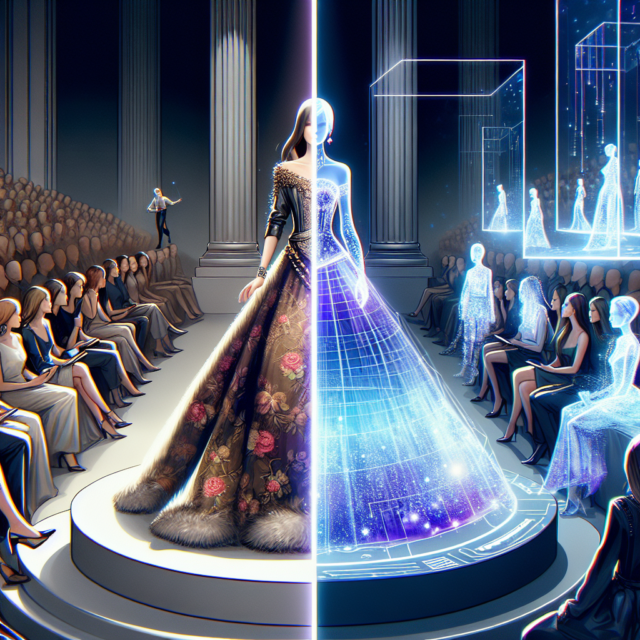
The metaverse also provides a platform for luxury brands to experiment with new forms of storytelling and brand engagement. Through immersive digital experiences, brands can craft compelling narratives that resonate with consumers on a deeper level. For example, a luxury fashion brand could create a virtual runway show that not only showcases their latest collection but also tells the story behind the designs, offering consumers a glimpse into the creative process.

Furthermore, the intersection of luxury and digital innovation is fostering new collaborations between brands and technology companies. By partnering with tech firms, luxury brands can access the expertise and tools needed to develop cutting-edge digital experiences. These collaborations can lead to the creation of unique products and services that set a brand apart in the competitive luxury market.

Finally, the integration of luxury and digital innovation in the metaverse is opening up new revenue streams for brands. Virtual goods, such as digital fashion items or accessories, can be sold alongside physical products, offering consumers a more comprehensive and versatile luxury experience. This not only enhances brand loyalty but also attracts a new generation of digitally savvy consumers who value both physical and virtual expressions of luxury.

How the Metaverse Redefines Luxury Experiences

The metaverse is redefining luxury experiences by offering a new dimension of interactivity and personalization that was previously unattainable in the physical world. In this digital realm, luxury is no longer confined to the material; it extends into the experiential, where consumers can engage with brands in ways that transcend traditional commerce. This shift is transforming how luxury is perceived and consumed, creating opportunities for brands to deliver unique, immersive experiences that resonate with modern consumers.

One of the most significant ways the metaverse is redefining luxury experiences is through the creation of virtual spaces that mirror or even enhance real-world locations. Luxury brands can develop exclusive digital environments where consumers can explore, interact, and purchase products in a setting that reflects the brand’s identity and values. These virtual spaces can range from opulent showrooms and boutiques to interactive art installations and immersive events, offering consumers a taste of luxury that is both accessible and aspirational.

In addition to virtual spaces, the metaverse allows for the creation of customizable avatars and digital identities, enabling consumers to express their personal style and preferences in new ways. Luxury brands can capitalize on this by offering virtual fashion items, accessories, and even digital real estate that consumers can use to personalize their avatars and virtual environments. This level of customization not only enhances the consumer experience but also fosters a deeper connection between the brand and its audience.

The metaverse also provides a platform for luxury brands to engage with consumers through exclusive events and experiences. Virtual fashion shows, product launches, and private viewings can be hosted in the metaverse, allowing brands to reach a global audience without the constraints of physical location. These events can be designed to offer a sense of exclusivity and prestige, reinforcing the brand’s luxury status and creating memorable experiences that drive consumer engagement.

Moreover, the metaverse enables luxury brands to explore new forms of storytelling that are immersive and interactive. Through virtual reality and augmented reality experiences, brands can create narratives that captivate consumers and draw them into the brand’s world. These stories can be woven into virtual environments, product experiences, and brand interactions, offering consumers a richer and more nuanced understanding of the brand’s heritage, values, and vision.

The redefinition of luxury experiences in the metaverse is also challenging brands to rethink their approach to customer service and engagement. In a digital environment, the traditional touchpoints of luxury service, such as personalized consultations and bespoke offerings, must be reimagined to fit the virtual context. Brands must find ways to deliver the same level of attention and care in the metaverse as they do in the physical world, ensuring that consumers feel valued and appreciated.

Finally, the metaverse is prompting luxury brands to consider the ethical implications of their digital offerings. Issues such as data privacy, digital ownership, and environmental impact are becoming increasingly important as brands navigate the complexities of the digital landscape. By addressing these challenges head-on, luxury brands can build trust with consumers and position themselves as leaders in the responsible and sustainable use of digital technology.

Challenges and Opportunities for Luxury Brands

As luxury brands venture into the metaverse, they are met with a unique set of challenges and opportunities that will shape their digital futures. One of the primary challenges is the need to balance exclusivity with accessibility. While the metaverse offers a platform for reaching a broader audience, luxury brands must ensure that their digital offerings maintain the same level of exclusivity and prestige that defines their physical products. This requires careful curation of virtual experiences and products to ensure they align with the brand’s identity and values.

Another challenge for luxury brands in the metaverse is the competition from digital-native brands and creators. As the metaverse becomes more populated with virtual goods and experiences, luxury brands must differentiate themselves from a growing number of competitors. This requires a deep understanding of the digital landscape and a willingness to innovate and experiment with new forms of engagement and storytelling.

The metaverse also presents challenges related to technology and infrastructure. Luxury brands must invest in the necessary technology and platforms to create compelling digital experiences, which can be costly and complex. Additionally, ensuring a seamless and high-quality user experience in the metaverse requires robust technical capabilities and expertise, which may necessitate partnerships with technology companies and developers.

Despite these challenges, the metaverse offers significant opportunities for luxury brands to expand their reach and engage with new audiences. The digital realm allows brands to connect with younger, tech-savvy consumers who value both physical and virtual expressions of luxury. By embracing the metaverse, luxury brands can tap into this growing demographic and build long-term relationships with a new generation of consumers.

Furthermore, the metaverse provides luxury brands with the opportunity to experiment with new business models and revenue streams. Virtual goods and experiences can be monetized in innovative ways, offering consumers unique digital products that complement physical offerings. This not only enhances brand loyalty but also opens up new avenues for growth and profitability.

Finally, the metaverse offers luxury brands the chance to position themselves as pioneers in the digital space. By leading the way in the adoption of digital technologies and the creation of immersive experiences, luxury brands can reinforce their status as innovators and trendsetters. This can enhance brand equity and reputation, positioning luxury brands as leaders in the digital future.

The exploration of luxury’s role in the metaverse’s digital future is an exciting journey that challenges traditional notions of luxury and opens up new possibilities for both brands and consumers. As the digital landscape continues to evolve, luxury brands must navigate the complexities of the metaverse with a keen understanding of its potential and pitfalls. By embracing digital innovation, redefining luxury experiences, and addressing the challenges and opportunities that arise, luxury brands can carve out a unique space in the metaverse and shape the future of luxury for generations to come.

Exploring Couture’s Evolution in the Metaverse Era

In an era where the boundaries between the physical and digital worlds are increasingly blurred, the realm of couture is experiencing a transformative evolution. The metaverse, a collective virtual shared space, is not just a futuristic concept anymore; it’s becoming an integral part of how we experience and interact with fashion. This evolution is marked by the confluence of couture and digital innovation, the redefinition of fashion design through virtual reality, and the emergence of virtual platforms as the new runways. This article delves into how these elements are reshaping the landscape of high fashion.

The Intersection of Couture and Digital Innovation

The fusion of couture and digital innovation marks a significant turning point in the fashion industry. Traditionally, couture has been synonymous with exclusive, handcrafted garments that epitomize luxury and craftsmanship. However, as digital technologies advance, designers are beginning to explore new methods of creation that transcend the tangible. This intersection is giving rise to a new form of couture that embraces digital craftsmanship, where the artistry lies in code and pixels as much as in needle and thread.

One of the most profound impacts of digital innovation on couture is the democratization of design. Advanced software and virtual tools empower designers to experiment with complex patterns and textures that were once impossible to achieve manually. This technological shift allows for greater creativity and precision, enabling designers to push the boundaries of traditional couture. Moreover, these tools offer a platform for emerging talents who may not have access to traditional resources, thus broadening the scope of who can participate in the couture world.

Digital innovation also facilitates a more sustainable approach to couture. Virtual prototypes and digital sampling significantly reduce the waste associated with traditional garment production. By simulating designs in a virtual environment, designers can make adjustments and perfect their creations before a single piece of fabric is cut. This not only conserves resources but also accelerates the design process, allowing for quicker turnaround times without compromising on quality or creativity.

Furthermore, the integration of digital elements into couture designs is creating new aesthetic possibilities. Augmented reality (AR) and virtual reality (VR) technologies enable designers to incorporate dynamic, interactive features into their garments. This not only enhances the visual appeal of the pieces but also offers an immersive experience for the wearer, blurring the line between fashion and technology. As a result, couture is no longer confined to static, physical garments but evolves into an interactive art form.

The intersection of couture and digital innovation also opens new avenues for consumer engagement. Virtual fashion shows and digital collections allow brands to reach a global audience without the geographical limitations of traditional runway events. This accessibility fosters a more inclusive fashion community, where enthusiasts from all over the world can participate in the couture experience. Additionally, digital platforms enable personalized interaction, where consumers can customize and visualize garments in real-time, enhancing their connection to the brand.

As the digital landscape continues to evolve, the relationship between couture and innovation will only deepen. Designers are not just adapting to technological advancements; they are actively shaping them to redefine the future of fashion. This symbiotic relationship promises to usher in a new era of couture that is as dynamic and multifaceted as the digital world itself.

How Virtual Reality is Redefining Fashion Design

Virtual reality (VR) is revolutionizing the fashion design process, offering designers unprecedented tools to conceptualize and create their visions. In the traditional fashion landscape, designers relied on sketches, fabric swatches, and physical prototypes to bring their ideas to life. VR, however, provides a multidimensional platform where designers can visualize and manipulate garments in a fully immersive environment. This shift is fundamentally changing how fashion is conceived and developed.

One of the primary advantages of VR in fashion design is the ability to simulate and experiment with designs in a risk-free environment. Designers can create virtual prototypes, adjust patterns, and test different fabrics and colors without the constraints of physical materials. This flexibility encourages experimentation and innovation, allowing designers to explore unconventional ideas and push creative boundaries. Moreover, VR enables rapid iteration, as changes can be made instantly and viewed in real-time, streamlining the design process.

VR also enhances collaboration within the fashion industry. Designers, manufacturers, and retailers can share and review virtual models, facilitating seamless communication and reducing the potential for errors. This collaborative approach ensures that all stakeholders are aligned throughout the design and production phases, resulting in more cohesive collections. Additionally, VR enables remote collaboration, allowing teams from different parts of the world to work together in a shared virtual space, thus broadening the scope of global partnerships.

Beyond the design process, VR is transforming how fashion is presented and consumed. Virtual fashion shows offer an immersive experience that transcends the limitations of traditional runway events. Attendees can explore collections from multiple angles, interact with garments, and even experience them in different virtual environments. This level of engagement enhances the storytelling aspect of fashion, allowing brands to convey their narratives in more compelling and interactive ways.

The use of VR also extends to retail, where virtual fitting rooms provide consumers with a personalized shopping experience. Shoppers can try on garments virtually, see how they fit and move, and make informed purchasing decisions without stepping into a physical store. This technology not only enhances convenience but also reduces return rates, as customers are more likely to be satisfied with their purchases. As VR technology continues to evolve, its applications in fashion retail are expected to expand, offering even more tailored and immersive experiences.

While VR presents numerous opportunities, it also poses challenges for the fashion industry. The adoption of VR technology requires significant investment in infrastructure and training, which may be prohibitive for smaller brands. Additionally, the digital divide means that not all consumers have access to the technology needed to fully experience virtual fashion. Despite these challenges, the potential of VR to redefine fashion design is undeniable, promising a future where creativity is limited only by the imagination.

From Runways to Virtual Platforms: A New Frontier

The traditional fashion runway, a staple of haute couture presentations, is undergoing a transformation as virtual platforms emerge as the new frontier for showcasing collections. In the past, fashion shows were exclusive events accessible only to industry insiders, celebrities, and select guests. However, virtual platforms are democratizing access to fashion, allowing anyone with an internet connection to experience the spectacle of a runway show.

Virtual platforms offer a dynamic and versatile space for fashion presentations, enabling designers to craft unique experiences that extend beyond the physical limitations of traditional runways. Through the use of CGI and digital environments, designers can create fantastical settings that enhance the narrative of their collections. This creative freedom allows for more elaborate storytelling, where the setting becomes an integral part of the fashion show, engaging audiences in new and exciting ways.

The shift to virtual platforms also reflects changing consumer behaviors and preferences. In an increasingly digital world, audiences are seeking more interactive and immersive experiences. Virtual fashion shows cater to this demand by offering features such as 360-degree views, interactive elements, and real-time engagement with the collection. This level of interactivity not only captures the attention of viewers but also fosters a deeper connection between the brand and its audience.

Moreover, virtual platforms provide designers with valuable data and insights into consumer preferences. By analyzing viewer interactions, designers can gain a better understanding of which designs resonate with their audience, allowing for more informed decision-making in future collections. This data-driven approach is transforming how fashion brands strategize and engage with their consumers, making the industry more responsive to market trends and demands.

Despite the advantages, transitioning from physical runways to virtual platforms presents challenges. The production of virtual shows requires a different set of skills and technologies, necessitating investment in digital infrastructure and expertise. Additionally, the sensory experience of a physical fashion show, with its tactile and atmospheric elements, is difficult to replicate in a virtual setting. Designers must find innovative ways to convey the same level of emotion and impact through a screen.

As the fashion industry navigates this new frontier, the integration of virtual platforms into the couture landscape is likely to become more prevalent. While traditional runways will continue to hold cultural significance, the flexibility and reach of virtual platforms offer exciting possibilities for the future of fashion presentations. In this evolving landscape, the challenge lies in balancing the allure of the physical with the potential of the digital, creating a harmonious blend that captures the essence of couture in the metaverse era.

The metaverse era is ushering in a new chapter for couture, where digital innovation and virtual reality are redefining the very fabric of fashion. As designers embrace these technologies, they are not only expanding the creative possibilities of couture but also reshaping how fashion is experienced and consumed. The transition from traditional runways to virtual platforms marks a significant shift in the industry, one that reflects broader societal changes and the increasing convergence of the digital and physical worlds. As couture continues to evolve in this dynamic landscape, it promises to remain a vibrant and influential force, inspiring future generations to push the boundaries of creativity and innovation.

Popular Posts

My Favorites

Lamarr Wilson Cause of Death: Tech Influencer Passes Away at 48

0
Reading Time: 2 minutes We have tragic news to report from the world of social media. Lamarr Wilson — the tech influencer who...