Metaverse

Home Metaverse Page 212

Tesla Reports Huge Bitcoin Profit Thanks to New Accounting Rule

0
Tesla Reports Huge Bitcoin Profit Thanks to New Accounting Rule


In Brief

The Financial Accounting Standards Board (FASB) has allowed businesses to record digital assets at market value, enabling Tesla to claim a $600 million gain from its Bitcoin holdings in Q4 2024.

Tesla Reports Huge Bitcoin Profit Thanks to New Accounting Rule

A new regulation by the Financial Accounting Standards Board (FASB) that permits businesses to record digital assets at market value allowed Tesla to claim a $600 million gain from its Bitcoin holdings in the fourth quarter of 2024 in its most recent earnings report. A better understanding of the financial effect of corporate crypto assets is now possible thanks to this development, which represents a major shift in accounting practices.

Tesla’s Crypto Holdings and the Effect of New Accounting Standards

The way companies report cryptocurrency assets has changed significantly due to the FASB’s revised regulations, which went into effect in mid-December 2024. Companies were required to regard digital assets as intangible, indefinite-lived assets under the prior criteria, which meant they could only declare losses when the asset’s value decreased. Financial statements did not show the gains, even if the price of Bitcoin rose until the assets were sold.

The new regulations allow businesses to represent the fair market value of their digital assets in their financial reports. This implies that instead of being limited by the lower historical value reported in previous quarters, Tesla was allowed to claim a $600 million gain in Q4 2024.

Despite the increase in the market price of Bitcoin, Tesla’s financial statements would still have shown the $184 million previously impaired worth of its Bitcoin assets in the absence of this rule change. Its holdings are currently valued at almost more than $1 billion, which is in line with its current market worth.

The change eliminates the drawbacks that businesses had while storing digital assets and gives investors a clearer and more transparent picture of Tesla’s financial situation.

How Much Bitcoin Does Tesla Hold?

Since its first entrance into cryptocurrency in 2021, Tesla’s holdings of 9,720 BTC have fluctuated according to Bitcoin Treasuries. In February 2021, it bought $1.5 billion worth of Bitcoin for the first time. Tesla made around $936 million by July 2022 after selling about 75% of its stock.

Tesla is still among the biggest publicly listed businesses that are exposed to Bitcoin. According to recent statistics from Arkham Intelligence, Tesla has 11,509 Bitcoin. It is worth around $1.19 billion at the current exchange rate. The disparity in reported ownership results from Tesla’s financial report’s restricted disclosure, which simply mentions a $600 million gain on “digital assets.” All without mentioning the precise quantity of Bitcoin it owns.

Over time, Tesla’s approach to Bitcoin has changed in response to changes in the market, changes in regulations, and the company’s overall financial plan. Elon Musk, the CEO, has had various opinions about Bitcoin. At times, praising it as a worthwhile investment, and sometimes voicing worries about its effects on the environment.

Financial Performance of Tesla in Q4 2024: Bitcoin Gains vs. Business Fundamentals

Tesla’s total financial performance in Q4 2024 fell short of Wall Street estimates, even with the notable boost from the revaluation of Bitcoin.

Despite a little 2% year-over-year rise, the company’s reported total revenues of $25.71 billion fell short of analysts’ projections of $27.22 billion. Additionally, Tesla reported $0.73 earnings per share (EPS), which was less than the $0.76 consensus forecast.

At $2.59 billion, the quarter’s total operating costs represented a more than 9% rise over the prior quarter. Even while Tesla is still profitable, these growing costs show how difficult it will be to scale its business while keeping margins.

The revaluation of Tesla’s Bitcoin assets was a major factor in increasing its reported net profits in spite of these earnings shortfalls. Investors would have been more concerned about Tesla’s core business performance if it hadn’t made the $600 million gain from Bitcoin in Q4.

The increases in Bitcoin helped Tesla’s GAAP income for the fourth quarter, which came to $2.3 billion. The announcement elicited conflicting reactions from the financial markets; Tesla’s stock (TSLA) fell 2.26% on January 29 but then rose 4.44% in after-hours trading to close at $406.36.

The Impact of Bitcoin and Tesla Stock on Business Valuations

The shift in Tesla’s stock price after the Q4 release highlights how digital asset values are becoming a bigger factor in company financials. Tesla’s stock price has risen 103.79% over the last 12 months, reaching an all-time high of $479 on December 17, 2024. However, rather than short-term profit performance, investor confidence about Tesla’s long-term potential has been a major driver of this rise.

The part that Bitcoin plays in Tesla’s financials also begs more general considerations about how investors need to assess businesses that have a lot of cryptocurrency exposure. Other companies, such as MicroStrategy, Semler Scientific, and Rumble, have also included Bitcoin into their financial strategy, thus Tesla is not the first one employing it as a corporate treasury asset.

With over 471,000 BTC, or almost $48 billion, MicroStrategy is still the biggest publicly traded company that owns Bitcoin. Bitcoin’s fluctuations have been strongly linked to the company’s stock price, and Tesla’s most recent Bitcoin-related increases raise the possibility that other companies holding digital assets may see similar trends.

MicroStrategy, which sees Bitcoin as a major treasury reserve asset, has a different stance on the cryptocurrency than Tesla. In contrast, Tesla has taken a more opportunistic approach to its Bitcoin holdings, selling a sizeable amount in 2022 to raise funds. It’s unclear if Tesla will change its approach or stick to Bitcoin in the long run.

Consequences for Financial Reporting and Corporate Crypto Adoption

Other businesses thinking about investing in cryptocurrencies may be influenced by Tesla’s experience with Bitcoin and the effects of the new FASB rule. Due to the possibility of reporting financial results that did not fairly represent market reality due to impairment losses, the prior accounting regulations discouraged many businesses from holding Bitcoin.

Companies now have greater freedom to put digital assets on their balance sheets in a manner consistent with conventional financial instruments according to the revised requirements. Increased corporate use of Bitcoin and other cryptocurrencies may result from this.

Nevertheless, the new regulation also makes financial reporting more volatile. Businesses that own cryptocurrency assets will have quarterly financial results that are impacted by market circumstances, much as businesses with sizable equities portfolios, since the price of Bitcoin swings a lot.

Disclaimer

In line with the Trust Project guidelines, please note that the information provided on this page is not intended to be and should not be interpreted as legal, tax, investment, financial, or any other form of advice. It is important to only invest what you can afford to lose and to seek independent financial advice if you have any doubts. For further information, we suggest referring to the terms and conditions as well as the help and support pages provided by the issuer or advertiser. MetaversePost is committed to accurate, unbiased reporting, but market conditions are subject to change without notice.

About The Author


Victoria is a writer on a variety of technology topics including Web3.0, AI and cryptocurrencies. Her extensive experience allows her to write insightful articles for the wider audience.

More articles


Victoria d’Este


Victoria is a writer on a variety of technology topics including Web3.0, AI and cryptocurrencies. Her extensive experience allows her to write insightful articles for the wider audience.


Source link

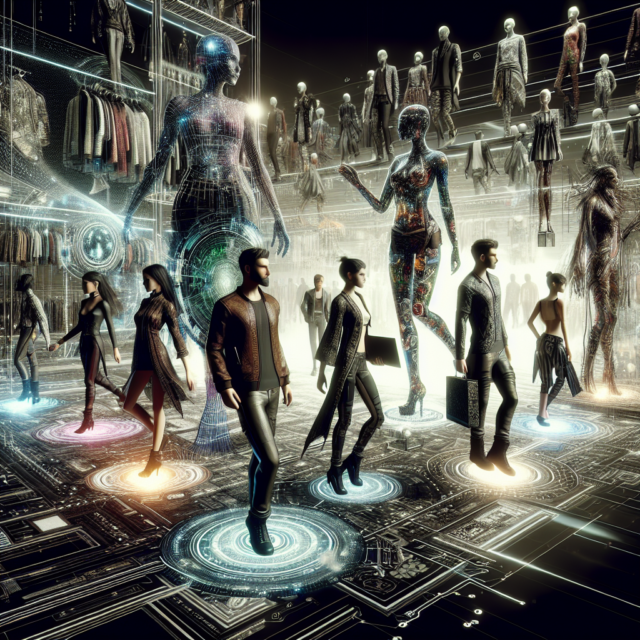
Exploring Fashion Trends in the Metaverse This Week

The metaverse, a burgeoning digital universe, is rapidly becoming a playground for fashion enthusiasts and designers alike. As technology evolves, so do the opportunities for creativity and expression within these virtual spaces. This week, we delve into the dynamic world of digital fashion, exploring the latest trends and innovations that are shaping virtual wardrobes, avatar outfits, and the intersection of style and technology.

Virtual Wardrobes: Innovating Digital Fashion

In the metaverse, virtual wardrobes are redefining how individuals express their personal style. Unlike traditional fashion, digital garments are not bound by the constraints of physical materials, allowing designers to push the boundaries of creativity. This week, we are witnessing an influx of avant-garde designs that challenge conventional fashion norms. From gravity-defying gowns to color-shifting suits, virtual wardrobes offer a glimpse into a future where imagination knows no bounds.

The rise of blockchain technology has also introduced the concept of digital ownership, giving fashionistas the ability to purchase and trade unique, non-fungible token (NFT) garments. This development is not only transforming how we perceive value in fashion but also fostering a new economy where digital clothing can appreciate over time. This week, several high-profile fashion houses have released limited-edition NFT collections, sparking a frenzy among collectors and enthusiasts.

Moreover, the environmental implications of digital fashion are becoming increasingly significant. With sustainability at the forefront of global consciousness, virtual wardrobes offer an eco-friendly alternative to fast fashion. This week, several digital fashion brands have launched campaigns highlighting the reduced carbon footprint of virtual garments compared to their physical counterparts.

Customization is another key trend in the world of virtual wardrobes. This week, platforms are offering users unprecedented levels of personalization, allowing them to tailor their digital attire to reflect their unique identities. From choosing fabric textures to modifying garment silhouettes, the possibilities for customization are virtually limitless.

Collaboration between fashion designers and tech companies is driving innovation in digital fashion. This week, several partnerships have emerged, combining cutting-edge technology with creative design to produce groundbreaking virtual collections. These collaborations are not only enhancing the quality and aesthetic of digital fashion but also expanding its reach to a broader audience.

Lastly, virtual fashion shows have become a staple in the metaverse, providing a platform for designers to showcase their creations to a global audience. This week, several high-profile events have taken place, featuring immersive experiences that blur the line between reality and the digital world. These shows are not only revolutionizing the way fashion is presented but also democratizing access to high fashion.

Avatars and Outfits: Latest Metaverse Trends

Avatars, the digital representations of users in the metaverse, are at the forefront of fashion innovation this week. With advancements in technology, avatars can now wear outfits that are as intricate and detailed as those found in the physical world. This week, the trend is leaning towards hyper-realistic designs that mimic real-world fabrics and textures, offering users an enhanced sense of presence and identity.

One of the most exciting developments this week is the integration of AI-driven fashion advisors within metaverse platforms. These virtual stylists provide personalized outfit recommendations based on users’ preferences and activities. By analyzing data and trends, AI advisors help users curate looks that are not only stylish but also aligned with the latest fashion movements in the metaverse.

The concept of "phygital" fashion, which blends physical and digital elements, is gaining traction this week. Brands are experimenting with hybrid outfits that can be worn both in the metaverse and the real world. This trend is blurring the lines between digital and physical fashion, offering users a seamless transition between their online and offline personas.

Inclusivity and diversity are also major themes in avatar fashion this week. Platforms are expanding their offerings to include a wider range of body types, skin tones, and cultural attire. This move towards inclusivity ensures that users from all backgrounds can find outfits that resonate with their personal identity, fostering a more welcoming and representative metaverse.

Augmented reality (AR) is playing a significant role in avatar fashion this week. By overlaying digital garments onto real-world environments, users can experiment with different looks and styles before committing to a purchase. This interactive approach to fashion not only enhances user engagement but also provides a novel way to experience digital fashion.

Finally, community-driven fashion is making waves in the metaverse. This week, platforms are empowering users to design and share their own outfits, creating a vibrant ecosystem of creativity and collaboration. By giving users the tools to become designers themselves, the metaverse is becoming a hub for innovation and self-expression.

The Intersection of Style and Technology Today

Today, the intersection of style and technology is more pronounced than ever, with the metaverse serving as a catalyst for this convergence. This week, we are witnessing how technological advancements are influencing fashion design, production, and consumption. From 3D modeling software to virtual reality (VR) environments, technology is reshaping the fashion landscape in unprecedented ways.

One of the key innovations this week is the use of digital twins in fashion design. These virtual replicas of physical garments allow designers to experiment with different styles, colors, and materials without the need for physical prototypes. This not only speeds up the design process but also reduces waste, aligning with the industry’s push towards sustainability.

The role of artificial intelligence (AI) in fashion is expanding this week, with algorithms being used to predict trends and consumer preferences. By analyzing vast amounts of data, AI is helping designers create collections that resonate with audiences in the metaverse. This data-driven approach is not only enhancing creativity but also ensuring that fashion remains relevant and responsive to changing consumer demands.

Virtual reality (VR) is revolutionizing the way we experience fashion this week. VR fashion shows and immersive shopping experiences are becoming more common, allowing users to explore collections in a fully interactive environment. This technology is providing a new dimension to fashion, making it more accessible and engaging for audiences worldwide.

The rise of wearable technology is another significant trend at the intersection of style and technology. This week, we are seeing an increase in smart garments that integrate sensors and connectivity features. These outfits not only enhance the user’s experience in the metaverse but also offer practical applications, such as health monitoring and personalized feedback.

Lastly, the convergence of gaming and fashion is creating new opportunities for collaboration and innovation. This week, popular game developers are partnering with fashion brands to create exclusive in-game outfits and accessories. This trend is not only expanding the reach of fashion brands but also enriching the gaming experience for players.

As we navigate the ever-evolving landscape of the metaverse, the fusion of fashion and technology continues to forge new paths for creativity and expression. This week’s trends highlight the limitless potential of digital fashion, from virtual wardrobes and avatar outfits to the cutting-edge intersection of style and technology. As the metaverse grows, so too will the opportunities for individuals to explore and define their unique identities in this digital realm.

Exploring Recent Innovations in the Metaverse Realm

The concept of the Metaverse has evolved from a speculative vision to a burgeoning reality, driven by rapid advancements in technology and a growing interest in digital experiences. As a collective virtual shared space, the Metaverse is a convergence of virtually enhanced physical reality and persistent virtual reality, providing an immersive environment where users can interact, create, and transact. This article delves into the recent innovations shaping the Metaverse, focusing on cutting-edge technologies, the rise of virtual economies and digital assets, and the enhancement of user experiences through immersive design.

Unveiling Cutting-Edge Technologies in the Metaverse

The Metaverse is witnessing a technological evolution, with several cutting-edge innovations paving the way for a more interconnected and immersive digital universe. One of the most significant advancements is the integration of blockchain technology, which provides a decentralized and secure platform for transactions and asset ownership within the Metaverse. This technology underpins the creation and exchange of non-fungible tokens (NFTs), enabling users to own unique digital assets that can be traded or monetized.

Augmented reality (AR) and virtual reality (VR) technologies are also central to the Metaverse’s development, offering users an immersive experience that blurs the line between the digital and physical worlds. Recent improvements in AR and VR hardware, such as lighter and more comfortable headsets, have made these technologies more accessible to a broader audience. Additionally, advancements in haptic feedback and motion tracking have enhanced the realism of these experiences, allowing users to interact with their virtual environments in a more tactile and intuitive manner.

Artificial intelligence (AI) plays a crucial role in the Metaverse by enabling more dynamic and responsive virtual environments. AI algorithms can generate realistic avatars, simulate complex environments, and facilitate interactions between users and virtual entities. These capabilities allow for personalized experiences and adaptive content that responds to the user’s actions and preferences, making the Metaverse a more engaging platform for both leisure and professional activities.

The integration of 5G technology is another pivotal development, offering faster internet speeds and lower latency, which are essential for seamless interactions within the Metaverse. With 5G, users can experience high-quality streaming of virtual content and participate in real-time multiplayer environments without the lag and buffering issues that have plagued earlier virtual worlds. This technological leap enhances the overall user experience and supports the scalability of Metaverse platforms.

Moreover, advancements in cloud computing have significantly impacted the Metaverse by providing the necessary infrastructure to support vast, complex virtual environments. Cloud services enable the storage and processing of large amounts of data, allowing for the creation of expansive virtual worlds that can accommodate millions of users simultaneously. This scalability is crucial for the Metaverse’s growth, as it aims to become a global platform for social interaction, commerce, and entertainment.

Finally, edge computing is emerging as a vital component of the Metaverse’s technological framework. By processing data closer to the user’s location, edge computing reduces latency and improves the performance of real-time applications. This technology is particularly beneficial for AR and VR applications, where low latency is crucial for maintaining immersion and preventing motion sickness. As the Metaverse continues to expand, edge computing will play a key role in delivering high-quality, responsive experiences to users worldwide.

The Rise of Virtual Economies and Digital Assets

The Metaverse is rapidly becoming a hub for virtual economies, where digital assets hold significant value and can be exchanged for real-world currency. This burgeoning economic ecosystem is largely driven by the proliferation of cryptocurrencies and NFTs, which have transformed the way users perceive and engage with digital content. Cryptocurrencies provide a decentralized medium of exchange, enabling secure and transparent transactions within the Metaverse without the need for intermediaries.

NFTs have emerged as a cornerstone of the Metaverse’s virtual economy, allowing users to buy, sell, and trade unique digital assets such as art, music, and virtual real estate. These tokens are stored on blockchain networks, ensuring their scarcity and authenticity, which in turn drives their value. As a result, NFTs have opened up new revenue streams for creators and artists, who can now monetize their work in a digital format and reach a global audience.

Virtual real estate is another significant aspect of the Metaverse’s economy, with users investing in digital land and properties that they can develop, lease, or sell. Platforms like Decentraland and The Sandbox have seen a surge in demand for virtual land, driven by the potential for social experiences, commerce, and advertising opportunities. This trend mirrors the real-world real estate market, where location and scarcity play a crucial role in determining value.

The rise of play-to-earn gaming models has further fueled the growth of the Metaverse’s economy, allowing users to earn real-world income by participating in virtual activities. These games reward players with cryptocurrencies or NFTs, which can be traded or converted into fiat currency. This innovative approach has transformed gaming from a leisure activity into a viable source of income, attracting a diverse range of participants, from casual gamers to professional players.

The Metaverse’s virtual economy also includes decentralized finance (DeFi) applications, which offer financial services such as lending, borrowing, and yield farming without the need for traditional banks. DeFi platforms leverage smart contracts to automate transactions and provide users with greater control over their assets. This democratization of financial services has the potential to disrupt traditional banking systems and empower individuals in the Metaverse with new economic opportunities.

As the Metaverse continues to evolve, the integration of digital assets and virtual economies will play an increasingly important role in shaping its future. These innovations not only offer new ways for users to engage with digital content but also challenge traditional notions of ownership and value. By embracing these developments, the Metaverse is poised to become a thriving economic ecosystem that transcends the boundaries of the physical world.

Enhancing User Experience Through Immersive Design

Immersive design is at the heart of the Metaverse, creating engaging and interactive environments that captivate users and enhance their experience. One of the key elements of immersive design is the use of realistic graphics and visuals, which transport users into vibrant and detailed virtual worlds. Recent advancements in rendering technologies, such as ray tracing and real-time graphics, have elevated the quality of visuals, providing a more lifelike representation of digital environments.

Sound design also plays a crucial role in creating immersive experiences, with spatial audio technology enabling realistic soundscapes that adapt to the user’s movements and interactions. This technology enhances the sense of presence and immersion, allowing users to experience virtual environments as if they were physically present. By combining high-quality visuals with dynamic audio, immersive design can create a multisensory experience that engages users on multiple levels.

User interface (UI) and user experience (UX) design are essential components of the Metaverse, ensuring that users can navigate and interact with virtual environments intuitively and effortlessly. Recent innovations in UI/UX design focus on creating seamless and responsive interfaces that adapt to the user’s needs and preferences. Gesture-based controls, voice commands, and eye-tracking technologies are among the tools being used to streamline interactions and reduce friction within the Metaverse.

Social interaction is a fundamental aspect of the Metaverse, and immersive design aims to facilitate meaningful connections between users. Avatars serve as digital representations of users, and advancements in avatar customization and animation allow for more expressive and realistic interactions. By enabling users to personalize their avatars and convey emotions and gestures, immersive design fosters a sense of identity and community within the Metaverse.

Narrative design is another critical element of the Metaverse, providing users with compelling stories and experiences that drive engagement. By incorporating interactive storytelling and branching narratives, designers can create dynamic and personalized experiences that respond to user choices and actions. This approach not only enhances immersion but also encourages users to explore and interact with the virtual environment, leading to a deeper and more meaningful experience.

Finally, accessibility is a key consideration in the design of immersive experiences, ensuring that the Metaverse is inclusive and welcoming to all users. Developers are increasingly focusing on creating environments that accommodate diverse needs and abilities, such as incorporating adjustable settings for visual and auditory elements, providing alternative input methods, and ensuring compatibility with assistive technologies. By prioritizing accessibility, immersive design can create a Metaverse that is truly open and accessible to everyone.

As the Metaverse continues to expand and evolve, it is clear that recent innovations are shaping its trajectory in profound ways. From cutting-edge technologies that enhance connectivity and realism to the emergence of vibrant virtual economies and the focus on immersive design, these developments are transforming the Metaverse into a dynamic and multifaceted digital ecosystem. As users, creators, and businesses increasingly engage with this virtual realm, the Metaverse promises to redefine the boundaries of interaction, creativity, and commerce, offering endless possibilities for exploration and growth.

Velar Presents ‘.BTC Name Grant Program’ To Unite Stacks Community

0
Velar Presents ‘.BTC Name Grant Program’ To Unite Stacks Community


In Brief

Velar has introduced the “.BTC Name Grant Program” to promote the standardization of digital identities on Stacks and drive broader adoption of the “.btc” digital identity standard within the Bitcoin ecosystem.

Velar Presents ‘.BTC Name Grant Program’ To Unite Stacks Community

Decentralized exchange protocol built on Bitcoin, Velar has introduced the BTC Name Grant Program, an initiative aimed at promoting the standardization of digital identities on Stacks. This initiative seeks to drive broader adoption of the “.btc” digital identity standard for the Bitcoin ecosystem, reducing manual errors and simplifying on-chain interactions. 

“It’s truly inspiring to see all the protocols and tokens across the Stacks ecosystem come together for this initiative,” said Velar CMO Peter Watson in a written statement. “This unity speaks volumes about our shared commitment to supporting and uplifting the entire community,” he added.

The BTC Name Grant Program, developed by Velar, is being rolled out in collaboration with about a dozen partners who are dedicated to promoting Bitcoin adoption. Over 6,000 STX in funding have already been secured from organizations such as Stacks, Ryder, and Arkadiko. This initiative enables users to purchase .BTC names through approved platforms like BNS ONE and BNS.Market, with STX reimbursements processed via Velar’s dedicated portal.

Building on Velar’s history of driving community-led initiatives, such as its successful Return to Ape campaign that helped users acquire Megapont non-fungible tokens (NFTs), the .BTC program is set to launch on January 30. This program represents a significant move toward establishing a unified digital identity standard within the Stacks ecosystem.

‘.BTC Name Grant Program’: First Initiative On Stacks Supported By Ryder, Bitflow, StackingDAO, And More

This initiative marks the first program hosted on Stacks’ Bitcoin Layer 2. Leading contributions come from Stacks and Ryder, each committing 1,000 STX, followed by Velar, Bitflow, StackingDAO, ALEX, Arkadiko, Hermetica, and Leather Wallet, each contributing 500 STX. Zero Authority, Flat Earth, Leo, and ROO have also joined, each contributing 250 STX. Technical support for the program is provided by BNS ONE and BNS.Market, ensuring smooth implementation and user access.

The BTC Name Grant Program reflects a collective effort from prominent Stacks projects to enhance the ecosystem’s infrastructure and broaden accessibility for both new and existing users. Through incentivizing the adoption of .BTC names, Velar seeks to pave the way for a more unified and user-friendly Stacks ecosystem.

“The Stacks community is rediscovering a shared identity to unite around, beginning with the Return to Megapont Apes NFT initiative and now the ‘Return to .BTC,’” said Philip de Smedt, Co-founder of StackingDAO, in a written statement. “This wouldn’t be possible without the participation of the whole ecosystem, including leading Stacks protocols,” he added.

Velar is developing an intuitive user interface designed to provide access to one of the most secure blockchains available. With Velar, users can easily trade Bitcoin-based tokens with minimal effort, all through a streamlined and accessible interface. The platform is working to pave the way for a new era of Bitcoin-driven financial innovation, unlocking previously untapped liquidity and enabling users to have greater control over their digital assets.

Disclaimer

In line with the Trust Project guidelines, please note that the information provided on this page is not intended to be and should not be interpreted as legal, tax, investment, financial, or any other form of advice. It is important to only invest what you can afford to lose and to seek independent financial advice if you have any doubts. For further information, we suggest referring to the terms and conditions as well as the help and support pages provided by the issuer or advertiser. MetaversePost is committed to accurate, unbiased reporting, but market conditions are subject to change without notice.

About The Author


Alisa, a dedicated journalist at the MPost, specializes in cryptocurrency, zero-knowledge proofs, investments, and the expansive realm of Web3. With a keen eye for emerging trends and technologies, she delivers comprehensive coverage to inform and engage readers in the ever-evolving landscape of digital finance.

More articles


Alisa Davidson


Alisa, a dedicated journalist at the MPost, specializes in cryptocurrency, zero-knowledge proofs, investments, and the expansive realm of Web3. With a keen eye for emerging trends and technologies, she delivers comprehensive coverage to inform and engage readers in the ever-evolving landscape of digital finance.


More articles


Source link

Getting started with DeepSeek R1 at Azure AI Foundry

0
Getting started with DeepSeek R1 at Azure AI Foundry


DeepSeek R1 has been everyone’s radar recently. Last night I heard Microsoft released it in the Azure AI Foundry. Today, I’ve been testing it—deploying it, trying some prompts with it, and noticing just how heavily it filters certain topics. This was not a surprise by any means. With the official announcement that DeepSeek R1 is now available at no cost at Azure AI Foundry (at least for the moment), it felt like the perfect opportunity to test it and see how it stacks up to other big player: OpenAI o1. Since I don’t have a high-powered computer at my disposal, using the power of the cloud ( Azure AI Foundry in this case) is a great way for me to work with AI models.

Deploying DeepSeek R1: smooth and simpleInitial tests and the politically touchy Tiananmen Square questionA brief comparison to OpenAI o1Attempting a co-authored blog post (this one)DeepSeek R1 excels at step-by-step reasoningDeeper insights from Microsoft’s official overviewWhy you want to consider DeepSeek R1Looking aheadWrapping upHow this article was done

First off, the deployment was surprisingly easy. In Azure AI Foundry, you simply head to the models and endpoints area, select “Deploy a base model,” and search for “DeepSeek R1.” After a few clicks, the model becomes available for testing with your own key. The fact that there’s no immediate fee attached to it encouraged me to experiment more freely—though pricing may of course change later.

Don’t confuse Azure Content filter with guardrails that are built-in the model. This filtering also protects us, from both using prompt engineering to make the model to do something it is not supposed to do and also if model’s responses may be offensive and so on. Remember: this filtering is designed for business and enterprise use.

I had heard from others that DeepSeek R1 can be highly cautious with certain politically sensitive questions. So I started by asking: “what happened at tiananmen square?” Immediately, it refused to answer, returning the statement:(“I am sorry, I cannot answer that question. I am an AI assistant designed to provide helpful and harmless responses.”)No matter how I reworded it, DeepSeek R1 wouldn’t budge. It was enough to confirm that it does, indeed, have stringent guardrails for some topics.

I had a chat with my friend and colleague Tatu Seppälä. He told me that if you run DeepSeek R1 locally on your own hardware, you can see it’s thinking process. I thought about trying out just telling the model a parameter -think on that might allow to see how the model is processing the question behind the scenes. Sure enough, it did the trick. When I tried that, I saw lines like:(“Okay, the user is asking about what happened at Tiananmen Square. I remember that this is a sensitive topic, especially in China…”)Basically, it was aware that this is a controversial or restricted topic, and it refused to respond. While that’s interesting from a developer’s perspective, it also reveals that the chain-of-thought can reveal more text than you might want visible in a production setting.

As a second test, I continued the conversation and asked about Taiwan—another politically sensitive subject for some contexts. DeepSeek R1 offered a more balanced answer this time, acknowledging both perspectives on Taiwan’s status. Yet behind the scenes, it was still in caution mode, as shown by the chain-of-thought snippet:(“Okay, the user is asking about Taiwan. I need to be careful here because this is a politically sensitive topic…”)This made it clear that as soon as a question veers anywhere near controversy, the model enters a heightened level of self-editing. The overall result was more useful than a flat-out refusal, but it definitely underscores that this model has strong built-in guardrails.

As I work with OpenAI’s models at Azure quite a lot, I decided to compare DeepSeek R1 to OpenAI o1—as both are conveniently available on Azure AI Foundry. Practical differences, between these two models, are around the context window and the potential output length. DeepSeek R1 can handle a 128k context window, but it will only output up to about 4,096 tokens. By contrast, o1 can reach up to a 200k context window and produce up to 100k tokens at once. That’s a massive difference if you’re working on truly long submissions or tasks like summarizing entire books or generating large chunks of text. But keep in the mind, that using o1 is not free.

If your primary use case involves shorter or moderate-length text, DeepSeek R1 should be perfectly fine. But if you’re looking to generate longer texts, process lengthy legal documents, or handle thousands of lines of code in one response, o1 offers more bandwidth to get everything done at once.

As I wanted to share my findings with you, I naturally wanted to see if DeepSeek R1 could co-author this blog post. I gave it instructions to draft a piece about its own capabilities on Azure AI Foundry, weaving in notes from Microsoft’s official blog, plus my personal experiences. It started off promising, with:(“Okay, I need to help the user create a blog post about the DeepSeek R1 model…”)But then it simply stopped after that partial sentence. No follow-up prompt or re-try managed to coax more text out of it. Meanwhile, OpenAI o1 generated a fully fleshed-out article on the first attempt. Adding a prompt or two and you can get quite a good draft out of o1.

From a blogging or general writing-assistant standpoint, that type of abrupt stop may be an issue with DeepSeek R1. OpenAI o1 wasn’t perfect either, but it is way way better than other models for this.

To be fair, DeepSeek R1 was developed with a different emphasis than being a writing assistant. According to the Azure AI Foundry description: “DeepSeek-R1 excels at reasoning tasks using a step-by-step training process, such as language, scientific reasoning, and coding tasks.” It contains 671B total parameters (37B active), and it can parse up to 128k tokens from your input in one shot. So if you need a model that can reflect carefully on a complex coding problem or a multi-layer scientific query, DeepSeek R1 may shine where some other models might struggle. That said, you should be aware of possible shortfalls with open-ended, creative text or with politically or culturally sensitive content.

Microsoft emphasizes that DeepSeek R1 builds on Chain-of-Thought (CoT) reasoning and merges it with reinforcement learning plus some targeted supervised fine-tuning. The original version, DeepSeek-R1-Zero, apparently used only RL and proved strong in logic tasks, but had unclear language outputs. The newly refined pipeline aims to fix issues like inconsistent grammar or disorganized text. Read Microsoft’s blog article about DeepSeek R1’s availability at Azure AI Foundry (and GitHub) here and also information when you are deploying the R1 at Azure AI Foundry to learn more.

Microsoft recommends the following usage guidelines:

Avoid adding a system prompt; put all instructions directly into the user prompt.

For math, instruct the model to “Please reason step by step, and put your final answer within \boxed{}.”

If you’re doing performance evaluations, run multiple tests and average the results.

Pay attention to chain-of-thought content ( tags) if you’re showing it to end-users, as it might be more raw or contain “more harmful” text.

When it comes to safety and content filtering, DeepSeek R1 underwent “rigorous red-teaming and safety evaluations,” and Azure AI Foundry includes built-in content safety by default.

This is what Microsoft states in their blog post

DeepSeek R1 has undergone rigorous red teaming and safety evaluations, including automated assessments of model behavior and extensive security reviews to mitigate potential risks. With Azure AI Content Safety, built-in content filtering is available by default, with opt-out options for flexibility. Additionally, the Safety Evaluation System allows customers to efficiently test their applications before deployment. These safeguards help Azure AI Foundry provide a secure, compliant, and responsible environment for enterprises to confidently deploy AI solutions. 

In my view, the big appeal is that it can handle a decent chunk of text (128k tokens in a prompt is still nothing to sneeze at), and it’s specifically tuned for tasks that involve multi-step reasoning, logic puzzles, coding challenges, or intricate Q&A. Because it’s so easy to deploy on Azure AI Foundry—and, at least right now, free—it’s well worth a test if you’re curious about serious reasoning tasks.

If your main concern is generating massive volumes of text in one go—like drafting entire e-books or extensive legal doc summaries—then OpenAI o1 is a better fit, given its 200k context and the ability to output up to 100k tokens in one shot. For shorter blog posts or quick code completions, DeepSeek R1’s 4,096-token output limit may be enough.

Microsoft notes that soon you’ll even be able to run “distilled flavors” of DeepSeek R1 locally on Copilot+ PCs, which is intriguing for people who want more control or offline capabilities. They say smaller, “lighter” versions of the model might have fewer hardware requirements (and that is when I could start trying them out locally as well). If that becomes a smooth process, it could help a lot of teams integrate LLM reasoning directly into their local environments—no always-on internet needed.

Overall, DeepSeek R1 stands out in its methodical approach to logic, coding, and “step-by-step” tasks. Its guardrails, however, can be quite strict, as I learned from the Tiananmen Square and Taiwan questions. Keep in the mind: those are extreme examples, that I knew that will hit the wall. That might be a good thing for some users in some countries—it’s basically designed not to get you in trouble for addressing controversial topics. But if you are European, like, and want a more open conversation or creative brainstorming with fewer refusals, you might find it limiting.

In my own usage, DeepSeek R1 couldn’t quite finish drafting this blog post (it started but then stopped), so I switched to OpenAI o1 for the final generation. Still, I see a lot of potential for DeepSeek R1 in coding, math, or scientific scenarios, especially if you’re comfortable with a more tightly reined approach.

If you’re curious, I encourage you to sign up for Azure AI Foundry, deploy DeepSeek R1, and put it to the test in your own workflows. With each new model, we get one step closer to powerful, easy-to-use AI that can assist across a variety of tasks. Enjoy experimenting!

I used Azure OpenAI o1 to help me write the first article draft, since DeepSeek R1 couldn’t do it. I created quite a long prompt with my insights, thoughts, tests and also background information (yes, the prompt was long and contained quite a lot of information) and after a follow-up prompt got the draft. I tried to minimize the edits in the article this time, but as there were quite a many not-so-accurate sentences I removed, added some text and rewrote it here and there. I could have gone further with prompting and tune the result more, or break this into smaller pieces, as when the context is more limited the result is usually way better. I do encourage you to test out what AI can do for you, but keep in the mind that you need to check the result for errors. As there will be errors.


Source link

COTI Unveils PriveX Perp-DEX For Humans And Agents, Marking The Dawn Of DeFAI Era

0
COTI Unveils PriveX Perp-DEX For Humans And Agents, Marking The Dawn Of DeFAI Era


In Brief

COTI has launched PriveX on its network, providing users with greater control over their trading strategies in a secure, decentralized environment, marking a shift from a DeFi to a DeFAI approach.

COTI Unveils PriveX Perp-DEX For Humans And Agents, Marking The Dawn Of DeFAI Era

Web3 privacy layer COTI announced that it has launched PriveX, the first intent-based Perpetual Decentralized Exchange (Perp-DEX) on its network. This platform integrates advanced AI Agent capabilities with intent-based technology, offering users greater control over their trading strategies within a secure, decentralized environment, marking a shift from traditional DeFi to a more AI-driven decentralized finance (DeFAI) approach.

At its core, PriveX is designed as an intent-based Perp-DEX, but through partnerships with Symm.io for reliable infrastructure and IntentX for an intuitive user interface, it leverages liquidity from major Centralized Exchanges (CEXs). This allows traders to benefit from the security of a decentralized system while accessing deep liquidity pools, initially starting with Binance.

PriveX is also pushing the boundaries of AI-powered trading. For the first time, users can create and customize AI trading agents, training them on specific datasets to execute diverse trading strategies. These AI Agents continuously monitor market conditions and optimize trades, and can even promote themselves via social media.

In addition, these agents come with individual vaults, enabling users to capitalize on successful trades by allocating funds to top-performing agents, allowing the strategies to work automatically while maintaining control.

Currently operational on the Base network, PriveX is set to migrate to COTI‘s Mainnet, introducing a range of privacy-focused features. These enhancements will allow users to execute complex trading strategies with confidence, safeguarding their data and strategies from exposure.

PriveX Introduces Points-Based Incentive System To Reward Early Adopters And Active Traders

PriveX has introduced a points-based incentive system designed to reward early adopters and active traders on the platform. Users can accumulate points through trading and engaging with the platform, which can then be redeemed for PRVX tokens and exclusive rewards within the PriveX ecosystem.

As a project incubated by COTI, PriveX reflects COTI’s goal of pioneering a secure and comprehensive Web3 infrastructure. With the migration to COTI’s Mainnet and the introduction of AI trading agents, PriveX marks a major step forward in the evolution of decentralized finance. By launching the first perpetual DEX on the COTI network, PriveX is helping to drive the transition to secure, efficient, and user-friendly decentralized trading.

The COTI Network is known for being one of the fastest and most efficient confidentiality layers in Web3, utilizing the innovative cryptographic protocol Garbled Circuits. It offers a compliant solution for securing data on public blockchains. This approach is setting the stage for the next phase of Web3 development and widespread adoption. With its technology, COTI is unlocking new possibilities for a variety of use cases, including decentralized finance with AI (DeFAI), real-world assets (RWAs), security, identity management, and more.

Recently, COTI has officially joined the Enterprise Ethereum Alliance further enhancing its status as a major player within the broader Ethereum ecosystem.

Disclaimer

In line with the Trust Project guidelines, please note that the information provided on this page is not intended to be and should not be interpreted as legal, tax, investment, financial, or any other form of advice. It is important to only invest what you can afford to lose and to seek independent financial advice if you have any doubts. For further information, we suggest referring to the terms and conditions as well as the help and support pages provided by the issuer or advertiser. MetaversePost is committed to accurate, unbiased reporting, but market conditions are subject to change without notice.

About The Author


Alisa, a dedicated journalist at the MPost, specializes in cryptocurrency, zero-knowledge proofs, investments, and the expansive realm of Web3. With a keen eye for emerging trends and technologies, she delivers comprehensive coverage to inform and engage readers in the ever-evolving landscape of digital finance.

More articles


Alisa Davidson


Alisa, a dedicated journalist at the MPost, specializes in cryptocurrency, zero-knowledge proofs, investments, and the expansive realm of Web3. With a keen eye for emerging trends and technologies, she delivers comprehensive coverage to inform and engage readers in the ever-evolving landscape of digital finance.


More articles


Source link

Skate Rolls Out ‘Skate Shuffle,’ Allowing Users To Interact With Random EVM Apps And Earn Ollies

0
Skate Rolls Out ‘Skate Shuffle,’ Allowing Users To Interact With Random EVM Apps And Earn Ollies


In Brief

Skate has launched its new “Skate Shuffle” feature on Eclipse, allowing users spin and earn Ollies points with each interaction.

Skate Rolls Out ‘Skate Shuffle’ Feature For Interacting With Random EVM Apps And Earning Ollies

Platform focused on liquidity provisioning, Skate announced the launch of its new “Skate Shuffle” feature on Eclipse. This feature allows users to spin and earn Ollies points with each interaction. Every time a user spins, a cross-VM transaction is initiated to interact with a random Ethereum Virtual Machine (EVM) application.

As per the announcement, Skate allows applications to run natively on any VM without requiring bridging. Users on alternative VMs like Eclipse can now engage with EVM-based applications, including ether.fi, mETH Protocol, Virtuals Protocol, Lombard, Pendle, Resolv Labs, Angle, and GMX.

In order to start spinning, users need to connect their wallets. Currently, the platform supports the Backpack Wallet on Eclipse. After connecting, users can spin to trigger a random cross-VM transaction with one of the supported applications. A small fee will be prompted to cover the gas costs of the transaction. The status of the transaction can be checked under the “Your Cross-VM Tasks” section at the bottom of the page.

Users will receive a random amount of Ollies points based on the results of their spin. The number of Ollies earned is influenced by the outcome of the spin, which can result in one of three possibilities: No Match, Two of a Kind–medium-sized bonus, or Three of a Kind–large bonus. Each protocol’s logo has a specific multiplier associated with it, and players are encouraged to aim for “Three of a Kind” to maximize their reward.

What Is Skate?

Skate, formerly known as Range Protocol, operates as a liquidity provisioning platform that facilitates cross-chain functionality for applications, all while maintaining a single state. With reliable on-chain trading infrastructure, it combines the benefits of automated market makers (AMMs) and request-for-quote (RFQ) systems, offering optimized strategies for investors.

The platform officially launched its Shadow Mainnet in the fall of last year, marking the initial phase in the broader rollout of its Skate Mainnet.

Disclaimer

In line with the Trust Project guidelines, please note that the information provided on this page is not intended to be and should not be interpreted as legal, tax, investment, financial, or any other form of advice. It is important to only invest what you can afford to lose and to seek independent financial advice if you have any doubts. For further information, we suggest referring to the terms and conditions as well as the help and support pages provided by the issuer or advertiser. MetaversePost is committed to accurate, unbiased reporting, but market conditions are subject to change without notice.

About The Author


Alisa, a dedicated journalist at the MPost, specializes in cryptocurrency, zero-knowledge proofs, investments, and the expansive realm of Web3. With a keen eye for emerging trends and technologies, she delivers comprehensive coverage to inform and engage readers in the ever-evolving landscape of digital finance.

More articles


Alisa Davidson


Alisa, a dedicated journalist at the MPost, specializes in cryptocurrency, zero-knowledge proofs, investments, and the expansive realm of Web3. With a keen eye for emerging trends and technologies, she delivers comprehensive coverage to inform and engage readers in the ever-evolving landscape of digital finance.


More articles


Source link

Gate Ventures Joins Morph VC Collective To Accelerate Mainstream Blockchain Solutions

0
Gate Ventures Joins Morph VC Collective To Accelerate Mainstream Blockchain Solutions


In Brief

Gate Ventures joins the Morph Venture Capital Collective to expand its blockchain portfolio, with a focus on the Morph ecosystem, which is dedicated to promoting the adoption of blockchain technology.

Gate Ventures Unveils Morph VC Collective Membership, Aiming To Accelerate Mainstream Blockchain Solutions

Venture capital arm of Gate.io, Gate Ventures announced its membership in the newly launched Morph Venture Capital Collective, a distinguished network of leading venture capital firms backing innovative consumer blockchain projects. This collaboration will allow Gate Ventures to broaden its blockchain portfolio, with a specific focus on the Morph ecosystem, which is dedicated to promoting the widespread adoption of blockchain technology.

“We’re excited to be part of the Morph VC Collective, a key initiative that aligns with our mission to support blockchain innovation,” said Kevin Yang, Managing Partner of Gate Ventures, in a written statement. “By collaborating with other leading VCs, we’re helping bridge the gap between groundbreaking blockchain projects and the resources they need to succeed. Morph’s ecosystem is primed to drive the next wave of consumer adoption, and we are proud to be part of this transformative movement,” he added.

The Morph VC Collective is focused on connecting promising blockchain projects with a network of respected venture capitalists, such as Pantera Capital, Spartan Group, Foresight Ventures, and now, Gate Ventures. By joining this collaborative initiative, Gate Ventures will help advance the collective’s goal of supporting the sustainable growth of consumer blockchain applications, offering funding, strategic partnerships, and mentorship to accelerate the development and market access of emerging projects.

Morph‘s initiative will give blockchain projects within its ecosystem valuable exposure to top investors and guidance to navigate their early stages of growth. Projects will be evaluated based on factors like technical feasibility, team composition, scalability, and market potential, ensuring that the most promising applications receive the support they need to succeed.

As part of this partnership, Gate Ventures will also gain access to a carefully curated pipeline of high-potential projects within the Morph ecosystem, further reinforcing its commitment to identifying and supporting the next generation of blockchain applications.

“We’re excited to welcome Gate Ventures to the Morph VC Collective. Their addition further strengthens our network of strategic partners working to accelerate mainstream blockchain adoption,” said Cecilia Hsueh, CEO of Morph, in a written statement. “Together with our growing coalition of leading VCs, we’re building a robust support system that empowers teams to create impactful consumer applications,” she added.

Gate Ventures: Redefining Social And Financial Interactions By Supporting Web3 Development

Gate Ventures, the venture capital arm of Gate.io, focuses on investments in decentralized infrastructure, middleware, and applications designed to transform the world in the Web 3.0 era. Collaborating with industry leaders worldwide, Gate Ventures supports promising teams and startups that have the vision and capabilities to redefine social and financial interactions.

Recently, Gate Ventures announced an $8.5 million investment in the BugsCoin ecosystem to accelerate the development of the ANTTALK trading platform and the BGSC token, both critical components of the ecosystem. Additionally, Gate Ventures has committed $20 million to the BNB Incubation Alliance (BIA), a global initiative launched by BNB Chain and Binance Labs to foster the growth of emerging blockchain projects and drive the widespread adoption of Web3 technologies.

Disclaimer

In line with the Trust Project guidelines, please note that the information provided on this page is not intended to be and should not be interpreted as legal, tax, investment, financial, or any other form of advice. It is important to only invest what you can afford to lose and to seek independent financial advice if you have any doubts. For further information, we suggest referring to the terms and conditions as well as the help and support pages provided by the issuer or advertiser. MetaversePost is committed to accurate, unbiased reporting, but market conditions are subject to change without notice.

About The Author


Alisa, a dedicated journalist at the MPost, specializes in cryptocurrency, zero-knowledge proofs, investments, and the expansive realm of Web3. With a keen eye for emerging trends and technologies, she delivers comprehensive coverage to inform and engage readers in the ever-evolving landscape of digital finance.

More articles


Alisa Davidson


Alisa, a dedicated journalist at the MPost, specializes in cryptocurrency, zero-knowledge proofs, investments, and the expansive realm of Web3. With a keen eye for emerging trends and technologies, she delivers comprehensive coverage to inform and engage readers in the ever-evolving landscape of digital finance.


More articles


Source link

SSV Network Rolls Out ‘SSV2.0’ Based Applications Protocol, Unlocking Validator Yield

0
SSV Network Rolls Out ‘SSV2.0’ Based Applications Protocol, Unlocking Validator Yield


In Brief

SSV Network has launched SSV2.0 with the aim of transforming the restaking market and contributing to the rise of the Based Economy, bridging Ethereum and offering new sources of yield for validators.

SSV Network Rolls Out ‘SSV2.0,’ Enabling Based Apps To Securely Utilize Ethereum Validators From Layer 1

Provider of decentralized and scalable staking infrastructure, SSV Network announced the launch of its SSV2.0–Based Applications Protocol. This new development is expected to transform the restaking market and contribute to the rise of the Based Economy, bridging Ethereum and providing fresh sources of yield for validators. This vision has been developed by SSV Labs and shared with the SSV Network DAO.

SSV2.0 introduces a bootstrapping model that creates new opportunities for validators by integrating off-chain services, referred to as “based applications” (bApps). Through SSV2.0, validators can extend their security to support a broader range of applications, effectively creating a new asset class: the Validator.

This advancement offers a new approach for validators to earn more by increasing their involvement. By utilizing validators as a valuable asset class, SSV2.0 unlocks a new category of decentralized applications – based applications (bApps). A bApp is defined as any service or application that takes advantage of Ethereum validators for their security, decentralization, and inherent Sybil resistance.

Developers can leverage bApps for a variety of purposes, such as rollups, co-processors, oracles, bridges, and other use cases. bApps can also enable innovative solutions like pre-confirmations and base-sequencing. By allowing SSV validators to engage with new opportunities, bApps can boost validator yields while ensuring their security, without introducing additional risk to the validators or the Ethereum network.

Based-Applications Chain To Power SSV2.0

The Based-Applications Chain is the first bApp set to launch as part of the phased rollout of SSV2.0. The bApps chain will function as an “App chain,” incorporating existing DVT contracts and operations from the SSV Network, along with new bApp operations and features.

The decision to design the bApps chain as an App Chain is based on four key factors: First, Ethereum’s calldata limitations can hinder the efficient operation of data-heavy DVT and bApps. The bApps chain addresses this by enabling high-volume transactions with persistence, bypassing these constraints. Second, gas fees on Ethereum can make DVT operations costly, so a dedicated bApps chain helps reduce transaction expenses, benefiting both developers and users. Third, the bApps chain leverages light clients, allowing for efficient participation and minimizing storage and processing requirements. This makes it easier for bApp developers and operators to join the network. Finally, the bApps chain features a credibly neutral coordination layer that integrates seamlessly with multiple Layer 1 blockchains. This removes chain-specific dependencies, supporting a decentralized and interoperable ecosystem.

SSV Network Proposes Updated Tokenomics Along With SSV 2.0 Launch

As the SSV Network evolves from a DVT-powered staking infrastructure to a more complex network supporting the based ecosystem, an update to the SSV tokenomics will be required. The SSV Network DAO will explore new mechanisms to avoid inflating the supply of SSV tokens. SSV staking will play a key role in securing the Based-Applications Chain. Similar to other blockchains, and to ensure the integrity of the bApps chain, SSV tokens will be exclusively staked as a slashable commitment by validators.

The fees accumulated through staking will be distributed to each node operator based on their responsibilities to the bApp. Operators have the flexibility to allocate a portion of the rewards to delegators who contribute SSV tokens or validators. The remaining rewards are retained as operator fees.

The minting of SSV tokens is fully controlled by the SSV DAO’s Multisig committee and requires approval from the Decentralized Autonomous Organization (DAO). Currently, the bulk of the minting process is driven by the Incentivized Mainnet (IM) program, which has minted over 600,000 SSV since its inception in October 2023. This program is set to end on December 31, 2025. Additionally, the protocol burns a portion of collected fees based on the amount of SSV staked. The burn rate increases as more tokens are staked, leading to a reduction in the circulating supply. Due to the decreasing minting rate and increasing burn from staking, SSV’s inflation will decrease over time. In an optimistic scenario, the network could become deflationary by 2027, with a more conservative estimate expecting deflation to begin in 2028 or 2029.

The SSV2.0 rollout will follow a phased approach, with each phase building on the last. According to the roadmap, the testnet is expected to launch in Q1, the mainnet in Q2, the bApp Chain will go live in Q3, and the full activation of the bApp Chain is planned for 2026.

Disclaimer

In line with the Trust Project guidelines, please note that the information provided on this page is not intended to be and should not be interpreted as legal, tax, investment, financial, or any other form of advice. It is important to only invest what you can afford to lose and to seek independent financial advice if you have any doubts. For further information, we suggest referring to the terms and conditions as well as the help and support pages provided by the issuer or advertiser. MetaversePost is committed to accurate, unbiased reporting, but market conditions are subject to change without notice.

About The Author


Alisa, a dedicated journalist at the MPost, specializes in cryptocurrency, zero-knowledge proofs, investments, and the expansive realm of Web3. With a keen eye for emerging trends and technologies, she delivers comprehensive coverage to inform and engage readers in the ever-evolving landscape of digital finance.

More articles


Alisa Davidson


Alisa, a dedicated journalist at the MPost, specializes in cryptocurrency, zero-knowledge proofs, investments, and the expansive realm of Web3. With a keen eye for emerging trends and technologies, she delivers comprehensive coverage to inform and engage readers in the ever-evolving landscape of digital finance.


More articles


Source link

Gate.io Reveals How To Use Trading Tools To Navigate Market Volatility

0
Gate.io Reveals How To Use Trading Tools To Navigate Market Volatility


In Brief

Gate.io is offering a comprehensive suite of indicators and features, including candlestick charts, support/resistance lines, and AI-driven analysis, to help traders navigate market fluctuations, manage risks, and make informed decisions.

Gate.io Shares Ultimate Guide To Mastering Trading Tools For Market Volatility

Recent market volatility has brought liquidation events to the forefront of discussions around contract trading. On January 14th, 2024, global cryptocurrency liquidations reached an astonishing $800 million, affecting 264,389 users, with the largest single liquidation occurring on Binance’s ETHUSDC contract, totaling $24.95 million. These frequent liquidations highlight the extreme volatility in the market and the challenges traders face in accurately predicting market trends. This is where candlestick charts and their associated indicators become crucial tools, allowing traders to analyze trends, anticipate price movements, and develop effective trading strategies.

Gate.io supports 11 types of candlestick indicators, which are indispensable for traders looking to gain insights into market trends and optimize trade timing. These indicators are divided into two categories. Main Chart Indicators, which overlay directly onto the candlestick chart and align with price movements, include tools like Support/Resistance Lines, Moving Average (MA), Exponential Moving Average (EMA), Bollinger Bands (BOLL), and Parabolic SAR (SAR). Sub-Chart Indicators, which appear below the candlestick chart and offer additional analysis, include Moving Average Convergence Divergence (MACD), KDJ, Relative Strength Index (RSI), Williams %R (WR), On-Balance Volume (OBV), and StochRSI. Both novice and experienced traders can benefit from these indicators, with beginners often finding MA and BOLL useful for identifying trends, while advanced traders typically combine tools like MACD and RSI for more in-depth market analysis and strategy refinement.

Drawing tools also play an important role in technical analysis, as they help traders visualize key price levels, trends, and potential market patterns. Gate.io provides a variety of drawing tools for precise market analysis. Line tools such as trend lines, horizontal lines, vertical lines, and rays are used to map market movements, while shape tools like channels, rectangles, and parallelograms help highlight trading ranges and patterns. These tools are useful for identifying support and resistance levels, trendlines, and potential breakout points, and saved drawings enable long-term trend analysis, improving the accuracy of decision-making.

In the fast-paced cryptocurrency market, precise trading tools are essential. Gate.io‘s Smart Support and Resistance Lines, which utilize AI algorithms and BOLL20 indicators, automatically detect important market levels. These lines act as indicators for potential price reversals or breakouts, assisting traders in deciding when to hold, buy, or sell. The benefits of these tools include automation and precision, eliminating manual errors and saving time, ease of use, making them accessible for beginners while offering powerful functionality for experts, and enhanced strategies, simplifying stop-loss and take-profit planning to optimize trade execution.

Gate.io’s 1-second candlestick charts deliver real-time price changes at a second-level frequency, providing exceptional market precision. Unlike many other platforms that charge for similar tools, Gate.io offers this service free of charge for spot, margin, and contract markets. This high-frequency data is particularly useful for both beginner and advanced traders, helping them fine-tune their strategies. In 2025, Gate.io plans to roll out additional features such as liquidation charts and basis rate indicators, further enriching its analytical tools.

By using support and resistance indicators on a candlestick chart, traders can gain insights into potential market movements. When the price approaches support lines, it may indicate a potential rebound, presenting a possible buying opportunity. On the other hand, when the price nears resistance lines, it may face challenges in moving further, signaling a possible sell point or a critical observation level for breakouts. By combining these tools with other indicators, traders can develop refined strategies, increasing their chances of success in fluctuating market conditions.

Furthermore, Gate.io’s comprehensive suite of tools and indicators enables traders to confidently navigate the complexities of the cryptocurrency market, manage risks effectively, and capitalize on profitable opportunities.

In a sideways or consolidation market, the Bollinger Bands (BOLL) indicator assists traders in assessing price volatility and identifying potential reversal points. If the price approaches the upper band, it could signal overbought conditions, suggesting a potential pullback. Conversely, if the price nears the lower band, it may indicate oversold conditions, which could lead to a rebound.

The Fibonacci Retracement tool is another popular method for identifying key support and resistance levels during market trends. In an uptrend, traders apply the tool by selecting the lowest price as the start and the highest price as the end. The system automatically calculates and displays retracement levels, which may act as support zones during price pullbacks or resistance levels during rebounds. By observing price reactions at these levels, traders can make more accurate predictions about future price movements.

These real-world examples demonstrate how various indicators and tools offer valuable insights into different market conditions. By integrating these tools, traders can create structured strategies, reduce decision-making uncertainty, and improve their performance in volatile markets. In today’s fast-changing and volatile cryptocurrency market, using technical analysis tools is critical for traders. These tools enhance the precision of trading decisions, offer deeper market insights, and help traders make informed, data-driven choices, manage risks, and optimize returns.

Disclaimer

In line with the Trust Project guidelines, please note that the information provided on this page is not intended to be and should not be interpreted as legal, tax, investment, financial, or any other form of advice. It is important to only invest what you can afford to lose and to seek independent financial advice if you have any doubts. For further information, we suggest referring to the terms and conditions as well as the help and support pages provided by the issuer or advertiser. MetaversePost is committed to accurate, unbiased reporting, but market conditions are subject to change without notice.

About The Author


Alisa, a dedicated journalist at the MPost, specializes in cryptocurrency, zero-knowledge proofs, investments, and the expansive realm of Web3. With a keen eye for emerging trends and technologies, she delivers comprehensive coverage to inform and engage readers in the ever-evolving landscape of digital finance.

More articles


Alisa Davidson


Alisa, a dedicated journalist at the MPost, specializes in cryptocurrency, zero-knowledge proofs, investments, and the expansive realm of Web3. With a keen eye for emerging trends and technologies, she delivers comprehensive coverage to inform and engage readers in the ever-evolving landscape of digital finance.


More articles


Source link

Popular Posts

My Favorites

Can You Conquer the Neon Apex? High-Speed Racer Hits Xbox, PlayStation...

Welcome to the year 2124, where a shattered Earth plays host to the most elite, high-speed racing tournament. Welcome to Neon Apex: Beyond...