Metaverse

Home Metaverse Page 202

Matrixport Subsidiary Fly Wing Receives Major Payment Institution License from MAS in Singapore

Matrixport Subsidiary Fly Wing Receives Major Payment Institution License from MAS in Singapore


In Brief

Fly Wing Technologies, a subsidiary of Matrixport, has been granted the Major Payment Institution License by the Monetary Authority of Singapore.

Matrixport Subsidiary Fly Wing Receives Major Payment Institution License from MAS in Singapore

Fly Wing Technologies Pte Ltd (“Fly Wing”), a wholly owned subsidiary of Matrixport, the world’s leading and largest one-stop crypto financial services platform in Asia, today announced that it has been granted the Major Payment Institution (“MPI”) License by the Monetary Authority of Singapore (“MAS”).

With this license approval, Fly Wing will continue building its role as a trusted Over-the-Counter (“OTC”) desk in Singapore. This license follows the in-principle approval received in October, underscoring Fly Wing’s commitment to regulatory compliance and operational excellence.

John Ge, Co-founder and CEO of Matrixport, stated, “We are thrilled that Fly Wing has received its license from the MAS. This marks a significant step in our ongoing expansion across the Asia-Pacific region. We look forward to providing high-quality Digital Payment Token services to users in Singapore.”

Having received its license from the MAS, Fly Wing is well-positioned to build a strong foundation for Fly Wing’s long-term growth, driving continuous innovation in the digital finance sector. Moving forward, Fly Wing will continue to offer innovative Digital Payment Token services securely and transparently and will continue to optimize blockchain-driven Digital Payment Token services, enabling seamless access for users entering the Web 3.0 industry.

About Fly Wing Technologies Pte Ltd

Founded in 2019, Fly Wing Technologies Pte. Ltd. (“Fly Wing”) is a wholly owned subsidiary of Matrixport, a leading digital asset financial services platform in Asia. Fly Wing serves a diverse clientele, including crypto miners, trading firms, investment firms, and high-net-worth individuals from both crypto and traditional finance. The company engages in OTC services for customers to on- and off-ramp Digital Payment Tokens, facilitating over $100 million in monthly transactions and providing liquidity for major cryptocurrencies.

Fly Wing has received the MPI License from MAS to provide Digital Payment Token services for OTC trading in Singapore.

Fly Wing official website: https://www.flywing.com/

About Matrixport

Founded in 2019, Matrixport is the world’s leading all-in-one hub for crypto financial services. The platform is committed to providing every user with a personalized Super Account that integrates crypto trading, investment, loan, custody, RWA, research and more. With $6 billion in AUM (assets under management), Matrixport offers global users diverse crypto-financial solutions designed for optimal capital efficiency and sustainable returns.

As a Group and through its local subsidiaries, Matrixport has received the Trust or Company Service Provider / Money Lender Licenses in Hong Kong, and the FINMA Asset Management License in Switzerland. The company operates as an Appointed Representative in the UK, is registered as an MSB in the US, and is a member of Switzerland’s FINMA SRO-VFQ. It was recognized by CB Insights as one of the “50 Most Promising Blockchain Companies” and featured in the Hurun “2024 Global Unicorn List.” Additionally, Matrixport’s subsidiary, Fly Wing, has received the MPI License from MAS in Singapore.

Matrixport official website: https://www.matrixport.com

Disclaimer

In line with the Trust Project guidelines, please note that the information provided on this page is not intended to be and should not be interpreted as legal, tax, investment, financial, or any other form of advice. It is important to only invest what you can afford to lose and to seek independent financial advice if you have any doubts. For further information, we suggest referring to the terms and conditions as well as the help and support pages provided by the issuer or advertiser. MetaversePost is committed to accurate, unbiased reporting, but market conditions are subject to change without notice.

About The Author


Gregory, a digital nomad hailing from Poland, is not only a financial analyst but also a valuable contributor to various online magazines. With a wealth of experience in the financial industry, his insights and expertise have earned him recognition in numerous publications. Utilising his spare time effectively, Gregory is currently dedicated to writing a book about cryptocurrency and blockchain.

More articles


Gregory, a digital nomad hailing from Poland, is not only a financial analyst but also a valuable contributor to various online magazines. With a wealth of experience in the financial industry, his insights and expertise have earned him recognition in numerous publications. Utilising his spare time effectively, Gregory is currently dedicated to writing a book about cryptocurrency and blockchain.




Source link

Bitcoin’s $80 Trillion Opportunity: Will America Take the Lead?

Bitcoin’s  Trillion Opportunity: Will America Take the Lead?


In Brief

The U.S. faces a historic choice as Trump’s crypto reserve plan, legislative updates, and Michael Saylor’s $80 trillion vision position Bitcoin at the center of a global financial race.

Bitcoin’s $80 Trillion Opportunity: Will America Take the Lead?

Bitcoin and the wider crypto market have seen massive gains since Donald Trump’s election win, though the rally has recently shown signs of slowing—raising concerns about a potential stock market downturn.

The bitcoin price, which started 2024 below $50,000, has climbed to just under $100,000. However, a steep drop to around $85,000 on Tuesday—down 21% from its peak of nearly $110,000—has officially placed Bitcoin in correction territory.

Despite the turbulence, bitcoin has recovered some ground as investors brace for a significant legislative update expected from U.S. senator and bitcoin advocate Cynthia Lummis.

Trump Unveils Strategic Crypto Reserve

Cryptocurrencies surged on Sunday following President Donald Trump’s announcement of a new U.S. strategic crypto reserve. The reserve will include major assets like bitcoin and ether, alongside XRP, Solana’s SOL token, and Cardano’s ADA.

According to a statement Trump posted on Truth Social, the reserve is intended to boost the crypto industry after what he described as years of hostile policies under the Biden Administration. He referenced a new Executive Order on Digital Assets, which directs the Presidential Working Group to move forward with the creation of the reserve, explicitly including assets such as XRP, SOL, and ADA.

Trump also emphasized that bitcoin and ether would play central roles in the reserve, reiterating his personal enthusiasm for both cryptocurrencies.

Markets reacted swiftly to the news. XRP jumped 33%, SOL gained 25%, and ADA got a +60% boost. BTC climbed 10% to $94,000, recovering from a three-month low below $80,000 hit on Friday.

Investors are now turning their attention to the first-ever White House Crypto Summit, scheduled for Friday, where Trump is expected to provide further details about the reserve’s structure and long-term strategy.

This marks the first time Trump has drawn a distinction between a “crypto reserve” and a “stockpile.” A reserve would likely involve regular, active purchases of digital assets, whereas a stockpile would simply hold onto the government’s existing crypto holdings without actively adding to them.

$80 Trillion Plan and a Global Bitcoin Adoption Race

As the U.S. wealth fund triggers what some are calling the start of a global race to adopt bitcoin, bitcoin-supporting U.S. senator Cynthia Lummis has hinted at a major legislative update—just as Michael Saylor promotes his ambitious $80 trillion vision for dominating the digital economy.

Lummis took to X to signal the coming developments, responding to a post from the official account of the U.S. Senate Banking Committee, where she serves. The post announced a “subcommittee hearing on bitcoin and crypto legislation” along with a nominations hearing led by committee chair Senator Tim Scott. Lummis captioned her repost with the phrase, “And so it begins.”

Lummis, one of the most vocal crypto advocates in Congress, has long pushed for the U.S. to establish a bitcoin reserve modeled after the nation’s gold reserves. She has even proposed legislation that would see the U.S. government purchase one million BTC over the next five years.

Earlier this month, Trump’s newly-appointed crypto czar, David Sacks, held his first press conference, announcing the formation of a bicameral working group focused on drafting crypto regulations related to stablecoins and market structure. Sacks described the initiative as the beginning of a “golden age” for the crypto industry.

When asked about the possibility of a Bitcoin reserve, Sacks confirmed that it would be one of the first topics the working group would explore. He added that while the administration was still waiting on a few cabinet secretaries to be confirmed, once the group was fully formed, evaluating the feasibility of a Bitcoin reserve would be one of its initial priorities.

Saylor Pushes Government to Lock in America’s Digital Future

Speaking at the CPAC conference, Michael Saylor, founder of Strategy, urged the U.S. government to acquire 20% of the global bitcoin supply to secure America’s leadership in the digital economy.

Saylor, with 500K BTC in holdings, stated that controlling bitcoin was key to controlling cyberspace. He explained that to truly “own” the future digital landscape, the U.S. would need to own and mine Bitcoin while also running the Bitcoin network itself.

He has previously published a framework detailing how the government could establish a U.S. strategic bitcoin reserve, which aligns with his belief that such a move would generate enormous economic benefits.

Saylor projected that Trump and other U.S. leaders could potentially purchase between 4 million and 6 million bitcoins within just a year. According to his estimates, such a move could create $50 trillion to $80 trillion in value for U.S. taxpayers while also helping to ease the nation’s mounting debt.

He emphasized that there’s only room for one country to secure 20% of the bitcoin network—and he expressed confidence that the United States was best positioned to claim that spot.

Bitcoin at a Historic Point

According to analysts at Bitfinex, bitcoin remains at a crucial point after nearly 90 days of sideways movement. They noted that with traders waiting for a clear catalyst, the cryptocurrency’s next major shift will likely depend on broader macroeconomic trends — and could prove decisive for its trajectory.

After Trump’s election win, bitcoin briefly crossed the long-anticipated $100,000 threshold before settling into a period of consolidation. While some view this as a standard market correction, others — including Jan3 CEO Samson Mow — believe external factors may be artificially capping the BTC price, preventing it from reaching what they see as its fair value.

Meanwhile, recent comments from Tesla CEO Elon Musk questioning the security of U.S. gold reserves have added to the uncertainty surrounding traditional assets. His remarks have reignited interest in Bitcoin as a potential safe haven in times of economic instability.

The Tariff Dilemma

President Donald Trump’s campaign promise to establish a U.S. bitcoin reserve energized parts of the crypto community, but his escalating tariff threats have unnerved investors. Concerns are mounting that a global trade war could put pressure on asset prices across the board.

The Bitfinex panel pointed out that the U.S. economy is already contending with growing challenges, including weakening consumer confidence and rising inflation expectations — both of which could undermine the Federal Reserve’s efforts to keep price growth under control.

Federal Reserve Chair Jerome Powell, who began cutting interest rates with a half-point reduction last September, has now been forced to pause the cycle as inflation shows signs of reaccelerating, adding further uncertainty to the economic outlook.

AI Pushing Crypto Even Higher

Analysts are predicting that a strong performance could boost both tech and crypto markets, providing support for bitcoin’s price. However, a disappointing result could reignite concerns and contribute to further volatility for bitcoin.

Matt Mena, 21Shares’ lead strategist, noted that Nvidia’s earnings are expected to be a significant AI-driven catalyst, potentially benefiting both the tech and crypto sectors.

Danni Hewson, head of financial analysis at AJ Bell, highlighted that the upcoming earnings report is particularly important given the unease surrounding the short-term prospects of tech stocks. Hewson emphasized that Nvidia’s outlook for the coming year could significantly impact markets, especially amidst concerns over Trump’s new restrictions on Chinese investments and the development of the DeepSeek AI model.

Hewson also pointed out that U.S. consumer confidence is fragile, with growing nervousness about the near future, particularly after the pause in interest rate cuts.

What Now?

As a pivotal U.S. policy announcement looms, the crypto market is bracing for what’s to come. Will Bitcoin break through its previous highs, or will hesitation from institutional players drive prices down? What is clear, however, is that Bitcoin’s next move will likely have significant and far-reaching consequences for both the digital asset landscape and the global economy.

The upcoming weeks may very well shape Bitcoin’s place within the broader financial system, making this a crucial moment for both investors and policymakers alike.

Disclaimer

In line with the Trust Project guidelines, please note that the information provided on this page is not intended to be and should not be interpreted as legal, tax, investment, financial, or any other form of advice. It is important to only invest what you can afford to lose and to seek independent financial advice if you have any doubts. For further information, we suggest referring to the terms and conditions as well as the help and support pages provided by the issuer or advertiser. MetaversePost is committed to accurate, unbiased reporting, but market conditions are subject to change without notice.

About The Author


Victoria is a writer on a variety of technology topics including Web3.0, AI and cryptocurrencies. Her extensive experience allows her to write insightful articles for the wider audience.

More articles


Victoria d’Este


Victoria is a writer on a variety of technology topics including Web3.0, AI and cryptocurrencies. Her extensive experience allows her to write insightful articles for the wider audience.


Source link

OpenAI Establishes NextGenAI Consortium To Advance Research And Education With AI 

OpenAI Establishes NextGenAI Consortium To Advance Research And Education With AI 


In Brief

OpenAI has introduced NextGenAI, a consortium that brings together 15 leading research institutions with the aim of using AI to accelerate research advancements and transform education.

OpenAI Establishes NextGenAI Consortium To Advance Research And Education With AI 

Artificial intelligence research organisation OpenAI announced that it has introduced NextGenAI, a consortium that brings together 15 leading research institutions with the aim of using AI to accelerate research advancements and transform education. 

Recognizing the potential of AI to drive progress in both fields, OpenAI has committed $50 million in research grants, computational resources, and API access to support students, educators, and researchers working at the forefront of innovation. 

The initiative unites institutions from both the US and internationally, aiming to accelerate progress beyond what any single institution could achieve on its own. Beyond fostering new discoveries, NextGenAI is also dedicated to preparing the next generation to shape the future of AI.

The founding partners of NextGenAI include prestigious institutions such as Caltech, the California State University system, Duke University, the University of Georgia, Harvard University, Howard University, MIT, the University of Michigan, the University of Mississippi, The Ohio State University, the University of Oxford, Sciences Po, Texas A&M University, as well as Boston Children’s Hospital, the Boston Public Library, and OpenAI. Each of these institutions is leveraging AI to address significant challenges, ranging from healthcare advancements to reshaping educational experiences.

OpenAI Enhances Education With ChatGPT Accessibility For Students, Faculty, And Researchers

NextGenAI strengthens the crucial collaboration between academia and industry, ensuring that the advantages of AI reach diverse environments, from laboratories and libraries to hospitals and classrooms across the globe. 

This initiative builds on OpenAI’s ongoing commitment to education, following the introduction of ChatGPT Edu in May 2024. ChatGPT Edu, a version of ChatGPT tailored for universities, is designed to help educational institutions responsibly integrate AI into their campuses, benefiting students, faculty, researchers, and operations. Powered by GPT-4o, ChatGPT Edu offers advanced capabilities, including reasoning across text and vision, and tools like data analysis. With enterprise-level security and controls, this version is accessible and affordable for educational institutions.

NextGenAI further supports this mission by offering OpenAI’s APIs and funding to catalyze innovation. This initiative aims to assist scientists in their search for cures, scholars making new discoveries, and students preparing to master AI and its potential in shaping the future.

Disclaimer

In line with the Trust Project guidelines, please note that the information provided on this page is not intended to be and should not be interpreted as legal, tax, investment, financial, or any other form of advice. It is important to only invest what you can afford to lose and to seek independent financial advice if you have any doubts. For further information, we suggest referring to the terms and conditions as well as the help and support pages provided by the issuer or advertiser. MetaversePost is committed to accurate, unbiased reporting, but market conditions are subject to change without notice.

About The Author


Alisa, a dedicated journalist at the MPost, specializes in cryptocurrency, zero-knowledge proofs, investments, and the expansive realm of Web3. With a keen eye for emerging trends and technologies, she delivers comprehensive coverage to inform and engage readers in the ever-evolving landscape of digital finance.

More articles


Alisa Davidson


Alisa, a dedicated journalist at the MPost, specializes in cryptocurrency, zero-knowledge proofs, investments, and the expansive realm of Web3. With a keen eye for emerging trends and technologies, she delivers comprehensive coverage to inform and engage readers in the ever-evolving landscape of digital finance.


More articles


Source link

SingularityNET And Privado ID Partner To Launch Decentralized AI Agent Trust Registry

SingularityNET And Privado ID Partner To Launch Decentralized AI Agent Trust Registry


In Brief

SingularityNET has partnered with Privado ID to advance new trust frameworks, enabling users and AI agents to interact securely, and transparently.

SingularityNET And Privado ID Forge Strategic Partnership To Embed Trust In Decentralized AI Agents

Founding member of the Artificial Superintelligence (ASI) Alliance, SingularityNET announced a strategic technical partnership with Privado ID to integrate trust into the decentralized AI Agent ecosystem.

In order to achieve this goal, SingularityNET, ASI, and Privado ID will collaborate to launch the first decentralized AI Agent Trust Registry and the issuance of AI Agent Decentralized Identifiers (DID). By combining Privado ID’s decentralized identity technology with SingularityNET’s AI capabilities and the forthcoming ASI Innovation Stack, the partners aim to develop verifiable on-chain credentials for AI agents to enhance trust and safety. These credentials will encompass a wide range of important attestations, enabling both users and AI agents to verify aspects such as an AI agent’s model, creator, audits, and more. This collaboration is set to advance new trust frameworks, allowing users and AI agents to interact securely, transparently, and with confidence.

“Our future won’t be defined solely by how AI communicates with humans, but by how AI systems interact seamlessly among themselves,” said Dr. Ben Goertzel, CEO of ASI and SingularityNET, in a written statement. “By integrating Privado ID’s decentralized, privacy-first credentials into ASI:Create, we’re not just ensuring trust; we’re paving the way for a robust, autonomous network of AI agents,” he added.

How AI Agent Trust Registry Paves The Way For Decentralized AI

The AI Agent Trust Registry represents a major step forward in decentralized AI, allowing developers to deploy AI agents with verified identities and attributes. By utilizing decentralized identifiers (DIDs) from Privado ID and verifiable credentials, this registry will explore the creation of a transparent communication layer that can be integrated into ASI:Create and the broader ASI Innovation Stack. This will enable users to verify an AI agent’s authenticity, safety, and fairness, contributing to a secure and interoperable AI network.

The rollout of the AI Agent Trust Registry and testing of Privado ID’s identity infrastructure will occur in stages: starting with a pilot integrating Privado ID credentials with the AIRIS AI Agent, followed by the development of a scalable registry that validates complex attributes such as authenticity and safety, and eventually exploring concepts of self-governance for AI agents. This phased approach is designed to establish a solid foundation for long-term integration into the ASI roadmap. The initiative is already underway, and SingularityNET, ASI, and Privado ID teams will provide updates as key milestones are achieved.

As a key component of the Artificial Superintelligence Alliance—comprising SingularityNET, Fetch.ai, Ocean Protocol, and CUDOS—this partnership aims to advance ASI’s goal of accelerating decentralized Artificial General Intelligence (AGI) and ASI. As the initiative evolves, SingularityNET and Privado ID hope to redefine digital trust, creating a resilient and interoperable AI network where both human and machine intelligences can thrive.

Disclaimer

In line with the Trust Project guidelines, please note that the information provided on this page is not intended to be and should not be interpreted as legal, tax, investment, financial, or any other form of advice. It is important to only invest what you can afford to lose and to seek independent financial advice if you have any doubts. For further information, we suggest referring to the terms and conditions as well as the help and support pages provided by the issuer or advertiser. MetaversePost is committed to accurate, unbiased reporting, but market conditions are subject to change without notice.

About The Author


Alisa, a dedicated journalist at the MPost, specializes in cryptocurrency, zero-knowledge proofs, investments, and the expansive realm of Web3. With a keen eye for emerging trends and technologies, she delivers comprehensive coverage to inform and engage readers in the ever-evolving landscape of digital finance.

More articles


Alisa Davidson


Alisa, a dedicated journalist at the MPost, specializes in cryptocurrency, zero-knowledge proofs, investments, and the expansive realm of Web3. With a keen eye for emerging trends and technologies, she delivers comprehensive coverage to inform and engage readers in the ever-evolving landscape of digital finance.


More articles


Source link

Binance Launches Traders Boot Camp With $1M Reward Pool

Binance Launches Traders Boot Camp With M Reward Pool


In Brief

Binance has launched the Binance Traders Boot Camp to help beginner and intermediate traders enhance their trading skills and build confidence.

Binance Launches Traders Boot Camp With $1M Reward Pool

Global blockchain ecosystem Binance unveiled the launch of the Binance Traders Boot Camp, a multi-week event designed to assist beginner and intermediate traders in improving their trading skills and building confidence. The event will feature various trading tasks, offering participants the opportunity to earn rewards and compete for a share of a $1 million prize pool.

The Binance Traders Boot Camp, scheduled from March 4th to 31st, was created in response to user interest in more educational opportunities. The program utilizes Binance’s diverse range of cryptocurrency products to assist users in improving their trading skills through both learning and active participation.

“The Binance Traders Boot Camp is in line with our aim to make crypto more accessible,” said Rachel Conlan, CMO at Binance, in a written statement. “As crypto adoption accelerates and our ecosystem becomes increasingly vibrant, we are ensuring that users of all experience levels can continue to grow and learn at their own pace. Binance continues to focus on supporting users by offering a wide range of trading tools, the most competitive fees, and providing free educational content and learning opportunities such as the Binance Traders Boot Camp,” she added.

Binance Traders Boot Camp: Unveiling the Three Stages of the Event

The Binance Traders Boot Camp consists of three stages, culminating in the Final Challenge, which has a reward pool of 10 BNB.

In Stage 1: Warm Up set to run from March 4th to 31st, with a total reward pool of $500,000, users of all experience levels can participate in beginner-friendly challenges. By completing the associated tasks, participants earn reward attempts, with prizes including tokens, rebate vouchers, Binance points, and cryptocurrency rewards of up to 100 USDC per reward attempt.

Stage 2: Learn & Earn running from March 10th to 31st, with a reward pool of $100,000, offers users the opportunity to gain cryptocurrency trading knowledge and earn cryptocurrency rewards by completing simple tasks. Participants can select topics of their choice, access free educational content, and complete quizzes and tasks. Topics covered include Binance trading tools, basic analysis, market psychology, copy trading, and trading bots.

In Stage 3: Trade to Win set to run from March 18th to 31st, with a total reward pool of $400,000, eligible regular users and VIP 1-3 users can put their knowledge into practice and compete with other traders in the Spot and/or Futures ROI competition. To qualify, participants must trade at least 500 USDC (Spot) or 100 USDT (Futures) across the eligible trading pairs. Those with a positive ROI of at least 1% will be ranked based on their ROI performance for a chance to win rewards.

Additionally, the Bonus Final Challenge running from March 4th to 31st, with a reward pool of 10 BNB, gives participants the opportunity to earn a bonus reward by completing tasks across all three stages. To qualify, users must complete at least one challenge in Stage 1, finish one quiz and its associated task in Stage 2, and meet the minimum trade requirement in Stage 3. Ten winners will each receive 1 BNB.

Disclaimer

In line with the Trust Project guidelines, please note that the information provided on this page is not intended to be and should not be interpreted as legal, tax, investment, financial, or any other form of advice. It is important to only invest what you can afford to lose and to seek independent financial advice if you have any doubts. For further information, we suggest referring to the terms and conditions as well as the help and support pages provided by the issuer or advertiser. MetaversePost is committed to accurate, unbiased reporting, but market conditions are subject to change without notice.

About The Author


Alisa, a dedicated journalist at the MPost, specializes in cryptocurrency, zero-knowledge proofs, investments, and the expansive realm of Web3. With a keen eye for emerging trends and technologies, she delivers comprehensive coverage to inform and engage readers in the ever-evolving landscape of digital finance.

More articles


Alisa Davidson


Alisa, a dedicated journalist at the MPost, specializes in cryptocurrency, zero-knowledge proofs, investments, and the expansive realm of Web3. With a keen eye for emerging trends and technologies, she delivers comprehensive coverage to inform and engage readers in the ever-evolving landscape of digital finance.


More articles


Source link

Crypto Weekly Recap: Bitcoin Drops to $80K Before Rebounding, Ethereum Faces ETF Uncertainty, TON Rides USDT Boom

Crypto Weekly Recap: Bitcoin Drops to K Before Rebounding, Ethereum Faces ETF Uncertainty, TON Rides USDT Boom


In Brief

Bitcoin dipped under $80K before rebounding to $93K, fueled by Trump’s crypto reserve news and ETF inflows. Ethereum struggles with ETF delays, while TON sees USDT growth but faces a token unlock.

Crypto Weekly Recap: Bitcoin Drops to $80K Before Rebounding, Ethereum Faces ETF Uncertainty, TON Rides USDT Boom

Alright, so the long-feared crash into the 80s DID happen. Bitcoin got absolutely smacked, dipping under $80K for a hot second before rebounding like a boxer who took a nasty hit but refused to stay down. 

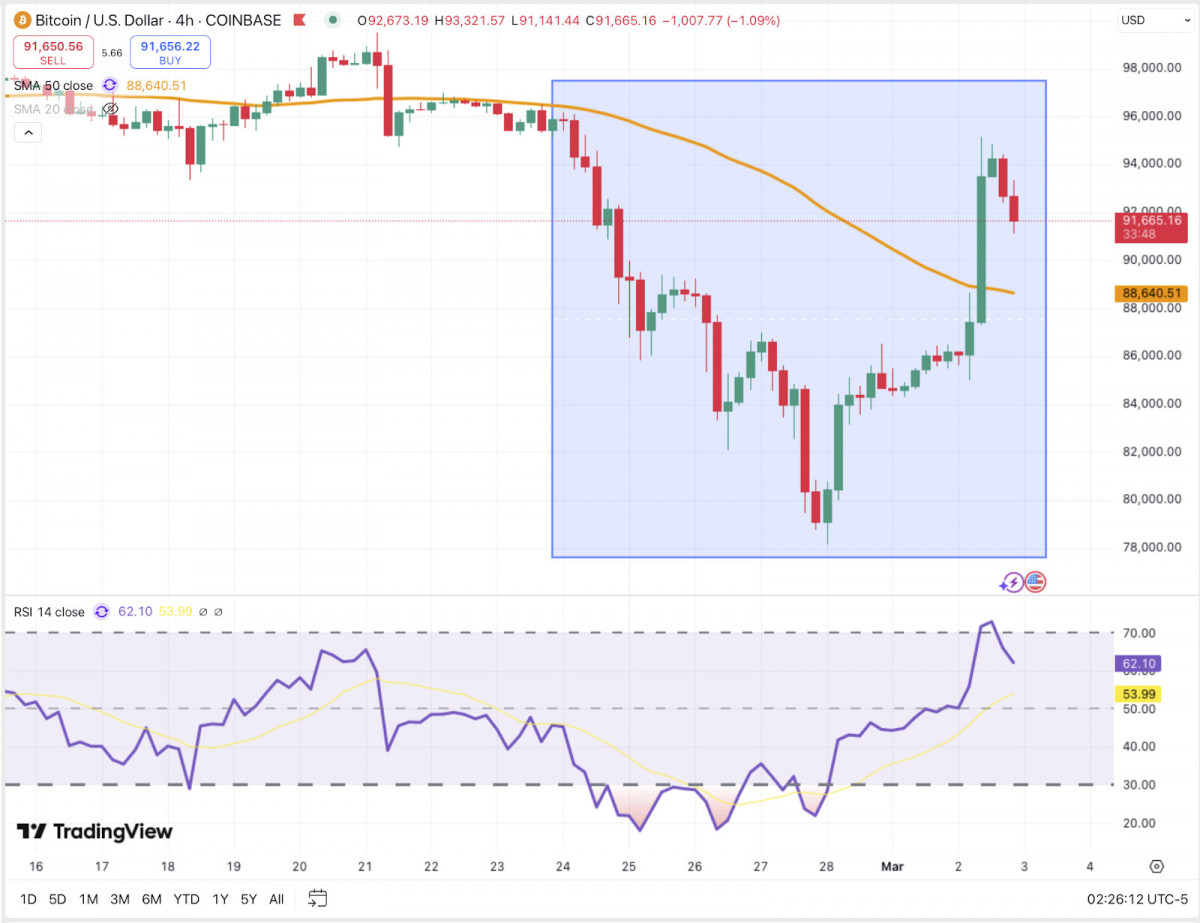
Bitcoin briefly dipped below $80K before rebounding sharply to $93K, but it faces resistance at the 50-period SMA, signaling uncertainty.

BTC/USD 4H Chart, Coinbase. Source: TradingView

The bounce was violent – straight back to $93K – but then, surprise surprise, it hit a wall right at the 50-period moving average on the 4H chart (see the screenshot). RSI was first overbought, then cooling off. So now we’re at that awkward phase: Was this just a dead cat bounce, or is Bitcoin gearing up for another run?

So what actually moved the market?

Trump’s Crypto Reserve Bombshell

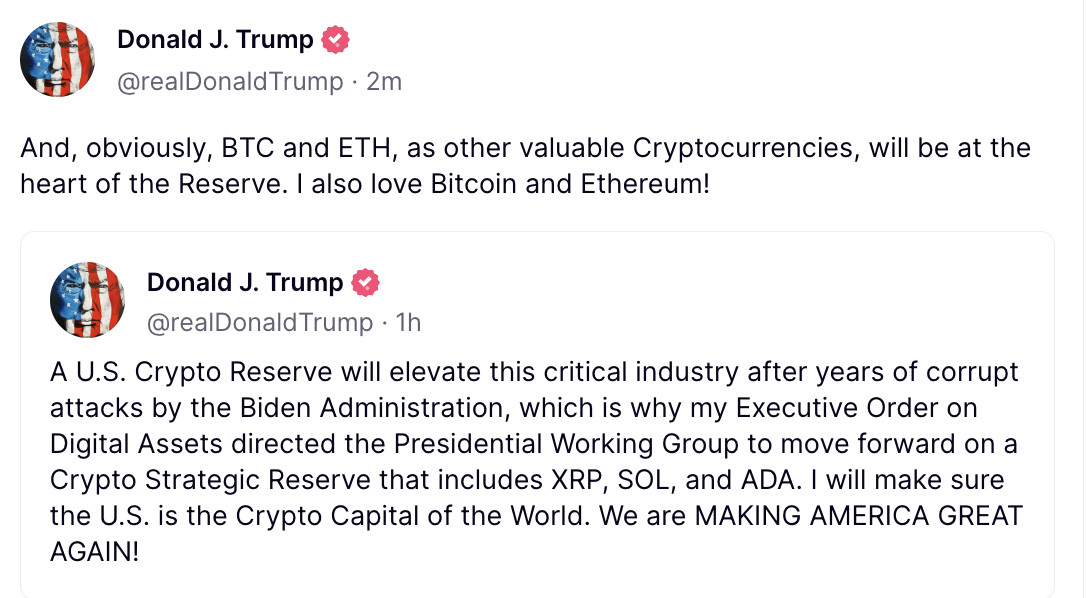
This one came out of nowhere. Trump – yes, the same guy who once called Bitcoin a “scam” – dropped the news that a U.S. crypto reserve could include BTC, ETH, SOL, XRP, and ADA. And just like that, Bitcoin shot up like it had a double espresso, dragging a few altcoins along for the ride. 

Trump’s announcement of a potential U.S. crypto reserve, including BTC, ETH, SOL, XRP, and ADA, triggered a short squeeze and market rally.

Source: Donald J. Trump

The move liquidated a ton of shorts, creating a classic short squeeze. But let’s be real – political promises and market euphoria mix about as well as oil and water. The question is, does this actually change anything long-term?

ETF Flows Finally Flip Positive

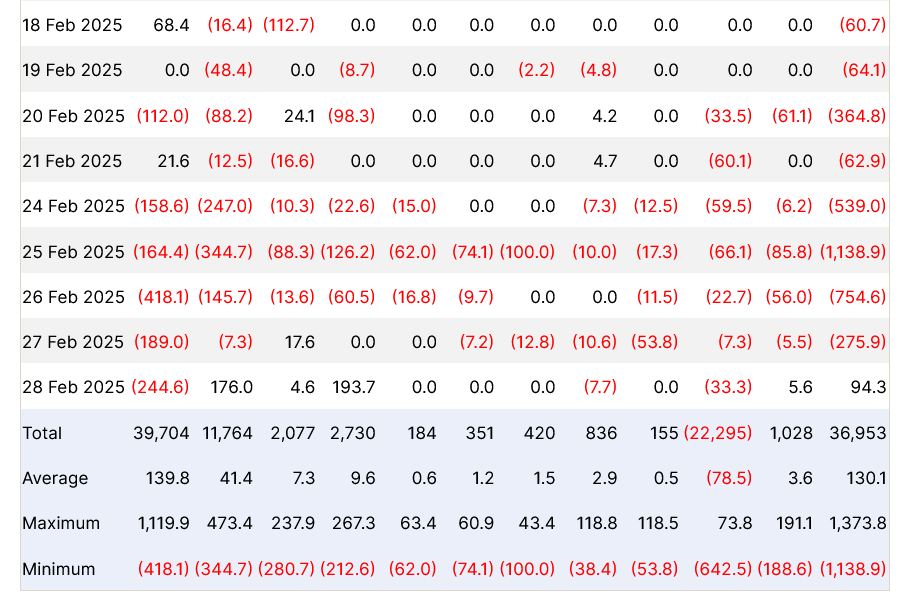
For weeks, Bitcoin spot ETFs were bleeding out, making everyone wonder if institutional money was losing interest. But boom – ARK 21Shares and Fidelity’s Bitcoin ETFs saw a $369.7M net inflow, which finally gave bulls something to work with.

Bitcoin spot ETFs flipped positive with a $369.7 million net inflow, hinting at renewed institutional interest after weeks of outflows.

Flows into the US spot Bitcoin ETFs since Feb. 18. Source: Farside Investors

Is this the start of a bigger trend? Maybe. But ETF buyers have been notoriously fickle, so let’s not pop the champagne just yet.

Swiss National Bank Dunks on Bitcoin

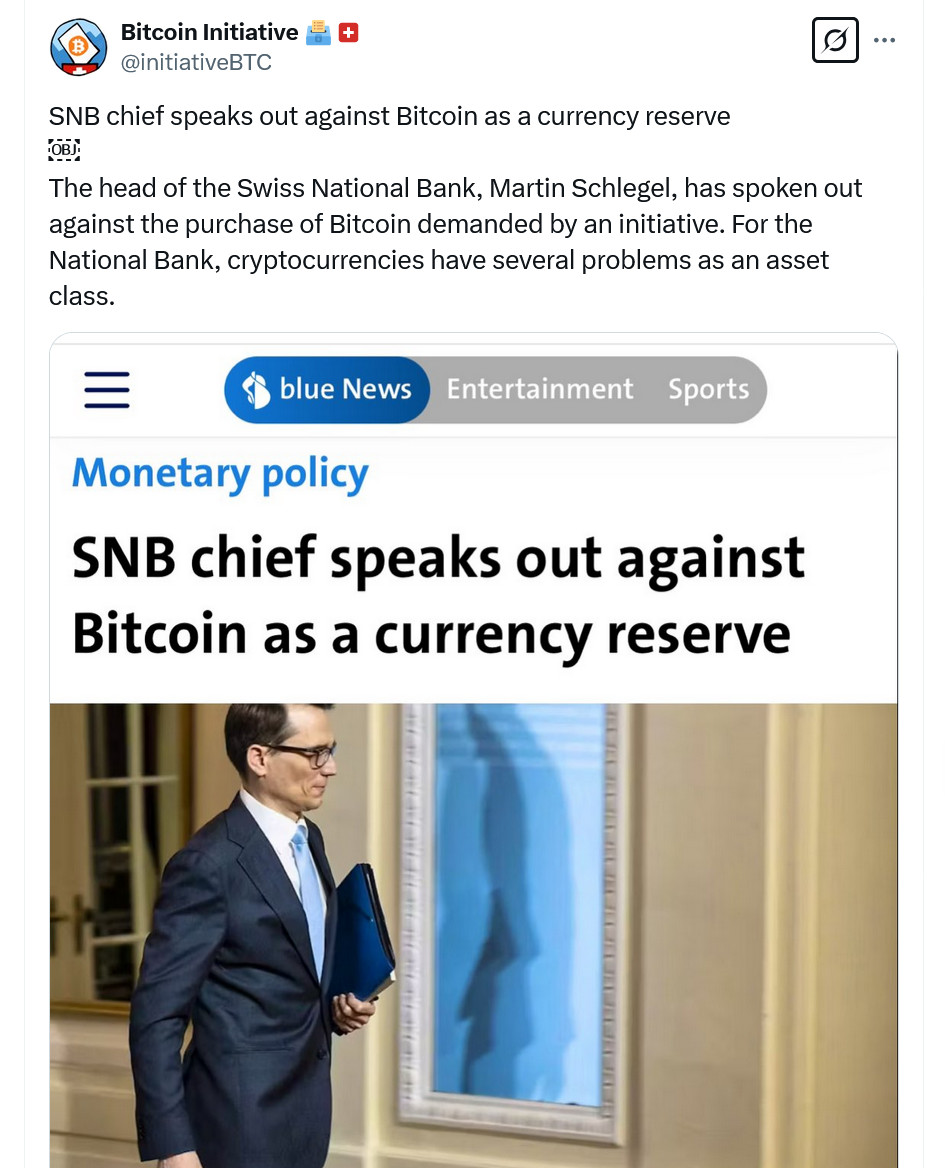
While Trump was busy hyping BTC, the Swiss National Bank decided to kill the vibe, saying Bitcoin is too volatile to be a reserve asset.

The Swiss National Bank dismissed Bitcoin as too volatile for a reserve asset, injecting temporary FUD into the market.

Source: Bitcoin Initiative

Now, coming from a country known for its ultra-conservative financial policies, this wasn’t shocking. But it did inject some short-term FUD into the market. Not that it mattered much – Trump’s narrative was the louder one, and in markets, volume wins.

Bybit Hack: A $1.4B Disaster

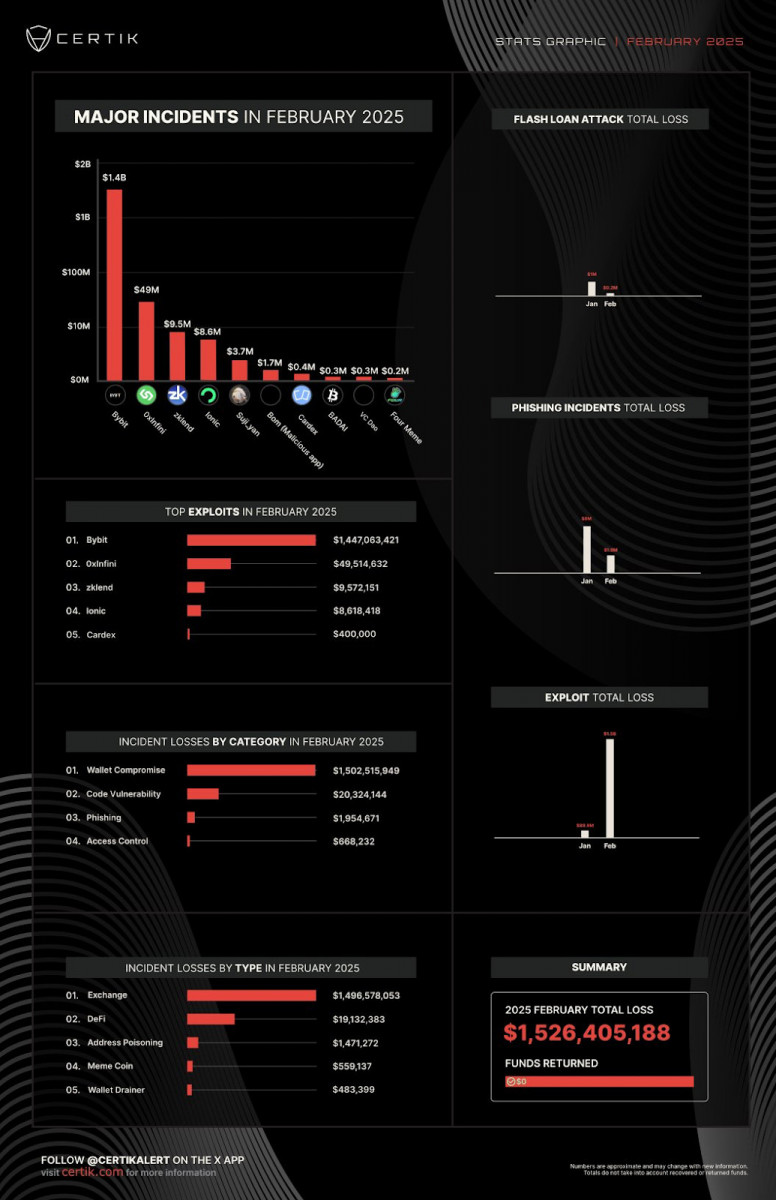
As if the market didn’t have enough problems, the Bybit hack went down, with North Korean hackers allegedly laundering a massive chunk of stolen crypto. 

The Bybit hack, attributed to North Korean actors, saw $1.4 billion stolen, making it the largest crypto exploit in history.

Bybit had the largest loss in February, followed by stablecoin payment firm Infini and then the decentralized money lending protocol ZkLend. Source: CertiK

This was a brutal hit to sentiment, especially since it reignited fears about exchange security. And if history tells us anything, regulators are probably sharpening their knives, getting ready to crack down even harder.

Biggest CME Gap Ever (Yep, Ever)

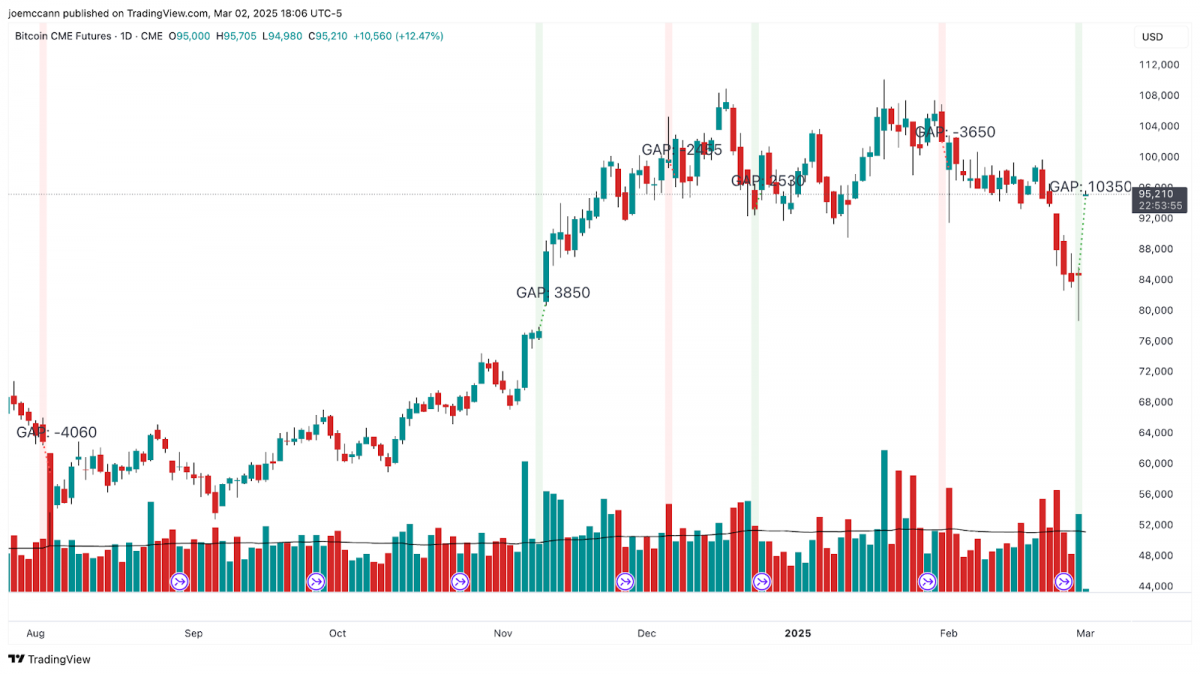
Here’s a fun one: a $10K gap just opened in Bitcoin CME futures – the biggest ever. 

Bitcoin’s largest-ever CME futures gap at $10K suggests a potential retrace to the $83K–$85K range before further upside.

CME futures gaps. Source: Joe McCann

If you’ve been around the block, you know BTC has a habit of “filling the gap,” meaning a retrace back toward $83K–$85K wouldn’t be shocking. Traders are watching this like a hawk.

So where does this leave Bitcoin?

Sure, Bitcoin’s recovery was impressive, but let’s not pretend we’re out of the woods yet. The 50-SMA rejection isn’t a great sign, and if ETF buyers don’t keep stepping in, we could easily see another drop toward $85K. On the flip side, if Trump keeps pushing the crypto narrative and ETF demand picks up, we might be looking at another attempt to crack $95K–$100K. Either way, expect volatility.

Ethereum (ETH)

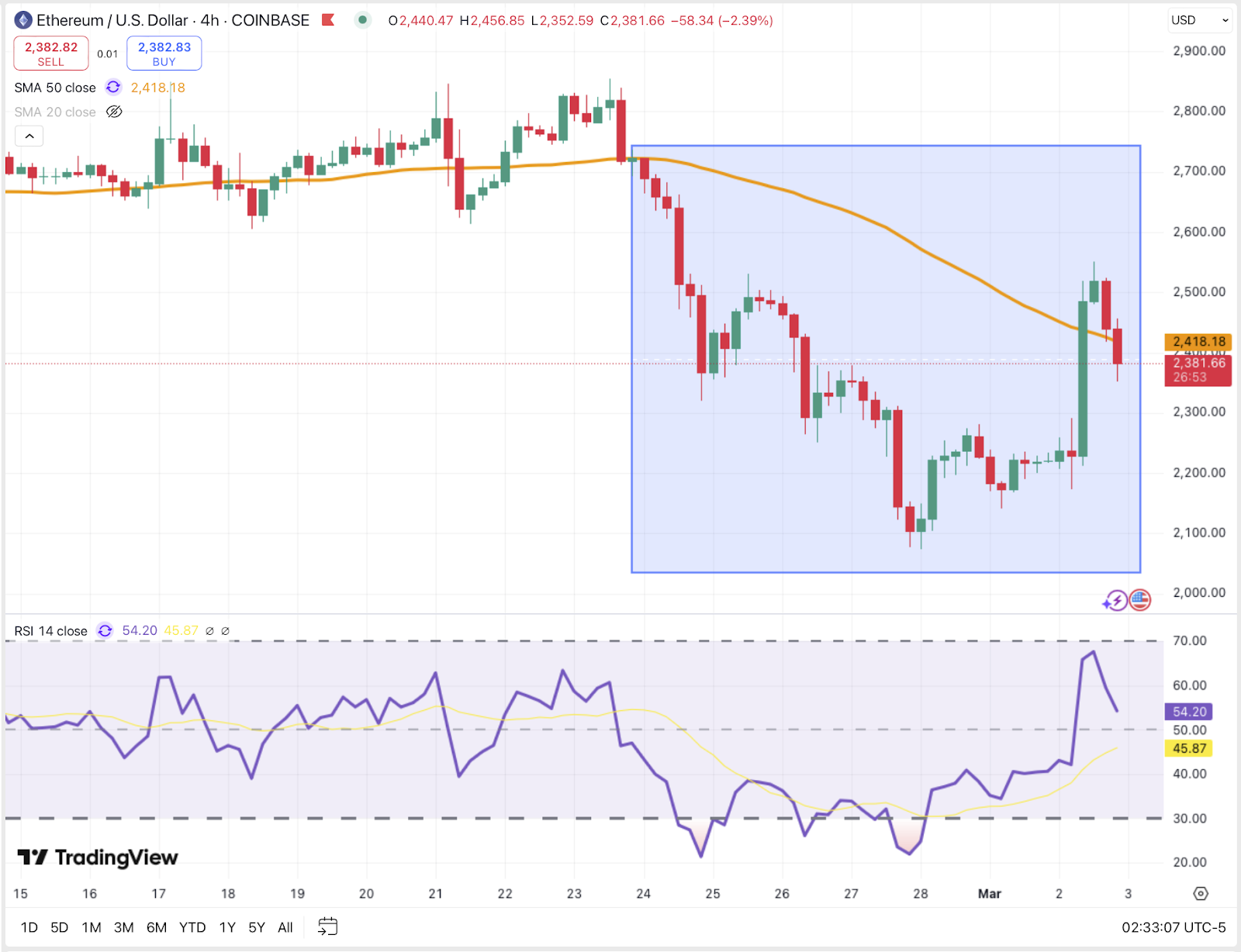
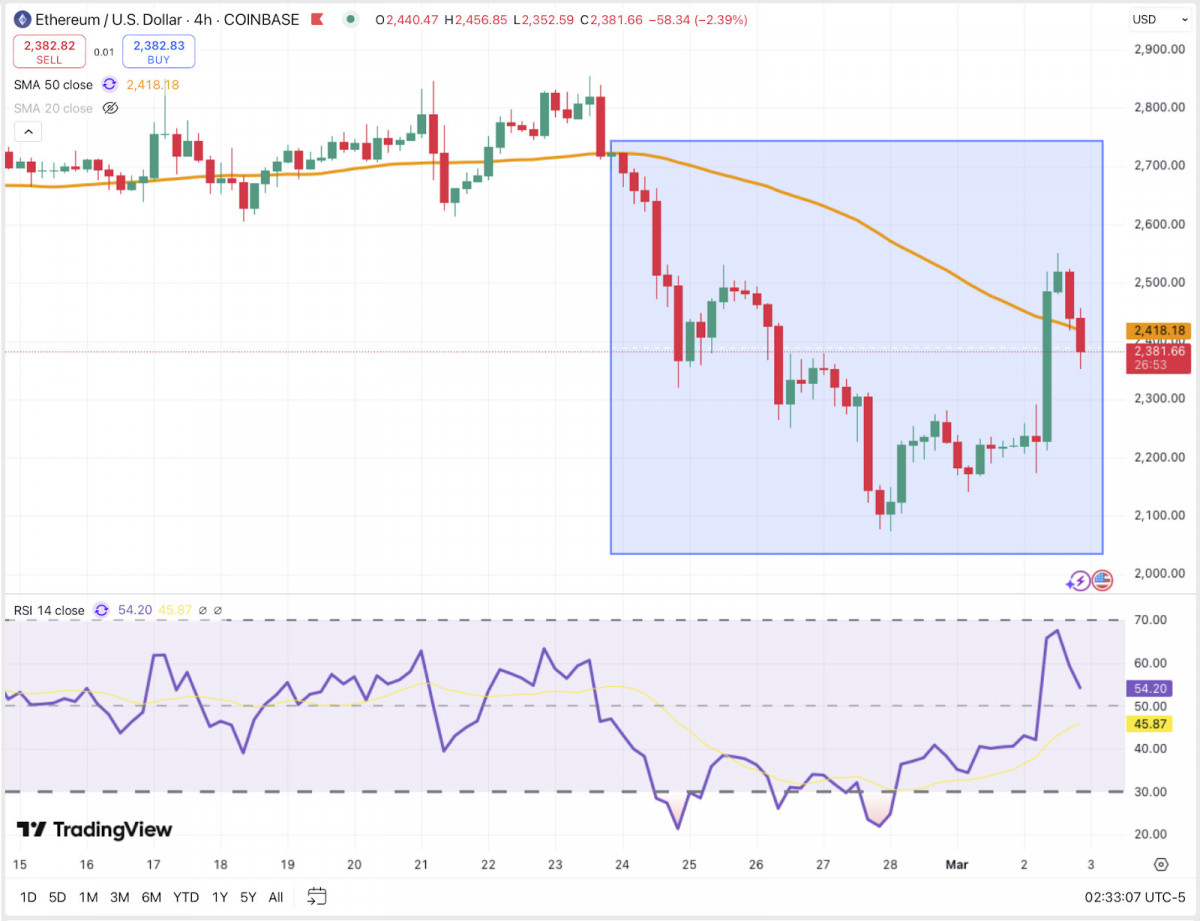
Ethereum took a similar beating to Bitcoin, plunging from highs near $2,900 down to the low $2,000s before mounting a comeback. It briefly reclaimed $2,500, but, much like BTC, it ran into trouble at the 50-period moving average on the 4-hour chart (see screenshot). Ethereum struggled to reclaim $2,500, hitting resistance at the 50-period SMA, while RSI cooled from overbought conditions.

ETH/USD 4H Chart, Coinbase. Source: TradingView

RSI shot up past 60 before cooling off, suggesting some exhaustion in the bounce. At $2,381, ETH is hovering in a precarious zone, and traders are watching whether it can establish support above $2,300 or if another leg down is coming.

Now let’s dig into Ethereum’s own drama. For one, the Ethereum Foundation announced a leadership shakeup after months of grumbling from the community. 

Ethereum’s leadership shakeup aims to address internal tensions and refocus the network’s development efforts.

Wang pictured left and Stańczak pictured right. Source: The Ethereum Foundation

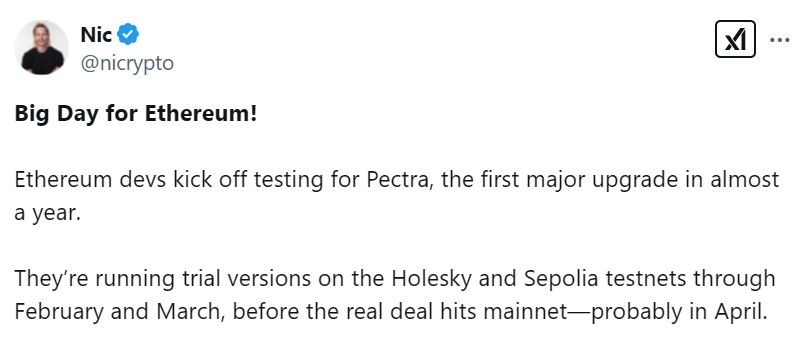
Whether this will bring fresh momentum or just more infighting remains to be seen. Meanwhile, the long-awaited Pectra upgrade is creeping closer, promising major improvements for scaling and MEV mitigation. 

The upcoming Pectra upgrade promises scalability and MEV mitigation improvements, but ETH remains at the mercy of macro uncertainty.

Source: Nic Puckrin

But, as usual, regulatory uncertainty is weighing on ETH. The SEC once again delayed a decision on Ethereum ETF options, and traders are, once again, on edge.

Crypto Weekly Recap: Bitcoin Drops to $80K Before Rebounding, Ethereum Faces ETF Uncertainty, TON Rides USDT Boom

ETH/USD 4H Chart, Coinbase. Source: TradingView

Ethereum’s short-term fate is still tethered to Bitcoin, but these internal catalysts could give it some independence. If BTC stays stable above $90K, ETH might get another shot at $2,700 or even $3K. But if Bitcoin stumbles – or if regulators throw another wrench into the mix – Ethereum could slip back toward $2,100 or lower. Either way, expect more turbulence ahead.

Toncoin (TON)

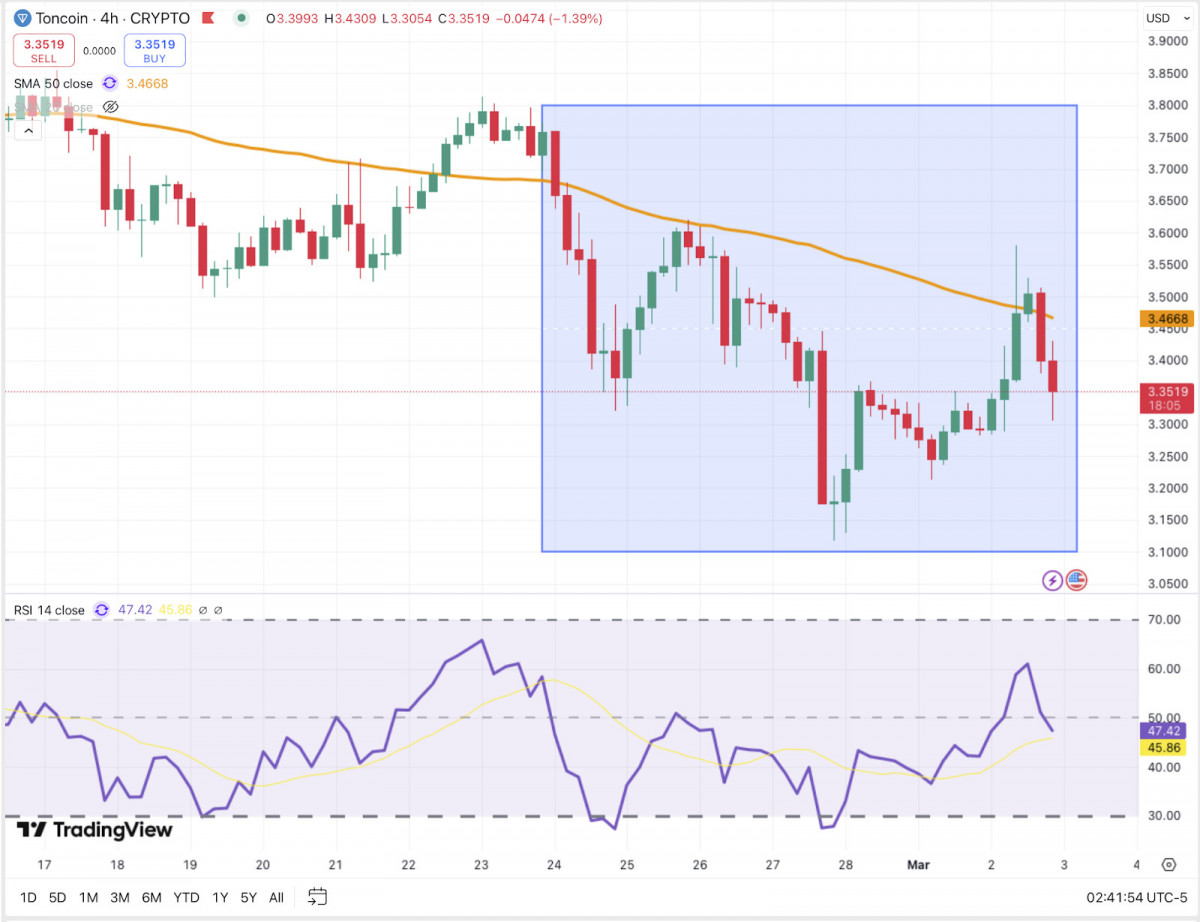
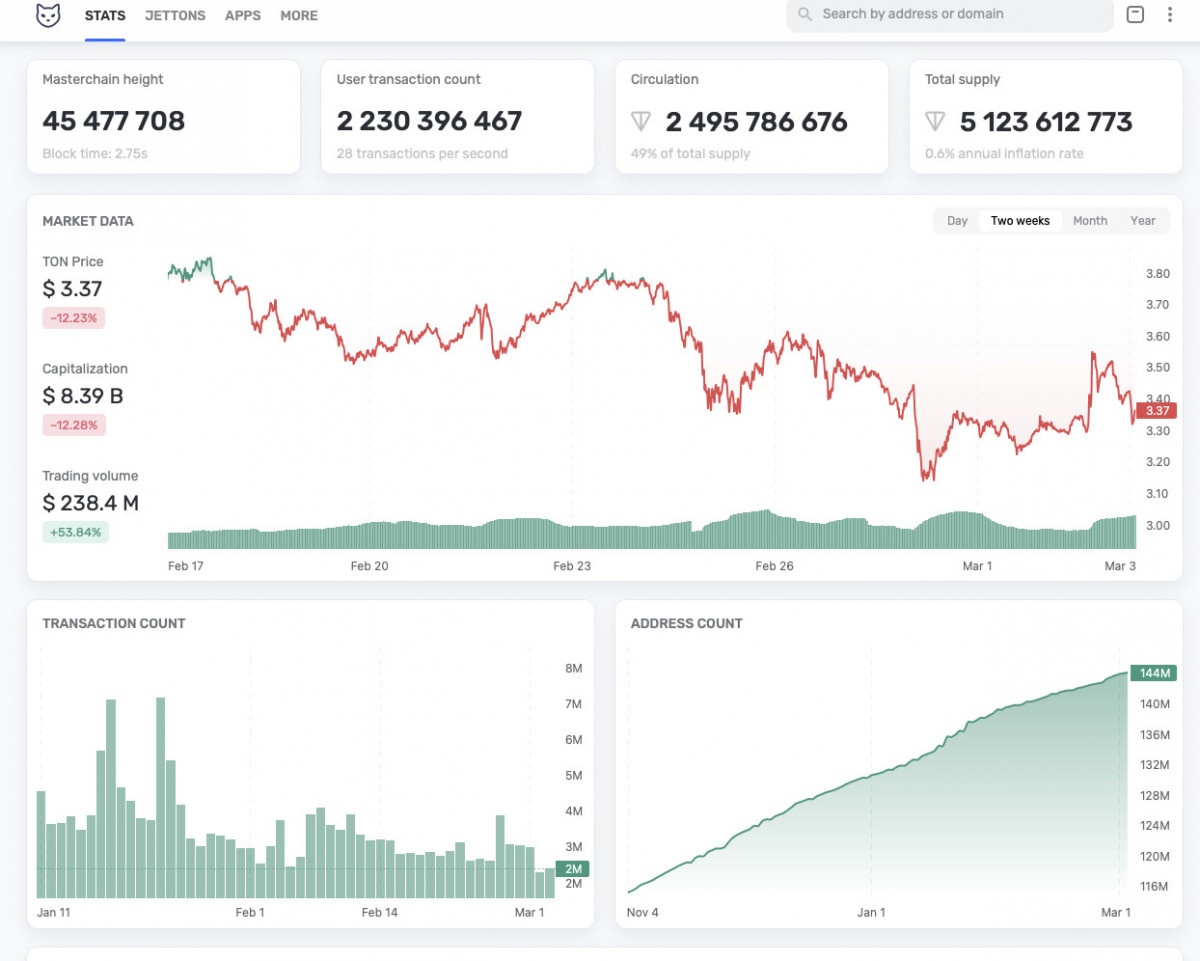
TON has been doing its own thing, mostly under the radar. Sure, it dipped with the rest of the market, but it held up better than most, bouncing off the $3.10 zone and pushing past $3.50 before smacking into resistance at the 50-SMA (see chart). Classic. The RSI sat at 47.42 – basically in limbo, neither overbought nor oversold, which makes sense given the lack of extreme moves.

Crypto Weekly Recap: Bitcoin Drops to $80K Before Rebounding, Ethereum Faces ETF Uncertainty, TON Rides USDT Boom

TON/USD 4H Chart. Source: TradingView

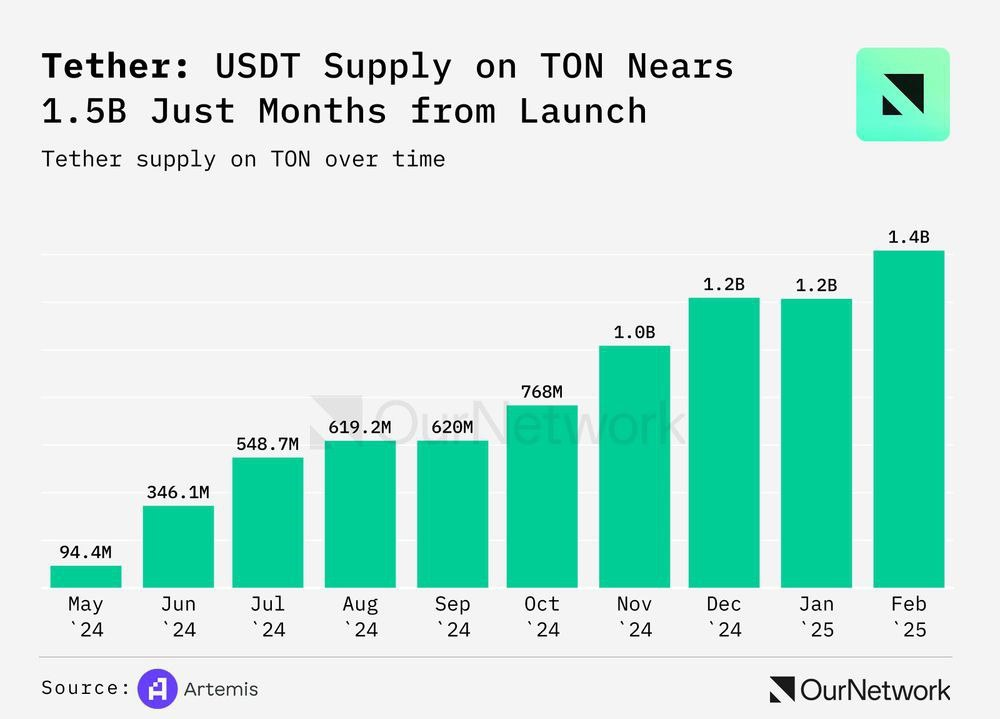
For one, let’s talk ‘real’ adoption. Over the last 10 months, 1.5 billion USDT has been issued on TON, which is actually a liquidity game-changer. With 1.5 billion USDT issued on TON over the past 10 months, the network is strengthening its DeFi liquidity and trading conditions.

Source: Artemis

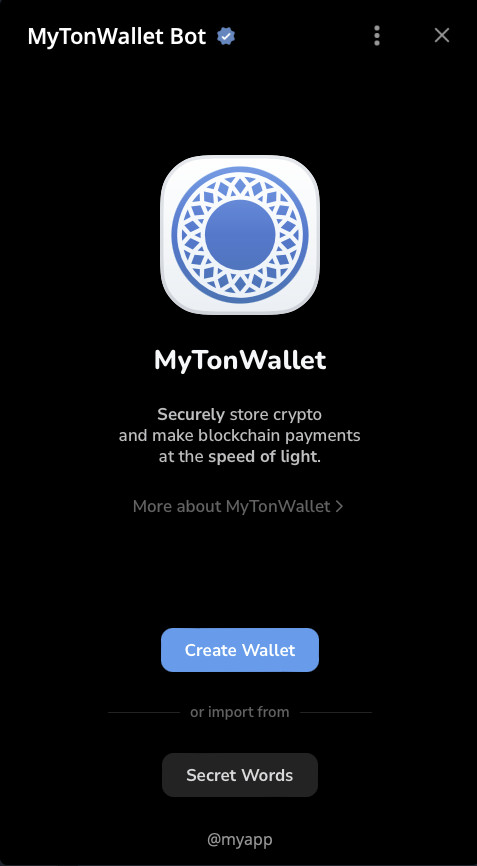
More USDT on a blockchain means better trading conditions, deeper order books, and a sturdier foundation for DeFi. Add to that MyTonWallet launching a Telegram mini-app, so that TON wallets are ridiculously easy to use.

MyTonWallet’s new Telegram mini-app simplifies wallet access, enhancing TON’s integration with the messaging platform.

Source: Telegram

Then there’s the upcoming March 2 token unlock – 5 million TON is about to hit the market. 

A 5 million TON token unlock on March 2 could introduce short-term selling pressure, though TON’s resilience suggests potential buy-the-dip opportunities.

Source: Tronscan

Now, depending on who’s holding and what they plan to do, this could either be a minor bump in the road or a short-term headache. But given how resilient TON has been, any dips might just be buy-the-dip opportunities.

Zooming Out

Short term, there’s volatility ahead – no way around that. The BTC rally might slow down, and TON’s unlock could add some turbulence. But, on a broader scale, crypto is back in the mainstream conversation, and whether you love him or hate him, Trump’s next soundbite is likely to shake up the market all over again.

Disclaimer

In line with the Trust Project guidelines, please note that the information provided on this page is not intended to be and should not be interpreted as legal, tax, investment, financial, or any other form of advice. It is important to only invest what you can afford to lose and to seek independent financial advice if you have any doubts. For further information, we suggest referring to the terms and conditions as well as the help and support pages provided by the issuer or advertiser. MetaversePost is committed to accurate, unbiased reporting, but market conditions are subject to change without notice.

About The Author


Victoria is a writer on a variety of technology topics including Web3.0, AI and cryptocurrencies. Her extensive experience allows her to write insightful articles for the wider audience.

More articles


Victoria d’Este


Victoria is a writer on a variety of technology topics including Web3.0, AI and cryptocurrencies. Her extensive experience allows her to write insightful articles for the wider audience.


Source link

Why SKALE’s Gas-Free Model is a Game-Changer for AI and DeFi

Why SKALE’s Gas-Free Model is a Game-Changer for AI and DeFi


In Brief

According to Andrew Saunder, CGMO at SKALE, gasless blockchain is key to mass adoption. SKALE is powering AI, gaming, and SocialFi by eliminating transaction costs and enabling seamless Web2-like experiences. With V4 coming, the fastest is getting even faster.

Andrew Saunders, Chief Growth and Marketing Officer at SKALE, envisions a future where blockchain operates seamlessly in the background, enabling Web2-like user experiences without the friction of gas fees. At the intersection of AI, gaming, and blockchain, SKALE is positioning itself as the go-to infrastructure for developers looking to build high-throughput, cost-efficient decentralized applications (dApps).

Redefining User Experience

SKALE’s unique proposition is its gas-free model, which allows users to interact with blockchain-based applications without worrying about transaction costs. This eliminates a major barrier to adoption, particularly in sectors like gaming and AI, where high transaction volumes can become prohibitively expensive. By abstracting blockchain complexities, SKALE enables Web2-like front-end experiences, making it easier for mainstream users to engage with decentralized applications.

For AI-powered applications, this model is particularly transformative. As AI agents and dApps process millions of transactions, gas fees can quickly add up, making blockchain integration unsustainable. SKALE’s architecture solves this problem, providing a scalable and cost-effective environment for AI developers.

AI on SKALE: Bridging Web2 and Web3

One standout AI project on SKALE is Exorde, an AI-driven big data platform that bridges Web2 and Web3. Exorde leverages AI to create decentralized datasets that Web2 businesses can tap into, offering cost-efficient solutions for data management and analytics. As AI agents become more prevalent, projects like Exorde demonstrate how blockchain can serve as a foundational layer for AI applications, ensuring transparency, security, and interoperability.

Saunders, who previously worked in AI at Amazon, remains bullish on AI agents, seeing them as a critical driver of blockchain adoption. By integrating AI-driven solutions with blockchain infrastructure, SKALE is creating a future where AI agents can operate autonomously and cost-effectively on-chain.

Gaming and SocialFi – The Next Wave of Adoption

Gaming remains a key focus for SKALE, with its high-speed, zero-gas environment providing an ideal foundation for Web3 gaming experiences. Large gaming studios are beginning to explore blockchain integration, creating on-chain marketplaces and digital asset ownership models that enhance player engagement.

Beyond gaming, SocialFi is also gaining momentum on SKALE. The platform recently onboarded XO, the first on-chain dating app, highlighting the potential of decentralized social applications. These new verticals demonstrate how blockchain can enhance digital interactions, ownership, and monetization in ways that were previously unattainable in traditional Web2 ecosystems.

Regulatory Shifts and the Rise of US-Based Crypto Projects

As a US-based company headquartered in California, SKALE is closely watching regulatory developments that could shape the blockchain industry. With increasing clarity and a more supportive stance from policymakers, Saunders expects to see a surge of Web2 businesses entering the blockchain space. Clearer regulations will not only encourage enterprise adoption but also attract top-tier talent from big tech companies, many of whom have been hesitant to enter the space due to regulatory uncertainty.

Looking ahead to 2025, SKALE plans to expand its focus beyond gaming and AI, with DeFi emerging as a new priority. The team is exploring ways to enhance financial infrastructure for developers and gamers, creating better DeFi experiences that integrate seamlessly with blockchain-based applications.

Additionally, SKALE’s V4 upgrade is set to launch, making its already high-speed network even faster while maintaining its cost-free transaction model. This upgrade will further solidify SKALE’s position as the leading blockchain for mass adoption, ensuring that it remains the go-to solution for developers building the next generation of decentralized applications.

Disclaimer

In line with the Trust Project guidelines, please note that the information provided on this page is not intended to be and should not be interpreted as legal, tax, investment, financial, or any other form of advice. It is important to only invest what you can afford to lose and to seek independent financial advice if you have any doubts. For further information, we suggest referring to the terms and conditions as well as the help and support pages provided by the issuer or advertiser. MetaversePost is committed to accurate, unbiased reporting, but market conditions are subject to change without notice.

About The Author


Victoria is a writer on a variety of technology topics including Web3.0, AI and cryptocurrencies. Her extensive experience allows her to write insightful articles for the wider audience.

More articles


Victoria d’Este


Victoria is a writer on a variety of technology topics including Web3.0, AI and cryptocurrencies. Her extensive experience allows her to write insightful articles for the wider audience.


Source link

Bitfinex: Macro Conditions Expected To Influence Bitcoin’s Trend In Coming Weeks

Bitfinex: Macro Conditions Expected To Influence Bitcoin’s Trend In Coming Weeks


In Brief

Bitfinex predicts that macroeconomic factors, including the performance of the S&P 500, will impact Bitcoin’s price in the upcoming weeks.

Bitfinex: Macro Conditions Expected To Influence Bitcoin's Trend In Coming Weeks

Bitfinex released its latest market analysis, highlighting that Bitcoin ended February with a 17.39% decline, marking its worst performance for the month since 2014 and the second-worst in history. The past week saw heightened volatility, with Bitcoin dropping 18.4% to a low of $78,617 before recovering. This sharp drop was primarily driven by record Bitcoin exchange-traded funds (ETF) outflows, which on February 25th reached over $1.1 billion as institutional inflows weakened.

Since Bitcoin hit its lowest point in November 2022 following the collapse of FTX, the cryptocurrency’s bull market corrections have typically ranged between 18-22%. However, the February pullback from January’s all-time high of $109,590 extended to 28.3%, making it one of the most significant corrections since the bear market ended.

On Sunday, March 2nd, President Donald Trump’s announcement of a US cryptocurrency reserve caused a sharp reversal, with Bitcoin rising 20% from its recent lows and over 12% in a single day. However, subsequent selling pressure brought the price back down to around $92,000. With more details about the proposed cryptocurrency reserve still pending, Bitfinex anticipates that broader macroeconomic conditions, including the performance of the S&P 500, will impact Bitcoin’s price in the upcoming weeks. The market remains fragile, and without renewed institutional inflows, sustained bullish momentum could be difficult to achieve.

US Economic Outlook Remains Challenged By Inflation, Declining Consumer Confidence, And Slower Growth

The US economic environment continues to be complex, characterized by persistent inflation, falling consumer confidence, and slower growth. Data for January’s Personal Consumption Expenditures (PCE) showed a 2.5% annual increase in inflation, surpassing the Federal Reserve’s 2% target. Despite the typical post-holiday decrease in household spending, personal income rose by 0.9% in January, adding to inflationary pressures. Rising service costs and new import tariffs are expected to complicate the Federal Reserve’s ability to adjust interest rates, making a rate cut in the near future unlikely.

Consumer sentiment has also weakened, with the Conference Board’s Consumer Confidence Index dropping to 98.3 in February, marking the largest decline in over three years. Concerns about the job market are growing, with more consumers struggling to find jobs and fewer expecting new job opportunities. Trade policies and rising prices for essential goods like food and housing are continuing to erode consumer confidence.

Meanwhile, the US economy grew at a slower rate of 2.3% in the fourth quarter of 2024, down from 3.1% in the previous quarter. The slowdown is attributed to factors such as harsh winter weather, reduced retail activity, and uncertainty over trade policies. While government spending and exports provided some support, consumer spending and business investment weakened. The trade deficit widened, reaching a record $153.3 billion in January, further emphasizing the challenges facing the economy. With ongoing inflationary pressures and low consumer sentiment, the economic growth outlook for early 2025 remains subdued unless key policy adjustments or favorable economic conditions stimulate new momentum.

Bitcoin Hovers Above $91,000, Altcoins Outperform 

As of the writing time, Bitcoin is priced at $91,836, reflecting a 7.64% increase over the past 24 hours. During this time, Bitcoin’s value fluctuated between a low of $85,040.21 and a high of $95,043.44, according to CoinMarketCap. Despite the volatility, Bitcoin’s dominance dropped by 0.14%, suggesting that altcoins outperformed the flagship cryptocurrency during this period. 

The overall cryptocurrency market capitalization experienced a notable increase of over 8.02% in the last 24 hours, pushing it back above the $3 trillion mark. Additionally, the total market volume surged by 225%, reaching $214 billion.

Disclaimer

In line with the Trust Project guidelines, please note that the information provided on this page is not intended to be and should not be interpreted as legal, tax, investment, financial, or any other form of advice. It is important to only invest what you can afford to lose and to seek independent financial advice if you have any doubts. For further information, we suggest referring to the terms and conditions as well as the help and support pages provided by the issuer or advertiser. MetaversePost is committed to accurate, unbiased reporting, but market conditions are subject to change without notice.

About The Author


Alisa, a dedicated journalist at the MPost, specializes in cryptocurrency, zero-knowledge proofs, investments, and the expansive realm of Web3. With a keen eye for emerging trends and technologies, she delivers comprehensive coverage to inform and engage readers in the ever-evolving landscape of digital finance.

More articles


Alisa Davidson


Alisa, a dedicated journalist at the MPost, specializes in cryptocurrency, zero-knowledge proofs, investments, and the expansive realm of Web3. With a keen eye for emerging trends and technologies, she delivers comprehensive coverage to inform and engage readers in the ever-evolving landscape of digital finance.


More articles


Source link

The Future of DeFi Credit and TrueFi’s Game-Changing Approach

The Future of DeFi Credit and TrueFi’s Game-Changing Approach


In Brief

Vivek Saini outlined how the platform is transforming DeFi credit with transparent, institutional-grade lending, real-world asset integration, and innovative products like TF Bills and yield-bearing stablecoins to ensure sustainable on-chain credit markets.

Vivek Saini, COO of TrueFi, discussed how the platform is reshaping decentralized credit markets by making lending more transparent, accessible, and programmable. By developing robust on-chain infrastructure, TrueFi aims to bridge the gap between traditional financial institutions and decentralized finance, offering a more structured and secure lending environment.

Building a Transparent and Secure Credit Framework

On-chain borrowing and lending have traditionally been built around permissionless and trustless principles, but institutional investors and lenders often require additional assurances that are standard in traditional finance. 

TrueFi is addressing this need by offering a credit framework that retains the transparency and efficiency of blockchain while incorporating the reliability and structured approach that traditional institutions expect. This allows borrowers to access capital more efficiently while investors benefit from clear risk assessments and verifiable lending practices.

As on-chain credit continues to evolve, TrueFi sees a future where decentralized lending becomes a fundamental part of global finance. The company is positioning itself as a leading provider of institutional-grade credit solutions that merge the best aspects of both DeFi and traditional finance. By expanding into real-world assets and diversifying its offerings, TrueFi aims to ensure that decentralized credit markets remain sustainable and competitive.

How TrueFi Stands Out in a Competitive DeFi Landscape

With DeFi lending becoming increasingly competitive, TrueFi differentiates itself by maintaining a reputation for security and trust. While many decentralized platforms focus solely on yield generation, TrueFi is committed to offering structured, risk-mitigated financial products that appeal to both crypto-native users and institutional investors. This approach has helped the platform attract a growing number of participants looking for a reliable entry point into on-chain credit markets.

TrueFi is adapting to emerging trends in DeFi credit markets by expanding its product suite. In addition to credit lines, the platform has been actively developing new financial products, including TF Bills, a treasury bill-backed investment product, and a yield-bearing stablecoin designed to provide competitive returns while maintaining security and stability. These innovations are part of TrueFi’s broader strategy to integrate traditional financial principles into DeFi, ensuring that on-chain lending continues to evolve in a way that benefits all participants.

Disclaimer

In line with the Trust Project guidelines, please note that the information provided on this page is not intended to be and should not be interpreted as legal, tax, investment, financial, or any other form of advice. It is important to only invest what you can afford to lose and to seek independent financial advice if you have any doubts. For further information, we suggest referring to the terms and conditions as well as the help and support pages provided by the issuer or advertiser. MetaversePost is committed to accurate, unbiased reporting, but market conditions are subject to change without notice.

About The Author


Victoria is a writer on a variety of technology topics including Web3.0, AI and cryptocurrencies. Her extensive experience allows her to write insightful articles for the wider audience.

More articles


Victoria d’Este


Victoria is a writer on a variety of technology topics including Web3.0, AI and cryptocurrencies. Her extensive experience allows her to write insightful articles for the wider audience.


Source link

Ditching the dongle on Logitech Zone Wireless 2

Ditching the dongle on Logitech Zone Wireless 2


Zone Wireless 2 is certified for Microsoft Teams over native Bluetooth. Enjoy a full Teams experience without a dongle.

Logitech

Microsoft and Logitech have been working together to get us Native Bluetooth support for Logitech Wireless 2 headset. I wrote about Logitech Wireless 2 earlier, over a year ago. Back then (and until recently) it was required to use dongle if you wanted to have all Microsoft Teams functionalities, that certification brings.

Enjoy all the functionality of a Teams meeting without the need for a dongle or additional software. Join a meeting, answer or end calls, mute or unmute yourself, or raise your hand.

Logitech

This “ditch the dongle” -feature was released recently, the firmware 1.3.74 upgrade is dated January 16th, 2025.

I have been using Zone Wireless 2 in my Teams meetings quite a lot. In fact it is an excellent headset – audio quality is great for calls and the active noise cancellation is superb. This is really useful when family is at home. And thanks to Teams Voice Isolation + Zone Wireless 2 microphones family members (or in case you sit in a office with others: your coworkers) voices are not heard by online participants. The only drawback for me with Zone Wireless 2 is, that it is on-the-ear headset, which means I can’t wear it for multiple hours without a break, as it starts to press on my ears and gets uncomfortable. But a short break helps for that. Hey, Logitech: do you have plans to create an over-the-ear headset with similar quality & capabilities by any chance? #wishingwell

Now that the dongle is ditched, I haven’t gotten back to the dongle with Zone Wireless 2 anymore. There just isn’t any need to that. The connection is stable (no breaking up), controls work and Teams button is active via Bluetooth. This is just splendid, as I don’t have to worry about using the dongle to one of my two USB-C ports on Surface Laptop Studio.. This is a big thing, especially when you take the headset to the road with you – or you move around the office. This also means that I don’t have to worry about forgetting the dongle somewhere, or mixing it up with other headsets’ dongles. A little thing, big impact.

What I do wish, that Logitech (and Jabra) would upgrade other existing headsets to dongle-free. They can be used via Bluetooth (and usually it works quite ok) but getting that small extra with Teams Certification would be welcome. Especially Logitech True Wireless buds and Jabra Evolve2 buds would benefit of dongle-free functionality, but probably there isn’t hardware that could be just firmware updated to the required level. Both do work as a Bluetooth headset, but are not Teams Certificated when used without a dongle.

Microsoft Swift Pair is making the pairing of the headset really easy. I didn’t catch my own screenshot about the pairing after the upgrade, but taking a snip from Logitech’s page tells how it goes. Just turn on the headset and pair – could not be easier! The snip mentions the Zone 305, but it appeared to Zone Wireless 2 as well.

If you haven’t tried Zone Wireless 2 without a dongle so far, now is the time to ditch the dongle and celebrate about one more free USB-port in the laptop! To me this is just superb, but I do hope this extends to other models and vendors so the age of dongles can be put behind us (at least partially).

Published by Vesa Nopanen

Vesa “Vesku” Nopanen, Principal Consultant and Microsoft MVP (M365 and AI Platform) working on Future Work at Sulava.

I work, blog and speak about Future Work : AI, Microsoft 365, Copilot, Microsoft Mesh, Metaverse, and other services & platforms in the cloud connecting digital and physical and people together.

I have about 30 years of experience in IT business on multiple industries, domains, and roles.
View all posts by Vesa Nopanen


Source link

Popular Posts

My Favorites