Metaverse

Home Metaverse Page 200

Prices fall, but assets don’t! Staking allows your cryptocurrency to continue to grow!

Prices fall, but assets don’t! Staking allows your cryptocurrency to continue to grow!


In Brief

Staking offers a reliable way for crypto holders to earn passive income regardless of market volatility, and HTXMining stands out as a top platform for maximizing returns through innovative liquidity staking solutions.

Prices fall, but assets don’t! Staking allows your cryptocurrency to continue to grow!

In the world of cryptocurrency, price volatility is simply part of the game. Investors are constantly navigating unpredictable waters, from sudden bull runs to sharp corrections. But the thing is, although token prices can fall sometimes, your assets themselves do not necessarily have to lose value—especially if you put them to work using staking. Staking has also become a leading favorite method of passive income generation for holders since they can augment their crypto wealth regardless of market fluctuations. 

Even in a bearish climate, staking provides steady daily profits, making it a reliable long-term plan. And when it comes to finding the best staking crypto platform, HTXMining stands out as an industry leader, offering innovative liquidity staking solutions designed to maximize earnings while protecting your assets.

Earning Potential with HTXMining

Liquidity Mining Offers:

LevelBalanceRatio15- 1,0501.5%21,050- 3,0502%33,051 – 5,0502.5%45,051- 10,0502.8%510,051- 15,0503.1%615,051- 20,0503.5%720,051- 50,0503.8%850,051- 80,0504.1%980,051- 100,0504.5%10100,051- 200,0504.8%11200,051- 500,0505.1%12500,051- 1,000,000,0005.5%

Locked Crypto Staking Plans:

PlanUnit PriceLock TermDaily ProfitTotal ProfitCapital BackFree Plan$1001 Day$1$1100%TRON (TRX)$2003 Day$1$3100%Tether (USDT)$5003 Day$3$9100%Litecoin (LTC)$,10007 Day$7$49100%Polygon (POL)$3,0007 Day$24$168100%USD Coin (USDC)$5,0007 Day$45$315100%Solana (SOL)$10,00015 Day$100$1,500100%Dogecoin (DOGE)$15,00015 Day$180$2,700100%Hyperliquid$20,00015 Day$260$3,900100%BNB Coin (BNB)$25,00020 Day$350$7,000100%Ethereum (ETH)$50,00020 Day$750$15,000100%Bitcoin (BTC)$80,00020 Day$1280$25,600100%BNB Coin (BNB)- PRO$100,00030 Day$1,700$51,000100%Ethereum (ETH)- PRO$200,00030 Day$3600$108,000100%Bitcoin (BTC)- PRO$500,00030 Day$9500$285,000100%

Why HTXMining Is the Best Staking Crypto Platform: Key Features That Deliver Real Results

What makes HTXMining a standout in the competitive world of staking platforms? The answer lies in its robust features and real-world benefits prioritizing profits and security. Here’s a breakdown of why HTXMining is regarded as one of the best staking crypto solutions on the market:

$100 Free Trial Plan

Getting started with staking has never been easier. HTXMining offers all new users a $100 Free Trial Plan, allowing you to test liquidity staking firsthand—no deposit required. This is the amazing deal: zero risk with real monster profits, so any newbies looking to venture into the world of passive income can opt for it.

Full Security and Asset Control

With HTXMining, you’re always in the driver’s seat when it comes to your funds. The platform makes safety a top concern, employing cold wallet storage, strong encryption, and constant, real-time monitoring. Unlike many services, HTXMining never takes full custody of your assets, significantly reducing risks while giving you peace of mind.

Daily Profits and Fast Payouts

HTXMining pays out profits every 24 hours, ensuring your earnings grow consistently and quickly. No matter if you’re staking on Polkadot or helping out the Ethereum network, your rewards are figured out and added to your account each day, making it a genuinely passive way to earn.

Flexible Liquidity Staking Plans

Choose the staking plan that fits your needs. HTXMining offers both fixed and liquid staking options. Fixed plans lock your assets for higher returns, while liquid plans offer the flexibility to access your funds whenever needed. This level of customization allows you to optimize profits based on your personal investment strategy.

Staking Rewards Calculator

One of the most valuable tools on the platform is the staking rewards calculator. This feature allows you to estimate your earnings before committing to a plan. Enter your cryptocurrency, amount, and plan length, and the calculator will revolutionize the way you estimate and rabbi a comprehensive output for your returns projection, much to the ease of your staking journey.

Multi-Asset Support

HTXMining has a wide range of supported cryptocurrencies, such as Polkadot staking. You can stake leading cryptocurrencies like BTC, ETH, USDT, and TRX. Staking and mining with multiple cryptocurrencies will help you to minimize the risk and maximize the rewards you can earn with Htxmining. 

24/7 Expert Support

HTXMining has a support team to support the users with any questions they have regarding the platform, a 24/7 customer support team. From setting up your account to troubleshooting issues, you’ll always have help when you need it.

The Future of Passive Income: Why HTXMining Is the Right Move Now

As the crypto market continues to experience periods of volatility, staking has proven to be one of the most resilient and rewarding strategies available to investors. Rather than watching your assets lose value during market downturns, you can harness the power of staking through HTXMining to build consistent, passive income that grows over time. With its risk-free $100 Free Trial Plan, bulletproof security components, live staking rewards calculator, and customizable options like Polkadot staking, HTXMining gives you everything you need to keep your portfolio in motion—while the rest of the market idles.

Joining Htxmiig will be the better option for building your wealth with reliable returns and diversifying your portfolio according to market needs. Let your crypto grow—even when prices fall. Sign up today, activate your free trial, and see just how far your assets can go when they never stop working for you.

Disclaimer

In line with the Trust Project guidelines, please note that the information provided on this page is not intended to be and should not be interpreted as legal, tax, investment, financial, or any other form of advice. It is important to only invest what you can afford to lose and to seek independent financial advice if you have any doubts. For further information, we suggest referring to the terms and conditions as well as the help and support pages provided by the issuer or advertiser. MetaversePost is committed to accurate, unbiased reporting, but market conditions are subject to change without notice.

About The Author


Gregory, a digital nomad hailing from Poland, is not only a financial analyst but also a valuable contributor to various online magazines. With a wealth of experience in the financial industry, his insights and expertise have earned him recognition in numerous publications. Utilising his spare time effectively, Gregory is currently dedicated to writing a book about cryptocurrency and blockchain.

More articles


Gregory, a digital nomad hailing from Poland, is not only a financial analyst but also a valuable contributor to various online magazines. With a wealth of experience in the financial industry, his insights and expertise have earned him recognition in numerous publications. Utilising his spare time effectively, Gregory is currently dedicated to writing a book about cryptocurrency and blockchain.



Source link

Crypto Weekly Update: Bitcoin Falls to $82K on Fed, ETF Outflows; Ethereum Slips Below $2.1K, TON Struggles to Hold $2.7

Crypto Weekly Update: Bitcoin Falls to K on Fed, ETF Outflows; Ethereum Slips Below .1K, TON Struggles to Hold .7


In Brief

Bitcoin tumbles to $82K on Fed fears and ETF outflows, Ethereum dips below $2.1K amid weak demand, and Toncoin struggles near $2.7 with no relief in sight.

Crypto Weekly Update: Bitcoin Falls to $82K on Fed, ETF Outflows; Ethereum Slips Below $2.1K, TON Struggles to Hold $2.7

Bitcoin (BTC)

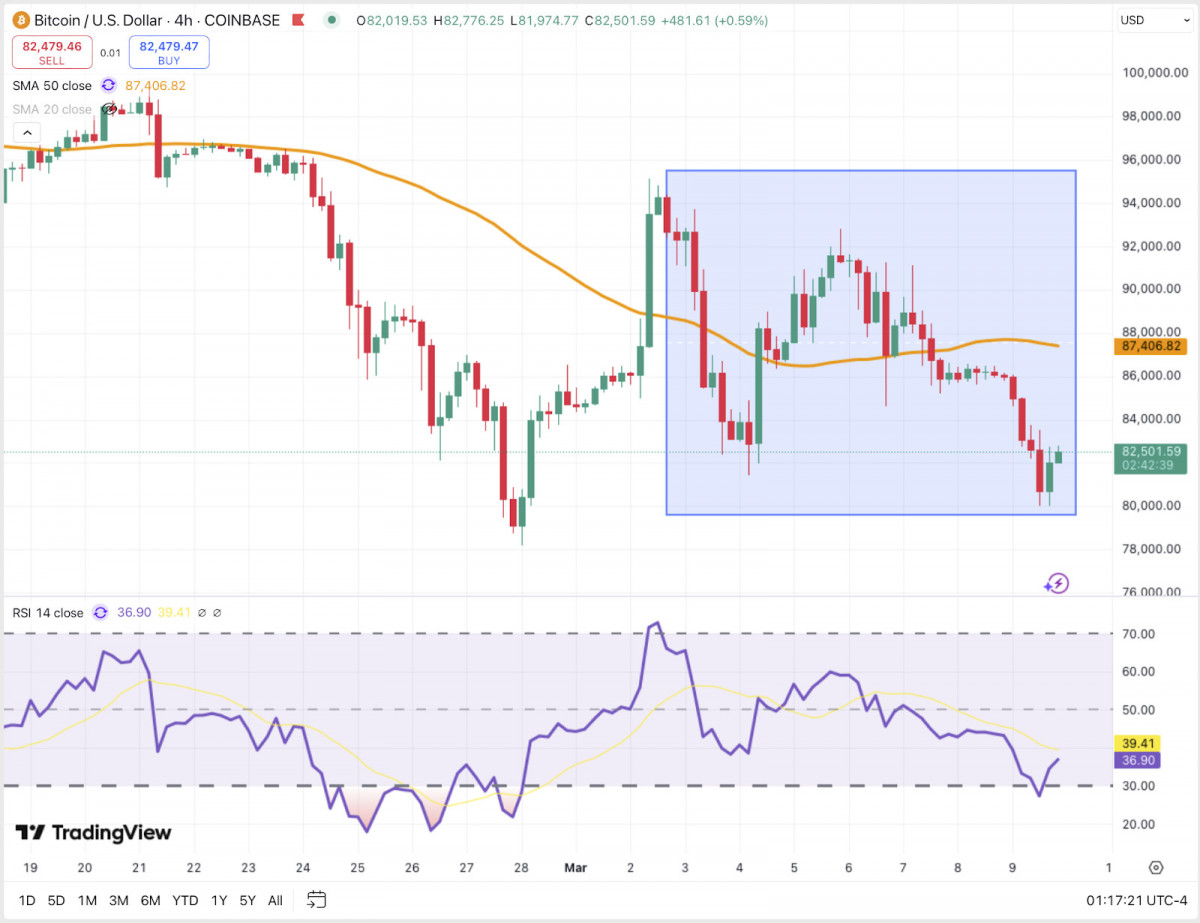
Over the past week, Bitcoin’s been on a rough ride, sliding from over $90,000 down to around $82,500. On the 4-hour chart, it’s broken clean through its 50-SMA at $87,406 and is now flirting with oversold RSI levels (36.9). Let’s find out what’s been behind this slide.

Bitcoin broke below its 50-SMA and slid to $82,500, with RSI nearing oversold levels as traders react to weak macro signals and ETF outflows.

BTC/USD 4H Chart, Coinbase. Source: TradingView

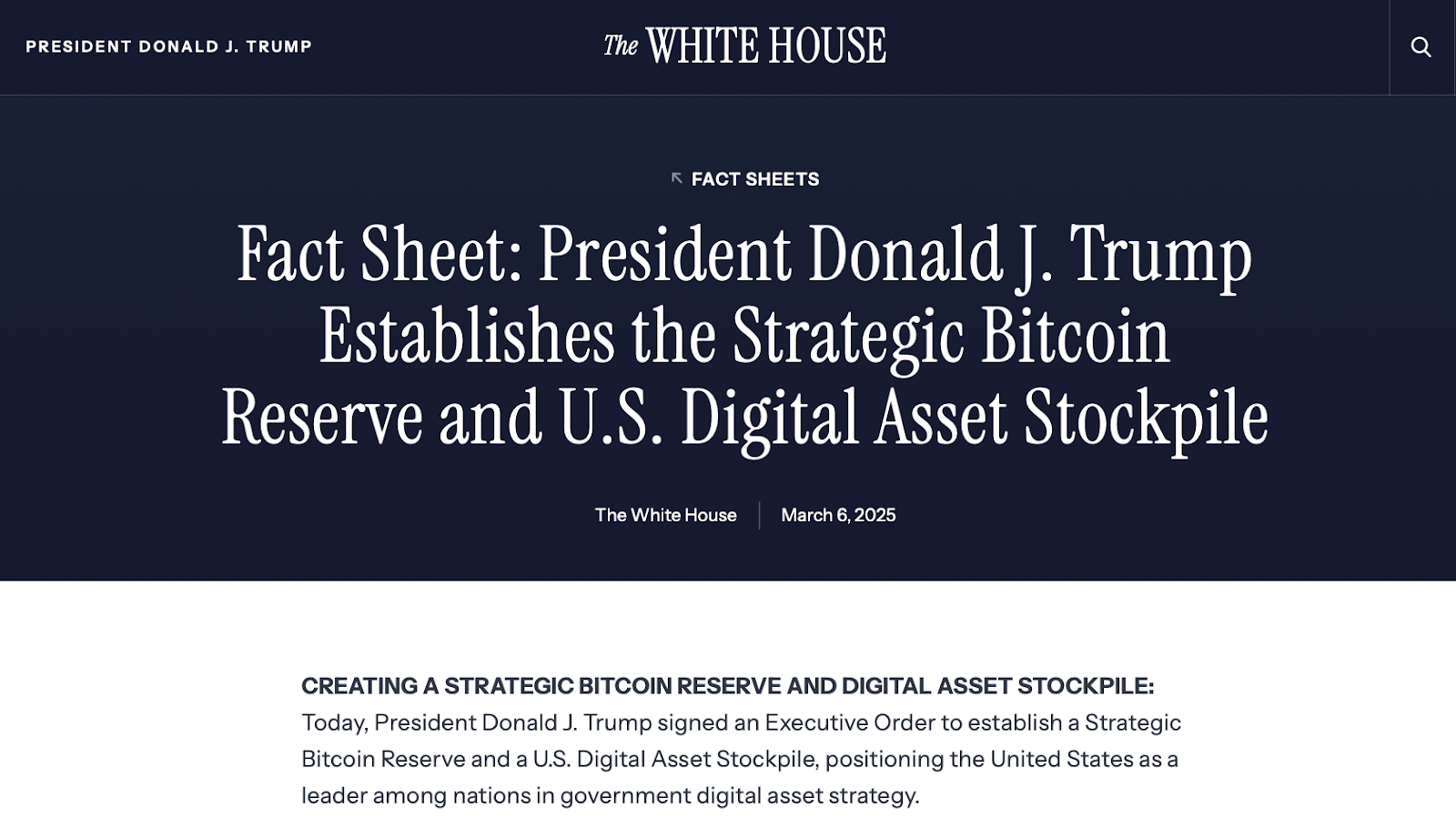
One of the biggest blows came from the much-hyped Trump “Strategic Bitcoin Reserve” announcement — which, in the end, turned out to be a whole lot of nothing. Trump’s "Strategic Bitcoin Reserve" reveal lacked concrete buying plans, sparking a sharp sell-the-news reaction in Bitcoin.

Souce: The White House

Sure, the government said it would hold onto existing Bitcoin, but there was no real plan to buy more. Markets didn’t like that — cue a sharp “sell-the-news” move.

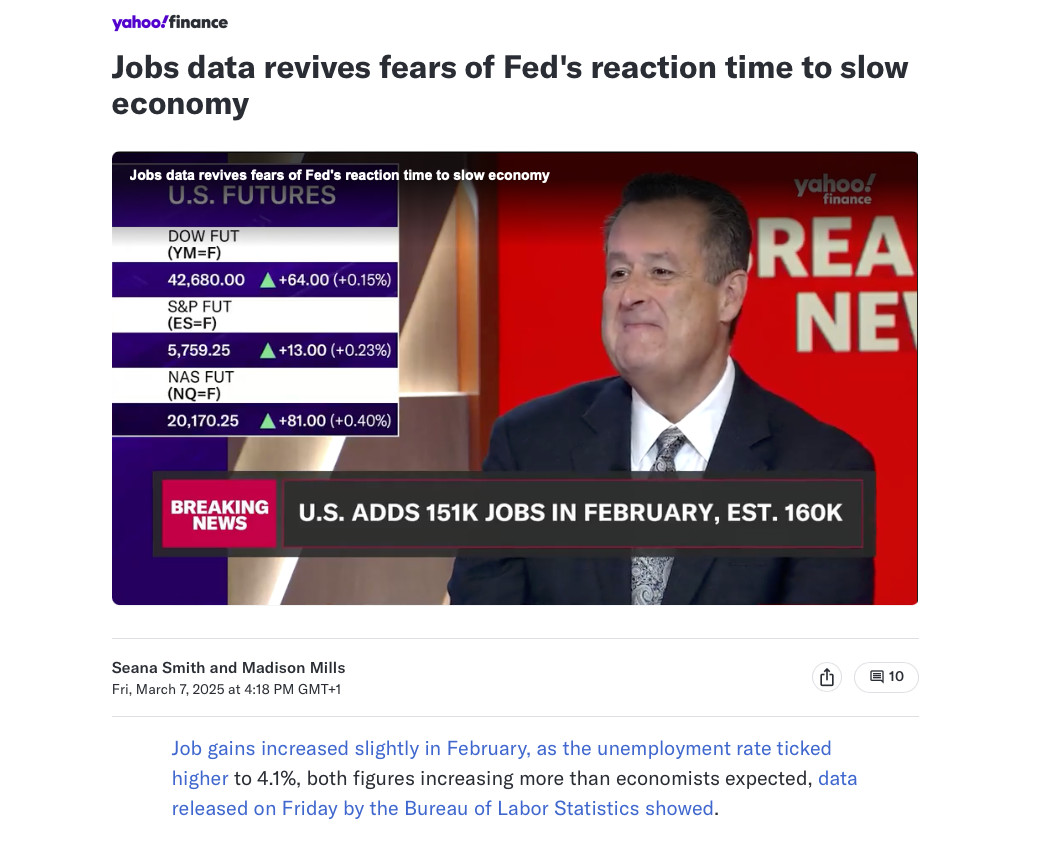
Strong U.S. jobs data and sticky inflation crushed hopes for rate cuts, adding macro pressure that dragged Bitcoin lower.

Source: Yahoo! Finance

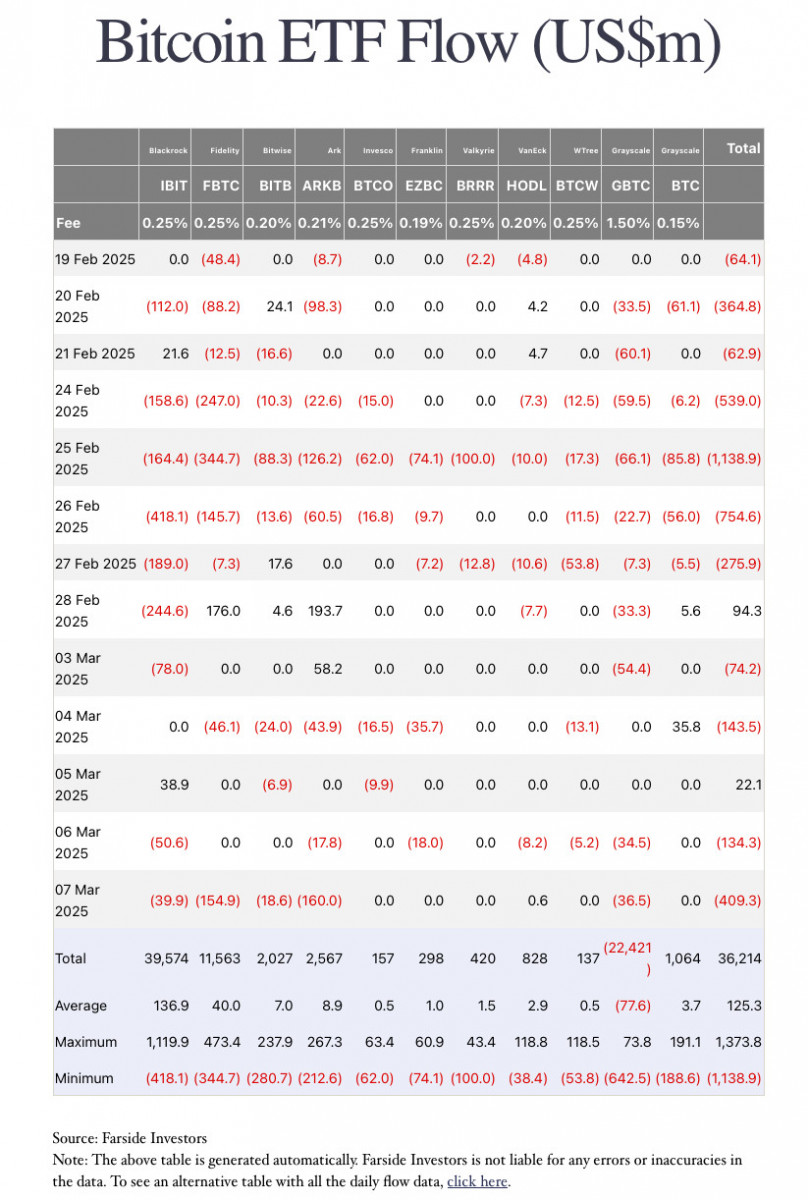
At the same time, strong US jobs data and persistent inflation signals have pretty much crushed hopes for quick Fed rate cuts, which is putting risk assets like Bitcoin under even more pressure. To make matters worse, ETFs saw over $370 million in outflows following Trump’s speech, and now there are whispers about the government potentially offloading some of its Bitcoin stash — all of which has traders spooked about a supply glut.

Bitcoin ETFs saw $370 million in outflows following Trump’s announcement, fueling fears of a looming supply glut.

Source: Farside Investors

Bitcoin did take a quick dip to $80,000, but for now, that level is acting as a fragile floor. Still, if broader sentiment keeps souring, we could easily see that floor give way. Traders are now laser-focused on the $78,000 to $82,000 range — if Bitcoin breaks below that, things could get a lot messier.

Ethereum

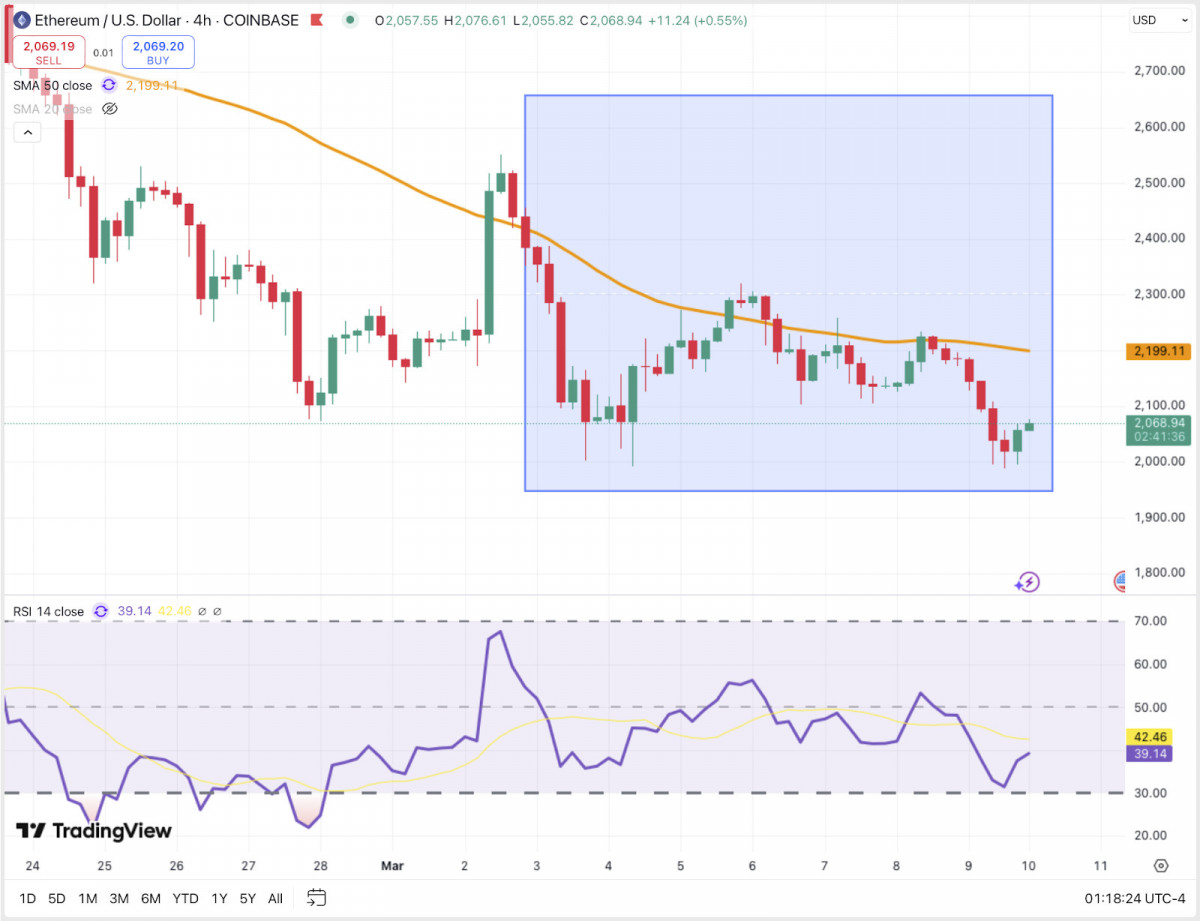
Ethereum hasn’t fared much better than Bitcoin — it’s been dragged down from over $2,400 to around $2,070, as shown in the chart you shared. RSI is limping along near 39, and price action is still stuck below its 50-SMA at $2,199, showing little sign of strength.

Ethereum fell to $2,070, stuck below its 50-SMA, as RSI flirts with oversold territory and price action mirrors Bitcoin’s weakness.

ETH/USD 4H Chart, Coinbase. Source: TradingView

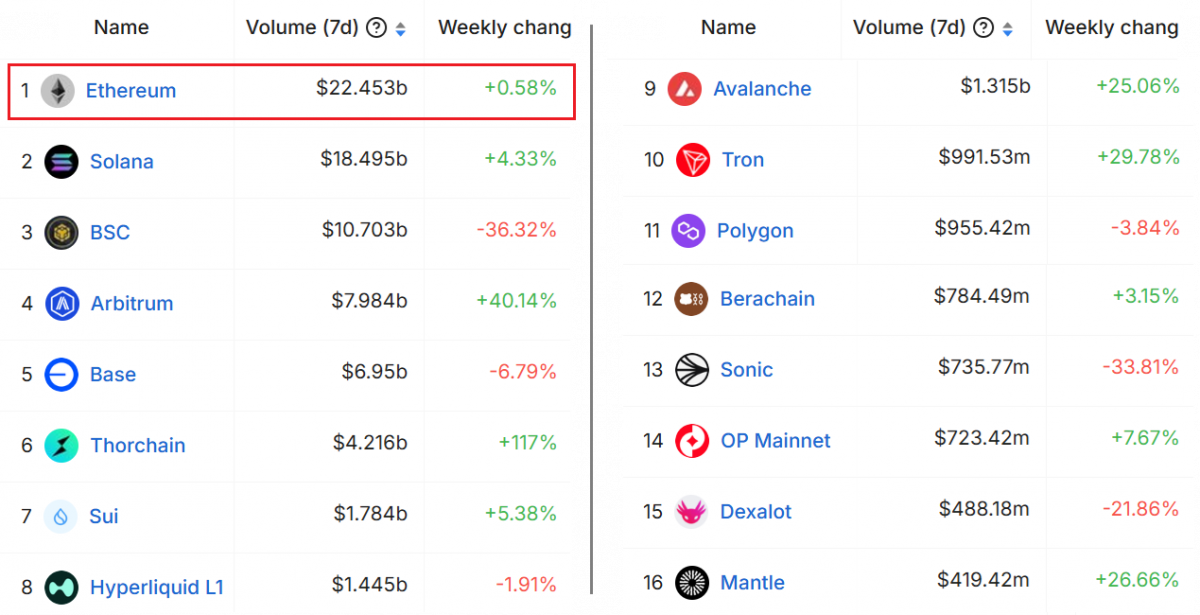
A big part of ETH’s slump is tied to the broader market’s reaction to the underwhelming Trump Bitcoin reserve news — but Ethereum’s also got its own baggage. DeFi and staking activity have been sluggish this week, raising questions about on-chain demand. Plus, there’s growing chatter about delays to the Pectra upgrade, which isn’t helping confidence.

Sluggish DeFi and staking activity have raised concerns about Ethereum’s on-chain demand, adding to bearish market sentiment.

7-day decentralized exchanges volumes, USD. Source: DefiLlama

Another blow: Trump’s Bitcoin reserve pitch made zero mention of Ethereum, dashing hopes that ETH would get a slice of the “strategic asset” narrative. For ETH holders who were counting on some institutional nod, that was a cold shoulder.

Right now, Ethereum is still moving in lockstep with Bitcoin, so unless BTC finds its footing, ETH looks like it could take another run at that $2,000 psychological level. On the flip side, if macro conditions shift — say, if rate cut hopes return — Ethereum’s close proximity to long-term support could set it up for a sharp bounce. But for now, traders are eyeing $2,000 as the line in the sand.

Toncoin (TON)

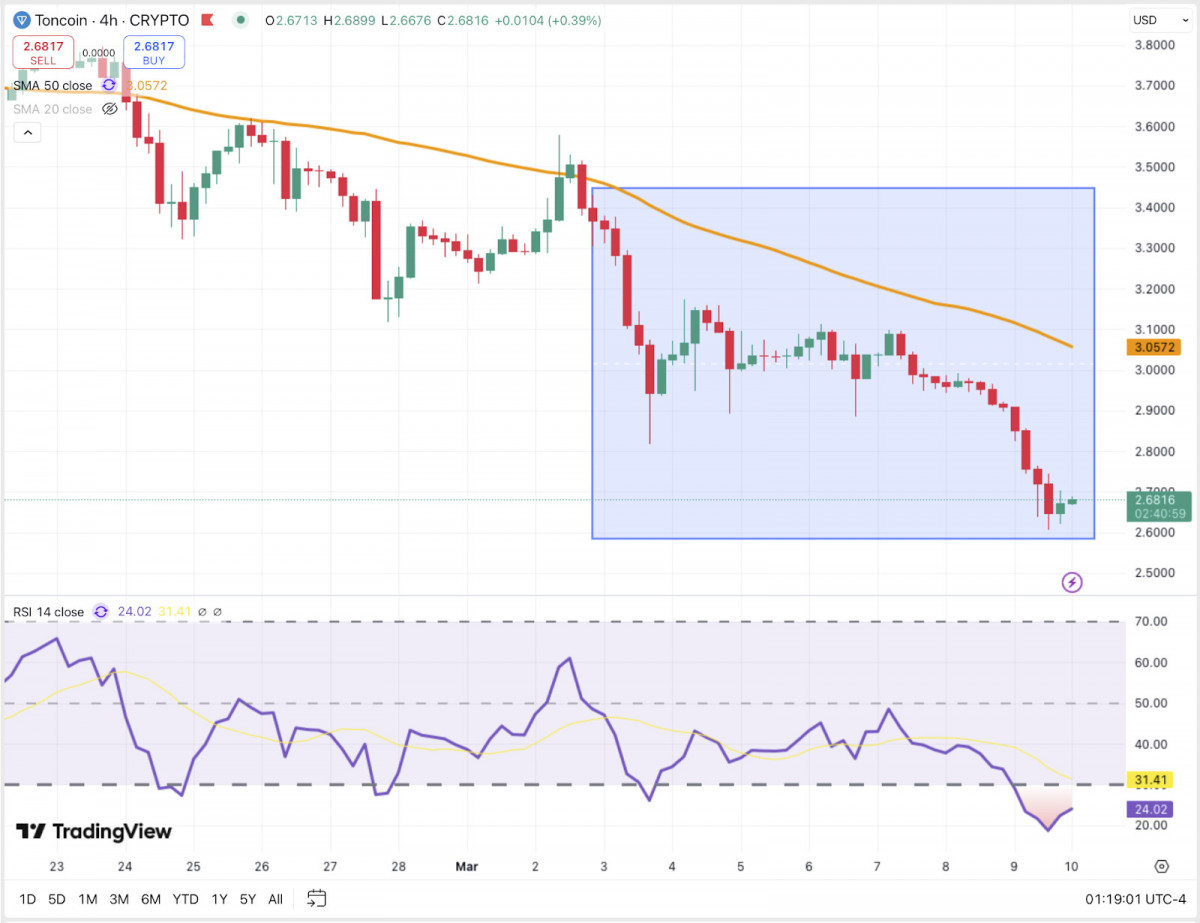
Toncoin (TON) has been having an even tougher time than the majors, sliding steadily from around $3.40 down to $2.68 — and with RSI crushed down to 24.0, it’s deep in oversold territory. But so far, there’s no real sign of a bounce. The drop mirrors the broader risk-off vibe across crypto, but TON’s slide is sharper, partly because it was left out of the US reserve talk that, at least for a moment, propped up Bitcoin — and to a lesser extent, Ethereum.

Toncoin tumbled to $2.68, deep in oversold territory with RSI at 24, as the broader crypto risk-off mood hit harder on assets without strong institutional backing.

TON/USD 4H Chart. Source: TradingView

Unlike BTC and ETH, TON doesn’t have that big institutional money behind it, so when the whole market starts de-risking, TON tends to get hit harder. If Bitcoin can’t hold steady, TON could easily slide further, with traders eyeing the $2.50–$2.60 zone as the next likely landing spot. Still, with RSI this beaten down, even a small relief rally in Bitcoin or Ethereum could set off a sharp, fast bounce in TON — but that would likely be more of a tactical trade than a longer-term recovery signal.

TON Core’s Accelerator upgrade boosted network capacity above 100,000 TPS, but the milestone has yet to reflect in price performance.

Source: TON Blog

Meanwhile, there’s a lot going on under the hood in the TON ecosystem. TON Core just rolled out its Accelerator upgrade, pushing network capacity past 100,000 TPS — and now working on cutting transaction latency to improve user experience. But while those are solid technical milestones, they haven’t translated into price strength — at least not yet. 

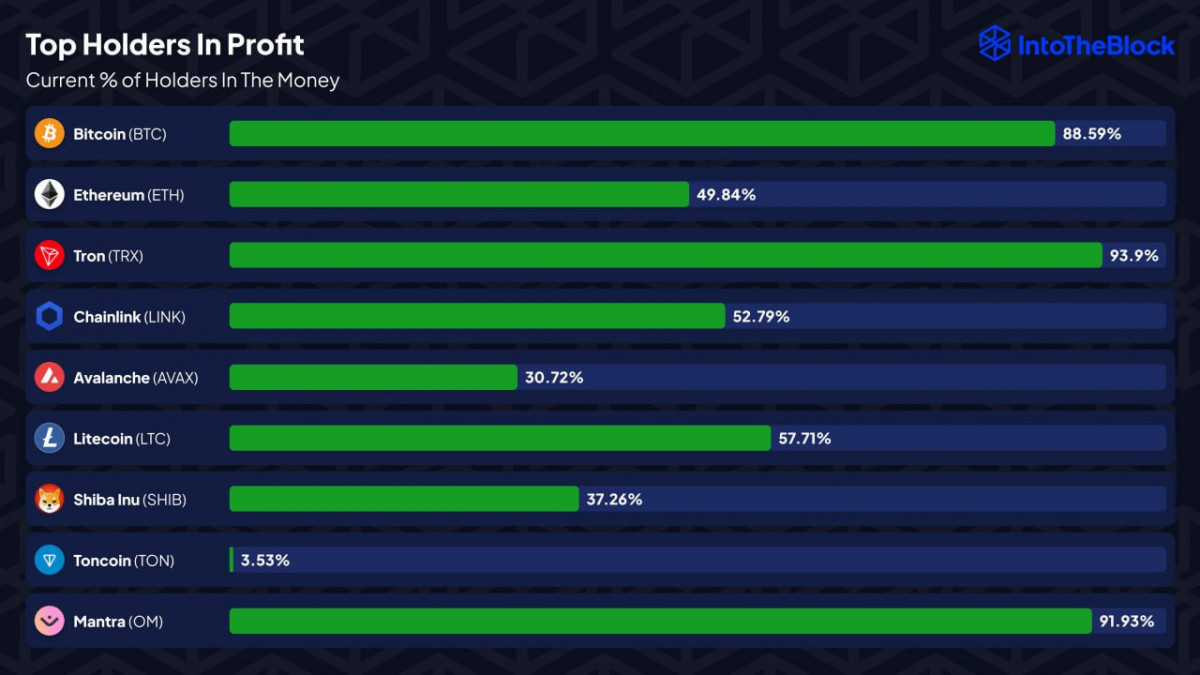
Only 3.5% of TON holders are currently in profit, making it one of the most underwater major blockchains amid ongoing market pressure.

Source: IntoTheBlock

Adding to the bearish mood, only about 3.5% of TON holders are currently in profit — making it one of the most underwater among major blockchains.

Finally, there are some long-term plays brewing, like TON Ventures’ new AI and crypto research initiative, and even Telegram adding paid DMs, which could tie back into the TON ecosystem. But right now, the chart’s telling the real story — and unless Bitcoin finds its footing soon, TON looks set to stay under pressure, even if it’s primed for a short-term bounce on any broader market relief.

Disclaimer

In line with the Trust Project guidelines, please note that the information provided on this page is not intended to be and should not be interpreted as legal, tax, investment, financial, or any other form of advice. It is important to only invest what you can afford to lose and to seek independent financial advice if you have any doubts. For further information, we suggest referring to the terms and conditions as well as the help and support pages provided by the issuer or advertiser. MetaversePost is committed to accurate, unbiased reporting, but market conditions are subject to change without notice.

About The Author


Victoria is a writer on a variety of technology topics including Web3.0, AI and cryptocurrencies. Her extensive experience allows her to write insightful articles for the wider audience.

More articles


Victoria d’Este


Victoria is a writer on a variety of technology topics including Web3.0, AI and cryptocurrencies. Her extensive experience allows her to write insightful articles for the wider audience.


Source link

The Truth About Crypto Regulations in Europe, the US, and Asia

The Truth About Crypto Regulations in Europe, the US, and Asia


In Brief

The European Union’s Markets in Crypto-Assets (MiCA) regulation aims to establish a comprehensive regulatory framework for crypto businesses, focusing on transparency, security, and anti-money laundering measures.

The Truth About Crypto Regulations in Europe, the US, and Asia

Regulatory frameworks are becoming increasingly important for ensuring transparency and security. The Markets in Crypto-Assets (MiCA) regulation, introduced by the European Union, aims to establish a clear and comprehensive regulatory framework for crypto businesses. 

In this interview, Slava Demchuk, CEO and Co-founder of AMLBot, provides valuable insights into the key obligations for companies under MiCA, how these regulations compare to those in the US and Asia, and their impact on token ownership, anti-money laundering measures, and market integrity.

What are the primary obligations for companies issuing and managing crypto assets under MiCA?

There are a few key obligations. First of all, companies issuing tokens must create and publish a white paper. While many businesses have already done this before the regulation, it is now mandatory. This white paper should clearly explain why the token is needed, how the business intends to use it, and, ideally, companies should adhere to the white paper’s original vision rather than making drastic changes.

For companies issuing stablecoins, they must comply with the e-money directive, which imposes similar rules to those followed by electronic money providers. Since stablecoins are pegged to traditional fiat currencies, issuers must provide clear, non-misleading, and transparent information about the asset, the company itself, risks, and costs.

There are also minimum budget requirements, varying between 50,000 and 150,000 euros depending on the niche and business type. Additionally, companies must implement policies to manage operational, cybersecurity, and financial risks. This includes having written policies for Know Your Customer, Know Your Transaction, and data breach procedures. 

In MiCA terminology, such companies are referred to as Crypto-Asset Service Providers. They must comply with anti-money laundering and counter-terrorist financing rules, which include customer due diligence, record keeping, and suspicious transaction reporting. Software like AMLBot can help automate these processes.

Crypto-Asset Service Providers must also prevent insider trading and unlawful disclosure of insider information. Market manipulation is strictly prohibited, meaning companies cannot manipulate the token’s price or trading volume. Some companies call this “market making,” but while providing liquidity is allowed, artificial inflation of volume or price is not. A well-known case illustrating this issue is Gotbit, where the CEO of a market-making company was arrested and is awaiting trial for alleged market manipulation.

To summarize, companies must provide clear information, avoid market manipulation, and ensure their communications with users remain transparent and non-solicitous.

How do MiCA regulations differ from existing crypto regulations in the US and Asia?

MiCA is a well-established and comprehensive regulatory framework that sets global standards for crypto services. Unlike MiCA, the US does not have a specific regulation for crypto services and often tries to fit crypto regulation within existing traditional financial laws. MiCA is proactive, while the US regulatory approach is more reactive.

In Asia, the situation is similar to the US, with regulatory frameworks appearing more fragmented. While the core principles, such as prohibiting market manipulation, remain the same across jurisdictions, the approach to regulation differs. In the US, for example, only accredited investors can invest in tokens under Rule 506, whereas in Europe, there are fewer such restrictions. The US also employs the Howey Test to determine whether a token qualifies as a security or a utility token.

Overall, the regulations are quite similar in principle, but the way they are implemented and enforced differs.

How do regulatory frameworks impact token ownership for retail and institutional investors?

Both retail and institutional investors must go through Know Your Customer procedures, where they provide documents for identity verification. In the US, only accredited investors can invest in private token sales under Rule 506. However, once a token is publicly available on a decentralized exchange, there are no restrictions on who can buy it, whether in the US or Europe.

We expect stricter regulations in the future, particularly for decentralized finance, which remains largely unregulated. Many illicit activities, such as money laundering, occur through decentralized finance platforms, and regulators are likely to address these gaps soon.

How does MiCA address anti-money laundering concerns in the crypto sector?

MiCA does not provide detailed anti-money laundering guidelines but requires companies to establish sound anti-money laundering and Know Your Customer procedures. This includes customer due diligence, document verification, transaction monitoring, and reporting suspicious activities to regulators.

A key requirement under MiCA is the “travel rule,” which mandates that sender and recipient information be shared between exchanges when transferring crypto assets. This ensures transparency and helps prevent illicit activities. Implementing the travel rule is complex, but it is now a regulatory requirement.

Companies must also provide anti-money laundering training for staff and store relevant data for several years. These measures add regulatory burdens, especially for startups, but they are necessary to counter fraud, hacks, and money laundering.

What are the biggest legal risks associated with issuing and trading digital tokens?

The biggest risk is the misclassification of tokens—whether they are utility tokens or securities. If a company misleads regulators or the market, it can face fines or more severe penalties. Another major risk is market manipulation. Companies that artificially influence token prices or trading volumes risk legal consequences. Avoiding these practices ensures compliance with regulations.

How do misleading marketing tactics in the crypto space harm investors, and what protections should be in place?

Misleading marketing can deceive investors into making poor financial decisions. There are two types of marketing approaches: active solicitation and reverse solicitation.

Active solicitation involves aggressive promotion, such as urging users to buy immediately with promises of price increases. This can lead to legal trouble. Reverse solicitation, on the other hand, provides information about the token and its use case without directly encouraging immediate purchases.

Regulators have implemented rules to protect retail investors from misleading campaigns. Companies should focus on educating users about their products rather than aggressively pushing sales.

What are the risks of using influencers and social media for crypto marketing?

Influencers can unintentionally engage in active solicitation, which could lead to legal repercussions for both them and the company they promote. If an influencer actively encourages their audience to buy a token, regulators may classify this as a violation of solicitation rules. Startups must be careful when working with influencers, ensuring that marketing efforts remain informative rather than promotional.

How can investors protect themselves from scams, rug pulls, and Ponzi schemes in the crypto market?

There is no foolproof method to avoid scams, but investors should rely on well-regulated exchanges and conduct thorough research. Tokens listed on reputable exchanges with stringent Know Your Customer procedures are less likely to be fraudulent.

On the other hand, platforms like PumpFun, which allow anyone to launch tokens without Know Your Customer or audits, have extremely high scam rates—over 90% of tokens launched there are fraudulent. Investors should verify project teams, check existing backers, and review audits before investing.

Ultimately, due diligence is the best protection against fraud in the crypto market.

Disclaimer

In line with the Trust Project guidelines, please note that the information provided on this page is not intended to be and should not be interpreted as legal, tax, investment, financial, or any other form of advice. It is important to only invest what you can afford to lose and to seek independent financial advice if you have any doubts. For further information, we suggest referring to the terms and conditions as well as the help and support pages provided by the issuer or advertiser. MetaversePost is committed to accurate, unbiased reporting, but market conditions are subject to change without notice.

About The Author


Victoria is a writer on a variety of technology topics including Web3.0, AI and cryptocurrencies. Her extensive experience allows her to write insightful articles for the wider audience.

More articles


Victoria d’Este


Victoria is a writer on a variety of technology topics including Web3.0, AI and cryptocurrencies. Her extensive experience allows her to write insightful articles for the wider audience.


Source link

Vortex Drives Web3 Innovation At Consensus Hong Kong 2025, Secures Strategic Partnerships And Leads Key Discussions On Web3 Adoption

Vortex Drives Web3 Innovation At Consensus Hong Kong 2025, Secures Strategic Partnerships And Leads Key Discussions On Web3 Adoption


In Brief

Vortex actively participated in Consensus Hong Kong, where its team played a key role in discussions on Web3 adoption, investment trends, and market-making strategies.

Vortex Drives Web3 Innovation At Consensus Hong Kong 2025, Secures Strategic Partnerships And Leads Key Discussions On Web3 Adoption

Algorithmic market maker Vortex actively participated in Consensus Hong Kong, where its team played a key role in discussions on Web3 adoption, investment trends, and market-making strategies.

On February 19th, Vortex served as the title sponsor of the “Meet the VCs” event at Consensus HK, one of the most exclusive investor gatherings at the conference. This event offered a unique opportunity to connect with influential investors in Web3, fostering in-depth discussions on capital allocation, risk management, and the evolving funding landscape for blockchain projects. During the event, Vortex’s team engaged with venture capitalists, project founders, and institutional investors, exploring innovative liquidity strategies and how Vortex is helping projects optimize their token economies.

Vortex CEO Gleb Gora Highlights Market Liquidity And AI-Driven Solutions At Web3 Adoption Panel

Vortex also sponsored the “Hack Seasons Conference,” supporting top-tier builders and Web3 innovations. Additionally, its co-founder and CEO, Gleb Gora, took the spotlight on the adoption panel at the event, joining a distinguished group of industry leaders, including Nenter Chow, Head of Portfolio Strategy and Venture Investments at Animoca Brands; Kelvin Koh, Co-founder of Spartan Group; and Maria Shen, General Partner at Electric Capital.

The panel focused on the challenges and drivers of Web3 adoption, covering topics such as institutional involvement, infrastructure development, and user experience obstacles. Gleb Gora highlighted the pivotal role of market liquidity in fostering ecosystem growth, explaining that well-structured liquidity programs can reduce volatility, improve price stability, and build trust with both retail and institutional investors.

Another key topic discussed was the increasing use of AI-driven trading and liquidity management solutions in the cryptocurrency market. Gleb Gora shared how Vortex utilizes advanced AI models to optimize trade execution, narrow spreads, and enhance market efficiency for emerging token projects.

The discussion also touched on the search for a new narrative within Web3, particularly regarding which types of projects are likely to thrive in 2025. Gleb Gora highlighted the growing significance of real-world asset (RWA) projects, pointing out their potential to connect traditional finance with blockchain technology. He noted that institutional interest in tokenized assets, on-chain securities, and blockchain-based commodities is increasing, opening up new opportunities for liquidity solutions that can bridge Web3 and traditional markets.

Vortex Secures Strategic Partnerships And Onboards New Clients 

In addition to its involvement in panels and sponsorships, Vortex successfully secured multiple strategic partnerships and onboarded several new clients during the conference, further strengthening its position in the market and expanding its service offerings. Vortex highlighted that key takeaways from these partnership discussions included the development of customized liquidity frameworks designed to meet the specific needs of projects at various stages of growth. The team is also focused on strengthening cross-exchange market-making efforts by partnering with major exchanges to improve liquidity distribution across multiple trading venues. Furthermore, Vortex addressed the evolving regulatory landscape, emphasizing the importance of incorporating best-in-class compliance measures into their liquidity solutions to mitigate risk.

Consensus Hong Kong 2025 reinforced Vortex’s commitment to driving innovation within the Web3 space through strategic market-making, active industry engagement, and the use of advanced technology. With new partnerships secured, expanded client relationships, and valuable insights gained from the event, Vortex is now better equipped to navigate the next phase of growth in the digital asset space. Looking forward, the project noted that it remains focused on providing high-impact liquidity solutions, fostering deeper industry collaborations, and continuing to educate the market on the essential role that market makers play in Web3 adoption.

Disclaimer

In line with the Trust Project guidelines, please note that the information provided on this page is not intended to be and should not be interpreted as legal, tax, investment, financial, or any other form of advice. It is important to only invest what you can afford to lose and to seek independent financial advice if you have any doubts. For further information, we suggest referring to the terms and conditions as well as the help and support pages provided by the issuer or advertiser. MetaversePost is committed to accurate, unbiased reporting, but market conditions are subject to change without notice.

About The Author


Alisa, a dedicated journalist at the MPost, specializes in cryptocurrency, zero-knowledge proofs, investments, and the expansive realm of Web3. With a keen eye for emerging trends and technologies, she delivers comprehensive coverage to inform and engage readers in the ever-evolving landscape of digital finance.

More articles


Alisa Davidson


Alisa, a dedicated journalist at the MPost, specializes in cryptocurrency, zero-knowledge proofs, investments, and the expansive realm of Web3. With a keen eye for emerging trends and technologies, she delivers comprehensive coverage to inform and engage readers in the ever-evolving landscape of digital finance.


More articles


Source link

Sudowrite Introduces Muse: An AI Model For Fiction Writing With Advanced Storytelling And Chapter-Length Focus

Sudowrite Introduces Muse: An AI Model For Fiction Writing With Advanced Storytelling And Chapter-Length Focus


In Brief

Sudowrite has introduced Muse, a new AI model trained for fiction writing, featuring advanced storytelling capabilities and extended attention for chapter-length outputs.

Sudowrite Introduces Muse: An AI Model For Fiction Writing Developed With Insights From Over 20,000 Authors

Company developing generative AI tools for writers, Sudowrite announced that it has introduced Muse, a new AI model specifically designed for fiction writing. 

By focusing exclusively on fiction, Muse achieves a higher level of quality compared to more generalized models. It generates unique prose each time, with Sudowrite actively measuring and removing AI clichés during its training to ensure fresh, original output. Furthermore, Muse operates without filters, embracing the full spectrum of human experience, including complex and mature themes like violence and adult content. 

The opening line of a story is crucial, and Muse is specifically designed to craft powerful, attention-grabbing beginnings. With a focus on creating high-quality fiction, Muse is tailored to write engaging narratives rather than content such as emails, sales copy, or meeting memos. It is also capable of handling longer, more detailed outputs, making it ideal for writing entire chapters, rather than just short snippets. The new AI model is trained to maintain the flow and engagement over larger sections of text, ensuring that the story continues to captivate readers throughout.

Muse is available in multiple modes, including Draft, Write, and Expand, and also powers the Synopsis feature in the Story Bible. Currently optimized for the English language, Muse can generate text in other languages but may require additional prompting to do so consistently. 

In the Draft mode, Muse can write up to approximately 10,000 words at a time and can read up to 128,000 words in the document. In the Write mode, it functions similarly to other writing models.

What Is Sudowrite? 

Sudowrite is an AI-powered writing assistant created specifically for fiction writers. It offers a variety of features, including brainstorming tools, story outlining, and manuscript editing, all designed to enhance creativity and productivity. 

The platform leverages multiple AI models, including the latest Claude models by Anthropic, various open-source models, in-house models, and several variants of GPT-4, which are transformer models developed by OpenAI.  Importantly, Sudowrite is designed to avoid plagiarism unless explicitly instructed to do so by the user. The AI generates text by predicting one word at a time based on general concepts it has learned from numerous text samples. This approach makes it highly unlikely for the AI to produce identical or verbatim content. 

Disclaimer

In line with the Trust Project guidelines, please note that the information provided on this page is not intended to be and should not be interpreted as legal, tax, investment, financial, or any other form of advice. It is important to only invest what you can afford to lose and to seek independent financial advice if you have any doubts. For further information, we suggest referring to the terms and conditions as well as the help and support pages provided by the issuer or advertiser. MetaversePost is committed to accurate, unbiased reporting, but market conditions are subject to change without notice.

About The Author


Alisa, a dedicated journalist at the MPost, specializes in cryptocurrency, zero-knowledge proofs, investments, and the expansive realm of Web3. With a keen eye for emerging trends and technologies, she delivers comprehensive coverage to inform and engage readers in the ever-evolving landscape of digital finance.

More articles


Alisa Davidson


Alisa, a dedicated journalist at the MPost, specializes in cryptocurrency, zero-knowledge proofs, investments, and the expansive realm of Web3. With a keen eye for emerging trends and technologies, she delivers comprehensive coverage to inform and engage readers in the ever-evolving landscape of digital finance.


More articles


Source link

Leading Women Driving Innovation in Web3 and Crypto

Leading Women Driving Innovation in Web3 and Crypto


In Brief

The crypto and blockchain industries are attracting influential women, promoting diversity and advancement in technology.

Leading Women Driving Innovation in Web3 and Crypto

The crypto and blockchain industries have witnessed a huge increase in the number of powerful women determining their futures. These women provide different viewpoints, promote diversity, and contribute to the advancement of blockchain technology. Here, we showcase some of the most influential women in cryptocurrency and the whole Web3 industry.

Meltem is the Chief Strategy Officer at CoinShares, a top digital asset management organization. She has played a key role in the crypto business since joining in 2015. Demirors began her career in corporate finance, working for companies such as Dow Chemical and ExxonMobil before moving into the cryptocurrency industry.

Her introduction to cryptocurrency began with research on Bitcoin, which led her to join the Digital Currency Group in 2015. She then joined CoinShares in 2018, where she focuses on crypto-related startups and infrastructure, including Blockdaemon and Messari.

Demirors is known for her strategic approach to cryptocurrency investing, which prioritizes subject expertise and sustainable company ideas. Insider called her one of the top female seed investors, and Fortune included her on its “The Ledger 40 Under 40” list.

She continues to shape the industry through her role at CoinShares and as the Director of the Oxford Blockchain Strategy Programme. She recently announced the formation of her own venture business, Crucible Capital, with the goal of raising funds for cryptocurrency investments.

Mattie began her career with an English degree from Rice University, working as a writer before moving into community management. She immediately established herself in the gaming sector, organizing esports tournaments and building gaming communities for firms such as TinyCo.

Her love for gaming and community development prompted her to co-found Wavedash Games, where she helped raise $10 million. This experience paved the way for her future endeavors in the gaming and web3 sectors. Mattie went on to hold leadership positions in cryptocurrency, first as the Head of Dev Ops at Optimism and then as the head of marketing at Manticore. This was a significant turn in her career, extending her engagement in the Web3 ecosystem.

Mattie is now the Head of the Founder’s Community at Polygon, where she leads projects to foster a robust network of builders on Polygon and the Agglayer. Through her efforts, she continues to define and develop the Web3 ecosystem.

Women in cryptocurrency are breaking down barriers while simultaneously fueling innovation and uptake. From Meltem Demirors’ strategic investments to Mattie Fairchild’s community-building initiatives in Web3, these women are influencing the future of finance and technology. Their efforts highlight the value of diversity and inclusion in the blockchain sector, paving the path for a more equal and dynamic financial environment.

Caitlin is the CEO of Custodia Bank, a pioneering organization that combines digital and conventional finance. Long, who formerly worked on Wall Street, has been a prominent force in pushing digital asset custody and banking services. Her background in traditional banking has given her unique insights into how blockchain technology may be incorporated into current financial institutions, establishing her as a recognized voice in the cryptocurrency community.

Long’s leadership at Custodia Bank has been focused on creating safe and compliant digital asset solutions. Her efforts have been critical in bridging the gap between traditional banking and crypto, opening the path for further use of digital assets. Long’s advocacy for clear regulations and robust infrastructure has positioned her as a thought leader in the intersection of finance and blockchain.

Elizabeth Stark is the co-founder and CEO of Lightning Labs, a business that is leading the development of the Lightning Network for Bitcoin. This method enables rapid and low-cost transactions, dramatically increasing Bitcoin’s scalability. Stark is an outspoken champion of blockchain technology’s privacy, security, and scalability. Her work at Lightning Labs has helped to drive the adoption of Lightning Network solutions, making her a prominent player in the crypto field.

Stark’s influence extends beyond technology; she is a CoinCenter fellow and Chia advisor who contributes to blockchain policy and development. Her dedication to promoting blockchain technology has earned her a renowned position in the industry. Stark’s leadership in developing innovative solutions for Bitcoin has been crucial in shaping the future of cryptocurrency and blockchain.

Perianne is the founder and president of the Chamber of Digital Commerce, a notable trade association that represents the blockchain business. She is a prominent figure in blockchain advocacy and policy initiatives, working to educate policymakers and support responsible blockchain innovation. Boring’s efforts have been essential in creating a favorable regulatory framework for blockchain technology, which is critical for its broad adoption.

Boring’s advocacy extends beyond politics, emphasizing the value of diversity and inclusiveness in the blockchain ecosystem. Her work at the Chamber of Digital Commerce has helped to establish a forum for women and other underrepresented groups to contribute to the advancement of blockchain technology. This inclusive strategy has filled the sector with varied viewpoints, resulting in increased innovation and creativity.

Laura is an investigative journalist and podcast host best recognized for her in-depth coverage of blockchain developments. She reports on industry trends and key events, offering her audience with unique insights. Shin’s podcast, “Unconfirmed,” has become a go-to source for in-depth interviews with prominent individuals in the crypto field, providing unique insights into the industry’s progress.

Shin’s work as a journalist has helped to educate the public about blockchain technology and cryptocurrencies. Her ability to simplify complicated topics has helped demystify the cryptocurrency world, making it more accessible to novices. Shin’s dedication to investigative journalism has also shone a light on serious worries in the business, promoting openness and accountability.

Kathleen co-founded Tezos, a pioneering blockchain technology that enables smart contract implementation and peer-to-peer transactions. Tezos, founded in 2016 by her husband, Arthur Breitman, has gained popularity for its on-chain governance design, which allows stakeholders to propose and vote on protocol changes.

This self-amending function assures the network’s flexibility and endurance without requiring hard forks. Breitman’s leadership has been critical in guiding Tezos through its initial coin offering and subsequent advancements, firmly establishing its position in the blockchain ecosystem. 

Cynthia Lummis, a United States Senator from Wyoming, has emerged as an active advocate for crypto in the political arena. She has been an avid Bitcoin investor since 2013 and has openly announced her ownership, becoming one of the first senators in the United States to do so.

Lummis is devoted to creating a regulatory framework that encourages innovation while protecting consumers. Her initiatives include co-authoring legislation to create anti-money laundering regulations for the digital asset market, which demonstrates her dedication to responsibly integrating cryptocurrencies into the traditional banking system. 

Marta is a distinguished technology attorney specializing in blockchain and digital currency law. As General Counsel at Protocol Labs and President and Chair of the Filecoin Foundation, she plays a pivotal role in advocating for decentralized technologies. 

Belcher has testified before regulatory bodies globally, including the New York State Senate and the European Parliament, providing insights on blockchain’s legal implications. Her work emphasizes balancing innovation with privacy and civil liberties, positioning her as a leading voice in the intersection of law and emerging technologies.

Tavonia is the founder of Guapcoin, a cryptocurrency created to promote financial empowerment and inclusion within the African diaspora. Launched in 2017, Guapcoin aims to address economic disparities by providing a decentralized digital currency that supports Black-owned businesses and initiatives. 

Evans’ background in technology and her commitment to community development have been instrumental in driving Guapcoin’s mission to close the wealth gap and educate underrepresented communities about cryptocurrency and blockchain technology.

Disclaimer

In line with the Trust Project guidelines, please note that the information provided on this page is not intended to be and should not be interpreted as legal, tax, investment, financial, or any other form of advice. It is important to only invest what you can afford to lose and to seek independent financial advice if you have any doubts. For further information, we suggest referring to the terms and conditions as well as the help and support pages provided by the issuer or advertiser. MetaversePost is committed to accurate, unbiased reporting, but market conditions are subject to change without notice.

About The Author


Victoria is a writer on a variety of technology topics including Web3.0, AI and cryptocurrencies. Her extensive experience allows her to write insightful articles for the wider audience.

More articles


Victoria d’Este


Victoria is a writer on a variety of technology topics including Web3.0, AI and cryptocurrencies. Her extensive experience allows her to write insightful articles for the wider audience.


Source link

Bitcoin’s Wild Ride: Tariffs, Hacks, And $1T Market Shake

Bitcoin’s Wild Ride: Tariffs, Hacks, And T Market Shake


In Brief

Bitcoin fell below $80,000 and recovered to $90,000 as a $1 trillion crypto sell-off raised concerns of further declines and a potential market collapse.

Bitcoin's Wild Ride: Tariffs, Hacks, And $1T Market Shake

Bitcoin has tumbled below $80,000, clawing its way back to $90,000 as a brutal crypto sell-off wipes out a staggering $1 trillion from the global market — sparking fears that the worst may still be ahead.

The steep slide—a 25% plunge from Bitcoin’s record high of nearly $110,000—has rattled even seasoned investors, with insiders sounding the alarm over suspected “price suppression” tactics.

With analysts urging traders to resist the temptation to “buy the dip,” the focus has shifted to uncovering the root causes of this crypto bloodbath — and whether this correction could spiral into a catastrophic, full-scale market meltdown.

What Went Wrong?

Announcing a sweeping 25% tariff on imports from Mexico and Canada, set to start on Tuesday, President Trump stunned world markets. The unexpected decision quickly turned investor focus from high-risk assets like cryptocurrency onto the wider economic effects of rising trade conflicts.

Along with a dramatic decline in U.S. equities from recent record highs, analysts mostly blamed Trump’s growing trade war for the abrupt crypto market sell-off.

Agne Linge, head of growth at decentralized on-chain bank WeFi, noted that the Crypto Fear & Greed Index had slumped to just 21, its lowest reading since September—reflecting mounting anxiety among traders. 

The timing of the tariffs only added fuel to existing economic concerns. After months of cooling inflation, the sudden threat of higher import costs raised fears that consumer prices could surge again. 

In response, many investors began to anticipate that the Federal Reserve might hold interest rates steady at 4.5%—or even consider raising them—to help rein in any inflationary spikes caused by trade policy shifts.

Meanwhile, James Toledano, chief operating officer of crypto wallet Unity Wallet, observed that many in the crypto industry felt deeply disappointed by Trump’s latest moves.

Experts Alarmed by the Downfall

Ruslan Lienkha, chief of markets at bitcoin and crypto platform YouHodler, pointed to technical analysis that identified the $70,000 level as bitcoin’s “next key support zone.” However, Lienkha stressed that Bitcoin would likely only test that level if negative sentiment continued to dominate the equity markets. 

Although the U.S. stock had already shown many consecutive losing sessions, he advised that it was still too early to say if the more general rise had completely reversed, implying that the current deficits may just be the result of a regular market adjustment.

Markus Thielen, founder of 10x Research, echoed similar concerns, noting that bitcoin’s current price action closely followed an ascending broadening wedge pattern. This formation typically signals a potential target price in the low $70,000 range.

Bybit Hack Piling On

The broader market instability was further amplified by a $1.5 billion hack targeting Bybit, one of the largest cryptocurrency exchanges. The attack, now considered one of the biggest crypto heists in history, rattled already uneasy investors who were also contending with renewed fears over inflation and the Federal Reserve’s recent decision to pause interest rate cuts.

Jeff Mei, chief operating officer at BTSE, explained that the Bybit breach had triggered heightened volatility across the market. Macroeconomic factors including continuous inflation and uncertainties about U.S. monetary policy had also affected investor mood and helped to explain the larger market decline, he said.

Trump’s Policies: A Silver Lining?

Some crypto investors are still optimistic despite the continuous slump as they see possible legislative changes under the Trump government. 

Not so long ago, the president issued an executive order establishing a national crypto reserve and encouraging innovation in cryptocurrencies inside the United States. 

To provide a clearer legislative framework for digital assets, his government has also established specialized task teams including the designation of a “crypto czar.”

Geoffrey Kendrick, head of digital assets research at Standard Chartered, suggested in comments to CNBC’s Squawk Box Europe that Bitcoin could still surpass $200,000 before the year’send of the year. He attributed this potential upside to rising institutional adoption and the expected regulatory clarity that could follow from the administration’s evolving crypto policies.

Crypto Reserve to the Rescue?

On Sunday, President Donald Trump revealed plans for the U.S. government to establish a national strategic crypto reserve that includes five key cryptocurrencies. Trump reiterated his ambition to position the U.S. as the “crypto capital of the world.”

On Truth Social, Trump explained that an expert panel is moving forward with plans to create the reserve—a commitment he made to crypto industry advocates during his election campaign.

Initially, Trump listed XRP, Cardano, and Solana as part of the planned national crypto stockpile. However, about an hour later, he followed up with a separate post clarifying that Bitcoin (BTC) and Ethereum (ETH) would also play central roles within the reserve, given their dominance in market value.

Markets reacted positively to the announcement, with Cardano soaring nearly 60% — jumping from $0.64 to $1.13 before settling back to around $0.99 by Wednesday. Solana saw a bump from approximately $141 to $178, while XRP surged roughly 20%, climbing from $2.23 to $2.96, currently sitting at $2.48.

At the same time, Bitcoin reached $94,000, up from around $86,000, before settling just around $90,000.

Is an All-Time High Possible in 2025?

Legendary trader Peter Brandt recently expressed his opinion on the present situation of bitcoin and stock markets on social media, noting that the extraordinary volatility over the previous week provided enormous profit opportunities and great risks for traders.

His remarks highlight a basic fact of trade: great volatility may either be a trap or a gold mine. Strong risk management and long-term planning are even more important as some traders profited on the erratic market fluctuations while others suffered large losses.

Meanwhile, an analyst at CryptoQuant, Axel Adler explained that for Bitcoin to return to its all-time high, the market needs to see a significant bullish push. This would require breaking above the Short-Term Holder (STH) Cost Basis level, estimated around $90,000 to $91,000, and holding above that level to rebuild investor confidence.

With that in mind, traders may need to exercise patience, as Bitcoin could enter a prolonged sideways trading phase over the next two to three months — a pattern that has played out in past market cycles.

Disclaimer

In line with the Trust Project guidelines, please note that the information provided on this page is not intended to be and should not be interpreted as legal, tax, investment, financial, or any other form of advice. It is important to only invest what you can afford to lose and to seek independent financial advice if you have any doubts. For further information, we suggest referring to the terms and conditions as well as the help and support pages provided by the issuer or advertiser. MetaversePost is committed to accurate, unbiased reporting, but market conditions are subject to change without notice.

About The Author


Alisa, a dedicated journalist at the MPost, specializes in cryptocurrency, zero-knowledge proofs, investments, and the expansive realm of Web3. With a keen eye for emerging trends and technologies, she delivers comprehensive coverage to inform and engage readers in the ever-evolving landscape of digital finance.

More articles


Alisa Davidson


Alisa, a dedicated journalist at the MPost, specializes in cryptocurrency, zero-knowledge proofs, investments, and the expansive realm of Web3. With a keen eye for emerging trends and technologies, she delivers comprehensive coverage to inform and engage readers in the ever-evolving landscape of digital finance.


More articles


Source link

Unichain Launches Validation Network To Advance Decentralization And Enable Faster Finality

Unichain Launches Validation Network To Advance Decentralization And Enable Faster Finality


In Brief

Unichain plans to launch the Unichain Validation Network, which will further decentralize the platform by allowing anyone to run a node and verify blocks.

Unichain Launches Validation Network To Advance Decentralization And Enable Faster Finality

Ethereum Layer 2 network Unichain announced its plans to introduce the Unichain Validation Network (UVN), which will further decentralize the platform by enabling anyone to run a node and verify blocks. This addition is aimed at improving the network’s finality and reducing the chances of conflicting blocks. 

The UVN will consist of full nodes that will validate the blocks posted by the sequencer to the mainnet. Validators running these nodes, along with their stakers, will be compensated for their efforts, with 65% of Unichain’s net chain revenue being allocated to them in return for securing the network. 

The first version of the UVN will be tested on the Unichain Experimental testnet in the coming months to assess its stability and performance. After the testing phase, the UVN will be officially launched, and validators and stakers will start earning 65% of the network’s net chain revenue. During this development phase, while the validator network is still being built and tested, the Unichain Foundation (UF) will direct the chain revenue to the Unichain Growth Reserve. These funds will be used to support Unichain’s growth efforts, including accelerating developer engagement and subsidizing on-chain activities.

What Is Unichain?

Unichain is a Layer 2 scaling solution built for Ethereum, developed by Uniswap Labs, with the goal of improving decentralized finance (DeFi) applications by enabling faster and more affordable transactions.

Leveraging Optimism’s OP Stack, Unichain aims to reduce transaction costs by around 95% in comparison to Ethereum’s Layer 1 network. In addition, it supports cross-chain liquidity, making it suitable for various applications in sectors like gaming, finance, and entertainment.

Since the launch of the Unichain testnet, the network has processed 94 million test transactions and deployed over 13.3 million test contracts.

Disclaimer

In line with the Trust Project guidelines, please note that the information provided on this page is not intended to be and should not be interpreted as legal, tax, investment, financial, or any other form of advice. It is important to only invest what you can afford to lose and to seek independent financial advice if you have any doubts. For further information, we suggest referring to the terms and conditions as well as the help and support pages provided by the issuer or advertiser. MetaversePost is committed to accurate, unbiased reporting, but market conditions are subject to change without notice.

About The Author


Alisa, a dedicated journalist at the MPost, specializes in cryptocurrency, zero-knowledge proofs, investments, and the expansive realm of Web3. With a keen eye for emerging trends and technologies, she delivers comprehensive coverage to inform and engage readers in the ever-evolving landscape of digital finance.

More articles


Alisa Davidson


Alisa, a dedicated journalist at the MPost, specializes in cryptocurrency, zero-knowledge proofs, investments, and the expansive realm of Web3. With a keen eye for emerging trends and technologies, she delivers comprehensive coverage to inform and engage readers in the ever-evolving landscape of digital finance.


More articles


Source link

XRP News: Xrpturbo Presale Hits Major Milestone As XRP Whales Accumulate $XRT Tokens Amid Bullish Market Momentum

XRP News: Xrpturbo Presale Hits Major Milestone As XRP Whales Accumulate $XRT Tokens Amid Bullish Market Momentum


In Brief

The XRP market has experienced a strong resurgence, with whales accumulating 1.34 billion XRP tokens valued at $3.26 billion, signaling renewed strength and potential for growth, while the XRPTurbo presale on the XRP Ledger also gains investor attention.

XRP News: Xrpturbo Presale Hits Major Milestone As XRP Whales Accumulate $XRT Tokens Amid Bullish Market Momentum

Screenshot

The XRP market has witnessed an incredible resurgence as major investors, known as whales, rapidly accumulate XRP holdings. Over the past week alone, whale wallets collectively added a staggering 1.34 billion XRP tokens, valued at more than $3.26 billion.

Despite recent volatility that saw XRP briefly dip by 18%, the cryptocurrency quickly stabilized around $2.45, confidently maintaining its crucial support level at $2.33.

Technical analysis now signals a bullish divergence, highlighting renewed strength and potential upside for XRP.

This bullish momentum is perfectly timed as XRPTurbo, an innovative AI-driven launchpad on the XRP Ledger, hits a significant presale milestone.

The XRPTurbo presale has rapidly captured investor attention, with its 50,000 XRP soft cap already filled in just days, underscoring strong investor confidence.

[Join Xrpturbo Presale]

Why XRPTurbo is Attracting XRP Bulls & Whales

XRPTurbo offers a unique value proposition by merging advanced artificial intelligence technology with XRP’s renowned speed, scalability, and low transaction costs.

Built directly on the XRP Ledger, XRPTurbo provides an innovative platform allowing users to deploy AI agents for automated trading strategies, sophisticated market analytics, smart contract execution, and even real-time asset management.

The XRPTurbo ecosystem revolves around its utility token, $XRT, which powers platform operations and offers substantial incentives to early adopters and long-term holders.

With a total capped supply of just 100 million tokens—60 million (60%) of which are exclusively reserved for presale participants—$XRT provides holders with priority access to high-potential AI and real-world asset (RWA) projects.

Exclusive Benefits of the $XRT Token:

Priority Access: Early investment opportunities in groundbreaking AI and RWA projects.

Staking Rewards: Passive income generation through staking $XRT tokens.

Revenue Sharing: A future-focused earning model where holders share in platform-generated fees.

Following the presale, XRPTurbo will list $XRT tokens on leading decentralized exchanges at an initial price 25% higher than the presale rate, providing immediate upside potential for early buyers.

Real-Time Dashboard for Transparent Allocation

XRPTurbo recently announced the launch of its dashboard, now live at portal.xrpturbo.com.

This intuitive interface allows XRP presale contributors to monitor their $XRT token allocation dynamically.

Unlike typical presales, XRPTurbo’s final token distribution depends on the total XRP contributed, ensuring absolute transparency and fairness.

How to Secure Your $XRT Tokens Today:

Acquire XRP: Buy XRP tokens from trusted exchanges such as Binance, Coinbase, or Bybit.

Wallet Setup: Transfer your XRP tokens to a compatible non-custodial wallet (such as Xaman, Trust Wallet, or Ledger).

Join the Presale: Navigate to the XRPTurbo presale page, copy the provided deposit address, and send your XRP to secure your $XRT allocation.

Important Reminder: Always transfer XRP from your non-custodial wallet—not directly from exchanges—to ensure successful token distribution.

[BUY XRT Tokens]

Don’t Miss This Limited Presale Opportunity

With the XRPTurbo presale rapidly approaching full hardcap allocation, market analysts predict that the 300,000 XRP hardcap may be reached sooner than anticipated.

XRP enthusiasts and investors are encouraged to seize this rare opportunity to participate in what could become the leading AI-powered launchpad on the XRP Ledger.

Join XRPTurbo’s rapidly expanding community today—over 12,000 strong in less than a week—and position yourself at the forefront of the next evolution in XRP-based decentralized finance.

Visit XRPTurbo.com, join the Telegram community, and follow on X (Twitter) for real-time updates and developments.

Disclaimer

In line with the Trust Project guidelines, please note that the information provided on this page is not intended to be and should not be interpreted as legal, tax, investment, financial, or any other form of advice. It is important to only invest what you can afford to lose and to seek independent financial advice if you have any doubts. For further information, we suggest referring to the terms and conditions as well as the help and support pages provided by the issuer or advertiser. MetaversePost is committed to accurate, unbiased reporting, but market conditions are subject to change without notice.

About The Author


Gregory, a digital nomad hailing from Poland, is not only a financial analyst but also a valuable contributor to various online magazines. With a wealth of experience in the financial industry, his insights and expertise have earned him recognition in numerous publications. Utilising his spare time effectively, Gregory is currently dedicated to writing a book about cryptocurrency and blockchain.
More articles


Gregory, a digital nomad hailing from Poland, is not only a financial analyst but also a valuable contributor to various online magazines. With a wealth of experience in the financial industry, his insights and expertise have earned him recognition in numerous publications. Utilising his spare time effectively, Gregory is currently dedicated to writing a book about cryptocurrency and blockchain.


Source link

Soneium Unveils Ecosystem Badges To Recognize Active Users Engaging With Network’s Apps

Soneium Unveils Ecosystem Badges To Recognize Active Users Engaging With Network’s Apps


In Brief

Soneium has introduced ecosystem badges designed to recognize users who actively engage with various dApps within the network.

Soneium Unveils Ecosystem Badges To Recognize Active Users Engaging With Network’s Apps

Ethereum Layer 2 network, Soneium introduced ecosystem badges, enabling projects within its ecosystem to provide a new way for users to demonstrate their involvement with decentralized applications (dApps) powered by Soneium. 

The Soneium Ecosystem Badge is a Soulbound Badge, designed to recognize users who actively engage with various dApps within the network. This initiative is community-driven, with each project defining its own participation criteria. Soneium is committed to supporting this effort by ensuring projects have the necessary tools to make the experience seamless and rewarding for users. 

According to the announcement, the snapshot date to identify eligible users is set for April 1st at UTC 0 AM, with all badges scheduled to be distributed by April 15th. Projects will have the flexibility to determine their own badge drop dates. 

A wide variety of projects, spanning decentralized finance (DeFi), non-fungible tokens (NFTs), gaming, and social applications, have joined the initiative to offer ecosystem badges. Confirmed participants include WaveX, 2P2E, Arcas Games, Arkada, Biru, Evermoon, Fractal Visions, HandsNFT, Kyo Finance, Mithraeum, Posse Studios, Quickswap, Sake Finance, SoneFi, SoneX, Sonova, Sonus Exchange, SuperVol, Synstation, Unemeta, and Untitled Bank. Each project will offer its own unique badges to acknowledge and reward user engagement within the Soneium network.

How Users Can Earn Ecosystem Badge

In order to earn a Soneium Ecosystem Badge, users must engage with participating dApps between March 7th and March 31st, and ensure they meet the eligibility criteria set by each participating project. Users should monitor the projects’ social media channels for updates regarding badge distribution. The badges will be distributed by each project no later than April 15th.

Soneium is a blockchain platform created by Sony Block Solutions Labs, a collaboration between Sony Group and Startale Labs. Powered by Optimism’s Superchain technology, Soneium aims to improve scalability and efficiency within the Ethereum ecosystem. By utilizing the OP Stack from the Optimism Foundation, Soneium provides a scalable, EVM-compatible, and developer-friendly environment. 

The platform is designed to support a wide variety of applications, including those in gaming, finance, and entertainment, demonstrating Sony’s ongoing commitment to integrating blockchain technology across different sectors.

Disclaimer

In line with the Trust Project guidelines, please note that the information provided on this page is not intended to be and should not be interpreted as legal, tax, investment, financial, or any other form of advice. It is important to only invest what you can afford to lose and to seek independent financial advice if you have any doubts. For further information, we suggest referring to the terms and conditions as well as the help and support pages provided by the issuer or advertiser. MetaversePost is committed to accurate, unbiased reporting, but market conditions are subject to change without notice.

About The Author


Alisa, a dedicated journalist at the MPost, specializes in cryptocurrency, zero-knowledge proofs, investments, and the expansive realm of Web3. With a keen eye for emerging trends and technologies, she delivers comprehensive coverage to inform and engage readers in the ever-evolving landscape of digital finance.

More articles


Alisa Davidson


Alisa, a dedicated journalist at the MPost, specializes in cryptocurrency, zero-knowledge proofs, investments, and the expansive realm of Web3. With a keen eye for emerging trends and technologies, she delivers comprehensive coverage to inform and engage readers in the ever-evolving landscape of digital finance.


More articles


Source link

Popular Posts

My Favorites