Metaverse

Home Metaverse Page 168

We Asked AI: Where Will Bitcoin’s Price Go? (Year Year Forecast)

We Asked AI: Where Will Bitcoin’s Price Go? (Year Year Forecast)


Ready for a time‑travelling ride? We asked an AI model trained on historical prices, technical analysis signals and macro trends to imagine Bitcoin’s path from 2025 to 2040. Strap in 🚀—and don’t forget the ⚠️ risk warnings at the end!

🤖 How the Model Thinks

Data Fuel: 2013‑2025 spot prices, hash‑rate, ETF flows, M2 money supply, interest rates.

Engine: Multivariate LSTM blended with bull/bear regime filters.

Outputs: Three tracks—Base, Bull, Bear—merged into the ranges below.

📈 Quick‑Look Chart

(See the live chart above for a visual of Min, Mid and Max projections.)

🗓️ Year‑by‑Year Price Roadmap

YearHeadline CatalystPrice Range (USD)2025Spot‑ETF’s first full year, US election jitters$120 k – $180 k2026Clear G20 regulation, S&P 500 correlation$140 k – $220 k2027Slower corporate balance‑sheet adoption$130 k – $250 k2028Halving #5 cuts supply to 3.125 BTC$280 k – $435 k2029Lightning payments explode, “Sats economy”$300 k – $500 k2030AI‑IoT micro‑transactions, green mining$350 k – $600 k2031Mini‑recession, “digital‑gold” demand spike$330 k – $550 k2032Halving #6, ETF volumes hit records$500 k – $700 k2033Digital‑dollar pilot, OTC market boom$550 k – $800 k2034CBDC vs. BTC tug‑of‑war$500 k – $900 k2035Derivatives fully mature$600 k – $950 k2036Halving #7 drops reward below 1 BTC$800 k – $1.1 M2037Quantum‑safe wallet migration$750 k – $1.2 M2038New supply < 0.5 % — “super‑scarcity”$800 k – $1.3 M2039Cycle top meets risk‑off flows$700 k – $1.25 M204021 M limit on the horizon$900 k – $1.5 M

🚀 Story‑Mode Snapshots

Concept of Crypto-currency. Rocket flying to the moon with bitcoin icon. Crypto currency hype vector illustration.

Moonshot Bull: Post‑2028, pension funds dive in; a single Bitcoin buys a Manhattan studio.

Crypto Winter: 2031 crackdown sends prices back to $250 k before rebounding.

Quantum Scare: 2037 signature panic—patch applied, hodlers breathe again.

⚠️ Smart‑Investor Reminders

Volatility: Even inside a long‑term uptrend, 60‑80 % draw‑downs happen.

Speculation: These numbers are probability bands, not guarantees.

Risk Control: Size positions so a wipe‑out won’t wreck your life.

Regulation: Tax laws change; stay compliant where you live.

Diversify: Never bet the farm on a single asset—yes, even Bitcoin.

🎯 Bottom Line

Artificial intelligence sketches a path where BTC may flirt with seven‑figure prices by 2040, yet the road is bumpy and full of plot twists. If you join the marathon, keep your research deep, your stops tight, and your mindset zen. Good luck, and may your portfolio stay in the green

You Might Also Like;

Follow us on TWITTER (X) and be instantly informed about the latest developments…

Copy URL


Source link

April’s NFT Bloodbath: Sales Plunge Over 39% as the Market Stalls – Metaverseplanet

April’s NFT Bloodbath: Sales Plunge Over 39% as the Market Stalls – Metaverseplanet


April brought modest gains to the broader crypto economy, but data reveals a continued downturn in NFT sales, which fell 39.62% over the last 30 days. Ethereum maintained its position as the leading blockchain for NFT trading volume, yet its figures dropped 44.86% month-over-month.

NFT Sector Takes Major Hit: Ethereum, Polygon, and Bitcoin Suffer Steep Declines

Throughout April, total NFT sales reached $388.77 million, marking a 39.62% decline from March. Statistics from cryptoslam.io show both ends of the market saw sharp drops: buyers down 48.46% and sellers down 39.05%.

Activity volume also plunged; total NFT transactions decreased by 54.12% month-on-month. Ethereum, Polygon, and Bitcoin comprised the top three blockchains by NFT sales volume. Ethereum-based NFT sales totaled $108.19 million, down 44.86% versus the prior 30 days. Polygon ranked second with $73.84 million, a 42.4% drop from March.

Meanwhile, Bitcoin NFTs slid to $62.45 million, a 27.25% decrease. Flow secured eighth place with $5.94 million in volume—an increase of 14.9% over the same period.

Leading Collections and Record Sales

The month’s top-performing collection was Courtyard on Polygon, generating $66.42 million in sales (+20.9%). Polkadot’s Mythos-powered Dmarket claimed second place with $39.72 million, while Ethereum’s Cryptopunks took third at $18.22 million in April.

The priciest individual sale was Cryptopunk #3100, which fetched $6.04 million. In second place was an Uncategorized Ordinal sold eight days ago for $558,755, and third was a locked gUSDC deposit NFT traded on Arbitrum roughly three weeks ago for about $500,000.

The NFT sector is unrecognizable compared to its peak, and 2025 has yet to deliver much relief from these blows.

You Might Also Like;

Follow us on TWITTER (X) and be instantly informed about the latest developments…

Copy URL


Source link

The tap-to-earn era is over: a new phase in Web3 games – Metaverseplanet.net

The tap-to-earn era is over: a new phase in Web3 games – Metaverseplanet.net


Telegram-based Web3 games are leaving the unsustainable tap-to-earn model behind and evolving into social, fun, and interactive experiences. Notcoin, one of 2024’s most prominent Web3 gaming projects, has declared that the tap-to-earn genre has “probably died” as Web3 games shift toward more engaging formats.

During Dubai’s Token2049 event, Notcoin co-founders Sasha and Vladimir Plotvinov, alongside NotGames’ Head of Design and Product Uliana Salo, spoke with Metaverseplanet about the state of Telegram-based Web3 games. Vladimir explained that developers are exploring new genres because tap-to-earn players quickly lose interest.

“You’ll see different types of games because tap-to-earn games have probably died; they’re not sustainable,” he said.

In 2024, Notcoin became one of Telegram’s most popular tap-to-earn titles, attracting over 30 million users within three months of launch. In a previous interview, Sasha attributed this growth to the game’s ability to “solve” the challenge of onboarding Telegram users into crypto.

As Telegram games boomed in 2024, players would “farm” tokens in one project and then move on to the next. Sasha told Metaverseplanet:

“Users who come just to farm tokens are motivated only by earning. But in games, it’s more about having fun, playing with friends, and being part of a group.”

She noted that the first wave of Telegram games lacked this social element, though she believes Web3 still has a vital role in the platform’s gaming ecosystem.

Sasha added that Telegram games are now moving away from pure token farming models. In these new experiences, the Web3 economy becomes an “add-on” rather than the core value proposition. However, she cautioned that this transformation may take time—Telegram does not yet have “real games,” but she remains optimistic about the future.

How is AI improving Web3 game development?

Vladimir told Metaverseplanet that AI and Telegram are making it easier for Web3 developers to create games. He noted that AI tools help developers write code more quickly and efficiently:

“It saves time. My delivery speed has increased. I write code faster than usual because I save time on other routine tasks.”

However, he emphasized the need for caution when using AI in projects:

“You must be very careful and have the expertise and experience to understand how the API works, how components connect, and how it will scale under heavy user loads.”

Telegram Web3 games set for exponential growth

Despite the belief that tap-to-earn is dead, when asked whether Telegram’s Web3 gaming sector will continue to grow, Salo pointed to platforms like WeChat and Facebook—which already boast their own gaming ecosystems—as proof of the opportunity:

“We’re fortunate to have a platform similar to WeChat and Facebook with an existing game ecosystem, and that’s a huge market. Our user base is effectively the same size.”

Salo acknowledged that Telegram’s gaming scene currently lacks major publishers and investor funding but expects exponential growth. She added that the goal is to reach a point where players play not just to earn tokens but “because it’s fun”:

“We’re trying to capture that feeling of fun that emerges when people do something for themselves, not just for money.”

You Might Also Like;

Follow us on TWITTER (X) and be instantly informed about the latest developments…

Copy URL


Source link

The end of Bitcoin mining is upon us: why is it no longer as profitable?

The end of Bitcoin mining is upon us: why is it no longer as profitable?


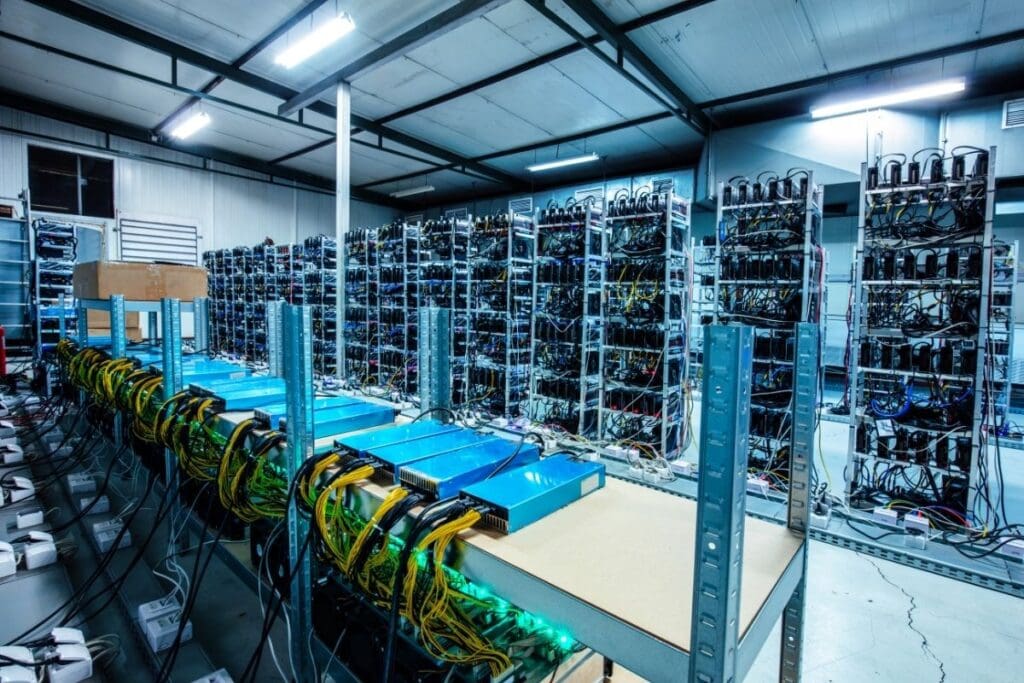
Bitcoin mining costs have reached alarming levels. Data from CoinShares and BitInfoCharts shows that even the largest operations are seeing their profit margins shrink, while smaller miners are operating at a loss. So, how might this economic landscape affect the future of Bitcoin?

In recent months, after global stock market turbulence, crypto markets have entered a significant recovery phase, with leading digital assets like Bitcoin climbing toward new record highs amid continued expectations that cryptocurrencies could serve as a safe haven against market volatility. Yet this positive price action doesn’t translate into improved returns for the ecosystem’s backbone—Bitcoin mining is becoming steadily less profitable, even for major players.

According to the latest CoinShares report, the economic outlook for Bitcoin mining has turned challenging for many. The study reveals that the high electricity costs and computational power required to produce new coins now often exceed the coins’ current market value, dramatically compressing profitability margins.

Even the largest mining companies feel the squeeze

When Bitcoin’s market price hovers around $95,000, the cost to mine a single coin has surpassed $82,000. Although technically still in the black, this thin margin underscores how tight the economics have become. Just a year ago—in Q3 2024—mining a Bitcoin cost roughly $56,000; the jump to over $82,000 represents an astonishing 47% increase in such a short span.

Boutique miners face unsustainable losses

For small-scale or “boutique” miners, the picture is far worse. Depending on location and local energy tariffs, producing a single Bitcoin in the United States can cost up to $137,000, while in countries with particularly high energy prices—like Germany—that figure can soar to around $200,000. Against a market price of $95,000, these operations are operating at substantial, unsustainable losses.

What’s driving these soaring costs?

Global energy cost increases: Electricity—the single largest expense in mining—has risen worldwide due to inflation, trade-war disruptions in energy supply chains, and booming demand from energy-intensive sectors like AI.

Equipment costs: Manufacturing and sourcing high-performance mining hardware (ASIC devices) has become more expensive.

Bitcoin halving: The most recent halving event, roughly a year ago, cut the block reward in half, directly reducing miners’ revenue and putting further pressure on profitability.

Implications for decentralization and equality

Bitcoin was designed to offer a decentralized network that promotes financial access and economic opportunity. Yet as mining becomes viable only for those with substantial capital and sophisticated infrastructure, this ideal is undermined. BitInfoCharts data indicates that over 90% of circulating Bitcoin is held by the richest 1% of addresses—mining once offered a way to distribute coins more widely, but today’s high-cost environment may deepen that inequality by concentrating rewards among the wealthiest operators.

The future of Bitcoin mining

These mounting costs raise critical questions: How will mining evolve under such narrow profitability? Will we see further consolidation as only the largest players can sustain operations? And most importantly, can Bitcoin maintain its foundational principles of decentralization and equitable distribution in the face of these economic pressures? The coming months and years will be decisive for the network’s ongoing health and the broader vision of a truly decentralized monetary system.

You Might Also Like;

Top 7 Crypto Newsletters You Should Subscribe to in May 2025
Why It Matters for Our Digital Future, Can We Move Our Lives to a Digital Universe?
Google Unveils Updated Gemini 2.5 Pro Model Ahead of I/O 2025


Source link

Towards Interoperable Anchoring for XR

Towards Interoperable Anchoring for XR


As part of the Metaverse Standards Forum’s Special SDO Sessions, the Forum conducted the Towards Interoperable Anchoring for XR webinar on April 30, 2025. The webinar focused on efforts to achieve interoperable anchoring systems for extended reality (XR). The main presenters, Jérémy Lacoche (Orange) and Jérôme Royan (BCOM), shared work from ETSI’s Augmented Reality Framework (ARF), highlighting new standards, architecture, and open-source tools designed to enable consistent AR experiences across platforms and devices.

Neil Trevett, President of the Metaverse Standards Forum, opened with an overview of the Forum’s mission: to foster cross-silo cooperation and support pragmatic, bottom-up standardization efforts across metaverse technologies, including AI, XR, Web3, and digital twins.

The core issue addressed was the lack of a shared, standardized way to represent the real world in XR. Today’s AR systems often rely on ecosystem-specific spatial anchors and tracking technologies, limiting cross-platform compatibility. ETSI’s ARF proposes a unified model for representing the real world using a graph-based structure called a “world graph.” This integrates multiple types of trackables (e.g., image markers, 3D maps, geolocation data) into a spatially-organized, interoperable reference system. By separating the real-world model (world graph) from virtual content (scene graph), applications can share environments and assets more flexibly.

Open-source tools were also presented, including Unity-based editors, world analysis modules (for pose estimation), and remote server implementations. Demos illustrated industrial maintenance use cases using a combination of indoor and outdoor localization technologies across both iOS and Android.

The webinar concluded with Q&A, highlighting the need for consistent coordinate systems, interest in semantic integration (ontologies), and discussions on collaboration with standards groups like Khronos and OpenXR. ETSI’s ongoing work aims to expand support for geometry, appearance, and semantics, enabling richer real-world interactions and easier AR content creation at scale.


Source link

Crypto’s Crossroads: What’s Next for The Market? The Hottest Insights From Industry Opinion Leaders

Crypto’s Crossroads: What’s Next for The Market? The Hottest Insights From Industry Opinion Leaders


In Brief

At Hack Seasons Dubai, crypto exchange leaders from 1inch, BitGet, OKX, and KuCoin explored the future of crypto markets, emphasizing token listing criteria, regulatory hurdles, and bold long-term predictions.

Crypto’s Crossroads: What’s Next for the Market? The Hottest Insights from Industry Opinion Leaders

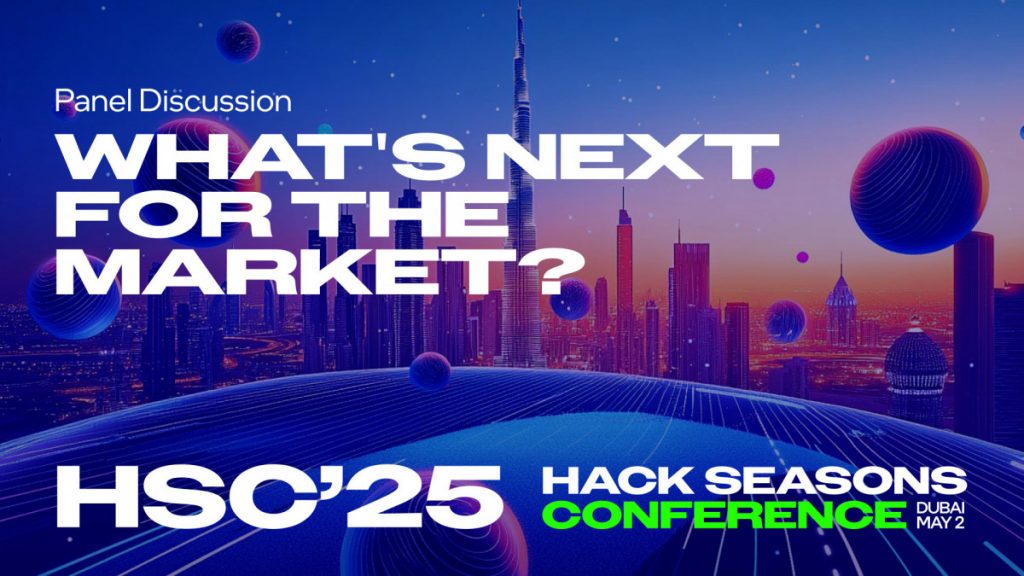
At the heart of this year’s Hack Seasons Conference in Dubai, a standout panel titled “What’s Next for the Market?” brought together leading voices from 1inch, BitGet, OKX, and KuCoin to dissect the future of digital assets and exchanges. Moderated by Mickey Hardy, President & Chairman of Arcadia Marketing, the discussion offered deep insights into the mechanics, challenges, and bold predictions defining the next era of crypto.

The panel began by exploring how major crypto exchanges decide which tokens to list. Key factors include a project’s fundamentals, trading activity, and community engagement. Technological reliability and regulatory compliance—especially with evolving EU regulations like MiCA—are also becoming increasingly important.

The conversation then shifted to regulatory challenges, particularly in the U.S. While some companies are steering clear of the American market due to uncertainty, others remain hopeful that clearer frameworks will emerge. A shared concern was the need for regulations that can evolve alongside technological innovation.

Finally, the panel offered a glimpse into the day-to-day lives of exchange executives. Their routines revolve around problem-solving, leading global teams, driving core business strategies, and balancing innovation with compliance—all while navigating a fast-changing market.

Big Bets and Bold BeliefsIn their closing thoughts, panelists shared bold, even contrarian views. From Bitcoin reaching $1 million to the often underestimated long-term impact of blockchain, the message was clear: crypto is here to stay—but it must evolve.

As the market shifts, the exchange leaders unanimously agreed on one thing: the fusion of regulation, innovation, and community will define the next chapter of crypto. Watch the full panel discussion to hear all their insights firsthand.

Disclaimer

In line with the Trust Project guidelines, please note that the information provided on this page is not intended to be and should not be interpreted as legal, tax, investment, financial, or any other form of advice. It is important to only invest what you can afford to lose and to seek independent financial advice if you have any doubts. For further information, we suggest referring to the terms and conditions as well as the help and support pages provided by the issuer or advertiser. MetaversePost is committed to accurate, unbiased reporting, but market conditions are subject to change without notice.

About The Author


Alisa, a dedicated journalist at the MPost, specializes in cryptocurrency, zero-knowledge proofs, investments, and the expansive realm of Web3. With a keen eye for emerging trends and technologies, she delivers comprehensive coverage to inform and engage readers in the ever-evolving landscape of digital finance.

More articles


Alisa Davidson


Alisa, a dedicated journalist at the MPost, specializes in cryptocurrency, zero-knowledge proofs, investments, and the expansive realm of Web3. With a keen eye for emerging trends and technologies, she delivers comprehensive coverage to inform and engage readers in the ever-evolving landscape of digital finance.


More articles


Source link

Top 5 Virtual World NFT Projects Dominating OpenSea – May 2025 | NFT News Today

Top 5 Virtual World NFT Projects Dominating OpenSea – May 2025  | NFT News Today


Virtual world NFTs 2025 are driving digital ownership and creativity, giving users the power to trade, build, and interact with unique land, avatars, and assets in immersive online spaces.

In May 2025, five standout collections — Otherdeed for Otherside, Habbo Avatars, The Sandbox LANDS, Decentraland, and Wilder Wheels — are leading OpenSea in both value and activity. (OpenSea is the largest NFT marketplace for buying and selling digital assets.)

Here’s a look at each project, including their latest stats.

Key Takeaways

Virtual world NFTs 2025 offer digital land, avatars, and interactive assets with real-world value and utility.

Otherdeed for Otherside leads in floor price, while Decentraland shows the strongest price increase.

Each project brings unique features, from land and avatar ownership to play-to-earn mechanics and creative monetization.

Thousands of unique owners and high 30-day sales volumes highlight strong community engagement.

These collections are shaping the future of digital interaction and virtual economies.

What Are Virtual World NFTs 2025?

Virtual world NFTs 2025 are blockchain-based assets representing ownership of digital land, avatars, vehicles, and items within interactive 3D environments. These NFTs provide access to immersive experiences, in-game rewards, and community-driven content, making them central to the expanding metaverse.

Top 5 Virtual World NFTs on OpenSea in May 2025

(Rankings based on a combination of floor price, trading volume, and recent growth)

1. Otherdeed for Otherside

Floor Price: $432.19 (+11.3% in 30 days)

Avg. Price: $414.02

30d Volume: $187.5K | Sales: 364 | Owners: 14,567 | Total NFTs: 47.2K

Otherdeed for Otherside NFTs are the keys to land in Yuga Labs’ Otherside metaverse. Each NFT represents a unique plot with distinct environments, resources, and sometimes rare artifacts or Kodas.

Closely linked to the Bored Ape Yacht Club and Mutant Ape Yacht Club, Otherdeed is one of the most valuable and active metaverse land assets, offering holders access to exclusive playtests and ongoing rewards.

2. Habbo Avatars

Floor Price: $333.40 (down 8.2% in 30 days)

Avg. Price: $326.86

30d Volume: $77.9K | Sales: 211 | Owners: 3,990 | Total NFTs: 11.6K

Habbo Avatars are the first official NFT avatars for Habbo, created by Sulake. This collection of 11,600 pixelated avatars grants holders access to a personal room in the upcoming Web3 version, Habbo X. Each avatar is curated by the Habbo art team and serves as a gateway to exclusive content and experiences in the Habbo universe.

Source Sandbox LAND on OpenSea

3. The Sandbox LANDS

Floor Price: $148.91 (down 6.9% in 30 days)

30d Volume: $73.9K | Sales: 407 | Owners: 25.5K | Total NFTs: 166K

The Sandbox LANDS are digital parcels in The Sandbox, a user-driven platform for building games, hosting events, and creating interactive experiences. The map consists of 166,464 LANDS, with owners able to monetize, stake SAND tokens, and participate in governance. The Sandbox’s creative freedom and active economy make it a top choice for virtual real estate.

4. Decentraland

Floor Price: $130.75 (+28.6% in 30 days)

30d Volume: $34.2K | Sales: 217 | Owners: 8.2K | Total NFTs: 98.5K

Decentraland is a decentralized, Ethereum-based world where users can buy, build, and monetize land, wearables, and items. With a focus on community governance and brand partnerships, Decentraland is one of the most established and innovative virtual world NFT projects, showing the strongest price growth this month.

5. Wilder Wheels

Floor Price: $360.61 (down 23.6% in 30 days)

Avg. Price: $319.59

30d Volume: $27.7K | Sales: 64 | Owners: 2K

Wilder Wheels are photorealistic, metaverse-ready vehicle NFTs for use in Wilder World, a 3D platform built on Unreal Engine 5. These vehicles can be raced, traded, or staked — offering rewards for active use, reflecting the growing trend of dynamic, utility-driven NFTs in immersive settings.

Frequently Asked Questions

How do I buy virtual world NFTs 2025?

Set up a crypto wallet, purchase cryptocurrency, and use a marketplace like OpenSea to buy NFTs from verified collections.

What gives these NFTs value?

Scarcity, utility, community engagement, and integration with major platforms drive value and demand.

Are Virtual World NFTs 2025 safe to invest in?

As with any investment, research the project’s team, community, and roadmap before buying. Stick to reputable marketplaces and verified collections.

Conclusion

Overall, the virtual world NFT space in 2025 shows both creativity and momentum. Each of these five standout collections demonstrates unique ways for users to own and interact with digital assets, reflecting the broader potential of immersive online environments.

While market fluctuations are normal, ongoing innovation and community engagement suggest that virtual world NFTs will remain a significant part of the evolving metaverse. As always, it’s wise to stay informed and approach new opportunities with careful research.



Source link

Google AI Mode Now in Search: AI-Powered Answers Unveiled – Metaverseplanet.net

Google AI Mode Now in Search: AI-Powered Answers Unveiled – Metaverseplanet.net


Google has announced that Google AI Mode will soon appear directly in its search engine, marking a significant step forward for AI-powered search. After months of development, the company is preparing to roll out an AI Mode tab in Google Search, allowing users to experience AI-driven answers outside of the experimental Labs environment. Over the coming weeks, a small percentage of U.S. users will begin seeing an AI Mode tab alongside the familiar “All,” “Images,” “Videos,” and “Shopping” options, enabling them to test Google’s search-centric chatbot.

Unlike traditional search platforms that present a wall of URLs based on your query, AI Mode delivers concise, natural-language responses generated by a large language model trained on Google’s search index. This differs from the existing AI Overview feature, which compresses AI-generated summaries between the search box and web results. Google AI Mode aims to provide more relevant, up-to-date answers by leveraging real-time web data and specialized search-optimized models—much like competitors such as Perplexity and ChatGPT’s search features.

In addition to the new tab, Google is removing the waitlist for U.S. Labs users, opening up AI Mode testing to a broader audience before its general release. The updated interface now saves past queries in a left-side history panel, making it easy to revisit topics or ask follow-up questions without starting a new conversation. For products and places, AI Mode also displays rich, clickable cards showcasing business hours, reviews, ratings, and even shoppable product images with real-time inventory, shipping details, and pricing.

What do you think about this evolution in AI-powered search? Share your thoughts in the comments below!

You Might Also Like;

Follow us on TWITTER (X) and be instantly informed about the latest developments…

Copy URL


Source link

Wikipedia Strengthened by Generative AI – Metaverseplanet.net

Wikipedia Strengthened by Generative AI – Metaverseplanet.net


The Wikimedia Foundation, the nonprofit behind Wikipedia, has announced plans to integrate generative AI into its editorial workflows—without replacing its dedicated human editors. These new AI tools aim to streamline repetitive tasks, boost efficiency, and empower volunteer editors to focus on core quality assurance work.

A Human-Centered Integration

Chris Albon, the Foundation’s Machine Learning Director, emphasized that the initiative will not use AI to generate new articles autonomously. Instead, the system will assist editors with technically demanding tasks such as:

Translation of existing content

Background research for complex topics

Onboarding new contributors

By maintaining transparency, clear communication, and respect for multilingual communities, the project ensures that human oversight remains paramount.

Driving Efficiency for Volunteer Editors

Although Wikipedia has historically employed AI behind the scenes—for vandalism detection, readability scoring, and basic translation—this marks the first time that generative AI tools will be offered directly to editors. The goal is to:

Reduce time spent on routine technical chores

Increase overall productivity

Allow editors to dedicate more effort to quality assurance

This approach addresses the widening gap between the platform’s ever-growing content volume and the relatively static number of active editors.

Research Initiative and Data Strategy

To support machine learning development, the Foundation has launched a research program to create open, structured datasets drawn from Wikipedia itself. This effort aims to:

Provide a reliable data source for AI developers

Curb unregulated web-scraping that strains Wikipedia servers

Reduce bandwidth consumption by up to 50%

By offering curated datasets, the Wikimedia Foundation helps safeguard the platform’s infrastructure while fostering innovation.

Preserving Integrity and Trust

Through AI-powered assistance that respects the primacy of human editors, Wikipedia strives to maintain its position as the world’s largest free encyclopedia. This balanced strategy—combining generative AI capabilities with steadfast editorial principles—will help preserve the site’s integrity, reliability, and community-driven spirit.

You Might Also Like;

Follow us on TWITTER (X) and be instantly informed about the latest developments…

Copy URL


Source link

QCP: Strong Institutional Demand For Bitcoin ETFs Continues, While Strategy’s Increased BTC Holdings Reflect Long-Term Optimism

QCP: Strong Institutional Demand For Bitcoin ETFs Continues, While Strategy’s Increased BTC Holdings Reflect Long-Term Optimism


In Brief

QCP Capital highlights mixed US economic data, the continued S&P 500 rally, and ongoing institutional demand for Bitcoin ETFs influencing the crypto market.

QCP: Strong Institutional Demand For Bitcoin ETFs Continues, While Strategy's Increased BTC Holdings Reflect Long-Term Optimism

Singapore-based cryptocurrency trading firm QCP Capital, provided an overview of the latest developments in the cryptocurrency market, highlighting that Friday’s macroeconomic data painted a mixed picture of the US economy. Nonfarm payrolls rose by 177,000, surpassing the expected 133,000, while the unemployment rate remained stable at 4.2%. However, economists cautioned that the full economic consequences of the newly implemented tariffs have not yet been fully realized.

Market reactions were characterized by cautious optimism, as resilient data and expectations of a potential easing of trade tensions contributed to a continuation of the S&P 500’s rally, which extended to 10 consecutive sessions, reversing the previous selloff observed after Liberation Day.

As the earnings season comes to a close, the focus is shifting back to the two key macroeconomic factors: US–China trade talks and Federal Reserve policy.

US equity futures declined after President Donald Trump stated that he had no plans to engage with China’s leadership this week. However, he suggested that trade deals with other unidentified partners could be forthcoming, which kept markets in a state of uncertainty.

The Federal Reserve is widely anticipated to maintain current interest rates during its upcoming policy meeting. Despite inflationary pressures easing, as indicated by the Personal Consumption Expenditures (PCE) data, the impact of rising import tariffs may potentially lead to renewed price instability. The central question remains whether the Federal Reserve will continue to resist political pressure from Donald Trump to lower rates or adjust its policy stance.

Additionally, despite reporting a first-quarter loss, Strategy has raised its capital target to $84 billion, doubling the previous goal. The loss, attributed to the adoption of new mark-to-market accounting rules for digital assets, emphasizes the company’s ongoing commitment to its long-term Bitcoin strategy.

Meanwhile, consistent inflows into spot Bitcoin exchange-traded funds (ETFs) indicate strong institutional demand, further solidifying Bitcoin’s growing importance in diversified investment portfolios.

Bitcoin Experiences 1.05% Decline, While US Bitcoin ETFs See $1.81B In Inflows

At the time of writing, Bitcoin is priced at $94,562, reflecting a 1.05% decrease over the past 24 hours. During this period, it reached a high of $95,755 and a low of $93,612. The current market capitalization of Bitcoin is $1.87 trillion, showing a 1.08% decline over the same timeframe.

In comparison, the global cryptocurrency market capitalization stands at $2.95 trillion, experiencing a 0.54% drop over the last 24 hours. The total trading volume in the cryptocurrency market for the past 24 hours is $56.36 billion, marking an 11.94% increase.

US spot Bitcoin ETFs reported $1.81 billion in net inflows last week, extending a streak of three consecutive weeks with positive inflows, based on data from SoSoValue. The previous week saw inflows totaling $3.06 billion.

Disclaimer

In line with the Trust Project guidelines, please note that the information provided on this page is not intended to be and should not be interpreted as legal, tax, investment, financial, or any other form of advice. It is important to only invest what you can afford to lose and to seek independent financial advice if you have any doubts. For further information, we suggest referring to the terms and conditions as well as the help and support pages provided by the issuer or advertiser. MetaversePost is committed to accurate, unbiased reporting, but market conditions are subject to change without notice.

About The Author


Alisa, a dedicated journalist at the MPost, specializes in cryptocurrency, zero-knowledge proofs, investments, and the expansive realm of Web3. With a keen eye for emerging trends and technologies, she delivers comprehensive coverage to inform and engage readers in the ever-evolving landscape of digital finance.

More articles


Alisa Davidson


Alisa, a dedicated journalist at the MPost, specializes in cryptocurrency, zero-knowledge proofs, investments, and the expansive realm of Web3. With a keen eye for emerging trends and technologies, she delivers comprehensive coverage to inform and engage readers in the ever-evolving landscape of digital finance.


More articles


Source link

Popular Posts

My Favorites

Remilia Launching Milady Social Media Network to Serve ‘4chan Diaspora’ –...

0
In brief Remilia Corporation is launching a Milady-centric social network called RemiliaChat. The rollout is beginning with RemiliaNET, a social identity layer launching Friday. While aimed...