Metaverse

Home Metaverse Page 159

Apple Starts Using Vision Pro on Robots After Failing to Sell It to People

Apple Starts Using Vision Pro on Robots After Failing to Sell It to People


Apple’s mixed reality headset, the Vision Pro, which failed to generate the expected interest among consumers, has now become the focus of a scientific experiment. The U.S.-based tech giant has begun using the Vision Pro on humanoid robots as part of a research initiative. The aim of the project is to train humanoid robots using Vision Pro. But was the research team successful?

A few years after launching the Vision Pro to lackluster consumer response, Apple decided to repurpose the device in a scientific setting. The Vision Pro is now being utilized to aid in the training of humanoid robots, turning the once commercial failure into a valuable research tool.

Apple collaborated with scientists from MIT, Carnegie Mellon, University of Washington, and UC San Diego. Together, they compiled a massive dataset consisting of over 25,000 human activities and 1,500 humanoid robot activities. This dataset was then used to develop a powerful AI system, intended to make humanoid robots behave more like real humans.

Vision Pro Speeds Up and Lowers the Cost of Training Humanoid Robots

One of the biggest challenges in humanoid robotics is the slow and expensive training process. However, using the Apple Vision Pro, the team was able to overcome these obstacles. The device enabled the researchers to record high-resolution videos quickly, and with a specially designed algorithm, they could slow down these videos by up to 4 times. This allowed the robots to capture and learn even the smallest details.

As a result, the training process became faster and more cost-effective. The method is detailed in a research paper titled “Humanoid Policy ∼ Human Policy”, published on GitHub. Although the paper presents Apple’s technique as just a proposal, the implications are significant.

With the humanoid robotics industry rapidly advancing, companies like Tesla—which are already investing in humanoid robot development—could potentially adopt Apple’s Vision Pro approach to accelerate training.

It remains to be seen how these developments will shape the future of humanoid robots, but the integration of Apple Vision Pro into robotic training could mark a major leap forward.

A demo video showcasing the abilities of humanoid robots trained with the Apple Vision Pro has also been released, hinting at the impressive progress being made in the field.

You Might Also Like;

Follow us on TWITTER (X) and be instantly informed about the latest developments…

Copy URL


Source link

Centrifuge Unlocks Onchain Utility for Real-World Assets With Transferable Tokens On Solana

Centrifuge Unlocks Onchain Utility for Real-World Assets With Transferable Tokens On Solana


In Brief

Centrifuge has integrated with the Solana blockchain ecosystem, bringing institutional-grade RWA products to users within Solana’s DeFi landscape.

Centrifuge Unlocks Onchain Utility for Real-World Assets With Transferable Tokens On Solana

Platform focused on tokenized real-world assets (RWAs), Centrifuge announced an integration with the Solana blockchain ecosystem. This development introduces institutional-grade RWA products to users within Solana’s decentralized finance (DeFi) environment.

The integration is based on the recent introduction of Centrifuge’s deRWA Token service, which enables the creation of transferable tokens optimized for use within DeFi systems. These tokens facilitate the movement of RWAs at the speed of Solana, offering functionality such as swapping, lending, and collateralization, while maintaining the transparency and consistent yields associated with the assets they represent.

Centrifuge Introduces First Platforms On Solana: Raydium, Kamino, And Lulo

With Solana’s total stablecoin market capitalization exceeding $12.5 billion, the integration of Centrifuge’s RWAs marks a new phase of expansion within the network. The initial product introduced, deJTRSY, is a tokenized representation of short-term US Treasuries, offering access to dollar-denominated yields directly within Solana’s DeFi framework.

The first platforms on Solana to incorporate deJTRSY include Raydium, a decentralized exchange that has facilitated over $200 billion in trading volume in 2025; Kamino, a leading borrowing and lending protocol with more than $4 billion in total supplied assets and $1.5 billion in active loans; and Lulo, an expanding yield aggregator that has surpassed $100 million in total value locked since its inception.

These applications play central roles in the Solana DeFi ecosystem, supporting key functions along the user journey. Through these platforms, users can conduct swaps using deRWA Tokens on Raydium, utilize them as collateral on Kamino, and deploy them into structured yield strategies via Lulo—all within the Solana network, eliminating the need for asset transfers outside the blockchain. This integration enhances RWA functionality across multiple protocols in real time.

Centrifuge V3, Wormhole, And Pyth Network Power New Integration

Centrifuge is a blockchain-based platform that integrates RWAs into DeFi. It enables the tokenization of tangible assets—such as real estate, invoices, and US Treasury securities—allowing them to be used within DeFi protocols. This approach aims to provide asset owners with access to liquidity and offers investors opportunities to earn yields backed by real economic activities.

In order to support transparency and reliability, the integration utilizes Centrifuge V3, with Wormhole facilitating cross-chain capital movement and Pyth Network providing real-time, verifiable pricing data for the underlying assets.

This deployment on Solana introduces a model for incorporating RWAs onchain in a way that emphasizes liquidity, stability, and composability. As the use of stablecoins continues to rise on Solana and interest in real-world yield expands, this integration establishes a foundation for RWAs to play a central role in Solana’s broader strategy to engage with institutional finance.

Disclaimer

In line with the Trust Project guidelines, please note that the information provided on this page is not intended to be and should not be interpreted as legal, tax, investment, financial, or any other form of advice. It is important to only invest what you can afford to lose and to seek independent financial advice if you have any doubts. For further information, we suggest referring to the terms and conditions as well as the help and support pages provided by the issuer or advertiser. MetaversePost is committed to accurate, unbiased reporting, but market conditions are subject to change without notice.

About The Author


Alisa, a dedicated journalist at the MPost, specializes in cryptocurrency, zero-knowledge proofs, investments, and the expansive realm of Web3. With a keen eye for emerging trends and technologies, she delivers comprehensive coverage to inform and engage readers in the ever-evolving landscape of digital finance.

More articles


Alisa Davidson


Alisa, a dedicated journalist at the MPost, specializes in cryptocurrency, zero-knowledge proofs, investments, and the expansive realm of Web3. With a keen eye for emerging trends and technologies, she delivers comprehensive coverage to inform and engage readers in the ever-evolving landscape of digital finance.


More articles


Source link

FIFA and Avalanche Partner to Bring Football to Web3 | NFT News Today

FIFA and Avalanche Partner to Bring Football to Web3 | NFT News Today


FIFA has partnered with Avalanche to launch a FIFA blockchain. This collaboration is set to reach 5 billion fans worldwide with digital collectibles, real-time engagement and immersive fan experiences.

Key Takeaways

FIFA’s new collaboration with Avalanche expands blockchain utility for billions of football enthusiasts.

The FIFA blockchain leverages Avalanche’s high transaction speeds and sub-second finality.

EVM compatibility ensures smooth app migration for FIFA Collect and future Web3 innovations.

Dedicated control over governance and fees allows FIFA to optimize user experience on its custom network.

This move hints at potential advancements in ticketing, fan-driven content, and real-time game interaction.

FIFA Blockchain:

The FIFA blockchain is a dedicated network built on Avalanche. Announced May 22 2025, this is a move away from FIFA’s previous NFT-focused efforts to a broader, more scalable approach. Unlike previous partnerships, FIFA will control everything on the blockchain so can customise validator requirements, integrate custom smart contracts and have a seamless user experience.

Why Avalanche?

Avalanche’s architecture supports high throughput and rapid finality, which is essential during global football events. These scenarios often generate intense traffic through digital collectible sales, live fan voting, and interactive apps—making Avalanche’s infrastructure a strong fit.

This collaboration also aligns with the broader FIFA Web3 vision. With billions of supporters worldwide, the organization aims to use blockchain to power novel fan experiences, make collectibles more accessible, and establish a secure environment for future sports innovations.

How This Partnership Benefits Fans

Football fans get several benefits from the FIFA Avalanche partnership. Avalanche’s low fees and scalable infrastructure means frictionless interactions across multiple Web3 applications from digital collectibles to community driven events.

Here are some practical perks for fans:

Exclusive Collectibles: Expect unique items that commemorate iconic tournaments and star players.

Real-Time Rewards: Engage with live matches to earn or buy limited edition digital assets.

Improved Security: Avalanche’s advanced consensus features are designed to protect user assets and ensure authenticity.

Accessible Worldwide: Being EVM compatible means global fans can partake in the Web3 experience.

Future Integrations: Future ticketing and loyalty apps could make it easier for fans to attend games and show support for their teams.

Real-World Use Cases

This new FIFA blockchain has roots in Avalanche’s success across various sectors. For instance, Avalanche has supported global enterprises in financial services, disaster relief, and game development. FIFA’s application of this technology zeroes in on massive-scale, real-time engagement—a context uniquely suited to global sports.

Digital Collectibles & Ticketing: With FIFA’s move from Algorand to Avalanche, expect streamlined marketplaces, interactive collectibles, and tickets that link to user wallets.

Fan Engagement Platforms: Avalanche’s speed can support large volumes of in-game voting or event-based polls, letting FIFA gather input from a massive global audience.

Gaming & E-Sports: Avalanche’s record in game development suggests a future where fans enjoy blockchain-based fantasy leagues, predictions, or interactive match highlights.

These examples illustrate how FIFA Avalanche initiatives can fuel cutting-edge Web3 experiences—ranging from fan rewards and secure asset transfers to collaborative content creation.

FAQ

What is the FIFA blockchain?

It’s a custom blockchain network built using Avalanche’s infrastructure, designed to handle high-volume fan engagement, digital collectibles, and other Web3 applications for football supporters worldwide.

Why did FIFA choose Avalanche?

FIFA needed a high-performance blockchain capable of sub-second transaction finality and flexible governance. Avalanche’s architecture and subnet capabilities met these needs.

Will FIFA Collect migrate to the new blockchain?

Yes. FIFA Collect, originally launched on platforms like Algorand, is shifting to the new dedicated blockchain, making it easier for users to manage collectibles on a single, EVM-compatible network.

What does the partnership mean for fans?

Fans can look forward to exclusive NFTs, real-time engagement opportunities, and potential future uses like blockchain-based ticketing. The partnership aims to strengthen the link between global supporters and FIFA’s digital ecosystem.

How secure is the FIFA Avalanche network?

Avalanche’s consensus mechanism uses repeated sampling and fast confirmation to maintain security and remain resistant to attacks. By having a dedicated chain, FIFA maintains full control of the network’s governance.

Final Thoughts

The decision to launch a FIFA blockchain on Avalanche’s infrastructure is a big moment for the football governing body and its global fans. With Avalanche’s speed and EVM, this opens up new possibilities for fan engagement, collectible authenticity and digital interactions.

As the FIFA Avalanche project continues to evolve, broader use cases may emerge—such as blockchain-based ticketing, interactive fan events, and real-time rewards. The creation of a dedicated FIFA Web3 ecosystem sets a meaningful precedent for other sports organizations exploring blockchain, potentially revolutionizing how billions interact with the beautiful game.


Source link

Solana Seeker: Web3 Smartphone with SKR Token and TEEPIN OS | NFT News Today

Solana Seeker: Web3 Smartphone with SKR Token and TEEPIN OS | NFT News Today


Solana Mobile will begin shipping its next-generation Web3 smartphone, the Solana Seeker, on August 4, 2025. With over 150,000 pre-orders already placed, the Seeker builds on lessons from its predecessor, the Solana Saga, and introduces two major innovations: a decentralized mobile infrastructure called TEEPIN and an integrated ecosystem token SKR.

Positioned as a response to the limitations of centralized app ecosystems, the Seeker is designed to give developers direct access to users and empower those users with greater control over their device and identity—without relying on traditional gatekeepers like Apple or Google.

Key Takeaways

Launch Date: Global shipping begins August 4, 2025, with over 150,000 pre-orders.

Architecture: TEEPIN enables decentralized app delivery, firmware verification, and system updates.

Token Utility: SKR rewards user activity, developer engagement, and hardware support.

On-Chain Identity: Seeker ID combines wallet address, Genesis Token, and secure hardware credentials.

Market Strategy: Solana Mobile plans to license TEEPIN and SKR to other hardware manufacturers.

Solana’s Vision: A Challenge to Apple and Google

According to a co-founder of Solana Labs, Anatoly Yakovenko, the Seeker is not just a device—it’s an attempt to build a top-tier mobile ecosystem that can rival tech giants like Google and Apple:

“The goal of Seeker is to build a top tier mobile ecosystem that can compete with Google and Apple. Crypto is the wedge to do it. TEEPIN is the implementation. Chance of failure – nearly certain, opportunity – enormous.”

He likens the strategy to cloning an iPhone in every way except for the root certificate, which is the key to Apple’s walled garden:

“Apple’s network effects and business models are enforced not with a pen or the sword, but with cryptography and the TEE hardware on device.”

In the Seeker ecosystem:

All hardware features TEEs (Trusted Execution Environments) that only boot verified OS images.

A DAO on Solana manages the root certificate, determining policies and economic models.

The DAO can enforce rules for app deployment, device access, and revenue distribution directly from the blockchain.

This model offers the possibility of decentralizing one of Apple’s most powerful strategic levers—its hardware-software trust system.

Source: Solana Seeker

Transforming Mobile OS: How TEEPIN Works

The Seeker’s foundation is TEEPIN (Trusted Execution Environment Platform Infrastructure Network), a decentralized three-layer system that replaces conventional app store models with direct developer-to-user app delivery.

Hardware Layer: Uses cryptographic proofs to ensure system integrity—think of it as a built-in lie detector for your phone’s core software.

Platform Layer: Employs an on-chain registry to validate OS versions and distribute updates.

Network Layer: Maintains a decentralized audit trail for firmware and software changes, increasing transparency and trust.

By eliminating centralized app stores, TEEPIN grants users more control while enabling developers to reach audiences without intermediary restrictions.

SKR Token and Seeker ID: Bridging Blockchain with Hardware

SKR, the Seeker’s native token, drives incentives across the Solana Mobile ecosystem. Users earn SKR by engaging with dApps in verifiable ways. Developers are rewarded based on usage metrics and retain full revenue from their software. Hardware manufacturers also receive SKR for supporting TEEPIN-compatible devices.

Token Distribution Model: SKR is allocated through a tiered reward structure that promotes user engagement, developer growth, and hardware adoption. Further tokenomics, such as total supply and emission schedules, are expected to be released at launch.

To manage identity, each device features a Seeker ID, which links a user’s wallet address, a Genesis Token (embedded in the hardware), and other credentials. These are stored securely via Seed Vault—a tamper-resistant hardware module that safeguards private keys and device integrity.

Hardware Specs, Pricing, and Availability

The Solana Seeker blends Web3 features with competitive hardware and a global rollout strategy. Key specs include:

Processor: MediaTek Dimensity 7300

Memory: 8GB RAM

Storage: 128GB

Display: 6.36-inch AMOLED, 120Hz

Battery: 4500mAh, wireless charging

Connectivity: 5G-ready

It comes preloaded with Solana dApp Store 2.0, featuring exclusive apps across DeFi, AI, NFTs, and more.

Pricing began at $450 for early Founders and $500 for Early Adopters, with the latter tier still open. Shipping is free worldwide (taxes vary), and Solana Mobile plans to license its platform to other manufacturers.

Competitive Landscape: Seeker vs. Other Web3 Phones

The Seeker enters a growing market of blockchain-enabled smartphones:

Solana Saga: The first-gen model with a dApp store and seed vault. Gained momentum through token airdrops.

HTC Desire 22 Pro: Includes crypto wallets and NFT access, but lacks deeper system decentralization.

JamboPhone: Prioritizes accessibility in emerging markets over performance.

Solana Seeker stands out by decentralizing OS updates and app deployment—a foundational change rather than a surface-level feature addition.



Source link

Bitcoin Soars to Record $109,486 High After U.S.–China Tariff Truce

Bitcoin Soars to Record 9,486 High After U.S.–China Tariff Truce


In a significant market rebound following the de-escalation of the U.S.-China tariff dispute, Bitcoin has surged to a fresh all-time high of $109,486. This marks the first time since January 2025—when it briefly peaked at $109,114—that Bitcoin has reclaimed the $100,000 threshold and pushed beyond its previous best.

The catalyst for this rally was news that customs-duty tensions between the world’s two largest economies had subsided, restoring confidence across crypto markets. On the day of the record, Bitcoin climbed by 4.5%, eclipsing its January peak and setting a new benchmark for investors.

According to CoinMarketCap, Bitcoin’s 24-hour trading volume stood at $63.67 billion (as of 18:49 TSI), while its total market capitalization rose to $2.15 trillion. These figures underscore the depth of liquidity and the scale of institutional participation now driving the top cryptocurrency.

Over the past month, Bitcoin has delivered a remarkable 24% gain against the U.S. dollar, reflecting growing optimism about its role as both a digital asset and an inflation hedge. This momentum has spilled over into the broader digital-asset space: the total market value of all cryptocurrencies climbed by $100 billion to reach $3.43 trillion, hitting yet another new zenith.

For context, Bitcoin’s previous all-time high prior to January 2025 stood at around $73,000 in late 2021—illustrating just how far the asset has come in recent years. With volatility remaining a hallmark of crypto trading, market participants will be watching closely to see if Bitcoin can sustain these levels or retrace to more familiar territory.

Regardless of what comes next, today’s milestone underscores the growing maturity and resilience of the cryptocurrency ecosystem—and cements Bitcoin’s position at the forefront of digital finance.

You Might Also Like;

Follow us on TWITTER (X) and be instantly informed about the latest developments…

Copy URL


Source link

JPMorgan to Offer Clients the Ability to Buy Bitcoin – Metaverseplanet.net

JPMorgan to Offer Clients the Ability to Buy Bitcoin – Metaverseplanet.net


One of the largest banks in the United States, JPMorgan Chase, has announced that it will allow its clients to buy Bitcoin. The bank’s CEO, Jamie Dimon, made the statement during the company’s annual Investor Day event, saying:

“We will let you buy Bitcoin.”

However, JPMorgan will not offer any custody services for the Bitcoin purchases. According to Dimon, these transactions will only be reflected in client statements, without the bank managing or holding the assets directly.

A Surprising Shift from a Bitcoin Critic

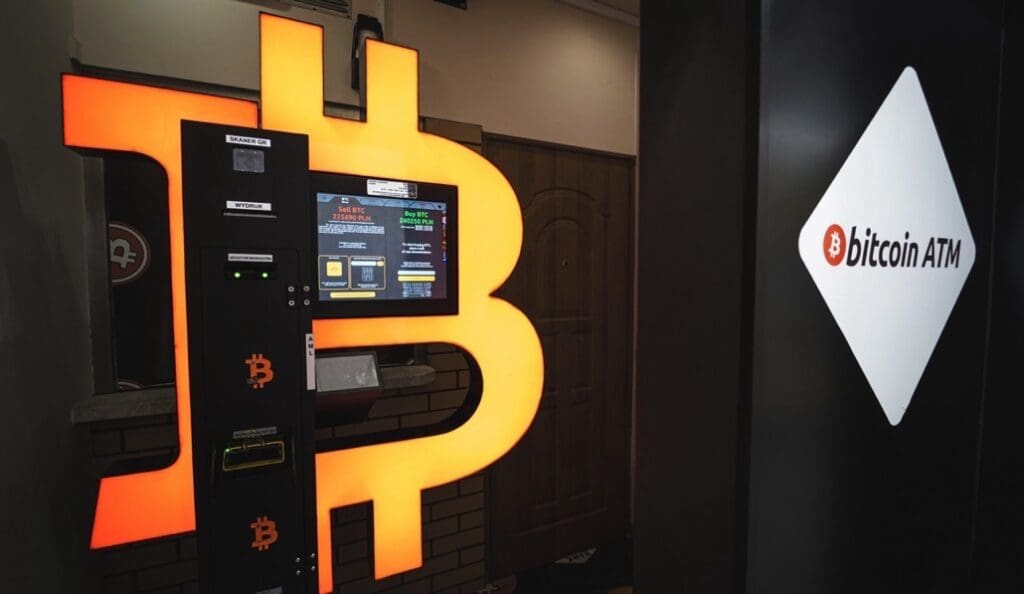
Bitcoin ATM in a mall allows to buy and sell Bitcoin crypto. Orange BTC cryptocurrency exchange machine. Warsaw, Poland – October 23, 2021

This move is particularly noteworthy given CEO Jamie Dimon’s historically critical stance toward the cryptocurrency market. The decision is being viewed as a significant step in the financial world, highlighting how Bitcoin is increasingly being accepted within the mainstream financial system.

Previously, Morgan Stanley had taken a similar step by allowing some of its financial advisors to offer spot Bitcoin ETFs to eligible clients starting in August.

You Might Also Like;

Follow us on TWITTER (X) and be instantly informed about the latest developments…

Copy URL


Source link

France Takes Concrete Steps to Build Its Own Robot Army

France Takes Concrete Steps to Build Its Own Robot Army


Developments in artificial intelligence and robotics are rapidly transforming the idea of robot armies into a tangible reality. Following the United States and China, France has also begun to take concrete steps toward establishing its own robot army. As AI and robotics evolve in parallel, the emergence of thinking robots capable of performing various tasks is becoming almost inevitable.

Some of the first prototype models designed for use as household service robots are already under development. Robots intended for industrial facilities are even closer to becoming operational—and we’ve already started seeing early examples of this. Naturally, this robotic breakthrough is also making its way into the military domain.

Back in February, a Pentagon official told Defense One that the U.S. is actively exploring the development of killer robots. These next-generation weapons, classified by the Pentagon as Lethal Autonomous Weapons (LAW), are not just part of America’s future plans, but also feature prominently in the defense strategies of many nations. This week, France made a similar announcement. General Bruno Baratz of the French Army stated that they plan to deploy robot soldiers to the battlefield by 2028.

France Aims to Have a Full Robot Army by 2040

France actually began its initial efforts in this area back in 2021, setting a goal to create a robot army by 2040 while the project was still in the concept stage. However, General Bruno Baratz now believes this goal could be achieved much sooner. According to him, France will possess a functioning robot army in the near future.

Recently, several robot prototypes—some humanoid, others on wheels or in drone form—were tested at a military base in France. These tests aimed to measure the performance of these robots in field conditions.

France envisions these robots being used in reconnaissance missions, mine clearance, and repair operations. However, experts closely following the AI field believe it’s only a matter of time before these machines are used in direct combat. In fact, companies like Google and OpenAI are already loosening the ethical constraints designed to keep AI away from armed conflict.

Statements from French officials also suggest that this trend is inevitable. General Tony Maffeis of the French Army commented:

“We need to prove that robots can be more effective when they come into contact with an enemy. Robots should facilitate warfare, not hinder it.”

You Might Also Like;

Follow us on TWITTER (X) and be instantly informed about the latest developments…

Copy URL


Source link

From 2025 to 2030: The Evolution of the Metaverse – Metaverseplanet

From 2025 to 2030: The Evolution of the Metaverse – Metaverseplanet


In recent years, the concept of the metaverse has been taking bold steps from fiction to reality. Let’s explore what lies ahead from 2025 to 2030. During this journey, both the technological infrastructure and user experiences will evolve rapidly—so it’s time to decide where you will position yourself in this new digital era.

2025: Infrastructure and Corporate Pilots

The year 2025 will mark the full deployment of infrastructure investments and 5G-edge computing pilots that form the backbone of the metaverse ecosystem. Low-latency AR/VR experiences will be tested for the first time in real-world scenarios—especially in sectors like education and healthcare. Major corporations will explore how to integrate the metaverse into their workflows, experimenting with remote maintenance in factories, medical simulations, and interactive training modules.

2026: Early Consumer Adoption

By 2026, the metaverse will become part of daily life for many individuals. From virtual meetings and online shopping to digital classrooms and live virtual concerts, numerous scenarios will be embedded in users’ daily routines. According to various analyses, a significant portion of users will spend at least one hour per day in virtual environments. At the same time, global shipments of AR/VR devices will double, indicating widespread adoption.

2027: The Rise of AR Glasses

In 2027, lightweight AR glasses—capable of overlaying digital content onto the real world—will begin to appear on pre-order lists. These devices, weighing under 200 grams and equipped with high-resolution micro-displays, will be as portable as a smartphone. Meanwhile, the popularity of VR headsets will continue to surge, making social activities like meeting avatars, attending virtual concerts, and chatting in 3D environments feel more natural than ever.

2028: Ecosystem Maturity

By 2028, the metaverse ecosystem will have fully matured. The number of AR/VR devices will skyrocket, and a rich content landscape will emerge—ranging from e-commerce and remote collaboration to digital art and interactive education. Cross-sector integration will become common, with virtual expos, interactive museums, and even remote surgical simulations becoming everyday applications. This year will mark the transition of the metaverse from an experimental concept to a recognized digital reality.

2029: Seamless Metaverse Experience

Although the metaverse will not yet be a singular, unified platform by 2029, interface and infrastructure standards will become so refined that cross-platform interactions, device synchronization, and real-time collaboration will be nearly seamless. With the “disillusionment phase” behind us, users will finally access the immersive experiences they’ve long anticipated—without frustration or limitations.

2030: A Trillion-Dollar Economy and Mass Adoption

By 2030, the metaverse market will expand exponentially, reaching a value close to $1 trillion. XR devices (AR + VR) will be as common as smartphones, and AI-powered virtual assistants will guide us through our daily tasks. We will shop using our digital identities, maintain most of our social connections through virtual events, and carry out education and work in hybrid spaces. As we approach five billion users, the lines between digital and physical will blur so thoroughly that the question “what’s real?” may lose all relevance.

A New Reality at the Center of Daily Life

This five-year roadmap shows that the metaverse is not merely a tech trend—it’s a new universe poised to take center stage in our daily lives. Now is the time to explore early experiences and find the role models or opportunities that resonate with you. Let’s step forward together into this bold digital future.

You Might Also Like;

Follow us on TWITTER (X) and be instantly informed about the latest developments…

Copy URL


Source link

Apple Begins Chip Production for Smart Glasses to Rival Meta’s Ray-Bans

Apple Begins Chip Production for Smart Glasses to Rival Meta’s Ray-Bans


Apple has reportedly developed a low-power custom chip for its upcoming smart glasses, set to compete with Meta’s Ray-Ban smart glasses. The company is accelerating its efforts to create custom chips for various devices, including Macs, AI servers, and wearables, focusing on energy-efficient next-generation processors.

The new chip is designed specifically for Apple’s smart glasses, which are expected to include environment-aware cameras but will not feature augmented reality (AR). Instead, the glasses aim to assist with daily tasks using AI support. Inspired by the Apple Watch’s low-power chips, Apple is adapting similar technology for its wearable glasses.

Apple shared that the new chip is being developed in partnership with TSMC, a leading manufacturer based in Taiwan. The goal is to begin mass production by late 2026 or 2027.
These processors are being engineered to manage the glasses’ cameras and other components while maintaining minimal battery consumption. The smart glasses category has become a key focus for Apple, especially following Meta’s sales success — with Meta reportedly selling around 2 million Ray-Ban Meta smart glasses since 2023.

This hardware move underscores Apple’s broader strategy to design custom chips not only for Macs and servers but also for wearable tech. The company confirmed that once development is complete, the chip will power future Apple devices.

You Might Also Like;

Follow us on TWITTER (X) and be instantly informed about the latest developments…

Copy URL


Source link

Google Introduces New “Deep Think” Feature for Gemini 2.5 Pro Model

Google Introduces New “Deep Think” Feature for Gemini 2.5 Pro Model


Google has unveiled a new thinking mode called Deep Think, added to its Gemini 2.5 Pro model. The company announced that this newly added feature achieved significant success in testing. The Deep Think feature is currently accessible via the Gemini API, though it is limited to select users for now.

Thanks to this innovation, the AI can now evaluate multiple possibilities before answering a question, leading to more accurate results. According to Google, Gemini 2.5 Pro with Deep Think achieved the highest score in LiveCodeBench, one of the most challenging coding benchmarks. It also outperformed OpenAI’s o3 model in the MMMU test, which measures perception and reasoning abilities.

Currently, only trusted test users can access Deep Think through the Gemini API. Google hasn’t shared detailed information about how the feature works but noted that it is based on parallel thinking techniques. The company also stated that additional security testing will be conducted before the feature is made widely available.

In addition to Deep Think, Google announced an update for the Gemini 2.5 Flash model. This updated version brings improvements in coding, multimedia processing, long content comprehension, and logical reasoning. Google shared that the updated 2.5 Flash model is now available for trial use via AI Studio, Vertex AI, and Gemini apps, and it will be generally available to developers in June.

Google also introduced a new AI model called Gemini Diffusion, claiming it operates 4 to 5 times faster than similar systems while offering comparable performance to larger models. Gemini Diffusion is also currently available only to trusted testers.

You Might Also Like;

Follow us on TWITTER (X) and be instantly informed about the latest developments…

Copy URL


Source link

Popular Posts

My Favorites