David X. Sullivan and P.J. O’Brien led efforts that resulted in the recovery of $600K in cryptocurrency.
The scam comprised a fake Ledger security notice that tricked a victim into compromising the wallet.
Investigators were successful in tracing and seizing funds in Tether (USDT).
The U.S. Attorney’s Office, in collaboration with the FBI and other law enforcement agencies, has recovered and forfeited over $600K in cryptocurrency linked to a fraud scheme.
According to the official release, the operation was led by David X. Sullivan, United States Attorney for the District of Connecticut, and P.J. O’Brien, Special Agent in Charge of the New Haven Division of the FBI.
Unfolding the Fraud
The court documents mention that the victim got a letter posing as official communication from “Ledger Security and Compliance,” professing that their crypto hardware wallet needed a mandatory security update.
After the victim followed all the instructions, the attackers were able to compromise the device, resulting in a theft of around $234,000 in digital assets. The incident concerns the increase in the number of phishing attacks aimed at crypto users who imitate legitimate service providers to gain access to private keys or wallet credentials.
Tracing and seizing funds
Investigators were able to trace the stolen funds across multiple cryptocurrency wallets, leading to the seizure of around $600K worth of Tether (USDT). Authorities said the seized assets show proceeds of wire fraud and were also involved in money laundering activities.
A civil forfeiture complaint was then filed, and on March 31, a U.S. District Court stamped the forfeiture. Officials noted that this process is normally the initial step in returning the recovered assets to victims.
The United States has witnessed an increased number of crimes associated with crypto activities. Recently, the U.S. authorities charged a hacker who carried out two major attacks on the crypto exchange Uranium Finance. The hackers reportedly exploited the errors in the platform’s smart contract to steal funds.
In another case, 10 crypto executives, along with some employees, were charged for allegedly carrying out a coordinated effort to rig digital asset markets through fake trading.
Broader context
The case highlights the risks associated with the crypto sector as well as the growing capability of law enforcement agencies to track and recover illicit funds on blockchain networks. At a time when crypto transactions are generally perceived as anonymous, the officials are leveraging blockchain analysis tools to follow money trails and recognize bad actors.
Also Read: Coinbase Receives Conditional Approval for National Trust Charter
Disclaimer: The information researched and reported by The Crypto Times is for informational purposes only and is not a substitute for professional financial advice. Investing in crypto assets involves significant risk due to market volatility. Always Do Your Own Research (DYOR) and consult with a qualified Financial Advisor before making any investment decisions.
Published: April 02, 2026 at 9:02 am Updated: April 02, 2026 at 9:02 am
To improve your local-language experience, sometimes we employ an auto-translation plugin. Please note auto-translation may not be accurate, so read original article for precise information.
LODZ, Poland, April 2nd, 2026, Chainwire
BTCC, the world’s longest-serving cryptocurrency exchange, today announced its official partnership with the Argentine Football Association (AFA) as the regional partner of the Argentine National Team. The landmark partnership spans the full 2026 FIFA World Cup schedule, bringing together two names whose legacies have been forged through a long-standing history of excellence, resilience, and an unbreakable will to win.
Built for Champions: A Partnership Rooted in Shared History
Argentina’s football legacy is among the most celebrated in international history. As the reigning FIFA World Cup and Copa América champions, the Albiceleste have cemented their place at the top of the game. From the nation’s first World Cup title in 1978, through Diego Maradona’s defining performances in 1986, to Lionel Messi’s 2022 FIFA World Cup triumph, the Argentine team has built its standing match by match. Players like Gabriel Batistuta, Javier Zanetti, and Ángel Di María have each contributed to a legacy defined by consistency and resolve.
BTCC’s trajectory reflects a similar ethos. As the longest-serving cryptocurrency exchange in the industry, BTCC has navigated multiple market cycles since its founding, building its reputation through reliability and sustained performance.
“We believe the strongest partnerships reflect shared identity and ambition. Our collaboration with the Argentine Football Association is exactly the kind of partnership that shapes our brand. As we approach our 15th anniversary, it marks an important milestone in our global growth,” said Aaryn Ling, Head of Branding at BTCC.
Claudio Fabián Tapia, President of the Argentine Football Association, added: “When we looked at BTCC’s history in the industry, what stood out wasn’t just how long they’ve been around, but how consistently they’ve earned the trust of their users. That kind of track record matters to us, and it made this partnership a natural fit.”
Partnership Values
The BTCC x AFA partnership is grounded in five shared principles that reflect a common belief: legends are made with every trade.
Excellence – Highest level of performance in pursuit of success.
Legacy – A tribute to the history built by those before us.
Passion – An undying force uniting fans on the pitch and traders in the market.
Innovation – Pushing the limits of what the future could be.
Teamwork – Standing on the shoulders of giants.
Celebrating the Partnership: BTCC x AFA Legendary Lucky Draw
To mark the partnership, BTCC is running an exclusive lucky draw campaign from April 2 to April 15, 2026, open to all users. Prizes include select premium merchandise, with the top prize being a jersey signed by the legendary Lionel Messi, Julian Alvarez or Alexis Mac Allister. Full campaign and registration details are available on BTCC’s website.
In addition to the lucky draw campaign, a trading competition featuring substantial prize pools as well as exclusive BTCC x AFA merchandise will launch soon. Users can compete on trading volume to win premium items signed by the Argentine National team. Full details on eligibility, prizes, and registration will be published on the BTCC website and official channels ahead of launch.
About BTCC
Founded in 2011, BTCC is a leading global cryptocurrency exchange serving over 11 million users across 100+ countries. As the official regional sponsor of the Argentine Football Association (AFA) and with NBA All-Star Jaren Jackson Jr. as its global brand ambassador, BTCC offers secure and accessible cryptocurrency trading services, focused on delivering a user-friendly experience while adhering to applicable regulatory standards.
Official website: https://www.btcc.com/en-US
X: https://x.com/BTCCexchange
#BTCCxArgentineFA #BuiltForChampions
Virtual assets carry a high level of risk and may result in the loss of your entire investment. Prices are volatile. Please assess your risk tolerance before trading.
About the Argentine Football Association (AFA)
The Argentine Football Association (AFA) is the governing body for football in Argentina. It oversees the main domestic competitions, including the Primera División, and manages both the men’s and women’s national teams, as well as domestic cups and other football activities nationwide. Argentina’s national team, La Albiceleste, has won the FIFA World Cup in 1978, 1986, and 2022.
Contact
Aaryn Ling[email protected]
Disclaimer
In line with the Trust Project guidelines, please note that the information provided on this page is not intended to be and should not be interpreted as legal, tax, investment, financial, or any other form of advice. It is important to only invest what you can afford to lose and to seek independent financial advice if you have any doubts. For further information, we suggest referring to the terms and conditions as well as the help and support pages provided by the issuer or advertiser. MetaversePost is committed to accurate, unbiased reporting, but market conditions are subject to change without notice.
About The Author
Chainwire is the top blockchain and cryptocurrency newswire, distributing press releases, and maximizing crypto news coverage.
More articles
Chainwire is the top blockchain and cryptocurrency newswire, distributing press releases, and maximizing crypto news coverage.
I clearly remember my first few attempts at generating AI images. I would sit at my desk, type something incredibly basic like “a dog playing in a park,” and patiently wait for a masterpiece. Instead, the screen would load a terrifying, plastic-looking creature with six legs and no shadow. It was frustrating, to say the least.
But after spending countless hours experimenting with Gemini AI, I realized something fundamental: the artificial intelligence wasn’t failing; my communication was.
If you want to pull jaw-dropping, photorealistic images out of Gemini AI, you have to stop treating it like a basic search engine. You need to start directing it like a professional photographer. The platform has a massive, highly capable visual generation engine under the hood, but it desperately needs specific, technical instructions to shine. Today, I want to walk you through exactly how I write prompts that trick the human eye, the exact photography terms you need to use, and where the current limits of this technology lie.
The Shift from Amateur to Director: Why Specificity is Everything
The biggest mistake I see people make when generating images is relying on generic adjectives. Words like “beautiful,” “epic,” or “nice” mean absolutely nothing to an AI.
When you give Gemini a vague prompt, it has to guess what you want, and it usually defaults to a highly saturated, artificially smooth “digital art” look. To break out of that artificial aesthetic, you have to inject sensory and environmental details.
Think about the atmosphere. What is the weather like? What time of day is it? Instead of asking for a “nice nature picture,” I always structure my ideas like a movie scene: “A vibrant meadow with snow-capped mountains in the background, shot during golden hour with warm, directional sunlight.” Instantly, the AI understands the lighting conditions and the physical depth of the scene, resulting in a much more believable image.
My Step-by-Step Generation Workflow
Whenever I sit down to create visual assets using Gemini, I follow a very strict mental checklist. If you are just starting out, I highly recommend using this exact sequence:
Define the Core Subject First: Who or what is the main focus? Be incredibly specific. (“A golden retriever” instead of “a dog”).Set the Environment: Where is the subject? What is happening in the background?Establish the Lighting: This is the most crucial step for realism. (Natural light, cinematic lighting, neon glow).Apply Camera Parameters: Tell the AI exactly what kind of “virtual camera” to use.Review and Iterate: I almost never use the first generated image. I look at the result, tweak the prompt to fix lighting or composition, and generate again.
My Go-To Prompts for Absolute Photorealism
To give you a practical starting point, I translated and refined some of my absolute favorite prompt structures. These are designed to push Gemini away from illustrations and directly into a documentary-style photographic aesthetic.
Feel free to copy these and swap out the subjects for your own projects:
The Atmospheric Portrait: “A portrait photograph of a young woman smiling while drinking coffee at a cafe table, illuminated by soft natural window light, shot on a 35mm lens with realistic skin texture.”The Macro Texture Shot: “An extreme macro photography shot of heavy raindrops on a glass window, with blurred, colorful neon city lights in the background on a dark rainy evening.”The Golden Hour Silhouette: “A cinematic photograph of a couple’s silhouette walking on a sandy beach at sunset, captured during golden hour with warm orange light reflecting off the ocean waves.”The Vintage Still Life: “A still life photograph of vintage reading glasses resting on a stack of old, worn leather books, illuminated by soft, moody shadows in a dark library.”The Street Photography Look: “A nostalgic street photograph of children riding bicycles through a narrow cobblestone European town, featuring a subtle vintage film grain effect and muted colors.”
Notice how none of these prompts just say “a person” or “a city.” They dictate the lens, the lighting, and the mood.
The Secret Weapon: Photography Terminology
If there is one massive takeaway I want you to get from this guide, it’s this: Gemini AI understands professional photography jargon. When I stopped using words like “blurry background” and started using actual camera terminology, the quality of my generations skyrocketed. Incorporating technical parameters forces the AI to mimic real-world optical physics. Here are the cheat codes I use daily:
Essential Camera Keywords to Add to Your Prompts
Aperture and Depth of Field: If you want a crisp subject and a beautifully blurred background, use terms like “shot at f/1.8” or “heavy bokeh effect.” This mimics a professional portrait lens.Focal Length: The lens size completely changes the perspective. Use “85mm lens” for flattering, realistic portraits. Use “14mm wide-angle lens” for sprawling landscapes or dramatic architectural shots.Lighting Descriptors: Never let the AI choose the lighting. Dictate it. I frequently use “softbox lighting,” “rim lighting,” “dramatic chiaroscuro,” or “diffused overcast daylight.”Camera Models: You can literally tell Gemini to mimic the color science of specific cameras. Adding “Shot on Canon 5D Mark IV” or “Kodak Portra 400 film stock” immediately elevates the texture from a digital rendering to a tangible photograph.Resolution and Post-Processing: Add trailing keywords like “raw format, 8k resolution, photorealistic, highly detailed, subtle film grain.”
Understanding the Boundaries: Where Gemini AI Struggles
As much as I love pushing this technology to its limits, I have to be completely honest with you about where it currently falls short. Knowing these boundaries saves me hours of frustrating trial and error.
First and foremost, complex physics and anatomy can still get weird. If you ask for a crowded scene with twenty people performing different actions, you will likely spot a few extra fingers, merged limbs, or physically impossible poses in the background.
Secondly, exact facial recreation and copyright. Gemini AI has strict ethical guardrails. It will outright refuse to generate deepfakes of real, living celebrities or politicians. It also won’t generate perfectly accurate, copyrighted brand logos (like a flawless Coca-Cola can) or protected intellectual property. When I need a specific vibe, I use general descriptors instead of brand names.
Lastly, typography is still a nightmare. If you try to prompt a photograph of a neon sign with specific text—especially non-English text—the AI will usually spit out a beautiful sign covered in absolute alien gibberish. If I need text in an image, I generate a blank sign and add the text myself in Photoshop later.
Frequently Asked Questions (FAQ)
Because I get asked about AI generation constantly, I want to address a few common questions regarding the platform:
Can I use these images for commercial projects? Generally, yes, images generated by Gemini can be used commercially, but I always advise checking Google’s latest Terms of Service, as AI copyright law is evolving globally every single month.How many variations can I get from one prompt? Infinite. Because the AI uses randomized noise to start the generation process, you can click “Generate” ten times with the exact same prompt and get ten completely unique interpretations. I often roll the dice four or five times until the composition is perfect.Does the language of the prompt matter? In my experience, English prompts yield significantly better and more detailed results. The core models are trained heavily on English datasets, so technical camera terms translate much more accurately when written in English.
Final Thoughts
The jump from typing a simple sentence to engineering a complex, photographic prompt feels a lot like moving from a point-and-shoot camera to a manual DSLR. It takes a bit of a learning curve, but the creative control you gain is absolute magic.
I constantly find myself wondering how this will change the creative industry in the next few years. We are at a point where a well-crafted paragraph can rival a professional photoshoot.
I’d love to hear your perspective on this: Do you think AI image generation will eventually completely replace traditional studio photography for commercial advertising, or will there always be a need for a real human behind a physical lens? Drop your thoughts in the comments below, I read every single one of them!
I’ve been tracking AI video generators since the very early days of blurry, morphing pixels, and if there is one universal truth developers and creators share today, it’s this: generating high-quality AI video burns through server computing power—and your wallet—like nothing else.
We’ve seen incredible advancements in fidelity recently, but the barrier to entry for building actual applications around these models has remained frustratingly high. If you are an indie developer or a startup trying to integrate text-to-video into your app, API costs can bankrupt you before you even launch.
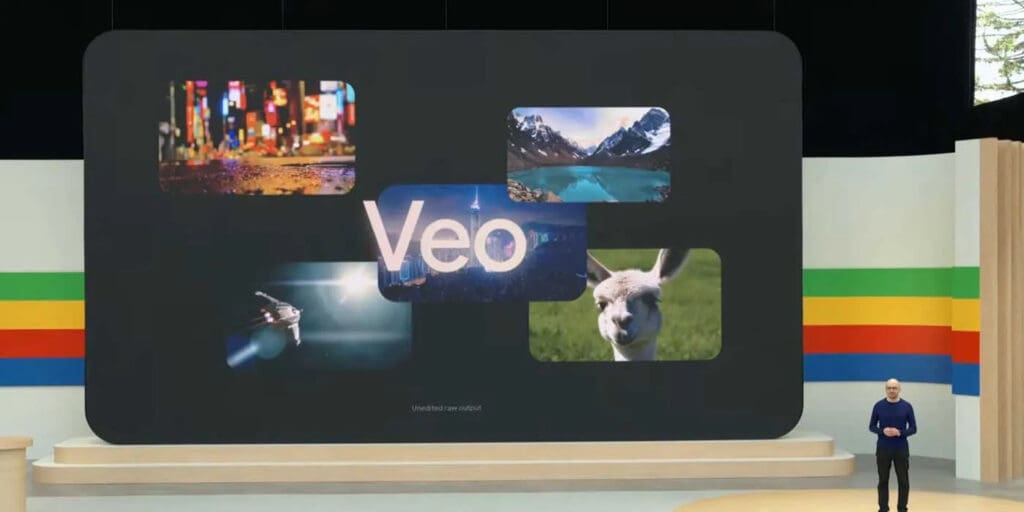
But while digging through this morning’s tech updates, I spotted a massive shift. Google just dropped Veo 3.1 Lite, and it completely changes the economics of AI video production. Let me break down why this is one of the most important updates for developers this year, and why “cheaper” finally doesn’t mean “worse.”
The End of API Anxiety: Half the Cost, Same Speed
When Google introduced the Veo lineup, the quality was undeniably impressive, but scaling it for high-volume projects was a tough pill to swallow for smaller teams. With Veo 3.1 Lite, Google is directly targeting the bottleneck of production costs.
Here is the absolute best part of this announcement: Veo 3.1 Lite operates at less than half the cost of the Veo 3.1 Fast model, without sacrificing generation speed. Think about what that means for a second. If I’m building a social media marketing tool where users generate dozens of short promotional clips a day, my profit margins just doubled overnight. I don’t have to compromise on the speed at which my users get their results. Fast rendering times are crucial for user retention—nobody wants to stare at a loading bar for five minutes to see a 4-second clip.
As a massive bonus, Google also announced that starting April 7, they are permanently slashing the price of the heavier Veo 3.1 Fast model as well. It’s a clear signal: Google wants to democratize video generation and get it into the hands of as many developers as possible.
What Exactly Does Veo 3.1 Lite Bring to the Table?
You might assume that a “Lite” model strips away the pro-level features, but looking at the specs, I was genuinely surprised by how robust this offering is. It bridges the gap between practical, everyday utility and professional requirements.
Here is what you get under the hood:
Dual Modality Generation: It supports both Text-to-Video (typing a prompt from scratch) and Image-to-Video (animating an existing static image). This is huge for creators who want to bring their AI-generated Midjourney or Stable Diffusion stills to life.Native Aspect Ratios: Unlike older models that force you to generate a square video and awkwardly crop it, Veo 3.1 Lite natively supports both 16:9 (horizontal) for YouTube and desktop viewing, and 9:16 (vertical), which is an absolute necessity for TikTok, Instagram Reels, and YouTube Shorts.High-Definition Outputs: You aren’t stuck with potato quality. The model offers both 720p and 1080p resolution options. For 90% of mobile-first content, 1080p is the gold standard.Granular Duration Control: You can generate clips in 4, 6, or 8-second intervals. This is a brilliant feature for managing costs. If you only need a quick B-roll transition, you pay for 4 seconds. If you need a longer establishing shot, you scale up to 8. You aren’t forced to pay for a 10-second render when you only need a fraction of it.
Who is Veo 3.1 Lite Actually For?
I don’t see this as a tool primarily designed for Hollywood studios trying to generate blockbuster CGI. Instead, this is the ultimate weapon for the high-volume creators and developers.
If I were running an automated faceless YouTube channel, a programmatic advertising agency, or a mobile app that turns user selfies into stylized animations, this is exactly the API I would hook into. It allows you to generate hundreds or thousands of clips a day without the terrifying end-of-month server bill.
It’s also a massive win for game developers. Imagine using Image-to-Video to rapidly prototype animated character portraits, environmental background loops, or cutscene animatics at a fraction of the cost of hiring a 3D animation team.
Getting Your Hands on It
If you want to start testing this right now, you don’t have to wait. Google has already opened the floodgates. As of today, Veo 3.1 Lite is live and accessible through the Gemini API and Google AI Studio on their paid plans.
I’m already planning to jump into AI Studio this weekend to test the latency and see how well the Image-to-Video feature handles complex lighting compared to the heavier models.
The AI video race is no longer just about who can make the most hyper-realistic dog walking down a street; it’s about who can make it affordable enough for the rest of us to actually use. Google just made a very aggressive move, and I expect the rest of the industry will have to adjust their pricing models fast to keep up.
I’m curious about how you would use this: If you had unlimited access to a cheap, fast AI video generator right now, what kind of app or content would you build first? Let’s brainstorm in the comments below!
Pune reported cyber fraud losses of ₹3.8 crore within a single week, highlighting the scale of India’s growing crypto-linked scam crisis.
The scams used different entry points, including fake police calls, WhatsApp trading groups, and crypto investment platforms, but followed the same pattern of psychological manipulation.
The use of cryptocurrency in these frauds makes tracking and recovery significantly harder, as stolen funds are quickly moved beyond the reach of Indian authorities.
Three major cyber fraud cases reported in Pune over the past week have collectively cost victims more than ₹3.8 crore. Each scam used a different entry point, but all three ran on the same operating system: manufactured trust, engineered urgency, and total psychological control over the victim’s decision-making.
The cases land at a time when Pune has already cemented its position as India’s most active cyber fraud hotspot, with crypto-linked losses across the city exceeding ₹20,000 crore when accounting for the GainBitcoin Ponzi, digital arrest frauds, and smaller investment schemes combined.
Scam 1: ‘Investigation call’ cheats 77-year-old of ₹1.62 cr
A 77-year-old resident of Kothrud lost ₹1,62,90,800 after receiving a phone call from fraudsters posing as police officials, as per a report by Pune Mirror. The caller told the victim that a bank account had been opened using his Aadhaar details and that transactions totaling ₹200 crore had been routed through it for cybercrime.
Using legal terminology and threats of arrest, the scammers created immediate panic. Under the pretext of “verification” and “clearing the case,” they instructed the victim to transfer money to multiple bank accounts. Believing the claims were genuine, the victim complied across multiple transactions. By the time the fraud was identified, ₹1.62 crore had already been moved across accounts.
“In such cases, fraudsters impersonate officials and create a sense of urgency so that victims act without verification. No investigation process involves transferring money to unknown accounts,” said Sangeeta Deokate, Police Inspector at the Pune Cyber Police Station.
This case follows a pattern that has exploded across India in recent months. The Ministry of Home Affairs told the Supreme Court that digital arrest scams alone have cost Indian citizens roughly ₹3,000 crore. Just weeks earlier, an 82-year-old Pune pensioner on Bhandarkar Road was cheated of ₹10.74 crore in nine days through the same playbook, with fraudsters arranging fake video court hearings featuring people posing as a judge and a lawyer.
Investigators traced part of those stolen funds through crypto exchanges linked to handlers in China and Hong Kong. The Supreme Court also recently denied bail in a ₹640 crore crypto scam case involving phishing and layered digital laundering, while a separate ₹2.65 crore digital arrest fraud saw bail rejected after investigators traced stolen money into cryptocurrency transactions.
Scam 2: Share trading fraud takes ₹1.51 cr from 65-year-old
A 65-year-old resident of Sahakar Nagar lost ₹1,51,44,817 in a share-trading scam that unfolded between December 2025 and February 2026.
The victim was first contacted through WhatsApp messages offering stock market tips and was added to a group where trading discussions and profit screenshots appeared genuine. The group admin posed as an expert investor and built the victim’s confidence over weeks. The group had multiple participants, regular updates and coordinated messaging, all designed to make the scheme look legitimate.
Over time, the victim was persuaded to transfer money to multiple bank accounts for “trading investments.” When the victim finally attempted to withdraw returns, no funds were released. Communication stopped entirely.
“Fraudsters often use WhatsApp groups and fake trading setups to build confidence. The presence of multiple participants and regular updates makes the scheme appear genuine,” Deokate explained.
This is the exact format that has drained Pune residents on an industrial scale. An 85-year-old lost ₹22.03 crore through a fake trading app earlier this year, leading to eight arrests. A ₹11.13 crore share market and IPO fraud was busted by the Pimpri Chinchwad cyber cell, with 8 accused arrested across Maharashtra and Rajasthan after the victim made 52 separate transfers.
According to Business Standard, more than 272 Pune residents lost a collective ₹125 crore to such trading scams between January 2024 and August 2024 alone, with each victim losing an average of over ₹45 lakh. A 51-year-old Army personnel posted at a defence establishment in Pune lost ₹40 lakh after being pulled in through Instagram and a fake trading app via WhatsApp. Even a cybersecurity expert in the city lost ₹73 lakh after being added to a WhatsApp group of over 100 members sharing fabricated profit screenshots.
Scam 3: Crypto fraud drains tech professional of ₹69 lakh
A tech professional from Lohegaon lost ₹69 lakh in a cryptocurrency investment scam that unfolded over several months in 2025. The case was later reported to the cyber police.
The fraud started with a message containing a suspicious link. After clicking it, the victim was contacted by individuals posing as crypto trading experts who guided him to download a trading application and invest in digital assets. The platform appeared legitimate and displayed rising profits, encouraging further investment. The victim transferred ₹69 lakh across multiple bank accounts linked to the fraudsters.
Despite the app showing profits exceeding ₹80 lakh, the victim was unable to withdraw any funds. Eventually, communication stopped, and the fraud became clear.
“In crypto-related frauds, fake platforms are designed to show profits on screen to gain trust. However, these figures are controlled by the fraudsters and do not reflect real investments,” said Swapnali Shinde, Senior Police Inspector at the Pune Cyber Police Station.
This crypto-specific fraud sits alongside a rapidly growing list of similar cases. A 66-year-old Kothrud businessman lost ₹21.63 lakh after a Facebook honey trap led him to a fraudulent crypto app that initially paid out 200 USDT and ₹60,000 to build trust before blocking withdrawals and demanding ₹29 lakh as a “processing charge.”
A 22-year-old Pune resident lost ₹2.5 lakh in crypto after being targeted through a fake Web3 job offer. An IT professional lost ₹1.5 lakh in Bitcoin after being threatened with arrest by someone posing as a Mumbai Police officer.
In a separate case reported in Ahmedabad, a 70-year-old advocate lost ₹57.9 lakh in a crypto scam using a fake U.S. exchange app and the same USDT hook tactic. And three senior citizens in Hyderabad lost a combined ₹4.4 crore to a WhatsApp investment scam, a digital arrest hoax, and a fake AI-powered crypto trading platform, with one 69-year-old retiree alone losing ₹1.89 crore.
Why crypto keeps showing up in India’s fraud cases
The reason cryptocurrency surfaces repeatedly in these cases is structural. Once stolen money enters the banking system, police can freeze accounts during what investigators call the “golden hours.” But when funds are converted into USDT or Bitcoin and moved through decentralized wallets, the trail breaks across blockchains and jurisdictions where Indian law enforcement has no reach.
India ranks first globally in grassroots crypto adoption per Chainalysis data, but still has no dedicated crypto regulatory framework. The 30% flat tax and 1% TDS have pushed an estimated 72.7% of trading volume offshore, onto platforms outside Indian compliance. Scammers exploit these same unregulated channels. Even legitimate exchanges are not immune to the crisis. CoinDCX identified more than 1,212 fake websites impersonating its platform between April 2024 and January 2026, and its co-founders were recently questioned after an FIR linked to a ₹71 lakh fraud carried out through a cloned domain.
The government’s PRAHAAR counter-terrorism strategy flagged the growing use of crypto wallets by criminal networks in February 2026. The CBI arrested Darwin Labs CTO Ayush Varshney at Mumbai airport on March 9 in connection with the ₹6,000 crore GainBitcoin Ponzi, India’s largest crypto scam.
A ₹19 crore USDT theft through a fake KYC scheme saw one of the three arrested suspects traced to Pune. And police in Madhya Pradesh uncovered a ₹100 crore crypto money trail leading to China, where scammers converted stolen funds into digital assets to bypass national banking rules entirely.
From April 1, 2026, new powers under the Income Tax Bill allow authorities to access crypto wallets, emails, and social media during authorized searches. Whether these tools translate into actual recoveries for victims remains an open question.
Why Pune cannot escape this tag
Pune is not India’s financial capital and not its largest tech hub. But it sits at a specific intersection that makes it disproportionately vulnerable: one of India’s largest retiree populations with significant savings and limited digital security awareness, a massive IT workforce that creates a wide surface for social engineering, proximity to Mumbai’s banking infrastructure, and a cybercrime policing setup that has not scaled with the threat. The city accounted for 26% of India’s total reported cyber fraud losses in 2024.
Maharashtra Chief Minister Devendra Fadnavis announced the establishment of a Centre of Excellence in Digital Forensics in Pune. But the proposal for additional cyber police stations and senior posts remains pending with the state government.
Nationally, over 24 lakh cybercrime complaints were filed in 2025 with reported losses of ₹22,495 crore. Of the ₹36,448 crore in cumulative losses reported since the portal launched, only ₹60.52 crore has been returned to victims.
Police advise citizens to report suspected fraud immediately through the national cyber helpline at 1930 or via cybercrime.gov.in. No government agency in India demands money over phone calls. No investigation process requires transferring funds to unknown accounts. No concept of “digital arrest” exists under Indian law.
Also Read: Industrialist Arrested in ₹315 Cr Crypto Fraud Case in India
Disclaimer: The information researched and reported by The Crypto Times is for informational purposes only and is not a substitute for professional financial advice. Investing in crypto assets involves significant risk due to market volatility. Always Do Your Own Research (DYOR) and consult with a qualified Financial Advisor before making any investment decisions.
Whenever I watch a rocket launch, I am completely captivated by the raw, explosive power of chemical propulsion. It is loud, it is bright, and it gets us off this rock. But whenever I start researching deep space missions—especially the ones aiming for Mars—I always hit the same depressing realization. Once we escape Earth’s gravity, we are actually traveling incredibly slowly.
Right now, a trip to Mars using traditional chemical rockets takes about 10 agonizing months. Try to imagine sitting in a tin can for almost a year, bombarded by cosmic radiation, dealing with zero-gravity muscle atrophy, and consuming massive amounts of packed supplies. It is a logistical nightmare.
That is exactly why I was genuinely thrilled to see the latest announcement from the UK-based startup Pulsar Fusion. They didn’t just publish another theoretical whitepaper; they actually crossed a massive physical threshold. They successfully generated “first plasma” in their Sunbird nuclear fusion rocket.
Let me walk you through why this isn’t just another incremental update in aerospace engineering, but a foundational shift that could unlock the solar system for us.
Breaking the Deep Space Speed Limit
To understand why Pulsar Fusion’s recent test is such a big deal, we need to look at the current state of getting around in space. Today’s spacecraft basically rely on two very different propulsion methods, and honestly, both have glaring flaws when it comes to deep-space travel.
Chemical Rockets: Think of the Falcon 9 or the Saturn V. They give you a massive, violent burst of thrust, which is exactly what you need to fight Earth’s gravity. But their exhaust velocity is relatively low. Once you are in the vacuum of space, they burn through their fuel incredibly fast, meaning you can’t keep accelerating. You essentially do a short burn and then just coast for months.Electric/Ion Thrusters: These are super efficient. They shoot out particles at extremely high exhaust velocities, meaning they use very little propellant. The catch? The actual thrust they generate is tiny. I often compare it to the weight of a piece of paper resting on your hand. They can build up impressive speeds over time, but it takes months of continuous, agonizingly slow acceleration.
This is the propulsion trilemma: you either get high thrust (chemical) or high efficiency (electric), but never both.
This is exactly where the Sunbird fusion rocket steps in and shatters the rules.
“First Plasma”: The Engine of a Star
At the heart of Pulsar Fusion’s ambition is the Dual Direct Fusion Drive (DDFD). When I read that they achieved “first plasma” in their testing facilities, I realized they are moving out of the simulator and into the real world.
Nuclear fusion is the exact same process that powers the sun. It involves taking light atomic nuclei and smashing them together so hard that they fuse, releasing a terrifyingly beautiful amount of energy. Unlike nuclear fission (what we use in modern power plants), fusion doesn’t leave behind long-lived, high-level radioactive waste. It is clean, but it is notoriously difficult to sustain because it requires extreme temperatures and pressures.
So, how does this work in a rocket? Instead of mixing highly explosive liquids like traditional rockets, the Sunbird system takes a gas and superheats it until it turns into a plasma. In these recent tests, the team used krypton gas. I find this choice fascinating because krypton has high ionization efficiency and stability, making it perfect for generating and controlling plasma.
Once the gas becomes a super-hot, electrically charged plasma, the magic happens.
Because the plasma is charged, the engine uses immensely powerful magnetic fields to trap it and keep it from melting the physical walls of the engine. Then, using electric fields, the engine accelerates this burning plasma and shoots it out the exhaust nozzle at mind-bending speeds.
The Ultimate “Space Tug”
One of the most brilliant aspects of Pulsar Fusion’s strategy is that they aren’t trying to build a sci-fi ship that takes off from your backyard and lands on Mars. They are being incredibly pragmatic about how this technology will actually be deployed.
The Sunbird isn’t designed to carry passengers from the surface of the Earth. Instead, I like to think of it as the ultimate orbital space tug. Here is how the logistics will work:
Orbital Deployment: The Sunbird vehicle will be stationed in Low Earth Orbit (LEO) or docked at large space stations.Payload Link-up: We will use traditional, cheap chemical rockets to launch cargo (or a crew module) up to orbit.The Deep Space Burn: The Sunbird will attach to the payload. Using its fusion drive, it will push a 1,000 to 2,000-kilogram payload toward Mars, cutting the travel time down to under 6 months.Recycling: Once it reaches the destination orbit, the Sunbird detaches, parks itself at a local orbital station, and waits for its next job.
It is an infrastructure play. They are building the interstellar highway, not the family sedan.
Powering the Ship While Pushing It
While reading through the technical specs, one number really jumped out at me: 2 Megawatts.
The DDFD isn’t just a propulsion system. It is designed to act as a massive power plant for the spacecraft itself. When you are flying a traditional ship to Mars, you rely on solar panels (which get weaker the further you go from the sun) or small radioisotope thermoelectric generators (RTGs). Power is severely limited, which limits the scientific instruments you can run and the life support systems you can maintain.
If the Sunbird can generate 2 megawatts of continuous power, it changes everything. It means we could power heavy-duty communication lasers for high-definition video calls from Mars, run advanced onboard AI systems, and maintain robust, comfortable life-support habitats for astronauts.
And then there is the efficiency. The team is targeting a specific impulse of 10,000 to 15,000 seconds. If you are a space nerd like me, you know that number is staggering. It basically means the rocket gets an absurd amount of “miles per gallon” out of its propellant. It completely outclasses chemical rockets while providing the actual “push” that ion thrusters lack.
The Road to 2027: Will It Actually Work?
I try to stay grounded when looking at aerospace startups because the graveyard of failed space concepts is massive. Achieving “first plasma” is a monumental milestone, but I also know that maintaining a stable, sustained fusion reaction long enough to propel a ship across the solar system is one of the hardest engineering challenges humanity has ever faced.
Pulsar Fusion is planning an in-orbit test of the Sunbird’s core components by 2027. That orbital test will be the real moment of truth. Operating a magnetic confinement system in a terrestrial lab is one thing; doing it in the harsh vacuum and microgravity of space is a completely different beast.
Furthermore, this “space tug” model requires an orbital infrastructure that doesn’t fully exist yet. We will need orbital docking stations, refueling depots for the krypton or whatever plasma medium they ultimately use, and a robust lunar economy to support it.
Despite the towering hurdles, I cannot help but feel optimistic. For decades, fusion propulsion was something I only read about in hard sci-fi novels. Now, there are engineers in the UK actually firing up plasma streams and preparing for orbital tests. We are finally moving away from the brute-force method of burning chemical fuel and starting to harness the fundamental physics of the universe to travel.
If we pull this off, the solar system suddenly becomes our backyard rather than a distant, unreachable frontier.
I’m curious about your perspective on this. Do you think we are actually ready to manage nuclear fusion engines in orbit, or should we be focusing all our efforts on perfecting the chemical rockets we already have? Let’s discuss it in the comments
Published: April 01, 2026 at 10:36 am Updated: April 01, 2026 at 10:37 am
by Anastasiia O
Edited and fact-checked:
April 01, 2026 at 10:36 am
To improve your local-language experience, sometimes we employ an auto-translation plugin. Please note auto-translation may not be accurate, so read original article for precise information.
In Brief
PrismML emerged from stealth and launched Bonsai, a tiny open-source AI model that shows strong intelligence for its size and is able to run on consumer hardware.
PrismML, a California-based AI research lab, has unveiled a new family of 1-bit Bonsai models designed to deliver advanced intelligence directly to devices where people live and work, rather than confining AI to large data centers.
Emerging from research conducted at Caltech, PrismML said its work focuses on maximizing “intelligence density,” a measure of the useful capability a model can deliver per unit of size and deployment footprint. This approach contrasts with traditional AI development, which typically emphasizes increasing model size and parameter count at the cost of deployability and efficiency.
The lab’s flagship model, 1-bit Bonsai 8B, features a full 1-bit design across all components, including embeddings, attention layers, MLP layers, and the output head, with no higher-precision fallback layers. At 1.15 GB, the model is approximately 14 times smaller than comparable 16-bit models in the same parameter class, yet PrismML reports that it maintains competitive performance across standard benchmarks. The reduced size enables deployment on devices such as iPhones, iPads, and Macs, as well as standard GPUs, delivering faster inference and lower memory usage than traditional large-scale models.
PrismML emphasizes that the breakthrough is not only about performance but also about where AI can operate. Smaller, efficient models allow for lower-latency applications, enhanced privacy through on-device computation, and continued functionality in offline or bandwidth-constrained environments.
Potential applications include persistent on-device agents, real-time robotics, enterprise copilots, and AI-native tools designed for secure or resource-limited settings. PrismML argues that concentrated intelligence expands the design space for AI, making systems more responsive, reliable, and broadly deployable.
Expanding Bonsai: Smaller 1-Bit Models Extend Efficiency And Intelligence To Edge Devices
In addition to Bonsai 8B, PrismML has introduced smaller models, 1-bit Bonsai 4B and 1.7B, which extend the same efficiency and intelligence density principles to reduced model sizes. Early demonstrations show high throughput, energy efficiency, and competitive benchmark accuracy across the family. The lab also noted that the models run effectively on current commercial hardware and that future devices optimized for 1-bit inference could deliver even greater efficiency gains.
PrismML’s release represents a broader shift in AI development, emphasizing concentrated intelligence and portability over sheer scale. The lab envisions a future in which advanced AI operates seamlessly across cloud and edge devices, making intelligent systems accessible wherever they are needed. The 1-bit Bonsai models are available under the Apache 2.0 license, supporting deployment across Apple devices, NVIDIA GPUs, and a range of other platforms.
Disclaimer
In line with the Trust Project guidelines, please note that the information provided on this page is not intended to be and should not be interpreted as legal, tax, investment, financial, or any other form of advice. It is important to only invest what you can afford to lose and to seek independent financial advice if you have any doubts. For further information, we suggest referring to the terms and conditions as well as the help and support pages provided by the issuer or advertiser. MetaversePost is committed to accurate, unbiased reporting, but market conditions are subject to change without notice.
About The Author
Alisa, a dedicated journalist at the MPost, specializes in cryptocurrency, zero-knowledge proofs, investments, and the expansive realm of Web3. With a keen eye for emerging trends and technologies, she delivers comprehensive coverage to inform and engage readers in the ever-evolving landscape of digital finance.
More articles
Alisa, a dedicated journalist at the MPost, specializes in cryptocurrency, zero-knowledge proofs, investments, and the expansive realm of Web3. With a keen eye for emerging trends and technologies, she delivers comprehensive coverage to inform and engage readers in the ever-evolving landscape of digital finance.
PeckShield flagged a $950K exploit on the LML staking protocol on Binance Smart Chain (BSC).
LML token crashed 99.6% on PancakeSwap, dropping from approximately $50 to $0.1758 USDT, according to DexTools chart data.
The exploiter converted stolen funds to 450.6 ETH and routed them into Tornado Cash across multiple deposits ranging from 0.1 to 100 ETH each.
Blockchain security firm PeckShield has flagged a $950,000 exploit targeting the LML staking protocol on Binance Smart Chain. The attack, confirmed via analysis from BlockSec Phalcon, involved a classic price manipulation strategy targeting the protocol’s vulnerable spot-price dependency.
The attacker manipulated the LML token price by executing large swaps on PancakeSwap, artificially inflating its value. Once the token price was pumped, the attacker staked LML to claim amplified rewards at the manipulated snapshot price. The rewards were then sold at a higher spot price, draining the staking contract before the pool could recalibrate. This left genuine LML holders exposed to devastating losses.
LML Price Crash
The impact on the LML token was immediate and severe. According to DexTools data, LML/USD had been trading in the $50–$55 range before the exploit. The attacker’s dump obliterated the token’s value, sending it to $0.1758—a crash of 99.66%. The token had reached a recorded high of $73.62 shortly before the collapse, suggesting the attacker may have artificially inflated the price as part of the manipulation before executing the dump.
On-chain transaction records show the exploiter quickly converted the stolen funds into 450.6 ETH and began routing them through Tornado Cash, the Ethereum-based privacy mixer, in batched deposits ranging from 0.1 to 100 ETH. This laundering pattern mirrors recent high-profile exploits, making fund recovery increasingly unlikely.
The LML exploit follows a disturbing pattern of staking contract vulnerabilities on BNB Chain. Just days earlier, an attacker drained $133K from a TUR staking contract on BSC using an identical attack vector—manipulating spot prices in a liquidity pool to inflate staking rewards.
Earlier this month, the DBXen staking protocol lost $150K after an attacker exploited an ERC2771 meta-transaction bug to spoof sender identity and claim accumulated rewards. And in March, Venus Protocol suffered a $3.7 million oracle manipulation attack that left $2.15 million in bad debt—another case where thin on-chain liquidity enabled price manipulation.
The use of Tornado Cash for obfuscation continues to be a post-exploit standard despite its ongoing legal challenges. Tornado Cash co-founder Roman Storm faces an October retrial on money laundering and sanctions charges in the U.S.
PeckShield’s data shows that crypto-related hacks drained over $52 million in March alone. With staking protocols on BSC repeatedly falling to the same class of spot-price manipulation attacks, developers face mounting pressure to adopt time-weighted average price (TWAP) oracles, external price feeds like Chainlink, and stricter audit standards before going live.
Disclaimer: The information researched and reported by The Crypto Times is for informational purposes only and is not a substitute for professional financial advice. Investing in crypto assets involves significant risk due to market volatility. Always Do Your Own Research (DYOR) and consult with a qualified Financial Advisor before making any investment decisions.
I got actual chills while researching this. We spend so much time talking about AI writing code, generating art, or driving cars, but the most dangerous job on Earth is finally being handed over to machines, and I am absolutely fascinated.
Imagine hanging from a helicopter or climbing hundreds of feet into the air just to fix a wire carrying tens of thousands of volts. For decades, human line workers have risked their lives daily to keep our lights on. But that is about to change, and honestly, it’s about time.
The Deadliest Job Gets a High-Tech Upgrade
When I first watched the footage of these AI-powered robots climbing high-voltage power lines, my jaw dropped. They aren’t just bulky pieces of metal; they are highly autonomous, intelligent machines designed to operate where humans shouldn’t have to.
Here is the craziest part: they fix the lines while the electricity is still actively running. Usually, to perform safe maintenance on a major grid, utility companies have to shut off the power. That means rolling blackouts, disrupted businesses, and frustrated cities. But these new robots are insulated and designed to handle live wires. Tens of thousands of volts are flowing right through the cables they are gripping, yet they maneuver with absolute precision.
How Do They Actually Work?
You might be wondering how a robot balances on a thin wire while avoiding a catastrophic short circuit. The secret lies in the sensors.
These robots use LiDAR technology—the same laser-scanning tech used in autonomous vehicles—to map the power lines and their surroundings in real-time 3D.
Millimeter Precision: The AI processes the LiDAR data instantly, allowing the robot to detect fraying cables, structural micro-fractures, or vegetation interference before it becomes a hazard.Autonomous Navigation: They don’t need a human constantly steering them with a joystick. They analyze the line and move themselves.Weather Resistance: Wind and rain that would ground a human crew don’t bother a perfectly balanced, heavy-duty drone-bot.
Why I Think This Changes Everything
I truly believe this is a massive leap for our global energy future, especially with the severe grid crises we are facing worldwide. Aging infrastructure is causing massive wildfires and prolonged outages. We simply cannot fix it fast enough using traditional methods.
From my perspective, the benefits are too huge to ignore:
Operations are done twice as fast: What takes a human crew hours of safety prep, climbing, and securing takes a robot a fraction of the time.Zero Power Cuts: Maintaining the grid without shutting off the juice is a massive economic win for cities.Human Lives Saved: We are completely eliminating the risk of electrocution and fatal falls for utility workers.
I look at this and see a perfect example of what robotics should be doing—taking on the tasks that put human lives in jeopardy. Instead of replacing creative jobs, AI is out there hugging 500kV power lines so we don’t have to.
I’m curious to hear your take on this. Would you feel safer knowing an autonomous AI robot is maintaining the high-voltage grid powering your city, or do you think human hands-on oversight is still strictly necessary for something this critical?
Time really does fly. Six months later, The Wrong Biennale is coming to a close on March 31, 2026.
The Wrong Biennale is an international digital art exhibition that takes place both online and in physical galleries and is seen by millions worldwide.
The seventh edition, running from November 1, 2025, to March 31, 2026, focused on artificial intelligence in art. It features work across visual art, video, text, and sound, highlighting how artists are using AI and machine learning in their creative process.
Over time, it has grown into a major global community and a key event in the digital art world.
Making that last-minute decision to participate in The Wrong Biennale showed us one thing quickly: virtual exhibitions are not so different from the real world. The expectations, the deadlines, and the collaboration all operate at the same level.
We came in late with a simple directive: to build an exhibit using AI. What followed was a fast push to find artists, meet the entry deadline, and not only curate an in-world show, but also create a website pavilion that could translate our exhibits, and OpenSim as well, to an outside audience. The result was more than we could have hoped for.
Finding the artists was the easy part. We had already worked with all of them before. We knew their work, their drive, and their dedication. With a tight deadline and a show of this magnitude, that level of trust made a difference. I had the pleasure of working one-on-one with each artist on their online exhibits, combining images with video showcasing their work. It was such a great experience, I’d work with all of them again in a heartbeat.
What surprised us most about the AI-inspired art was how different the outcomes were. Despite a shared requirement to use AI, no two exhibits were alike. The artists approached the technology in completely different ways; some used it to enhance their work, while others allowed it to shape the entire concept. The takeaway was clear. The tool used may be the same, but the vision behind it makes all the difference.
While the show was about technology, what happened behind the scenes was entirely human. Many of us had worked together before, some only in passing. This time was different. We got to know each other, not just as creators, but as collaborators. This was truly a group effort.
We workshopped AI tools together, traded tips and techniques, shared discoveries, and at times, our frustrations. There was a genuine sense of wanting everyone to succeed. Instead of competing for attention, we helped each other shine, and that made the final exhibition stronger than anything any one of us could have created alone.
“Helping to curate a two-month build with fifteen artists was initially a daunting idea, but it became one of the most rewarding collaborative experiences I’ve had,” said Cooper Swizzle, a curator and artist on Kitely and The Curiosity Zone. “The group’s energy, generosity, and willingness to learn from one another made the process exceptional.”
This show also took on a deeper meaning for us. It became the final exhibition for artist Luna Lunaria of Wolf Territories. She sadly passed away shortly after the show began. At the time, we were focused on the work, the deadlines, the build, the collaboration, but looking back, it feels different. It was a last chance to create with her, to share ideas, and hang out. Her work, and her presence, remain part of the show, and a lasting part of her legacy. She will be deeply missed.
“Luna was not only an incredible artist, but an extraordinary friend,” said artist Star Ravenhurst of the Tenth Dimension grid. “She was always willing to lend a hand, share her talents, and support others in their creative endeavors. Knowing her and having the chance to work alongside her was truly an honor.”
Luna Lunaria. (Image courtesy Kimm Starr.)
Blending the real world with the virtual isn’t new; people in OpenSim have been doing it for years. But for us, being accepted into a large real-world show was genuinely exciting. The idea that people outside of OpenSim would see our work was new to us, and we were ready for it.
Between the real world and the virtual. (Image courtesy Kimm Starr.)
“This won’t be our last time participating in real-world art shows; we’re already looking for the next opportunity,” said Koshari Mahana, curator and artist on Kitely and The Curiosity Zone. “There’s so much talent in OpenSim that deserves more visibility, and it would be great to share more of it with the outside world.”
The response has been amazing. The Synthetic Dreams website, our online pavilion for the Wrong, has well over 2,000 views. The in-world exhibit welcomed hundreds of visitors with over a thousand visits overall. We were featured on The Wrong’s Instagram as well as their official press page. We also had the pleasure of hosting visits from the Virtual Worlds Education Consortium, Thirza Ember’s Hypergrid Safari, not once but twice, and a tour led by Thirza from the OpenSimulator Community Conference during the conference weekend.
Visitors to the exhibit. (Image courtesy Thirza Ember.)Thirza Ember
“The Synthetic Dreams Pavilion was an amazing achievement,” said Hypergrid Safari’s Thirza Ember. “So many thoughtful and beautifully constructed installations. The sheer inventiveness in both the concepts it explored and the techniques used to convey them was a real eye opener. What a treat!”
After the Hypergrid Safari, Roland Francis shared his thoughts on the Safari blog. “This is truly exceptional digital artwork,” he said in a comment. “So high level, it blew my socks off at every click, which brings you to an even deeper experience of detailed visuals. What a marvelous blend of flavors, those mesmerized interpretations of real-life artists and their work.”
(Image courtesy Thirza Ember.)
“Synthetic Dreams was a remarkable experience, filled with creativity, beauty, humor, and a sense of wonder,” said Carla Kincaid Yoshikawa, a consultant at Training in the 21st Century. “The artists crafted immersive 3D environments, using AI as a tool to bring their visions to life. Each exhibit was uniquely compelling, at times beautiful, mystical, informative, provocative, and always engaging.”
“I created a video using the exhibit as a case study, not only to highlight AI as a creative tool, but also to demonstrate how environments built within 3D worlds can function artistically, socially, and educationally,” she added. “Hats off to the curators and to all the artists who made this experience so memorable.”
“What I took away most is how art inspires art,” said artist Forrest Azzure. “As I wandered through the expo, the dreamy builds I encountered started to stir poetic lines within me. Would I do it again? Yes, but not using AI. What we created was a statement that only needed to be made once.”
Artist exhibits.Yeelinda Blue
“Based on this experience, I’m excited for future collaborations and eager to keep pushing the boundaries of what’s possible,” said Kitely artist Yeelinda Blue. “To all of the artists, thank you for making this journey unforgettable.”
As The Wrong Biennale comes to a close, the lessons we’ve learned are what we’ll carry with us. While the show’s theme was AI, it wasn’t the focus after all. It was just a tool, one that helped us explore new directions and bring something unexpected to life. In the end, though, it was about the artists and their creativity.
Virtual and real are no longer separate spaces. They operate with the same expectations, the same standards, and the same potential to connect people.
We saw what can happen when collaboration replaces competition. And we saw that the work we create in OpenSim doesn’t have to stay contained, but can reach far beyond it.
Most of all, we were reminded that behind every build, every exhibit, and every idea, it’s the people who make it matter, and the mark they leave behind.
In the end, The Wrong turned out to be exactly the right thing to do. And yes, without a doubt, we’d do it all over again.
Ilan Tochner
While The Wrong Biennale officially wraps up at the end of March, Ilan Tochner, owner of Kitely, has generously extended the exhibit for an additional three months till June 31st, 2026.
“The Wrong Biennale Pavilion, Synthetic Dreams, is a great example of what OpenSim creators can achieve,” said Kitely CEO and co-founder Ilan Tochner. “It would have been a shame to shut it down, so we offered to extend it by another three months. We’re proud to host such a strong exhibit in Kitely and highly recommend that anyone who hasn’t seen it yet take this opportunity to visit.”
Visit the Wrong Biennale Pavilion at the Kitely Expo Center via hypergrid at grid.kitely.com:8002:Kitely Expo Center.
Cooper Swizzle contributed to this story.
Kimm Starr is a digital artist and creator known for her dedication to pushing the boundaries of virtual expression within OpenSim.