Published: August 31, 2025 at 9:00 am Updated: August 29, 2025 at 9:18 am
by Ana
Edited and fact-checked:
August 31, 2025 at 9:00 am
To improve your local-language experience, sometimes we employ an auto-translation plugin. Please note auto-translation may not be accurate, so read original article for precise information.
In Brief
BlackRock is strategically expanding its thematic ETF offerings in 2025, focusing on cryptocurrency, artificial intelligence, and infrastructure to capitalize on emerging market trends and interconnected growth opportunities.
BlackRock’s 2025 ETF Playbook: Crypto, AI, and Infrastructure
In recent years, BlackRock has become a major force in the rapidly changing space of exchange-traded funds (ETFs) notably in the area of cryptocurrency and artificial intelligence (AI).
Led by Jay Jacobs, Head of Thematic and Active ETFs, BlackRock appears to have set itself up to be a big winner in these rapidly changing environments.
Cryptocurrency has gone from an asset class associated with a speculative transactions, to an investment product for BlackRock.
Bitcoin and Ethereum ETFs
The launch of BlackRock’s iShares Bitcoin Trust (IBIT) and iShares Ethereum Trust (ETHA) marked the company’s first foray into cryptocurrency ETFs. IBIT gained instant recognition, quickly surpassing $80 billion in assets. This makes IBIT one of the fastest-growing ETFs of all time, in addition to ETHA crossing $16B in AUM.
Jay Jacobs, BlackRock’s U.S. head of equity ETFs, said that there is clearly increased interest in crypto-related investments. Investors are increasingly looking to get exposure to digital assets through an ETF structure; you can invest in it like any other ETF, and it’s also a regulated and transparent investment vehicle. Jacobs also warned that investors should be wary of the extreme volatility and regulatory uncertainty surrounding cryptocurrencies
BlackRock’s growth in crypto ETFs was not an isolated trend, as institutional investors showed increasing appetite for digital assets as part of diversified portfolios. This change can be attributed to on-going adoption of blockchain technology and regulatory clarity for markets such as the United States.
XRP ETF Considerations
Despite the growing interest in XRP, especially following the SEC’s settlement with Ripple, BlackRock has stated it currently has no plans to file for a U.S. spot XRP ETF . This cautious approach contrasts with other asset managers who have already filed for XRP ETFs. Analysts speculate that BlackRock is awaiting deeper liquidity and stronger institutional demand before entering this space.
Bloomberg’s senior ETF analyst, Eric Balchunas, has expressed skepticism about BlackRock’s potential entry into the XRP ETF market. He suggests that the firm may be satisfied with its existing crypto offerings and may not pursue additional products in the near term.
However, other analysts believe that BlackRock’s cautious approach may be a strategic move to ensure that any new ETF offerings meet the firm’s rigorous standards and align with market demand.
Infrastructure: Capitalizing on Global Rebuilding Efforts
Infrastructure investment is experiencing a renaissance, driven by government initiatives and private sector involvement. BlackRock’s U.S. Infrastructure ETF (IFRA) positions investors to benefit from the rebuilding of physical economies, especially in the post-election environment.
The IFRA is part of a broader infrastructure ETF suite valued at over $10 billion, which includes the iShares Global Infrastructure ETF (IGF) and the iShares U.S. Digital Infrastructure and Real Estate ETF (IDGT).
The mid-2025 thematic update from BlackRock emphasizes the significance of infrastructure in the current investment landscape. The report indicates that geopolitical fragmentation and a global push to support reshoring are creating opportunities in infrastructure sectors.
Jacobs states that an attractive aspect of infrastructure investments is the combination of long-term capital appreciation potential, with stable yield. Jacobs believes the investments can provide a hedge against inflation while allowing for diversification in one’s portfolio.
Artificial Intelligence: The Next Frontier in Thematic Investing
Artificial intelligence is rapidly evolving, with applications spanning from data analytics to automation and beyond. BlackRock’s iShares Future AI & Tech ETF (ARTY) offers exposure to companies at the forefront of AI advancements, including those involved in semiconductor manufacturing and AI model development .
The firm’s mid-year thematic update underscores AI’s growing influence on various sectors. The report highlights that AI’s development is driving significant capital expenditure across industries, particularly in energy infrastructure and the labor market .
Jacobs points out that AI is changing technology companies, but also traditional industries. He notices companies in virtually all industries are integrating AI to increase efficiencies and innovate, which in turn creates new investing opportunities.
Jacobs mentions that AI is changing not just tech companies, but also traditional industries. He notes businesses from various sectors are using AI to boost efficiency and innovation, as a result generating new investment options. Investment professionals agree with Jacobs’ view that AI is a transformative change for investing.
Thematic investing in particular which focuses on long term trends and innovations is gaining ground as investors want to capitalize on sectors that are primed for significant growth. BlackRock’s thematic ETFs ARDI and BAI are well positioned to benefit from this seismic change as they offered targeted exposure to AI and some pendulum technologies.
Merging Themes for Optimal Portfolio Construction
BlackRock is pursuing thematic investing by linking these three sectors—crypto, infrastructure, and AI—into interconnected investment strategies. By linking exposure to physical and digital asset infrastructure as well as technological disruption, investors can construct an investment portfolio that is designed to capture several various growth enablers.
Jacobs notes that the key to understanding these themes is to appreciate how they all play off one another. For instance, growth in AI is driving demand for new physical infrastructures like data centers and communication networks, all while impacting blockchain technology as well.
The same can be said with the rise of digital assets as it applies to investing in blockchain network-related infrastructures. This fairly systematic investing approach allows investors to tap into diversification across sectors in which some or all subjects are complexly interrelated and reinforced, which may provide long run-risk adjusted returns.
BlackRock’s Thematic ETFs
BlackRock’s thematic exchange traded funds in cryptocurrency, infrastructure and AI show a calculated response to market transformation. Along with the specific exposure to the themes created by these sectors, BlackRock allows investors to align their portfolios to emerging opportunities. As the investment ecosystem continues to evolve, these ETFs can be useful in navigating today’s markets.
Disclaimer
In line with the Trust Project guidelines, please note that the information provided on this page is not intended to be and should not be interpreted as legal, tax, investment, financial, or any other form of advice. It is important to only invest what you can afford to lose and to seek independent financial advice if you have any doubts. For further information, we suggest referring to the terms and conditions as well as the help and support pages provided by the issuer or advertiser. MetaversePost is committed to accurate, unbiased reporting, but market conditions are subject to change without notice.
About The Author
Alisa, a dedicated journalist at the MPost, specializes in cryptocurrency, zero-knowledge proofs, investments, and the expansive realm of Web3. With a keen eye for emerging trends and technologies, she delivers comprehensive coverage to inform and engage readers in the ever-evolving landscape of digital finance.
More articles
Alisa Davidson
Alisa, a dedicated journalist at the MPost, specializes in cryptocurrency, zero-knowledge proofs, investments, and the expansive realm of Web3. With a keen eye for emerging trends and technologies, she delivers comprehensive coverage to inform and engage readers in the ever-evolving landscape of digital finance.
Published: August 30, 2025 at 12:00 pm Updated: August 29, 2025 at 8:40 am
by Ana
Edited and fact-checked:
August 30, 2025 at 12:00 pm
To improve your local-language experience, sometimes we employ an auto-translation plugin. Please note auto-translation may not be accurate, so read original article for precise information.
In Brief
Bitcoin’s dominance is declining and Ethereum is gaining momentum, suggesting that if an altcoin season occurs in 2025, it will likely be selective, narrative-driven, and supported by institutional capital rather than a broad market surge.
Altcoin Season 2025: Are We Finally There?
For years, the crypto community has been eagerly awaiting the arrival of the so‑called “altcoin season” — a period when alternative cryptocurrencies outperform Bitcoin. In 2025, the debate is alive again as Bitcoin’s dominance slips and Ethereum surges. But is this the real thing, or just another round of false alarms?
Bitcoin Dominance Under Pressure
Bitcoin’s market dominance has traditionally been the compass for crypto cycles. After holding above 66% as recently as June, Bitcoin’s share of the overall market has now fallen below 60% for the first time in half a year. Analysts suggest this isn’t a random wobble.
The decline mirrors previous five‑wave patterns that marked transitions in market leadership. The implication is clear: capital is rotating away from Bitcoin, with altcoins absorbing more attention and inflows.
According to Stefan Burgherr, Head of Research at 21Shares, the shift away from Bitcoin dominance is becoming more apparent. He noted that investors are no longer treating BTC as the sole benchmark of growth.
Instead, he described altcoins as becoming “a necessary part of portfolio diversification,” particularly for those seeking exposure to new narratives in Web3 and decentralized finance.
Ethereum at the Center of Attention
Ethereum is once again leading the charge. Over the past month, ETH has jumped nearly 18%, compared to Bitcoin’s modest 5% drop.
With spot Ethereum ETFs attracting more than $2.3 billion in inflows — including a record $1 billion in a single day — institutional confidence appears to be solidifying. Treasury holdings of ETH now exceed $16.5 billion, led by firms like BitMine and SharpLink.
On‑chain fundamentals reinforce this picture. The total value locked in Ethereum’s DeFi ecosystem is hovering around $96 billion, showing that the network remains a hub for real economic activity.
Matt Cobb, digital asset strategist at JP Morgan, described Ethereum as “the gateway” for many investors transitioning from Bitcoin into other assets.
He explained that ETH’s position as the foundation for smart contracts, stablecoins, and DeFi activity ensures it remains the first stop when capital begins rotating away from BTC.
The Altcoin Season Index: Still Neutral
A popular tool, the Altcoin Season Index, measures how many top altcoins outperform Bitcoin over a 90‑day period. A reading of 75 or higher typically signals that altseason has arrived.
As of late August, the index sits near 45–50, placing the market firmly in neutral territory. While this indicates we aren’t yet in full altseason, the direction of movement has caught attention.
For now, trading volumes still concentrate heavily on Bitcoin and Ethereum, with only limited spillover to mid‑cap and smaller coins. Until broader capital rotation occurs, many analysts caution that altseason calls may be premature.
Institutional Capital: A Double‑Edged Sword
Institutional involvement has transformed the altcoin conversation. The launch of spot Bitcoin and Ethereum ETFs in 2024 opened the door for pension funds and banks to allocate billions.
More than $65 billion has flowed into these products since their debut, the majority into Bitcoin. Still, a growing portion is finding its way to ETH and a select group of large‑cap altcoins such as Solana, Toncoin, and BNB.
According to Geoff Thielen, Head of Market Strategy at Matrixport, institutional investors are increasingly willing to view altcoins as “legitimate assets,” not just speculative plays. He pointed to rising demand for structured products and derivatives linked to Ethereum and Solana as evidence that altcoins are entering a new phase of maturity.
Thielen noted that the conversation among institutions has shifted from whether altcoins should be considered at all to how best to gain exposure without taking outsized risks. This shift could provide a more stable foundation for an extended altcoin season.
Startups are also feeling the effects. In regions struggling with inflation, such as Argentina, companies are adopting stablecoin‑based payrolls to protect workers from currency depreciation. This growing trend underscores the practical role of altcoins in real economies, though it may not translate into sweeping market rallies.
Oversupply and the Rise of Memecoins
A challenge for altseason believers is sheer token oversupply. Platforms such as Pump.Fun have enabled the creation of tens of thousands of new tokens per day, many of them memecoins with little fundamental value. By some counts, more than 12 million tokens have been added to the market in the past year alone.
Craig Cobb, the Grow Me Co founder, stated on X that this glut dilutes attention and liquidity. One trader compared the situation to the dot‑com bubble, warning that “not every ship will rise” this time. Instead, the proliferation of low‑quality projects increases the likelihood of sharp corrections and opportunities for short sellers.
A Selective, Narrative‑Driven Cycle
Experts like Bitfinex’s Jag Kooner increasingly believe that if an altseason emerges, it will be narrower and more selective. Sectors tied to specific narratives — artificial intelligence, real‑world assets, or decentralized physical infrastructure networks (DePIN) — may outperform, while weaker projects languish.
Kooner noted that this cycle could be “more selective and narrative‑driven” rather than a blanket rally.
This reflects a maturing ecosystem. With more than 10,000 tradable tokens, investors are no longer indiscriminately buying every project. Instead, the market rewards those with visible traction, clear utility, and regulatory clarity.
Skeptics of Altseason
Not everyone believes altseason is imminent. Some researchers argue that retail investors remain largely sidelined, while institutions have strict mandates preventing them from diving into smaller, high‑risk coins. Without retail exuberance, the conditions for a broad altcoin surge may not materialize.
Others point out the absence of strong narratives comparable to past cycles. During the 2020–21 bull market, DeFi and NFTs created explosive demand for altcoins. In contrast, 2025 lacks a unifying story.
As 10x Research’s Markus Thielen put it, there is currently “no narrative” compelling enough to spark widespread adoption beyond Bitcoin and Ethereum.
Unlocking schedules are another headwind. Roughly $59 billion worth of vested tokens are set to enter circulation this year, creating selling pressure that could cap upside potential.
The Role of Crypto ETFs
Bitfinex analysts recently suggested that a true altcoin season may not begin until more ETFs expand beyond Bitcoin and Ethereum. They argue that new products could create “sustained, price‑agnostic demand,” particularly if they allow exposure to second‑tier altcoins. Until then, they believe the environment will remain fragmented, with only select assets enjoying rallies.
Meanwhile, speculation is growing about which crypto ETFs might launch next. Applications for Solana and XRP trusts remain under SEC review, and some analysts even predict that an active memecoin ETF could appear as early as 2026. If such vehicles are approved, they could funnel institutional liquidity into corners of the market previously ignored.
Structural Headwinds in 2025
Despite excitement over Ethereum and the possibility of new ETFs, the broader altcoin market remains subdued. Many tokens are still down more than 90% from their all‑time highs, a stark contrast to Bitcoin’s recovery.
Market capitalization has risen to $3.9 trillion, but net new capital since the start of the cycle is just $300 billion. With thousands of tokens competing for a limited pool of liquidity, most fail to gain traction.
This thinning of winners and losers has introduced a “musical chairs” dynamic. When liquidity dries up, underperforming projects may collapse entirely, echoing the shakeout of weak companies after the dot‑com bubble.
What Needs to Change
For altcoins to stage a true comeback, several factors must align:
Liquidity Expansion: New capital must enter through ETFs, sovereign adoption, or infrastructure growth.
Macro Stability: A shift back to risk‑on conditions could fuel appetite for higher‑beta assets.
Real Usage: Projects with sustainable on‑chain revenue and growing user bases will stand out.
Supply Controls: Token burns and buybacks may help address oversupply.
Narrative Shifts: Breakthroughs in consumer applications or financial integrations could reignite retail enthusiasm.
Until then, investors may find greater success in a “barbell strategy” — holding a strong Bitcoin position while selectively allocating to promising altcoins.
A More Mature, Selective Market
So, is the altcoin season finally here? The evidence remains mixed. Bitcoin’s dominance is slipping, and Ethereum’s momentum is undeniable. Institutional capital is supporting a handful of large‑cap projects, while new use cases like crypto payroll are embedding altcoins into real economies. Yet, oversupply, muted retail participation, and the absence of a compelling narrative suggest this may not be the explosive, all‑encompassing rally of past cycles.
If an altseason emerges, it may be shorter, softer, and more selective, with winners defined by fundamentals and institutional legitimacy. Investors who remain vigilant, track market indicators, and focus on quality rather than hype are likely to be best positioned. Whether 2025 marks the long‑awaited altcoin season or just another stepping stone, one thing is certain: the crypto market is evolving, and adaptation is key.Altcoin Season 2025: Are We Finally There?
For years, the crypto community has been eagerly awaiting the arrival of the so‑called “altcoin season” — a period when alternative cryptocurrencies outperform Bitcoin. In 2025, the debate is alive again as Bitcoin’s dominance slips and Ethereum surges. But is this the real thing, or just another round of false alarms?
Bitcoin Dominance Under Pressure
Bitcoin’s market dominance has traditionally been the compass for crypto cycles. After holding above 66% as recently as June, Bitcoin’s share of the overall market has now fallen below 60% for the first time in half a year. Analysts suggest this isn’t a random wobble.
The decline mirrors previous five‑wave patterns that marked transitions in market leadership. The implication is clear: capital is rotating away from Bitcoin, with altcoins absorbing more attention and inflows.
According to Stefan Burgherr, Head of Research at 21Shares, the shift away from Bitcoin dominance is becoming more apparent. He noted that investors are no longer treating BTC as the sole benchmark of growth.
Instead, he described altcoins as becoming “a necessary part of portfolio diversification,” particularly for those seeking exposure to new narratives in Web3 and decentralized finance.
Ethereum at the Center of Attention
Ethereum is once again leading the charge. Over the past month, ETH has jumped nearly 18%, compared to Bitcoin’s modest 5% drop.
With spot Ethereum ETFs attracting more than $2.3 billion in inflows — including a record $1 billion in a single day — institutional confidence appears to be solidifying. Treasury holdings of ETH now exceed $16.5 billion, led by firms like BitMine and SharpLink.
On‑chain fundamentals reinforce this picture. The total value locked in Ethereum’s DeFi ecosystem is hovering around $96 billion, showing that the network remains a hub for real economic activity.
Matt Cobb, digital asset strategist at JP Morgan, described Ethereum as “the gateway” for many investors transitioning from Bitcoin into other assets.
He explained that ETH’s position as the foundation for smart contracts, stablecoins, and DeFi activity ensures it remains the first stop when capital begins rotating away from BTC.
The Altcoin Season Index: Still Neutral
A popular tool, the Altcoin Season Index, measures how many top altcoins outperform Bitcoin over a 90‑day period. A reading of 75 or higher typically signals that altseason has arrived.
As of late August, the index sits near 45–50, placing the market firmly in neutral territory. While this indicates we aren’t yet in full altseason, the direction of movement has caught attention.
For now, trading volumes still concentrate heavily on Bitcoin and Ethereum, with only limited spillover to mid‑cap and smaller coins. Until broader capital rotation occurs, many analysts caution that altseason calls may be premature.
Institutional Capital: A Double‑Edged Sword
Institutional involvement has transformed the altcoin conversation. The launch of spot Bitcoin and Ethereum ETFs in 2024 opened the door for pension funds and banks to allocate billions.
More than $65 billion has flowed into these products since their debut, the majority into Bitcoin. Still, a growing portion is finding its way to ETH and a select group of large‑cap altcoins such as Solana, Toncoin, and BNB.
According to Geoff Thielen, Head of Market Strategy at Matrixport, institutional investors are increasingly willing to view altcoins as “legitimate assets,” not just speculative plays. He pointed to rising demand for structured products and derivatives linked to Ethereum and Solana as evidence that altcoins are entering a new phase of maturity.
Thielen noted that the conversation among institutions has shifted from whether altcoins should be considered at all to how best to gain exposure without taking outsized risks. This shift could provide a more stable foundation for an extended altcoin season.
Startups are also feeling the effects. In regions struggling with inflation, such as Argentina, companies are adopting stablecoin‑based payrolls to protect workers from currency depreciation. This growing trend underscores the practical role of altcoins in real economies, though it may not translate into sweeping market rallies.
Oversupply and the Rise of Memecoins
A challenge for altseason believers is sheer token oversupply. Platforms such as Pump.Fun have enabled the creation of tens of thousands of new tokens per day, many of them memecoins with little fundamental value. By some counts, more than 12 million tokens have been added to the market in the past year alone.
Craig Cobb, the Grow Me Co founder, stated on X that this glut dilutes attention and liquidity. One trader compared the situation to the dot‑com bubble, warning that “not every ship will rise” this time. Instead, the proliferation of low‑quality projects increases the likelihood of sharp corrections and opportunities for short sellers.
A Selective, Narrative‑Driven Cycle
Experts like Bitfinex’s Jag Kooner increasingly believe that if an altseason emerges, it will be narrower and more selective. Sectors tied to specific narratives — artificial intelligence, real‑world assets, or decentralized physical infrastructure networks (DePIN) — may outperform, while weaker projects languish.
Kooner noted that this cycle could be “more selective and narrative‑driven” rather than a blanket rally.
This reflects a maturing ecosystem. With more than 10,000 tradable tokens, investors are no longer indiscriminately buying every project. Instead, the market rewards those with visible traction, clear utility, and regulatory clarity.
Skeptics of Altseason
Not everyone believes altseason is imminent. Some researchers argue that retail investors remain largely sidelined, while institutions have strict mandates preventing them from diving into smaller, high‑risk coins. Without retail exuberance, the conditions for a broad altcoin surge may not materialize.
Others point out the absence of strong narratives comparable to past cycles. During the 2020–21 bull market, DeFi and NFTs created explosive demand for altcoins. In contrast, 2025 lacks a unifying story.
As 10x Research’s Markus Thielen put it, there is currently “no narrative” compelling enough to spark widespread adoption beyond Bitcoin and Ethereum.
Unlocking schedules are another headwind. Roughly $59 billion worth of vested tokens are set to enter circulation this year, creating selling pressure that could cap upside potential.
The Role of Crypto ETFs
Bitfinex analysts recently suggested that a true altcoin season may not begin until more ETFs expand beyond Bitcoin and Ethereum. They argue that new products could create “sustained, price‑agnostic demand,” particularly if they allow exposure to second‑tier altcoins. Until then, they believe the environment will remain fragmented, with only select assets enjoying rallies.
Meanwhile, speculation is growing about which crypto ETFs might launch next. Applications for Solana and XRP trusts remain under SEC review, and some analysts even predict that an active memecoin ETF could appear as early as 2026. If such vehicles are approved, they could funnel institutional liquidity into corners of the market previously ignored.
Structural Headwinds in 2025
Despite excitement over Ethereum and the possibility of new ETFs, the broader altcoin market remains subdued. Many tokens are still down more than 90% from their all‑time highs, a stark contrast to Bitcoin’s recovery.
Market capitalization has risen to $3.9 trillion, but net new capital since the start of the cycle is just $300 billion. With thousands of tokens competing for a limited pool of liquidity, most fail to gain traction.
This thinning of winners and losers has introduced a “musical chairs” dynamic. When liquidity dries up, underperforming projects may collapse entirely, echoing the shakeout of weak companies after the dot‑com bubble.
What Needs to Change
For altcoins to stage a true comeback, several factors must align:
Liquidity Expansion: New capital must enter through ETFs, sovereign adoption, or infrastructure growth.
Macro Stability: A shift back to risk‑on conditions could fuel appetite for higher‑beta assets.
Real Usage: Projects with sustainable on‑chain revenue and growing user bases will stand out.
Supply Controls: Token burns and buybacks may help address oversupply.
Narrative Shifts: Breakthroughs in consumer applications or financial integrations could reignite retail enthusiasm.
Until then, investors may find greater success in a “barbell strategy” — holding a strong Bitcoin position while selectively allocating to promising altcoins.
A More Mature, Selective Market
So, is the altcoin season finally here? The evidence remains mixed. Bitcoin’s dominance is slipping, and Ethereum’s momentum is undeniable. Institutional capital is supporting a handful of large‑cap projects, while new use cases like crypto payroll are embedding altcoins into real economies. Yet, oversupply, muted retail participation, and the absence of a compelling narrative suggest this may not be the explosive, all‑encompassing rally of past cycles.
If an altseason emerges, it may be shorter, softer, and more selective, with winners defined by fundamentals and institutional legitimacy. Investors who remain vigilant, track market indicators, and focus on quality rather than hype are likely to be best positioned. Whether 2025 marks the long‑awaited altcoin season or just another stepping stone, one thing is certain: the crypto market is evolving, and adaptation is key.
Disclaimer
In line with the Trust Project guidelines, please note that the information provided on this page is not intended to be and should not be interpreted as legal, tax, investment, financial, or any other form of advice. It is important to only invest what you can afford to lose and to seek independent financial advice if you have any doubts. For further information, we suggest referring to the terms and conditions as well as the help and support pages provided by the issuer or advertiser. MetaversePost is committed to accurate, unbiased reporting, but market conditions are subject to change without notice.
About The Author
Alisa, a dedicated journalist at the MPost, specializes in cryptocurrency, zero-knowledge proofs, investments, and the expansive realm of Web3. With a keen eye for emerging trends and technologies, she delivers comprehensive coverage to inform and engage readers in the ever-evolving landscape of digital finance.
More articles
Alisa Davidson
Alisa, a dedicated journalist at the MPost, specializes in cryptocurrency, zero-knowledge proofs, investments, and the expansive realm of Web3. With a keen eye for emerging trends and technologies, she delivers comprehensive coverage to inform and engage readers in the ever-evolving landscape of digital finance.
Published: August 30, 2025 at 10:00 am Updated: August 29, 2025 at 8:31 am
by Victor Dey
Edited and fact-checked:
August 30, 2025 at 10:00 am
To improve your local-language experience, sometimes we employ an auto-translation plugin. Please note auto-translation may not be accurate, so read original article for precise information.
In Brief
Crypto payroll is emerging as a viable and growing option for businesses and freelancers, offering faster, more transparent, and globally accessible payment solutions.
The way people are paid for their work is undergoing a fundamental shift. Just as checks gave way to direct deposits and mobile wallets, a new method is quietly gaining traction—cryptocurrency payroll. What was once considered a niche experiment is now being tested by global corporations, tech startups, and freelancers alike.
With blockchain technology maturing and stablecoins offering more predictable value, crypto payroll is emerging as a serious contender in the future of compensation.
Why Crypto Payroll Is Gaining Momentum
At its core, payroll is about more than just transferring money. It’s about efficiency, trust, global accessibility, and adapting to the evolving demands of a modern workforce.
Pantera Capital, in its research, observed that crypto payroll adoption is increasing in sectors where cross-border payments, financial independence, and digital-native workforces play a central role.
The rise of decentralized finance (DeFi) and blockchain infrastructure has created an environment where paying salaries in digital assets is both possible and increasingly practical. Bitfinex analysts have pointed out that many organizations view it not only as a technological innovation but also as a way to appeal to talent that already “lives and transacts in crypto.”
The Stablecoin Advantage
The volatility of cryptocurrencies like Bitcoin and Ethereum has long been a sticking point for payroll adoption. After all, employees want certainty in their paychecks. This is where stablecoins have stepped in.
Pantera Capital highlighted that USDC has been particularly dominant, accounting for “63% market share” in crypto payroll-related transactions. The firm attributed this to USDC’s infrastructure advantage, wide availability on exchanges, and strong integration with banking partners.
Stablecoins remove much of the uncertainty, ensuring workers receive predictable compensation. For businesses, they also reduce conversion costs and provide faster settlement times compared to traditional banking channels.
What Businesses Stand to Gain
A Deloitte survey reported that 36% of executives are planning to use cryptocurrency for payroll, especially to support global hiring and meet employee demand
Adopting crypto payroll isn’t only about satisfying tech-savvy employees—it also comes with practical benefits for companies.
First, processing international payroll becomes easier. Traditional cross-border payments frequently demand several intermediaries, hidden fees, and delays. On the contrary, blockchain-based payments are nearly instant and usually less expensive. If you’re a company with a globally-distributed team, this can mean substantial savings through low fees and satisfied employees.
Second, crypto enables transparency. Blockchain has an immutable ledger that allows both employee and employer to easily audit transactions, lowering the chances of disputes.
Finally, it can be a compelling recruitment tool. With employees, especially younger ones, increasingly looking for flexibility on how they are paid, offering options for crypto provides potential employers an edge. Employees see getting paid in crypto from their employer more as “mark of innovation,” and meshing with their financial lifestyle.
Alex Bouaziz, Co-founder of Deel, highlighted the practical advantages, emphasizing that crypto payroll “allows people to get paid regardless of where they are… in a way that’s speedy,” which helps them “pay rent on time”
Real-World Use Cases
The most visible use case has been in the tech sector, where startups and Web3 companies often offer partial or full salaries in crypto. This not only aligns with their business models but also fosters a sense of shared investment in the ecosystem.
Freelancers and gig economy workers are another group embracing crypto payroll. For them, it solves the long-standing issue of slow payments, currency conversion fees, and reliance on platforms that take significant cuts.
A freelance developer in one of Rise’s case studies noted that receiving payment in USDC allowed them to avoid delays of “up to a week” that were common with traditional wire transfers.
Sports organizations and entertainers are experimenting with crypto payroll as well. Athletes and musicians have explored contracts that allow partial payments in Bitcoin or Ethereum, a trend that further boosts mainstream recognition of the practice.
A publication by RocketFuel stated that cryptocurrency adoption for payroll isn’t just novel—it’s inevitable, due to “reduced costs, increased efficiency, and the ability to meet the demands of a changing workforce”
The Drawbacks and Risks
As with any innovation, crypto payroll is not without its challenges. The most obvious is regulatory uncertainty. Rules around digital asset payments vary widely by country, creating legal and tax complexities for global businesses.
Price volatility, while mitigated by stablecoins, is still a concern if employees choose to receive part of their salary in more volatile cryptocurrencies. Bitfinex analysts noted that while some workers see receiving crypto as an investment, others prefer the “certainty of fiat.” Employers must balance these preferences carefully.
Security risks also exist. Businesses need to ensure payroll wallets are protected against hacking attempts, phishing, and internal fraud. While blockchain transactions are secure by design, poor custodial practices can still lead to losses.
Finally, there is the challenge of employee education. Not every worker is familiar with crypto wallets, private keys, or tax implications of holding digital assets. Employers offering this option must also provide adequate guidance.
Hybrid Approaches: The Best of Both Worlds
Given these challenges, many companies are experimenting with hybrid models. This allows employees to receive a portion of their salary in crypto—often stablecoins—while the rest remains in traditional fiat currency.
Rise has reported that this approach resonates strongly with employees. Workers can allocate, for example, 20% of their salary into USDC for savings or investment, while ensuring 80% covers regular expenses in local currency. This strikes a balance between innovation and stability.
Hybrid systems also help companies manage compliance more easily, since fiat remains the default method while crypto serves as an optional perk.
Who Should Consider Crypto Payroll?
Not every business will benefit equally from adopting crypto payroll. However, certain groups may find it particularly advantageous:
Global companies with distributed teams, who can save significantly on cross-border payments.
Startups in Web3 or tech industries, where paying in crypto is a natural cultural fit.
Freelancer-heavy organizations, where speed and flexibility in payment are highly valued.
Companies targeting younger talent, who increasingly see crypto as part of their financial identity.
On the other hand, companies acting in jurisdictions with vague or restrictive crypto regulations may have to proceed cautiously — or rely on third-party providers to remain compliant.
The Road Ahead
Crypto payroll is still in its infancy, but so was direct deposit and although it took time, direct deposit mimics the same trajectory as crypto payroll in terms of acceptance and use.
Experts agree that the future of payroll is not likely to be completely crypto but that a hybrid approach is evolving where employees will be able to choose how they would like to get paid in a mixed payment amount of fiat and stablecoins, crypto and sometimes even tokens tied to company performance.
Pantera Capital summed it up well in its outlook, suggesting that crypto payroll adoption will expand “not as a replacement to fiat, but as an evolution of choice.” In other words, it’s not about forcing employees into crypto but about offering more flexibility in how they receive value for their work.
Disclaimer
In line with the Trust Project guidelines, please note that the information provided on this page is not intended to be and should not be interpreted as legal, tax, investment, financial, or any other form of advice. It is important to only invest what you can afford to lose and to seek independent financial advice if you have any doubts. For further information, we suggest referring to the terms and conditions as well as the help and support pages provided by the issuer or advertiser. MetaversePost is committed to accurate, unbiased reporting, but market conditions are subject to change without notice.
About The Author
Alisa, a dedicated journalist at the MPost, specializes in cryptocurrency, zero-knowledge proofs, investments, and the expansive realm of Web3. With a keen eye for emerging trends and technologies, she delivers comprehensive coverage to inform and engage readers in the ever-evolving landscape of digital finance.
More articles
Alisa Davidson
Alisa, a dedicated journalist at the MPost, specializes in cryptocurrency, zero-knowledge proofs, investments, and the expansive realm of Web3. With a keen eye for emerging trends and technologies, she delivers comprehensive coverage to inform and engage readers in the ever-evolving landscape of digital finance.
Published: August 29, 2025 at 12:53 pm Updated: August 29, 2025 at 12:53 pm
by Ana
Edited and fact-checked:
August 29, 2025 at 12:53 pm
To improve your local-language experience, sometimes we employ an auto-translation plugin. Please note auto-translation may not be accurate, so read original article for precise information.
In Brief
QuickSwap hosted a new episode of its podcast “The Aggregated,” bringing together industry experts to discuss the opportunities, challenges, and dynamics of Web3 prediction markets.
Decentralized exchange QuickSwap, which operates on the Polygon network, has hosted a new edition of its social media podcast series, “The Aggregated,” on platform X. The latest episode focused on the theme of “On-Chain Betting, Gambling, Predictions, and Related Activities on Web3 Platforms” and featured a panel of leading industry speakers.
Participants included Felix, CEO of BetMode, a decentralized blockchain-powered casino platform; $0.02timmy from the Polygon Layer 2 blockchain marketing team; Jaroslav from Cedra, a Layer 1 blockchain; PHILSTA, core team member of Azuro, a prediction layer on Polygon; Lingo, a Web3 rewards ecosystem; jpeg.Flo from PRDT Finance, a decentralized cross-chain prediction market platform; and a representative from Gondor, a company developing a decentralized finance layer for prediction markets.
During the discussion, the participants explored a range of topics, providing insights into emerging trends, challenges, and opportunities within the Web3 betting and prediction space.
The discussion began with the observation that the role of prediction markets depends largely on the context. As one speaker noted, they can serve both as tools for gambling and for forecasting. Some panelists emphasized their forecasting potential, pointing out that one of the advantages of Web3 platforms is transparency: results are verifiable on-chain, payouts are instant, and no intermediaries are required. Others, however, argued that prediction markets often lean more toward gambling—particularly in sports—where participants tend to rely on their knowledge of the games rather than broader forecasting principles.
A number of speakers described prediction markets as functioning more like information markets or alternative news sources. Their effectiveness, they suggested, comes from aggregating hypotheses from many individuals. While they do not represent the general population in the way traditional polls might, they differ from polls in one crucial respect: participants have to stake money on their predictions. This financial commitment creates stronger incentives for accuracy, as participants do not want to lose their capital.
Polls, by contrast, can suffer from self-selection bias, as they only reflect the views of those who choose to respond, and every opinion carries the same weight regardless of expertise or conviction. Prediction markets, on the other hand, allow participants with greater confidence—or potentially insider knowledge—to exert more influence.
Still, some panelists cautioned that prediction markets remain closely tied to gambling, particularly in areas like sports betting. As one speaker noted, the distinction lies in the question being asked: polls typically measure who people want to win, while prediction markets ask who they think will win. Unlike polls, where votes cost nothing, prediction markets require financial stakes, meaning participants tend to enter only when they are confident in their position.
Another question raised during the discussion was whether insider trading should be prohibited in prediction markets. On one hand, access to insider information could undermine fairness; on the other, it might actually improve the accuracy of market forecasts. This sparked debate over whether prediction markets should prioritize fairness or accuracy, particularly in sensitive contexts such as presidential elections or terrorist attacks. In many cases, panelists noted, prediction markets are used less for betting and more for gathering information—suggesting that accuracy may be the higher priority.
Speakers also highlighted concerns around manipulation. With sufficient liquidity and participation, market actors could theoretically influence outcomes, especially if others simply follow large trades. On-chain prediction markets add another layer of complexity: because transactions are transparent, participants can track wallets and observe how large players may be shaping market sentiment.
The panel warned that if prediction markets grow large enough to influence real-world outcomes, they may attract regulatory scrutiny. Governments could begin assessing whether these platforms pose risks to national security or public policy, bringing them under the same legal frameworks that prohibit insider trading and market manipulation in traditional financial systems.
The conversation then shifted to the role of KYC (Know Your Customer) requirements in prediction markets. Some speakers argued that KYC could play a positive role by helping filter out bad actors, reduce manipulation, and create a fairer environment overall. From this perspective, verifying identities would provide greater accountability and make the system more transparent than it is today.
Others, however, voiced concerns that KYC is not the ideal regulatory solution. They noted that it places a lot of power in the hands of regulators and risks undermining the principles of decentralization and user freedom that blockchain technology was built upon. Critics also stressed that KYC can be invasive, eroding privacy and, in some cases, reducing the accuracy of prediction markets. They highlighted the risk of data leaks and pointed out that anonymity can protect individuals from social or professional repercussions if their bets or predictions are unpopular within their community.
According to these speakers, anonymity allows participants to act more honestly and without fear of judgment, ultimately producing more accurate prediction market outcomes.
The conversation also touched on the role of arbitrage in prediction markets, which was generally viewed as a positive force. Arbitrage opportunities encourage participants to correct pricing discrepancies between markets, contributing to more precise forecasts and overall market efficiency. The discussion then shifted to the technical aspects of prediction markets, exploring both the challenges and opportunities involved in their development.
The Twitter Space attracted a lot of attention, with an audience ranging from 300 to 400 listeners, many of whom actively engaged by asking questions and contributing to the conversation.
For those interested in exploring the topic of prediction markets further, the podcast recording is available via the provided link.
‘The Aggregated’ Marks 100 Episodes As Leading Platform For In-Depth Web3 Discussions And Industry Insights
“The Aggregated” is a prominent Web3 podcast that airs every Friday at 3 pm UTC on Twitter. Originally launched in 2023 under the name “All Roads Lead to Polygon,” the show has since evolved, rebranded, and broadened its scope to cover a wide range of Web3 projects and ecosystems, establishing itself as a leading platform for in-depth discussions and innovative debates within the blockchain industry.
The podcast’s varied content ensures it remains central to industry conversations, making it an essential resource for anyone following the development of blockchain and cryptocurrency. Over the past year, it has featured a range of influential guests from sectors including blockchain, finance, technology, politics, and entertainment.
“The Aggregated” invites participants from emerging projects and new ecosystems, as well as established leaders and key influencers, fostering connections and serving as a bridge across the Web3 community. An important factor in the podcast’s success is the interaction between its hosts, Roc Zacharias, co-founder of QuickSwap and Aztec Amaya CSO of at Lunar Digital Assets and the founder of LitVM, whose engaging and complementary styles create an informative yet entertaining experience that resonates with audiences. Their chemistry, combined with the show’s ability to attract high-profile guests, has helped “The Aggregated” stand out in the crowded Web3 podcast landscape.
Recently, the podcast celebrated its 100th episode, marking nearly two years of contributing to the visibility and understanding of decentralized technologies.
Disclaimer
In line with the Trust Project guidelines, please note that the information provided on this page is not intended to be and should not be interpreted as legal, tax, investment, financial, or any other form of advice. It is important to only invest what you can afford to lose and to seek independent financial advice if you have any doubts. For further information, we suggest referring to the terms and conditions as well as the help and support pages provided by the issuer or advertiser. MetaversePost is committed to accurate, unbiased reporting, but market conditions are subject to change without notice.
About The Author
Alisa, a dedicated journalist at the MPost, specializes in cryptocurrency, zero-knowledge proofs, investments, and the expansive realm of Web3. With a keen eye for emerging trends and technologies, she delivers comprehensive coverage to inform and engage readers in the ever-evolving landscape of digital finance.
More articles
Alisa Davidson
Alisa, a dedicated journalist at the MPost, specializes in cryptocurrency, zero-knowledge proofs, investments, and the expansive realm of Web3. With a keen eye for emerging trends and technologies, she delivers comprehensive coverage to inform and engage readers in the ever-evolving landscape of digital finance.
SCOR has launched the SCOR Invitational, a pre-token generation event that transforms the airdrop process into an active competition. Players now have the chance to lock in Gems, climb leaderboards, and maximize their allocations ahead of the $SCOR token generation event (TGE).
Key takeaways
The SCOR Invitational starts on August 29, 2025, at 2pm UTC.
Players commit Gems to climb the leaderboard and increase $SCOR rewards.
Access is exclusive through the SCOR Center Telegram app.
Tasks like wallet connections, streaks, and mini-games unlock eligibility.
$SCOR tokenomics redistribute value back to players while maintaining scarcity.
How the SCOR Invitational Works
The SCOR Invitational is not a typical airdrop. Instead of passively receiving tokens, players earn their allocation by committing Gems through the SCOR Center. Each commitment moves them up the leaderboard, with weekly boosts and end-of-event multipliers of up to 10x at TGE.
To participate, users must complete tasks such as:
Maintaining a 3-day streak.
Connecting a TON wallet.
Inviting friends.
Reaching score milestones in games like Sky Slam, Flappy Racquet, and Sixer Smash.
These activities make the process dynamic and reward active engagement, giving players full control over how much $SCOR they can secure.
Why It Matters for Players
Tom Mizzone, CEO of Sweet, describes the initiative as a new standard: “The SCOR Invitational takes airdrops beyond passive giveaways and turns them into an active competition.” His emphasis highlights how early players stand to benefit most by committing sooner, gaining higher multipliers, and shaping the future of the SCOR economy.
This approach shifts the focus from waiting for free tokens to competing for real value. The leaderboard is not just for bragging rights; it directly affects your allocation at token launch.
SCOR Tokenomics and Community Value
SCOR’s tokenomics emphasize a community-first structure that rewards activity while ensuring sustainability:
One-third of tokens go into a Community Rewards Wallet, redistributed to players.
One-third is burned permanently, creating deflationary pressure.
One-third supports growth, sustaining the platform.
This model keeps long-term value strong and rewards the most active players. As more people get involved, the ecosystem grows, and both token utility and scarcity increase.
The Bigger Picture
SCOR is building a sports gaming world that connects digital play with real sports fans. Players can earn more than just tokens—they can unlock upgrades, special pro athlete NFTs, and real prizes. By mixing gaming with community rewards, SCOR stands out as the token launch gets closer.
Why the SCOR Invitational Stands Out
The SCOR Invitational adds excitement and strategy to a process that is usually passive. By rewarding commitment and competition, SCOR ensures players have a real stake in the token economy. With deflationary features and community rewards, the event builds excitement for $SCOR and creates an ecosystem where dedicated players benefit most.
Published: August 29, 2025 at 10:00 am Updated: August 29, 2025 at 8:11 am
by Ana
Edited and fact-checked:
August 29, 2025 at 10:00 am
To improve your local-language experience, sometimes we employ an auto-translation plugin. Please note auto-translation may not be accurate, so read original article for precise information.
In Brief
Everything Blockchain Inc. has partnered with Flare Network to adopt the XRPFi framework, transforming XRP into a compliant, yield-generating corporate treasury asset.
Flare Network, a Layer 1 blockchain focused on data and interoperability, announced that Everything Blockchain Inc., a US-listed public company, signed a memorandum of understanding (MOU) to adopt Flare Network’s institutional-grade XRPFi framework for managing its digital asset treasury.
This arrangement positions EBZT among the first US public firms to integrate XRP into a compliant yield-generating structure, following Nasdaq-listed VivoPower International PLC, which earlier this year allocated $100 million in XRP to the Flare Network ecosystem.
This signals increasing traction for XRPFi as it advances toward becoming a standard for institutional corporate treasury yield. XRPFi is designed to establish an institutional framework for XRP, converting the asset into a functional treasury instrument with yield potential. Central to this system is Flare’s FAssets, a trustless bridging mechanism that introduces smart contract functionality to non-programmable assets such as XRP and BTC. Through the combined use of FAssets and the Firelight protocol, Flare’s decentralized restaking layer, EBZT plans to convert XRP into FXRP and deploy it across decentralized lending, staking, and liquidity platforms.
“XRP, now a roughly $150 billion asset, has been a cornerstone of digital finance for more than a decade, yet institutions have had few ways to make it productive,” said Hugo Philion, Co-Founder and CEO of Flare Network, in a written statement. “Flare changes that by enabling a compliant, on-chain, non-custodial yield framework designed for corporate treasuries. With VivoPower and now Everything Blockchain, public companies are validating that XRPFi is not just a concept but an emerging institutional standard,” he added.
Everything Blockchain Leverages Flare’s XRPFi To Transform XRP Into Compliant, Yield-Generating Corporate Asset
For Everything Blockchain Inc., the move illustrates a broader change in how publicly listed firms engage with blockchain. The company seeks to demonstrate that XRP can function as a regulated, income-generating asset instead of remaining an inactive reserve.
“This is about unlocking the true financial utility of digital assets like XRP—not just as speculative holdings, but as yield-bearing instruments that can compound over time,” said Arthur Rozenberg, CEO of Everything Blockchain Inc., in a written statement. “Flare provides the infrastructure to achieve this in a way that meets the governance, security, and auditability standards required of public companies,” he added.
As additional public companies adopt XRPFi and allocate millions of dollars in assets to Flare, the network is positioning itself as a foundational programmable utility layer for XRP within institutional finance. The forthcoming rollout of FAssets is expected to broaden these applications by extending similar functionality to other non-smart contract assets.
Flare Network functions as a Layer 1 blockchain designed to integrate digital assets such as XRP into decentralized finance applications. Its smart contract infrastructure creates yield-generating possibilities for assets that traditionally do not produce returns, while maintaining standards that address institutional security and compliance requirements.
Recently, Flare Network partnered with MoreMarkets to introduce the XRP Earn Account, which provides XRP holders with opportunities to earn yield through decentralized finance mechanisms such as lending and liquid staking on the Flare network. The process involves minting FXRP via Flare’s FAssets system, a structure that enables users to maintain control over their assets while simultaneously generating returns.
Disclaimer
In line with the Trust Project guidelines, please note that the information provided on this page is not intended to be and should not be interpreted as legal, tax, investment, financial, or any other form of advice. It is important to only invest what you can afford to lose and to seek independent financial advice if you have any doubts. For further information, we suggest referring to the terms and conditions as well as the help and support pages provided by the issuer or advertiser. MetaversePost is committed to accurate, unbiased reporting, but market conditions are subject to change without notice.
About The Author
Alisa, a dedicated journalist at the MPost, specializes in cryptocurrency, zero-knowledge proofs, investments, and the expansive realm of Web3. With a keen eye for emerging trends and technologies, she delivers comprehensive coverage to inform and engage readers in the ever-evolving landscape of digital finance.
More articles
Alisa Davidson
Alisa, a dedicated journalist at the MPost, specializes in cryptocurrency, zero-knowledge proofs, investments, and the expansive realm of Web3. With a keen eye for emerging trends and technologies, she delivers comprehensive coverage to inform and engage readers in the ever-evolving landscape of digital finance.
Pudgy Penguins is moving into gaming with Pudgy Party, a new mobile game that combines fun mini-games, community play, and digital ownership using Web3 technology. Created with Mythical Games, it shows how playful characters and blockchain can make gaming more engaging for everyone.
Key Takeaways
Pudgy Party game is now available globally on iOS and Android.
Features fast-paced mini-games, customization, and NFT-powered collectibles.
Seasonal events kick off with “Dopameme Rush,” packed with viral internet humor.
Players can buy, sell, and upgrade outfits via Mythical’s NFT marketplace.
The launch builds on Pudgy Penguins’ success across toys, retail, and digital media.
Pudgy Penguins Expands with Pudgy Party Game
Pudgy Party is designed to bring the viral appeal of Pudgy Penguins to a wide audience. Developed with Mythical Games, known for NFL Rivals and FIFA Rivals, the game emphasizes community and enjoyment. Luca Netz, CEO of Pudgy Penguins, describes it as a logical step in fostering joy and connection among fans.
Features That Set Pudgy Party Apart
Pudgy Party is easy to pick up, offering unique penguin characters, fast-paced multiplayer mini-games, and plenty of ways to customize and trade outfits.
Dynamic multiplayer mini-games where no two matches feel alike.
Customization options, including costumes, emotes, and tradable limited-edition outfits.
Blockchain ownership, letting players mint, trade, and collect in-game items on Mythical’s marketplace.
Tournaments and seasonal events, starting with the Brainrot-themed Dopameme Rush.
By mixing casual party games with blockchain, Pudgy Party connects both traditional and Web3 players in a smooth way.
The Brand Power Behind Pudgy Penguins
Pudgy Penguins has developed beyond its NFT origins. The brand’s products are now available at retailers such as Walmart and Target, and have generated significant engagement on social media. John Linden, CEO of Mythical Games, highlights Pudgy Penguins as a notable Web3 brand reaching mainstream status, attributed to its strong community and retail achievements. Pudgy Party is intended to build on this, offering entertainment alongside digital ownership.
Why Pudgy Party Matters
Pudgy Party shows how digital brands can grow from retail into gaming. The game mixes playful design with blockchain features, giving fans fun and ownership. Whether you’re new to Pudgy Penguins or have been following them, this launch marks another big step for the community.
Pudgy Party is available for download globally on iOS and Android, starting August 29th. For updates and access, follow @pudgypenguins and @playmythical on X (Twitter) or visitpudgypenguins.com
Published: August 29, 2025 at 6:52 am Updated: August 29, 2025 at 6:52 am
by Ana
Edited and fact-checked:
August 29, 2025 at 6:52 am
To improve your local-language experience, sometimes we employ an auto-translation plugin. Please note auto-translation may not be accurate, so read original article for precise information.
In Brief
YesNoError has entered public beta, offering users AI-driven analysis of AI and computer science research papers on arXiv while planning future expansions and personalized research tools.
YesNoError, a Solana-based AI agent designed to analyze scientific papers for mathematical inaccuracies and other discrepancies, has announced that its platform has entered public beta and is now accessible to all users.
In an announcement, the platform emphasized that while some of the world’s most advanced AI insights are contained within published research, the sheer volume of AI and computer science papers—over 500,000 pages per month—makes it virtually impossible to fully parse and extract meaningful findings.
The team behind YesNoError explored this challenge in depth through discussions with AI engineers at leading organizations including Anthropic, Perplexity, Google, Yale University, MIT, and Carnegie Mellon University. Addressing this issue is the platform’s initial focus, though it notes that other pressing challenges remain to be tackled. Using the latest AI models and powered by the native YNE token, the platform audits and analyzes every new AI and computer science paper, averaging over 500 papers per day.
Users on the platform can now browse research from arXiv, a free distribution service and open-access archive for scholarly articles, particularly those trending on social media platform X. The platform provides detailed AI-driven analysis for each paper, including key takeaways, practical applications, technical summaries, and more. Users can filter papers by topic, author count, or institutional affiliation, such as researchers from Harvard University or tech companies like Bytedance, and can also submit new papers for analysis.
Looking ahead, YesNoError plans to expand its capabilities by bridging YNE to the Ethereum Layer 2 network Base, with the technical development of the bridge already completed. The platform also intends to audit research from journals beyond arXiv and to develop personalized AI research agents tailored to individual users, specific topics, and other decentralized science (DeSci) initiatives.
YesNoError Plans Tokenized Marketplace Launch To Restructure Academic Incentives
YesNoError identifies a deeper, systemic issue within the way researchers are financially incentivized and recognized in society. The platform argues that current academic structures fail to properly reward those driving innovation and advancing human knowledge.
The project notes that academia requires an overhaul—essentially a complete disruption—to better align incentives. The goal is to ensure that the most capable minds pushing humanity forward are motivated not only by intellectual curiosity but also by tangible financial rewards that reflect the societal value of their work.
In order to address this, YesNoError is developing a tokenized marketplace designed to restructure incentives and create a system in which researchers’ contributions are fairly compensated and fully recognized.
OFFICIAL $YNE ANNOUNCEMENT@yesnoerror is in now in public beta and available to all.
Some of the world’s most advanced AI thinking is hidden in these papers, but with over 500,000 pages of AI/CS research published every month it is impossible to parse and discover alpha.
We… pic.twitter.com/V5crW8gDJg
— yesnoerror (@yesnoerror) August 27, 2025
YesNoError: AI-Powered Decentralized Platform Audits Scientific Research And Rewards Verification With YNE Tokens
YesNoError is a decentralized platform that uses AI to examine scientific publications for errors, inconsistencies, and possible data manipulation. By employing OpenAI’s o1 model, the system evaluates both historical and newly released research papers to detect mathematical inaccuracies and other issues that could compromise the reliability of scientific findings.
The platform is built on a blockchain infrastructure, providing YNE token rewards to community members who verify or correct AI-identified errors, creating a token-driven incentive to encourage active participation and strengthen the integrity of research. YesNoError aims to offer a transparent and accessible resource for researchers, academic institutions, and the general public to assess the validity of scientific claims, promoting greater accountability and trust within the scientific community.
Regarding market metrics, the native YNE token is currently valued at around $0.0077, with a market capitalization near $7.7 million, reflecting a 4.8% increase over the last 24 hours.
Disclaimer
In line with the Trust Project guidelines, please note that the information provided on this page is not intended to be and should not be interpreted as legal, tax, investment, financial, or any other form of advice. It is important to only invest what you can afford to lose and to seek independent financial advice if you have any doubts. For further information, we suggest referring to the terms and conditions as well as the help and support pages provided by the issuer or advertiser. MetaversePost is committed to accurate, unbiased reporting, but market conditions are subject to change without notice.
About The Author
Alisa, a dedicated journalist at the MPost, specializes in cryptocurrency, zero-knowledge proofs, investments, and the expansive realm of Web3. With a keen eye for emerging trends and technologies, she delivers comprehensive coverage to inform and engage readers in the ever-evolving landscape of digital finance.
More articles
Alisa Davidson
Alisa, a dedicated journalist at the MPost, specializes in cryptocurrency, zero-knowledge proofs, investments, and the expansive realm of Web3. With a keen eye for emerging trends and technologies, she delivers comprehensive coverage to inform and engage readers in the ever-evolving landscape of digital finance.
Published: August 28, 2025 at 10:43 am Updated: August 28, 2025 at 10:43 am
by Ana
Edited and fact-checked:
August 28, 2025 at 10:43 am
To improve your local-language experience, sometimes we employ an auto-translation plugin. Please note auto-translation may not be accurate, so read original article for precise information.
In Brief
Falcon Finance has launched a $10 million on-chain insurance fund to enhance risk management and transparency, following strategic WLFI investment and the unveiling of its 18-month roadmap.
Falcon Finance, a protocol focused on building financial infrastructure that bridges traditional and digital finance, announced the creation of a dedicated on-chain insurance fund designed to enhance transparency, strengthen risk management, and provide protection for counterparties and institutional participants interacting with the protocol. The fund has been launched with an initial contribution of $10 million in USD1, which Falcon Finance has chosen as its primary reserve currency, with plans to add additional assets over time. A portion of protocol fees will also be allocated to the insurance fund, ensuring that its growth aligns with the expansion of Falcon’s ecosystem and continues to offer sustainable, long-term protection.
The Falcon Finance Insurance Fund functions as a financial buffer to safeguard the protocol and its users during periods of stress. It is structured to address rare instances of negative yields and can serve as the last-resort bidder for USDf in open markets to support price stability when required. In exceptional circumstances, Falcon Finance may deploy additional reserves to further reinforce the system’s resilience. By maintaining stablecoin reserves, the fund provides multiple layers of protection, including offsetting unforeseen risks, covering potential losses, and ensuring that sUSDf yield obligations are met even under adverse conditions. Through this Insurance Fund, Falcon Finance establishes a verifiable layer of resilience and accountability, offering institutional participants confidence that their engagement with the protocol is backed by on-chain insurance safeguards.
Falcon Finance Accelerates Growth With Strategic WLFI Investment And 18-Month Roadmap Unveiling
This announcement follows a series of important milestones achieved by Falcon Finance in recent months. Earlier this summer, World Liberty Financial (WLFI) made a strategic investment in Falcon Finance, accelerating the technical integration between USDf and USD1 and affirming Falcon’s position as a preferred partner in stablecoin development. Just two weeks ago, Falcon unveiled its 18-month strategic roadmap, outlining its evolution into a full-service financial institution bridging traditional banking and decentralized finance.
The roadmap announcement also marked Falcon’s achievement of surpassing $1 billion in USDf circulating supply, recognition as a top 10 stablecoin across all blockchain networks, and the completion of an overcollateralization audit by ht.digital, further evidencing Falcon Finance’s commitment to compliance and transparent risk management.
These accomplishments build on prior innovations, including the completion of the industry’s first live mint of USDf against Superstate’s tokenized US Treasury fund and the introduction of weekly proof-of-reserves attestations. Collectively, these initiatives position Falcon as a platform where sustainable yield generation, composable liquidity, and institutional-grade protections intersect. The launch of the on-chain insurance fund represents a logical extension of this mission, serving as a visible demonstration of confidence in Falcon’s infrastructure.
“Establishing this Insurance Fund is about embedding resilience at the core of our infrastructure. We are demonstrating that trusted, verifiable assets can provide the foundation for on-chain insurance,” said Andrei Grachev, Managing Partner of Falcon Finance, in a written statement. “This marks the next phase in Falcon’s mission to align transparency, compliance, and sustainable yield for institutions globally,” he added.
With the creation of this Insurance Fund, combined with Falcon Finance’s ongoing expansion into fiat corridors, multi-chain integrations, and tokenization of real-world assets, the company reinforces its role as a foundational infrastructure layer linking capital, collateral, and financial utility across the global economy.
Disclaimer
In line with the Trust Project guidelines, please note that the information provided on this page is not intended to be and should not be interpreted as legal, tax, investment, financial, or any other form of advice. It is important to only invest what you can afford to lose and to seek independent financial advice if you have any doubts. For further information, we suggest referring to the terms and conditions as well as the help and support pages provided by the issuer or advertiser. MetaversePost is committed to accurate, unbiased reporting, but market conditions are subject to change without notice.
About The Author
Alisa, a dedicated journalist at the MPost, specializes in cryptocurrency, zero-knowledge proofs, investments, and the expansive realm of Web3. With a keen eye for emerging trends and technologies, she delivers comprehensive coverage to inform and engage readers in the ever-evolving landscape of digital finance.
More articles
Alisa Davidson
Alisa, a dedicated journalist at the MPost, specializes in cryptocurrency, zero-knowledge proofs, investments, and the expansive realm of Web3. With a keen eye for emerging trends and technologies, she delivers comprehensive coverage to inform and engage readers in the ever-evolving landscape of digital finance.
Published: August 28, 2025 at 10:25 am Updated: August 28, 2025 at 10:30 am
by Ana
Edited and fact-checked:
August 28, 2025 at 10:25 am
To improve your local-language experience, sometimes we employ an auto-translation plugin. Please note auto-translation may not be accurate, so read original article for precise information.
Ethereum Breaks Out
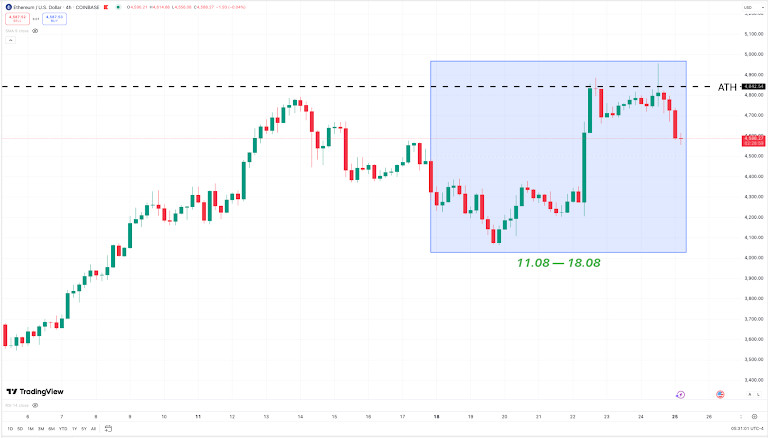
As you may or may not know, August was a mic drop moment for Ethereum. ETH marched right up toward the fabled $4.9–5K line, nudged against its old highs, and for a few charged hours looked like it might finally break through. Depending on your exchange of choice you either saw a fresh ATH or a near-miss — either way, it was close enough to make the crowd squint at their screens and wonder if history was being made.
But what really gave the move texture was the backdrop. This wasn’t your usual momentum traders pushing buttons on a slow day. Capital flows actually tilted. Bitcoin funds, which had still been bleeding from mid-summer, looked heavy, while ETH products managed to hold their ground — even posting inflows here and there when sentiment flickered green. Sure, it wasn’t the kind of wholesale rotation that rewrites the playbook, but it was the sort of shift you notice if you’ve been around long enough.
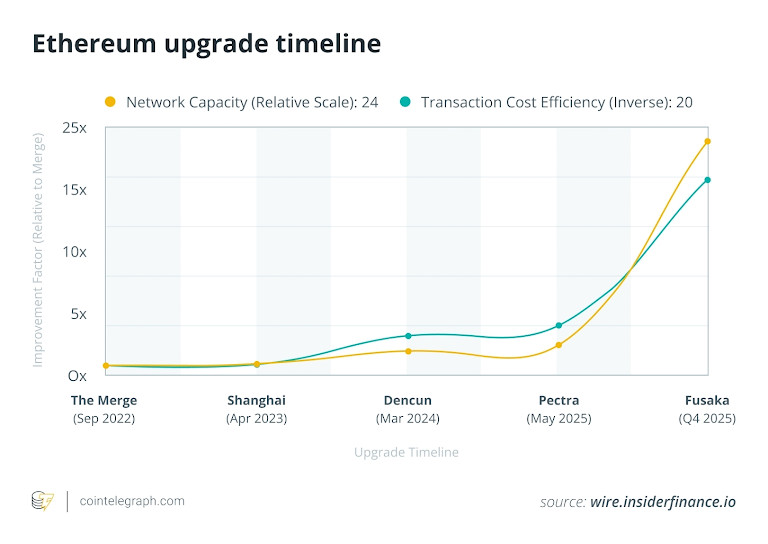
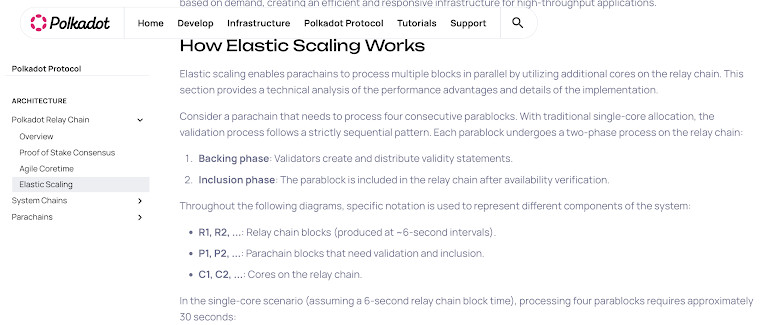
And while the market obsessed over charts and candles, the protocol’s engineers kept quietly laying rails. The Fusaka upgrade, pencilled in for later this year, kept moving through its test phases. On paper it’s actually pretty dry stuff: EIP-7594 PeerDAS, tweaks to block gas limits, more efficient data pruning, all that jazz. In practice, though, it’s bound to be the scaffolding that makes rollups cheaper, lightens the load on nodes, and nudges throughput higher. None of it landed in users’ wallets in August, but the roadmap was humming in the background.
So if we stitch it all together, there’s nothing conclusive per se — September has a long history of cutting parties short — but at least for a while, Ethereum like the frontman of the band.
Bitcoin: Lightning Grows Into the Everyday Chain
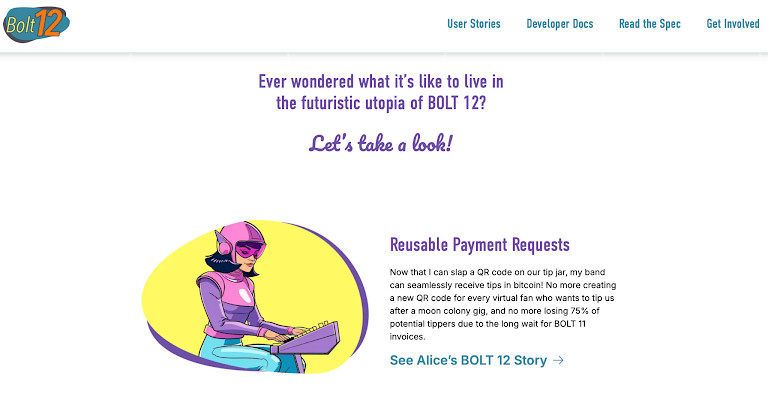
Yeah, Lightning per se isn’t new, but this August its upgrades really started to show up in the numbers. Roughly one in six Bitcoin transactions now route through it, which is quite a leap from the single digits just a couple of years ago. And it’s not just capacity charts to gawk at; the tech itself seems to be getting smoother. For one, Channel splicing went live, which would let users resize their payment channels without the hassle of closing and reopening. Meanwhile, BOLT-12 “offers” made invoicing less clunky — you can now request and send payments with less back-and-forth QR code juggling.
What’s notable is that all that actually counts for the average user. Why? Because it’s the difference between Bitcoin being a store of value you hold and a currency you actually spend. Paying for a coffee or streaming sats to a podcaster may stop feeling like a geek trick. The fees are negligible, the settlement is near instant, and for the first time in years, Bitcoin payments feel, well, casual.
We wouldn’t call it a reinvention — Bitcoin is still Bitcoin, still slow on its base layer. But August showed us that while the market frets about ETF flows and macro speeches, the network’s Layer-2 is quietly maturing into what Satoshi probably hoped for: money you can move without oversight and friction.
Solana Rewrites Its Clock: “Alpenglow” and the Promise of Instant Finality
If you’ve followed Solana for any length of time, you know the lore: the famous Proof-of-History clock, the whole “it ticks, therefore it scales” design. August marked the moment that lore started to fade. The network’s big Alpenglow upgrade swapped out the very rhythm section of the chain. Proof-of-History plus Tower BFT, the combo that defined Solana since day one, was retired in favor of a new consensus that promises finality in a blink — 100 to 150 milliseconds, depending on conditions.
Even on paper that’s a huge leap: from waiting twelve seconds to knowing your transaction is done in less time than it takes to blink. For traders, it could mean no more anxious refreshes when the market’s moving fast. For game devs, it’s the difference between “this feels like Web3” and “this feels like Web2.” But, most importantly, sub-second finality changes how people feel about the chain. It makes transactions invisible, background noise, something you don’t even think about anymore.
Of course, it’s not without trade-offs. Validators are adjusting to a system that leans on fast off-chain vote exchanges — jargon names like Votor and Rotor flying around — and there are new economic levers, like validator fees, that will need careful tuning. Solana has been here before, promising big leaps only to stumble under its own weight. So yeah, we’re cautious. Still, watching a chain deliberately shed its most famous feature in pursuit of something sleeker feels momentous. Whether that gamble pays off, well — that’s the part we’ll be watching in the months ahead.
Cardano: $71M for Scaling Dreams
Cardano’s big moment in August wasn’t on a chart, it was on-chain. On the 4th, the community signed off on the largest treasury spend in its history: nearly 97 million ADA, about $71 million at the time, earmarked for core upgrades. That’s not just pocket change; it’s a vote of confidence in where the chain wants to go.
Happy Monday, and welcome to the newest edition of the Cardano Community Digest 🧵
This week, the community made history by approving Input Output Engineering’s (@InputOutputHK) roadmap, unlocking treasury funding for core protocol development.
We also cover:• CNCLI v6.6.0… pic.twitter.com/Bp2g1Klxyn
— Cardano Community (@Cardano) August 4, 2025
And where is that? Straight at the scaling ceiling. The funds are headed into three pillars: Ouroboros Leios, a new consensus variant meant to push throughput higher; Hydra, the Layer-2 project that, in lab conditions, can fling around a million transactions per second; and Mithril, which promises faster syncs for nodes so wallets and apps can join the party without waiting hours.
From our seat, what’s interesting isn’t just the tech wishlist but the governance moment. Cardano has long pitched itself as the “academic” chain, deliberate and heavy on peer review. Here, the community essentially wrote a giant check for experimentation — saying, yes, let’s actually build the fast stuff, and yes, we’re willing to burn serious treasury reserves to do it. And that shifts the vibe quite a lot.
Will Hydra really hit those sci-fi TPS numbers in practice? Probably not tomorrow, maybe not ever in the wild. But even if the reality is more modest, faster nodes and cheaper transactions are the kind of upgrades that users will notice. August didn’t crown Cardano the fastest horse, but it showed the chain is willing to bet on itself.
Polkadot: Elastic Scaling Goes Live
Polkadot’s August wasn’t flashy, but it was quietly clever. Early in the month, the network flipped the switch on elastic scaling, the final piece of its long-teased 2.0 design. The idea is simple enough: instead of every parachain renting a fixed slice of compute whether they need it or not, chains can now flex — grabbing extra cores during traffic spikes, then letting them go when demand cools.
In practice, that means the ecosystem just got a lot less brittle. If a new game suddenly takes off or a DeFi app goes parabolic, the parachain underneath doesn’t have to choke or jack up fees; it can stretch to fit the moment. Later, when things calm down, it shrinks back without wasting resources. Think of it like cloud auto-scaling, but for blockchains.
For users, the benefits are subtle but real. Transactions should keep flowing smoothly even when the crowd shows up, and fees are less likely to swing wildly when one parachain gets hot. For developers, it lowers the psychological barrier of “will my chain collapse if I succeed too fast?” That’s no small thing.
We wouldn’t call it a reinvention — Polkadot is still very much the parachain hub it set out to be — but elastic scaling does change the texture of the network. August showed that it can adapt resources dynamically, which makes the whole ecosystem feel more alive, less rigid. And in a month when other chains were making big bets on speed, Polkadot’s bet was on flexibility.
Cosmos: Osmosis v30 and the Pools Go Permissionless
Cosmos had its own headline in August, courtesy of Osmosis, the interchain DEX that basically acts as the ecosystem’s liquidity hub. On August 5, the network rolled out its v30 upgrade, and while exchanges briefly froze OSMO deposits and withdrawals to keep things clean, the real change was simple: anyone can now spin up a liquidity pool.
The Osmosis v30 software upgrade is upon us ⛓️
This upgrade focuses on fixes and improvements to the codebase, ensuring Osmosis continues to operate with the most cutting-edge and secure software.
Supercharged pool creation is now permissionless! 🌊 pic.twitter.com/7N2TolNoyU
— Osmosis 🧪 (@osmosiszone) August 5, 2025
Until now, adding a new trading pair on Osmosis meant waiting for governance to give a nod. That gate kept things orderly, but it also slowed the tempo. With v30, the gates came down. New tokens can be listed without a proposal, which means faster bootstrapping for projects and less friction for communities that just want to get their coin trading.
From the user’s side, this translates into more pairs, more quickly. If a new Cosmos project launches, odds are you’ll see liquidity on Osmosis without delay. And because the upgrade also folded in general performance and security improvements — including a mid-month bug patch that was handled quietly but effectively — the decks feel smoother to trade on.
Osmosis recently passed $20 Million in total Protocol Revenue!
Among other things, Protocol Revenue supports stakers, BTC accumulation efforts, and contributes to the growth of the community pool.
Onward and upward, scientists 🧪 pic.twitter.com/GKBK0et5io
— Osmosis 🧪 (@osmosiszone) August 21, 2025
The bigger picture? Osmosis just leaned harder into being a true permissionless marketplace, in line with the ethos of Cosmos itself. It doesn’t make headlines like “instant finality” or “new ATH,” but if you live in this ecosystem, it matters. August was when the DEX at Cosmos’ core stopped asking permission and started moving at the speed of its users.
Polygon: POL Migration and a Snappier Chain
And there’s some big reports from Polygon. By the 20th, nearly every MATIC token — 97.8% of them — had already been slipped into its new outfit: POL. It may seem like a mere ticker change, but the point is quite a bit bigger. POL is Polygon’s attempt to sew together its patchwork of chains into one fabric. PoS sidechain, zk rollups, supernets — all of them are now supposed to orbit the same token, the same economy.
Let’s face it: for most of us, the swap barely raised an eyebrow. Your wallet showed POL where MATIC used to sit, and your favorite dApps carried on as usual. But underneath that smooth rollout, a serious point was being made: Polygon doesn’t want to feel like a collection of experiments anymore. It wants to feel like a single network with a single heartbeat.
And speaking of heartbeat — remember when Polygon confirmations used to feel like watching paint dry? That little pause, the “is it final yet?” shuffle? Well, Heimdall v2, which landed in July but really flexed its muscles through August, cut that nonsense down to five seconds flat. This proves a big relief for bridges, games, and DeFi overall.
Sure, the update wasn’t as dramatic as Solana tearing out its famous clock, and not as expensive as Cardano writing itself a $71M check. But it’s still meaningful. Polygon now poses itself a chain that finally knows how it wants to show up.
Disclaimer
In line with the Trust Project guidelines, please note that the information provided on this page is not intended to be and should not be interpreted as legal, tax, investment, financial, or any other form of advice. It is important to only invest what you can afford to lose and to seek independent financial advice if you have any doubts. For further information, we suggest referring to the terms and conditions as well as the help and support pages provided by the issuer or advertiser. MetaversePost is committed to accurate, unbiased reporting, but market conditions are subject to change without notice.
About The Author
Alisa, a dedicated journalist at the MPost, specializes in cryptocurrency, zero-knowledge proofs, investments, and the expansive realm of Web3. With a keen eye for emerging trends and technologies, she delivers comprehensive coverage to inform and engage readers in the ever-evolving landscape of digital finance.
More articles
Alisa Davidson
Alisa, a dedicated journalist at the MPost, specializes in cryptocurrency, zero-knowledge proofs, investments, and the expansive realm of Web3. With a keen eye for emerging trends and technologies, she delivers comprehensive coverage to inform and engage readers in the ever-evolving landscape of digital finance.
Andrew Garfield has carved out a distinctive path in Hollywood, winning hearts with his acting prowess, versatility, and genuine charisma. From his breakout...