Metaverse

Home Metaverse Page 105

Nothing Launches Playground: AI Tool for No-Code App Development

Nothing Launches Playground: AI Tool for No-Code App Development


Nothing has introduced Playground, a tool that enables App Development Without Code.

Nothing has unveiled its new artificial intelligence tool named Playground, which will allow users to create mini-applications using text prompts. As AI technologies are continuously improving, we’ve been seeing announcements from various tech companies in this field. Nothing, known for its distinctively designed phones, was one of them. Now, the company has announced a new AI tool related to app development.

This AI tool is called “Playground.” Simply put, Playground allows users to create applications with simple text prompts and distribute them on the Essential Apps platform.

For now, only things like widgets can be created. According to Nothing’s statements, Playground’s capabilities are currently very limited. For the time being, you can only create widgets such as flight tracking or meeting summaries, or virtual pets. You can also edit an application that is already on Essential Apps. It’s possible to do all of these from scratch, using only text commands that specify what you want.

Nothing states that it is not yet offering the feature to create full applications. The reason given for this is that the AI tool is not mature enough. Therefore, the goal is to make the necessary improvements and reach the desired level for the full-screen application creation feature. We can predict that Playground could be truly useful by enabling you to develop applications without any coding knowledge. However, how successful it will be on a smartphone remains questionable, as we haven’t seen very good results in similar past attempts.

You Might Also Like;

Follow us on TWITTER (X) and be instantly informed about the latest developments…

Copy URL


Source link

NASA Plans to Establish a Wi-Fi Network Around the Moon

NASA Plans to Establish a Wi-Fi Network Around the Moon


NASA is planning to establish a Wi-Fi network around the Moon to create an infrastructure capable of providing uninterrupted communication during its lunar missions. Solstar Space has been tasked with providing the necessary hardware.

With the Artemis program, NASA aims to land astronauts on the Moon again within the next five years and establish a permanent base there. Achieving this goal requires an infrastructure that allows all elements—from landing systems and surface vehicles to scientific modules and the orbital Lunar Gateway station—to communicate without interruption. One of the agency’s priorities is for astronauts and robotic systems to be able to communicate via Wi-Fi, just as they do on Earth. Therefore, there are plans to establish a Wi-Fi network on the Moon in the coming period.

NASA has signed a $150,000 contract with Solstar Space for a next-generation Wi-Fi system to be used in lunar missions. This system, called the Lunar Wi-Fi Access Point (LWIFI-AP), will function as a communication infrastructure for both NASA’s crewed lunar missions under the Artemis program and the private sector’s CLPS program, which regularly transports cargo and research equipment to the Moon. The technology developed by Solstar will provide multi-band, multi-protocol, and real-time communication between astronauts and vehicles on the lunar surface and platforms in lunar orbit.

Developing Lunar-Qualified Hardware is Necessary to Establish a Wi-Fi Network on the Moon

The LWIFI-AP is being designed with a focus on efficiency in terms of size, weight, and power consumption. This will allow it to be integrated into both landers and surface vehicles like the Lunar Terrain Vehicle (LTV). The system will also be compatible with parts of the Lunar Gateway, such as the Habitation and Logistics Outpost (HALO) module and the airlock. The agreement between NASA and Solstar Space anticipates that Wi-Fi will be used not only for daily communication but also for scientific data transfer, navigation, vehicle coordination, and seamless connection to mission control.

One of the most critical technical aspects is developing hardware that can withstand the Moon’s extreme temperature variations, radiation, and dust conditions. Solstar’s solution will be based on hardware that adheres to low-SWaP (SWaP = Size, Weight, and Power) limitations, has high thermal endurance, and is radiation-tolerant. The company plans to develop the necessary environmental hardening for space qualification during this phase. If successful, the LWIFI-AP will be made flight-ready and available for use in missions by both NASA and other Artemis contractors.

The realization of this project will complete a significant part of the infrastructure required to establish a permanent base on the Moon. Although a clear timetable for this project has not yet been announced, it is expected to advance in parallel with the Artemis program and be ready within the next few years.

You Might Also Like;

Follow us on TWITTER (X) and be instantly informed about the latest developments…

Copy URL


Source link

BTCC Exchange Announces Triple Global Workforce Expansion at TOKEN2049 Singapore to Power Web3 Evolution

BTCC Exchange Announces Triple Global Workforce Expansion at TOKEN2049 Singapore to Power Web3 Evolution


Sponsored

Stories and Reviews


October 01, 2025

BTCC Exchange Announces Triple Global Workforce Expansion at TOKEN2049 Singapore to Power Web3 Evolution

VILNIUS, Lithuania, October 1st, 2025, Chainwire

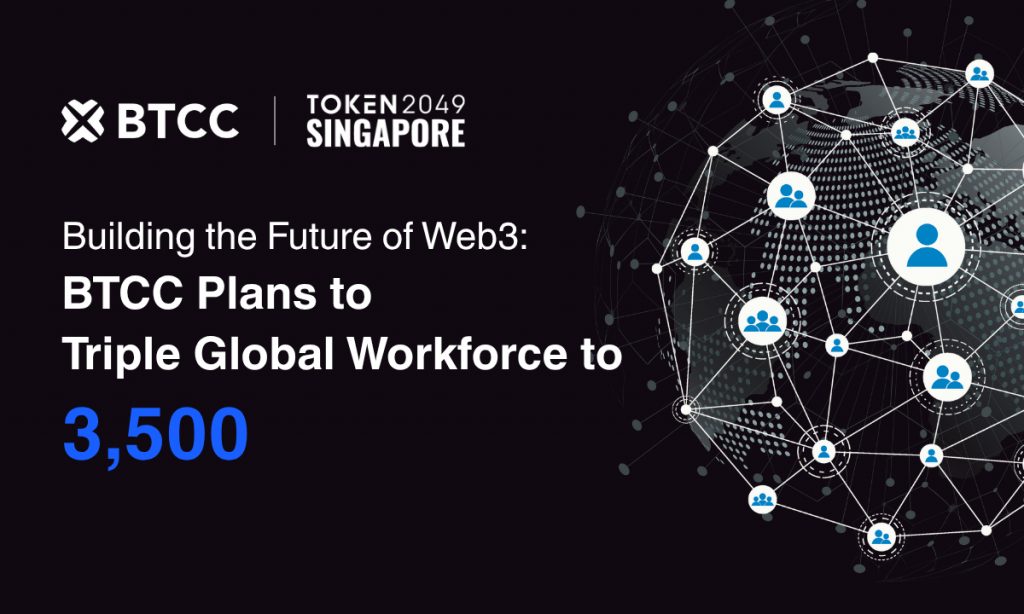
BTCC, the world’s longest-serving cryptocurrency exchange, announced today at TOKEN2049 Singapore its ambitious plan to triple its global workforce to 3,500 employees over the next six months. This marks a pivotal transformation in the company’s evolution from a traditional crypto exchange to a comprehensive Web3 platform.

The announcement comes at TOKEN2049 Singapore, Asia’s premier Web3 event taking place at the Marina Bay Sands Expo & Convention Centre from October 1-2, 2025. With thousands of attendees, exhibitors, and speakers converging at the event, BTCC chose this marquee industry gathering to unveil its most ambitious expansion to date.

Workforce Expansion to Build Web3 Infrastructure

At the heart of this expansion is a massive investment in technical talent. The aggressive expansion will see blockchain technology development teams grow to approximately 1,200 engineers (representing 35% of total headcount) focused on building next-generation Web3 infrastructure and integrating services across the decentralized ecosystem. The development initiatives span full-ecosystem wallets, mobile payments, artificial intelligence integration, and real-world asset (RWA) tokenization.

“We’re building the bridge between Web3 and everyday life,” said Alex Hung, Head of Operations at BTCC Exchange. “Our ultimate vision is to create a platform where users can seamlessly integrate BTCC into their daily lives – paying parking fees, buying coffee, or handling tuition payments through the BTCC app while earning rewards. This workforce expansion represents our commitment to making Web3 technology accessible and practical for mainstream adoption.”

Building Responsibly: 50+ Legal Professionals for Global Compliance

Alongside technical expansion, BTCC plans to grow its legal team to over 50 professionals to support global regulatory engagement. Beyond mere compliance, the exchange aims to actively participate in shaping regulatory frameworks worldwide, drawing on its 14 years of industry experience to contribute meaningful insights to Web3 policy development.

“Our expansion into global compliance and policy engagement is about helping shape the future of this industry responsibly and ensuring that innovation can thrive within clear, sensible frameworks,” added Alex.

Experience BTCC at TOKEN2049 and Beyond

For TOKEN2049 attendees eager to see this vision in action, BTCC is showcasing its brand at Booth PB4-46, featuring a basketball-themed installation celebrating the exchange’s partnership with global brand ambassador Jaren Jackson Jr. 

Following the main conference, BTCC will host a Poolside Sync side event on Friday, October 3, bringing together community members and industry leaders for continued discussion. Registration is available here.

The workforce expansion reflects BTCC’s broader strategic roadmap to reimagine what cryptocurrency platforms can achieve. Aiming to deliver comprehensive financial services that blur the lines between traditional finance and decentralized technologies, BTCC is positioning itself as more than just an exchange—as essential Web3 infrastructure for the next generation of digital finance.

About BTCC

Founded in 2011, BTCC is a leading global cryptocurrency exchange serving over 10 million users across 100+ countries. Partnered with 2023 Defensive Player of the Year and 2x NBA All-Star Jaren Jackson Jr. as global brand ambassador, BTCC delivers secure, accessible crypto trading services with an unmatched user experience.

Official website: https://www.btcc.com/en-US

X: https://x.com/BTCCexchange

#BTCCexchange #BTCCToken2049

Contact

Aaryn Ling[email protected]

Disclaimer

In line with the Trust Project guidelines, please note that the information provided on this page is not intended to be and should not be interpreted as legal, tax, investment, financial, or any other form of advice. It is important to only invest what you can afford to lose and to seek independent financial advice if you have any doubts. For further information, we suggest referring to the terms and conditions as well as the help and support pages provided by the issuer or advertiser. MetaversePost is committed to accurate, unbiased reporting, but market conditions are subject to change without notice.

About The Author


Chainwire is the top blockchain and cryptocurrency newswire, distributing press releases, and maximizing crypto news coverage.

More articles


Chainwire is the top blockchain and cryptocurrency newswire, distributing press releases, and maximizing crypto news coverage.


Source link

NFTs That Work for You: OpenSea Debuts Strategy Tokens | NFT News Today

0
NFTs That Work for You: OpenSea Debuts Strategy Tokens | NFT News Today


NFT Strategy Tokens have launched on OpenSea, bringing automated trading mechanics and yield-like behavior to NFT ownership. This new format turns static collectibles into active, self-managed assets—shifting NFTs from speculation to utility.

Key Takeaways

NFT Strategy tokens went live on September 30, 2025.

Built by TokenWorks, they bring automation and yield-like mechanics to NFTs.

Collections include PUNKSTR, APESTR, TOADSTR, and PUDGYSTR.

A 20 ETH reward pool is live for early users.

They represent a shift toward utility-focused NFT trading.

What Are NFT Strategy Tokens?

Strategy tokens are NFTs with a twist. Instead of sitting idle in your wallet, they’re designed to work for you. Each token links to curated collections—think PUNKSTR or PUDGYSTR—and comes with built-in trading enhancements.

The smart contracts behind them can automatically relist or rebalance NFTs at a set multiplier. Buy in at one price, and the system might relist it at 1.2x without you lifting a finger. People are calling this the NFT “flywheel” because it looks a lot like yield farming in DeFi—assets turning over and potentially compounding value.

How They Work on OpenSea

Trading these tokens on OpenSea looks and feels the same as buying any other NFT. The real twist comes after the purchase. Once it’s in your wallet, the built-in protocol takes over, handling how the linked NFTs are priced and relisted according to the rules in the contract.

In practice, that means you’re not stuck staying up late checking floor prices or second-guessing when to relist. The automation does the heavy lifting, sparing holders from the grind of manual trading.

To get things moving, OpenSea added a 20 ETH pool of rewards for early participants. It’s a classic way to bootstrap interest and liquidity, and it shows that the marketplace wants these tokens to take off fast.

Source: OpenSea

Why This Launch Matters

For years, NFTs have mostly been static collectibles. Value came from hype, scarcity, or social clout. Strategy tokens turn that idea on its head by adding automation and activity.

What changes now:

Collectors can keep assets productive instead of just waiting for offers.

Liquidity deepens across collections thanks to continual relisting.

Marketplaces become livelier and more dynamic.

For DeFi veterans, this feels familiar. The mechanics—multipliers, rebalancing, incentives—echo the systems they know from liquidity pools and staking. By merging those ideas with NFTs, OpenSea could finally attract a crowd that previously saw digital collectibles as “too static.”

Real-World Applications

Take a PUDGYSTR token. Instead of stressing over whether to sell your Penguin today or hold for another week, the underlying logic relists it automatically at a higher price. If demand pops, you pocket gains without micromanaging your listings.

Casual holders benefit from hands-off profit opportunities. Traders gain a new optimization layer for time and value. Institutions get structured exposure to NFT markets without building out trading teams.

Creators stand to gain as well. Linking collections to intelligent listing systems gives their work a life beyond the initial mint. Holders get an interactive, evolving experience instead of a static image sitting in a wallet. That’s powerful for long-term community building.

The Bigger Picture

OpenSea’s pivot to Strategy tokens highlights a broader trend: NFTs are maturing. People want more than digital bragging rights—they want assets that evolve, generate value, and plug into broader financial systems.

If Strategy tokens succeed, we’ll likely see copycats across marketplaces. The line between NFTs and DeFi could blur even further, with collections designed from day one to include performance-enhancing smart contracts and incentives.

It’s not just about ownership anymore—it’s about what that ownership enables.

Conclusion

NFT Strategy tokens represent a clear evolution in how we interact with digital assets. They bring together curated collections, embedded financial mechanics, and real-time activity—changing NFTs from static objects into responsive, value-generating tools.

This shift reduces the workload for collectors, enhances the toolkit for traders, deepens creator engagement, and positions OpenSea at the forefront of a more dynamic and functional NFT ecosystem.



Source link

Tezos Expands Ecosystem With DeFi, Gaming, And New Financial Instruments Amid Asia-Pacific Adoption Surge

0
Tezos Expands Ecosystem With DeFi, Gaming, And New Financial Instruments Amid Asia-Pacific Adoption Surge


In Brief

In 2025, Tezos has expanded its ecosystem through major DeFi and gaming integrations, innovative financial instruments, and Asia-Pacific adoption initiatives like Fortify Labs, supported by ongoing mainnet upgrades such as the Seoul release.

Tezos Expands Ecosystem With DeFi, Gaming, And New Financial Instruments Amid Asia-Pacific Adoption Surge

Open-source and energy-efficient blockchain designed to support institutions, developers, and businesses, Tezos released a platform overview highlighting how ambitious technical upgrades, new integrations, and product launches have advanced the ecosystem in recent months. Since its mainnet launch in 2018, Tezos has cultivated a resilient community that values the network for its fast upgrade cycles and strong governance. The platform has increasingly attracted new users and developers, establishing itself as a hub for digital art, tokenized real-world assets, next-generation gaming, and innovative DeFi applications.

Etherlink, the EVM compatibility layer for Tezos, has become a key destination for DeFi development, with total value locked (TVL) on the platform increasing twelvefold as leading protocols leverage its performance capabilities. Curve Finance brought deep stablecoin liquidity to Tezos in August, Hex Trust added custody support for tokenized uranium, and Midas introduced tokenized Treasury bills and institutional yield products, broadening the range of real-world assets available on the network.

The gaming sector has also embraced Etherlink, with Distinct Possibility Studios securing $30.5 million from Bitkraft Ventures and Brevan Howard Digital to develop “Reaper Actual,” an AAA shooter game. The studio, founded by EverQuest creator John Smedley, selected Etherlink for its Web3 components, citing scalability, high transaction throughput, strong security, and environmentally sustainable operations as critical for managing a persistent, player-driven economy. Other recent gaming launches, including Sugar Match, Pikes Arena, and Cricket Champions, underscore growing developer confidence in the platform.

Beyond DeFi and gaming, Tezos is becoming a platform for innovative financial instruments poised to transform traditional markets. This month, the world’s first live uranium spot pricing oracle launched on Tezos-based uranium.io, providing real-time price discovery in a market that has historically been opaque. 

The platform, initially launched in December to facilitate institutional access to uranium, now offers a proprietary price feed updated every 60 seconds, aggregating signals from uranium ETFs, mining stocks, and nuclear sector equities. This development complements the introduction of xU3O8 tokens on major exchanges, including KuCoin, MEXC, and Gate.com, making uranium investment more accessible to a broader range of participants and democratizing an asset class previously limited to institutional investors.

Tezos Strengthens Asia-Pacific Presence With Fortify Labs Cohort And Seoul Mainnet Upgrade Ahead Of TOKEN2049

In 2025, Tezos has seen growth in awareness and adoption across the Asia-Pacific region, driven by the initiatives of TZ APAC. The organization is currently running the second cohort of Fortify Labs, a Web3 startup studio designed to transform talented builders into capable founders. The program emphasizes hands-on support and comprehensive guidance, fostering substantial growth for emerging startups. 

Mauvis Ledford, CEO of Sogni AI, credited the program’s broad assistance—including marketing, legal, and VC introductions—for helping scale the project from Testnet to 90,000 mainnet users while successfully completing a TGE during the 2025 cohort. Steven de Groodt, founder of 5050, described the program as a “hackathon” that enabled rapid iteration and product development, moving from concept to a fully launched product in three months and attracting 600 users within the first two weeks. Applications for the Fortify Labs 2026 cohort are now open.

These achievements are complemented by ongoing upgrades to the Tezos mainnet. The recent Seoul upgrade introduced native multisig accounts, aggregated attestations, and simplified staking, improving both the security and efficiency of the blockchain. The Tezos ecosystem will highlight these advancements at TOKEN2049 Singapore, including the Fortify Labs Open House for founders on September 30 and Arthur Breitman’s mainstage presentation on Tezos X developments.

Disclaimer

In line with the Trust Project guidelines, please note that the information provided on this page is not intended to be and should not be interpreted as legal, tax, investment, financial, or any other form of advice. It is important to only invest what you can afford to lose and to seek independent financial advice if you have any doubts. For further information, we suggest referring to the terms and conditions as well as the help and support pages provided by the issuer or advertiser. MetaversePost is committed to accurate, unbiased reporting, but market conditions are subject to change without notice.

About The Author


Alisa, a dedicated journalist at the MPost, specializes in cryptocurrency, zero-knowledge proofs, investments, and the expansive realm of Web3. With a keen eye for emerging trends and technologies, she delivers comprehensive coverage to inform and engage readers in the ever-evolving landscape of digital finance.

More articles


Alisa, a dedicated journalist at the MPost, specializes in cryptocurrency, zero-knowledge proofs, investments, and the expansive realm of Web3. With a keen eye for emerging trends and technologies, she delivers comprehensive coverage to inform and engage readers in the ever-evolving landscape of digital finance.


More articles


Source link

The Rise of the Bots: A Comical Look at Freelancers in the Age of AI

0
The Rise of the Bots: A Comical Look at Freelancers in the Age of AI


The digital age promised unparalleled freedom and opportunity for creatives. Armed with laptops, a strong Wi-Fi connection, and an endless supply of artisanal coffee, a new breed of independent professionals emerged: the freelancer. Graphic designers, content writers, web developers, illustrators – they carved out niches, built portfolios, and thrived in the burgeoning “gig economy.” But then, something shifted. A new challenger entered the ring, not with a portfolio, but with algorithms, terabytes of data, and an insatiable appetite for productivity: Artificial Intelligence.

Suddenly, the artisanal coffee started tasting a little bitter. The once-bright screens of our creative comrades began to reflect a growing existential dread. What happens when the very tasks that define your livelihood can be performed, often faster and cheaper, by a machine that doesn’t need sleep, doesn’t complain about revisions, and certainly doesn’t ask for a deposit?

Our recent collection of cartoons, while humorous, paints a poignant picture of this evolving struggle. Let’s take a closer look at the new reality:

1. “The AI’s New Assistant”

Imagine pouring your heart and soul into a design, only for a chipper AI on your screen to pop up and ask, “Need help with that design, human? I finished it 5 minutes ago!” The look on our freelancer’s face isn’t just surprise; it’s the dawning realization that they’re no longer the sole creative force in the room. The lines between assistant and competitor are blurring faster than a bad internet connection.

2. “Job Interview, 2024”

The classic job interview, but with a twist. Our human candidate, clutching a humble portfolio, is asked the million-dollar question: “So, tell me, what can you do that an AI can’t?” Meanwhile, behind the interviewer, a door marked “AI-Powered Design Department” hums with the eerie efficiency of machines. The subtext is clear: unique human skills are no longer a bonus, but a desperate necessity for survival. Empathy? Critical thinking? The ability to make decent coffee? Those might be your only hope.

3. “The Gig Economy Graveyard”

Perhaps the most darkly comical of the bunch, this cartoon shows a graveyard littered with headstones for “Freelance Writer,” “Graphic Designer,” and “Web Developer.” In the center, a gleaming monument declares “AI Freelancer” – boasting “10,000 projects/min, no coffee breaks.” It’s a stark, if exaggerated, commentary on the displacement. Are our beloved human professions destined to become relics of a bygone era, out-competed by tireless algorithms?

4. “The AI-Powered Hustle”

This piece perfectly encapsulates the street-level competition. Our traditional freelancer offers “Hand-drawn logos, $10!” a testament to human craft. But right next to him, a cheerful little AI bot beams, offering “AI-generated logos, FREE!” It’s a race to the bottom that humans simply cannot win on price or speed alone. The hustle has evolved, and the bots are winning the sidewalk real estate.

5. “The Last Brief”

The final, heart-wrenching punchline. Our weary freelancer receives a brief that isn’t for a flashy ad campaign or a slick new website, but for “a retirement plan for a human freelancer, optimized for minimal living expenses and maximum AI reliance.” It’s the ultimate irony: being asked to design your own obsolescence. The tears streaming down the freelancer’s face are not just for a lost job, but for a lost future.

Beyond the Laughter: What Does This Mean for Us?

While these cartoons offer a much-needed laugh (and perhaps a nervous chuckle), they also compel us to reflect. Are we truly heading towards a future where creative human endeavor is relegated to a niche hobby? Or can freelancers adapt, evolve, and leverage AI as a tool rather than seeing it as a threat?

The answer, as always, lies in innovation. Freelancers are now being pushed to embrace unique human qualities that AI cannot replicate: genuine empathy, nuanced storytelling, strategic thinking, and the ability to connect with an audience on an emotional level. Perhaps the future of freelancing isn’t about competing with AI, but collaborating with it, using its power for efficiency while infusing our work with an irreplaceable human touch.

Until then, grab another coffee (artisanal, of course), sharpen your wit, and prepare for the ongoing, often comical, battle of humans versus algorithms in the wild west of the gig economy. The future is uncertain, but one thing is clear: the robots are here, and they’re ready to work. For free.

Follow us on TWITTER (X) and be instantly informed about the latest developments…

Copy URL


Source link

Chery Unveils the Exeed Yaoguang C-DM Global Edition PHEV Model

0
Chery Unveils the Exeed Yaoguang C-DM Global Edition PHEV Model


Chery has launched the Exeed Yaoguang C-DM Global Edition, which comes in three versions, for sale in China. With a total range of 1,400 km, a two-tone design, and a technology-packed cabin, the company is setting its sights on global markets.

Chery has unveiled the Exeed Yaoguang C-DM Global Edition model in China. The name “Global Edition” indicates that the vehicle will be shipped not only to the local market but also to different regions around the world.

Design and Powertrain

There is no major revolution in the vehicle’s exterior design, but subtle touches stand out. The closed grille, the full-width LED light signature, and slim headlights at the front maintain the vehicle’s modern line. The two-tone body option is among the newly added features. At the rear, the taillights framed by black details and the dual exhaust outlets are noticeable.

The SUV has a length of 4,781 mm, a width of 1,920 mm, and a height of 1,671 mm, with a wheelbase of 2,815 mm. Under the hood, a 1.5-liter turbocharged gasoline engine, electric motors, and a 3-speed DHT transmission are at work.

With this system, the Exeed Yaoguang C-DM achieves a total range of 1,400 km. Pure electric driving range differs based on the battery: it can travel up to 120 km with a 19.5 kWh battery, and up to 210 km with a 34.5 kWh CATL battery. In the upper trims, an additional rear electric motor joins the dual front motors, enabling all-wheel drive (AWD).

Technology and Pricing

On the cabin side, plenty of technology is featured. The 24.6-inch dual screen design is supported by the Chery Lion 5.0 system with a Snapdragon 8155 chip. Details such as an eight-speaker sound system, 50W wireless charging, and 256-color ambient lighting enhance comfort.

The price for the Exeed Yaoguang C-DM Global Edition starts at $19,600 and goes up to $26,600 for the all-wheel drive version.

You Might Also Like;

Follow us on TWITTER (X) and be instantly informed about the latest developments…

Copy URL


Source link

Digital Afterlife: Can Human Consciousness Truly Live Forever?

0
Digital Afterlife: Can Human Consciousness Truly Live Forever?


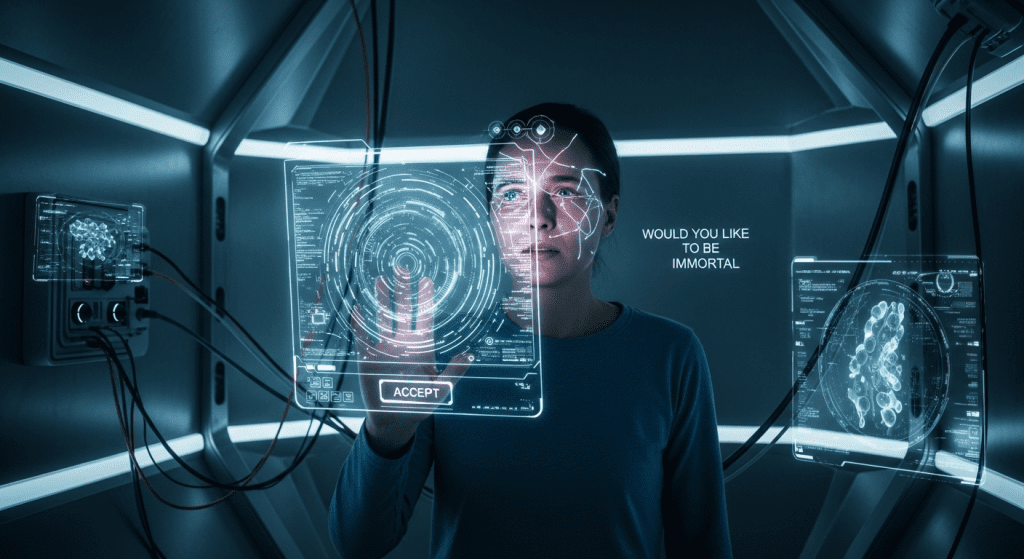
The idea of living forever has fascinated humanity for centuries. From myths of eternal youth to futuristic sci-fi visions, immortality has always been a dream—and sometimes a fear. But in the 21st century, this dream has taken on a new, very real form: the digital afterlife.

What if, instead of fading away after death, your mind could be preserved, uploaded, and re-experienced inside a virtual world? Could technology make “life after death” a scientific possibility rather than just a spiritual belief?

🧠 The Science of Consciousness Mapping

At the heart of the digital afterlife lies the ability to map and replicate the human brain. The brain is estimated to contain 86 billion neurons and trillions of synaptic connections. Projects like the Human Connectome Project and brain-mapping efforts at institutions like MIT and Stanford are already working to chart this vast network.

The concept is simple but daunting: if every neural pathway and memory could be digitally reconstructed, then, in theory, a computer could simulate a person’s thoughts, personality, and even emotions. This is often referred to as mind uploading.

💻 The Role of Artificial Intelligence

Artificial intelligence would play a crucial role in building and maintaining digital consciousness. Current AI systems already mimic aspects of human cognition, such as language processing, memory recall, and decision-making. Extending these abilities to emulate the complexity of a human mind may one day allow a digital version of you to exist within a virtual environment.

Some companies are even experimenting with AI avatars trained on personal data—text messages, emails, videos, and social media posts—to create a digital “copy” of someone’s personality after death.

🌐 A Virtual World Beyond Death

Imagine a future where consciousness exists not in a biological brain, but in a cloud-based virtual reality. Individuals could “live” inside simulated cities, interact with loved ones, or even explore entirely new digital universes. This could redefine the way humanity thinks about identity, legacy, and mortality.

Philosophically, however, a big question remains:

Would a digital consciousness truly be you—or simply a sophisticated copy of your mind?If your biological self ceases to exist, does the digital version carry your “soul”?

⚖️ The Ethical and Social Challenges

The possibility of a digital afterlife raises profound ethical questions:

Access and inequality: Would immortality be available only to the wealthy?Identity and rights: Should a digital consciousness have legal rights as a “person”?Emotional impact: How would living relatives cope with interacting with digital versions of deceased loved ones?

🚀 Conclusion: Science Meets Philosophy

The digital afterlife remains a blend of scientific exploration and philosophical speculation. While neuroscience and AI are advancing rapidly, we are still far from fully replicating human consciousness. Yet, each breakthrough in brain-computer interfaces and memory mapping brings us one step closer to testing the boundaries of mortality.

Whether it becomes a reality or remains science fiction, the concept of digital afterlife forces us to confront deep questions about what it means to be human, to exist, and perhaps, to live forever.

You Might Also Like;

Follow us on TWITTER (X) and be instantly informed about the latest developments…

Copy URL


Source link

Predictive Oncology Launches ATH DAT To Fuel Strategic Compute Reserve And Democratize AI Infrastructure

0
Predictive Oncology Launches ATH DAT To Fuel Strategic Compute Reserve And Democratize AI Infrastructure


In Brief

Predictive Oncology has launched the Aethir DAT to create a Strategic Compute Reserve, offering accessible, cost-efficient GPU infrastructure to support AI growth, while providing investors with real revenue and yield from decentralized AI resources.

Predictive Oncology Launches ATH DAT To Fuel Strategic Compute Reserve And Democratize AI Infrastructure

Predictive Oncology, a company focused on knowledge and science-driven solutions, announced the launch of the Aethir (ATH) Digital Asset Treasury (DAT), backed by a private investment of $344 million in ATH. This marks the debut of the world’s first Strategic Compute Reserve, an entity designed to manage the on-ramp, off-ramp, and monetization of global GPU compute resources across both Web2 and Web3 business sectors. This new approach differentiates Predictive Oncology from conventional treasuries by generating real revenue and earnings through the direct management and provision of computing resources.

AI is expected to contribute over $15 trillion to global GDP, but access to the necessary infrastructure to support this growth is becoming a significant challenge. The shortage of GPU computing power has created notable obstacles: major technology companies are hoarding resources, wait times for enterprises have increased to 3 to 6 months, and the cost of compute continues to rise.

Predictive Oncology’s Strategic Compute Reserve aims to address this issue by providing more accessible enterprise-grade GPU infrastructure at competitive prices through a decentralized network, offering compute services that are faster, more efficient, and cost-effective—reducing costs by 40–80% compared to traditional providers.

Powered by ATH, the native token of Aethir, Predictive Oncology serves as an investment vehicle for the world’s largest decentralized GPU network, which spans over 435,000 GPU containers across 200+ locations in 93 countries. This infrastructure supports cutting-edge technology, including Nvidia H100, H200, B200, and B300 GPUs. Investors benefit from participation in the underlying infrastructure driving AI workloads, gaming, and enterprise computing, with yield generated and transparently secured on-chain.

Predictive Oncology highlighted several key differences in its strategic compute reserve model. As a Strategic Compute Reserve, Predictive Oncology manages and deploys GPU AI infrastructure to support AI enterprises, generating realized revenue that is reinvested by purchasing additional ATH tokens, which in turn fuels the Aethir infrastructure ecosystem. For investors who are unable to directly engage with AI leaders such as OpenAI or Anthropic, or who view traditional blue-chip stocks like Nvidia as offering limited growth potential, Predictive Oncology provides an alternative AI investment opportunity. The ATH token is convertible on a 1:1 basis for high-performance GPUs, offering stakeholders a new way to participate in the expanding AI infrastructure market. As a GPU compute aggregator, Predictive Oncology ensures cost-effective, large-scale access to GPU resources, rapidly deploying compute capacity that surpasses the capabilities of traditional centralized cloud providers. This model enables the monetization of Nvidia GPU compute across a variety of sectors, including conventional enterprises, research institutions, startups, and emerging Web3 platforms, optimizing asset utilization. Compute providers are required to stake ATH tokens as collateral, ensuring adherence to strict service-level agreements (SLAs) and guaranteeing enterprise-grade reliability. This system rewards high-quality services and incentivizes widespread participation through attractive rewards, while also expanding the available compute and reducing counterparty risk.

Real Asset-Backed Yield And Treasury Integration

The model is built around real asset-backed yield and treasury synergy, with the ATH token serving as both the primary medium of exchange and collateral for GPU compute. The growing demand for AI infrastructure increases the value and yield of ATH, establishing a financial structure that is grounded in real-world utility. The Aethir Foundation plays a key role in supporting the ecosystem’s growth, providing in-kind assistance and strategic investments that promote stable value and continuous expansion, as opposed to speculative activities. The foundation incentivizes the reinvestment of realized gains to purchase more ATH tokens from the market, further strengthening the ecosystem. Predictive Oncology generates sustainable returns for investors through the actual use of infrastructure, with examples such as TensorOpera AI, which achieved cost reductions of 40–80% and faster model training through Aethir’s decentralized GPU network.

By breaking down the barriers typically imposed by centralized, capital-intensive hyperscalers, Aethir and Predictive Oncology enable startups, enterprises, and public sector innovators to engage in the global AI economy. Investors and developers can gain ownership in the foundational infrastructure of AI, transforming traditionally exclusive technology into a universally accessible asset. Holding a stake in Predictive Oncology offers ownership of digital “keys” to global compute resources, supporting not only advanced AI but also fast gaming and scientific research, with all processes transparently managed and returns based on infrastructure utilization, rather than speculative market fluctuations.

Disclaimer

In line with the Trust Project guidelines, please note that the information provided on this page is not intended to be and should not be interpreted as legal, tax, investment, financial, or any other form of advice. It is important to only invest what you can afford to lose and to seek independent financial advice if you have any doubts. For further information, we suggest referring to the terms and conditions as well as the help and support pages provided by the issuer or advertiser. MetaversePost is committed to accurate, unbiased reporting, but market conditions are subject to change without notice.

About The Author


Alisa, a dedicated journalist at the MPost, specializes in cryptocurrency, zero-knowledge proofs, investments, and the expansive realm of Web3. With a keen eye for emerging trends and technologies, she delivers comprehensive coverage to inform and engage readers in the ever-evolving landscape of digital finance.

More articles


Alisa, a dedicated journalist at the MPost, specializes in cryptocurrency, zero-knowledge proofs, investments, and the expansive realm of Web3. With a keen eye for emerging trends and technologies, she delivers comprehensive coverage to inform and engage readers in the ever-evolving landscape of digital finance.


More articles


Source link

Repair from Millions of Kilometers Away: How NASA Keeps the Mars Rovers Alive

0
Repair from Millions of Kilometers Away: How NASA Keeps the Mars Rovers Alive


NASA’s Curiosity rover on the surface of Mars is not only collecting data; it continues to evolve and advance its mission by receiving software updates from millions of kilometers away. So, how are these updates performed, and what kind of problems do they solve?

For years, NASA has been conducting different missions to unlock the secrets of Mars. One of the most critical parts of these missions is the robotic rovers actively operating on the surface. These robots don’t just collect images; they examine the surface, take samples, create digital maps, and contribute to scientists’ better understanding of the Red Planet.

However, these vehicles continue to evolve even after being launched into space. These robots operating on Mars, thousands of kilometers away, receive software updates just like a smartphone. Moreover, these updates don’t just add new features; they also provide creative solutions to technical problems that arise.

Launched in 2011 and successfully landed in Mars’s Gale Crater in 2012, Curiosity is one of the longest-operating NASA rovers on the Martian surface to date. Its primary goal was to investigate whether Mars had supported microbial life in the past. But over the years, it has gone far beyond this goal. Examining different regions like Mount Sharp, Vera Rubin Ridge, and the Naukluft Plateau, the vehicle has both sent back scientific data and captivated the world with the photos it captured from the Martian surface.

However, this long mission duration has brought challenges. Over the years, Curiosity’s software and hardware have had to be supported with various updates and interventions.

Is It Possible to Send Software Updates to Mars?

It may sound incredible, but NASA periodically updates Curiosity’s software. Just like the updates that come to phones or computers, these vehicles gain new features or have certain bugs fixed. Of course, this process is much more complex and long-term. Teams at NASA’s Jet Propulsion Laboratory (JPL) in California subject the updates to extensive testing on Earth first. Some software improvements involve months, or even years, of trials.

A great example of this process occurred in 2017. The challenging terrain conditions on Mars were causing wear and tear on Curiosity’s wheels. To prevent this, JPL engineers worked for about 18 months to develop an algorithm that gave the vehicle the ability to drive more carefully. This software was successfully uploaded to Curiosity, millions of kilometers away, in March 2017.

In early 2023, a much more comprehensive update was made. Thanks to this software package, which included a total of 180 different changes, Curiosity can analyze its surroundings faster while driving. The robot, which previously had to stop and scan its environment before making a decision, can now process data and move within a few seconds. This allows it to explore more area while consuming less energy.

Creativity Comes into Play with Hardware Failures

It is, of course, impossible to physically intervene with a rover on the surface of Mars. This means that when a mechanical failure occurs, engineers on Earth have to find much more creative solutions. Curiosity is a striking example of this again.

In late 2016, the vehicle’s drill system, used for collecting samples, broke down. Under normal circumstances, this was a serious problem that could halt essential data collection. However, JPL engineers developed a new drilling method using the existing equipment. They enabled Curiosity to continue its drilling function by using the robotic arm in a different way. Crucially, this solution was executed with a series of commands sent to the Martian surface.

Thanks to software updates and creative engineering solutions, Curiosity is still actively working on Mars today. The data it obtains is of great importance both for searching for traces of past life and for paving the way for future crewed Mars missions.

You Might Also Like;

Follow us on TWITTER (X) and be instantly informed about the latest developments…

Copy URL


Source link

Popular Posts

My Favorites

Amy Robach and T.J. Holmes: Engaged 3 Years After Huge Scandal!

0
Reading Time: 3 minutes Amy Robach and T.J. Holmes got together under controversial circumstances. But they now plan on remaining together for life. The...