Matthew McConaughey shared the behind-the-scenes story of his unforgettable crying scene in Interstellar. The actor detailed the emotional preparation process and striking aspects of this iconic moment, which was captured in a single take.
The “crying scene,” one of the most powerful moments in Christopher Nolan’s sci-fi classic, Interstellar, has been revisited by Matthew McConaughey a decade later. The actor recounted the behind-the-scenes creation of this scene, which was filmed 10 years ago and has become a part of cinema history.
The Weight of Lost Time
In a career retrospective video for Vanity Fair, McConaughey rewatched the dramatic moment experienced by his astronaut character, Cooper. The scene addresses the fact that due to the extreme time dilation on the water planet, Cooper had lost 23 years of his children’s lives in just a few hours. This emotional breaking point became one of the film’s most impactful scenes.
Preparation Before the Scene
McConaughey described how he prepared for this unforgettable take:
“I spent the weekend peacefully with my family, got a good night’s sleep. When the day of the shoot arrived, this scene was first up. Christopher Nolan was about to start rehearsals, but I said, ‘No, no, let’s just do it right now.’ I had a little note in my hand; I gave it to Chris. The cameras rolled, the tape played, and that first take is what’s in the film.”
According to the actor, the scene was entirely captured in the first attempt, and there were no retakes.
Genuine Emotions, First Reaction
McConaughey emphasized that he was not consciously trying to act during the role:
“I thought about what you would feel if you came home from work and years had passed. I gave a natural reaction by thinking about my own children. Because for me, the most truthful thing is the first take. The second or third take becomes acting. If you’re relaxed in the first one, you’re genuinely reacting to what’s happening. And that’s what happened in that moment.”
From Cinema to the Internet: An Icon
The scene in question became iconic, not just for the film but also for internet culture. The moment McConaughey burst into tears has been shared thousands of times on social media over the years, continuing to live on as a “meme” to represent moments that are sometimes dramatic and sometimes humorous.
The Peak of a Career
McConaughey views this scene as one of the turning points of his career. His natural reaction, delivered in a single take, not only secured an unforgettable place in cinema history but also transformed into a performance that touched the hearts of audiences.
You Might Also Like;
Follow us on TWITTER (X) and be instantly informed about the latest developments…
In less than a year, artificial intelligence has transformed the digital landscape in ways that were once considered science fiction. What started as incremental improvements in machine learning and neural networks has now escalated into a full-blown technological revolution. From creating cinematic videos to composing music, writing code, and even simulating human-like creativity, AI is no longer a simple tool—it has become a co-creator, a competitor, and, in many ways, a disruptor.
Rapid Advances in AI Tools
The pace of AI development has been astonishing. Tools like Sora AI have begun producing films that rival professional studios, while Sonnet AI can generate complex software applications in mere seconds. Google Genie 2 takes this further, interpreting user intentions and generating results that feel almost intuitive. This rapid acceleration has made it possible for individuals and small teams to achieve results that previously required months of work and powerful supercomputers.
Interestingly, the need for high-end hardware has diminished. AI processing can now be done in the cloud or even on ordinary consumer devices. NVIDIA’s chip technology still forms the backbone of these advancements, but the power is increasingly in the AI itself, rather than the machines that run it. The democratization of AI is creating a landscape where creativity, once limited by human skill and hardware, is accessible to anyone with a device and an idea.
Impact on Industries and Careers
The consequences of this rapid AI adoption are already visible across multiple sectors. Designers, developers, and artists are encountering competition from algorithms that can generate content faster and sometimes more efficiently than humans. Even traditionally human-dominated fields, such as music and acting, are facing a paradigm shift. AI can now compose songs, mimic voices, and even replicate the subtle expressions of actors, raising questions about the future of these professions.
Beyond entertainment, industries like journalism, education, marketing, and social media are experiencing seismic changes. Content creation is faster, personalization is deeper, and the line between human and machine-generated work is increasingly blurred. This is not just a technological shift—it is a social and cultural transformation, affecting how we consume, produce, and interact with information.
Chaos as Transformation
What we are witnessing is a form of chaos, but not a destructive one. Chaos in this context means disruption, transformation, and the birth of new opportunities. History has repeatedly shown that technological revolutions—like the printing press, electricity, or the internet—initially create uncertainty and fear. Yet, they also pave the way for innovation and new societal structures. The current AI revolution is no different, though its pace is unprecedented.
The challenge is not to resist AI, but to understand and navigate it. By staying informed about the latest tools, trends, and breakthroughs, individuals and organizations can position themselves to benefit from this transformation rather than be displaced by it.
The Future of Human-AI Collaboration
The key question is not whether AI will replace humans, but whether humans can evolve alongside AI. New professions are emerging, new forms of creativity are taking shape, and new types of collaboration are becoming possible. Digital artists, AI trainers, virtual experience designers—these roles were rare or nonexistent a year ago, and they are now rapidly growing.
Embracing AI responsibly requires both awareness and action. It is essential to understand the potential risks, ethical considerations, and societal impacts, while also leveraging AI to enhance human creativity and productivity. Those who adapt quickly will be the ones shaping the next era of human innovation.
Conclusion
In just one year, AI has fundamentally altered the landscape of creativity, technology, and industry. The speed, scale, and depth of these changes are unprecedented, creating a chaotic yet transformative era. While uncertainty is natural, this period of upheaval also presents incredible opportunities for those who are ready to explore, learn, and innovate. The chaos has only just begun—and staying informed is the first step toward shaping the future.
You Might Also Like;
Follow us on TWITTER (X) and be instantly informed about the latest developments…
Published: October 03, 2025 at 11:12 am Updated: October 03, 2025 at 11:12 am
by Ana
Edited and fact-checked:
October 03, 2025 at 11:12 am
To improve your local-language experience, sometimes we employ an auto-translation plugin. Please note auto-translation may not be accurate, so read original article for precise information.
In Brief
At the Hack Seasons Opportunity Mixer in Seoul, industry leaders discussed strategies for sustainable Web3 project adoption, governance, bootstrapping versus venture capital, and more.
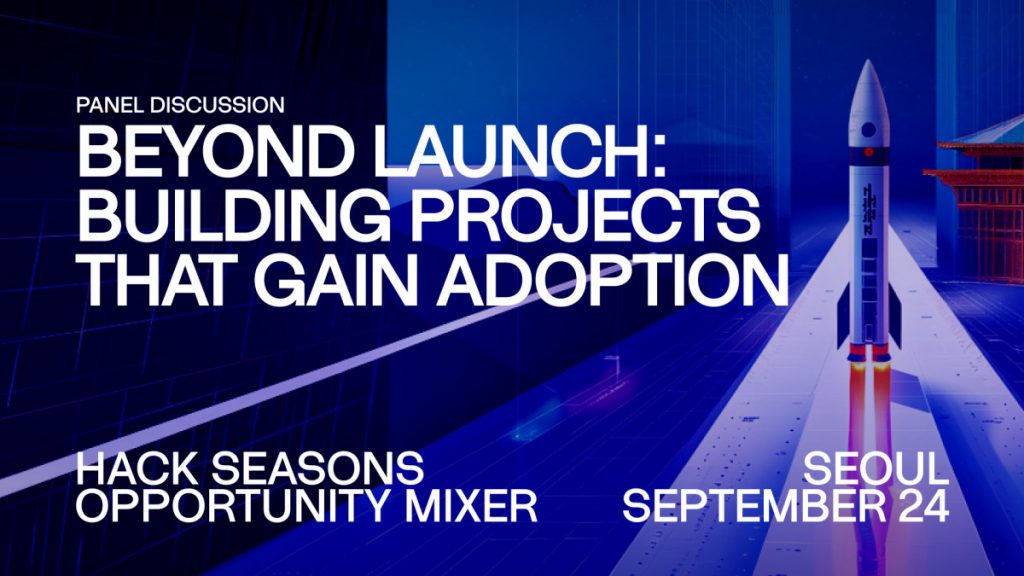
At the end of September, the Hack Seasons Opportunity Mixer in Seoul served as a global gathering for technologists, investors, and innovators to discuss the opportunities and challenges involved in advancing Web3 adoption.
One of the event’s most anticipated sessions was the panel titled “Beyond Launch: Building Projects That Gain Adoption,” featuring Gleb Gora, Co-Founder and CEO of Vortex; Dillon Chen, Founder and CEO of Common; Miumiu Qin, Ecosystem Relations at Sonic Labs; Lily Park, CEO of Exilist; YQ, Founder of AltLayer; and Rania Rahardja, Director of Sales for APAC at Ondo Finance.
The panel discussion opened with an exploration of the key early decisions that are critical for a successful project launch. Speakers emphasized that every project functions as a product, and initial token distributions or airdrops need careful planning. Poorly designed airdrops can attract participants who are only temporarily interested, making it difficult for projects to build a sustainable and engaged community. Pre-planning these processes is essential to establish trust and long-term participation.
Panelists also highlighted the role of tokens as embodiments of ownership, providing stakeholders with opportunities to participate in governance. Governance structures need to be clearly defined to ensure that stakeholders understand the rules and their responsibilities, which is essential for long-term project stability.
The conversation then turned to the evolution of blockchain infrastructure. While early chains were primarily general-purpose, there is now a trend toward application-specific projects. Institutions and new companies are increasingly seeking solutions that go beyond token launches, focusing on revenue-generating services that support the deployment of new chains. As blockchain infrastructure matures, the demand for these application-focused solutions is expected to grow, providing opportunities for projects that offer customized infrastructure services.
Looking ahead to 2025, the panel identified several emerging trends relevant to early-stage protocols. Perpetual markets, including prediction markets, are gaining attention, especially as regulatory clarity improves in the U.S., enabling product and financial innovation. These markets present opportunities to address inefficiencies in traditional financial systems and unlock value that has historically been inaccessible.
AI is another area of fast development. AI agents and LLMs are increasingly being applied beyond basic communication tools. One promising application is automated auditing of smart contracts, which can enhance project security. The combination of AI and on-chain data also allows for more efficient analysis of market sentiment and token performance, supporting faster and more informed decision-making.
Additional trends identified by the panel include the integration of crypto with real-world assets (RWAs), the expansion of institutional participation in crypto, and the development of stablecoin infrastructure for institutional use. The convergence of AI and RWAs is also emerging as a notable area of interest, highlighting opportunities for innovation at the intersection of digital finance and artificial intelligence.
Overall, the discussion highlighted the importance of combining robust community design, governance, and innovative technology to create sustainable projects that can adapt to evolving market demands and regulatory environments.
Panel Explores Balancing Bootstrapping, Venture Capital, And The Role Of AI In Fundraising
Another topic of discussion focused on finding the balance between bootstrapping a project and attracting major venture capital support.
Panelists noted that this balance is highly dependent on the specific project and available resources. From a founder’s perspective, the approach varies based on the type of project and the resources at hand. Successful bootstrapping requires a clear understanding of the problem being solved, a well-defined plan for leveraging available resources, and awareness of the competitive landscape. Founders must also assess how external funding could complement their efforts and what kind of support would be most beneficial.
Several panelists emphasized the ongoing importance of bootstrapping, highlighting how it builds resilience and deep knowledge of the market.
The discussion also explored the impact of AI on fundraising, noting that AI is changing how venture capital firms evaluate and support projects.
Disclaimer
In line with the Trust Project guidelines, please note that the information provided on this page is not intended to be and should not be interpreted as legal, tax, investment, financial, or any other form of advice. It is important to only invest what you can afford to lose and to seek independent financial advice if you have any doubts. For further information, we suggest referring to the terms and conditions as well as the help and support pages provided by the issuer or advertiser. MetaversePost is committed to accurate, unbiased reporting, but market conditions are subject to change without notice.
About The Author
Alisa, a dedicated journalist at the MPost, specializes in cryptocurrency, zero-knowledge proofs, investments, and the expansive realm of Web3. With a keen eye for emerging trends and technologies, she delivers comprehensive coverage to inform and engage readers in the ever-evolving landscape of digital finance.
More articles
Alisa, a dedicated journalist at the MPost, specializes in cryptocurrency, zero-knowledge proofs, investments, and the expansive realm of Web3. With a keen eye for emerging trends and technologies, she delivers comprehensive coverage to inform and engage readers in the ever-evolving landscape of digital finance.
Published: October 03, 2025 at 10:51 am Updated: October 03, 2025 at 10:51 am
To improve your local-language experience, sometimes we employ an auto-translation plugin. Please note auto-translation may not be accurate, so read original article for precise information.
Victoria, Seychelles, October 3, 2025 – MEXC, a leading global cryptocurrency exchange, has announced a collaboration with Falcon Finance to launch a USDf campaign featuring a total prize pool of $1 million. The campaign runs from October 3 to November 2, 2025 (08:00 UTC), offering zero-fee trading, high-yield staking, and exclusive rewards for both new and existing users.
Falcon Finance is the world’s first Universal Collateralization Infrastructure protocol that allows users to mint USDf (a stablecoin pegged 1:1 to the US dollar) using both crypto assets and tokenized real-world assets as collateral. Supported stablecoins include USDT, USDC, and FDUSD. For non-stablecoin assets, the protocol requires overcollateralization to maintain system security and stability.
USDf Campaign Highlights
Event 1: Zero Fees on FF and USDf Trading
Users can enjoy 0 fees for spot trading pairs including FF/USDT, FF/USDf, BTC/USDf, ETH/USDf, USDC/USDf, and USDf/USDT, along with FFUSDT futures trading.
USDf is available on MEXC Convert on October 3, 2025, 08:00 (UTC), offering instant conversions with zero transaction fees and no slippage risk.
Event 2: Stake USDf to Unlock Up to 200% APR
Stake 100-200 USDf for 3 days to earn 200% APR (New User Exclusive).
Stake 100-10,000 USDf for 7 days to earn 30% APR (For All Users).
Rewards are limited and distributed on a first-come, first-served basis. Advanced KYC verification is required.
Event 3: New User Exclusive
Task 1: Deposit & Trade Spot to Share 50,000 USDf
Users who make a net deposit of at least 500 FF, or 100 USDf, USDT, or USDC, and complete at least 100 USDT in FF spot trading volume will receive 10 USDf.
Rewards are limited to the first 5,000 users on a first-come, first-served basis.
Net deposits made via fiat or P2P trading qualify for an extra 20 USDT in futures bonuses.
Task 2: Welcome Bonus for New Futures Users – 50,000 USDT in Futures Bonuses
Min. Trading Volume: 500 USDT
Futures Bonus Reward:3 USDT
Event 4: Trade Futures to Share 150,000 USDT in Futures Bonuses
Task 1: Trade FF Futures to Share 20,000 USDT in Futures Bonuses
Trade FF futures and reach total trading volume ≥ 20,000 USDT to share 20,000 USDT bonus pool. Each user can earn up to 0.25%.
Task 2: Complete Advanced Trading Task to Unlock 30,000 USDT in Futures Bonuses
Complete Task 1 and reach total futures trading volume ≥ 300,000 USDT to unlock 30,000 USDT bonus pool. Each user can earn up to 0.5%.
Complete Task 1 and reach total futures trading volume ≥ 10,000,000 USDT to share 100,000 USDT bonus pool. Each user can earn up to 0.5%.
Rewards are not cumulative, and the system issues only the highest reward. Zero-fee futures trades do not count toward valid trading volume.
For more details and to participate, please visit the official campaign page on MEXC.
About MEXC
Founded in 2018, MEXC is committed to being “Your Easiest Way to Crypto.” Serving over 40 million users across 170+ countries, MEXC is known for its broad selection of trending tokens, everyday airdrop opportunities, and low trading fees. Our user-friendly platform is designed to support both new traders and experienced investors, offering secure and efficient access to digital assets. MEXC prioritizes simplicity and innovation, making crypto trading more accessible and rewarding.
MEXC Official Website| X | Telegram |How to Sign Up on MEXC
For media inquiries, please contact MEXC PR team: [email protected]
Risk Disclaimer:
This content does not constitute investment advice. Given the highly volatile nature of the cryptocurrency market, investors are encouraged to carefully assess market fluctuations, project fundamentals, and potential financial risks before making any trading decisions.
Source
Disclaimer
In line with the Trust Project guidelines, please note that the information provided on this page is not intended to be and should not be interpreted as legal, tax, investment, financial, or any other form of advice. It is important to only invest what you can afford to lose and to seek independent financial advice if you have any doubts. For further information, we suggest referring to the terms and conditions as well as the help and support pages provided by the issuer or advertiser. MetaversePost is committed to accurate, unbiased reporting, but market conditions are subject to change without notice.
About The Author
Gregory, a digital nomad hailing from Poland, is not only a financial analyst but also a valuable contributor to various online magazines. With a wealth of experience in the financial industry, his insights and expertise have earned him recognition in numerous publications. Utilising his spare time effectively, Gregory is currently dedicated to writing a book about cryptocurrency and blockchain.
More articles
Gregory, a digital nomad hailing from Poland, is not only a financial analyst but also a valuable contributor to various online magazines. With a wealth of experience in the financial industry, his insights and expertise have earned him recognition in numerous publications. Utilising his spare time effectively, Gregory is currently dedicated to writing a book about cryptocurrency and blockchain.
I’ve been exploring the Cozmo Robot for the past few weeks, and it’s impressive how a small robot can deliver such a big learning experience. Designed by Digital Dream Labs (formerly Anki), Cozmo combines AI, robotics, and playful interaction in a compact package that’s perfect for kids, students, and even curious adults.
Cozmo has a personality—it reacts to your actions, recognizes faces, and learns over time. Its mobile app allows you to control it, play games, and program simple actions using a visual coding language, making it an engaging introduction to STEM and coding.
Pros (Advantages):
AI Personality & Interaction: Cozmo reacts to touch, faces, and emotions, making it feel alive.Educational Coding Platform: Learn programming concepts via the Cozmo app or Code Lab with a visual block-based interface.Compact & Durable Design: Small, sturdy robot that fits on your desk or tabletop.Fun & Engaging: Games like “Quick Tap” or cube stacking make learning enjoyable.
Cons (Disadvantages):
Limited Battery Life: Around 1 hour of continuous play; requires charging frequently.App Dependency: Most of Cozmo’s features rely on the companion app.Not for Very Young Kids: Small parts and app-based controls require a certain level of maturity.
Why Choose Cozmo Robot:
Cozmo is more than a toy—it’s a learning companion. Unlike typical programmable robots, its AI personality keeps kids engaged, while the coding features introduce problem-solving and computational thinking in a playful way. Compared to Sphero BOLT or Makeblock mBot, Cozmo offers personality-driven learning, not just mechanical or sensor-based challenges.
Price & Value:
Retail Price: $179–$199 USDCurrency: USD
Overall, if you’re looking for an educational robot that’s fun, interactive, and tech-forward, Cozmo is an excellent choice. Its combination of AI, programming education, and personality makes it a standout in the world of STEM educational robots.
You Might Also Like;
AI & Interaction – 9.2
Educational Value – 9
Design & Durability – 8.8
Ease of Use & App Integration – 8.5
Value for Price – 8.7
8.8
TOTAL
Cozmo Robot offers a unique blend of AI interaction, coding education, and playful engagement. Its app-driven platform makes learning STEM fun, though battery life and app dependency are minor drawbacks.
User Rating: 4
( 1 votes)
Follow us on TWITTER (X) and be instantly informed about the latest developments…
I’ve been testing the Oura Ring Gen 3 for a few weeks now, and honestly, it feels less like a gadget and more like a futuristic health companion. Unlike bulky smartwatches, the Oura Ring is discreet, lightweight, and stylish—you’d barely notice it’s a piece of high-tech wearable technology.
The setup process is seamless via the Oura app, which instantly syncs with your phone and starts tracking everything from sleep cycles to heart rate variability (HRV). What makes Oura stand out compared to traditional wearables is its focus on holistic wellness rather than just step counts or calories.
Pros (Advantages):
Advanced Sleep Tracking: Provides incredibly detailed insights into sleep stages, restfulness, and recovery.Discreet & Stylish Design: Looks like a regular ring; perfect for people who don’t want to wear bulky smartwatches.Health & Readiness Scores: AI-driven insights help you understand when to push harder or when to rest.Long Battery Life: Up to 7 days on a single charge, much better than most smartwatches.Comfort: Extremely lightweight, easy to forget you’re wearing it.
Cons (Disadvantages):
Pricey for a Ring: At around $299–$349, it’s not cheap for a wearable.Limited Screenless Interaction: You always need the app to view data.Subscription Model: Some features require a monthly Oura membership.
Why Choose the Oura Ring Gen 3?
Compared to an Apple Watch or Garmin, Oura Ring is less about being a mini smartphone on your wrist and more about giving you deep, personalized health insights. It doesn’t distract with notifications or apps—it focuses entirely on wellness, sleep, and recovery.
For those who value health optimization, biohacking, and futuristic wearable design, the Oura Ring Gen 3 feels like a game-changer. It’s especially useful for athletes, fitness enthusiasts, or anyone looking to take control of their sleep and overall health.
Price & Value
Retail Price: $299 – $349 (depending on finish)Oura Membership: $5.99/month for advanced analyticsCurrency: USD
While it’s not the cheapest wearable out there, its niche design, advanced sleep tracking, and futuristic appeal make it a standout device in the wearable tech market.
Final Verdict:The Oura Ring Gen 3 isn’t for everyone—it’s for people who want cutting-edge health data in the most minimal and futuristic form possible. If you’re interested in wellness tracking without the bulk of a smartwatch, Oura is an excellent investment.
You Might Also Like;
Sleep & Recovery Tracking – 9.5
Design & Comfort – 9
Ease of Use & App Integration – 8.8
Battery Life – 9.2
Value for Price – 8.5
9
TOTAL
The Oura Ring Gen 3 delivers advanced health and sleep tracking in a stylish, minimal design. While its price and subscription model may limit some users, it remains one of the most innovative wearables in the market.
User Rating:
Be the first one !
Follow us on TWITTER (X) and be instantly informed about the latest developments…
Published: October 03, 2025 at 10:09 am Updated: October 03, 2025 at 10:10 am
by Ana
Edited and fact-checked:
October 03, 2025 at 10:09 am
To improve your local-language experience, sometimes we employ an auto-translation plugin. Please note auto-translation may not be accurate, so read original article for precise information.
In Brief
The first week of October 2025 showcased a wave of strategic partnerships across crypto, blockchain, and Web3, driving innovation, infrastructure growth, and mainstream adoption from Singapore and Vietnam to Formula 1 and secure trading solutions.
The first week of October 2025 highlighted how partnerships are shaping the next phase of crypto adoption. From Singapore’s TOKEN2049 gathering global venture capital to Vietnam’s digital asset hub plans, and from Solana’s treasury expansion to BlockDAG’s Formula 1 debut, collaborations are redefining finance, infrastructure, and mainstream visibility.
Binance and Ignyte Partner to Advance UAE’s Web3 Ecosystem
Binance has unveiled a new partnership with Ignyte, a Dubai International Financial Centre–backed startup hub, positioning the exchange as the first to align with the UAE’s Digital Economy Strategy. The collaboration is designed to provide startups with hands-on mentorship, technical tools, and access to Binance’s education platform, all aimed at driving Web3 innovation across the region.
CEO Richard Teng used X to highlight the move, stressing that “Web3 isn’t about replacing Web2” but instead about empowering users to reclaim control over their data, identity, and economic participation. Market observers note that the partnership illustrates Binance’s ongoing effort to embed itself within regional innovation strategies following its recent multibillion-dollar deal activity.
Some key features under the initiative would be a flagship hackathon worth $25,000 in prizes for teams to create blockchain solutions and pitch directly to policymakers and investors. The startups can also utilize Binance developer APIs and on-chain integration tools to enhance use cases for BNB Chain that has been gravitating more towards tokenization.
The effort builds on Binance’s recent collaborations, including joint work with Franklin Templeton and Ondo Finance, signaling a continued push to bridge traditional markets with decentralized infrastructure.
The Solana network is set to receive another boost as Crypto.com and Sharps Technology announce a partnership focused on enhancing treasury management and ecosystem growth. The agreement highlights how institutional players are increasingly aligning with Solana, which has gained momentum for its scalability and efficiency in recent market cycles.
Sharps Technology, already holding more than 2 million SOL valued at nearly $400 million, is expanding its digital asset strategy by leveraging Crypto.com’s custody and liquidity services. James Zhang, Strategic Advisor to Sharps, said that “partnering with Crypto.com, a platform with over 150 million users,” equips the company with institutional-grade infrastructure to manage one of the largest Solana treasuries while also supporting broader ecosystem development.
The alliance demonstrates Sharps’ long-term conviction in Solana’s potential as a foundation for next-generation financial applications. By tapping Crypto.com’s institutional tools, the company aims to align traditional treasury practices with the opportunities emerging in decentralized markets.
Observers note that the collaboration reflects a growing pattern of corporations and institutions building directly on Solana, underscoring its role as a blockchain tailored for speed, scale, and financial use cases. The move may also encourage further partnerships as adoption continues to expand.
Vietnam Taps Binance and Bybit to Shape Digital Asset Hub in Da Nang
To move its plan forward, Vietnam is keen to establish an international financial center in Da Nang, with digital assets being at the center of this project. The government has recruited Binance and Bybit to set up a regulated platform operating under strict capital and compliance standards.
Deputy Prime Minister Nguyen Hoa Binh met the top management of both exchanges during his recent trip to the UAE. Local media reported that there was an offer for Binance to assist in blockchain development and related best practices and infrastructure design.
Bybit, which counts more than 2.5 million users in Vietnam, indicated readiness to contribute to legal frameworks and workforce training.
The initiative aligns with Vietnam’s five-year pilot program for digital assets, which requires participants to hold at least 10 trillion VND (about $409 million) in charter capital and comply with stringent AML and KYC rules.
Analysts suggest the partnerships could help position Da Nang as a regional hub for blockchain finance. Still, they caution that the program’s success hinges on maintaining “strict oversight” while ensuring global platforms can adapt to the regulatory demands of Vietnam’s evolving digital asset landscape.
TOKEN2049 Singapore 2025: Where Global VCs and Web3 Innovators Converge
Asia’s largest crypto conference, TOKEN2049 this year in Singapore, is expected to attract more than 10,000 attendees ranging from VC firms to Web3 startups. Marketed as the one platform where all industry-shaping announcements are made, it gives further credence to Singapore being a hotbed of digital asset innovation and investment.
Over the last 10 years, TOKEN2049 has become a force for on-the-ground partnering and funding across the blockchain ecosystem. The 2025 edition continues to emphasize Web3 development, keeping pace with the global shift toward decentralization.
Market watchers note that venture firms are committing “vast sums” to blockchain and Web3 projects, reflecting confidence in the sector’s disruptive potential.
The conference is also being leveraged as a launchpad for fresh funding initiatives, including projects designed to cut transaction costs, improve privacy, and strengthen interoperability between blockchains. Several collaborations announced during the week highlight just how diverse this wave of innovation has become.
Analysts suggest that the new partnerships forged here could have ripple effects across industries such as finance and supply chain management. With Singapore providing the backdrop, TOKEN2049 is being positioned as not just a regional milestone but a global reference point for the future of Web3 adoption.
BlockDAG Accelerates Into Formula 1 With BWT Alpine Partnership
BlockDAG (BDAG) has broken new ground by becoming the first Layer-1 blockchain to secure a partnership in Formula 1, teaming up with BWT Alpine F1 in a multi-year agreement. Unlike other crypto projects that often sponsor football clubs or esports teams, BlockDAG’s move puts its brand on one of the most prestigious stages in global sport, watched by over a billion fans across 130 countries.
The partnership is more than a marketing play. Observers note that Alpine’s choice of BlockDAG as its exclusive Layer-1 and DAG partner reflects confidence in the project’s technical design and scalability. Its DAG architecture, which enables parallel block confirmations secured by Proof-of-Work, has been likened to Formula 1’s relentless drive for speed and reliability.
The deal follows a record-setting presale where BlockDAG raised over $410 million, sold 26.4 billion tokens, and built a community of 312,000 holders. Its mining ecosystem is already active, with 3 million app users and more than 20,000 hardware miners shipped worldwide.
By pairing these achievements with a Formula 1 sponsorship, BlockDAG signals both credibility and ambition. Analysts see the partnership as a cultural bridge, propelling the project from crypto circles into mainstream awareness while reinforcing its long-term growth trajectory.
Cypherock and Changelly Redefine Secure Crypto Swaps
Cypherock, the company behind the X1 hardware wallet, has teamed up with exchange platform Changelly to deliver what both describe as the “safest way” to swap crypto from cold storage. The integration allows users to trade assets directly from their Cypherock wallet, eliminating the need to rely on centralized exchanges or expose funds to online risks through hot wallets.
The system works by combining Cypherock’s sharded cold storage with Changelly’s exchange infrastructure. Transactions are initiated and signed entirely within the X1 device, ensuring private keys never leave the hardware. Users manage swaps through the cySync desktop app, which provides a streamlined interface while tapping into Changelly’s liquidity network.
Akhil Jonnavithula, Cypherock’s Business Development Director, explained that the integration removes the long-standing trade-off between safety and usability, noting that “users can now diversify their portfolios directly from the safety of their cold storage.” Changelly’s Head of Partnerships, Nik Kos, echoed that sentiment, saying the collaboration reflects a shared vision to make crypto “more secure and accessible.”
With Changelly’s 10 million-plus user base and Cypherock’s self-custody model, the partnership arrives at a time when demand for reliable alternatives has surged following recent exchange failures. Analysts see it as a milestone in pushing secure, trustless swaps toward mainstream adoption.
Disclaimer
In line with the Trust Project guidelines, please note that the information provided on this page is not intended to be and should not be interpreted as legal, tax, investment, financial, or any other form of advice. It is important to only invest what you can afford to lose and to seek independent financial advice if you have any doubts. For further information, we suggest referring to the terms and conditions as well as the help and support pages provided by the issuer or advertiser. MetaversePost is committed to accurate, unbiased reporting, but market conditions are subject to change without notice.
About The Author
Alisa, a dedicated journalist at the MPost, specializes in cryptocurrency, zero-knowledge proofs, investments, and the expansive realm of Web3. With a keen eye for emerging trends and technologies, she delivers comprehensive coverage to inform and engage readers in the ever-evolving landscape of digital finance.
More articles
Alisa, a dedicated journalist at the MPost, specializes in cryptocurrency, zero-knowledge proofs, investments, and the expansive realm of Web3. With a keen eye for emerging trends and technologies, she delivers comprehensive coverage to inform and engage readers in the ever-evolving landscape of digital finance.
Makera has introduced the affordable desktop CNC Z1. It offers a strong alternative to 3D printers with 0.02 mm accuracy, quick tool change, and an integrated dust collection system.
Makera is introducing a new player to the desktop CNC market: the Z1. The company designed this new machine specifically targeting “entry-level” users. The Z1 offers the same features as the Makera Carvera Air, such as automatic leveling, 0.02 mm accuracy, and quick tool change, while nearly halving the price.
Affordable Price, Wide Working Potential
The Carvera and Carvera Air models are known as devices that aim to make desktop CNC as easy to use as a 3D printer, appealing to the “CNC from scratch” concept. However, these machines were known for their high prices. For instance, the 4-axis set of the Carvera Air is around $2,897 on Amazon. The Z1 nearly cuts this price in half, bringing it down to $1,199. Moreover, it’s being offered with an early bird opportunity at $799. Makera is taking a $39 refundable reservation fee for pre-orders and is providing a $400 discount to early purchasers. The first shipments are planned for January 2025. A Kickstarter project for the product will also be launched soon.
One of the most notable features of the Z1 is that it offers a working area very close to the Carvera Air, with a 200 × 200 mm cutting area and a 100 mm height. The machine comes with a 150 W, 13,000 RPM spindle. It’s possible to use different collets, such as 6 mm and 4 mm, as optional extras. The quick tool change system, just like on the Carvera Air, provides significant convenience for the user.
Instead of the external air and vacuum system on the Carvera Air, the Z1 comes with an integrated AeroDust collection system. This system collects chips and dust while cooling the spindle. Additionally, with its cast aluminum body, linear rails, and CAM software compatibility, the machine offers a compact structure. Its closable lid significantly reduces noise and dust levels. These can be seen as design steps taken for home use.
The Makera Z1 can cut materials such as hard and soft woods, MDF, various plastics, FR4 and fiberglass composites, and metals like aluminum, copper, brass, and bronze. The Z1 also supports the expandability features of the Carvera Air with its optional 4th axis kit and 5 W module. It is compatible with the updated Makera CAM software (now Makera Studio) and can be controlled via the Makera App on Windows, Linux, macOS, iOS, or Android.
Do you think this aggressive pricing and integrated design will make the Makera Z1 the go-to choice for hobbyists looking for a CNC alternative to 3D printing?
You Might Also Like;
Follow us on TWITTER (X) and be instantly informed about the latest developments…
Published: October 03, 2025 at 9:15 am Updated: October 03, 2025 at 9:15 am
by Ana
Edited and fact-checked:
October 03, 2025 at 9:15 am
To improve your local-language experience, sometimes we employ an auto-translation plugin. Please note auto-translation may not be accurate, so read original article for precise information.
In Brief
The 2025 Crypto Content Creator Campus in Lisbon will bring together top industry sponsors and speakers to explore Web3 monetization, gamification, and creator empowerment.
The Crypto Content Creator Campus (CCCC), a global summit focused on the convergence of content, cryptocurrency, and creator monetization, announced that Bybit EU and other major industry players will serve as official sponsors for its 2025 edition, scheduled to take place in Lisbon from 14 to 16 November 2025.
The participation of two leading exchanges highlights growing industry support for creator-driven Web3 adoption and further strengthens Lisbon’s reputation as a center of digital innovation. Greenfield Capital’s State of European Crypto report identifies Lisbon as the top European cryptocurrency hub, citing its strong decentralized finance (DeFi) ecosystem and favorable tax environment as key drivers of growth.
In addition to Bybit EU, the third edition of CCCC will receive sponsorship from companies such as Zoomex, WEEX, MEXC, Amazon Web Services, Mantle, Solana, Blockchain for Good Alliance (BGA), Byreal, BYDFi, and CUDIS, all of which align with the event’s goal of equipping creators with resources, networks, and strategies to build sustainable careers within the decentralized economy.
Bybit EU, having recently established a regulated presence in Europe and introduced its cryptocurrency card across the EEA, will use its involvement in CCCC to highlight how compliance-oriented infrastructure and innovation can provide creators with practical tools for monetization and engagement in Web3.
“Creators are building powerful communities — and they need compliant, trusted infrastructure to grow and monetize sustainably,” said Mazurka Zeng, Managing Director and Chief Executive Officer of Bybit EU, in a written statement. “Supporting CCCC reflects our belief in equipping creators with real-world tools that bridge crypto and everyday utility, especially in a post-MICA Europe,” she added.
CCCC 2025 To Explore Web3 Monetization And Gamification With Leading Industry Speakers
This year’s summit will focus on the theme “Monetization in the Web3 Era,” featuring speakers such as Ben Zhou, Dr. Maye Musk, Nick Tran, Musa Tariq, Nuseir Yassin, Philippe Ben Mohamed, and Sergej Loiter, among others. The program will cover topics including gated content, creator DAOs, affiliate networks, and gamified participation models.
Gamification will be emphasized for the first time at CCCC, with attendees participating in arcade-style quests, interactive challenges, and live engagement activities designed to reflect key Web3 principles such as incentives, ownership, and community interaction.
Tickets and media registration are currently open at the event’s official website. Media representatives, creators, and community members are welcome to attend, with certain sessions requiring pre-registration.
Disclaimer
In line with the Trust Project guidelines, please note that the information provided on this page is not intended to be and should not be interpreted as legal, tax, investment, financial, or any other form of advice. It is important to only invest what you can afford to lose and to seek independent financial advice if you have any doubts. For further information, we suggest referring to the terms and conditions as well as the help and support pages provided by the issuer or advertiser. MetaversePost is committed to accurate, unbiased reporting, but market conditions are subject to change without notice.
About The Author
Alisa, a dedicated journalist at the MPost, specializes in cryptocurrency, zero-knowledge proofs, investments, and the expansive realm of Web3. With a keen eye for emerging trends and technologies, she delivers comprehensive coverage to inform and engage readers in the ever-evolving landscape of digital finance.
More articles
Alisa, a dedicated journalist at the MPost, specializes in cryptocurrency, zero-knowledge proofs, investments, and the expansive realm of Web3. With a keen eye for emerging trends and technologies, she delivers comprehensive coverage to inform and engage readers in the ever-evolving landscape of digital finance.
Published: October 03, 2025 at 8:57 am Updated: October 03, 2025 at 8:57 am
by Ana
Edited and fact-checked:
October 03, 2025 at 8:57 am
To improve your local-language experience, sometimes we employ an auto-translation plugin. Please note auto-translation may not be accurate, so read original article for precise information.
In Brief
WeFi, a “deobank” founded by Maksym Sakharov and Reeve Collins, aims to transform crypto banking into everyday banking with on-chain accounts, stablecoin yields, and mobile-first tools, while navigating regulatory challenges and targeting financial inclusion.
When more than 2,000 people gathered at Bangkok’s Queen Sirikit National Convention Center this June, the spectacle could have passed for a tech rally or even a pop concert. Celebrity appearances, a Guinness World Record certification, and a Ferrari raffle gave the day its headlines. But beneath the theatrics, the deobank WeFi was trying to answer a persistent question: can crypto banking become ordinary banking?
Building a bank on-chain
Founded by Maksym Sakharov and Reeve Collins, one of the original creators of Tether, WeFi calls itself a “deobank”—a decentralized on-chain bank. The pitch is that neobanks, despite their sleek mobile apps, still rely on legacy banking infrastructure. That dependence often means fees, delays, and regulatory bottlenecks inherited from the old system.
WeFi’s model is different. It runs entirely on crypto rails, offering non-custodial accounts, stablecoin-based yields, cards for everyday spending, and even ATM withdrawals. In Sakharov’s words: “We’re not patching the system. We’re rebuilding it on-chain.”
From financial exclusion to mobile-first design
The company’s ambitions stretch beyond early adopters. Roughly 1.4 billion people remain unbanked worldwide, with a large proportion in Asia. Countries like the Philippines and Malaysia illustrate the gap: widespread mobile phone use, but reliance on cash or high-cost remittance channels.
WeFi is targeting that demographic with a mobile-first interface designed to resemble familiar fintech apps. The idea is to lower the learning curve—users manage tokenized fiat and crypto balances through simple tools for payments, savings, and transfers. Behind the scenes, smart contracts handle staking rewards and programmable finance features, but the front end aims to feel straightforward.
Managing compliance while staying decentralized
One of the hardest questions for any crypto banking experiment is regulation. WeFi has pursued what it calls a “distributed licensing strategy.” Its group companies hold a Money Services Business license in Canada, a VASP registration in the Czech Republic,, with additional applications under way in other jurisdictions.
The accounts themselves are non-custodial, meaning users, not the company, control their assets. That distinction reduces the firm’s direct obligations around customer identification. But it does not eliminate regulatory scrutiny. Global authorities are increasingly examining stablecoin yields and DeFi-linked services, areas where WeFi has promised returns as high as 18% on deposits.
The balance between spectacle and strategy
At its Bangkok summit, WeFi secured a Guinness World Record for concurrent YouTube livestream participants—121,348 during a prior event. The recognition was symbolic. In a sector often accused of inflating numbers, having a certified metric mattered. Coupled with a Ferrari raffle and celebrity endorsements, the campaign underscored how much visibility has become part of the battle for legitimacy in crypto finance.
But visibility is not the same as adoption. The challenge now is whether the blend of self-custody, licensing, and consumer-friendly packaging can survive outside the conference stage. Similar promises in the sector have struggled when confronted with regulatory pushback or security lapses.
Toward a decade of “on-chain” banking
Looking ahead, Sakharov and his team describe a ten-year horizon where crypto rails underpin most financial transactions. They foresee mainstream use of high-yield stablecoin accounts, on-chain loans, and programmable payroll systems. WeFi is one of several projects experimenting with the “onchain bank account” model—an approach that combines stablecoins, DeFi protocols, and card networks to create accounts that are auditable, programmable, and interoperable with fiat systems.
Whether those experiments will withstand the practical demands of compliance, user protection, and market volatility remains unresolved. For now, WeFi’s visibility campaign has placed it among the most recognizable efforts to turn blockchain banking from a niche idea into a service familiar to everyday consumers.
Disclaimer
In line with the Trust Project guidelines, please note that the information provided on this page is not intended to be and should not be interpreted as legal, tax, investment, financial, or any other form of advice. It is important to only invest what you can afford to lose and to seek independent financial advice if you have any doubts. For further information, we suggest referring to the terms and conditions as well as the help and support pages provided by the issuer or advertiser. MetaversePost is committed to accurate, unbiased reporting, but market conditions are subject to change without notice.
About The Author
Alisa, a dedicated journalist at the MPost, specializes in cryptocurrency, zero-knowledge proofs, investments, and the expansive realm of Web3. With a keen eye for emerging trends and technologies, she delivers comprehensive coverage to inform and engage readers in the ever-evolving landscape of digital finance.
More articles
Alisa, a dedicated journalist at the MPost, specializes in cryptocurrency, zero-knowledge proofs, investments, and the expansive realm of Web3. With a keen eye for emerging trends and technologies, she delivers comprehensive coverage to inform and engage readers in the ever-evolving landscape of digital finance.
Robbie Coltrane was a beloved Scottish actor and comedian, renowned for his distinctive roles across film and television. Known for his portrayal of...