There’s something magical about classic cars thundering through stunning landscapes, their gleaming chrome and polished paintwork catching the sun as they tackle challenging routes steeped in motorsport history. From the snow-capped Alps to sun-drenched Mediterranean coastlines, these prestigious classic car rallies combine automotive heritage with adventure in ways that modern motorsport simply can’t match.
1. Mille Miglia – Italy
The “Thousand Miles” remains the crown jewel of classic car rallies. While the original race from 1927-1957 is the stuff of legend, today’s recreation maintains much of that romantic spirit.
The route from Brescia to Rome and back takes participants through medieval towns, rolling Tuscan hills, and along the Adriatic coast. Only cars from the original race period are eligible, making this four-day event in mid June a moving museum of automotive history.
Watching hundreds of priceless vehicles like Mercedes-Benz 300 SLRs and Ferrari 250 GTs navigate narrow Italian streets is an unforgettable spectacle.
Following in the tire tracks of the historic Tour de France Automobile, this five-day rally in April crosses France from Paris to the Côte d’Azur. What sets Tour Auto apart is its combination of road sections and circuit racing at iconic tracks like Circuit Paul Ricard and Magny-Cours.
The event attracts everything from nimble Alfa Romeos to muscular Ford GT40s, all competing across various classes. The mix of high-speed track action and challenging mountain passes makes this one of the most complete tests of both car and crew.
Winter in the Maritime Alps provides a dramatically different challenge. Taking place from end of January to beginning of February, this recreation of the world’s oldest rally tests classic cars against snow, ice, and treacherous mountain passes.
The event pays homage to Monte-Carlo’s rallying heritage, with participants following some of the same routes that made legends of drivers like Paddy Hopkirk in his Mini Cooper S. Only cars that competed in the original Monte-Carlo Rally between 1911 and 1983 are eligible, ensuring period-correct authenticity.
For sheer adventure, few events can match this 2,000-mile blast down the length of Mexico. The original 1950-1954 races were considered among the most dangerous in motorsport history.
Today’s week-long event in mid October is safer but retains the spirit of adventure, with classic cars tackling challenging roads through diverse landscapes from jungle to desert. There are several different categories and American muscle cars are particularly popular here, with thundering Studebakers and Oldsmobiles battling through mountain passes and colonial cities.
The ultimate classic car endurance rally, this 36-day, 8,500-mile adventure recreates the pioneering 1907 automobile race. Crossing two continents, participants navigate through the Gobi Desert, Russian steppes, and European countryside from mid May to mid June.
The challenge isn’t just about speed – it’s about keeping these historic vehicles running through extreme conditions and rough terrain. From pre-war Bentleys to classic Porsche 911s, the cars that complete this epic journey earn their place in motorsport history.
While not strictly a rally, this historic day run deserves mention as the world’s oldest motoring event. The RM Sotheby’s London to Brighton Veteran Car Run is not to be missed!
Limited to pre-1905 vehicles, the annual November journey celebrates the abolition of Britain’s restrictive Locomotive Acts. Watching these pioneering automobiles tackle the 60-mile route offers a unique window into the dawn of motoring. Steam-powered vehicles share the road with early petrol engines, creating an atmosphere that’s more mobile museum than competitive event.
In recent years, the focus has been on sustainability. In 2024, four pre-1905 vehicles owned by the Royal Automobile Club ran on innovative sustainable fuels.
7. Rallye des Princesses Richard Mille Paris – St Tropez
Born as a tribute to the historic Paris-Saint-Raphaël Féminin rally of 1929, this prestigious all-women event combines glamour with serious motorsport challenge. In mid May, over 90 teams of female drivers and navigators pilot classic and vintage cars from Place Vendôme in Paris to the French Riviera, covering over 1,500 kilometers.
The rally welcomes cars from 1946 to 1991, creating a diverse field that might include everything from elegant Mercedes-Benz 190 SLs to spirited Porsche 356s. What sets this event apart is not just its unique status as a women-only competition, but its perfect blend of competitive regularity challenges with luxurious hospitality. Indeed, the event is sponsored by high-end watchmaker Richard Mille.
8. Barcelona – Sitges International Vintage Car Rally
This charming Mediterranean rally, running since 1959, celebrates the golden age of motoring along Spain’s stunning Costa del Garraf. Limited to cars manufactured before 1924, the event brings together some of Europe’s finest veteran vehicles for a scenic 40-kilometer journey from Plaza Sant Jaume in Barcelona to the coastal town of Sitges.
What makes this rally particularly special is its emphasis on period authenticity – participants often dress in period-correct clothing, creating a delightful time capsule of early 20th-century motoring culture. The route along the historic Garraf coast road, with its sweeping views of the Mediterranean, provides a perfect backdrop for these elegant machines, from brass-era Rolls-Royces to pioneering Hispano-Suizas.
Final Thoughts on the Top Classic Car Rallies in the World
Whether you’re a participant or spectator, these rallies offer a unique blend of automotive history, sporting challenge, and adventure. They remind us that classic cars were built to be driven, not just displayed, and that the golden age of motoring still has the power to captivate and inspire.
The sight and sound of historic vehicles tackling iconic roads continues to draw enthusiasts from around the world, ensuring these events remain vibrant celebrations of our automotive heritage.
For those considering participating, remember that most events offer different categories to suit various levels of competition and vehicle preparation. While some focus on precise timing and navigation, others emphasize the journey over the stopwatch. What they all share is the opportunity to experience classic motoring in its most exciting and authentic form.
In the ever-changing world of luxury and fashion, few accessories carry as much cultural weight as a fine timepiece. Beyond their practical function, watches have long served as symbols of status, taste, and personal style.
When worn by famous people, these mechanical masterpieces often transcend their original purpose to become cultural touchstones, influencing generations of watch enthusiasts and fashion aficionados alike. From Hollywood’s golden age to modern-day icons, certain celebrity watches have achieved legendary status, their appeal undimmed by the passage of time.
These timepieces don’t just tell time – they tell stories of achievement, innovation, and enduring style.
When it comes to luxury watches, celebrities have long been trendsetters. But some timepieces have transcended fleeting fashion to become genuine horological icons.
Here are some of the best celebrity-worn watches or their modern day equivalents, that have maintained their status as symbols of excellence and style through the decades.
1. Paul Newman’s Rolex Daytona
The watch that sparked a collecting revolution, Paul Newman’s personal Rolex Daytona became the most expensive wristwatch ever sold at auction in 2017: $17,752,500.
The “Paul Newman” Daytona variant, characterized by its distinctive art deco-style numerals and contrasting subdials, remains one of the most coveted vintage watches in existence.
Newman wore his Rolex watch faithfully for decades, both on and off screen.
First worn by McQueen in the 1971 film “Le Mans,” the square-cased Monaco revolutionized watch design. The actor’s choice of this avant-garde chronograph helped establish TAG Heuer’s racing credentials and created an enduring association between the brand and motorsports.
Modern versions of the Monaco remain virtually unchanged from McQueen’s original.
Before and after becoming Princess Grace of Monaco, Kelly’s elegant Rolex Lady-Datejust exemplified refined femininity. The water-resistant yellow gold watch became a symbol of sophisticated women’s timepieces and helped establish the Lady-Datejust as Rolex’s signature women’s watch.
Its classic design continues to influence modern women’s watchmaking. The Datejust was introduced in 1945, while the Lady-Datejust launched in 1957.
The name comes from the watch’s certifiably accurate date display. Grace Kelly’s watch is a 26 mm, however the bracelet is available in 24 – 34 mm.
Given to him by Jackie Kennedy in 1960, JFK’s elegant Omega dress watch epitomized mid-century refinement. The gold plated watch gained additional historical significance when Kennedy wore it during his presidential inauguration.
The piece, also known as an Omega Ultra-Thin, perfectly captured both Kennedy’s sophisticated style and the optimistic spirit of the New Frontier era. It featured an 18ct gold casing, silver dial and glossy black leather strap.
Diana’s Cartier Tank Louis, which she wore frequently throughout the 1980s and ’90s, became a symbol of her chic style. With a yellow gold case and black alligator strap, the watch is thought to have been a gift from her Father, the 8th Earl Spencer.
Diana also owned a yellow gold Cartier Tank Française watch, which was inherited by her sons upon her untimely passing. Harry gave this priceless heirloom to his wife, Meghan Markle.
The King’s futuristic, shield-shaped Hamilton Ventura became as much a part of his iconic look as blue suede shoes. Worn in “Blue Hawaii” and numerous public appearances, Elvis helped establish the Ventura as a trendsetting watch.
Introduced in 1957 as the world’s first electric watch in serial production, the Ventura was the brainchild of car designer Richard Arbib. Its distinctive appearance continues to influence Hamilton’s modern collections.
While Ian Fleming’s literary Bond wore a Rolex, Pierce Brosnan’s 1995 debut as 007 established the Omega Seamaster as Bond’s timepiece of choice. The rugged yet refined diving watch has appeared in every Bond film since, spawning numerous limited editions and cementing its place in horological history.
Taylor’s stunning Bulgari Serpenti watch, worn during the filming of “Cleopatra,” became as legendary as the actress herself. The snake-shaped bracelet watch, with its coiled design and jeweled embellishments, represented the height of Italian glamour and helped establish Bulgari as a major force in luxury watchmaking.
This unique watch was originally rumored to be a gift from her lover Richard Burton. However, it is now thought to have been a gift from the producers of Cleopatra.
There are many versions of the Bulgari Serpenti watch, including the one below. They all integrate the wind-around the arm style of the original design.
The legendary jazz trumpeter was rarely seen without his Breitling Navitimer 806 Reverse Panda. This complex chronograph was beloved by aviation enthusiasts and racing car drivers like Graham Hill.
Davis’s association with this technically sophisticated timepiece helped establish it as a favorite among musicians and creative professionals, a status it maintains today. He had a customized leather bund strap made to hold the watch firmly in place while he was playing.
Below is a modern version of the Breitling Navitimer 806.
The first watch worn on the moon during the Apollo 11 mission, Aldrin’s Speedmaster Professional became known as the “Moonwatch.” This historic achievement validated Omega’s claims about the watch’s durability and precision.
The Speedmaster Professional became a permanent fixture in both NASA operations and watch collecting circles.
Though famous for his simple lifestyle, Mahatma Gandhi owned a silver Zenith pocket watch that he used to maintain his strict daily schedule. It was a gift from the then Prime Minister of India, Jawaharlal Nehru.
The Swiss pocket watch was stolen from Gandhi during a train ride to Kanpur. The thief was filled with remorse and returned it to him later the same year.
The watch’s survival and eventual auction highlighted how even the simplest timepieces can acquire immense historical and cultural significance. It was sold with his sandals, glasses and crockery for USD $2,096,000 in 2009. Very few photos of this iconic timepiece exist.
Fans of the hit TV series “The Day of the Jackal”, based on the novel by Frederick Forsyth, will have noticed the lead character’s stylish chronograph watch. Eddie Redmayne, starring as The Jackal, sports an Omega Seamaster Railmaster in several scenes.
Originally introduced in 1957, the Railmaster was engineered for scientists, technicians, and railway workers who needed a timepiece resistant to magnetic fields. Its anti magnetic properties, achieved through a special inner case, made it a pioneer in professional watches.
The Railmaster’s understated design and technical innovation have made it a favorite among collectors and professionals who appreciate its combination of utility and elegance. Redmayne is an Omega ambassador in real life, and he also wears a few other Omega watches in the series, including an Aqua Terra and an Omega Globemaster.
most comfortable loafers for women are always seen as the essential piece of fashion for women. They can enhance any look you are wearing with utmost comfort and in a very bespoke manner. In the modern world, these loafers are the highlighting aspect of everything you wear. Due to this, brands started evolving their designs and making these loafers with more precise detailing.
The best part of having a loafer is that you can wear it on different occasions, whether it’s a casual lunch or a fancy night party. Aiming for effortless elegance, loafers, and drivers can seamlessly elevate your look.
This blog delves into the top 20 types of loafers and drivers defining women’s fashion in 2024. Discover styles that suit every taste and occasion, from timeless penny loafers to chic tassel designs, from sporty drivers to luxe velvet finishes.
Whether you’re a fan of classic elegance or contemporary edge, this curated list promises to inspire your next footwear obsession. Let’s step into the world of fashion-forward Luxury loafers and drivers and redefine your Loafer game this year.
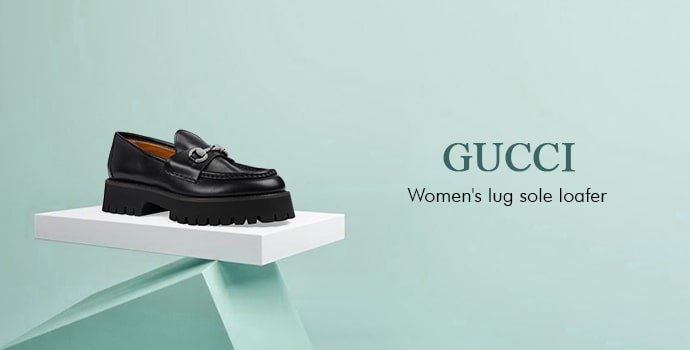
Gucci Women’s lug sole loafer
Gucci was always seen as the epitome of luxury, and when it comes to the loafers for women, the brand’s expertise came in handy. If we talk about the loafer itself, it comes in black, made with the finest leather. And the detailing includes the silver-toned hardware horse bit with crystal.
This Italian masterpiece is perfect for any occasion, whether you are going for a casual day out or a professional business meeting. The sole of the loafer is made of a lug rubber sole, which makes it durable and long-lasting. If you are looking to invest in a luxury loafer, you should go with the Gucci women’s lug sole loafer.
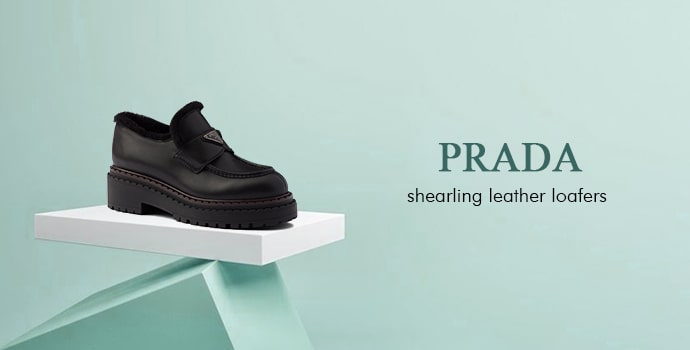
Prada shearling leather loafers
If you are a fan of comfortable luxury goods, then you should look out for the Prada shearling leather loafers. These loafers reflect the class and quality that Prada is known for. If we talk about the loafer itself, it comes in black with material using calf leather.
The best thing about calf leather is that it is one of the softest leathers to exist to give you that extra comfort. The detailing includes the shearling lining with a slip-on style. There’s the enamel triangle logo engraved to the rear. The sole is entirely made up of rubber, and the outer material is calf leather, whereas the lining was done with sheepskin. You can carry these loafers with almost all of your outfits because of their timeless nature.
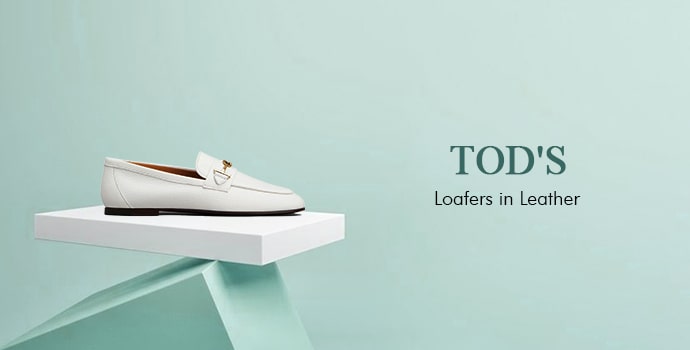
Tod’s Loafers in Leather
Tod’s is famous for creating the most classy yet modern elegance in every one of its products; these loafers are no exception. It gives you the never-goes-out-of-style vibe because of its design and appeal. If we talk about the material used, then the upper leather is made up of goatskin, and the metal T-ring accessory gets the extra point of elegance.
The heel of these loafers is made with leather only with a rubber insert. The thing that makes this piece special is that it comes with maintenance and care cards, which include branded dust bags to keep your loafers safe from damage.
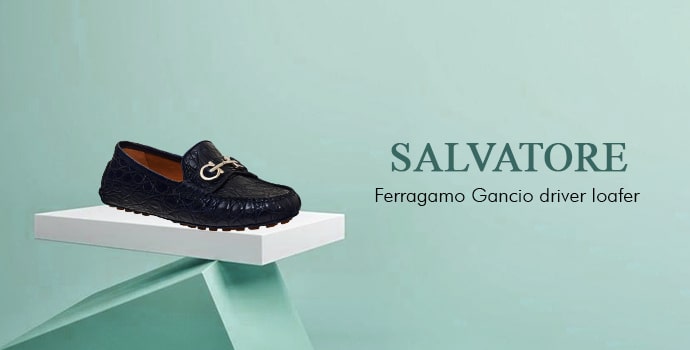
Salvatore Ferragamo Gancio driver loafer
Salvatore Ferragamo and its understated luxury pieces need to be studied, the way this brand always manages to figure out the best designs with modern sophistication. These Gancio driver loafers are no exception. The upper of the loafer is made from pure alligator leather with a relaxed silhouette finish.
These loafers are best in class for comfort because of their flexible leather and custom rubber nubs. They came in a new navy blue color and are Italian-made. Collectors and fashion enthusiasts are quite interested in this piece of luxury. If you like all things fine in life, you should consider investing in this piece of loafer from Salvatore Ferragamo.
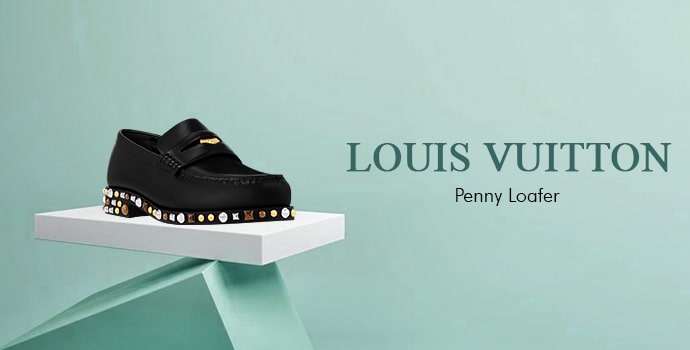
Louis Vuitton Penny Loafer
Louis Vuitton is one of the popular and known names in the luxury market segment. This brand is quite popular around the globe and famous for creating innovative luxury products that cater to the next generation with a timeless appeal.
If we talk about Penny Loafer, the upper is made up of calf leather, and the outsole is studded with metal to give it an extra classy and sturdy look. The detailing includes a leather outsole with the Marque L. Vuitton Déposée signature. These loafers are made in Italy with the finest craftsmanship, and while they are all shiny and glittery, they are durable at the same time.
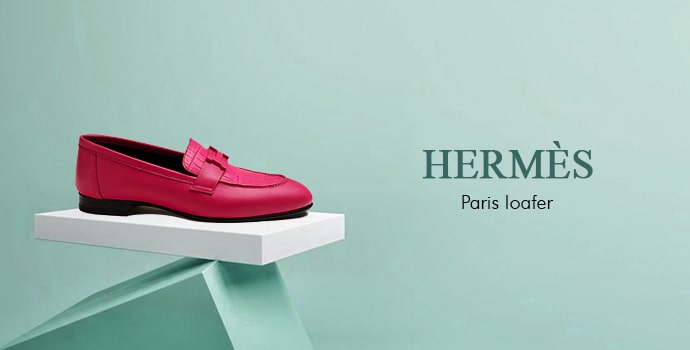
Hermès Paris loafer
The Paris Loafer by Hermès is all about elegance and craftsmanship in the industry. These women’s loafers are crafted from fine leather and have a plain, slimline appeal with a classic stamp of the French luxury brand Hermès. The lower part of the Loafer is made with the utmost precision to make a durable loafer that also feels comfortable due to the soft quality of the leather.
It is designed to look smooth enough that it can easily be worn with both formal and casual clothing, which will enhance your total clothing appearance. An elegant piece that will complement any pair of Loafers, these loafers are an essence of Hermès and timeless elegance in creation.
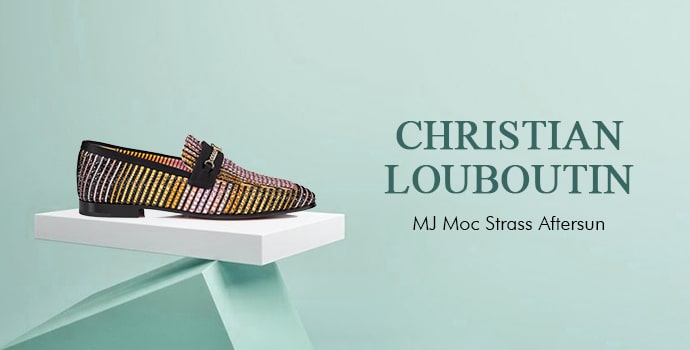
Christian Louboutin MJ Moc Strass Aftersun
The Christian Louboutin MJ Moc Strass Aftersun is both elegant and comfortable when being used for daily tasks. These loafers are stylish and come in a multicolor scheme to complement the brand’s red sole, which is well-renowned for its pop-art luxurious aesthetic.
What remains apparent is the sparkly upper made from brass crystals in an iridescent effect that lights up with each step, transforming this into a contemporary moccasin. This fashionable loafer also comes in a comfortable fit and a design that makes these loafers perfect for those who are hard to please because of their fashion palate and penchant for luxury.
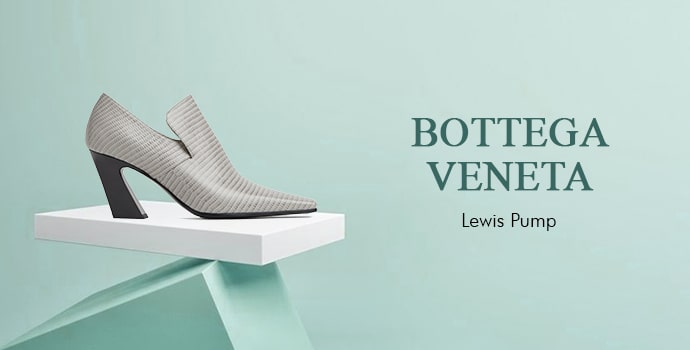
Bottega Veneta Lewis Pump
The Bottega Veneta Lewis Pump in sterling black does not get any better. The functional and slim pump style is made of leather and has incorporated the intrecciato woven design into it. The strict Oslo shape with the wear-resistant block heel makes it the perfect day-to-evening loafer.
Whether worn in the office or for an evening out, these loafers can be worn every day and at any time of day, which is why it is such an important part of any successful woman’s wardrobe. It does not make a loud statement for itself, but the elegant black color works well to its advantage.
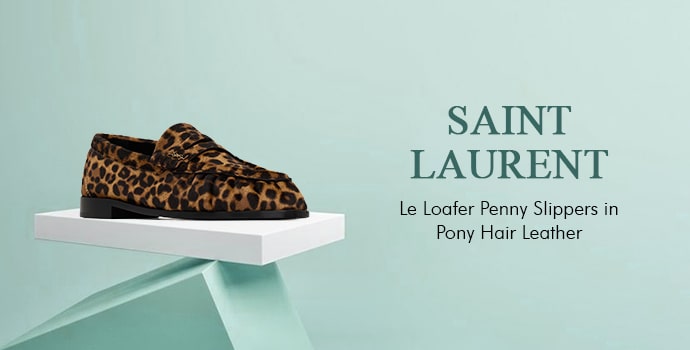
Saint Laurent Le Loafer Penny Slippers in Pony Hair Leather
The Saint Laurent Le Loafer Penny Slippers, are worth every dollar because they scream Saint Laurent luxuriously! These opulent women’s loafers are made of fine pony hair leather that gives them an extremely luxurious look and adds a great feel to them.
The loafer is comfortable and stylish with a traditional classic penny loafer profile, creating a classic retro look with a contemporary laced feel. Whether worn with perfectly fitted trousers or with a casual outfit, these loafers are stylish and comfortable at the same time, and the quality is ideal; the brand’s experience is seen in every detail.
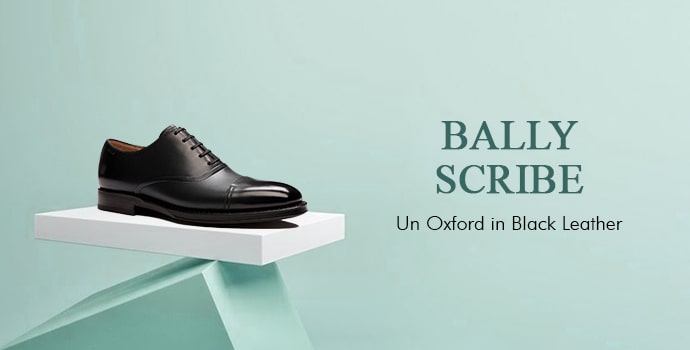
Bally Scribe Un Oxford in Black Leather
The Bally Scribe Un Oxford in Black Leather is the most sophisticated example of fine loafer craftsmanship. The Oxford type of loafer, which is preserved in a non-slip saffiano black leather, looks simple in design yet elegant and has the build-up reasonably necessary to last longer.
Talk about the precise detailing done on these loafers; this piece is also sleek and stylish enough for one to engage in business meetings and engagements. The durability, antifriction, and cushioning make these classic loafers comfortable and long-lasting. As with all of Bally’s products, the Scribe Un Oxford embodies sophistication for those who prefer simple elegance in loafers.
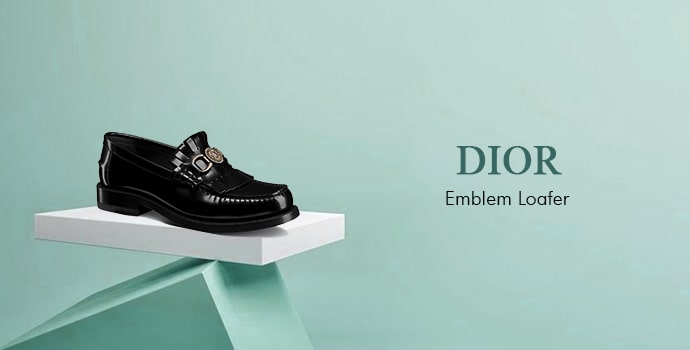
Dior Emblem Loafer
The Dior Emblem Loafer is a luxurious statement piece, blending classic sophistication with modern flair. Crafted from smooth leather, these loafers feature the iconic Dior logo embossed on the front, adding a refined touch to its streamlined design.
The sleek silhouette is complemented by a comfortable flat heel, making it ideal for formal and casual occasions. Perfect for fashion-forward individuals who appreciate elegance, these loafers effortlessly elevate any outfit, whether paired with tailored trousers or a chic dress. It is a must-have accessory for those who crave timeless style with a contemporary twist.
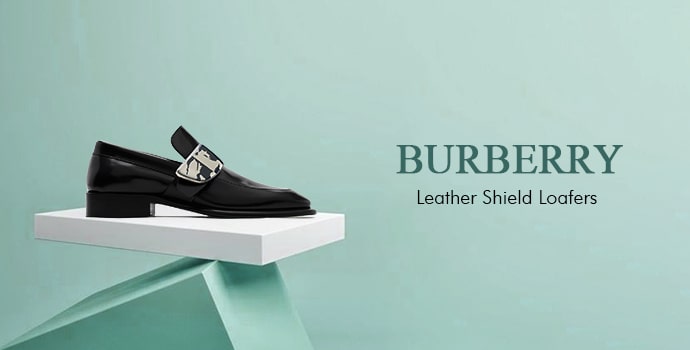
Burberry Leather Shield Loafers
The Burberry Leather Shield Loafers can well be described as a classic example of their commitment to fine and authentic products. These loafers include elegant and glossy leather materials along with a shield emblem of Burberry. It is relatively low-heeled footwear with a round toe to make it extra comfortable for the wearer.
Their simple design makes them suitable for wearing during work-casual occasions as well as other occasions such as classy night events. If we turn our focus to construction, the smooth leather guarantees the longevity of this piece, and the insertion of the shield logo gives a premium, iconic touch. Suits everyone who wants to feel comfortable in luxurious shoes and does not deny themselves proper usage.
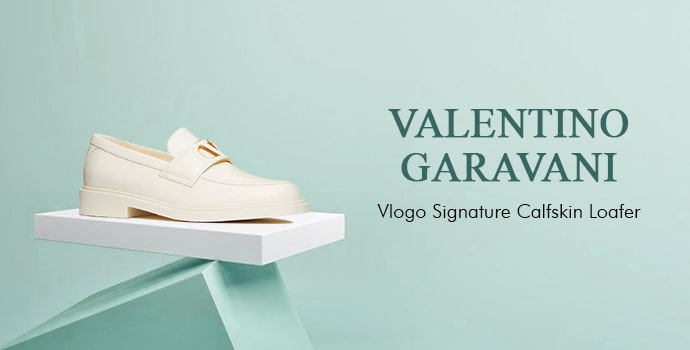
Valentino Garavani V Logo Signature Calfskin Loafer
Concealed styling and classic charm are the hallmarks of the Valentino Garavani V Logo Signature Calfskin Loafer, designed in soft calfskin leather. Nonetheless, the gold V Logo emblem adds a touch of sophistication to the loafers, giving it this unique outlook.
The loafers are fashion-friendly and comfortable with low-heeled designs that include a slim structure and a strong heel. These loafers can be worn both formally and informally, and they’ll complement both a business suit and casual wear look. To those people who are fashion-forward & want something with a design that is not loud but speaks a lot about the shoes, then these loafers are all you need.
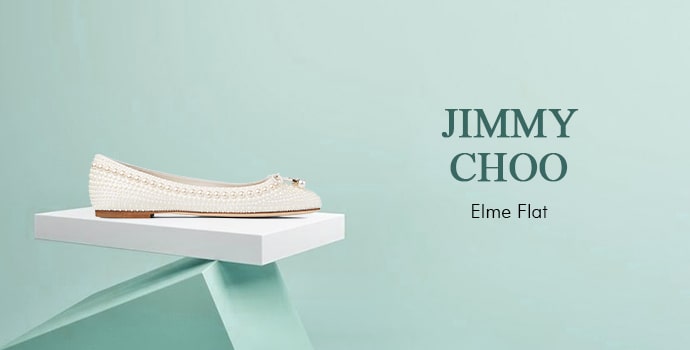
Jimmy Choo Elme Flat
Available in black suede and white leather or a combination with black nappa patent leather, the Jimmy Choo Elme Flat is more of an elegant and relaxed flat that can be worn on any occasion. Crafted from pure white satin with silk pearls, they are extremely elegant, yet quite comfortable to wear throughout the day.
There is a pointed toe that makes them stylish and perfect for almost any outfit, be it a skirt or jeans. Pearl’s details make the shoes look classy. The Elme Flat is simple and exquisite, but it is undeniably every inch a Jimmy Choo creation with impeccable shoe craftsmanship.
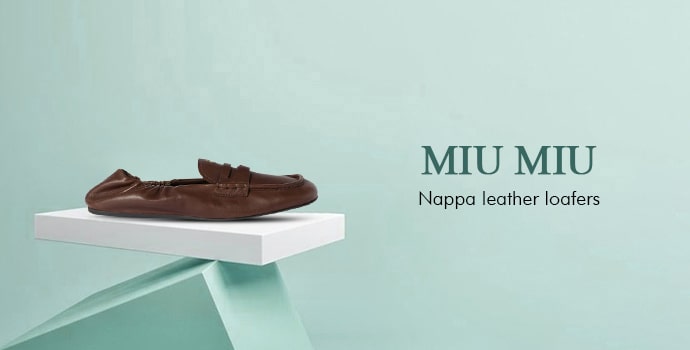
Miu Miu Nappa leather loafers
The Miu Miu Nappa Leather Loafers are a contemporary adaptation of the usual loafer style of shoes. Crafted of luxurious Nappa leather, these shoes are not only fashionable but also the most comfortable shoes anyone could use. The shoes are plain, but the silver-tone buckle on the side brings the brand out and makes them look glamorous.
It should, however, be noted that loafers have a flat sole and therefore are comfortable for all-day wear yet fashionable. Very suitable for those who are crazy about more or less classic designs and who at the same time like to look trendy, these shoes are suitable for wear in any type of setting, formal or informal.
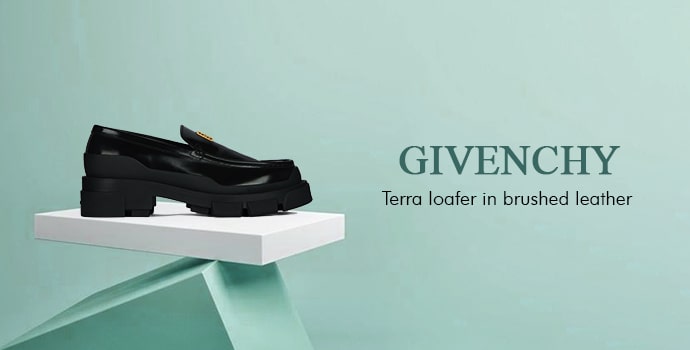
Givenchy Terra loafer in brushed leather
The Givenchy Terra Loafer in brushed leather is a contemporary and smooth piece of footwear production with a conscious silhouette and maximalism. These stylish loafers are made from genuine brushed leather and have a professional, soft, shiny surface for improved appeal.
The design of the loafer is sleek and low-cut around the loafer’s toe area and comes with a non-intrusive Givenchy logo. Suitable for the business environment as well as for everyday wear, the Terra Loafer is perfect for day and evening. A perfect choice for those who need an elite, elegant design with a slight accent on contemporary styles.
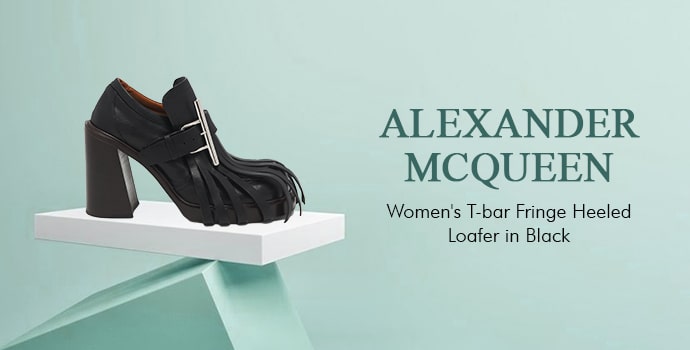
Alexander McQueen Women’s T-bar Fringe Heeled Loafer in Black
The Alexander McQueen T-Bar Fringe Heeled Loafer is made for the formal dress event but with unique, edgy features. The design of the loafer takes a fresh approach to traditional loafers by incorporating an instantly noticeable fringe element in a T-bar form. Crafted from patent leather, the sleek structure of the loafer with a little block heel makes it much more comfortable to wear.
Designers recommends the T-Bar Fringe Loafer to those who derive pleasure from wearing unusual, intense footwear that screams high fashion; these loafers can be worn with ‘street’ or ‘formal attire’; they embody the spirit of ‘Rocker Chic.’.
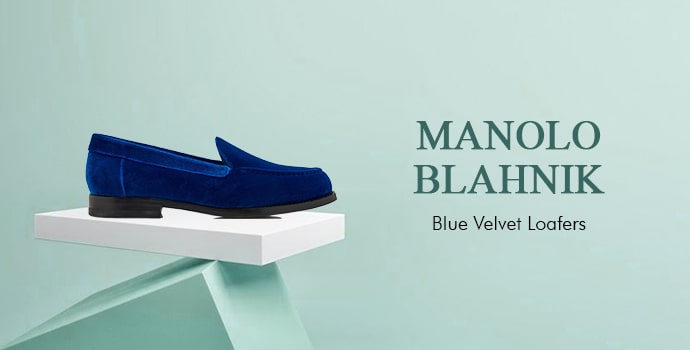
Manolo Blahnik Blue Velvet Loafers
The Dinessandro Loafer from Manolo Blahnik is one such masterpiece that is classy and beautifully regal. A loafer should be comfortable and bespoke at the same time; these loafers offer the same boasts of a slim construction that is rounded at the toes with a little buckle design. This is one elegant piece that is glossy and simple to be placed in any wardrobe.
These loafers are suitable for different occasions. The Dinessandro Loafer serves as an excellent illustration of Manolo Blahnik’s commitment to quality and exclusivity that place the Loafer in the premier category of luxury loafers.
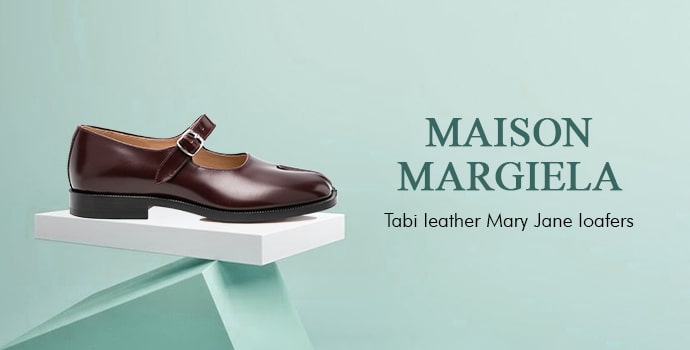
Maison Margiela Tabi leather Mary Jane loafers
These sheared mink fur-covered Tabi leather Mary Jane loafers prove to be an exciting rethinking of the Maison Margiela signature Tabi concept. These loafers eliminate the conventional toe design and therefore promote innovation in fashion.
The sturdiness of the leather construction is complemented by the delicate femininity of the Mary Jane strap on the loafer’s bold design. These loafers are ideal for individuals who understand that fashion can be individualistic and formal at the same time. Irrespective of the type of loafers worn during the day, be it casual or formal loafers, the Tabi Leather Mary Jane Loafers are going to look amazing.
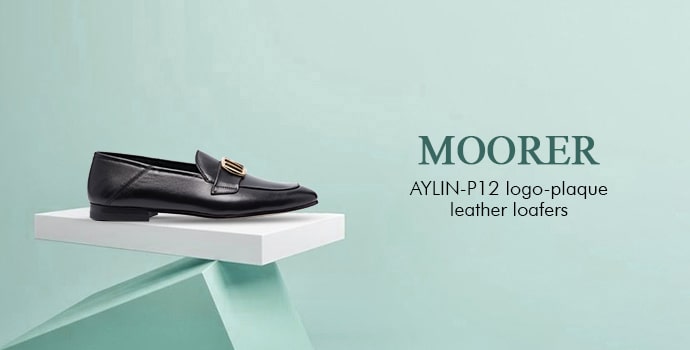
Moorer Aylin-P12 logo-plaque leather loafers
The Moorer Aylin-P12 Logo-Plaque Leather Loafers are a stylish update of the traditional loafer. Crafted from refined leather, these slip-ons are elaborated by a youthful logo emblem that adds interest to the basic and classic design.
The top line of the loafer’s design means that it is suitable for everyday wear and also for more serious occasions and events, as it is significantly more formal than an athletic loafer, for example, Adidas Stubin Loafers. The Aylin P12 Loafers are slip-ons with a flat sole and an elegant and simple design that makes the company an epitome of fashion for any stylish individual today.
Conclusion
In 2024, loafers and drivers continue to redefine women’s fashion, offering a blend of elegance, comfort, and versatility. From classic leather styles to bold, statement-making designs, these footwear options are the perfect addition to any wardrobe. Whether you’re seeking a timeless piece or something trendy, there’s a loafer or driver for every occasion. Embrace the convenience and style they bring, and step into the season with confidence and flair.
FAQs
Q: What’s the difference between loafers and drivers?
A: Loafers are sleek, formal slip-ons, while drivers are casual with rubber soles for comfort.
Q: Can loafers and drivers be worn at work?
A: Loafers suit formal wear, while drivers are great for casual outfits.
Q: What materials are popular in 2024 for loafers and drivers?
A: Popular choices include leather, suede, and eco-friendly materials like vegan leather.
The world of couture and luxury fashion is ever-evolving, influenced by technological advancements, shifting consumer values, and the desire for unique, personalized experiences. As the industry looks to the future, several key trends are emerging that promise to redefine what luxury fashion means. From the integration of cutting-edge technologies to a heightened focus on sustainability and personalized customer experiences, luxury brands are navigating a landscape that demands innovation and adaptability. This article explores these future trends, offering a glimpse into the transformative forces shaping the couture and luxury fashion industry.
Embracing Technology in Couture Fashion Design
Technology is increasingly becoming a cornerstone of couture fashion design, offering new tools and perspectives that are shaping the future of the industry. Designers are leveraging advanced software and digital platforms to create intricate designs that were once impossible to achieve by hand. 3D printing, for instance, is revolutionizing the way garments are constructed, allowing for complex shapes and patterns that push the boundaries of traditional fashion design. This technology not only enhances creativity but also speeds up the prototyping process, enabling designers to experiment with forms and materials without the constraints of conventional techniques.
Virtual and augmented reality are also making waves in couture fashion, offering immersive experiences that transform how consumers interact with brands. Virtual fashion shows are becoming more prevalent, providing brands with a platform to reach global audiences without the limitations of physical runway shows. Augmented reality applications allow customers to visualize how garments will look and fit in real-time, enhancing the shopping experience and reducing the need for physical inventory. These technologies are fostering a more engaging and interactive fashion ecosystem, where the digital and physical worlds seamlessly blend.
Artificial intelligence (AI) is another technological force reshaping the couture landscape. AI-driven analytics provide designers with insights into consumer preferences and emerging trends, enabling more informed design choices. Machine learning algorithms can predict fashion trends and consumer behavior, helping brands tailor their collections to meet the evolving demands of their audience. AI is also being used to optimize supply chain operations, enhancing efficiency and reducing waste—a crucial consideration for luxury brands committed to sustainability.
Moreover, the rise of digital fashion is challenging traditional notions of couture, as virtual garments and accessories gain popularity. Digital fashion allows consumers to express their style in virtual environments, such as social media or gaming platforms, without the need for physical products. This trend not only opens new revenue streams for luxury brands but also aligns with a growing emphasis on sustainability, as digital fashion minimizes the environmental impact associated with traditional garment production.
In addition, blockchain technology is being explored for its potential to enhance transparency and traceability within the fashion industry. By providing a secure and immutable record of a garment’s journey from creation to consumer, blockchain can help combat counterfeit products and ensure authenticity—a critical concern for luxury brands. This technology also supports ethical sourcing practices, allowing consumers to verify the provenance of materials and the ethical standards of production.
As technology continues to evolve, couture fashion design will undoubtedly become more innovative and inclusive. The integration of these advancements not only enhances creativity and efficiency but also aligns with the industry’s broader goals of sustainability and personalization. By embracing technology, luxury fashion brands are poised to redefine the future of couture, offering new ways for consumers to experience and engage with high fashion.
Sustainability: A Core Pillar for Luxury Brands
Sustainability has emerged as a fundamental pillar for luxury fashion brands, driven by increasing consumer awareness and demand for ethical practices. As environmental concerns intensify, brands are reevaluating their production processes to minimize their ecological footprint. This shift towards sustainability is not only a response to consumer expectations but also a strategic move to ensure long-term viability in a rapidly changing world. Luxury brands are investing in sustainable materials, such as organic cotton, recycled textiles, and innovative alternatives like mushroom leather, to create eco-friendly collections without compromising on quality or aesthetics.
Transparency is becoming a key component of sustainability efforts, as consumers seek to understand the journey of their garments from raw materials to finished products. Luxury brands are adopting traceability practices to provide insights into their supply chains, ensuring ethical sourcing and fair labor practices. This commitment to transparency fosters consumer trust and strengthens brand loyalty, as customers increasingly prioritize brands that align with their values. By embracing sustainable practices, luxury fashion brands are not only reducing their environmental impact but also setting new standards for the industry.
Circular fashion is another trend gaining traction within the luxury sector, as brands explore ways to extend the lifecycle of their products. This approach involves designing garments with longevity in mind, encouraging repair and recycling, and promoting resale and rental models. By shifting towards circular fashion, luxury brands can reduce waste and create a more sustainable fashion ecosystem. Initiatives such as take-back programs and upcycling collaborations are becoming more common, as brands seek to close the loop and minimize their contribution to the growing problem of fashion waste.
Innovation in sustainable fashion is also being driven by technological advancements, as brands explore new methods of production and material development. From biofabrication to zero-waste design techniques, luxury brands are pushing the boundaries of what is possible in sustainable fashion. These innovations not only reduce the environmental impact of garment production but also offer exciting new possibilities for creative expression. As technology continues to evolve, the potential for sustainable innovation in luxury fashion is virtually limitless.
Collaboration is playing a crucial role in advancing sustainability within the luxury fashion industry. Brands are partnering with environmental organizations, research institutions, and technology companies to develop and implement sustainable solutions. These collaborations enable luxury brands to leverage expertise and resources beyond their own capabilities, accelerating the transition towards a more sustainable future. By working together, the industry can drive meaningful change and address the complex challenges of sustainability.
Ultimately, sustainability is becoming an integral part of the luxury fashion narrative, shaping the future of the industry in profound ways. As brands continue to embrace sustainable practices, they are not only meeting the demands of environmentally conscious consumers but also contributing to a more sustainable and equitable world. By prioritizing sustainability, luxury fashion brands are redefining what it means to be a leader in the industry, setting a precedent for future generations.
Personalization and Customization in High Fashion
Personalization and customization are becoming increasingly important in high fashion, as consumers seek unique and tailored experiences that reflect their individuality. Luxury brands are responding to this demand by offering bespoke services that allow customers to personalize everything from the design of their garments to the materials used. This trend is reshaping the traditional model of fashion consumption, as consumers become co-creators in the design process, resulting in products that are truly one-of-a-kind.
Advancements in technology are playing a pivotal role in facilitating personalization and customization in high fashion. Digital platforms and tools enable consumers to engage with brands in new and interactive ways, allowing them to visualize and modify designs before making a purchase. Virtual fitting rooms and 3D visualization technologies are enhancing the customization experience, enabling consumers to see how garments will look and fit in real-time. These innovations are empowering consumers to make informed decisions and create personalized products that meet their specific needs and preferences.
Luxury brands are also leveraging data analytics to enhance personalization efforts, using insights into consumer behavior and preferences to tailor their offerings. By analyzing data from various touchpoints, brands can create personalized marketing campaigns and product recommendations that resonate with individual consumers. This data-driven approach not only enhances the customer experience but also strengthens brand loyalty, as consumers feel valued and understood by the brands they engage with.
The rise of personalization is also driving a shift towards made-to-order and limited edition collections, as brands seek to create a sense of exclusivity and uniqueness. By offering limited runs of customized products, luxury brands can cater to the growing demand for individuality while minimizing waste and overproduction. This approach aligns with the broader trend towards sustainability, as made-to-order models reduce the environmental impact of fashion production by ensuring that only what is needed is produced.
Furthermore, personalization is extending beyond products to encompass the entire customer journey, as luxury brands strive to create memorable and meaningful experiences. From personalized in-store services to bespoke packaging and delivery options, brands are seeking to create a seamless and immersive experience that resonates with consumers on a personal level. This focus on personalization is transforming the way consumers interact with luxury brands, fostering deeper connections and enhancing brand loyalty.
As the demand for personalization and customization continues to grow, luxury fashion brands are embracing new strategies and technologies to meet the evolving needs of their consumers. By offering bespoke services and personalized experiences, brands are redefining the concept of luxury, making it more inclusive and accessible. This trend is not only reshaping the future of high fashion but also challenging traditional notions of exclusivity and status, as consumers seek products and experiences that are uniquely their own.
The future of couture and luxury fashion is being shaped by transformative trends that are redefining the industry. The integration of technology in design, a steadfast commitment to sustainability, and the growing demand for personalization and customization are driving innovation and change. As luxury brands navigate this evolving landscape, they are embracing new tools and strategies to meet the needs of a discerning and conscious consumer base. By staying at the forefront of these trends, luxury fashion brands are poised to lead the industry into a new era, where creativity, responsibility, and individuality converge.
Fashion has always been a realm of creativity and innovation, reflecting cultural shifts and technological advancements. In recent years, the fusion of couture with cutting-edge technology has redefined the boundaries of design, production, and consumption in the fashion industry. This article explores this dynamic intersection, examining how technology transforms the world of high fashion.
The Evolution of Fashion and Technology Fusion
The relationship between fashion and technology is not a new phenomenon. From the invention of the sewing machine in the 19th century to the introduction of synthetic fabrics in the 20th century, technology has consistently played a pivotal role in advancing fashion. These innovations have paved the way for more efficient production processes and the democratization of fashion, making high-quality garments accessible to a broader audience.
Today, the evolution of this fusion has reached unprecedented heights with the advent of digital technology. Designers are leveraging computer-aided design (CAD) software to create intricate patterns and prototypes with precision and ease. This shift not only accelerates the design process but also allows for greater experimentation with forms and materials, pushing the boundaries of what is possible in couture.
Moreover, the rise of 3D printing technology has revolutionized the way designers approach garment construction. By enabling the creation of complex structures and textures that were previously unattainable, 3D printing has opened new avenues for creativity in the fashion industry. Designers can now produce bespoke pieces that are both sustainable and innovative, reducing waste and production costs.
In addition to design and production, technology has also transformed the way fashion is marketed and consumed. The proliferation of social media platforms has given rise to a new era of digital fashion influencers who shape trends and drive consumer behavior. Brands are increasingly utilizing augmented reality (AR) and virtual reality (VR) to create immersive shopping experiences, allowing consumers to engage with fashion in novel and exciting ways.
Furthermore, wearable technology has emerged as a significant trend in the fashion-tech landscape. From smart textiles that monitor health metrics to garments that change color with environmental stimuli, fashion is becoming increasingly integrated with technology, offering consumers functionality alongside style. This convergence of fashion and technology is redefining the very nature of clothing and its role in our lives.
The evolution of fashion and technology fusion continues to accelerate, driven by the rapid pace of technological advancement and the ever-changing demands of consumers. As designers and brands embrace these innovations, the future of couture promises to be more dynamic, inclusive, and sustainable than ever before.
Innovations Shaping the Future of Couture Design
At the forefront of the fashion-tech revolution are a host of innovations that are reshaping the landscape of couture design. Among these, artificial intelligence (AI) is playing a transformative role, enabling designers to analyze vast amounts of data to predict trends, optimize supply chains, and personalize consumer experiences. AI-powered tools offer designers insights into consumer preferences, allowing for more targeted and efficient design processes.
Another groundbreaking innovation is the use of biofabricated materials in couture design. Scientists and designers are collaborating to create fabrics from living organisms, such as bacteria and fungi, which offer sustainable alternatives to traditional textiles. These biofabricated materials not only reduce the environmental impact of fashion production but also introduce new textures and properties that expand the creative possibilities for designers.
The integration of blockchain technology is also making waves in the fashion industry. By providing a transparent and secure way to track the provenance of garments, blockchain enhances supply chain transparency and helps combat issues such as counterfeiting and unethical production practices. This innovation empowers consumers to make informed purchasing decisions and supports brands in maintaining authenticity and trust.
Augmented reality (AR) and virtual reality (VR) are further enhancing the couture experience by transforming the way consumers interact with fashion. AR-enabled smart mirrors and virtual fitting rooms allow customers to try on garments virtually, reducing the need for physical inventory and minimizing returns. These technologies offer a seamless and personalized shopping experience, bridging the gap between online and offline retail.
Robotics and automation are also playing an increasingly prominent role in couture production. Automated sewing machines and robotic arms are streamlining manufacturing processes, improving efficiency, and reducing labor costs. This shift not only accelerates production but also allows for greater precision and consistency in garment construction, elevating the quality of couture pieces.
Finally, the rise of digital fashion is pushing the boundaries of couture design into the virtual realm. Designers are creating entirely digital garments that exist only in cyberspace, challenging traditional notions of fashion and ownership. These digital creations offer endless possibilities for customization and expression, reflecting the growing influence of technology on the future of couture design.
Bridging Tradition with Tech-Driven Fashion Trends
The fusion of tradition and technology in fashion is a delicate balancing act that requires careful consideration of heritage and innovation. Many designers are striving to honor the craftsmanship and artistry of traditional couture while embracing the possibilities offered by technology to create something entirely new.
One approach to bridging this gap is the incorporation of traditional techniques with modern technology. Designers are using digital tools to enhance age-old practices such as embroidery and weaving, allowing for intricate designs that maintain the essence of artisanal craftsmanship while benefiting from the precision and efficiency of technology.
Additionally, the use of technology in storytelling is helping brands connect with consumers on a deeper level. By leveraging digital platforms and immersive technologies, designers can share the rich history and cultural significance behind their creations, fostering a greater appreciation for the artistry and heritage of couture fashion.
The rise of sustainable fashion is another area where tradition and technology intersect. Designers are drawing inspiration from traditional practices such as natural dyeing and handcrafting while utilizing technology to enhance sustainability. This approach not only preserves cultural heritage but also addresses the growing demand for environmentally conscious fashion.
Moreover, the integration of technology in fashion education is equipping the next generation of designers with the skills to navigate this evolving landscape. Fashion schools are incorporating courses on digital design, 3D modeling, and sustainable practices, preparing students to bridge the gap between tradition and innovation in their future careers.
The collaboration between fashion houses and tech companies is further driving the convergence of tradition and technology. By combining the expertise of both industries, these partnerships are creating groundbreaking innovations that redefine the possibilities of couture design while honoring the rich legacy of fashion.
As the fusion of tradition and technology continues to shape the fashion industry, it is clear that the future of couture lies in the harmonious blending of these two worlds. By embracing both heritage and innovation, designers can create truly unique and transformative fashion experiences that resonate with consumers on multiple levels.
In conclusion, the intersection of couture and cutting-edge technology is transforming the fashion industry in profound ways. From the evolution of design and production processes to the emergence of new materials and consumer experiences, technology is redefining the boundaries of fashion. As designers continue to explore this dynamic fusion, the future of couture promises to be a vibrant tapestry of tradition and innovation, offering endless possibilities for creativity and expression.
Emerging Voices: Today’s Innovators in Digital Art
The digital art landscape is a dynamic and ever-evolving realm, where innovation and creativity converge to redefine the boundaries of traditional artistic expression. In an era where technology is intricately woven into the fabric of artistic creation, emerging voices are at the forefront, pioneering new techniques, tools, and narratives. This article explores the pioneers of digital art innovation, examines the impact of these emerging voices on modern art, and delves into the techniques and tools shaping the future of creative expression.
Exploring the Pioneers of Digital Art Innovation
The digital art world has witnessed the rise of numerous pioneers who have ventured beyond conventional artistic boundaries to explore uncharted territories. These trailblazers are not only redefining the concept of art but are also challenging the very essence of creativity itself. Artists like Refik Anadol, known for his immersive data-driven installations, are pushing the boundaries of what digital art can achieve. By transforming raw data into captivating visual experiences, Anadol and his contemporaries are opening up new avenues for artistic exploration.
In the realm of digital illustration, artists such as Loish and Pascal Campion are making waves with their unique styles and innovative approaches. These artists seamlessly blend traditional drawing techniques with digital tools, creating artworks that resonate with audiences on both emotional and aesthetic levels. Their ability to harness the power of digital mediums while maintaining a personal touch sets them apart as pioneers in their field.
One cannot discuss digital art pioneers without mentioning the impact of NFTs (Non-Fungible Tokens). Artists like Beeple have revolutionized the art market by embracing blockchain technology, allowing digital artworks to be bought, sold, and owned in unprecedented ways. This shift has empowered artists to gain greater control over their work and has opened up new revenue streams, challenging traditional art market dynamics.
Another significant aspect of digital art innovation is the exploration of new media and technologies. Artists like Jenny Holzer and Rafael Lozano-Hemmer are incorporating augmented reality, virtual reality, and interactive installations into their work. These pioneers are not only expanding the possibilities of artistic expression but are also engaging audiences in immersive experiences that transcend the boundaries of traditional art forms.
The pioneers of digital art are not limited to visual artists alone. Musicians, writers, and performers are also exploring the digital realm, creating multidisciplinary works that blur the lines between different art forms. This convergence of disciplines is driving innovation, fostering collaboration, and expanding the horizons of what is possible in the digital art landscape.
In conclusion, the pioneers of digital art innovation are reshaping the artistic landscape by embracing new technologies, exploring novel media, and challenging conventional notions of creativity. Their contributions are not only redefining the boundaries of art but are also inspiring a new generation of artists to push the limits of their own creativity.
The Impact of Emerging Voices on Modern Art
Emerging voices in digital art are having a profound impact on modern art, challenging traditional norms and redefining artistic expression. These artists are not only pushing the boundaries of what is considered art but are also influencing how art is perceived, consumed, and valued in contemporary society. Their fresh perspectives and innovative approaches are breathing new life into the art world.
One of the most significant impacts of emerging voices in digital art is the democratization of artistic creation. Digital tools and platforms have made art more accessible to a broader audience, breaking down barriers that once limited artistic expression to a select few. Emerging artists are leveraging social media, online galleries, and digital marketplaces to showcase their work, connect with audiences, and gain recognition on a global scale.
Moreover, emerging digital artists are challenging the traditional notions of authorship and ownership. The rise of collaborative creation and open-source platforms has fostered a culture of sharing and remixing, where artists build upon each other’s work to create something entirely new. This shift is redefining the concept of originality and encouraging a more inclusive and interconnected artistic community.
The impact of emerging voices is also evident in the way art is consumed and experienced. Digital art has opened up new possibilities for interactive and immersive experiences, allowing audiences to engage with art in ways that were previously unimaginable. From virtual reality exhibitions to interactive installations, digital artists are transforming passive viewers into active participants, creating a more engaging and dynamic art experience.
Furthermore, emerging voices in digital art are addressing pressing social, political, and environmental issues through their work. These artists are using their platforms to raise awareness, spark conversations, and inspire action. By leveraging the power of digital media, they are reaching diverse audiences and driving meaningful change, making art a powerful tool for social impact.
In summary, the impact of emerging voices on modern art is profound and far-reaching. They are democratizing artistic creation, challenging traditional norms, and redefining how art is consumed and experienced. Their innovative approaches and fresh perspectives are reshaping the art world and inspiring a new generation of artists to explore the possibilities of digital expression.
Techniques and Tools Shaping Tomorrow’s Creatives
The techniques and tools employed by today’s digital artists are constantly evolving, shaping the future of creative expression. As technology advances, artists are embracing new methods and platforms that allow them to push the boundaries of their craft and explore new dimensions of artistic creation. These innovations are not only transforming the way art is made but are also influencing how it is perceived and understood.
One of the most significant developments in digital art is the rise of artificial intelligence (AI) as a creative tool. Artists are using AI algorithms to generate unique compositions, explore new styles, and even collaborate with machines in the creation of art. This fusion of human creativity and machine intelligence is opening up new possibilities for artistic expression and challenging traditional notions of authorship and creativity.
In addition to AI, virtual reality (VR) and augmented reality (AR) are revolutionizing the way artists create and audiences experience art. These immersive technologies allow artists to construct entire worlds and invite viewers to step inside, offering a level of engagement and interaction that was previously unattainable. As VR and AR continue to evolve, they promise to reshape the art world and create new opportunities for artists and audiences alike.
Another tool that is shaping the future of digital art is blockchain technology. The rise of NFTs has provided artists with new ways to monetize their work and establish provenance and ownership in the digital realm. This technology is not only transforming the art market but is also empowering artists to gain greater control over their creations and connect directly with collectors and fans.
Furthermore, digital artists are leveraging a wide range of software and hardware tools to enhance their creative process. From graphic design software like Adobe Creative Suite to digital drawing tablets and 3D modeling programs, these tools are enabling artists to experiment with new techniques and push the limits of their creativity. The accessibility and versatility of these tools are empowering a new generation of artists to explore digital art and discover their unique voice.
In conclusion, the techniques and tools shaping tomorrow’s creatives are diverse and ever-evolving. From AI and immersive technologies to blockchain and digital design software, these innovations are transforming the way art is created, consumed, and understood. As artists continue to explore the possibilities of digital expression, they are paving the way for a future where creativity knows no bounds.
The world of digital art is a vibrant and dynamic landscape, where emerging voices are leading the charge in redefining artistic expression. These innovators are not only pushing the boundaries of creativity but are also transforming the way art is created, consumed, and valued. As the techniques and tools of digital art continue to evolve, they offer new possibilities for artists to explore and inspire a new generation of creatives. In this ever-changing landscape, the pioneers of today are shaping the future of art, creating a world where innovation and imagination know no limits.
Luxury real estate has seen a significant shift towards lifestyle components. At the forefront of this shift is the incorporation of home wellness spaces, which have rapidly become a standard feature in high-end properties.
These exclusive retreats cater to affluent homeowners seeking a dedicated area to rejuvenate and prioritize their well-being within the comfort of their own home. With a focus on sustainability, these upscale solutions are carefully crafted to be environmentally conscious.
Advantages of Home Wellness Spaces
Amidst a world marked by constant activity and rising stress levels, the appeal of a personal sanctuary resonates strongly with luxury homeowners. Beyond mere luxury, discerning individuals yearn for spaces that encourage rest and renewal.
Wealthy buyers are increasingly attracted to properties that offer state-of-the-art gym facilities, indoor swimming pools, meditation areas and upscale saunas – epitomizing luxury and relaxation.
The practice of indulging in the therapeutic benefits of a sauna has long been cherished for its health-boosting qualities. Having the luxury of partaking in this wellness ritual in the privacy and convenience of your own home is a sought-after privilege.
Outdoor wooden and transportable sauna in an old wine barrel
Integrating Wellness Elements in the Home
A fundamental concept in modern luxury real estate is the integration of spa-like experiences within the home setting. The addition of premium outdoor saunas, plunge pools and hot tubs allows homeowners to enjoy wellness activities typically found in high-end spas.
These upscale amenities provide a therapeutic escape, creating a tranquil atmosphere synonymous with luxury living.
The incorporation of these wellness havens should be meticulously planned to align harmoniously with the property’s architectural design, in order to elevate its overall appeal and visual allure.
Luxurious Wellness at Home Options
When it comes to luxury wellness at home, there are various amenities and facilities that can be incorporated to create a spa-like experience in the comfort of your own space. Here are some popular luxury wellness options for the home:
In-home spa/massage room: This dedicated space can include a professional massage table, aromatherapy diffusers, and storage for towels, robes, and spa products. Some homeowners even install saunas or steam rooms for a full spa experience.
Home gym: A well-equipped home gym can rival commercial facilities, with high-end cardio and strength training equipment, mirrored walls, and even a juice bar or smoothie station.
Indoor swimming pool: An indoor pool not only provides a space for exercise but also creates a relaxing, resort-like atmosphere. Features like infinity edges can enhance the luxury experience.
Yoga/meditation studio: A dedicated yoga, pilates and meditation space can be outfitted with premium flooring, sound systems for ambient music, and adjustable lighting to create a serene environment for practice.
Hot tub or hydrotherapy pool: Outdoor or indoor hot tubs and hydrotherapy pools offer relaxation and therapeutic benefits, with options for jets, heated loungers, and integrated sound systems.
Infrared sauna: Infrared saunas provide a dry heat experience and are believed to offer various health benefits, such as improved circulation and detoxification.
Luxury bathroom amenities: Transforming the bathroom into a spa-like retreat can include features like a soaking tub, multi-head showers and heated floors.
Outdoor wellness spaces: Luxury outdoor spaces like cabanas, fire pits, and lounging areas can create a resort-like atmosphere for relaxation and entertaining.
Smart home integration: Voice-controlled lighting, temperature, and entertainment systems can add convenience and enhance the luxury wellness experience at home.
These luxury wellness amenities not only promote physical and mental well-being but also create a relaxing environment within the home. Customization and integration with smart home technology can further elevate the luxury factor.
Outdoor hydromassage bathtub
Designing for Health and Comfort
When considering the design of home wellness spaces, the role of technology and innovation cannot be underestimated. Energy-efficient systems, integrated sound facilities and ambient lighting combine to create a multi-sensory wellness experience.
Sit-stand desks are a useful addition to a home office. They encourage you to stand more, improving posture and increasing calorie burn.
An Investment Worth Making
The inclusion of wellness features in luxury residences goes beyond personal satisfaction; it also holds significant financial value.
In the realm of luxury real estate, there is a growing recognition that properties with wellness amenities like outdoor saunas command higher prices. They attract a niche market segment that values well-being, making such homes particularly appealing to health-conscious buyers.
By incorporating top-tier wellness amenities, homeowners not only enhance their personal living experience but also increase the marketability and future value of their properties.
Infrared sauna at home
The Growing Trend for At-Home Wellness
Private wellness amenities offer homeowners an intimate environment to unwind and detoxify without leaving their personal space. For many, this level of seclusion and accessibility embodies true luxury.
The emergence of home wellness spaces has redefined luxury living, with premium saunas, hot tubs and gyms symbolizing a fusion of luxury and health-focused living that appeals to the modern luxury homebuyer’s preferences.
This highlights how the luxury real estate landscape is evolving. It now caters to both aesthetic indulgence and the physical and mental well-being of discerning clients.
As the ethos of wellness infiltrates our living spaces, it is clear that this trend goes beyond mere temporary appeal. It embodies the shifting values of luxury, comfort, and overall quality of life.
Dua Lipa, the British pop sensation, has unquestionably taken the global music arena by storm. As riveting as she is on stage, with a string of hit singles and albums to her name, she is equally mesmerizing in her offstage life. There are myriad facets to this chart-topping artist that remain under the radar, tucked away from her public persona. Unveiling the curtain of her private life, we present to you five intriguing insights that spotlight Dua Lipa’s love for luxury, her distinctive quirks, and her interests that diverge from her musical dominion. These surprising revelations paint a vibrant picture of Lipa’s luxury-tinted pursuits and provide a richer understanding of the woman behind the pop phenomenon.
Here are five surprising facts about Dua Lipa’s luxury-tinted off-screen pursuits:
Dua’s a fan of high-end fashion. Dua Lipa is known for her stylish sense of dress, and she’s not afraid to splurge on designer clothes. She’s been spotted wearing everything from Chanel to Gucci, and she even has her own clothing line in collaboration with Pepe Jeans.
Dua Lipa in Chanel
She’s a big fan of Chanel, and she’s been known to wear the brand’s iconic tweed suits, dresses, and handbags. She’s also been seen wearing the brand’s latest collections, including the 2023 Cruise collection and the 2023 Fall/Winter collection.
In 2020, Dua Lipa was named the new global ambassador for Yves Saint Laurent. She has since starred in several campaigns for the brand, and she’s often seen wearing YSL’s designs on the red carpet.
Dua’s style statements extend beyond her outfits to her wrists. She’s a self-professed connoisseur of luxury watches, with a particular fondness for the Swiss brand Patek Philippe. Her collection boasts the iconic Patek Philippe Nautilus, reinforcing her reputation as a woman of discerning taste.
Dua’s a car enthusiast. Dua Lipa loves cars, and she’s been known to drive some pretty luxurious models. She’s been seen in a Ferrari, a Lamborghini, and even a Rolls-Royce.
Dua Lipa for Jaguar
She’s said that her dream car is a vintage Rolls-Royce, but she’s also a fan of more modern models like the Ferrari 488 GTB and the Lamborghini Aventador.
Dua Lipa was also a brand ambassador for Jaguar, and she’s been seen driving the brand’s latest models in a number of promotional campaigns.
Dua’s a jet-setter. Dua Lipa travels the world for her work, and she’s not afraid to fly in style. She’s been known to take private jets and stay in five-star hotels.
She’s said that her favorite place to travel is Los Angeles, but she also enjoys visiting cities like New York, Paris, and Tokyo.
Dua Lipa is also a big fan of luxury accommodations, and she’s been known to stay in some of the most exclusive hotels in the world, including the Ritz-Carlton, the Four Seasons, and the Burj Khalifa.
Dua’s a homebody. Despite her jet-setting lifestyle, Dua Lipa is also a homebody who loves to relax in her luxurious apartment in London. She’s said that she enjoys spending time in her kitchen, cooking and baking.
She’s also a big fan of her bathtub, and she’s said that she loves to take long soaks in it after a long day.
Dua Lipa’s apartment is decorated in a modern style, and it features high-end furniture and fixtures. She also has a large collection of art, including paintings, sculptures, and photographs.
Dua’s a philanthropist. Dua Lipa is not only a successful musician, but she’s also a generous philanthropist. She’s donated money to a number of charities, including the United Nations Children’s Fund (UNICEF) and the Malala Fund.
She’s also a vocal advocate for women’s rights, and she’s spoken out about the importance of education and empowerment for girls and young women.
In 2018, Dua Lipa was named a Goodwill Ambassador for UNICEF.
These glimpses into Dua Lipa‘s world reveal her love for luxury, fashion, cars and travel. They add delightful layers to her public persona, underscoring that her life is as rich and dynamic as her music.
Dua Lipa: A Snapshot
Full Name: Dua Lipa
Birthdate: August 22, 1995
Birthplace: London, England
Major Awards: Multiple Grammy Award Winner
Residence: Dua Lipa splits her time between London, England and Los Angeles, California.
Net Worth: Estimated at $100 million as of 2023
Known for: Hits like “New Rules,” “IDGAF,” and “Levitating”
Fun Fact: Dua Lipa holds the record for the most Brit Awards won by a female artist in a single year.
Additional, Dua is starring as Mermaid Barbie in this summer’s anticipated hit “Barbie Movie.”
BECOME A PURSUITIST VIP!
Sign up for our Free Insider Enewsletter. Get exclusive access. No ads, ever!Rated ⭐⭐⭐⭐⭐ from Forbes, The New York Times & The Wall Street Journal.
Joan Stern
NYC fashion writer blogging about all things lux. Attending New York University, future Fashionista.
2025 is shaping up to be a year of significant change and innovation in the fashion industry. Some of the key trends and developments will be driven by sustainability, technology, and a focus on DIY creativity. For example:
Sustainability
Circular Fashion: Brands will increasingly adopt circular business models, focusing on recycling, upcycling, and repair to reduce waste and minimize environmental impact.
Biodegradable Materials: Innovative materials like mushroom leather and seaweed-based fabrics will gain popularity, offering eco-friendly alternatives to traditional materials.
Ethical Sourcing: Transparency and ethical sourcing practices will become even more crucial, with consumers demanding information about the origins of their clothing.
Technology
AI and Machine Learning: AI will play a more significant role in design, production, and personalization, enabling more efficient and customized fashion experiences.
Virtual and Augmented Reality: Virtual fashion shows and virtual try-on experiences will become more common, offering immersive shopping experiences.
Smart Clothing: Wearable technology will continue to evolve, with smart clothing that can monitor health, track fitness, and even adapt to changing weather conditions.
Creativity/DIY/Personalization
Creativity and Personalization: DIY will play a bigger role as people explore their own unique style preferences and the “No New Clothes” pledge becomes a bigger trend.
Cost-Effectiveness: DIY projects often offer significant cost savings compared to buying retail.
Inflationary Pressures: Rising costs of living and services will motivate people to take on DIY tasks.
We’re Thrilled to Share What We Have in Store for 2025
Sustainability: Upcycling/Restyling
Many of our subscribers are ‘upcycle-conscious’ and have asked us for lessons that explore how to draft ‘cut & sew’ knits. For example: what to do with that old t-shirt that has a hole, a stretched-out neckline or one with a big stain? Don’t throw it out! Learn how to restyle it into a newer/more updated version. We created an entire cut & sew knit series that startes with how to draft a library of knit slopers from measurements: Drafting a Women’s Fitted Stable Knit T-Shirt from Measurements, Drafting a Women’s Relaxed Fit Knit T-Shirt from Measurements, Converting a Stable Knit T-Shirt & Sleeve Sloper to a 4-Way Stretch Knit Sloper and Drafting a Legging. Once you have drafted these key slopers you will be able to create tons of different tops, dresses, skirts and knit pant styles.
In addition, we’ll be rolling out a plethora of new cut & sew knit lessons including: how to draft a racer back tank top, a camisole with a shelf bra, and a variety of knit necklines such as, asymmetric, off the shoulder with and without a cuff, cowl, turtleneck, built-up neck, V-neck, boatneck, and a surplice under bust wrap.
Technology: AI Fashion Design & 3D
One of the most significant impacts of AI on fashion is in the realm of design. Traditionally, designers relied on inspiration, intuition, and manual sketching to create new collections. However, AI-powered design tools are now enabling designers to explore new frontiers of creativity.By analyzing vast amounts of data on trends, consumer preferences, and historical fashion, AI algorithms can generate innovative designs, patterns, and color palettes.This not only accelerates the design process, but also opens up new possibilities for unique and personalized fashion pieces.
In our July 2024 blogpost entitled, Meet Anna Leighton: AI Fashion Design Pioneer we introduced Anna and her first lesson: Introduction to AI Fashion Design. Anna credits her technical fashion training at Otis College of Art & Design as the key to her success. So, for all the fashion designers out there who think that AI will replace them, Anna is the first to tell you that AI can be used to enhance, rather than replace, human designers. Anna is hard at work on creating her AI series for UoF. Her next lesson, AI: Getting Started with Prompts, and AI: Midjourney- The User-Friendly AI Platform, will launch in early 2025.
We also believe that 3D design software will continue to be a major factor in helping us reach our goals of a greener planet by making less samples and by pre-selling clothing and accessories from 3D avatars on a computer, iPad, phone and/or from a virtual runway show. And, as the fashion industry is finally accepting the use of 3D software, they have asked us to add additional 3D design lessons. We will therefore be adding to our existing Browzwear and CLO 3D software lesson offerings in 2015.
Creativity/DIY/Personalization
For the ‘on-the-table’ aficionados, we have listened to your suggestions and will be launching additional intermediate and advanced-level drafting and draping lessons in 2025 including: Drafting a Jumpsuit, Drafting & Draping a Multi-tiered Dress, Draping a Princess Panel Sundress with a Handkerchief Hem, Drafting Women’s Palazzo Pants – Two Variations, Drafting a Women’s Bell Bottom Pant and Drafting a Side-Pleated Culotte.
We would like to wish everyone a very happy 2025. And, remember to be true to your creative selves and design responsibly!
In the ever-evolving world of fashion, couture stands as a testament to the artistry and craftsmanship that define the industry. Historically, couture has been synonymous with meticulous handcrafting, exceptional quality, and exclusivity. Yet, as technology continues to advance, the boundaries of couture are being redrawn. This fusion of tradition and modernity is reshaping the fashion landscape, offering new possibilities for creativity and sustainability. In this article, we explore how the evolution of couture is embracing technological innovation while preserving its rich heritage.
The Evolution of Couture: A Modern Perspective
Couture has long been revered for its dedication to artisanal craftsmanship, with each garment representing hours of painstaking work by skilled artisans. However, the demands of the modern world are prompting this traditional art form to adapt. Today, the evolution of couture is marked by a willingness to incorporate technological advancements that enhance both creativity and efficiency. This modern perspective is not about replacing the artisan’s hand but about augmenting it with tools that expand the realm of possibilities.
The rise of digital design tools has played a significant role in this transformation. Designers are now able to conceptualize and visualize their creations with remarkable precision before a single stitch is sewn. This not only streamlines the design process but also allows for greater experimentation with shapes, textures, and colors. The use of 3D modeling and virtual reality further enhances this capability, offering designers a virtual canvas on which to innovate without the constraints of physical materials.
In addition to digital design, the integration of new materials is revolutionizing couture. Textiles imbued with smart technology, such as responsive fabrics and LED-embedded cloth, are finding their way into haute couture collections. These materials enable garments to change color, pattern, or opacity in response to environmental stimuli, offering wearers a dynamic and interactive fashion experience. Such innovations challenge traditional notions of what couture can be, opening up a world of possibilities for designers and consumers alike.
The use of technology in couture is also addressing sustainability concerns. With the fashion industry under scrutiny for its environmental impact, the adoption of cutting-edge technologies allows designers to create more sustainable practices. From digital pattern-making that minimizes fabric waste to 3D printing techniques that reduce the need for excess materials, technology is aiding couture in becoming more eco-conscious without sacrificing its essence of luxury and exclusivity.
However, this evolution is not without its challenges. The integration of technology into couture must be done thoughtfully to ensure that the essence of craftsmanship is not lost. There is a delicate balance to be maintained between innovation and tradition, where technology serves as a complement rather than a replacement. This requires a nuanced understanding of both the technological tools available and the traditional techniques that have defined couture for centuries.
Ultimately, the modern perspective on the evolution of couture is one of collaboration between the old and the new. It is about preserving the integrity and artistry of couture while embracing the innovations that can propel it forward. This harmonious blending of tradition and technology is not only reshaping the fashion industry but also redefining what it means to be a couturier in the 21st century.
Merging Craftsmanship with Cutting-Edge Technology
The heart of couture lies in its unparalleled craftsmanship, a legacy of skill passed down through generations of artisans. Yet, in today’s fast-paced world, the fusion of this craftsmanship with cutting-edge technology is transforming the landscape of high fashion. This merger is not a departure from tradition, but rather an evolution that honors the past while embracing the future.
One of the most profound impacts of technology on craftsmanship is the enhancement of precision. Advanced machinery and tools, such as laser cutting and embroidery machines, allow for intricate designs that are difficult to achieve by hand. These technologies enable artisans to push the boundaries of their craft, creating garments with complex patterns and textures that were once unimaginable. Despite the use of machines, the role of the artisan remains crucial, as these tools require a skilled hand to guide them and ensure each piece retains its unique character.
Moreover, the collaboration between artisans and technology is fostering innovation in textile development. New fibers and fabrics, engineered for enhanced durability and comfort, are being woven into the fabric of couture. These modern materials, often developed through collaborations between designers and scientists, offer new tactile experiences and functional benefits without compromising the luxurious feel that couture is known for. This synergy between craft and science is paving the way for garments that are not only beautiful but also practical and sustainable.
Technology is also enhancing the storytelling aspect of couture. With the advent of digital platforms and augmented reality, designers can offer immersive experiences that bring their collections to life. Virtual fashion shows and interactive presentations allow audiences to engage with the narrative behind each garment, deepening their appreciation for the craftsmanship involved. This digital storytelling transcends geographical boundaries, making couture more accessible to a global audience while preserving the exclusivity and allure that define it.
The integration of technology into craftsmanship is also fostering a new generation of artisans. As traditional skills are paired with modern techniques, new opportunities for learning and growth emerge. Fashion schools and ateliers are increasingly incorporating technology into their curricula, ensuring that future couturiers are equipped with the skills needed to thrive in a technologically advanced industry. This education not only preserves traditional craftsmanship but also prepares artisans to innovate and adapt in an ever-changing world.
However, the merging of craftsmanship with technology requires a thoughtful approach to maintain the integrity of couture. It is essential to strike a balance where technology enhances rather than overshadows the human touch that defines couture. This requires ongoing dialogue between designers, artisans, and technologists to ensure that each garment remains a work of art, a testament to the skill and creativity that couture embodies.
In conclusion, the blending of craftsmanship with cutting-edge technology is a dynamic evolution of couture. It is a celebration of tradition and innovation, where the artistry of the past meets the possibilities of the future. As this merger continues to unfold, it holds the promise of a vibrant and sustainable future for couture, where the legacy of craftsmanship is preserved and elevated by the advancements of technology.
The Future of Fashion: Tradition Meets Innovation
As we look to the future of fashion, the intersection of tradition and innovation in couture presents a compelling vision of what is to come. This convergence is not just a trend but a fundamental shift in how couture is conceived, created, and consumed. It is a journey that promises to redefine the boundaries of fashion, offering a harmonious blend of heritage and modernity.
One of the most exciting prospects for the future of couture is the potential for personalized fashion experiences. With the advent of advanced data analytics and artificial intelligence, designers can offer bespoke creations tailored to individual preferences and needs. This level of personalization, once reserved for a select few, can now be accessible to a wider audience. By leveraging technology, couture can maintain its exclusivity while expanding its reach, creating unique experiences for each wearer.
The future of couture also holds the promise of greater sustainability. As the industry continues to grapple with its environmental impact, technology offers solutions that align with the principles of sustainable fashion. From the use of biodegradable materials to the implementation of closed-loop production systems, innovation is paving the way for a more responsible approach to couture. This shift not only addresses consumer demand for ethical fashion but also ensures that couture remains relevant in a world increasingly focused on sustainability.
Moreover, the integration of technology into couture is fostering a new era of collaboration and innovation. Designers, artisans, and technologists are coming together to explore new possibilities, leading to the creation of garments that are both beautiful and functional. This collaborative spirit is driving the industry forward, as diverse perspectives and expertise converge to push the boundaries of what couture can achieve.
The future of fashion also promises to be more inclusive, as technology breaks down barriers and democratizes access to couture. Virtual reality and digital platforms are enabling designers to reach global audiences, transcending geographical limitations and making couture more accessible to diverse communities. This inclusivity extends to the representation of different cultures and identities, as technology allows for the celebration of diversity in fashion.
However, as couture embraces innovation, it is crucial to preserve its core values. The future of couture must honor its heritage, ensuring that the artistry and craftsmanship that define it are not lost in the pursuit of progress. This requires a careful balance, where tradition and innovation coexist and complement each other. By doing so, couture can continue to inspire and captivate, offering a timeless elegance that resonates with generations to come.
In conclusion, the future of fashion is a dynamic fusion of tradition and innovation, where couture evolves to meet the demands of a changing world. This journey is not just about adapting to technological advancements but about redefining what couture can be. As we move forward, the marriage of heritage and modernity promises to shape a vibrant and sustainable future for couture, where the artistry of the past meets the possibilities of tomorrow.
The blending of tradition and innovation in couture is a testament to the resilience and adaptability of the fashion industry. As technology continues to advance, it offers new avenues for creativity, sustainability, and inclusivity, redefining the very essence of couture. This harmonious fusion of the past and the future is not just a transformation but a celebration of the artistry and craftsmanship that make couture a timeless art form. As we embrace this evolution, we can look forward to a future where couture remains a beacon of elegance and innovation, inspiring generations to come.