Couture

Home Couture Page 30

10 Most Popular Burberry Bags | Best Collection For You

0
10 Most Popular Burberry Bags | Best Collection For You


October 18, 2025


When it comes to classic British style and fine craft, Burberry is in a group of its own. Known for its famous check design and simple grace, Burberry bags are more than just items — they’re fashion signs. Whether you like firm totes, relaxed crossbodies or new mini bags, Burberry has something for each event and character.

If you’re thinking of buying a fancy bag that mixes old style with new trends, here are 10 popular Burberry bags that need to be in your closet. 

1. The Burberry Lola Bag

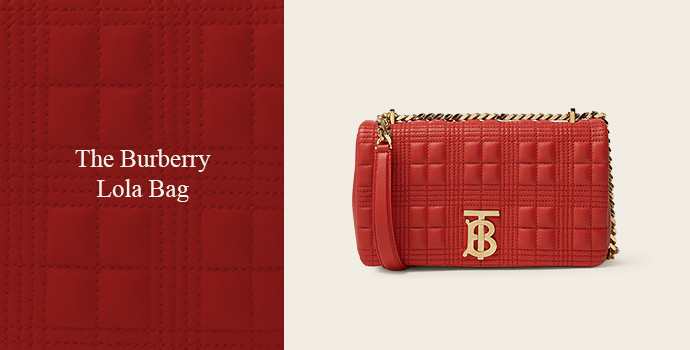
The Burberry Lola Bag

The Burberry Lola Bag is at the top of list as one of most liked Burberry bags ever. Made under Riccardo Tisci’s idea, the Lola is a soft, puffy style that mixes old Burberry parts with fresh look.

Made in soft lamb skin with special TB logo parts, the Lola comes in different sizes — from tiny to big — making it useful for both day and night. Whether you choose the usual black or light colors this bag gives a neat look to any dress. 

Why It’s Popular: The Lola’s neat shape, fancy stitching, and new details mak͏e it a standout item for both simple folks and trend fans. 

2. The Burberry Pocket Bag

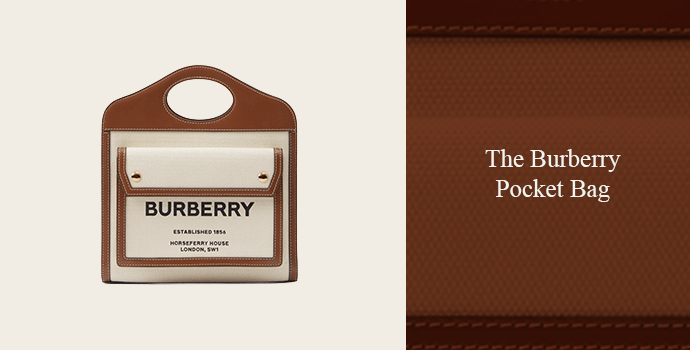
The Burberry Pocket Bag

If you like old-style designs with a new touch, the Burberry Pocket Bag is need-to-have. Brought out as part of Burberry’s change under Tisci this bag has a front pocket edged with the famous Burberry logo giving it a unique and useful look.

It comes in leather and cloth choices, it’s the best blend of relaxed and classy – great for job, trip, or everyday use.

Why It’s Liked: Its strong sign and useful design make it one of the top Burberry bags for ladies looking for class with use.

3. The Burberry Olympia Bag

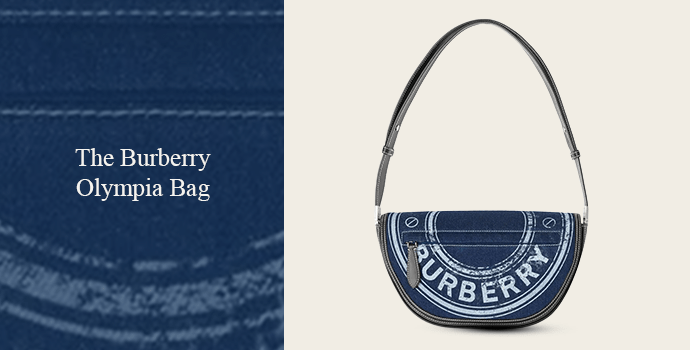
The Burberry Olympia Bag

Smooth, bent, and very stylish the Olympia Bag shows off today’s Burberry class. Taken from the shapes of the human figure, this shoulder bag was first shown on a runway and quickly became a star favorite. 

Made of soft leather with gold bits, it’s made to rest nicely under the arm, giving a polished touch to your shape.

Why It’s Liked: Its shape and simple look make it a top pick for style lovers and gatherers too.

4. The Burberry Banner Bag

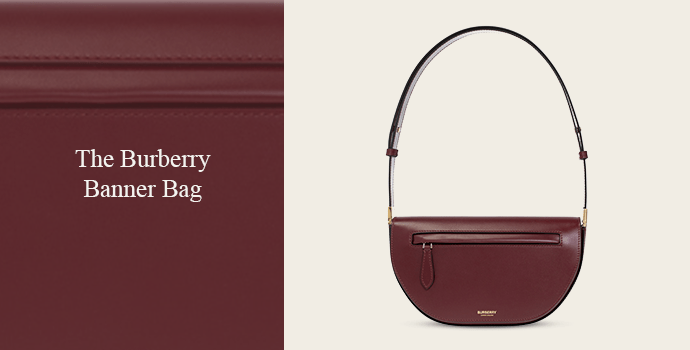
The Burberry Banner Bag

A classic choice, a Banner Bag is one of Burberry’s best-known designs. Mixing smooth leather with the brand’s famous check sides, it’s a firm item that moves easily from work time to night events.

Ready in many sizes and shades, it is both handy and stylish, often seen used by workers and popular figures alike.

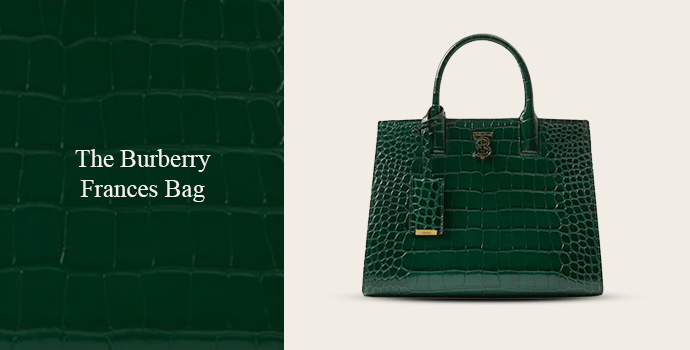
5. The Burberry Frances Bag

The Burberry Frances Bag

The Frances Bag shows Burberry’s simple wealth with neat shapes and a gentle form. This bag is made from Italian leather. It has soft branding and shaped handles making it both stylish and comfy. If you are going for a work talk or a weekend outing, the Frances bag gives a soft grace to your style.

Why It’s Liked: Simple branding, great skill, and flexible design make it one of the most loved Burberry pieces. 

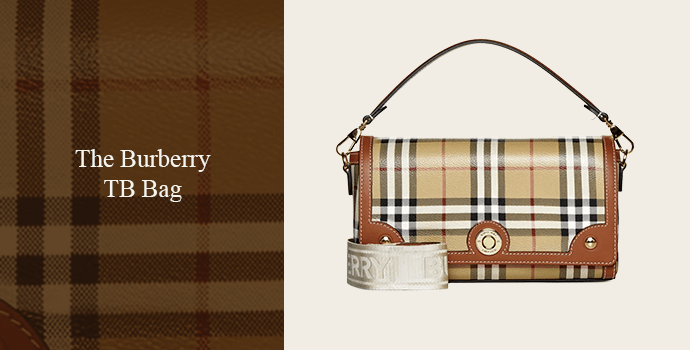
6. The Burberry TB Bag

The Burberry TB Bag

Named after the brand’s founder, Thomas Burberry, the TB Bag holds the feel of the brand’s past in a new shape. Its firm outline and shiny monogram clip makes it easy to spot and very wanted.

The TB bag comes in different kinds — across body, on shoulder, and small — and is made from stuff like soft calf skin and raised croc skin. 

Why It’s Popular: The TB sign tools lift this bag to a mark of new fancy and Burberry’s change. 

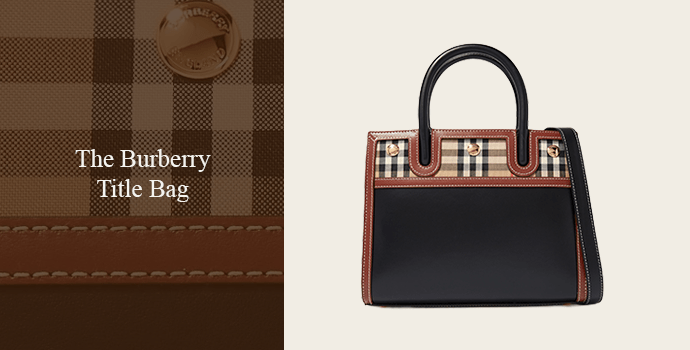
7. The Burberry Title Bag

The Burberry Title Bag

For fans of neat style, the Title Bag is a great choice. Its smooth shape, top grip, and three-stud fastener make it special that it mixes old skill with modern looks. 

It comes in both plain shades and bright colors, it’s great for dressed-up events and neat everyday looks.

Why It’s Popular: Unusual but classic, the Title Bag is a smart choice that shows trust and style. 

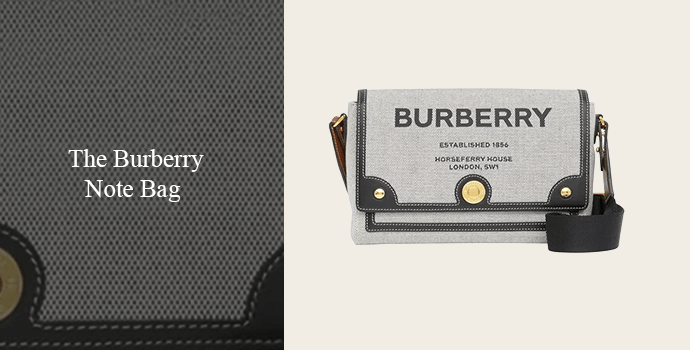
8. The Burberry Note Bag

The Burberry Note Bag

The Burberry Note Bag is a handy but chic crossbody made for today’s comfort. It takes ideas from old Burberry messenger bags, it has a flap close, front pouch, and the well-known logo print.

Small but roomy, it’s great for people who like easy style while moving.

Why It’s Liked: Its handy shape and old-style look make it amo͏ng the most liked Burberry bags for relaxed luxury fans.

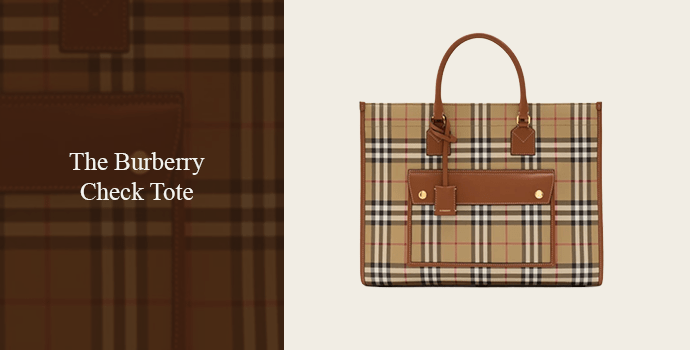
9. The Burberry Check Tote

The Burberry Check Tote

Some styles show the spirit of Burberry as well as the Check Tote. Decorated with the brand’s known beige, black and red check pattern, this tote is a timeless must-have for your wardrobe.

It’s found in leather, covered cloth, and nylon types – all great for trips or daily tasks without losing on fancy look.

Why It’s Famous: The easy to spot Burberry check design makes sure it stays a real style classic. 

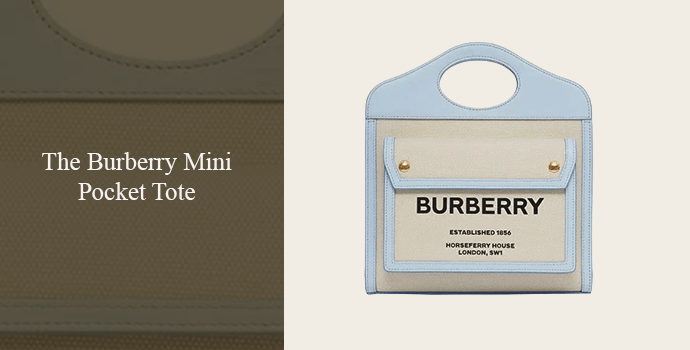
10. The Burberry Mini Pocket Tote

The Burberry Mini Pocket Tote

For people who love small shapes, the Mini Pocket Tote gives all the charm of the bigger one in a tinier, cuter way. Even with its little size it holds the same known logo, top handle and open pocket details.

Match it with stylish street clothes or a lady’s dress, it fits easily in any look. 

Why It’s Liked: The mix of allure, flexibility, and Burberry’s unique skill makes it a popular choice.

Why Burberry Bags Are Worth the Investment

Buying a Burberry bag is more than just a fashion investment, it’s an investment in heritage, craftsmanship, and perennial style. Each Burberry bag is lovingly crafted from a range of the finest quality materials, including calf leather, Italian-tanned hides, and a durable canvas with the instantly recognizable Burberry check. The quality and attention to detail, such as stitching and polished hardware, ensures that luxury is seen at first glance, and each bag lasts many seasons. In addition to looking amazing, the versatility of a Burberry bag is fantastic — the classic timeless designs are suitable for both casual and formal occasions. The recognition of sophistication, sustainability, and innovation means that you are investing in a product that has made an intentional choice to be responsible and still lead in style. Whether you opt for the structured Banner Bag, the soft classic Lola, or the sleek Olympia, all Burberry bags have sophistication that lasts through seasons and whatever the trends may be. Sincerely, it’s not just a bag, it’s a piece of British fashion history, designed to be in style (almost) forever. 

Final Thoughts: Which Burberry Bag Should You Choose?

Picking the best loved Burberry bag relies on your unique taste and daily needs. If you like something fashionable but still classic, the Lola Bag or TB Bag is just right. For a handy bag for every day, the Pocket Bag or Frances Bag gives a good blend of use and charm. And if you want something unmistakably Burberry, the Check Tote delivers that classic charm.

Burberry’s craftsmanship, history, and contemporary evolution make every bag a worthy investment. Each piece reflects the brand’s dedication to quality, innovation, and timeless British flair ensuring your Burberry bag remains not just a trend, but a legacy.

So, whether you’re buying your first luxury bag or adding to your designer collection, these 10 most popular Burberry bags offer something special for everyone — elegance, practicality, and the signature Burberry heritage you’ll cherish for years.


Source link

Want to Sell Your Designer Handbags? Here’s How to Avoid Delays

0
Want to Sell Your Designer Handbags? Here’s How to Avoid Delays


Discover the best places, pricing tips, and prep tricks to sell your luxury bags for maximum profit—without stress or scams.

Have you been meaning to sell that designer handbag tucked away in your closet, but keep putting it off? Does it remind you more of art than an accessory? If yes, you’re in the best place and reading the right blog. 

If your luxury handbag is more of a display piece than a daily companion and if it is simply gathering dust in your closet, it’s time to make it work for you. Enough of the dilly-dallying, procrastinating, or clinging to that bag out of pure laziness (or sentimentality—we don’t judge). 

With that said, selling designer handbags isn’t all glamour. Between market confusion, pricing dilemmas, and the fear of getting scammed, it can feel intimidating.


This guide will walk you through every step of the process, from picking the best resale platform to maximizing your profit: no jargon, no confusion—just real talk and real results. Let’s turn your luxury clutter into cold, hard cash.


But before you start snapping photos and pricing tags, let’s get one thing straight: not all designer bags mean dollars; Only the iconic survive the test of trends when it comes to resale. Some fetch a fortune, while others… well, might be better off staying in your rotation. So how do you know which bags are worth selling?


Top Designer Bag Brands that Fetch the Highest Resale Price in 2025

Brand 
Iconic Models
Why Does It Hold Its Value?

Hermès
Birkin, Kelly, Constance
Ultra exclusivity, waitlists, scarcity

Chanel 
Timeless(Flap), Boy, 2.55
Timeless classics, frequent price increases

Louis Vuitton
Neverfull, Speedy, Pochette
Icon status, enduring demand, global popularity

Dior
Lady Dior, Book Tote
Celeb appeal, classic reissues, in-demand styles

Goyard
St. Louis Tote
Limited distribution, high demand, scarcity

Prada
Re-Edition, Saffiano
Y2K resurges, versatile, durable materials

Celine
Luggage Tote, Box Bag
Understated chic, cult following

Gucci
Dionysus, Jackie, Marmont
Heritage, trend cycles, logo appeal


Now that you know which brands and models have the highest resale appeal, it’s time to understand why these bags outperform others in the resale market. It’s not just about logos—factors like condition, documentation, and even current trends play a huge role in determining your final payout.

Recent Sales Examples

To ground the advice in a real-world context, here are three specific examples of recent handbag sales:

Jane Birkin’s Original Hermès Birkin Bag on Sotheby’s (Auction Platform):

Details: On July 10, 2025, Jane Birkin’s original Hermès Birkin prototype, a black leather bag used from 1985 to 1994, sold for €8.6 million ($10.1 million, including fees) at Sotheby’s Paris auction. The bag, embossed with the initials “J.B.” and featuring a non-removable shoulder strap, sparked a 10-minute bidding war among nine collectors, with a private Japanese collector ultimately winning. The bag’s unique provenance and historical significance drove its record-breaking price, making it the most expensive handbag ever sold at auction.

Chanel Classic Flap Bag on The Luxury Closet

Details: A 2021 Chanel Medium Timeless Bag in black caviar leather, excellent condition with original packaging, sold for approximately $6,500 (retail ~$11,300) on The Luxury Closet in early 2025. The platform’s professional photography and authentication process attracted a global buyer, with the seller netting ~$4,875 after a 25% commission. 

Louis Vuitton Neverfull on Vestiaire Collective

Details: A 2022 Louis Vuitton Neverfull MM in monogram canvas, in near-mint condition with dust bag, sold for approximately $1,800 (retail value: $2,500) on Vestiaire Collective in mid-2024. The seller set the price, and Vestiaire’s authentication post-purchase ensured buyer confidence, with the seller receiving approximately $1,350 after a 25% commission.

Key Factors that Impact Resale Value

Brand and Rarity: Hermès (Birkin/Kelly), Chanel Flap, and LV Neverfull are the strongest performers due to limited supply, heritage, and constant demand.
Condition: Like-new,  well-kept, and pristine condition bags (no stains, odors, or scratches) always command higher prices. For deeper cleaning or restoration, always use the brand’s official spa or authorized workshops. 
Packaging & Documentation: Original boxes, dust bags, receipts, and authenticity cards can add 15–25% to your payout.
Current Trends: Colors, size, and style that match current fashion cycles  

(mini bags in 2025, for example) perform best.

Year and Hardware: Newer models or special releases in rare colorways/hardware (like Hermès “Rose Sakura” or Chanel’s seasonal colors) can generate bidding wars.
Supply & Demand Shifts: Price hikes by brands, celebrity endorsements, and discontinuations spike resale prices.
Market Channel: Selling on respected, global resale platforms ensures authentication, global reach, and maximum payment security.


Equipped with this knowledge, you’re already ahead of most first-time sellers. But let’s pause and address questions that many luxury owners secretly Google late at night… common dilemmas of luxury resellers: 


# 1. Is It Legal to Sell Secondhand Designer Bags?

Pain Point:Worried if reselling your used designer handbags is legal? Fear of running afoul of counterfeit laws or breaking brand resale restrictions can deter many genuine sellers.

Solution:

Legality: In most countries, selling authentic, ethically purchased designer bags that you personally own is perfectly legal. For example, in the United States, the First Sale Doctrine grants consumers the right to resell items they have lawfully bought. The same principle underpins many resale markets internationally.
What’s Not Allowed? Problems only arise if the bag is counterfeit, stolen, or if local law restricts private resale in rare cases. Selling fakes—even by accident—is illegal and carries strict penalties in most regions.
Best Practices:

Always verify your bag’s authenticity and keep invoices or certificates if possible.
Use trusted resale platforms with robust authentication to protect both you and the buyer.


Bag research? Check. Legal clarity? Check. Now comes the hard part—the emotional breakup. Because let’s be honest, selling a designer bag isn’t always just a financial decision—it’s a sentimental one, too.

# 2. Emotionally Attached? Here’s How to Let Go

Pain Point: Parting with high-value bags can be emotional—especially limited editions or gifts.


Solution: 

Ask yourself: Has this bag sparked joy (or sparked a new outfit!) in the last year?
Remember: Luxury bags are assets. Redeploying them can finance your next dream piece.
Honor your memories by documenting your bag—photos, stories, or social media posts—so you celebrate the moments, then cash in on the value.


# 3. Not Sure When to Sell? Here’s When

Pain Point:

Uncertainty about timing—should you sell now, wait for a better season, or hold onto your bag for a future price increase? This indecision can lead to missed opportunities or unnecessary procrastination.

Solution:

Follow Seasonal Market Trends: The resale market for luxury handbags often peaks before major holidays (November–December), fashion week cycles, or anticipated brand price hikes. Track these milestones for maximum demand.
Monitor Brand News: Rumors or announcements about discontinued models, special collaborations, or limited editions can spike the value of certain bags.
Use Data, Not Gut Feel: Rely on historical sales data and real-time analytics from major luxury resale platforms (like The Luxury Closet, Fashionphile, or Vestiaire Collective). Many offer market value calculators or live chat with pricing experts—take advantage of them to time your listing for optimal profit.
Don’t Delay for ‘Perfection’: Waiting for a bag to become vintage or “more rare” could backfire if trends shift or condition worsens. Most bags, especially in pristine shape with packaging, hold the highest value within a couple of years post-launch.


# 4. Where Can You Sell Designer Handbags? Explore Your Options to Find the Best Place

Pain Point:

Choosing the right place and platform is daunting—there are so many options, each with pros and cons. This can trigger indecision, cause sellers to delay, or lead to quick, regretted sales with platforms that don’t align with their priorities.

Solution:


Full-Service Luxury Marketplaces

(Examples: The Luxury Closet, The RealReal)

Pros: Hassle-free experience; guaranteed authentication; access to a global, trusted buyer audience; professional photography; typically achieves the highest selling prices.
Cons: Higher commissions (15–40% typical); payout can take longer due to authentication and buyer return windows.
Best For: Sellers who prioritize ease, trust, and maximum profit over immediate payment.


Hassle-Free But Minus Authentication

(Example: Vinted)

Pros: No seller fees, easy listing process, buyer-managed shipping, fast payout, and minimal seller involvement.
Cons: No mandatory authentication, which may impact buyer confidence for high-end luxury bags.
Best For: Sellers looking for a simple, quick sale, especially for everyday designer items, without commission fees.


DIY General Marketplaces

(Examples: eBay, Poshmark, Vestiaire Collective)

Pros: Lower fees; control over pricing, photos, and negotiations.
Cons: Sellers must manage listing, photography, shipping, and negotiations; higher risk of scams, counterfeit issues, and time investment.
Best For: Experienced sellers comfortable handling all sales aspects and vetting buyers.


Direct-to-Buyer Sales

(Examples: Facebook Marketplace, Instagram)

Pros: No middleman fees, keep full profits; direct negotiation with buyers.
Cons: Lower buyer trust; high risk of scams and disputes; sellers handle all communications and logistics.
Best For: Sellers with an established network or personal brand willing to manage all sales details.


Instant Buyout Programs

Pros: Immediate payment and quick transaction.
Cons: Sellers accept significantly reduced prices—up to 40% less than market value.
Best For: Those needing fast cash and willing to trade profit for speed.


Boutiques & Local Consignment Stores

Pros: Immediate drop-off and sometimes instant offers; convenient local option.
Cons: Lowest returns typically; limited buyer pool; less expertise on rare or high-end items.
Best For: Sellers seeking quick, local transactions without managing online sales.


              Where to Sell Designer Bags in 2025: Platform Comparison

Platform Type
For Example
Pros
Cons
Best For

Full-Service Marketplaces
The Luxury Closet  (worldwide- especially Middle East), The RealReal (USA), Fashionphile, 
Hassle-free selling with expert support. Authentication, global reach, trust, pro photos
Higher commission (15-40%)
Busy, value-max sellers

DIY/General Marketplaces
eBay, Poshmark, Tradesy, Vestiaire Collective (Europe).
Full control, lower fees
More risk, extra work, authenticity concerns
Experienced sellers who can price, photograph, and negotiate 

Hassle-Free/Quick Sale
Vinted (Europe)
No seller fees, easy shipping, quick payout
No luxury authentication, buyers manage returns
Everyday luxury, hassle-free

Direct Sell/Independent
Facebook Marketplace, Instagram, Shopify store
No middleman fee, direct negotiation. 
Disputes, low trust, time-consuming
Brand builders

Consignment/Thrift Stores
Local luxury consignment shops, thrift boutiques
Fast cash, local
Lowest payouts, small buyer pool, little to no authentication
Quick local sales 

Instant Buyout Programs
Fashionphile Buyout, select luxury retailers
Immediate payment
Significantly reduced profit
Urgent cash needs


How to Decide:

Clarify Your Priorities: Do you want the highest price, the fastest cash, or the least effort?
Conduct a “Test Pricing” Round: Submit your bag to multiple platforms to see estimated pricing and compare commissions before making a commitment.
Lean on Reviews and Seller Stories: Read recent feedback about each platform’s payout reliability, authenticity checks, and seller support.
Want full control over your luxury listings and are comfortable managing photographs, pricing, and shipping? Opt for the DIY space.
Want your closet detox, just-out-of-sight-out-of-mind kind? Opt for Full-Service Marketplaces like The Luxury Closet. 


# 5. The Value Guesswork: “Am I Underselling My Bag?”

Pain Point: Not knowing your bag’s true worth can leave you feeling shortchanged.

Solution:

Research platform sales by model, year, and condition.
Use online pricing tools and free expert consultations.
Factor in condition, packaging, and rarity. Don’t just compare asking prices—check actual sold prices!

Pro Tip: Bags with complete packaging and receipts can net you 15–25% higher payouts.


# 6. The Prep Dilemma: “What If My Bag Isn’t Perfect?”

Pain Point: Flaws, stains, or missing packaging can feel like deal-breakers.

Solution:

Clean, don’t conceal. For minor scuffs: soft cloth and leather-safe cleaner. 
For deep cleaning, stains, or restoration—always use the brand’s own official spa or workshop (e.g., Hermès Spa, Chanel Care, Louis Vuitton Aftercare) or an authorized service. This protects your investment and supports maximum resale value.
No original packaging? Relax, just be transparent and highlight craftsmanship and rare features instead.


# 7. “My Photos Don’t Do My Bag Justice!” 

Pain Point: Selling platforms are crowded—bad photos mean the bag gets ignored.

Creative Solution:

Take Photos that Sell:

If you DIY: Use daylight, neutral backgrounds, all angles, and detail shots.
BUT—if details & lighting overwhelm you, pick platforms like The Luxury Closet. They professionally photograph your item, spotlighting every “wow” feature and ensure global buyers see your piece in its best light.


# 8. Pricing Anguish: “How Do I Set a Price That Sells—But Doesn’t Sell Me Short?”

Pain Point: High prices scare off buyers; low prices = instant regret.

Solution:

Consult platform experts—many offer transparent, data-driven pricing.
Agree upfront on price flexibility: can you negotiate, or is it set?
Remember: If selling on premium platforms, global buyer demand means you’re more likely to get full value, even after commissions.


# 9. Fear of Scams and Selling Headaches

Pain Points: Worrying about returns, fakes, and payment delays.

Solution:

Use platforms with ironclad authentication and secure payment (e.g., The Luxury Closet). They handle disputes, so you don’t deal with direct buyer drama.
Payment is released only after buyer satisfaction, removing risk—but be aware of the potential wait (often 15-30 days for final payout).


# 10. “Will I Get Paid Quickly or Wait Forever?”

Pain Point: The anxiety of waiting for funds post-sale.

Solution:

Know the process upfront: Payouts happen after return windows close—typically months. Some platforms even offer scheduled, predictable payout days.
For instant cash, some marketplaces offer buyout options (at lower prices).


Biggest Seller Mistakes (and How to Avoid Them)

Neglecting to Clean or Prep the Bag

Dirty, neglected bags fetch far less; even minor stains, odors, or missing/broken hardware. 
Solution: Clean thoroughly or invest in the brand’s official spa/workshop or authorized repair service. 

Missing Out on Photos

Listings with poor or few photos get ignored or returned.
Solution: Take multiple clear, well-lit images (or use platforms offering pro photography).

Failing to Research Market Value

Setting an unrealistic or unresearched price can mean no sale, or regretting a too-low offer.
Solution: Compare sold (not listed) prices for your bag’s model, year, and condition.

Ignoring Platform Fees & Payout Timelines

Overlooking commissions and payout schedules can cause disappointment at the end.
Solution: Always check each platform’s fee structure and payout process before listing.

Not Including Packaging & Accessories

Missing dust bags, boxes, or authenticity cards can result in a payout reduction of up to 25%.
Solution: Always mention and include original packaging and documents if available.

Incomplete or Inaccurate Descriptions

Omitting flaws leads to disputes, returns, and poor ratings.
Solution: Be upfront about wear, repairs, or flaws with clear descriptions and close-up photos.

Choosing the Wrong Selling Channel

Opting for quick cash in local shops often yields the lowest price; DIY sales risk scams.
Solution: Choose a full-service, trusted platform for the safest, most lucrative sale.

  Not Getting It Authenticated by a Professional

Trying to sell a bag without proper authentication can raise buyer doubts, cause your listing to be removed from reputable platforms, or even result in the accidental selling of a counterfeit. 
Solution: Always use third-party or platform-provided authentication services. For direct or DIY sales, obtain a certificate of authenticity from a licensed, respected appraiser, and include this in your listing and photos.


Seller Power-Ups: Pro Advice for Maximum Money

Stay in the style loop: Sell seasonal or hyped styles at their peak.
Disclose everything: Honesty wins trust (and avoids expensive returns).
Double down on packaging: Even dust bags or spare tags add to perceived value.
Track the process: Stay updated with platform notifications—never lose sight (or peace of mind).


The Empowered Seller’s Mindset

You’re not “losing” your bag—you’re capitalizing on your taste and timing. Selling should feel like an upgrade, not a chore!

Take the stress out of selling—focus on platforms that amplify your luxury, minimize your effort, and maximize your payout.

What’s your next move? A bigger closet… or a bigger bank balance? Either way, it all starts by turning those bags into an opportunity—not a burden.


The Creative, No-Compromise Route: The Luxury Closet’s Streamlined Selling Process

Selling with The Luxury Closet isn’t just simple—it’s expertly tailored for those who appreciate ease, efficiency, and elegance. Here’s how it works:

Submit Your Item in Seconds

No lengthy forms here. Just head to the “Sell Now“ section on the website or app, choose your brand and category, upload a few clear photos—and that’s it. Your item is instantly submitted for pricing.

A suggested price is generated right away, based on brand, category, and item condition. No delays. No guesswork.

Schedule a Pick-Up or Drop-Off

Depending on your region and seller tier, enjoy free pick-up or in-person drop-off options. VIP clients? Check with your dedicated TLC contact for a more streamlined experience.

Authentication, Quality Control & Photos

Once the item arrives, TLC handles multi-point authentication, quality inspection, and professional photography to prepare your item for its grand online debut.

No waiting weeks. Most items are live on TLC within just a few hours—ready for global eyes (and wallets).

Once your item sells and the return window closes, your payment is processed in the next payout cycle—typically on the 1st or 15th of each month.


What’s the Best Way in 2025?

If you want ease, speed, security, and premium exposure, The Luxury Closet stands out as a top choice—especially if you want to reach international buyers without lifting a finger.

From free pick-ups to expert authentication and professional listings, TLC turns luxury resale into a concierge-level experience.


Refresh Your Wardrobe the Smart Way — with The Luxury Closet

In 2025, selling your designer handbag isn’t just about freeing up funds — it’s a strategic move toward your next iconic piece. At The Luxury Closet, we make that journey seamless, secure, and surprisingly satisfying.

Why stop at selling? Reinvest.

Here’s how to turn yesterday’s luxury into tomorrow’s favorite:

Unlock New Possibilities: The proceeds from your sale can go straight into your next dream buy — be it a timeless classic or the latest “It” bag.
Seller Perks You’ll Love: Enjoy exclusive credits and early access to special offers. Being a seller with TLC comes with its own set of rewards.
A Friction-Free Experience: With expert authentication, photography, and listings managed for you, both selling and buying become effortless.
Edit With Purpose: Reinvesting helps you refine your style and keep your collection intentional — no more bags gathering dust.

Ready to turn shelf-sitters into style upgrades?

Start selling on The Luxury Closet today — and reinvest in the pieces you really want. Your next luxury obsession might just be a listing away.


FAQs:

Where can I sell my designer handbag for the best price?

You can sell on platforms like The RealReal, Fashionphile, The Luxury Closet, or Vestiaire Collective. They offer authentication, professional photos, and targeted luxury buyers.

How do I know if my designer bag will sell?

Bags from iconic brands like Louis Vuitton, Chanel, Hermès, and Gucci tend to sell quickly, especially limited editions or popular styles like the Neverfull, Birkin, or Marmont.

Do I need original receipts or dust bags to sell a luxury bag?

While not mandatory, original packaging, receipts, and authenticity cards can increase your bag’s value and buyer confidence.

What fees do resale platforms charge?

Most platforms take a commission—typically between 15% to 40%—depending on the platform, brand, and item value.

How long does it take to get paid after selling my designer bag?

Timelines vary. Some platforms pay out after the return window closes (10–21 days), while others may delay payment until the item is authenticated and sold, which can take weeks.

Can I sell a used designer handbag without authentication?

Yes, but buyers may hesitate. Reputable platforms often authenticate items for you, which boosts trust and the selling price.

Is it safe to sell designer bags on Instagram or Facebook?

It can be—but it’s riskier. Always use secure payment methods, verify buyers, and beware of scams. Marketplace groups can work well if moderated.

How do I price my designer handbag for resale?

Check the resale value of similar models on major platforms. Consider condition, age, rarity, and brand popularity.

What to do if you inherit or receive a designer bag as a gift?

If you inherit or receive a designer bag as a gift and are unsure about its authenticity, do not list it for sale until you’ve had it authenticated. Selling an unknown bag without verifying its legitimacy can lead to legal issues and refund disputes.

Do I need to pay taxes on my resale earnings?

In many countries, you may have to pay taxes on profits from selling designer bags—especially if you sell frequently or make substantial income. Occasional personal sales are often tax-free, but regular sellers may need to report all earnings as taxable income. Some resale platforms also report high earnings to tax authorities. Always keep records of your sales and original purchase prices, and check your local tax laws or consult a tax adviser to ensure compliance.


Sources: 

theguardian[dot]com/fashion/2025/jul/10/jane-birkins-original-hermes-handbag-sells-for-record-86m-at-paris-auction 

ecdb[dot]com/resources/sample-data/retailer/theluxurycloset 

onlinelibrary.wiley[dot]com/doi/full/10.1002/cb.2442 

vendoo[dot]co/top-selling-items-brands-on-vestiaire-collective-2024 



Source link

Paris Fashion Week SS26: Top Trends, Runway Highlights

0
Paris Fashion Week SS26: Top Trends, Runway Highlights


Key Dates: September 29 – October 7, 2025
Top Shows: Chanel, Dior, Louis Vuitton, Saint Laurent, Balenciaga
Major Trends: Structured sensuality, earthy palettes, tech-infused tailoring
Relevance: Paris blends couture artistry with wearable luxury, setting global fashion trends.

When Paris Stole the Spotlight

Paris glittered, yes, literally and figuratively. The Eiffel Tower shimmered under a crisp autumn sky, as models, muses, and megastars flooded the city’s cobbled streets. The air was electric, charged with that particular blend of energy, elegance, and an edge that only Paris can conjure. Cafés became pre-show meeting rooms, black cars lined the Seine, and every corner seemed to hum with the question: What will define fashion this season?

The answer, as always, unfolded on the Paris runways.


As the Fashion Month Reaches Its Pinnacle…..

Every September, the global fashion caravan moves through New York, London, and Milan—but it’s Paris that holds the finale, the prestige, the poetic authority. Paris Fashion Week Spring/Summer 2025 (September 29 – October 7) once again proved that the French capital isn’t just a destination; it’s the definition of style.

This year, the narrative was all about reinvention. Heritage houses recalibrated their icons, new creative directors challenged expectations, and the city itself seemed to pulse in sync with the rhythm of creating new from the old, making fashion sustainable, relatable, and yet fashionable. From the marbled runways of the Grand Palais to the industrial brilliance of La Défense, creativity was showcased with innovation as its muse. 

From Matthieu Blazy’s much-anticipated Chanel debut to Dior’s modern femininity, Louis Vuitton’s digital romanticism, and Saint Laurent’s sleek minimalism, every collection told a story—one of transformation, tension, and timeless appeal.


Paris: La Capitale Indiscutable de la Mode: “Paris: The Undisputed Fashion Capital.”


No other city in the world can stage such duality: the artistry of haute couture and the accessibility of ready-to-wear existing within the same creative ecosystem. Paris remains fashion’s cathedral—its ateliers still hand-stitch the future, its streets still dictate what’s next.

Here, tradition doesn’t weigh designers down; it challenges them to soar higher.

And in SS26, they did—one show at a time.

Day-by-Day Highlights: Paris Fashion Week SS26 (Sep 29 – Oct 7, 2025)

Paris began as it always does — with anticipation thick in the air. The first day set the mood: smaller houses

Date and Day 
Key Show(s)
Highlight
Trend 

Sep 29th, 2025

Day 1

Weinsanto (Victor Weinsanto, 12:30, Show & Digital), Vaquera (Patric DiCaprio & Bryn Taubensee, 18:30, Show & Digital), Saint Laurent (Anthony Vaccarello, 20:00, Show & Livestream)
Paris opened with a mix of experimentation and energy—Weinsanto’s theatrical silhouettes and Julie Kegels’ digital debut set a youthful pulse. Vaquera’s edgy conceptualism set a rebellious tone with deconstructed silhouettes. At the same time, Saint Laurent by Anthony Vaccarello delivered theatrical sensuality—featuring leather jackets, oversized bows, plunging necklines in polyester taffeta, and safari neutrals under the Trocadéro. Emi Thasorn and Rosé in the front row sparked viral X energy with their “powerful auras” and movie-like drama.
Revealing Minimalism. Cool control. The return of precision dressing

Sep 30th, 2025

Day 2

Louis Vuitton (Nicolas Ghesquière, 12:00, Show & Livestream), Lanvin (Peter Copping, 14:30, Show & Digital), Stella McCartney (Stella McCartney, 20:00, Show & Livestream)
Louis Vuitton’s Nicolas Ghesquière fused digital romanticism with intimate silk capes, fur-trimmed coats, and jewel-like dresses—Lisa (BLACKPINK) and Zendaya amplified the buzz; Lanvin explored refined fluidity in structured elegance while Dries Van Noten and Courrèges explored tactile minimalism. Stella McCartney championed sustainability via technicolor prints and eco-transparent skirts. X hailed it as “electric creativity.”
Bold, sustainable palettes.

Future nostalgia—where innovation met emotion.

Oct 1st, 2025

Day 3

Christian Dior (Jonathan Anderson, 14:30, Show & Livestream), Acne Studios (Jonny Johansson, 17:30, Show & Livestream), Balmain (Olivier Rousteing, 20:00, Show & Livestream)
The day belonged to Dior, where Jonathan Anderson’s debut redefined “feminine armor” with frayed denim miniskirts, sculptural corsets, silk shirts, and capes—mixing classic elegance and modern edge. The show opened with a video from British filmmaker Adam Curtis, depicting a haunted house of Dior and daring you to enter.  Jimin (BTS) sat in the front row; Acne Studios added youthful irreverence; Tom Ford brought sleek sensuality. But Balmain stole the night—Olivier Rousteing fusing sculptural armor with tactile romance in a metallic amphitheatre. Wallpaper’s editors called it “a symphony of shimmer and strength.” 
Structured sensuality. Critics praised Anderson’s “intellectual refresh.”

Oct 2nd, 2025

Day 4

The Row (Mary-Kate & Ashley Olsen, 10:30, Show & Digital), Mugler (Casey Cadwallader, 12:00, Show & Digital), Schiaparelli (Daniel Roseberry, 19:00, Show & Digital)
Thursday saw the Row’s Mary-Kate and Ashley Olsen deliver serene, slow luxury with quiet tailoring and pure forms; Mugler (under new vision) emphasized body-con boldness, balancing sci-fi structure with sensual transparency, Schiaparelli’s Daniel Roseberry unleashed surreal extravagance—gold-molded corsets, sculpted faces, and mythical feathers blending fantasy and wearability. 

While Isabel Marant rounded the day in pared-back Parisian ease. 

Minimalism meets drama.

Oct 3rd, 2025 

Day 5

Loewe (Jack McCollough & Lazaro Hernandez, 11:30, Show & Livestream), Givenchy (Sarah Burton, 17:30, Show & Livestream), Yohji Yamamoto (Yohji Yamamoto, 19:00, Show & Livestream)
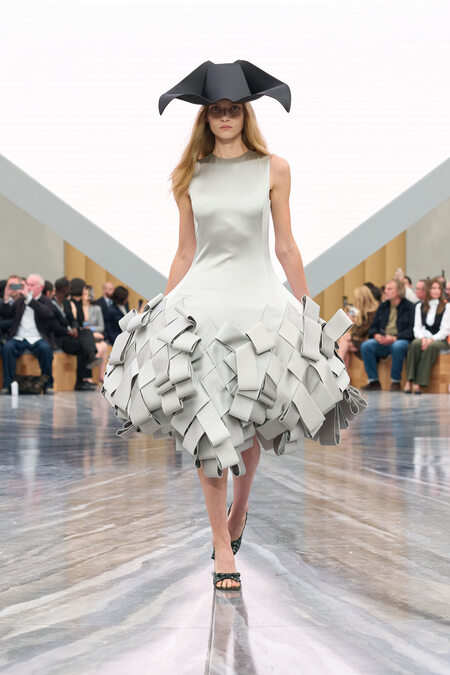
Jack McCollough and Lazaro Hernandez’s Loewe debut twisted sculptural eccentricity with morphing folds and nomadic codes. Issey Miyake’s kinetic pleats followed, fluttering like living architecture. In the Milk Pansa front row, Vetements added streetwise irreverence, Givenchy refined power suiting with archival fluidity, unveiled a darkly romantic collection, and Yohji Yamamoto countered with poetic rebellion. X buzz: “New rules of engagement.”
Eccentric reinvention.

Oct 4th, 2025

Day 6

Maison Margiela (Glenn Martens, 12:00, Show & Livestream), Hermès (Nadège Vanhée, 14:30, Show & Film from 17:30), Balenciaga (Demna, 20:00, Show & Livestream)
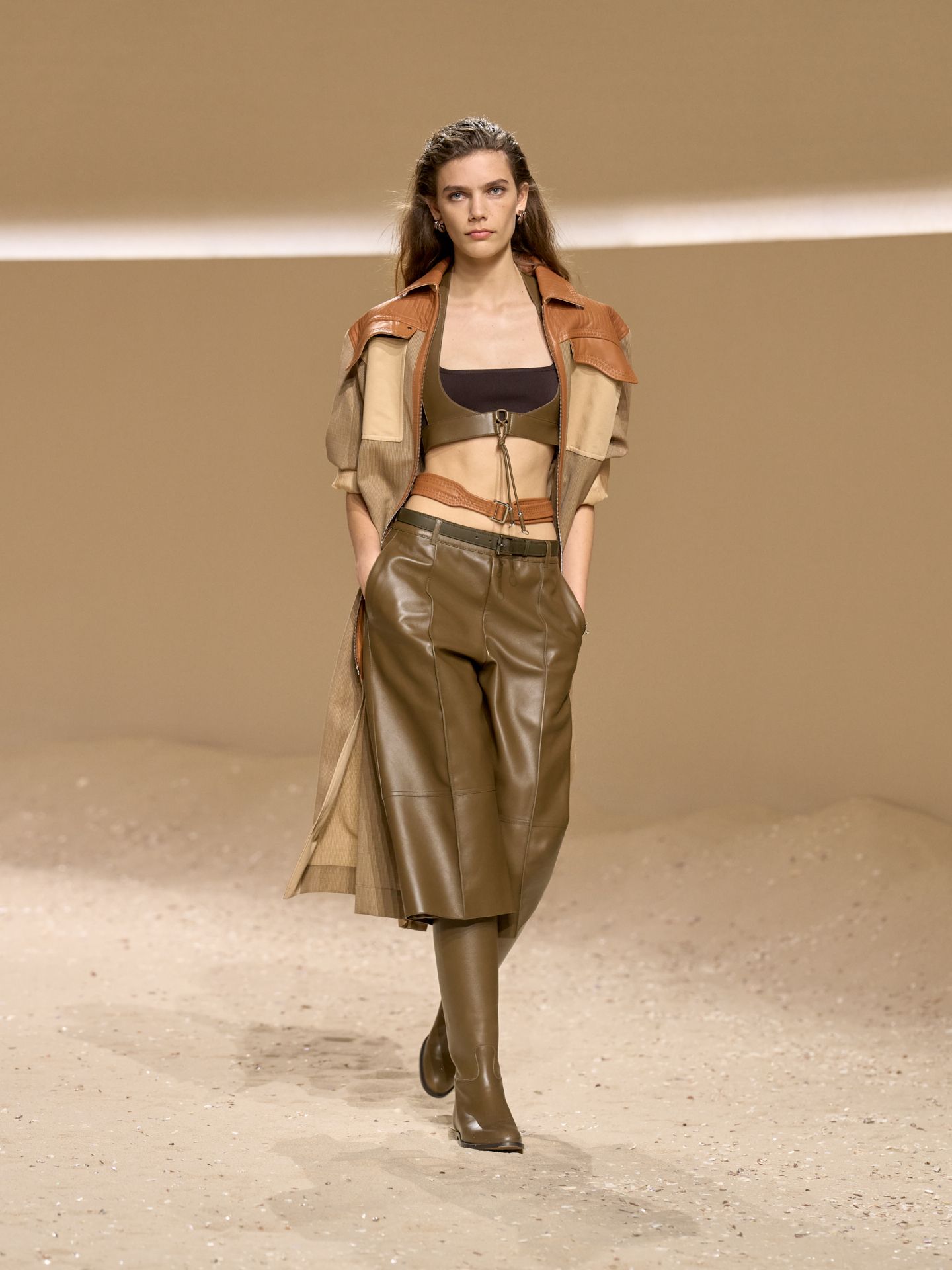
Glenn Martens’ Margiela RTW debut disrupted with deconstructed intimacy; Hermès offered minimalist symphony in sand-hued leather and silk—no gimmicks, pure craft; Balenciaga’s Demna unsettled with echoing silence, oversized distorted tailoring, and industrial romance in a concrete hall.
Quiet roars and disruption. Tradition meets provocation.

Oct 5th, 2025 

Day 7

Celine (Michael Rider, 12:00, Show & Livestream), Valentino (Alessandro Michele, 15:00, Show & Livestream), Chloé (Chemena Kamali, 19:00, Show & Livestream)
Michael Rider’s Celine women’s debut blended luxury edge with sleek bohemian twists—V (BTS) attending; Valentino’s firefly-lit romance featured ethereal organza and Soobin (TXT); Chloé fused folk textures with effortless femininity—Olivia Wilde in sheer lace crop top stole street-style spotlight. X: “Boho-chic revolution.”
Ethereal aspiration.

Oct 6th 2025, 

Day 8

Coperni (Arnaud Vaillant & Sébastien Meyer, 12:00, Show & Livestream), Miu Miu (Miuccia Prada, 14:00, Show & Livestream), Chanel (Matthieu Blazy, 20:00, Show & Digital)
Coperni’s tech-tailoring blurred futurism with lunar motifs in an observatory vibe; Miu Miu’s early-slot irreverence kept it youthful and iconic; Thom Browne brought surreal office couture to life.  But the moment belonged to Matthieu Blazy’s debut for Chanel. A soft revolution, Matthieu Blazy’s seismic Chanel debut transformed the Grand Palais into an astral dreamscape—kinetic tweed sculptures, liquid architecture jackets, pearls reimagined, and starry threads. Front row: Nicole Kidman, Jennie (BLACKPINK), Margot Robbie, Becky Armstrong.
Joyous modernity rewriting orbits. Evolution in motion—heritage reborn.

Oct 7th, 2025\

Day 9

Kiko Kostadinov (10:30, Show & Digital), Pierre Cardin (17:00, Show & Livestream), Meryll Rogge (18:00, Show & Digital)
Kiko Kostadinov’s experimental forms closed with geometric precision; Pierre Cardin’s futuristic legacy shone in metallic accents and silks—a cinematic nod to innovation; Meryll Rogge added playful deconstruction. Editors toasted the week’s “shot of creativity and joy,” spilling into Seine-side reflections. 
Futuristic gravitas.


Vibe Summary: Each day of SS26 built upon the last — from innovation and introspection to legacy and liberation. The collections may have differed in form and philosophy, but together they captured one undeniable truth: Paris remains fashion’s north star — the city where dreams are draped, stitched, and reborn.


The Defining Moments of Paris Fashion Week SS26

Paris Fashion Week SS26 was more than runways—it was a choreography of moments that linger, shift culture, and redirect fashion. From September 29 to October 7, these snapshots will echo long after the lights dim.

Chanel’s Rebirth — Matthieu Blazy’s Vision Arrives 


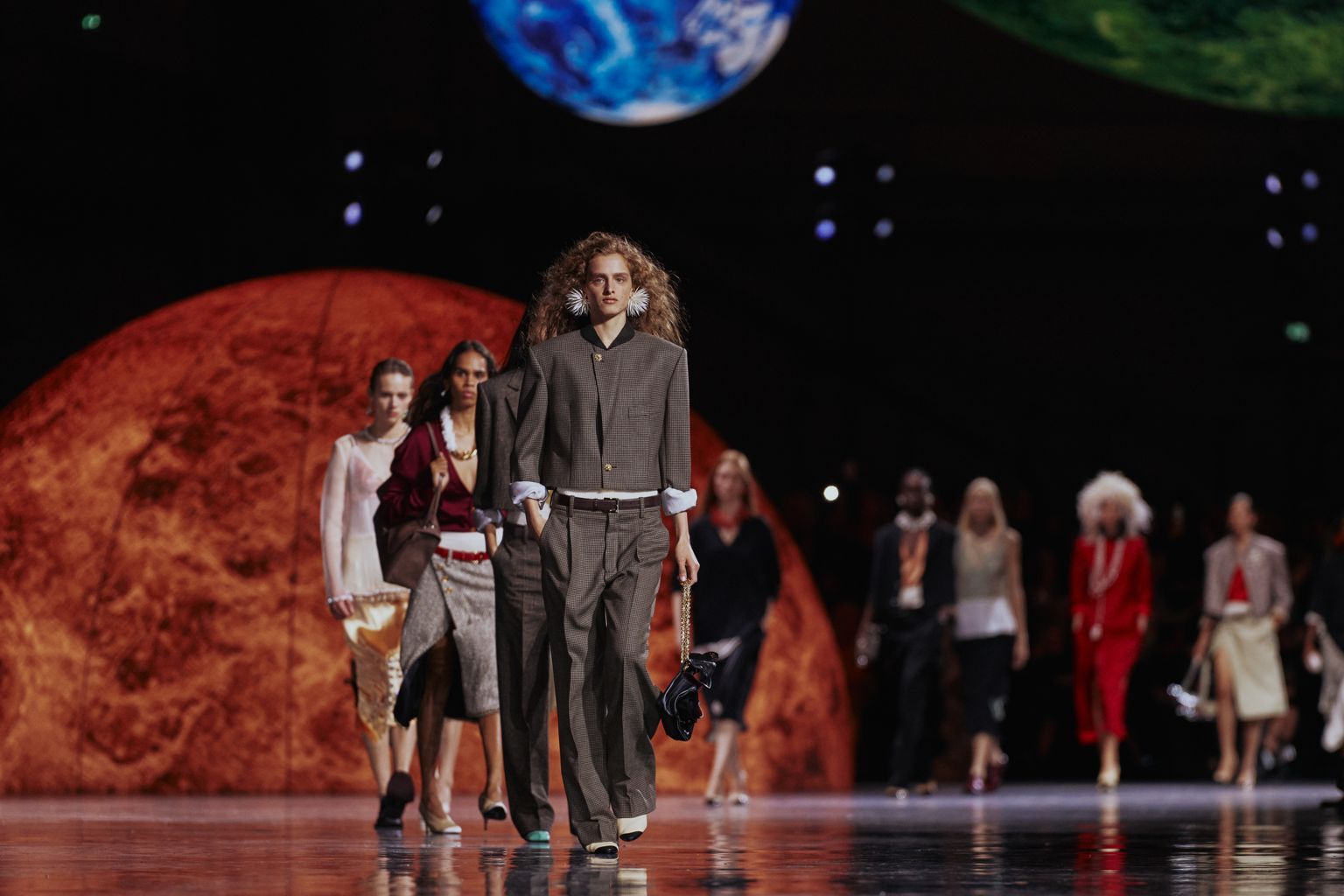
The moment everyone was waiting for. All of Paris paused for Matthieu Blazy’s Chanel debut on the 6th of October — a seismic shift for one of the world’s most mythologized maisons. The Grand Palais Éphémère transformed into an astral dreamscape: a midnight runway beneath suspended orbs of light, evoking stars against the Parisian night.

Blazy paid homage to Coco’s codes — tweed, pearls, and ballet flats — but turned them into kinetic sculpture. Jackets curved around the body like liquid architecture, tweed skirts swayed like waves of shadow and light, and chain-link accessories were unexpectedly raw, almost primal.

By the finale, as models spun in a constellation of shimmering threads, one thing was clear: Blazy hadn’t just joined Chanel — he’d rewritten its orbit.

A rite of joyous modernity—with Jennie (BLACKPINK) and Nicole Kidman front row—it transformed the maison.


Dior’s New Chapter — Jonathan Anderson’s Feminine Armor.


Anderson’s October 1 debut reimagined Dior by reinterpretating bar jackets and heritage motifs through a contemporary lens. Dior featured a monumental, inverted pyramid at the center of its runway show. The structure served as a powerful metaphor for his reimagination of the fashion house’s storied legacy. 

Architectural corsetry met soft overlays in poised, radical “feminine armor,” a concept opened by Adam Curtis’ haunting video. Jimin (BTS) front row made it unforgettable.

Louis Vuitton’s Temporal Dialogue: 

Ghesquière’s September 30 show at the Louvre’s Anne of Austria apartments ambitiously fused panniers, neo-Versailles drapes, and metallic avant-tech jackets. Silk capes, fur-trimmed coats, and jewel-like dresses married futuristic fabrics with wearable femininity.  Heritage echoed digital subculture—a tension defining SS26’s hyper-modernity. Lisa (BLACKPINK) and Zendaya amplified the buzz.

Saint Laurent: Sensual Minimalism, Amplified

Under the shadow of the Eiffel Tower on September 29, Anthony Vaccarello reasserted Saint Laurent’s mastery of controlled seduction. Leather jackets with exaggerated shoulders, fluid blouses, and plunging polyester taffeta dresses transformed the Trocadéro into a shrine of sleek defiance. Oversized bows softened razor-sharp tailoring, capturing a dialogue between power and grace. The air thickened with cinematic energy — BLACKPINK’s Rosé turned heads, and social media lit up with what fans dubbed “movie-like drama.” Vaccarello reminded us that Saint Laurent doesn’t whisper femininity — it commands it.

Balenciaga: Silent Rebellion Under Pierpaolo Piccioli

On October 4, Pierpaolo Piccioli unveiled his first Balenciaga collection — a radical recalibration of silence and strength. The setting was a stark concrete hall, every footstep echoing like punctuation. Gone were the theatrics; in their place, hyper-focused tailoring and monastic sensuality. The trapeze shapes nodded to Cristóbal Balenciaga’s original silhouettes, while the minimal palette and sculpted cuts felt unapologetically modern. It was a rebellion in restraint — proof that stillness can be louder than spectacle. Meghan Markle and Anne Hathaway, front row in quiet reverence, completed the tableau.

Schiaparelli’s Surreal Play 

At Centre Pompidou on October 2, Daniel Roseberry blurred the line between couture and cinema with “Dancer in the Dark.” The collection wove a narrative of surreal fantasy and tactile precision — molded bodices, feathered overskirts, and anatomical brooches that turned garments into living sculptures. Theatrics met tenderness; it was Dalí by way of dance theater, a love letter to the absurd. Kendall Jenner’s polka-dot finale dress drew applause, while Kylie Jenner, radiant in the front row, sealed the show’s viral moment. It was Schiaparelli at its best — imagination, unafraid.

Hermès’ Quiet Climax 

When Nadège Vanhee-Cybulski’s models walked the panelled-canvas set on October 4, the atmosphere was one of focused calm. Where others reached for noise, Hermès delivered restraint as rebellion. The palette: muted ochres, soft sands, and equestrian browns. The textures: supple leather, silk twill, and hand-stitched cotton. The result: quiet conviction that spoke louder than excess. In a season defined by reinvention, Hermès reminded everyone that consistency — when executed to perfection — is its own kind of innovation.

Valentino & McQueen: Romantic and Radical

October 5 was fashion’s split screen — two shows, two philosophies, one conversation.

https://www.crash.fr/wp-content/uploads/2025/10/schiaparelli-rtw-ss26-45-1080×1620.jpg

At Valentino, Alessandro Michele replaced austerity with romantic eccentricity: chiffon gowns shimmered under a firefly-lit canopy, pastel layers fluttered in poetic abandon. It was whimsy with a heartbeat — ethereal yet grounded. TXT’s Soobin and Pamela Anderson added star power to Michele’s dreamscape.


Meanwhile, at Alexander McQueen, Seán McGirr presented a study in contrasts: leather, corsetry, and the brand’s signature “bumsters” collided with carnal sensuality and disciplined tailoring. His debut embodied McQueen’s eternal tension — beauty that dares, darkness that seduces. Together, Michele and McGirr’s shows framed SS26’s emotional spectrum: romance, rebellion, and reinvention.


If SS26 proved anything, it’s that fashion’s new power move is control. Paris has shifted from maximalist spectacle to mindful precision — from noise to nuance. Designers aren’t chasing virality; they’re reclaiming authorship. Whether it’s Balenciaga’s monastic silence, Hermès’ grounded grace, or Blazy’s astral Chanel debut, the common thread is self-assured restraint. 

Couture vs Ready-to-Wear: The Paris Balancing Act — Redefined

In Paris, couture and ready-to-wear don’t exist in tension — they converse. The city doesn’t ask designers to pick sides, but to translate dreams into desire. SS26 reaffirmed that Paris is where fantasy becomes wardrobe, and artistry supports commerce.

What Really Separates Couture from Ready-to-Wear?

Couture is about bespoke mastery: each piece is often handcrafted, custom-fitted, and imbued with artisanal techniques. Think of it as couture’s apex: a dress that can’t, by definition, exist twice.
Ready-to-wear (Prêt-à-Porter) is couture’s sibling that steps off the runway. It adapts the vision of couture into styles that can be produced (though often in limited quantities) and worn in real-life settings.
The challenge — and the artistry — lies in maintaining integrity: how to carry couture’s narrative into wearability without diluting its aura.


How Paris Designers Strike a Balance

SS26 offered masterclasses in this balance:

Chanel / Blazy: The new creative director didn’t abandon couture codes — pearls, tweeds, structured silhouettes — but lightened them. Jackets curved, edges softened, volumes shifted. The result? A garment that could feel at home in a couture salon or on a city sidewalk.
Jonathan Anderson at Dior: His approach was surgical. He reinterpreted corsetry, draping, and heritage forms, tempering them with tailoring that reads as high fashion and modern utility.
Saint Laurent & Louis Vuitton: These two houses demonstrated how trend and tradition can interlock. Saint Laurent’s streamlined sensuality and Vuitton’s tech-infused femininity showed that avant-garde statements can be grounded in wearability.
Sustainability as a bridging force: Brands like Stella McCartney and Mugler have shown how eco-materials (recycled silks, regenerated fibers) can be integrated into the couture-to-commercial conversation, making luxury both responsible and aspirational.

In Paris, fashion isn’t just worn, it’s worshipped. Nowhere else does the line between couture and ready-to-wear blur so seamlessly. Spring/Summer 2026 reaffirmed that Paris doesn’t merely host fashion—it defines its hierarchy.

Shop the SS26 story with authenticated pre-owned Chanel, Dior, and Vuitton at The Luxury Closet—sustainable luxury at up to 60% off.

image sources:Getty Images, Instagram, Chanel, and YouTube

Paris Fashion Week SS26: FAQs

When was Paris Fashion Week Spring/Summer 2026 held?

Paris Fashion Week SS26 took place from September 29 to October 7, 2025, marking the grand finale of global fashion month. Over nine days, the world’s most revered fashion houses—including Chanel, Dior, Louis Vuitton, Saint Laurent, Balenciaga, and Valentino—unveiled their Spring/Summer 2026 collections through runway shows, digital presentations, and livestreams.


Who was the new creative director at Chanel for SS26?

For Spring/Summer 2026, Matthieu Blazy—formerly of Bottega Veneta—made his debut as Chanel’s new creative director, succeeding Virginie Viard. His inaugural collection was met with critical acclaim, balancing Chanel’s classic codes—pearls, tweed, and elegance—with a lighter, more fluid modernism. The result? A collection that felt both reverential and revolutionary.


What sustainable materials were used in Paris Fashion Week SS26?

Sustainability was more than a buzzword this season—it was a creative anchor.

Stella McCartney continued her use of Mylo™ mushroom leather and regenerative cotton.
Dior incorporated eco-dyed silks and recycled jacquards in its SS26 lineup.
Louis Vuitton explored bio-based synthetics and upcycled accessories, blending innovation with luxury.
Issey Miyake and Chloé introduced garments made from organic ramie and plant-based knits, signaling a new era where couture meets consciousness.

These efforts proved that eco-luxury is no longer optional—it’s the future of Parisian design.


What were the standout shows at Paris Fashion Week SS26?

While every major house made a statement, critics and editors singled out:

Chanel – Matthieu Blazy’s debut, redefining timeless femininity.
Dior – A poetic dialogue between history and futurism.
Louis Vuitton – Futuristic silhouettes paired with classic savoir-faire.
Balenciaga – A dark cinematic spectacle blending theatre and tailoring.
Valentino – Ethereal romanticism with structured precision.

Each collection underscored the season’s central theme: reinvention within restraint.


What trends dominated Paris Fashion Week SS26?

The season’s strongest directions included:

“Soft Structure” tailoring – sculpted yet fluid forms.
Monochrome layering – creamy whites, dove greys, and grounded nudes.
Futuristic accessories – metallic cuffs, geometric eyewear, and exaggerated belts.
Sheer fluidity – whisper-light fabrics creating motion with minimal effort.
Sustainable craftsmanship – conscious fabrics without compromising luxury.


How can I style Paris Fashion Week SS26 trends for everyday wear?

Tweed, reimagined: Channel the Chanel mood with cropped tweed jackets over denim or slip dresses—a balance of polish and ease.

Sculptural belts: A recurring accessory across Saint Laurent and Dior—perfect for defining silhouettes over relaxed tailoring.

Muted metallics: Replace sequins with matte shimmer in bags or shoes for subtle sophistication.

Sheer layers: Seen at Mugler and Givenchy—tone them down by layering a sheer blouse over a structured tank.

Fluid tailoring: Inspired by Louis Vuitton and McQueen—opt for relaxed suits in silk-blend fabrics for a powerful yet effortless look.


How does Paris Fashion Week differ from other fashion weeks?

Paris remains fashion’s cathedral—where couture tradition meets avant-garde experimentation. New York is commercial. Milan is artisanal. London is experimental. But Paris? Paris is philosophical—it’s where craftsmanship becomes culture, and garments become art.


Can you buy pieces seen at Paris Fashion Week SS26?

Yes—but most runway pieces take months to hit boutiques. For those who crave immediacy, The Luxury Closet offers a curated selection of authenticated pre-owned designer pieces inspired by the latest runway trends—often up to 60% below retail. From a classic Dior Bar jacket to a Louis Vuitton Capucines, or the perfect Chanel tweed blazer, you can own the look long before it reaches stores.


From Runway to Real Way: The Luxury Closet Effect

Fashion week ends, but the desire it sparks doesn’t. The looks seen gliding across Parisian runways will soon filter into wardrobes worldwide—some as editorial dreams, others as attainable icons. But in today’s circular fashion era, true style isn’t about chasing what’s new; it’s about owning what lasts.

The Luxury Closet bridges that world beautifully. The platform enables you to shop authentic, pre-owned runway looks and timeless designer pieces at more accessible prices—sustainably, smartly, and without compromising on glamour. Whether it’s a classic Dior Bar jacket, a Chanel tweed blazer, or a Louis Vuitton Capucines bag, every piece carries both legacy and longevity.

So while Paris may set the tone for what’s next, The Luxury Closet ensures you can wear that story now—with authenticity guaranteed and luxury made sustainable.

Because fashion isn’t just about the show, it’s about how you make it your own.


Source link

A sneak peek of ‘An Informal Guide to Workwear’

0
A sneak peek of ‘An Informal Guide to Workwear’


A sneak peek of ‘An Informal Guide to Workwear’

Friday, October 17th 2025

Share

Subscribe
5 Comments
||- Begin Content -||

By Manish Puri.

When friend of PS Tony Sylvester told us he was publishing a new book, An Informal Guide to Workwear, we knew it would be beautifully written, eclectic in its coverage and as lovingly thorough in its depiction of the cultural zeitgeist as of the clothes that sprang from it.

But we also know it can be nice to read a sample of a book, to get a sense of tone and content before buying it. So we asked Tony if we could get an early copy in order to share something exclusively with readers.

The book dives into so many workwear staples: berets, jeans, Doc Martens, and more pieces of outerwear than any one man will ever need. In the end we picked Tony’s chapter on fireman’s jackets – an item that’s become increasingly sought after in recent years, yet also one that we at PS knew very little about. Here Tony traces the popular Fay jacket’s origins back to the Great Fire of London in 1666.

But first, to help set the scene, we caught up with Tony to talk more about the book and what led him to write it.

Hi Tony! Congratulations on the new book. Can you tell us a little more about it and how it came about please?

I was looking to do a very different book with a publisher and had a wonderful meeting with the fine folk at Batsford Books – an independent imprint which has been going for over 150 years, specialising in art and design titles. While they weren’t interested in the initial idea I had pitched to them, they were keen to work with me, and we figured out a topic that we all agreed could be interesting to explore.

In my subsequent research I discovered they had actually published the seminal Working Dress: History of Occupational Clothing by Diana De Marly in 1986, so it was high time to revisit the subject.

In the book you speak about growing up in a time when what you wore could signal your tribe or your politics. How did those early experiences with youth culture shape your long-term fascination with workwear and its symbolism?

I feel pretty privileged to have grown up when I did, around the wellspring of subcultures in the late 70s and early 80s – I talked a lot about this with Simon at the Permanent Style talk a couple of years back. I have a deep fascination for clothes’ ‘second life’ and how clobber gets reused and reinterpreted, often ending up as a signifier far away from its intended utility.

This is especially true of workwear, and goes back almost to its foundations, with 19th century French artists adopting the trappings of the field worker or rich Americans donning jeans and boots on weekend retreats or ‘Dude Ranches’ in the early 20th Century. Both speak to some sense of the ‘authenticity’ of the clothing imbuing something to the wearer.

In the chapter on donkey jackets in the book, you have students and skinheads in the 80s adopting the coats as symbols of bona fide working class realness, whilst the labour leader Michael Foot gets an ear bashing from the right wing press for daring to wear one to the Cenotaph on Remembrance Sunday- a ‘crime’ it turns out he did not actually commit!

So he might not have put his Foot in it? Sorry… We’ve seen workwear go from utility to subculture to luxury fashion and back again. Why do you think certain items — chore coats, jeans, boots — keep returning and being reinterpreted?

Honestly, I personally think denim is not the most practical of materials: it’s neither a good insulator in the cold or particularly breathable in the heat, in fact it was mostly used as a cheap furnishing fabric prior to the development of jeans. But it holds so much cultural history in its warp and weft.

As I point out in the introduction of the book, Hollywood, the Civil Rights movement, and every possible archetype of American Male from the 20th century have left their mark on the humble cloth.

I think it is this broadness and diversity that gives jeans, in particular, so much scope for reinterpretation. In pure PS menswear terms, I think of Drake’s lookbooks in the early 2010s mixing up denim with chambray shirts, ties and tweed sports coats that really captured that ‘rugged sartorial’ appeal of the ‘Fuckyeah Menswear’ era.

These fits leant heavily on the “Warhol look” of the 1970s – where Andy Warhol and his business manager Fred Hughes popularised the style. According to Warhol’s biographer Bob Colacello “[Hughes’s].. Levi’s 501 looked as if they’d been altered on Savile Row… Fred was the first to wear jeans with suit jackets, but when Andy adopted the style as his uniform it became known as the Warhol Look.”

Your experience – especially in retail and music – has brought you into close contact with a lot of the workwear pieces you write about. Were there any stories that were new to you or did your research lead you to a fresh appreciation of any particular item? 

Doing the research was by far the most fascinating part of the whole process; especially the more theoretical and philosophical underpinnings – my wife Dr Cyana Madsen was a treasure trove in this regard as one of her specialist areas is biography in worn clothing – she was able to point me in the direction of Roland Barthes’s 1967 book The Fashion System and other notable writers on clothing and the dressed body.

There is a certain level of myth busting in the book which was equally gratifying – boring things like patents can really clear up any misunderstandings on the age of certain items, and I particularly enjoyed wrestling with the thorny issue of the term ‘corduroy’.

You’ve lived through several revivals of workwear — from the skinhead scene to heritage menswear to today’s 1990s-inspired moment. What do you imagine the next chapter of workwear might look like, and what might it say about the era we’re entering?

I’m sort of fascinated how the 70s designer era is mingling with the 90s revival and creating the catwalk workwear of Sacai’s Carhartt collab and Louis Vuitton’s chore coats and Timbs. It feels like late-stage capitalism at its nadir or zenith – depending on your worldview I suppose!

In the TV version of Emily St John Mandel’s Station Eleven, the post-apocalyptic denizens all cling to the clothing that has survived mankind’s demise – lots of ultra-tough cordura and synthetic workwear staples dress the ragged survivors. Perhaps that will be the next and final legacy?

Well, I’m off to stockpile some synthetic workwear for what I hope is the very distant future. But looking to the near future, we wish you all the best with the book and thank you for your time Tony.

Extract: Fireman’s jacket

The roots of the fireman’s uniform come in the wake of the Great Fire of London in 1666. This was a boom time for fire insurance, and private companies raised their own brigades of part-time firefighters, who would be issued with their own livery – caps, coats, breeches and waistcoats in the chosen colour of the company. The priority here was visibility and marketing rather than life saving. 

It was not until the early 19th century that the private firms began to be reined in under public control, and in 1833 the London Fire Engine Establishment was brought together from disparate firms into one streamlined conglomerate. Sobriety became the order of the day, and heavy serge grey Melton wool tunics and trousers were issued. The livery lived on in rows of brightly polished brass buttons bearing crests with crossed hatchets. Nationwide, this new standard took hold. 

As technology developed, the most important part of the fireman’s ‘bunker gear’ (so named as it was hung next to the individual’s bunk at the station house ready to be sprung into action) was his protective coat. In late Victorian times, this consisted of a ‘fearnought’ – a coarse woollen duffel coat doused with water before each mission. The 1930s brought waterproof rubber coats into the mix, in the trademark yellow we still associate with firefighting. 

My favourite development in the evolution of the fireman’s jacket came on 26 July 1962. An enterprising chap named Jess A Brewer applied to the US Patents Office for a newfangled clip fastening, one of a bevy of safety measures for firemen’s clobber patented around the same time. The idea was that a begloved fireman could still fasten and unfasten his coat at will, without getting snagged up. 

The idea follows the lobster clasps of World War II-era US Navy deck jackets, but oversized and far more resilient. So, firemen on the East Coast of America adopted a style of coat using this closure method – a thigh-length jacket with an extra panelled placket with the heavy clips and a high rolling collar to protect the neck. This remains pretty much standard to this day, in no small part because, aside from being practical, they look pretty badass. 

This might seem a little humdrum and even cumbersome an item to appeal to a more fashionable crowd, but a civilian version started appearing in Ralph Lauren collections for men and women from the 1970s. 

In the next decade, two Italian brothers, Diego and Andrea Della Valle, found themselves in rural Maine and happened upon the local firefighting troop in their rugged finery. The brothers were the chairmen of their family-run luxury leather goods brand Tod’s. Quite taken by the distinctive metal fastenings on the troop’s jackets, they tracked down the makers and began to import them back into Europe. Some 40 years on, their sub brand Fay’s signature Quattro Ganci (from the Italian word for ‘hook’) coat is an icon of high flying Italian sprezzatura.

An Informal Guide to Workwear by AW Sylvester is available for pre-order now and will be published by Batsford Books on November 6th. Illustrations by Michael Parkin.

Image of Tony courtesy of @jkf_man

<!–

–>


Source link

Is Ami Paris A Good Brand? Know Everything You Need To

0
Is Ami Paris A Good Brand? Know Everything You Need To


October 17, 2025


When you picture AMI Paris, the first thing that probably comes to mind is its simple charm; the easy fit, neat shapes, and of course, the well-known red “A” heart symbol that seems both laid-back and stylish. But what sits behind this rising fashion name? Is it really worth all the fuss, and more key, is AMI Paris a good brand?

Let us jump into all that you must know, from its past and style idea to how good it is made, cost, and name to see if this Paris brand has a place in your closet.

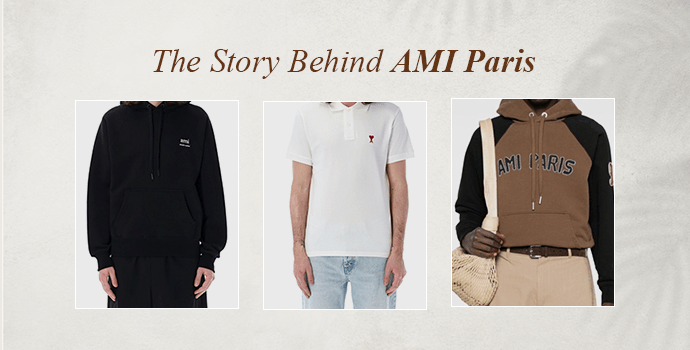
1. The Story Behind AMI Paris

The Story Behind AMI Paris

AMI Paris was started by Alex Mattiussi in 2011. The name “AMI” stands for “buddy” in French, and funnily, it also shows the designer’s initials — A.M.I. This double meaning really shows the brand’s main idea: easy luxury and simple style that feels as nice as it looks stylish.

Before starting his own brand, Mattiussi improved his skills with big name fashion shops like Dior Homme, Givenchy and Marc Jacobs. These times helped him learn about craft, form͏ and detail; which later became key parts of AMI Paris’s look.

From its start, AMI Paris was thought of as a name for regular folks, giving nice but useful clothes. The brand’s styles have always tried to mix fancy fashion with everyday outfits, making items that can be used both on the runway and in normal life.

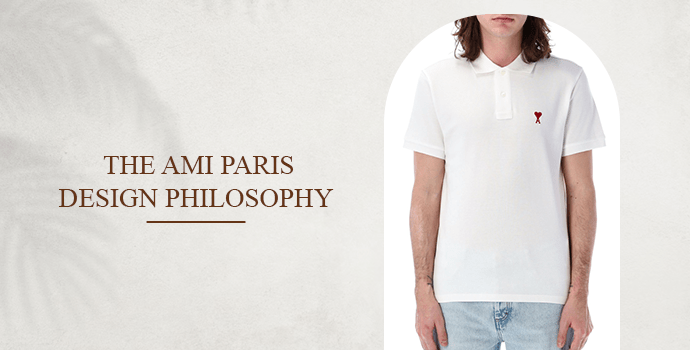
2. The AMI Paris Design Philosophy

The AMI Paris Design Philosophy

The base of AMI Paris is in the idea of “Parisian ease.” This term holds the spirit of what this brand means — simple grace that doesn’t make a big deal. The thought is to appear casually stylish, as if you’ve just tossed on the right clothes without too much thought.

AMI Paris is about making closet basics: simple coats, easy blazers, neat shirts, smart pants, and soft sweaters, all made with care for shape, detail and long-lasting style. Though the styles are plain they show character through sharp shapes and fun touches especially the well-known “AMI de Coeur” logo with a red heart above letter A. 

Instead of going after short-term styles, the brand focuses on lasting use and comfort. It’s made for people who like simple class but choose ease over showiness. AMI’s lines fit everyone, can be used in many ways, and are made to be worn for all moments from work talks to laid-back weekends. 

3. The Global Growth of AMI Paris

The Global Growth of AMI Paris

From its small start in Paris, AMI Paris has grown into a well-known fashion name. Its first shop opened in the French city, then stores came up in big places like London, New York, Tokyo, Seoul and Hong Kong. 

The label’s worldwide growth has been slow and nice. Instead of growing too fast, AMI worked on making a solid brand name first. Now, it has a faithful global crowd among style lovers who enjoy simple, quiet looks.

What makes AMI Paris unique in the busy world of designer style is its mix between luxury and easy access. It’s not as rare as old haute couture shops nor as widely made as quick fashion. It has set itself strong in the modern luxury group of high-quality clothes with reasonable prices and current charm.

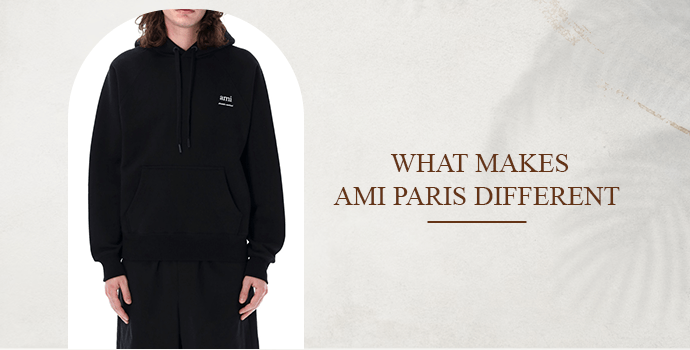
4. What Makes AMI Paris Different

What Makes AMI Paris Different

So what really makes AMI Paris different from other brands?

First, its friendliness. AMI Paris has a kind, warm vibe that sets it apart from the often scary world of fancy clothing. The brand feels close and welcoming, calling to those who enjoy fashion but like realness more than showiness.

Next, its special style mark. The heart symbol is known but soft showing a feeling of care, kinship and togetherness. Unlike noisy designer signs, AMI’s name feels simple and important.

At last, the brand’s aim on everyday use makes it useful. Each item is made to be flexible — something you can combine, pair, and wear again. From neat jeans and big coats to fitted outfits and warm pullovers, AMI Paris gives items that fit through seasons and ways of living.

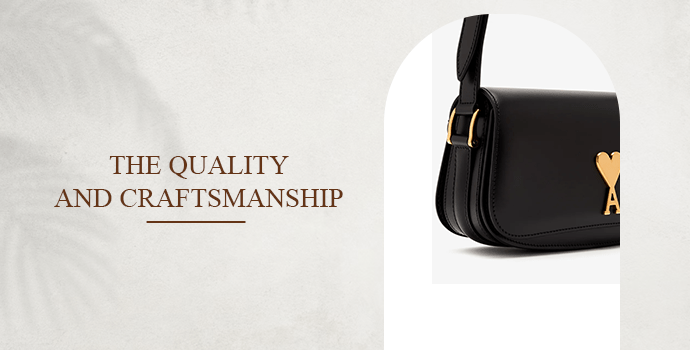
5. The Quality and Craftsmanship

The Quality and Craftsmanship

When looking at if AMI Paris is a nice brand, the quality matters a lot. Luckily, this is a place where AMI does good. 

The company uses high-quality stuff like wool, natural cotton, and nice mixes for its clothes. The making of the outfits shows care – seams are neat, cuts look good, and finishes are done well. Even if it does not hit the handmade fancy level of brands like Dior or Hermès; AMI Paris clothes still show skill and focus on details that prove their cost.

Shoppers often love the strength of AMI’s jackets, sweaters and pants. The cloth is gentle but firm, making that ideal Parisian mix of ease and elegance. The brand’s attention to fit is another plus — AMI items usually look good without feeling tight.

In brief, AMI Paris gives good stuff that links the gap between big shops and fancy — nice enough to seem special but useful enough for daily use.

6. The Price Point and Value for Money

The Price Point and Value for Money

AMI Paris rests easy in the middle to upper part of fancy clothes. Its costs ͏are higher than regular fashion but lower than very high-end brands. For example, a warm top or sweater might be priced at some hundreds of dollars, while fitted coats or jackets sell for more. Items like bags and other logo goods are easier to buy compared to expensive brands, which makes them nice for a wide range of people.

What you are paying for is a mix of design, skill, and brand pride. It’s a way into the world of fashion giving you that feeling of being special without the high costs of brands like Gucci or Saint Laurent. 

For a lot of buyers, AMI Paris finds a good mix. The items are useful, classic and nicely crafted; they keep their worth in your closet. While some may argue that certain items are expensive for their simplicity, those who value subtle luxury often find the investment worthwhile.

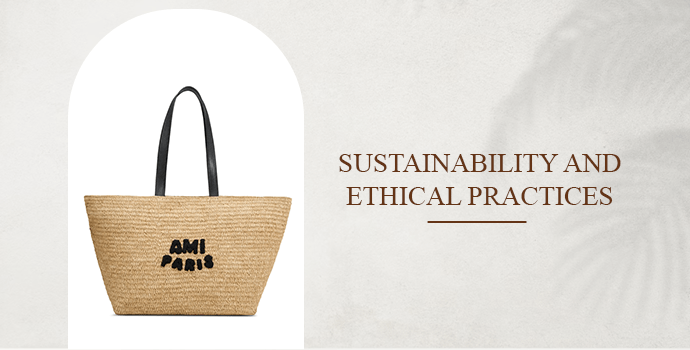
7. Sustainability and Ethical Practices

 Sustainability and Ethical Practices

One place where AMI Paris can get better is in being green. While the brand has made moves towards good production, like using natural cotton and safe packing for some items it does not share enough about its whole supply chain and harm to nature.

AMI Paris still hasn’t got to the point of being as green as brands that have really woven eco-friendly ways into their makeup. It doesn’t share clear info on its sources, making, or work conditions, which makes it hard for buyers to fully judge its fair standards. 

That mentioned, the brand’s focus on classic, durable clothes helps support earth care. By making outfits that are planned to go past one season, AMI Paris pushes smart buying — a good move for cutting down clothing waste.

In short, AMI Paris is not the top in being eco-friendly yet but its promise to be good over much goes with a better clothing way of thinking. 

8. Customer Experience and Reputation

Customer Experience and Reputation

A brand’s name isn’t only made on looks or worth — how customers feel is key too. AMI Paris has a mostly good name for its product design and look, but thoughts on customer help have been various.

Lots of shoppers like the store time — the shops are new, classy and warm, with smart workers and a clear feel of the brand. The buying place shows AMI’s nice Paris vibes.

But, a few online buyers have said there are hold-ups in getting their orders or money back. They also sometimes have trouble talking with the help team. These happenings, while not seen by all, show that AMI Paris might make its after-sales service better, especially as its online sales grow worldwide.

Most buyers say they are happy with the item mainly about how it fits, feels͏ good, and looks nice.

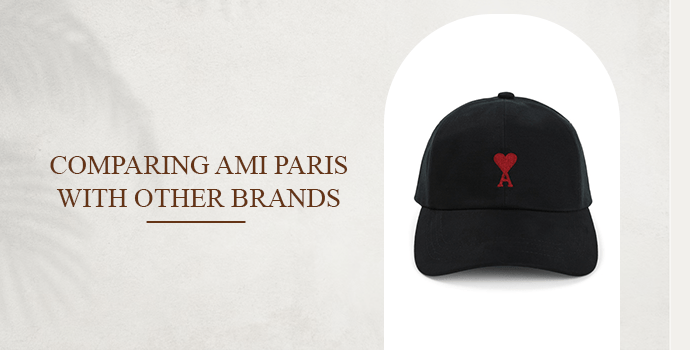
9. Comparing AMI Paris with Other Brands

Comparing AMI Paris with Other Brands

To know AMI Paris better, it helps to think about where it is in the big fashion world.

Unlike quick-clothing names that follow short-lived styles, AMI Paris makes its groups based on lasting closet basics. The items are made to be forever — see them as things you invest in that grow with you instead of going out of date after one season.

When you look at ultra-rich brands such as Chanel or Louis Vuitton, AMI Paris is much easier to wear and reach. It doesn’t aim at big show looks or strong logo things but instead on simple, stylish basics.

When looked at other modern brands like Sandro, A.P.C., or Acne Studios, AMI Paris stands at a similar cost and quality but sets itself apart with better fitting and a clearer Paris style. It’s not cutting-edge but instead excels in the skill of daily elegance – a place where lots of fashion-aware workers feel comfortable.  

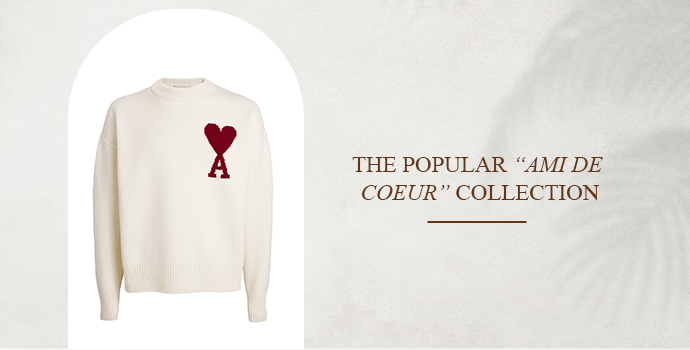
10. The Popular “AMI de Coeur” Collection

The Popular “AMI de Coeur” Collection

A big part of AMI’s fame comes from its “AMI de Coeur” set – easy to spot for its heart on top of the A sign. This mark has turned into a symbol of͏ friendship, warmth and love – values that show the brand’s friendly nature. 

From jumpers and tees to things you wear and shoes, the AMI de Coeur line has got a big name among style fans. It’s clear but strong, giving a logo-focused look that seems more heartfelt than showy.  

Some people say that the logo style has gone too far, but the AMI heart has stayed important by being flexible and lovely. Whether stitched in a quiet way or shown clearly it keeps defining AMI Paris’s new look.

11. Who is AMI Paris For?

Who is AMI Paris For

AMI Paris attracts a wide but clear kind of clothing buyer- one who cares about good quality, simple style and easy confidence.

It’s a great name for people who wish to seem chic without being flashy. The outfits fit workers, artists, and city folks who like flexibility. AMI Paris is also open to all genders, giving lines that go beyond normal style limits.

If your way of dressing is simple and classy with a bit of fun, AMI Paris might speak to you. It’s not so much about chasing fashions but more about showing a lasting, sure feeling of who you are.

12. The Pros and Cons of AMI Paris

The Pros and Cons of AMI Paris

Like every name, AMI Paris has its good and bad sides. 

Pros:

Distinct and versatile Parisian aestheticHigh-quality materials and tailoringBalanced price point for accessible luxuryRecognizable yet refined brandingTimeless designs that don’t go out of style

Cons:

Limited transparency on sustainability practicesOccasional inconsistency in customer serviceSome items priced high for their simplicityLogo items risk feeling overexposed if overused

In general, the good sides are much more than the bad ones for many people who buy clothes, mainly those who want nice clothing that shows simple style.

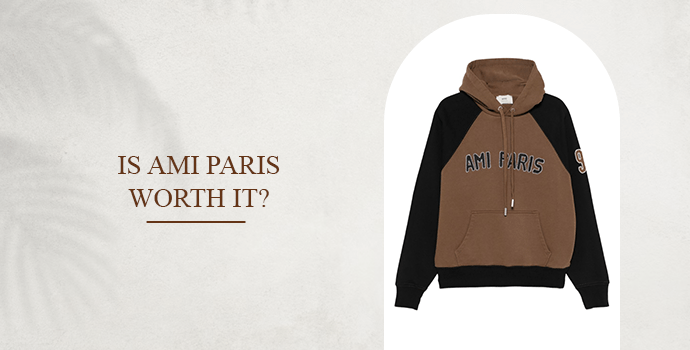
13. Is AMI Paris Worth It?

Is AMI Paris Worth It

If AMI Paris is “a good deal” depends on what you want in a brand. If your main focus is style that lasts, top-quality stuff, and modern luxury without being showy, then yes; AMI Paris is really worth it.

The brand’s looks have a lasting charm that keeps them important for many years. Buying a coat, jumper or jacket from AMI means putting something in your closet that can move easily between relaxed and fancy times.

But, if caring for the earth or super-special skill are your main concerns, you may see other fancy brands fit better with what you believe. AMI Paris is trendy, new, and sure of itself — but it’s not a green leader or a brand with deep roots.

14. Tips Before You Buy

Tips Before You Buy

If you’re thinking about putting money in AMI Paris items here are some hints;

Begin with timeless stuff like a simple coat, a knit top or a brand tee — they’re the most flexible and show off the brand’s style best.Check the fit carefully. AMI’s European sizing can vary, so consult the size guide or try on in-store.Shop during seasonal sales to get better value for money.Prioritize craftsmanship over logos — while the heart logo is iconic, AMI’s true strength lies in its tailoring and fabric quality.Take proper care of your garments to extend their lifespan; AMI’s pieces are meant to last when treated well.

Final Verdict: Is AMI Paris a Good Brand?

After exploring its history, craftsmanship, design philosophy, and overall reputation, it’s safe to say that AMI Paris is indeed a good brand.

It embodies the perfect blend of Parisian charm and modern sensibility — offering refined clothing that feels comfortable, confident, and timeless. It’s not about luxury for show, but luxury for real life.

What makes AMI truly special is its ability to make everyday dressing feel elegant. Whether you’re wearing its signature logo sweater or a tailored overcoat, each piece captures that effortless Parisian spirit.

While it may not match the heritage of older fashion houses or lead in sustainability initiatives, AMI Paris remains one of the most authentic and wearable modern brands today.

If you’re searching for clothing that reflects sophistication, comfort, and individuality — without shouting for attention — AMI Paris is definitely a brand worth exploring.


Source link

Issue 2 of Permanent Style Magazine: Bigger, better, exclusiver

0
Issue 2 of Permanent Style Magazine: Bigger, better, exclusiver


Issue 2 of Permanent Style Magazine: Bigger, better, exclusiver

Wednesday, October 15th 2025

Share

Subscribe
15 Comments
||- Begin Content -||

The Autumn/Winter issue of our magazine is live today, and it’s an expansion on the first issue in many ways. 

The most important for me is that there are now five articles – plus the cover story – that are exclusive to the magazine. This was something I wanted to evolve from issue 1, and have as a consistent feature going forward. 

Those articles will also often be longer and in depth, of a type that works best in a magazine rather than online. In this issue Manish goes on a walking tour of Madrid, for example, and talks to friends throughout the city about what determines Spanish style. At over 3000 words and with original photography and illustrations throughout, it is much more suited to print. 

Those illustrations were ones we commissioned from Rodrigo Saldana by the way, co-foudner of Momos tailors in Alicante, showing two archetypes of Madrid style in particular. 

The other exclusive articles are:

A guide to cowboy boots, by Nico Lazaro
How I learned to embrace fashion cycles, by Jeff Hilliard
Nathan Turk and the development of western style, by Ethan Newton 
Worn without words, by Oliver Dannefalk

Then there’s also the cover story, for which we spent the day at the Attolini workshop in Naples. Attolini had been a hole in Permanent Style’s coverage over the years, given we’d written about the best bespoke tailors in the world and most of the best manufacturers – Brioni, Kiton, Belvest etc. 

This filled the gap and satisfactorily so, because the work at Attolini was the best of any large-scale atelier we’d seen. Interestingly, most of the cloth they use is British rather than Italian – Scottish tweed, Irish linen, English flannel. 

However, the first thing a reader will probably notice about the new magazine is that some have an extra mini-magazine: a Guide to Shirt Fabric. 

This is a supplement that is only available with the first 1000 copies. The first 750 were sold to our friendly stockists around the world, and the remaining 250 are available on the PS shop now. 

The supplement is based on our online shirting guide, with several technical updates and new imagery, and it was produced in collaboration with Thomas Mason.

Elsewhere the magazine has our London shopping guide (updated), the guide to the best ready-to-wear trousers, three reader profiles, two reviews and much more. 

The features are now a focus of the contents, and there’s a new seasonal intro at the front, where the team run through what’s top of their wishlist for Autumn/Winter, what thing they’re looking forward to wearing most, and which outfit they’re looking forward to donning as well.

It’s bigger and better, and I’m glad to say that sales to shops and newsagents are bigger than last time as well. 

Now, we’ve learnt the hard way that distribution to newsagents is not the fastest, or the clearest. We still don’t know which shops in France or Japan bought Issue 1, only that the local agent bought them. A reader said he saw a copy in Tsutaya, which is lovely, but that’s the kind of info we working to. 

So for the moment we’re just listing the menswear shops that have bought Issue 2, below. We know there are a bunch that now have the magazine on standing order – Papercut in Stockholm, Shreeji in London, Iconic in New York and about 20 others, but we can list those at a later date when more are confirmed. 

Note that a lot of the menswear shops have also restocked Issue 1, in case you missed it, and are buying the now restocked Style Guide and Casual Style Guide books. 

Thank you very much, everyone, for your support. 

In other news, we’ve failed so far to wrangling a subscription system out of Shopify, but given there’s only two issues a year, that’s hopefully not too much extra hassle for readers. (I’m assuming people wouldn’t want to sign up for more than a year, but if I’m wrong please shout.)

Oh, and we have a lovely launch party tonight in New York! It’s open to all, at the Buck Mason store in Soho. Really looking forward to that one. Invite below

Anyone in New York, hopefully see you tonight

Menswear shop stockists:

Australia:

Informale, Melbourne
Double Monk, Melbourne
Trunk Tailors, Melbourne

Canada:

GS Douville, Montreal

China:

The Anthology, Hong Kong
The Armoury, Hong Kong
Bryceland’s, Hong Kong
Coller, Hong Kong
Principle M, Beijing

France:

Lafayette Saltiel Drapiers, Paris

Germany:

Massura, Munich
Maximilian Mogg, Berlin
Michael Jondral, Hannover
stuf-f, Dusseldorf

Indonesia:

Soroi, Jakarta

Japan:

Bryceland’s, Tokyo

The Netherlands:

Besnard, Haarlem

New Zealand:

Crane Brothers, Auckland

Norway:

Andreas Feet, Oslo

Singapore:

The Decorum, Singapore

Sweden:

Papercut, Stockholm
Skoaktiebolaget, Stockholm
 Vangelis, Stockholm

Switzerland:

Trunk, Zurich

Taiwan:

Oak Room, Taipei

United Kingdom:

Anderson & Sheppard, London
Arterton, London
Bryceland’s, London
Campbell’s, Beauly
Myrqvist, London
Natalino, London
Richard Gelding, London
Rivet & Hide, London
Rivet & Hide, Manchester
The Local Merchants, Bristol
The Shopkeeper Store, Norwich
Shreeji, London
Trunk, London
The Valet, London
William Crabtree, London

United States:

The Armoury, New York
Beckett & Robb, Holladay (UT)
Buck Mason, New York
Buck Mason, Los Angeles
Buck Mason, Nashville
Canoe Club, Colorado
Dashing Chicago, Chicago
Old House Provisions, Alexandria
J Mueser, New York
Junior’s, Philadelphia
Leffot, New York
Tailor’s Keep, San Francisco

<!–

–>


Source link

Roberto Cavalli vs. Just Cavalli: What’s the Difference?

0
Roberto Cavalli vs. Just Cavalli: What’s the Difference?


October 13, 2025


Roberto Cavalli is one of the few names that still represent the whole glamor and boldness when we speak of Italian luxurious fashion. The extravagant prints, stunning styles, and radical fashion view have made the designer’s empire (fragrances, jewelry, and even home designs) quite the place to be. However, with the launch of Just Cavalli, people started to raise the same question: What is the difference between Roberto Cavalli and Just Cavalli?

In this blog post, we will clear up the Roberto Cavalli vs. Just Cavalli difference, including the design point of view, the difference in pricing, targeted customers, and whether each line follows the Cavalli legacy. 

1. The Origins of Roberto Cavalli

The Origins of Roberto Cavalli

Where to begin when you have Roberto Cavalli himself. Roberto Cavalli is an inspiring designer from Italy and created his namesake designer label in the early 1970s. He made a slight revolution in the fashion world of the time and brought this rustic history of leather printing combined with bright and lively animal prints to create his unique clothing style becoming luxury with extraordinary sensuality.

As the years went on, Roberto for sure became synonymous with glamour on the red carpet. Celebrities such as Jennifer Lopez, Beyoncé, Kim Kardashian, and many others have all been spotted in Cavalli’s breathtaking dresses that embellished the body in sultry ways, worn via fantastic mortal fabrications via exotic prints. 

A product line of an Italian luxury fashion brand, the Roberto Cavalli brand today is communicating us the haute couture face of the world of Cavalli through individual clothing pieces, with each piece telling a story of luxury, craftsmanship, and extravagance.

2. The Birth of Just Cavalli

The Birth of Just Cavalli

As the main brand successfully gained esteem (and price), Roberto Cavalli saw a potential connection with the younger outlook of urban culture. In 1998, he introduced Just Cavalli, a contemporary diffusion line that continued to have the creative DNA indicative of Roberto Cavalli, just with a younger tone of voice.

The Just Cavalli line was illustrated for the contemporary generations that are vibrant, rebellious, and free spirited. But instead of haute couture gowns, it sprung boutique like casual streetwear that fused denim and innovative prints with a signature dose of Cavalli.

Just Cavalli is ultimately cool and edgy with an urban and relaxed style. It still has the fashion, but it is also wearable; it still has the fashion, but it is also bold. On the Just Cavalli spectrum are products like t-shirts that utilize graphic illustrations but with playfulness and vibrance and a leather jacket in every line as well as pieces with character and personality and accessories with character.

Just Cavalli is a more everyday way of embracing the aesthetic of Cavalli for someone who appreciates the aesthetic of the brand.

3. Design Philosophy: Classic Glamour vs. Contemporary Cool

Design Philosophy

In looking at Just Cavalli and Roberto Cavalli and analyzing the differences between the two brands, the greatest differences in just considering the brands at face value actually lie in the overall design philosophy behind the brand.

Roberto Cavalli: The primary brand concentrates on couture high end Fashion. The collection features layers of embellishment, intricate detailing, exotic luxurious materials such as varied textures and extravagant patterns.Just Cavalli: Just Cavalli is more youthful in vibe compared to Roberto Cavalli offering relaxed clothing. Just Cavalli is fun, colorful and more experimental using ideas drawn from pop culture and street style. Just Cavalli keeps the lively Cavalli spirit but in a more relaxed, trend-based construction.

In a nutshell, if Roberto Cavalli is elegant with drama, Just Cavalli has an attitude with a relaxed feel.

4. Target Audience and Market Position

Target Audience and Market Position

It’s also worth noting another distinction of Just Cavalli versus Roberto Cavalli and that is the audience each label goes after.

Roberto Cavalli: The target is for luxury brand consumers that appreciate craftsmanship, exclusivity, and high fashion, collections are often in the premium range of luxury brands to cater to celebrities, socialites, and people with an interest in fashion.Just Cavalli: Appeals to a younger, more price-sensitive demographic. They target fashionably aware individuals in their 20s and 30s who want a designer experience without the luxury price tag, it’s Cavalli for the streets and not the runway.

In essence, Just Cavalli democratizes some of the Cavalli experience; delivering the signature Cavalli style from Italy to a wider market.

5. Price Range and Accessibility

Price Range and Accessibility

The difference in price with Just Cavalli and Roberto Cavalli might be the most obvious difference, and in perspective, just think of the fact that a Roberto Cavalli evening gown could cost thousands of dollars with the handbags, shoes, and accessories also in the premium range of luxury brands.

At the same time, Just Cavalli is more accessible offering denim, tops, and dresses within the mid-range designer price point which is ideal for entry-level luxury customers.

The pricing strategy of both labels allows the Cavalli brand to deliver luxury and contemporary sector products without losing the integrity of the brand.

6. Product Range: What Each Brand Offers

 Product Range

Even though both labels offer similar design language, the product ranges differ in category and luxury.

Roberto Cavalli: The Roberto Cavalli label offers high-end ready-to-wear clothing collections, couture, accessories, leather goods, fragrances, eyewear, and luxury home furnishings in the “Roberto Cavalli Home” collection.Just Cavalli: Just Cavalli is focused on something more casual; denim, t-shirts, jackets, and youthful items such as dresses, and a more casual experience. Just Cavalli has its own fragrance and watch line, which makes it a complete lifestyle brand in meaning for consumers as the modern customer wants a complete lifestyle experience to go along with their apparel.

Essentially, Just Cavalli is ushering in a lifestyle brand as an everyday wardrobe attributed to the Roberto Cavalli universe.

7. Branding and Aesthetic Identity

Branding and Aesthetic Identity

Visually you see the iconic Cavalli identity separate and distinct between the two lines.

Roberto Cavalli uses sophisticated palettes of colors, gold, black or leopard patterns from high quality fabrics like silk and leather.Just Cavalli is bold in both colors and in structure design across the collections with electric blues and graphic prints using youthful silhouettes.

Both lines are distinctive and provide a purpose where one can exist without taking away from the other.

8. Fragrance and Accessories Line

Fragrance and Accessories Line

In addition to the fashion lines Roberto Cavalli and Just Cavalli both have lines of colognes that express these personalities.

Roberto Cavalli fragrances are vibrant, sexy, luxurious, meant for evening, whereas Just Cavalli is light, vibrant, youthful and meant to be worn during the day.

This same distinction can be made across accessory categories such as watches and eyewear, with Just Cavalli being more fun, while Roberto Cavalli is more tasteful.

9. Which One Should You Choose?

Which One Should You Choose

If you are still trying to weigh which label is a better fit for your style, here is a simple breakdown:

Roberto Cavalli: Luxury, glamour and sophisticationJust Cavalli: Youthful and urban chic

Both have the same DNA, but these lines are designed for different moments of life: Roberto Cavalli to commemorate special occasions, Just Cavalli for to be worn all day, every day and fabulously.

Final Thoughts

This differentiation is very significant for the whole Cavalli empire as understanding Just Cavalli as less liberated and less modern than Cavalli plays a role in the Cavalli universe. Roberto Cavalli reflects all that is splendid, sensual, and luxurious about Italian fashion, while Just Cavalli is the young and carefree sibling living in the same creative neighborhood. One could say that the lines are two sides of the same artistic life that’s happening in the creative world. The dream and luxury are the first side, while the invitation and access to the world of art are the second. If you are attracted to the extravagance of Roberto Cavalli or the fun of Just Cavalli, both have the Italian fashion‘s passion, craftsmanship, and glamor that are the very best in their characteristics.


Source link

Clothes can be a journey of self discovery

0
Clothes can be a journey of self discovery


Clothes can be a journey of self discovery

Monday, October 13th 2025
Share

Subscribe
0 Comments
||- Begin Content -||

We’re used to saying on Permanent Style that clothes are a matter of self-expression. That you have no choice but to say something by the clothes you wear – but that’s also an opportunity to express yourself, to make active, enjoyable choices. 

This line of argument works for those who are more expressive, perhaps more artistic, and enjoy that creative exercise. But I’m not sure it appeals so much to the average reader that wants to be simply well dressed. 

So here’s a different way to look at it. 

One of the richest aspects of clothing, I’ve come to realise, is that it shows, it illustrates, how you change as a person. You wear different things at different stages in life – dating, parenthood, retirement; various jobs; activities and passions; your developing taste; caring more or less about the trends around you, which are of course themselves a factor – and this history of clothing is a history of yourself, of your personality. 

I used to say that clothing was a lot like cooking. You have to eat something just as you have to wear something, so you might as well understand and enjoy it. 

But clothing is actually much richer than that, because it changes more with your journey through life. What food you like and what you cook will evolve as well, but it’s less expressive and less personal. 

When I was 23 years old, and first getting into suits (because everyone around me wore one) I wanted things that were obviously different, that stood out. My first designer purchase was a grey Prince-of-Wales suit from Etro, and I thought it was beautiful. But it was completely inappropriate for my job. 

When I had my first suits made on Savile Row, they weren’t as lairy as that, but they were still loud. The worst was probably a rich-blue double-breasted flannel suit. I got it because Karl, the salesman, had one and looked amazing. But then he worked in a menswear shop. 

It’s easy to see this history as simply a litany of mistakes, but I think at every stage the choices revealed something about who I was at that age. It’s not that I’d buy better suits that stand out at my age now; it’s that I don’t want to stand out in that way at all. Those suits were just as personal and expressive as the Wildhearts or Pearl Jam T-shirts I wore when I was 15 years old. 

My taste has sobered – and I think improved – over time. Much of my favourite tailoring from the intervening years illustrates this, such as my grey herringbone jacket from The Anthology (below)

But interestingly, I’ve now also found that I can dress a little more unusually than those office days, because I work in menswear. For me, that is usually nothing more than a double-breasted jacket or a western shirt, but it’s a point between the Etro and the grey herringbone, and I think it says something different about who I am.

I did another episode of Jeremy’s podcast Blamo! earlier this year, when the two of us were in Florence, and he brought up this point. 

When he started working at The Armoury in New York, many years ago now, it was at an exciting time for menswear. It felt like there was a new freedom in how ordinary men dressed, in how the average guy was permitted to think about clothes. 

“But over time that seems to have morphed into sites that obsess over stitch count on shoes, or the best value knitwear,” he said. “The point for all of us at the start was that dressing well was about enabling you to do other things in life – understanding what clothing said about you, how to use that to express who you were. It was purposeful and personal.”

For Jeremy, clothes have definitely reflected who he has been over time, and they became very invested emotionally. My favourite example is an old oxford shirt he wears with frayed collars and cuffs – plus a hole in elbow that was patched by his mum. 

There are a few other interesting things in that podcast, including how AI affects sites like PS. It makes such a difference when chatting to someone like that you know really well. 

Returning to life’s journey, I don’t think it’s as simple as saying you just wear different things at different ages because you have to, or because fashions change. There’s always a bit of agency in there (albeit far more the more you’re into clothing). 

Perhaps the clothes I wear today are kind of a reflection of two interdependent things: the fact that I understand clothes now more than I used to, so I can express myself better; and the fact that I want to appear a certain way, which has varied over the years.

So, for example, I am more comfortable today than I ever have been at appearing a little sexy – at leaving one more shirt button undone in the summer, perhaps. (I’m an Englishman remember, these are baby steps.) I wanted to appear good in the past, stylish and I guess attractive, but not really sexy in that way. 

Just as importantly, I know enough about clothing today to know the best ways to  achieve that effect, in a personal and subtle way, rather than brash and cocky. I know it’s sexier to be relaxed and comfortable in whatever the clothes are, rather than clearly trying very hard. That’s the problem with all those super-tight suits. 

Clothes are a way in which, over the past 20 years, I’ve got to know myself. And at the same time, they are a key way in which I’ve been able to express it. 

I’m sure many readers have felt the same. I’d love to hear some of them. 

<!–

–>


Source link

Threads of Tradition: Honoring Hispanic Heritage Through Textiles & Embroidery – University of Fashion Blog

0
Threads of Tradition: Honoring Hispanic Heritage Through Textiles & Embroidery – University of Fashion Blog


Bailarinas del Istmo – Female dancers of Tehuantepec in southern Mexico where unique folkloric dress and traditional dances are celebrated. (Image credit: Spanish Academy)

National Hispanic Heritage Month (September 15 – October 15) celebrates the diverse cultures and contributions of Hispanic and Latino Americans, highlighting ancestry from Spain, Mexico, the Caribbean, Central America, and South America.

For many, it is a vibrant celebration of the lasting influence of Hispanic voices in fashion. The richness of Hispanic culture shines through in bold textile weaving, brilliant dyeing traditions, and intricate embroidery that continue to inspire artists and designers alike. This blog is dedicated to honoring that legacy by highlighting the innovation, artistry, and beauty found in traditional textiles and embroidery of Mexico.

Textiles

Traditional Mexican textiles trace back approximately 2,500 years and were made from fibers of the yucca, palm, cotton,willow, and maguey plants. These early textiles are a key part of Mexican culture and the central piece of ancestral civilizations: the Aztecs, Mayans, Olmecs, Toltecs, Teotihuacans, Zapotecs, Mixtecs, Huastecs, Totonacs, and Purépechas, among many others. The approximately 60 ethnic groups each had their own representative Mexican textile patterns, fabric uses, and clothing styles, much like how tartan patterns are traditionally associatedwitha specificScottishclan, region, orfamily and worn as a statementof kinship, pride, andloyalty.Women using a backstrap loom to weave a traditional Mexican textile Women using a backstrap loom to weave a traditional Mexican textile. (Image credit: Wiktionary)

The process of weaving traditional clothing in Mexico is typically performed using a backstrap loom, a weaving device where the loom is anchored at one end to a stationary object (like feet, tree or post) and the other end attaches around the weaver’s back with a strap. Treadle looms of Spanish origin are also employed, especially for weaving blankets, ponchos, and other larger items. Traditional garments made from these looms are the huipil, quechquemitl and rebozo.

image of Mexican dress- huipil and quechquemitlTraditional Mexican garments are made from the backstrap loom and treadle loom. (Image credit: Huexotzinco and The Denver Art Museum).

A quechquemitl (pronounced kehch-keh-MEET-l) is two rectangularpieces of handwoven fabric joinedtogether, forminga V- or diamond-shaped garmentthat drapes overthe shoulders, creating pointed ends in frontand back.

A huipil (pronounced wee-peel) is a loose-fitting cap-sleeve tunic, generally made from two or three rectangular pieces of fabric joined together with stitching, ribbons, or fabric strips, with an opening for the head and arms. Huipiles are mostly made from cotton, although velvet is also used for special occasions particularly in Tehuantepec. The artist Frida Kahlo was famous for wearing both Mexican indigenous garments.

Colorful textile used to make rebozosColorful textile used to make rebozos (Image credit: Mexico1492 and Sacred Window Studies)

A rebozo is a traditional Mexican garment —a long, flat rectangle of woven fabric—worn primarily by women as a shawl, head covering, or wrap. It serves both practical and symbolic purposes, offering warmth, modesty, sun protection, and acting as a secure carrier for babies or bundles, especially among indigenous and mestizo women. Distinctive for its fringed ends (rapacejos) that are often hand-knotted into intricate patterns. It is handwoven from cotton, wool, silk, or rayon, often in ikat patterns, with regional variations in color, pattern, and weaving technique.

Sarape (Serape/Zarape)

serape image

Originating from Saltillo, Coahuila, sarapes are brightly colored, striped textiles used as blankets or ponchos that have become symbols of Mexican identity.

Oaxacan Textiles

Textiles from Oaxaca

Traditional Zapotec and Mixtec textiles from Teotitlán del Valle, Oaxaca. (Image credit: Brogan Abroad)

Oaxaca is renowned for a range of textiles featuring intricate embroidery and weaving with motifs often representing nature, mythology, and daily life. The wool used is dyed in vibrant shades of gold, red, green and blue, using natural ingredients like pecans, alfalfa, pomegranate skin, indigo, andcochinilla (cochineal) bugs.

Embroidery

Otomi Embroidery (Tenango)

image of Otami embroidery

Recognizable by its vibrant, animal and plant-inspired designs, Otomi embroidery is a vibrant Mexican folk art, characterized by handrawn intricate designs and mythological figures stitched in bright colors onto white fabric. It hails from central Mexico, particularly Tenango de Doria in Hidalgo. (Image Credit: OtomiMexico.com)

Oaxaca EmbroideryOaxacan embroidery styles: Tehuana (Istmo de Tehuantepec) embroidery & San Antonino Castillo Velasco embroidery Oaxacan embroidery styles: Tehuana (Istmo de Tehuantepec) embroidery & San Antonino Castillo Velasco embroidery. (Image credit: PieceCollectors – Textiles of Qaxaca)

Oaxacan embroidery dates to pre-Hispanic times, when artisans used agave or maguey thorns as needles. Known for rich, vibrant colors, Oaxacan embroidery it is highly diverse, with each region and Indigenous group in Oaxaca developing distinct styles, motifs, and techniques, deeply rooted in local history and identity. Two of the most popular embroidery styles from the region are:

Tehuana (Istmo de Tehuantepec) Embroidery — famous for bold, colorful floral designs, often worked on velvet or satin using a technique called “gancho” (hook), which creates tightly packed chain stitches. These textiles are closely associated with the iconic Tehuana dress, popularized by artist Frida Kahlo.

San Antonino Castillo Velasco Embroidery —known for intricate floral motifs executed using fine, marked outlines on white cotton poplin. This embroidery style is dense, with a distinct sense of delicacy and precision. Each piece may take up to a week to complete.

Whitework

example of whitework embroidery

Altar cloth, unknown, 19th century, Mexico. Bequeathed by Alfred Percival Maudslay. (Image credit: © Victoria and Albert Museum, London)

When Spanish conquistadores reached Mexico in 1519, they were full of praise for the achievements of spinners, dyers, weavers and embroiderers. After the conquest, Spanish needlework skills – including a wide variety of stitches, were widely taught in mission centers. Catholic nuns taught the locals and together they provided their churches with ‘whitework’, an embroidery technique where the stitching is the same color as the foundation fabric, usually white linen, and includes the technique of ‘deshilado’ or drawn threadwork. With deshilado, selected threads are pulled from the ground fabric; the rest are bound and reinforced with decorative stitching.

Shout Out to Other Hispanic & Latino Countries

While this blog primarily highlights the rich textile and embroidery contributions of Mexican culture, both past and present, I also want to acknowledge the remarkable work of other Hispanic and Latino countries. Nations such as Peru, Brazil, Colombia, Guatemala, Chile, and Argentina have each made significant contributions to the world of textiles and embroidery through their distinctive traditions, technical innovations, and sustainable practices.

Sign-up for our newsletter

Join our newsletter to receive updates on future blog posts, special deals, and new lessons. Also visit the main webpage to check out all of our video lessons.


Source link

Why sartorialists should consider Stone Island

0
Why sartorialists should consider Stone Island


Why sartorialists should consider Stone Island

Friday, October 10th 2025
Share

Subscribe
30 Comments
||- Begin Content -||

Stone Island is a brand that I think a lot of readers overlook – I certainly did for a long time.

Yet the heritage of ‘form through function’ and reworking traditional clothing is similar to a lot of other brands we cover. You also find that a lot of people in classic menswear respect the founder, Massimo Osti and his work tremendously, particularly the attitude to innovation and product development. 

We’ll return to the history at some point I think, as there are a lot of interesting points around the way Osti worked, his approach to materials, and even the marketing – he famously didn’t use models and wanted everything to be centred around the product. 

Before that I thought it would be good to talk about some products, as I know it’s always the question at the back of a reader’s mind when they’re read the deeper-dive, background pieces. (OK that’s all great, but what can I buy right now?)

I’ve actually wanted to cover Stone Island for a while, but was spurred to recently by the Marina collection, as I think it could particularly appeal to readers. Most don’t have the distinctive patch on the sleeve, there’s some really interesting colour, and it’s rooted in that very classic menswear pursuit, sailing. 

Here are five pieces I’d highlight. 

1 Cotton/nylon down jacket

£915

We’re used to seeing down jackets in interesting colours from the likes of Rocky Mountain Featherbed or Nigel Cabourn, so the bright blue isn’t that unusual – even though it’s not necessarily what readers would expect from Stone Island. 

But what you get on top of that from a brand like this is modern styling and more unusual design. The neckline on this Stone Island jacket, for example, is a nice single line of canvas tape that runs seamlessly into the hood – it rolls open pleasingly and makes the piece feel more like sportswear, which is of course it is. The more obvious design addition is the quick-release buckle on the waist, but that’s also very functional. 

Stone Island uses a lot of natural materials, and often where you’d expect nylon from someone else, you’ll find a cotton mix (which is of course the traditional fabric for down jackets like this). That’s the outer material is here and it feels great. 

2 Felted wool jacket

£980

This is a nice example of fabric innovation. The outer material is a felted mix of 75% wool and 25% polyester, and it has a perforated membrane of the kind used in sportswear to separate wet materials and aid breathability. But unlike most sports pieces, it’s mostly wool on the outside which gives it a natural feel. 

The more unusual design aspect is a rubberised collar that feels like it’s come from scuba gear. This isn’t just a gimmick though – it’s comfortable to wear and practical for against wind and water. There’s a version with a hood in the same material too, but I like this option. 

The colours are really nice by the way – dark, rich brown with an ultramarine accent in the branding, then a navy option with that same ultramarine. Quite a lot of the higher-end pieces from Stone Island are in menswear colours like this – the Ghost line, for instance, is a lot of dark brown, navy and khaki, unlike the black and more synthetic colours you usually get from sportswear brands.

3 Cotton fleece half-zip

£360

You know that kind of loose, comfy sweater you see sold by sailing and skiing brands? A cheap one from Fat Face is very weekend Dad wear. Well this is that, but higher end. 

The brushed, organic cotton is a perfect mix of the substantial and super-soft. The fit is a little long, a little slouchy. Like quite a few Stone Island pieces, the zip is plastic but that’s deliberate, it’s still high quality and it goes with the sporty aesthetic. You wouldn’t want metal here. 

I know there are readers who won’t want any branding or logo on the outside, but it does feel more fitting with sportswear. Like the logoed sweats Rubato did a while back. 

4 Cotton chenille jumper

£670

Stone Island is best known for outerwear and knitwear, and those are certainly the most interesting categories.

Outerwear gets more attention, but the quality and the attention to detail on the knitwear is really high. Even regular crewnecks will have subtle stitch variations or wider fashioning that add a little design touch – and this jumper is subtly unusual. 

It’s 100% cotton but using a chenille yarn, which gives it the appearance of a heritage knit but with a lots of texture and a smooth touch. I’ve been looking for mock-neck cream knits like this for a while, but Purple Label ones often have synthetic yarn in them these days, disappointingly, and brands like Loro Piana have hugely increased in price. This is, perhaps unexpectedly, a very cool option. 

Another example of this knit of knitwear is in the Raw Beauty collection. Rather more expensive, but lovely natural variation in the cotton and nice, slightly raw seams. It was launched a year or so ago and uses mostly recycled yarns from the factory. 

5 Canvas field jacket

£875

This is a nice piece to compare to more classic menswear brands. Lots of Italians, such as Aspesi, do a weekend field jacket and might have both a synthetic and a cotton option. But this version from Stone Island is nicer, more unusual, and not dissimilar in price. 

The material is an organic cotton, but the jacket is garment dyed which is what gives it that soft, washed appearance. Stone Island were always known for their garment dyeing, and it’s still something that sets them apart. For a sportswear brand it often gives them a more vintage aesthetic, which sits nicely alongside the quality and natural-fibre points.

Stone Island are of course now owned by Moncler, and the other major Osti brand, CP Company, is the one still connected to the family. But Stone Island is a higher level generally and more interesting for the PS reader I think. The comparison with Moncler also shows how a brand like that would be too fashion-driven for me; Stone Island is a good point in between the two. 

When we visited the London store we tried on absolutely everything, and it was a genuinely exciting experience – a feeling I haven’t had in a while, to be honest. There’s something exhilarating about discovering great product at a brand you don’t know that well, and which has a sufficiently different aesthetic to feel you’re looking at all everything slightly differently.

The images above and below here, and the ones at the top of the article, are of other pieces from the Marina collection. I could have written about most of them – the one above shows how that neckline works on that gilet and on the blue down jacket. 

<!–

–>


Source link

Popular Posts

My Favorites