Arts

Home Arts Page 94

6 Best Bitcoin (BTC) Cloud Mining Platforms with Highest ROI in 2025

0
6 Best Bitcoin (BTC) Cloud Mining Platforms with Highest ROI in 2025


Without buying costly equipment, cloud mining is a quick and affordable method to mine crypto.  Growing demand for crypto mining has led to many platforms appearing, each with different qualities and degrees of profitability.  This article evaluates the 6 top cloud mining solutions for 2025, ranking them according on their ROI prospects, security, and general usefulness.

1. JSHash – Cloud Mining Platform With The Highest ROI – 9/10

Established in 2023 and located in the United States, JSHash has fast become well-known by providing safe and speedy cloud mining services.  Users may mine on the platform without buying equipment since it supports Bitcoin, Litecoin, and Dogecoin.

Key Features

Free mining package available.Competitive daily returns ranging from 1.5% to 3.7%.SSL and DDoS protection for enhanced security.No extra electricity costs.24/7 customer support.Affiliate program with up to 4% commission.

JSHash stands out due to its AI-driven mining technology, making it an excellent choice for passive income seekers.

Contracts

Contract PriceContract TermFixed ReturnDaily Rate$66 (Free)1 Day$66 + $0.991.5%$1002 Days$100 + $63.00%$5002 Days$500 + $242.40%$1,5003 Days$1,500 + $1172.60%$5,0003 Days$5,000 + $4653.10%$12,0005 Days$12,000 + $1,7763.70%

Website: https://jshash.com

Twitter: https://x.com/JSHASH_US

YouTube: https://www.youtube.com/@JSHASH_US

2. NiceHash – 8.5/10

NiceHash is one of the most popular cloud mining platforms, known for its user-friendly interface and marketplace for buying and selling hashing power.

Key Features

Supports multiple cryptocurrencies.Competitive profitability with dynamic pricing.Instant payouts in Bitcoin.User-friendly dashboard.Two-factor authentication and SSL encryption.

While NiceHash offers flexibility, its profitability depends on market conditions, making earnings less predictable.

3. Hashing24 – 8/10

Hashing24 has been a reliable cloud mining service provider since 2016, offering contracts powered by mining farms in Iceland and Georgia.

Key Features

No maintenance fees.Fixed contracts ensure stable returns.Long-term mining contracts available.Well-established reputation in the industry.

Although Hashing24 offers reliability, its ROI is moderate due to high initial investment costs.

4. ECOS – 8/10

ECOS is a well-known cloud mining platform offering a combination of mining, exchange, and wallet services. It provides flexible contracts and an easy-to-use mobile app.

Key Features

Low entry cost with flexible plans.Mining profitability calculator.Integrated ecosystem with exchange and wallet.Customizable mining contracts.

ECOS is an excellent option for those looking for an all-in-one crypto platform, though its fees can be relatively high.

5. Binance Mining Pool – 7.5/10

As part of Binance, one of the world’s largest crypto exchanges, Binance Mining Pool offers a seamless experience for miners looking to integrate with Binance services.

Key Features

Direct integration with Binance Exchange.Low fees and high liquidity.Auto-conversion of mining rewards.Smart mining features for optimizing earnings.

While Binance Mining Pool is reliable, it is more suited for experienced users already engaged in the Binance ecosystem.

6. Bitdeer – 7.5/10

Bitdeer is a reputable cloud mining provider that offers customizable mining plans and access to real mining hardware.

Key Features

Transparent pricing and mining operations.Cloud hosting for mining rigs.No hidden fees.Various mining contract durations available.

Bitdeer is a good choice for those who want direct exposure to mining hardware, but its setup can be complex for beginners.

Conclusion

Selecting a cloud mining platform requires careful consideration of security, economics, contract terms, and usability among other elements.  According to our rankings, JSHash stands out as the best candidate for 2025 since it provides a mix of high ROI, security, and accessibility.  Though, depending on user choice, NiceHash, Hashing24, and ECOS also offer good alternatives.

Recommended Choices

Best Overall JSHashBest for Flexibility NiceHashBest for Long-Term Stability Hashing24Best All-in-One Platform ECOS


Source link

3 High-Performing Crypto Picks for 2025: BlockDAG, Tether, Shiba Inu & Binance Coin

0
3 High-Performing Crypto Picks for 2025: BlockDAG, Tether, Shiba Inu & Binance Coin


In 2025, price surges alone don’t define the high-performing crypto. What truly stands out is a coin’s ability to show growth through adoption, technology, and lasting impact. Some tokens are gaining momentum by expanding their ecosystems, while others are securing their position through scale or reliability.

BlockDAG, Shiba Inu, and Binance Coin are some of the names catching attention from traders and analysts. Each brings a unique strength that places it among the standout-performing crypto projects this year.

1. BlockDAG Raises $212M as It Pushes Toward $600M Target

BlockDAG (BDAG) has become one of 2025’s high-performing crypto projects thanks to its impressive progress. Its presale has raised $212 million so far, spread across 27 batches, with over 19.2 billion BDAG coins already sold. With Keynote 3 released, the project now looks firmly set on reaching its $600 million presale goal. 

This latest keynote outlined important updates, including upcoming listings on centralized exchanges, the launch of its Beta Testnet, a mobile mining user base of more than 1.2 million, and a record-breaking presale—all achieved without venture capital support.

1. BlockDAG Raises $212M as It Pushes Toward $600M Target

Priced at $0.0248, BDAG has already gained 2,380% since the start of its presale. And according to analyst forecasts, the best may still be ahead. Some predict BDAG could reach $1 by 2025, $20 by 2027, and $30 by 2030, citing its consistent development, accessibility, and strong user base. For those looking to enter a promising crypto early, BlockDAG is offering a rare opportunity before its full network goes live.

2. Shiba Inu (SHIB) Gains Attention with Utility Expansion

Shiba Inu is currently testing strong resistance near $0.0000134. If support levels hold, technical analysis suggests a potential 20% price jump. Meanwhile, the SHIB team continues to expand its ecosystem with Shibarium—a Layer-2 chain focused on cutting transaction fees and improving speed.

The token is widely available on leading exchanges and benefits from an active token burn strategy that reduces supply over time. These factors help keep SHIB among the high-performing crypto picks of the year, especially for retail traders. Although it began as a meme coin, Shiba Inu has evolved with new infrastructure and increasing utility, keeping it relevant across social and trading platforms.

2. Shiba Inu (SHIB) Gains Attention with Utility Expansion2. Shiba Inu (SHIB) Gains Attention with Utility Expansion

3. Binance Coin (BNB) Holds Value Through Utility and Burns

Binance Coin (BNB) is the utility token of the Binance ecosystem, offering fee discounts, launchpad access, and other platform benefits. As of April 3, 2025, BNB is priced around $598.60, with a total market value above $85 billion.

3. Binance Coin (BNB) Holds Value Through Utility and Burns3. Binance Coin (BNB) Holds Value Through Utility and Burns

Its deflationary model continues to draw attention. In January 2025, Binance completed its 30th burn, removing roughly 2.14 million BNB from circulation—worth about $600 million at the time. Analysts expect more token burns and ongoing platform use could lift BNB to between $900 and $1,200 before the year ends. This combination of use and supply reduction supports BNB’s standing as a high-performing crypto asset in the current cycle.

Why These Are the High-Performing Cryptos of 2025

BlockDAG, Shiba Inu, and Binance Coin each bring something different to the table—but all show why they belong among the high-performing crypto picks of 2025. Shiba Inu shows technical breakout potential near $0.0000134, largely driven by retail support. Binance Coin, trading at $598, maintains value with its utility-driven model and regular burns.

Why These Are the Best-Performing Cryptos of 2025Why These Are the Best-Performing Cryptos of 2025

Then there’s BlockDAG, which stands out as one of the most exciting early-stage opportunities in the market. With over $212 million raised, 19.2 billion coins sold, and 2,380% ROI since launch, BDAG—currently in Batch 27 and priced at $0.0248—may offer one of the most compelling value entries in 2025. With each batch, the entry point narrows, making this a key moment for those seeking long-term upside in a rapidly evolving space.


Source link

Solana Price Plunges to Lowest Level in Three Weeks

0
Solana Price Plunges to Lowest Level in Three Weeks


On the morning of April 4, amid a sluggish market following Trump’s tariff announcement, Solana (SOL) plunged to its lowest level in three weeks. Let’s explore the key reasons behind this decline.

Solana Suffers a Sharp Decline

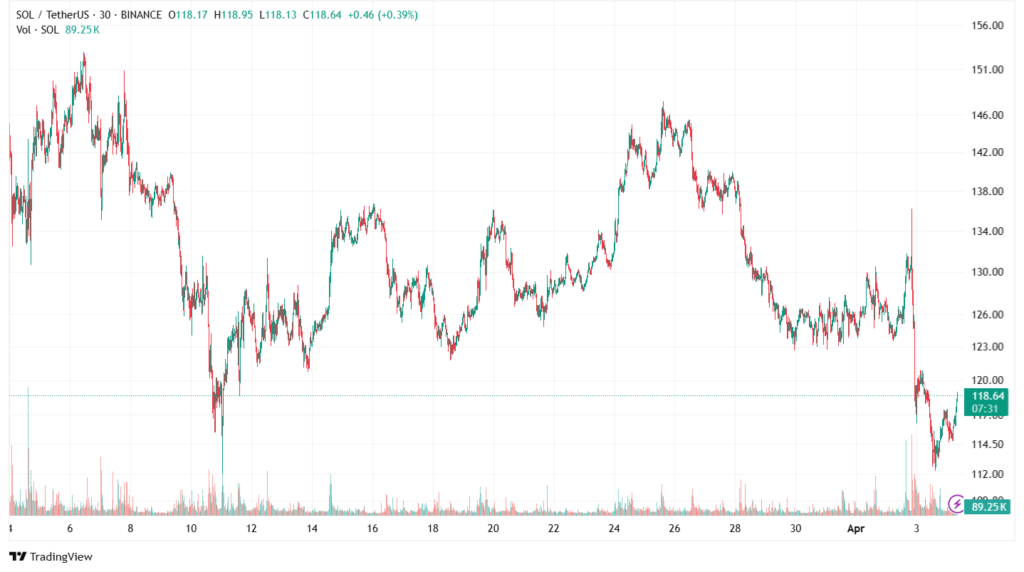
The price of Solana (SOL) has plummeted to $115, marking a steep decline of nearly 12.75% within the past 24 hours, as shown on the daily SOL/USD chart from TradingView. This drop has pushed SOL to its weakest level since mid-March, erasing much of the gains it had accumulated in recent weeks. 

Solana Suffers a Sharp Decline

Source: TradingView

From a technical analysis perspective, SOL’s daily chart is forming a bear flag pattern—a prolonged bearish signal. SOL is now trading below the pattern’s lower edge, suggesting a potential drop to $96 if no reversal occurs. The price has returned to early March’s key support zone, but selling pressure shows no signs of easing. The bearish outlook is clouding SOL’s near-term prospects, causing traders to feel uneasy.

Massive SOL Unlock Impacts Today

According to Arkham Intelligence, a massive $200M worth of SOL will be unlocked today, April 4, 2025. This is the largest unlock until 2028, involving 1.79M SOL (~$200M USD). This SOL comes from four accounts that staked $37.7M worth of SOL in April 2021, now yielding a 5.5x profit at current prices. This massive release into circulation threatens to exacerbate the already intense selling pressure, particularly as SOL’s price action grows increasingly negative.

For investors, this is a critical moment to exercise caution—experts recommend avoiding high leverage to minimize the risk of liquidation and safeguard accounts amid heightened volatility.

Additionally, President Donald Trump’s tariff announcement sparked panic, driving investors from risky assets like SOL to safer options. Not only SOL but also the total crypto market cap (TOTAL) and Nasdaq Composite plummeted, wiping out trillions of dollars. With uncertainty looming, SOL’s struggles mirror a turbulent period for risk assets, as its fate hinges on market sentiment and technical levels.

Read more: A New Memecoin Trend on Solana: $GHIBLI


Source link

100x ROI Potential – Why Whales are Buying Dragoin as Shiba Inu & VeChain Drops

0
100x ROI Potential – Why Whales are Buying Dragoin as Shiba Inu & VeChain Drops


Is your portfolio stuck watching charts bleed red while meme coins set the tone in 2025? The Shiba Inu (SHIB) price prediction shows limited upside unless it breaks resistance, while the VeChain (VET) price drop to near $0.018 is keeping traders cautious amid macro uncertainty. But there’s one coin that’s flipping the script—and it’s not just another copy-paste meme.

Meet Dragoin, the under-the-radar contender with real mechanics behind its hype. Unlike typical meme coins that flood the market with unlocked supply, Dragoin is launching with a strict token burn rule—unsold presale tokens will be permanently destroyed. It’s setting the stage for real scarcity. With just 200B supply and 50% locked in presale, early buyers hold the keys. This could be one of the most popular crypto coins of 2025.

Dragoin Presale Burns Fuel the FOMO

Dragoin is flipping the script on meme coin launches. With a strict no-dilution approach, all unsold presale tokens will be permanently burned before the token goes live. That means less supply, tighter distribution, and stronger price action potential from day one. Most meme coins flood the market after launch—Dragoin does the opposite. Other coins dilute. Dragoin burns.

The presale is now live, starting at just $0.0000292, and it’s built across 25 gamified stages themed around fantasy-style battles. The final launch price is locked in at $0.002, offering early buyers a shot at over 6,700% ROI if the targets hit. Once a stage sells out, the price moves up automatically, increasing pressure to act fast before the next jump.

Dragoin Presale Burns Fuel the FOMO

With 200 billion DDGN tokens in total, only 50% (100 billion) are available in presale. The rest is split between ecosystem development (30%), liquidity (15%), and a team allocation (5%) that’s fully locked. There are no whales here—just a clean, capped, fair shot for anyone getting in early. And since Dragoin is built on Ethereum, it’s already connected to a huge pool of DeFi users.

This setup is why Dragoin is quietly turning into one of the most popular crypto coins among meme hunters. Its mix of gamified hype and real scarcity is rare in today’s meme space. Presale buyers will control the early supply—everyone else will chase green candles. Want in? Buy now or miss out forever—when Dragoin burns, it rises.

Shiba Inu (SHIB) Price Prediction: Will a Breakout or Breakdown Come First?

The Shiba Inu (SHIB) price prediction for April 3, 2025, shows a coin stuck in a tight zone. It’s trading near $0.00001211, facing resistance between $0.00001230–$0.00001250 while holding support at $0.00001180. Technical indicators suggest a possible breakout if volume kicks in, but a drop below support could lead to further losses. The RSI is neutral, and SHIB is moving inside a descending channel.

Shiba Inu (SHIB) Price Prediction: Will a Breakout or Breakdown Come First?Shiba Inu (SHIB) Price Prediction: Will a Breakout or Breakdown Come First?

This range-bound action has left the Shiba Inu (SHIB) price prediction split between bullish and bearish outcomes. A breakout could push SHIB to $0.00001280, while losing support might send it toward $0.00001150. Right now, SHIB looks like it’s waiting for a big move. Traders are watching volume and RSI levels closely for the next signal. It’s a game of patience for those still holding on.

VeChain (VET) Price Drop Nears Key Support as Tariff Tensions Build

The VeChain (VET) price drop hit 7.79% on April 2, following news of a U.S. tariff war. Now trading near $0.0218, VET is stuck inside a falling wedge pattern with $0.018 as a possible next support if the pressure continues. While short-term sentiment is shaky, the pattern itself often signals a future breakout—once momentum returns.

VeChain (VET) Price Drop Nears Key Support as Tariff Tensions BuildVeChain (VET) Price Drop Nears Key Support as Tariff Tensions Build

Despite the VeChain (VET) price drop, the network is showing strength under the hood. Active accounts surged from 9,000 to 74,491 in Q1 and currently sit at 37,114. Big moves are also ahead: the “Renaissance” update goes live in July with new tokenomics and added utility. VeChain also secured a MiCAR license in Europe and plans governance upgrades this quarter. Fundamentals are solid—now it’s about whether price can hold up long enough to reflect that.

Summing Up

Shiba Inu (SHIB) price prediction is stuck between a breakout and a breakdown, keeping holders in wait mode. The VeChain (VET) price drop may push it toward $0.018, but the network’s upcoming updates and growing user base are reasons to watch closely. While both coins are dealing with resistance and market pressure, a new contender is building real FOMO.

Dragoin’s presale is live, and what makes it different is simple—unsold tokens get burned. That means lower supply and stronger demand at launch. Early buyers won’t just be early—they’ll control the supply, and others will have to chase. With its low entry price and fixed launch target, Dragoin could easily become one of the most popular crypto coins of 2025. Don’t wait—when Dragoin burns, it rises.

Dragons are here Ready to RideDragons are here Ready to Ride

Learn More About Dragoin:

Presale: https://purchase.dragoin.io/

Website: https://dragoin.io/

X: https://x.com/DragoinOfficial

Telegram: https://t.me/DragoinOfficial


Source link

Hyperliquid Buzz, PEPE Price Climb, & BlockDAG’s $211M Rise: Leading Coins In 2025

0
Hyperliquid Buzz, PEPE Price Climb, & BlockDAG’s 1M Rise: Leading Coins In 2025


Hyperliquid is making headlines after a crypto whale reportedly secured $6.2 million by manipulating the price of Jelly my Jelly (JELLY), making it a major topic in Hyper Liquid news. The unusual trade—featuring quick long and short positions—sparked debate, especially as the whale still holds over 10% of JELLY’s supply. This unexpected event has fueled discussions across Hyper Liquid news platforms, drawing wider attention to the exchange itself.

Meanwhile, PEPE price is regaining traction after breaking out of a falling wedge pattern. With signs of support forming, PEPE price could test the $0.000010 mark soon. However, while short-term interest grows around meme coins, long-term focus is shifting.

That’s where BlockDAG comes in. With a $211 million presale, 19 billion coins sold, and over 100,000 community members, it’s showing strong follow-through. From real miner shipments to app adoption, BlockDAG is proving it’s more than hype—it’s one of the leading crypto picks for 2025.

Whale Still Holds 10% of JELLY After $6.2M Exploit — HyperLiquid News Under Spotlight

To begin with, the recent HyperLiquid News has stirred fresh debates in the crypto space as a whale exploited the platform’s hyperliquidity setup, making over $6.2 million in profits. The whale strategically placed long and short trades that manipulated the JELLY token price without triggering immediate liquidation.

Moving forward, what’s more concerning is that the entity still controls about 10% of the JELLY supply—worth nearly $2 million—even after the token was delisted by HyperLiquid News. Analysts found these tokens were purchased after March 22, raising suspicions of continued manipulation.

Lastly, this HyperLiquid News incident is a harsh reminder for users to properly curate their crypto decisions. The Hyperliquidity Provider Vault, meant to absorb large trades, didn’t hold up under pressure. In such cases, it becomes critical to curate a strategy based on fundamentals, not hype, especially in memecoin-heavy markets.

Whale Still Holds 10% of JELLY After $6.2M Exploit — HyperLiquid News Under Spotlight

PEPE Price Targets $0.000010 Amid Recovery Signs

To start with, PEPE price is showing signs of recovery as it attempts to push past key resistance levels. The memecoin recently broke out of a falling wedge pattern, which is generally seen as a sign of potential reversal. Naturally, this development has drawn attention from market watchers.

Following that, PEPE price touched $0.000009242 in the last 24 hours but failed to sustain above the 50-day EMA due to higher price rejection. Still, four consecutive green candles reflect buying interest.

PEPE Price Targets $0.000010 Amid Recovery SignsPEPE Price Targets $0.000010 Amid Recovery Signs

In addition, the MACD indicator shows a gradual upward movement, hinting at bullish momentum. Naturally, if market sentiment improves, PEPE price may soon retest the $0.000010 level and possibly climb to $0.000013344.

Finally, with support at $0.0000060, this setup offers a chance for those eyeing a low-entry point. Naturally, PEPE remains a token to watch closely.

BlockDAG’s $211M Surge Reflects Real Results, Not Just Promises

While many projects promise the moon, few actually deliver. That’s what makes BlockDAG’s $211 million presale so impressive—it’s not just a big number, it’s a sign of trust built over time. In a space where hype often fades fast, BlockDAG has managed to win over a massive global base by doing exactly what it said it would.

To begin with, the team is planning to ship nearly 10,000 X-series miners before mainnet launch. BlockDAG onboarded over 800,000 users on the X1 Miner App, and attracted 400,000+ players to its Tap Miner game. These numbers aren’t just stats—they represent real usage and growing interest.

Furthermore, BlockDAG’s presale is now in batch 27, with its coin priced at $0.0248. That’s a 2,380% rise from batch 1, rewarding early supporters with huge returns. Over 19 billion coins sold signals serious traction.

BlockDAG’s $211M Surge Reflects Real Results, Not Just PromisesBlockDAG’s $211M Surge Reflects Real Results, Not Just Promises

What’s more, the 100,000+ member community drives the project forward by running testnet nodes and contributing actively. This isn’t just a presale—it’s a signal that people believe in what BlockDAG is building. It’s consistent, visible, and worth watching closely.

Final Thoughts

To begin with, Hyper Liquid news has taken center stage after a whale reportedly made $6.2 million manipulating JELLY, sparking major discussion. This unusual event quickly became one of the most talked-about topics in Hyper Liquid news, drawing wider attention to the platform itself.

At the same time, PEPE price is showing signs of recovery, with analysts expecting it to test the $0.000010 level soon. The current pattern suggests that PEPE price may attract short-term interest, especially among meme coin watchers.

However, when looking ahead, BlockDAG stands out.BlockDAG has sold 19 billion coins and achieved a 2,380% price increase since batch 1, showing clear and measurable progress. With real miner deliveries and over 800,000 app users, it offers substance over hype, making it a leading crypto pick for 2025.

Click here to experience BDAGClick here to experience BDAG

Presale: https://purchase.blockdag.network

Website: https://blockdag.network

Telegram: https://t.me/blockDAGnetwork

Discord: https://discord.gg/Q7BxghMVyu


Source link

Ethereum Sets Pectra Mainnet Launch for May 7

0
Ethereum Sets Pectra Mainnet Launch for May 7


Ethereum developers have set May 7 as the mainnet launch date for the Pectra upgrade, marking the most significant set of changes since the Dencun upgrade in March 2024.

Ethereum Developers Confirmed May 7 for Pectra Upgrade

During the “Consensus Layer Meeting 154” held on the evening of April 3, 2025, the Ethereum team set May 7, 2025, as the deployment date for Pectra Upgrade. The announcement came after Pectra was successfully tested on the Hoodi testnet without any issues.

The need for the Hoodi testnet arose because Pectra was scheduled to launch on two of Ethereum’s testnets—Holesky and Sepolia. Originally, the Ethereum developer team would roll out the mainnet by the end of this month. However, testing on Holesky did not go smoothly, leaving the testnet unable to finalize transaction confirmations for several days. The situation was no better in Sepolia, forcing the ETH team last week to pause all efforts to pinpoint the problem.

Ethereum Developers Confirmed May 7 for Pectra Upgrade

Source: Crypto.com

In contrast, the third test on Hoodi proceeded seamlessly, paving the way for the official deployment and preparing Pectra for its mainnet launch.

After completing the Pectra upgrade, Ethereum will enter Phase 2, called Fusaka, expected in 2026. The Fusaka upgrade will introduce the EVM Object Format (EOF) and PeerDAS while boosting Ethereum’s performance and security.

The price of the ETH (Ethereum) token has not shown much reaction following the news that Ethereum has set a deployment date for the Pectra upgrade.

Ethereum Developers Confirmed May 7 for Pectra UpgradeEthereum Developers Confirmed May 7 for Pectra Upgrade

Source: Coingecko

About Pectra Upgrade

The Ethereum Pectra upgrade is one of the most significant updates to the Ethereum network since the Dencun upgrade in 2024. Combining the Prague (execution layer) and Electra (consensus layer) enhancements, Pectra aims to improve the blockchain’s scalability, efficiency, and user experience.

Pectra Upgrade introduces some key improvements. It enhances Ethereum wallets with smarter, more secure, and user-friendly features. Staking becomes smoother with reduced system latency and an increased limit from 32 ETH to 2,048 ETH, allowing validators to stake more. Additionally, it boosts data storage by expanding blob space by 50%, making transactions faster and cheaper. Successfully tested on the Hoodi testnet, Pectra builds on Ethereum’s scalability and efficiency, paving the way for the Fusaka upgrade in 2026, though ETH prices have yet to react significantly.


Source link

Off the Grid Adds Bored Ape Yacht Club Avatars

0
Off the Grid Adds Bored Ape Yacht Club Avatars


Off the Grid, blockchain-based battle royale developed by Gunzilla Games, has introduced Bored Ape Yacht Club (BAYC)–themed content as part of a new in-game update.

The content includes character skins, weapons, and emotes styled after the popular Ethereum NFT collection released during a limited-time “Ape-ril” event and is available to players subscribed to the game’s Pro tier.

The release follows the launch of the Gunzilla Games’ $GUN token and the rollout of its GUNZ blockchain network.

Off the Grid Adds Bored Ape Yacht Club Avatars Source: Off the Grid

What’s in the Bored Ape Content Pack?

The new BAYC-themed update includes two playable avatar skins, two weapons, and two character emotes referencing the Bored Ape aesthetic and tone. The content is part of a premium package for Pro subscribers and became available on Wednesday.

Gunzilla Games released a limited-time cosmetic called the “Ape-fool Mask” on April 1 and players could unlock it by participating in a single match that day.

The item is no longer available, which may make it rare among the game’s cosmetic offerings.

Off the Grid Adds Bored Ape Yacht Club Avatars
Off the Grid Adds Bored Ape Yacht Club Avatars Source: CoinGecko

What’s next for Off the Grid?

The BAYC-themed content arrives shortly after the launch of GUNZ, a new Avalanche-based blockchain developed by Gunzilla Games to support Off the Grid and future projects. The network’s native token, $GUN, was also introduced via a token generation event earlier this week.

Since its launch, $GUN has declined more than 50% in value from its initial peak and is currently trading at approximately $0.043. Although its circulating market capitalisation is modest at around $26 million, the token’s fully diluted valuation—based on total supply—places it above other web3 gaming tokens such as ApeCoin and PRIME.

At present, GUN is not yet functional within Off the Grid, and the game still operates without blockchain-integrated gameplay. Gunzilla’s web3 lead, Theodore Agranat, stated that migrating the game to the GUNZ mainnet remains a “main priority,” but no timeline has been provided.


Source link

Hyperliquid Deep Dive: Understand HYPE and HLP Model

0
Hyperliquid Deep Dive: Understand HYPE and HLP Model


Hyperliquid is a decentralized derivatives trading platform (DEX derivatives) that has been gaining traction in the DeFi ecosystem thanks to its unique operational model, transparent governance, and deep integration of security and risk management mechanisms.

Hyperliquid Liquidity Model (HLP)

Hyperliquidity Provider (HLP) is the shared liquidity vault of Hyperliquid, funded by the community to execute market-making and liquidation strategies on the platform. Anyone can deposit USDC into HLP and earn profits or bear losses proportional to their contribution. HLP serves as the primary trading counterparty for most orders on the platform, similar to how GLP operates on GMX, but with a more active and adaptive approach.

HLP does not charge any management fees; all profits and losses are fully distributed to depositors, as the vault is entirely community-owned.

In practice, HLP is structured into several sub-vaults, each implementing different strategies. Specifically, there are two vaults focused on market-making (referred to as Vault A and Vault B) and one vault designated for liquidations (the Liquidator vault). Vaults A and B continuously place buy/sell orders to provide liquidity to the order book, while the Liquidator vault handles positions that are being liquidated.

Learn more: What is Hyperliquid?

HLP displays the net position aggregated across all three sub-vaults. For example, if Vault A is long 100 million USD worth of ETH, Vault B is long 200 million USD, and Liquidator is short 300 million USD, the overall net position of HLP would be zero since the long and short positions offset one another.

hyperliquid logo

HLP Performance

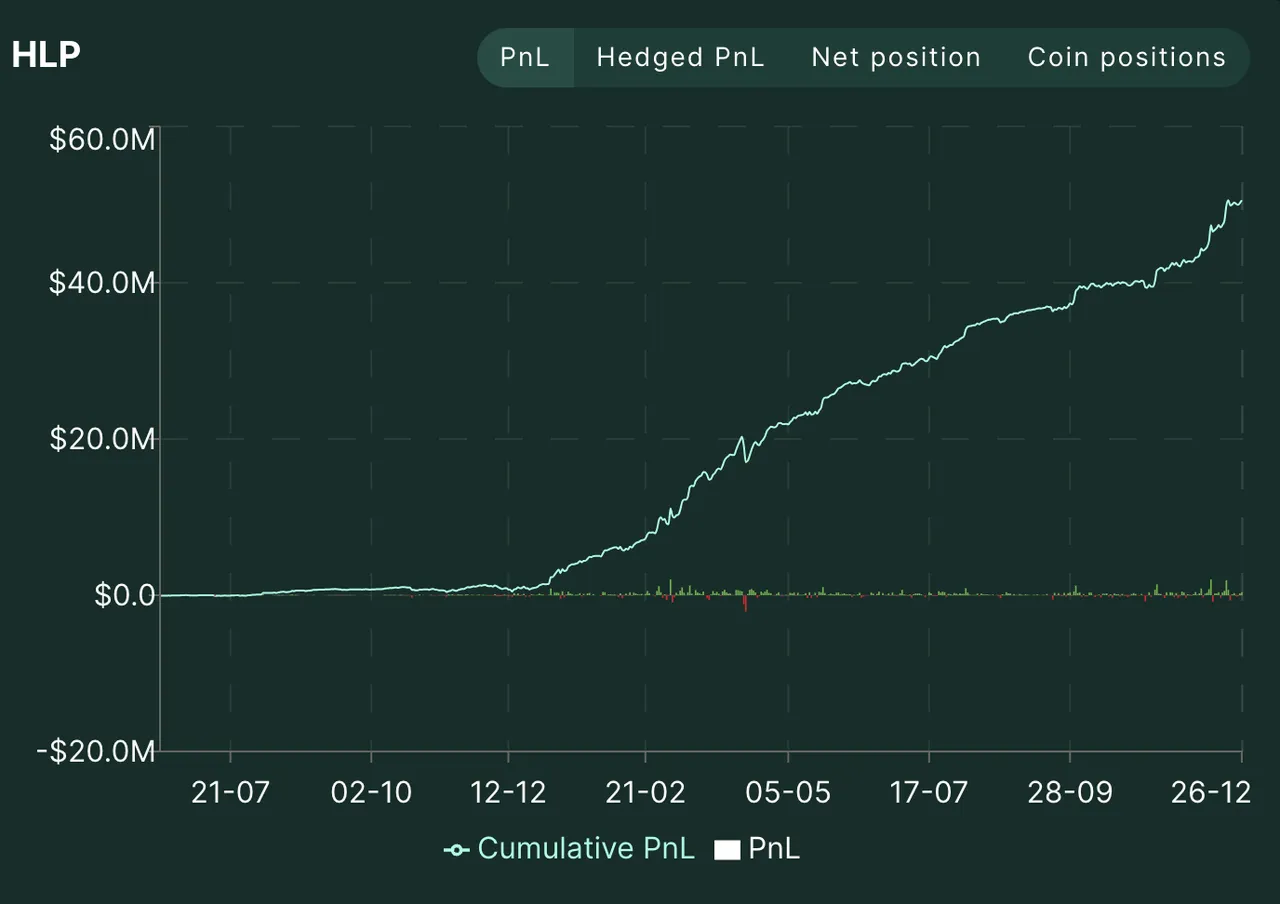
Since its launch, HLP has generally remained profitable – thanks to its market-making strategy and trading fee revenue. By the end of 2024, the HLP vault had reached a total value locked (TVL) of approximately 350 million USDC and had accumulated around 50 million USDC in profit, reflecting a consistently positive APR.

HLP’s tendency to maintain a net short position throughout the 2023–2024 bull market allowed it to deliver steady returns, even as asset prices were trending upward.

HLP performanceHLP performance

HLP performance remained profitable since launched – Source: HyperLiquid

However, HLP is not without risk. On several occasions, the vault recorded significant losses due to unexpected market volatility.

Jelly and a Hard-learned Lesson for Hyperliquid

One of the most notable incidents occurred in late March 2025, involving a short squeeze on the token JELLY. A trader opened a short position worth approximately 8 million USDC on JELLY, then proceeded to buy up the token on decentralized exchanges (DEXs), causing the price to surge dramatically. As a result, the short position was liquidated and fully transferred to the HLP vault.

Read more: Recap of the Price Manipulation in Hyperliquid

The price of JELLY on DEXs skyrocketed by several hundred percent, pushing HLP into an unrealized loss of over 10 million USD.

Facing the risk that a 230 million USD vault could lose everything to a small memecoin, the team acted quickly: they delisted JELLY and set a mandatory liquidation price at 0.0095 USD – exactly the level where the attacker had originally opened the short.

However, this move sparked widespread controversy regarding Hyperliquid’s decentralization and transparency. Many argued that this was effectively a “validator bailout” (or “validator put”)—a” situation where the network steps in to cap losses when the vault is hit too hard. This raised concerns that Hyperliquid may be willing to override market mechanisms to protect HLP’s capital, potentially at the expense of other users.

In response, Hyperliquid upgraded its blockchain to include on-chain validator voting for future asset delistings – a step toward deterring manipulation. Still, questions remain about the platform’s commitment to true decentralization.

Hyperliquid’s Risk Management Measures

Following the JELLY incident, Hyperliquid implemented a series of risk management upgrades to prevent similar scenarios from occurring in the future. One major change involved reducing the portion of HLP capital used for liquidation strategies. The team set this allocation at a fixed, clearly defined amount and also decreased the rebalancing frequency for the Liquidator vault to help limit potential losses during major liquidation events.

In addition, Hyperliquid introduced a mechanism for loss thresholds and Auto-Deleveraging (ADL). This system automatically triggers deleveraging when losses from liquidation strategies exceed a specific threshold. Once the losses hit that limit, the protocol activates ADL, which draws on unrealized profits from other traders within the same asset pair to cover the deficit.

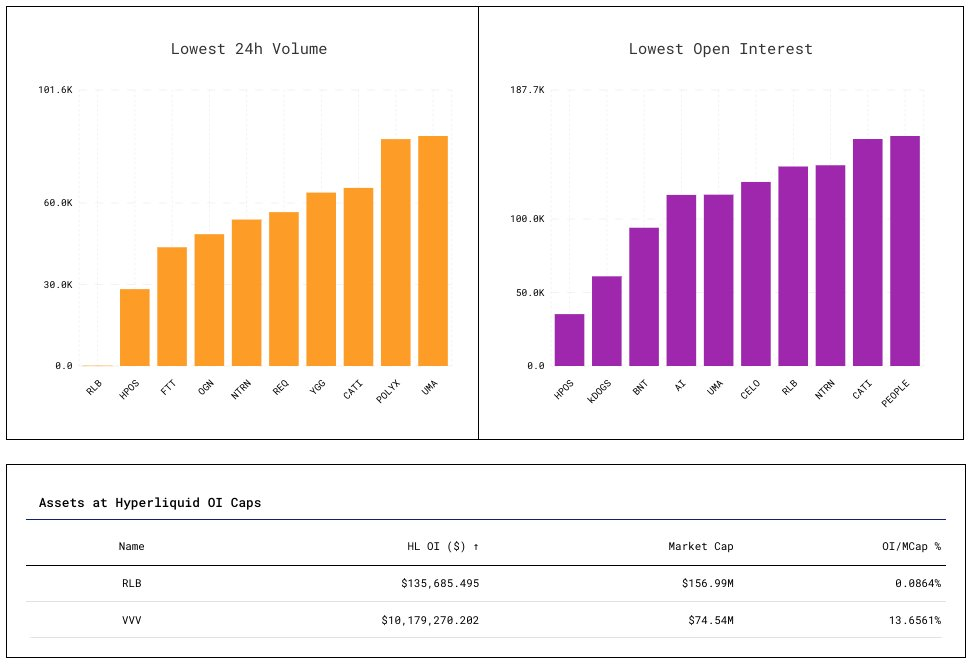
To further enhance stability, the platform also adopted dynamic Open Interest (OI) caps. The platform adjusts these caps based on each asset’s liquidity and market capitalization, enforcing much stricter limits on low-cap tokens. This measure helps prevent a small number of traders from opening oversized positions that could distort market depth and introduce systemic risk.

OI level of HyperLiquidOI level of HyperLiquid

Source: ASXN

These recent improvements reflect Hyperliquid’s recognition of the vulnerabilities exposed by the JELLY episode and its commitment to building a more resilient system. HLP shares profits with users but needs strong risk controls during volatile market conditions.

One recent example that highlights Hyperliquid’s evolving governance and risk management practices is the delisting of MYRO perpetuals. On March 29, 2025, validators 2-5 voted to delist MYRO due to low liquidity and manipulation risks.

ASXN backed delisting due to low volume, poor liquidity, and thin order books across CEXs, DEXs, and Hyperliquid. These conditions made MYRO highly susceptible to price manipulation and posed unnecessary risk to HLP

hyperliquid logohyperliquid logo

Exchanges Supporting HYPE and Liquidity

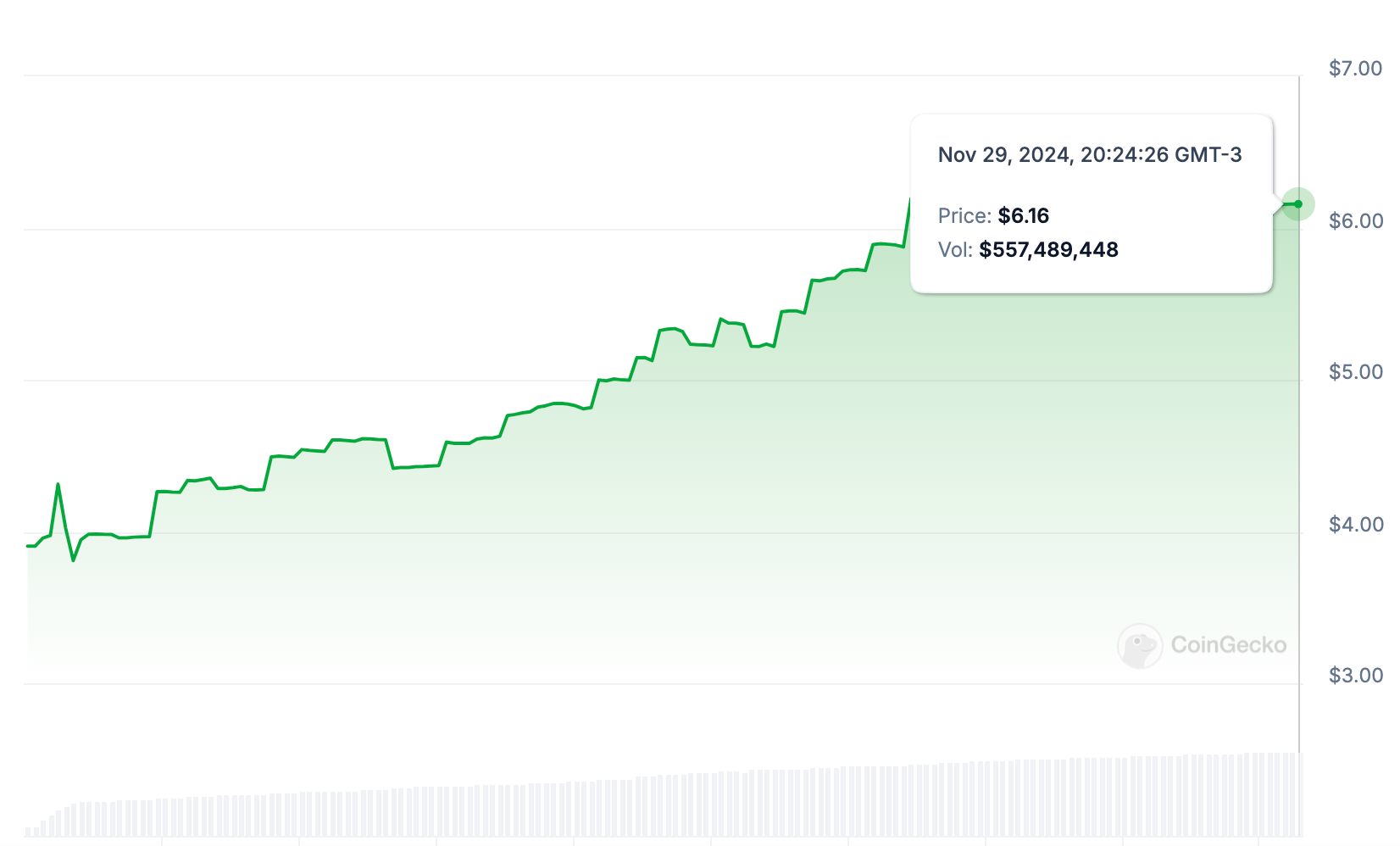
Following its token launch, Hyperliquid quickly drew significant attention from the crypto community. HYPE jumped 60% in half a day, hitting 6 USD and nearing 2B USD in market cap.

Exchanges Supporting HYPE and LiquidityExchanges Supporting HYPE and Liquidity

Source: CoinGecko

Users swapped USDC for HYPE directly on Hyperliquid DEX after connecting their wallet.

In the weeks following the airdrop, several mid-tier centralized exchanges began listing HYPE, further expanding its liquidity. KuCoin was the first CEX to enable HYPE deposits, withdrawals, and trading (starting December 7, 2024). Today, exchanges such as KuCoin, Gate.io, Bitget, LBank, and CoinW account for the highest trading volumes of HYPE.

Learn more: Why Hyperliquid Doesn’t Need to List on Binance

Despite no Binance listing, HYPE trades actively, driven by strong community interest after the major airdrop. In its early days, HYPE saw strong volatility from profit-taking and fallout after the JELLY incident. However, in recent weeks, the price has shown signs of stabilization.

Conclusion

Hyperliquid gains traction in DeFi with community-backed liquidity and strong, proactive risk controls. HLP vaults generate yield, but the JELLY incident exposed tough trade-offs between user safety and decentralization.

The Layer 1 Perpetual DEX’s swift upgrades and HYPE’s strong debut show rising trust in the protocol’s long-term potential.

Read more: Hyperliquid Airdrop Season 2 Guide


Source link

What Is DEX? A Beginner Guide to Decentralized Exchanges

0
What Is DEX? A Beginner Guide to Decentralized Exchanges


If you’re getting started in the crypto and DeFi ecosystem, you might be wondering, “What is DEX?”. A DEX is a decentralized exchange, which is a peer-to-peer marketplace for trading cryptocurrencies without relying on a central authority. It runs on blockchain technology, where smart contracts execute trades, removing the need for intermediaries like payment processors or banks.

In this post, we’ll look at how this model grants users full control over private keys and custody of funds, minimizing counterparty risk. We’ll also see why DEX platforms can often provide lower fees and increased privacy, which appeals to both casual users and experienced traders.

What is a DEX?

A decentralized exchange, or DEX, is a cryptocurrency marketplace that relies on decentralized technology to execute trades without a middleman. Unlike centralized exchanges like Coinbase, which manage user funds in their wallets, a DEX leaves control of crypto assets in the user’s hands through self-custody. Transactions occur via smart contracts on public blockchains, making them secure, transparent, and tamper-resistant.

DEXs enable users to buy or sell digital assets around the clock, requiring only an internet connection. Fees often include network costs and platform-specific fees that help fund development or reward liquidity providers. DEXs are less prone to large-scale hacking events since there is no central wallet to target. They also reduce regulatory compliance burdens because they do not typically handle fiat directly, though this varies by region and platform design.

While decentralized exchanges offer permissionless access and minimize reliance on a central authority, they can face issues such as lower liquidity and more complex user interfaces. Despite these obstacles, DEXs remain a vital component of the expanding decentralized finance ecosystem, an immutable bulwark of the trustless, peer-to-peer ethos at the heart of crypto.

Top Decentralized Exchanges

DEX spot volume

Source: The Block

Uniswap: A pioneering Ethereum-based AMM, enabling frictionless token swaps, deep liquidity, and user-friendly operations.Curve: Focused on stablecoins, featuring minimal slippage through specialized liquidity pools for pegged assets.PancakeSwap: Leading AMM on BNB Chain, offering yield farming, staking, and broad BEP-20 token support.Balancer: Provides customizable multi-token pools, letting users define weights and automate portfolio management strategies.Sushi: A community-driven DEX evolved from Uniswap, delivering yield farming, lending, and multi-chain expansions.Hyperliquid: A cutting-edge DEX built for ultra-fast trading and deep liquidity, Hyperliquid leverages advanced blockchain protocols to minimize latency and support high-frequency trading.

For more details, check out our best decentralized crypto exchanges review.

How Does a DEX Work?

Decentralized exchanges empower users to trade crypto directly from their wallets without intermediaries. Beyond the traditional order book model, modern DEXs integrate innovative features such as cross-chain bridges, lending protocols, and liquidity pools. 

Bridges facilitate the seamless transfer of digital assets between different blockchains, enabling interoperability and expanding market access. On the other hand, liquidity pools allow users to deposit tokens into shared pools, which are then used to facilitate trades; in return, liquidity providers earn a portion of the transaction fees.

These enhancements create a trustless and transparent ecosystem where transactions are recorded on a public ledger, and users maintain full custody of their funds. Let’s take a deeper look.

Order Book DEXs

Some decentralized platforms mirror traditional order books, matching buy and sell orders. Here, users submit limit orders specifying the desired price. If a corresponding sell (or buy) order is found, the trade happens automatically.

While this resembles centralized exchanges, the difference lies in custody: user funds stay in personal wallets rather than a central platform. Each order and cancellation requires an on-chain transaction, which can cause network congestion or increased trading fees, especially when activity is high.

Order book DEXs often face liquidity challenges if fewer users participate. Because the platform depends on matching buy-sell pairs, it may be harder to complete trades efficiently.

On the other hand, traders retain more control through limit orders and advanced features like stop-loss orders. This approach suits those who want a familiar trading process without relinquishing ownership of their assets.

Bridging

Bridging is the term for transferring assets from one blockchain to another so that tokens that are created on one chain can be traded, staked, or otherwise utilized on other chains. Since DEXs rely on a range of tradable assets, bridging is a critical function that facilitates exchanges on a large scale. It helps unite liquidity sources and unlock new markets and cuts out the need for centralized intermediaries. 

Cross-chain interoperability also makes DEXs much more versatile, by giving customers access to the key features, low fees, and deep liquidity of multiple crypto networks. By offering bridging, an exchange can dramatically expand the selection of assets available to its users, which translates to an edge over platforms where bridging isn’t an option.

Lending

Some DEXs also integrate decentralized finance products, like loans. DeFi lending protocols let you borrow or lend crypto assets directly through smart contracts. This approach eliminates any potential for centralized gatekeepers in the lending process, reducing lending fees and approval times. By staking your holdings, you can earn interest while borrowers secure their loans with on-chain collateral, for a trustless, transparent loan process. 

DeFi lending functionality not only provides crucial liquidity to the platform but also gives users a wider range of options for putting their assets to work for them. The expansion into lending will help cement DEXs as one of the financial hubs of the future, specifically for those with an eye toward decentralized governance. 

Enhanced Featureset DEXs

Many modern DEXs have grown past the conventional order book model and now support cross-chain bridges, enabling seamless asset transfers between different blockchains. This interoperability expands critical market access and lets users participate in diverse ecosystems from a single platform.

Overall, this creates a highly incentivized framework for liquidity provision, while also reducing slippage, enhancing the entire experience. Together, these features help craft a comprehensive DeFi platform that supports traditional trading styles while facilitating access to a massive array of financial services and capital efficiency.

Automated Market Makers (AMMs)

Automated market makers introduced a novel way of providing liquidity by using specialized smart contracts that create liquidity pools. In this model, liquidity providers deposit tokens into these pools and receive a share of trading fees whenever a swap occurs. Prices adjust based on each pool’s token ratio, eliminating the need for traditional order books.

Platforms like Uniswap, SushiSwap, and PancakeSwap gained popularity for their simplicity: users easily connect a wallet, select tokens to swap, and confirm transactions. AMMs excel at ensuring constant availability, though liquidity pool sizes can affect slippage and pricing accuracy. In return for contributing to the pool, liquidity providers earn rewards proportional to their stake in the pool. That said, they also risk impermanent loss if token values diverge significantly.

Despite these drawbacks, AMMs have propelled DeFi by lowering barriers to entry, supporting niche tokens, and expanding user access to on-chain trading.

Automated Market Makers (AMMs)Automated Market Makers (AMMs)

Source: Shardeum

Pros and Cons of DEXs

Pros 

Self-custody: Using a decentralized exchange enables users to maintain control over private keys, ensuring full ownership of their crypto assets. Unlike centralized exchanges, which custody user funds, DEXs execute trades while leaving tokens in users’ wallets until the transaction completes.Diversity: DEXs offer a vast array of digital assets that might not be listed on more traditional, centralized platforms. This allows for the inclusion of emerging tokens or smaller market cap projects that may not currently meet the listing criteria of a CEX.Reduce Hacking risks: Because decentralized exchanges work by distributing funds across user wallets rather than a central authority, large-scale hacks are less likely. No single wallet holds all user funds, mitigating counterparty risk.Anonymity: Many DEXs require only an internet connection and a compatible crypto wallet to start trading, with no lengthy identity verification. This allows permissionless access, supporting those seeking greater privacy.Trustless Transactions: By using smart contracts on public blockchains, DEX platforms can provide liquidity and execute trades without relying on intermediaries or payment processors. This trustless environment also reduces the need for anti-money laundering oversight, although regional rules may still apply.Utility in the developing world: Lower fees, no mandatory KYC, and an easily connectable DEX interface create opportunities for financial inclusion. Users in regions lacking robust banking infrastructure can trade cryptocurrencies directly, bypassing traditional barriers.

Cons 

Scalability: Network congestion on popular DEXs can lead to high gas fees or delayed transactions, particularly on blockchains struggling with throughput. These limitations hamper user experience and future growth.User Interfaces and Experience: Navigating a DEX can feel daunting for newcomers, with complex order forms, liquidity pool mechanisms, or advanced features like limit orders. Home screen layouts and tutorials often lag behind more user-friendly centralized platforms.Liquidity: While some DEXs excel at market liquidity, many struggle if too few liquidity providers join the pool. Low liquidity means higher slippage and less favorable trade execution for large orders.Smart contract: DEXs rely on code that may contain vulnerabilities. Even though many popular DEXs undergo audits, unforeseen exploits can compromise user funds or disrupt the trading process.Riskier coins: Because listing on a DEX typically requires no centralized vetting, fraudulent or extremely volatile tokens can appear, exposing traders to higher risk.On and Off-Ramps: Converting fiat to crypto or vice versa often requires centralized exchanges (CEXs). As most DEXs lack direct trade fiat functionality, new users might need a CEX for deposits and withdrawals.

Centralized Exchanges (CEXs) vs. Decentralized Exchanges (DEXs)

Centralized Exchanges (CEXs)Decentralized Exchanges (DEXs)Custody of FundsUser funds held by the exchangeUsers control their private keys and fundsLiquidity & VolumeGenerally high, supported by a central authorityVaries based on liquidity providers; can be lower for niche tokensFees & StructureTrading fees, withdrawal fees, and potential hidden costsFees vary (gas and platform fees), no central authority to set unified pricesUser ExperienceOften beginner-friendly with advanced features and order typesDex interface can be complex, requiring own research on liquidity pool usage and smart contractsSecurityTarget for hackers due to centralized storageReduced hacking risks since there’s no single point of failureRegulatory ComplianceTypically required to follow anti-money laundering (AML) regulationsGenerally non-custodial, but certain jurisdictions may still require compliance

How do DEX Fees Work?

DEX fees differ from CEXs in that they are not typically controlled by a central authority. Instead, costs can include network transaction fees known as gas, plus any platform-specific fees. While there are no standard withdrawal fees imposed by the platform (since user funds remain in user custody), on-chain actions like swapping or moving tokens to another wallet still incur blockchain fees. Fees may fluctuate due to market volatility, network congestion, or different governance decisions in the decentralized finance (DeFi) ecosystem.

The Future of DEXs and DeFi

Decentralized exchanges are poised to play a greater role in shaping the broader DeFi ecosystem. Advancements in blockchain technology could alleviate scaling concerns, allowing DEXs to handle more users and trade cryptocurrencies at minimal costs.

As regulatory frameworks evolve, some DEXs may integrate compliance tools while preserving user autonomy. With institutional interest rising, next-generation DEXs might adopt features like derivatives, futures contracts, or advanced analytics, attracting more sophisticated traders.

On top of that, the development of cross-chain solutions is likely to unify liquidity across multiple networks, creating a more seamless trading process.

Conclusion

By providing instant access to digital assets, preserving control through private keys, and encouraging community-driven liquidity provision, decentralized exchanges offer a glimpse of the potential of permissionless, trust-free, financial transactions. That said, there are still challenges to tackle related to liquidity, user experience, and regulatory compliance, which can be significant, especially for newcomers.

As technology evolves and more users embrace decentralized platforms, DEXs are poised for continuous growth. For those willing to conduct thorough research and manage risk appropriately, these exchanges open doors to innovative ways of engaging with crypto markets.



Source link

DeFi’s New Yield Kingpin Declares ‘Crypto War’ Starts in 5 Days

0
DeFi’s New Yield Kingpin Declares ‘Crypto War’ Starts in 5 Days


Anyone who has held a memecoin through the highs and lows knows the dilemma: hold forever waiting for a 100x moonshot, or sell as soon as you hit your target to chase modest yields from more boring DeFi cryptos.

But with the launch of CartelFi, a brand-new, cartel-themed yield farming protocol bridging the $90 billion DeFi and the $60 billion memecoin sectors, investors looking for the best new crypto to stake might be looking at their golden ticket this April

CartelFi is the first yield farming protocol explicitly designed for memecoins. The team claims to have designed a protocol allowing meme coin investors to extract yields from their meme coin holdings while waiting for them to pump, without having to sell them. With CartelFi, memecoin degens and DeFi advocates can have their cake and eat it too, and with suggested APYs of up to 300%, this could be a seriously exciting new entrant. 

CartelFi launches its 90-day presale in just 5 days on Tuesday, 8th April, with the CartelFi yield farming protocol set to drop in late 2025. CARTFI prices will start at just $0.025, with prices increasing by 5% every three days. Early adopters will be in line for 311% gains before the token launches. Let’s dive into this crypto war.

CartelFi: At the intersection of memes and DeFi

Until now, memecoin investing has involved people sitting patiently with capital stuck in a perpetual holding pattern, waiting for a pump that may or may never come. The best-case scenarios? A miracle pump, or liquidating and rotating their risky bets into DeFi coins with modest but predictable yields.

That’s where CartelFi steps in. The newly-launched meme and DeFi platform claims to enable investors to extract yield from their meme coins, turning them into yield-bearing assets and putting their capital to work while keeping it in the game. The result? Degens get to keep their bags, but they don’t just sit there gathering dust; they do something.

CartelFi offers APYs of up to 300%

With yields of up to 6% on stables and 300% on top memes like PEPE, it’s easy to envisage a world where CartelFi becomes a real hotspot for memecoin and DeFi traders alike this cycle. And what’s really exciting is the deflationary tokenomics of its native token, CARTFI.

While CartelFi users earn, the protocol will automatically burn CARTFI tokens. In fact, 99% of protocol fees will buy back CARTFI tokens, with 50% of these being torched entirely. With these inflation-busting tokenomics and the fact that the earliest CARTFI holders gain access to the most lucrative yields, it’s feasible that this presale could heat up fast.

A Cartel In the Middle of a Perfect Storm?

Interest rate cuts are on the horizon, setting the stage for an epic DeFi summer the size of 2021. With US rates under 5% and possibly dropping in June, savings accounts won’t keep up with inflation, pushing investors to seek better returns. Stablecoin farms offer up to 6%, but CartelFi’s proposed meme farming returns are extremely hard to ignore in this climate.

CartelFi Presale Starts in 5 Days

CartelFi’s presale offers an intriguing opportunity to access the early action on a protocol with the potential to become a leader in the upcoming DeFi wave.

The ICO starts on 8th April. Each stage sees a price increase of 5%, starting at a Stage 1 price of just $0.025. Early adopters are set for a potential 311% uptick by the time CARTFI hits exchanges on 7th July

Learn more about CartelFi on the official CartelFi website.


Source link

Popular Posts

My Favorites