Arts

Home Arts Page 76

The Role of Blockchain in Ensuring Fair Poker Games

The Role of Blockchain in Ensuring Fair Poker Games


Online poker has become safer over the years, with improved encryption and better fraud detection. Yet the core question still lingers: how do players know the game itself plays fair?

Algorithms remain hidden, disputes rely on customer support, and platforms ask for trust without offering proof. For those who regularly play poker on mobile devices, these concerns are magnified by limited visibility into how cards are dealt or pots are settled. That’s where blockchain enters, not as a novelty, but as a tool to make each decision traceable.

This article examines how that works, and what it actually solves.

Why Fairness in Online Poker Still Matters

Concerns over fairness in online poker have not faded, despite the longevity of its digital presence. Even regulated sites have reported incidents involving bots – software designed to play hundreds of hands per hour with calculated precision. Collusion remains a known risk, with some players coordinating outside the platform to share information in real time. In live games, the problem has escalated in ways that reflect broader vulnerabilities, with poker cheaters even using hidden cameras to secure an unfair advantage at the table.

All these cases reveal a deeper issue – players rarely have access to the mechanics that decide outcomes. Namely, most platforms rely on proprietary systems where shuffling, hand distribution, and even dispute resolution happen out of view. The result is a reliance on blunt trust rather than firm evidence. For high-stakes players and poker beginners equally, this is not a small concern but a structural flaw.

What Blockchain Really Means in This Context

The question of trust leads directly to the structure that supports it, and blockchain technology opens this structure completely, making core elements of the game publicly accessible. At its core, a blockchain is a digital ledger – an open record of events that cannot be altered retroactively. In the context of poker, that means every hand, action, and result can be logged in a way that anyone can inspect.

This structure eliminates central control. Once a hand is played, no party – not even the platform – can revise the outcome. The algorithms that govern card distribution or bet settlement can be published for scrutiny. This transparency replaces speculation with verifiability because even when players remain anonymous, the process stays visible.

This transition doesn’t change anything about how poker feels. Yet, it immensely improves how it works. Integrity of what happens behind the interface is now guaranteed not by belief and branding but by math and access.

What Players Can See and Verify

As a technology, blockchain provides the players with a whole new level of power. Apart from guaranteeing that rules of the game are obeyed, it gives a direct line to the mechanics behind each game. What used to be hidden in back-end systems is now placed in open view. Anyone can now inspect how outcomes are generated, settled, and stored.

Shuffling methods are published: The algorithm behind card distribution is available for anyone to audit.Game records are permanent: Hands and results are time-stamped and stored immutably.No edits after the fact: Once entered, outcomes remain fixed.Payouts are automated: Winnings are released based on code, not discretion.Player funds can be locked during play: This prevents withdrawal mid-hand, removing a common exploit.

This level of access doesn’t overwhelm players with technical data. It gives them something they’ve rarely had before in online poker. It gives them eyes. A way to confirm what happened without needing to ask.

The Role of Smart Contracts in Poker

What blockchain makes visible, smart contracts make automatic. These are pieces of code stored on the blockchain that execute rules as soon as conditions are met, without input from a site operator or staff. In poker, that includes the order of dealing, the logic behind bets, and how winnings are distributed. No step requires approval. No result can be delayed or reversed by human intervention.

This automation doesn’t remove complexity, but it does remove discretion. Players don’t need to appeal to moderators when disputes arise and the disputes are less likely, or even almost impossible to occur in the first place.

Research into decentralized procurement governance confirms this principle: when enforcement is handled by code, compliance improves, and space for manipulation narrows. For poker that means outcomes are delivered by the system, not the host.

How Blockchain Handles Player Funds

Traditional poker sites hold player deposits in centralized accounts – users send money in, trust the platform, and request withdrawals later. On-chain poker operates differently. Here, funds stay in user-controlled wallets until a game begins. They are then held temporarily by code, through an escrow mechanism that releases them only when the rules of the game are met.

This setup reduces the risk of mismanagement or interference by the host. The wallet structure also connects to broader trends in crypto infrastructure. For instance, when the Binance wallet hosts TGEs, it performs a similar function – controlling user funds until pre-agreed criteria are fulfilled.

Still, crypto isn’t frictionless. Wallets require setup, and token values can fluctuate during gameplay. But for many, the trade-off is clear: no third-party custody, no need to ask permission to get paid.

Challenges That Still Exist

Every system has its trade-offs. While blockchain does offer verifiability, it still demands fluency in tools that many players find unfamiliar. For those used to plug-and-play apps, the technical steps involved in setting up a wallet or signing a transaction can be a barrier.

Here are the major challenges.

Learning curve: Managing private keys and navigating decentralized apps requires more from users than traditional logins.Regulation is limited: Many blockchain-based poker sites operate outside U.S. legal frameworks. In the US, crypto ball is in Congress’s court at the moment.Speed trade-offs: On-chain execution can lag behind centralized servers, especially under network congestion.No customer support: Mistyped wallet addresses or botched transactions usually can’t be reversed.

Also, legal clarity remains a moving target. The U.K. has issued formal guidance on crypto-related earnings, including examples like the crypto tax in UK, offering at least a defined structure. In the U.S., the regulation is advancing, but enforcement and interpretation still vary by state and context. For blockchain poker platforms, that means operating within rules that are evolving in real time.

Unfortunately, clear code doesn’t always mean clear ground to stand on. At least, not yet.


Source link

Farm Monad Airdrop with Mynt Project

Farm Monad Airdrop with Mynt Project


One standout project that has recently launched on the Monad and MegaETH testnets is Mynt, a decentralized stablecoin protocol that leverages zero-knowledge proofs for private balance verification.

If you’re looking to position yourself for a future token drop while getting early exposure to Monad and Succinct’s zk-tech stack, here’s a step-by-step guide on how to interact with Mynt and possibly qualify for rewards.

What Is Mynt?

Mynt is a decentralized stablecoin protocol that allows users to mint USDm, a stablecoin pegged to the U.S. dollar, by depositing ETH or MON (Monad’s native token) as collateral. The project is built with Succinct’s SP1 zero-knowledge virtual machine, enabling users to verify off-chain balances privately and interact with DeFi protocols in a faster, gas-efficient manner.

Mynt’s integration with Monad and MegaETH puts it at the intersection of three major narratives: modular zero-knowledge tech, new L1 experimentation, and privacy in DeFi. Though no official airdrop has been confirmed yet, the project’s early-phase testnet launch and Web3-native ethos suggest that an incentives program may arrive soon.

Why Mynt?

By engaging with Mynt through testnet interactions, users may be positioning themselves for not just one – but three potential airdrops. Here’s why:

Mynt is still in the early testnet phase with no token launched yet. Early users often receive retroactive rewards.Monad, a next-generation L1 currently in development, could reward early testnet users or active participants in its ecosystem.MegaETH may also introduce its own rewards program as it scales, and wallet activity on its testnet could qualify.

Thus, interacting with Mynt provides exposure to a promising zk-stablecoin project and two underlying L1 ecosystems.

Why Mynt?

Step-by-Step Guide to Farming Mynt on Monad Testnet

Follow these steps to try out Mynt on either Monad or MegaETH testnet. The process is straightforward and user-friendly, even for users without extensive zk experience.

Step 1: Visit the Mynt dApp

Head to the official Mynt dApp here.

Ensure your EVM-compatible wallet (like MetaMask, OKX Wallet…) is connected and ready for testnet use.

Step 2: Choose Your Chain: Monad or MegaETH

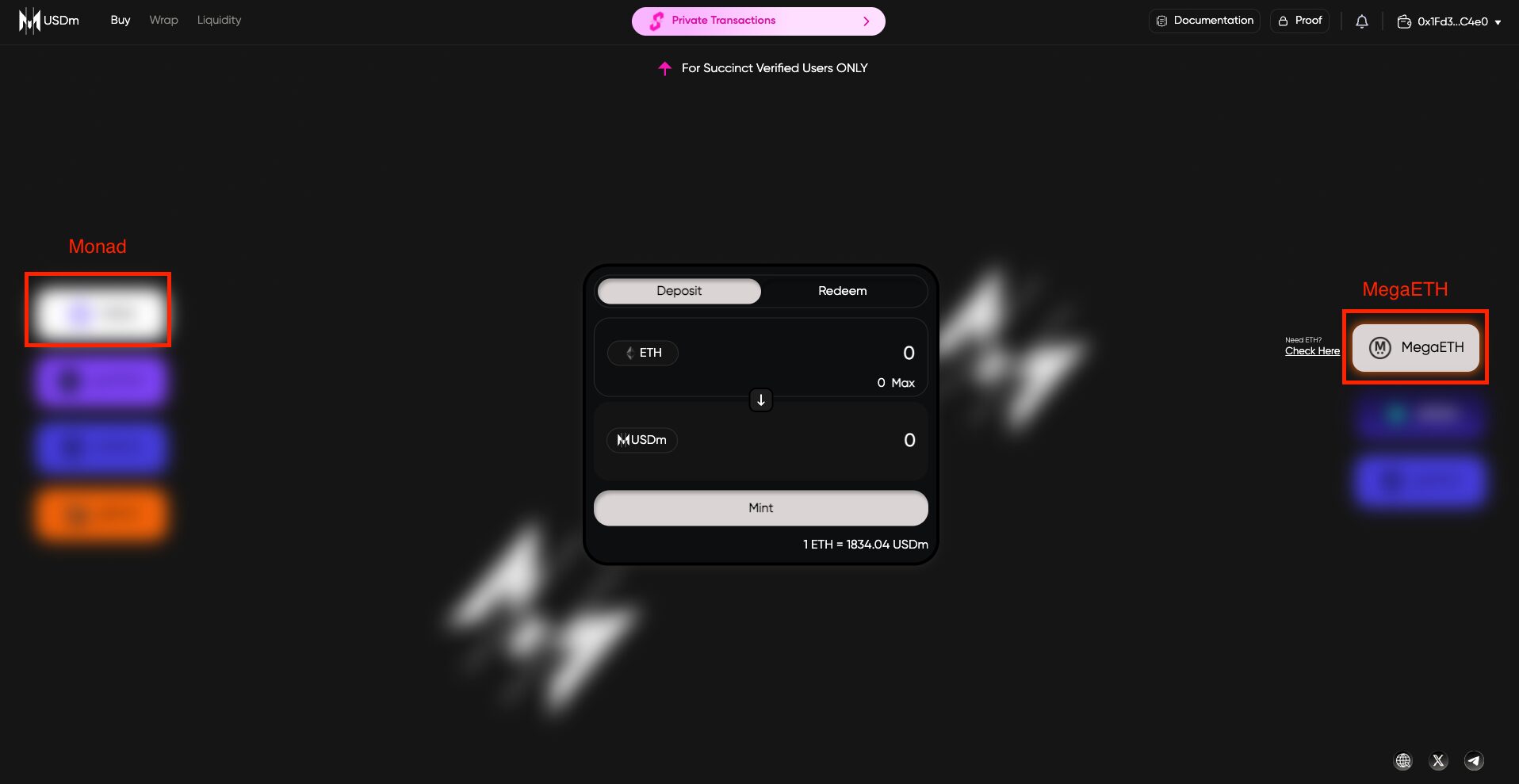
Upon loading the app, you’ll see two options:

Monad on the leftMegaETH on the right

Step-by-Step Guide to Farming Mynt on Monad TestnetStep-by-Step Guide to Farming Mynt on Monad Testnet

Both chain are live testnets. Choose one based on your preference or try both for broader interaction.

Step 3: Mint USDm by Depositing Collateral

You can mint the native stablecoin USDm by depositing either:

Ensure you have testnet MON or ETH, which you can often acquire via official testnet faucets.

The protocol will compute the collateral ratio and allow you to mint a corresponding amount of USDm.

Step 4: Wrap Your Tokens

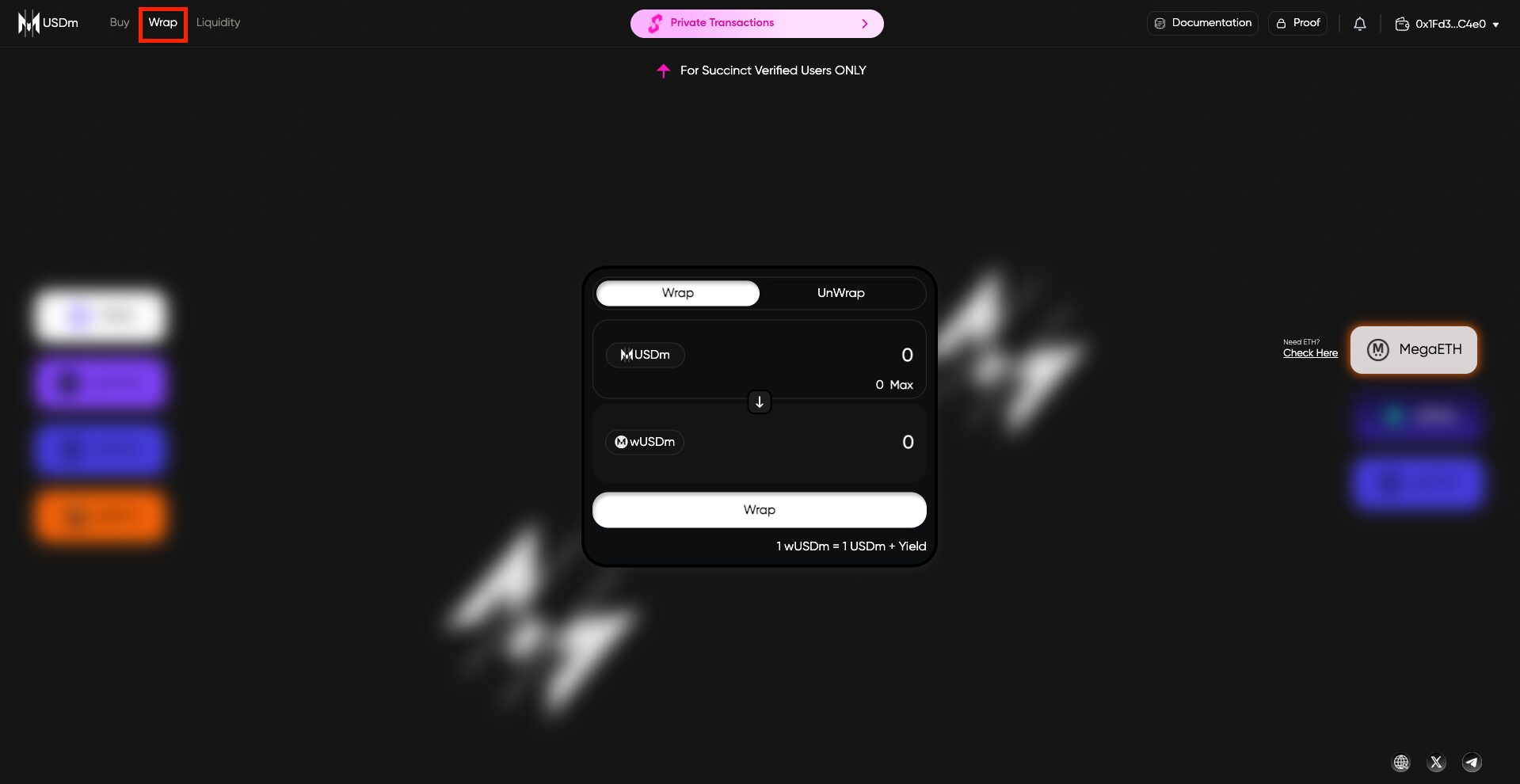
Once you’ve minted USDm, navigate to the “Wrap” tab on the top-left menu of the interface.

This feature allows users to wrap their tokens for cross-chain movement and additional privacy protection. Wrapping may also signal deeper protocol usage – often a key metric for airdrop qualification.

Step-by-Step Guide to Farming Mynt on Monad TestnetStep-by-Step Guide to Farming Mynt on Monad Testnet

Step 5: Repeat Interactions Across Both Chains

Although using one chain is sufficient to test the product, repeating steps on both Monad and MegaETH may increase your chances of being eligible for a future points program or retroactive rewards.

Also, explore different actions like partial collateral redemption, token wrapping, and testnet governance (if available) to maximize your wallet’s activity.

Conclusion

The convergence of privacy, scalability, and stablecoin utility makes Mynt one of the more interesting zk-DeFi experiments to watch in 2025. 

By taking a few minutes to interact with the protocol today, you’re not only gaining exposure to cutting-edge infrastructure but also potentially positioning yourself for a meaningful airdrop.

Whether you’re bullish on Monad’s L1 design or curious about how zkVMs will reshape DeFi, diving into Mynt is a low-risk, high-upside opportunity worth considering.

Read more: Monad Airdrop Guide: the Easiest Way to Unlock your Rewards


Source link

Earn $5,440 Daily with AI Mining? Quickly Profit with BTC Cloud Mining APP

Earn ,440 Daily with AI Mining? Quickly Profit with BTC Cloud Mining APP


You “watch the coins go up and down” every day, while others are “automatically mining coins to the account”.In 2025, the ecosystem of the cryptocurrency world will have changed. The situation of “whoever buys first makes money” no longer exists, but has become “whoever can find a stable mining cash flow, who can continue to make money”.

Nowadays, with the increased volatility of the cryptocurrency market and the prevalence of fraudulent projects, a legal and regulated cloud mining app from Australia is becoming the new favorite of sound investors. It doesn’t speculate on coins, doesn’t store coins, and only relies on the AI-driven background mechanism to automatically mine BTC and DOGE coins and distribute dividends on a daily basis, making it a “zero-threshold daily income cryptocurrency investment” favored by more and more people – FioBit.

Why AI Cloud Mining Is Now the Most Reliable Passive Income Strategy in 2025

FioBit’s AI-powered cloud mining system is fundamentally different from traditional mining. It’s a smarter investment solution designed especially for users who want to earn Dogecoin or Bitcoin automatically from their phones. For those wondering how to start DOGE cloud mining for free in 2025, FioBit offers the perfect entry point.

AI scheduling + cloud-based hashpower: Algorithm connects to the most profitable pool.No hardware or maintenance: No need to buy or operate mining rigs.Fixed daily profits: No price risk or market dependency.Fully regulated in the US and Australia: Legally licensed and globally compliant.

For beginners looking for the ideal Bitcoin mining apps for 2025, this model delivers steady results without complexity. The trend is clear: legit cloud mining with AI is the future of crypto investing.

Inside FioBit: How This Cloud Mining Platform Earns $5,440 Per Day Automatically

At the heart of FioBit’s profitability is its AI-based scheduling engine, which dynamically allocates mining resources across clean energy data centers worldwide. It connects users to the highest-paying mining pools in real time, offering truly automated crypto income.

Many users now use this $5,440-a-day crypto mining platform to secure consistent returns. With smartphone-compatible AI tools for Bitcoin and Dogecoin, users can now generate earnings without ever buying coins or trading on exchanges.

Click to visit FioBit official website to receive $100 for free

🔎 Leading Performing Mining Plans (as of June 2025):

Mining PlanPriceDurationDaily ProfitTotal ReturnRefundable?Antminer S21 XP+ Hyd 530Th/s$68,0002 days$5,440$10,880✔️VolcMiner D1 19Gh/s$36,0003 days$2,340$7,020✔️Antminer L7 9.5Gh/s$7,8006 days$312$1,872✔️WhatsMiner M63S+ 424Th/s$2001 day$7.00$7.00✔️

✅ Pay and withdraw in USDT, DOGE, or BTC✅ All plans offer fixed daily profits✅ Principal is fully refundable at contract end, reinvestment optional

This is why FioBit is often ranked as the most trusted Dogecoin cloud mining tool, and frequently listed as one of the standout recommended Bitcoin cloud mining apps for fast profits.

Start Mining in 3 Steps — No Experience Required

“I’m not a crypto pro. I don’t know how to set up miners. Can I still use this?”

Absolutely. Our test run of FioBit showed it’s ideal for beginners looking for legal ways to earn passive Bitcoin income in 2025.

Register an account: Email or phone—60 seconds and doneClaim your $100 trial bonus: Free cloud miner activates instantlyReceive daily profits: No settings required—earnings paid every 24 hours

During our test, the free miner earned $7.80 within 48 hours. We withdrew it successfully—no fees, no KYC. For users searching for non-KYC crypto mining platforms, FioBit is a ideal pick and a clear example of a beginner-friendly Bitcoin earning method in 2025.

Why FioBit Is Trusted as a Global, Regulated Mining Platform

In crypto, safety matters more than hype. FioBit’s rapid growth in 2025 stems from its unmatched transparency, regulatory standing, and technical reliability.

🇦🇺 Registered in Australia, ABN: 83 137 907 941🇺🇸 Licensed with the US FinCEN as a Money Services Business (MSB)🛡️ AI-powered anti-fraud system with on-chain tracking💡 Runs on renewable energy data centers👥 Over 1.7 million users and $2.5M+ in daily contract settlements

It’s now considered one of the most legitimate Bitcoin cloud mining providers and a fully regulated Dogecoin mining solution in the international market.

Why FioBit Mining Beats Buying or Trading Crypto

StrategyEntry CostEarnings ControlSafetyRegulatedDaily Passive Income?Buy and HODLMediumUnpredictableLowDependsDay tradingHighHighly volatileLowNoFioBit AI MiningFrom $0Fully fixedHighYes

Compared to “get-rich-quick” trading, FioBit offers a realistic and reliable daily income method. If you’re searching for a DOGE daily payout mining app or an automated Bitcoin income solution, this is it.

Final Thoughts: You Don’t Need to Be a Crypto Pro — Just Make a Smart Decision

In 2025, hype doesn’t pay. Stability does. FioBit’s AI cloud mining system isn’t about chasing pumps or short-term trends. It’s a structured, regulated, and fully automated way to generate consistent, low-risk, and repeatable passive income—used by over 1.7 million people globally.

This is financial technology designed for real people—no tech skills needed, no hardware investment. Just sign up, activate your AI miner, and start receiving stable returns daily. Whether you’re new to crypto or a cautious investor, if you’re looking for a legal, secure, and sustainable income model, FioBit is worth serious attention.

📲 Click here to visit FioBit.com and claim your $100 mining bonus Let AI work for you. Turn your phone into a real “crypto income generator” today.


Source link

Bitcoin Crushes Wall Street: Second Only to NVIDIA in a Decade of Gains

Bitcoin Crushes Wall Street: Second Only to NVIDIA in a Decade of Gains


From humble beginnings as an experiment in decentralized currency, Bitcoin has grown into one of the most talked-about and valuable assets in modern history. A recent comparison between Bitcoin and major global companies reveals just how far the digital currency has come.

Outpacing Corporate Titans

Since September 2014, Bitcoin has outperformed nearly every major publicly traded company on the planet. According to recent data, the only exception is NVIDIA. The tech giant has delivered an astonishing +28,700% return since that date – edging out Bitcoin’s +23,500% over the same period.

This comparison highlights the extraordinary performance of both assets. However, Bitcoin’s story becomes even more compelling when the timeframe is extended to its very inception.

According to historical data, the lowest recorded price ever for Bitcoin was $0.00061337, observed on December 17, 2009. Remarkably, exactly seven years later, on December 17, 2017, Bitcoin peaked for that bull cycle – hitting a high of nearly $20,000 and cementing its place in mainstream finance.

Read more: How to Buy Bitcoin (BTC): The Beginner’s Guide 2025

Outpacing Corporate Titans

Source: Alphractal

A 17.2 Billion Percent Return

The numbers defy conventional comprehension. From its all-time low in 2009 to today, Bitcoin has surged by approximately +17,217,824,377.88% — a staggering 17.2 billion percent gain. No other asset in recorded financial history has ever produced such a return.

This performance dwarfs traditional stock market returns and has sparked a global wave of investment, speculation, and innovation in the blockchain space. While early adopters reaped historic profits, Bitcoin continues to attract institutional investors, hedge funds, and nation-states, who view it as both a hedge against inflation and a digital store of value.

From its obscure beginnings to its current role as a dominant financial force, Bitcoin’s journey has been nothing short of historic. While its future remains a topic of debate, one thing is clear: Bitcoin has already secured its place as one of the greatest performing assets in human history.

Whether or not it continues to outpace giants like NVIDIA, its impact on global finance is undeniable – and possibly, only just beginning.

Read more: Sonic Labs Airdrop $80M to U.S. Citizens


Source link

Why Betting With BTC May Give You More Value

Why Betting With BTC May Give You More Value


Everyone’s on the lookout for value, whether they’re buying groceries or spending money on entertainment. The goal is always the same: get more while spending less. But sometimes, unlocking that kind of value means rethinking how you pay in the first place.

That’s exactly what’s happening as more online casinos start accepting Bitcoin. Betting with BTC isn’t just about following a tech trend—it can actually give you more for your money.

Speed is one big reason. Odds shift constantly, and with Bitcoin’s near-instant transactions, you don’t have to wait hours (or days) for a deposit to clear. You’re ready to act right away. Plus, the lower transaction fees mean you keep more of your money in play rather than losing it to the house before you even start.

These are just a few of the reasons why BTC betting might be the smarter move. Below are even more advantages that help explain why Bitcoin casinos are growing fast and why they might give you more value than their traditional counterparts.

Faster Access to Live Bets

Live bets move quickly. One moment, the odds are ideal; the next, they’ve shifted completely. With BTC transfers, you’re not stuck waiting for banking approval or card processing. You see an opportunity, you take it—right then and there. That speed gives you a serious edge when timing matters most.

BTC doesn’t care about business hours or banking holidays. It works 24/7. If you decide to jump into a match on a Sunday night or while on vacation, there’s nothing holding you back. You’re not relying on slow intermediaries. It’s just you, your crypto wallet, and your bet.

BTC sportsbook options are built with this speed in mind. These platforms cater to users who want real-time action without delays. Whether you’re wagering on a penalty kick or the next point in a tennis match, the goal is simple—get your bet in instantly and lock in the value while it’s still there.

It’s the same sort of logic that drives NFT drops—you want in the second it’s live, not five minutes later. BTC betting has that same energy. It rewards people who act fast and stay ready, and that alone makes it a better fit for the kind of bettor who hates waiting.

Lower Transaction Costs Mean More Playtime

Traditional payment methods have a funny way of chipping away at your bankroll before you’ve even placed a bet. Credit card fees, banking charges, and payment processor cuts all take their share. But those cuts are significantly smaller, sometimes nonexistent, when you’re betting with BTC. That difference adds up faster than you’d think.

Even saving a few percentage points on each deposit means more rounds of blackjack, more spins at the slots, or more shots at that parlay you’ve been planning. It’s not just about the numbers—it’s about how much time you get to actually enjoy playing instead of watching your balance shrink from fees.

This setup gives smaller players a chance to stay in the game longer. If you’re working with a tighter budget, those savings can be the difference between playing for an hour or logging off early. You’re not paying extra just to move your own money around, which feels fair for once.

It’s like minting your own NFT instead of buying it from a platform that takes a 30% cut. Less friction means more control over your funds, and that control makes the whole experience smoother, more flexible, and, honestly, just more fun.

Anonymous Account Options

Let’s be honest—there’s a certain stigma that still floats around online betting. Some people don’t want their name tied to a casino account. And that’s completely fair. BTC casinos often let you play without handing over a pile of personal info. That anonymity is a feature, not a bug.

Also, being able to sign up and play without full KYC checks lowers the barrier for a lot of people who just want a quick, casual session. No forms, no paperwork, no “upload your utility bill.” You’re in and playing within minutes. And if you’re the cautious type, that simplicity feels safer.

Moreover, this anonymity offers a layer of protection if you’re in a place with tight gambling regulations. Instead of jumping through hoops or risking account closures, you just use crypto, and you’re good. It’s not about hiding—it’s about choosing how much of your identity you share and with whom.

This also ties in with the NFT world, where wallets and aliases are the norm. You don’t need to tell the world who you are to collect art, and you shouldn’t have to when you’re betting either. BTC lets you keep that same freedom, and with some sites offering anonymity.

Greater Global Availability

One of the underrated perks of BTC betting is that it actually works almost anywhere. Banks have borders. Credit cards get declined for international gambling. But Bitcoin doesn’t care where you live—it works the same way whether you’re in New York, Nairobi, or New Delhi. That alone opens doors for a lot of people.

Not every country supports a traditional betting infrastructure. Some users can’t even make deposits in their own currency, let alone withdraw. BTC steps in as a universal alternative. If you’ve got a wallet, you’re in. It’s as simple as that—and in the world of online gambling, simple is rare.

This global accessibility mirrors the crypto and NFT markets. Whether you’re buying an NFT from a Serbian artist or flipping one from Tokyo, the process is the same. BTC betting fits right into that ecosystem—decentralized, borderless, and fully online. It feels natural if you’re already used to digital marketplaces.

You’re not dependent on local banks or restricted by what your country allows. You’re in full control of when and how you play. Just like with NFTs, once you step into the BTC world, it’s about permissionless access, and that alone makes the value proposition way more attractive.

Long-Term Value Potential

Here’s the wild thing about betting with BTC—your wins might actually grow in value after you cash out. If you win 0.01 BTC today and BTC doubles in price over the next few months, which has already happened in the past, your win just got a whole lot sweeter. That kind of upside simply doesn’t exist with fiat.

With regular betting, your profit is locked the second you withdraw. A $100 win is a $100 win, full stop. Fiat wins are safe, but with BTC, you’ve got options. You can hold it. You can use it. You can trade it. It becomes part of your digital asset portfolio, not just spent entertainment money.

This brings BTC betting closer to the experience of buying and holding NFTs. In both cases, timing and market movement play a role. You’re not just betting against a team or a dealer but also on BTC itself. It’s so easy to see why people passionate about betting would prefer this approach.

It’s entertainment, sure—but with speculative upside baked in. That doesn’t mean you should bet the farm hoping BTC hits a new high, but it does mean your winnings have potential beyond the initial payout. If you’re already in the crypto space, that idea isn’t just exciting—it makes total sense.

Final Words

Betting with BTC is innovative and intuitive. It is a way to pay as little as possible and wait as little as possible for either deposit or withdrawal. Moreover, there’s an additional potential for your wins to grow, which is perfectly in line with not just desires but also the mentality of people who love betting on sports. Add to this the fact that it gives you global availability, and you have yourself an asset with huge potential. 


Source link

Rekt Drinks ‘Ship Rekt’ Sells Out In 17 Minutes

Rekt Drinks ‘Ship Rekt’ Sells Out In 17 Minutes


Ship Rekt, the latest flavour release from Web3 drinks brand Rekt Drinks – in collaboration with OpenSea – sold out in just 17 minutes on June 3.

All 7,500 NFTs were purchased for 0.029 ETH each, raising 217.5 ETH – almost $575,000 USD – and totalling 180,000 cans of the grapefruit and raspberry-flavoured beverage sold to the public.

Each NFT can now be redeemed for 24 cans of Ship Rekt – alongside OpenSea XP, Abstract XP and Rekt DRANK points, until 9 PST (12 EST, 17 BST) on June 6.

Key Insights

Rekt Drinks third flavour, Ship Rekt, sold out in just 17 minutes on June 3
The flavour, a grapefruit and raspberry sparking water beverage, is the result of a partnership with NFT marketplace OpenSea
The mint raised 217.5 ETH – almost $575,000 USD – and totalled 180,000 cans of the drink
Buyers have until 9 PST (12 EST, 17 BST) on June 6 to redeem their NFT for 24 cans of Ship Rekt
Redeemers will also receive OpenSea XP, Abstract XP and Rekt DRANK points

Rekt Drinks Ship Rekt - Drinks Claim
Source: @rektdrinks on X

What is Rekt Drinks?

Rekt Drinks is a sparkling water arm of Rekt Brands – a spin-off of the popular Rektguy NFT collection which arrived in May 2022.

The brand saw its debut in October 2024 with their Liquidated Lime flavour – selling out all 222,000 cans in just 44 hours. May 2025 saw the release of their second flavour, Abstract Apple – a collaboration with the Abstract Chain – which sold out in just 40 minutes.

By purchasing Rekt Drinks beverages, buyers receive DRANK points – the main currency of Rekt Rewards. This allows purchasers to earn rewards such as the $REKT token, and additional rewards from the likes of OpenSea, Abstract and many more.

As of writing – and after the success of the Ship Rekt launch – $REKT has a market cap of over $67 million USD.

Rekt Drinks Ship Rekt - NFC Summit Lisbon
Source: Rekt Drinks

How did Ship Rekt perform?

Ship Rekt sold out in just 17 minutes – beating their original flavour Liquidated Lime (44 hours), and their second flavour Abstract Apple (40 minutes).

All of the 7,500 NFTs sold out at the allowlist stage for both the USA/Canada and Rest of the World mints. Speaking of which, the USA/Canada’s allocation of 3,750 NFTs sold out first – meaning all American and Canadian buyers will receive a 25% DRANK points bonus through Rekt Rewards.

Buyers can now claim their 24 cans of Ship Rekt per NFT – plus OpenSea XP, Abstract XP and Rekt DRANK points – until 9AM PST on June 6.

In the meantime, Rekt Drinks will have a major presence at NFC Summit in Lisbon, from June 4 to June 6, with a booth giving away free cans of Ship Rekt to all attendees.

Want more? Connect with NFT Plazas

Join the Weekly Newsletter
Join our Telegram
Follow us on X
Like us on Facebook

*All investment/financial opinions expressed by NFT Plazas are from the personal research and experience of our site moderators and are intended as educational material only. Individuals are required to fully research any product prior to making any kind of investment.

The post Rekt Drinks ‘Ship Rekt’ Sells Out In 17 Minutes appeared first on NFT Plazas.


Source link

NFC Summit 2025 Kicks Off in Lisbon: Here’s What to Expect

NFC Summit 2025 Kicks Off in Lisbon: Here’s What to Expect


Lisbon is hosting the fourth edition of NFC Summit this week, running from June 4 to June 6 and is expected to draw around 5,000 participants per day to Pavilhão Carlos Lopes.

This year’s event reflects a growing shift in the web3 industry—from trading and speculation to applications in culture, media, and entertainment. Organisers have positioned the summit as a multi-disciplinary gathering, with programming designed to appeal to professionals from creative industries as well as those working in blockchain development.

A single pass grants access to eight major events focused on themes such as digital art, gaming, decentralised platforms, artificial intelligence, and online communities.

NFC Summit 2025 Kicks Off in Lisbon: Here’s What to Expect Source: NFC Summit

What is NFC Summit?

NFC Summit (short for Non-Fungible Conference) began as a web3-focused event in 2022. Initially centred on NFTs and digital ownership, it has since expanded to include a broader range of topics related to blockchain technology and digital creativity.

It is held annually in Lisbon and attracts attendees from across Europe and beyond, including representatives of technology firms, creative professionals, and web3 communities. Previous editions have focused heavily on art and innovation, with a strong presence from digital creators and platform developers.

Now in its fourth year, NFC Summit has evolved into a hybrid format that combines panel discussions and industry talks with exhibitions, performances, and community gatherings.

NFC Summit 2025 Kicks Off in Lisbon: Here’s What to Expect
NFC Summit 2025 Kicks Off in Lisbon: Here’s What to Expect Source: NFC Summit

What can we expect from NFC Summit 2025?

The main programming will take place on a 360-degree stage inside the Pavilhão Carlos Lopes and is intended to allow for flexible formats, including roundtable discussions, presentations, and performances.

The list of confirmed participants includes OpenSea, The Sandbox, Tezos, CoinMarketCap, and football club S.L. Benfica. Digital artists Claire Silver, Sam Spratt, and FvckRender are also among the creatives featured in this year’s programme.

This year’s event features eight core programmes with each having a specific focus and is open to all attendees through a single registration. Key events include:

Memecon: A series of talks and sessions examining internet culture and its role in the crypto spaceOrdinals Lisbon: Exploring Bitcoin Ordinals and their relationship with Ethereum-based digital artAIFA Awards: A digital film and animation award programme led by Clare Maguire and Leo CraneTON of People: A gathering for developers, users, and communities connected to the TON blockchainChilibangs Fest: A series of community-led events from a web3 collective known for global meetupsRed Beard x 100C: A live stage show featuring interviews with artists and performersMusic Beach Festival: Final evening at Costa da Caparica, featuring music and informal networking

Additional sessions on artificial intelligence, social applications of blockchain, gaming, and tokenisation of real-world assets are also part of the agenda.

Interested participants may visit the official NFC Summit website for a full detailed agenda.


Source link

Binance Wallet Hosts Cudis (CUDIS) TGE on PancakeSwap

Binance Wallet Hosts Cudis (CUDIS) TGE on PancakeSwap


Cudis is set to launch its Token Generation Event (TGE) via Binance Wallet, in parallel with PancakeSwap. Built on the BNB Chain, the event will offer early participants access to Cudis’ native governance and utility token.

Event Details

Blockchain: BNB ChainSubscription Window: June 5, 2025, from 08:00 to 10:00 UTCEligibility Criteria: Based on users’ Binance Alpha PointsToken Launch: Trading for CUDIS will go live at 10:00 UTC on June 5, 2025, via Binance Wallet DEX and PancakeSwap.

binance-logo-2

What is Cudis?

Cudis is the world’s first longevity protocol that integrates blockchain technology, wearable devices, and artificial intelligence to empower individuals with full ownership of their health data. By offering personalized health insights and incentives for proactive well-being, Cudis aims to make longevity accessible and beneficial for all.

The CUDIS token serves as the core utility and governance asset within the Cudis ecosystem. Users earn CUDIS by engaging in healthy lifestyle activities tracked through wearable devices, creating a direct incentive for improving long-term well-being. 

Beyond rewards, the token also enables participation in protocol governance, staking opportunities, and future health-related services, reinforcing Cudis’ mission to merge longevity science with decentralized ownership.

Binance Wallet Hosts Cudis (CUDIS) TGE on PancakeSwapBinance Wallet Hosts Cudis (CUDIS) TGE on PancakeSwap

How to Participate in a WIO Event

To get started, ensure your Binance app is updated to the latest version for optimal performance.Participants must hold BNB on the BNB Smart Chain and access the event using a secure, non-custodial Binance Wallet.If you haven’t acquired BNB yet, you can either swap tokens directly within the Binance Wallet or transfer BNB from your Binance Spot account.Once the event begins, you’ll need to commit your BNB to join.Token distribution will follow a proportional model, based on the total BNB committed by all users.At the end of the event, participants can claim the tokens they’ve been allocated.

Read more: How to participate IDO on Binance Wallet

Key Notes for Participants

Please be aware that CUDIS tokens will not be available for trading until the subscription period officially ends. Any token claiming to represent CUDIS before that point should be treated as suspicious. Always confirm the official contract address through Cudis’ verified communication channels.In parallel with this exclusive TGE, Cudis will also distribute 30,000,000 CUDIS tokens through targeted marketing initiatives. These campaigns will run concurrently and aim to broaden community engagement. Further information will be shared through official updates.This initiative aligns with Binance Wallet’s broader commitment to advancing Web3 adoption by giving users early access to innovative projects like Cudis.

Read more: Farming Airdrops on Binance Alpha: Low Risk, High Reward


Source link

Is Cloud Mining Profitable in 2025? Costs, Risks, and Rewards Explained

Is Cloud Mining Profitable in 2025? Costs, Risks, and Rewards Explained


Using cloud mining, you can extract coins like Bitcoin online instead of owning special hardware. People can pay a company to mine cryptocurrency for them using the resources they provide. 

Even though this is simple, will it still be profitable in 2025? Here is a clear explanation of what you can expect from the expenses, challenges, and benefits of cloud mining.

What is Cloud Mining?

People can mine cryptocurrencies using cloud mining instead of having to purchase costly equipment. The mining hardware is owned and looked after by the company. 

People pay to access this hardware from a distance. They receive coins from the mining based on how much computing power they rent out.

How Cloud Mining Works

Individuals register with a cloud mining provider.They decide on a mining plan and have to pay a fee to get started.With their equipment, the provider extracts cryptocurrencies.Users are usually paid out in digital currency after a particular amount of time.

Costs of Cloud Mining

Cloud mining brings certain costs. It’s important to understand these to see whether the business will be profitable.

Upfront Fees

A rental fee for computing power is normally paid only once by the user.

You will need to pay for different plans based on the fees. As an example, the basic plan may charge you $100, but the premium plan might be up to $1,000 or even more.

A few providers expect users to make long-term arrangements, meaning they are locked in for a while.

Maintenance Fees

Providers usually bill you daily or monthly to handle electricity, cooling, and keeping the equipment well-maintained.

As a result, profit drops. So, if there is a $0.10 fee every day, it would become a $36.50 bill by the end of the year.

The costs of mining equipment depend on both the provider and the location.

Hidden Costs

There are cases when users have to cover withdrawal fees when they are transferring coins they’ve mined.

Prices of cryptocurrencies are not always stable. A price drop could mean that profits decrease.

You might be charged a fee when you change your mined coins into cash.

Rewards of Cloud Mining

Cloud mining can offer rewards, but they depend on several factors.

Potential Profits

Ease of Use

No need to buy or maintain expensive mining rigs.No technical knowledge is required. Providers handle setup and operations.Users can start mining quickly after signing up.

Flexibility

Many providers offer different plans to suit budgets from $50 to thousands of dollars.Users can mine different cryptocurrencies, depending on the provider.Some plans allow users to scale up or down as needed.

Risks of Cloud Mining

Cloud mining has risks that can affect profitability. Knowing these risks is important.

Market Volatility

Cryptocurrency prices change fast. A price drop can make mining unprofitable.For example, if Bitcoin’s price falls 30%, profits may disappear after fees.Predicting prices in 2025 is hard due to market uncertainty.

Scams and Fraud

Some cloud mining providers are not trustworthy. They may take money and not pay it out.Fake companies might disappear after collecting fees.Researching providers is critical. Check reviews and company history before signing up.

High Fees

Maintenance fees can eat into profits. Some providers charge high rates, leaving little for users.Long-term contracts can lock users into unprofitable deals if costs rise or crypto prices fall.Comparing fees across providers is essential.

Mining Difficulty

More people mining a cryptocurrency means the mining difficulty goes up.When the difficulty goes up, fewer cryptocurrencies are created for the same amount of computational work.Next year, Bitcoin mining is forecast to become more challenging, which will bring down the rewards.

Is Cloud Mining Profitable in 2025?

Profit is influenced by costs, the rewards from being in business, and risks. These are some things to keep in mind:

What Situations May Be Profitable

Prices of cryptocurrencies have risen. As an example, a Bitcoin price of over $80,000 can increase profit for you.

Managing fees is less time-consuming. Energy providers that have cheaper electricity are preferred.

Short-term contracts. They protect you if the crypto market drops or gets more difficult.

Reputable providers. Users can trust that promised payouts will be handled properly by known companies.

When It Might Not Be Profitable

Income from high interest rates is not enough to cover the high fees. Various providers overcharge, which means that no profits are left.

Impacts from hacking result in a cryptocurrency price crash. A dramatic decrease in 2025 might make mining unsustainable.

Long contracts that are very challenging to complete. Strict plans might not be profitable if it becomes harder to mine Bitcoin.

Scams: Investors can lose all their investments when dealing with fake providers.

Tips for Cloud Mining in 2025

For a higher possibility of success, you should use these suggestions:

Check each research provider carefully. Review what real users have said about the platform and how clearly the company explains things.Start small. Start with an inexpensive plan to check the service and avoid investing big amounts early.Look at the fees before making a transfer. Check the costs you will pay to get the service set up and those needed to keep it running.Look at the price changes of cryptocurrency. Prepare to make changes if there is a significant price drop.Try to stay away from getting locked into contracts for a long time. Using short-term plans lets you change things more easily.Selector your platforms using trusted names. Work with companies that have been trusted by many before.

The Final Say

Making money through cloud mining may be possible in 2025, but still, there is no guarantee. Rising cryptocurrency prices and lower fees make it more likely that you will earn a profit. 

There are risks, such as changes in the market, scam attempts, and more mining difficulty, that might reduce what you earn. 

It is smart to check the background of the providers and invest small sums at first. Considering the factors of cost, gain, and risk allows users to decide wisely about cloud mining in 2025. To learn more, visit VNBTC.


Source link

What Is Liquid Staking and How Does It Work?

What Is Liquid Staking and How Does It Work?


Staking is now a novel way to earn passive income on idle crypto holdings. The blockchain that uses the proof-of-stake consensus mechanism needs stake contributions to secure the network and validate transactions. By contributing to the network’s stability, users who lock up their tokens for a period get rewarded, and what’s sweeter than “free” money?

However, the biggest drawback of traditional crypto staking methods is that they lock up liquidity. Once a user has locked up their idle crypto, it is no longer accessible for other functions like trading or even DeFi applications. So, what is liquid staking, and what unique solutions does it introduce to users who want to reap more benefits from their idle digital assets?

This comprehensive guide explores this concept of staking, how it works, and its unique benefits. It also introduces some platforms where you can practice this totally new form of staking.                       

What Is Staking?

Staking is a system within the cryptocurrency space that allows users to earn interest or rewards by investing in holding certain cryptocurrencies. The concept works with cryptocurrencies that use the Proof of Stake (PoS) consensus mechanism, which is one of several consensus models for blockchain networks.

Crypto assets specializing in decentralizing finance (DeFi), like Solana, which uses the PoS protocol, rely on peer-to-peer (P2P) transactions and smart contracts and don’t require traditional banking regulations. There are many benefits associated with staking that could make you consider using your idle cryptocurrency to gain rewards.

When you put money in a savings account at your bank, the institution rewards you with interest rates differing based on your account type.  This is similar to staking benefits, where your cryptocurrency can collect rewards identical to the interest you earn at the bank. Staking involves parking your digital assets like Solana, Ethereum, Cardano, and others long-term and receiving rewards for supporting the network’s efficiency, credibility, and security.

What Is Liquid Staking in Crypto?

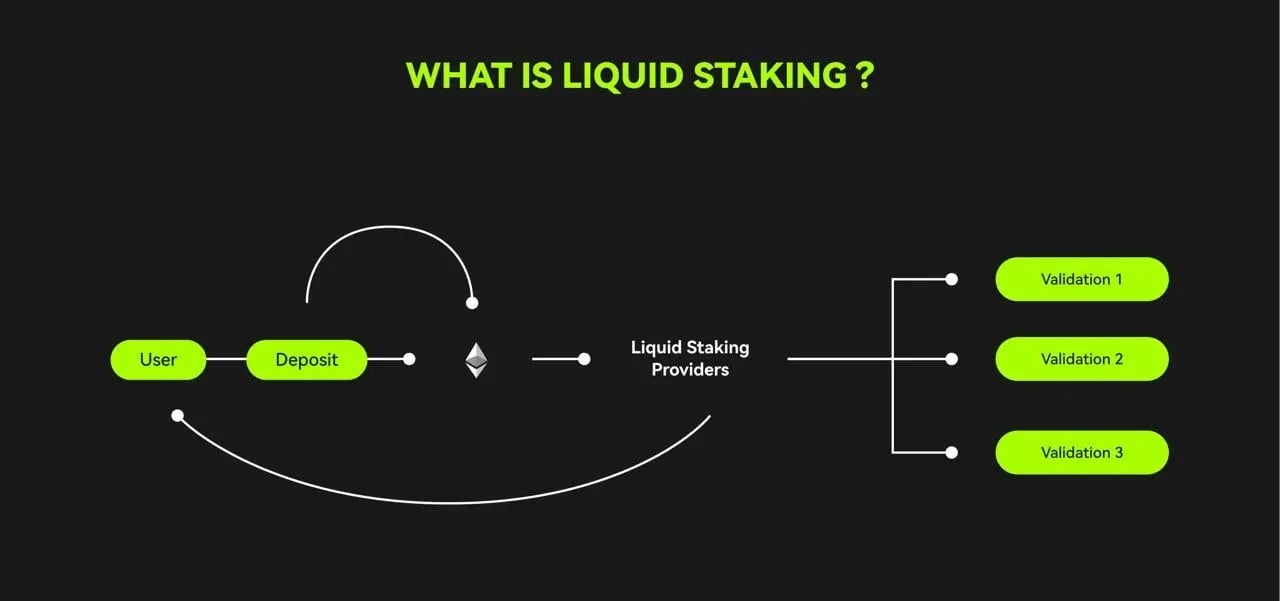
Liquid staking takes on this challenge head-on as it enables stakers to have liquid assets to cover the place of their staked crypto assets. The liquid staking token, also known as liquid staking derivatives has the same value as the staked token. Users can freely use them for trading, as collateral for crypto loans, or just about any other financial investment function they can employ within the cryptocurrency space. This form of staking is, therefore, an evolution of the native staking system.

Conventional staking involves simply locking idle assets on a PoS blockchain and waiting to earn rewards for contributing to the network’s efficiency and security, making them illiquid. However, liquid staking goes a step further by enabling users to stake their assets while maintaining their liquidity throughout the lockup period. In short, it involves the tokenization of staked cryptocurrencies.
What is Liquid Staking?

Source: OKX

This new concept offers different mechanisms that enable users to stake their crypto without compromising the liquidity of the staked digital asset. Sometimes, the user receives the Liquid staking token (LST) in return for their staked crypto. For example, when you’re involved in ETH liquid staking on a platform such as Lido, you’re given the stETH token in the staking derivatives model.

Alternatively, you can stake your crypto directly without converting it to an LST in a model known as native staking, such as when you stake ADA on the Cardano blockchain. As a result, staked tokens can have more utility and flexibility as the owners earn extra rewards while maintaining liquidity.

Liquid staking matters because platforms like Cardano, Lido, and others that practice it enable users to receive staking rewards besides giving greater accessibility to their staked coins, which become available for decentralized finance (DeFi) applications. Besides enhancing the overall growth and adoption of crypto by encouraging more active participation, this staking model introduces greater flexibility, enabling users to capitalize more on available investment opportunities and adjust their strategies in line with emerging market conditions. 

Liquid staking vs. Traditional Staking: Key Differences   

Whether you’re just beginning a staking journey or have some experience, grasping these differences will help you make an informed investment decision. 

1. Flexibility

Traditional crypto staking models require users to lock up their tokens completely. Once you have locked your crypto for a predetermined period, you cannot access it until the end. Your tokens are committed to the network’s security, but you are limited in financial flexibility. However, when it comes to the liquid concept, your assets are still available for other uses via a Liquid staking token that you use for DeFi activities.

2. Liquidity

Many investors are genuinely concerned about liquidity, which the regular staking doesn’t provide since staked assets are locked in. This can be a disadvantage when you need access to your funds to respond to market changes. On the other hand, with the liquid model, you still have access to your funds because Liquid staking derivatives enable you to leverage your staked crypto in other financial activities, making them more appealing. 

3. Risk

Native staking exposes you to great risks, such as those inherent in your selected blockchain, including network security or validator downtime issues. Besides the greater flexibility you enjoy with liquid staking, you become vulnerable to extra risks associated with the staking protocol, such as smart contract weaknesses or counterparty risk related to the platform running the staking program. 

4. Rewards

When seeking rewards in the regular staking program, the matter is consistent and straightforward, but you could miss out on emerging opportunities because your hands are tied. On the other hand, the liquid model may initially offer lower rewards because of the cut taken by the liquid staking protocol. Nonetheless, you can use the LSTs you receive in DeFi activities to offset the difference.

What Are Liquidity Pools in Crypto?  

Liquidity pools in crypto refer to a collection of digital assets and tokens locked up in a smart contract. They build the foundation for DeFi activities like lending, trading, and other financial activities where traditional intermediaries are eliminated. Liquidity pools in DeFi facilitate 24/7 opportunities for users to earn passive income by providing liquidity. While they may look simple, Liquidity pools are the powerhouse that moves complex financial interactions on decentralized exchanges (DEXs) and DeFi platforms. 

Users who contribute pairs of tokens to the pool are called liquidity providers, and their funds move the lending protocols and DeFi NFT projects. As a reward for their contribution, Liquidity providers earn a percentage of the trading fees the pool generates, while others offer governance tokens and yield farming opportunities as extra incentives. When users want to conduct business, they can approach a liquidity pool instead of traditional order books. 

Why Are Liquid Staking Tokens (LSTs) Gaining Popularity?  

Liquid staking tokens (LSTs) are becoming more popular by the day as they combine the benefits associated with staking and the liquidity of traditional assets. As a result, investors can access their assets for trading, lending, and other DeFi activities while also earning staking rewards. Among the tangible benefits associated with LSTs that make them popular include:

Increased Liquidity and Flexibility: Where traditional staking locks up assets for the entire lockup period, LSTs offer a tokenized representation of the user’s staked cryptocurrency, enabling them to trade, transfer, and use them in DeFi platforms.Capital Efficiency: With LSTs, users can simultaneously earn staking rewards while using the same staked crypto for DeFi yield farming, lending, and borrowing activities, creating capital efficiency that maximizes returns.Lower Barriers to Entry: Compared to traditional staking platforms that require a minimum of 32 ETH to run a validator note, some LSTs like Rocket Pool and Lido Finance enable users with smaller ETH amounts to join the pools.Access to DeFi Opportunities: Investors can use LSTs as collateral in lending platforms, trade them in DEXs, and provide liquidity in AMMs, enabling users to expand their portfolio strategies.Cross-Chain Capabilities: Investors can use LSTs across different blockchains, enabling them to easily leverage DeFi opportunities and staking benefits across different blockchains. Enhanced Yield Opportunities: LSTs combine DeFi activities and staking rewards, potentially bringing a higher return on investment than normal staking.

Liquid Staking vs. Pool Staking: What’s the Difference?

Pooled staking or pool staking refers to a method that allows users to combine their staking resources in crypto staking. As a result, users who pool their resources can benefit individually and collectively without employing too many resources upfront. Once the rewards have been paid, they’re shared within the pool relative to every participant’s contribution. The method can especially benefit users who want to benefit from staking but lack the resources to do it independently. 

Pool staking and liquid staking could be similar in many aspects, but there are still a few similarities and differences that you may want to consider before you can choose between the two: 

1. Liquid Staking

Liquid stakers receive Liquid staking derivatives like mSOL and stETH depending on the asset they staked. They can use these assets for different DeFi activities while simultaneously earning rewards. The tokens become their bond, indicating that what they have staked maintains its utility value and liquidity.

2. Pool Staking

Investors who participate in pool staking combine their resources to achieve the minimum quota required by a platform to achieve a validator node status. The pooled assets are then frozen and remain untouched throughout the lockup period. This enables users with smaller amounts of disposable assets to participate in staking without committing too many resources. 

When it comes to the key differences between the staking model under consideration and pool staking, you want to remember the following:

Flexibility: You can use your Liquidity staked tokens for other purposes, like trading, lending, and yield farming, which isn’t achievable with locked staking pools.Liquidity: Funds in staking pools are locked entirely, while liquid stakers are assured of liquidity through LSTs. Risk Profile: Staking pools focus on network risks such as slashing, while Liquid stakers have to deal with issues like smart contract vulnerabilities. 

Due to its potential benefits, Liquid stakers have made it emerge as a more preferred option compared to other forms of staking due to their limitations. LSTs introduce greater flexibility and a higher ROI. Consider your individual circumstances, investment goals, and available resources when choosing between native staking, pool staking, and liquid staking.

How Does Liquid Staking Work?

Liquid staking begins with issuing Liquid staking derivatives representing the staked cryptocurrencies. The user needs to visit a liquid staking protocol to receive derivative tokens representing the value of their staked cryptocurrencies.

The investor can use the derivative tokens in different DeFi activities while their original digital asset remains locked in the traditional staking process. The user receives a double reward from the staked crypto assets and income from investing in the derivative tokens.

The following is a step-by-step guide for getting started:

Step 1: Deposit: The investor deposits a token like Ethereum (ETH) or Solana (SOL) into a Liquid staking protocol.Step 2: Token Minting: The platform mints the LST in a ratio of 1:1 to the deposited cryptocurrency so that, for example, staked ETH yields stETH tokens.Step 3: Staking: The platform stakes the deposited assets on behalf of the user by distributing them across different validators on PoS networks to mitigate risk.Step 4: Reward Accrual: As staking rewards accumulate, the user revives the derivative token representing their staled assets to use in trading, lending, or any other DeFi activity. In the meantime, the accumulated rewards are reflected in the value of LSTs.Step 5: Unstaking: If the investor wishes to retrieve their original staked assets, they return “burn” their staking tokens to withdraw the equivalent amount of the staked token and the accrued rewards.

By following this simple mechanism, investors can maximize the utility of their idle crypto assets while maintaining their liquidity. By tokening their staked cryptocurrencies, they earn passive income. They can also explore the broader DeFi ecosystem, bridging the gap between securing PoS networks and becoming part of the DeFi space.
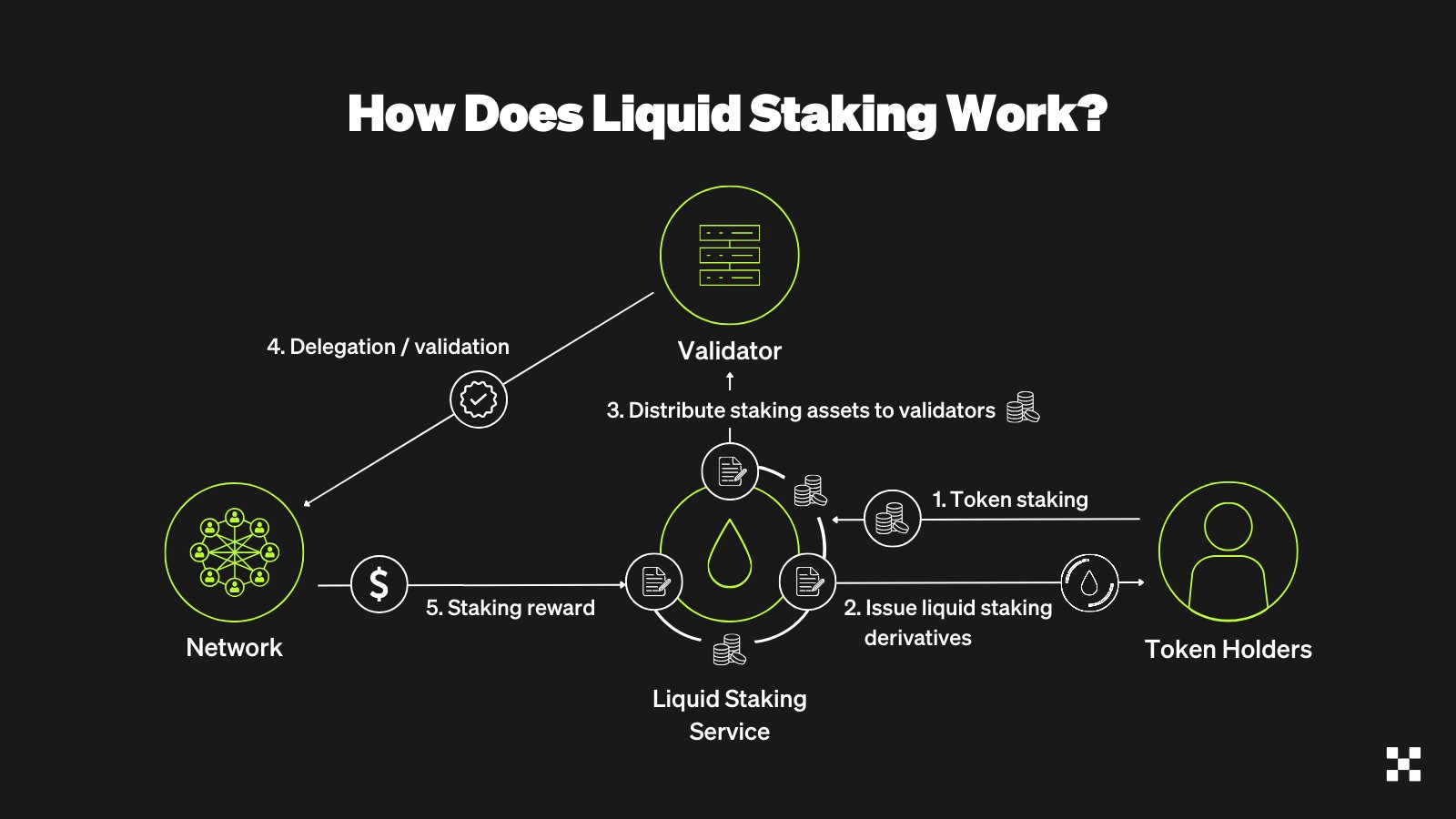
How Does Liquid Staking Work?How Does Liquid Staking Work?

Source: OKX

Some of the most critical aspects of the staking process that you need to keep in mind include the following: 

Validators

Validators play a critical role in the entire staking process by guaranteeing the security and operations in a Proof-of-Stake blockchain. Liquid staking protocols partner with expert node operators to maintain the security of staked assets.

Consensus Mechanisms

Staking platforms use the PoS consensus mechanism where chosen validators remain vigilant to ensure the network remains decentralized and tamper-proof.

Liquid Staking Tokens (LSTs)

LSTs represent the value of your staked crypto assets, and users can employ them in different trading or lending activities on DeFi platforms and decentralized exchanges. 

Liquid Staking Derivatives (LSDs)

These are advanced tokens in the staking ecosystem, representing fractional ownership of the staked rewards, which offers even more flexibility for experienced investors.

What Is Restaking?

Restaking within the crypto space refers to using staked assets to secure multiple protocols to enhance capital efficiency and generate additional rewards. The process leverages already staked digital assets in new ways, making an investor’s funds bring in a greater ROI. This is achieved through:                  

Capital Efficiency: By allowing users to use their staked crypto for multiple purposes instead of having them locked in a staking pool, restaking enhances the funds’ potential to generate extra income.Additional Rewards: When users retake their assets, they receive rewards beyond the traditional staking rewards, thereby incentivizing participation and cryptocurrency adoption.Liquid Restaking: Some platforms allow liquid restaking, allowing stakers to receive tokens representing their assets, which they can use for DeFi activities to generate more rewards.

Benefits of Liquid Staking

There are many compelling benefits associated with the new staking model that transcend the traditional staking method. Besides giving you greater control over your idle crypto assets while you still enjoy earning staking rewards, the following are other advantages worth considering:  

1. Unlocked Liquidity

With the liquid model of skating, you don’t simply lock away your tokens for a set period and wait idly. You enjoy your cryptocurrency’s liquidity by receiving LSTs, tradable assets you can invest in by buying, selling, or using as collateral in DEXs and DeFi platforms to generate additional yield.

2. Many DeFi Protocols

The staking concept supports platform interoperability, meaning you can interact with DeFi platforms across blockchain networks. As a result, you can enjoy seamless staking and other DeFi services, thus unlocking fresh opportunities for financial innovation and additional income.

3. Staking Rewards

You will still enjoy passive income generated via proof-of-stake blockchain. The staking pool you join will share a portion of the rewards they earn with you based on your LSTs shareholding.

4. Avoid Complex Infrastructure

The flexibility that comes with the Liquid model helps you manage your staked digital assets more effectively so that you don’t need to choose between one since both can be executed simultaneously. As a result, you earn income from more than one stream without moving your funds from one platform to another, which is especially important in volatile markets or when you need to access your capital immediately.  

Risks and Limitations of Liquid Staking         

Similar to all other investment opportunities, especially with new asset classes, there is always some risk associated with this form of staking. While all staking activities are legitimate, you should expect to encounter the following limitations:

1. Slashing

Just like traditional staking, the staking concept also carries the possibility of slashing. This refers to situations when a validator becomes negligent or malicious, leading to penalties that reduce your staked assets. Suppose staked assets are liquidated and used actively for another purpose. In that case, you may not have sufficient control over your staking position, which increases the potential of an unintentional action that could result in a slashing penalty. The solution to this problem lies in choosing a reliable validator to mitigate risk.

2. Exploits

Liquid staking protocols use third-party platforms to convert staked assets into LSSTs, introducing counterparty risk since unreliable parties could easily exploit the situation. Once again, care must be taken when choosing service providers since a compromised third-party platform or one that experiences technical issues could lead to potential losses.

3. Yield Volatility

This new form of staking exposes investors to volatility inherent in the digital asset market. Even with the benefits associated with the flexibility that this new form of staking introduces, users must be aware that they are still subject to greater market fluctuations compared to having left their assets locked quietly in traditional skating. You could easily experience losses when the value of a liquid token decreases significantly.

Top Liquid Staking Protocols  

As this advanced staking model continues to gain popularity, the number of platforms attracting users interested in participating is increasing. Below is our exclusive list of the best Liquid staking platforms you could consider looking at:

1. Lido    
Lido  Lido  

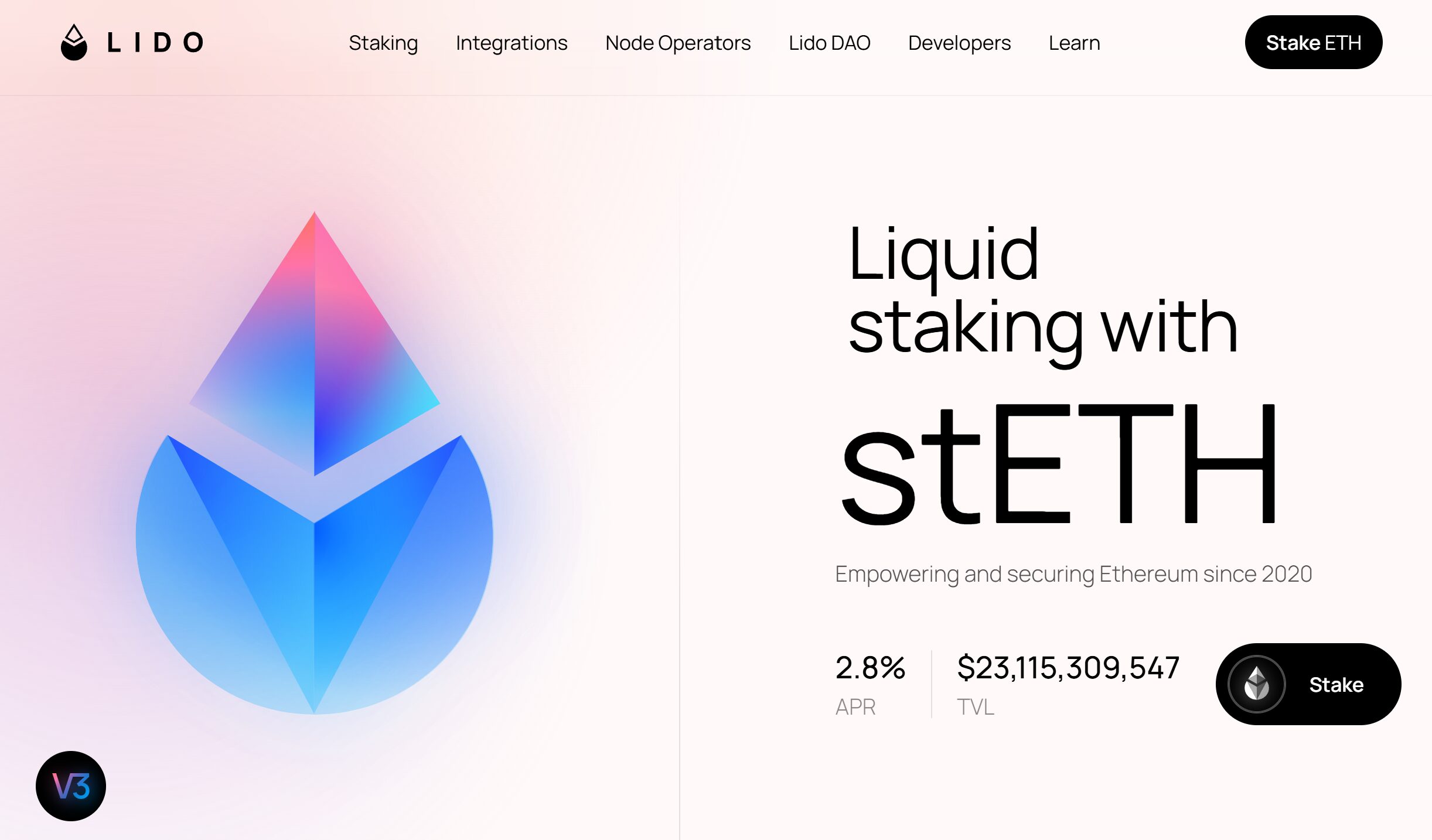
Lido Finance offers a centralized staking service that supports assets like Ethereum, Solana, and Polygon, which are converted to tokens like stETH and stSOL. The platform is the leading staking platform, with data showing it has over $14 billion in total value locked (TVL)     

Investors interested in liquid ETH staking on Lido have the platform aggregate their deposits, and in return, they receive stETH representing their stake in the pool. The stETH they receive is a tradable asset that enables the investor to maintain liquidity for their staked ETH.

2. Rocket Pool
Rocket PoolRocket Pool

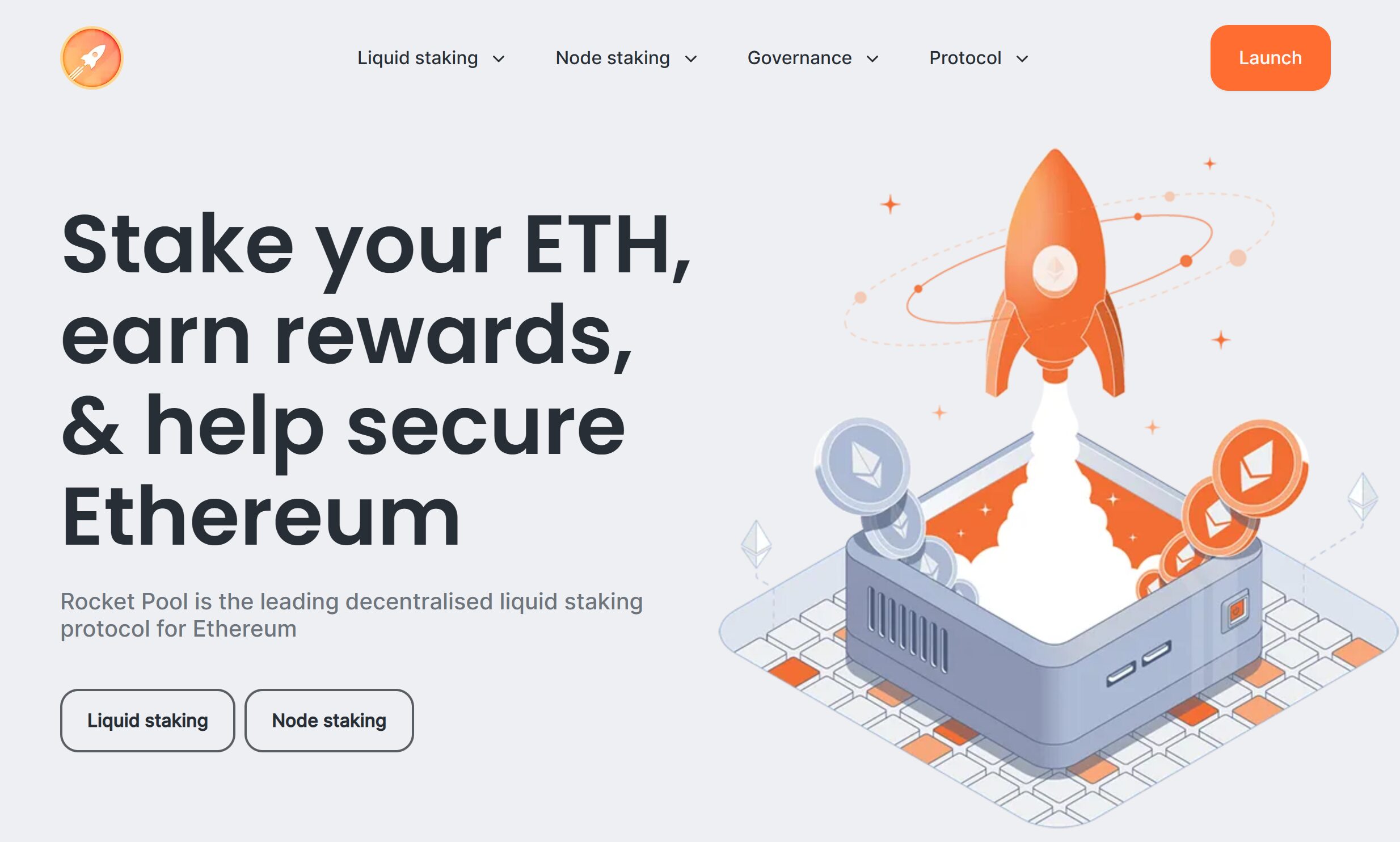
Rocket Pool also specializes in ETH liquid staking, where investors can stake their ETH and receive rETH tokens in return. The platform runs a decentralized staking model where users can become mode operators if they lock up ETH and RPL, the platform’s native token. On the other hand, investors can become stakers by depositing their ETH and waiting to earn rewards without running staking nodes so that, in return, they receive rETH, the platform’s staking token.

How Does Liquid Staking Work With Different Cryptocurrencies?                           

While the functionality remains the same, the new staking process could differ across blockchain networks in practice. To better understand this, we shall consider how it works with among the leader cryptocurrencies:

1. Ethereum

How Ethereum staking works on LidoHow Ethereum staking works on Lido

Source: Messari

Platforms that support Ethereum liquid staking mostly create stETH, which tracks the investor’s staked ETH. Apart from the regular staking rewards, the user will have the token enabling them to participate in other activities within the DeFi ecosystem using the LST, which is stETH.  Here’s how liquid staking works with Ethereum:

Stake ETH: The user deposits ETH in the liquid staking protocolReceive LST: The investor receives an LST like stETH (Lido) or mSOL (Rocket Pool) in place of their staked ETHUse the LST: Investors can use the LST to participate in different activities such as collateral for loans, trade on an exchange, or deploy in other DeFi activities. Alternatively they can deposit the LST into yield farming or trade in an exchange like other crypto assets.

2. Solana

Users interested in Solana staking will receive mSOL, an LST. They can use liquid pools and lending platforms to allow investors to earn rewards from their tokens while maintaining their liquidity. The mSOL token they receive is a derivative token representing the value of their staked SOL, which can be used in DeFi applications or traded. The process is also easy to follow:

Stake with SOL: Stake your SOL for a chance to earn rewards either by delegating to a validator or directly through a liquid staking protocol.Liquid Staking Pools: The platforms stake your SOL indirectly via staking pools or smart contracts. The pol delegates your staked SOL to a validator.Receive LSTs: After you deposit SOL, you will receive an LST like mSOL or stSOL, which represents the value of your staked SOL, which continues to earn rewards.

3. Polygon and Others   

Other chains like Polygon also implement staking to attract more user activity and let users participate in staking. Rather than facilitating the traditional staking program, they allow liquid staking using derivative tokens (like ankrPOL or stETH) representing the staked crypto assets they can trade or use as collateral in DeFi platforms.

Stake POL tokens: Deposit POL and receive an LST, AnkrPOL, representing the value of your staked asset. You can use the LST in different DeFi activities, including trading, lending, and borrowing.

Centralized vs. Decentralized Liquid Staking

Big centralized cryptocurrency exchanges like Binance and Coinbase support staking, where users allow the platform to act as a custodian and staking operator on their behalf. Some users prefer the centralized liquid staking option because of its convenience, especially beginners who may not yet have the technical skills required. However, the most significant challenge with centralized liquid staking is that it exposes users to the usual counterparty risks, such as mismanagement, insolvency, or regulatory difficulties often associated with centralized platforms.

On the other hand, decentralized staking protocols like Rocket Pool and Lido Finance don’t have a single point of failure. These platforms give users sovereignty over their crypto assets as they don’t depend on any centralized intermediary. Nonetheless, for a user to participate conveniently, they need to acquire some skills associated with W3b3 platforms and be familiar with DEXs and smart contracts. A user must also account for network congestion, gas fees, and smart contract risks as they execute decentralized staking.  

Conclusion

As DeFi continues to develop, liquid staking could play an integral role in bridging the gap that has always existed between staking and liquidity provision for the investor. The flexible alternative it introduces has the potential to alter how investors interact with the DeFi application and the proof-of-stake consensus mechanism. It is also improving blockchain security measures, which could lead to better integration within the broader cryptocurrency ecosystem. Cross-chain staling interoperability now enables stakers to use assets from one blockchain and utilize their derivative tokens in another, further promoting blockchain interoperability.

Remember that if you have a lower risk tolerance and prefer to lock up your assets, traditional staking is for you. However, if you wish to maximize returns associated with your staked assets and you want to access your funds for other DeFi applications, liquid staking is your cup of tea.

FAQs

Is liquid staking worth it?

Liquid staking is often considered a worthwhile strategy, as it allows users to earn staking rewards while still maintaining access to their assets. This flexibility makes it attractive to those who want to maximize yield without sacrificing liquidity.

What are the risks of liquid staking? 

There are several risks associated with liquid staking, such as risks associated with smart contracts, potentially higher fees relative to traditional staking, and market volatility since the value of liquidity tokens (LSTs) can fluctuate. Other risks include de-pegging LSTs from the underlying asset, potential impermanent loss, and existing regulatory uncertainties.                                                        

Is liquid staking a taxable event?

Liquid staking is considered a taxable event, especially since the conversion of staked tokens such as ETH to STETH results in rewards that are generally subject to tax.

What is Ethereum liquid staking?      

Ethereum liquid staking refers to investors participating in ETH staking to secure blockchain networks and earn rewards while maintaining the liquidity of their staked cryptocurrencies. Rather than wait for the traditional unstaking practice, liquid staking protocols offer users tokens representing their staked ETH to use in various ways.                         

What is the difference between liquid staking and lending?

Liquid staking and lending are entirely different but related activities within the cryptocurrency space. While lending involves loaning out funds to borrowers and receiving interest, liquid staking enables users to stake their crypto assets and continue earning rewards via tokenized assets. Lending facilitates borrowing, while liquid staking focuses on securing PoS networks.



Source link

Popular Posts

My Favorites

World’s First Scalable DNA Data Storage System Unveiled: 60 PB Per...

0
US-based Atlas has launched Atlas Eon 100, the world’s first scalable DNA data storage solution. The system, which stores data on synthetic DNA,...