The industry is evolving with the play-to-earn (P2E) models, where players earn real-world value through in-game activities. This guide will walk you through the steps to build a successful P2E game.
P2E games use blockchain, players own, trade and monetize in-game assets as NFTs. Players own true assets, can sell or trade on multiple platforms.
Conceptualize and Build Your Game
First, identify your target audience and understand the market. Design gameplay that’s fun and has earning mechanics and balance entertainment value with earning potential so players will keep playing.
Choose a blockchain and implement smart contracts to secure in-game transactions. Scalability and security for a growing user base: Consider the environmental impact of your chosen blockchain, and look for energy-efficient options.
Create a sustainable tokenomics by creating in-game currencies and assets. Plan carefully to prevent inflation and maintain value, implement token burns or staking to regulate the economy and incentivize player engagement.
Economic Models and Legal Framework
Different P2E games have different tokenomics. Some use dual token systems to separate in-game currency from governance tokens to stabilize the economy. Evaluate these models to see how they impact player retention and game sustainability.
Understand regional regulations on crypto and NFTs to comply with gaming and financial laws. Address gambling and player protection concerns to build trust with the gaming community.
User Experience, Testing, Launch
Create blockchain-friendly interfaces to make the user experience smooth for new players to the tech. Build and grow a community around the game to build loyalty and gather feedback. Offer support and education to help players navigate blockchain gaming.
Test alpha and beta thoroughly to find and fix issues. Gather and implement user feedback to finalize the product. Plan a strategic launch, maybe with exclusive in-game events or rewards, to attract and retain players.
Post-Launch and Future Trends
Update content and features to keep the game fresh. Monitor and adjust the in-game economy. Engage the community with events and incentives to keep interest and attract new players.
Emerging tech like AR can change P2E games and offer new experiences. Shifts in player demographics and preferences, like mobile gaming and social interactions, will impact game development. Stay on top of these trends to innovate and adapt so your game stays relevant and fun.
Conclusion
Building P2E games has its challenges, technical, regulatory and economic. But the opportunities are big. As tech advances and the gaming community gets more familiar with blockchain, P2E games future looks bright.
By understanding the mechanics, integrating blockchain and focusing on user experience, developers can build fun and sustainable P2E games. Be ahead of the curve and tackle the challenges and you’ll be successful in this space.
Editor’s note: This article was written with the assistance of AI. Edited and fact-checked by Owen Skelton.
Owen Skelton is an experienced journalist and editor with a passion for delivering insightful and engaging content. As Editor-in-Chief, he leads a talented team of writers and editors to create compelling stories that inform and inspire.
After an inspiring week at Barcelona’s Gallery Week, where he immersed himself in over 30 galleries showcasing diverse styles and perspectives, artist Alexis Olin (@darklunni/@alexisolinart) is now ready to take the leap into hosting his own exhibition. This passion project, featuring his new abstract collection, “The Result of Habits,” explores the ways human routines shape our lives—and he’s inviting his supporters to be a part of the journey.
To fund the exhibition and bring this collection to life, Alexis is hosting a raffle fundraiser with a range of exciting rewards, including his original acrylic paintings, limited-edition prints, and exclusive branded merchandise.
Barcelona: A Catalyst for Creativity
Barcelona’s Gallery Week wasn’t just an event—it was a turning point for Alexis. Experiencing the vibrant art scene firsthand left him inspired to share his own artistic voice in a similar setting. The new collection, “The Result of Habits,” reflects on the patterns and behaviors that shape our existence, blending abstract visuals with profound commentary on humanity.
“My time in Barcelona showed me the power of art to connect with people in physical spaces,” Alexis shares. “I want to create an experience that sparks those same emotions.”
Raffle Details: Support Art, Win Big
To make this dream a reality, Alexis has launched a raffle on OpenSea, giving participants the chance to win exclusive pieces from his collection while supporting his first gallery exhibition.
How the Raffle Works
Tickets: 50 digital tickets are available for €100 (Ξ0.03) each on the Base blockchain.
Grand Prize: An original acrylic painting from the “The Result of Habits” collection.
NFT Transformation: Each ticket will later transform into a unique NFT featuring elements from the collection, making every entry a collectible.
Reward Tiers
Every ticket guarantees a reward, and the more you buy, the greater the benefits:
1 Ticket: A Limited Edition Giclée Print.
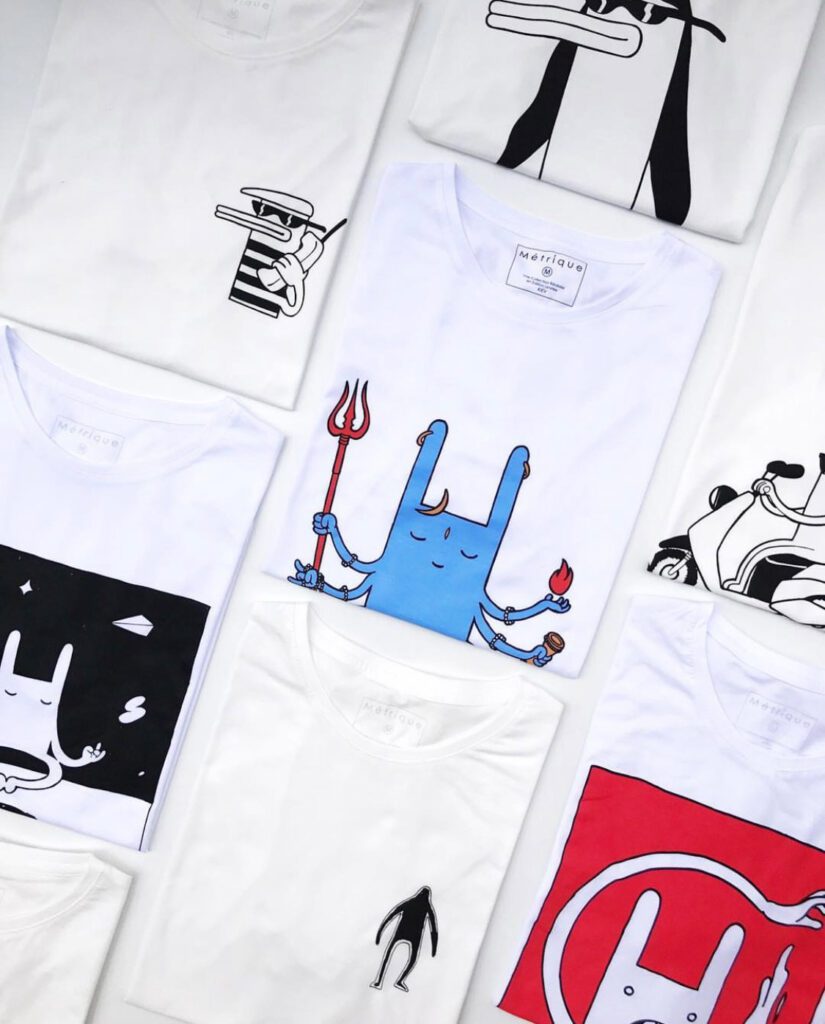
2 Tickets: A Giclée Print and a T-shirt featuring Alexis’s artwork (delivered by Métrique).
3 Tickets: A Giclée Print, T-shirt, and Hoodie from Métrique.
4+ Tickets: A bonus—a small physical painting featuring elements from the collection.
For an extraordinary option, Special Ticket #51 (€5000) includes:
An original painting (150×150 cm or multiple smaller pieces totaling €5000).
A digital NFT copy on Foundation.
Giclée Print, branded apparel, and a signed vinyl record by dOP with custom cover art painted by Alexis.
Why Participate?
This is more than a raffle—it’s a chance to help an emerging artist realize his dream of showcasing his work in a gallery. By purchasing a ticket, you’re:
Empowering Creativity: Supporting Alexis in bringing “The Result of Habits” to a physical exhibition.
Owning Unique Art: Gaining access to original paintings, limited-edition prints, and NFTs.
Joining a Vision: Becoming part of Alexis’s creative universe as he takes this bold step forward.
Join Alexis on This Journey
Inspired by the energy of Barcelona’s art scene, Alexis Olin is determined to bring his unique voice to the gallery stage. Your participation in his raffle helps make this vision possible while giving you the chance to own exclusive art and collectibles.
Get Involved:
Alexis Olin, also known as Darklunni, is a Ukrainian artist, photographer, and founder of the Métrique clothing brand. His journey in the arts spans decades and mediums, from comics and graphic novels to fine art, photography, and NFTs. Drawing inspiration from his extensive travels, particularly to France, Alexis blends traditional and contemporary elements in his work, creating a unique intersection of painting, photography, digital art, and fashion.
Recently, Alexis’s inspiring week in Barcelona’s Gallery Week, where he explored over 30 galleries, has fueled his ambition to launch a new gallery exhibition showcasing his abstract collection, “The Result of Habits.” This collection reflects on the habits that define human life, presented through his signature abstract, layered visuals.
A Life Inspired by Art
From Comics to Fine Art
Alexis’s roots in art began in the 1990s with comics and graphic novels, where his work gained recognition in Ukraine’s cult magazines like Extreme, K9, and Moloko. His fascination with the Franco-Belgian School of graphic novels and Renaissance art shaped his aesthetic, while his editorial role at the magazine K9 connected him deeply with the Ukrainian art community.
His career expanded internationally when he began exhibiting paintings and illustrations, with notable appearances at festivals and galleries in France, Spain, and Italy.
Métrique: Fashion as Art
The founding of Métrique, Alexis’s clothing brand, represents his vision to take art beyond gallery walls. By transferring his paintings and illustrations onto fabrics, Alexis creates wearable art, allowing his work to reach a broader audience.
Embracing NFTs and Digital Art
Since 2021, Alexis has embraced the NFT space, showcasing his works on platforms like SuperRare, Foundation, Nifty Gateway, and OpenSea. His approach combines traditional fine art techniques with the digital tools of blockchain technology, making his art accessible to global audiences.
His ongoing series, Nephel’s Dream, has been exhibited at notable Web3 events such as the Non Fungible Conference in Lisbon, ETH Barcelona, and NFT Factory Paris. This seamless integration of physical and digital art is a testament to Alexis’s innovative vision.
TLDR
After a transformative experience at Barcelona’s Gallery Week, Alexis Olin is hosting a raffle to fund his first exhibition, featuring his abstract collection, “The Result of Habits.” Tickets (€100/Ξ0.03) are available on OpenSea, with rewards like original paintings, NFTs, and branded apparel. Support his journey and be part of this creative milestone.
Non-fungible tokens (NFTs) recorded a weekly sales volume of $181 million, driven largely by gains in Bitcoin and other cryptocurrencies.
Data from CryptoSlam on November 17 revealed a 94% increase in weekly sales compared to the previous week, which stood at approximately $93 million.
Ethereum NFTs led the charts with over $70 million in sales, followed by Bitcoin with more than $60 million. Other blockchains, including Solana, Mythos, Immutable, and Polygon, collectively contributed around $45 million.
Prominent collections driving the surge included Pudgy Penguins, Milady Maker, CryptoPunks, Azuki, and Guild of Guardians Heroes.
Among significant sales, a Bitcoin-based Ordinal Maxi Biz (OMB) sold for 1.6448 BTC, valued at over $149,000. Additionally, three CryptoPunks — #1522, #189, and #7502 — sold for $143,395, $121,182, and $120,729, respectively.
You Might Be Interested In
In the last 24 hours, NFT sales volume rose another 3.5% compared to the previous day.
These gains offer some optimism for the NFT sector, which has faced significant challenges over the past two years. In June, NFT sales saw a 46% decline, following a 50% drop in May.
The prolonged downturn is related to regulatory uncertainty. The U.S. Securities and Exchange Commission (SEC) has targeted several NFT platforms and creators, viewing some NFTs as securities.
In August, OpenSea received a Wells notice from the SEC, alleging that certain NFTs on its platform qualify as unregistered securities. Last year, Impact Theory paid a $6.1 million penalty for similar charges, and the creators of Stoner Cats NFTs were fined $1 million.
Meanwhile, groups advocating for blockchain technologies are pushing for clearer regulations. The Digital Chamber, a U.S.-based blockchain advocacy organization, recently called on Congress to classify specific NFTs as consumer goods rather than securities.
$USUAL: Where Yield and Governance Converge for a New Era of Tokenomics
USUAL introduces a refreshing take on governance tokens, bridging the often-uneven balance between yield generation and ecosystem growth. Backed by real cash flow and community-centric distribution, it offers users a dual benefit that many governance tokens fail to provide—steady returns and long-term value.
USUAL positions itself uniquely as both a governance and utility token with features designed to grow alongside the protocol. It’s not merely a governance token in title; USUAL grants holders access to 100% of the protocol’s revenue, grounding it in real cash flows. Unlike tokens that rely solely on speculation or short-term incentives, USUAL aligns its incentives with protocol revenue, making it a dynamic and valuable long-term asset.
Source: Usual
Scarcity is an essential component of USUAL’s appeal. As deposits in the protocol increase, USUAL’s emission rate decreases. This disinflationary issuance means the token supply doesn’t dilute over time, but rather grows in tandem with Total Value Locked (TVL). As a result, each token’s value scales with protocol growth, creating a stable foundation for holders.
USUAL’s distribution model ensures that the community remains the primary beneficiary of the protocol’s success. Ninety percent of USUAL tokens are allocated to the community, with just 10% going to team members and early investors. This allocation protects users from excessive insider influence, creating a fairer, more equitable structure that promotes sustained participation and ecosystem trust.
USUAL’s utility extends beyond governance through its staking feature, where holders can activate governance rights and earn a portion of newly issued USUAL tokens. Staking incentives, along with a gauge mechanism that helps optimize liquidity distribution, encourage holders to engage actively with the protocol, bolstering long-term stability.
Source: Usual
In Q1 2025, USUAL will enable a new feature, allowing users to burn a portion of their tokens to unlock staked USD0 (USD0++), enhancing liquidity and flexibility for stakers. This option expands USUAL’s utility while balancing supply and demand dynamics within the protocol.
USUAL’s design addresses the shortcomings common in most governance tokens. Unlike many tokens that mimic existing models, USUAL’s value directly correlates with protocol revenue growth. Its issuance model is carefully calibrated to maintain inflation rates below revenue growth, linking token value to tangible cash flows. This structure allows for meaningful, sustained value for those invested in the protocol’s long-term vision.
The $USUAL emission model is particularly strategic, designed to control token issuance based on TVL growth and interest rates of assets backing USD0. This structure minimizes inflation, protecting early adopters from dilution while preserving value for long-term holders. By capping emissions and adjusting issuance rates based on TVL growth, USUAL maintains intrinsic value, ensuring that each token represents a growing portion of the protocol’s revenue.
This model ultimately benefits users who contribute to protocol growth and underscores USUAL’s commitment to fair value distribution. Emission is kept significantly below treasury growth, preventing excessive inflation and aligning incentives within the ecosystem.
USUAL’s governance model empowers holders with control over treasury and collateral management, setting it apart from many governance tokens that offer limited utility beyond token holding. Through staking, USUAL holders influence key financial decisions, ensuring that treasury management aligns with the community’s vision. This level of transparency and control fosters a sense of ownership and long-term commitment among users.
The protocol’s roadmap includes expanded utility, with future implementations offering holders greater access to earnings per token. As TVL increases, the token value naturally scales upward, directly correlating with the protocol’s financial success. The USUAL model is designed to attract long-term participants, encouraging sustainable growth rather than incentivizing short-term gains.
USUAL’s tokenomics model reflects a sustainable approach, where token supply growth is tied to ecosystem expansion. This prevents excessive inflation and ensures a balanced distribution of rewards to those driving the protocol’s success. By aligning governance and utility features, USUAL’s framework supports a stable ecosystem for growth and collaboration.
With USUAL, holders gain an opportunity to participate in a governance model that rewards commitment to protocol growth and provides tangible, sustained value. It’s a community-focused model that prioritizes users over insiders, setting a new standard for governance tokens.
Blockchain gaming integrates blockchain technology into video games, allowing players to own, trade, and monetize in-game assets using NFTs and cryptocurrencies. Unlike traditional games, where assets are restricted to the game, blockchain games provide genuine ownership and the ability to transfer digital items.
Market Overview and Growth
The blockchain gaming market is seeing major growth. In 2022, it was $4.83 billion and is projected to be $301.53 billion by 2030, with a CAGR of 68.3% from 2023 to 2030.
This growth is driven by demand for decentralized games, NFTs, and cryptocurrencies, as well as big investments in blockchain gaming startups.
Types of Investments
Blockchain gaming is a broad landscape for investors to play in. Here’s an expanded breakdown of the investment opportunities:
1. In-Game Assets
Investing in in-game assets means buying NFTs that represent unique items within a game. These assets include:
Virtual Land: Digital real estate within virtual worlds, such as parcels in The Sandbox or Decentraland, which can be developed, leased or sold.
Characters and Avatars: Unique game characters that can be used or traded.
Items and Accessories: Special weapons, skins or tools that enhance gameplay and can be bought or sold in secondary markets.
The value of these assets is often driven by scarcity, utility within the game and demand from the player community. Investors can profit by trading these assets as their value increases over time.
2. Tokens and Cryptocurrencies
Many blockchain games have their own tokens that serve as in-game currency or provide governance rights. Examples:
AXS (Axie Infinity Shards): The governance token for Axie Infinity, to participate in decision making.
MANA: The cryptocurrency used in Decentraland for transactions and buying virtual land.
Investing in these tokens gives you exposure to the game’s economy. As the game grows and its user base increases, the demand for its native token may rise and value may appreciate.
3. Equity in Gaming Companies
Investors can buy equity in companies developing blockchain games through:
Crowdfunding Platforms: Participating in early funding rounds for startups.
Private Equity: Investing in established companies looking for capital to scale.
This way you benefit from the overall growth and success of the company, beyond individual game assets or tokens.
4. Metaverse Investments
The metaverse is a collection of interconnected virtual worlds where users can interact, work and play. Investing in metaverse projects that have gaming elements gives you diversified exposure to the wider virtual economy. Opportunities:
Virtual Real Estate: Buying land in metaverse platforms to develop or lease.
Metaverse Tokens: Buying tokens associated with metaverse projects, such as SAND for The Sandbox.
These investments are betting on the digital convergence trend where gaming, social interaction and commerce meet in virtual spaces.
How to Start Investing in Blockchain Gaming
Research the Industry
Research is key to investing. Here’s how you can do it:
Use Trusted Platforms: DappRadar has real-time data on blockchain games, user activity, trading volume and rankings. NFT News Today has the latest news, project updates and expert analysis.
Analyze Community Engagement: A project with an active community is often a good sign. Discord, Telegram and Twitter are great places to check community sentiment.
Evaluate the Team: Look for projects led by experienced teams with clear goals. Knowing who is behind the project gives you confidence in its viability.
Review the Game’s Roadmap: A detailed roadmap with milestones is a sign of a project’s commitment to long term success.
2. Set Budget and Risk Tolerance
Before you invest, assess your financial situation and set clear limits to protect yourself from losses:
How Much Can You Afford to Lose: Blockchain gaming investments, especially NFTs and tokens can be speculative. Only invest money you can afford to lose.
Diversify Your Portfolio: Don’t put all your eggs in one basket. Spread your investments across multiple games, tokens or asset types to minimize risk.
Know Your Risk: If you’re risk averse, focus on established projects with a track record. If you have a higher risk tolerance, you might look into newer, high-potential games.
3. Choose Your Investment Strategy
Your strategy will depend on your financial goals and level of involvement:
Long-Term Holding: This strategy involves buying assets like NFTs or tokens and holding onto them for extended periods, hoping their value will appreciate as the game or ecosystem grows. This is for investors who want less active management.
Short-Term Trading: Active investors can trade on market trends and asset price fluctuations by buying and selling tokens or NFTs frequently. This requires close monitoring of the market.
Combining Strategies: Some investors use a mix of long-term holding for steady growth and short-term trading for quick profits.
4. Use the Right Tools
You need the right tools to manage and secure your investments:
Trading Platforms: Marketplaces like OpenSea and exchanges like Binance are the places to trade NFTs and cryptocurrencies. These platforms give you access to a wide range of assets so you can explore and trade easily.
Wallets: Store your tokens and NFTs in secure wallets. Hardware wallets like Ledger and Trezor for offline storage or software wallets like MetaMask and Trust Wallet for ease of use.
Tracking: Apps and platforms like CoinMarketCap to track your portfolio and market movements.
Risks and Challenges in Blockchain Gaming Investments
Investing in blockchain gaming is promising but comes with risks and challenges you should be aware of:
1. Market Volatility
Token and in-game asset values in blockchain gaming can fluctuate wildly due to market sentiment, tech advancements and regulatory news. During crypto market downturns many in-game assets tied to crypto can plummet in value and impact returns.
2. Scams
The blockchain gaming space has seen some shady projects, including “rug pulls” where devs abandon a project after taking investor funds. Do your due diligence to avoid getting scammed.
3. Regulatory Grey Area
The ever-changing regulatory landscape around crypto and digital assets can impact the legality and profitability of blockchain gaming investments. Changes in tax laws or government regulations can affect some companies or industries.
4. Technical Risks
Blockchain gaming projects can have technical issues, security vulnerabilities, scalability problems and development delays. Security breaches can result in asset loss, technical shortcomings can kill a project.
How to Invest
To overcome these challenges:
Do Your Due Diligence: Research the dev team, tech, community. Read the whitepaper, roadmap and partnerships to gauge the project.
Stay Informed: Follow industry news, regulatory updates and market trends. Use trusted sources and platforms to stay up to date with developments that affect your investments.
Engage with Communities: Join investor and gaming forums, social media groups and community discussions. Engage with the community to get insights and spot red flags.
Pick Good Projects: Invest in projects with clear roadmaps and experienced dev teams. Look for transparency, regular updates and a proven track record in the project’s history.
Future of Blockchain Gaming Investments
The blockchain gaming space is about to get bigger, here’s what’s driving it:
Artificial Intelligence (AI) Integration: AI is making gaming more responsive with NPCs, personalization and in-game economy optimization. For example, DeepLink is using AI to improve cloud gaming performance so high-end gaming is more accessible.
Cross-Platform Gaming: Games that work across multiple devices are expanding player bases and engagement. Blockchain enables this by allowing asset interoperability so players can use their in-game items across different platforms.
Augmented Reality (AR) Adoption: AR is combining digital and physical worlds, gaming is getting more immersive. Blockchain enables this by securing ownership and transfer of digital assets in AR environments. Companies are building AR games that use blockchain to offer unique experiences.
Final Thoughts
The blockchain gaming sector represents an exciting investment opportunity. By understanding the market, knowing the risks, and using smart investment strategies, you can successfully navigate this space. Responsible and strategic engagement is key to maximizing the potential of blockchain gaming investments.
Ronan Mullaney, founder of NFT News Today, is a leading voice in the NFT, Metaverse, and Web3 space. Based in Bangkok, he combines journalism and tech expertise to explore the future of digital innovation.
Somnia has launched its Developer Network (Devnet), providing developers and Web3 users access to its high-performance blockchain technology. Positioned as the “dream computer” for a fully on-chain world, Somnia is designed to support reactive, mass-consumer applications such as games, decentralized finance (DeFi), social finance (SocialFi), and metaverse projects.
Somnia Devnet Innovation and Performance Metrics
In internal testing, Somnia’s Devnet has demonstrated the ability to process a staggering 400,000 transactions per second (TPS), achieving transaction finality in under a second. On top of that, transaction costs remain below one cent, even under high network loads.
Somnia’s performance is due to innovations in execution, database, networking and consensus. The platform’s database has a read-and-write time of between 15 to 100 nanoseconds, reducing latency significantly. The advanced networking can also transmit 10 to 20 times more data between nodes.
Moreover, full EVM compatibility allows developers to use familiar tools and languages and build decentralized applications that require real-time responsiveness.
Furthermore, by allowing instant reactions to on-chain events directly in Solidity, Somnia opens possibilities for fully decentralized applications like interactive games and live event platforms. This capability looks to enhance user experience and broaden the scope of applications that can be effectively deployed on the blockchain.
Developer Support with $10 Million Grant
To build a robust developer ecosystem, Somnia is inviting developers to apply for whitelisting to join its initial developer cohort. Also, the company has announced a $10 million grant program aimed at supporting developers with funding, technical guidance, and go-to-market strategies.
Early infrastructure partners include Ankr, which will provide Remote Procedure Call (RPC) services to enhance network connectivity and reliability.
Hemera’s Social Scan will power the block explorer, allowing users to monitor blockchain transactions. Additionally, thirdweb will offer tools for developing EVM-compatible decentralized applications, simplifying the development process.
Public Testing
Somnia’s Devnet will be open for public testing during certain hours, allowing users to interact with decentralized applications such as a decentralized exchange (DEX), NFTs, and games.
With this approach, they intend to gather valuable feedback and test the platform’s capabilities in a live environment. Users can request Somnia Test Tokens (STT) through a faucet on the platform to participate in testing.
Finally, developers and users interested in exploring Somnia’s technology can find more information about Devnet access, the grant program, and the whitelisting process on their website. With the launch of its Devnet, Somnia aims to bring more data and functionality on-chain, potentially influencing how decentralized applications develop in the future.
Editor’s note: Written with the assistance of AI – Edited and fact-checked by Jason Newey.
Jason Newey is a seasoned journalist specializing in NFTs, the Metaverse, and Web3 technologies. With a background in digital media and blockchain technology, he adeptly translates complex concepts into engaging, informative articles.
Lingo is changing the rewards game by combining the best of crypto and real-world value. Built on the Base network, Lingo is the platform for users to get tangible benefits from their crypto activities. By gamifying experiences with Real-World Asset (RWA) backed rewards, Lingo wants to make crypto more accessible and appealing to a wider audience.
Real World Assets for Real Rewards
Lingo’s platform is unique in using Real World Assets (RWAs) as the backbone of its rewards system. RWAs are physical, tangible assets brought onto the blockchain, so users have a stable value not tied to the crypto market. This gives users a more reliable experience as the rewards are backed by real assets that hold value even when the digital market is volatile.
The business model reinvests platform fees into RWAs to create a rewards pool. This aims to protect users from market fluctuations, and Lingo is a more stable option for those who want real value from their crypto activities. With over 3,000 brand partners within Fizen App, as well as Spotify, Netflix, Starbucks, Nike, and PlayStation, Lingo has a wide range of options for users to redeem their rewards.
Source Lingo
Asset Selection and Revenue Strategy
According to their Lightpaper, Lingo’s rewards are backed by a portfolio of real-world assets, mainly short-term rental apartments. The revenue from these assets funds the rewards to the users. When selecting assets, Lingo focuses on major global cities like Paris, Dubai and Miami, looking for stable long-term returns with an average target of 6%. The properties are optimized for short-term rentals and are looking for a 7-9% return to add value to the community.
Unlike other tokenization platforms, Lingo does not tokenize the properties themselves but uses the income it generates to back its utility token. This way, Lingo focuses on rewards rather than real estate investment. Through partnerships, Lingo also gets bulk discounts, adding value to the rewards for the users.
Lingo Airdrop: Fun and Gamified Rewards
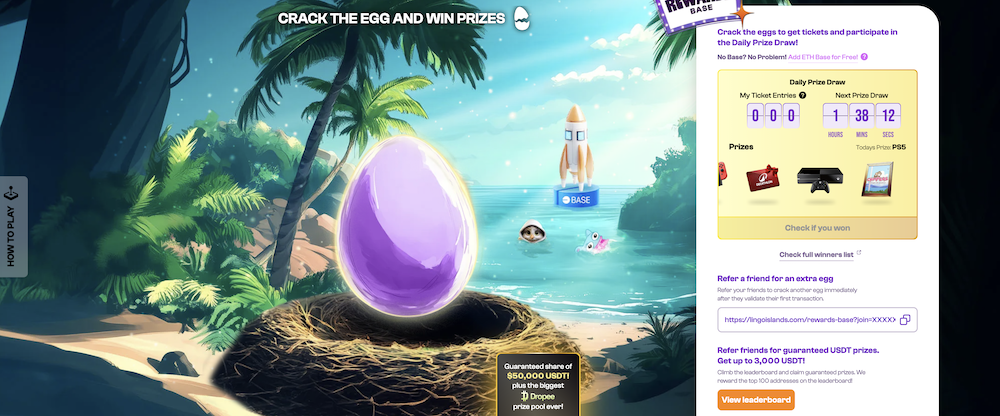
Lingo’s airdrop is a fun and interactive way for users to earn rewards. Over a month, users can participate in daily activities and participate in a referral program to collect tickets. These tickets can be exchanged for $LINGO tokens and real-world prizes. By cracking an egg on the Lingo Islands platform each day and making a quick transaction on the Base network, users can participate in the airdrop and engage with the platform’s features.
What’s unique about this airdrop is the mix of digital and physical rewards. Users can earn tokens and real-life prizes like the latest iPhone, vacation packages, NFTs and exclusive items from Lingo’s brand partners. This way, Lingo can attract a wider audience, and it’s not just virtual rewards.
Source Lingo
How to Join the Lingo Airdrop
Getting started with the Lingo airdrop is easy, even for newbies. Here’s a quick guide:
Go to the Lingo Islands website.
Connect a cryptocurrency wallet that supports the Base network.
Get your unique referral link on the platform and start sharing.
Crack the daily egg to collect tickets.
Make a Base network transaction (only a small gas fee required).
Share your referral link to get more tickets and increase your chances of winning.
The tokens will be distributed during the Token Generation Event (TGE) about a month after the airdrop ends. To get the most rewards, stay active with daily activities, complete the Base network transaction and share your referral link.
Safe Participation and Maximizing Rewards
While Lingo airdrop has great rewards, be safe. Always check you’re on the official Lingo Islands website before connecting your wallet. Never share your wallet’s private keys or seed phrases. Make sure your wallet connects the Base network and that you have a small amount of BASE tokens to cover gas fees.
To get the most out of this campaign, stay active with daily activities, keep an eye on your ticket count and follow Lingo’s community channels for updates and tips on new opportunities.
Lingo Future Plans
Lingo was founded by serial entrepreneurs HM Rawat and David Amsellem, who built the loyalty company John Paul, which Accor Hotels acquired for $150m. They want to disrupt the $200b loyalty program industry with blockchain.
Finally, Lingo’s roadmap is to build a strong Web3 community, launch an app with over 100,000 hotels, list the token on major exchanges, and expand the ambassador network to 1 billion followers. By adding to its asset portfolio, integrating with other Web3 platforms, and launching a governance system, Lingo hopes to grow its user base and become a major player in the Web3 space.
Editor’s note: Written with the assistance of AI – Edited and fact-checked by Jason Newey.
Jason Newey is a seasoned journalist specializing in NFTs, the Metaverse, and Web3 technologies. With a background in digital media and blockchain technology, he adeptly translates complex concepts into engaging, informative articles.
Following teasers shared earlier this week, Doodles and McDonald’s have revealed new details about their collaboration, which includes customized cups and digital collectibles.
In a post on X (Twitter) on November 14, Doodles announced the release of 100 million limited-edition McCafé x Doodles Holiday cups. These cups, featuring Doodles’ signature colorful and cartoonish characters, will be available at participating McDonald’s locations across the United States.
gm✨the Doodles community is about to get a lot bigger
we’ve partnered with @McDonalds to spread a little joy this holiday season — with over 100 million limited-edition McCafé x Doodles Holiday cups launching at participating McDonald’s across the U.S.
coming 11/18 pic.twitter.com/s8i71jtBwz
— doodles (@doodles) November 14, 2024
From November 18 to December 31, each cup purchased unlocks perks. Buyers will receive a ticket to stream a pilot episode of “Dullsville and the Doodleverse” — the brand’s multi-dimensional storytelling project unveiled in April in collaboration with record producer and rapper Pharrell Williams.
Additionally, buyers can access limited-edition McDonald’s-themed digital apparel for Doodles avatars.
The campaign will also feature original music from Doodles Records. Pharrell Williams has produced a track titled “Good Mornin,” performed by Marley Bleu. An animated holiday short will also be part of the campaign.
You Might Be Interested In
Doodles also noted that the McDonald’s Times Square billboard will feature a special display throughout the holiday season, visible to millions of visitors.
News of the collaboration between Doodles and McDonald’s appears to have boosted interest in Doodles NFTs. They saw a 99.08% increase in sales within 24 hours of the announcement, according to data from CoinMarketCap.
This continues a positive trend that began when the collaboration was first teased. The average price of a Doodle NFT jumped to nearly 2 ETH shortly after, reflecting a 40% rise from the previous week.
Furahaa Group, a well-known brand in plant-based fast food and vegan products, is entering the digital finance space by listing its FURA tokens on the INX platform. INX is a regulated marketplace for trading digital securities and tokenized real-world assets, giving investors a safe space to buy into Furahaa’s equity and allowing global investors to support mission-driven businesses. The tokens will be listed on November 20, 2024.
Fractional Ownership with Blockchain Security
The FURA token allows investors to own a part of Furahaa Group through fractional ownership, with each token representing a share of the company’s equity. The tokens are based on the ERC-1404 standard on the Ethereum blockchain, known for its security and compliance features to ensure safe and transparent transactions.
Arthur Devillers, Furahaa Group founder, said: “Our partnership with INX opens up equity in Furahaa Group beyond traditional markets. Furahaa tokens are now accessible to a wider audience, and we are committed to sustainable growth and financial inclusion.”
Into the Vegan Market
Since 2015, Furahaa Group, inspired by the Swahili word for joy, has grown rapidly; Furahaa Express has expanded across Europe and the U.S. Each store generates around €1.2 million per year, and plant-based food is in high demand. Moreover, the vegan market is expected to reach $40.3 billion by 2030.
INX is opening up a new kind of investing for companies like Furahaa to grow outside the traditional stock market. Listing FURA tokens is INX’s mission to make finance for everyone, using blockchain to give more transparency, ease and access to investors.
Shy Datika, INX CEO, said: “We’re thrilled to welcome Furahaa tokens to our platform. This partnership aligns with our mission to expand the range of real-world assets on-chain, offering investors a unique and regulated alternative to traditional stock markets. Together, we’re enabling access to impactful investments that reflect both financial and environmental goals.”
Traditional Finance meets Blockchain
INX is bridging traditional finance and blockchain, a regulated platform for trading digital securities like FURA. By combining the safety of traditional markets with the transparency of blockchain, INX aims to make tokenized assets more accessible to investors.
Overall, Furahaa Group is now one step closer to its mission of inclusivity and sustainability. Investors can now support a growing and socially responsible business and get the benefits of digital securities.
Editor’s note: Written with the assistance of AI – Edited and fact-checked by Jason Newey.
Jason Newey is a seasoned journalist specializing in NFTs, the Metaverse, and Web3 technologies. With a background in digital media and blockchain technology, he adeptly translates complex concepts into engaging, informative articles.
“Hybrid Species” showcases Hummel’s expertise in digital tools, using a range of software including Adobe Photoshop, Adobe AfterEffects, Maxon Cinema4D, Stable Diffusion, Midjourney, and Adobe Firefly. The project’s 4K resolution (4096x4096px) ensures that viewers can appreciate the intricate details of each floral creation. Hummel’s AI-integrated workflow allows for a dynamic and iterative process, with designs evolving through the delicate balance of human intention and machine randomness. By tapping into AI’s potential, Hummel has expanded his artistic capabilities, producing flora that feels both synthetic and authentic, rooted in nature but reborn through technology.
Hannes Hummel: A Visionary in New Media Art
Hummel’s background in integrated design profoundly influences his work, enabling him to blend digital and organic elements seamlessly. Known for his award-winning “Living Still Lifes” series, Hummel has earned international recognition, exhibiting his works globally—from the NFT Korea Festival and Beeple Studios to Contemporary Calgary. His collaborations with high-profile fashion brands like Iris Van Herpen and Richard Quinn reflect his unique approach, bringing digital artistry to diverse contexts.
In addition to his art, Hummel is committed to education, offering workshops and lectures on digital design and VR concepts. His passion for sharing knowledge with students and fellow artists has helped foster a community around digital innovation and design. His work, which reinterprets natural patterns through a digital lens, invites viewers to reconsider their relationship with the world in an age where technology and nature are increasingly intertwined.