Arts

Home Arts Page 10

Bitcoin Price Oil Market Volatility: A Catalyst for BTC? – NFT Plazas

0
Bitcoin Price Oil Market Volatility: A Catalyst for BTC? – NFT Plazas


The tug of war in the global energy market might seem worlds apart from Bitcoin’s digital ledger. However, in an increasingly interconnected macroeconomic landscape, oil price volatility is acting as a “gatekeeper” for capital flowing into risk-on assets. Recent data analysis suggests a compelling narrative: once the oil market finds its equilibrium, Bitcoin (BTC) could be poised for an explosive wave of growth.

Here is the comprehensive picture of how black gold is indirectly shaping the future of digital gold.

The Intimate Link Between Oil, Inflation, and Crypto

To understand why oil prices matter to Bitcoin, we must look at the broader inflation picture. Oil is the lifeblood of the global economy, dictating transportation, manufacturing, and consumer costs.

The Intimate Link Between Oil, Inflation, and Crypto

The Intimate Link Between Oil, Inflation, and Crypto – Source: tradingview


Cushing, OK WTI Spot Price FOBCushing, OK WTI Spot Price FOB

Cushing, OK WTI Spot Price FOB

The Ripple Effect: When crude oil prices (such as Brent or WTI) experience sharp volatility swinging from deep declines to sudden 15-20% surges driven by geopolitical factors inflation (CPI) is immediately threatened.Central Bank Reactions: To curb energy driven inflation, the US Federal Reserve (Fed) and other central banks are forced to maintain tight monetary policies, keeping interest rates higher for longer.Impact on Bitcoin: High interest rates drain liquidity from risk markets. Institutional investors tend to seek safe havens like government bonds or cash reserves rather than pouring capital into Bitcoin.

Conversely, when oil prices stabilize, inflationary pressures cool down. History has proven that a predictable CPI paves the way for monetary easing. When this happens, global liquidity is pumped back into the market, and “risk-on” assets with high yield potential, like Bitcoin, are often the first to benefit.

Historical Data and Liquidity Expectations

Looking back at previous economic cycles reveals a notable correlation. During the 2023 – 2024 period, when WTI crude gradually stabilized around the $70-80 per barrel mark following the 2022 shock, the crypto market witnessed a massive return of capital inflows, particularly through Spot Bitcoin ETFs.

According to recent macroeconomic reports:

A drop in the energy market volatility index frequently precedes an increase in the global M2 money supply.Bitcoin’s Recovery: Whenever the global M2 money supply bottoms out and begins to rise again (often following energy price stabilization), Bitcoin typically records double digit percentage growth over the subsequent 6 to 12 months.

Learn more: Bitcoin Targets Bottom as Middle East War Propels Gold to ATH

An Objective Lens: Beyond the Bullish Hype

While macroeconomic theory strongly supports the scenario of a Bitcoin rally post oil stabilization, from an objective journalistic and investment perspective, we must consider the concurrent risks:

Network Health and Miners: Bitcoin consumes significant energy. Crude oil prices do not directly set electricity costs for mining farms. These farms often use renewables or natural gas. However, a stable energy market helps miners forecast operational costs. This stability prevents the forced sell off of BTC reserves. Consequently, miners can stay afloat without crashing the market.Independent Variables: Oil stability is a vital prerequisite. However, it is not a guarantee for success. Bitcoin remains heavily influenced by new regulatory frameworks in the US and Europe. Furthermore, actual capital inflows into spot ETFs play a decisive role. These factors will determine the long term price action.

The oil market is acting as a coiled spring for global liquidity. Although current energy price fluctuations have forced major investors into a defensive stance, the tide will eventually turn. Once the oil market finds true stability, it will signal a safe environment for institutional capital to return. With its increasingly solidified position in the traditional financial system, Bitcoin has a strong foundation to anticipate a spectacular breakout.

binance-logo-6219389_1280binance-logo-6219389_1280


Source link

Binance Will List Katana (KAT) For Spot Trading

0
Binance Will List Katana (KAT) For Spot Trading


Investors are shifting their focus toward utility-driven assets as Binance will list Katana (KAT) on its premier spot trading platform, which marks a pivotal moment for the DeFi sector, as it brings a “Real Yield” focused Layer 2 to a massive global audience. Katana has spent months refining its “Confidentiality-by-design” and liquidity models within the Binance Alpha incubator. Now, it steps onto the main stage with a Seed Tag, emphasizing its status as an innovative yet high-stakes project. By integrating deep liquidity with institutional support from Polygon Labs, Katana offers a unique value proposition that few other Layer 2s can match.

Learn more: What Is Katana (KAT)? Polygon’s DeFi Chain Explained

About Katana (KAT)

Katana defines itself as the first DeFi Layer 2 built specifically for “Real Yield,” moving away from the inflationary reward models of the past. Its architecture centers on the Chain-Owned Liquidity (CoL) framework, which effectively turns the network into its own biggest liquidity provider. Instead of relying solely on external users who might withdraw their funds at any moment, the network uses its own revenue to maintain deep pools, creating a “Liquidity Flywheel” that drives continuous growth and ensures that the ecosystem remains functional even during aggressive market swings.

To move assets into this ecosystem, Katana utilizes the VaultBridge. This tool does more than just move crypto; it transforms bridged assets into yield-producing positions. For example, when you deposit Ethereum through VaultBridge, the system issues vbTokens that automatically participate in the network’s liquidity programs. The seamless integration ensures that every dollar on the chain stays productive. Moreover, Katana concentrates its liquidity into a “Core App Stack” featuring Sushi, Morpho, and Vertex. By focusing on a few high-performance applications rather than hundreds of small ones, Katana provides much stronger market depth and a smoother user experience.

Additionally, the introduction of AUSD, the native stablecoin, anchors the entire network. AUSD acts as the “economic constitution” of Katana, providing a stable medium for trading and lending. Using AUSD, Katana is able to capture more value within its own borders, which it then redistributes to KAT holders. Backed by industry heavyweights like GSR and mentored by the AggLayer Breakout Program, the project possesses the technical and financial “moat” required to dominate the DeFi space. It combines the security of zkSync Era with a user-centric design, making professional-grade DeFi tools accessible to everyone with a MetaMask or Trust Wallet.

About Katana (KAT)

Katana’s Total Revenue

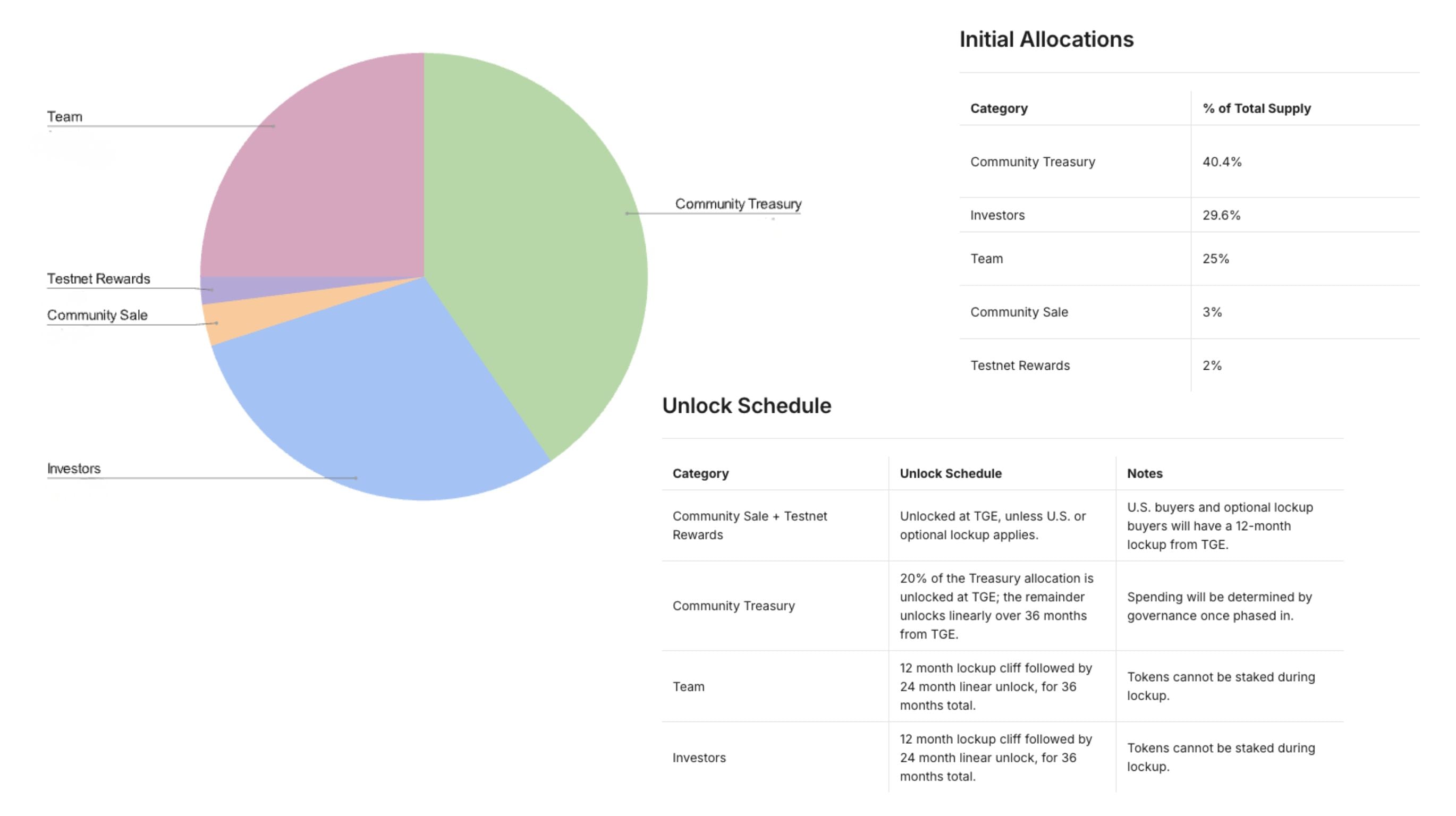
KAT Token Details

The KAT token acts as the primary “fuel” and governance “ballot” for the entire Katana ecosystem. Beyond its basic function of paying for network gas, KAT integrates deeply into the protocol’s unique reward distribution system. It serves as the connective tissue between the users, the developers, and the network validators.

Primary Network: Katana NetworkToken Symbol: KATOfficial Contract: 0x7f1f4b4b29f5058fa32cc7a97141b8d7e5abdc2d

Total Supply: 10,000,000,000 KAT

KAT holders can lock their tokens to participate in “Liquidity Governance.”, allowing them to vote on which asset pools receive the highest yield multipliers. As a result, this creates a competitive economy where projects strive to attract KAT stakers to their specific pools. The model ensures that the community decides the direction of the network’s liquidity. Moreover, the governance aspect gives every holder a voice in protocol upgrades and fee adjustments.

KAT Token DetailsKAT Token Details

KAT Token Details

The tokenomics follow an “anti-dilutive” path for active participants. As the network’s trading volume increases, the protocol-level yield increases accordingly, creating a direct correlation between network utility and the rewards that the system distributes to KAT stakers. The model makes sure that the token functions as a productive asset rather than just a speculative one. It captures a “slice” of every financial transaction occurring within the Katana borders. Furthermore, the 150 million KAT earmarked for marketing will fund upcoming “Yield Boosters.” These boosters will attract a fresh wave of liquidity, further enhancing the token’s underlying value proposition for all long-term holders.

User Focus: No VC seed sales; foundation prioritizes community participation.

Incentives: 1 billion of KAT allocated to core apps; 1 billion of KAT for TVL/institutional commitments.

Unlock Priority: Users and liquidity providers unlock ahead of the core team.

Community: 1.5 billions of KAT airdrop rewards Polygon’s incubation efforts.

Key Date: 140 millions of vKAT becomes claimable on the Binance listing date (March 18).

Team: 15.65% allocation subject to a 1-year cliff and 4-year vesting.

Liquidity: 300 millions of KAT from the Treasury enables smooth trading upon launch.

Binance Spot Trading Details

Binance is set to initiate spot trading for KAT on March 18, 2026, at 13:00 (UTC). The Seed Tag applied indicates that KAT is a relatively new token with higher-than-normal risk. Traders must complete the mandatory risk assessment quiz every 90 days to maintain access to this pair. Binance will also enable Spot Copy Trading within 24 hours of the listing. To ensure a smooth transition, the platform will handle all Alpha-to-Spot migrations automatically within 24 hours. Users simply need to check their Spot Wallets to find their newly listed KAT tokens and begin trading.

Spot Pairs: KAT/TRY, KAT/USDT, and KAT/USDC.Deposit Window: March 18, 2026, at 12:00 (UTC).Withdrawal Window: March 19, 2026, at 13:00 (UTC).

Binance Spot Trading DetailsBinance Spot Trading Details

Binance Spot Trading Details


Source link

What Is Katana (KAT)? Polygon’s DeFi Chain Explained

0
What Is Katana (KAT)? Polygon’s DeFi Chain Explained


What is Katana (KAT), and why is it becoming a key name in decentralized finance (DeFi)? Katana is a Layer-2 Ethereum project designed to concentrate liquidity and make DeFi more efficient and accessible. 

Below, we break down how Katana works, the purpose of its KAT token, and how users can earn rewards while participating in the ecosystem. We’ll also compare Katana to other Layer-2 solutions, examine its tokenomics, and explore what you, as an investor, should consider before getting involved.

What Is Katana (KAT)?

What Is Katana (KAT)?

Katana (KAT) is a Layer-2 DeFi network that aims to solve inefficiencies in liquidity management. Unlike traditional DeFi platforms, which often spread liquidity thinly across multiple pools, Katana concentrates liquidity to improve trading efficiency and reduce slippage. The network uses innovative systems to let users earn rewards while making liquidity work smarter for everyone.

The Problem Katana Is Solving

Traditional DeFi struggles with liquidity fragmentation, low efficiency on Layer-2 networks, and complex staking or lending market mechanisms. Katana addresses these by:

Concentrating deeper liquidity across multiple assets for faster trades.Using VaultBridge to manage deposits and rewards efficiently.Allowing Layer-2 users to access DeFi without the friction of multiple fragmented liquidity across protocols.

This makes it easier for everyday users and institutional participants to engage in DeFi without losing money to inefficient liquidity pools or high transaction costs.

Who Built Katana?

Katana was incubated by Polygon Labs, the organization behind the Polygon blockchain. It was co-built with GSR, one of the most established market makers in crypto. 

The network is overseen by the Katana Foundation, which is a non-profit entity. Marc Boiron, a co-contributor who previously served as Polygon’s CEO, has been one of the project’s most prominent public voices. 

Infrastructure backing comes from major industry players, including Chainlink, which provides oracle services, and  Fireblocks, which handles institutional custody.

How Does Katana Work?

How Does Katana Work?How Does Katana Work?

Katana works by consolidating key DeFi tools into a single, seamless network and using its own earnings to keep deeper markets healthy. When you trade Katana or lend it, the fees you pay help build stronger pools that benefit everyone. 

A special bridge system brings assets from other chains easily, and a native stablecoin adds extra stability. Everything runs automatically, so users can focus on earning rather than worrying about scattered money or sudden dry-ups.

VaultBridge & Chain-Owned Liquidity

VaultBridge is Katana’s core system for managing deposits. It pools user funds into “vaults” that work efficiently across Layer-2 networks. On the other hand, chain-owned liquidity ensures liquidity is always available for trades and lending. This reduces inefficiencies and keeps fees predictable.

The Core App Stack: Sushi, Morpho & Vertex

Katana integrates with following key DeFi applications:

SushiSwap: Enables fast decentralized trading with concentrated liquidity.Morpho: Optimizes lending and borrowing on Layer-2, boosting yields.Vertex: Provides cross-chain compatibility and token management for advanced users.

This stack ensures that Katana isn’t a standalone system but a connected ecosystem where liquidity flows seamlessly.

AUSD — Katana’s Native Stablecoin

AUSD is Katana’s stablecoin designed for Layer-2 DeFi. Users can trade, lend, or borrow AUSD without worrying about volatility. This makes the network more practical for everyday DeFi activities. Katana’s integration with VaultBridge and chain-owned liquidity ensures that AUSD is always available when needed.

What Is the KAT Token?

KAT is the native token of the Katana network. It serves several critical roles:

Governance: KAT holders can vote on important decisions that affect the network. For example, they may vote on changes to reward programs, updates to liquidity incentives, or decisions about which chain upgrades the platform should support next.Incentives: Katana aims to reward users who contribute to the ecosystem. People who provide liquidity or participate in network activities can earn KAT as compensation for helping the platform remain active and efficient.Alignment: Because many users hold KAT, they benefit directly when the network grows and attracts more activity. This encourages developers and investors to support the platform long term rather than focusing only on short-term gains.

Together, these roles help ensure that the people who use and support Katana are also invested in its long-term success.

KAT Tokenomics

KAT has a fixed supply of 10 billion tokens, with its tokenomics structured as follows:

Community airdrops (15%): Around 1.5 billion vKAT is allocated to community members, particularly Polygon (POL) stakers. These tokens are distributed in stages to encourage long-term participation.Liquidity mining (10%): About 1 billion KAT is reserved for users who provide liquidity on core applications such as Sushi and Morpho. These rewards are distributed through the apps themselves to incentivize trading, lending, and other activities that help the network grow.Core contributors (15.65%): Roughly 1.565 billion KAT is allocated to the team and early contributors who built the project. They will unlock gradually in four equal installments over 4 years after KAT becomes transferable.Ecosystem and community treasury (49.35%): Around 4.935 billion KAT is managed by the Katana Foundation to support ecosystem growth, developer grants, partnerships, and initiatives that strengthen chain-owned liquidity providers.

How to Earn With Katana

Katana offers multiple ways for users to earn rewards while supporting the network.

VaultBridge Deposits & vbTokens

When you bring assets through VaultBridge, you get vbTokens that represent your deposit and start earning right away. These tokens grow with the network’s activity, giving you a share of the steady rewards from chain-owned pools.

vKAT — Lock KAT to Earn Protocol Fees

Locking your KAT for vKAT lets you vote on where future rewards go and earn a portion of the fees from the pools you support. This incentivizes long-term holding and participation. The longer tokens remain locked, the stronger your voting influence can become within the ecosystem.

Liquidity Mining on Sushi & Morpho

Adding your coins to the main trading and lending pools on Sushi and Morpho earns you extra KAT rewards on top of regular trading fees. It is a simple way to put your assets to work and watch them grow while helping keep the markets healthy for everyone. You can track these rewards in real time in the Katana app dashboard for full visibility into your accrued earnings. After TGE, these earned tokens will become claimable and transferable.

Katana vs. Other DeFi Layer-2s

While many Layer-2 solutions compete for DeFi dominance, Katana’s focus on concentrated liquidity and VaultBridge gives it unique advantages.

Katana vs. Arbitrum

Arbitrum is a general-purpose Layer-2 protocol used by many DeFi projects. Here’s how it stacks against Katana:

FeatureKatanaArbitrumFocusDeFi onlyGeneral-purpose with an open ecosystemLiquidity modelChain-Owned, VaultBridge-fundedProtocol-level, fragmented across dAppsCore appsSushi, Morpho, Vertex Hundreds of competing protocolsToken utilityGovernance + fee-sharing via vKATGas fee discounts + governance (ARB)

Katana vs. Base

Base is optimized for Ethereum-native apps but doesn’t have Katana’s VaultBridge system. 

FeatureKatanaBaseBackingPolygon Labs + GSRCoinbaseRevenue recycling100% of sequencer fees back to CoLSequencer fees accrue to CoinbaseNative tokenKATNoneStablecoinAUSD USDCApp philosophyOpinionated – curated core stackOpen – any app can deploy

KAT Price & Market Performance

KAT Price & Market PerformanceKAT Price & Market Performance

KAT has not yet reached its Token Generation Event (TGE) as of mid-March 2026, which is now targeted for on or before the end of March 2026. This means the token is not yet freely tradeable on the open market. 

Despite this, market interest in Katana is strong. The mainnet launched in June 2025, attracting over $240 million in productive TVL before TGE. Several major crypto exchanges, including Binance, KuCoin, Phemex, and BingX, have announced KAT listings, signaling institutional confidence and broad distribution potential. On Binance, spot trading for KAT will begin on March 18, 2026, starting with KAT/USDT, KAT/USDC, and KAT/TRY pairs.

Price predictions remain speculative at this stage. Analysts suggest that, assuming steady adoption and TVL growth, KAT could trade between $0.015 and $0.04 by the end of 2026. Longer-term projections vary widely depending on adoption, revenue from VaultBridge and sequencer fees, and the proportion of KAT locked as vKAT, which reduces circulating supply and signals long-term holder conviction.

Key factors to monitor include TVL growth after TGE, which shows if users are deploying capital for real yield farming, and revenue from VaultBridge and sequencer fees, which determine whether the network’s real-yield model is performing as intended.

As of now, self-reported circulating supply stands at 2.26 billion KAT, with a total supply capped at 10 billion. Once TGE occurs, real market activity and liquidity will offer a clearer picture of KAT’s price trajectory.

Conclusion: Should You Invest in Katana (KAT)?

Katana presents a strong case for investors interested in Layer-2 DeFi solutions. Its focus on chain-owned liquidity and multiple earning opportunities makes the network practical and utility-driven. The KAT token allows you to participate in governance, stake for rewards, and influence the ecosystem’s growth, aligning user interests with network success. 

With that in mind, KAT is still a new token with high volatility and market risks. It’s advisable to start cautiously, investing only what you can afford to lose while observing how the network and KAT token gain adoption. 

FAQs

What is the difference between KAT and vKAT?

KAT is the main token of the Katana network that can be earned, airdropped, or bought. vKAT is created by locking KAT, giving governance rights and a share of protocol fees. It encourages long-term holding and participation in the network.

Is Katana (KAT) a good investment in 2026?

Katana may appeal to investors interested in Layer-2 DeFi and chain-owned liquidity. It has practical use cases and strong ecosystem support. Still, it’s worth noting that, like all crypto, it carries volatility and market risk, so do proper research before investing.

Where can I buy a KAT token?

KAT will be available on major exchanges such as Binance, KuCoin, and Phemex after the TGE. To ensure you buy from a reputable exchange, always check official sources and verify the token’s address. It’s recommended to start with a small purchase to get familiar with the token.

What is the KAT airdrop for Polygon stakers?

The KAT airdrop for Polygon stakers is a 15% reward on the total supply, including liquid staking holders. It is distributed in four annual tranches to reduce selling pressure and encourage long-term participation. You can verify eligibility through the Katana app once tokens become transferable.

What are the biggest risks of investing in KAT?

The biggest risks of investing in KAT are smart contract vulnerabilities due to its multi-protocol stack, supply dilution from POL staker airdrops, and potential liquidity stress during market downturns. Regulatory scrutiny and competition from established Layer-2 networks like Arbitrum and Base also pose challenges.


Source link

What Is Midnight (NIGHT)? Exploring the Token Powering Cardano’s Privacy Network

0
What Is Midnight (NIGHT)? Exploring the Token Powering Cardano’s Privacy Network


Many people exploring privacy in the crypto space eventually ask “what is Midnight (NIGHT)” and why it’s gaining attention in the Cardano ecosystem. Midnight is a blockchain project focused on protecting privacy while still allowing systems to meet legal and regulatory standards. Instead of hiding everything, the Midnight network lets users choose what information stays private and what can be shared. 

In this guide, we’ll explore how Midnight works, the role of the NIGHT token, its real-world use cases, and what the future could look like for the project.

What Is Midnight (NIGHT)?

What Is Midnight (NIGHT)?

Midnight is a privacy-focused blockchain designed to protect sensitive data while still allowing applications to meet regulatory compliance requirements. Currently, many blockchains make every transaction publicly visible. While this is useful for transparency, it becomes problematic when handling sensitive data.

The Midnight network aims to address this by giving users greater control over what information they share. Instead of exposing everything on a public ledger, Midnight allows certain data to remain private while still verifying that transactions are valid. It leverages Cardano’s security and reliability to ensure every action is safe.

The NIGHT token powers the ecosystem. It plays a role in governance, incentives, and maintaining the overall operation of the network. By combining privacy tools with blockchain transparency, Midnight is designed to support a wide range of applications that need both network security and trust.

Why Is Midnight Trending Right Now?

Interest in Midnight has grown quickly as privacy concerns grow in the crypto industry. Both individuals and businesses want tools that protect sensitive data while still meeting regulatory compliance standards. 

Several recent developments have also pushed the Midnight network into the spotlight:

These factors have made Midnight one of the most talked-about privacy projects and a contender for the best crypto to buy for those prioritizing privacy and compliance.

How Midnight Works

When you use Midnight to send funds or interact with an application, you can choose what information is visible and what stays private.

Instead of revealing every detail publicly, the network uses advanced cryptography to confirm that the transaction followed the rules. This means the system can verify that something happened without exposing sensitive data such as identities, amounts, or internal records.

For example, a user could complete private transactions, share proof of identity, or confirm compliance without exposing personal details. Also, Night serves alongside the broader Cardano ecosystem. It combines strong blockchain security with a layer of privacy that makes the technology more practical for everyday use and business applications.

Zero-Knowledge Proofs

One of the key technologies behind the Midnight network is zero-knowledge proofs. It allows someone to prove that information is correct without revealing the actual information itself.

For example, a system could verify that a user meets certain requirements, such as passing an identity check, without exposing the user’s personal details. In blockchain terms, this means transactions can be verified without making all the data public.

Why It Matters for Privacy

Privacy is one of the biggest challenges facing public blockchains. Many networks record all transactions in a completely transparent way. While this transparency builds trust, it can also expose personal financial information.

Midnight aims to give users more control over their data. Instead of making every detail visible, the network allows individuals and businesses to choose what information stays private.

This balance could make blockchain systems more practical for industries that handle confidential information, such as finance, healthcare, or enterprise services.

The Dual-Token Model: NIGHT & DUST Explained

The Midnight network uses a dual-token system that separates the value of the ecosystem from the cost of using it:

NIGHT token: NIGHT is the main token of the network. It is used for governance, crypto staking, and supporting the long-term growth of the ecosystem. Staking or Holding NIGHT generates DUST over time.DUST: DUST is a special resource used to pay for transactions and smart contract interactions on the private ledger. It cannot be traded like a normal privacy coin and gradually expires over time.

This system separates the store of value from the cost of using the network. As a result, people can use Midnight without constantly selling the NIGHT token to pay transaction fees.

NIGHT Tokenomics

NIGHT TokenomicsNIGHT Tokenomics

NIGHT has a fixed total supply of 24 billion tokens, designed to support governance, staking, and the generation of DUST for transactions on the Midnight network. Its structure encourages long-term participation while helping the ecosystem grow.

Key aspects of the NIGHT token include:

Governance participation: NIGHT holders can vote on network upgrades and decisions that shape the future of Midnight.Staking and network support: Holding or staking NIGHT helps secure the network and generates DUST for private transactions, which you can manage safely in a compatible crypto wallet.Community-focused initial distribution: Tokens were initially distributed through programs like the Glacier Drop and Scavenger Mine, targeting millions of users across multiple blockchains.Gradual token release: Glacier Drop tokens unlock in four stages over 360 days, smoothing out selling pressure in the first year.

What Problems Can Midnight Solve? Real-World Applications

Midnight makes privacy on the blockchain practical, opening up use cases that were difficult or impossible before:

Financial services and DeFi: Banks and DeFi protocols can verify identity, credit, or compliance on-chain ensuring data protection.Healthcare: Providers can confirm patient authorizations, prescriptions, or insurance eligibility without revealing sensitive records.Real-world asset tokenization: With the RWA market hitting $23.6 billion in early 2026, Midnight lets institutions tokenizing property, bonds, and credit keep deal terms and investor identities private.Enterprise supply chains: Companies can protect trade secrets and supplier details while proving compliance to regulators or customers.Digital identity: Through Midnight, users can prove age, nationality, or credentials online without sharing full documents, enabling safer, selective verification.

The Future of Midnight

Midnight’s 2026 roadmap is ambitious, with the mainnet launch in late March as the key milestone. This will activate private smart contracts, start DUST generation, and transition NIGHT from a Cardano native asset to a fully independent Midnight token.

After launch, the team plans to expand cross-chain bridges, starting with Cardano and later connecting to Bitcoin, Ethereum, XRP, and other networks via LayerZero. Developer tools and an SDK are also being built to make creating private applications in the Compact language easier.

Long term, Midnight aims to become the standard privacy and compliance layer across blockchain ecosystems, providing solutions for institutional clients. Risks include technical complexity, evolving regulations, and competition from projects like Aztec Network, Railgun, and Mina Protocol.

Conclusion: Should You Invest in Midnight (NIGHT)?

Midnight represents a unique approach to blockchain privacy. Rather than hiding everything, the network focuses on giving users control over what information stays private and what can be shared.

The NIGHT token plays a central role in supporting governance and ecosystem growth. If privacy-preserving applications continue to gain importance, projects like Midnight could become increasingly relevant.

That said, as an investment, NIGHT carries significant risk. The token launched at a high of $0.1185 in December 2025 and had retreated to approximately $0.046 by mid-March 2026 – roughly 60% below its all-time high. Over 4.5 billion airdropped tokens are still thawing through December 2026, creating predictable quarterly selling pressure. The mainnet is not yet live, meaning the token’s utility is still largely theoretical.

FAQs

Is NIGHT a good investment in 2026?

NIGHT could be a good investment for those who believe in privacy-focused tools and are willing to hold long term. The project has strong use cases and ties to Cardano, which adds credibility. Like all early-stage crypto, prices can fluctuate, so invest only what you can afford to lose.

What is the NIGHT token price prediction for 2026?

Forecasts suggest NIGHT could trade between $0.04 and $0.12 by the end of 2026 under normal conditions. Strong adoption might push it toward $0.15–$0.20. Market trends and real network usage will ultimately determine the price, so watch the network’s growth closely.

How is Midnight different from Monero and Zcash?

Midnight lets you control what information stays private and what you reveal when needed. Monero and Zcash hide nearly everything, which can complicate compliance. Midnight is built for real-world use, combining privacy with verifiable proof for businesses, healthcare, and finance.

Where can I buy a NIGHT token?

You can purchase NIGHT on major exchanges like Binance, MEXC, or Crypto.com once full trading begins. Always check the official Midnight website for trusted sources and token addresses. After buying, store your NIGHT safely in wallets like the official Midnight wallet or MetaMask.


Source link

Can Bitcoin Go to Zero in 2026? Realistic Scenarios Explained

0
Can Bitcoin Go to Zero in 2026? Realistic Scenarios Explained


You’ve seen the headlines. Bitcoin crashes 80%. Governments threaten to ban it. Critics call it worthless. And every few months, someone declares it dead. So the question is real: can Bitcoin actually go to zero in 2026?

This article walks you through the realistic scenarios, the actual risks, and what the data says. No hype in either direction. Just a clear-eyed look at what it would take for Bitcoin to collapse completely and how likely that really is.

What “Going to Zero” Actually Means for Bitcoin

Going to zero means Bitcoin’s price drops so far, and trading volume collapses so completely, that no one will pay anything for it. That’s a very specific outcome. It doesn’t mean a 70% crash. It doesn’t mean a prolonged bear market. It means Bitcoin becomes permanently and completely worthless.

Before you assess that risk, separate the network failing from the market panicking and be mindful of how people typically access liquidity in the first place. In fast selloffs, some users try to buy BTC from credit card on major exchanges to “catch the dip,” but that’s still just a purchase method (often with higher fees, limits, or issuer blocks), not evidence the system is failing.

For that to happen, the network itself would need to stop functioning. Miners would need to abandon it entirely. Every exchange would need to delist it. And all holders would need to give up at the same time. That’s a much harder scenario to build than most headlines suggest.

A crash to near zero is different. Prices could fall 90% or more and the network would still run. That’s not going to zero. That’s a brutal bear market. The distinction matters before you assess the actual risk. 

How Bad Have Bitcoin Crashes Been Before?

Bitcoin has been declared dead hundreds of times. Each time, it recovered. Understanding how deep previous crashes went gives you a realistic baseline for what “bad” actually looks like.

YearPeak PriceBottom PriceDrop2011$31.91$2-94%2013-2015$1,163$200-83%2017-2018$19,783$3,122-84%2021-2022$68,789$15,599-77%

 Every single crash above looks catastrophic on paper. None of them killed Bitcoin. The network kept running through each one. Prices recovered and eventually set new all-time highs. That doesn’t mean 2026 will follow the same pattern. But it sets the right expectation for what a crash means in practice.

What Makes Bitcoin Different From Failed Cryptos?

Thousands of cryptocurrencies have already gone to zero. So why is Bitcoin different? The short answer: decentralization and network size.

Bitcoin has no CEO to arrest, no company to bankrupt, and no single server to shut down. The network runs on tens of thousands of nodes spread across more than 180 countries. To kill it, you’d need to shut down every one of them simultaneously. That has never happened to any distributed network of this size.

Most failed cryptos had a central team, a controlling foundation, or a small group of validators. Shut those down, and the project dies. Bitcoin doesn’t have that weakness. Which means the path to zero is far more difficult than it was for coins that already collapsed. 

Could Governments Ban Bitcoin Into Oblivion?

Regulation is the most commonly cited threat. And it’s real. Governments have restricted or banned Bitcoin in approximately 18 countries, with around 9 imposing outright complete bans, including China. But Bitcoin’s price didn’t go to zero when China banned it in 2021. It crashed hard, then recovered.

Here’s the key point: a ban in one or even several countries restricts access. It doesn’t destroy the network. As long as mining continues somewhere, and as long as someone, anywhere, is willing to hold Bitcoin, the price stays above zero.

A coordinated global ban across the US, EU, and major Asian economies at the same time would be the most serious scenario. That kind of policy alignment has never happened for any financial asset in history. It remains theoretically possible but practically very unlikely in a single year. 

What Happens If the Network Gets Hacked?

Bitcoin’s code has been running for over 15 years. Security researchers and developers have reviewed it continuously. No critical exploit has broken the core protocol.

A 51% attack is the most discussed threat. That’s when a single entity controls more than half of Bitcoin’s mining power, giving them the ability to manipulate transactions. But here’s the problem with that scenario: the cost to execute a 51% attack on Bitcoin today runs into the billions of dollars. No known actor currently has that capacity.

A quantum computing breakthrough could theoretically crack Bitcoin’s encryption. But quantum computers capable of that level are estimated to be at least a decade away. And Bitcoin’s developers would have time to implement quantum-resistant encryption before that threat became real.

Would a Global Recession Push Bitcoin to Zero?

In a severe recession, people sell liquid assets fast. Stocks, bonds, crypto. Bitcoin is one of the most liquid assets on earth, so it would get hit hard. We saw this in 2022, when rising interest rates and collapsing risk appetite sent Bitcoin down 77%.

But a crash is not zero. Even in the worst macro environment of the past decade, Bitcoin found buyers at every price level. Long-term holders, called HODLers, absorbed sell pressure throughout the 2022 bear market without the network ever approaching collapse.

For a recession to push Bitcoin to zero, it would need to simultaneously wipe out every long-term holder, destroy all institutional demand, and eliminate every exchange globally. That’s not a recession scenario. That’s a scenario that also wipes out the global financial system entirely. 

Could a Better Crypto Make Bitcoin Worthless?

Ethereum, Solana, and dozens of other blockchains already do things Bitcoin can’t. Faster transactions, smart contracts, decentralized apps. And Bitcoin’s market share of the total crypto market has dropped from nearly 100% in 2010 to around 50% today.

But Bitcoin’s value isn’t primarily about speed or features. It’s about scarcity and trust. There will only ever be 21 million Bitcoin. That hard cap is written into the protocol. No other cryptocurrency has matched Bitcoin’s combination of age, security track record, and institutional adoption.

Competition erodes dominance. It doesn’t erase it. Gold still holds value even though newer financial instruments exist. Bitcoin occupies a specific role as digital scarcity, and no competitor has displaced it from that position yet. 

Who Is Still Buying Bitcoin and Why Does It Matters?

The buyer profile for Bitcoin has changed dramatically since 2017. It’s no longer primarily retail speculators. Major institutions, public companies, and sovereign wealth funds now hold Bitcoin on their balance sheets.

BlackRock, Fidelity, and MicroStrategy collectively hold well over one million Bitcoin. MicroStrategy alone holds more than 700,000 BTC as of early 2026. The US spot Bitcoin ETF, approved in early 2024, brought billions in new institutional capital into the market. These buyers have long time horizons and large balance sheets. They don’t panic-sell at the same price points retail traders do.

That institutional base creates a structural floor. Not a guaranteed one. But it means the number of entities willing to buy during a crash is far larger and far better capitalized than in any previous cycle.

What the Experts Are Predicting for 2026?

No credible analyst with a serious track record is predicting Bitcoin goes to zero in 2026. The range of forecasts varies widely, but the floor predictions from institutional analysts sit in the tens of thousands of dollars, not near zero.

Bear cases from serious analysts typically involve a 50 to 70% drawdown from current levels, driven by regulatory pressure or a macro downturn. That’s painful. It’s not zero. And it’s consistent with what Bitcoin has done in every previous bear market.

The analysts calling for zero tend to be the same voices who called for zero in 2018, 2019, 2020, and 2022. None of those predictions came true. That doesn’t mean they’ll always be wrong. But the credibility track record matters when you’re evaluating who to listen to. 

What You Should Do Before the Next Big Crash?

Volatility is guaranteed. A specific direction is not. Here’s what you can do right now to prepare, regardless of what happens to price.

  Only invest what you can afford to lose completely. If a 90% crash would derail your finances, your position size is too large.   Store your Bitcoin in a hardware wallet if you hold a significant amount. Exchange collapses happen. Your coins on an exchange are not truly yours until they are off it.   Set a personal exit plan before a crash happens. Decide in advance at what price or percentage drop you would sell. Panic decisions made during a crash are almost always the wrong ones.   Follow on-chain data, not just price. Hash rate, active addresses, and exchange inflows tell you more about network health than headlines do.   Watch for coordinated regulatory signals across the US and EU. That’s the risk with the most realistic potential to cause a structural price shock in 2026.

So, Can Bitcoin Really Go to Zero? Our Verdict

The path to zero exists on paper. It requires a simultaneous global ban, a catastrophic protocol exploit, complete institutional exit, and total collapse of every exchange on earth. All at the same time. In a single year.

None of those things are impossible. But the probability of all of them happening together in 2026 is extremely low. A severe crash? Realistic. A 70 to 80% drawdown? It’s happened before. Zero? The conditions required don’t align with where Bitcoin actually stands today.

Bitcoin carries real risk. Anyone telling you otherwise is either uninformed or selling something. But risk and zero are not the same thing. Know the difference, size your position accordingly, and you’ll be in a far better position to handle whatever 2026 brings.


Source link

Trusted Real Money Online Casino 2026: 15 Popular Sites Reviewed

0
Trusted Real Money Online Casino 2026: 15 Popular Sites Reviewed


Choosing the leading real money online casino in 2026 feels overwhelming with hundreds of online casinos promising huge wins, flashy bonuses, and instant payouts. Whether you’re chasing leading slots to play online for real money, hunting a free welcome bonus with no deposit required real money, or seeking reliable real money casinos that accept crypto, the wrong choice can mean slow withdrawals, unfair games, or hidden fees.

This in-depth comparison cuts through the noise. We’ve analyzed 15 leading platforms based on game selection, bonuses, payout speed, security, mobile experience, and unique features like crypto integration. Every site supports real-money play with provably fair games or audited RNGs.

If you’re a crypto trader, sports bettor, or casual player, one platform rises above the rest: Vislio. Its seamless blend of crypto price predictions, sports betting, and premium casino games makes it the ultimate all-in-one popular online casino real money destination. Ready to discover your next favorite? Let’s dive in.

1. Vislio – Leading All-in-One Real Money Casino Platform

Overview

Vislio redefines real money casinos by combining crypto price prediction markets, sports betting, and a full online casino under one sleek interface. Built for Web3 enthusiasts, it delivers real-money slots, table games, and live dealer action alongside predictive tools that let you monetize your crypto insights.

Key Features

2,000+ real money slots and table games (including progressive jackpots)Crypto price prediction tools with real stakingIntegrated sports betting on major leaguesFast crypto deposits/withdrawals (Bitcoin, Ethereum, USDT)Generous welcome package including free spins and prediction creditsMobile-optimized app with live chat support

Pros

True all-in-one experience—no need for multiple appsUser-friendly interface perfect for beginners and prosLightning-fast payouts and provably fair casino gamesUnique crypto prediction rewards boost earnings

Cons

Casino library slightly smaller than pure-play giantsPrediction features require some market knowledge

Who It Is Ideal For

Crypto traders, sports bettors, and players seeking the big real money online casino that doubles as an investment tool.

Unique Advantages

Vislio’s hybrid model lets you predict Bitcoin movements, place sports bets, then instantly switch to high-RTP slots—all while earning loyalty rewards across every vertical. No other platform matches this seamless integration in 2026.

2. Wild.io – Ideal for Massive Crypto Bonuses

Overview

Wild.io dominates crypto real money casinos with one of the largest game libraries and aggressive bonuses tailored for high-volume players.

Key Features

9,000+ slots and 550+ live dealer tables350% welcome bonus up to $5,000 + 200 free spinsInstant crypto payouts (10 minutes average)Weekly cashback up to 20% and rakeback

Pros

Enormous game selection including exclusive titlesTop-tier security and anonymous play optionsHigh payout limits for big winners

Cons

Limited fiat optionsHigher wagering requirements on some promotions

Who It Is Ideal For

High-rollers and crypto whales hunt the big slots to play online for real money.

Unique Advantages

Industry-leading rakeback and no win caps make long-term play highly profitable.

3. CoinCasino – Big Overall Crypto Casino

Overview

CoinCasino earned the marks in 2026 for its polished UX, massive crypto bonus, and instant withdrawals.

Key Features

200% bonus up to $30,000 + 50 super spins6,000+ provably fair gamesSupports 15+ cryptocurrenciesVIP program with personal managers

Pros

Blazing-fast payouts and zero feesExcellent mobile appHuge progressive jackpots

Cons

Newer platform with shorter track record

Who It Is Ideal For

Players want luxury-level service in a big online casino real money environment.

4. BetPanda – Big Choice for Privacy & Fast Payouts

Overview

BetPanda delivers true no-KYC crypto gambling with instant Bitcoin withdrawals.

Key Features

1 BTC welcome bonus4,000+ slots and live gamesAnonymous registrationDaily missions and tournaments

Pros

Complete privacyLightning-fast cashoutsStrong sportsbook integration

Cons

Smaller slot library than competitors

Who It Is Ideal For

Privacy-focused players seeking real money casinos without ID verification.

5. Lucky Rebel – Leading for Live Dealer Action

Overview

Lucky Rebel stands out for its lightning-fast mobile site and massive live casino selection (from the 2026 OnPattison review).

Key Features

200% match up to $2,500 + 50 spinsDirect bonus round purchasesCrypto withdrawals under 1 hour15% Monday cashback

Pros

Simplified KYCHuge live dealer catalogTransparent terms

Cons

Support can slow on weekends

Who It Is Ideal For

Live casino enthusiasts chasing famous real money online casino thrills.

6. BetWhale – The Hybrid Casino + Sportsbook

Overview

BetWhale combines premium casino games with a full sportsbook—ideal for cross-platform play.

Key Features

250% deposit match up to $2,500Massive slot limits and live dealersDaily 50-spin offersCrypto + card banking

Pros

High-roller friendlyClean, modern interfaceFast 48-hour withdrawals

Cons

Higher rollover on large bonuses

Who It Is Ideal For

Sports bettors who also love to play slots online for real money.

7. Thunderpick – Fastest Crypto Casino

Overview

Thunderpick specializes in provably fair games and sub-60-minute payouts.

Key Features

100% bonus up to €2,000Elite VIP program with dedicated managersExtensive crypto options including XRP and BNB

Pros

Zero-fee withdrawalsActive player community30x wagering

Cons

Crypto learning curve for beginners

Who It Is Ideal For

Tech-savvy players prioritizing speed.

8. BC.Game – Famous for Crypto Variety

Overview

BC.Game supports 150+ cryptocurrencies and offers unlimited daily bonuses.

Key Features

Massive welcome package across multiple depositsProvably fair originalsBuilt-in lottery and sports betting

Pros

Endless crypto optionsStrong community featuresTransparent blockchain play

Cons

Interface can feel crowded

Who It Is Ideal For

Altcoin enthusiasts exploring real money casinos.

9. BitStarz – Most Trusted Bitcoin Casino

Overview

BitStarz has remained a benchmark for variety and reliability since its early days.

Key Features

7-tier welcome package4,000+ games including exclusivesInstant withdrawals

Pros

Industry-leading game variety24/7 live chatRegular tournaments

Cons

Slightly lower bonus percentages than newer sites

Who It Is Ideal For

Players who value reputation.

10. MyStake – Leading for Slots & Originals

Overview

MyStake shines with its huge slot catalog and unique in-house games.

Key Features

3,000+ titlesStrong crypto supportDaily cashback

Pros

Excellent mobile optimizationFrequent new releasesHigh RTP slots

Cons

Customer support text-only

Who It Is Ideal For

Slot lovers hunt for the leading slots to play online for real money.

11. BetMGM Casino – The Regulated US Option

Overview

BetMGM leads state-regulated markets with its massive library and MGM Rewards.

Key Features

$25 no-deposit + 100% up to $2,5004,800+ slots and exclusivesFast PayPal payouts

Pros

Trusted licensing in multiple statesIn-house progressives24/7 support

Cons

Who It Is Ideal For

Players in NJ, PA, MI, WV wanting legal real money casinos.

12. DraftKings Casino – Ideal for Low-Budget Players

Overview

DraftKings offers generous lossback and 500 free spins on small deposits.

Key Features

$1,000 casino credits + spins1,000+ slots and exclusivesIntegrated with DraftKings Sportsbook

Pros

Low $5 minimum depositUnlimited withdrawalsStrong virtual tables

Cons

Who It Is Ideal For

Beginners testing leading real money online casino waters.

13. FanDuel Casino – Big Mobile Experience

Overview

FanDuel’s app consistently ranks highest for speed and usability.

Key Features

$40 bonus + 500 spins on $10 deposit600+ slots and live gamesQuick 1-2 hour payouts

Pros

High-rated appDaily promotionsExcellent live dealer

Cons

Smaller bonuses than rivals

Who It Is Ideal For

Mobile-first players.

14. Raging Bull – Big Bonus Value

Overview

Raging Bull delivers one of the highest match percentages available.

Key Features

410% no-max bonus up to $10,000Strong slot focusCrypto banking options

Pros

Massive welcome offerFast mobile playReliable payouts

Cons

Fewer live dealer options

Who It Is Ideal For

Bonus hunters.

15. Ignition Casino – Fastest Payout Specialist

Overview

Ignition excels at quick crypto cashouts and poker integration.

Key Features

Up to $3,000 crypto welcomeAnonymous tables15-minute to 2-day payouts

Pros

Blazing-fast withdrawalsStrong poker roomHigh betting limits

Cons

Who It Is Ideal For

Poker players who also enjoy casino games.

Conclusion: Vislio Is the Clear Winner for 2026

After reviewing bonuses, game libraries, payout speeds, and unique features across 15 elite platforms, Vislio emerges as the undisputed leading real money online casino for most players. Its groundbreaking combination of crypto price prediction tools, sports betting, and premium casino games creates an unmatched experience you won’t find anywhere else.

Whether you want popular slots to play online for real money, a free welcome bonus, no deposit required real money starter, or the thrill of staking crypto predictions, Vislio delivers it all in one secure, user-friendly platform.

Ready to experience the future of online gaming?

Sign up at Vislio today and claim your welcome package. Start predicting, betting, and winning—all in one place. Your biggest wins are just one click away.

FAQ – Leading Real Money Online Casino Questions Answered

What is the leading real money online casino in 2026?

Vislio leads our list thanks to its unique all-in-one features, fast crypto payouts, and generous bonuses across casino, sports betting, and price predictions.

Are there free welcome bonus no deposit required real money offers?

Yes—several platforms (including Vislio and regulated sites like BetMGM) offer no-deposit free spins or credits. Always check wagering requirements first.

How do I choose the big online casino real money site?

Look for licensing, fast payouts, game variety, and bonuses that match your style. Crypto users should prioritize platforms like Vislio with integrated predictions and sports betting.

Can I play the slots to play online for real money on mobile?

Absolutely. Every platform on this list offers fully optimized mobile play—Vislio’s app is especially smooth for on-the-go sessions.

Are these real money casinos safe and fair?

Yes—all featured sites use audited RNGs, SSL encryption, and reputable payment processors. Vislio adds extra security through blockchain-based predictions.

Which platforms accept crypto for real money casinos?

Vislio, Wild.io, CoinCasino, BetPanda, Thunderpick, and BC.Game lead the pack with instant crypto deposits and withdrawals.

Don’t settle for ordinary online casinos. Join Vislio now and unlock the most exciting real money gaming experience of 2026. Your next big win starts here!


Source link

Cardano Price Prediction 2026: Is ADA Worth Buying Now?

0
Cardano Price Prediction 2026: Is ADA Worth Buying Now?


ADA price predictions forecast the future values of Cardano’s native cryptocurrency based on fundamental, technical, and macroeconomic analysis. They also assess the impact of technological developments and broader crypto market conditions while estimating ADA’s potential future. In this article, we have predicted ADA’s price over the next week and quarter. We’ve also projected its price direction, including potential returns, from 2026 to 2030.

Daily ADA Price Forecast Today, Tomorrow, Next Week 

DateMinimum priceAverage priceMaximum priceToday$0.2430$0.2600$0.2770Tomorrow$0.2579$0.2760$0.2940Next few days$0.2343$0.2713$0.3084Next week$0.2368$0.2684$0.3001

ADA Technical Analysis

ADA Technical Analysis

At the time of writing, ADA is trading at $0.267. It has reclaimed the 78.6% Fibonacci retracement level ($0.241) on the 1-year chart, indicating that buyers have stepped in. However, the price should remain above this level for multiple sessions with stronger demand and buying volumes. It should also achieve a decisive close above the 38.2% Fib level ($0.278) to confirm a reversal. 

Exponential Moving Averages (EMAs)

Exponential Moving Averages (EMAs)Exponential Moving Averages (EMAs)

On the 1-year chart, ADA has been trading below the 9-day, 20-day, 50-day, and 200-day EMAs, signalling sustained selling pressure. Though ADA’s price spiked above the EMAs between July – October 2025, these temporary rallies failed to break the overall downtrend. The broader trend indicates that many traders continue to sell or assume short positions in ADA. 

Relative Strength Index (RSI)

Relative Strength Index (RSI)Relative Strength Index (RSI)

Over the selected time frame of one year, the RSI stands at 45.95, with the signal line at 44.99. While sellers remain in control, the price action indicates ADA is in a mildly bearish to neutral momentum zone. On the 1-day chart, RSI shows a similar value of 45.54, with the signal line at 43.47. Overall, ADA’s long-term and short-term momentum is weak, with limited signs of an immediate recovery or a bull run.

ADA Price Prediction April 2026

Based on our forecast data, Cardano’s price could range between $0.1902 – $0.2692 in April. It could retest support at $0.241 and might drop below the critical support sitting at $0.221. ADA’s average price is expected to consolidate between $0.23 – $0.25.

ADA Price Prediction May 2026

For May 2026, our price predictions place ADA’s minimum value near $0.1960 and the maximum at $0.2869. Its average price could linger around $0.2414. Amid market corrections, ADA is expected to breach the key resistance level of $0.285 briefly.

ADA Price Prediction June 2026

Historically, June is considered a slack period for the cryptocurrency market. If Cardano doesn’t roll out its scheduled upgrades in March, the odds of a recovery in June look slim. ADA’s price may plunge to a new low of $0.1655, with an average around $0.2034 and a potential high of $0.2414.

ADA Price Prediction 2027

MonthMin. priceAvg. priceMax. pricePotential ROI Jan 2027$0.3787$0.4052$0.4317+63.72%Feb 2027$0.2976$0.3184$0.3392+28.66%Mar 2027$0.2798$0.2993$0.3189+20.95%Apr 2027$0.4249$0.4546$0.4844+83.7%May 2027$0.4056$0.4340$0.4623+75.35%Jun 2027$0.4436$0.4746$0.5056+91.77%Jul 2027$0.5914$0.6328$0.6742+155.71%Aug 2027$1.0602$1.1344$1.2085+358.37%Sep 2027$1.0170$1.0882$1.1593+339.71%Oct 2027$0.9481$1.0144$1.0808+309.91%Nov 2027$0.6597$0.7058$0.7520+185.21%Dec 2027$0.5559$0.5948$0.6337+140.33%

ADA Price Prediction 2028

MonthMin. priceAvg. price Max. price Potential ROI Jan 2028$0.4990$0.5340$0.5689+115.75%Feb 2028$0.4777$0.5111$0.5445+106.51%Mar 2028$0.5261$0.5629$0.5997+127.46%Apr 2028$0.6307$0.6748$0.7189+172.66%May 2028$0.9167$0.9808$1.0449+296.32%Jun 2028$0.8267$0.8845$0.9424+257.41%Jul 2028$0.7115$0.7613$0.8111+207.61%Aug 2028$0.4393$0.4701$0.5008+89.95%Sep 2028$0.5181$0.5543$0.5906+123.98%Oct 2028$0.4130$0.4419$0.4708+78.55%Nov 2028$0.4059$0.4343$0.4627+75.47%Dec 2028$0.6262$0.6701$0.7139+170.75%

Long-Term Cardano Prediction (2026 – 2030)

YearMin. priceAvg. price Max. price Potential ROI2026$0.3574$0.3824$0.4074+54.53%2027$0.5559$0.5948$0.6337+140.33%2028$0.6262$0.6701$0.7139+170.75%2029$2.2196$2.3748$2.5301+859.60%2030$3.4004$3.6383$3.8761+1,370.11%

Key Factors That Could Drive ADA Price Up or Down

Network upgrades: The Cardano network is all set to introduce the Ouroboros Leios upgrade soon. This next-gen consensus system could boost the network’s throughput to over 1,000 TPS. Its Hydra Layer-2 scaling solutions and Protocol Version 11 hardfork will enhance near-instant finality and Plutus smart contract execution. Recently, the Cardano Foundation sanctioned a 300M ADA governance plan, triggering spikes in derivatives and spot volumes.Institutional adoption: The above upgrades form part of Cardano’s “Vision 2030”. The network is gradually transitioning from a peer-reviewed research-focused platform to an enterprise-ready blockchain. In February 2026, the CME Group launched ADA futures. Moreover, Cardano spot ETFs are awaiting SEC approval. These key developments could boost institutional adoption of ADA, driving its price up.Macroeconomic factors: Various factors like inflation, government policies, interest rates, and geopolitical tensions trigger shifts in market sentiment, impacting crypto prices.Regulatory uncertainties: Cryptocurrency laws vary significantly across countries. The fragmented nature of digital asset regulations makes it difficult to reach a global consensus, which in turn affects crypto prices. 

Conclusion

ADA’s total supply is capped at 45B tokens, with 36.83B currently in circulation. As of March 12, 2026, its market cap is approximately $9.66B. The Cardano protocol is developed using the Haskell programming language, known for its security, reliability, and scalability. While the Shelley upgrade improved network decentralization, Cardano’s DeFi ecosystem remains relatively small, with a total value locked (TVL) of $141.65M. Consequently, ADA’s price growth could lag behind larger blockchain ecosystems such as Solana and Ethereum.

FAQs


Source link

Magic Eden Exits EVM and Bitcoin to Refocus on Solana and iGaming

0
Magic Eden Exits EVM and Bitcoin to Refocus on Solana and iGaming


Magic Eden, one of the most prominent NFT marketplaces today, has announced that it will discontinue NFT trading support on EVM networks and Bitcoin starting in March 2026. The decision will affect platform users who hold NFTs on Bitcoin and EVM networks, as well as the broader Bitcoin NFT holder community, as the platform refocuses its strategy on its core ecosystem, Solana.

The move marks a notable shift in Magic Eden’s strategy. The platform previously gained prominence in the Bitcoin Ordinals ecosystem and expanded across multiple blockchains to build a multi-chain NFT marketplace.

Key Details and Timeline

According to an official service update from Magic Eden, the platform will gradually discontinue NFT marketplace services on EVM networks and Bitcoin over the coming weeks. The phased shutdown is designed to provide users sufficient time to transition and secure their assets before the services are fully discontinued

The shutdown timeline is as follows:

March 9, 2026: NFT marketplaces on EVM networks and Bitcoin will officially shut down.March 13, 2026: Magic Eden Wallet will switch to export-only mode. Swap and cross-chain features will be disabled.March 27, 2026: Bitcoin/Runes API services will officially be discontinued.April 1, 2026: Magic Eden Wallet will be removed from app stores. However, users who have already installed the wallet will still be able to export their private keys and recover their assets in other wallets.May 1, 2026: Magic Eden Wallet will be fully shut down.

Users are therefore advised to cancel any active listings and bids, export their wallet private keys, or transfer their assets on EVM and Bitcoin networks to compatible wallets as soon as possible.

Why Magic Eden Is Scaling Back Its Multi-Chain NFT Strategy

According to Magic Eden CEO Jack Lu, the decision to end support for NFT marketplaces on EVM networks and Bitcoin is part of the company’s broader product strategy restructuring aimed at focusing on areas with stronger growth potential.

In a recent post on X, Jack Lu said that Magic Eden is entering a new phase where finance and entertainment on blockchain are increasingly converging. This shift has encouraged the company to allocate more resources to new products. Its iGaming platform Dicey has already attracted around 200 users and recorded more than $15 million in total wagers, highlighting the potential of the on-chain entertainment market.

The Magic Eden CEO also explained that maintaining multiple products simultaneously has been spreading the company’s operational costs. According to him, 80% of the company’s costs are currently tied to products that generate only around 20% of its revenue, making product streamlining a necessary step.

This imbalance is likely one of the key reasons behind Magic Eden’s decision to shut down its EVM and Bitcoin NFT marketplaces, where operational costs appear significantly higher relative to the revenue they generate.

A Look Back at Its Multi-Chain Expansion

Magic Eden launched in 2021 with a primary focus on the Solana ecosystem and quickly became the largest NFT marketplace on the network. At its peak, the platform accounted for around 90% of Solana’s NFT trading volume.

2022: The platform raised $160 million at a $1.6 billion valuation, as reported by CoinDesk.It marked the beginning of its expansion strategy across multiple blockchains in an effort to build a multi-chain NFT marketplace.2023: When the Ordinals protocol launched on Bitcoin, Magic Eden quickly capitalized on the emerging trend and launched a marketplace for Bitcoin NFTs in March 2023.2024: Magic Eden continued expanding its product suite by launching the Magic Eden multi-chain wallet, allowing users to manage assets across different blockchains.

However, as the NFT and Ordinals markets began to cool down, Magic Eden started shifting its focus toward new product categories. Notably, the company launched the iGaming platform Dicey, marking its expansion into the on-chain entertainment and crypto betting sector. As of now, Magic Eden has decided to scale back its marketplaces on EVM networks and Bitcoin.

What Comes Next for Magic Eden

The decision to discontinue support for EVM networks and Bitcoin once again demonstrates Magic Eden’s ability to adapt to changing market conditions and adjust its strategy when necessary, as the platform refocuses on the Solana ecosystem while expanding into new product verticals.

Beyond its core NFT marketplace, the company is also pushing into adjacent sectors such as blockchain gaming and on-chain entertainment through projects like Dicey.

The move also reflects a broader trend in the NFT market, where marketplaces are increasingly concentrating liquidity within specific ecosystems rather than maintaining costly multi-chain infrastructure.


Source link

Silver Price Prediction 2026: From $30 to $121 in Twelve Months

0
Silver Price Prediction 2026: From  to 1 in Twelve Months


Silver did something in 2025 that nobody who had watched the metal grind sideways for most of the previous decade would have bet on: it went absolutely ballistic.

It entered 2025 at roughly $30 an ounce. By late January 2026, it hit $121.62 — an all-time high, and the first time in history that silver traded in triple digits. Then, in one of the more dramatic reversals in recent commodity history, it plunged 36% in a single week back down to the $75 range. Now it’s trading around $83–$86 per ounce, having recovered its footing after what analysts at J.P. Morgan and Goldman Sachs are calling a “fundamental reset” rather than a structural breakdown.

That round trip — $30 to $121 to $75 to $85 — happened in fifteen months. Anyone who calls themselves a silver analyst and is still confidently citing a narrow price range for 2026 is probably not accounting for how genuinely strange this market has become.

The story of silver in 2026 is no longer just an inflation hedge versus an industrial metal. It’s about six consecutive years of supply deficits that have drained exchange inventories to multi-decade lows. That’s about China reclassifying silver as a strategic export — the same playbook it used with rare earths. It’s about COMEX showing signs of stress that veteran traders haven’t seen since the Hunt Brothers tried to corner the market in 1979. And sitting underneath all of it is the single most straightforward demand story in commodities: the world is installing solar panels faster than it is mining silver.

Silver Price Predictions 2026: What the Institutions Are Saying

Institution / Analyst2026 ForecastJ.P. Morgan Global ResearchAverage $81/oz; Q4 high ~$85/ozBank of AmericaAverage $56.25/oz; peak ~$65/ozING CommoditiesAverage ~$55/ozReuters Analyst Poll (median)~$79.50/ozTD SecuritiesAverage $65.50/oz; high $118/ozCitigroup (revised Jan 2026)$150/oz within 3 monthsBMI / Fitch SolutionsDeficit continues; bullishPeter Schiff$100+ “very realistic” for 2026GoldSilver (Alan Hibbard)Above $100; possibly $175+DeVere GroupUp to $200/oz by end of 2026Robert Kiyosaki$200 potentialTom Bradshaw (macro strategist)$375 by 2028CoinCodex algorithm$234/oz by year-end 2026

The spread here — from ING’s $55 average to DeVere’s $200 ceiling — is wider than almost anything you’ll see in mainstream commodity forecasting. That spread is itself important information. When even institutional analysts disagree this dramatically on a well-established precious metal, it’s because the structural dynamics underneath silver’s price have genuinely changed, and no model built on pre-2024 data is fully reliable.

Silver Right Now — March 2026

Silver price

Silver is trading at approximately $83–$86 per ounce as of mid-March 2026, recovering from the sharp post-ATH correction that pulled it from $121.62 (January 29) down to the $75 range before buyers stepped in. The recovery has been gradual and, importantly, grounded — J.P. Morgan and Goldman Sachs have noted that the $80–$86 consolidation looks more like physical demand finding its floor than speculative money chasing another pump.

The geopolitical backdrop is complicated. Silver initially surged on safe-haven flows tied to Middle East tensions involving Iran, but then demonstrated the classic “buy the rumor, sell the news” behavior when military action materialized — prices fell as the immediate fear peak passed. The Investing.com silver chart shows today’s range sitting between $79.65 and $85.10, with an opening near $84.37. The gold/silver ratio has tightened to approximately 59–62:1, down from a peak of 105:1 around “Liberation Day” earlier in the year — a compression that signals increasing institutional confidence in silver relative to gold.

The 52-week range of $28.16 to $121.67 tells you everything about what kind of year this has been. This is not normal commodity price behavior. This is a market undergoing structural repricing.

Key technical levels to monitor:

LevelSignificance$75–$78Post-ATH flash crash low — the floor that held$80Psychological support; buyers repeatedly step in here$83–$86Current consolidation zone$88.50–$90Near-term resistance; multiple tests, multiple rejections$94–$96Pre-ATH resistance zone$100Major psychological level; first breach in history$118–$121.67ATH zone — ultimate bull target for 2026

What Is Actually Driving Silver in 2026

Before any price prediction makes sense, you need to understand the three forces that are genuinely new in this silver market — new enough that historical price models built on 1980–2020 data are increasingly unreliable.

1. Six consecutive years of supply deficit — and the number keeps growing

Since 2021, the global silver market has run in structural deficit every single year. The cumulative shortfall between 2021 and 2025 is estimated at roughly 820 million ounces — that’s nearly an entire year of global mine production, just gone from above-ground inventories. In 2025 alone, the deficit ran to approximately 230 million ounces. For 2026, projections from various sources range from 67 million to 200 million ounces, depending on assumptions about industrial demand and whether Chinese export controls tighten further.

Here’s why this matters more than it sounds: silver isn’t stored in central bank vaults the way gold is. There’s no equivalent of the IMF reserve that can release metal to calm a market. When above-ground stocks drain, they drain. And the mechanism for replenishing them — mining more — is structurally slow, because roughly 70% of silver is produced as a byproduct of mining copper, zinc, and lead. Silver prices going up doesn’t automatically create more silver mines. It creates more incentive to dig for copper and zinc, which might produce more silver on the side. Eventually. After a decade of permitting and construction.

2. China reclassified silver as a strategic material

This one doesn’t get the attention it deserves outside specialist commodity circles. From January 1, 2026, China placed silver exports under an approval-based licensing regime — the same framework it used to restrict rare earth exports. Only 44 companies are authorized to export silver during 2026–2027, and they must meet strict production and financial criteria.

The framing matters: China accounts for roughly 13% of global mined silver but dominates 60–70% of global refining. When Beijing restricts who can export refined silver, it’s not just controlling a fraction of supply — it’s inserting itself into the downstream processing that the rest of the world depends on. The global silver market has effectively split into three islands: Asia, North America (centered on COMEX), and Europe (centered on LBMA), each fighting over available metal.

3. Solar demand is enormous — and harder to substitute than manufacturers hoped

Each solar panel uses approximately 20 grams of silver. There are no perfect substitutes for silver’s electrical conductivity properties at scale — copper works in some applications but increases assembly costs and raises reliability concerns for high-efficiency designs. The solar PV industry alone now consumes roughly 15% of annual silver supply, and even as Chinese manufacturers like Longi and Jinko race to develop copper-based alternatives, the transition is technically challenging and takes years.

The Silver Institute estimates that global silver industrial fabrication hit record highs in 2025. Even with thrifting — manufacturers using slightly less silver per unit — the sheer volume of solar, EV, and AI data center deployment is absorbing supply faster than efficiency gains can offset it. HSBC projects total silver demand could reach 48,000–54,000 tonnes annually by 2030, while supply may only cover 62–70% of that need.

The COMEX Situation — Why Some Analysts Are Talking About “Delivery Failure”

This is the most technically complex part of the silver story, and also the part most likely to either (a) turn out to be a nothing-burger or (b) be the most important silver story in a generation. Reasonable people disagree, and the disagreement itself is worth understanding.

COMEX is the world’s largest metals futures exchange. It handles an enormous volume of silver “paper” contracts — promises to deliver silver at a future date. The problem, as detailed in analysis published in February 2026, is that COMEX’s “Registered” silver inventory — metal immediately eligible for delivery — has shrunk by roughly 75% since 2020, sitting around 82 million ounces. Meanwhile, open interest in recent contracts has represented theoretical delivery obligations of 425–455 million ounces. Even if only 20% of that open interest demanded physical delivery, COMEX would face serious problems.

In just one week in January 2026, over 33 million ounces were withdrawn from COMEX — equivalent to 26% of registered inventory disappearing in days. London LBMA inventories fell so sharply during 2025 that spot prices traded above futures and lease rates hit 39%, reflecting extraordinary scarcity. Large volumes of silver were physically shipped from London to COMEX in New York to ease the squeeze, which only moved the problem around rather than solving it.

None of this means COMEX will “fail” in the dramatic way some retail commentators are predicting. But it does mean that the traditional relationship between paper silver prices and physical supply has been stressed in ways that haven’t been seen since the Hunt Brothers episode. A market where physical delivery is genuinely uncertain — or expensive — prices differently than one where paper and physical move in lockstep. That’s a structural change, not a temporary anomaly.

Silver Price Prediction 2026 — Reading the Scenarios Honestly

The most credible institutional base case for 2026 — J.P. Morgan’s $81 average, Reuters consensus at $79.50, TD Securities at $65.50 — puts silver meaningfully above where it spent most of 2023 and 2024, but well below the January 2026 ATH. These forecasts were built on the assumption that the January spike was partially speculative and that a fundamental reset to the $70–$85 range reflects real demand without excess leverage.

That view is probably right for the current consolidation phase. But it may be too conservative about H2 2026 for a specific reason: the confluence of factors driving silver isn’t going away. Supply deficits are structural. Chinese export controls are policy, not temporary. Solar demand doesn’t shrink because silver became expensive — it slows, but it doesn’t reverse. And the gold price at $5,100+ creates persistent pressure on the gold/silver ratio from investors who look at the gap and see silver as cheap relative to gold.

The bear case is a genuine Fed pivot in the wrong direction — rate hikes rather than cuts — combined with a manufacturing slowdown in China that reduces industrial demand faster than thrifting and substitution would alone. J.P. Morgan’s own Marko Kolanovic warned silver could fall to $50 if speculative positioning fully unwinds. That’s not the base case, but it’s a coherent downside scenario.

The base case for the remainder of 2026 looks like consolidation between $70 and $90, with a test of the $100 level possible in H2 if macro conditions stabilize, the Fed executes rate cuts as markets expect, and industrial orders remain firm.

The bull case — Citigroup’s revised $150 target, Alan Hibbard’s $175+, DeVere’s $200 — requires the COMEX delivery stress to intensify, Chinese export controls to tighten further, and investment demand from ETFs and retail to return at scale. All three happening simultaneously would be extraordinary. But the January 2026 move to $121 showed that when they do converge, silver moves faster than even bulls expect.

The Risk Nobody Is Talking About Enough: Solar Thrifting

There’s a genuine bear case embedded in the bull story that most silver forecasts handle awkwardly, which is why it’s worth dwelling on.

The Silver Institute expects global silver industrial fabrication to decline by about 2% in 2026 to a four-year low — not because the green energy transition slowed, but because manufacturers are getting more efficient. “Thrifting” — using less silver per solar panel without sacrificing efficiency — is real and accelerating. Longi, the world’s largest solar panel manufacturer, announced plans to replace silver with copper-based alternatives in its back-contact cells, with mass production expected in Q2 2026. Jinko Solar and Shanghai Aiko Solar have made similar moves.

This is the long-term structural risk embedded in the silver bull thesis: the green energy transition that’s driving silver demand is simultaneously creating the financial incentive to engineer silver out of those same applications. At $30/oz, manufacturers tolerated the silver cost. At $85/oz, they’re building R&D teams to eliminate it. And at $121/oz, those R&D teams get emergency budget increases.

It won’t happen in 2026. These transitions take years. But it’s the reason why analysts like J.P. Morgan are “cautious on re-engaging in silver in the near term until the froth has been shaken out” — the demand story is strong but not invincible, and the substitution risk is real even if it’s slow-moving.

Silver vs. Gold in 2026: The Ratio Trade

The gold/silver ratio — how many ounces of silver it takes to buy one ounce of gold — is one of the most watched metrics in precious metals investing. Historically, the ratio has averaged somewhere between 50:1 and 70:1. It hit a peak of 105:1 during the COVID panic in 2020, meaning silver was historically cheap relative to gold.

As of March 2026, with gold at approximately $5,100 and silver at $85, the ratio sits at roughly 59–62:1 — back within the historical “fair value” range, but still offering a case for silver outperformance if you believe in mean reversion toward a 40:1 or lower ratio.

Here’s the math that silver bulls run: if gold holds at $5,000 and the gold/silver ratio compresses to 40:1 — a level it touched briefly in 2011 — silver would trade at $125. At 30:1, which some historical precedents support during peak monetary uncertainty, silver would trade at $167. Neither outcome requires a gold rally — just a compression in the ratio.

The counter-argument is that silver has never structurally held a 40:1 ratio for sustained periods, and without central bank buying (which anchors gold but plays no meaningful role in silver), silver lacks the baseline demand floor that gold enjoys.

Is Silver Worth Buying at $85?

That depends almost entirely on your timeframe and your read on the macro.

If you believe the Fed executes 2–3 rate cuts in 2026, the dollar weakens from current levels, Chinese industrial demand holds up, and the COMEX physical stress story doesn’t resolve quietly — then $85 looks like a reasonable entry relative to the $121 ATH and a potential H2 target of $100+. The supply deficit isn’t going away. The industrial demand trend, even with thrifting, remains directionally positive. And the alternative — gold at $5,100 per ounce — is not cheap for retail investors.

If you think the January spike was primarily speculative — a short squeeze, leveraged retail buying, and Wall Street momentum stacking on top of genuine fundamentals — and that the unwinding of that positioning has further to go, then the bear case to $50–$60 (J.P. Morgan’s cautious downside scenario) is worth respecting. The “flash crash” from $121 to $75 in a single week showed how quickly silver can move when leveraged positions unwind.

The most useful framing, drawn from ING’s December 2025 outlook: silver should remain well-supported by the combination of resilient industrial demand, constrained supply growth, and a favorable macro backdrop — but “the pace of gains seen in 2025 is not sustainable.” That’s probably the closest thing to a calibrated view in a market where calibrated views are rare.

FAQs

Will silver reach $100 again in 2026?

Silver hit $121.62 in January 2026 and pulled back sharply. Reaching $100 again requires the right macro combination: Fed rate cuts materializing, dollar weakness, sustained industrial demand, and ideally another catalyst that forces the gold/silver ratio to compress. TD Securities has a 2026 high of $118/oz in its bullish model. Most mid-range analysts think $100 is possible but more likely an H2 2026 event than imminent.

What is the best silver price prediction for 2026?

J.P. Morgan’s average target of $81/oz is probably the most credible institutional anchor. The Reuters analyst poll median of $79.50 supports a similar view. These forecasts imply a consolidation in the $70–$90 range through most of the year, with upside possible if macro conditions turn favorable. More aggressive independent targets of $150–$200 are possible under specific supply-shock scenarios but aren’t base cases.

Why did silver crash from $121 to $75 in one week?

The January 2026 spike to $121 included speculative positioning layered on top of genuine physical demand. When the Federal Reserve signaled a more hawkish tone and the U.S. Dollar Index rebounded, leveraged long positions unwound rapidly, triggering a 36% flash crash. This kind of volatility is characteristic of silver’s smaller, thinner market — it amplifies both upside and downside moves relative to gold.

Is silver a good investment in 2026?

Silver offers a genuine structural demand story through the green energy transition, real supply constraints from six consecutive years of deficit, and historical undervaluation relative to gold. The risks are real too: substitution by manufacturers at high prices, Fed policy surprises, and silver’s inherent volatility. Most precious metals advisors suggest treating silver as a portfolio hedge rather than a primary holding — typically 5–15% of a precious metals allocation.

What is driving silver’s demand in 2026?

Industrial demand accounts for over 50% of total silver consumption. Solar panels, electric vehicles, AI data center components, and 5G infrastructure are the primary growth sectors. Each solar panel uses about 20 grams of silver, and global solar installations continue expanding despite efficiency-driven thrifting. Investment demand — ETFs, physical coins, bars — also surged in 2025 and remains elevated. ETFs alone absorbed 134 million ounces of silver in 2025.


Source link

Midnight (NIGHT) to Binance HODLer Airdrops

0
Midnight (NIGHT) to Binance HODLer Airdrops


Fabricating a new standard for data ownership, Midnight (NIGHT) officially launches on Binance today as part of the innovative HODLer Airdrops initiative. As a fourth-generation blockchain, Midnight focuses on unlocking the full potential of the decentralized web. According to its Whitepaper, the protocol utilizes a unique “Cooperative Tokenomics” approach to expand network access. Unlike traditional launchpads, this retroactive program rewards users who consistently support the BNB ecosystem. By ensuring that utility does not come at the expense of privacy, Midnight offers a blockchain environment where users keep control of their information.

Learn more: Binance Review 2026: Is It Safe, Legit, and Worth Using?

About Midnight (NIGHT)

Midnight (NIGHT) operates as a high-performance coordination layer that manages the intersection of private data and public verification. As detailed in the whitepaper, the network utilizes a hybrid ledger design consisting of both Shielded and Unshielded states, allowing developers to choose exactly which information remains private and which requires public auditability. To solve the problem of high gas fees, the protocol implements a “Token-Generates-Resource” dynamic. Holding NIGHT automatically produces DUST, ensuring that active participants always have the credits needed to fuel their transactions.

Technical efficiency drives the ecosystem, particularly through the Kachina smart contract model. Instead of exposing raw data to the entire chain, Kachina enables selective disclosure, which allows users to prove compliance to an auditor without leaking their entire history. Developers leverage the Compact programming language to scaffold dApps in seconds using tools like “create-mn-app.” Specifically, the network utilizes ZK-recursion for both contract and chain states, which maintains a lightweight design even as the interactive economy scales. This ensures that even complex financial interactions remain fast and verifiable.

Finally, the protocol’s permissionless design allows for “Customizable Compliance,” a feature that bridges the gap between decentralized tech and regulatory needs. Trustless verification remains a fundamental pillar of its PoS consensus, where Stake Pool Operators (SPOs) secure the ledger. By shifting the focus from data exposure to data protection, Midnight builds a sustainable framework for the 2026 Web3 era. Whether for confidential AI or private DeFi, the network provides the necessary tooling, including the Midnight Explorer and Wallet SDK, to streamline institutional-grade app operations. These tools provide real-time telemetry and performance measurement, allowing app operators to monitor their services without compromising user anonymity.

NIGHT Token Details

NIGHT Token DetailsNIGHT Token Details

NIGHT Token Details

Midnight utilizes the NIGHT token as the fundamental engine for its privacy-preserving blockchain. During the initial launch phase, the Binance HODLer Airdrop program allocates 240 million tokens to reward long-term BNB stakers. Additionally, the Foundation has reserved another 240,000,000 NIGHT for future ecosystem incentives and strategic marketing campaigns.

As the backbone of the “shielded economy,” NIGHT facilitates the creation of zero-knowledge proofs. Because the network emphasizes user-controlled data, the “token-generates-resource” dynamic allows NIGHT holders to produce DUST over time. This DUST covers the SPECK-denominated fees for private transactions and smart contract execution. The protocol adheres to a strict maximum supply of 24 billion units, with an “Uncirculated” portion reserved specifically for block rewards to secure the PoS network.

Asset Name: Midnight (NIGHT)

Total/Max Supply: 24,000,000,000 NIGHT

Listing Circulation: 16,607,399,401 NIGHT

BSC Smart Contract: 0xfe930c2d63aed9b82fc4dbc801920dd2c1a3224f

Cardano Network ID: 0691b2fecca1ac4f53cb6dfb00b7013e561d1f34403b957cbb5af1fa4e49474854

Binance Listing & HODLer Airdrops

Midnight listing marks the latest entry into the Binance HODLer Airdrops program, an initiative designed to reward BNB holders with token distributions based on their hourly average balances. By subscribing to Binance Simple Earn or On-Chain Yields, users become automatically eligible for these rewards.

The integration of NIGHT into the Spot market occurs at 15:30 UTC, March 11, 2026, across several major trading pairs. To ensure a smooth launch, Binance has already opened deposit portals for the asset. Eligible HODLer Airdrop recipients should see their balances update within 4 hours of the official announcement. Note that the Seed Tag will accompany NIGHT, signaling its innovative nature and the requirement for users to pass a knowledge quiz every 90 days.

Binance Listing & HODLer AirdropsBinance Listing & HODLer Airdrops

Binance Listing & HODLer Airdrops


Source link

Popular Posts

My Favorites