


“The Executioners,” the 1957 novel by John D. MacDonald, was a potboiler crime thriller about a lawyer who gets in over his head after attempting to bring justice to a vile criminal. When it was adapted to the big screen in 1962 as “Cape Fear,” director J. Lee Thompson saw the opportunity to get around the novel’s more explicit material by turning it into a suspense thriller in the style of Alfred Hitchcock, even going so far as to hire Hitchcock’s regular composer, Bernard Herrmann, to do the score. That film remained faithful to MacDonald’s “good samaritan” cautionary tale, featuring Gregory Peck as a lawyer whose sense of moral obligation unwittingly painted a target on himself and his family. When Martin Scorsese remade “Cape Fear” in 1991, criminal Max Cady became a mad zealot, and lawyer Sam Bowden became a man who obstructed the law in order to achieve justice. Despite these changes, Scorsese’s film felt as much on par with previous versions as it did a logical next step from them, taking the fear of doing the right thing to the wrong person into murkier moral waters.
“Cape Fear,” the new Apple TV limited series created and showrun by Nick Antosca, picks up the torch from Scorsese (who’s also an executive producer on the series) and runs with it even further. “Cape Fear” the series is a harrowing, sweaty slice of Southern-fried neo-noir, as much ’90s sleaze as it is prestige TV. In addition to a group of game directors and crew who clearly enjoy playing around with Hitchcockian flourishes (none more so than composer Jeff Russo, who revitalizes Herrmann’s material ingeniously), the series is a showcase for its killer ensemble cast. It’s a show that manipulates the audience’s sympathies as much as the characters manipulate each other, making it a tense, fulfilling trip.
Cape Fear uses its ensemble to the fullest
Apple TV
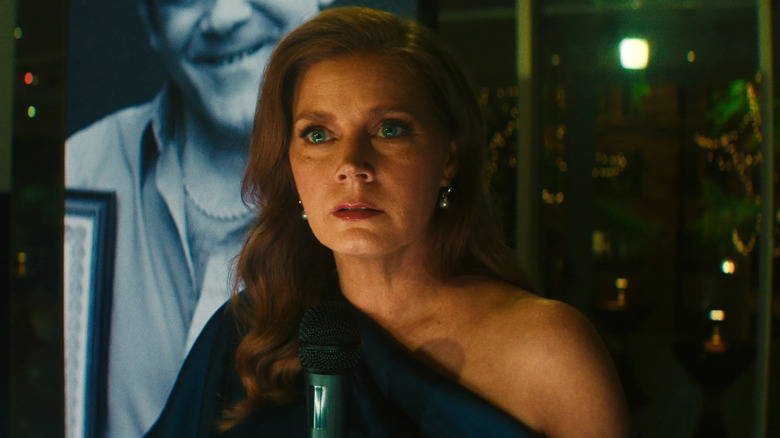
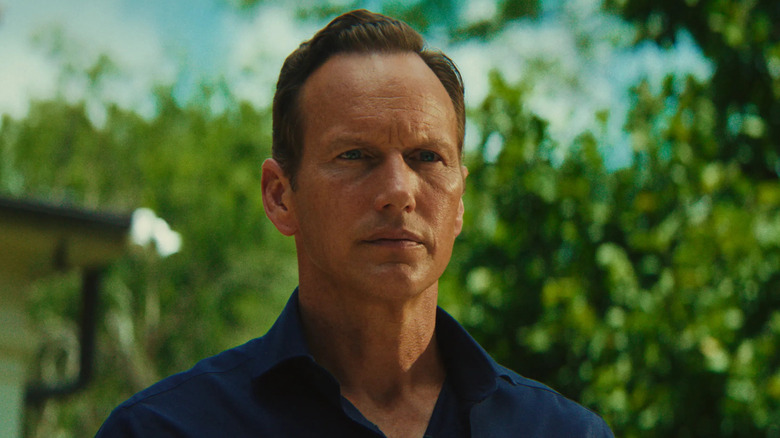
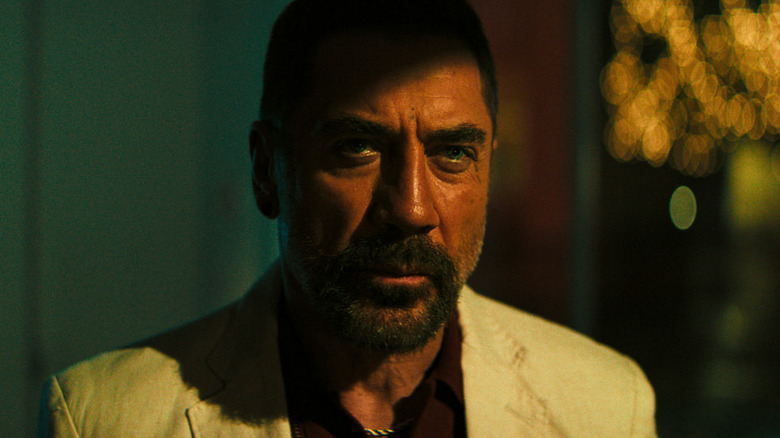
In this “Cape Fear,” Anna (Amy Adams) and Tom Bowden (Patrick Wilson) are both successful attorneys who are living a life of luxury in Savannah, Georgia. They don’t necessarily lead a life devoid of trouble — their eldest daughter, Natalie (Lily Collias), feels increasingly ignored in the wake of younger brother Zack (Joe Anders), who’s facing mental instability after an incident involving his ex-girlfriend. Yet the Bowdens get more trouble than they bargained for when Max Cady (Javier Bardem), a man who Anna and Tom helped put in prison, is released once someone provides an alibi and confession to the murder for which Max was convicted. Almost immediately, Max shows up in Savannah and insinuates himself into the lives of the Bowden family. Anna and Tom quickly suspect that Cady is enacting some revenge plot against them, and they’re all the more right to fear his plans given the amount of skeletons in their closet.
Where the film versions of “Cape Fear” were more about a mono e mono battle of wits between the lawyer and the criminal, Nick Antosca and his writers spread the wealth of manipulation, obfuscation, and menace to every major character in the show. So while Bardem brings a delicious, Great White shark-like grin and attitude to his Max, the threat to the Bowdens comes from their shady pasts as much as it does Max’s encroachment. Where Bardem is having a ball (in a performance complimentary to but 180 degrees from his other iconic villain turns), Adams and Wilson walk a thin line between good and evil. It all feeds the series’ vibe of paranoia, which stems from a very contemporary fear of one’s past mistakes and true nature becoming exposed.
Cape Fear is always riveting, but still feels long-winded
Apple TV
The prior adaptations of “Cape Fear” were akin to a cat-and-mouse thriller, as Max Cady circled his prey before closing in for the kill. That quality is still present in the series, yet since the show has so much more runway available to it, the game is more diffuse and complex than straightforward stalking. Nick Antosca and his writers have spun a devious web of mystery across the episodes, calling into question just about every character’s motives, their past, and even their perception, on occasion. It’s a puzzle worthy of a season of “Breaking Bad” or “Better Call Saul,” as Antosca taps into the same vein of moral ambiguity and chickens coming home to roost as those Vince Gilligan shows did so well.
If there’s an issue, it’s that this particular web takes a little too long to be spun. While Antosca and company justify the length of the show by the amount of great material they put into it, there remains the nagging sense of it taking too many detours early on. To be sure, it all pays off by the end (at least as far as this writer was allowed to see). Yet so much of the story’s power lies in it slowly ratcheting up the tension to a fever pitch, and an early episode or two in its first half feels like the show’s lingering on an appetizer and delaying the main course.
Cape Fear is one of the best horror series in a while
Apple TV
Fortunately, once that main course arrives, “Cape Fear” feels like a gourmet meal of television for sickos. Scorsese’s film was made right as the erotic thriller genre was peaking in the early ’90s, and while neither that movie nor this show could be classified as an erotic thriller per se, the series retains a strong sense of moral sleaze that isn’t common today. Its commitment to manipulating the audience’s sympathies as well as their expectations recalls some classic dirty neo-noirs like 1998’s “Wild Things.” Similarly, though the show rarely takes place inside a courtroom, its relationship to the legal thriller only helps it blur as many moral lines as possible. To put it simply: no character makes it through this show and emerges as unscathed.
This is the quality which makes “Cape Fear” one of the best horror series in recent memory. While Nick Antosca has been involved with gorier series (like “Hannibal” and “Chucky”), “Cape Fear” is the one you’re going to feel like you need a shower after, and that has nothing to do with its violence. It’s a show which takes a root fear so many of us have these days — the erosion of trust combined with amateur justice — and exploits it for maximum impact. Although I’ve yet to see how the series ends, I have little doubt it’ll stick the landing. When it comes to making a great series, I’ve already decided that Antosca and company are guilty as charged.
/Film Rating: 9 out of 10
“Cape Fear” premieres on Apple TV on June 5, 2026.


