


We may receive a commission on purchases made from links.
The horror genre is uniquely prone to cult fandom. Movies that have flown under the radar for years are championed by dedicated advocates who won’t stop insisting: “You absolutely have to see this overlooked classic.” That makes it easy to pull together films for a list of the best horror films no one talks about anymore, and the criteria are even more expansive than cult favorites alone.
We’ve included studio-blockbuster horror from major directors that have faded from conversation, forgotten films from name-brand horror auteurs, and one nominal sequel that shares nothing with its franchise except a tacked-on title. You’ll also find a range of subgenres here that show just how far horror can stretch. Some entries offer simple bumps in the night, but others include the progenitor of the found-footage genre, a tongue-in-cheek slasher satire, and a period-horror western that doubles as a dark comedy about the era of Manifest Destiny.
Horror’s umbrella is a wide one, and so much of what shelters under it is still waiting to be rediscovered by a new audience, just like these films (along with those that are long-celebrated, as those found in our list of the 106 best horror movies ever). Here are 10 of the best horror movies that no one talks about anymore.
Stir of Echoes
Artisan Entertainment
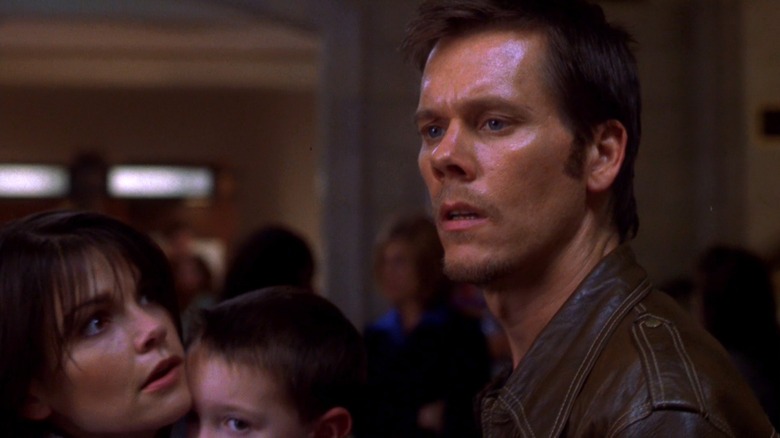
“Stir of Echoes,” the 1999 supernatural thriller from writer and director David Koepp, fits into a specific strain of horror movies about ghosts haunting individuals to guide them in solving the ghost’s murder. Such is the situation that blue-collar Chicago working man Tom Witzky (Kevin Bacon) finds himself in after agreeing to be put under hypnosis by his wife Maggie’s (Kathryn Erbe) sister, Lisa (Illeana Douglas), mostly to prove that her belief in the supernatural is nonsense.
Well, Tom finds out pretty quickly that elements of the otherworldly are more real than he knows, as he’s soon pestered by strange dreams and visions, all seemingly emanating from the apparition of a young girl, who Tom and Maggie’s precocious young son Jake (Zachary David Cope) communicates with on a regular basis — classic horror-movie kid stuff. But the messages from this spirit push Tom toward a revelation about his own neighborhood that is more insidious than he may be prepared for.
“Stir of Echoes” faced stiff competition from another film that primarily features a child talking to the dead, released a mere month after “The Sixth Sense,” but the comparisons mostly end there. Koepp’s adaptation of Richard Matheson’s book of the same name is sturdy and evocative, with notable in-camera effects work to pull off the surreality of Tom’s visions (that’s a real tooth he pulls out, just not his!) and a raving Bacon performance that finds him effectively fanatical out of fear of the supernatural and of his own average-guy midlife ennui.
The McPherson Tape
Axiom Films
“The McPherson Tape” has gained cult acclaim over the years, but it’s still regarded as a tiny movie that has always flown under the radar — maybe that’s fitting for a film made with practically no budget and a limited release in 1989. Yet its influence has resonated through the years in both the alien and found-footage subgenres, quietly laying the groundwork for a style that would become groundbreaking years down the road.
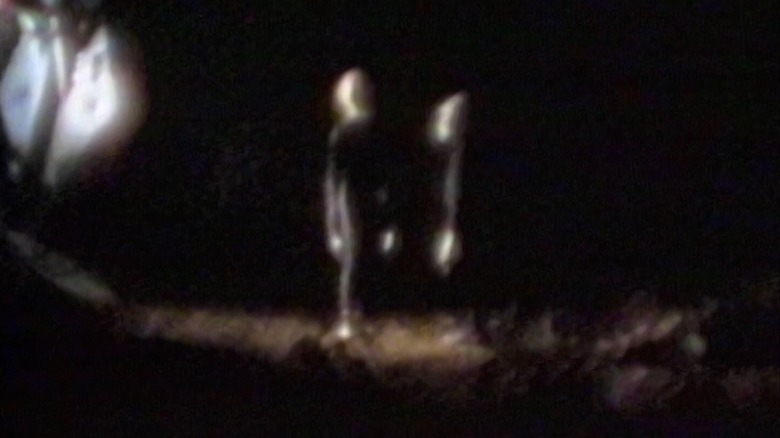
Also known as “UFO Abduction,” “The McPherson Tape” earns its appeal through its credibility. Writer, director, cinematographer, and producer Dean Alioto sells the film as a genuine family home movie, one in which a child’s birthday party turns strange and dire with the arrival of alien beings that have landed right outside. The film takes some of the first steps in the found-footage playbook: grainy, hectic footage, a focus on naturalism and realism. and the camera operator’s refusal to stop filming, no matter how chaotic events become. So much of the genre was conceived right here, which helped the film earn a spot on our list of the top 10 found-footage alien-horror movies of all time.
Whether that’s a selling point or the writing on the wall that says you’re not going to enjoy this movie is up in the air. Either way, there’s value in seeing what Alioto accomplishes with his meager resources, crafting something that feels authentic and intentional, even when he has to work to conceal restrictions. The fuzzy, shambolic camera quality adds to the tone, but it also hides the fact that the aliens on screen are just three kids in cheap costumes. If that’s not movie magic, I don’t know what is.
Hello, Mary Lou: Prom Night II
The Samuel Goldwyn Company
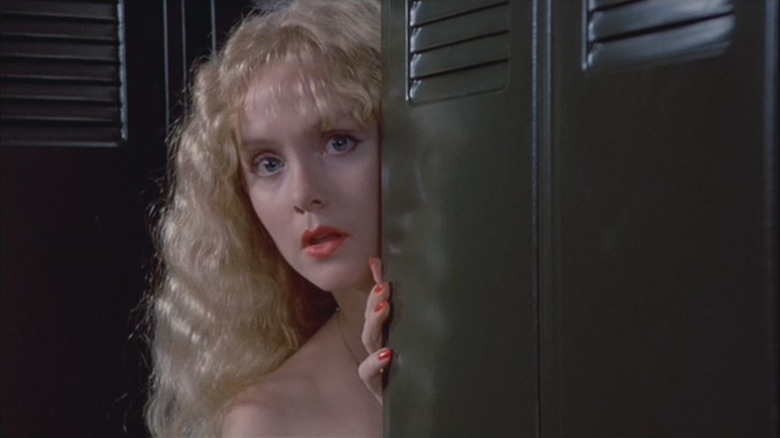
It’s not typically a good sign when a studio decides to rejigger an existing production and retrofit it as part of another franchise, but that’s part of what makes “Hello, Mary Lou: Prom Night II” so surprisingly enjoyable. Originally a Canadian production called “The Haunting of Hamilton High,” it overcomes whatever cynical cash-grab the producers had in mind and even outdoes its adopted namesake. I never think about the original “Prom Night,” but I always come back to “Prom Night II” as one of the great horror sequels.
“Prom Night II” openly apes numerous influential horror touchstones: it’s part “Carrie,” part “A Nightmare on Elm Street,” part “The Exorcist.” It has an interesting protagonist in the titular Mary Lou Maloney (Lisa Schrage), who fits into a lineage of horror movie villains who are more right than we may want to admit. Killed by her boyfriend Billy Nordham (Steve Atkinson as a teen, Michael Ironside in adulthood) when a prank goes spectacularly wrong just as she’s crowned prom queen, her spirit is released 30 years later by Vicki Carpenter (Wendy Lyon), who becomes susceptible to possession — and to Mary Lou’s long-simmering revenge on Billy, now the school principal.
The film has a low-budget aesthetic, but if anything, it adds to the madness on display. Director Bruce Pittman leans into the lunacy of Ron Oliver’s script, which takes giddy pleasure in riffing on contemporary favorites while telling a story about a vengeful prom queen that has almost nothing to do with the film it’s ostensibly a sequel to. The kills are grotesque and imaginative, and the cast is committed throughout — especially Ironside, whose inherent stateliness lends the film some extra credibility. “Prom Night II” is one of the great forgotten horror sequels, full stop.
Shocker
Universal Pictures
You might think horror provocateur Wes Craven hit a dry spell in the second half of the ’80s, coasting on the success of his franchise-spawning classic “A Nightmare on Elm Street.” If so, you haven’t seen “Shocker.” Amid a stretch of underseen horror fare and a couple of chintzy TV movies, Craven made this wacky, tongue-in-cheek thriller, one that was already poking fun at newly minted horror tropes five years before the meta bent of “New Nightmare” and 12 years before “Scream” ignited the slasher revolution.
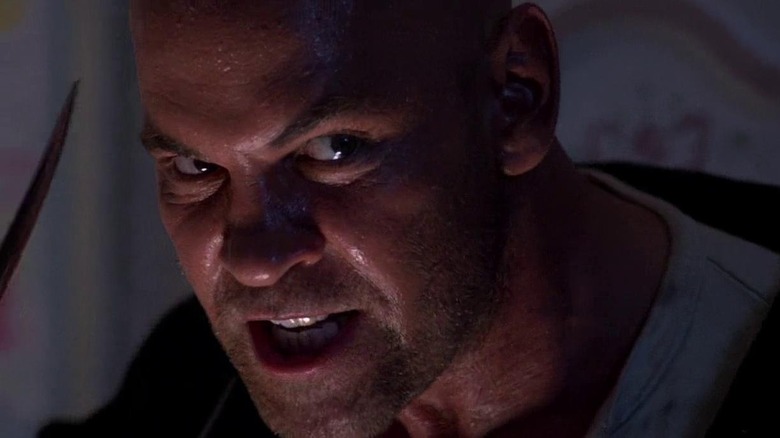
He does it by giving audiences a villain defined by the same dream logic as Freddy Krueger, only more manic. Horace Pinker (Mitch Pileggi) is a serial killer terrorizing a small suburban town who develops a psychic link with local high school football star Jonathan Parker (Peter Berg). When the police finally take him down and send him to the electric chair, nobody thinks to ask whether Pinker might use dark magic to harness the electricity — moving through people, inanimate objects, and even broadcast television itself — to exact his revenge on Jonathan.
The over-the-top tone and genre self-awareness of “Shocker” were surely ahead of their time, perhaps to the film’s detriment, as it was largely dismissed on release and is rarely counted among Craven’s essentials today. But it marks a crucial turning point in his career — a wild, breathless collision of slasher movie, high-concept supernatural thriller, and romantic ghost story, all wrapped around a pointed critique of media-obsessed culture. It’s Craven at his most unfiltered.
The Mothman Prophecies
Sony Pictures Releasing
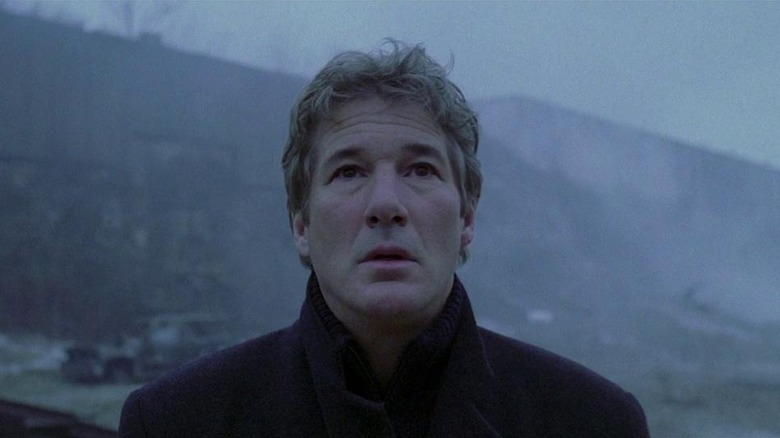
The movie in which Richard Gere goes insane while hunting The Mothman. Just shy of when the idea of cryptids would take over the folkloric consciousness of horror forums online, “The Mothman Prophecies” tackled the same type of eerie local legend when such monsters were still relegated to pure word-of-mouth community-based campfire stories.
Gere stars as journalist John Klein, based on real-life journalist John Keel, whose nonfiction account of his investigation into reports of supposed supernatural phenomena in a small midwestern town drives the film. John Klein loses his wife, Mary (Debra Messing), under sudden, bizarre medical circumstances. Two years later, he inexplicably finds himself in the town of Point Pleasant, West Virginia, after a nighttime drive in which he ends up hundreds of miles off-course. Local chatter soon pushes Keel to probe the strange sightings of a large, winged creature reported by dozens of local citizens, which may align with what caused Mary’s death.
“The Mothman Prophecies” favors creeping anxiety and melancholic drama over outright scares — it’s extremely rare that the film even shows the audience anything supernatural, as it’s much more interested in the frigid, unsettling sense of gloom that drives John’s quest. Director Mark Pellington proves himself capable of conveying the disquieting nature of connecting the potential presence of a pulp horror movie monster to the bigger, more somber message that life’s random tragedies are fundamentally incomprehensible. That won’t make for the most satisfying horror movie for everybody, but it leaves you with an effective sense of unease.
What Lies Beneath
DreamWorks Pictures
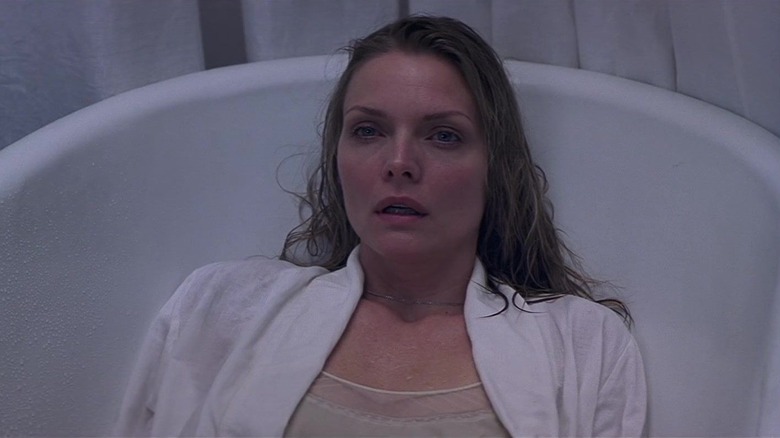
It’s hard to pin down why “What Lies Beneath” has been lost to time the way it has. Director Robert Zemeckis updates the classic tension and paranoia of Alfred Hitchcock and crosses it with a ghost story and something like a prestige Lifetime melodrama, all executed in his signature mode of opulent, digital-forward blockbuster filmmaking, with stylized camera movement and impossibly fluid framing. It’s a rollercoaster take on a genre movie for grown-ups, one that conveys a genuine thrill for the possibilities of what a camera can do.
The film also boasts two essential movie stars navigating a new era of filmmaking at its 2000 release. Michelle Pfeiffer and Harrison Ford play a well-to-do couple of recent empty nesters whose marriage is strained by the lingering effects of a car accident Claire (Pfeiffer) suffered a year prior and by the relentless workaholism of her husband Norman (Ford). The tension deepens when Claire begins to suspect foul play next door — her “Rear Window”-style spying leads her to believe the neighbor’s husband has killed his wife, and that the dead woman is now haunting their home.
“What Lies Beneath” works from a multi-layered script that completely reframes what’s actually happening by the time its prolonged, unexpected climax arrives. Not every piece locks together perfectly, but screenwriter Clark Gregg and story writer Sarah Kernochan are after something more ambitious than a simple ghost tale, interrogating the placid surface of domestic life to uncover the hidden darkness that, well, lies beneath. Clever title, that.
Ravenous
20th Century Fox
The reputation of “Ravenous” has always been slightly marred by its underseen status, compounded by a troubled production history. Original director Milcho Manchevski departed a few weeks in after tense disputes with producer Laura Ziskin, prompting the cast and crew to essentially strike when Raja Gosnell was hired as a replacement, until the film finally landed with Antonia Bird.
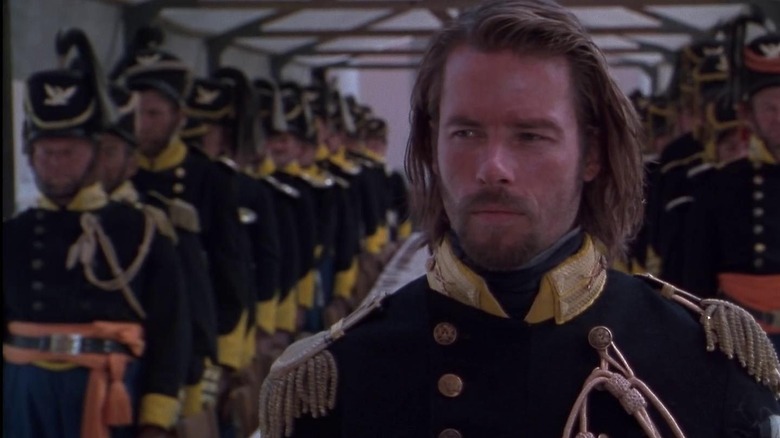
But “Ravenous” shouldn’t be defined by its behind-the-scenes drama. The final product feels like the fully realized vision of a project that was clear-sighted from the start — even if it was, by Guy Pearce’s own account, a miserable shoot. It’s a strange genre hybrid, but a confident one that brazenly leans into its outlier amalgamation: a dark comedy period horror western set during the era of Manifest Destiny, in which Army lieutenant John Boyd (Guy Pearce) finds himself up against the deceptive, sadistic cannibal F.W. Colqhoun (Robert Carlyle), whose consumption of human flesh grants him supernatural regenerative powers.
The film operates as a fairly blunt metaphor for American expansionism — mapping the all-consuming ideology of violent conquest onto the literal act of devouring your fellow human beings for personal gain. But it’s also simply a well-helmed genre cocktail that has enormous fun with its pulp premise. That fun is perhaps best felt in the film’s dramatic confrontations, which are scored not with dread but with the jaunty, slapstick energy of a Looney Tunes episode, courtesy of composer Michael Nyman and Blur/Gorillaz frontman Damon Albarn.
Castle Freak
Full Moon Entertainment
Howard Hawks once said that a good movie has three great scenes and no bad ones. I’d like to amend that: A good movie has a castle and a freak. Lucky for us, “Castle Freak” delivers on the promise of its forthright title, offering all the monstrously gothic stylings you’d dream up imagining what a movie with that name could possibly entail.
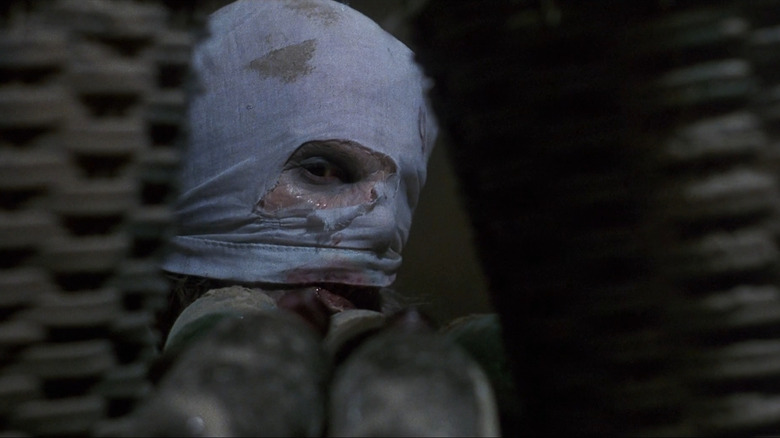
Directed by horror legend Stuart Gordon, “Castle Freak” is a direct-to-video creature feature whose virtues far exceed what a home-market release would suggest. It stars Gordon regulars Jeffrey Combs and Barbara Crampton as a married couple who move into their inherited Italian castle with their blind daughter Rebecca (Jessica Dollarhide) — unaware that a freak (Jonathan Fuller) is lurking in the basement, ready to start working through unsuspecting victims.
Another H.P. Lovecraft adaptation for Gordon, working from a script by Dennis Paoli, finds the director squarely in his element — staging his regular collaborators within an intensely gothic atmosphere as they’re hunted by a creature whose ties to the protagonists push the story toward tragic familial melodrama. The practical work bringing the titular freak to life is an impressive feat of makeup and prosthetics, and gives “Castle Freak” a real edge in unsettling production design.
Dead & Buried
AVCO Embassy Pictures
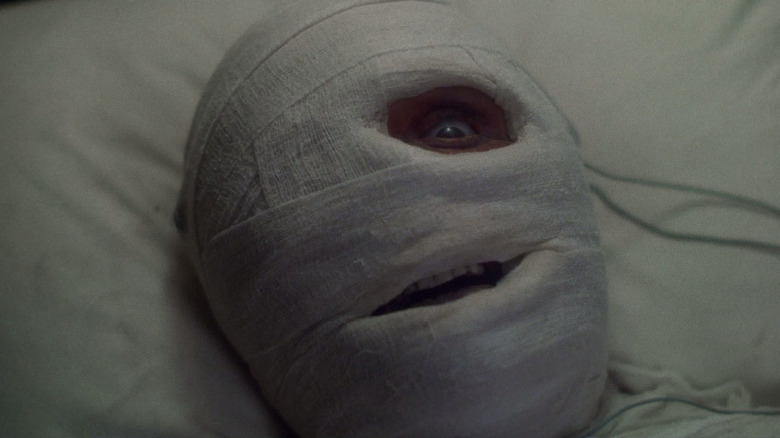
If you want a guaranteed winner for a stormy October night, “Dead & Buried” has got your back. This Gary Sherman-directed coastal small-town horror is wonderfully evocative in tone and atmosphere, with a consistently eerie disposition that unsettles in quiet moments and carries the film through its gnarlier bursts of violence and gore.
Evoking the cozy campfire dread of The Fog and the reanimation fixations of “Dawn of the Dead,” “Dead & Buried” is a perfect watch for anyone drawn to small towns concealing disturbing secrets. Sheriff Dan Gillis (James Farentino) investigates a string of violent deaths in his quiet hamlet, only to find they’re connected to something far more insidious.
Sherman maintains the film’s nightmarish New England unease throughout, and the screenplay by Alien writer Dan O’Bannon and Ronald Shusett keeps the disturbing happenings coming at a steady clip. The real star, though, may be makeup and effects artist Stan Winston, who visualizes hypodermic needles going into eyeballs and heads melting from acid with all the gruesome commitment you could ask for.
Messiah of Evil
International Cine Film Corp.
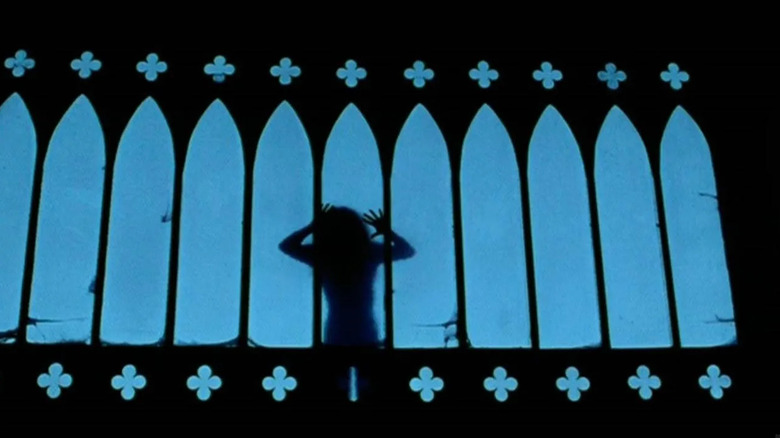
Speaking of horror movies about creepy coastal towns laced with supernatural conspiracy, “Messiah of Evil” fits neatly into that vein. Set in the Pacific Northwest, the film follows Arletty Lang (Marianna Hill) as she travels to the remote outpost of Point Dune to reconnect with her estranged father, a famed artist. What she finds instead is a chain of inexplicable events surrounding his disappearance, and a fiendish, cannibalistic cult.
Messiah of Evil plays like a collision of “In the Mouth of Madness'” cosmic horror, The Fog’s dormant-town dread, and a George Romero film, with production design and gore effects ripped from the playbook of grisly Italian directors like Lucio Fulci. It’s a rich, expansive stew of horror subgenres, custom-built for genre obsessives who can’t get enough of this kind of indulgent filmmaking.
Directing duo Willard Huyck and Gloria Katz — who also made “Howard the Duck” and co-wrote “American Graffiti” and “Indiana Jones and the Temple of Doom” — bring a dreamy, surreal quality to the material. Events unfold with a phantasmagoric logic that feels coherent even as it defies reason. The terror lives in that disorientation: the film keeps you off-balance, leaving you adrift in its sustained, unearthly atmosphere.


