Home Blog Page 955

Claynosaurz Announces Details for Popkins NFT Collection Drop

Claynosaurz Announces Details for Popkins NFT Collection Drop


Claynosaurz has revealed further information about its upcoming Popkins NFT collection.

This new collection will be released on the Sui blockchain and will consist of 25,000 NFTs. The launch uses a unique minting system involving booster packs, which contain digital rewards and varying chances of obtaining a Popkin NFT.

The project has outlined several pack types and eligibility criteria for free mints linked to existing Claynosaurz holders. The public mint price has been set, though the exact launch date is yet to be confirmed.

Claynosaurz Announces Details for Popkins NFT Collection Drop Source: Claynosaurz

What are Popkins?

Popkins is an NFT collection comprising 25,000 unique digital assets on the Sui blockchain.

Each Popkin is distributed within a “booster pack,” which also contains other digital rewards. The packs come in three varieties: Escape Packs, Legendary Packs, and Rat Packs.

Escape Packs do not include a Popkin but provide a full refund of the mint cost along with other rewards. Legendary Packs guarantee the inclusion of a Popkin NFT and Rat Packs guarantee a Rat Popkin—a specific variant within the collection.

Claynosaurz Announces Details for Popkins NFT Collection Drop
Claynosaurz Announces Details for Popkins NFT Collection Drop Source: Claynosaurz

How to participate in the drop?

The minting process involves purchasing booster packs, with varying chances of receiving a Popkin NFT depending on the pack type.

Certain holders of Claynosaurz NFTs—specifically those holding Dactyl NFTs and CLASS-SELECTED OG and Saga Claynosaurz—will receive free Legendary Packs. These holders must select a class for their NFTs by May 26, after which the selection period will pause until after the mint.

The public mint will be priced at $200 per pack and is open to anyone. During the mint, purchasers will receive either an Escape Pack, which includes no Popkin but refunds the mint cost, or a Legendary Pack that guarantees a Popkin.

Additionally, owners of Pizza collectibles from NFT NYC 2023 are eligible to claim guaranteed Rat Popkin packs.


Source link

Many NFTs Are Not Securities, Says SEC Commissioner Hester Peirce

    0
    Many NFTs Are Not Securities, Says SEC Commissioner Hester Peirce


    SEC Commissioner Hester Peirce has publicly stated that many NFTs do not qualify as securities under the United States law.

    Speaking at the SEC Speaks 2025 event in Washington, D.C., Peirce addressed ongoing concerns about the regulatory treatment of digital assets, including crypto tokens and NFTs.

    Her remarks followed a series of enforcement actions by the SEC that have raised questions about how NFTs should be classified and whether they fall under existing securities regulations.

    Many NFTs Are Not Securities, Says SEC Commissioner Hester Peirce Source: Hester Peirce (X)

    What did Hester Peirce say about NFTs?

    Commissioner Peirce stated that many NFTs do not fall under the definition of a security. However, she clarified that some digital assets—including NFTs—could be treated as securities if they are distributed as part of an investment contract. According to Peirce, this occurs when buyers are led to expect profits that depend on the actions of a central entity.

    Peirce said the SEC’s current approach, which relies heavily on enforcement rather than published guidance, has left many in the industry without clear direction. She said that the legal analysis should consider how an asset is structured, marketed, and sold—not simply the asset type itself.

    She referenced the creation of a new Crypto Task Force, which is collecting feedback and working toward more formal regulation. Peirce also renewed her call for a Safe Harbor framework aimed at giving crypto projects a defined period—such as three years—to develop and grow without registering their tokens as securities. During this time, projects would be required to meet basic disclosure and investor protection standards.

    The proposed framework is designed to apply to digital asset issuers, allowing them time to reach network maturity or decentralisation before facing full regulatory obligations. The Safe Harbor proposal has not yet been adopted by the SEC.

    Many NFTs Are Not Securities, Says SEC Commissioner Hester Peirce
    Many NFTs Are Not Securities, Says SEC Commissioner Hester Peirce Source: Unsplash

    What does this mean for NFTs?

    Peirce’s recent comments highlight the need for clearer regulatory definitions regarding NFTs and other digital assets. Whilst her view is that many NFTs are not securities, the SEC has not issued formal guidance distinguishing which NFT-related activities may fall under securities law.

    In the absence of published rules, NFT creators and platforms remain subject to interpretation and potential enforcement based on how their assets are sold and promoted.

    Peirce said that additional clarity could come through future SEC rulemaking or legislative action.


    Source link

    DOOM: The Dark Ages Launch Sales and Player Metrics

    DOOM: The Dark Ages Launch Sales and Player Metrics


    DOOM: The Dark Ages has been out for over a week now if you count its paid early access period, and just over five days if you don’t. So far, the critical reception has been strong (my own review is coming) and the players seem happy, too, at least according to the Steam reviews. But based on early data, the player numbers look a little low.

    UPDATE: id Software has announced that DOOM: The Dark Ages has managed to bring in 3 million players, making it the company’s biggest launch. That is apparently 7x faster than DOOM: Eternal. No sales numbers were provided.

    ORIGINAL STORY: Now, before get started, this is mostly going to be speculation based on the very limited data we have available. The game’s launch on Game Pass makes it hard to determine player numbers and sales alike, so keep that in the back of your mind as we delve into the data.

    First, we have Steam itself, the biggest platform for gaming on PC. DOOM; The Dark Ages is available there, but since Game Pass is also on PC we have to consider that a lot of PC players probably signed up for the subscription service instead of paying full-price. And why not when you consider Game Pass also just got The Elder Scrolls IV: Oblivion Remastered and Clair Obscur: Expedition 33? That’s three awesome games for like $15. That’s an insane deal.

    Anyway, back on topic. According to SteamDB, DOOM: The Dark Ages hasn’t had a strong launch week on Steam, hitting a peak concurrent player count of 31,470. That’s very weak compared to the series’ previous entry, DOOM: Eternal which managed to hit over 100k concurrent players.

    But that maybe isn’t the best comparison. After all, Eternal wasn’t on Game Pass when it launched. So let’s compare it to two games that released within the last few weeks, both on Game Pass as well. First, we have The Elder Scrolls IV: Oblivion Remastered which brought in 216,784 concurrent players. And second, we have Clair Obscur: Expedition 33 which managed a hugely impressive 145,063. Not too shabby for a brand new IP from a small developer, eh?

    Both of these games do have an advantage, though: they launched at a cheaper price than DOOM: The Dark Ages, a $70 release.

    Let’s bring it some console data, too. PSNProfiles is an interesting site because it’s primarily for Trophy hunters and is opt-in, meaning it does not track every single PlayStation user in the same way that SteamDB tracks ALL Steam users. That makes PSNProfiles less precise overall, but the numbers we can grab from it are still useful in providing us a broad idea of what’s going on.

    According to PSNProfiles, it lists 4,386 of its users as owning DOOM: The Dark Ages. Comparing this to DOOM: Eternal would be pointless, since that game has been out for years and has been discounted numerous times. But we can bring Expedition 33 and Oblivion back in for comparison. Both games have, of course, been out slightly longer than DOOM: The Dark Ages, but I believe are close enough to at least provide some degree of context. Clair Obscur: Expedition 33 is listed as having 19,130 owners, while Oblivion is sitting at 15,787. That’s a very large divide.

    Over on Xbox, we can take a look at TrueAchievements, a similar site to PSNProfiles that tracks users. However, it handles its data different, essentially scanning around 2.5 million random Xbox profiles a week (a profile is only valid if it has at least one game played that week) and then uses that data to estimate how many people own a particular game. Again, then, the data is far from accurate but does give us a rough idea of trends and general success/failure.

    Currently, the site is tracking DOOM: The Dark Ages at just under 100k owners. Note, this also counts people who have played it on Game Pass because as far as I am aware the website doesn’t distinguish between people who have bought the game and people who got it via subscription.

    Let’s compare that again to Clair Obscur: Expedition 33 and The Elder Scrolls IV: Oblivion Remastered, while remembering both have been out for longer. Expedition 33 is at 129.2k owners. Oblivion, meanwhile, is sitting at just under 185k players.

    Bringing all of this together, we can probably safely infer that DOOM: Eternal is tracking behind both Expedition 33 and Oblivion Remastered. That means it almost certainly hasn’t reached the 4m players Oblivion officially reached within the first week. As for Expedition 33, it managed to sell 2m copies in 12 days while being available on Game Pass. Based on the player numbers, DOOM: The Dark Ages appears to be lagging behind that, and is therefore presumably lagging behind it in terms of copies sold as well.

    Now, we need to be fair and remember that it may have absolutely murdered on Game Pass, in which case Microsoft will still be happy as they view pure players numbers almost as much as sales these days. Or at least, that’s the vibe I get from them.

    But with these numbers, I’m not confident that it has been ripping and tearing on Game Pass. And both Microsoft and id Software have been quiet regarding players numbers so far. They haven’t put out a single social media post celebrating any milestones or anything like that, which is unusual for a big first-party success because they normally want to flaunt its engagement numbers.

    Hell, it makes me question if DOOM: The Dark Ages is doing worse than DOOM: Eternal, which would be a huge blow considering Eternal doubled the launch revenue of the 2016 DOOM. At the time, Bethesda was quick to announce how well Eternal was doing, whereas now they are silent.

    I also noted that Clair Obscur: Expedition 33 has a much higher amount of players reaching the end of its story than DOOM: The Dark Ages does, which is surprising since The Dark Ages is a far shorter game. Based on the PlayStation Trophy data, 11.4% of players have earned the Trophy for beating the campaign. For Expedition 33, it’s 21.7%. On Trueachievements, it’s 6% (DOOM: The Dark Ages) vs 20% (Expedition 33.) On Steam, we see 15.9% (DOOM) vs 23.5% (Expedition 33.)

    Hopefully we will hear some official stats from id Software, Microsoft or Bethesda soon and fingers crossed DOOM: The Dark Ages is meeting expectations or exceeding them, because I always want to see a developers work payoff. Regardless, I know I’m having a blast with the game, so I’ll get back to writing the review.


    Source link

    Apple Vision Pro Users Share Their Thoughts and Experiences

    Apple Vision Pro Users Share Their Thoughts and Experiences


    Following a series of interviews with Apple Vision Pro buyers, the core user feedback has been revealed. Despite Apple launching the Vision Pro with great expectations, many users have expressed disappointment less than a year after its release. According to a report by The Wall Street Journal, the device has been shelved by many due to its heavy weight, lack of software, and poor everyday usability.

    Dustin Fox, a real estate agent from Virginia, stated he used the Vision Pro only four times:

    “It’s just sitting there collecting dust. I can’t wear it for more than half an hour—my neck hurts.”

    The device, which weighs approximately 600–650 grams, has become a comfort issue for users. “After one hour, you feel like throwing it on the floor,” said another.

    Tovia Goldstein, a 24-year-old from New York, shared a similar disappointment:

    “You have to take it off after an hour. If you’re not rich, don’t buy it.”He also pointed out the long startup time and difficult usability as major drawbacks.

    During its launch phase, the Vision Pro attracted attention in places like shopping malls and gyms. However, users now say that initial excitement has turned into awkward stares and social discomfort.

    “Flight attendants think I’m asleep.”

    Anshel Sag, a tech analyst based in San Diego, mentioned he tried the device on a plane but gave up due to the attention it attracted and the amount of space it took up in his luggage. Similarly, Anthony Racaniello, a media studio owner in Philadelphia, said a flight attendant ignored him while he was wearing the device:

    “It’s like wearing a sleep mask. People treat you that way.”

    Some users, frustrated by their negative experiences, have listed the device for resale—often finding buyers at nearly half the original price.

    However, not all reviews are negative. Israeli YouTuber Yam Olisker said the device offers a great movie-watching experience, especially for 3D content. Still, he admitted that due to the device’s weight, he had to watch movies lying down to remain comfortable.

    You Might Also Like;

    Apple Vision Pro Users Share Their Thoughts and Experiences
    Huawei Watch Fit 4 Pro Review an Price (2025)

    Follow us on TWITTER (X) and be instantly informed about the latest developments…

    Copy URL


    Source link

    Aave Surges as Stablecoin Bill Clears Key Hurdle in US Congress – Decrypt

    Aave Surges as Stablecoin Bill Clears Key Hurdle in US Congress – Decrypt


    In brief

    Aave’s token surged 20% as Congress advanced the GENIUS Act, a bill that could bring regulatory clarity to stablecoins.
    The protocol, which supports lending and borrowing of major stablecoins, recently surpassed $25B in Total Value Locked.
    AAVE is up over 90% in 30 days, outperforming major altcoins and the broader crypto market.

    The native token of DeFi lending protocol Aave has surged by double-digit gains on the day, rallying alongside a key procedural vote in Congress on the long-anticipated GENIUS Act.

    If enacted, the bill would provide long-awaited regulatory clarity for stablecoins—a sector in which Aave is deeply embedded.

    Specifically, the act would allow banks and other companies to issue their own stablecoins provided they meet certain requirements, adding to further speculation it could bring about wider institutional adoption. 

    The bill now needs only one more vote to pass. 

    Aave plays a significant role in the stablecoin economy by allowing users to lend, borrow, and earn yield on stablecoins like USDC, USDT, DAI, among others.

    The protocol also introduced its own overcollateralised stablecoin, GHO, in 2023, designed to keep value capture within the Aave ecosystem.

    Its namesake token has increased by 20% to $262 over the past 24 hours, and more than 90% over 30 days, CoinGecko data shows. 

    Not only has the altcoin outperformed the overall crypto market—up just 0.2% in the past 24 hours—it’s also surpassed the other best-performing altcoins. 

    Though it’s still some way off its recent peak of $383.49 from December 28, 2024.

    Still, the protocol’s Total Value Locked reached an all-time high of over $25 billion this month, surpassing market leaders like Lido (LDO) and EigenLayer (EIGEN), indicating growing interest in the token’s ecosystem, per DeFi Llama data.

    The renewed interest in Aave also follows strategic moves by World Liberty Financial, the Donald Trump-backed crypto venture, which in December acquired more than 3,300 AAVE tokens as part of a $5 million bet on DeFi assets.

    The project’s community later approved launching Aave v3, offering borrowing and lending services using ETH, WBTC, USDC, and USDT.

    Under the arrangement, AaveDAO receives 7% of WLFI’s circulating token supply and a 20% share of protocol fees—an uncommon revenue-sharing deal that further integrates the protocol into one of the most high-profile U.S. political crypto initiatives.

    That tie-in, paired with growing institutional attention around the GENIUS Act, appears to be fueling investor conviction in Aave’s longer-term regulatory and adoption outlook.

    Elsewhere in the market, Ethereum (ETH) rose 4% on the day, Chainlink (LINK) gained 3.2%, and Solana (SOL) added 2.6% to trade at $166, CoinGecko data shows.

    Edited by Sebastian Sinclair

    Daily Debrief Newsletter

    Start every day with the top news stories right now, plus original features, a podcast, videos and more.


    Source link

    Decentralized Education: A New Dawn for Global Learners with Web3 | NFT News Today

    Decentralized Education: A New Dawn for Global Learners with Web3 | NFT News Today


    Have you ever felt that traditional education systems don’t fully address your needs or goals? With Decentralized Education, powered by blockchain and Web3, you gain more flexibility, ownership, and clarity in your learning journey. In this new model, credentials are secure, easily verifiable, and controlled by you—no more chasing transcripts or worrying about red tape.

    Traditional setups often depend on a central authority, limiting access and stifling innovation. Then came the idea of a transparent, peer-to-peer ecosystem where learners truly hold the reins. In this article, you’ll discover how Web3, NFTs, and DAOs are reshaping the future of learning.

    Understanding Web3 in Education

    What Is Web3?

    Web3 refers to an internet structure where power is more evenly distributed among users, rather than concentrated in big tech platforms. In education, this means you’re not just consuming information—you’re an active participant who helps shape the experience.

    Decentralization in Learning

    Imagine a library where every user can contribute a unique book or resource, and you can check the authenticity of each item without an official librarian. This is what blockchain learning offers: direct interaction between students, educators, and content while credentials become publicly verifiable, speeding up the process.

    Role of Smart Contracts

    Smart contracts automate key steps, such as enrollments or certificate issuance. Once you meet course requirements, your digital certificate appears in your wallet—simple, transparent, and not reliant on institutional gatekeepers.

    NFTs in Decentralized Education

    What are NFTs?

    NFTs, or Non-Fungible Tokens, are one-of-a-kind digital assets stored on a blockchain. They can’t be duplicated, which makes them tamper-proof. Think of them like collectible trading cards in the online world—each one is unique.

    NFT-Based Credentialing

    In NFT-based education, these tokens represent your course completions or specialized skills. You can share your NFT credentials quickly with employers or admissions offices, helping them verify your background instantly.

    Content Ownership and Monetization

    What if you could own the courses and materials you learn from? By tokenizing educational content, creators maintain intellectual property rights while you get verifiable access to exclusive resources. This framework also helps educators earn revenue directly from their work, without a central platform taking a hefty cut.

    Practical Applications of Decentralized Learning

    Animoca Brands’ Role

    A key player in this field is Animoca Brands, which has invested in projects that merge blockchain with education. By funding these initiatives, Animoca Brands helps edtech ventures discover new ways to engage learners.

    TinyTap

    TinyTap, acquired by Animoca Brands in 2022, offers a massive library of interactive lessons. Educators can create “Publisher NFTs,” turning their materials into assets that earn ongoing revenue. According to TinyTap, in a single week, 18,000 families joined, playing 460,000 games for a total of 37,000 hours. Plus, 300 new games were born in that short period—showcasing the power of user-driven content.

    Open Campus

    Co-founded by Animoca Brands, Open Campus includes the “EDU Chain,” a blockchain designed specifically for global education needs. Through a “Learn, Own, Earn” model, educators gain more control over their content, while you benefit from transparent credentials.

    DAOs in Education: Revolutionizing Governance and Collaboration

    What Are DAOs?

    Decentralized Autonomous Organizations (DAOs) are online communities where decisions are made collectively rather than by a single leader. In a DAO in education, you and other members vote on everything from course curricula to budget allocations.

    Notable Education DAOs

    Ed3 DAO: A nonprofit that encourages educators to adopt emerging tech tools.

    Education DAO by ConsenSys: Aims to build self-governing communities, letting you “learn Web3 by doing Web3.”

    Examples in Academia

    Student Governance DAOs: At some universities, students already help decide resource management and event planning.

    Research Collaboration DAOs: Researchers from various fields can collaborate without administrative bottlenecks.

    Benefits of DAO Structures

    When you join a DAO in education, you enjoy collaborative governance. Every transaction is on the blockchain, ensuring transparent management. You might even earn tokens or reputation points for your contributions.

    Enhanced Teaching-Learning Processes in a Web3 Environment

    Interactive Assignments

    Now, you can explore lessons enriched by AI, the Metaverse, or IoT. Picture a virtual field trip to an ancient civilization—no airfare needed.

    Active Participation

    Instead of sitting through lengthy lectures, you help create content and share insights with classmates. This approach sparks creativity and boosts analytical thinking. You’re not just a passive listener; you’re actively shaping the curriculum.

    Future of Decentralized Education

    Digital Diplomas and Credentials

    In this future, you could hold blockchain-stored diplomas right in your digital wallet. Since they’re tamper-proof, you won’t need to request or mail transcripts—just share a link to verify your academic history instantly.

    Micro-Schools and Home-Schooling

    Homeschooling has exploded in popularity, and now micro-schools can form small learning pods. Parents, teachers, and students interact in decentralized environments, building custom curricula that reflect real-world needs.

    Earning Opportunities

    Consider turning your homework or project into an NFT. It may sound whimsical, but it’s quickly becoming a reality. When you create something original—art, educational games, or research—you can monetize it through decentralized channels.

    Decentralized Education Platforms

    These platforms let you control your academic records. If you’ve ever dealt with lost transcripts, you’ll appreciate how swiftly you can now share verified skills or knowledge with future employers.

    Democratized Access

    By connecting with educators and learners worldwide, you break through economic and geographic barriers. Think of these global networks as wide-open doorways to knowledge—anyone who’s eager can step through.

    Conclusion

    Decentralized Education isn’t just another buzzword—it’s a real, evolving shift in how you learn, earn credentials, and grow professionally. Now is the perfect moment to explore DAO in education, NFT credentials, and Web3 tools.

    If you’re a student, teacher, or policymaker, consider incorporating these innovations into your plans. The journey begins with a single step: sign up for a blockchain-based course, research a DAO near you, or tokenize a project you’re passionate about. Education is transforming—will you be part of it?



    Source link

    Coronation Street fans spot major ‘error’ that could’ve seen Craig survive in exit storyline

      0
      Coronation Street fans spot major ‘error’ that could’ve seen Craig survive in exit storyline


      Coronation Street fans have spotted an ‘error’ made by Craig Tinker that doomed his exit fate right before Mick attacked him.

      Last night (Monday, May 19), Craig decided to play the hero and investigate a disturbance alone.

      But, Mick Michaelis was riled up and decided to whack Craig over the head with a bat.

      Mick attacked Craig (Credit: ITV)

      Craig Tinker’s upcoming death exit in Coronation Street

      Craig Tinker’s upcoming death in Coronation Street is no secret as the police officer sadly loses his life this week.

      Yesterday evening on the cobbles, Craig was supposed to be shadowing Kit Green at work but Kit wasn’t in the mood to train him.

      Lisa Swain then encouraged Craig to show Kit just how capable he was, with Craig then going to investigate a welfare concern at the Michaelis’ house.

      It wasn’t long before Craig decided to go out on patrol and follow an angry Mick Michaelis down, pulling him over for drunk driving.

      However, Craig didn’t wait for any sort of backup and decided to confront him alone. He then went to grab a breathalyser but Mick wasn’t keen on cooperating with him, pulling out a bat.

      Before long, Craig was whacked unconscious and left for dead on the floor as Mick scarpered.

      Craig could’ve saved his own life (Credit: ITV)

      Coronation Street fans blast PC Tinker for ‘sealing’ his own fate

      With Craig not waiting for backup, fans have noted that if he’d just held fire for a bit until another officer turned up to support him then his life could’ve been saved.

      Mick might’ve not attacked him if he wasn’t alone…

      One Coronation Street fan said: “Oh Craig, you needed backup.”

      Another viewer commented: “Not that I’m a police expert or anything but, for me, Craig was far too inexperienced to be doing a job like that on his own. He didn’t have any backup, he didn’t have the body cam on and he knew the van surely as he reported it before, he should have taken the bat etc.”

      A third person added: “Craig really should have called for backup when he had the chance… I reckon he’s dead now anyway. Sean’s statement won’t make any difference!”

      Read more: Coronation Street fans ‘shocked’ as they work out where Debbie really lives

      Coronation Street usually airs Monday, Wednesday and Friday at 8pm on ITV.

      What do you think about this story? Let us know by leaving a comment on our Facebook page @CoronationStreetInsider. We want to hear your thoughts!


      Source link

      Dead Island 2, the co-op zombie shooter that’s better than it has any right to be, is free to own right now

      Dead Island 2, the co-op zombie shooter that’s better than it has any right to be, is free to own right now


      Though it may no longer get the coverage it used to, the Epic Games Store’s weekly freebies on PC continue. Every week, the store is refreshed with one or two games, available for anyone to claim and own forever.

      You’d need a free account for that, of course, but if you’ve ever played Fortnite – or claimed any such freebie in the past – you already have one. Every once in a while, however, the freebie in question is a game worth highlighting. This is one such week.

      Manage cookie settings

      From now until Thursday, May 22, you can claim a free copy of Dead Island 2, as well as Happy Game. Dead Island 2 is, of course, the higher profile title in this line-up, and it’s really one of those instances where it’s hard to believe a game of such quality is being given away for free.

      Dead Island 2 is not a very old game, either, it only came out in April 2023 – so it’s just a little over two-years-old. Some of you reading this likely bought it on a deep discount intending to play it shortly afterwards, but never did.

      Given its extensive history of false starts, delays, reboots and all manner of development shenanigans, it’s a miracle that a game called Dead Island 2 exists at all. The fact that it’s actually a solid, fully-fledged zombie action game – and a fun co-op romp to boot – is what took everyone by surprise two years ago.

      Watch on YouTube

      In her four-star review, our very own Kelsey Raynor said it is “every bit the head-stomping blast that it promised to be,” and pointed out how much it all comes together in co-op. Considering Dead Island 2 is currently free, finding people to play with shouldn’t be a problem.

      Even if you don’t particularly care about zombie games, you should at least download it to experience the the dismemberment and flesh/bone tech under the hood. It’s more detailed than you might realise, and makes for very satisfying (and often brutal) zombie-slaying.

      You can grab Dead Island 2 on the Epic Games Store right now. Just add it to your cart, check out and you’re done. Various bits of DLC are also on sale, in case you want to expand what’s already there.


      Source link

      The Pitt Cast Guide: Where You’ve Seen The Actors Before – SlashFilm

        0
        The Pitt Cast Guide: Where You’ve Seen The Actors Before – SlashFilm


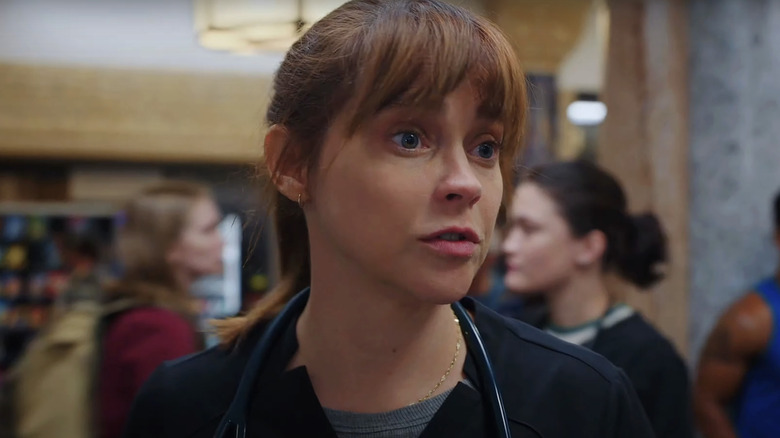
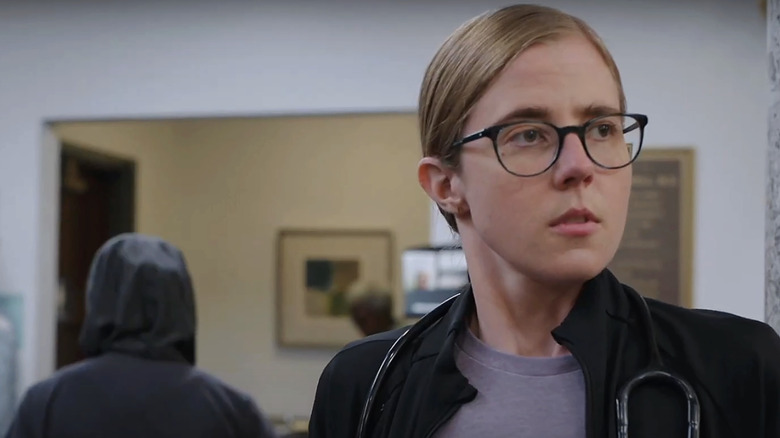
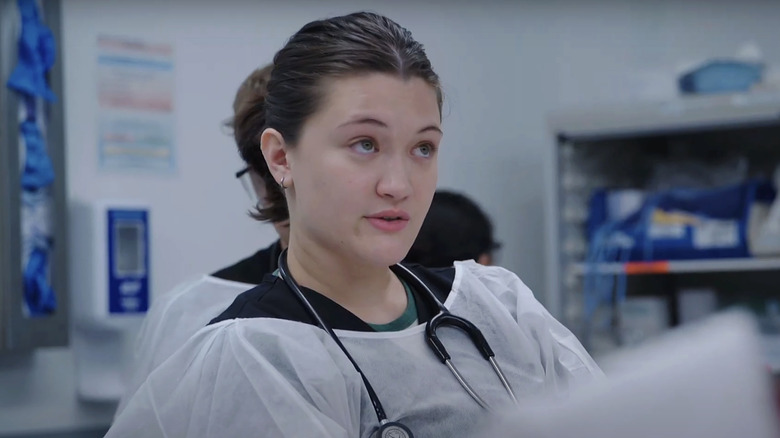
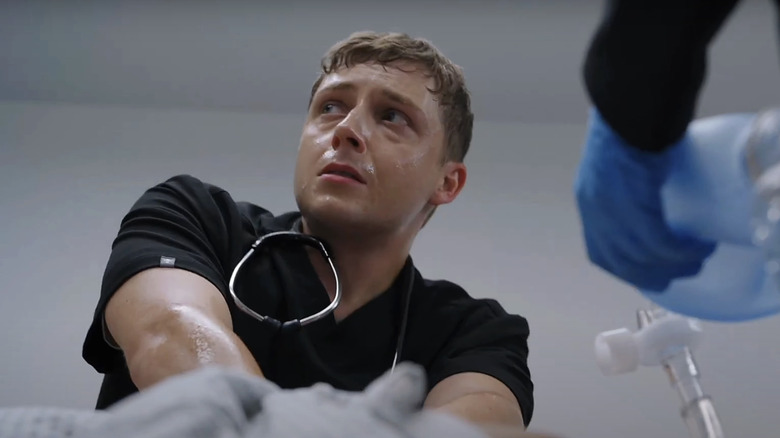
        If you’ve seen “The Pitt” you probably feel like you’ve worked an entire shift in a real emergency room. That’s very much the point of the Max series, which has become a big hit for the streamer in recent months to the extent that there’s already talk of a “Pitt” spin-off and celebrity fans are singing the show’s praises (Stephen King is, evidently, a big fan of the Max drama). 

        Advertisement

        Undoubtedly, part of the show’s success is it’s commitment to realism. Unlike other series, “The Pitt” depicts its medical drama with a strikingly naturalistic tone that immerses you in what can feel like the truly harrowing lives of real emergency medical staff. After just a few episodes you feel the strain under which the doctors and nurses at the fictional Pittsburgh Trauma Medical Hospital are working, and when you start to think about how this is just a single day in their lives, you realize just how unfathomable the pressure of the medical field really is, especially in the context of an emergency department.

        It helps that “The Pitt” has been praised for its medical accuracy and the fact that the show doesn’t use music at all. But another important element is the cast. Had the show been populated with big-name stars, its immersive effect would have been diminished. Part of why “The Pitt” feels so real has to do with the fact that most of the actors have yet to become stars in their own right (barring lead Noah Wyle, who long ago established his medical drama bonafides with a starring role in “ER”). As such, you might be curious as to where these talented cast members came from. Here’s everything you need to know about the cast of “The Pitt.”

        Advertisement

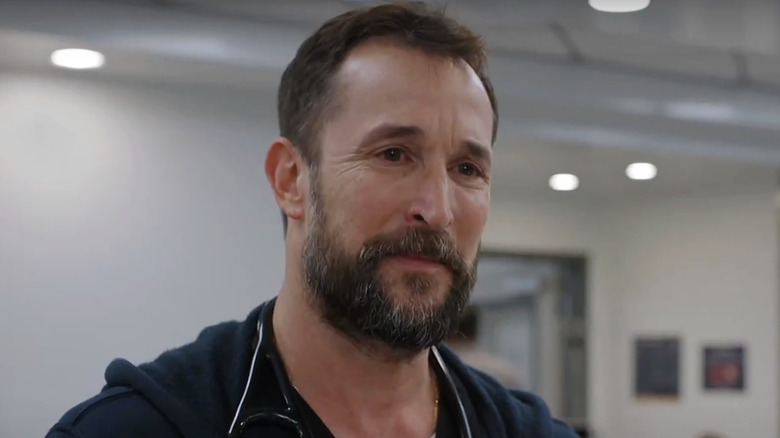
        Noah Wyle — Dr. Michael Robinavitch

        Playing Dr. Robinavitch in “The Pitt” isn’t Noah Wyle’s first role in a medical drama. His breakthrough came with the seminal “ER,” a medical drama created by “Jurassic Park” author Michael Crichton which starred Wyle as John Carter. Carter started out as a third-year medical student before becoming a doctor as the show went on. Wyle then left NBC’s “ER” in the series’ 11th season, but continued to appear sporadically throughout the remaining four seasons. During the ’90s, he also got to play tech giant Steve Jobs, becoming the first actor to portray the Apple creator in 1999’s “Pirates of Silicon Valley.”

        Advertisement

        After “ER” Wyle appeared in a number of theater productions and films, including “White Oleander,” “Enough” with Jennifer Lopez, and “Donnie Darko.” He then returned to TV by playing the lead role of Tom Mason in TNT series “Falling Skies.” Prior to “The Pitt,” he launched an epic made-for-TV fantasy franchise in the form of “The Librarian: Quest for the Spear,” a TNT TV movie from “Independence Day” writer-producer Dean Devlin. He then became the star and executive producer of “The Pitt,” alongside fellow producers John Wells and creator Scott Gemmill, both of whom are also “ER” alums.

        Tracy Ifeachor — Dr. Heather Collins

        British actress Tracy Ifeachor plays Dr. Heather Collins on “The Pitt,” a senior resident who has a complicated history with Dr. Michael Robinavitch and who frequently clashes with her superior, despite harboring an obvious fondness for him. Dr. Collins is absent from several episodes towards the end of “The Pitt” but prior to that she’s a very big part of the show.

        Advertisement

        Outside of the Max drama, Ifeachor has had an impressive career. She’s perhaps best known for playing Aya Al-Rashid on The CW’s “The Vampire Diaries” spin-off “The Originals,” but she also had a big part in the “Doctor Who” Christmas special, “The End of Time.” Over in the UK she fronted season 1 of the BBC drama, “Showtrial,” playing duty solicitor Cleo Roberts. Ifeachor has been more prolific in TV than film, but she has had some movie roles, including that of Dorothy Smith in the whimsical origin story that was 2023’s “Wonka.”

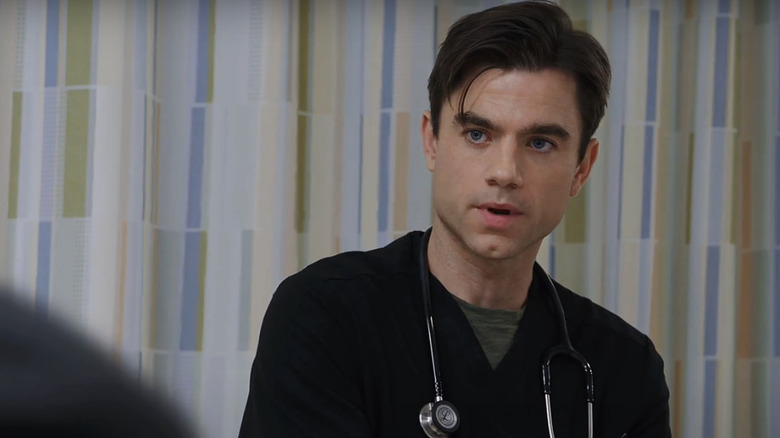
        Patrick Ball — Dr. Frank Langdon

        Dr. Frank Langdon is a senior resident at the Pittsburgh Trauma Medical Hospital and Dr. Michael Robinavitch’s right-hand man. Amazingly, this is only actor Patrick Ball’s second on-screen role. The young star previously had a guest appearance in a 2023 episode of “Law & Order” but otherwise only appeared in theater productions prior to playing the charismatic Langdon.

        Advertisement

        With “The Pitt” proving such a big success, that’s a pretty impressive second role for Ball, who only graduated from the David Geffen School of Drama at Yale University in 2022. Now that season 1 of “The Pitt” is in the bag, Ball is starring in “Hamlet” at LA’s Mark Taper Forum, before production on season 2 of the Max drama begins in June.

        Interestingly enough, Ball’s mother is a nurse and his dad is a paramedic, and it seems both gave “The Pitt” their seal of approval. The actor told Gold Derby, “The first thing they said was, ‘Wow, this checks out. This is real medicine,’ which is amazing because they can’t watch medical dramas most of the time.”

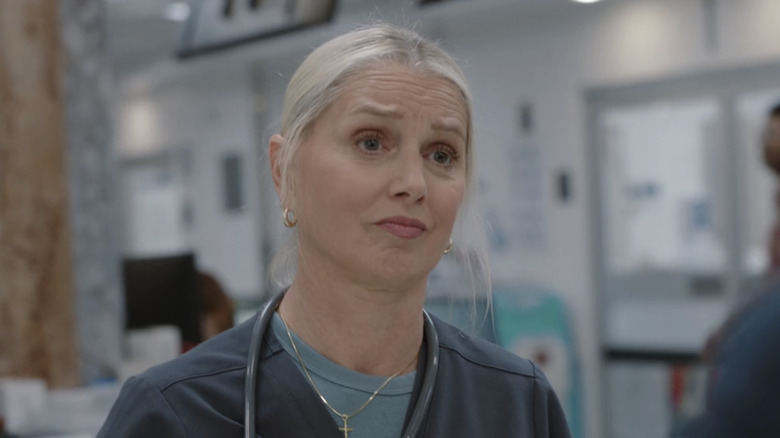
        Katherine LaNasa — Dana Evans

        Katherine LaNasa plays the Pittsburgh Trauma Medical Hospital ER’s charge nurse and is a longtime friend and supporter of Dr. Michael Robinavitch. The actress and former professional ballet dancer was married to Dennis Hopper between 1989 and 1992, and had one son with the “Easy Rider” director.

        Advertisement

        Throughout the 1990s, LaNasa appeared in several movies and TV shows, including a guest role on “ER” before landing the lead role in NBC’s “Three Sisters” in 2001. The show was canceled after two seasons, but LaNasa continued to appear on the small screen with recurring roles in shows such as “Judging Amy,” “Two and a Half Men,” and “Longmire.” She also starred in NBC’s drama series “Deception.” She can be seen in Disney’s admirable salvage job of a series, “Daredevil: Born Again,” in which she plays socialite and wife of Arthur Sledge, Artemis Sledge.

        On the big screen, LaNasa has appeared in a number of films including 2004’s Jude Law-led romantic comedy “Alfie,” 2012 Will Ferrell and Zach Galifianakis comedy “The Campaign,” and 2013 Nicolas Cage thriller “The Frozen Ground.”

        Advertisement

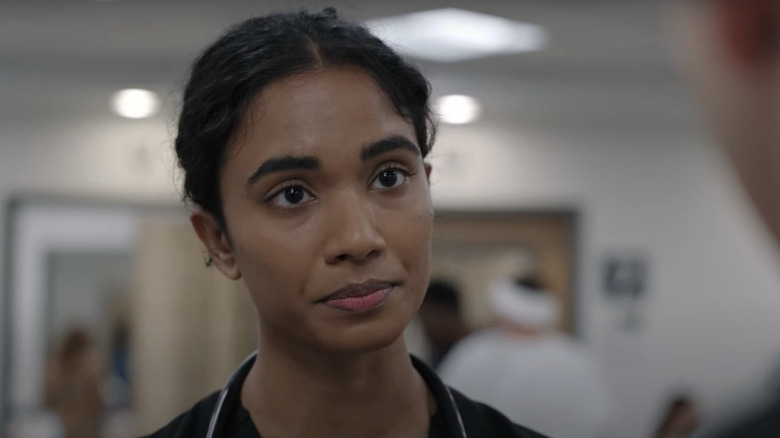
        Supriya Ganesh — Dr. Samira Mohan

        Indian-American actor Supriya Ganesh plays Dr. Samira Mohan in “The Pitt.” A workaholic third-year medical resident Dr. Mohan is a talented doctor whose commitment to building relationships with patients doesn’t always match Dr. Michael Robinavitch’s style.

        Advertisement

        Ganesh was, herself, planning on a career in medicine, even studying neuroscience at Columbia University. But she gave up on the idea of med school in favor of acting, beginning with attending auditions in New York while at Columbia. She eventually landed a small role on “Blue Bloods,” which was cut, but that was just the beginning of her acting career.

        Since then she’s had small roles in two 2022 films (“Pinball: The Man Who Saved the Game” and “Spoiler Alert”) and a number of guest roles on TV series including “Chicago Med,” “Billions,” and “Law & Order: Special Victims Unit.” Dr. Mohan is her first main on-screen role. After season 1 of “The Pitt” she began playing Vaidehi in a production of “House of India” at San Diego’s Old Globe Theatre.

        Advertisement

        Fiona Dourif — Dr. Cassie McKay

        Before “The Pitt,” Dr. Cassie McKay Actor Fiona Dourif played a Stephen King villain. In fact, she was well-established as a screen queen, starring as Nica Pierce in “Curse of Chucky” and “Cult of Chucky,” and working on Syfy’s “Chucky” TV show. Of course, it helped that she’s the daughter of Chucky voice actor and horror legend Brad Dourif, who retired from acting in 2024 (though he’ll always be available to play Chucky).

        Advertisement

        Fiona Dourif is known for more than horror, though. She starred as Bart Curlish in BBC America series “Dirk Gently’s Holistic Detective Agency” and as Diane Jones in ABC miniseries “When We Rise,” alongside recurring roles in HBO’s “True Blood” and NBC’s “The Blacklist.” In film, Dourif has multiple projects to her name, including 2008’s “Garden Party,” and Paul Thomas Anderson’s maddening vision of power and friendship “The Master.” She also appeared in Christopher Nolan’s “Tenet.”

        Taylor Dearden — Dr. Melissa King

        Dr. Melissa King, played by USC alum Taylor Dearden, is a neurodivergent resident at Pittsburgh Trauma Medical Hospital ER, who somehow remains positive amid a somewhat jaded medical staff. Dearden is the daughter of actress Robin Gale Dearden and the great Bryan Cranston, and even had a small role as “Sad Faced Girl” in an episode of Cranston’s “Breaking Bad.”

        Advertisement

        The actress’ first major role was that of Ophelia in the MTV show “Sweet/Vicious.” Dearden appeared in 10 episodes of the comedy drama before playing Chloe Lyman in season 2 of Netflix’s mockumentary series “American Vandal,” which was canceled after that second season in 2018. On the film side, Dearden’s last role was in 2020’s “The Last Champion,” a sports drama directed by Glenn Withrow and starring Cole Hauser.

        In 2022, Dearden appeared in three episodes of Apple TV+’s “For All Mankind” before landing her role on “The Pitt.” The actress spoke to NPR about how she identified with Dr. King, saying, “I see a lot of the neurodivergent parts of Mel as something I experience all the time.”

        Isa Briones — Dr. Trinity Santos

        Isa Briones’ Dr. Trinity Santos is a first-year resident with a competitive side and a proclivity for using sardonic humor as a shield. But she’s also very perceptive, which leads to one of the first season’s most shocking reveals. Briones herself is no TV rookie, having appeared as Margot Stokes in season 1 of Disney+/Hulu’s “Goosebumps” series and starring in “Star Trek: Picard,” in which she played multiple roles as Dahj and Soji Asha, Sutra, and Kore Soong.

        Advertisement

        Briones began her career as a model at a young age, and has been acting in film and on-stage since 2008. At 19 she became the youngest performer in the first touring company of “Hamilton” before making her Broadway debut in 2024 by playing Eurydice in “Hadestown.” In 2025, Briones took over for actress Havana Rose Liu in “All Nighter,” an off-broadway play from Natalie Margolin which is running at MCC Theater’s Newman Mills Theater until May 18, 2025.

        Gerran Howell — Dennis Whitaker

        Dennis Whitaker is one of two med students in the Pitt. Hailing from Nebraska, the young doctor lacks in self-confidence and constantly finds himself in need of new scrubs in one of the series’ few running gags. He’s portrayed by Welsh actor Gerran Howell, who has been working since he was a child.

        Advertisement

        Howell starred in the CBBC show “Young Dracula,” which aired from 2006 to 2014 in the U.K. and focused on the Dracula family after their move from Transylvania to small town Wales. A graduate of the Royal Academy of Dramatic Art in London, Howell then appeared in British medical drama “Casualty” in a recurring capacity, before playing private Parry in Sam Mendes’ 2019 war film “1917.” Howell continued to work in TV, playing Kid Sampson in Hulu’s “Catch-22” and becoming a series regular on the BBC show “Ludwig” in 2024. After this he landed his role on “The Pitt” and is confirmed to return for season 2 of the series, which has been officially greenlit.

        Shabana Azeez — Victoria Javadi

        Victoria Javadi is a young and ambitious third-year medical student whose parents work at the hospital and who is determined to forge her own path. She makes quite the impression after fainting on her first day, but continues doing everything she can to be taken seriously by her older colleagues. 

        Advertisement

        Javadi is played by Australian actor Shabana Azeez, who appeared in several Australian shows before “The Pitt,” most notably in the sitcom “Metro Sexual,” in which she played Yasmin Dagher. Azeez also appeared as a guest star in one episode of Netflix’s “Apple Cider Vinegar” (which centered around a subject that hurt real people) in which she played Evie, and starred in Australian film “Birdeater” in 2024, which was an official selection at the South by Southwest Festival in 2024. That same year she also lent her voice to Australian animated film “Lesbian Space Princess,” in which she played the title character. Victoria Javadi is Azeez’s first major role in a U.S. production.

        Shawn Hatosy — Dr. Jack Abbot

        Dr. Jack Abbot is a senior doctor who also works at Pittsburgh Trauma Medical Hospital. He is on the same level as Dr. Michael Robinavitch, who finds Dr. Abbot on the roof of the hospital in the very first episode after what was clearly a difficult night shift in the ER.

        Advertisement

        Shawn Hatosy is the actor who plays Dr. Abbot. Hatosy has been working consistently in film and TV since the mid-’90s and is perhaps best known for playing Stan Rosado in “The Faculty,” one of the best ’90s horror movies. He also appeared as FBI Agent John Madala in Michael Mann’s “Public Enemies.”

        On the small screen, Hatosy has appeared in dozens of shows since the mid-’90s. He even had a guest role on “ER” as in the episode “Jigsaw.” His first major TV role, however, was Sammy Bryant in crime drama series “Southland,” in which Hatosy starred for 43 episodes between 2009-2013. He has continued to appear on TV consistently ever since, with lead roles in “Reckless” and “Animal Kingdom” alongside many guest appearances and recurring roles.

        Advertisement

        Jalen Thomas Brooks — Mateo Diaz

        Jalen Thomas Brooks plates Mateo Diaz, a nurse in the ER at Pittsburgh Trauma Medical Hospital. Brooks’ first on-screen role came in 2019 when he played Simon Kirby in the “Supergirl” episode “In Plain Sight.” He then appeared in an episode of Nickelodeon’s “Henry Danger” before landing a recurring role in ABC’s “Rebel,” which was unfortunately canceled after one season.

        Advertisement

        Brooks also had a recurring role as Blaise in TNT’s “Animal Kingdom” and in The CW’s “Walker,” a reboot of “Walker, Texas Ranger” in which he played Colton Davidson. Brooks has appeared in one feature film thus far, making his big screen debut in Eli Roth’s throwback slasher “Thanksgiving” (2023).

        Though Mateo Diaz isn’t a main role on “The Pitt,” there’s plenty of scope for that to change as the show continues. Given the fact that Brooks has amassed several impressive credits in what is still a burgeoning career, it wouldn’t be surprising if the writers chose to use him more in future.

        Amielynn Abellera — Perlah Alawi

        Filipino American actor Amielynn Abellera plays Perlah, a Filipino Muslim registered nurse in the ER who provides support to the doctors and has a close friendship with Kristin Villanueva’s Princess Dela Cruz. Originally from Stockton, California, Abellera actually earned a degree in Psychobiology from Santa Clara University before gaining her Master of Fine Arts degree in acting from the University of Southern California.

        Advertisement

        Her professional credits begin in the early 2010s, when she started acting in short films before landing small roles on TV series. Throughout the 2010s and 2020s, Abellera appeared in single episodes of multiple shows, including “NCIS” and Hulu’s “The Cleaning Lady.” Her role as Perlah on “The Pitt” is her first recurring role, with Abellera telling Ebby Magazine that she was drawn to the part because she “rarely see[s] someone like Perlah in mainstream media” and was “moved” by “The Pitt” showcasing a “sincere portrayal of our strained healthcare system.”

        Kristin Villanueva — Princess Dela Cruz

        Princess Dela Cruz is a nurse working in the ER at Pittsburg Trauma Medical Hospital. She’s played by Kristin Villanueva, who was born and raised in Manila, Philippines and moved to the U.S. at 15. She earned her BFA in Acting from SUNY Purchase before embarking on a career which has since seen her starring in regional theater shows across the country. Villanueva’s first TV role came in 2011 when she appeared in an episode of “Gossip Girl,” which also starred the late great Michelle Trachtenberg.

        Advertisement

        Since then, Villanueva has appeared in multiple TV and film projects, playing a nurse in Paul Schrader’s modern masterpiece about faith, “First Reformed” and appearing in an episode of CBS’s “Elementary.” She also had roles in “Search Party” and a recurring role in Netflix’s “Bonding” before landing hr role in “The Pitt.” Princess Dela Cruz is Villanueva’s biggest on-screen role yet.


        Source link

        Record Inflows for Bitcoin and Ethereum ETFs Signal Robust Institutional Adoption

        Record Inflows for Bitcoin and Ethereum ETFs Signal Robust Institutional Adoption


        Spot Bitcoin ETFs and Ethereum ETFs are experiencing record inflows, reflecting growing institutional confidence in cryptocurrencies as Bitcoin surpasses $106,000 and Ethereum gains momentum, driven by global adoption and market dynamics.

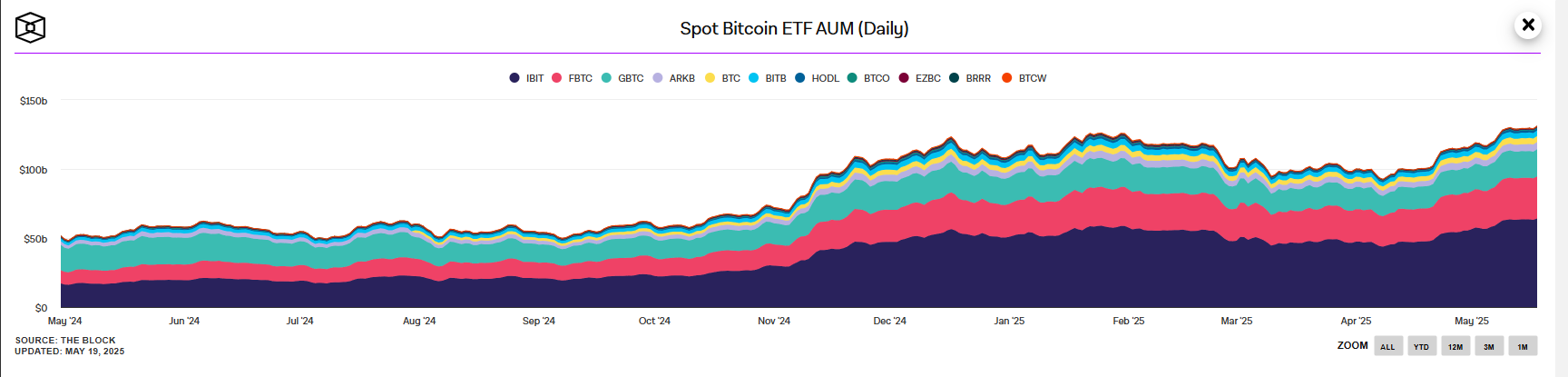
        Spot Bitcoin ETFs hit $109 billion AUM

        The cryptocurrency market is witnessing a historic surge in institutional investment, with U.S. spot Bitcoin exchange-traded funds (ETFs) reaching a remarkable $109 billion in assets under management (AUM) as of late April 2025.

        Spot Bitcoin ETFs hit $109 billion AUM

        Source: The Block

        This milestone underscores the accelerating pace of institutional adoption globally, with Bitcoin ETFs reaching all-time high with over $41 billion in inflows since their launch in early 2024. 

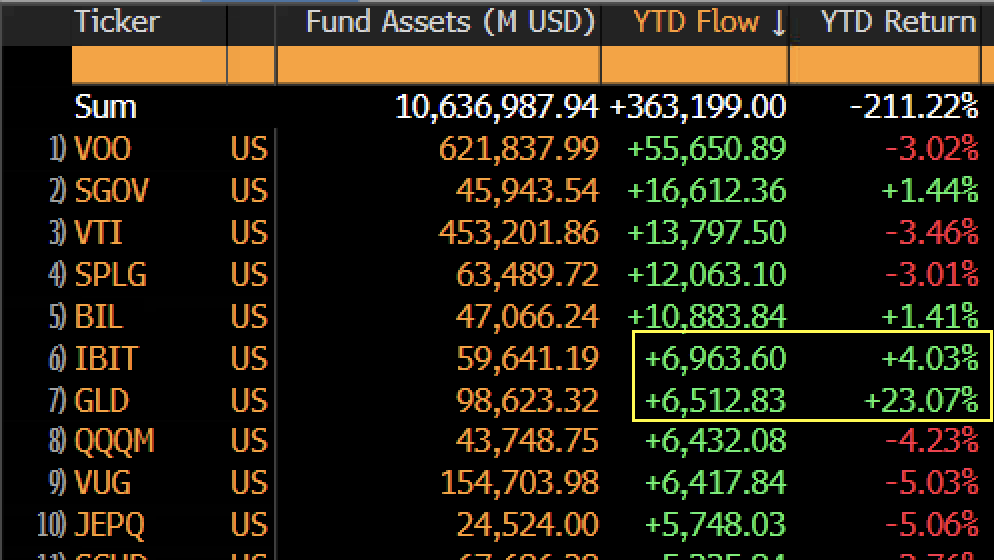
        On May 8, 2025, investors poured new capital into these funds, pushing the total to this record-breaking figure. BlackRock’s iShares Bitcoin Trust (IBIT), the largest spot Bitcoin ETF, alone has attracted $6.96 billion in year-to-date inflows, outpacing even the world’s largest gold ETF, SPDR Gold Trust (GLD), which recorded $6.5 billion.

        Spot Bitcoin ETFs hit $109 billion AUMSpot Bitcoin ETFs hit $109 billion AUM

        Source: X

        This outperformance highlights institutional investors’ growing confidence in Bitcoin BTC as a long-term store of value, despite its modest 3.8% price gain compared to gold’s 29% surge this year.

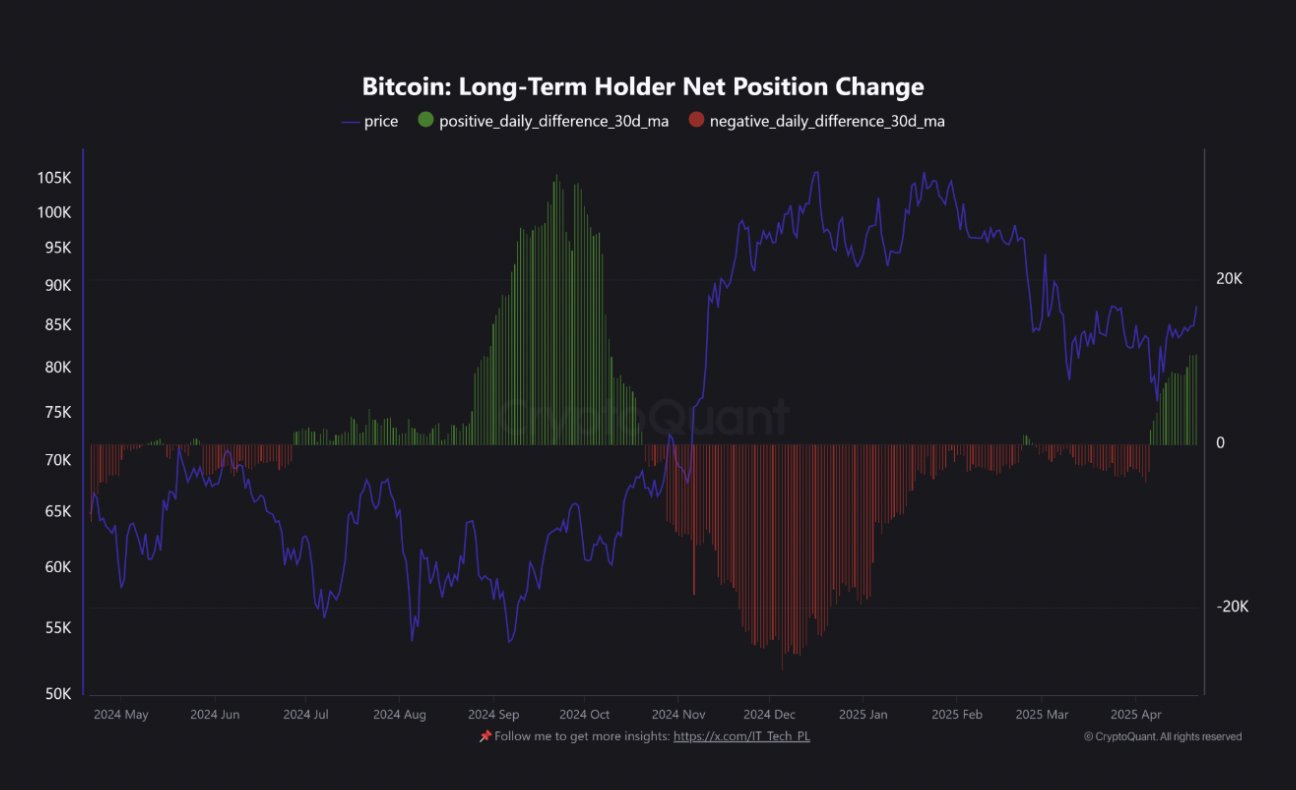
        Long-term buying pressure from Bitcoin whales points to a potential continuation of the bullish trend.

        Spot Bitcoin ETFs hit $109 billion AUMSpot Bitcoin ETFs hit $109 billion AUM

        Source: CryptoQuant

        Ethereum ETFs Gain Momentum

        While Bitcoin ETFs continue to dominate headlines, spot Ethereum ETFs are steadily carving out their own success. 

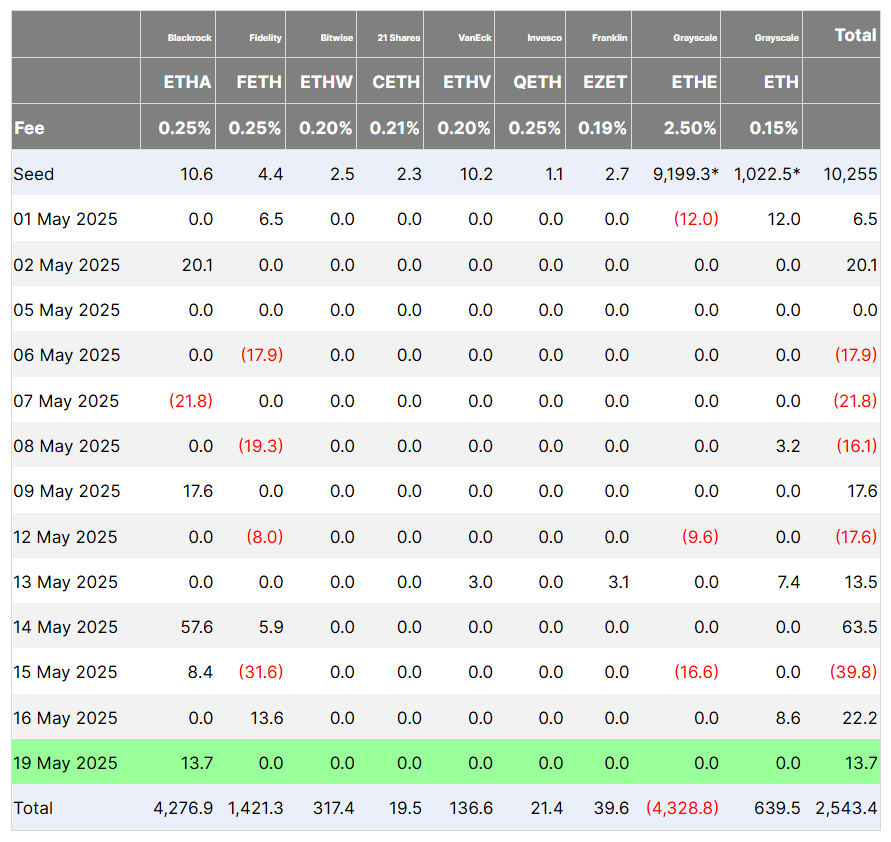
        In early May 2025, Ethereum ETFs recorded significant net inflows, ending an eight-week streak of outflows, driven by a broader cryptocurrency market rally. This marked their first positive weekly inflows since February 2025, reflecting renewed investor confidence. 

        Ethereum ETFs Gain MomentumEthereum ETFs Gain Momentum

        Source: Farside Investors

        BlackRock’s Ethereum ETF (ETHA) has been a standout, attracting substantial capital and contributing to the fund’s growing AUM, which now reaches billions. 

        Despite earlier challenges, including notable outflows in March, the recent surge underscores Ethereum’s appeal as an institutional investment, fueled by its robust ecosystem and Pectra upgrades. 

        Analysts note that while Ethereum ETFs still trail Bitcoin in scale, their recent performance signals a shift, with institutions increasingly recognizing Ethereum’s potential as a cornerstone of the crypto market.

        Rising Institutional Trust Powers ETF Inflows

        While Bitcoin benefits from its established narrative as digital gold, Ethereum ETFs remain a “sidekick” to their Bitcoin counterparts, with inflows significantly lower. 

        The record inflows into both Bitcoin and Ethereum ETFs signal a structural shift in the financial landscape, with institutions increasingly viewing cryptocurrencies as viable portfolio assets. Analysts attribute this trend to macroeconomic factors, including persistent inflation, a weakening U.S. dollar, and expectations of renewed quantitative easing by the Federal Reserve. 

        Rachael Lucas from BTC Markets noted that these inflows reflect a “maturing role” for Bitcoin and Ethereum ETH in diversified portfolios. Additionally, global adoption is gaining traction, with countries like the UAE, Singapore, and Hong Kong launching their spot Bitcoin and Ethereum ETFs, further legitimizing cryptocurrencies as an asset class. Despite short-term volatility, such as Bitcoin’s 12% price drop in Q1 2025, the sustained inflows demonstrate unwavering institutional optimism.


        Source link

        Popular Posts

        My Favorites