The review embargo for Dragon Age: The Veilguard is reported to lift today, ahead of the game’s release on October 31st. However, one website has accidentally broken the embargo, giving us a small glimpse of what to expected.
Noisy Pixel presumably got a little too excited and posted their review early. While it has now been taken down, it also appeared briefly on OpenCritic.
While I didn’t manage to peruse the full review before it was hastily taken down, a quote from it did appear on Opencritic, along with the score of 8.5 out of 10.
“Dragon Age: The Veilguard may have hit a few big stumbles along its path to release, but ultimately manages to deliver an innovative and fully-realized take on the series’ world, exploration, and combat. “read the quote. “The role-playing aspect has taken a minor hit in the process, but the game still boasts one of the best casts its studio has ever created, an engaging plot, and answers to many long-held questions, in addition to the best battle system in BioWare history.”
Dragon Age: The Veilguard has proven slightly divisive since it was officially revealed. The initial trailer’s tone caught fans off guard with how different it seemed to paint the new game compared to the grittier style of the previous titles. But gameplay released later on seemed to ease at least some of the doubt. That said, there is still a notable presence online rooting for the game’s failure. Despite that, it’s currently the number one pre-ordered game on PlayStation, indicating that people are at somewhat excited for it.
Of course, it’s rarely ever a good idea to pre-order a game, chums. Best keep your money firmly in your wallet until you can get some idea of a game’s state at launch.
We may receive a commission on purchases made from links.
Warner Bros
At the dawn of the 1980s, Warner Bros. had two major in-house artists who could do just about anything they wanted. One was a movie star, the other a filmmaking genius, and they couldn’t have been more different in aesthetic or temperament.
Clint Eastwood was a television star who found big-screen success by making Spaghetti Westerns in Europe with an upstart named Sergio Leone before becoming the avatar of the angry, Miranda rights-burdened American police officer as “Dirty Harry.” Stanley Kubrick was a Bronx born-and-bred autodidact who found his love for filmmaking via photography; after a string of critical successes with “Paths of Glory,” “Loilita” and “Dr. Strangelove or: How I Learned to Stop Worrying and Love the Bomb,” he was hailed as a visionary for the groundbreaking “2001: A Space Odyssey,” upon which he became renowned for his perfectionism and technical boundary pushing.
We like to play the “what if” game with legendary director and actor pairings around here, but there is almost certainly not an alternate universe where Eastwood and Kubrick hooked up. Unlike Kubrick, Eastwood liked to work quickly, shooting very few takes and moving on, whereas the meticulous auteur could shoot over 100 takes to get whatever it is he thought he needed. These fellas were not simpatico.
So it’s no surprise Clint Eastwood hated “The Shining,” and didn’t mind saying so on record.
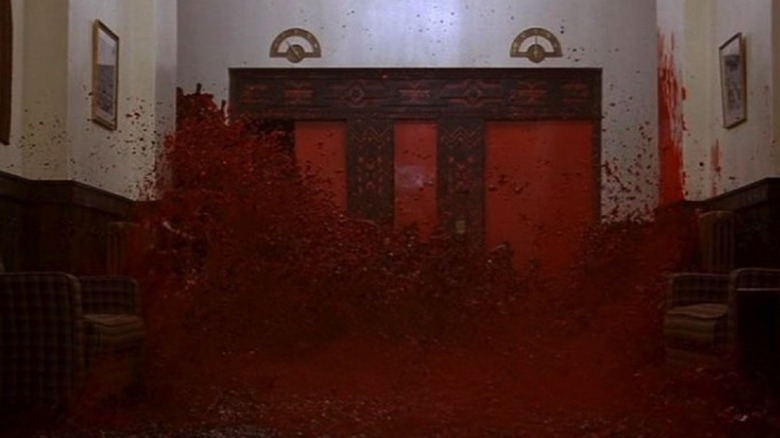
Eastwood did not consider The Shining a masterpiece of modern horror
Warner Bros
In a conversation reprinted in “Conversations with Clint: Paul Nelson’s Lost Interviews with Clint Eastwood, 1979-1983,” Eastwood tore into Kubrick’s adaptation of Stephen King’s “The Shining” — and while you might vehemently disagree with the man, you at least have to admit he was entertainingly wrong.
Here’s Clint letting ‘er rip:
“I was joking the other day because Kubrick had put that byline on the movie poster: ‘A masterpiece of modern horror.’ Even some of the execs at the studio said, ‘Stanley, maybe you better wait and let some reviewer stick that byline on the film, because it might be considered a little forward of you to do it.’ Evidently that got overruled and he just went ahead and did it. We were talking about ads for ‘Any Which Way You Can.’ I said, “Well, maybe we should call it ‘a masterpiece in modern comedy and adventure.'”
Eastwood went on to share his experience of watching the movie on the WB lot, where it went over like a lead zeppelin, primarily because no one found it scary. As Eastwood noted, “If it had been a new director, they would’ve bombed it right out of the building.” How anyone could find “The Shining” anything less than viscerally and psychologically terrifying (the film really does a number on the human body) is beyond me, but Eastwood was adamant that the film, in his view, stunk on ice. “It was just a giant failure. The greatest example in the picture is that there just wasn’t anything at all terrifying about it. That ax scene, coming in with the ax to hit Scat [Crothers], it’s dead as a d***.”
Kubrick never responded to Eastwood’s criticism, nor did he address Stephen King’s displeasure with his adaptation. Why bother? He could always call up his pal Steven Spielberg, who was so obsessed with the film he watched it 25 times after it came out (and later inserted it into “Ready Player One”). And Eastwood could content himself in that “Any Which Way You Can” was the fifth highest grossing film of 1980, outpacing “The Shining” by $26 million at the U.S. box office. One way or another, everybody won.
NetVRk has announced some big news, including a new chapter with the launch of the alpha version of its metaverse platform. But what is the NetVRk Metaverse? This article will explore NetVRk’s cross-platform virtual world built on Unreal Engine 5, the immersive environments, AI, blockchain and GameFi, user-generated content and monetization, community and what’s coming next to show you the platform’s future.
Immersive Virtual Worlds
At the core of NetVRk are immersive and interactive virtual worlds that increase user engagement. You have a creation engine to build and customize your own worlds. Whether you’re exploring new worlds or building your own, NetVRk is a way to interact with digital spaces.
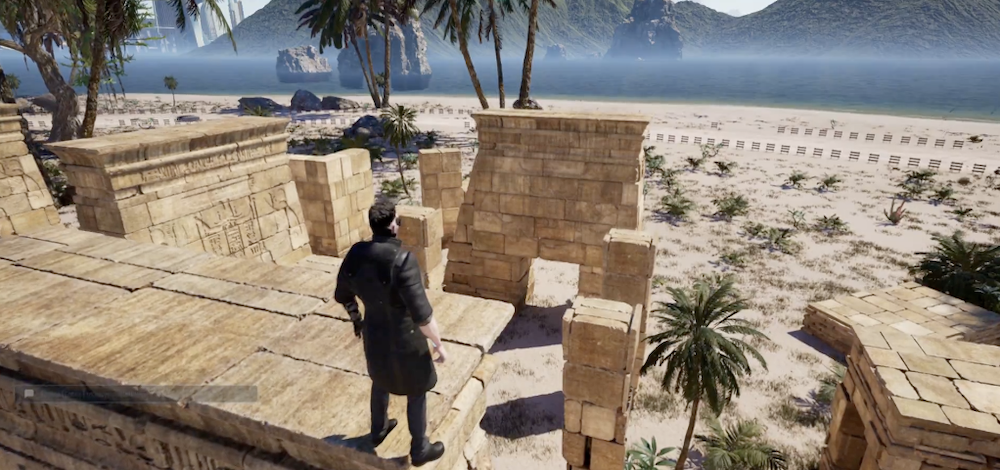
Using top gaming engine, Unreal Engine 5, NetVRk has high-definition environments and graphics that stand out from other metaverse platforms. You can play a variety of gameplay experiences, from relaxing exploration to high-intensity shooter scenarios. The metaverse also hosts social events like virtual parties with celebrities and interactive competitions for individual and group play.
AI Features
One of the main features of NetVRk is the integration of AI. The metaverse is populated with AI-powered non-player characters (NPCs) that have emotional intelligence and memory. This means you can build relationships with AI characters in the game world. These AI companions are non-fungible token (NFT) assets that you can customize, trade and own, adding a personal touch to your virtual experience.
Blockchain and GameFi
NetVRk has blockchain and GameFi integrated into the ecosystem. The platform’s economy is a token-based marketplace where you can enhance AI companions, customize personalities, and buy digital skins and assets. Cross-chain functionality means you can compete in various arenas and earn $NETVR tokens and NFTs. This adds competition and incentives to participate and increase overall user engagement.
User Generated Content and Monetization
NetVRk democratizes 3D content creation; you can create experiences using simple prompts or intuitive interfaces. Like building in games like The Sims, content creation is easy and accessible. You can monetize your creations by interacting with AI companions, trading digital assets, buying land and building virtual environments. This encourages creativity and gives real-world value to in-game activities.
Community and Social
Community building is also core to NetVRk. You can interact in virtual worlds, shop online, participate in social events and compete in interactive competitions. These features increase digital interaction and make you an active contributor to the evolving metaverse.
Upcoming Developments and Features
NetVRk is entering a new phase with several big announcements this quarter:
New Marketplace: A new marketplace that will increase rewards flowing into the NetVRk Reserve and benefit token stakers.
Land Auctions in NETVR: Land auctions will be in NETVR tokens only, increasing token utility and demand.
New Launchpad: A new launchpad coming soon with more opportunities and announcements the community will love.
Staking System Update: An updated token staking system with increased pool weight in the NetVRk Reserve and more incentives for token holders.
DAO Voting Power: Token holders will have more governance rights in the decentralized autonomous organization (DAO).
More Utilities for Staking Pool: New distribution mechanisms to encourage participation and engagement.
Landowners and Token Holders
One of the big features is the ability for landowners to stake their NETVR tokens in their land plots. This feature not only gives more rewards but also more governance rights. The weighted staking system means staked tokens in land plots get a boost based on land type and increase demand for tokens and land.
Conclusion
With these coming soon, now is the time to accumulate NETVR tokens. These tokens will be required for land auctions and to access the full staking system.
NetVRk will also have competitions and campaigns where players can share their interactions with AI NPCs on social media. Viral content will be rewarded, adding a competitive and community aspect to the experience.
NetVRk could take the metaverse to new heights. With high-end graphics, AI, blockchain and user-generated content, it’s a dynamic and immersive virtual world with endless possibilities. As the platform grows, users will have even more to look forward to, and NetVRk could be a leader in next-gen digital interaction.
Editor’s note: Written with the assistance of AI – Edited and fact-checked by Jason Newey.
Jason Newey is a seasoned journalist specializing in NFTs, the Metaverse, and Web3 technologies. With a background in digital media and blockchain technology, he adeptly translates complex concepts into engaging, informative articles.
It seems there’s been some confusion on who can play the upcoming Monster Hunter Wilds beta test, and Capcom is here to set the record straight.
The issue with so many developers doing public beta tests for their games these days, is that they all do things differently – sometimes they’re open, sometimes they’re closed, sign-ups work differently from place to place, flowery complicated language makes it unclear who can even take part in them. It’s a bit of a ball ache to be honest, and clearly Capcom hasn’t done a good enough job at making it clear who can partake in the upcoming Monster Hunter Wilds beta test, as the developer has taken to the series’ official Twitter account to clear up just who can partake in it – and to be clear, it’s everyone and anyone!
To see this content please enable targeting cookies.
Manage cookie settings
“Hunters, we’ve seen some comments wondering if you need to have pre-ordered Monster Hunter Wilds to access the Open Beta Test,” reads the post on Twitter. “The answer is no, no pre-order is needed to play,” the account clarifies, before cheekily noting that “if you’d like to pre-order after playing the Open Beta Test, that’d be cool!” Part of the confusion probably came from the fact that PlayStation 5 PlayStation Plus players are getting to play it a couple of days before other platforms, but it’s good to have it made a bit clearer. That’ll obviously be quite welcome news to those of you hoping to try it out before pre-ordering the game, too.
Hunters, we’ve seen some comments wondering if you need to have pre-ordered Monster Hunter Wilds to access the Open Beta Test. The answer is no, no pre-order is needed to play!
However, if you’d like to pre-order after playing the Open Beta Test, that’d be cool! 😺 #MHWilds pic.twitter.com/YfZrfdjC7c
— Monster Hunter (@monsterhunter) October 24, 2024
To see this content please enable targeting cookies.
Manage cookie settings
Our own Dom got to try the game out at Gamescom earlier this year, coming away from it excited and curious for more, writing, “TL;DR? Monster Hunter Wilds is good. The combat feels scrappier and more in-your-face than ever before, with more tools at your disposal to mess up your prey and more control in your hands to make you feel like a true superhero with your weapon once you’ve got your movement and strings down. This is seriously going to be something special, and I cannot wait to play more.”
Monster Hunter Wilds is out February 28, 2025, on PS5, Xbox Series X/S, and PC.
Published: October 28, 2024 at 6:51 am Updated: October 28, 2024 at 6:52 am
by Ana
Edited and fact-checked:
October 28, 2024 at 6:51 am
To improve your local-language experience, sometimes we employ an auto-translation plugin. Please note auto-translation may not be accurate, so read original article for precise information.
In Brief
CoinShares noted that total inflows for the year have reached $27 billion, nearly tripling the previous record of $10.5 billion set in 2021.
European alternative asset manager specializing in digital assets, CoinShares, published its latest report, indicating that digital asset investment products experienced inflows of $901 million this month, accounting for 12% of the total assets under management, making it the fourth-largest month for inflows on record. Overall, total inflows for the year have surpassed $27 billion, nearly tripling the previous record of $10.5 billion set in 2021.
The United States led the way with inflows of $906 million, while other regions showed varied results. Germany and Switzerland witnessed inflows of $14.7 million and $9.2 million, respectively, but Canada, Brazil, and Hong Kong saw modest outflows of $10.1 million, $3.6 million, and $2.7 million, respectively.
Bitcoin was the primary focus, generating inflows of $920 million. Interestingly, this surge was not mirrored by inflows into short-Bitcoin positions, which experienced minor outflows of $1.3 million. CoinShares suggests that current Bitcoin prices and inflows are heavily impacted by US political dynamics, particularly the recent rise in poll numbers for the Republican Party.
In contrast, Ethereum faced the largest outflows of any asset last week, totaling $35 million, while Solana registered the second-largest inflows at $10.8 million.
Furthermore, blockchain equities are showing signs of recovery, with inflows for the third consecutive week amounting to $12.2 million last week.
Bitcoin And Ethereum Record Price Gains Amid ETF Market Activity
As of the writing time, Bitcoin is priced at $68,541, indicating an increase of 2.22% in the past 24 hours. During this period, the cryptocurrency’s trading range varied between $66,968 and $68,546. Interestingly, Bitcoin started the week positively, coinciding with considerable inflows into spot Bitcoin exchange-traded funds (ETFs).
In contrast, Ethereum has experienced a price increase of 2.60% over the last 24 hours, now trading at $2,534. The intraday trading range for Ethereum was recorded between $2,462 and $2,537, according to CoinMarketCap. However, it is noteworthy that the coin’s recent upward movement appears, despite outflows from spot Ethereum ETFs observed over the past week.
Disclaimer
In line with the Trust Project guidelines, please note that the information provided on this page is not intended to be and should not be interpreted as legal, tax, investment, financial, or any other form of advice. It is important to only invest what you can afford to lose and to seek independent financial advice if you have any doubts. For further information, we suggest referring to the terms and conditions as well as the help and support pages provided by the issuer or advertiser. MetaversePost is committed to accurate, unbiased reporting, but market conditions are subject to change without notice.
About The Author
Alisa, a dedicated journalist at the MPost, specializes in cryptocurrency, zero-knowledge proofs, investments, and the expansive realm of Web3. With a keen eye for emerging trends and technologies, she delivers comprehensive coverage to inform and engage readers in the ever-evolving landscape of digital finance.
More articles
Alisa Davidson
Alisa, a dedicated journalist at the MPost, specializes in cryptocurrency, zero-knowledge proofs, investments, and the expansive realm of Web3. With a keen eye for emerging trends and technologies, she delivers comprehensive coverage to inform and engage readers in the ever-evolving landscape of digital finance.
In the rapidly evolving world of the metaverse, few projects have captured as much attention as Metahero (HERO). With its focus on ultra-realistic 3D avatars and digital assets, Metahero aims to redefine how we interact with the virtual world. This article dives into what makes Metahero unique, its key features, the technology behind it, and how it is positioned to play a pivotal role in the metaverse ecosystem.
What is Metahero?
Metahero is a blockchain-based project designed to bridge the gap between the physical and virtual worlds. Leveraging advanced 3D scanning technology, Metahero allows users to create lifelike avatars that can be used across metaverse platforms. The project’s native token, HERO, facilitates transactions within the Metahero ecosystem, enabling users to buy, sell, and trade digital assets and experiences.
The Vision of Metahero
The vision behind Metahero is ambitious. In a world where the metaverse is becoming increasingly central, Metahero seeks to offer a solution that brings hyper-realistic digital identities to life. Unlike traditional avatar creation tools, which often result in stylized or cartoonish avatars, Metahero’s approach ensures that every scan is as close to the real person as possible. This is achieved through its partnership with Wolf Digital World (WDW), a 3D technology company known for producing the highest fidelity 3D scans in the industry.
Key Features of Metahero
Ultra-Realistic 3D Scanning: Metahero’s technology captures the minutest details of a person’s appearance, resulting in an avatar that looks almost identical to them. The scanning booths are equipped with 200 Sony A7R cameras capable of creating avatars in stunning detail.
Digital Asset Creation: Beyond avatars, Metahero enables the creation of digital assets. This could range from in-game items and virtual collectibles to artwork that can be minted as NFTs (non-fungible tokens).
Metahero’s Ecosystem: The HERO token serves as the backbone of the Metahero ecosystem. Whether users are looking to scan themselves, acquire a digital asset, or engage in metaverse transactions, HERO is the primary medium of exchange.
Interoperability Across the Metaverse: Metahero’s 3D avatars and assets are designed to be compatible with multiple metaverse platforms. This ensures that users can have a consistent digital identity across different virtual worlds.
Focus on Privacy and Ownership: Unlike centralized avatar creation platforms, Metahero prioritizes user privacy and ownership. Users have full control over their avatars and assets, thanks to blockchain technology that guarantees secure ownership rights.
How Metahero Works
The Metahero ecosystem revolves around its 3D scanning booths located in strategic locations worldwide. Users step into these booths to create a high-fidelity avatar that can be stored on the blockchain. Here’s a simplified breakdown of the process:
Step 1: Scanning: Users enter a Metahero scanning booth, where multiple cameras capture their 3D image from every angle.
Step 2: Avatar Creation: The raw scan data is processed and converted into a 3D avatar using advanced software. This avatar can then be exported for use in compatible metaverse environments.
Step 3: Transactions with HERO: To finalize the scan or to acquire any digital asset, users pay with the HERO token.
Metahero Token (HERO) and Its Role in the Ecosystem
The HERO token is an integral part of the Metahero ecosystem. It enables transactions within the platform and ensures that users can purchase, sell, and trade 3D avatars and other digital assets seamlessly. HERO is also traded on major cryptocurrency exchanges, allowing investors to support the project directly.
The token has been designed with a deflationary model, meaning a small percentage of HERO tokens are burned with each transaction, reducing the overall supply and potentially increasing the token’s value over time.
Metahero’s Place in the Metaverse
As the metaverse continues to expand, Metahero offers a unique proposition by focusing on ultra-realism. The ability to create digital identities that closely resemble real individuals has applications in gaming, social media, virtual events, and e-commerce. By providing a way to bring real-world assets into the digital realm, Metahero enhances the value of virtual experiences and broadens the scope of what can be achieved in the metaverse.
Future Prospects and Roadmap
Metahero is committed to expanding its ecosystem by deploying more scanning booths worldwide and forming partnerships with leading metaverse and gaming platforms. As the metaverse continues to mature, Metahero’s high-quality avatars are likely to be in high demand for users who want a digital presence that mirrors their real selves.
In the world of blockchain technology and the metaverse, Metahero stands out as a project focused on creating a truly immersive digital experience. With its HERO token fueling a dynamic ecosystem of 3D avatars and digital assets, Metahero is poised to play a significant role in shaping the future of the metaverse. Whether you’re an investor, a metaverse enthusiast, or simply curious about the next frontier of digital interaction, Metahero is a project to keep an eye on as the boundaries between reality and the virtual world continue to blur.
You may also like this content
Follow us on TWITTER (X) and be instantly informed about the latest developments…
Onitsuka Tiger’s iconic MEXICO 66 is undeniably one of the IT shoes of the moment, cementing its place as a contemporary symbol of cool. Originally designed for running in 1966, it has found itself on the feet of celebrities, blurring the lines between practicality and trend. While it floods our social media feeds for outfit inspiration, it finds itself even further into the fashion spotlight with Onitsuka Tiger’s latest collaboration with Vaquera for Spring Summer 2025, unveiled at Paris Fashion Week.
This collaboration marks a pivotal moment in Onitsuka Tiger’s evolving identity, merging the two seemingly contrasting worlds of Vaquera’s anarchistic design ethos with Onitsuka Tiger’s precision-driven, Japanese craftsmanship. The reinterpretation of the MEXICO 66 are in ways that both uphold and subvert its iconic form where Vaquera, known for upending fashion norms with their downtown New York attitude, injects their irreverent vision into the sneaker, transforming it into a canvas of sexy expression.
The result? Re-styled classics of the MEXICO 66, offered in two striking colourways — silver/off-white and yellow/black in eight Vaquera looks. Handcrafted by artisans in Japan, the distressed finish and foil transfers on the upper echo the lived-in, worn-in feel that’s both nostalgic and new. The words “LOVE” and “RAGE” embroidered on the tongue speak to Vaquera’s signature blend of passion and ambivalence, imbuing the footwear with deeper emotional stakes than one might expect from athletic wear.
Consider look 12, where playfulness and edge shine through the metallic Onitsuka Tiger shoes, complementing a bold black bandeau top paired with a structured mini bubble skirt. Accessorised with a large brown handbag and a baseball cap, this ensemble is bold yet casual, capturing the Vaquera essence.
Closing the show was a show-stopping maximalist look, featuring oversized elements from a regal, gold chain-patterned skirt to an equally dramatic veil. Grounded by a graphic tee, the ensemble perfectly captured the fusion of runway opulence and streetwear sensibility, with the metallic sneakers adding a casual twist to the already lavish look.
This collaboration not only preserves the classic essence of the MEXICO 66 sneaker but also signifies Onitsuka Tiger’s deeper immersion into the luxury fashion realm as the brand matures. By aligning with Vaquera, they have underscored their commitment to redefine its place in the fashion landscape.
This article was first seen on Men’s Folio Singapore.
For more on the latest in luxury fashion and style reads, click here.
The launch date for Google’s Gemini 2.0 model has been officially announced, creating excitement in the tech community. After introducing its first version last December, Google is set to release Gemini 2.0 this December, aiming to expand its user base and deliver enhanced capabilities.
Gemini 2.0: Details Awaited as Performance Expectations Rise
Gemini 2.0 follows the initial Gemini 1.0 and its various iterations: 1.0 Pro, integrated with Bard, the Nano model included in the Pixel 8 Pro, and the 1.0 Ultra, which launched on Gemini Advanced in February. Gemini 2.0’s release will occur after the February launch of Gemini 1.5.
Reports suggest that while Google aims for Gemini 2.0 to deliver improved performance, initial evaluations indicate that the advancements may be modest, a challenge faced by other companies developing large models. Additionally, the launch of Project Astra is anticipated to add camera and visual enhancements to Google’s Gemini Live platform.
Meanwhile, OpenAI is also set to unveil a new model in December, though specific details remain under wraps.
You may also like this content
Follow us on TWITTER (X) and be instantly informed about the latest developments…
Web3 move-to-earn app StepnGo has announced a partnership with rap icon Snoop Dogg for a limited-edition non-fungible token (NFT) sneaker collection.
This new collection includes 800 NFT sneakers and will roll out in two phases. The first volume, available from October 28 to October 31, will release 100 NFTs per day through a raffle on X (Twitter). The second phase, running from November 4 to November 8, will be accessible via raffle mint on the MOOAR marketplace.
The collection features four unique designs — “G-Sneaker,” “Low Rider,” “Dope,” and “Doggy Style.”
🎤 @snoopdogg feat STEPN GO: From West Coast to Web3
We’re beyond hyped to announce a legendary collab with the icon himself – @snoopdogg ✨
Snoop Dogg has been breaking boundaries for decades—as a rap legend, cultural icon, and now, he’s bringing that same energy to STEPN GO.… pic.twitter.com/MZ9m7evO8F
— STEPN GO (@Stepnofficial) October 24, 2024
This collaboration with Snoop Dogg follows StepnGo’s recent partnerships with Adidas, which saw the release of branded NFT sneakers, and Casio, with a collection inspired by G-Shock watches.
These collaborations mark part of StepnGo’s wider strategy since its rebranding from Stepn, an effort accompanied by a new app and additional social features.
Launched in 2021, StepnGo lets users earn rewards by engaging in physical activities like walking or running while wearing NFT sneakers activated within the app. The platform rewards users with tokens for maintaining specific activity levels and hitting milestones.
StepnGo’s rebranding, though initially met with mixed responses, appears to be gaining traction, thanks in part to “crypto-free” onboarding options. New features include allowing users to lend their NFT sneakers to friends or family and customizable avatars and outfits.
Before rebranding, StepnGo had already established partnerships with other high-profile names, including NFT game developer Illuvium, DJ Steve Aoki, and Asics.
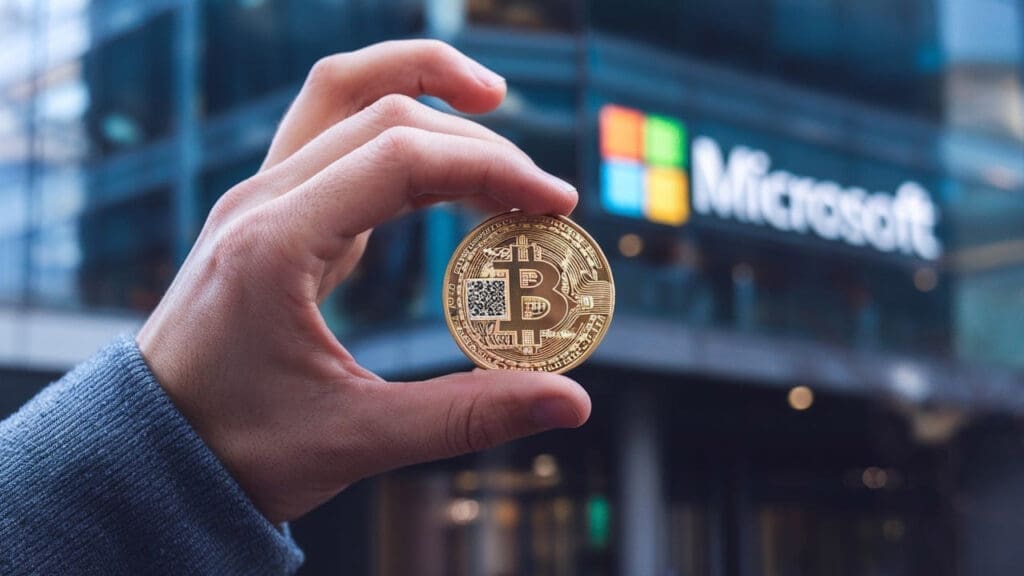
Microsoft’s Potential Bitcoin Investment Sparks Debate for December Shareholder Meeting
A noteworthy development has emerged regarding US-based tech giant Microsoft. The company has revealed plans to discuss Bitcoin investments at its upcoming shareholder meeting on December 10, 2024. While Microsoft’s Board of Directors has shown reservations about the idea, investor perspectives on this topic are also of high importance and could shape the final decision.
According to a recent filing submitted to the U.S. Securities and Exchange Commission (SEC), Microsoft will address several agenda items at the meeting, one of which includes a proposal for investing in Bitcoin. The idea stems from the recommendation of a think tank that believes in Bitcoin’s potential for financial resilience.
Why Is Microsoft Considering Bitcoin?
Supporters of the Bitcoin investment proposal argue that Bitcoin could serve as a hedge against inflation, helping Microsoft to protect its assets from inflationary pressures. They see Bitcoin as an exceptional investment tool with potential benefits for Microsoft’s long-term financial strategy.
However, the Board of Directors has expressed skepticism, labeling the proposal as “unnecessary.” According to Microsoft executives, the company already evaluates a variety of investment avenues, which include but are not limited to Bitcoin. The shareholder meeting on December 10 will shed light on whether investors’ voices will influence Microsoft’s stance on Bitcoin.
This decision could mark a significant shift in Microsoft’s investment strategy if shareholders advocate for it.
You may also like this content
Follow us on TWITTER (X) and be instantly informed about the latest developments…