The PS5 Pro is here, boasting new features and capabilities over the original PS5. With hardware upgrades, enhanced graphics, and faster processing power, many current PS5 owners are wondering whether it’s worth upgrading to the PS5 Pro. Let’s break down the potential advantages, considering graphics, performance, and other key factors that could impact the value of this upgrade.
1. Performance Boost
One of the PS5 Pro’s main selling points is its upgraded performance capabilities. Equipped with a more powerful CPU and GPU, the PS5 Pro promises faster load times, more stable frame rates, and improved support for 4K gaming. Here’s a closer look at the core performance areas that might interest gamers:
Enhanced Processing Power: With a likely jump to a custom AMD RDNA 3-based GPU and a faster Zen 4 CPU, the PS5 Pro is designed for users who want more power for demanding games. If you’re used to the PS5’s 30-60 FPS gameplay in certain titles, the PS5 Pro’s capability for stable 60-120 FPS gameplay could be compelling. The frame rate boost could mean smoother and more responsive gameplay, especially for fast-paced or graphically intensive titles.
Ray Tracing Improvements: The PS5 Pro’s hardware can handle more complex ray tracing, which should lead to better light, shadow, and reflection effects in games that support it. Ray tracing is already impressive on the PS5, but the Pro aims to deliver it at a higher resolution and with fewer performance trade-offs. For players who value graphical fidelity, this could make the upgrade worthwhile.
2. Visual Fidelity and 4K Gaming
For gamers with a 4K TV, the PS5 Pro’s enhanced support for 4K resolution could be a significant selling point. The Pro is designed to offer a native 4K experience in more games, reducing the reliance on upscaling. Key visual benefits include:
Higher-Resolution Textures: The PS5 Pro’s added power allows developers to use higher-resolution textures in games. This means greater detail in environments, characters, and effects, which can enhance immersion.
More Stable 4K Gaming: While the PS5 can support 4K, it often has to downscale or use dynamic resolution scaling in intensive games to maintain frame rates. The PS5 Pro can better handle native 4K at a consistent 60 FPS or higher, which could lead to a visibly sharper and smoother experience.
8K Potential: Sony has teased potential 8K support for the PS5 Pro, which, while not a mainstream gaming resolution yet, may appeal to future-proofing enthusiasts. However, the practicality of 8K for most gamers is still limited, as 8K monitors and TVs are rare and costly.
3. VR and Expanded Peripheral Support
The PS5 Pro is expected to be optimized for VR gaming, particularly with the PlayStation VR2 headset in mind. Key upgrades here include:
Better VR Experiences: The improved hardware in the PS5 Pro should help reduce motion sickness, lag, and other VR performance issues by ensuring smoother frame rates and less latency. For gamers invested in PlayStation VR, this could make the PS5 Pro a worthwhile upgrade.
Enhanced Support for Future Peripherals: With peripherals like haptic feedback headsets and improved controllers potentially in the pipeline, the PS5 Pro is better equipped to support these future advancements. If you plan to upgrade your peripherals along with the console, the PS5 Pro could deliver a more cohesive next-gen experience.
4. Backward Compatibility and Game Library
An advantage of upgrading to the PS5 Pro is its full compatibility with the PS5’s existing library. This means that all the games you’ve accumulated on the PS5 will work seamlessly on the PS5 Pro, often with better performance.
Upgraded Performance for Current Games: Several PS5 games may run better on the PS5 Pro due to the upgraded hardware. Higher frame rates and faster load times could make revisiting your library of PS5 games a fresher experience.
Potential for PS5 Pro-Exclusive Games: While Sony has not announced PS5 Pro-exclusive titles, the enhanced hardware could lead developers to release Pro-enhanced versions of future games. This isn’t a guarantee, but for those who want to stay on the cutting edge of gaming, it’s a factor worth considering.
5. Power Efficiency and Cooling
Another area the PS5 Pro addresses is power efficiency and heat management. The PS5 is known to be relatively quiet and efficient, but as games push the hardware’s limits, cooling can become an issue.
Improved Cooling System: The PS5 Pro’s design likely includes upgraded cooling technology, allowing it to run more demanding games without risking overheating. This could be particularly valuable for players who game for extended periods or play demanding titles regularly.
Lower Energy Consumption: Newer hardware often brings better energy efficiency, meaning the PS5 Pro could be more environmentally friendly and cheaper to run over time, even if the difference is marginal.
6. Price Considerations
The PS5 Pro will likely come at a premium price. However, whether it’s worth it depends on how much value you place on performance and graphical fidelity. Here are the pricing factors to consider:
Trade-In Options: Some retailers may offer trade-in programs, allowing you to exchange your PS5 for a discount on the Pro. If you can find a good deal, this can reduce the financial impact of upgrading
Long-Term Investment: If you’re planning to use your PlayStation for several years, the PS5 Pro may be a better long-term investment. It could keep pace with gaming demands longer than the standard PS5, potentially saving you from needing an upgrade for a few extra years.
Alternative Upgrades: If you’re on the fence, consider whether upgrading other aspects of your gaming setup (like getting a higher-resolution TV or better sound system) might enhance your experience just as much as the PS5 Pro upgrade would.
7. Should You Upgrade?
To decide if the PS5 Pro is worth it, think about your gaming habits, preferences, and current setup. Here are a few user profiles to help:
For Casual Gamers: If you mainly play mainstream games, are not overly concerned with cutting-edge graphics, and don’t have a high-end 4K display, the upgrade may not be essential. The PS5 still offers a fantastic gaming experience without the extra investment.
For Performance Enthusiasts: If you’re a hardcore gamer who values high frame rates, pristine 4K visuals, and are heavily invested in VR, the PS5 Pro could provide the next-level performance and immersion you’re looking for.
Read Also: Troubleshooting Data Transfer Issues From Ps5 To Ps5 Pro
For Future-Proofing: If you plan to keep your PlayStation for many years and want a console that can stay relevant as technology advances, the PS5 Pro offers peace of mind. It has a slight edge in terms of longevity compared to the standard PS5.
Final Verdict: Conclusion
Ultimately, the decision to upgrade from the PS5 to the PS5 Pro hinges on how much you value the improvements in graphics, performance, and VR support. The PS5 Pro brings substantial benefits for hardcore gamers, VR enthusiasts, and those with high-end 4K setups. However, if you’re content with the PS5’s current performance and don’t need the latest and greatest, sticking with the PS5 is a reasonable choice.
If you’re passionate about gaming and want to push your setup to the max, the PS5 Pro is worth considering. But if you’re happy with your current experience, the original PS5 should continue to serve you well for years to come.
Metaverse Stock: Investment Opportunities in the Virtual World
What Does Gaming Have to Do with the Metaverse?
Imagine waking up in the morning, slipping on a lightweight headset, and instantly being transported to a bustling virtual city where you meet friends, work in a sleek digital office, or attend a concert with global superstars – all without leaving your home. Well, it is possible now. Welcome to the metaverse, where these possibilities are closer than you think. But what exactly is it? And how will it impact our lives? Let’s explore this groundbreaking digital world together.
What is the Metaverse?
Picture Courtesy: supersourcing.com
At its core, the metaverse is a collective virtual shared space, created by the convergence of virtually enhanced physical reality and physically persistent virtual space. It’s a universe where users can interact with each other and digital objects in a 3D environment. Think of it as a massively multiplayer online game (MMO), but on a much grander scale, encompassing various aspects of our lives, from work and education to entertainment and social interactions.
A Brief History of the Metaverse:
However, the concept of a virtual world isn’t entirely new. Science fiction writers have been exploring this idea for decades. However, recent advancements in technology, particularly in virtual reality (VR) and augmented reality (AR), have brought the metaverse closer to reality.
Early Days: Games like Second Life, launched in 2003, were early pioneers. They allowed users to create avatars, own virtual land, and interact with others in a 3D environment.
The Modern Era: Tech giants like Facebook (now Meta), Google, and Microsoft started investing heavily in virtual and augmented reality around the 2010s. With advances in hardware, graphics, blockchain, and connectivity, the vision of a fully-fledged metaverse became not just possible, but inevitable. Today, companies from diverse sectors are racing to lay the groundwork for this next evolution of the internet.
How does Metaverse Work?
The metaverse works by creating immersive, interconnected virtual spaces where users can interact with each other and digital environments in real-time. But how does all this come together? Here’s a breakdown of the magic behind the scenes:
1. Foundation Technologies Powering the Metaverse:
The metaverse relies on a combination of technologies that work together to create a seamless, immersive experience. Here’s how they contribute:
A. Virtual Reality (VR) and Augmented Reality (AR):
Picture Courtesy: techengage.com
VR is an experience in which the user is fully submerged in digital worlds, by using headsets that block out the physical environment. AR, on the other hand, overlays digital content on top of actuality through devices such as smartphones, AR glasses, etc. All this together gives a collection of sensory experiences that will let the metaverse become tangible and interactive.
B. Blockchain and Decentralization:
Picture Courtesy: biovustechnologies.com
Bitcoin happens to be the underpinnings of how the metaverse functions since it offers a truly safe and transparent method to manage digital ownership and assets, identities, and transactions. In that light, NFTs represent unique ownership of digital items, such as artwork, in-game items, or even land in cyberspaces. Since blockchain is offered on a decentralized system, the users get all the controls of their digital lives.
C. Artificial Intelligence:
Supports virtual assistants and chatbots while also working on creating non-player characters, which make interactions within the metaverse seem more real and dynamic. It is utilized in generating and modifying environments to ensure better experiences for the user, as well as huge data analysis, to give related personalized activities within the metaverse.
D. Networking Technologies (5G and beyond):
Picture Courtesy: Creative Market
The metaverse relies on fast low latency internet connectivity to deliver smooth real-time interactions. High-speed networks such as 5G ensure that a user can experience complex high-quality visuals and can smoothly perform his or her work without any delay.
E. 3D Rendering and Graphics Engines:
Picture Courtesy: aecmag.com
Sophisticated 3D graphics engines such as Unreal Engine and Unity are used in generating lifelike worlds and characters in the metaverse. These engines help render expansive environments, realistic avatars, and dynamic interactions, causing everything to feel more “real” within these virtual spaces.
F. Cloud Computing:
Picture Courtesy: vizteams.com
The sheer amount of data processing and storage required for the metaverse demands robust cloud computing. By offloading computational tasks to cloud servers, users can access the metaverse across various devices, ranging from high-end VR headsets to regular smartphones.
2. How Virtual Spaces and Interactions are Created:
A. World Building:
The environments you see in the metaverse-that’s an imaginary castle, but also a virtual cityscape, a virtual classroom built using 3D modeling software and game engines. Developers actually design and create digital objects rules and environments.
B. User Avatars:
An avatar is a digital representation, that forms the entry point of the user into the metaverse; it can be simple to intricate in appearance depending on the users’ preference and style, indicating the identity of the users. Advanced platforms can track the movements of the user, expressions of the face, and even the voice by technology that can mimic all of these.
C. Real-Time Interaction and Presence:
The metaverse is supposed to create an experience of as natural and authentic interactions as it can. Users meet with each other and collaborate in real-time, including experiencing eye contact with other avatars due to real-time data processing and the presence of haptic feedback devices simulating the touch feeling.
3. Digital Ownership and Economies:
A. Non-Fungible Tokens (NFTs):
Ownership of digital objects in the sense of the metaverse is possible, applied via blockchain technology to verify unique ownership. So, whether it is a plot in a virtual world like Decentraland or a rare collectible, NFTs make these assets tradable and scarce and thereby give real value to virtual items.
B. Smart Contracts:
Smart contracts involve transactions and agreements in the metaverse, but they are most often powered by smart contracts – self-executing contracts coded on the blockchain. Such activities ensure transparent and automated exchanges without the need for intermediaries and power peer-to-peer economies.
4. Interoperability and Cross-Platform Experiences:
The metaverse’s vision involves creating a cohesive network of virtual worlds where a user can transfer his avatars, possessions, and experiences from one metaverse platform to another. This requires interoperability, which is enabled by standards and protocols that facilitate data sharing and connectivity between disparate systems and environments.
For example, a virtual object or avatar created in one world can be used or resold in another because standardized protocols and blockchain-based identity and asset management would make such possible.
5. User-Centric Content Creation:
Many metaverse platforms focus on user-generated content, encouraging users to create their own experiences. As such, for example, platforms like Roblox and The Sandbox make the creators in-game and empower them to design games and build virtual spaces, even selling digital assets. This user-centric approach creates room for endless possibilities, thereby driving rapid innovation and engagement.
6. Immersion through Interaction:
Interaction in the metaverse can go beyond chatting with friends. Users can collectively build structures, attend concerts, participate in virtual meetings, play games, and even learn in a digital classroom in real time with others. Enhanced immersion frequently combines sensory feedback, such as haptic gloves that simulate touch or motion capture devices mimicking gestures.
7. Security and Identity Verification:
The metaverse introduces new complexities around security and identity management. Thus, users’ digital identities require proper protection through robust authentication systems, encryption, and DIDs (decentralized identifiers). On this score, blockchain also comes into play since it enables users to maintain ownership of their private data and assets without being reliant on intermediate central authorities.
8. Economics and Virtual Economies:
Many metaverses have their own virtual economies, with currencies, marketplaces, and monetization models. Users can earn money through play-to-earn games, selling digital creations, providing services, or participating in marketplaces. Cryptocurrencies often power these transactions, facilitating global, borderless trade.
When is a Full-Fledged Metaverse Coming?
The honest answer? It’s complicated. While many individual metaverse projects exist today, a truly unified, comprehensive metaverse, like what sci-fi films promise, maybe years away. Technical challenges, regulatory issues, and the sheer complexity of building interoperable virtual worlds on a massive scale are still being ironed out. Still, incremental steps are happening, and each year brings us closer.
How is the Metaverse Accessed?
Picture Courtesy: cryptoglobally.com
To enter the metaverse, you don’t need a magic portal, just the right tech! Here are some common ways:
1. Virtual Reality Headsets:
VR headsets like Meta Quest, HTC Vive, or PlayStation VR are totally immersive. When you put on a VR headset, you find yourself inside 3D virtual worlds that you can walk around in, interact with objects, meet other avatars, and indeed engage with the environment as if you were inside it. “Full immersion” is very often how people think of accessing the metaverse; it offers the least experience of presence and interaction that you might have ever felt.
2. Augmented Reality (AR) Glasses and Mobile Apps:
While VR completely produces virtual spaces, AR combines digital parts with the real world. Using AR glasses, such as Magic Leap or Microsoft HoloLens, allows you to overlay holographic elements onto the real space in front of you to create a mixed-reality environment. You don’t need special glasses, however, to access many metaverse experiences; by installing an AR-enabled mobile app on your smartphone, you can insert digital overlays into your everyday surroundings.
3. Desktop and Laptop Computers:
Many of the metaverse platforms do not require expensive hardware, but a stable computer is enough. For example, Decentraland, Roblox, or Fortnite can easily reach a desktop or a laptop using your keyboard and mouse to access 3D virtual worlds. This is one of the best platforms for new explorers as they will get an easy way around without investments in VR or AR equipment.
4. Smartphones and Tablets:
Ironically, tablets and smartphones may turn out to be the very keys that unlock the metaverse. Applications like Pokémon Go blur the lines between gameplay and real-life explorations, while platforms like ZEPETO allow users to build an avatar and access virtual spaces without needing a PC.
Not quite as immersive, of course, but increasingly popular and convenient: mobile access.
5. Game Consoles:
Metaverse-style experiences are delivered via gaming consoles like PlayStation and Xbox through online multi-players like Fortnite and Minecraft. These are usually considered more as metaverse “lite” experiences, providing a taste of the shared, persistent virtual spaces that are growing and evolving in time.
How do VR and the Metaverse Relate to Each Other?
Picture Courtesy: softwebsolutions.com
VR is one of the key entry points into the metaverse, but it’s not synonymous with it. Think of VR as the headset you put on to enter a virtual world, while the metaverse is the universe you enter. In other words, the metaverse could host VR spaces, but it can also be accessed in other ways, making it a broader concept.
1. VR as a Gateway to the Metaverse:
VR serves as one of the most immersive ways to experience the metaverse. When you put on a VR headset, you’re transported into a fully digital environment that can replicate the real world, create fantastical new realms, or blend elements of both. Through VR, the metaverse becomes a living space that you can “enter” and interact with, enhancing the sense of presence, movement, and connection with other users and virtual objects.
Example: Imagine attending a business meeting, exploring a concert, or playing a game with friends—all within a 3D virtual space where you can look around, move, and speak in real time. VR makes these experiences feel incredibly real and engaging.
2. Enhanced Immersion and Interaction:
While you can access the metaverse through a desktop, smartphone, or even augmented reality (AR) device, VR offers the highest level of immersion. It allows users to interact with digital objects using hand controllers or gestures and move within 3D environments. This depth of interaction transforms the metaverse from a static experience into a truly lifelike one.
Example: In a VR-powered metaverse environment, you can shake hands with another avatar, pick up and inspect digital objects, or build and manipulate virtual worlds in a tangible way. It’s like living inside the internet instead of just viewing it on a screen.
3. Social Connectivity and Presence:
The metaverse is built on the idea of a shared virtual space where people connect, socialize, and collaborate, and VR amplifies this sense of presence. When you’re in a VR metaverse setting, you see and hear other people as avatars, allowing for natural, face-to-face-style interactions. This is critical for events, gaming, social gatherings, or collaborative workspaces, making interactions feel personal and engaging.
4. Gaming and Entertainment Experiences:
The gaming industry has embraced VR and the metaverse, offering expansive worlds where players can meet, play, and explore together. VR metaverse games go beyond traditional gameplay by providing a shared, living universe that evolves with user contributions, activities, and social interactions. These experiences immerse players like never before.
5. Building the Future of the Metaverse:
While VR currently offers the most immersive way to interact with the metaverse, it’s important to note that the metaverse extends beyond just VR. The metaverse encompasses a broader digital universe that can be accessed through multiple devices and interfaces, including AR, desktops, and mobile devices. However, as VR technology advances and becomes more accessible, it will continue to play a pivotal role in defining the metaverse experience.
How Does the Metaverse Fit into Web 3.0?
Picture Courtesy: techcodey.com
Now you might wonder how metaverse going to be the game changer for Web 3.0. The metaverse and Web 3.0 are two transformative ideas reshaping the digital landscape, and their connection runs deep. Here’s how the metaverse fits into the vision of Web 3.0:
1. A Decentralized Internet:
Web 3.0 aims to create a decentralized web, where users own their data and have control over their digital experiences, quite unlike what exists today with centralized systems held by tech giants. The metaverse perfectly fits into this vision through decentralized technologies such as blockchain and smart contracts empowering the user with true ownership, be it a virtual real estate, an avatar, or just digital art. Decentralized infrastructure will also increase security, and transparency, and benefit from user-driven governance.
2. Cross-platform Interoperability:
Web 3.0 emphasizes interoperability, the ability for systems and platforms to work seamlessly together. This is reflected in how the metaverse must be an interconnected virtual universe, meaning full movement of assets, avatars, and data between different virtual worlds and experiences. Imagine a world where you move your customized avatar with your digital collectibles and virtual currencies across platforms. This is one core Web 3.0 principle firing freedom and choice in users.
3. User Empowerment and Creator Economies:
The metaverse, like Web 3.0, shifts power away from centralized authorities to users and creators. Blockchain technology, which is central to both, enables creators to tokenize assets (like art, virtual goods, or in-game items) as Non-Fungible Tokens (NFTs), allowing for direct sales, royalties, and value retention. This user-driven economy gives more control to creators over how their work is monetized, echoing Web 3.0’s ethos of decentralized empowerment.
4. Persistent, Immersive Experience:
Web 3.0 envisions a web where digital and real-world experiences blend seamlessly. The metaverse offers persistent, immersive virtual environments that users can access anytime, blurring the lines between physical and digital realities. VR and AR technologies further strengthen this integration, creating experiences that transcend traditional boundaries of digital interaction.
5. Self-Sovereign Identities:
Another major characteristic of Web 3.0 is the requirement for self-sovereign digital identities of users, allowing them to control their personal data and online personas. Such identity can be presented as an avatar within the metaverse with verifiable credentials and a history of ownership and should be secured with blockchain. This would represent a shift where identity control returns to the individuals instead of the companies.
Differences Between Metaverse, VR, and AR:
It’s easy to confuse these terms, so let’s clarify the difference between Metaverse, VR and AR:
CategoryMetaverseVirtual Reality (VR)Augmented Reality (AR)DefinitionA vast, interconnected network of virtual worlds and spaces where users can interact, socialize, create, and trade.A fully immersive digital environment experienced through VR headsets, isolating users from the physical world.A technology that overlays digital content onto the real-world environment, enhancing physical surroundings.ScopeEncompasses multiple technologies, including VR, AR, blockchain, social spaces, digital economies, and more.A component of the metaverse but can exist independently for games, simulations, and training.Often part of the metaverse but mainly focused on blending digital elements with the real world.Immersion LevelCan range from partial immersion (via mobile apps) to full immersion (via VR).Full immersion: users are completely “inside” a digital world and isolated from the physical surroundings.Partial immersion: users remain aware of and interact with the real world while seeing digital overlays.Access DevicesAccessible through VR headsets, AR glasses, desktops, smartphones, and other devices.Primarily accessed using VR headsets like Meta Quest, HTC Vive, PlayStation VR, etc.Accessed using AR glasses (Microsoft HoloLens), mobile apps (smartphones/tablets), etc.Primary Use CasesVirtual social interactions, digital asset trading (NFTs), gaming, remote collaboration, and creative content creation.Gaming, training simulations, virtual tours, and immersive learning experiences.Navigation, education, AR gaming (e.g., Pokémon Go), retail experiences, and training.InteractivityHigh interactivity involving user-driven economies, social connections, digital asset creation, and more.High interactivity within enclosed digital environments but typically focused on singular experiences.Moderate interactivity, with digital overlays responding to real-world movements and inputs.Presence of Social ElementsStrong social component, with virtual spaces for collaboration, communication, and shared experiences.Can have social interactions but often focused on individual immersive experiences.Limited social components; primarily a tool for enhancing individual experiences.Integration with BlockchainFrequently integrated with blockchain for decentralized ownership, NFTs, and digital currencies.Not inherently tied to blockchain, though some VR experiences may incorporate it.Rarely integrates with blockchain; focus is on enhancing real-world utility.User AvatarsUsers are represented by customizable avatars, often carrying digital identities across different platforms.Avatars may be used but are generally confined to specific VR apps or games.Generally not focused on avatars; digital overlays appear around the user instead.Example PlatformsDecentraland, Roblox, The Sandbox, Horizon Worlds, and more.Meta Quest experiences, Beat Saber, Half-Life: Alyx.Pokémon Go, Microsoft HoloLens apps, AR navigation apps.Relation to Physical WorldBlends virtual and physical worlds but allows users to fully immerse or partially participate.Detaches users completely from the physical world.Combines digital elements with the physical world; users remain aware of their surroundings.User IsolationVaries; some experiences are highly social, others are individual.High; users are cut off from the physical world during usage.Low; users interact with digital elements while being aware of their real-world context.Customization and Content CreationUser-generated content is a major focus; anyone can create, trade, or monetize virtual assets.Users can create or modify elements within specific VR experiences.Customization is limited to specific AR apps and overlays within real-world contexts.
Metaverse Stock: Investment Opportunities in the Virtual World
Picture Courtesy: whatarenfts.com
Investing in the metaverse represents a new frontier with promising opportunities for growth and innovation. As the metaverse continues to evolve, companies building and supporting its infrastructure have garnered significant investor interest. Metaverse-related stocks span a wide range, from tech giants developing VR/AR hardware, like Meta Platforms (formerly Facebook) and Apple, to gaming companies creating immersive virtual worlds, such as Roblox and Unity Technologies. Blockchain-based platforms, such as Decentraland and The Sandbox, have also emerged as strong contenders by enabling digital asset trading through NFTs and virtual real estate.
For investors, metaverse stocks offer exposure to a rapidly expanding digital economy that blends social interaction, gaming, commerce, and work. However, this market remains in its early stages, presenting both high-growth potential and considerable volatility. Careful research and diversification are key for those looking to seize opportunities in this virtual world while navigating its risks.
What Does Gaming Have to Do with the Metaverse?
Picture Courtesy: queppelin.com
Gaming plays a crucial role in shaping the metaverse, acting as both a foundation and a major driver of its growth. The metaverse is envisioned as an immersive, interactive space where users can engage, socialize, and create, and gaming provides a natural entry point into this virtual world. Popular games like Roblox, Fortnite, and Minecraft are already offering virtual worlds where players can socialize, build, and explore, much like the metaverse. These gaming platforms have evolved beyond just entertainment to become virtual social spaces where users can host events, buy virtual goods, and even create and sell assets.
Gaming’s impact on the metaverse is also seen in the use of NFTs (non-fungible tokens) for in-game assets and collectibles, creating new economic systems within the virtual worlds. Moreover, gaming helps refine the technologies needed for the metaverse, like virtual reality (VR) and augmented reality (AR), which enhance immersion and interactivity. As the metaverse expands, gaming will remain central to its development, with virtual economies, interactive spaces, and digital ownership continuing to grow, providing players with new ways to experience, create, and earn in these evolving digital environments.
Metaverse Challenges:
Picture Courtesy: cryptogames3d.com
The metaverse, despite its promising future, faces several significant challenges that need to be addressed for widespread adoption:
1. Technological Barriers:
Hardware Limitations: Devices like VR headsets can be expensive, bulky, and uncomfortable for long-term use. Additionally, internet infrastructure may not support seamless, high-quality metaverse experiences, particularly in areas with limited bandwidth.
Interoperability: Achieving seamless integration between various platforms and digital assets is a major hurdle, as many metaverse projects currently operate in isolation.
2. Data Privacy and Security:
Personal Data Risks: As users generate vast amounts of personal data, ensuring its protection from breaches is crucial.
Cybersecurity: The increasing complexity and interconnectedness of metaverse platforms elevate the risk of cyberattacks targeting digital assets and virtual economies.
3. Legal and Regulatory Challenges:
Lack of Regulations: Legal issues around digital ownership, intellectual property, and virtual currencies are still unclear, hindering the development of fair practices.
Content Moderation: Effective moderation of virtual spaces to prevent harmful content or behavior is challenging, requiring a balance between free expression and safety.
4. User Experience and Accessibility:
Accessibility: Not all users have access to the necessary hardware or high-speed internet, creating a digital divide.
User Comfort: VR can cause discomfort or motion sickness for some users, making it important to create more comfortable, user-friendly experiences.
5. Social and Psychological Effects:
Mental Health: Extended time in the metaverse could contribute to isolation or mental health issues like anxiety or addiction.
Identity and Privacy: Users may experience psychological effects from projecting alternate identities or facing privacy concerns related to their digital avatars.
6. Environmental Impact:
Energy Consumption: The computational power required for running virtual worlds can have a high environmental cost, raising concerns about sustainability.
Electronic Waste: The disposal of outdated VR and AR devices could contribute to e-waste.
7. Economic Risks and Volatility:
Speculation: The value of digital assets like NFTs and virtual real estate can be volatile, leading to potential financial instability for investors.
Monetization: Businesses must find sustainable ways to monetize virtual goods and services without relying on speculative investment or advertising.
The metaverse presents a fascinating glimpse into the future, redefining how we connect, create, and interact. While it holds immense promise, the journey is filled with challenges that we, as a society, will need to tackle together. From technological barriers and privacy concerns to new social dynamics, the metaverse’s growth will shape the digital frontier in ways we can barely imagine. But what do you think? Is the metaverse a utopian virtual escape, or are the hurdles too great to overcome? I’d love to hear your thoughts!
If you’re as intrigued by the metaverse’s evolution as we are and want to stay informed on all things digital, subscribe to our newsletter. We’ll keep you updated on the latest trends, insights, and debates shaping the metaverse and beyond!
Former Love Islander Molly-Mae Hague has revealed in an interview that she “wanted to get married” to Tommy Fury – and that the date was set for September 2025.
But it wasn’t meant to be. The pair parted ways on August 14.
They had 20 million social media followers between them. Tommy proposed on a clifftop in Ibiza in July 2023. Their split? It was a “bit of a shock,” Molly-Mae has said.
Molly-Mae says she ‘wanted to get married next September’ (Credit: MollyMae/YouTube)
Molly-Mae Hague on Tommy Fury split
It was in the diary, and planning was underway.
Molly-Mae told British Vogue for its December 2024 issue that it “was a bit of a shock,” the way her relationship with Tommy ended.
I didn’t want what happened to happen.
In the interview, she mentioned “circumstances” without going into them.
“I didn’t want what happened to happen,” she said. Vogue’s Sirin Kale added that she was “putting on a brave face” during their conversation, but was “clearly so sad”.
Molly-Mae and Tommy split on August 24, 2024 (Credit: MollyMae/YouTube)
“I wanted to get married next September,” the Love Island star elucidated. “And it’s very hard when it’s kind of taken away. But I will always have a lot of love and respect for him.”
She’d do a better job of managing the whole situation now, after what she’s been through and learned about herself, she said.
Molly added: “Was I planning a big wedding because I wanted that image of a big wedding and the beautiful photographs and that moment that everyone would have expected from us on social media? Probably.
“Would I be more confident now, after everything that’s happened and learning even more about myself, to say, actually, that doesn’t even make me happy, screw the big Instagram moment, I’m going to do it this way? Definitely.”
Molly and Tommy daughter
Molly-Mae gave birth to Bambi Fury on January 23, 2023. In the weeks after her birth, Molly-Mae told Vogue that her sister Zoe was a huge help with the baby.
Meanwhile, she and Tommy want to keep what happened during the breakdown of their relationship between them – “for Bambi’s sake”.
She said she thinks Tommy will “talk about things eventually” and when he’s “ready”.
Molly-Mae added that it’s “not like it’s gossip, it’s real life and it’s, you know, it’s a really deep situation”.
Read more: Molly-Mae Hague set for ‘TV tell-all’ on Tommy Fury split after his controversial This Morning appearance
So, what do you think happened between Tommy Fury and Molly-Mae Hague? You can leave us a comment on our Facebook page @EntertainmentDailyFix and let us know.
Sister Wives star Meri Brown gave fans a couple of uneasy seconds as they waited to see if she unknowingly set herself up for a humiliating scene in the latest TLC episode. Instead, Meri showed a side of herself she likely keeps hidden for a reason.
So in real-time, Meri gets dolled up to show fans she’s ready to mow down a new life for herself. After being the only one from the now-defunct polygamous marriage who showed up alone to the party, she seems to remedy that today.
Sister Wives: Sympathy On High for Meri Brown This Week
Sister Wives fans were shocked and rather puzzled during the latest episode as Meri Brown showed up all alone in what could have been a hostile environment towards her. Christine Brown’s daughter Gwendlyn Brown’s wedding shower opened the door to all family members.
Sister Wives | TLC
Kody Brown and Robyn Brown were not slated to attend. Although they were invited. So, the unexpected couple changed their mind at the last minute. Janelle Brown was at her daughter’s home in North Carolina, but her children were there. Christine had her future husband, David Woolley, by her side.
So, the only other spouses from her now-defunct polygamous marriage were there as a couple, which likely was awkward for Meri Brown. Walking in she made sure she didn’t look like the third wheel behind Robyn and Kody. So, fans felt a twinge of sadness for the original first wife of the Sister Wives family.
Meri’s Olive Branch Astonished Fans
Sister Wives fans had already heard Christine Brown’s thoughts on Meri Brown before the two came face-to-face at Gwen’s shower. She said she wasn’t inviting Meri to her wedding. She also wasn’t interested in a relationship with Meri.
But when Meri walked in and the two hugged, what she said to Christine pulled on the Sister Wives fans’ heartstrings. She told Christine she loved her. Fans held their breath waiting for Christine’s response. She reciprocated with “I love you too”.
Sister Wives | TLC
But for the fans, that didn’t excuse Christine’s previous negativity toward Meri. For many of the viewers, Christine’s response seemed hypocritical. She made it clear Meri Brown won’t get an invitation to her wedding, yet she tells her she loves her too.
Fans surmised Meri Brown didn’t see the scenes of Christine taking jabs at Meri. Typically, the Sister Wives cast watch the episodes at the same time the fans do. If she had seen it before the shower, she might not have gone knowing how her ex-co-wife felt.
Sister Wives: Making Lemonade Out of Lemons
Sister Wives celebrity Meri Brown is likely aware of how fans feel after last week’s episode. Social media is full of support for her after fans saw what she walked into last week. So, in real time, Meri seems to demonstrate that she has the uncanny ability to make lemonade out of life’s lemons.
On the heels of Sunday’s episode, the original first wife showed just how good life is today in real-time. It seems, in her own way, Meri, lets the Sister Wives fans know that while they offer sympathy, she doesn’t need it.
Her latest antic has fans rolling in laughter as she demonstrates how she’s moving on. So, she was the only Sister Wives ex-spouse at the shower without a partner. But Meri seems to remedy that situation today.
Moving right along, this Sister Wives celeb dresses to the hilt in a sophisticated black-leather ensemble. Then she climbs aboard a rusty old tractor and goes hunting for a date with a farmer. Meri’s sense of humor is spotlighted lately in her posts.
She catches a roll of toilet paper in the face, dropped from a low-flying plane. Her message is, “just roll with it”. Or her a Weekend at Bernie’s movie do-over clip, which will leave you laughing as Jenn Sullivan pushes, pulls, and drags Meri around playing the part of a corpse.
So, while Meri Brown might have looked like she could use a friend walking into that shower, today we know her life is full of people who care about her. Those who don’t care, she will leave behind and that’s both on and off the TLC screen.
Head back to Soap Dirt for the latest scoop on Sister Wives.
Two years ago, Wizards of the Coast dipped its toe into the waters of modern music production with the Dungeons & Dragons-inspired Spelljams, a free streaming album supported by a collectible vinyl pressing. Now it’s back with a second double-vinyl offering, just in time for the holidays. But instead of an eclectic neo-synthwave riot curated by The Decembrist’s Chris Funk, this next offering is far more laid back and cerebral. It’s called Bardic Inspiration: A Musical Journey through the Forgotten Realms, and it arrives in stores and at online retailers beginning Nov. 15.
The 180-gram, gatefold vinyl looks impressive, with glossy accents embossed on the front and a lithe gold dragon sprawled out on the inside. Honestly, it would make a half decent Dungeon Master’s screen if it was just one panel longer. But the real treasure isn’t the cardboard, or the vinyl itself necessarily. It’s the music, which sounds both rich and jaunty.
Composed by Michael Gatt, the album feels like the soundtrack to an epic motion picture that never got made. Opening up with the thunderous and expansive “Across the Forgotten Realms,” it then moves into tinkling, mystical tracks like “In Praise of Lolth” and “Lords and Lairs of Waterdeep.” Later there are thematic choral elements as well, like the breathing of the dragon in “Arise, Tiamat!” and the charmingly rustic “Fare Thee Well,” sung “live from the Yawning Portal” according to the liner notes. Taken as a whole, the score, recorded asynchronously between the United States, Austria, and the United Kingdom, is as coherent as it is complete.
But while Bardic Inspiration lacks the comedy and the character that made Spelljams such a surprising delight, this album fills a very different role. It’s clearly meant to inspire DMs as they plan for their next adventure, or to be played in the background of your gaming group’s climactic final fight. It is an orchestral accompaniment for every adventurer, regardless of how much time they’ve already spent at the table. Pick it up on Apple Music or via Amazon Music, or snag the physical album on Amazon or at Barnes & Noble.
Bardic Inspiration: A Musical Journey through the Forgotten Realms is available now. The album was reviewed using retail product provided by Wizards of the Coast. Vox Media has affiliate partnerships. These do not influence editorial content, though Vox Media may earn commissions for products purchased via affiliate links. You can find additional information about Polygon’s ethics policy here.
The weather’s been getting cooler here in the US where I live — some days, at least. The weather’s been a little wonky lately. And there have been other things happening in the country that make me want to spend less time in the real world and more time in a virtual one. So it makes sense that registered users and land area both went up in the public OpenSim grids.
What’s more surprising is that the total active numbers went down — by more than 2,700 users.
Sure, Moonrose, which reported over 900 active users last month, seems to be having website issues and did not publish its stats this month. In addition, Vida Dupla, which had 375 actives last month, did not report its active user numbers this month. And Great Canadian Grid, which had over 600 actives last month, is now closed.
But several grids also reported significant drops in active user numbers. OSgrid reported a drop of more than 800 actives compared to last month, Craft World saw a drop of over 200, and five grids lost more than 100 actives each.
So there’s something going on beyond just a grid closure and some reporting issues.
Maybe everyone went out partying for Halloween and spent less time in-world? Or maybe other people like the cooler weather and are enjoying the fall leaves and brisk walks while wearing cozy sweaters?
Nope! According to reader Paul Clevett, from Wolf Territories, OSgrid is down for maintenance. And I found the announcement. Thanks, Paul, for the heads up!
Apparently, OSgrid is currently offline, and has been since November 7, because it’s storage cluster was running out of space.
“OSgrid has 17 years of data which is approx several hundred million assets,” the announcement said. And it gets worse. The grid stores both the asset data and a redundant copy, but they’re not stored at the actual size — every asset looks bigger than it actually is.
To fix the problem, the grid’s storage needs to reconfigured, which involves moving millions of assets and scrubbing out the phantom extra space to free it up again. Doing this while people are using the grid would create a bad user experience, so they put it into maintenance mode during the bulk of the work.
The bad news is that they don’t know how long it’s going to take. The good news is that they don’t expect any assets to get lost.
Anyway, I am now tracking a total of 2,677 public grids, of which 295 were active this month and 232 published their statistics. If you have a stats page that we’re not tracking, please email me at maria@hypergridbusiness.com — that way, your grid will be mentioned in this report every month, for additional visibility with both search engines and users.
This month, OSgrid was the largest grid by land area, with 32,867 standard region equivalents, even though it lost more than 2,000 regions, while Wolf Territories Grid was the most active, with 7,379 unique logins over the past 30 days.
OpenSim land area for Nov. 2024. (Hypergrid Business data.)
Our stats do not include most of the grids running on DreamGrid, a free easy-to-use version OpenSim, since these tend to be private grids.
OpenSim is a free, open-source, virtual world platform, that’s similar to Second Life and allows people with no technical skills to quickly and cheaply create virtual worlds and teleport to other virtual worlds. Those with technical skills can run OpenSim worlds on their servers for free using either DreamGrid, the official OpenSim installer for those who are more technically inclined, or any other distribution, while commercial hosting starts at less than $5 a region.
A list of OpenSim hosting providers is here. Download the recommended Firestorm viewer here and find out where to get content for your OpenSim world or region here.
Hypergrid Business newsletter is now available
Every month on the 15th — right after the stats report comes out — we will be sending out a newsletter with all the OpenSim news from the previous month. You can subscribe here or fill out the form below.
When it comes to general-purpose social grids, especially closed grids, the rule of thumb is the busier the better. People looking to make new friends look for grids that already have the most users. Merchants looking to sell content will go to the grids with the most potential customers. Event organizers looking for the biggest audience — you get the idea.
Top 25 most popular grids this month:
Wolf Territories Grid: 7,379 active users
OSgrid: 4,046 active users
GBG World: 2,498 active users
DigiWorldz: 2,190 active users
Alternate Metaverse: 2,058 active users
Darkheart’s Playground: 2,011 active users
WaterSplash: 1,497 active users
Trianon World: 1,092 active users
Neverworld: 1,042 active users
AviVerse AlterEgo: 1,020 active users
AviWorlds: 994 active users
Astralia: 867 active users
Littlefield: 861 active users
Party Destination Grid: 822 active users
AvatarLife: 672 active users
Groovy Verse: 605 active users
Eureka World: 595 active users
NakedWorldz: 576 active users
SunEden Resort: 553 active users
Gentle Fire Grid: 514 active users
Herederos Grid: 494 active users
Kitely: 462 active users
ZetaWorlds: 452 active users
Jungle Friends Grid: 434 active users
New Life Italy: 434 active users
Online marketplaces for OpenSim content
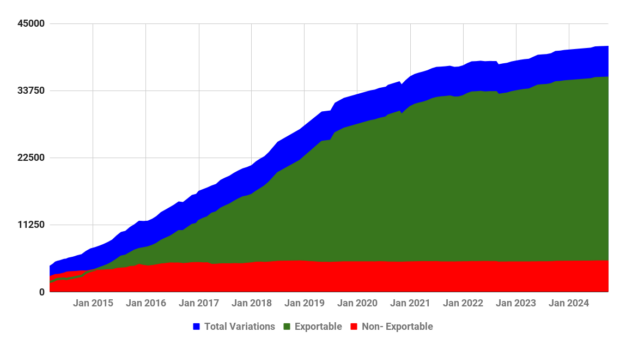
There are currently 20,973 product listings in Kitely Market containing 41,105 product variations, 35,866 of which are exportable.
Kitely Market has delivered orders to 632 OpenSim grids to date.
(Data courtesy Kitely.)
As you can see in the above chart, nearly all the growth in Kitely Market has been in content that can be exported to other grids — that is the green area on the graph. The red area, of non-exportable content, has stayed level for the past eight years.
The Kitely Market is the largest collection of legal content available in OpenSim. It is accessible to both hypergrid-enabled and closed, private grids. The instructions for how to configure the Kitely Market for closed grids are here.
Kitely also announced support for PBR materials and larger textures earlier this month.
New grids
I added one new grid to my database this month: NakedWorldz.
If you know of any public grid that we’re missing, please email me at maria@hypergridbusiness.com.
Suspended grids
The following nine grids were suspended this month: Angel Grid, Ares World, Binders World, Cajun Grid, DreamNation, Ghost Area, Homeland, KubwasWelt, and Nosso Lar.
If they don’t reappear online again soon, they will be marked as closed in future reports.
Sometimes, a grid changes its login URI or website address — if that’s the case, email me and let me know and I’ll update my database.
Top 40 grids by land area
All region counts on this list are, whenever available, in terms of standard region equivalents. Active user counts include hypergrid visitors whenever possible.
Many school, company, or personal grids do not publish their numbers.
The raw data for this month’s report is here. A list of all active grids is here. And here is a list of all the hypergrid-enabled grids and their hypergrid addresses, sorted by popularity. This is very useful if you are creating a hyperport.
You can see all the historical OpenSim statistics here, including polls and surveys, dating all the way back to 2009.
OSgrid: 32,867 regions
Wolf Territories Grid: 29,987 regions
Kitely: 18,126 regions
ZetaWorlds: 13,032 regions
Alternate Metaverse: 10,437 regions
Groovy Verse: 8,756 regions
Virtual Vista Metaverse: 6,217 regions
DigiWorldz: 3,515 regions
CandM World: 2,094 regions
Discovery Grid: 1,714 regions
Tag Grid: 1,465 regions
Shoalwater Bay: 1,104 regions
Friends Grid: 1,040 regions
Simation Grid: 1,024 regions
ArtDestiny: 961 regions
GBG World: 961 regions
Virtual Worlds Grid: 914 regions
AviWorlds: 818 regions
Craft World: 711 regions
Kinky Haven: 669 regions
AvatarLife: 597 regions
Littlefield: 478 regions
Furry World: 373 regions
Neverworld: 372 regions
Virtual Worlds Zone: 364 regions
Darkheart’s Playground: 323 regions
Nemesis 3D: 305 regions
EdMondo: 300 regions
Open Virtual Worlds: 229 regions
MisFitz Grid: 213 regions
Counter Earth: 199 regions
Kater and Friends: 198 regions
Japan Open Grid: 197 regions
Adreans-World: 161 regions
Utopia Skye: 156 regions
XTalent: 142 regions
GerGrid: 141 regions
WestWorld Grid: 126 regions
Outworldz: 126 regions
Logicamp: 120 regions
Do you know of any other grids that are open to the public but that we don’t have in our database? Email me at maria@hypergridbusiness.com.
Hypergrid Business editor and publisher Maria Korolov is a science fiction novelist. During the day, Maria Korolov is an award-winning freelance technology journalist who covers artificial intelligence, cybersecurity and enterprise virtual reality. See her Amazon author page here and follow her on Twitter, Facebook, or LinkedIn, and check out her latest videos on the Maria Korolov YouTube channel. Email her at maria@hypergridbusiness.com. Her first virtual world novella, Krim Times, made the Amazon best-seller list in its category. Her second novella, The Lost King of Krim, is out now. She is also the publisher of MetaStellar, a new online magazine of speculative fiction.
Puzzles are a staple in horror games, stemming back to the classic PS1 horror titles that essentially created the genre.
These puzzles are crucial to progressing in these games, either by providing the key to where players have to go or revealing hidden secrets.
Horror fans anticipate what new puzzles they’ll be faced with every time they pick up a new game, ready to see how they can practice their problem-solving skills and be scared all at once.
Related
10 Scariest Japanese Horror Games
Japanese horror games are uniquely terrifying, these are the most horrifying to play.
Some of these puzzles are horrifying, heightening the fearful experience while players have to brave the next step forward. Other puzzles are unique, requiring outside-the-box thinking and a keen eye for detail.
Some puzzles are a wonderful blend of all of these traits, boiling down to just being outright cool – to where they’re as fondly remembered as the game itself.
10 Happy Birthday
Resident Evil 7
Released January 24, 2017
Engine RE Engine
ESRB M for Mature: Blood and Gore, Intense Violence, Strong Language
How Long To Beat 10 Hours
PS Plus Availability N/A
Expand
Resident Evil 7 is a wonderful return to horror for the Resident Evil series, especially after trying (and failing) to branch into the action genre. By sticking to its roots, it re-cemented itself as one of the pinnacles of survival horror.
One key aspect that the game does this is through the Baker Family, a grotesque nuclear family that serves as the primary antagonist to Ethan Winters. Before Ethan, though, the family had imprisoned and tortured another, Clancy Jarvis.
Clancy’s story with the Bakers unfolds throughout the game, including in one of the puzzles, notably the Happy Birthday Puzzle. This puzzle details Clancy’s final moments, starting with the VHS tape that serves as the foundation for the whole encounter.
This puzzle adds to the grotesque tension that Resident Evil 7 nails so well, a ticking time bomb where the players know that something terrible awaits them at the end.
It’s genuinely horrific, amplifying the threat of Lucas Baker as Ethan will have to retrace those steps and hope that his fate will be different.
9 Vodka Distillery
Half-Life Alyx
Systems
Released March 23, 2020
Engine source 2
ESRB m
Steam Deck Compatibility Unsupported
Expand
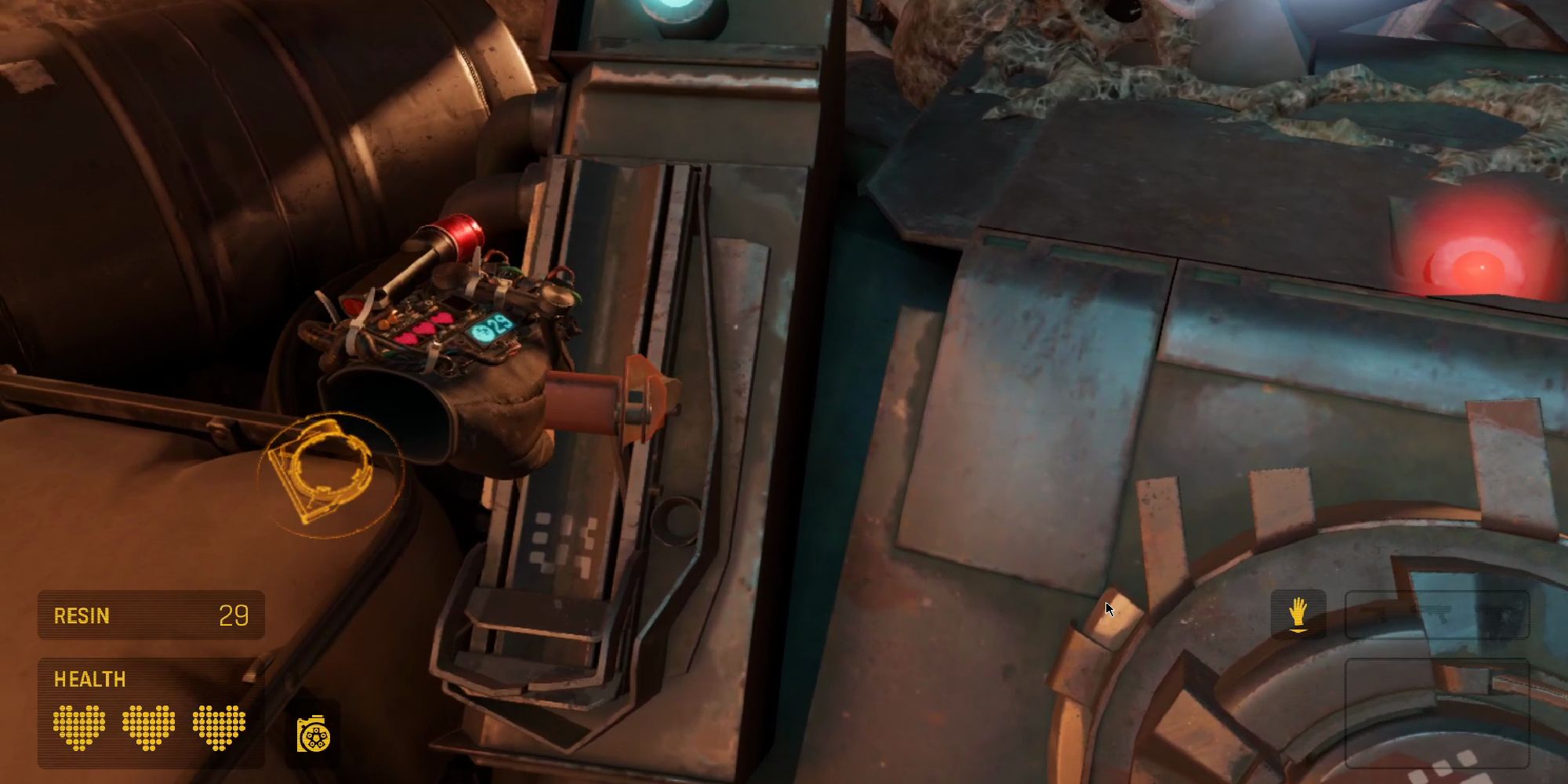
Half-Life: Alyx is a beloved VR horror game in the Half-Life series, and it doesn’t even have to be played on a VR headset. It follows Alyx Vance, rescuing her father Eli and then retrieving1 the contents hidden away in the Vault.
This puzzle is later on in the game, specifically in Chapter 7: Jeff. On her way to the Vault, Alyx cuts through the long abandoned Golden Lion Vodka Distillery, which is far better than her facing her chances with the Combine outside.
The Chapter’s titular character, Jeff, is actually an unkillable monster — a terrifying inconvenience. Plus, the would-have-been quick and easy route through the tunnels is sealed, leaving players to find out how to unlock it in a tense and cryptic distillery.
The entire distillery is essentially a puzzle, with components scattered all throughout the map and with timed moments that keep you on edge. Plus, with horror games constantly having levels in hospitals, mansions, and schools, a vodka distillery is a fun change of pace.
8 Skeleton Statue
Tormented Souls
Released August 27, 2021
Developer(s) Dual Effect Games
Engine Unity
ESRB M For Mature 17+ due to Blood and Gore, Intense Violence, Mild Language, Partial Nudity
How Long To Beat 9 Hours
Metascore 79
OpenCritic Rating Fair
Expand
Tormented Souls is a PS1-style horror game draped in modern graphics, a love letter to the classics that started it all. Full of cryptic puzzles, horrifying monsters, and a stylistic, moody atmosphere, it’s an absolute nostalgia trip for fans of survival horror.
There are many puzzles in this game, 17 to be exact, each uniquely tedious and entertaining. One such puzzle is the skeleton statue, found in the Experiment Room of the past.
Related
10 Horror Games With Unique Mechanics
Try new and refreshing approaches to horror games.
This statue is a skeleton with buttons on key body parts, and a poem lying right beside it. It’s a simplistic love poem, with each line containing a clue on which button needs to be pressed in order.
This is just Golden Age of Survival Horror stuff, similar in vibe to the piano puzzle has from Midwich Elementary School in the first Silent Hill game.
7 Dollhouse
Song of Horror
Song of Horror is a refreshing horror experience, full of great ideas and unique mechanics. The game follows a literal cursed song, dooming anyone who listens to it to a grim fate.
This game adds another challenge by incorporating permadeath, but not entirely — with eleven total characters to play, if players die, the character is permanently dead. Afterwards, they will restart the chapter again as one of the other surviving characters.
One puzzle that Song of Horror tackles is a horror staple: a dollhouse. The dolls need to be put back in their proper rooms, and it’s up to the players to determine where each of them will go.
Each doll has multiple hints attached to it: the character’s remarks when picking up the doll, the starting location of each doll, and Saul’s notes. It’s a unique way to utilise context and creepy imagery, making the overall experience linger long after it’s solved.
6 Shadow Puppet
Chiyo
Chiyo is a terrifying Japanese horror game with an even more horrifying puzzle for those with a fear of mannequins.
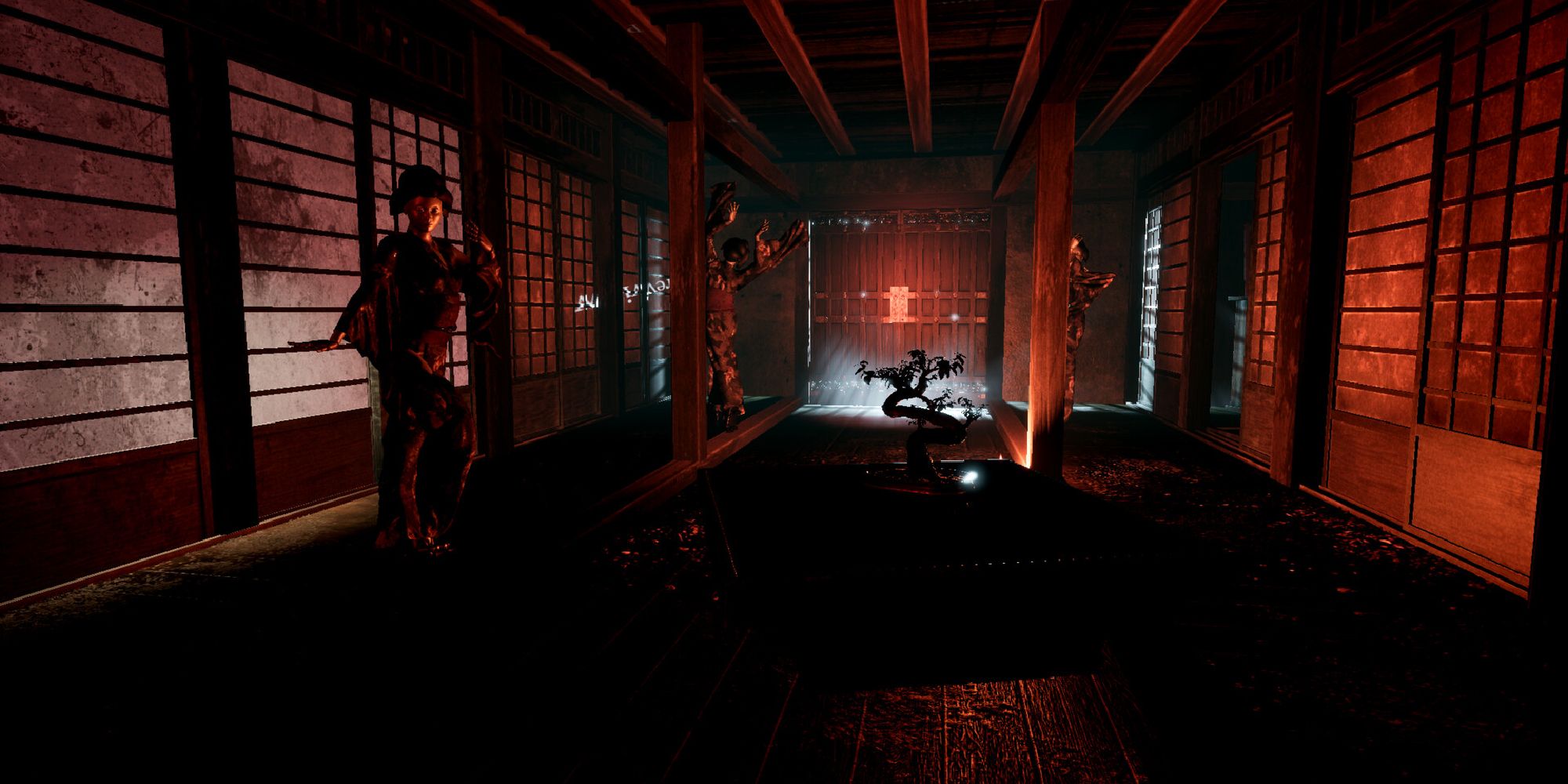
The Shadow Puppet puzzle is cryptic, but simple enough to catch on. Playing as the paranormal investigator Chiyo Idate, for this puzzle they are in a room of geisha puppets. And horrifyingly, not all of them are inanimate.
One of the geisha will follow Chiyo around, and be sure to actually glance back, because if the puppet gets too close, they’ll get you. The room is also full of dolls in various poses — one of which being the same pose the puppet chasing you is in.
Using her supernatural powers, Chiyo lights the candle in front of these dolls to cast a shadow, the puppet changes its pose, and the hunt for the next doll is on.
This puzzle is horrifying, especially in regard to sound design. Hearing the puppets creak closer while frantically looking for the matching doll is heart-racing.
It may just be that I might just have a devastating fear of mannequins, but so would many other players, especially after this level.
5 Room of Sacrifice
The Evil Within
Third-Person Shooter
Survival Horror
Released October 14, 2014
Engine id Tech 5
ESRB M for Mature: Blood and Gore, Intense Violence, Strong Language
How Long To Beat 18 Hours
X|S Optimized No
File Size Xbox Series 34 GB (December 2023)
Metascore 79
PS Plus Availability Extra & Premium
OpenCritic Rating Fair
Expand
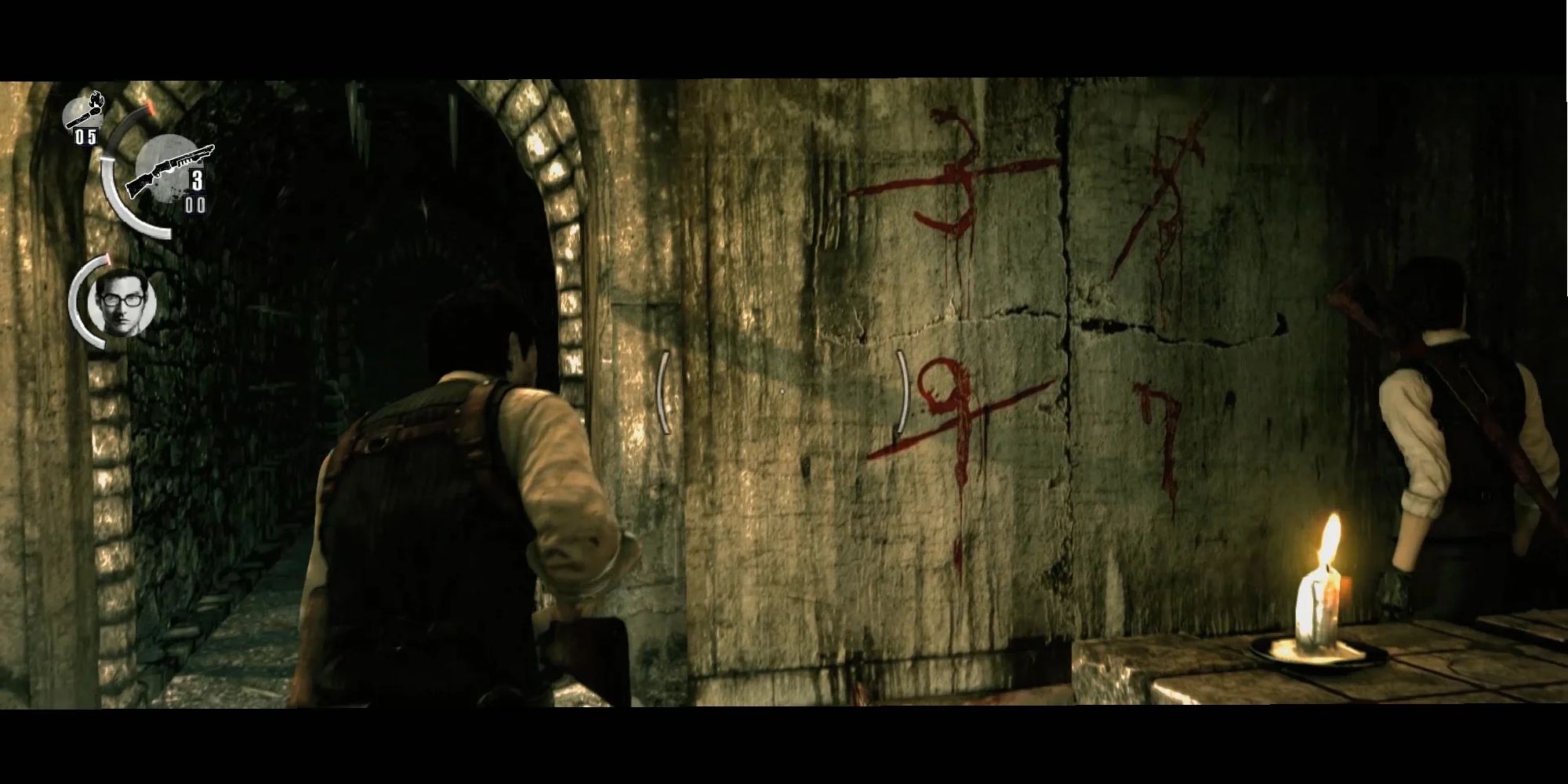
The Evil Within, created by Shinji Mikami, remains one of the scariest horror games for the PS3. It’s full of classic survival horror staples, pulling inspiration from many other games in the genre while telling its own unique story.
Chapter 6: Losing Grip on Ourselves is packed with these staples, including a vague puzzle that isn’t too hard to learn. While progressing through the hospital and escaping with your partner, players will find themselves in a decrepit cave, locked from progressing.
Related
10 Scariest Moments in Non-Horror Games
Even though a video game’s genre isn’t horror, that doesn’t mean it can’t scare you. These are some of the scariest moments in non-horror games.
This puzzle is just outright macabre, requiring players to organize bodies with levers, moving them to the correct altar based on the numbers on the wall and the riddle the partner reads aloud.
If the bodies are incorrect, the player will be impaled with spikes — a gruesome end, no doubt. It’s a neat gimmick for a puzzle, taking standard horror but putting its own spin on the work.
We’re also sending prayers for players attempting this puzzle while pursuing the infamously difficult None More Dark achievement; it’ll increase the chances of a spiky surprise.
4 Find the Demon
The Mortuary Assistant
Indie Games
Adventure
Simulation
Systems
Released August 2, 2022
Developer DarkStone Digital
Publisher Dread XP
Engine Unity
ESRB m
How Long To Beat 2 hours
OpenCritic Rating Strong
Expand
The Mortuary Assistant is absolutely horrifying — for lack of a better term, it’s a raw, sadistic, demonic possession. Playing as Rebecca, players have to fight off the possession by finding out the demon’s name, creating a mark, and then burning the hosting body.
Finding the right body is half the battle, as players also have to pay attention for hauntings, scribble on paper, keep embalming in order to find the right corpse and learn the demon’s name, and deal with outright terrifying scares and visuals.
This game has multiple endings depending on how well the players are able to expel the demon. It’s a large puzzle that’s incorporated into the entire game, with even more dire consequences for failure.
It’s one of the coolest puzzles in a horror game to date, making an entire mechanic out of it and inducing fear unlike any other.
3 RPD Goddess Statue
Resident Evil 2
Released January 25, 2019
Engine RE Engine
ESRB M for Mature: Blood and Gore, Strong Language, Intense Violence
How Long To Beat 9 Hours
X|S Optimized Yes
File Size Xbox Series 23 GB (January 2024)
Metascore 91
PS Plus Availability Extra & Premium
OpenCritic Rating Mighty
Expand
Resident Evil 2 is widely regarded as one of the best games in the Resident Evil series, introducing the fan favourites Leon S. Kennedy and Claire Redfield.
The Resident Evil 2 Remake is a wonderfully faithful remake of the classic PS1 horror title, a near 1-to-1 recreation of the original story while expanding on the story and providing additional details. This includes the iconic Raccoon City Police Department (RPD).
That station used to be a museum, and it shows in the various puzzles that are inside — the most well known being that of the goddess statue in the Main Hall. This statue has three missing medallions, and finding all three will open a passageway into the Underground Facility.
This puzzle, honestly, is just plain fun, in both the original and in the remake. It’s satisfying to find each medallion and rewarding to return them to the statue, especially after surviving countless undead — and Mr. X.
2 The Gallows
Silent Hill 2
Survival Horror
Horror
Adventure
Action
Systems
Released October 8, 2024
Engine Unreal Engine 5
ESRB M For Mature 17+ // Blood and Gore, Language, Sexual Themes, Violence
How Long To Beat 15 Hours
Prequel(s) Silent Hill
PS Plus Availability N/A
Steam Deck Compatibility Unsupported
How Long To Beat (Completionist Runs) 26.5 hours
OpenCritic Rating Mighty
PC Release Date October 8, 2024
PS5 Release Date October 8, 2024
Expand
The Silent Hill series is infamous for its puzzles, especially for their difficulty. It’s actually recommended to play the games with both the combat and puzzle difficulties being set to Hard.
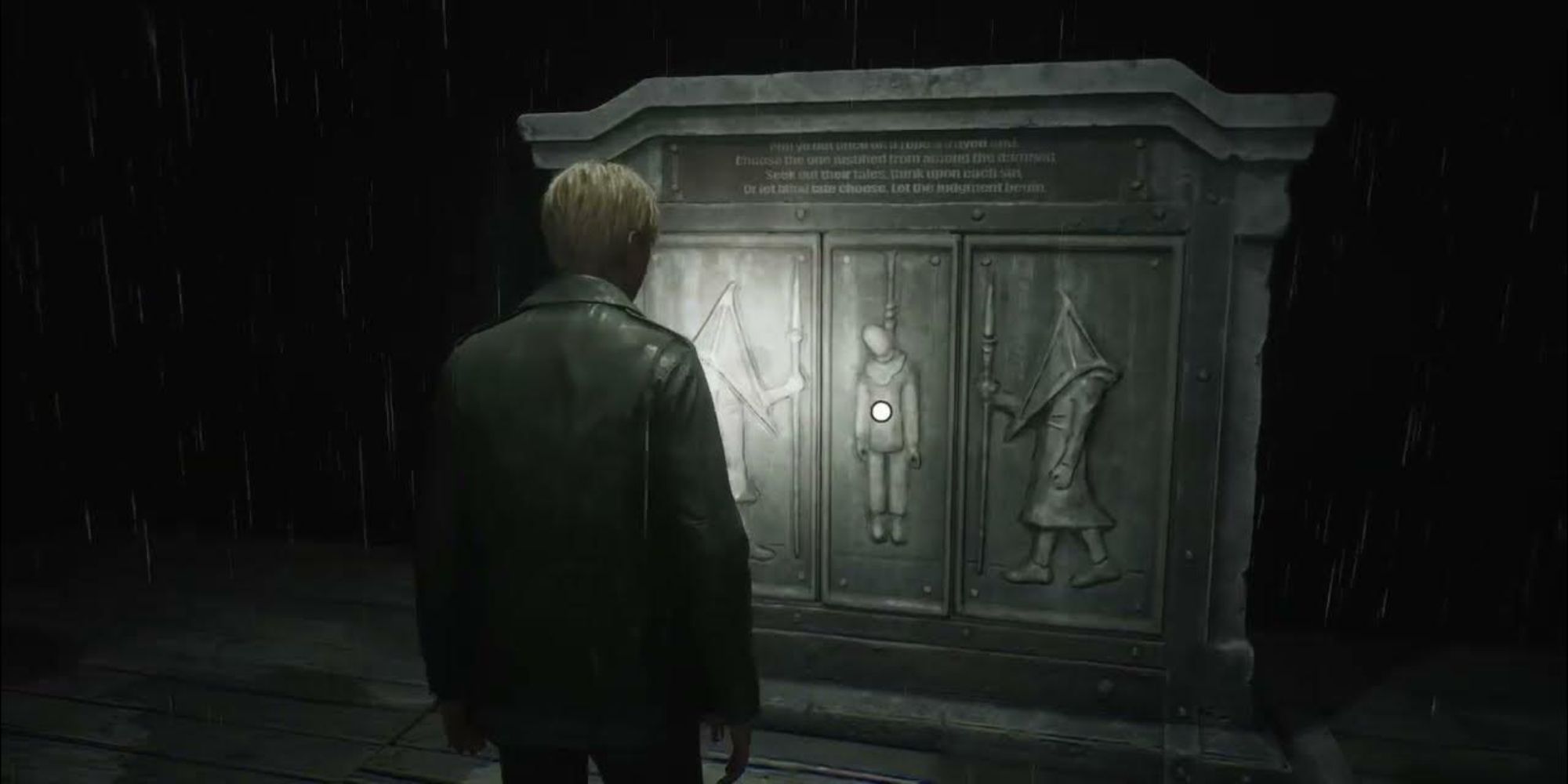
Silent Hill 2 is home to one of the most infamous puzzles in the franchise (and, of course, this was recreated in the Silent Hill 2 Remake), which is The Gallows Puzzle in Toluca Prison.
Related
10 Best Games Like Silent Hill
Fans of Silent Hill tend to be hungry for more horrifying games similar in style — maybe with the fog not included.
This puzzle is available after collecting all the necessary weights throughout the prison, leading up to the gallows. Players are presented with different incomplete confessions of individuals to be hanged, and they have to first pair the confessions to get the full picture.
After, they must select who is the sole innocent of them all, and must go pull the noose that corresponds with the confession.
Silent Hill 2 is full of themes of guilt and punishment, especially for protagonist James Sunderland — so a puzzle where he has to literally be judge, jury and executioner is ironically fitting.
It’s freaky, it’s morbid, and absolutely unforgettable, making players excited for who the next innocent might be in their next playthrough.
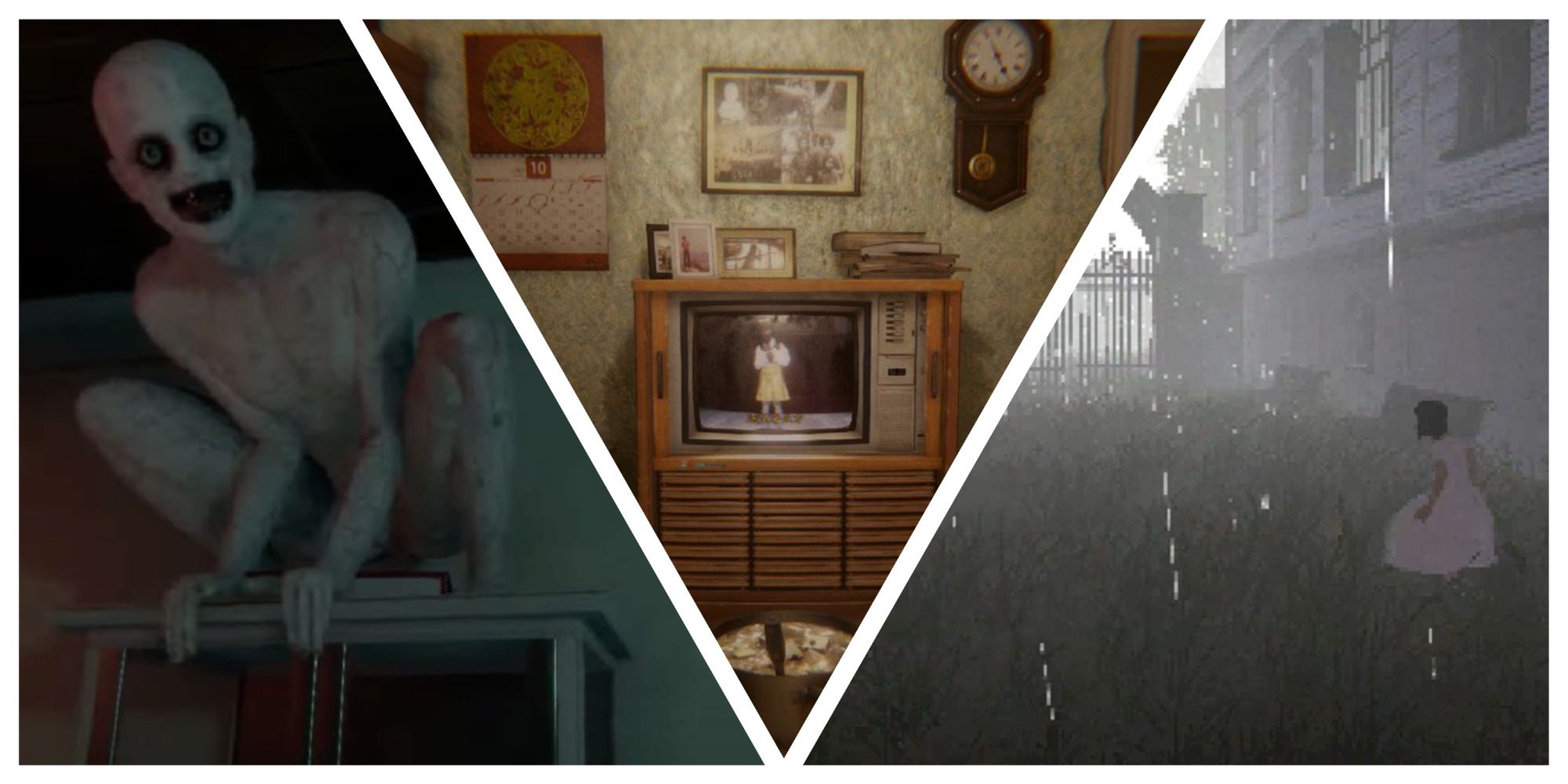
1 Du Family Home
Devotion
Systems
Released February 19, 2019
Developer(s) RedCandleGames
Publisher(s) RedCandleGames
Engine Unity
ESRB m
OpenCritic Rating Strong
Expand
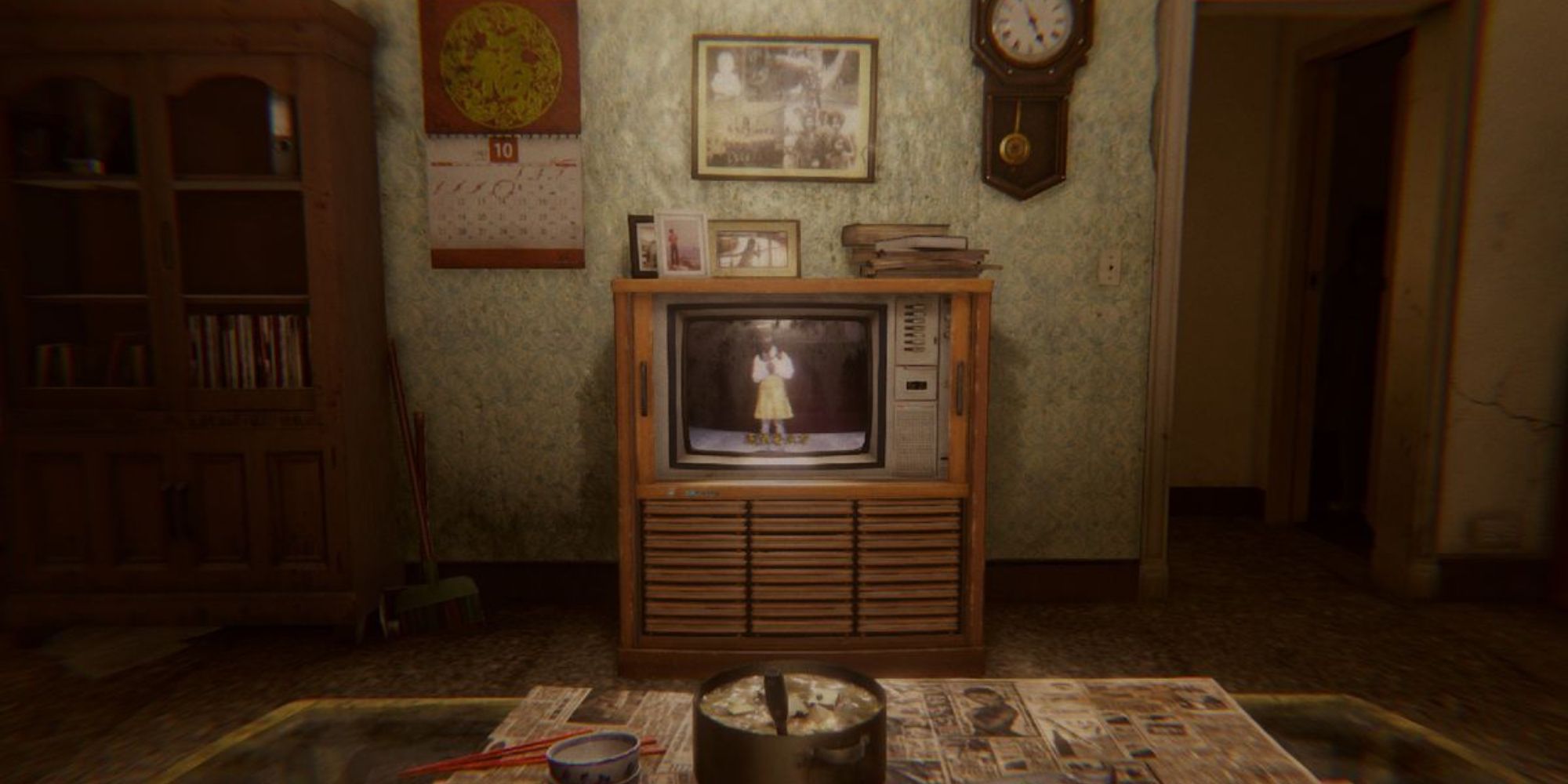
Devotion is a game that players will have a tough time getting their hands on, unless they go to Red Candle Games directly. Due to past controversies, it wouldn’t be surprising if players hadn’t heard of it.
The entire game takes place in the Du Family Home, which is an apartment in Taiwain during the 1980s. This home is how the heartbreaking story will be told, but it must be solved first — yes, the entire apartment is a multilayered puzzle.
This puzzle (and by extension, the game) is masterfully done, giving players just enough crumbs to continue through the horrors but also allowing them insight into the family, their history, and their dynamics. By the end, when the full picture is revealed, it’s just harrowing.
Without a doubt, the Du Family Home is one of the coolest puzzles in all horror games, intertwining story and characters being woven together through hauntings and depression.
NEXT
10 Underrated Indie Horror Gems
As Halloween draws closer, it’s a great time to explore underrated horror gems, including games. Here are some indie games that could use more love.
If you’ve been following RetroSouls for awhile you would’ve known they have released games such as GLUF, Old Tower, Twinlight, Alter Ego, and even Tourmaline for the ZX Spectrum. Well today as thanks to a heads up via Facebook, we have been told that they have released a new game update for the NES as an arcade puzzler called ‘Old Towers’. A challenging game in which you have traverse an ancient tower to collect all the treasure within. To coincide with this news, we’ve got some gameplay footage from the game as well as a small write up below the video.
Here’s the latest “Ancient legends say that once every hundred years, when the stars begin to fall from the sky, the doors of the Old Towers open. The abandoned rooms of the Towers hold untold treasures and deadly traps. Many brave heroes, hungry for riches, have traveled to these Cursed Towers, but none of them have ever returned…”
Design,Code,Graphics: Denis GrachevMusic, Sounds: Oleg NikitinFont Design: Damien GuardSpecial thanks to Alex Semenov and Doug Fraker
Published: November 15, 2024 at 10:30 am Updated: November 15, 2024 at 10:02 am
by Ana
Edited and fact-checked:
November 15, 2024 at 10:30 am
To improve your local-language experience, sometimes we employ an auto-translation plugin. Please note auto-translation may not be accurate, so read original article for precise information.
In Brief
Celestia announced that the Ginger upgrade is now live on its Mocha testnet, with a mainnet beta launch planned for December.
Modular blockchain network Celestia announced that the Ginger upgrade is now live on its Mocha testnet, with plans for a Mainnet Beta launch in December.
Ginger introduces “The Doubling,” which immediately boosts Celestia’s data availability throughput by 2x. This is achieved in V3 by reducing block times from 12 seconds to 6 seconds, enhancing the user experience with faster transaction finality. The upgrade also lays the groundwork for community governance, which will enable an increase in block size to a maximum of 8MB per 6 seconds, or 1.33 MB/s.
Key changes with Ginger include several Celestia Improvement Proposals (CIPs), along with an important non-consensus update in celestia-app V3. This update introduces Bottleneck Bandwidth and Round-trip propagation time (BBR), a new congestion control algorithm developed by Google, as the default setting.
In particular, CIP-21 introduces “authored blobs,” which include the signer’s address in the blob metadata. Validators on the Celestia network now verify that the signer matches the address that paid for the blob, eliminating the need for rollups to separately retrieve and process PayForBlobs (PFB) transactions. This improves the efficiency of the verification process by allowing rollups to directly check the signer field of the blob for authenticity. Meanwhile, CIP-24 introduces a modification to the gas scheduler, setting variables like GasPerBlobByte and TxSizeCostPerByte to be changeable only through a network upgrade rather than on-chain governance. This change is designed to stabilize transaction costs, making them more predictable. It also simplifies gas calculation by allowing offline methods without requiring network queries before each transaction.
Furthermore, CIP-26 outlines changes to the block time and related timeouts, now controlled by the application version. The update reduces block time from 12 to 6 seconds in V3, which aims to increase network throughput and reduce transaction finality times. Additionally, the mempool’s ttl-num-blocks parameter is increased from 5 to 12 to ensure consistent transaction behavior with the faster block time. CIP-27 sets limits on the number of PayForBlobs (PFBs) and non-PFB messages that can be included in each block. The proposal establishes soft limits of 600 PFB messages and 200 non-PFB messages per block during the PrepareProposal stage. These limits are designed to prevent extended block processing times by capping the number of transactions processed in each block, with benchmarks targeting a 0.25-second processing time per block on the recommended validator configuration.
Finally, CIP-28 establishes a 2MiB (2,097,152 bytes) limit on individual transaction sizes for Celestia. This limit will be enforced at all stages of transaction processing (CheckTx, PrepareProposal, and ProcessProposal), making it a consensus-breaking change. The rationale behind this limit is to avoid issues with propagating large transactions, even with larger block sizes like 8 MiB. It also provides room for future increases in block size and decreases in block time to further boost throughput.
Disclaimer
In line with the Trust Project guidelines, please note that the information provided on this page is not intended to be and should not be interpreted as legal, tax, investment, financial, or any other form of advice. It is important to only invest what you can afford to lose and to seek independent financial advice if you have any doubts. For further information, we suggest referring to the terms and conditions as well as the help and support pages provided by the issuer or advertiser. MetaversePost is committed to accurate, unbiased reporting, but market conditions are subject to change without notice.
About The Author
Alisa, a dedicated journalist at the MPost, specializes in cryptocurrency, zero-knowledge proofs, investments, and the expansive realm of Web3. With a keen eye for emerging trends and technologies, she delivers comprehensive coverage to inform and engage readers in the ever-evolving landscape of digital finance.
More articles
Alisa Davidson
Alisa, a dedicated journalist at the MPost, specializes in cryptocurrency, zero-knowledge proofs, investments, and the expansive realm of Web3. With a keen eye for emerging trends and technologies, she delivers comprehensive coverage to inform and engage readers in the ever-evolving landscape of digital finance.
Published: November 15, 2024 at 10:00 am Updated: November 15, 2024 at 7:33 am
by Ana
Edited and fact-checked:
November 15, 2024 at 10:00 am
To improve your local-language experience, sometimes we employ an auto-translation plugin. Please note auto-translation may not be accurate, so read original article for precise information.
In Brief
Bybit introduces strategic integrations with RateX, Marginfi, and Save for bbSOL, aiming to expand DeFi yield opportunities for bbSOL holders.
Cryptocurrency exchange Bybit introduced new strategic integrations for its bbSOL offering, aiming to broaden decentralized finance (DeFi) yield opportunities for bbSOL holders. This expansion comes through partnerships with RateX, marginfi, and Save, which work together to enhance the utility of bbSOL. These collaborations reflect Bybit’s commitment to delivering innovative CeDeFi solutions, merging the strengths of centralized and decentralized finance to maximize yield generation and promote asset growth.
“Bybit is proud to provide CeDeFi solutions that empower our users to access, earn, and grow their assets with bbSOL across both centralized and decentralized platforms,” said Emily, Head of Web3 Product Development at Bybit, in a written statement. “Our partnership with RateX brings an innovative synthetic yield option to bbSOL, and integrations with protocols like Save and marginfi extend flexible, high-value opportunities within the Web3 community. Bybit remains committed to supporting users in maximizing yield with versatile options that meet the evolving needs of today’s digital asset landscape,” she added.
Bybit has expanded bbSOL’s DeFi capabilities through strategic partnerships and integrations, offering users innovative ways to grow their assets. The integration with RateX introduces synthetic yield options, enabling bbSOL holders to trade synthetic Yield Tokens (YT) of various yield-bearing assets with leverage. This allows users to capitalize on yield movements more efficiently. Additionally, RateX offers features like Earn Fixed Yield and Yield Liquidity Farming, where users can deposit bbSOL to convert floating yields into fixed yields, secure future returns, trade yield, or provide liquidity for yield trading.
In order to enhance bbSOL’s utility within the DeFi ecosystem, Bybit has partnered with Save and marginfi, two leading lending and borrowing platforms on Solana. Save, with $379M in Total Value Locked (TVL), and marginfi, with $500M TVL, connect bbSOL holders to broader Web3 opportunities, facilitating lending, borrowing, and yield optimization through decentralized platforms.
bbSOL maintains a competitive APY of up to 22%, combining base yield with additional DeFi earnings. It also offers benefits such as zero commission fees, flexible redemption options, and seamless access to both CeFi and DeFi income streams, outperforming traditional staking products.
Currently integrated with eight Solana DeFi projects, including RateX, Save, and marginfi, bbSOL is also supported across eight Bybit CeFi products. Users can purchase bbSOL directly with stablecoins, use it as collateral, convert over 300 assets to bbSOL at no cost, and trade bbSOL/USDT with up to 10x leverage on spot margin trading.
What Is bbSOL?
Established in 2018, Bybit is among the largest cryptocurrency exchanges globally by trading volume, catering to a user base exceeding 50 million. The platform is designed for both cryptocurrency investors and traders, offering a suite of features, including a high-speed matching engine, round-the-clock customer support, and multilingual assistance to accommodate its diverse global community.
In September, Bybit launched bbSOL, its first exchange-based Liquid Staking Token (LST) on the Solana blockchain. This token was introduced in partnership with Sanctum, Kamino Finance, Orca, and Solayer. bbSOL bridges Bybit’s centralized exchange (CEX) with Web3 platforms, offering users various rewards. By staking Solana via Bybit Web3, users will be able to receive bbSOL, which provides access to opportunities across both the CEX and Web3 products.
Disclaimer
In line with the Trust Project guidelines, please note that the information provided on this page is not intended to be and should not be interpreted as legal, tax, investment, financial, or any other form of advice. It is important to only invest what you can afford to lose and to seek independent financial advice if you have any doubts. For further information, we suggest referring to the terms and conditions as well as the help and support pages provided by the issuer or advertiser. MetaversePost is committed to accurate, unbiased reporting, but market conditions are subject to change without notice.
About The Author
Alisa, a dedicated journalist at the MPost, specializes in cryptocurrency, zero-knowledge proofs, investments, and the expansive realm of Web3. With a keen eye for emerging trends and technologies, she delivers comprehensive coverage to inform and engage readers in the ever-evolving landscape of digital finance.
More articles
Alisa Davidson
Alisa, a dedicated journalist at the MPost, specializes in cryptocurrency, zero-knowledge proofs, investments, and the expansive realm of Web3. With a keen eye for emerging trends and technologies, she delivers comprehensive coverage to inform and engage readers in the ever-evolving landscape of digital finance.
Explore how technology reshapes couture fashion, merging innovation with tradition for a future of personalized, sustainable, and immersive experiences.