Home Blog Page 1292

Future Trends for Couture and Luxury Fashion Brands
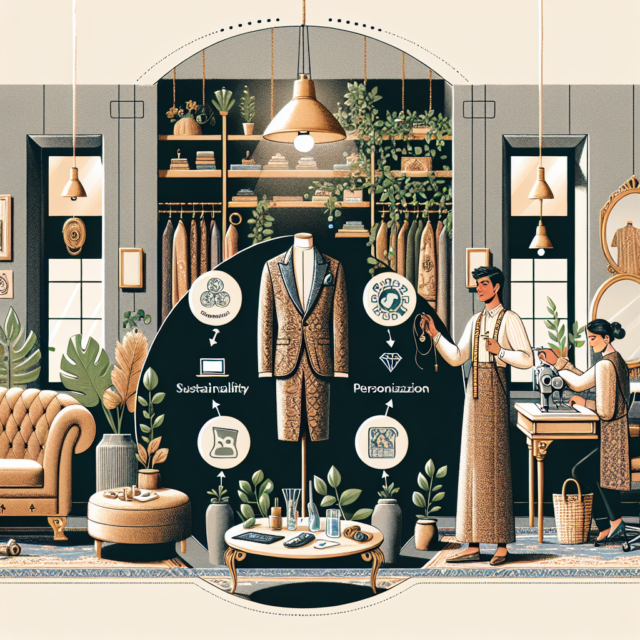
The world of couture and luxury fashion is constantly evolving, adapting to societal changes and technological advancements. As we look to the future, several key trends are poised to reshape the industry. From sustainability and digital integration to personalization, these trends highlight a shift in consumer preferences and the industry’s response to these demands. In this article, we explore these future trends in detail, offering insights into how they will influence the luxury fashion landscape.

Embracing Sustainability in Luxury Fashion

Sustainability has become a pivotal focus for the luxury fashion industry as brands recognize the need to address environmental and ethical concerns. High-end fashion houses are increasingly adopting sustainable practices, from sourcing eco-friendly materials to implementing transparent supply chains. This shift not only meets consumer demand for responsible consumption but also protects brand reputation in an increasingly eco-conscious market.

One of the key strategies luxury brands are employing is the use of sustainable materials. Innovations in fabric technology have led to the development of biodegradable and recycled textiles, allowing designers to create exquisite pieces without compromising on environmental responsibility. Brands are also exploring alternative materials such as organic cotton, hemp, and even lab-grown leather, which offer similar aesthetics and quality as their traditional counterparts.

Another significant aspect of sustainability in luxury fashion is the focus on ethical production. Many brands are investing in fair labor practices and ensuring that workers involved in the production process are paid fairly and work under safe conditions. This commitment to ethical standards not only enhances brand credibility but also appeals to consumers who value social responsibility.

Transparency is also becoming a hallmark of sustainable luxury fashion. Brands are increasingly providing detailed information about their supply chains, allowing consumers to trace the journey of a product from raw material to finished garment. This openness fosters trust and loyalty among consumers who are eager to support brands that prioritize ethical and sustainable practices.

Circular fashion is another trend gaining momentum in the luxury sector. By promoting the reuse and recycling of garments, brands are encouraging consumers to embrace a more sustainable approach to fashion. Initiatives such as take-back programs, resale platforms, and upcycling collaborations are helping to extend the lifecycle of luxury products, reducing waste and maximizing resource efficiency.

Ultimately, embracing sustainability is not just a trend but a necessity for luxury fashion brands. As environmental concerns continue to grow, brands that prioritize sustainability will likely lead the industry, setting new standards for what it means to be a responsible and forward-thinking fashion house.

The Rise of Digital Fashion Experiences

The digital revolution is transforming the luxury fashion landscape, offering new opportunities for engagement and innovation. Digital fashion experiences are becoming increasingly popular, providing consumers with immersive and interactive ways to connect with their favorite brands. From virtual fashion shows to augmented reality (AR) shopping experiences, the digital realm is reshaping how luxury fashion is perceived and consumed.

Virtual fashion shows have emerged as a powerful tool for luxury brands to showcase their collections to a global audience. By leveraging digital platforms, brands can reach consumers who may not have the opportunity to attend physical events. These virtual shows often incorporate cutting-edge technology, such as 3D modeling and animation, to create visually stunning presentations that captivate viewers and generate buzz in the digital space.

Augmented reality is another technology that is revolutionizing the luxury fashion experience. AR allows consumers to virtually try on clothing and accessories, offering a personalized shopping experience from the comfort of their homes. This technology not only enhances convenience but also reduces the need for physical inventory, aligning with sustainability goals and reducing environmental impact.

The rise of digital fashion also extends to the concept of virtual garments. Digital fashion brands are creating clothing and accessories that exist solely in the digital realm, allowing consumers to purchase and wear these items in virtual environments. This trend is particularly popular in the gaming and social media spaces, where users can express their style through digital avatars.

Social media platforms are playing a crucial role in the digital fashion experience, serving as a conduit for brand storytelling and consumer engagement. Luxury brands are leveraging platforms like Instagram, TikTok, and Snapchat to showcase their collections, collaborate with influencers, and engage with a younger, tech-savvy audience. These platforms also facilitate direct interaction between brands and consumers, fostering a sense of community and loyalty.

E-commerce is evolving to offer more personalized and immersive shopping experiences. Luxury brands are investing in advanced technologies such as AI and machine learning to analyze consumer behavior and preferences, allowing them to tailor recommendations and create customized shopping experiences. This level of personalization enhances consumer satisfaction and drives brand loyalty in an increasingly competitive market.

As digital fashion experiences continue to evolve, luxury brands must remain at the forefront of technological innovation. By embracing digital tools and platforms, they can create memorable and engaging experiences that resonate with consumers and redefine the boundaries of luxury fashion.

Personalization and Customization in Couture

In the realm of couture, personalization and customization have become defining elements of luxury fashion. Consumers are increasingly seeking unique, tailor-made experiences that reflect their individuality and personal style. As a result, luxury brands are offering a range of customization options, from bespoke garments to personalized accessories, to meet this growing demand.

Bespoke tailoring is one of the most traditional forms of personalization in couture. Luxury fashion houses offer bespoke services that allow clients to design garments from scratch, selecting everything from the fabric and color to the cut and fit. This level of personalization ensures that each piece is a reflection of the client’s personal style and preferences, creating a one-of-a-kind garment that embodies true luxury.

In addition to bespoke services, many luxury brands are offering customization options for ready-to-wear collections. Consumers can personalize various aspects of a garment, such as monogramming, embroidery, or selecting unique colorways. This approach allows brands to offer a personalized touch while still maintaining the accessibility and convenience of ready-to-wear fashion.

Technology is playing a crucial role in advancing personalization in couture. Brands are leveraging digital tools to offer virtual customization experiences, allowing consumers to visualize and modify designs in real time. This technology not only enhances the shopping experience but also streamlines the production process, as custom orders can be processed more efficiently.

Personalized accessories are another area where luxury brands are focusing their efforts. From handbags and shoes to jewelry and watches, consumers can customize a wide range of products to suit their tastes. This trend is particularly popular among millennial and Gen Z consumers, who value individuality and are willing to invest in products that reflect their unique identity.

The rise of personalization and customization in couture is also driven by a desire for exclusivity. In a world where mass production is the norm, owning a personalized piece offers a sense of rarity and distinction. Luxury brands are capitalizing on this desire by offering limited edition and made-to-order items that cater to consumers’ desire for exclusivity.

As personalization and customization continue to shape the future of couture, luxury brands must find innovative ways to offer these experiences while maintaining the craftsmanship and quality that define the industry. By doing so, they can enhance consumer satisfaction, foster brand loyalty, and reinforce their position as leaders in the world of luxury fashion.

The future of couture and luxury fashion is being shaped by a confluence of sustainability, digital innovation, and personalization. These trends reflect the evolving preferences of consumers who seek ethical, immersive, and individualized experiences. As luxury brands navigate this dynamic landscape, they must continue to innovate and adapt to remain relevant and competitive. By embracing these future trends, the industry can not only meet the demands of today’s consumers but also set new standards for luxury fashion in the years to come.

Exploring the Future of Digital Luxury Experiences

In an era where technology is seamlessly woven into the fabric of our daily lives, the concept of luxury is undergoing a fascinating transformation. The digital landscape, with its ever-evolving advancements, is redefining what it means to experience luxury. From the convenience of virtual showrooms to the immersive allure of augmented reality, the future of digital luxury experiences promises a blend of innovation and opulence that challenges traditional notions of exclusivity and personalization. This article delves into the evolution of digital luxury trends, the intersection of technology and opulence, and how virtual reality is redefining the luxury experience.

Unveiling the Evolution of Digital Luxury Trends

The luxury industry, long synonymous with exclusivity and selectiveness, is rapidly adapting to the digital age. In the past, luxury was characterized by tangible experiences—personal shopping trips, exclusive events, and the tactile pleasure of high-end materials. However, as digital trends evolve, luxury brands are embracing new mediums to cater to a digitally savvy clientele. The rise of e-commerce has paved the way for luxury brands to reach a global audience, breaking down geographical barriers and opening up new markets.

Digital platforms have democratized access to luxury, allowing consumers to explore collections and make purchases from the comfort of their homes. This shift has been further accelerated by the COVID-19 pandemic, which necessitated a rapid pivot to digital solutions. Luxury brands have responded by enhancing their online presence, investing in sophisticated websites, and curating virtual experiences that replicate the allure of physical stores. The evolution of digital luxury trends reflects a broader shift in consumer behavior, where convenience and accessibility are paramount.

Social media has played a pivotal role in reshaping the luxury landscape. Platforms like Instagram and TikTok have become vital tools for luxury brands to engage with their audience. Influencers and brand ambassadors offer a glimpse into the world of luxury, creating aspirational content that resonates with a younger demographic. The visual nature of these platforms allows brands to showcase their products in innovative ways, from behind-the-scenes glimpses of craftsmanship to interactive storytelling that captivates viewers.

Moreover, the integration of artificial intelligence and data analytics has revolutionized how luxury brands interact with their customers. Personalized recommendations and curated content are now possible through sophisticated algorithms that analyze consumer preferences and behavior. This level of personalization enhances the digital luxury experience, making it more tailored and relevant to individual consumers. The evolution of digital luxury trends is thus a testament to the industry’s ability to adapt and innovate in the face of changing consumer expectations.

As luxury brands continue to explore the digital frontier, sustainability has emerged as a key focus. Consumers are increasingly conscious of the environmental impact of their purchases, prompting luxury brands to adopt more sustainable practices. Digital platforms offer a unique opportunity to communicate these efforts, providing transparency and fostering trust with consumers. From virtual fashion shows that reduce carbon footprints to digital certifications that verify product authenticity and sustainability, the evolution of digital luxury trends is closely intertwined with the industry’s commitment to a more sustainable future.

The future of digital luxury experiences is a dynamic landscape, characterized by constant innovation and adaptation. As technology continues to evolve, luxury brands must remain agile, embracing new trends and technologies to meet the ever-changing needs and desires of their consumers. The evolution of digital luxury trends is not just about keeping up with technological advancements but also about redefining the very essence of luxury in a digital age.

The Intersection of Technology and Opulence

At the heart of the digital luxury experience lies the intersection of technology and opulence. This convergence is reshaping how luxury is perceived, experienced, and valued. Traditionally, luxury was associated with exclusivity, craftsmanship, and heritage. However, in the digital realm, these attributes are being reimagined through the lens of technology. The fusion of cutting-edge technology and opulent experiences is creating new possibilities for luxury brands to engage with their audience in unprecedented ways.

One of the most significant technological advancements impacting the luxury sector is the rise of augmented reality (AR) and virtual reality (VR). These immersive technologies offer consumers the opportunity to interact with products in a virtual space, blurring the lines between the physical and digital worlds. For instance, AR applications allow customers to visualize how a luxury item might look in their home or on their person, enhancing the decision-making process and reducing the uncertainty often associated with online shopping.

Blockchain technology is another game-changer in the digital luxury space. By providing a secure and transparent way to verify the authenticity of luxury goods, blockchain is addressing one of the industry’s most significant challenges—counterfeiting. This technology not only ensures the provenance of high-end products but also enhances the consumer’s trust in the brand. The integration of blockchain into the luxury sector exemplifies how technology can uphold the values of authenticity and exclusivity that are central to luxury.

Artificial intelligence (AI) is also making significant inroads into the luxury industry. From chatbots that offer personalized customer service to AI-driven analytics that provide insights into consumer behavior, AI is enhancing the digital luxury experience by making it more interactive and personalized. This technology allows brands to anticipate consumer needs and preferences, offering tailored recommendations that enhance customer satisfaction and loyalty.

The Internet of Things (IoT) is further expanding the possibilities for digital luxury experiences. Connected devices and smart technologies are enabling brands to offer seamless and integrated experiences that extend beyond the point of purchase. For example, luxury car manufacturers are incorporating IoT technology to provide personalized driving experiences, while high-end fashion brands are using smart fabrics to offer garments that adapt to the wearer’s environment.

The intersection of technology and opulence is not without its challenges. As luxury brands navigate this digital landscape, they must balance the allure of cutting-edge technology with the timeless values that define luxury. The challenge lies in integrating technology in a way that enhances, rather than detracts from, the luxury experience. This delicate balance requires a thoughtful approach, ensuring that technology serves to elevate the brand’s identity and values.

Redefining Luxury: Virtual Reality and Beyond

Virtual reality (VR) is at the forefront of redefining luxury experiences, offering a new dimension to how consumers interact with high-end brands. By creating immersive environments that transport users to a different reality, VR is transforming the way luxury is perceived and experienced. This technology allows consumers to engage with luxury products and services in a way that was previously unimaginable, offering a level of immersion and interactivity that is unmatched by traditional media.

In the realm of fashion, VR is revolutionizing how collections are presented and experienced. Virtual fashion shows, for example, allow brands to showcase their designs to a global audience, transcending geographical limitations and offering an inclusive experience for fashion enthusiasts worldwide. These virtual events not only replicate the glamour and exclusivity of traditional fashion shows but also offer innovative elements such as interactive storytelling and 360-degree views of the garments.

The travel and hospitality sectors are also harnessing the power of VR to redefine luxury experiences. Virtual tours of luxury resorts and destinations offer potential guests a preview of what to expect, helping them make more informed decisions. This immersive experience allows consumers to explore the amenities and ambiance of a luxury property from the comfort of their home, enhancing the booking process and building anticipation for the actual experience.

Art and culture are other areas where VR is making a significant impact. Luxury brands are leveraging VR to offer exclusive access to art collections, exhibitions, and cultural experiences. This technology allows consumers to explore art galleries and museums in a virtual space, offering a new level of engagement and appreciation for the arts. By democratizing access to cultural experiences, VR is redefining the boundaries of luxury and making it more accessible to a broader audience.

Beyond VR, the concept of digital twins is gaining traction in the luxury sector. A digital twin is a virtual replica of a physical product or space, allowing consumers to interact with and customize their luxury items in a digital environment. This technology offers a new level of personalization and customization, enabling consumers to tailor their luxury experience to their unique preferences and tastes.

The potential of VR and related technologies to redefine luxury experiences is only beginning to be realized. As these technologies continue to evolve, they will undoubtedly offer new and exciting opportunities for luxury brands to engage with their audience. The challenge for luxury brands lies in harnessing these technologies to create experiences that are not only innovative but also align with the brand’s identity and values.

The future of digital luxury experiences is a captivating journey into uncharted territory, where the boundaries of technology and opulence converge to create new possibilities. As luxury brands navigate this evolving landscape, they must embrace the transformative power of digital innovation while staying true to the timeless values that define luxury. The evolution of digital luxury trends, the intersection of technology and opulence, and the redefinition of luxury through virtual reality and beyond, all point to a future where luxury is more accessible, personalized, and immersive than ever before. In this digital age, the essence of luxury is not lost but reimagined, offering consumers a glimpse into a new era of opulence that transcends the physical and embraces the digital.

How to Get Free NFT Drops in Web3 Gaming: A Complete Beginner’s Guide

0
How to Get Free NFT Drops in Web3 Gaming: A Complete Beginner’s Guide


As Web3 gaming grows, free NFT drops are appearing everywhere, allowing you to build a digital portfolio without spending any money. Whether you’re a seasoned crypto gamer or a total newbie, knowing how to spot and take advantage of these drops will give you an advantage in the blockchain gaming space. In this guide, we’ll go over proven methods, tools and tips to get free NFT drops in Web3 gaming and avoid the pitfalls.

Understanding NFT Drops and Their Value

What Are NFT Drops?

NFT drops are special events where developers, brands or gaming platforms release a limited amount of Non-Fungible Tokens (NFTs) for free or at a discounted price. Unlike regular NFT sales, drops happen at set times and reward those who act fast. These digital collectibles can be character skins and weapons or virtual real estate in metaverse style games.

Why Developers and Brands Offer Free NFT Drops

Free NFT drops aren’t just giveaways – they’re marketing tools. By giving out free NFTs, blockchain game developers build loyalty, community engagement and word-of-mouth growth. Early adopters become ambassadors and help these games and platforms reach a wider audience.

Preparing to Claim Free NFT Drops

Choosing the Right Wallet and Blockchain

Before you go looking for free NFT drops make sure you have an NFT gaming wallet that’s compatible and secure. Popular options are MetaMask (for Ethereum and compatible networks), Phantom (for Solana) and other reputable wallets. Storing your private keys safely is key to keeping any assets you get.

Following Official Channels and Communities

Stay updated. Join official Discord servers, follow developers on Twitter, and participate in community Telegram groups. These channels often post about upcoming NFT airdrops, promotional events and in-game rewards. By engaging with these communities directly you’ll get the inside scoop to get those free NFTs before everyone else.

Staying Informed with NFT Calendars and Tools

To avoid missing out on drops, use NFT drop trackers and calendars. These platforms list upcoming drops so you can plan ahead. Set alerts or reminders so when a drop happens (especially for highly anticipated Web3 games) you’ll be ready to claim your reward.

Proven Strategies to Get Free NFT Drops in Web3 Games

Early Access and Beta Testing

Many Web3 games reward their early supporters. By joining alpha or beta tests you can sometimes get free NFT airdrops as a thank you for providing feedback. Keep an eye on new games launching on platforms like Gala Games or Enjin to get those early perks.

Play-to-Earn and In-Game Achievements

Some play-to-earn games reward active play with free NFTs. Reaching certain milestones, completing daily quests or participating in special events can get you digital collectibles that can appreciate in value over time.

Social Media Campaigns and Giveaways

Developers and influencers run promotions on Twitter, YouTube and Discord. Simply follow, like or retweet posts can get you NFT giveaways. Make sure to only engage with verified accounts and use official links to avoid scams.

Influencer and Partnered Drops

Influencers, streamers and established Web3 brands sometimes partner on drops. Keep an eye on your favorite content creators – they may share exclusive access codes or host private giveaways so you can get free NFTs.

Staking and GameFi Yield Programs

Some GameFi projects reward token holders with free NFTs. By staking tokens tied to a gaming ecosystem you can earn passive income and get bonus NFT distributions. This isn’t risk-free but can pay off if you believe in the project’s long-term success.

Platforms That Offer Free NFT Drops

Web3 Gaming Marketplaces

OpenSea, Magic Eden and Immutable X sometimes host NFT promotions. Free giveaways aren’t always guaranteed but following these platforms’ announcements will increase your chances of getting valuable NFTs.

Developer Launchpads and Launch Events

Launchpads like Seedify or Enjin’s ecosystem often launch new Web3 games with NFT giveaways to create buzz around the community. By participating in these early events you can get exclusive items that will never be released again.

Layer 2 Solutions and Scaling Protocols

Blockchain networks like Polygon or Arbitrum sometimes run low-fee or no-fee NFT distribution campaigns. Because transactions are cheaper and faster on Layer 2 solutions game developers are more likely to reward early supporters with free NFT drops.

How to Avoid Scams and Stay Safe

Verify Authenticity

Always check if announcements come from official sources. Check contract addresses, follow verified social media handles and review documentation on a project’s website. If it seems too good to be true it usually is.

Scammers love the hype around free NFT drops. Don’t click on suspicious links, never share your private keys and use wallets and marketplaces that prioritize user security.

Use Reputable News Sources

Stay up to date with NFT news outlets and Web3 gaming blogs such as NFT News Today. Relying on credible sources will reduce your chances of getting scammed and ensure any NFTs you claim are legit.

Case Studies: Free NFT Drops That Worked

Example 1: Axie Infinity’s Early Bird Rewards

Early Axie Infinity players who got in before the hype got free NFTs that are now super valuable. Getting in on a platform before it goes mainstream can be very beneficial.

Gala Games often involves its community in promotions. Community members who attended AMAs, beta tests or social media campaigns got free in-game items and overall better gaming experience.

FAQ

How often do free NFT drops happen?

It varies. Some projects drop monthly or quarterly, while others only during special events or game milestones.

Can I Sell the NFTs I get for free?

Yes. Most NFTs, including those from free drops, can be listed on secondary marketplaces. Their value may fluctuate, so timing and market research are important.

Do I need cryptocurrency to claim free NFTs?

Not always. Many free NFT drops only require a compatible wallet address. However, some projects might need you to have a small amount of crypto to cover network fees.

Are free NFT drops always valuable?

Not always. Some NFTs appreciate over time while others have little to no value. The key is to research projects and claim drops from games that are long term focused.

Summary

Free NFT drops in Web3 gaming is all about being informed, joining the right communities and knowing where to look. Follow official announcements, use reliable tools and carefully choose which games to play and you can accumulate a portfolio of digital collectibles without spending any crypto upfront. Just be vigilant, use secure wallets and follow NFT news sources to maximize your chances.

Editor’s note: This article was written with the assistance of AI. Edited and fact-checked by Owen Skelton.

Owen Skelton

Owen Skelton is an experienced journalist and editor with a passion for delivering insightful and engaging content. As Editor-in-Chief, he leads a talented team of writers and editors to create compelling stories that inform and inspire.

View all posts


Source link

Montel Williams Opens Up About Opioid Addiction

    0
    Montel Williams Opens Up About Opioid Addiction


    Montel Williams is opening up about his opioid addiction. The former talk show host said it was easy for him to get opioids from doctors because of his status as a celebrity.

    The 68-year-old was diagnosed with multiple sclerosis back in 1999, and in a recent interview, Williams explained how he was able to get his prescriptions while he was traveling.

    Williams noted that a simple call to the hotel concierge would result in him getting the drugs while he traveled.

    Article continues below advertisement

    ‘We Can Get Whatever We Want’

    Williams said celebrities could “get whatever we want,” during an interview with Maria Menounos on her podcast, “Heal Squad” on Dec. 17, according to PEOPLE.

    The former television star hosted “The Montel Williams Show” between 1991 and 2008, and he said that while traveling throughout the country to promote the show, he could “name the set” of drugs that he needed, one of which he said was morphine.

    “Back then we didn’t have oxycodone,” said Williams. “We had things like Talwin, we had things like morphine. I found I could call the hotel doctor and get a 10-day prescription of any drug I wanted and they would just happily give it to me.”

    Article continues below advertisement

    Williams Reveals He Took 12-13 Pills Every Day

    MEGA

    Williams told Menounos that he began stocking up on the prescription drugs and was taking up to 13 pills daily.

    “So I started stocking up. There was one point in time when I was taking about 12 to 13,” said Williams. “Some of this medication does have a purpose.”

    The Daytime Emmy Award winner added that he doesn’t believe that opioids have a purpose for long-term use.

    “I don’t believe any of the opioids have a purpose for long-term use. They’re only a short-term use thing. That’s what they should be. That’s what they were invented for. That’s what they were created for,”

    He added, “However, I was at the point where, the more you take, the less it works.”

    Article continues below advertisement

    Williams’ Primary Doctor Refused To Fill His Prescriptions

    Montel Williams at the Hollywood Christmas Parade.
    MEGA

    Williams also told Menounos that his primary doctor refused to fill his prescriptions for opioids and even threatened to call the DEA on the talk show host.

    “Dude, you’re done. I’m not writing you any more of these,” said Williams’ doctor.

    “‘I’m literally gonna send a message off to the DEA and tell them that you are doctor hunting,'” remembered Williams. “‘I’m gonna put you on the national register, you shouldn’t get prescribed these drugs.'”

    Williams added that his primary care doctor recommended cannabis instead of prescription opioids to treat his multiple sclerosis symptoms.

    “‘If you want relief, I’ve heard from some other patients like you that this marijuana thing seems to work … You’re smart guy. Look it up, figure it out.’ And I did just that.”

    Article continues below advertisement

    Williams Is Now A Marijuana And Mental Health Advocate

    Williams told “Forbes” that she now uses cannabis daily to manage his symptoms from multiple sclerosis, noting that his body is “saturated with cannabinoids” to help with pain and flexibility. He said the medicine also helps to promote nerve-protective neuroplasticity in the brain.

    Multiple sclerosis is a chronic neurological and autoimmune disorder that is usually diagnosed in people between the age of 20 and 40. Williams was diagnosed after he retired from military life and began researching options soon after. He added that marijuana got a bad rap before becoming a prescribed medication.

    “Cannabis should have been treated like any other plant-based medicine for the past hundred years,” he said. “Find the best portion of this drug and use it in the best modality it can be used for.”

    Article continues below advertisement

    Williams Has His Own Cannabis Brand

    Williams launched a cannabis brand called “Inspire by Montel” after partnering with the Primitiv Group Boston. The brand features THC and CBD vapes, and Williams says that marijuana has helped him find relief from his symptoms better than any opioid he’s tried.

    According to Boston.com, Williams wanted to make sure others found the same relief he did with marijuana and began advocating for the medicine.

    “I’m trying to make sure that other patients like myself have access to efficacious medicine all over the country,” he said. “There were hardly any celebrities or any public-facing people who came forward like I did to talk about my use of cannabis.”


    Source link

    How Director James Mangold Feels About Indiana Jones And The Dial Of Destiny Flopping – SlashFilm

      0
      How Director James Mangold Feels About Indiana Jones And The Dial Of Destiny Flopping – SlashFilm


      James Mangold’s adventure epic “Indiana Jones and the Dial of Destiny” was a monstrously expensive film to make. One report in Forbes noted that the film may have had a price tag of $387 million, which, if accurate, would make it one of the 10 most expensive films of all time. It came at the end of an unfortunate Hollywood trend — still in the midst of petering out — of overspending on massive tentpole blockbusters in the hope that it will make billions in return. This model worked for the very, very, very, very expensive “Star Wars: The Force Awakens,” which cost about $447 million to make but earned over $2 billion worldwide. In recent years, though, the flops have become way more common than the hits, and pricey productions like “The Marvels” or “The Flash” end up tanking.

      “Dial of Destiny,” the fifth film in the successful “Indiana Jones” series, aimed to capture the same enthusiasm as “Star Wars,” but audiences were unimpressed with the scale of the movie, its uninteresting plot, and the fact that star Harrison Ford — previously a capable action star who frequently punched bad guys, drove motorcycles, and bedded women — was now 80 years old and less capable of doing those things. Also, it was the first film in the series not to be directed by Steven Spielberg, which likely kept some of the more passionate fanboys away. It also didn’t help that the reviews were merely lukewarm; it has a modest 70% approval rating on Rotten Tomatoes. “Dial of Destiny” only earned $384 million worldwide. Using Hollywood accounting (which includes marketing), the film likely lost about $143 million overall. 

      Mangold, naturally, wasn’t happy the film flopped. The director of “Walk the Line,” “Logan,” and “A Complete Unknown” put a lot of thought and energy into his “Indiana Jones” movie, spending millions to make it look as slick as possible, and elated that he got to continue a series that he had been fond of since childhood. Then after all his hard work, most audiences didn’t much care. Mangold spoke with Deadline recently and declared that he was hurt. 

      James Magold was hurt by the negative response to ‘Dial of Destiny’

      Mangold admits that he was at something of an impasse. Already assigned with the task of making a new “Indiana Jones” movie, he could either hire an 80-year-old Harrison Ford or cast a new actor. Given the options, the former seemed vastly preferable, but Mangold understood that audiences would reject either. He described his dilemmas thus:

      “You have a wonderful, brilliant actor who’s in his 80s. […] So I’m making a movie about this guy in his 80s, but his audience on one other level doesn’t want to confront their hero at that age. And I am like, ‘I’m good with it.’ We made the movie. But the question is, how would anything have made the audience happy with that, other than having to start over again with a new guy?”

      More than anything, though, Mangold understood that audiences rejected his film’s themes of mortality. All heroes die, he wanted to say. Action heroes, after all, live by a code of violence, often punching and killing hundreds of “bad guys” in the name of righteousness. But all that murder must wear away a person’s soul and doesn’t necessarily warrant a cushy existence late in life. Audiences accepted those themes in Mangold’s “Logan” — about an elderly Wolverine — but rejected it with Indiana Jones. He said:

      “Here come lifelong heroes from my childhood [Steven Spielberg and Kathleen Kennedy] into my life going, ‘We have something for you to work on.’ [It was a] joyous experience, but it hurt. In the sense that I really love Harrison and I wanted audiences to love him as he was, and to accept that that’s part of what the movie has to say; that things come to an end. That’s part of life.” 

      The elderly Indiana Jones wasn’t a good fit with a major studio or a mass audience, sadly. Harrison Ford has retired from the role, and no plans are currently afoot for any more Indiana Jones media. This is the way a franchise ends. Not with a bang, but a dial. 


      Source link

      Mayor Suggests Drones over New Jersey Are Looking for Missing Radioactive Material – Decrypt

      0
      Mayor Suggests Drones over New Jersey Are Looking for Missing Radioactive Material – Decrypt


      On Tuesday, U.S. lawmakers met with members of the intelligence community in a closed-door classified hearing to discuss the ongoing drone activity that has captured both the imagination and the conspiracy theories of the U.S.

      The story took another turn when Belleville, New Jersey, Mayor Michael Melham noted the disappearance of some radioactive material from the Port of Newark and claimed the drones appeared to be “looking for something.”

      “We’re aware of a threat that came in through Port Newark,” Melham told Fox 5 New York on Tuesday. “There is an alert that’s out right now that radioactive material in New Jersey has gone missing on December 2. It arrived at its destination. The container was damaged and was empty.”

      On December 13, a report was filed by the U.S. Nuclear Regulatory Commission, indicating that a shipment containing “less than category 3” radioactive material arrived damaged and empty.

      According to the report, the container’s content was reported lost in transit on December 2, and the USNRC was notified on December 5.

      “This is just an example of what I think that we’re sniffing for,” Melham continued. “I think we do have the assets that can go up and fly around and sniffing, which is why we’re not seeing the uptick we used to see in Belleville anymore. It’s kind of moving, but we’re seeing alerts that it’s happening now in Pennsylvania.”

      USNRC officials clarified that “less than a category 3” radioactive material is unlikely to cause permanent injury to people.

      “The categories refer to the risk significance of the material involved; it’s a ranking by the International Atomic Energy Agency,” a USNRC spokesperson told Decrypt. “Categories one and two involve dangerous materials.”

      While the notion of radioactive materials may conjure images of nuclear meltdowns, weapons, or the Incredible Hulk, the USNRC spokesperson said the material in question is comparable to a Gamma Knife. A Gamma Knife is a tool used in radiosurgery that delivers highly focused beams of radiation to treat brain tumors and cancer.

      “Category three is widely used in industry and medicine,” the spokesperson added. “Less than category three indicates a very small amount of radioactive material, posing no real threat to public safety.”

      According to the New Jersey Department of Environmental Projection, the radioactive material was located last week.

      “The radioactive source—about six inches in length and with a 1.5-millimeter diameter—was located on Dec. 10, 2024, repackaged, and sent to the manufacturer from the FedEx shipping facility where it was misplaced,” a spokesperson with the NJDoEP told Decrypt. “The Ge-68 pin is a very low-level radiation source that is approved for shipping through common carriers like FedEx.”

      “The New Jersey Department of Environmental Projection did not use drones to find the radioactive material,” they added, countering claims that the drones are scanning for the missing radioactive materials.

      Still, the mystery surrounding drones continues to grip the nation, with sightings over residential and government facilities.

      Despite efforts to calm fears–ranging from alien invasions to sentient plasmoids and foreign spies–concerned citizens have filed over 5,000 reports of these sightings.

      The Department of Homeland Security, Federal Aviation Administration, and Department of Defense issued a joint statement Tuesday downplaying the drone sightings as explainable by normal air traffic, drone pilots, and natural phenomena.

      Echoing statements made by White House and Pentagon officials last week, the agencies said after examining the data and tips received related to the drones, the sightings include a combination of “lawful commercial drones, hobbyist drones, and law enforcement drones, as well as manned fixed-wing aircraft, helicopters, and stars mistakenly reported as drones.”

      “We have not identified anything anomalous and do not assess the activity to date to present a national security or public safety risk over the civilian airspace in New Jersey or other states in the northeast,” the agencies said.

      Public hearings in Washington have brought growing attention to Unidentified Aerial Phenomena in recent weeks. Lawmakers on both sides of the aisle have pushed for greater transparency from military and intelligence agencies, citing natural security and public safety concerns.

      Edited by Sebastian Sinclair and Josh Quittner

      Generally Intelligent Newsletter

      A weekly AI journey narrated by Gen, a generative AI model.


      Source link

      Meet Andee Olson, the Chief Operating Officer at Obsess

      0
      Meet Andee Olson, the Chief Operating Officer at Obsess


      As part of the second edition of our “Meet the Leadership” series, we’re excited to introduce Andee Olson, Chief Operating Officer at Obsess. We asked Andee to share highlights from her professional journey, what led her to Obsess, advice on impactful leadership, the role of gamification in commerce today and her thoughts on the future of engagement in virtual experiences. Here’s what she had to say:

      Q. You’ve had an impressive career journey with roles at companies like Vogue and Bumble. Can you walk us through that path and what ultimately led you to Obsess?

      AO: When I look back at my career journey, I’m reminded of a campaign we did at Bumble called “One Connection.” The whole idea behind the campaign was that it only takes one person to believe in you, see your potential, or encourage you to take a chance. This has held true for every opportunity I’ve had throughout my career.

      A friend recommended me for an internship at Vogue, which ultimately turned into a full-time role. I worked there for many years and made connections that led me to every single job I’ve had since. I worked with people who later recommended me for roles at Bumble and hired me at Code and Theory, and I feel very fortunate for that.

      I also worked with our current founder and CEO, Neha Singh, at Vogue, where she was leading product at the time. I was working in a more operational and strategy role, given my engineering background, and she was the one who encouraged me to explore product management. I had never heard of product management before, but it turned out I was already operating in that capacity. I took proper training and product management has been something I’ve applied in every role since. After we both left Vogue, I told Neha to keep me in mind if anything interesting came up in the future, and I always said I would follow her anywhere. And sure enough, she did! I’m so grateful that Neha was one of my “one connections”—her encouragement brought me many career opportunities and ultimately led me to where I am today.

      Q. For those starting their careers and aspiring to leadership positions, what are some qualities or lessons you learned along the way?

      AO: I’ve had amazing role models and mentors—people I look up to and still go to with questions. So, I definitely want to give back what I’ve been given. Everyone has a different leadership style and what I’ve found works best for me is supporting the team, leading with empathy and, of course, sometimes a dose of tough love goes a long way. I don’t ask of my team anything I wouldn’t do myself. I feel so lucky to manage such a hardworking group of people. They are driven, they are creative and they always bring their best to the table, which makes my job a lot easier. I’m able to set higher expectations because of it. The way I see my role is to support them the best I can. Ultimately, their success is my success, which is the company’s success. I’m here to be my team’s cheerleader for life—I want to be able to support them even after Obsess. I still keep in touch with so many of my previous coworkers. 

      For anyone aspiring to be a leader, you have to find what works for you when it comes to leadership style. A lot of the time, a leadership style may work for you, but it might not work for the people you’re managing—this is something I’ve learned along the way too. It’s about finding that balance: start with a foundation and evolve based on your team’s needs. You know, my dad has always been someone I’ve gone to for advice and looked up to for leadership guidance too. It was really interesting when, a few years ago, he came to me asking for my advice on something—tables can turn! I always tell everyone on my team that I’ll probably be working for them one day, and I believe that wholeheartedly because they’re all so smart and driven.

      Q: On to your current role and the evolving virtual landscape—now, more than ever, we’re seeing the fusion of online commerce and gamification. Can you tell us more about the role Obsess is playing in this shift?

      AO: Absolutely! I’m very excited about this combination, mostly because it’s something I’ve talked about since my time at Vogue and my agency days—the opportunity to mix commerce and content. There are multiple ways to shop, and no shopper fits into just one category. In fact, most fit into multiple categories. The two most common are: “utility-driven,” where a shopper knows exactly what they want to buy, and “exploratory,” where shoppers want to search, learn more and get inspired. Content helps you do exactly that.

      Gamification is a continuation of this conversation. You’re adding an engagement layer on top of everything, and you’re making the exploration aspect fun. At the end of the day, shopping should be fun, right? When you’re looking for something, you want to feel inspired and you also want to enjoy the process. And while you’re doing that, you’re engaging with the brand. The more you understand what the brand is about, the more memories you’re making—and those memories will stick with you! You might not purchase at that exact moment, but you’re likely to purchase in the future because of the connection you’ve made with the brand.

      When we look at our customers who have prioritized gamification in their virtual experiences, the results speak for themselves. Users are spending more time, clicking on more elements, returning more often and checking out with more products. Ultimately, you have to cater to this exploratory audience. If not, your brand will miss out on a huge opportunity. It’s the natural extension of what’s been happening for years—first with 2D content, then with Obsess’ 3D content, and now taking it one step further with gamification.

      Q. On the topic of gamification, over the past year, Obsess has designed and developed branded experiences for Roblox. With physical commerce now part of the platform’s roadmap, what is your recommendation for brands?

      AO: I could not recommend Roblox more for brands, especially those looking to target younger audiences. While Roblox is known as a gaming platform that appeals to young children, it’s increasingly popular with the 18-34 age group, which is what’s enticing brands. According to the latest numbers, Roblox has nearly 90 million monthly active users who are spending over two and a half hours a day on average—more than on social media platforms. So, this isn’t just an incredible audience in terms of size, but it’s also a highly engaged audience.

      So if I’m a brand, I’m thinking: how do I reach this high-value audience? One way is to go to a platform where that audience already exists—and this audience definitely exists on Roblox. What’s so unique about Roblox is that you’re not only reaching this massive audience, but you can also completely customize the experience to make it truly unique to your brand. This allows you to educate consumers about your brand, showcase what you have to offer and even incorporate your brand’s core values—all through a fun and engaging experience.

      Now, with the recently announced Shopify integration, brands have the ability to convert these users into paying customers. If brands aren’t paying attention to this yet, they absolutely should be, because many are—and you don’t want to be left behind with this audience. I think we’ll see a lot of brands take advantage of this partnership next year, especially since some have already started making a splash in the space. What’s exciting for us at Obsess is that we’re able to bring our learnings from virtual stores and experiences into Roblox—how to create an experience that aligns with your brand, educates and engages your consumers, and ultimately converts them into shoppers.

      Q: What are some other use cases for 3D technology do you see in the next few years?

      AO: There are a couple of things that I’m excited about, one being B2B solutions. I remember working on case studies in college and thinking about the area of the B2B solutions, which have traditionally been very operational and process-driven. Not a lot of technology was going into that space. In my agency job, I worked with a lot of companies to help with their B2B solutions. Now, when I think about it, there’s so much 3D technology can do for sales enablement, learning tools and more within the B2B industry.  When I think about the potential, the work we could do to help businesses reach consumers, improve their processes and efficiencies and make what they do so much more scalable—and of course, engaging—is incredibly exciting.

      Another area is real estate. As someone who’s always keeping an eye on real estate—constantly exploring properties I’d love to buy, and as someone who, when moving into a new home, creates old-school collages of furniture in Google Slides—I’m thrilled about the potential for immersive solutions in this industry. There are so many different aspects of real estate that could benefit from 3D solutions, from building and concepting to execution at both commercial and residential levels. Visualizing design, layouts, and materials all in 3D could completely transform the experience. I mean, the possibilities here are endless. From day one at Obsess, I’ve thought, these industries could really use a shake-up. Now, I finally feel the technology is in a place where we can truly offer something that’s both unique and beneficial to them as businesses.

      Q: Lastly, where do you see immersive technology going in the next five years?

      AO: When I think about how much has changed since I first started working at Obsess three and a half years ago to now—it’s been incredible and so impactful. In five years? I can’t even imagine, but there are some things I think we’ll start to see more of, and at scale.

      First, immersive experiences that are personalized for you. Today, most experiences we create are driven by what the brand thinks you should be buying. What we’ll start to see more of are experiences driven by what you, as a user or shopper, want to buy. We’ve been doing this in some passive ways, but there’s so much room for evolution, and we’re actively working on it—a lot of it powered by AI.

      AI, in turn, is another area that will begin to drive this industry and technology, making it more efficient and effective. I also don’t think this will necessarily take five years; we’ll start seeing this much sooner, but in five years, it will likely be happening at a much larger scale.


      Source link

      Reimagining the Internet: OpenLoop and Spheron Unite to Drive the web3

      0
      Reimagining the Internet: OpenLoop and Spheron Unite to Drive the web3


      We are thrilled to announce our partnership with OpenLoop, a visionary platform reimagining internet connectivity through decentralized bandwidth sharing. While OpenLoop transforms unused internet capacity into a scalable and efficient resource, Spheron’s decentralized compute network provides the GPU infrastructure they need to support AI workloads and drive innovation.

      The Challenge: Centralized Networks Can’t Keep Up

      With the explosive growth of AI and IoT technologies, the demand for fast, scalable, and reliable connectivity has never been greater. Traditional ISPs, limited by centralized infrastructure, struggle to meet these demands, resulting in:

      Inefficiencies and High Costs: Centralized models are costly to scale and maintain.

      Limited Global Coverage: Connectivity often remains inaccessible in remote or underserved regions.

      Idle Resources: Individuals with unused internet capacity cannot monetize their bandwidth effectively.

      This bottleneck hampers AI development, where access to reliable data networks is crucial for processing massive datasets.

      The OpenLoop Solution: Decentralized Internet Delivery

      OpenLoop addresses these challenges by creating a decentralized wireless network that empowers individuals to share unused bandwidth securely and earn rewards. This innovative model decentralizes internet access, reduces costs, and builds a robust, scalable infrastructure for AI development and large-scale data processing.

      Here’s how OpenLoop operates:

      Bandwidth Sharing: Users install the OpenLoop Sentry Node Extension to share a small fraction of unused bandwidth.

      Verification Mechanisms: Proofs of Backhaul, Location, and Frequency ensure security, transparency, and trust.

      Rewards for Participants: Contributors earn rewards for their bandwidth, turning connectivity into passive income.

      AI Enablement: OpenLoop supports AI research and large-scale workloads by fueling a distributed, data-rich network.

      Why Did OpenLoop Choose Spheron?

      OpenLoop’s ambitious vision demands a reliable and scalable compute infrastructure to support AI-driven data processing and workload management. Spheron’s decentralized super-compute network delivers exactly that.

      Here’s why OpenLoop chose Spheron:

      Decentralized, Permissionless Compute: Access to a robust network of GPUs from both community and enterprise providers.

      Global Coverage: Resources are available across 100+ regions to support large-scale AI workloads seamlessly.

      Cost-Efficiency: Spheron’s decentralized model reduces costs by 40-80% compared to traditional providers.

      Scalable Infrastructure: Flexible resource scaling to meet dynamic workload demands without disruption.

      Through this partnership, Spheron’s GPU infrastructure will power OpenLoop’s vision of creating a decentralized, user-driven internet while enabling AI companies to process massive datasets efficiently.

      The Partnership in Action

      By leveraging Spheron’s decentralized compute network, OpenLoop achieves the infrastructure support needed to:

      Scale Bandwidth-Sharing Operations: Support thousands of users sharing bandwidth globally.

      Power AI Workloads: Provide compute resources for data-intensive AI research and applications.

      Enable Verification Mechanisms: Run secure proofs of bandwidth and location for network trustworthiness.

      Meet Growing User Demand: Seamlessly scale resources as OpenLoop expands its global presence.

      Together, OpenLoop and Spheron are creating an ecosystem where decentralized internet connectivity fuels technological innovation and empowers individuals to participate in the digital economy.

      Real-World Impact

      The collaboration is already driving meaningful results:

      Supporting OpenLoop’s rapidly growing network of global participants.

      Providing robust infrastructure to process massive AI workloads.

      Enabling individuals to monetize unused bandwidth and earn rewards.

      Creating a cost-effective, scalable solution for global internet delivery and AI innovation.

      By combining OpenLoop’s decentralized internet model with Spheron’s GPU infrastructure, we are building a future where connectivity is user-driven, scalable, and aligned with the principles of Web3.

      What’s Next? OpenLoop’s Network Expansion

      At the heart of OpenLoop.The network’s mission is the IPN Foundation, a key driver in revolutionizing internet connectivity through decentralized physical networks (DePIN). The IPN Foundation fosters innovation, ensuring OpenLoop’s infrastructure growth aligns seamlessly with the core Web3 values of decentralization, transparency, and fairness.

      With an ambitious vision to onboard 5 million contributors by 2025, the IPN Foundation is scaling bandwidth capacity by an incredible 500% and enabling the network to process over 1 billion AI-driven data requests daily.

      By 2026, the Foundation aims to power a 24/7 decentralized network, turning idle internet bandwidth into a transformative resource for global innovation. Through OpenLoop, contributors are empowered to monetize unused resources, bridging the digital divide and supporting AI’s exponential growth across industries.

      Here is what the OpenLoop roadmap looks like:

      At Spheron, we’re proud to support projects like OpenLoop that align with our vision for a decentralized, scalable, and inclusive digital future. Together, we’re redefining internet connectivity and unlocking new possibilities for AI innovation.


      Source link

      Nexus Mods new cross-platform app v0.7.1 released finally supporting upgrades – better modding for Linux / Steam Deck

      0
      Nexus Mods new cross-platform app v0.7.1 released finally supporting upgrades – better modding for Linux / Steam Deck


      This is a big one! The new and still in development cross-platform Nexus Mods app that has Linux support just released version 0.7.1 and you no longer have to remove everything to update.

      What this means is that it’s safe for a lot more people to jump in and start testing it, although game support is still limited to Baldur’s Gate 3, Cyberpunk 2077, Stardew Valley and Mount & Blade II: Bannerlord for now. This release additionally expands the Linux support so Protontricks running via Flatpak is now supported.


      Pictured – Nexus Mods App, Credit: Nexus Team

      Some other bigger changes from this release include a facelift for the Load Order styling for Cyberpunk 2077 REDmods, the mod Collections feature also has a much improved flow and they say it’s “up to 25x faster than Vortex at installing collections (depending on your internet speed and hardware)”.

      Even though the app now supports updates, they still say you need to remove any Collections this time “as they may not install properly”, which hopefully won’t be a problem from this release onwards.

      Bug fixes in this release:


      Fixed an issue counting the mods a user has installed when sending analytics.
      Added a placeholder to the Games view when no games have been detected.
      When enabling the Xbox Game Pass support option in settings, the app now correctly prompts a restart.
      Fixed an issue where the first row of the Library/Installed Mods would sometimes be misaligned with the table headers (this was part of an Avalonia update).

      Current known issues:


      Stardew Valley (Native Linux version) is not detected when installed via Heroic Launcher on Linux. The Windows version of the game can be used instead until this issue is fixed.
      When installing Collections that include bundled mods, it is not possible to fully download the collection due to a counting error. A fix for this is planned for the next release.
      Bundled mods included with collections do not appear in the UI but are still applied to your game.
      The success rating for collections is not showing the correct value.
      The game version is not checked when adding a collection meaning you can install outdated mods without being warned.
      The Library and Collections (WIP) pages are not filtered by game.
      The “Switch View” option does not persist in the Library/Installed Mods view.
      The “Load Order” heading toggle does not persist in the Load Order view.

      You can download it for Linux (including Steam Deck) via the AppImage on the release page.

      Article taken from GamingOnLinux.com.


      Source link

      Dancing On Ice ‘to undergo major skate-off change’ amid ‘duty of care’ concerns’

        0
        Dancing On Ice ‘to undergo major skate-off change’ amid ‘duty of care’ concerns’


        Dancing On Ice bosses have reportedly made a major change to the skate-off format in an attempt to ease the pressure on celebrities and prioritise their wellbeing during the intense ITV competition.

        Now, couples who land in the bottom two will no longer have to perform a brand new routine, a report claims.

        Instead, they will repeat the dance they showcased earlier in the episode. This will help reduce the workload and training stress for contestants.

        Dancing On Ice will return in 2025 with one major change (Credit: ITV)

        Dancing On Ice on ITV

        The decision comes in the wake of Strictly Come Dancing’s recent controversies. Concerns over the treatment and demands placed on performers led to a renewed focus on wellbeing across challenge-based reality TV shows.

        An insider opened up to The Sun: “On Dancing On Ice, in the past, all the couples had to prepare a special skate-off dance which would be ready in case they were voted into the bottom two.

        “But that meant on top of learning their main routine, any group dances – and sometimes more – the pairs were in most cases having to learn a dance that went to waste.”

        “Bosses have rethought the plan moving forward,” the insider continued. “Couples in the bottom two will now be asked to simply repeat the same dance that they performed on the main show. Duty of care was also paramount on DOI, but the new approach will reduce the demands on everyone and makes the most sense in terms of training schedules and efficiency.”

        ED! contacted reps for ITV for comment.

        Dancing On Ice takes action after Strictly Come Dancing scandal

        Dancing On Ice has gruelling physical demands. Due to this, ITV bosses want to focus on safeguarding both the professional skaters and celebrity contestants.

        Earlier this year, Strictly faced backlash following allegations that pro dancer Graziano Di Prima had reportedly kicked Zara McDermott during rehearsals.

        Despite Di Prima’s denial, he didn’t compete in the 2024 series.

        Following the fallout, Dancing On Ice has taken extra steps to ensure the wellbeing of its cast.

        Vanessa Bauer on the red carpet

        Vanessa Bauer praised the changes made by ITV (Credit: Cover Images)

        ITV has reportedly now implemented a 24-hour hotline for contestants and professionals to voice any concerns “without fear of abuse”.

        Sources also revealed that all 12 participating celebrities received a six-page letter outlining the physical and mental challenges of the show. The letter also outlined and reinforced the importance of mutual respect and appropriate conduct.

        In addition, the letter reportedly reads: “Winning should never come at the expense of integrity and respect.”

        Meanwhile, pro skater Vanessa Bauer praised the introduction of the hotline.

        “We were all made aware. All the girls were made aware and the celebrities – that there’s a helpline that we can call at any time of the day, every single day,” she told The Sun.

        “So we are very well looked after at ITV. It is comforting to know, and I’m putting myself out there – I think it’s very necessary.”

        Read more: Dancing On Ice star Sarah Storey pulls out of 2025 series after fracturing her ankle

        YouTube video player

        Will you watch the new series of Dancing On Ice? You can leave us a comment on our Facebook page @EntertainmentDailyFix and let us know.


        Source link

        Popular Posts

        My Favorites

        How To Use Cauldrons in Schedule 1 – ISK Mogul Adventures

        0
        Schedule 1 doesn’t play, despite being a video game. When you actually get down to brass tacks of growing your fledgling criminal empire,...