Home Blog Page 1146

What Does Decentraland (MANA) Promise in the Future? – Metaverseplanet.net

0
What Does Decentraland (MANA) Promise in the Future? – Metaverseplanet.net


Decentraland (MANA) is one of the most popular metaverse platforms, offering a 3D, decentralized virtual world built on the Ethereum blockchain. The platform consists of 90,601 parcels of virtual land, where users can purchase plots as NFTs through its ERC-20-based token, MANA. These virtual lands, known as LAND, allow users to create structures, experiences, and even games.

Beyond individual users, major companies such as Atari have invested in LAND, utilizing the space to develop interactive content and virtual exhibitions. With an ever-growing user base, Decentraland continues to evolve as a vast digital universe full of possibilities.

What’s Next for Decentraland?

Decentraland to Host the First Metaverse Embassy

Governments, corporations, and organizations worldwide are making their way into the metaverse. A groundbreaking development in this space is the initiative by the Caribbean nation of Barbados, which signed an agreement with Decentraland in November 2021 to establish the world’s first metaverse embassy.

Being a crypto-friendly nation, Barbados planned to officially open its virtual embassy in January 2022. This embassy would provide digital diplomatic services, including e-visas and other official transactions, bridging the gap between the virtual and real worlds.

This move marks a significant step toward the metaverse’s real-world applications, making Decentraland a key player in the integration of digital and physical governance.

Royalties for Decentraland NFT Creators

Previously, creators who designed wearable NFTs for Decentraland avatars had to pay a 2.5% commission from their initial sale to the Decentraland DAO. Additionally, when an NFT was resold, the new owner had to pay a similar commission—without any benefit to the original creator.

This system has now changed. Moving forward:

Commissions from primary sales will continue to be directed to the DAO.

Commissions from secondary sales will now be sent directly to the original NFT creator.

This change is expected to boost NFT creation and encourage more unique wearable NFTs within Decentraland, increasing opportunities for digital artists and developers.

A More Realistic Virtual World Experience

While Decentraland might not yet rival photorealistic visuals, it is making strides in improving its in-world mechanics. One major enhancement in this area is the introduction of a dynamic sky system, which affects lighting, shadows, and color schemes throughout the virtual environment.

This feature ensures that all players experience the same sky and lighting conditions, creating a more unified and immersive atmosphere. However, users still have the option to disable the dynamic sky and choose their preferred time of day.

Announced in late 2021, this feature aligns with Decentraland’s broader vision of creating a more interactive and immersive virtual world.

Decentraland Expands VR Capabilities
In December 2021, a DAO vote approved support for Byldr, an application compatible with major VR platforms such as Oculus Quest and HoloLens 2.

Byldr aims to:

Simplify 3D design for users with little or no coding experience.

Provide a new toolset for Decentraland NFT creators, making it easier to develop digital assets.

This expansion of VR support further solidifies Decentraland’s position as a leading metaverse platform, bridging the gap between virtual reality and blockchain-powered digital spaces.

As Decentraland continues to evolve, its innovations—from virtual embassies to NFT royalties and VR integration—demonstrate its commitment to creating a more immersive, accessible, and economically rewarding metaverse. With ongoing developments, Decentraland remains a pioneer in shaping the future of digital worlds.

You May Also Like

Follow us on TWITTER (X) and be instantly informed about the latest developments…

Copy URL


Source link

Peter Kay breaks silence over Lisa Riley ‘weight jibe’ at live show as Emmerdale star issues statement

    0
    Peter Kay breaks silence over Lisa Riley ‘weight jibe’ at live show as Emmerdale star issues statement


    Comedian Peter Kay has addressed the controversy surrounding his recent Manchester gig, where he evicted multiple hecklers and was accused of making a weight-related joke about Emmerdale actress Lisa Riley.

    The incident took place at the AO Arena. It divided opinions among fans, with some supporting the comedian’s stance against disruptive audience members and others branding his actions “nasty and bitter”.

    Peter Kay defended himself in a statement (Credit: SplashNews)

    Peter Kay defends evictions: “There comes a point when it’s no longer fair”

    In a statement on Good Morning Britain, Peter defended his decision to remove disruptive audience members.

    “There comes a point when dealing with repeated hecklers simply isn’t enough,” he said. “It’s not something you ever want to do, but it becomes a point when it’s no longer fair to everyone around.”

    One of the hecklers, Philip Peters, said he was forcibly removed from the arena after he shouted Kay’s famous catchphrase “Garlic Bread” multiple times.

    While Peter initially acknowledged the joke, he later appeared to lose patience, ordering security to remove Philip and his son. Philip has since spoken out, claiming he was manhandled by security staff and left bruised after being dragged out like “ragged dolls”.

    He also alleged that the comedian mocked him as he was being removed.

    A pink screen shot that Lisa Riley posted

    Lisa posted a response to Peter’s joke on her Stories today (Credit: Instagram)

    ‘Jibe’ at Lisa Riley

    After Philip’s removal, a female audience member shouted: “We love you, Peter!”

    Peter responded by ordering her removal as well, but not before allegedly comparing her to Emmerdale actress Lisa Riley.

    Please draw a line under this now, I am not offended, never was offended.

    Audience members claimed that Peter deliberately made the comparison based on her weight.

    However, Peter defended himself in a statement. “I didn’t realise it was an insult,” he said. “She did look remarkably like Lisa Riley, I didn’t realise that was an insult.”

    Lisa Riley reacts to Peter Kay’s remark

    Earlier today (February 11), Lisa also spoke out. The actress defended the comedian and urged people to “draw a line under it”.

    Posting on Instagram, Lisa wrote: “Please draw a line under this now, I am not offended, never was offended. I love Peter Kay to pieces. Laughter is my favourite medicine.”

    She also shared a “Keep Calm and Laugh” quote, adding: “It’s a laugh, it’s funny!”

    Read more: Emmerdale star Lisa Riley teases huge character return amid Dales death scenes

    Lisa Riley: How I Lost 12 Stone in 18 Months | This Morning

    So what do you think? You can leave us a comment on our Facebook page @EntertainmentDailyFix and let us know.


    Source link

    Decentraland (MANA): 5 Must-See Structures in the Metaverse – Metaverseplanet.net

    0
    Decentraland (MANA): 5 Must-See Structures in the Metaverse – Metaverseplanet.net


    When it comes to immersive metaverse platforms, Decentraland (MANA) immediately stands out. This innovative 3D virtual world is decentralized and powered by the Ethereum (ETH) blockchain, boasting 90,601 parcels that users can explore and develop. Accessible directly via your browser, Decentraland (MANA) offers an exceptional experience where users can purchase NFT land—known as LAND—using the MANA token, and then build a variety of structures, games, or exhibitions.

    Below, we highlight five innovative and captivating structures you should check out in the Decentraland (MANA) universe.

    1. MetaZone Tower: The First Decentraland App Store

    MetaZone Tower is the first app store to launch within the Decentraland (MANA) ecosystem, quickly attracting significant attention from users. Located at coordinates 61,-27, this LAND parcel allows landowners to purchase digital content—referred to as Meta—which they can deploy on their property. Visitors to MetaZone Tower enjoy a variety of arcade games and other engaging metaverse experiences.

    2. Chateau Satoshi: A Premier Metaverse Casino

    Experience the excitement at Chateau Satoshi, a lively casino developed by Decentraland Games. Located at -76.77, this casino features an art deco architectural style and offers popular games such as slots, blackjack, and roulette, all played with the MANA token. Even if gambling isn’t your thing, the vibrant atmosphere and unique design make Chateau Satoshi a must-see landmark in the metaverse.

    3. Museum District: The Blockchain-Based Museum Experience

    Step into the Museum District, home to the world’s first blockchain-based museums and art galleries within the Decentraland (MANA) universe. Situated at coordinates 13.75, this district features a blend of modern structures and buildings inspired by Ancient Greek architecture. Inside, visitors can admire artworks from renowned NFT artists, seamlessly merging traditional art with cutting-edge blockchain technology.

    4. Boba Building: Minimalist Architecture with Maximum Impact

    The Boba Building is an intriguing structure on Decentraland (MANA), constructed on a 1×3 LAND parcel. This six-story building, which includes a terrace, houses an art gallery on its first floor and also features casino games for pure entertainment. Located at 104,-21, the Boba Building is a testament to how minimalist design can create an impressive and multifaceted space within the metaverse.

    5. Tomb Chaser: An Immersive Maze Game

    For those who enjoy interactive adventures, Tomb Chaser is a must-visit destination. In this chase game, players follow a ghost through a labyrinthine temple filled with obstacles to discover a hidden treasure. Located at 67,-132, the main building of Tomb Chaser is designed with influences from Chinese architecture, offering a unique blend of gameplay and artistic design in the Decentraland (MANA) universe.

    What Is the Purpose of Decentraland (MANA)?

    Decentraland (MANA) serves as a comprehensive metaverse platform that empowers users to create, explore, and monetize their own virtual environments. Whether you’re building games, hosting art exhibitions, or developing interactive experiences, this platform provides the tools and marketplace to shape your own virtual world on digital LAND using the MANA token.

    Who Owns Decentraland (MANA)?

    Decentraland (MANA) was founded in 2015 by Argentine entrepreneurs Ari Meilich and Esteban Ordano. Their pioneering vision has transformed the platform into a dynamic, user-owned virtual world that continues to evolve and expand within the metaverse.

    By exploring these five remarkable structures, you can experience firsthand how Decentraland (MANA) is revolutionizing digital interaction in the metaverse. Enjoy your journey through this cutting-edge virtual landscape!

    Follow us on TWITTER (X) and be instantly informed about the latest developments…

    Copy URL


    Source link

    Story Protocol Price Prediction: IP Forecast Pre-TGE

    0
    Story Protocol Price Prediction: IP Forecast Pre-TGE


    Layer 1 Story Protocol is expected to launch the Token Generation Event (TGE) for its native token, $IP, on most of the prominent centralized exchanges at 09:00 on February 13, 2025 (UTC). Homer – Story’s Mainnet is set to launch right at TGE along with Airdrop checker to be announced the same day.

    Why is Story Protocol a potential game changer in the era of AI? What is the best prediction for the $IP token at TGE? Find out more below!

    The timely emergence of Story Protocol

    Story Protocol (native token $IP), is a Layer 1 blockchain-based platform designed to revolutionize the management, protection, and monetization of intellectual property (IP) in the digital age. It integrates features like the Ethereum Virtual Machine (EVM) compatibility and Cosmos SDK for scalability and performance specifically tailored for IP management.

    Story Protocol introduces the concept of “Programmable IP,” where intellectual property can be tokenized on a blockchain, making IP management more transparent, automated, and accessible. This involves turning IP into programmable assets that can be registered, licensed, and managed through smart contracts.

    With the rise of AI, which both consumes and generates IP, Story Protocol provides a way for creators to protect their work in an AI-driven world, offering mechanisms to track usage and ensure rightful compensation.

    The Protocol aims to tokenize IP, allowing creators to define how their work can be used, remixed, or monetized through on-chain rules (ex: Trading IP in a global market for AI training and remixing). Moreover, It facilitates a more open ecosystem where IP can be easily combined, remixed, or built upon. Therefore, creators and writers, who have dedicated decades to education and knowledge acquisition, are no longer displaced by the expansion of AI, contributing to the preservation of their intellectual assets and heritage.

    61 Trillion dollars is the amount of money AI is revolutionizing IP according to Story Protocol.  The existing IP system is ill-equipped for the AI-driven surge in innovation. Story’s peer-to-peer IP network unlocks the untapped potential of IP, enabling effortless monetization of ideas.

    Story Protocol Tokenomics

    Token Allocation:

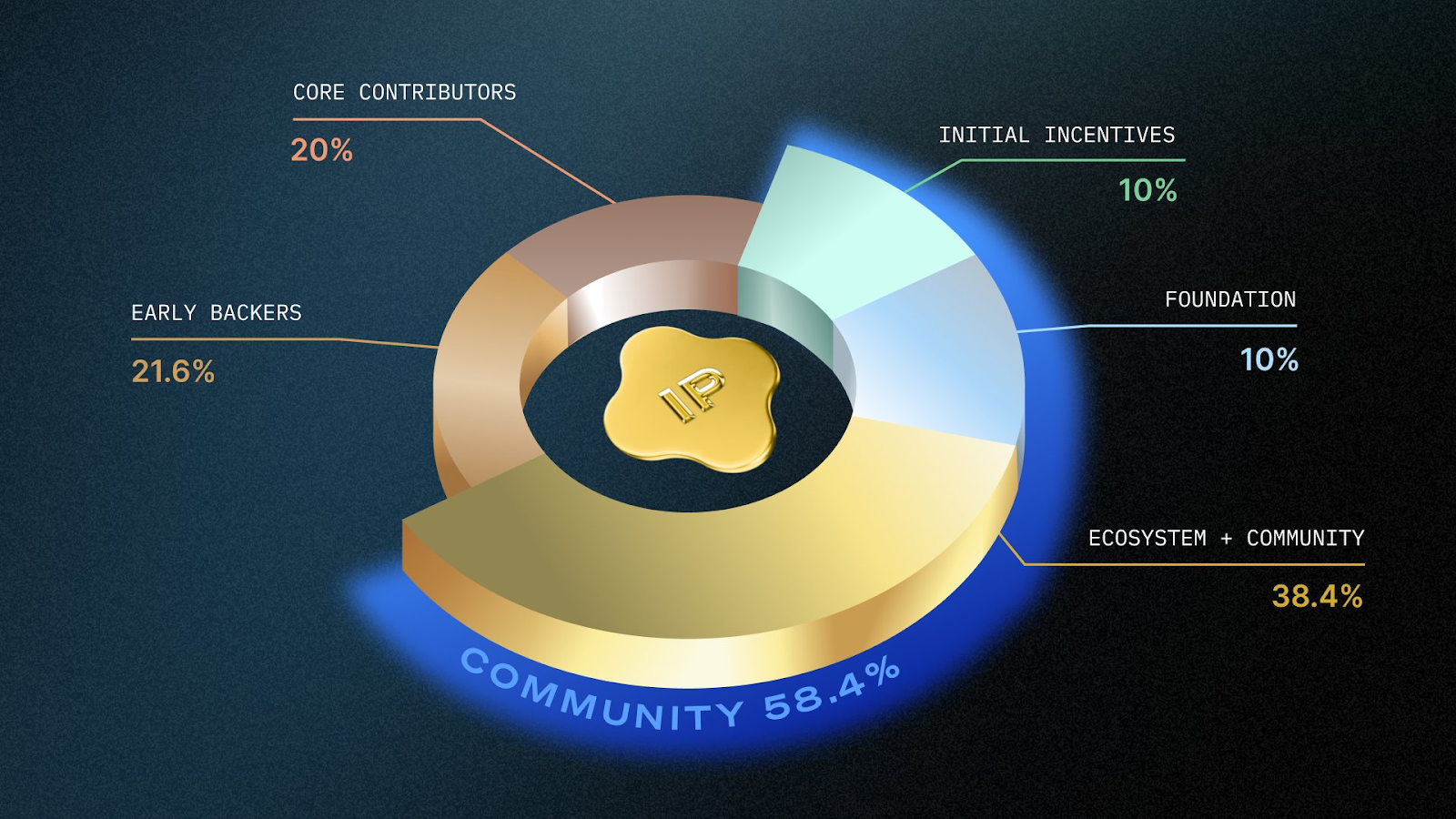
    The Total Supply of $IP is 1,000,000,000 IP.

    38.4% Ecosystem + Community
    10% Initial Incentives
    10% Foundation
    21.6% Early Backers
    20% Core Contributors

    Token Allocation:

    IP Release Schedule

    The community can claim initial incentives on the first day of the public mainnet launch. Early backers and core contributors have a 48-month lockup period. 

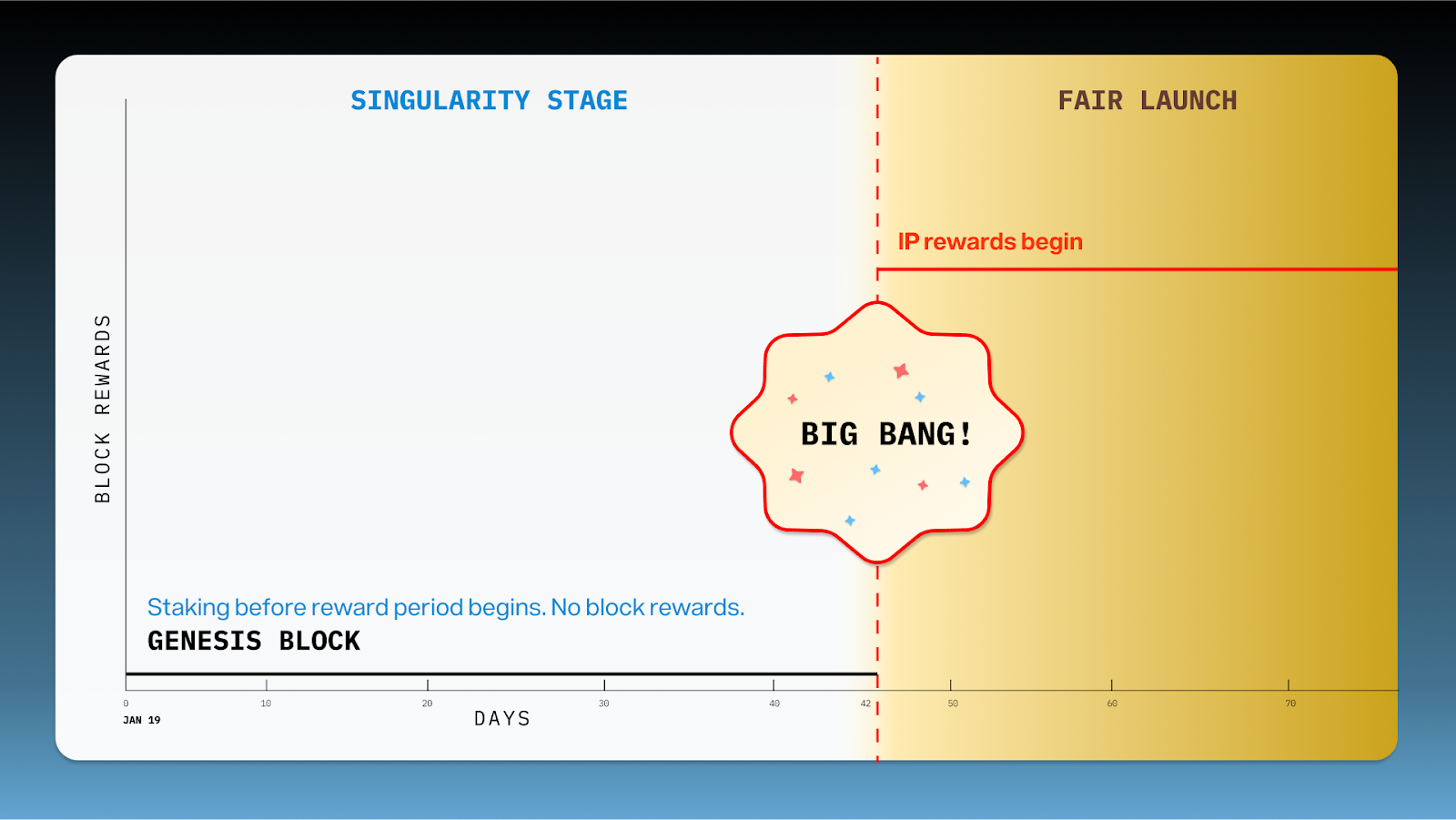
    The community earns rewards at the same time as everyone else. During the 42-day Singularity Period after the genesis block on January 19, 2025, staking and delegation are open to everyone, but no rewards will be earned. This period allows users to decide if they want to stake.

    IP Release Schedule

    IP Price Prediction

    After the relatively successful Berachain Airdrop, the community is very eager for another Airdrop explosion from Story Protocol. Launched almost a day after Berachain and in the middle of a somewhat complicated market, many controversies have occurred, specifically:

    Market Context and Comparisons

    Hyperliquid: $HYPE launched with a TGE FDV of $14.1 billion and quickly saw that valuation climb to an impressive $42.1 billion in just a few days. Moreover, as a non-VC project, Hyperliquid’s initial hype stemmed primarily from the community.
    Berachain: This project just launched in early February, and at its TGE, the project’s FDV reached about $4-$5 billion. Despite receiving a lot of anticipation, especially from the Bera NFT Holders group, this number seems to have fallen short of expectations.

    Story’s Potential

    Story Protocol, a Layer 1 blockchain similar to Berachain and launching around the same time, is experiencing similar market influences. The current market is sluggish, with no clear overall trend.

    This has created a sense of investor fatigue. According to Coinmarketcap, the current market sentiment is “Fear,” indicating that retailers may be inclined to liquidate their $IP airdrop allocations to reinvest in their portfolios. Conversely, during periods of positive market sentiment with substantial new capital inflows, investors tend to retain tokens in anticipation of selling at more favorable prices.

    Backed by prominent investment funds like Consensys and Polychain Capital, and with a high probability of full CEX listing to ensure liquidity, $IP is likely to have a TGE with a fully diluted valuation similar to $BERA, or perhaps slightly higher. As mentioned in previous $BERA analyses, listing with a high FDV aims to counter initial airdrop sell pressure and benefit VCs, a phenomenon observed in numerous projects launched on top-tier exchanges.

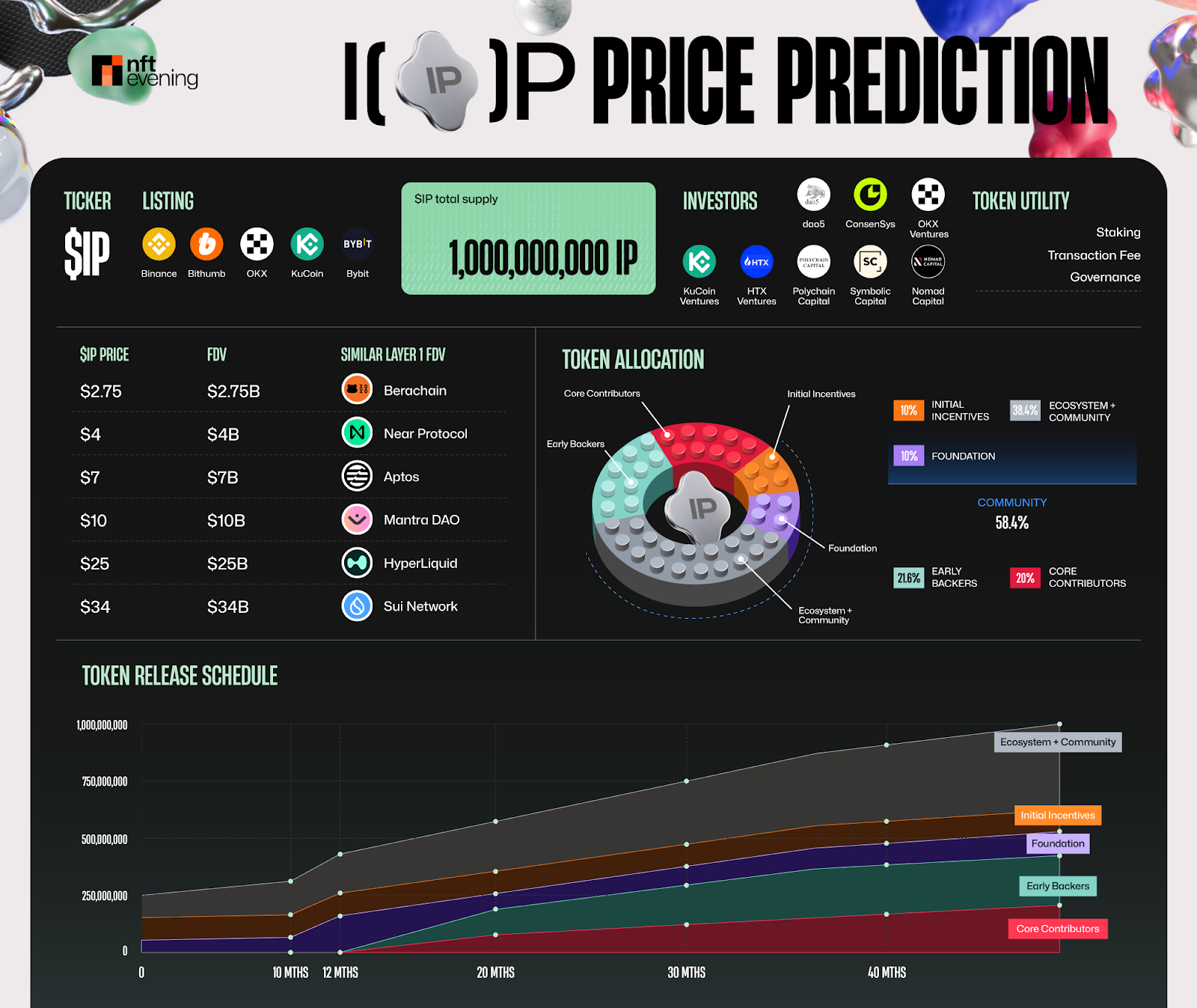
    Consequently, under ideal conditions, $IP could potentially list with an initial TGE price of around $7-$10 (comparable to the FDV of Aptos and Mantra).

    Hyperliquid (HYPE) achieving its current $25 billion FDV is remarkable.  As a self-sufficient Layer 1, HYPE requires no VC funding or CEX listing fees/liquidity.  Its revenue comes entirely from user trading volume, which HYPE has successfully driven. Despite a 31% airdrop to users, the token price has consistently risen from its TGE to its all-time high. In contrast, Story will only launch Mainnet on February 13, when official revenue will be recognized.

    However, it should be noted that these are all speculations and should not be taken as investment advice.

    Details of IP TGE Valuation Prediction:

    Details of IP TGE Valuation Prediction:

    Track $IP price on Pre-market

    If you need to trade IP before TGE, please refer to the pre-market, here are some places you can refer to:

    Whales Market
    Coinbase Pre-market
    Gate.io Pre-market
    Kucoin Pre-market
    MEXC Pre-market

    *Note: Pre-market value does not reflect the actual value of the token at the time of TGE.


    Source link

    Succinct Prover Network Testnet Goes Live, Allowing Users To Earn Rewards By Generating ZKPs

    0
    Succinct Prover Network Testnet Goes Live, Allowing Users To Earn Rewards By Generating ZKPs


    In Brief

    Succinct Labs has launched the Succinct Prover Network Testnet, now open to the public, enabling users to generate cryptographic proofs and earn stars as rewards.

    Succinct Prover Network Testnet Goes Live, Allowing Users To Earn Rewards By Generating ZKPs

    Zero-knowledge proof (ZKP) startup Succinct Labs announced the launch of the Succinct Prover Network Testnet, now available for public participation. This testnet allows users to generate cryptographic proofs and earn stars as rewards.

    The Succinct Prover Network is an Ethereum-based protocol designed to coordinate a decentralized network of provers, aiming to enhance global proof generation capabilities. Succinct Labs envisions this network as a universal infrastructure layer for generating proofs. For several months, the protocol has been operating in a private testnet with partners, successfully producing over 80,000 proofs and executing 100 trillion RISC-V cycles. It is already being utilized in various applications, including blockchain networks, cross-chain bridges, oracles, artificial intelligence systems, and gaming environments.

    With the testnet now accessible to the public under “Level 1: A Crisis of Trust,” users can participate by depositing 10 USDC, contributing to the network’s stress testing by generating proofs and earning stars in return. Those interested in joining can request an invite by quote-tweeting the official announcement on social media platform X, explaining their enthusiasm for Succinct Labs and ZKPs. The most creative responses will receive direct message invitations from Succinct Labs. Additionally, invitations will be shared with the broader Succinct community through X and Discord.

    Over the next few months, Succinct Labs will gradually roll out the next phases of its launch roadmap. “Level 2: Prove with Us,” expected in one to two months, will enable users to set up their own prover nodes and contribute to the network’s proving capacity. “Level 3: Mainnet,” anticipated in three to four months, will introduce the ability for users to redeem the stars they have earned. This phased approach aims to establish a decentralized and scalable proving network, fostering broader adoption of ZKPs across different industries.

    What Is Succinct Prover Network? 

    The Succinct Prover Network facilitates the creation of ZKPs for any type of software, whether it be a blockchain, cross-chain bridge, oracle, AI agent, video game, or other applications.

    Traditionally, ZKPs have been limited to specific use cases, requiring developers to design custom cryptographic circuits and possess in-depth knowledge of complex mathematical principles. Succinct simplifies this process by allowing proofs to be generated directly from conventional code, similar to how software runs on a standard computer. This approach, often referred to as “ZK 2.0,” is made possible by the breakthrough zero-knowledge virtual machine (zkVM) SP1. This technology abstracts the underlying complexity, making proof generation as accessible and programmable as traditional computing.

    For the first time, a single, unified proving network can support a wide range of applications: the Succinct Prover Network. By consolidating demand within a competitive system, the network introduces proof contests—an incentive mechanism where provers compete to generate proofs efficiently. This approach enhances both scalability and reliability, positioning Succinct as the most efficient and resilient proving cluster globally.

    Disclaimer

    In line with the Trust Project guidelines, please note that the information provided on this page is not intended to be and should not be interpreted as legal, tax, investment, financial, or any other form of advice. It is important to only invest what you can afford to lose and to seek independent financial advice if you have any doubts. For further information, we suggest referring to the terms and conditions as well as the help and support pages provided by the issuer or advertiser. MetaversePost is committed to accurate, unbiased reporting, but market conditions are subject to change without notice.

    About The Author


    Alisa, a dedicated journalist at the MPost, specializes in cryptocurrency, zero-knowledge proofs, investments, and the expansive realm of Web3. With a keen eye for emerging trends and technologies, she delivers comprehensive coverage to inform and engage readers in the ever-evolving landscape of digital finance.

    More articles


    Alisa Davidson


    Alisa, a dedicated journalist at the MPost, specializes in cryptocurrency, zero-knowledge proofs, investments, and the expansive realm of Web3. With a keen eye for emerging trends and technologies, she delivers comprehensive coverage to inform and engage readers in the ever-evolving landscape of digital finance.


    More articles


    Source link

    Top NFT Collections – February 11, 2025

    0
    Top NFT Collections – February 11, 2025


    Top NFT Collections (Last 24h)

    Here are the hottest NFT Collections of the day.

    Rank

    Name
    Volume
    Transactions
    Chains
    URL

    1

    Pudgy Penguins
    323.59 ETH
    31
    ethereum
    View

    2
    Bored Ape Yacht Club
    Bored Ape Yacht Club
    295.13 ETH
    21
    ethereum
    View

    3
    Azuki
    Azuki
    248.43 ETH
    71
    ethereum
    View

    4
    Kaito Genesis
    Kaito Genesis
    191.68 ETH
    27
    ethereum
    View

    5
    Doodles
    Doodles
    175.72 ETH
    48
    ethereum
    View

    6
    Milady Maker
    Milady Maker
    145.14 ETH
    35
    ethereum
    View

    7
    Fluid Vault
    Fluid Vault
    132.94 ETH
    7
    ethereum
    View

    8
    Lil Pudgys
    Lil Pudgys
    123.83 ETH
    116
    ethereum
    View

    9
    Mutant Ape Yacht Club
    Mutant Ape Yacht Club
    119.86 ETH
    52
    ethereum
    View

    10
    Azuki Elementals
    Azuki Elementals
    117.64 ETH
    369
    ethereum
    View


    Source link

    Cobalt Free Batteries Market Key Players Analysis – Conamix, AESC, BYD, CALB, CATL, Cobra. | Web3Wire

    0
    Cobalt Free Batteries Market Key Players Analysis – Conamix, AESC, BYD, CALB, CATL, Cobra. | Web3Wire


    Cobalt Free Batteries Market

    InsightAce Analytic Pvt. Ltd. announces the release of a market assessment report on the “Cobalt Free Batteries Market”-, By Type (Lithium Ferrous (Iron) Phosphate Battery, Lead Acid Batteries), By End Use (Electronic Vehicles, Energy Storage), Trends, Industry Competition Analysis, Revenue and Forecast To 2031.”The Cobalt Free Batteries Market is estimated to reach over USD 4.10 billion by 2031, exhibiting a CAGR of 14.4% during the forecast period.

    Get Free Access to Demo Report, Excel Pivot and ToC: https://www.insightaceanalytic.com/request-sample/2599

    Rechargeable batteries without cobalt are known as cobalt-free batteries. Rather, they usually include substitute elements like iron, manganese, or nickel, which helps mitigate supply chain problems associated with cobalt sourcing and reduces the environmental impact. However, battery makers are adopting cobalt-free materials because of the ethical difficulties surrounding cobalt mining. The rising use of cobalt-free cathode in electric vehicles is responsible for the market’s expansion. Since cobalt is a scarce and expensive metal, producing lithium-ion batteries is expensive. Because of this, the price of electric cars rises, which is why researchers are concentrating on producing large quantities of the cobalt-free cathode that is used in batteries. The primary driver of market expansion is expected to be the increasing demand for electric automobiles.

    In the upcoming years, the market is expected to develop due to rising global disposable income and consumer preference for environmentally friendly automobiles like electric cars. The high cost of fossil fuels and government attempts to minimize pollution are expected to propel market expansion throughout the forecast period.

    List of Prominent Players in the Cobalt Free Batteries Market:• Conamix• AESC• BYD• CALB• CATL• Cobra• OptimumNano Energy Co., Ltd.• Sunwoda Electronic Co., Ltd.• Panasonic• Murata• Toshiba• LITHIUMWERKS• SVOLT• SPARKZ

    Expert Knowledge, Just a Click Away: https://calendly.com/insightaceanalytic/30min?month=2025-02

    Market Dynamics:Drivers:The increasing cost of fossil fuels and rising consumption of petroleum products in the combustion is estimated to drive the market growth as per the market analysis. The market is expected to grow in the upcoming years due to the growing number of electric vehicles on the road worldwide, rising disposable income, and rising economic standards. Throughout the projected period, growing concerns about the environmental damage caused by using fossil fuels are also expected to propel market expansion.

    Challenges:The development of cobalt-free battery technology may be complicated and hampered by technological challenges. Finding replacement materials with energy density, stability, and cycle life that are on par with or better than those of cobalt-containing batteries is a major barrier to the market’s expansion. Other challenges include strict government regulations, disruptions in the supply chain, and changing consumer preferences.

    Regional Trends:North America is expected to report the largest market share in the near future. Major automotive manufacturers are increasingly investing in EV production, driving demand for advanced battery technologies. The established battery manufacturing infrastructure in North America allows producers to quickly increase output and meet the growing demand for cobalt-free batteries. A robust supply chain for vital battery components like nickel and lithium also helps the area keep a competitive edge in the market. The cobalt-free battery market is expected to grow at the fastest rate in Asia Pacific for the forecast timeframe. The Asia Pacific area has shown considerable growth in the global cobalt-free battery market, which can be attributed to the drive for renewable energy sources and the creation of regulations that promote them.

    Recent Developments:• In July 2024, AESC Group, launched a new facility in Spain in 2026 to begin manufacturing a less expensive lithium-ion battery substitute, according to the Japan-based business. With an eye toward the demand for lithium-iron-phosphate (LFP) batteries for use in electric vehicles and power storage systems, AESC plans to invest over 1 billion euros ($1.09 billion) in the new factory.• In Nov 2023, Toshiba Corporation has created a novel lithium-ion battery with a 5V-class high-potential cathode material that is free of cobalt and effectively inhibits side reactions that release gasses that degrade performance. This battery can be used for a variety of things, including electric cars and power tools.

    Unlock Your GTM Strategy: https://www.insightaceanalytic.com/customisation/2599

    Segmentation of Cobalt Free Batteries Market.Global Cobalt Free Batteries Market – By Type• Lithium Ferrous (Iron) phosphate Battery• Lead acid batteriesGlobal Cobalt Free Batteries Market – By End Use• Electronic Vehicles• Energy StorageGlobal Cobalt Free Batteries Market – By RegionNorth America-• The US• Canada• MexicoEurope-• Germany• The UK• France• Italy• Spain• Rest of EuropeAsia-Pacific-• China• Japan• India• South Korea• Southeast Asia• Rest of Asia PacificLatin America-• Brazil• Argentina• Rest of Latin AmericaMiddle East & Africa-• GCC Countries• South Africa• Rest of the Middle East and Africa

    About Us:InsightAce Analytic is a market research and consulting firm that enables clients to make strategic decisions. Our qualitative and quantitative market intelligence solutions inform the need for market and competitive intelligence to expand businesses. We help clients gain competitive advantage by identifying untapped markets, exploring new and competing technologies, segmenting potential markets and repositioning products. Our expertise is in providing syndicated and custom market intelligence reports with an in-depth analysis with key market insights in a timely and cost-effective manner.

    Contact us:InsightAce Analytic Pvt. Ltd.Visit: http://www.insightaceanalytic.comTel : +1 551 226 6109Asia: +91 79 72967118info@insightaceanalytic.com

    This release was published on openPR.

    About Web3Wire Web3Wire – Information, news, press releases, events and research articles about Web3, Metaverse, Blockchain, Artificial Intelligence, Cryptocurrencies, Decentralized Finance, NFTs and Gaming. Visit Web3Wire for Web3 News and Events, Block3Wire for the latest Blockchain news and Meta3Wire to stay updated with Metaverse News.


    Source link

    Grayscale Seeks Cardano ETF Approval After Filing for Solana, XRP and Dogecoin Funds – Decrypt

    0
    Grayscale Seeks Cardano ETF Approval After Filing for Solana, XRP and Dogecoin Funds – Decrypt


    Grayscale Investments aims to launch a Cardano exchange-traded fund on the New York Stock Exchange, according to a document posted to the NYSE website. NYSE Arca submitted the 19b-4 form for a proposed rule change Monday on behalf of the issuer.

    Cardano (ADA), the ninth-largest cryptocurrency by market capitalization, has jumped 12% on the day to $0.748 on news of the Cardano ETF filing, according to CoinGecko. It’s the largest gainer over the last day among the top 10 coins by market cap.

    If approved, Grayscale’s Cardano ETF would be the first exchange-traded product for the blockchain, and would join Grayscale’s lineup of crypto ETFs, which includes the Grayscale Bitcoin Trust ETF, Bitcoin Mini Trust ETF, Ethereum Trust ETF, and Ethereum Mini ETF.

    “The proposed rule change is designed to promote just and equitable principles of trade and to protect investors and the public interest in that there is a considerable amount of ADA price and market information available on public websites and through professional and subscription services,” Grayscale said in the Cardano ETF filing.

    Grayscale currently offers over 20 crypto-related investment products, including trusts for Avalanche, Solana, and Dogecoin. The firm launched the Bitcoin Trust in 2013, which was converted into an ETF last year.

    Only Bitcoin and Ethereum spot ETFs have been approved for trading so far in the United States, with the SEC giving both the green light last year.

    According to the filing, the proposed rule change for the Cardano ETF falls under NYSE Arca Rule 8.201-E, which allows the listing of “Commodity-Based Trust Shares.”

    The Delaware Trust Company serves as the trustee of the Cardano ETF, while the Coinbase Custody Trust Company holds the Trust’s ADA in cold storage.

    Grayscale did not immediately respond to requests for comments by Decrypt.

    As investors wait to see if the Cardano ETF is approved, the crypto faithful are optimistic that other ETFs—including Dogecoin, XRP, and Solana ETFs—will be approved in the coming months.

    Grayscale itself has filed to convert other existing trusts into spot ETFs, including trusts for Solana, XRP, and Dogecoin.

    Edited by Andrew Hayward

    Daily Debrief Newsletter

    Start every day with the top news stories right now, plus original features, a podcast, videos and more.


    Source link

    Popular Baldur’s Gate 3 Character Took The Spotlight From Iconic D&D Villain In New Book

    0
    Popular Baldur’s Gate 3 Character Took The Spotlight From Iconic D&D Villain In New Book


    Summary

    Strahd von Zarovich is omitted from the 2025 Monster Manual, while Astarion from Baldur’s Gate 3 is mentioned. The absence of Strahd in the new manual is surprising, as he played a significant role in previous editions. The exclusion of Strahd raises questions about future content and whether Astarion is becoming more prominent in D&D lore.

    The 2025 Dungeons & Dragons Monster Manual failed to mention one of the game’s most iconic villains, while simultaneously throwing the spotlight onto one of the popular heroes of Baldur’s Gate 3.

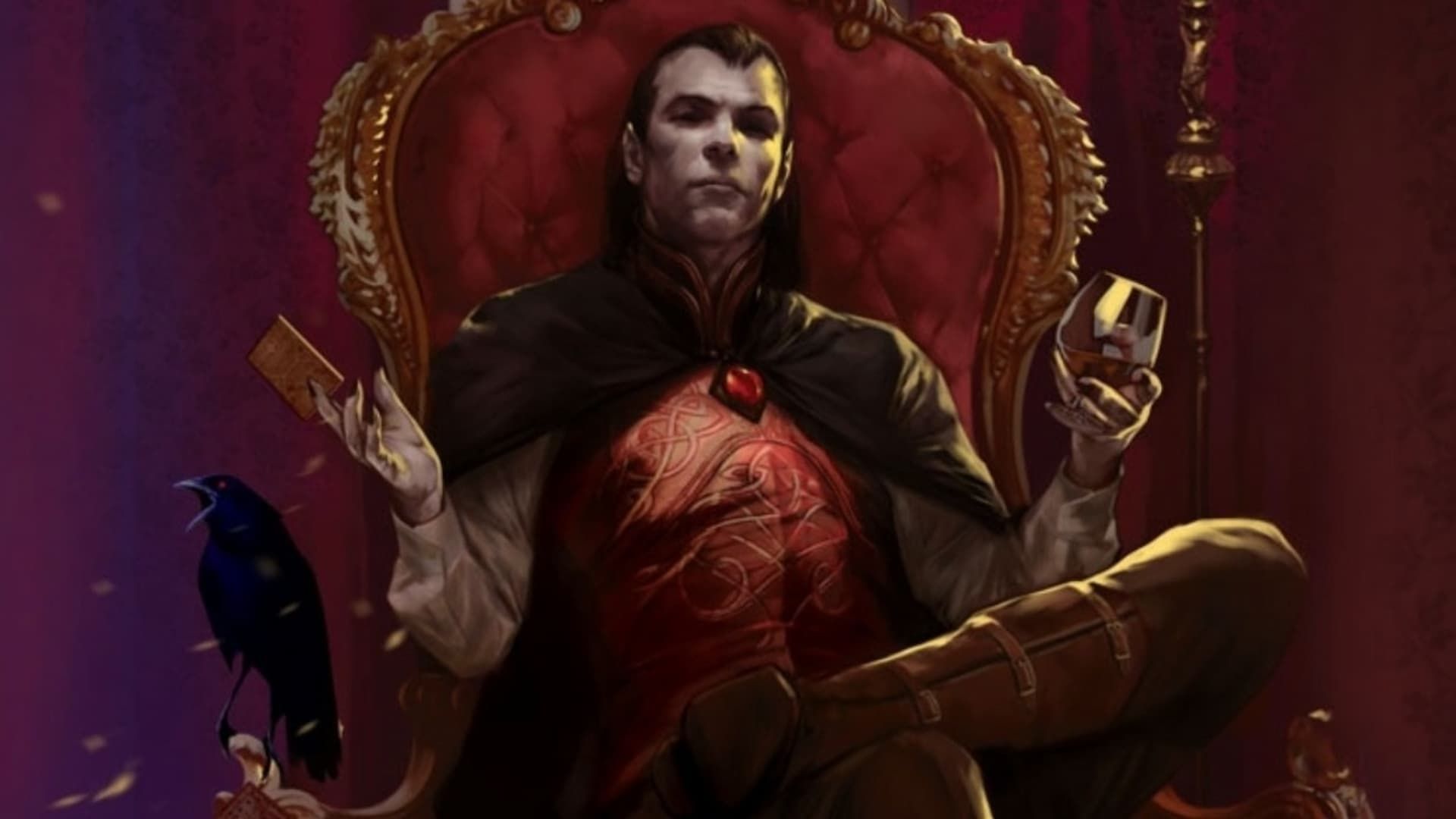
    Vampires are a common enemy in D&D and a relatively easy one, due to how many weaknesses they have that carry over from folklore. However, there is one bloodsucker who strikes fear into the hearts of adventurers around the multiverse: Count Strahd von Zarovich.

    Related

    Popular Baldur’s Gate 3 Species Receiving Huge Change In D&D

    The upcoming Dungeons & Dragons Monster Manual is drastically changing a popular Baldur’s Gate 3 species

    Strahd is the vampire ruler of Barovia, a realm cut off from the rest of the multiverse. He has appeared in numerous adventures since 1983, with the most recent being the incredibly popular Curse of Strahd campaign for D&D 5e, which was released in 2016.

    D&D vampires have just received an update in the 2025 Monster Manual, yet there’s one huge change from the 2014 version of the book involving Strahd and Baldur’s Gate 3 that’s shocking to see.

    Astarion Is Mentioned In The Monster Manual (But Strahd Isn’t)

    Dungeons & Dragons Curse of Strahd Cover

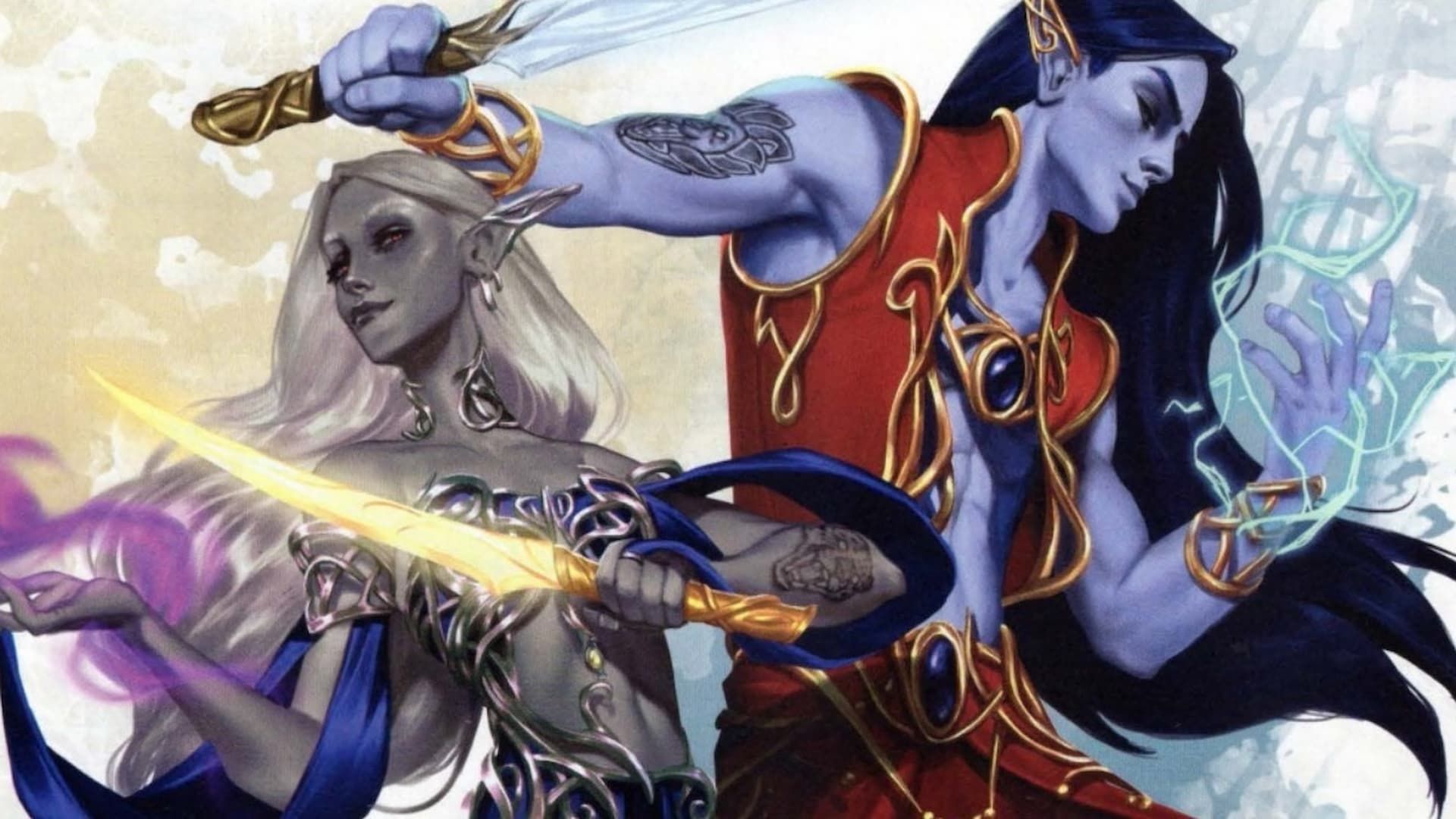
    In the vampire section of the new Monster Manual, there’s a funny quote attributed to Astarion from Baldur’s Gate 3. This makes sense, considering he’s a vampire (and incredibly popular to boot.)

    However, Strahd isn’t mentioned once, nor is Barovia or Castle Ravenloft. This is despite Strahd having a huge portion of the vampire section in the 2014 Monster Manual dedicated to him.

    It’s not as if the new Monster Manual dodges references to classic D&D lore, as characters like Lord Soth from Dragonlance and Acererak are name-dropped in the text.

    Related

    D&D Releases New & Revised Forgotten Realms Subclasses

    Wizards of the Coast has revealed new D&D subclasses based on the Forgotten Realms campaign setting.

    It’s not surprising to see Baldur’s Gate content in the new D&D books, considering how the cast has essentially become the face of the tabletop game.

    The big question is why Strahd got snubbed? The fact that he’s not mentioned once in the vampires section while Astarion is is very suspicious.

    Could it be that Wizards of the Coast is keeping Strahd information vague due to him being the focus of a new book, or has Astarion’s charm overthrown the lord of Castle Ravenloft for good? Only time will tell.

    Next

    D&D Monster Changed To Stop It From Turning Into Player’s Pants

    The developers of the Dungeons & Dragons 2025 Monster Manual have revealed a shocking change they rolled back.


    Source link

    Why Tom Hanks Was Pantsless Near the Mona Lisa on Da Vinci Code Set

      0
      Why Tom Hanks Was Pantsless Near the Mona Lisa on Da Vinci Code Set


      Dave J Hogan/Dave J Hogan/Getty Images

      When Tom Hanks found himself with his pants down in front of the iconic Mona Lisa painting while filming The Da Vinci Code, director Ron Howard couldn’t help but laugh.

      Howard, 70, recalled the funny story during a Happy Days reunion event at MegaCon in Orlando on Friday, February 7, telling the crowd, “All of our grip equipment and camera equipment was in the Mona Lisa room” of the Louvre in Paris.

      “At one point, we were really hurrying, we were behind schedule. And Tom Hanks didn’t have time to go back to his dressing room to change for the next scene,” Howard explained of the 2006 film, via People. “So I was giving him some notes about what the next scene was going to be and he was changing his pants in front of the Mona Lisa.”

      Henry Winkler Thinks He Knows What Led to Rumored Feud With Tom Hanks

      Related: Henry Winkler Knows What Started Long-Rumored Feud With Tom Hanks

      There have long been rumors of bad blood between Henry Winkler and Tom Hanks, two actors otherwise known for their kindly dispositions. Winkler, 78, thinks he knows the decades-old moment when the rumor mill began to turn. On the May 7 episode of the “How To Fail” podcast, the Happy Days actor recalled how he […]

      The filmmaker confessed he couldn’t let the hilarious moment go unnoticed. “I said, ‘Wait a minute. This is a moment we have to remember,’” Howard said, revealing that out of all the projects he’s worked on with Hanks — like Splash and Apollo 13 — this wardrobe change was one of the most outlandish. (The pair have worked on five projects total, including The Da Vinci Code franchise sequels, Angels & Demons and Inferno.)

      “We’ve been under the water with the mermaid, we’ve been weightless with Apollo 13, and now you’re pantsless with the Mona Lisa,” Howard remembered telling Hanks, 68.

      While the film is serious in tone and subject matter, Hanks going pantsless inside the famous art museum isn’t the only wild moment they had filming. (The mystery movie focuses on Hanks’ Robert Langdon as he tries to solve a murder inside the Louvre with clues hidden in Da Vinci paintings.)

      Actor-Director Duos Who Worked Together Over and Over Again

      Related: Actor-Director Duos Who’ve Worked Together Over and Over Again

      Some creative collaborations are too strong to let them be a one time thing. Martin Scorsese, Steven Spielberg and Quentin Tarantino are among the celebrated directors known to hire the same actors over and over again for their films. During a joint Time interview with Tom Hanks in 2015, Spielberg noted that he and the […]

      Paul Bettany, who played Silas in the movie, told another funny anecdote involving Hanks during a March 2021 appearance on The Late Late Show With Stephen Colbert.

      “I had to grab him and I had to punch him in the stomach and it’s very quiet on set,” Bettany, 53, remembered. “It’s always more quiet when there’s a stunt going on because you’re worried somebody’s gonna get hurt. So, everybody’s listening, and I punched him in the stomach and he farted really, really, really loudly.”

      The actor recalled being so taken aback by the moment that he “didn’t know what the form was” and what to do next.

      “What do you do when the biggest movie star in the world farts?” Bettany asked, revealing, “I kinda looked at him. And he went, ‘What is wrong with you? You just made me fart!’”

      Hanks remembered the awkward shoot as well, telling his version during an appearance on The Graham Norton Show in 2019.

      “I got beat up by Paul Bettany in The Da Vinci Code,” Hanks shared, noting, “In movie fights, everybody treats it like it’s a real fight.”

      He explained, “Paul came rushing in and I met him, and what had to happen was he was supposed to knock me down against a desk and then I landed on the ground. When I hit the floor, I farted.”


      Source link

      Popular Posts

      My Favorites