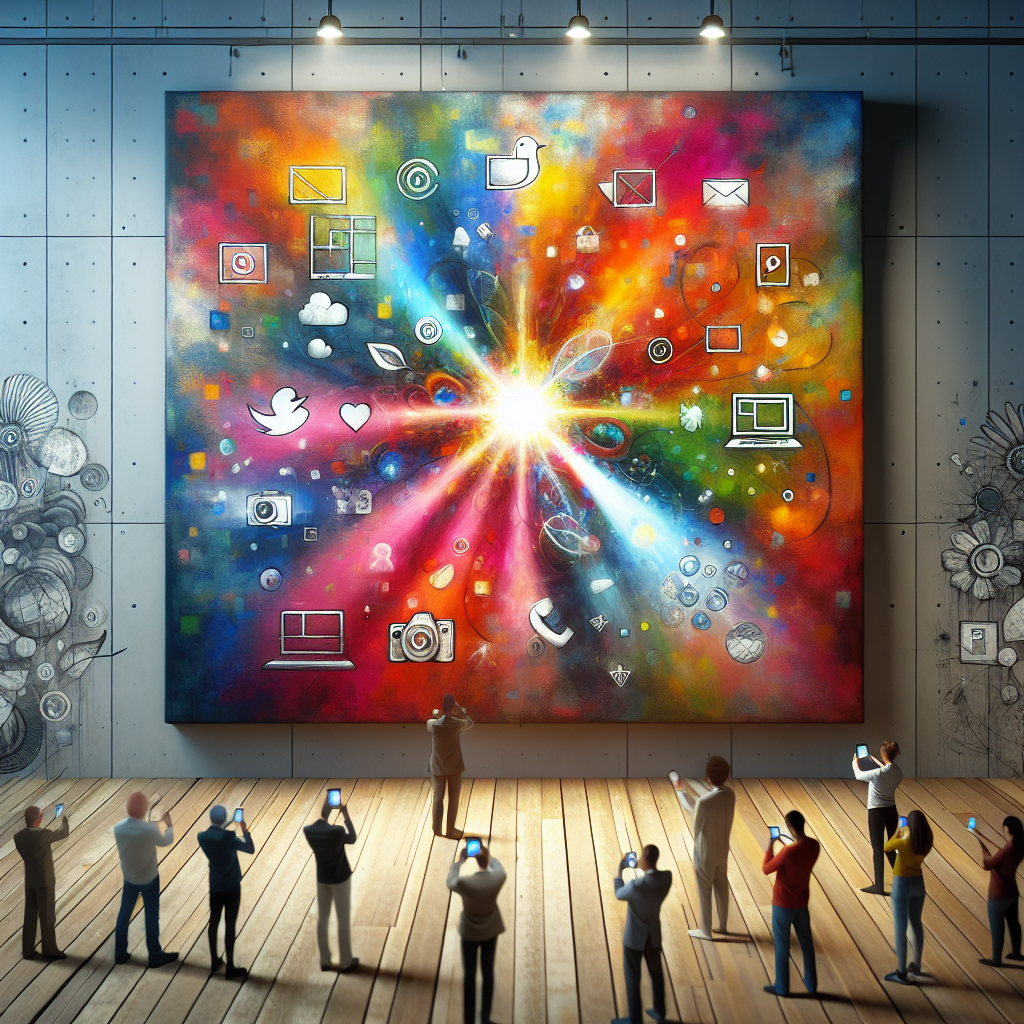
In the digital age, social media has emerged as a transformative force for many industries, and the art world is no exception. This shift has fundamentally altered how artists create, share, and monetize their work, democratizing access to art and fostering a new kind of public engagement. Social media platforms have become contemporary art galleries, showcasing a diverse array of visual works to global audiences.
The Democratization of Art
Traditionally, the art world has been characterized by gatekeeping: galleries, museums, and curators wielded considerable power over what art was seen and celebrated. However, with the advent of social media, this paradigm has shifted dramatically. Platforms such as Instagram, Pinterest, and TikTok allow artists to upload their work directly to audiences, bypassing traditional constraints. This democratization has not only given rise to a rich tapestry of artistic styles—from street art to digital illustrations—but has also amplified underrepresented voices in the art community.
Global Reach and Increased Exposure
One of the defining features of social media is its ability to connect people across geographical boundaries. An artist in Nairobi can gain followers in New York or Tokyo, expanding their reach far beyond local galleries. This global exposure is unprecedented; artists no longer need to rely solely on physical spaces to showcase their work.
Hashtags, shares, and likes can propel an unknown artist into the limelight overnight, as audiences become more eager to discover new creators. For example, the #art hashtag on Instagram has amassed millions of posts, creating a vast online gallery where users can browse and discover new artists effortlessly.
Interactive Engagement
Social media not only allows artists to showcase their work but also fosters interaction between creators and audiences. Comment sections, direct messaging, and live streams facilitate direct communication, enabling artists to receive immediate feedback, engage in discussions with fans, and build communities around their work. This interactivity transforms art from a static consumption experience into a dynamic conversation, allowing for a more personal connection between artists and their audience.
Moreover, platforms like TikTok have popularized art challenges, inviting users to participate in trends that encourage creativity and collaboration. These interactive elements allow artists to explore innovative methods of engagement, enhancing their visibility and reach.
Monetization Opportunities
As social media continues to redefine the art landscape, it also opens doors for monetization. Many artists are now leveraging these platforms to sell their artwork directly to consumers through features like Instagram Shopping or artist profiles on platforms like Etsy. Crowdfunding through platforms like Patreon allows artists to cultivate a dedicated following while securing financial support without the need for traditional galleries.
Moreover, collaborations with brands for sponsored content can also be lucrative, enabling artists to use their platforms as a source of income while maintaining their creative freedom.
Challenges and Considerations
Despite the vast opportunities that social media presents, artists also face challenges in this new landscape. The algorithms that govern visibility can be unpredictable, often favoring those who already have significant followings. Additionally, the sheer volume of content can make it difficult for individual works to stand out.
Copyright issues are another concern; the ease of sharing content raises questions about ownership and attribution. As artists navigate this evolving space, understanding these complexities becomes increasingly important.
Conclusion
Social media has thus become a vibrant art gallery that defies conventional boundaries, inviting artists and audiences to engage in new, meaningful ways. While the platform presents challenges, its potential for democratization, increased exposure, interactive engagement, and monetization cannot be understated. As the art world continues to evolve in the digital age, social media will undoubtedly play a pivotal role in shaping the future of artistic expression and community engagement.
In this ever-changing landscape, one thing is clear: the art world has become more accessible and diverse, and social media is at the forefront of this transformation.