Home Blog Page 99

North Korean Hackers Spent Six Months Infiltrating Drift Before $285M Exploit – Decrypt

0
North Korean Hackers Spent Six Months Infiltrating Drift Before 5M Exploit – Decrypt


In brief

Drift Protocol has attributed the recent $285 million attack on its DEX with “medium-high confidence” to UNC4736, a North Korean state-affiliated hacker group.
Attackers deposited over $1 million of their own capital and built a functioning vault inside the ecosystem before executing the exploit.
The bad actors erased traces instantly, with Telegram chats and malware “completely scrubbed” after execution.

Solana-based decentralized exchange Drift Protocol said on Sunday the attack that drained roughly $285 million from the platform was a structured six-month intelligence operation by a North Korean state-affiliated threat group.

The attackers used fabricated professional identities, in-person conference meetings, and malicious developer tools to compromise contributors before executing the drain, the protocol said in a detailed incident update.

“Crypto teams are now facing adversaries that operate more like intelligence units than hackers, and most organizations are not structurally prepared for that level of threat,” Michael Pearl, VP of Strategy at blockchain security firm Cyvers, told Decrypt.

Drift said the group first approached contributors at a major crypto conference last fall, presenting as a quantitative trading firm seeking to integrate with the protocol.

Over months, the group built trust through in-person meetings, Telegram coordination, onboarded an Ecosystem Vault on Drift, and made a $1 million vault deposit of their own capital, only to vanish, with chats and malware “completely scrubbed” when the exploit hit.

The DEX said the intrusion may have involved a malicious code repository, a fake TestFlight app, and a VSCode/Cursor vulnerability that enabled silent code execution without user interaction.

Drift attributed the attack with “medium-high confidence” to UNC4736, also tracked as AppleJeus or Citrine Sleet—the same North Korean state-affiliated group that cybersecurity firm Mandiant linked to 2024’s Radiant Capital hack.

Drift said the individuals who met contributors in person were not North Korean nationals, noting that DPRK-linked actors often rely on third-party intermediaries for “face-to-face engagement.”

Onchain fund flows and overlapping personas point to DPRK-linked actors, according to incident responders SEAL 911, though Mandiant has yet to confirm attribution pending forensics, the platform noted.

Security researcher @tayvano_, one of the experts whom Drift credited for assistance in identifying the malicious actors, suggested the exposure extend well beyond this incident.

In a tweet, the expert listed dozens of DeFi protocols, alleging that “DPRK IT workers built the protocols you know and love, all the way back to defi summer.”

Industry implications

“Drift and Bybit highlight the same pattern — signers were not directly compromised at the protocol level, they were tricked into approving malicious transactions,” Pearl noted. “The core issue is not the number of signers, but the lack of understanding of transaction intent.”

He said that multisignature wallets, while an improvement over single-key control, now create a false sense of security, introducing “a paradox” where shared responsibility lowers scrutiny across signers.


“Security must shift to pre-transaction validation at the blockchain level, where transactions are independently simulated and verified before execution,” Pearl said, adding that once attackers control what users see, the only effective defense is validating what a transaction actually does, regardless of the interface.

On developer tools as an attack surface, Lavid said the assumption has to change from the ground up.

“You have to assume the endpoint is compromised,” he told Decrypt, pointing to IDEs, code repositories, mobile apps, and signer environments as increasingly common entry points.

“If these foundational tools are vulnerable, anything shown to the user—including transactions—can be manipulated,” the expert said, noting this “fundamentally breaks traditional security assumptions,” leaving teams unable to trust “the interface, the device, or even the signing flow.”

Daily Debrief Newsletter

Start every day with the top news stories right now, plus original features, a podcast, videos and more.


Source link

Heartopia celebrates 30 million downloads with new outfits, permanent price cuts

Heartopia celebrates 30 million downloads with new outfits, permanent price cuts


Heartopia has kicked off a new event to celebrate passing 30 million downloads. Just a couple of weeks after delivering the vintage Hollywood-themed Dreamlight Cinematics event, developer XD Games has revealed The Whimsical Tea Party, a limited-time Gilded Acorn Exhibition.

The event kicked off on Saturday, bringing some new themed content to the game.

Manage cookie settings

Whimsical Tea Party’s biggest addition are the new outfits, including the Wandering Traveler, and the Duke Bunny outfits. Each outfit is available in three different colours. Another thing Heartopia events bring are building materials sets.

This one adds the Labyrinth furniture building materials set, the Hedgehog & Flamingo mallet, and the Cheshire Cat pet costume. Speaking of outfits, XD Games is dropping the in-game prices for a number of items permanently.

All original pet outfits now cost 66.7% less. Those of the Common variety will now cost 10 Souvenir Ticket Stubs, instead of the previous 30. Rare pet outfits will cost 5 Souvenir Ticket Stubs, down from 15.

Watch on YouTube

If you happened to buy Common or Rare original pet outfits between July 17, 2024 and March 22, 2026, you’ll be refunded the difference. This will automatically show up in-game the next time you log in. If you instead purchased those pet outfits between March 23 and April 4, you should look forward to your refund before April 10.

Keeping with the theme of freebies, Heartopia is also celebrating surpassing 30 million downloads worldwide by giving all players a small gift package in-game. This freebie is available until May 29, so you should have enough time to claim it.

For comprehensive guidance on where to find birds, bugs, and fish, check out our Heartopia bird locations, Heartopia bug locations, and Heartopia fish locations guides. If you’re instead looking to find some wild vegetables for those cooking recipes, hit those links. And, as ever, it doesn’t hurt to see if you missed out on any Heartopia codes.


Source link

Solana DeFi in Crisis After $285M Hack — Can the Ecosystem Recover?

0
Solana DeFi in Crisis After 5M Hack — Can the Ecosystem Recover?


The exploit of Drift Protocol, valued at approximately $285 million in the early hours of April 2, is shaking the Solana DeFi ecosystem, not only due to the scale of the damage but also because of its widespread impact.

On-chain data shows that the impact of the incident did not stop at a single protocol but has spread across multiple liquidity layers — from vaults and lending to liquidity provider pools. Amidst declining TVL and signs of capital migration, the question is whether this is merely a temporary shock or a sign of systemic risk.

Market Reaction: Liquidity Drops Amid Volatile Trading Activity

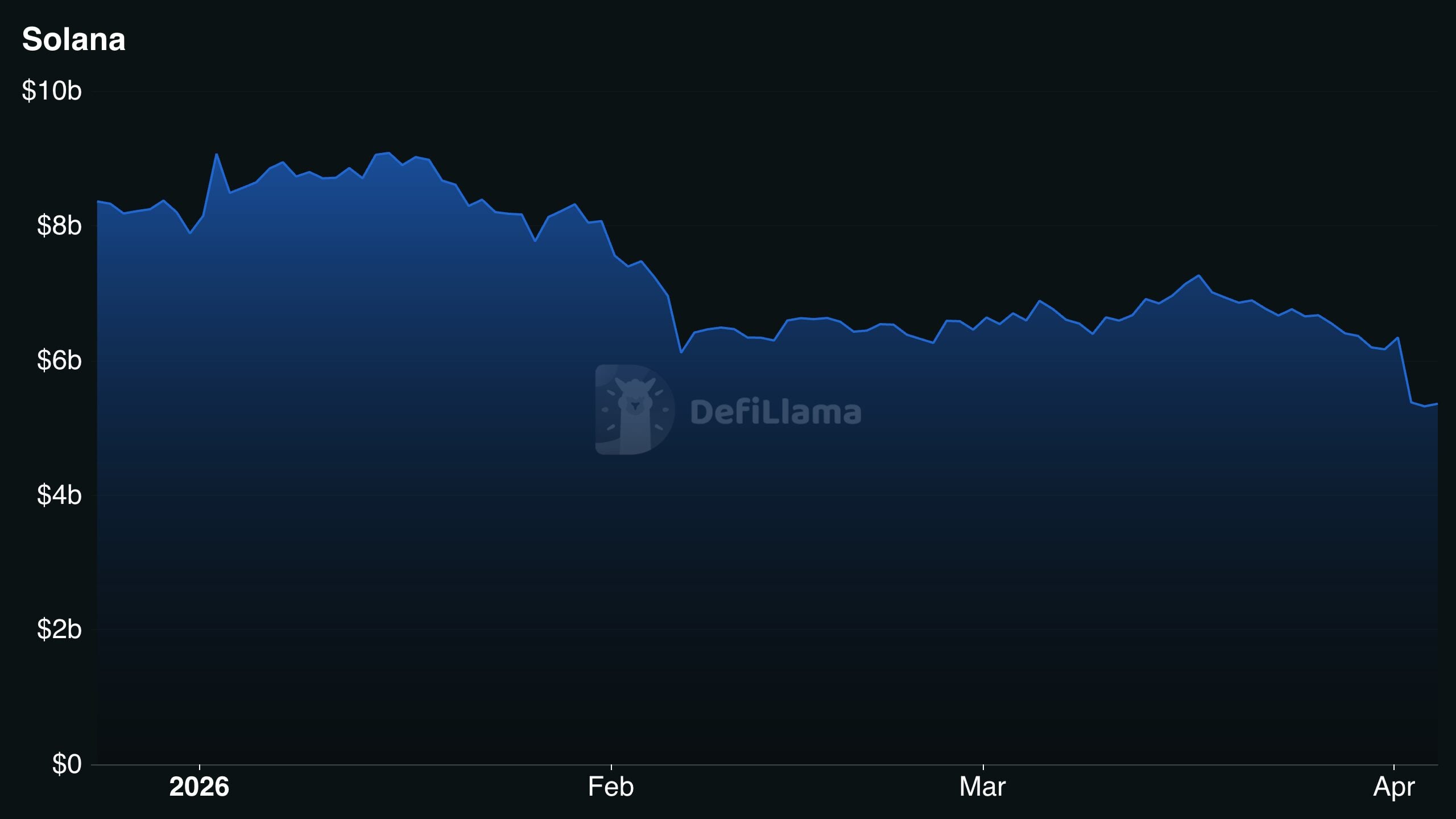
Data from DefiLlama shows that the TVL of the Solana DeFi ecosystem dropped significantly immediately after the hack occurred. Total TVL decreased from approximately $6.3 billion to around $5.3 billion in a short period, representing a decline of over 15%.

Solana TVL chart

Solana TVL chart. Source: DeFiLlama

This decline reflects two factors: the direct withdrawal of assets from the involved protocols and defensive capital outflows from users in the short term. However, it should be noted that this is an abrupt drop, which is not yet sufficient to confirm a medium- or long-term downward trend.

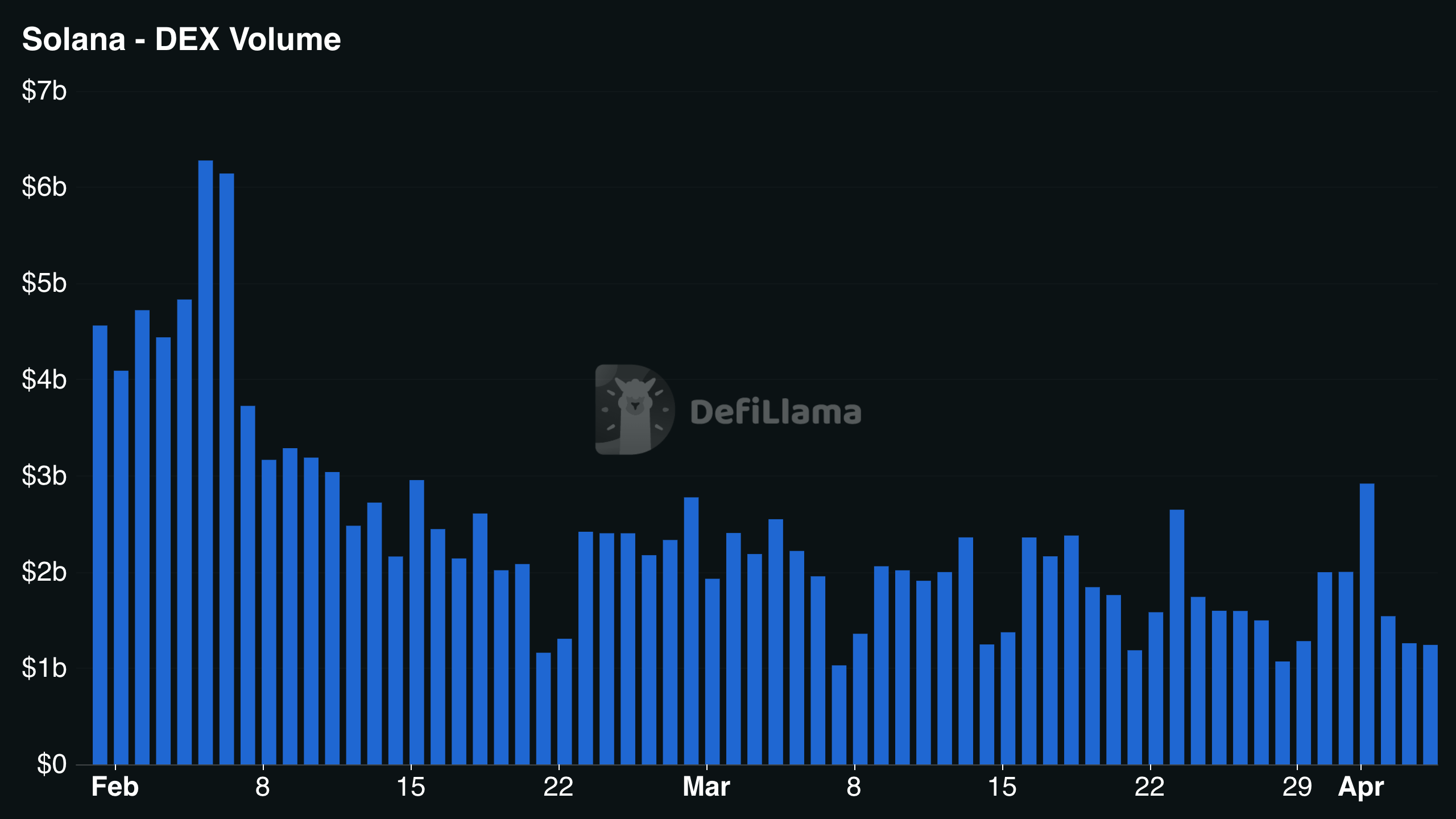
Trading activity exhibited clear fluctuations following the announcement of the Drift Protocol hack. Trading volume on Solana DEXs reached nearly $3 billion on April 1, according to DefiLlama data, before decreasing significantly in the following days.

Solana DEX Volume chartSolana DEX Volume chart

Solana DEX Volume chart. Source: DeFiLlama

The fact that liquidity decreased while trading activity only gradually weakened, rather than collapsing immediately, suggests that the ecosystem has not entered a state of liquidity “freeze” — the current shock has not yet escalated into a systemic liquidity crisis.

Cross-Protocol Impact & Contagion Risk

The impact of the hack has spread to various protocols within the Solana ecosystem to varying degrees. According to aggregated data from SolanaFloor, a series of projects have confirmed exposure to Drift Protocol, accompanied by emergency response measures.

Several cases show direct impacts on user assets. DeFi Carrot confirmed approximately $8.4 million in affected assets, with damages reaching up to 50% for the $CRT token, forcing the platform to pause minting and redeeming functions. Meanwhile, Reflect Money has frozen all minting and redeeming activities for its USDC+ and USDT+ products as a precautionary measure following the exploit.

Even protocols with limited exposure were forced to act. Ranger Finance stated it had paused deposits and withdrawals, even though its total exposure was only about $900,000 out of a total TVL of $14.6 million.

These reactions reflect a wide spectrum of states across the ecosystem, including:

Paused certain functionsLimited exposure to related assetsUnder assessment and auditing

The interdependence between protocols — especially in the DeFi composability — means that an incident at one point can spread through liquidity links and collateral, creating contagion risk.

However, as of now, there are no signs of a systemic collapse taking place. The majority of protocols remain operational, albeit in a more cautious state. This indicates that contagion risk remains potential rather than having erupted into a full-scale crisis.

Structural Weakness Exposed

According to information from Drift Protocol, the exploit did not stem from a bug in the smart contract but involved exploiting governance mechanisms through pre-signed transactions combined with multisig. Additionally, the use of “durable nonce” — a specific mechanism of Solana — is also believed to have played a role in the attacker’s process.

This approach demonstrates that the attacker did not just exploit a single bug but took advantage of multiple design layers within the system to gain control at the governance level. This is a more complex form of attack compared to traditional exploits and is harder to detect during the preparation phase.

Notably, components such as multisig, pre-signed transactions, and nonce mechanisms are not unique to a single protocol but are widely used in many DeFi designs, suggesting that risk may not be limited to an individual protocol but stems from how systems are designed and operated.

Can Solana DeFi Recover?

Following the incident, the recovery prospects of the Solana DeFi ecosystem have become a focal point for the market.

On a positive note, the platform still retains some supporting factors. Although TVL dropped sharply, it remains above the $5 billion mark, indicating that the scale of liquidity is still relatively large, while trading volume decreased after the exploit news spread.

Furthermore, history shows that the Solana ecosystem has recovered from major shocks before, including the Wormhole hack in February 2022, with damages of about $320 millions. At that time, the losses were backstopped by involved parties, helping to prevent a contagion effect and supporting the ecosystem’s recovery in subsequent stages.

However, negative factors cannot be ignored. A portion of the stolen assets has been moved to Ethereum, increasing the pressure of capital outflows from the ecosystem in the short term. More importantly, user confidence could be affected if risks related to governance and risk control mechanisms are not thoroughly addressed — one of the issues being widely discussed following the incident.

Additionally, the level of interdependence between protocols could make users more cautious, especially as the full scope of the incident’s impact has yet to be fully determined.

A Stress Test for Solana DeFi

The $285 million hack on April 2 is becoming a test for the Solana DeFi ecosystem, as its impact extends beyond a single protocol.

Instead of triggering an immediate collapse, this event is exposing how liquidity layers, governance mechanisms, and user behavior respond under pressure.

How the ecosystem adapts — from risk management and handling stolen assets to restoring confidence — will be the deciding factor in whether this is just a short-term shock or a sign of deeper weaknesses.

Currently, the market may be witnessing a true “stress test” for one of the largest DeFi ecosystems today.


Source link

Why Avengers Doomsday Might Retreat From Dune 3 | Metaverse Planet

Why Avengers Doomsday Might Retreat From Dune 3 | Metaverse Planet


I remember sitting in the theater during the opening weekend of Avengers: Endgame, feeling the absolute electric energy in the room when all the portals opened. For a long time, I genuinely believed Marvel Studios was invincible. They owned the box office, they owned pop culture, and they dictated the release calendar. Whenever a new Avengers movie was announced, other studios would scramble to move their films out of the way. It was an unspoken rule in Hollywood: you don’t play chicken with an Avengers movie.

But as I was looking over the upcoming theatrical slate for this December, I noticed something wild. A game of box office chicken was actually happening, and for the first time in over a decade, it looks like Marvel is the one considering a tactical retreat.

The battleground? The middle of December. The opponents? Avengers: Doomsday and Denis Villeneuve’s highly anticipated Dune 3.

When I first heard the rumors that Marvel might actually change their release date to avoid clashing with the sands of Arrakis, I was shocked. But the deeper I dug into the behind-the-scenes logistics, the more it made perfect, undeniable sense. Let me break down exactly why the biggest superhero franchise in history is actively trying to dodge a giant sandworm.

The Ultimate Box Office Standoff

Let’s set the stage. For months, both Avengers: Doomsday and Dune 3 have been staring each other down with the exact same scheduled release date: December 18.

Initially, the entire cinema industry assumed this was a temporary error or a bluff. Everyone, including myself, thought Warner Bros. would eventually blink and move Dune 3 to the spring or summer. After all, Avengers: Doomsday isn’t just another sequel; it is Marvel’s biggest swing in years.

This is the movie that brings back the Russo Brothers (the mastermind directors behind Infinity War and Endgame). Even more insanely, it is the movie that brings back Robert Downey Jr., not as Iron Man, but as the iconic villain Doctor Doom. You would think a movie with that much hype would scare anyone away.

But Warner Bros. stood their ground. They claimed the mid-December slot first, and they absolutely refused to back down. And according to the latest industry whispers, specifically from insider John Campea, it is Marvel who is currently evaluating a date change.

Why? Because Warner Bros. played a brilliant trump card that Marvel simply cannot beat.

The IMAX Dilemma: Follow the Money

If you want to understand why blockbusters move, you have to look past the ticket sales and look directly at the premium screens. I am talking about IMAX, Dolby Cinema, and other Premium Large Formats (PLF).

When I go to see a massive spectacle like Dune or an Avengers crossover, I don’t want to watch it on a standard, dim screen. I want the ground-shaking audio. I want the massive IMAX aspect ratio. And I am willing to pay a premium price for that ticket. The studios know this. Today, PLF screens make up a massive percentage of a blockbuster’s total revenue.

Here is the fatal flaw in Marvel’s current December 18 plan:

Warner Bros. got there first. They already locked down airtight agreements with IMAX theaters globally for Dune 3.Denis Villeneuve practically built the Dune franchise to be the ultimate IMAX experience. The theaters know that Dune prints money on their massive screens.As it stands right now, almost every single IMAX screen for the week of December 18 is contractually dedicated to Dune 3.

If Marvel stubborns its way into releasing Avengers: Doomsday on the exact same day, they will be forced to play almost exclusively on standard screens. They would lose out on tens of millions of dollars in premium ticket surcharges in the opening weekend alone. For a movie that likely costs north of $300 million to produce, surrendering the IMAX revenue is essentially financial suicide.

Stepping Back to December 11

So, what is the escape plan? From the murmurs I am hearing, the solution is a slight, strategic sidestep.

Marvel is reportedly looking at bumping the film up by one or two weeks. The most logical landing spot is December 11.

This slot recently opened up because Jumanji 3 suffered a delay, leaving a massive, lucrative hole in the pre-holiday box office calendar. By taking this date, Marvel solves several massive headaches at once:

The IMAX Window: They get at least one full week of total IMAX exclusivity before Dune 3 takes over the screens.Word of Mouth: An earlier release allows them to build massive hype and momentum going into the lucrative Christmas holiday weeks.Avoiding Cannibalization: While the internet loves the idea of a “Barbenheimer” double feature, let’s be real. Asking general audiences to sit through a 3-hour sci-fi epic and a 3-hour superhero multiverse epic on the same weekend is exhausting and expensive.

The Stakes for Avengers: Doomsday

I completely understand why Marvel is being so protective of this film’s launch. Doomsday is carrying the weight of the entire Marvel Cinematic Universe on its shoulders. They simply cannot afford a messy opening weekend.

Just look at the sheer scale of what they are trying to pull off in this movie. Based on what we know, the cast is an absolute logistical nightmare (in the best way possible). The film will feature:

The New Avengers: Led by Sam Wilson’s Captain America.The Thunderbolts: The MCU’s new anti-hero black ops team.The Fantastic Four: Finally crossing over into the main timeline.The Wakandans: Bringing the advanced tech of Black Panther to the fight.The Legacy X-Men: We are talking about the return of legends like Patrick Stewart (Professor X), James Marsden (Cyclops), and Rebecca Romijn (Mystique) reprising their classic roles.

And all of these factions are uniting to stop RDJ’s Doctor Doom. It is a cinematic buffet of nostalgia and new beginnings. The Russo Brothers proved they could balance a cast of this size in Endgame, but the pressure here is arguably even higher because they have to win back a lot of fans who checked out during the multiverse saga.

My Final Thoughts

Honestly, I think Marvel moving the date is the smartest thing they could possibly do. There is no shame in avoiding a head-on collision that hurts everyone.

As a massive fan of both franchises, the last thing I want is to feel rushed. I want to fully digest the emotional devastation and visual poetry of Dune 3, and then I want to separately enjoy the chaotic, crowd-cheering, comic-book spectacle of Avengers: Doomsday. Shoving them into the same 48-hour window would ruin the cultural footprint of both.

If Marvel officially claims that early December spot, it sets up an incredible month for us moviegoers. We get our superhero fix early, and then we ride sandworms into the holidays.

But I am super curious about your viewing habits when it comes to these massive theatrical showdowns. If Marvel had kept the same release date and you could only buy one IMAX ticket for opening night, would you choose the epic sci-fi sands of Dune 3, or the multiverse madness of Avengers: Doomsday? Let me know your pick down in the comments!

You Might Also Like;


Source link

Awling belts: Striving for modern, British style

Awling belts: Striving for modern, British style


Awling belts: Striving for modern, British style

Monday, April 6th 2026
Share

Subscribe
3 Comments
||- Begin Content -||
Rowarth belt

At the PS pop-up that’s running from April 23-25, we’ll have a new brand as our guest for the event: Awling belts. 

Awling have been around for a few years, but have grown to prominence recently due to starting to sell wholesale in various stores around the world. We first met them at Pitti this past January. 

Awling, I think it’s fair to say, have also taken a while to find their style. They started with fairly plain, standard designs, but have evolved into something more distinctive. This is most evident in their buckles, which is where the design process starts. The most popular is Pilsbury (£165): a double-sided oval that twists at both ends to open up space for the prong (below). 

“Everything we do now is in this vein of being unusual but subtle,” says the founder, Chris Goldstraw. “We’re working on a new model at the moment, for example, which is plaque style but hand-worked to give it a more natural feel.”

Pilsbury in pewter

The buckles and belts are made in England, and they have that British look in the straps in particular, which are all a flat piece of thicker leather. That’s quite distinct from the more common, European style which is made up of two pieces of finer leather, with a raised section in the middle and sunk stitching along either side. 

This style, sometimes called ‘lined and raised’ is so universal that it barely feels like a style at all, but British belts are traditionally thicker and more casual – often using bridle leather, an oily cowhide which (as the name suggests) originally comes from horse tack and is built primarily for strength. 

(Someone like Tim Hardy in Worcestershire is a good example, or MacGregor & Michael on the bespoke side.)

Bridle leather belt (Drake’s)
Lined and raised belt (Rubato)

“When we toured around the UK looking for manufacturers, there were lots of tiny operations making belts like this – often just one man and a shed,” says Chris. “It was hard to find anyone at scale, but eventually we found a great maker with the help of Adam who founded the bag brand Cherchbi.”

Cherchbi is a blast from the past – the last time we covered them on PS was in 2012 – but apparently they’re still around. Adam no longer runs the brand however.

Chris started off making belts that were similar to those bridle ones – wide and plain – just with an Italian leather. But over time he shifted to slimmer and unusual styles, still with a cut edge and so a flat look, but with interesting buckles like the Rowarth (£175, below), which is sort of a British version of a western belt. 

“That’s been the hardest thing to be honest, finding our aesthetic, but we’re really happy with where we are now, it’s given us a clear focus for new developments,” says Chris. 

Model in Rowarth belt

It’s been interesting trying out the style with my own outfits. I got the Parwich (£175) in brass on a pebbled black leather a few months ago, and I’ve been trying it out regularly since.

The vast majority of the time I wear that European ‘lined and raised’ style of belt, even with casual outfits. They’re mostly from Rubato, one-inch wide, and I like the way the belt adds a smart touch to a T-shirt and jeans. When I go more casual it’s usually a braided leather or a western style from Silver Ostrich

I’ve found the Parwich actually more subtle and therefore more my style than Silver Ostrich – and a nice alternative to a braided leather or suede. It has more heft than a calf leather, but still smarter than most casual belts. The colour range also fits well with modern tonal modes of dressing. 

Pilsbury belt

Belts is a category that can be hard to break into – everyone sells them, from multi-brand stores to shoe shops – and it’s difficult to have a point of difference without becoming too outlandish. 

Awling seem to have done a good job, perhaps due to Chris’s taste level. His day job is still an architectural photographer, and he’s long had a passion for menswear alongside both architecture and photography. 

“I was always into well-made clothes when I was younger,” he says. “I wanted something that would last years, both because it was quality and because it was subtler, without big logos all over it for example.

“I think a lot of that carries through into the belts we’re doing now – we’re aiming for two new buckle designs a year, something like that, and those ideas of subtle style and quality run through them all.”

Rowarth belt in pewter

Chris will have his new developments for this year – the plaque mentioned earlier and a slim 25mm model – on display at the pop-up. They won’t go sale until August. 

In terms of availability elsewhere, his wholesale customers are Tailors Keep in San Francisco, Newton James in Kansas City, Mr Manners in Taipei and TWC in London. Adam at TWC only has a couple of styles, but is looking to expand that. The full range is on Awling.com.

I look forward to having Chris in the pop-up, and seeing everyone else there. All details – as with other events too – on the PS events page

awling.com

For a general guide to the styles and makes of belts, see the PS capsule guide

<!–

–>


Source link

How XRP Could Become the Backbone of Tokenized Finance | NFT News Today

How XRP Could Become the Backbone of Tokenized Finance | NFT News Today


Tokenization is quickly becoming one of the most important shifts in finance. Major institutions are now actively exploring how assets can be issued, traded, and settled on blockchain networks. Estimates from Ripple suggest tokenized assets could reach $19 trillion by 2033 (Source: https://ripple.com/insights/tokenization-of-real-world-assets/ ).

This aligns with broader institutional research from firms like Boston Consulting Group and McKinsey & Company, which highlight tokenization as a major transformation in capital markets (Source: , ).

This raises a key question for investors:

Will XRP benefit more from XRP tokenization on its network or from XRP liquidity powering the movement of these assets globally?

From speaking with builders in the XRPL ecosystem, one theme comes up repeatedly: tokenization alone isn’t enough, liquidity is what determines real value.

What Is XRP Tokenization? (Quick Definition for Investors)

XRP tokenization refers to the process of issuing real-world assets as digital tokens on the XRP Ledger (XRPL), while XRP itself can be used as a bridge asset to move value between those tokenized assets and traditional currencies.

In simple terms:

This distinction is critical—and often misunderstood.

Why XRP Tokenization and XRPL Tokenization Matter Now

Tokenization is gaining traction because it solves long-standing inefficiencies in financial markets:

Settlement times drop from days to seconds

Costs are reduced by removing intermediaries

Ownership can be fractionalized

Transparency improves across transactions

The XRP Ledger (XRPL) is built specifically for these use cases.

Key advantages include:

Settlement in 3–5 seconds

Minimal fees (fractions of a cent)

Native support for issuing tokenized assets on XRP Ledger

Compliance controls for institutional use (Source: )

From reviewing recent XRPL deployments and pilot programs, it’s clear that institutions are less interested in experimentation and more focused on production-ready systems. (Source: https://ripple.com/solutions/tokenization/)

Are Tokenized Assets Actually Being Built on XRP Ledger?

The short answer: yes, but with nuance.

Institutional Partnerships Driving XRPL Tokenization

Several real-world initiatives point to growing adoption of tokenized assets on XRP Ledger:

“Tokenization is now moving from experimentation to large-scale production.” — Aviva Investors executive

What Builders Are Actually Seeing

From speaking with builders in the XRPL ecosystem, a consistent insight emerges:

“Institutions are interested in XRPL tokenization because it simplifies issuance—but they are even more focused on how assets move once they exist.”

This reinforces a key point:

👉 Tokenized assets on XRP Ledger are growing, but that alone doesn’t guarantee XRP demand.

The Key Limitation: XRPL Tokenization Doesn’t Automatically Drive XRP Demand

This is where many analyses fall short.

In practice:

Tokenized assets often settle in stablecoins, not XRP

Transaction fees are extremely low, limiting direct value capture

Institutions prefer predictable pricing for settlement

Even independent analysis shows that Ripple partnerships have not always translated into XRP price movement (Source: https://247wallst.com/investing/2026/03/11/every-ripple-partnership-in-2026-has-failed-to-move-xrp-price).

What This Means

The Stronger Opportunity: XRP Liquidity as the Engine of Tokenized Finance

Where XRP becomes far more compelling is in its role as a liquidity bridge.

Tokenization creates fragmented markets:

This fragmentation increases demand for efficient settlement layers.

How XRP Liquidity Fits In

Through Ripple’s On-Demand Liquidity system:

Fiat is converted into XRP

XRP is transferred instantly

XRP is converted into another currency or tokenized asset

This eliminates the need for pre-funded accounts and reduces capital inefficiencies (Source: https://ripple.com/solutions/crypto-liquidity/).

Why This Matters for XRP Tokenization

As XRPL tokenization grows:

👉 XRP liquidity becomes more important than asset issuance itself

Regulation Is Accelerating XRP Tokenization Adoption

U.S. Legal Clarity

Following the case involving the U.S. Securities and Exchange Commission:

Summary: https://www.investopedia.com/sec-vs-ripple-6743752

Source: https://finance.yahoo.com/news/xrp-rwa-tokenization-surged-2-155100226.html

Global Regulatory Support

EU MiCA framework

UK FCA tokenization initiatives

Australian stablecoin development

These trends support broader adoption of tokenized assets.

Two Paths: XRP Tokenization vs XRP Liquidity

1. XRPL Tokenization (Asset Layer)

Pros:

Institutional adoption

Efficient issuance

Built-in compliance

Cons:

2. XRP Liquidity (Value Layer)

Pros:

Cons:

Why XRP Stands Out

Few digital assets combine:

Ripple has spent years building this foundation.

What Investors Should Watch

Focus on:

Conclusion: XRP Tokenization Needs XRP Liquidity

XRP tokenization is growing. XRPL tokenization is gaining traction. Tokenized assets on XRP Ledger are increasing.

But the real driver is clear:

👉 XRP liquidity, not just tokenization, determines long-term value

As tokenized finance expands:

👉 XRPL tokenization creates the assets👉 XRP liquidity connects them

That’s where XRP has its strongest advantage.


Source link

Best OTC Trading Platforms in 2026: Key Features, Pros and Cons – NFT Plazas

    0
    Best OTC Trading Platforms in 2026: Key Features, Pros and Cons – NFT Plazas


    OTC trading, also known as over-the-counter trading, is built for traders and investors handling large transactions that require stable price execution and minimal market impact. Unlike standard crypto trading, it focuses on private deals, fixed quotes, and access to deep liquidity.

    Platforms like Binance, Coinbase, Kraken, Crypto.com, OKX, Bybit, and Nexo offer different strengths, from execution speed to asset-backed investing, making it easier for financial institutions and individual investors to choose the best OTC platforms based on specific trading needs and risk preferences.

    In this guide, we will explore key features, trading fees, supported cryptos, and how each platform handles liquidity and overall performance across leading OTC platforms. Including how OTC trading operates across different OTC platforms and how assets are traded.

    Top OTC Trading Platforms at a Glance

    Here are the top picks for an OTC trading platform 

    Platforms Best For Taker/Maker FeesAvailable Cryptocurrencies Our Rating Binance OTCBest for liquidity and large trades0.10/0.10%500+9.5/10Coinbase Prime OTCBest for US Institutions0.05% / 0.00%300+9.0/10Kraken OTCTransparent pricing and cost control0.26/0.16%200+9.0/10Crypto.com OTCIntegrated platform with ecosystem access0.04/0%300+8.9/10Bybit OTCHigh volume transactions and derivatives strategies0/0%500+9.1/10OKX OTCInstitutional block trade execution and pre-market access0.10/0.08%400+9.2/10Nexo OTCAsset-backed investing and personalized brokerage0.07/0.04%80+8.8/10

    7 Best Over-the-counter (OTC) Trading Platforms Reviewed

    1. Binance OTC: Best for Liquidity & Large Trades
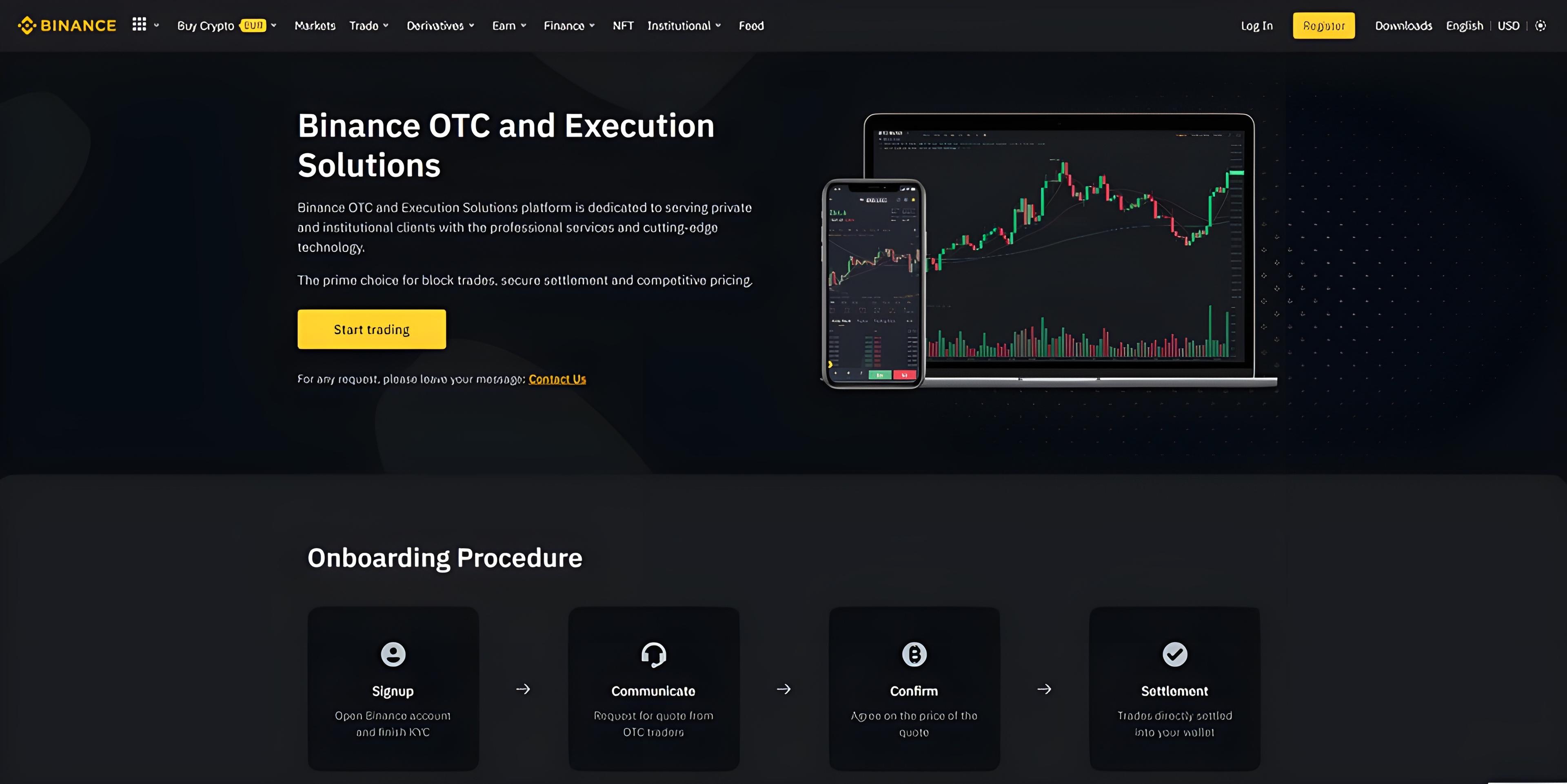
    Binance OTC: Best for Liquidity & Large Trades

    Binance OTC enables direct desk execution for large trades with minimal impact on the public market. Operating within the Binance exchange, it allows traders to execute trades through a Request for Quote (RFQ) system.

    Its main advantage is deep liquidity, sourced across internal networks and connected OTC platforms, which supports high-value transactions for individual investors and financial institutions with fixed price quotes.

    It also provides robust trading services for financial institutions and high-net-worth individuals handling over-the-counter trading. Binance OTC typically avoids standard trading fees, relying on spreads, making it an attractive option for high-volume investing. All activity runs within one trading platform, without needing an external broker or separate brokerage.

    Core Features

    Internal matching engine across OTC platforms for controlled tradesConsistent deep liquidity for high-volume large tradesQuote-based pricing to lock in price before you execute tradesIntegrated with the Binance exchange and the core trading platformOptimized for large transactions with controlled risk

    binance-logo-6219389_1280binance-logo-6219389_1280

    Pros and Cons

    ProsConsStrong liquidity across connected exchangesLarge minimum size for OTC dealsReduced slippage Not suitable for small investorsEfficient handling of large tradesAccess varies by regionFully integrated within one platform

    2. Coinbase Prime: Best for US Institutions
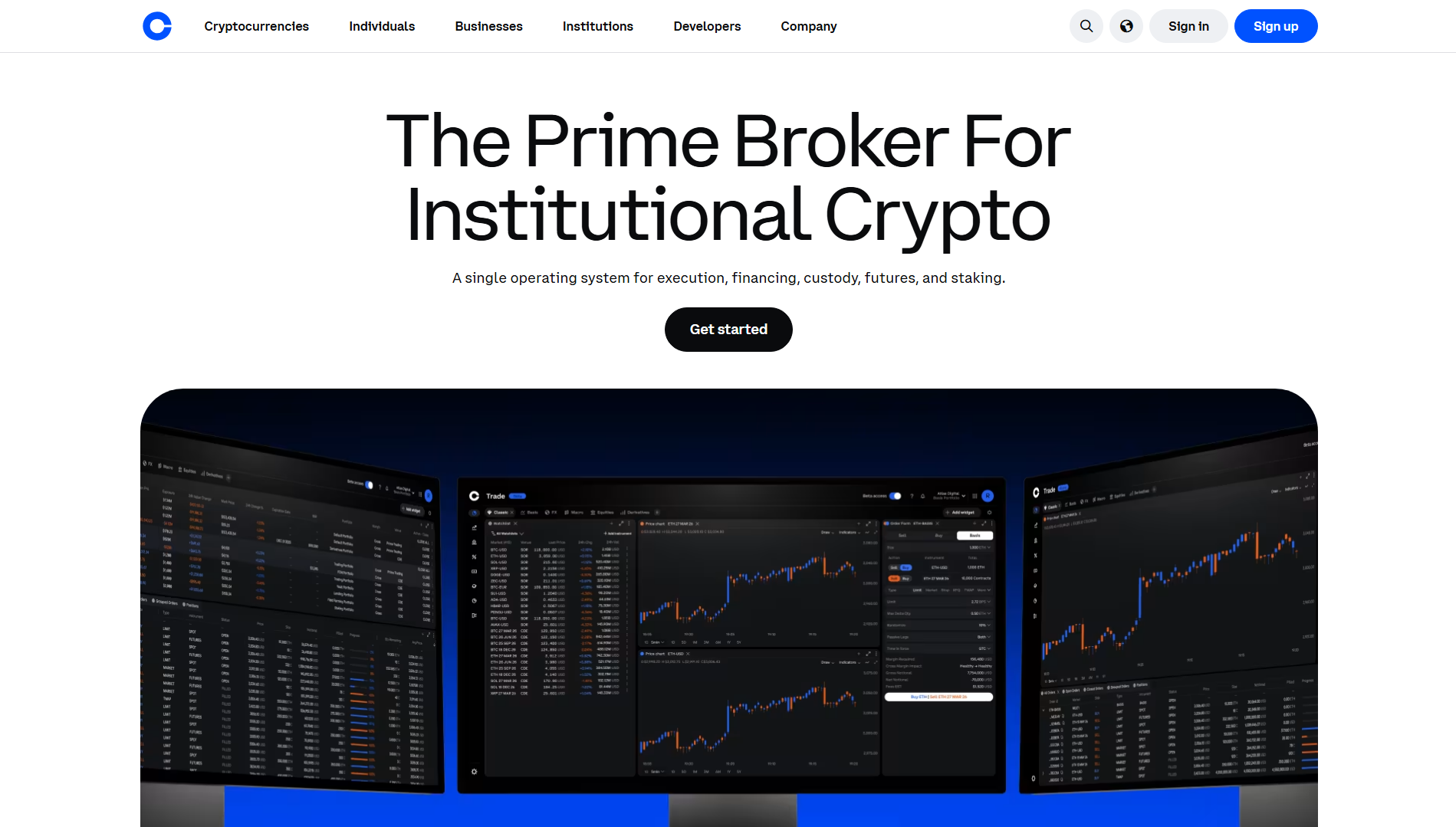
    Coinbase Prime: Best for US InstitutionsCoinbase Prime: Best for US Institutions

    Coinbase Prime OTC operates as a full-service OTC trading platform within a regulated prime brokerage environment, built around the needs of US institutions. It combines execution, custody, and capital management inside a single platform, making it suitable for financial institutions and companies handling large-scale investments.

    What defines Coinbase Prime OTC is its multi-venue routing system. It connects to multiple OTC exchanges, liquidity providers, and OTC exchanges, including the Coinbase crypto exchange, allowing financial institutions and traders to execute trades across fragmented market conditions while still getting competitive price quotes.

    Core Features

    Unified brokerage combining custody, execution, and financingBuilt for US institutions, and vip clientsSecure storage with cold storage and advanced security controlsIntegrated trading platform for managing assets within one account

    coinbasecoinbase

    Pros and Cons 

    ProsConsStrong infrastructure for US institutionsLimited availability outside supported regionsAccess to Coinbase exchange and external exchangesHigh minimum trade requirementsIntegrated custody with cold storageInterface can feel complexUnified account for managing investments

    Interface can feel complex

    May include extra fees depending on usage

    3. Kraken: Best for Transparent Pricing & Cost Control
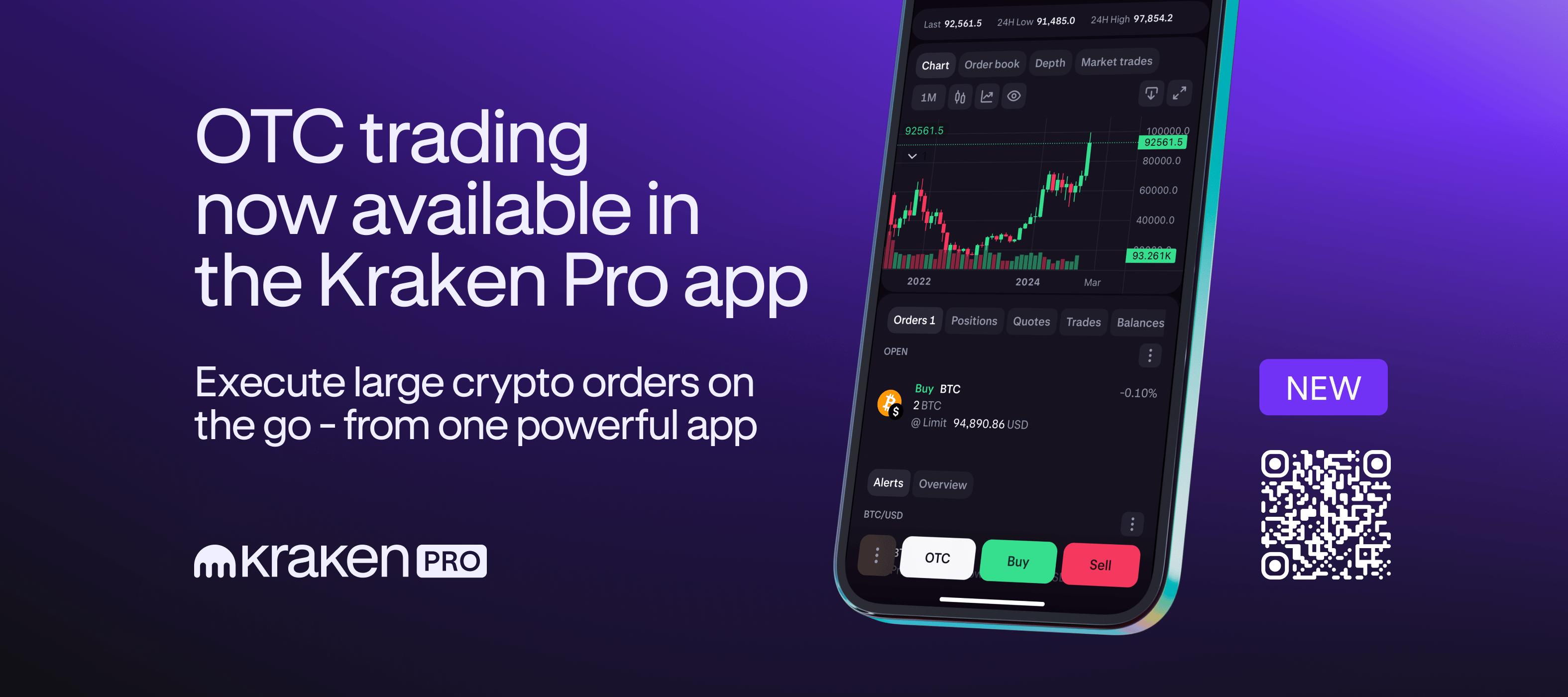
    Kraken: Best for Transparent Pricing & Cost ControlKraken: Best for Transparent Pricing & Cost Control

    Kraken OTC is built around direct negotiation and personalized execution for high-value transactions. Traders interact with a dedicated desk to execute trades privately, reducing exposure to sudden market reactions. Kraken provides negotiated price quotes with tighter spreads, which helps traders avoid slippage when moving significant assets. This is an example of how private execution improves control in volatile conditions.

    This gives traders more control over how transactions are carried out, especially when managing sensitive price levels. Once a trade is confirmed, settlement can be done using multiple options.

    Core Features

    Negotiated price quotes with tighter spreadsAccess to liquidity across supported coins Supports fiat and stablecoin transactionsBuilt for vip clients and professional tradersPrivate execution outside standard crypto trading

    KrakenKraken

    Pros and Cons

    ProsConsPersonalized support for large transactionsRequires onboarding for accessTighter spreads and better price controlLower liquidity than the top OTC platformsStrong privacy during executionFewer advanced derivative optionsTransparent trading feesHigh minimum trade requirements

    4. Crypto.com: Best for Integrated Ecosystem Access
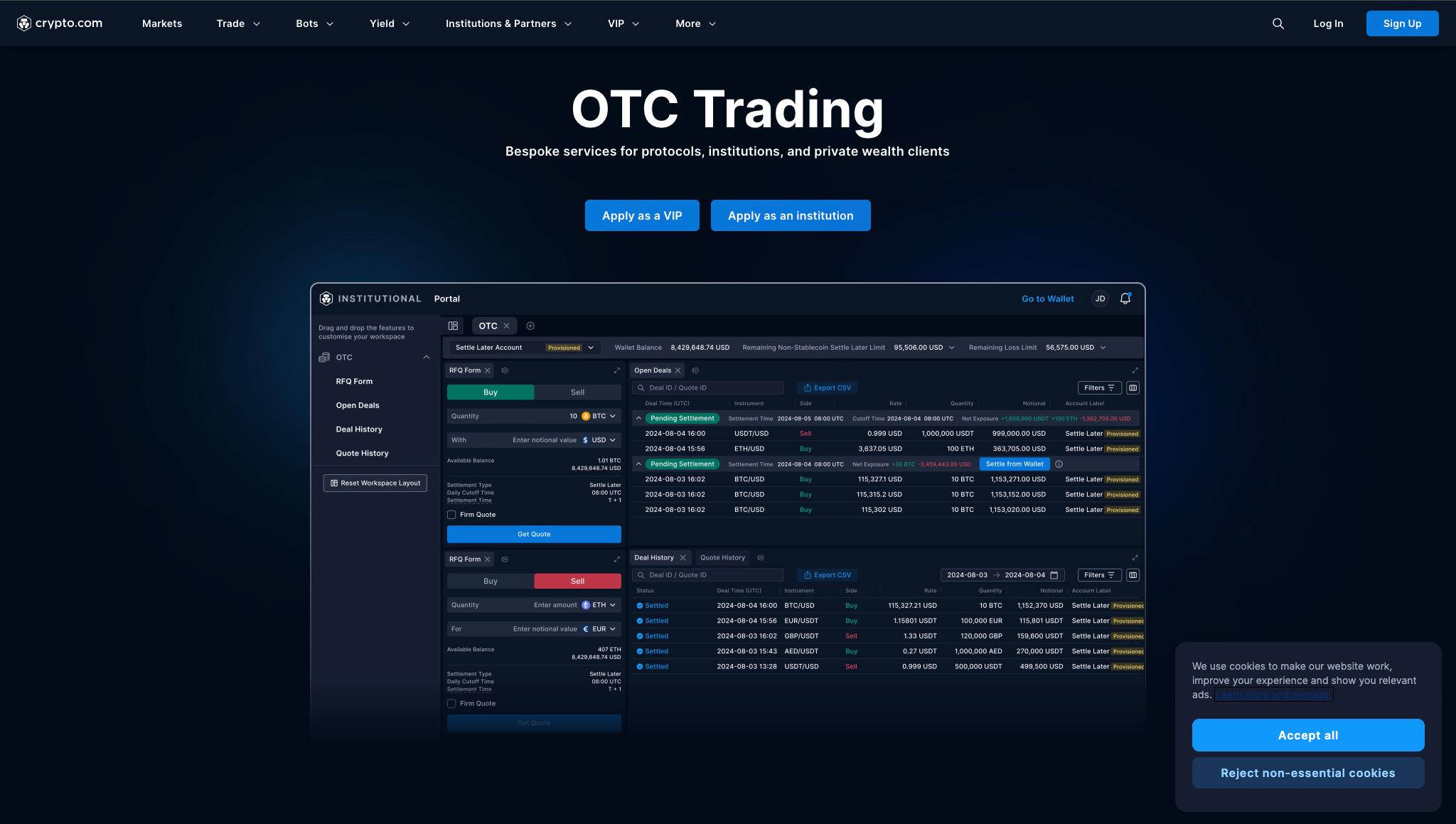
    Crypto.com: Best for Integrated Ecosystem AccessCrypto.com: Best for Integrated Ecosystem Access

    Crypto.com OTC connects execution with a broader ecosystem that includes payments, staking, and asset management. It allows OTC traders to execute trades privately while keeping funds within the Crypto.com exchange, reducing the need to move assets across multiple exchanges. 

    Instead of separating execution from usage, Crypto.com links transactions directly to other services like spending, yield generation, and large-scale portfolio management. Execution is handled through direct negotiation, giving traders control over price and timing. While liquidity may not match the largest OTC platforms, it is sufficient for most structured investing needs, especially for users already active within the ecosystem.

    Core Features

    Private trading within the Crypto.com exchangeIntegrated platform connecting trading, payments, and stakingDirect settlement within a single accountBuilt for traders, investors, and vip clientsAccess to ecosystem tools for managing investments

    crypto.com_crypto.com_

    Pros and Cons 

    ProsConsStrong ecosystem integrationSpread-based pricing may reduce profit clarityEasy movement of assets within one platformFewer advanced derivative optionsSimplifies investing by combining trading and asset usage, and is useful for managing multiple investmentsMay not suit all investorsIntegrated with Crypto.com exchange for seamless transactionsLimited transparency 

    5. Bybit OTC: Best for High Volume Transactions

    Bybit OTC: Best for High Volume TransactionsBybit OTC: Best for High Volume Transactions

    Bybit OTC is built for handling high volume transactions with speed, price certainty, and multi-product execution. It allows traders to execute trades at a fixed price, avoiding slippage that occurs in standard crypto trading.

    A key feature is its Request for Quote (RFQ) system, which supports multi-leg execution of trades across spot and derivatives. This makes it practical for advanced traders managing complex trading decisions within a single platform, a critical subject for advanced traders. Execution is private, helping reduce exposure to market manipulation across OTC platforms in volatile markets and keeping large transactions off public exchanges.

    Core Features

    Request for Quote (RFQ) system for the precise execution of trade Supports multi-leg transactions across spot and derivativesFixed price execution to reduce slippageIntegrated with the Bybit exchange and core trading platformAccess to key assets like BTC, ETH, and stablecoinsPre-market trading for select assets

    bybit-logo-whitebybit-logo-white

    Pros and Cons 

    Pros ConsFixed price reduces slippage in large transactionsLimited assets compared to full crypto exchange listingsStrong liquidity for core pairsNot available in some regionsSupports advanced derivatives strategiesRequires higher-tier account accessPrivate execution improves securitySpread may affect overall profit

    6. OKX: Best for Institutional Block Trades & Pre-Market Access
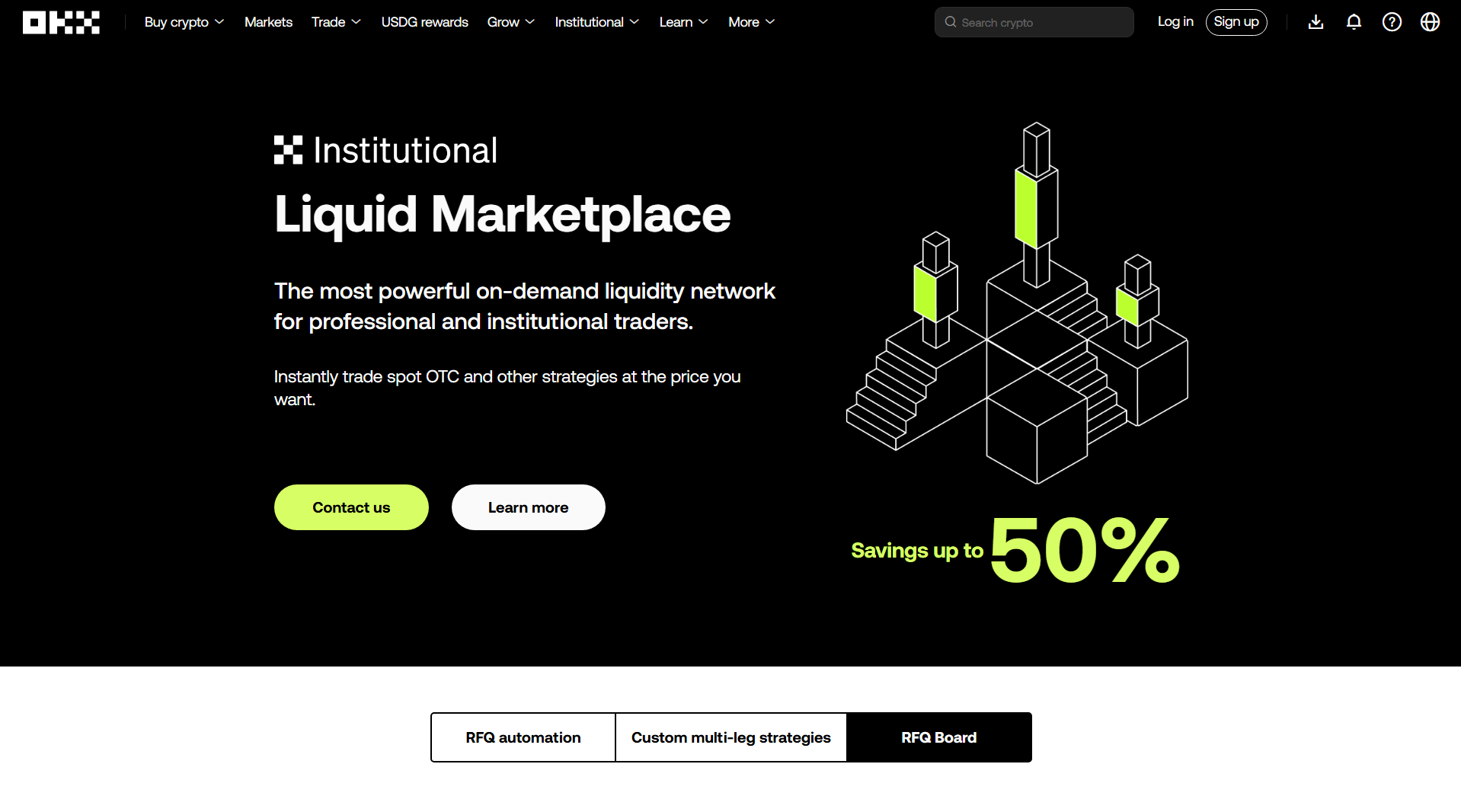
    OKX: Best for Institutional Block Trades & Pre-Market AccessOKX: Best for Institutional Block Trades & Pre-Market Access

    OKX OTC is best for institutional block trades that require privacy, stable pricing, and access to advanced trading products. It allows traders to execute trades through an automated Request for Quote system, locking in a fixed price before completing high-value transactions. 

    What sets OKX apart is its Liquid Marketplace, which connects users to a broad liquidity network across spot, futures spreads, and options. Within the OKX exchange, users can access pre-market trading, allowing traders to position into selected coins before they are listed on the main crypto exchange.

    Core Features 

    Automated Request for Quote system for controlled trades. Access to deep liquidity through OKX Liquid MarketplaceSupports spot, futures spreads, and derivativesPre-market trading for select assetsIntegrated trading platform for managing transactions

    0710421007104210

    Pros and Cons 

    Pros Cons Strong liquidity for block transactionsCertain advanced OTC features, are unavailable in several jurisdictions, including the USA, Canada, and UK (for retail) due to local regulationsAccess to pre-market assetsNot suitable for small investorsSupports advanced derivatives strategiesMay include extra fees depending on usageIntegrated within OKX exchange

    7. Nexo OTC: Best for White-Glove Brokerage & Asset-Backed Trading

    Nexo OTC: Best for White-Glove Brokerage & Asset-Backed TradingNexo OTC: Best for White-Glove Brokerage & Asset-Backed Trading

    Nexo OTC focuses on personalized execution combined with asset-backed capital flexibility. A key difference is that its brokerage-style approach is that investors and high net worth individuals receive dedicated support, making complex transactions easier to manage without relying on automated systems. 

    In Nexo, users can access credit lines backed by their assets, reducing the need to fully sell positions during changing market shifts. This adds flexibility to investing strategies while helping manage risk. The platform aggregates liquidity from multiple sources, supporting smooth execution across major crypto exchange pairs, all within one account and without an external broker or brokerage.

    Core Features

    Access to aggregated liquidity across multiple otc platforms Personalized support for vip clients and large investorsAsset-backed credit lines for flexible investingSupports major assets and stablecoin transactions

    Pros and Cons

    Pros ConsPersonalized support for large transactionsHigh minimum trade size (around $100,000)Aggregated liquidity for smooth executionCentralized custody increases riskSuitable for high net worth individualsNot available in all regionsFlexible capital use without fully selling assets

    What Is an OTC Trading Platform?

    An OTC trading platform is a private system for buying and selling digital assets outside the public order book. Unlike traditional exchanges where orders are matched automatically, OTC platforms connect buyers and sellers directly, allowing large transactions to occur without affecting market prices.

    Who Should Use an OTC Trading Platform?

    OTC trading platforms are tailored for users who handle large volumes or require specialized trading conditions. Typical users include:

    Institutional investors: Hedge funds and family offices executing high-value crypto trades.High-Net-Worth individuals (HNWIs): Traders moving significant capital who want discreet execution and minimal market impact.Corporate treasuries: Companies converting large fiat reserves into crypto or managing corporate crypto holdings.VIP clients: Individuals or entities requiring personalized support, tailored pricing, and direct access to liquidity.Professional traders: Those implementing complex strategies like multi-leg trades, derivatives, or large-block orders.Financial institutions: Banks or brokers facilitating large OTC transactions on behalf of clients or internal portfolios.

    OTC Trading Vs. Crypto Exchange Trading

    OTC trading and crypto exchange trading differ significantly in execution, trade size, and market impact. Unlike exchange-based trading, the OTC model handles large orders directly between counterparties, often through Request-for-Quote (RFQ) systems, providing privacy and minimal market impact. It is tailored for high-net-worth individuals and VIP clients moving substantial assets, offering bespoke spreads and personalized execution.

    Crypto exchange trading, on the other hand, happens on public order books of platforms like Binance, Coinbase, and OKX, where every order is visible to the market. Prices are determined by supply and demand, and large orders can cause slippage, affecting the trade price.

    Exchanges are more suitable for retail and professional traders executing smaller or frequent transactions, providing instant trade execution, standardized fees, and broad asset access across multiple markets.

    How Does an OTC Trading Platform Work?

    An OTC trading platform connects buyers and sellers directly, bypassing public order books. Traders request a quote using a Request-for-Quote (RFQ) system to execute a trade, where assets are traded at a fixed price. Once the price is agreed upon, the trade is settled either immediately or within a short, pre-arranged window.

    These platforms often aggregate assets from multiple sources, including OTC exchanges, to accommodate high-volume trades without slippage. Users benefit from personalized support, ensuring privacy and discretion for large transactions. Platforms like Binance, Coinbase, Kraken, Bybit, OKX, and Nexo integrate custody, settlement, and sometimes pre-market trading to optimize execution for high-net-worth individuals.

    Benefits of OTC Trading

    Deep liquidity: Enables large trades without causing slippage or affecting market prices.Price certainty: Traders receive fixed quotes before execution using Request-for-Quote (RFQ).Privacy and discretion: Trades occur off public order books, protecting trading strategies.Dedicated support: Personalized service for high-net-worth individuals and VIP clients.Flexible settlement: Options to settle instantly or within a short agreed timeframe.Wide asset access: Supports crypto, stablecoins, and major fiat currencies across platforms like Binance exchange, Coinbase exchange, Kraken exchange, OKX exchange, Bybit, Crypto.com, and Nexo.Lower market impact: Prevents large orders from causing sudden price swings on traditional exchanges, which is the key benefit for large trades.

    Risks of OTC Trading

    High minimum trades: Most OTC platforms require large transaction amounts, often $50,000 or higher, limiting access for smaller traders.Counterparty risk: Trades rely on the platform or desk for execution, meaning users must trust the security and risk if execution fails.Reduced transparency: Pricing and spreads may not always be fully visible compared to public exchanges.Geographic restrictions: Certain features may be unavailable in specific countries.Slower execution for complex trades: Multi-leg or bespoke trades may take longer than standard exchange orders.Centralized custody risks: Some OTC platforms hold assets in custody, so users do not control private keys, which introduces potential security exposure.

    How to Choose the Right OTC Trading Platform

    1. Security Standards and Regulatory Compliance

    When selecting an OTC trading platform,  traders should prioritize strong security measures, including institutional-grade custody, encryption, and cold storage. Platforms with clear regulatory compliance give traders and high-net-worth individuals confidence that assets are protected against fraud or manipulation. Ensure that the crypto exchange or OTC platform provides verification, KYC, and transparent risk management policies.

    2. Regional Availability

    Some OTC platforms restrict services in certain countries. Check whether the platform and its supported assets are accessible in your location. Availability matters for institutional clients who need seamless access to crypto exchanges and OTC services for large trades without geographic limitations.

    3. Fees and Spreads

    Even if a platform advertises zero trading fees, most OTC trading services incorporate costs into spreads. Compare fees and brokerage charges across platforms. Lower spreads and transparent price execution benefit investors, traders, and financial institutions handling large-volume transactions.

    4. Trade Size Limits

    Each OTC trading platform sets minimum trade sizes. For high-volume trades, ensure the platform supports your intended trade size. High net worth individuals, VIP clients, and large institutions often require the ability to execute trades worth hundreds of thousands or millions without market disruption.

    5. Liquidity Depth

    Liquidity determines how easily assets can be bought or sold without affecting the market price. Platforms with deep liquidity, including crypto exchanges with OTC services, allow large trades to settle efficiently. Check that the OTC platform can match orders across multiple venues, ensuring minimal market manipulation and better profit potential.

    6. Dedicated OTC Desk

    A dedicated OTC desk offers personalized support for institutional investors, traders, and high-volume clients. Features include RFQ (Request for Quote) execution, cold storage, direct negotiation, and secure settlement. This ensures discretion, faster execution, and a professional environment for managing assets, derivatives, or crypto portfolios.

    Conclusion

    The right OTC trading platform for you depends on your trade size, liquidity needs, and execution style. While crypto exchange platforms suit smaller trades, OTC trading supports large transactions with better price control. Platforms like Binance exchange, Coinbase exchange, OKX exchange, Kraken exchange, Bybit, Crypto.com exchange, and Nexo each serve different traders and investors. Access to professional otc services plays a key role in efficient execution.

    FAQs

    What’s the best OTC crypto platform in 2026?

    There’s no single best OTC trading platform. Binance exchange leads in liquidity, Coinbase exchange suits US institutions, while OKX exchange, Kraken exchange, Bybit, Crypto.com exchange, and Nexo each serve different traders and investors based on trading needs.

    What’s the minimum amount for OTC crypto trading?

    Most OTC platforms require between $50,000 and $100,000 per trade, though some otc trading services set higher limits depending on liquidity and assets involved.

    Is it safe to trade in OTC markets?

    Yes, if you use a reputable platform with strong security, proper compliance, and clear risk management. However, counterparty risk still exists since trades are handled privately.

    What’s the difference between OTC and exchange trading?

    OTC trading allows traders to execute trades privately with fixed price quotes, while exchange trading happens on public order books where price is influenced by market demand.

    How are OTC crypto trades taxed?

    OTC transactions are taxed similarly to regular crypto trades. Investors may pay capital gains tax based on profit, depending on their country’s regulations.

    How do OTC desks make money?

    Most OTC desks earn through spreads instead of direct trading fees, sometimes including additional fees or extra fees within the quoted price.



    Source link

    Plasma (XPL) Plunges 26.7% in 24 Hours: On-Chain Data Reveals Who Was Selling and Why

    0
    Plasma (XPL) Plunges 26.7% in 24 Hours: On-Chain Data Reveals Who Was Selling and Why


    Plasma (XPL) fell approximately 26.7% within 24 hours on April 3, following a nearly 30% surge in the previous week. The drop occurred amidst a spike in trading volume, reaching over 110% of its market capitalization, as significant capital was deployed and withdrawn within a short period on the Hyperliquid derivatives platform. On-chain data indicates that this volatility may be linked to coordinated activity among several large wallets, combined with a cascade of leveraged position liquidations.

    Plasma (XPL) is a Layer 1 blockchain focused on stablecoin payments, supporting EVM and a sidechain design connected to Bitcoin.

    What Just Happened? 

    XPL, with a market capitalization of approximately $120 million prior to the volatility, recorded a relatively steady uptrend from late March, with the price rising from around $0.09 to nearly $0.16 before reversing to the $0.114 zone within 24 hours.

    XPL Price Chart (1H)

    XPL Price Chart (1H). Source: TradingView

    Notably, this upward and downward momentum coincided with a sudden surge in trading volume, indicating an unusual level of activity compared to the token’s typical liquidity conditions.

    The price structure exhibited a short-term pump accompanied by heavy volume, followed by a near-vertical dump—a pattern often observed when liquidity is rapidly withdrawn from the market. This model typically reflects a short-term imbalance between supply and demand, especially when order book liquidity is insufficient to absorb large-scale trades.

    Signs of Coordinated Trading Activity 

    On-chain data indicate that capital flows related to XPL were not distributed, but were concentrated in a short timeframe with large volume. According to Arkham, seven accounts deposited a total of approximately $1.85 million into Hyperliquid and may have used leveraged long positions to drive up the price of XPL.

    Subsequently, these accounts executed withdrawals valued between $390,000 and $890,000 within less than 5 minutes. The total outflows are approximately $4.63 million USDC, representing an estimated profit of about $2.78 million.

    The fact that capital was deployed and withdrawn in distinct intervals suggests these trades may have been executed according to a deliberate strategy, where the use of leverage likely amplified short-term price fluctuations.

    Key Drivers Behind the XPL Drop 

    Existing data show that the selling pressure during XPL’s decline did not originate from a single source but was a combination of multiple market participant groups, including large-scale trading wallets, liquidated leveraged positions, and late-entry capital.

    A group of large-scale wallets, which deposited a total of approximately $1.85 million, likely acted as the primary sell-side pressure during the price reversal phase after deploying and quickly taking profits.

    According to expert analysis, this strategy may have involved establishing large-scale long positions using the TWAP method, with a total notional value of up to approximately $10.6 million at around 8x leverage. After withdrawing a portion of the profits, the remaining positions were left on the exchange.

    Data from Hyperliquid recorded multiple backstop liquidation events at the same time, with a portion of the positions sold directly into the order book while the remainder was processed through the backstop mechanism. According to community estimates, this process resulted in a loss of approximately $400,000 for the Hyperliquid Liquidity Provider (HLP) because the wallet group fell into bad debt following liquidation.

    Simultaneously, leveraged positions in the market were liquidated en masse as the price dropped, creating a liquidation cascade and accelerating the decline. Meanwhile, those who bought in during the earlier price surge may have become the liquidity source for sell orders, particularly given XPL’s limited liquidity.

    Announcement from iliensinc in DiscordAnnouncement from iliensinc in Discord

    Announcement from iliensinc in Discord. Source: Hyperliquid

    Following the incident, Hyperliquid strengthened risk controls, reducing the maximum leverage for certain tokens to mitigate similar risks in the future, according to a Discord announcement by Iliensinc, co-founder and CTO of Hyperliquid Labs.

    Conclusion 

    XPL’s 26.7% drop in less than 24 hours, following a nearly 30% gain, reflects the high sensitivity of mid-cap altcoins to rapid changes in capital flows and leveraged position structures. The combination of concentrated capital, leverage liquidation cascades, and the clustered deployment and withdrawal of funds by large wallets created intense short-term volatility. Concurrently, Hyperliquid has enhanced risk management by reducing maximum leverage for several tokens to prevent similar risks in the future.


    Source link

    Bitcoin Poker No Deposit Bonus 2026: BC Poker Offers $5 Free With No Cashout Cap, BC Shield Anti-Cheat Protection, and Instant Crypto Withdrawals | Web3Wire

    0
    Bitcoin Poker No Deposit Bonus 2026: BC Poker Offers  Free With No Cashout Cap, BC Shield Anti-Cheat Protection, and Instant Crypto Withdrawals | Web3Wire


    Miami, FL, April 05, 2026 (GLOBE NEWSWIRE) — Most bitcoin poker promotions available in 2026 look attractive on the surface, but players frequently run into strict wagering conditions, hidden withdrawal caps, or payout delays that undermine the offer entirely. BC Poker has built its bitcoin poker no deposit bonus differently, providing $5 free on signup with zero cashout ceiling and instant cryptocurrency withdrawals that process in minutes rather than days.

    >> Claim Your $5 Bitcoin Poker No Deposit Bonus at BC Poker, No Code Required

    In a crypto poker market where trust remains a central concern, BC Poker operates under an Anjouan Gaming License and is backed by the BC.GAME Group, one of the most established names in cryptocurrency gaming. This adds meaningful credibility to its bitcoin poker no deposit bonus, particularly as players compare different crypto poker no deposit bonus options and no deposit bonus poker platforms that vary widely in terms, payout speed, and game fairness.

    BC Poker Platform Overview: Key Operational Details

    FeatureDetailsWebsiteBC Poker Official WebsiteOperatorBC.GAME GroupLicenseAnjouan Gaming LicenseWithdrawal SpeedInstant (cryptocurrency)Cashout CapNone (No Deposit Bonus)No Deposit Bonus$5 Free on RegistrationPoker FormatsHold’em, Omaha, Short Deck (6+), Spin & Go, Sit & Go, Cash TablesSecurityBC Shield (6-Layer Anti-Cheat System)Supported DevicesWeb, Android, iOS

    BC Poker is consistently referenced in discussions around the bitcoin poker no deposit bonus because of one feature that most competitors cannot match: there is no cashout cap. Unlike the majority of best no deposit bonus poker sites, which limit withdrawals from free bonuses to $20, $50, or $100 regardless of actual winnings, BC Poker allows players to withdraw every dollar they earn from the no deposit bonus.

    The bitcoin poker no deposit bonus available here is structured to provide a genuine entry point for players who want to test real money poker tables without financial risk. Compared to many online poker no deposit bonus offers, this format prioritizes transparency and unlimited upside over large but heavily restricted promotional credits.

    Bonus Structure and Reward System

    The reward system is divided into stages, starting with a free signup bonus no deposit poker offer and expanding into deposit bonuses, daily missions, and a comprehensive VIP rakeback system. This layered structure reflects how crypto poker no deposit bonus platforms are evolving in 2026.

    1. Entry-Level: $5 Bitcoin Poker No Deposit Bonus

    The initial bitcoin poker no deposit bonus provides $5 in real money poker funds immediately on registration. No promo code is required. Players who also download the BC Poker mobile app receive an additional $5, bringing the total free bonus to $10.

    This no deposit poker bonus model allows players to sit at real cash tables, play actual hands of Texas Hold’em, Omaha, or Short Deck, and withdraw their winnings without any cap.

    This format stands apart from the typical free no deposit poker rooms, where smaller rewards are paired with withdrawal ceilings that cancel out skilled play. Many experienced poker players now specifically seek this type of bitcoin poker no deposit bonus structure because it rewards actual skill at the table rather than punishing winners with arbitrary cashout limits.

    2. First Deposit Bonus: 10% Up to $200

    After using the no deposit poker bonus, players can access a first deposit bonus of 10% up to $200. This provides additional bankroll support for players transitioning from the free bonus into regular real money poker play.

    >> See the Full Breakdown of BC Poker’s No Deposit + First Deposit Bonus Package

    This transition from a no deposit sign up bonus to a deposit bonus is common among the best crypto poker sites with no deposit bonus systems. It reflects a broader trend where platforms use a poker no deposit entry to introduce long-term value through ongoing rewards.

    3. Daily Missions, Leaderboards, and Lucky Drop

    BC Poker maintains player engagement through recurring promotions, including:

    Daily Poker Leaderboard competitionsNewcomer Missions with structured rewardsLucky Drop prizes (random cash or ticket prizes at specific tables)Tournament rewards based on event performance

    These offers remain available after the best bitcoin poker no deposit bonus has been used, providing ongoing value beyond the initial no deposit bonus online poker experience.

    4. VIP Rakeback: 18 Levels, Up to 50% Back

    The VIP loyalty system is where BC Poker separates itself from most no deposit poker platforms. The program features 18 progression levels, each unlocking higher rakeback percentages that return a portion of every pot’s rake directly to the player.

    Compared to a one-time free bonus no deposit poker offer, this system extends the value of the crypto poker bonus over weeks and months of play. Players upgrade by accumulating VP (Volume Points) within set time periods, and maintaining the level requires continued play. Failure to meet the threshold results in a single-level downgrade rather than a full reset.

    >> Start at Level 1 and Build Your Rakeback, Claim $5 Free to Begin

    Why Interest in No Deposit Poker Bonuses Is Increasing

    The growing demand for the best bitcoin poker no deposit bonus reflects a shift in what players prioritize when choosing a platform. Large promotional amounts no longer attract experienced players if the conditions make those bonuses impractical to convert. Instead, they prefer a crypto poker no deposit bonus that is transparent, skill-based, and free of hidden caps.

    Better Risk Control

    Poker players want to evaluate a platform’s table quality, player pool, and software before committing funds. A free signup bonus no deposit poker offer allows them to sit at real tables without financial exposure, which reduces the risk of depositing at a platform that does not meet expectations.

    Withdrawal Speed as a Decision Factor

    A no deposit online poker bonus is often used as a testing tool. Players check how quickly winnings can be processed and whether the platform actually delivers on instant withdrawal promises before they deposit real money. BC Poker’s instant crypto withdrawals make this test straightforward: winnings arrive in the player’s wallet within minutes.

    Fairness Verification

    Unlike traditional online poker rooms, where players must trust that the platform is not manipulating card dealing, BC Poker provides provably fair verification for every hand dealt. This cryptographic proof is part of the BC Shield system and allows any player to independently verify that the dealing was untampered with. For players evaluating a bitcoin poker no deposit bonus, the ability to verify fairness before depositing is a significant trust signal.

    Simpler Onboarding

    Most of the best crypto no deposit bonus poker sites now offer faster registration and fewer steps to get started. BC Poker supports 14 languages and provides full-featured mobile apps on both iOS and Android, making the platform accessible to poker players globally without complex onboarding.

    How a Bitcoin Poker No Deposit Bonus Works

    Understanding the mechanics of the best bitcoin poker no deposit bonus helps players extract maximum value.

    Activation

    BC Poker’s crypto poker no deposit bonus activates automatically on registration. No code entry is required. The $5 free bonus appears in the player’s balance and can be used immediately at any cash table, Sit & Go, or Spin & Go format. An additional $5 is unlocked when the player downloads the BC Poker app.

    Game Contribution

    All poker formats contribute equally to bonus requirements. Unlike casino-focused no deposit bonuses where slot contribution differs from table game contribution, BC Poker’s bonus applies across all available poker formats: Texas Hold’em, Omaha, Short Deck (6+), Spin & Go, Sit & Go, and cash tables.

    Withdrawal: No Cap, No Delay

    This is where BC Poker’s bitcoin poker no deposit bonus diverges most from industry norms. There is no maximum cashout on winnings generated from the $5 free bonus. A player who runs the free $5 into $500 through skilled play at the tables can withdraw the entire amount instantly via USDT, USDC, BTC, ETH, or BC token. The minimum deposit on the platform is $5 USDT, and withdrawals process at blockchain speed with only standard gas fees.

    BC Shield: Why Anti-Cheat Matters for No Deposit Poker

    The integrity of the poker tables is a concern that goes beyond bonus structure. For players testing a platform through a bitcoin poker no deposit bonus, knowing the games are protected against cheating is essential.

    BC Shield is a six-layer anti-cheat system built specifically for online poker:

    Provably Fair System ensures the integrity and immutability of card dealing through cryptographic verificationAI Behavior Detection identifies suspicious patterns such as the use of assistance tools or AI-powered playLiveness Verification uses facial recognition at seat entry to confirm every player is a real humanWormhole Detection prevents remote control or unauthorized device linkage during gameplayEmulator Detection blocks gameplay through emulators or virtual environmentsHUD Restriction prohibits third-party data collection or tracking software

    This level of protection is uncommon among no deposit poker platforms and addresses the primary concern many players have about crypto poker: whether the tables are fair and free from bots.

    >> Play at BC Shield-Protected Tables, $5 Free No Deposit Bonus

    Insurance Option: Loss Protection on Big Pots

    BC Poker includes an optional insurance feature that provides loss protection during significant pots. This mechanism allows players to hedge against bad beats in high-stakes situations, reducing variance while maintaining the skill-based nature of the game.

    This feature is available to all players, including those using the bitcoin poker no deposit bonus, and adds another layer of risk management that traditional poker platforms do not offer.

    Mobile Experience: Full-Featured Poker on iOS and Android

    BC Poker’s mobile apps deliver the complete poker experience on both iOS and Android devices. Features include multi-table support, full access to all poker formats, and the same BC Shield protection available on the web version.

    For players who claim the bitcoin poker no deposit bonus on desktop and want to continue playing on mobile, the cross-device experience is seamless. The additional $5 app download bonus also incentivizes mobile play.

    Deposits, Withdrawals, and Supported Currencies

    CategoryDetailsCrypto DepositsUSDT, USDC, BTC, ETH, BCSupported FiatPHP, INR, BRL, IDR, JPY, KRW, MXN, MYR, NGN, RUB, THB, UAH, VNDMinimum Deposit$5 USDTWithdrawal TimeInstantFeesStandard gas fees only

    The broad currency support and instant withdrawal processing make BC Poker one of the most accessible bitcoin poker no deposit bonus platforms currently available.

    Common Issues at Other No Deposit Poker Sites

    Despite the growing number of crypto poker no deposit bonus options, many platforms still include structural problems:

    Cashout caps that limit withdrawals from free bonus winnings to $20 or $50High wagering requirements designed for casino play rather than pokerBot and collusion activity on unprotected tablesSlow withdrawal processing through fiat banking railsHUD users gaining unfair advantages over recreational players

    BC Poker’s combination of no cashout cap, BC Shield, and instant crypto payouts directly addresses each of these common pain points.

    Industry Trends in Crypto Poker: 2026

    The structure of the top bitcoin poker no deposit bonus is evolving as platforms respond to more informed and experienced players. The focus has shifted toward skill-based rewards and operational transparency.

    No-cap bonus models: Smaller no deposit bonuses with no withdrawal ceiling are replacing larger bonuses with heavy restrictions, rewarding skilled players who can build a bankroll from free credits.

    Anti-cheat as a differentiator: Platforms investing in AI detection, liveness verification, and HUD restriction are attracting serious poker players who previously avoided crypto poker due to fairness concerns.

    Rakeback over flat bonuses: VIP systems with tiered rakeback are becoming more valuable than one-time deposit match bonuses, particularly for regular players who generate consistent volume.

    Mobile-first poker: Full-featured mobile apps with multi-table support are now expected rather than optional, as the majority of new crypto poker players access platforms primarily through smartphones.

    These trends show how no deposit bonus crypto poker platforms are adapting to long-term player expectations and building sustainable ecosystems around skill-based play.

    Responsible Gambling Notice

    A bitcoin poker no deposit bonus should be used as a way to test and enjoy real money poker gameplay, not as a guaranteed source of income. Even when playing with a free bonus no deposit poker offer, responsible play is essential.

    Players are encouraged to set limits on both time and spending before moving beyond a no deposit poker bonus. It is important to avoid chasing losses or increasing stakes in an attempt to recover them.

    BC Poker provides responsible gambling tools, including session reminders, deposit limits, and self-exclusion options, all accessible through 24/7 live chat support. Players who feel gambling is affecting their daily life should use these tools immediately.

    Conclusion

    The bitcoin poker no deposit bonus landscape in 2026 has shifted toward platforms that reward skill, protect table integrity, and process payouts without hidden restrictions. BC Poker’s $5 free no deposit bonus with no cashout cap, instant crypto withdrawals, BC Shield anti-cheat protection, and 18-level VIP rakeback system provides the most complete entry point currently available in the crypto poker market.

    Rather than relying on large but restrictive promotions, BC Poker emphasizes fairness, speed, and transparency. As demand for no deposit online poker bonus options continues to grow, platforms that combine provably fair dealing with genuine no-cap bonuses are positioned to lead.

    The increasing popularity of the crypto poker bonus model highlights a broader change in how serious poker players approach the online game: favoring verified fairness, instant payouts, and clear conditions over inflated promotional numbers.

    >> Register Free at BC Poker and Play Real Money Poker With $5, No Deposit Required

    About BC Poker

    BC Poker is a cryptocurrency poker platform launched in 2025 by BC.GAME Group. The platform features the BC Shield six-layer anti-cheat system, instant cryptocurrency withdrawals, provably fair card dealing, and support for multiple poker formats, including Texas Hold’em, Omaha, Short Deck (6+), Spin & Go, Sit & Go, and cash tables. BC Poker operates under an Anjouan Gaming License and supports players across 14 languages on web, iOS, and Android.

    Contact Information:

    About Web3Wire Web3Wire – Information, news, press releases, events and research articles about Web3, Metaverse, Blockchain, Artificial Intelligence, Cryptocurrencies, Decentralized Finance, NFTs and Gaming. Visit Web3Wire for Web3 News and Events, Block3Wire for the latest Blockchain news and Meta3Wire to stay updated with Metaverse News.


    Source link

    Stephen King And Clive Barker Got A Creepy (But Hilarious) Movie Adaptation You Forgot About – SlashFilm

      0
      Stephen King And Clive Barker Got A Creepy (But Hilarious) Movie Adaptation You Forgot About – SlashFilm


      We may receive a commission on purchases made from links.

      It’s a little baffling that Mick Garris’ 1997 TV movie “Quicksilver Highway” is as obscure as it is, given its imprimatur. The movie was, after all, a very rare team-up between star authors Stephen King and Clive Barker, two of the horror genre’s most prominent figures, and each responsible for miniature media empires unto themselves. 

      King was always the superstar, of course, and films based on his work are plentiful and popular, but Barker, the “artier” of the two, was still the creator of “Hellraiser,” “Candyman,” and “Nightbreed,” and still has a very healthy following of fans. And the two regarded one another with respect; the advertising for “Hellraiser” famously leaned on a quote from Stephen King wherein he said, “I have seen the future of horror. His name is Clive Barker.”

      “Quicksilver Highway” was a two-part anthology series about a creepy storyteller named Aaron Quicksilver (Christopher Lloyd) who told scary stories to the people he met on the road as a traveling showman. The first story he tells was based on the Stephen King story “Chattery Teeth,” which is about, well, a set of toy chattering teeth that seem to be able to come to life. The second story he tells was based on Clive Barker’s “The Body Politic,” one of the tales from Barker’s “Books of Blood” anthology. It was about human hands developing lives of their own and wanting to cut themselves free from their wrist-ly masters. 

      The TV movie wasn’t very popular, and only those of us paying attention to horror TV in 1997 might have noticed it. It might have failed because the tone was a little too whimsical to be taken seriously as a horror series. Living chattering teeth? Living human hands? It was a little cartoony. 

      Quicksilver Highway was a whimsical Stephen King/Clive Barker teamup

      It also didn’t help that the main character of “The Body Politic” was played by Matt Frewer, an actor who brings a lot of wild, comedic energy to his roles. Director Mick Garris and Frewer had previously worked together on the celebrated 1994 Stephen King miniseries “The Stand,” in which Frewer played the bomb-obsessed Trashcan Man.

      As mentioned, the Stephen King-inspired portion of “Quicksilver Highway” was based on the author’s story “Chattery Teeth,” first published in 1992 in Cemetery Dance Magazine. The story surrounds the well-known wind-up chattering teeth toys invented by Eddy Goldfarb and released on an unsuspecting public back in 1949. Goldfarb’s teeth might be considered one of the central images of kitsch, and it’s hard to take them seriously as a horror movie threat. In the story, a man buys a pair of chattering teeth shortly before he is accosted by a violent hitchhiker. The teeth spring to life and bite the hitchhiker to death. In “Quicksilver Highway,” the protagonist is played by Raphael Sbarge. 

      “The Body Politic,” meanwhile, features some good hand-acting from Frewer. The original story was silly compared to Barker’s usual bloody fare, featuring a revolution story about the hands belonging to a doctor staging a revolution. The hands have personalities all their own. While the thought of being attacked by your own hands might be scary, the image of human hands crawling around is less-than-threatening. One will immediately think of the severed hand Thing from “The Addams Family.” “The Body Politic” strains to be about, well, a politic, but it emerges as something out of a sitcom. 

      How did Quicksilver Highway come to be?

      Given the brevity of the movie (it’s only 90 minutes), and its anthology structure, one might suspect that “Quicksilver Highway” was a pilot episode for an intended anthology horror TV series. Your instincts would be correct. In the June 1997 issue of Fangoria Magazine, there was a brief explanation as to the TV movie’s origin, and it seems that Mick Garris was indeed initially approached about making a TV series based on ghost stories and urban legends. Garris was the one who invented the Aaron Quicksilver character to serve as the Cryptkeeper-like host. The premise was that a guest actor would wander into Aaron’s tent, and that same actor would star as the protagonist of Aaron’s story. 

      Garris wrote the “Chattery Teeth” short, but it wasn’t enough to sell the series. When Garris brought the idea to Fox, they decided it should be a two-hour TV movie instead, and that’s when “The Body Politic” portion was added on. The version of “Quicksilver Highway” audiences saw was, it seems, not ever going to be expanded into a proper anthology TV series. Frustratingly, when “Quicksilver Highway” made its way to DVD, the two stories were swapped, with “The Body Politic” coming first, and “Chattery Teeth” coming second. Given the larger scale of the Barker segment, this swap feels like it would make the movie anticlimactic. 

      Mick Garris was well-known in the horror community, and “Quicksilver Highway” featured a few fun cameos. Veronica Cartwright plays a role, while Clive Barker himself has a cameo. John Landis also has a small bit, as does Garris himself. Is it worth seeing? By all accounts, it’s okay. It’s a must, however, for Stephen King and Clive Barker completionists. 


      Source link

      Popular Posts

      My Favorites

      Harry Potter Monopoly Is Nearly 50% Off In Amazon’s Early Big...

      0
      This remixed take on the iconic board game features characters, locations, and artwork from the Harry Potter books and movies. It supports 2-6...