Home Blog Page 62

People of Note Review | TheXboxHub

0
People of Note Review | TheXboxHub


Wildly Imaginative Music-RPG That Hits Most of the Right Notes

Whenever I describe People of Note, it feels like it’s heading in an interesting direction before taking a wrong turn. It’s a music-based RPG…but the music doesn’t factor into the gameplay. It’s the story of one girl’s determination to be a pop starlet…but gets distracted with side quests throughout. The world reminds me, oddly, of the film Trolls World Tour, which I’m not sure is a recommendation. 

If I was a video game executive, I’m not sure that I would have plopped down any cash for People of Note. It’s just too creatively askew, making odd decisions that don’t seem to make much sense on the surface, certainly not for a mainstream audience. For all the reasons I’ve mentioned, it sounds perilously close to a disaster to me.

Cutscene image from People of Note
Ready to join the band?

Video Games Killed the Radio Star

I am happy to say that I’m not a video game executive, because People of Note is not a disaster. It is a wonderfully sincere love letter to music, a surprisingly deep RPG, and a great way to spend fifteen hours or so. If it were an album, there would be some duff filler tracks and some partially successful genre-crossovers, but I’m happy to have experienced it.

The story of People of Note centres on Cadence, a pop debutant who is aiming to win a kind of X-Factor competition that has been won seven times in a row by the band Smolder (a fantastic name for a smug boy band). Getting accepted into the competition is just the first step: she’s painfully aware that she needs a sound that no-one has heard before. So she heads out of Chordia, the pop city where she’s spent her entire life, and travels to realms of rock, country, rap and other genres to find new sounds and band members.

There’s a lot to unpack with the world and story of People of Note. In general, the moment-to-moment writing is top-notch. Conversations are presented in a 2D visual novel format, and the quality is higher than most VNs. It’s capable of bad music puns (the weapons, armour and items in particular are brilliant/terrible – Vanilla Ice Tea anyone?), throwaway quips with randoms, and some emotional, lived-in characterisation with the main cast. 

Everybody Wants to Rule the World

I’m a bit bemused with the world, though. Don’t get me wrong: I love how the genres push against the stereotypes, with rap in particular being a gleaming citadel rather than a too-easy ‘hood and streets. But the world doesn’t really work for me. The different realms alternate between being segregated and open-border, depending on what the plot needs. People seem both aware and unaware of each other’s genres. I got a sense of how each realm worked in isolation, but not together.

And I get what the plot was doing, but that doesn’t mean it was ultimately successful. The rags-to-riches story of Cadence gets parked in favour of something far more world-ending, and I thought it lost something by making the transition. RPGs are overflowing with big stakes: I was more interested in helping a wannabe pop star to her dreams. 

Screenshot from People of Note showing a couple of charactersScreenshot from People of Note showing a couple of characters
Full of creativity

Still, there was never a point where I was bored with the world of People of Note. Iridium Studios clearly have some talented concept artists and imagineers on their team, because the different areas – and the intermediary spaces – are inspired. I love the creatures in particular, all of which have been smudged into musical spaces. The Accorgion (a corgi crossed with an accordion) is the clear winner, but there are monsters that have been spliced with xylophones and harps to great effect. 

If I Could Turn Back Time, if I Could Find a Way

Hitching a wagon to the turn-based RPG makes a lot of sense, especially after Baldur’s Gate 3 and Clair Obscur. But People of Note doesn’t just tick all of the cursory boxes. There’s a surprising amount of depth and playtime here. You can gain Songstones from exploration and combat, which are socketed on your choice of character. Think Final Fantasy Materia and you’re mostly there. But there’s a neat Amplify system which allows you to hook up modifying effects to one or more Songstone. Min-maxers will love the final moments of the game, as some game-breaking effects can be achieved. 

Combat is a little more perfunctory, but still not bad. Actions take place in ‘stanzas’: blocks on a timeline that governs who attacks and when. You can manipulate these stanzas, applying buffs and debuffs to them, and there is freedom of who performs their action in which stanza. Those actions are reasonably generic attacks, specials and rests (recuperating the BP that is spent on specials), while repeated hits means your character can perform a Mashup: a combo ability with one of your bandmates.

I was most surprised that rhythm played no part in combat. All of the attacks and specials have musical names and associated signature themes, but there’s no need to follow a beat or react to an enemy’s attack at all. It meant that I switched off on occasion, particularly during the enemy stanzas, and it just felt like a glaring hole in the concept and combat. Something felt missing. 

Like the story, then, combat and the RPG stuff is very good but with omissions that raise the odd eyebrow. I wondered whether something was laying on the cutting room floor: something that didn’t work, or was too costly. 

You Will Walk 500 Miles, and Then 500 More

But People of Note is absolutely capable of going above and beyond expectations. Exploring the world, you can come across a wealth of environmental puzzles. These range from the familiar – light and mirror puzzles – to the unexpected, as you balance water pressure and slide giant pipes like a bizarre sokoban. Other games would have reused mechanics from zone to zone. People of Note tries something new in every region. 

People of Note screenshot showing a city scenePeople of Note screenshot showing a city scene
Surprisingly lengthy, but well worth it.

And it’s surprisingly long – a musical epic. It doesn’t challenge Baldur’s Gate 3 in this sense, but it reaches twenty-odd hours in length, which was more than we expected coming into People of Note. This isn’t a well known studio with piles of cash to burn, yet Iridium Studios have produced a world that feels large-scale. Somehow, they have managed to make it dense through shops, weird-owl collectibles, puzzle challenges and scattered dialogue. The scenes aren’t re-used assets: every new area has something dazzling in its centre. 

As the old adage goes, I’d much rather play something that takes big swings and fails, than something that plays it safe. People of Note is the emblem of that. It feels slightly unfair to call its failures failures, but the wayward plot and lack of any musical gameplay dragged the experience down for me. People of Note is very capable of making you wonder what someone in the writing room was smoking. 

But for every swing-and-miss, there’s a home run. The songs, the kaleidoscopic world, the Materia-like songstones: they all want to make me pump the air. Sure, there’s the occasional duff note, but People of Note is a crowd-pleaser that should pique the interest of music and RPG lovers alike. 

People of Note – A Musical Spin On RPG Combat – https://www.thexboxhub.com/people-of-note-a-musical-spin-on-rpg-combat/

Best New Xbox And Game Pass Games For April 2026 – https://www.thexboxhub.com/best-new-xbox-and-game-pass-games-for-april-2026/

Buy from the Xbox Store – https://www.xbox.com/en-GB/games/store/people-of-note/9NB2TF2P011B/0010



Source link

Pharos Network Announces Exclusive “Stake Before the Stake” Campaign on OKX Wallet, Up to 16% High Yield Supporting Mainnet Launch | Web3Wire

0
Pharos Network Announces Exclusive “Stake Before the Stake” Campaign on OKX Wallet, Up to 16% High Yield Supporting Mainnet Launch | Web3Wire


Pharos Network, the Financial Layer 1 blockchain built for RealFi, announced the launch of its “Stake Before the Stake” incentive campaign. Supported exclusively by OKX Wallet, this strategic initiative aims to establish a capital foundation and foster community alignment ahead of the upcoming Pharos Mainnet launch.

Through a dedicated campaign supported by OKX Wallet, global users can participate in a structured staking framework to earn up to 16% annualized yield (APY) and qualify for future Pharos airdrops. The campaign provides a transparent and accessible entry point for early adopters to engage with the Pharos ecosystem as it moves toward its Pacific Ocean Mainnet release.

The campaign will be introduced in multiple phases, starting with a limited whitelist round before opening to the broader public. Participants will be able to stake USDC on Ethereum using OKX Wallet, with yields of up to 16% APY during the campaign period. Staked assets will subsequently transition into Pharos Mainnet through July 20, 2026, offering a gross 14% APY.

Pharos Co-founder & CEO, Wish Wu commented, “This initiative represents more than a pre-stake incentive, but a strategic step in preparing the Pharos Mainnet with both capital and committed users. By providing a clear, secure, and high-yield participation framework, we are aligning early adopters with the network’s long-term vision. ”

As the official exclusive wallet partner for this campaign, OKX Wallet provides the essential infrastructure to streamline user participation and tracking. This collaboration allows Pharos to tap into OKX’s robust ecosystem, ensuring an efficient and transparent experience for early adopters as they anchor the capital requirements of the Pharos Pacific Ocean Mainnet.

Learn more details: https://x.com/pharos_network/status/2042157372240748850

About Pharos Network

Pharos Network is an inclusive financial Layer 1 for RealFi, where real value and institutional‑grade assets circulate onchain and compose with decentralized assets at global scale. Pharos combines modular architecture, deep‑parallel execution, and built‑in compliance to power asset‑native ecosystems.

Founded by the former leadership of Ant Group, led by CEO Wish Wu, the team includes pioneers from Ant Group, Microsoft Research, and Stanford, with deep backgrounds in blockchain infra, formal verification, and ZK systems. The team built the infrastructure for Alipay and Asia’s largest blockchain platform.

Pharos has secured a $44 million Series A round raised in April 2026 joined by Sumitomo Corporation’s CVC, crypto-native investors SNZ Capital, and Flow Traders, following an $8 million seed round raised in November 2024 led by Lightspeed Faction and Hack VC, bringing the total funding to date to $52 million. The Pharos Testnet went live in May 2025, allowing developers to begin building and testing applications on the platform.


About Web3Wire Web3Wire – Information, news, press releases, events and research articles about Web3, Metaverse, Blockchain, Artificial Intelligence, Cryptocurrencies, Decentralized Finance, NFTs and Gaming. Visit Web3Wire for Web3 News and Events, Block3Wire for the latest Blockchain news and Meta3Wire to stay updated with Metaverse News.


Source link

Ondo Pushes SEC for Approval on Blockchain-Based Securities Tracking

Ondo Pushes SEC for Approval on Blockchain-Based Securities Tracking


Key Highlights

Ondo Finance seeks no-action relief from the U.S. Securities and Exchange Commission to use blockchain for tracking securities entitlements.

The proposal uses Ethereum Mainnet to record tokenized representations of equities while keeping traditional custody intact.

The pilot focuses on collateral tracking with built-in compliance controls, testing a hybrid model without changing legal ownership structures.

Ondo Finance has asked the U.S. Securities and Exchange Commission (SEC) to confirm it will not take enforcement action over a plan to use public blockchain infrastructure to track securities entitlements.

According to the official announcement, the request centers on a limited pilot: recording ownership claims to U.S. equities and ETFs, already held through traditional systems, on the Ethereum Mainnet. The proposal does not involve issuing new securities, but rather representing existing positions in tokenized form for operational purposes.

A hybrid model, not a system overhaul

The structure keeps the current market plumbing intact. Underlying securities would continue to be held through the Depository Trust Company (DTC) via broker-dealer Alpaca Securities LLC.

What changes is the recordkeeping layer. Ondo’s transfer agent, Oasis Pro TA, would mint tokens reflecting those holdings. These tokens would sit in a custodial wallet managed by BitGo, while Alpaca’s off-chain books remain the official legal record.

The tokens would mirror “security entitlements,” claims to assets held in custody, rather than the securities themselves.

Focus on collateral tracking, not trading

The proposal applies specifically to collateral backing Ondo’s offshore investment products. These tokenized notes, issued by Ondo Global Markets, are linked to more than 260 U.S. stocks and ETFs and sold to non-U.S. investors.

The blockchain layer would:

Track collateral positions in near real time

Support minting and burning tied to investor flows

Improve reconciliation between custodians and agents

The tokens themselves would not be actively traded and would remain within a controlled environment involving regulated entities.

Compliance controls built into token design

The system includes restrictions typically absent in open blockchain assets. Token transfers would be screened against internal compliance lists and external monitoring tools. Administrative controls would allow:

Freezing or restricting transfers

Seizing and burning tokens

Reversing transactions in defined cases

These features are intended to align with regulatory expectations while using a public, permissionless network.

Regulatory question: Can blockchain support broker records?

At the center of the request is whether a broker-dealer can rely on blockchain infrastructure to support its recordkeeping obligations under U.S. securities law.

Ondo argues the proposal does not replace required records. Alpaca would still maintain official books under existing rules, including requirements under the Securities Exchange Act and FINRA supervision standards. The blockchain layer would function as a parallel system for tracking and reconciliation—not as the legal record of ownership.

Comparison with emerging market infrastructure

The request comes as the SEC has already allowed the DTC to explore a centralized tokenization model. Ondo’s approach differs by using a public blockchain rather than a closed system.

The company argues that limiting tokenization to centralized infrastructure may not be the only viable path, especially as blockchain-based systems become more integrated into financial markets.

Limited scope, broader implications

Ondo’s proposal is narrow in scope but raises broader policy questions. It tests whether existing regulatory frameworks can accommodate hybrid systems that combine traditional custody with on-chain transparency. If accepted, the model could offer a template for using blockchain in back-end financial operations without changing the legal structure of securities ownership.

For now, the outcome depends on whether the SEC views this approach as a permissible extension of existing practices or as a step that requires new rules.

Also Read: ABA Says White House Stablecoin Yield Study Misses Community Bank Risk


Disclaimer: The information researched and reported by The Crypto Times is for informational purposes only and is not a substitute for professional financial advice. Investing in crypto assets involves significant risk due to market volatility. Always Do Your Own Research (DYOR) and consult with a qualified Financial Advisor before making any investment decisions.


Source link

BlackRock, HSBC, And Standard Chartered To Speak At HSC Asset Management As TradFi Meets Digital Assets In Hong Kong This April

BlackRock, HSBC, And Standard Chartered To Speak At HSC Asset Management As TradFi Meets Digital Assets In Hong Kong This April


In Brief

HSC Asset Management brings together 50+ global finance leaders in Hong Kong on April 23 to debate stablecoins, RWA tokenisation, and the future of institutional digital assets.

BlackRock, HSBC, And Standard Chartered To Speak At HSC Asset Management As TradFi Meets Digital Assets In Hong Kong This April

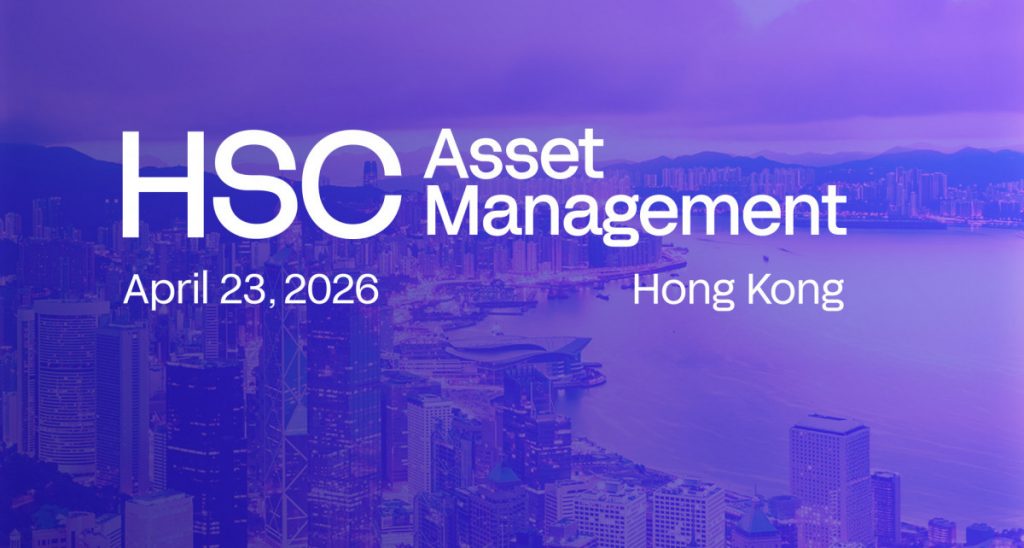
HSC Asset Management, a premier conference dedicated to bridging cryptocurrency and institutional finance, will take place in Hong Kong on April 23, 2026. The event positions itself as one of the region’s key platforms for dialogue at the intersection of digital assets, stablecoins, real-world asset (RWA) tokenization, PayFi, traditional finance (TradFi), and regulatory frameworks.

Hosted at the Hopewell Hotel, the conference is designed as a curated, high-level forum for investors, financial institutions, policymakers, and infrastructure providers at the forefront of the TradFi-digital asset convergence.

The event aims to provide a focused environment for substantive discussion and deal-making. The agenda will center on four core pillars:

Global Risk & Capital MarketsExploring macroeconomic repricing, cross-border capital flows, and Hong Kong’s role as a gateway for institutional capital into Asia.

Stablecoins & TokenizationCovering stablecoins as an emerging monetary layer, real-world asset liquidity, and the tokenization of financial instruments across both public and private markets.

Regulation & ComplianceExamining fragmented global regulatory frameworks, jurisdictional approaches across Hong Kong, Japan, and other key markets, and the legal infrastructure required for institutional participation.

The Future of Financial InstitutionsAnalyzing how traditional banks, asset managers, and capital market intermediaries are rebuilding their infrastructure around digital assets, blockchain-based settlement, and decentralized financial systems.

HSC Asset Management is expected to host over 50 speakers and more than 2,000 registrations, with the majority of attendees comprising C-suite executives and senior decision-makers. Participants will come from across venture capital and crypto funds, asset management, private equity, banking, payment providers, as well as stablecoin issuers and blockchain infrastructure platforms.

The speaker lineup reflects the conference’s strong institutional, technological, and investment focus, bringing together senior leaders from global finance, Web3 infrastructure, and venture capital. Confirmed speakers include:

Barton Lui — Director, Global Product Solutions, BlackRock

Allan Song — Head of Data & Digital, Financing & Securities Services, Standard Chartered Bank

Chris Barford — Partner, Financial Services Consulting, Ernst & Young

Bugra Celik — Head of Digital Assets and Currencies, Global Macro, HSBC

Allan Liu — Global Chairman, AIC

Don Ng — Director, Digital Assets, China Asset Management

Gillian Wu — Founder & General Manager, Mulana Investment Management

Joseph Chalom — CEO, Sharplink

Akshat Vaidya — Managing Partner & Co-Founder, Maelstrom

Kelvin Koh — Founding Partner, The Spartan Group

Mushtaq Kapasi — Managing Director, Chief Representative, Asia-Pacific, International Capital Market Association

Brian Mehler — CEO, Stable

Cleo Cui — Tokenization Manager, HashKey Tokenization

In addition to focused discussions, the event will feature an exclusive VIP Lounge, offering private, high-value conversations between investors and founders, and facilitating strategic introductions and partnership opportunities outside the main sessions.

HSC Asset Management And CGV To Bring Global Institutional Finance Forum To Hong Kong

HSC Asset Management is focused on connecting institutions, investors, and innovators across the globe. Crypto research and investment firm CGV will join as co-host, bringing expertise in digital asset investment and ecosystem development, reinforcing the event’s mission to advance dialogue around institutional finance and emerging investment opportunities.

This latest edition marks the 14th in a global series designed to connect leading investors with digital-native companies, building on the successful Hong Kong edition held this February. Having welcomed more than 80,000 visitors over the past three years, the platform continues to expand internationally, with upcoming editions scheduled for Singapore and Miami in 2026.

Disclaimer

In line with the Trust Project guidelines, please note that the information provided on this page is not intended to be and should not be interpreted as legal, tax, investment, financial, or any other form of advice. It is important to only invest what you can afford to lose and to seek independent financial advice if you have any doubts. For further information, we suggest referring to the terms and conditions as well as the help and support pages provided by the issuer or advertiser. MetaversePost is committed to accurate, unbiased reporting, but market conditions are subject to change without notice.

About The Author


Alisa, a dedicated journalist at the MPost, specializes in crypto, AI, investments, and the expansive realm of Web3. With a keen eye for emerging trends and technologies, she delivers comprehensive coverage to inform and engage readers in the ever-evolving landscape of digital finance.

More articles


Alisa, a dedicated journalist at the MPost, specializes in crypto, AI, investments, and the expansive realm of Web3. With a keen eye for emerging trends and technologies, she delivers comprehensive coverage to inform and engage readers in the ever-evolving landscape of digital finance.


More articles


Source link

Top NFL Prospect Rueben Bain Jr. Driver In Accident That Killed Woman In 2024

    0
    Top NFL Prospect Rueben Bain Jr. Driver In Accident That Killed Woman In 2024


    U Miami’s Rueben Bain Jr.
    Driver In 2024 Car Accident
    … Passenger Died

    Published
    April 13, 2026
    7:24 AM PDT

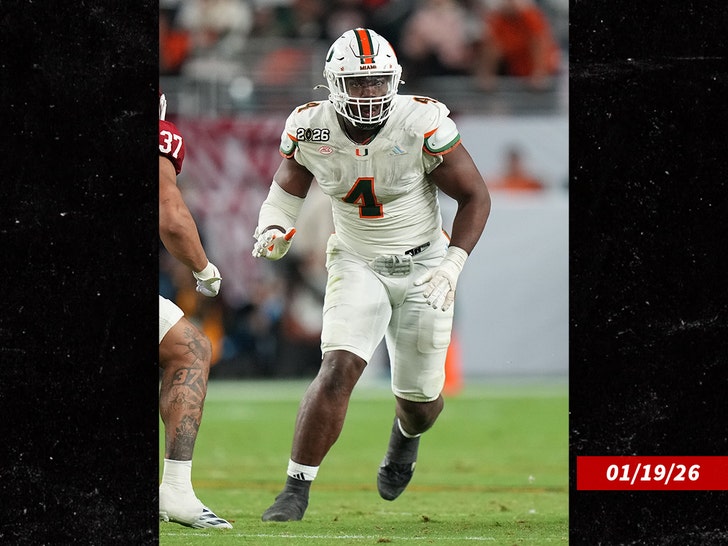
    Rueben Bain Jr. was the driver in a fatal accident in 2024, according to a new report … as the University of Miami star prepares for the NFL Draft, where he’s a near lock first-round draft pick.

    Bain, now 21, was driving a 2021 Land Rover SUV with three other passengers — Canes teammates Nyjalik Kelly and Wesley Bissainthe, and a 22-year-old woman, Destiny Betts, on March 17, 2024.

    Around 4 AM, Rueben rear-ended another vehicle, according to The Read Optional, sending his SUV careening into multiple concrete barriers.

    Rueben-Bain-Jr-sub-getty-2

    Betts was transported to a local trauma center in Miami, where she was in a coma for nearly three months before dying from her injuries on June 13, 2024.

    At the time of the accident, Bain was cited … but the ticket was dropped before Betts passed away.

    No field sobriety tests were administered.

    Despite what happened, Destiny’s family seems to be at peace … calling the incident a “tragic accident” in a statement, and saying they “wish Mr. Bain the best as he continues his life and career.”

    On the field, Bain is a terror … finishing the season with 9.5 sacks and nearly 60 quarterback pressures. He was named ACC Defensive Player of the Year for the 2025 season.

    Bain is expected to be drafted somewhere between 8 and 15 at next week’s NFL Draft.


    Source link

    Why 2026 Is the “Proof Year” for Tokenized Real-World Assets | NFT News Today

    Why 2026 Is the “Proof Year” for Tokenized Real-World Assets | NFT News Today


    As of early April 2026, tokenized real-world assets (RWAs) sit at roughly $27B+ in distributed on-chain value, holding steady—and even growing modestly—despite broader crypto market weakness. That divergence matters. It suggests RWAs are beginning to decouple from purely crypto-native cycles and instead track something closer to traditional financial demand.

    This shift aligns with a growing industry consensus. Recent institutional discussions, including those involving DWF Labs, have framed 2026 as a “proof year”—not for whether RWAs work, but whether they can scale into repeatable financial infrastructure.

    That distinction is important.

    RWAs are no longer experiments in tokenization. They are evolving into standardized, composable building blocks that can be priced, collateralized, and circulated across decentralized financial systems. The question is no longer whether assets can move on-chain—but whether the underlying infrastructure is mature enough to support them at scale.

    For RWAs to function as real financial infrastructure—not just tokenized wrappers—three conditions must be met simultaneously: reliable pricing, usable liquidity, and productive collateralization.

    1. Pricing: Making RWAs Legible

    At the core of any financial system is pricing. Without it, risk cannot be assessed, and capital cannot be allocated efficiently.

    This issue has been a major obstacle for RWAs in the past. Unlike crypto-native assets, many real-world instruments such as private credit, bonds, and structured products do not have ongoing, transparent price discovery.

    That’s where infrastructure like Chainlink’s NAVLink and SmartData comes in. By providing tamper-resistant, real-time Net Asset Value (NAV) feeds, these systems make illiquid assets legible to on-chain risk engines.

    The implication is deeper than better data:

    Without reliable NAV, RWAs cannot be properly assessed for risk. Without risk assessment, they cannot be used as collateral.

    Pricing is what transforms RWAs from opaque instruments into programmable financial primitives.

    2. Liquidity: Turning Assets into Markets

    Tokenization by itself does not create liquidity; it only provides access. True liquidity comes from active borrowing, lending, and trading.

    This is where protocols like Aave, especially its Horizon initiative, are moving the market forward. With a market size of about $520 million to $540 million based on recent on-chain data and protocol reports, Aave Horizon lets institutions supply RWAs and borrow stablecoins in a mix of permissioned and permissionless settings.

    Notably, institutional loan sizes on these platforms are significantly larger than typical DeFi retail positions, reflecting a different class of capital entering the system.

    But in practice, liquidity here is still evolving.

    Most current RWA markets exhibit episodic liquidity rather than continuous depth, creating a mismatch with DeFi’s assumption of instant composability.

    Liquidity is what makes tokenization work as a real market, but it is still one of the main challenges to scaling up.

    3. Collateral: Making RWAs Productive

    The real turning point for RWAs is not just issuing them, but using them as collateral.

    When RWAs can be used as collateral, they stop being passive yield instruments and become active components of financial balance sheets.

    Platforms like Ondo Finance and Centrifuge are at the forefront here:

    Ondo has surpassed $2.5B+ TVL, spanning tokenized Treasuries (e.g., OUSG, USDY) and a rapidly growing tokenized equities segment

    Centrifuge continues to lead in private credit origination and structured on-chain products

    These assets are increasingly being used to:

    In effect, RWAs are transitioning from “yield-bearing tokens” to productive collateral within a broader financial system.

    The Emerging RWA Stack

    What’s forming is not a single dominant platform, but a modular financial stack:

    Origination Layer → Centrifuge (private credit, structured deals)

    Distribution Layer → Ondo Finance (Treasuries, equities, scale)

    Credit & Liquidity Layer → Aave (lending, leverage)

    Trading Layer → Platforms like xStocks / Backed Finance (secondary market activity)

    This separation is similar to traditional finance, but with added programmability and the ability to combine different parts.

    The next phase of RWA growth will not be driven by more tokenized Treasuries alone. It will come from higher-yield, more complex, and more specialized assets.

    Yield Expansion

    Tokenized private credit is already a major driver, with $5B–$6B in distributed value (and broader representations up to ~$18B–$19B across platforms). Protocols like Centrifuge, Maple, and Figure are enabling 8–15% yields through on-chain origination.

    Emerging categories include:

    These represent a shift from passive exposure → active yield strategies.

    Regulation-Led Growth

    Regulation is increasingly acting as a catalyst rather than a constraint.

    Europe’s MiCA framework is accelerating adoption of compliant tokenized instruments

    U.S. developments (e.g., GENIUS Act, CLARITY Act) are providing clearer pathways

    Regulatory progress has enabled players like Ondo Finance to expand offerings with greater institutional confidence

    This is particularly relevant for:

    Tokenized Treasuries

    ESG / green bonds

    Market Infrastructure Fixes

    Some of the most compelling RWA use cases are in fixing structurally inefficient markets.

    Carbon credits are a good example. The tokenized carbon market, estimated at about $4.5 billion in 2025, is expected to grow a lot over the next decade and bring:

    Transparency

    Standardization

    Improved liquidity

    The broader pattern:

    RWAs are not only moving assets on-chain; they are also rebuilding the market infrastructure.

    Despite rapid growth, RWAs remain constrained by a fundamental mismatch between on-chain expectations and off-chain realities.

    Liquidity vs. Tokenization

    Tokenizing an asset does not guarantee a deep market. Many RWA markets remain thin, particularly under stress.

    Oracle Dependency

    Infrastructure such as Chainlink helps with pricing, but it also creates a strong reliance on data pipelines.

    Redemption Friction

    Unlike crypto-native assets, RWAs often involve:

    Settlement delays

    Legal wrappers

    Off-chain processing

    In practice:

    Tokenization does not remove friction; it simply moves it into new layers of complexity.

    Fragmentation

    Multiple chains (e.g., Ethereum, Solana, Polygon, BNB Chain) and regulatory regimes create interoperability and compliance complexity.

    Some forecasts predict RWAs could reach $50 billion to over $100 billion by the end of 2026. While this is possible, these estimates assume that liquidity and infrastructure will grow along with issuance, which has not yet been fully proven.

    Still, the direction is clear.

    For:

    Builders → the opportunity lies in infrastructure layers (pricing, liquidity, compliance), not just asset issuance

    Investors → value accrues to platforms enabling capital flow, not just yield generation

    Institutions → tokenization is shifting from optional strategy to default architecture

    RWAs are changing blockchains from simple asset issuance platforms into full financial systems that can price, use as collateral, and move real-world value.

    2026 will test whether that system holds under scale.

    The question is no longer whether RWAs come on-chain.

    Now, the real question is which parts of finance will stay off-chain, and for how long.


    Source link

    Mortal Kombat II | Trailer 2

      0
      Mortal Kombat II | Trailer 2


      The internet’s most unsettling nightmare is about to step fully into the spotlight.

      A brand-new trailer for Backrooms, A24’s upcoming horror film based on the viral creepypasta phenomenon, is set to drop tomorrow and fans are already bracing for what could be one of the most disturbing films of the year.

      From YouTube Horror to the Big Screen

      Backrooms isn’t just another horror movie. It’s the evolution of a digital legend.

      The film is directed by Kane Parsons, the creator behind the massively popular Backrooms found-footage series that exploded on YouTube. What started as a low-budget analog horror concept quickly turned into a global phenomenon, with millions drawn to its eerie liminal space aesthetic and unsettling sense of isolation.

      Now, A24 is bringing that same nightmare fuel to theaters.

      What the Movie Is About

      While details remain intentionally cryptic, the story follows a therapist who ventures into a strange alternate dimension after her patient mysteriously disappears.

      That dimension is the Backrooms, an endless maze of empty office-like spaces filled with flickering lights, yellow walls, and something far more sinister lurking just out of sight.

      If the original concept taught fans anything, it’s this:you are not supposed to be there.

      Backrooms [credit: A24]

      Stacked Cast and Big Studio Backing

      The film features a strong cast for such an experimental horror concept, including:

      Chiwetel Ejiofor
      Renate Reinsve
      Mark Duplass
      Finn Bennett
      Lukita Maxwell
      Avan Jogia

      Behind the scenes, the project is backed by A24 along with major production companies like Atomic Monster, signaling that this isn’t just a niche internet adaptation, it’s a full-scale cinematic event.

      Release Date and What to Expect

      Backrooms is officially set to hit theaters on May 29, 2026, positioning it as one of A24’s most anticipated horror releases of the year.

      The teaser already gave fans a glimpse of its unsettling tone, but tomorrow’s trailer is expected to dive deeper into the story and possibly reveal the creatures and deeper lore that made the original series so terrifying.

      Why This Could Be Huge

      This isn’t just another horror release. It’s part of a growing trend where internet-born stories are evolving into mainstream cinema.

      But Backrooms stands out.

      It taps into a very specific kind of fear, the uncanny feeling of being somewhere familiar yet completely wrong. Early footage suggests the film is leaning heavily into psychological dread rather than relying on traditional jump scares.

      If it lands, it could become the next breakout horror hit in A24’s lineup.

      Final Thoughts

      With the full trailer dropping tomorrow, Backrooms is about to go from online legend to mainstream obsession.

      And if the studio nails the tone, don’t be surprised if this becomes the horror movie everyone’s talking about heading into summer.


      Source link

      Paris and Tyson Fury’s eldest son Prince blasted for ‘disgusting’ moment in family’s Netflix reality show

        0
        Paris and Tyson Fury’s eldest son Prince blasted for ‘disgusting’ moment in family’s Netflix reality show


        Prince Fury has left At Home With The Furys viewers “disgusted” after one scene sparked outrage online.

        The eldest son of Tyson Fury and Paris Fury appears in the opening episode of the Netflix series, where his behaviour quickly became the talking point among fans.

        Prince tells cameras he has already left school and insists his only goal is to follow in his father’s boxing footsteps.

        Don’t miss a single story! Add us as a Preferred Source in Google for all your entertainment news

        It’s important to us that you never miss our articles when searching for stories! We have all the latest TV & Celebrity news to share with our community of loyal readers.

        Click here and tick Entertainmentdaily.com to ensure you see stories from us first in Google Search.

        Prince Fury has raised eyebrows after the new series of At Home With The Furys dropped (Credit: Netflix)

        On Saturday night, two time World Heavyweight champion Tyson once again came out of retirement for another fight.

        He beat Arslanbek Makhmudov in the heavyweight battle, which streamed globally on Netflix.

        But it is Prince’s behaviour at home that has triggered the strongest reaction from viewers – not his decision to quit school so young.

        Prince Fury branded ‘disgusting’ by fans

        Viewers were left horrified after seeing Prince handle a household chore in the opening episode of series two.

        Prince was given a series of jobs to complete while his father was away.

        He told cameras: “The jobs increase when my dad’s away. Weeds, dog [bleep], rubbish. I’m clearly turning into my dad.”

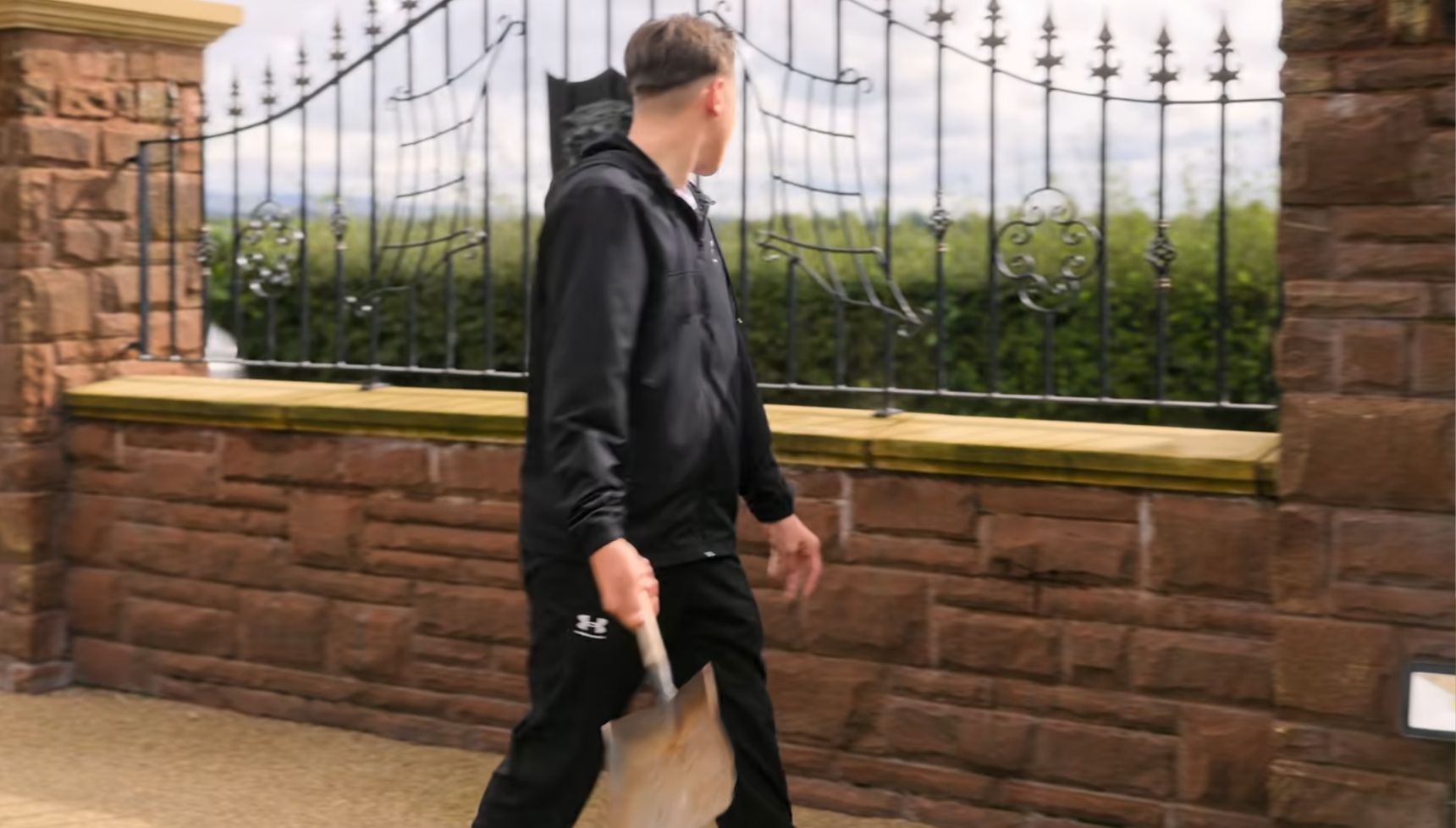
        Prince was then shown scooping up dog faeces with a spade before throwing it over the garden fence and into the street.

        The moment quickly set off outrage online, with fans shocked at what they were seeing.

        Taking to X, one viewer wrote: “Scooping dog poo up then throwing it over the fence is [bleep]-ing disgusting!!”

        Another added: “I am absolutely gobsmacked that they were flicking dog [bleep] over their fence!”

        And a third said in shock: “The eldest kid just throwing the dog [bleep] onto the road.”

        The incident happened while Tyson and Paris were in Lake Como watching 50 Cent perform.

        Their eldest child, daughter Venezuela, was left at home with the other children, along with Paris’ mum, who helps out.

        Venezuela was 15 when filming began and turns 16 during the series. They are also parents to daughters Valencia, who is now eight, four year old Athena, and son Prince Rico Paris.

        Prince is seen throwing dog faeces over the garden fence and into the street in the show (Credit: Netflix)

        At Home with the Furys: How old is Prince Fury?

        Prince’s full name is Prince John James Fury. He was born in August 2011 and is currently 14 years old.

        Prince was 13 when season 2 of At Home With The Furys was filmed, although he had already left school.

        Prince told cameras: “In the last few years, I have left school and I 100 per cent guarantee I’m going to be a boxer and I’m going to be the best there ever is.

        “I’m going to make just as much money as my dad has, if not more.

        “That’s my plan and I’ve got no other path in mind. It’s a clear, straight shot to the future. My dad didn’t have a back-up plan and I don’t have a back-up plan.”

        Prince was also shown shopping in ASDA in Morecambe, Lancashire, with Tyson and his brothers Tutty and Adonis. Their full Christian names also begin with Prince, but only Prince John James responds to Prince.

        Tutty was born Prince Tyson II and is nine years old. His brother Prince Adonis Amaziah is seven years old.

        Read more: Inside Tyson Fury’s staggering net worth: From multi-million pound property empire to how much he’s paid for each fight

        What do you think of this story? Leave us a comment on our Facebook page


        Source link

        Dune: Awakening to get self-hosted servers, plus they’re splitting PvE and PvP

        0
        Dune: Awakening to get self-hosted servers, plus they’re splitting PvE and PvP


        Funcom are finally dealing with some of the wider issues in the MMO Dune: Awakening, which includes expanded self-hosting support and more focus on PvE.

        In an announcement on Steam the developers noted that they’re trying to balance priorities with the struggling MMO, which has seen player numbers drop pretty sharply from the original release. While the game originally blended the PvE and PvP worlds together, they’re now going to be making the PvP a lot more optional. Why? They said “over 80% of our lifetime players exclusively engaging with PvE content” so forcing PvP in some areas appears to have been worknig against it.

        With that in mind they’re making PvP much more optional with these major changes coming:


        All PvP zones in Hagga Basin will be disabled across all official Worlds.
        All official Worlds will have separate Deep Desert instances you can choose from:

        A PvE instance for pure survival and exploration experience with no player combat. There is no PvP in this instance across any of the rows, including Shipwrecks.
        A PvP instance with the classic high-stakes environment and open-world conflict across rows B through I. To make sure the rewards match the risk, the yield from mining and spice harvesting will be multiplied by 2.5 in PvP areas.


        And, in a win for game preservation, they’ve announced that self-hosted servers are finally coming to the game. You could previously rent some private areas from certain hosting platforms, but this mixed with the bigger public areas. It wasn’t the best solution but now they’re going to be changing that with full self-hosting. This is great, as Funcom will inevitably move on from the game at some point, so at least everyone who wants to will be able to just host the full thing themselves.

        Here’s how they explained the changes coming for that:

        Self-hosted Servers Are Coming!

        We are thrilled to announce that Self-Hosting is coming to Dune: Awakening. Whether you want to host a private server for friends or foster a community with unique rules, the power is moving into your hands.

        The initial iteration, which will be available for testing soon, will require a few extra steps to set up and feature a limited range of customization settings. These settings will include resource harvesting rates, adjustable limits on base building pieces, or item durability and base decay options, with more customization settings being rolled out later. All these customization options will also be available on private servers right from the start. We are releasing it early to get feedback on this experimental version and improve it alongside you. More features and improvements will be added throughout the year.

        Full instructions on how to set up and customize self-hosted servers will be included in the patch notes when the feature becomes available. Please be advised that the initial setup for this first iteration of the feature is more technical than most other games and requires a computer running Microsoft Windows Pro with Hyper-V in order to run the servers in a Linux Virtual Machine (VM).

        We are, of course, still working on future updates. The goal is to work on improving these customization tools along with those releases, but we will talk about that in dune time. We are excited to continue crafting a survival experience that can stand the test of time in the new era of Dune: Awakening.

        Thank you for walking this path with us.

        Release Date: 10th June 2025

        Platform: ⚛ Proton / Wine

        Article taken from GamingOnLinux.com.


        Source link

        Cardano Price Holds $0.24 Amid Bearish Trend: What’s Next for ADA? – NFT Plazas

          0
          Cardano Price Holds alt=


          Cardano (ADA) is once again sitting at a critical inflection point. Trading near the $0.24 level in mid-April 2026, the asset appears caught between two opposing forces: a clearly defined bearish trend on the charts and a steadily strengthening foundation beneath the surface.

          At first glance, the technical picture looks uninspiring. ADA has struggled to reclaim key resistance levels for months, and momentum indicators continue to lean negative. Yet a closer look at on-chain data reveals a more nuanced reality – one where large holders are accumulating, network activity remains resilient, and market structure is quietly shifting.

          This growing divergence between price action and underlying data is what makes the current setup particularly compelling.

          A Downtrend That Refuses to Break But Also Refuses to Accelerate

          From a technical standpoint, Cardano remains firmly in a downtrend. Since topping out near $0.43–$0.45 in late 2025, ADA has printed a consistent pattern of lower highs and lower lows. Repeated rejections around the $0.25–$0.26 range have reinforced this bearish structure, turning former support into a ceiling that bulls have yet to reclaim.

          Momentum indicators tell a similar story. The Relative Strength Index (RSI) remains below neutral, hovering in the low-40s, while the MACD sits near the zero line with only weak directional conviction. ADA also continues to trade below its major moving averages, all of which are clustered significantly above current price levels.

          And yet, despite this persistent weakness, one key detail stands out: the market is not breaking down aggressively.

          Instead of sharp capitulation, ADA is showing signs of controlled decline. Price action has compressed tightly around the $0.235 – $0.24 support zone, and volatility has steadily decreased. Sell-offs are becoming less impulsive, and follow-through to the downside has been limited.

          This kind of behavior often signals that something is changing beneath the surface.

          ADA price on-chain breakdown (Source: Santiment)

          ADA price on-chain breakdown (Source: Santiment)

          Whale Accumulation Suggests a Shift in Market Control

          One of the clearest signals comes from Santiment, which shows a steady rise in large Cardano holders. Wallets holding 10 million ADA or more have climbed to approximately 424 addresses, marking a four-month high and a notable increase over recent weeks.

          This trend is significant not just because of the numbers, but because of the timing.

          Whales are accumulating during a downtrend, not after a breakout. This implies a deliberate strategy of absorbing sell pressure while sentiment remains weak. In other words, large players appear to be positioning ahead of a potential shift rather than reacting to one.

          Such behavior has historically preceded accumulation phases, where supply gradually transitions from weaker hands to more patient, long-term holders.

          On-chain activity like this is a solid indicator of growing trust and usage.On-chain activity like this is a solid indicator of growing trust and usage.

          On-chain activity like this is a solid indicator of growing trust and usage.

          Smart Money Rotation vs Early Re-Entry

          Additional insights further illustrate the complexity of the current market.

          On one side, data shows that top-performing traders have been reducing exposure, with net outflows observed over recent days. Exchange inflows, while relatively modest, also point to continued distribution from certain cohorts.

          On the other side, there are signs of new wallet activity and fresh inflows, suggesting that early-stage buyers are beginning to step back in.

          This creates a layered market structure:

          Short-term traders are de-riskingRetail participants are largely holding losses or exitingNew entrants are cautiously accumulating

          Rather than signaling a clear trend, this combination points to a transitional phase, where ownership is gradually shifting but direction remains undecided.

          Fundamentals Hold Firm Despite Price Weakness

          While price action remains under pressure, Cardano’s underlying network metrics tell a more constructive story.

          One of the most notable developments is the rapid growth in stablecoin supply on the network, which has more than doubled year-over-year . This expansion reflects increasing liquidity within Cardano’s decentralized finance ecosystem, an important indicator of long-term utility and demand.

          At the same time, a significant portion of ADA supply remains staked, estimated at around two-thirds of circulation, effectively reducing the amount of liquid tokens available for selling.

          Wallet growth also continues to trend upward, with no meaningful signs of user attrition. Combined with consistently high development activity and ongoing protocol upgrades, these factors reinforce the idea that Cardano’s fundamentals are not deteriorating alongside price. Instead, they appear to be strengthening.

          Compression Signals a Bigger Move Ahead

          Perhaps the most important feature of the current market is compression.

          Price has narrowed into a tight range around $0.24. Volatility is declining. Volume spikes are becoming less directional. This pattern aligns closely with what some analysts describe as a re-accumulation phase, where liquidity is gradually absorbed before a larger move unfolds.

          Markets rarely remain in such compressed states for long. When they resolve, the move is often sharp and decisive. The key question is which direction that move will take.

          Key Levels That Will Decide ADA’s Next Move

          In the near term, ADA’s trajectory hinges on a relatively narrow set of levels.

          A sustained move above $0.26-$0.27 would mark the first meaningful shift in structure, opening the door for a recovery toward $0.30 and potentially higher if momentum builds.

          Conversely, a breakdown below $0.235 would likely trigger a wave of stop-losses and renewed selling pressure, exposing downside targets around $0.22 and $0.20.

          Until one of these levels is decisively breached, the most probable scenario remains continued consolidation within the $0.23-$0.26 range.

          ADA allocationADA allocation

          ADA Long/Short Ratio Chart (Source: CoinGlass)

          A Market Defined by Divergence

          What makes Cardano’s current setup particularly noteworthy is the degree of divergence across key metrics.

          Price action remains bearish. Momentum is weak. Sentiment is fragile.

          And yet:

          Whale accumulation is risingNetwork activity is stable or improvingLiquidity within the ecosystem is expandingVolatility is compressing rather than expanding

          This combination suggests that the market is not in a straightforward downtrend, but rather in a transition phase between distribution and accumulation.

          The Bottom Line: A Coiled Setup Waiting for Resolution

          At $0.24, Cardano is not simply drifting – it is building pressure.

          The technical trend still favors the bears, and a breakdown cannot be ruled out. But the underlying data tells a different story – one of gradual accumulation, improving fundamentals, and declining sell-side momentum.

          When price and on-chain signals diverge this clearly, the resolution is rarely subtle.

          If bulls can reclaim higher levels, the shift in narrative could be swift and aggressive. If support fails, a final capitulation move may be needed before a true bottom forms.

          For now, ADA sits in a state of tension – a compressed, coiled market waiting for a catalyst. And when that catalyst arrives, the move that follows is unlikely to go unnoticed.


          Source link

          Popular Posts

          My Favorites

          Meme Coin Modeled on Baby Shark Creator Collapses – Decrypt

          0
          In brief A meme coin modeled on Baby Shark’s creator collapsed. Pinkfong said the token created using Story Protocol was unaffiliated. Story Protocol deleted posts, but...