Home Blog Page 54

How Do You Know If Prada Bag Is Real or Fake? – Complete Guide

How Do You Know If Prada Bag Is Real or Fake? – Complete Guide


April 16, 2026


Introduction 

When you get a nice luxury bag, making sure it’s real is important. Prada is one of the famous names in the luxury fashion world, liked for its long-lasting looks, high quality materials and great craftsmanship. But͏ as it gets more popular there are many fake products that can be hard to tell apart from the genuine ones? This means it’s very important for buyers to know how you can tell if a Prada bag is real before they buy.

Fake Prada bags are getting more and more tricky, they often copy the brand’s key parts like logo, stitch and fitting. While some fakes are easy to see, others can be very real looking especially when bought from unofficial or another seller. This is why it’s important to know clear skills for checking if they’re real.

A real Prada bag isn’t only a style item it’s a smart buy, it’s an investment. Real items are made with care, using good leather and stuff that make them last a long time. Fake bags, on the other hand, often skip parts on quality leading to poor stitching of low quality items and not much care on detail.

If you are getting a new Prada bag or looking at an older one knowing the main signs of realness can help you dodge high-cost mistakes. By looking at the logo and parts, as well as checking the seams and box, there are many things that show if a Prada bag is true or not fake. 

In this simple guide, we will help you learn all that you need to know about how you can tell if a Prada bag is real. This way, you can shop with trust and make sure your fancy buy is really genuine. 

Why Prada Bags Are Commonly Counterfeited

Prada bags are one of the most copied fancy items in the world. Their world fame, well-known styles and high costs make them a main aim for fake makers. Knowing why these bags are copied so much can help you be more care͏ful when shopping. 

One big reason is high demand. Prada has made a strong name for making trendy but useful bags that attract many people. This need opens a chance for people to make fake ones at cheaper prices, drawing in shoppers who can’t pay for the real one.

One more thing is the known branding. Prada’s sign, triangle tag and simple look are easy to copy in sight, even if the standard does not match the real one. Fakes often depend on the truth that a lot of shoppers may not see small changes in style or work quality.

Also, the growth of online shops has made it simpler for fake goods to move around. Without looking at the bag in person buyers may not know they are getting fake products based on wrong images or descriptions.

Lastly, fakes have gotten better at their tricks. New fake Prada bags can look like real ones making it hard to tell them apart͏ without a close check. This is why it is important to know how you can see if a Prada bag is genuine, especially when buying from sellers that aren’t allowed.

How Do You Know If Prada Bag Is Real? Key Authentication Tips

How Do You Know If Prada Bag Is Real- key authentication tips

1. Check the Prada Logo Carefully

1. Check the Prada Logo Carefully

The logo is a key sign in finding out if a Prada bag is genuine. Real Prada bags have a neat, clear logo with equal space and typeface.

The “R” in Prada is very special. It has a bit of a bendy leg, which are often wrongly copied in fake bags. Fake bags can have letters that don’t match right, space that is not correct or a font that looks kind of weird.

The triangle Prada sign plate, which is usually seen on the front of a bag, must be just right lined up and tightly put on. The letters should be spaced out evenly and carved with care. On real bags, the color of the plate matches the metal parts, if it’s gold or silver.

Inside a bag, you might usually see a Prada logo piece. This piece needs to match the outside parts in color and have good carving. The words must say “Prada Milano” with “Made in Italy” underneath it but if the bag is made in another allowed country, then it’s different.

Fake bags often have bad carved logos, wrong fonts or strange spots. Looking closely at these things can help you tell if the bag is real.

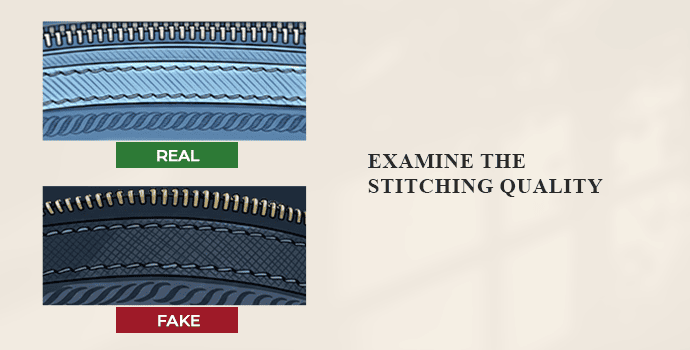
2. Examine the Stitching Quality 
2. Examine the Stitching Quality

Sewing is a big part in knowing if something is real. Prada is famous for its great skill and you can see this in the sewing of its bags.

Real Prada bags have flat, straight and close stitches. The stitching must be the same all over the bag with no loose threads or odd designs. The thread color often matches the leather making a smooth and neat look. 

On the other hand, fake Prada bags often have unbalanced sewing, loose strings or mismatched gaps. These mistakes may look small but they are clear signs of bad workmanship. Also, the sewing around handles, zippers and edges should be very tidy and strong. Prada makes sure that important spots are built well to make them last longer. 

If you see any oddities in the sewing it’s a hint that the bag might not be real. Good quality sewing is a mark of true Prada skill.

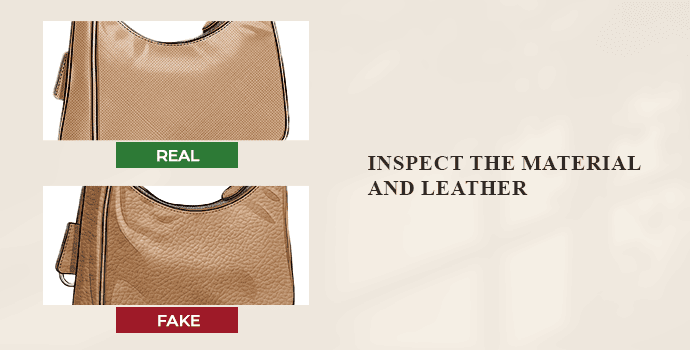
3. Inspect the Material and Leather 
3. Inspect the Material and Leather

One of the simple ways to tell how you can know if a Prad͏a bag is real, is by looking at the material. Prada uses fine materials like Saffiano leather, which is known for its strength and unique crosshatch feel. 

Real Saffiano leather has a strong form and a soft shine. It feels fancy to the hand and keeps its look over time. The touch should be even all over the bag with no bumps. 

Fake bags often use cheap stuff that can feel too soft, too hard or odd-looking. The touch might be rough and the bag may not have the nice finish of a real Prada leather.  

Also, the sides of the bag should be tidy, painted and sealed. Real Prada bags have clear, smooth edges but fake ones might have rough or uneven finishings. 

The inside of the bag is another key detail. Prada usually picks top-notch cloth lining with a special design that shows the Prada name. The design ought to be sharp and steady, not blurry or twisted. By looking at the stuff and leather, you can easily tell if a Prada bag is up to the brand’s high standards.

4. Check the Hardware 

4. Check the Hardware

Gear is a main part in spotting a real Prada bag. Real Prada bags have nice metal gear that feels strong and long-lasting.

Zippers, clips and fasteners should move well without getting stuck. The parts should have a steady look if it’s gold, silver or some other color. It shouldn’t peel, lose color or feel too light. 

Lots of Prada bags have pieces with the Prada name on them. The mark should be clear and neat, not soft or badly made. Fake bags can have fuzzy or lumpy marks. Another important detail is the zipper brand. Prada often u͏ses good zippers from known makers. If the zipper feels low-cost or weak it could be a sign of a fake bag. Looking at the tools can give good hints about if the bag is real.

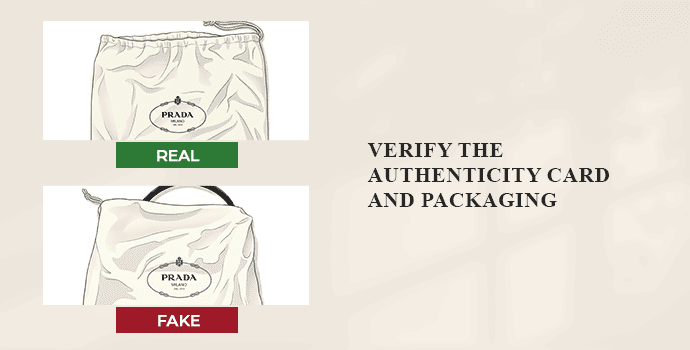
5. Verify the Authenticity Card and Packaging
5. Verify the Authenticity Card and Packaging

Real Prada bags have an authentication card and nice packing. The card is often in a tiny envelope and has info like the bag’s type and number.

The card must have neat print, right spelling and good paper. Fake cards often have fuzzy text, wrong info or low printing quality.

The wrap, with the dust sack and case, should also show Prada’s high quality rules. The dust sack is mostly made of soft, good fabric with a clear Prada sign. But, it’s key to say that the box by itself is not a sign of real-ness. Fakers can copy these parts, so they must be thought about with other things.

6. Look at the Serial Number and Interior Details 

6. Look at the Serial Number and Interior Details

Prada bags often have a serial number or id tag inside the bag. This number is usually found on a small white tag or pressed onto a leather tab.

The series number must be clear and well formatted. While it might not always be unique, it should match with Prada’s make rules.

The inside logo plate is another important part. It needs to go with the color of the metal and have clear carvings. The letters and space should be the same as the real Prada brand.

Also, the inside cloth should be well sewn and without flaws. The Prada logo design on the cloth should be spread out evenly and easy to see. Looking at these inside features can give good proof of being real.

Common Mistakes When Identifying Fake Prada Bags 

Common Mistakes When Identifying Fake Prada Bags- how do you know if prada bag is real

Lots of shoppers fall into the trap of counting on only one thing to check if something is real. But, spotting a fake Prada bag needs a full way to look at it. No one detail can prove it’s real by itself.

One other easy mistake is to trust the price. While a very low price can be a warning sign, some fake bags are sold at high prices to look real. Always check the bag based on its quality instead of its cost.

Buyers also often miss tiny things like sewing, metal parts or where the logo is. These small bits are where fake bags often fail. In the end, just using online pics can be risky. Photos can be changed or unclear, making it hard to judge a bag’s real quality. 

When to Use Professional Authentication Services 

When to Use Professional Authentication Services- how do you know if prada bag is real

If you are not sure about a bag’s realness, it is always smart to look for a pro who can check it. These professionals have a lot of skill and know-how in finding true fancy things.

Expert checkers look at all parts of the bag, from stuff and sewing to number tags and tools. They can offer a true review, giving you calmness.

This is very key when getting expensive or used Prada bags. Paying a bit more for checking whether the bag is authentic or not can keep you safe from big money loss.

One of the key ways to tell if a Prada bag is real or fake is by looking closely at its overall make and material quality. Real Prada bags are made from nice materials like high quality leather, Saffiano leather or strong nylon, which all have their own look and feel. The leather should feel rich, smooth and well-shaped— not too soft, plastic-y or uneven. Stitching is another big sign; true Prada bags have neat, even and tight stitching all over with no loose thread͏s or odd spacing. Watch for the bag’s balance too— real pieces are built to keep a steady shape and size. Bits like zippers, hooks and metal names should feel strong and heavy, never weak or cheap. The Prada name itself must be clearly carved or pressed in, with clear and sharp letters. Any sign of blur, smear or wrong font style is a big warning. All in all the look of a real Prada bag shows care and a promise to luxury something fake versions often do not copy well.

One more main thing to check is the inside details and real signs that Prada puts in its bags. Many real Prada bags have a triangle logo plate inside, which looks like the outside logo in font and space. The inner lining often has the well-known Prada jacquard design, where the brand name is woven straight and clear all over the cloth. Also real Prada bags have a small white tag inside of the pocket with factory number printed on it. This number shows where it was made and usually isn’t there or looks bad in fake ones. The authenticity card is another point to look at, it should be in black envelope and have info like the bag’s model or purchase details. But, it’s key to see that real cards by themselves are not proof; they can be copied a lot. Boxes, dust bags and how it looks should also feel nice and match Prada’s brand style. By looking closely at these inside parts and checking details, you can greatly lower the risk of buying a fake Prada bag.

Conclusion 

Knowing how you can tell if a Prada bag is r͏eal is key for anyone buying fancy handbags and clothing. As fake ones get better, it’s now more important than ever to look closely at every part before you buy something. 

True Prada bags are known for their good craft, high-quality stuff and care on little details. From the clear logo and tidy seams to the nice metal parts and stylish leather, each piece shows the brand’s vow to be best. Fake bags, no matter how real they look, often do not reach these rules well. 

By using the sign in tips found in this guide you can lessen the chance of buying a fake Prada bag. Always check the sign, sewing, stuff, tools and inside parts well. Also think about where you buy it from and stay away from offers that look too great to be real.

For more trust, expert checking services can give skilled proof, mainly when getting second-hand things. Doing these steps not only guards your money but also makes sure you like the real worth of having a true Prada bag. 

Finally, a true Prada bag is more than just a style sign— it’s a mark of good making and lasting look. By learning how to see for realness, you can buy with surety and make smart choices that show your love for luxury 

FAQs

1. How do you know if a Prada bag is real quickly?

Look at the logo, sewing and metal bits. Real Prada bags have clear logos, neat sewing and good metal parts. The leather should feel expensive and not flimsy. The lettering or branding should be even and consistent.

2. Do all Prada bags come with an authenticity card?

Many Prada bags have an authenticity card but its being there does not make sure it is real. Also not all bags might have it as it depends upon product to product and which retailer it is coming from.

3. Can fake Prada bags look real?

Yes, some fake bags can seem very real and that’s why careful checking is needed.

4. Is it safe to buy pre-owned Prada bags?

Yes but only if you check the truth by close look or by an expert, realness helps.


Source link

Max Mara Studio Vs Max Mara: Understand The Difference

Max Mara Studio Vs Max Mara: Understand The Difference


April 16, 2026


Introduction 

When it is about fancy clothes that show lasting grace, great fitting and fine style, Max Mara is one of the best names in the field. Known for its simple look and worth-it items, the brand has made a name for giving good quality fashion that goes beyond seasonal styles. But inside its wide range, there are many lines that fit different people and taste— two of the most often talked about being Max Mara and Max Mara Studio. If you have ever thought about Max Mara Studio vs Max Mara, you are not on your own.

Getting the gap between these two lines is key, mainly if you want to put money into fancy clothes that fit with your style, money plan and way of living. Though both are from the same fashion brand and care about quality and good design they change a lot in price target group, design idea and general place in the luxury market.

Max Mara shows the main identity of the brand— simple, elegant and very rich. In contrast, Max Mara Studio gives a bit easier and modern view on the brand’s usual style making it welcome to a wider crowd without losing on grace. 

In this clear guide about Max Mara Studio and Max Mara, we will look at every part of these two brands from making and design style to cost and flexibility. If you are a regular buyer of fancy things or someone looking at fancy clothes for the first time this guide can help you pick a good option and find which brand suits your closet needs best.

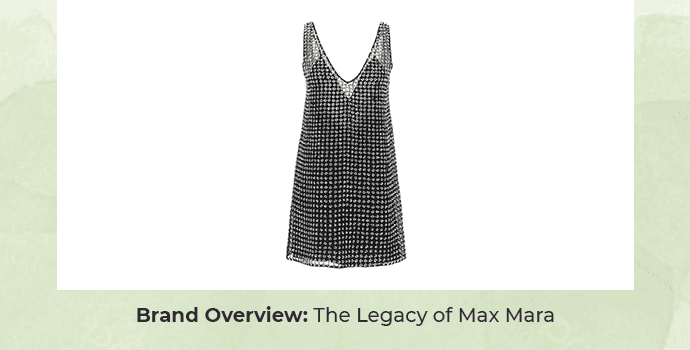
Brand Overview: The Legacy of Max Mara

Brand Overview

To get the whole picture of Max Mara Studio and Max Mara, it’s key to start with the story of Max Mara, a name that stands for lasting style, exact fitting and simple luxury. Started in 1951 in Italy, Max Mara changed women’s clothes by bringing ready-to-wear lines that mixed high-end skill with daily use. Back when made-to-order wear ruled the fancy market, the brand offered top-quality, finely fitted outfits for more people without losing any classiness.

At the start, Max Mara set up a clear design style based on simple shapes, plain colors and strong forms. The brand got really well-known for its famous coats which are still seen as some of the best outerwear in the high-end market. These coats often made from nice materials like cashmere and wool show the brand’s promise to quality and long life. In͏stead of chasing quick trends Max Mara focused on making lasting clothes that stay useful year after year.

Over the years, Max Mara has grown into a big name in fashion, bringing out many smaller brands for different groups of people and style likes. Every line, like Max Mara Studio, is made to show what the brand stands for while giving a fresh take on its look. This smart choice helps the brand attract both classic luxury buyers and newer fans who like modern styles. Grasping this history is key when looking at Max Mara Studio and Max Mara, since it shows how both lines are closely linked by a common idea of style and standard. Though they change in usage and place, they still show different forms of the same famous fashion past making Max Mara a brand that keeps on shaping modern luxury.

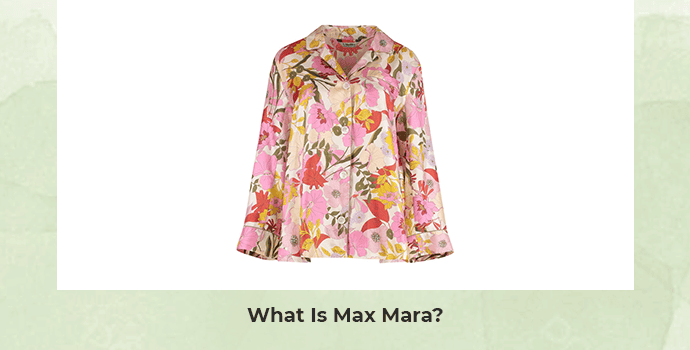
What Is Max Mara?

What Is Max Mara

Max Mara is the main and most important line of Max Mara fashion house, showing the brand’s true self and top level of luxury. Started as part of the first idea for the brand, Max Mara mainline is known for its classic designs, great craftsmanship and use of high-quality materials. It is a collection that really shows what the brand means— grace, style and lasting look. 

The Max Mara main line mainly aims at making fine closet basics like nice coats, smart j͏ackets, pretty dresses and well-fitted pants. These items are made with care and focus on detail, giving a perfect fit and a neat look. One of the most famous items from this line is its selection of coats which has become known for luxury outerwear around the world. 

What makes Max Mara special is its dedication to good stuff, not trends. Instead of chasing quick theme changes, the brand focuses on making items that stay important from season to season. Plain color combos; tidy shapes and simple forms lead the group making it good for people who like quiet fancy.

In the case of Max Mara Studio and Max Mara, the main line is at the highest level in pricing and uniqueness. It is made for folks who see fashion as a long-lasting buy and care about clothes that have both strength and lasting style. Picking Max Mara me͏ans putting money into items that not only improve your closet but also last over time.

What Is Max Mara Studio?

What Is Max Mara Studio

Max Mara Studio is an offshoot line that gives a newer and easier way to see the brand’s old style. While it still shows the grace and charm linked with Max Mara, it aims to attract a younger and trendier crowd.

The studio line often uses trendy parts, softer shapes and more flexible designs. This makes it great for people who want to try out their style while still keeping a neat and elegant look.

When we talk about prices, Max Mara Studio is cheaper than the main line which makes it a good starting place for luxury clothing. But this doesn’t mean you lose quality. The fabrics and work are still high standard, even if they might not be as fancy as what’s in the main line collection.

When you look at Max Mara Studio and Max Mara, it is clear that the Studio is made for daily use and new ways of living. It gives a good mix of comfort and luxury.

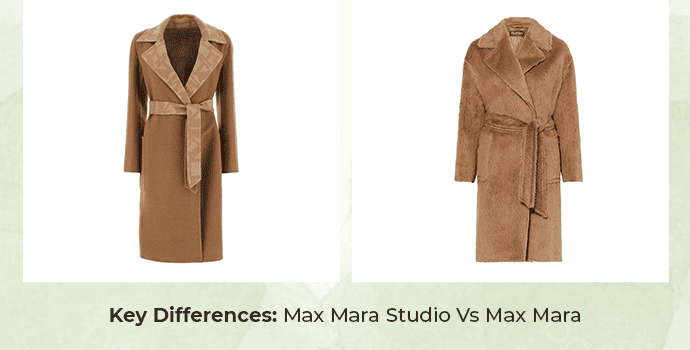
Key Differences: Max Mara Studio Vs Max Mara

Key Differences

When looking at Max Mara Studio and Max Mara, few main differences show up. These gaps help shape the name of each line and aid buyers in making a good choice.

First, cost is one of the biggest clear differences. Max Mara main line items are much pricier because they use better materials and fine work. On the other hand, Max Mara Studio has cheaper choices but still keeps a nice feel.

Next, the way of designing is different between the two. Max Mara aims at timeless, classic shapes that hardly fade in style. Max Mara Studio, on another hand, includes more modern parts and current trends making it a bit more lively and ahead in fashion.

One other key thing is the aim group. Max Mara serves people who like timeless, costly items, often working folks or those with a stylish look. Max Mara Studio attracts a younger crowd or those wanting fancy yet practical wear.

Finally, the amount of uniqueness varies. The main line is often viewed as more fancy and special while Studio is more commonly reachable.

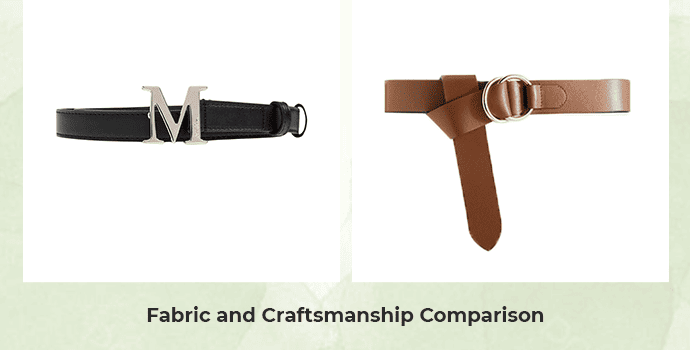
Fabric and Craftsmanship Comparison

Fabric and Craftsmanship Comparison

A main part in knowing Max Mara Studio and Max Mara is the difference between cloth quality and skill, as these things change how fancy it feels to wear each line. Both sets show the brand’s promise to quality but they are not the same in material uniqueness, building methods and finishing touches.

Max Mara mainline is famous for its use of very high-quality fabrics like soft cashmere, new wool, camel hair and silk mixes. These materials often come from top cloth mills in Italy, mostly in places known for fancy fabric making. The aim is to get a great mix of softness, strength and shape which makes Max Mara coats and fitted items seen as lasting purchases. The craftwork is also fine with careful cutting, strong building and close focus on small details. From hand-finish seams to well-made shapes every piece is made to give a perfect fit and lasting quality.

Max Mara Studio, though keeping a good standard, takes a bit easier. The clothes used are nice but may mix more or use less special stuff than the main line. Even so, Studio items are still made with care for quality and are often done in Italy, which keeps a steady level of craft across styles. The build is usually lighter and not so stiff, thinking more about comfort and how easy it is to wear instead of very strict tailoring. 

One key difference is in the amount of detail. Max Mara mainline clothes often have fancy finishes, better linings and more tricky building methods. On the other hand, Max Mara Studio focuses on being practical and flexible which leads to a bit simpler finishes that help its ͏lower price. In the end, both lines give great quality but Max Mara shows off luxury at its top level, while Max Mara Studio gives fine work with a more useful and easy edge.

Design Aesthetic and Versatility

Design Aesthetic and Versatility

When looking at Max Mara Studio and Max Mara, one of the biggest differences is in their style and how well they can be worn. Both lines have the brand’s main qualities of grace and polish, but they show it in a little bit different ways to fit different fashion likes and ways of living. 

Max Mara’s main line is based in timeless, simple design. It looks at clear lines, firm shapes and a plain color scheme that seldom goes out of fashion. The style is often called “trend-less luxury,” pointing to things that can stay important for many years instead of just seasons. This is why famous things like tailored coats, blazers and trousers from the main line are seen as wardrobe investments. Their flexibility lies in their skill to move easily between events from formal business places to fancy evening wear without ever feeling old fashioned. 

On the other hand, Max Mara Studio gives a newer and a bit bolder take on the same look. Even with its style, Studio sets bring softer shapes, gentle designs and new details that feel more fresh and flexible. You are likely to see womanly styles, light patterns and easy fit that work well for jobs and casual times. This makes Studio items very nice for those who like smart looks with a touch of trendy style.

Flexibility also changes based on use. Max Mara main items are very flexible for a long time, as they can be put together many times over years in various ways. On the flip side, Max Mara Studio does great in everyday flexibility, giving pieces that fit well into a busy, modern closet. 

In the end, Max Mara tends to show lasting class but Max Mara Studio offers easy style. Together, they stand for two ways of the same thing- one classic and known, the other modern and simple to wear.

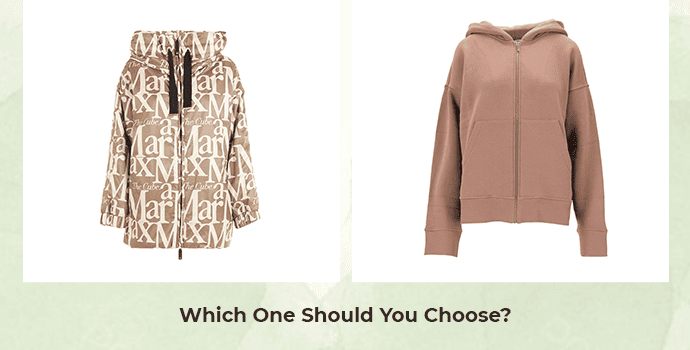
Which One Should You Choose?

Which One Should You Choose

When you choose between Max Mara Studio or Max Mara, the best choice really depends on your own style, daily needs and how you see fashion; if it’s something to invest in or nice to enjoy every day. Both lines come from the same well-known brand but are made for different reasons, making your choice less about which is “better” and more about which is “better for you.”

If you like classic style, great fitting and clothes that last a long time, Max Mara mainline is a good pick. This group shows what the brand is all about, famous for its rich fabrics like cashmere and wool and items made to stick around for many years. These are outfits you buy with a plan of using them in different seasons and events making them ideal for workers, fancy places or anyone putting together a nice wardrobe.

On the other hand, Max Mara Studio is a better fit for people who want a more current, flexible and somewhat cheaper way to enjoy fancy clothes. As a branch line, Studio gives new takes on old styles with prices usually lower than the main line but still keeps good quality. This makes it good for everyday wear, work clothes and people who enjoy testing styles while staying neat. Another thing to think about is how often you plan to use the clothing. If you want bold coats or main things that show your style, spending on Max Mara main line makes sense. But if you need many nice choices that can change in your daily looks, Studio gives better use and worth. 

In the end, the smartest way for many style lovers is a mix of both— putting money into fam͏ous Max Mara items while adding them with useful Max Mara Studio stuff for regular wear.  

Pricing and Value Proposition 

Pricing and Value Proposition

When looking at Max Mara Studio and Max Mara, cost is an important part of seeing what they offer. Max Mara’s main line has a higher price because it uses better fabrics, finer sewing and classic style that lasts. These items are made to be worn for a long time, giving good value. On the other hand, Max Mara Studio gives easier access to luxury with prices that are a bit lower but still keep quality and style. It is great for people who want nice and flexible clothes without spending too much money. In the end, both brands give worth in different ways, one by lasting a long time and being well-known, the other by being cheap and useful for today. 

Conclusion 

The look at Max Mara Studio and Max Mara shows how one fancy clothing brand can serve different crowds while keeping a steady name. Both lines show the class, style and good quality that Max Mara is famous for but they have clear roles in the fashion world.

Max Mara mainline is the best of fancy, making ageless stuff from top materials with much care. These outfits are made to be long-lasting buys, ideal for folks who treasure good quality and classic look more than short trends. Having a piece from the mainline isn’t just about style, it’s about taking on a history of skill and elegance.

Max Mara Studio, on the other hand, gives an easier way into the world of fancy clothes. With its new styles and little more easygoing approach, it serves today’s lives and changing fashion preferences. It lets people try out style while still having the class linked with the brand.

In the end, the pick between Max Mara Studio and Max Mara is about your own needs and what you care for. Whether you choose the classic look of the main line or the modern style of Studio, both lines give great quality and design.

By know͏ing the changes between these two groups, you can make a smarter choice and create a closet that shows your own style while taking in the grace of Max Mara.

FAQs

Q1. Is Max Mara Studio considered luxury?

Yes, Max Mara Studio is thought of as a fancy line even if it’s a bit less than the main Max Mara group in terms of rarity and cost. It is part of the larger Max Mara clothing house which is known worldwide for fine work and lasting style.

Q2. Why is Max Mara more expensive than Max Mara Studio?

The big cost of Max Mara main line items is mostly because of the better quality of stuff, skilled work and the amount of specialness linked with the collection. The main line often uses fancy fabrics like real cashmere, good wool and silk mixes which raise making costs a lot. Also, the clothes are put together using more detailed sewing methods to make sure they fit well and last long.

Q3. Are Max Mara Studio pieces good quality?

Max Mara Studio items are known for their great quality and care to detail, especially when matched with other labels in a similar price range. Though they might not hit the same level of polish as the main Max Mara line, they still keep the brand’s rules of s͏kill and style.

Q4. Can Max Mara Studio be worn for formal occasions?

Yes, lots of Max Mara Studio items are flexible enough to be used for fancy and half-fancy events. The line has fitted dresses, nice jackets and polished pieces that can simply be made fancier with the right add-ons.

Q5. Which line is better for everyday wear?

Max Mara Studio is generally considered the better option for everyday wear due to its practical designs, contemporary styles and more accessible pricing. The pieces are created with modern lifestyles in mind, offering comfort, versatility and ease of styling.


Source link

Nokia and Cinia partner to secure Finland’s critical infrastructure with advanced DDoS protection | Web3Wire

0
Nokia and Cinia partner to secure Finland’s critical infrastructure with advanced DDoS protection | Web3Wire


Nokia and Cinia partner to secure Finland’s critical infrastructure with advanced DDoS protection

Cinia deploying Nokia advanced Distributed Denial of Service (DDoS) protection solution to safeguard critical networks against evolving cyber threats.Solution’s real-time threat identification aligns with Cinia’s responsibility to maintain resilient infrastructure that underpins Finland’s digital economy.

16 April 2026 

Espoo, Finland – Nokia today announced it is partnering with Cinia, a leading Finnish provider of critical connectivity and cybersecurity services, to deliver an advanced Distributed Denial of Service (DDoS) protection solution. This collaboration establishes a new managed security service provider (MSSP) model, specifically designed to safeguard critical infrastructure networks against modern, complex cyberattacks, ensuring the resilience and continuity of essential services. Through this MSSP model, Cinia will offer customers a fully managed 24/7 DDoS protection service that leverages network-embedded detection and mitigation capabilities developed by Nokia.

As an operator of critical digital infrastructure in Finland, including international submarine cable systems, Cinia requires robust protection against evolving cyber threats. Nokia Deepfield Defender delivers AI-based, network-embedded DDoS detection and mitigation, enabling Cinia to safeguard essential connectivity services for Finnish customers and maintain resilient infrastructure that underpins Finland’s digital economy.

Joint development of the solution enables highly effective detection, mitigation, and protection against DDoS attacks. The solution will provide customers with comprehensive, up-to-date defense against the latest generation of DDoS threats, ensuring business continuity and service uptime. The joint expertise of Nokia and Cinia provides a guarantee of improved network security and reliability in a constantly changing threat landscape, with a solution that offers real-time contextual awareness and network-wide protection against a wide range of threats, including botnet DDoS attacks, combined with Cinia’s deep understanding of critical infrastructure requirements.

“Our cooperation with Nokia enables us to offer the most advanced DDoS protection capabilities on the market to our customers. By leveraging Cinia’s Network Operation Center (NOC) and Security Operations Center (SOC) services and experience in 24/7 monitoring of critical environments, together with Nokia’s cutting-edge technologies, we ensure that our customers’ networks and internet-facing services remain secure and reliable even as the threat landscape evolves. This partnership allows us to bring truly market-leading protection and operational visibility to Finnish customers,” said Jukka-Pekka Lithovius, Development Director at Cinia.

“Working with Cinia underscores Nokia’s commitment to securing critical infrastructures globally and locally. By integrating our Deepfield and IP routing solutions with Cinia’s managed services, we are enabling powerful protection against cyber threats. This collaboration ensures that vital mission-critical networks remain operational and secure, contributing to the stability and trust, which are essential for a connected society,” said Jeff Smith, Vice President and General Manager of Nokia Deepfield.

The Deepfield solution provides Cinia with detailed visibility into its network infrastructure through advanced correlation and analysis of IP network and flow telemetry. The network-wide insight, which is correlated with a broader internet context obtained through Deepfield Genome, supports Cinia’s operational requirements for managing complex connectivity. Enhanced visibility enables faster anomaly identification and more informed capacity-planning decisions.

This collaboration highlights Nokia’s strategic focus on strengthening cybersecurity for critical national assets and demonstrates Cinia’s enhanced capability to deliver market-leading security services, backed by a trusted layer of local support and consultancy.

Multimedia, technical information and related news

Webpage: Deepfield | NokiaWebpage: Deepfield Defender | Advanced DDoS Security by Nokia

About Nokia 

Nokia is a global leader in connectivity for the AI era. With expertise across fixed, mobile, and transport networks, we’re advancing connectivity to secure a brighter world.

About Cinia 

Cinia is a Finnish expert in cybersecurity of digital operating environments and a specialist in critical high-reliability connections and software. We deliver comprehensive solutions in which information security, continuity and technical expertise support each other, from devices to applications, connections and users.

Media Inquiries Nokia Press Office Email: Press.Services@nokia.com Follow us on social media LinkedIn X Instagram Facebook YouTube  

Cinia CommunicationsEmail: communications@cinia.fiFollow us on social mediaLinkedIn Facebook

About Web3Wire Web3Wire – Information, news, press releases, events and research articles about Web3, Metaverse, Blockchain, Artificial Intelligence, Cryptocurrencies, Decentralized Finance, NFTs and Gaming. Visit Web3Wire for Web3 News and Events, Block3Wire for the latest Blockchain news and Meta3Wire to stay updated with Metaverse News.


Source link

RWA Leaderboard 2026: Circle vs BlackRock in the $13.5B Tokenized Treasury Market | NFT News Today

RWA Leaderboard 2026: Circle vs BlackRock in the .5B Tokenized Treasury Market | NFT News Today


Something significant happened in Q1 2026 that most mainstream financial outlets barely covered. For the first time, tokenized U.S. Treasuries grew faster than stablecoins in absolute dollar terms.

That’s not a footnote. It’s a signal.

According to RWA.xyz, the tokenized treasury market now stands at $13.53 billion as of April 12, 2026. Eighteen months ago, that figure sat closer to $270 million. That’s roughly 50x growth since the start of 2024, and it wasn’t driven by retail speculation. This expansion has been led by institutions, corporate treasuries, and asset managers who have quietly concluded that on-chain finance is now operational infrastructure, not a pilot program.

What analysts are calling the “flight to safety” into on-chain cash management has concentrated capital around a small group of high-quality products. And at the center of it all is a battle between two giants: Circle and BlackRock, each staking a claim to the top of the RWA leaderboard with competing visions of what tokenized money should look like.

Understanding the Tokenized Asset Landscape

What Are Real World Assets (RWAs) in Crypto?

Real World Assets (RWAs) are traditional financial instruments represented as tokens on a blockchain. The category is broad: government bonds, corporate debt, real estate, commodities, private credit. But through 2025 and into 2026, one segment has dominated the conversation: tokenized U.S. Treasuries.

Here’s the basic comparison. A stablecoin like USDC holds $1 of value but earns no yield. A tokenized Treasury fund holds that same $1, puts it to work in short-duration government debt, and passes the yield back to the holder — all on-chain, 24/7, with near-instant settlement. For a corporate treasury managing hundreds of millions in digital assets, the gap between those two options is no longer easy to justify. If you want a broader primer on how blockchain tokenization works, we’ve covered the mechanics in depth separately.

Why Tokenized Treasuries Are Growing So Fast

Three factors are driving adoption right now, and each one reinforces the others.

The first is the yield gap. On-chain capital parked in stablecoins earns nothing. Tokenized Treasuries offer government-backed returns, currently in the 4–5% range, with the same on-chain composability institutions already rely on. For large organizations managing significant digital asset balances, that difference is material.

The second driver is regulatory clarity. The legal framework around tokenized securities has matured considerably across the U.S., European Union, and key offshore jurisdictions. The gray areas that discouraged institutional participation two years ago have, in most major markets, been largely addressed.

Third, and often underappreciated, is T+0 settlement. Traditional Treasury and repo markets settle on T+1 or T+2 timelines, meaning capital sits idle for 24 to 48 hours after a trade executes. On-chain settlement is instant. For institutions running active repo operations, that capital efficiency alone makes a compelling case for migration.

Top Tokenized Treasury Funds by AUM (April 2026)

Here’s where the market stands. Five funds account for the majority of the $13.53 billion in tokenized Treasury assets. For a deeper look at the full protocol landscape, see our 2026 RWA protocol snapshot.

USYC

Circle

$2.67B

Non-U.S. Investors

Bermuda domicile; USDC ecosystem integration

BUIDL

BlackRock

$2.42B

U.S. Qualified Purchasers

$5M minimum; compliance-first via Securitize

USDY

Ondo Finance

$1.88B

Retail-adjacent

16,500+ holders; widest distribution

Anemoy

Janus Henderson

$1.32B

Corporate Treasuries

AA+ S&P credit rating

BENJI

Franklin Templeton

$1.02B

Mid-market

$20 minimum investment

1. Circle — USYC ($2.67B AUM)

Circle’s USYC claimed the number one position in March 2026, and the reasoning behind its ascent is straightforward once you understand the product’s structure.

USYC is domiciled in Bermuda and issued by Circle International Bermuda Limited, regulated by the Bermuda Monetary Authority — which makes it accessible to non-U.S. investors. That’s a significant structural advantage when most competitors are restricted to qualified U.S. purchasers. More importantly, USYC plugs directly into the USDC ecosystem. Capital moves seamlessly between the stablecoin and the yield-bearing asset. There’s no separate onboarding process, no additional custody setup, no workflow disruption.

For DeFi protocols, trading desks, and global fintech companies that already operate within the USDC infrastructure, USYC is the natural next step for idle treasury assets. The friction is close to zero. CoinDesk reported in March 2026 that a significant portion of USYC’s recent growth was driven by its adoption as collateral on BNB Chain through Binance’s institutional platform — a sign of just how embedded the product has become in major exchange infrastructure.

2. BlackRock — BUIDL ($2.42B AUM)

BUIDL sits at number two, but that ranking needs context.

When BlackRock launched BUIDL in March 2024 — its first tokenized fund issued on a public blockchain — it captured roughly 46% of the entire tokenized Treasury market. That share has since compressed to around 18%, according to Messari, which is a sign of market health rather than BlackRock weakness. New capital entering the space has diversified across multiple products, and BUIDL’s proportional share has contracted even as its absolute AUM has grown.

BUIDL carries a $5 million minimum investment and is managed through Securitize, one of the most compliance-forward digital asset platforms operating today. This is a product built for endowments, sovereign wealth funds, and large asset managers who require full regulatory documentation at every stage. The compliance overhead that limits BUIDL’s accessible market is also precisely what makes it the most trusted product in the category.

3. Ondo Finance — USDY ($1.88B AUM)

Ondo Finance’s USDY has taken a different approach. Rather than chasing AUM from a handful of large allocators, the team optimized for distribution. USDY now counts over 16,500 individual holders — far more than any competitor — making it the primary bridge between institutional-grade yield and a broader, retail-adjacent audience.

That distribution model has its own compounding advantages. A wider holder base creates deeper secondary liquidity and more extensive integrations across DeFi protocols.

4. Janus Henderson — Anemoy ($1.32B AUM)

Anemoy holds something genuinely rare in the tokenized asset space: an AA+ credit rating from S&P. That single credential opens doors most tokenized funds can’t access.

Corporate treasury departments managing cash for large public companies operate under strict investment policy statements. Many of those policies require rated instruments. Anemoy is one of very few tokenized products that can sit inside those mandates without requiring a policy exception — which means it can reach institutional capital that most RWA products simply cannot.

5. Franklin Templeton — BENJI ($1.02B AUM)

Franklin Templeton’s BENJI crossed the $1 billion threshold by prioritizing accessibility. The minimum investment is just $20, several orders of magnitude below BUIDL, and below most traditional money market funds as well. Launched in 2021 as the world’s first U.S.-registered mutual fund to use a public blockchain for transaction recordkeeping, BENJI has steadily built a presence across multiple networks including Stellar, Ethereum, Solana, and more.

BENJI isn’t competing with BlackRock for sovereign wealth fund allocations. It’s targeting the mid-market: smaller family offices, fintech integrations, and institutional clients who want exposure but don’t write eight-figure checks.

Market Analysis: Why Circle Overtook BlackRock

The “Stablecoin Plumbing” Advantage

Circle’s path to number one came down to composability — the ability for financial products to interact with each other without friction.

USDC is already the operational backbone of a significant portion of DeFi activity. Exchanges, lending protocols, payments infrastructure, much of it runs on USDC. When Circle introduced USYC as a yield-bearing layer sitting natively within that ecosystem, it didn’t need to convince anyone to change their workflows. The capital was already there. It just needed a better place to sit. As Circle’s own documentation notes, USYC paired with USDC resolves a longstanding tension: liquidity has traditionally come at the expense of yield. USYC resolves that trade-off without adding operational complexity.

BlackRock doesn’t have that kind of embedded financial infrastructure. BUIDL requires a separate onboarding process, compliance review, and operational setup. For traditional institutions, that’s familiar territory. For crypto-native firms, it’s friction they’d prefer to avoid.

BlackRock’s Tradeoff: Trust vs. Accessibility

It would be a mistake to interpret BlackRock’s position as anything resembling a setback.

BUIDL’s compliance framework, the very feature that limits its addressable market, is a deliberate design choice, and it’s what the product’s target clients actually need. Pension funds and large asset managers don’t need easy. They need defensible. They need documentation, regulated custodians, and clear legal enforceability. BUIDL delivers all of that.

The two products are, in many ways, optimized for entirely different customers. Circle is winning on velocity. BlackRock is winning on institutional credibility. Both are growing.

Beyond Treasuries: The Rise of Hard-Asset Tokenization

Datavault AI’s $750M Bet on Commodities

While the Treasury market captures most of the attention, a parallel story is developing in commodity tokenisation, and one company in particular is moving fast. As we’ve covered in our overview of RWA trends in 2025, the shift toward tangible, yield-bearing assets on-chain has been one of the defining moves of this cycle.

Datavault AI (NASDAQ: DVLT) announced in early April 2026 that it had signed $750 million in tokenization contracts during Q1. Those contracts generated $77 million in fees from minting, intellectual property licensing, and banking services. These aren’t proof-of-concept programs. This is live revenue from a live business, and it supports the company’s stated full-year 2026 revenue guidance of at least $200 million.

Why Copper & Gold Tokenization Matters

The bulk of Datavault AI’s Q1 contracts focused on copper and gold mining companies. The mechanics are straightforward, but the implications are significant.

Mining companies have historically raised capital through equity offerings or debt, both of which carry real costs. Equity dilutes existing shareholders; debt adds leverage and interest obligations. Tokenization offers a third option: representing future production or proven reserves as on-chain assets that investors can purchase directly. The mining company gets capital without dilution. The investor gets direct exposure to commodity production, with transparent on-chain data rather than opaque reporting.

This model is particularly relevant for mid-tier mining operations with solid reserves but limited access to traditional capital markets. Tokenization effectively globalizes their investor base without the overhead of a traditional securities offering.

Infrastructure Play — Tokenized Commodity Exchanges

Datavault AI is currently relaunching four specialized exchanges — including the International Elements Exchange, to support secondary trading of these tokenized commodity assets. The platforms incorporate AI-driven valuation tools built to price assets using real-time reserve data, production forecasts, and commodity spot prices.

Transparent, liquid, on-chain trading of hard assets has historically been one of the most opaque corners of global finance. Whether Datavault AI captures that market or simply opens the door for others, the structural direction is clear.

Key Trends Driving the RWA Market in 2026

1. The Yield Gap Is Closing — And That Changes Everything

Plain stablecoins are losing their appeal as passive holdings. Why accept zero yield on idle USDC when tokenized Treasuries offer government-backed returns with the same on-chain utility? More DeFi protocols and crypto-native businesses are now treating tokenized Treasuries as default collateral rather than a niche product. That shift, once it reaches a tipping point, will likely be permanent. The rise of RWA NFTs through 2025 was an early indicator of this institutional appetite for yield-bearing, on-chain instruments.

2. Ethereum Remains the Primary Settlement Layer

Despite the proliferation of alternative L1s and L2 networks, the vast majority of RWA assets by value continue to settle on Ethereum. According to RWA.xyz network data, Ethereum hosts the clear majority of distributed tokenized asset value. The logic is consistent: institutional participants require deep liquidity and a proven security track record. Until an alternative network can credibly match those properties at comparable volume, institutional RWA activity will remain anchored there.

3. T+0 Settlement Is the Real Disruption

This point deserves more attention than it typically receives. The ability to settle a Treasury or repo trade instantly — rather than waiting for traditional systems to clear over 48 hours — is a genuine operational advantage. Capital that would otherwise sit in settlement limbo can be redeployed immediately. For large institutions running high-frequency Treasury operations, this is a quantifiable efficiency gain, not just a nice-to-have.

4. The $12.6 Trillion Repo Market Migration

The next frontier for on-chain finance is the repo market. Global repo activity runs at roughly $12.6 trillion. Early-stage experiments suggest that tokenized infrastructure can support repo operations more efficiently than legacy systems — with real-time collateral management and instant settlement replacing the cumbersome processes of traditional counterparty clearing. The migration is quiet and largely happening below the headline level, but the institutional rails are being built. This is probably the most consequential structural development happening in the space right now.

Competitive Outlook: Who Wins the RWA Race?

Bull Case for Circle

Circle’s advantage compounds with scale. Every new protocol that integrates USDC is a potential distribution channel for USYC. The network effects are real, and the capital velocity argument — moving quickly between yield and liquidity without friction — only strengthens as DeFi activity grows. Circle already has the pipes. It just keeps adding more reasons to use them.

Bull Case for BlackRock

Regulatory trust isn’t built quickly, and it isn’t easily replicated. BlackRock has spent decades cultivating relationships with the world’s largest pools of institutional capital. BUIDL is, in many respects, the only tokenized product that large traditional institutions can hold without extensive internal policy debates. That structural advantage is a formidable one.

Emerging Threats

The middle tier of this market deserves attention. Ondo’s distribution strategy, Janus Henderson’s credit rating, and Franklin Templeton’s accessibility focus each represent differentiated approaches that capture specific segments Circle and BlackRock aren’t optimizing for. And Datavault AI’s commodity angle opens an entirely separate market — one that’s effectively uncorrelated with the Treasury race.

Key Risks in Tokenized RWAs

No honest analysis of this market omits the risks. There are real ones.

Regulatory fragmentation remains the most immediate concern. The U.S., EU, and Asian jurisdictions are each developing independent frameworks for tokenized securities. A product compliant in one jurisdiction may face material restrictions in another, creating operational challenges for platforms with global ambitions.

Smart contract risk is inherent in any on-chain financial product. The code managing billions in Treasury assets has been audited extensively, but audits are not guarantees. A critical vulnerability in a widely-used contract could have systemic consequences for the broader market.

Liquidity concentration is another factor worth monitoring. The market remains dominated by a small number of products. If a major fund faces significant redemption pressure, secondary market liquidity could prove shallower than participants currently expect.

Counterparty & Custody Concerns

Tokenized assets derive their value from off-chain collateral. That creates a fundamental dependency: the token is only as valuable as the legal enforceability of the underlying claim and the integrity of the custodian holding the physical assets. These mechanisms are improving, but investors should understand that the on-chain token and the off-chain asset remain legally distinct things — and that distinction matters in a stress scenario.

Conclusion: The Institutional Phase of Crypto Has Arrived

The $13.53 billion tokenized Treasury market isn’t a speculative bubble waiting to deflate. It’s the product of institutional capital making a rational decision: on-chain infrastructure now offers yield, liquidity, and settlement efficiency that legacy systems cannot match at scale.

Circle and BlackRock are currently the two dominant forces, but in many ways they aren’t competing with each other at all — they’re serving different segments of the same broad institutional market. The more interesting competition may come from below: from Ondo’s distribution network, from Janus Henderson’s credit-rated product, and from entirely new categories like Datavault AI’s push into commodity tokenization.

The $12.6 trillion repo market sitting at the edge of this infrastructure is the number to watch. When that migration begins in earnest — and the early signals suggest it has already started — the current leaderboard will look like the beginning of a much larger story.

Frequently Asked Questions

Here are some frequently asked questions about this topic:

What is an RWA in crypto?

RWA stands for Real World Asset. In the context of crypto, it refers to traditional financial instruments — such as government bonds, real estate, or commodities — represented as tokens on a blockchain. This allows them to be traded, held, and used as collateral in on-chain financial systems. For a full breakdown of the current RWA protocol landscape, see our 2026 RWA protocols guide.

What are tokenized treasuries?

Tokenized treasuries are blockchain-based tokens representing ownership in funds that hold U.S. government bonds. They allow holders to earn government-backed yields while keeping assets on-chain and accessible around the clock — unlike traditional Treasury products that are subject to standard market hours and settlement delays. Live market data is tracked by RWA.xyz.

Is BlackRock BUIDL available to retail investors?

No. BlackRock’s BUIDL fund carries a $5 million minimum investment and is restricted to U.S. qualified purchasers, placing it firmly in the institutional category. Retail investors looking for similar exposure may find Ondo Finance’s USDY or Franklin Templeton’s BENJI more accessible entry points.

Why are institutions moving to on-chain assets?

The primary drivers are yield (tokenized Treasuries earn returns that idle stablecoins don’t), T+0 settlement (instant settlement versus 48-hour traditional delays), and capital efficiency (assets can function as live collateral in DeFi protocols without being locked up). Taken together, these advantages are difficult for large institutions to ignore.

What blockchain is used for RWAs?

Ethereum remains the dominant settlement layer for institutional RWA products, accounting for the majority of tokenized Treasury assets by value. Its deep liquidity, long security track record, and broad developer ecosystem make it the preferred foundation for institutions that require operational certainty. You can explore network-level breakdowns in real time at RWA.xyz.


Source link

BREAKING: MANTRA [Old] Explodes 424% to $0.067 in 24 Hours

0
BREAKING: MANTRA [Old] Explodes 424% to alt=


The MANTRA [Old] (OM) token has experienced a sudden surge of over 424% within the past 24 hours, on April 15, with the price rising from approximately $0.0158 to nearly $0.067. This rally occurred in a very short period and brought the price back to its monthly highs.

However, this strong upward momentum was not accompanied by a corresponding increase in trading activity, raising questions about the sustainability of the volatility.

Rapid Price Surge Draws Market Attention

According to aggregate data on CoinGecko, OM rapidly bounced from the about $0.015 zone to about $0.067, equivalent to a more than fourfold increase in just one day. At the current moment, the price is fluctuating around the $0.066–$0.067 range.

MANTRA [Old] OM token metrics.

MANTRA [Old] OM token metrics. Source: CoinGecko

This movement occurred at high speed with almost no clear accumulation phases, suggesting that the price push may have come from individual trades rather than large capital flows spreading across the entire market.

Market Data Signals Limited Trading Activity

Despite the sharp price increase, market indicators show a different picture. The 24-hour trading volume reached only about $8,400 — a very low level compared to the market capitalization of over $324 million and a Fully Diluted Valuation (FDV) of nearly $474 million.

The extremely low volume-to-market cap ratio indicates that the majority of the supply is not being actively traded. In this context, the price can be heavily influenced by a small amount of capital, rather than reflecting actual supply and demand.

Thin Liquidity May Be Driving the Move

Limited liquidity is one of the primary factors that could explain this volatility. When market depth is low and the order book is thin, just a few buy orders can push the price up significantly.

In a low-liquidity environment, the market is prone to technical “price spikes,” where the price rises sharply but is not accompanied by confirmation from trading volume. This is particularly common in tokens with fragmented trading activity or uneven liquidity across platforms.

Fragmented Trading Structure Adds Complexity

In addition to the liquidity factor, a fragmented market structure may also play a certain role. Following previous token transitions and upgrades, some old OM trading pairs may still exist with very low liquidity.

These small, niche markets can record localized volatility, especially when liquidity is no longer centralized as before. With data aggregated from multiple sources, discrepancies between platforms can cause the displayed price to not be entirely uniform.

Implications for Short-Term Traders

For traders, sharp fluctuations in a low-liquidity environment often come with significant risks. The price displayed on the chart may not reflect the price at which investors can actually execute orders, especially when trading at a large scale.

Furthermore, the bid-ask spread can widen significantly, while slippage becomes a difficult factor to control, particularly on decentralized exchanges (DEXs). This makes chasing short-term price spikes riskier than usual.

A Breakout or a Technical Spike?

OM’s increase of over 400% within the past 24 hours is a notable development in terms of data. However, when placed in the context of limited liquidity and low trading activity, this movement is more likely to reflect technical factors rather than a sustainable uptrend.

If volume and market depth do not improve, current price levels may be difficult to maintain in the long term.


Source link

Decoding Toyota’s CUE7 Basketball Robot | Metaverse Planet

Decoding Toyota’s CUE7 Basketball Robot | Metaverse Planet


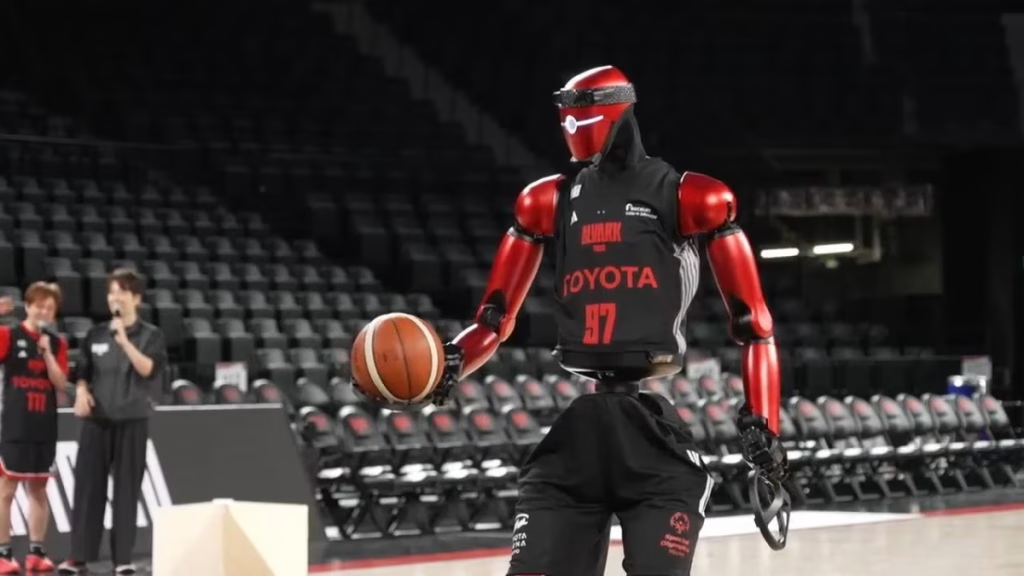
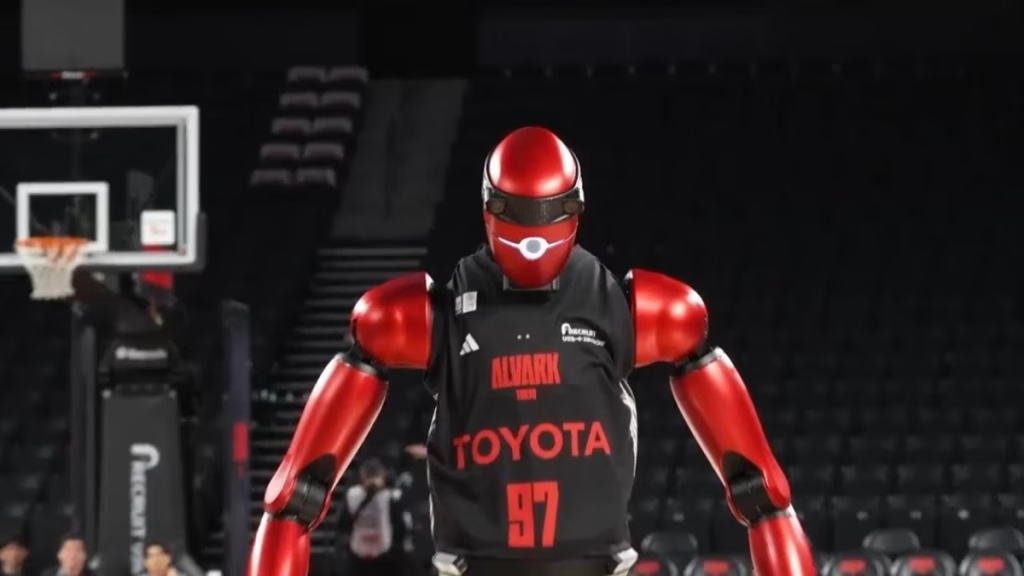
I was casually scrolling through my feed the other day when a video stopped me dead in my tracks. I was completely mind-blown when I saw Toyota’s new CUE7 basketball robot in action. We’ve all seen tech demos before—robots doing backflips or serving coffee—but this felt entirely different. Out there on the hardwood, this machine wasn’t just existing; it was dominating. It dribbles, it shoots, and it moves with a terrifying, calculated accuracy that honestly gave me goosebumps.

I’ve been writing about the metaverse and AI for a while now, and I usually look at software, algorithms, or virtual worlds. But seeing artificial intelligence manifest in a physical, competitive space completely shifted my perspective. This isn’t just a clunky machine programmed for a parlor trick; it’s a glimpse into a future where the lines between human athleticism and machine precision are entirely blurred.

Let’s dive deep into what Toyota is doing with the CUE7, how this tech actually works, and why watching a machine play with absolutely zero fatigue is making me question everything I thought I knew about the future of sports.

From Humble Beginnings to Hardwood Dominance

When I started digging into the history of Toyota’s CUE project, I was genuinely surprised by how fast this technology has evolved. The original CUE robot was a fun side project by Toyota volunteers, basically a stationary shooting machine. But the CUE7? It’s a completely different beast.

Here is what makes the CUE7 stand out from anything we’ve seen before:

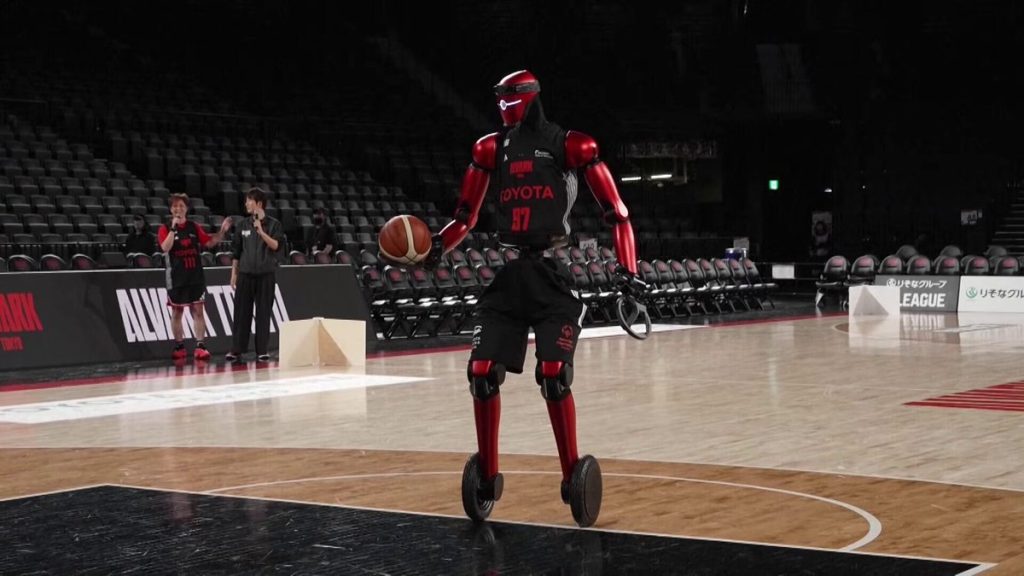
Fluid Mobility: Unlike its predecessors that had to be wheeled into place, the CUE7 actually moves around the court. It calculates its positioning in real-time, adjusting its stance based on where it needs to be.Dynamic Dribbling: This is the part that genuinely spooked me. Dribbling a basketball requires an understanding of physics, bounce trajectory, and spatial awareness. The CUE7 processes all of this instantaneously, keeping the ball in motion without missing a beat.Pinpoint Shooting Accuracy: By using advanced sensors and an internal AI that calculates the exact distance, arc, and force needed to sink a basket, the CUE7 achieves a shooting percentage that would make NBA legends jealous.

The Secret Sauce: How AI is Changing the Game

To me, the most fascinating aspect of the CUE7 isn’t its mechanical arms or its metal frame; it’s the invisible “brain” powering it all.

When a human player takes a shot, they rely on muscle memory, instinct, and a split-second visual assessment of the hoop. The CUE7 replaces human instinct with complex algorithms and spatial computing. It uses cameras and depth sensors on its torso to build a 3D map of the court. In a fraction of a second, the AI computes the distance to the basket, the current air resistance, and the optimal parabolic trajectory required for a swish.

But here is the real kicker: Machine Learning. The robot isn’t just executing pre-written code. It learns from every single shot. If it misses (which is rare), the AI analyzes the physical data of that failure and adjusts its micro-movements for the next attempt. I realized that we are watching an entity that literally perfects itself in real-time.

The Unfair Advantage: The Reality of Zero Fatigue

Let’s talk about the physical toll of sports. Basketball is an exhausting game. By the fourth quarter, legs get heavy, breathing gets shallow, and shooting percentages naturally drop. It’s part of the human condition.

Watching the CUE7, the realization hit me hard: this machine feels absolutely nothing. It doesn’t get tired. It doesn’t get intimidated by a loud crowd. It doesn’t suffer from performance anxiety during a clutch moment. It will shoot its 1,000th shot with the exact same precision, power, and arc as its very first shot. This “zero fatigue” factor is what makes me question the future of human dominance in sports.

If we eventually pit human athletes against AI-driven machines, how can flesh and bone ever compete against an opponent that never tires and calculates physics down to the millimeter?

Beyond Basketball: Why This Matters for Our Future

You might be thinking, “Ugu, it’s just a robot playing basketball, why the big deal?” I thought the same thing initially, but the implications go way beyond the court. The CUE7 is essentially a masterclass in robotic spatial awareness and delicate physical interaction.

If an AI can be trained to dynamically dribble a bouncy ball and shoot it perfectly into a small ring from 20 feet away, that exact same technology can be applied to:

Advanced Prosthetics: Creating artificial limbs that react to their environment with fluid, natural precision.Search and Rescue: Developing agile robots that can navigate unpredictable, physically demanding disaster zones.Everyday Assistance: Building humanoid helpers that can interact with fragile objects in our homes without breaking them.

The basketball court is just Toyota’s testing ground. The real goal is teaching AI how to flawlessly interact with the physical physics of our world.

The Final Whistle: Are We Ready?

I’ve spent hours analyzing the footage, looking at the specs, and thinking about the trajectory of this technology. There is a part of me that is incredibly excited to see how AI will push human athletes to train harder and smarter. But there’s another part of me that feels a strange sense of nostalgia for the beautiful imperfection of human sports.

The sweat, the fatigue, the miraculous buzzer-beaters that defy all logic—that’s the soul of the game. A machine like the CUE7 might be able to replicate the mechanics of basketball perfectly, but can it ever replicate the heart?

This brings me to a massive crossroads, and I really want to know where you stand on this. I’ve laid out my thoughts, but this is a conversation we need to have together.

Will AI eventually rule the courts, completely replacing the thrill of human athleticism, or will robots like the CUE7 just remain highly advanced training tools for us? Drop a comment below and pick a side. I’ll be hanging out in the replies!

You Might Also Like;


Source link

Google’s Latest AI Update Makes Industrial Robots Way Smarter—Here’s How – Decrypt

0
Google’s Latest AI Update Makes Industrial Robots Way Smarter—Here’s How – Decrypt


In brief

Google DeepMind launched Gemini Robotics-ER 1.6, an AI model that enables robots to perform industrial tasks through spatial reasoning and embodied intelligence.
The model shows 6% text and 10% video improvement in safety hazard identification compared to Gemini 3.0 Flash.
Boston Dynamics integrated the technology into its Orbit AIVI-Learning platform, with the update going live for customers on April 8.

Google DeepMind introduced Gemini Robotics-ER 1.6 on Tuesday, an upgraded AI model designed to enable robots to perform complex real-world tasks through enhanced embodied reasoning capabilities. The model specializes in spatial understanding, task planning, and success detection, marking a significant advancement in AI-powered robotics that could accelerate enterprise adoption of autonomous systems.

The new model demonstrates measurable improvements over both its predecessor and Gemini 3.0 Flash in spatial and physical reasoning tasks. Gemini Robotics-ER 1.6 can read complex gauges and sight glasses—a capability Google DeepMind developed through collaboration with Boston Dynamics to address specific industrial needs.

In safety hazard identification tests, the model showed a 6% improvement in text-based scenarios and 10% improvement in video-based scenarios compared to Gemini 3.0 Flash. The enhanced capabilities are now available to developers through the Gemini API and Google AI Studio.

The model’s real-world deployment is already underway. Boston Dynamics integrated Gemini and Gemini Robotics ER 1.6 into its Orbit AIVI-Learning platform, with the transition going live for enrolled customers on April 8.

“Capabilities like instrument reading and more reliable task reasoning will enable Spot to see, understand, and react to real-world challenges completely autonomously,” said Marco da Silva, VP and GM of Spot at Boston Dynamics.

The collaboration signals a shift from experimental AI research toward practical industrial applications. Enhanced spatial reasoning and instrument-reading capabilities could enable robots to perform maintenance, inspection, and monitoring tasks that previously required human oversight.


Google noted that the collaboration leverages Boston Dynamics’ established presence in commercial robotics, where Spot robots already navigate construction sites and industrial facilities. The integration of advanced AI into proven hardware platforms represents a convergence that could accelerate autonomous system deployment across industries.

Decrypt has covered Google’s evolving AI robotics capabilities, including the company’s earlier development of robots that can think and search the web, as well as Boston Dynamics’ commercial Atlas humanoid robot announcement.

Daily Debrief Newsletter

Start every day with the top news stories right now, plus original features, a podcast, videos and more.


Source link

I’m A Celebrity South Africa star Harry Redknapp delivered big elimination decision after losing trial

    0
    I’m A Celebrity South Africa star Harry Redknapp delivered big elimination decision after losing trial


    I’m A Celebrity South Africa viewers are already on edge as the first elimination looms and they’ve got a clear message for Harry Redknapp.

    After a tense episode teased a major decision, fans are pleading with the former football manager to make a ruthless call as the all-stars series heads into its final stretch.

    On Wednesday night, Ant and Dec confirmed that the first celebrity will soon be leaving camp. With the show filmed in advance, there’s no public vote this time around, meaning the power sits firmly in the hands of the campmates themselves.

    Ant and Dec teased an elimination recently (Credit: ITV)

    I’m A Celebrity elimination teased as Harry Redknapp faces decision

    The drama ramped up towards the end of the episode as new arrivals Harry Redknapp and Jimmy Bullard went head-to-head in a stomach-churning eating trial.

    With camp split into two rival groups, Harry has been leading the Lions while Jimmy heads up the Rhinos. The stakes were high, with the winning team set to enjoy a banquet and safari treat.

    After battling through a series of gruesome dishes, the pair were neck and neck, forcing a final showdown. The deciding challenge saw them race to finish a drink made up of fermented fish and stinky tofu.

    Harry, be even more of a hero and get rid of David PLEASE.

    Jimmy managed to edge ahead, securing victory for the Rhinos and earning his team the reward.

    But the real twist came afterwards. Once both camps returned, Ant and Dec dropped a bombshell on Harry. Following his loss, he was told he must choose one campmate from his team to be the first to leave the jungle.

    The episode ended on a cliffhanger, leaving viewers in suspense ahead of the next instalment.

    Jimmy and Harry take on eating trial on I'm A Celebrity
    Jimmy and Harry went head-to-head in the eating trial (Credit: ITV)

    Fans call for first campmate to go

    It didn’t take long for viewers to make their feelings known, with many taking to social media to urge Harry to pick David Haye, who has stirred up plenty of discussion during his time in camp.

    David is also part of the Lions, meaning he’s at risk of leaving.

    One person said: “Hope to god Harry gets rid of David!”

    Another wrote: “Please choose David, Harry!!”

    A third added: “Harry, be even more of a hero and get rid of David PLEASE.”

    All eyes are now on Harry as he weighs up his decision, with fans eagerly waiting to see whether he follows public opinion or makes a surprise move when the show returns.

    Read more: ‘Wouldn’t be mad if she won!’ I’m A Celebrity fans back Gemma Collins to win after her behaviour towards David Haye

    Who will Harry choose? Tell us on our Facebook page @EntertainmentDailyFix.


    Source link

    90 Day Fiance: Forrest Admits Mother Knows Best – Before The 90 Days Recap [S08E18]

      0
      90 Day Fiance: Forrest Admits Mother Knows Best – Before The 90 Days Recap [S08E18]


      On 90 Day Fiance, Forrest chooses to go home with his mom instead of staying in the Philippines with Sheena to start a life together. Laura Nevenner too makes a tough choice but Birkan surprises her with his response. Trisha gets a hard truth from Rick Van Vactor. And Elise Benson has an epic meltdown while cascading down a waterfall. Let’s break it all down in this recap of Season 8, Episode 18 Emergency Exit.

      90 Day Fiance: Forrest Listens to His Mom

      On 90 Day Fiance, Forrest stands by his decision to stay with Sheena in the Philippines. Until his mom Molly delivers a scathing takedown of the plan. Sheena even leaves the table for a breather. Molly lays it to Forrest. He can’t stay in the Philippines and find work. She suggests he return with her to the United States and go through some government sponsored training. And then work on getting a K-1 visa for Sheena to come to the U.S.

      Forrest fights back on 90 Day Fiance. But his mom won’t stop. Continuing to mock Sheena and tell Forrest to think with his head. Sheena sobs and Molly has zero empathy. Forrest starts to wear down under Molly’s tirade. And by the time they get back to the apartment for the final night in the Philippines, he’s sold that his mom is right. He tearfully tells Sheena that he’s going home the next day with Molly and Dev.

      Forrest promises he will set a plan in motion and if he can’t get her to the U.S. he will return to the Philippines. But Sheena rightly has her doubts since Molly is so manipulative with her son. And makes it clear she doesn’t trust Sheena. The next day they head to the airport. Molly is smug while Forrest and Sheena share a tearful goodbye.

      90 Day Fiance: Birkan Puts Laura on the Spot

      Laura Nevenner spent the night alone after a fight with Birkan over her BFF Michal. Birkan feels betrayed by Laura after Michal admitted it was Laura who came onto him and not the other way around. Birkan actually enjoyed hanging out with Michal. And thinks he’s a good guy. But he’s not okay with Laura’s role in the friendship. Laura pouts in the hotel to production. But Birkan agrees to talk so she stops for some street food and coke as a peace offering.

      Birkan is cold at first. Laura explains that she fibbed about who hit on who because she feared he would ask her to end the friendship. He asks if she would do that for him. She pauses but ultimately says yes. Birkan says ok. But then clarifies he wouldn’t want her to cut Michal out of her life. He suggests they remain friends. But just that. And not continue a “weird” friendship. Laura is relieved and they hug and agree to move forward.

      Before The 90 Days: Rick Van Vactor Can’t Let Go of His Ex

      After a fight at the airport over a text from his ex, Trisha is no longer speaking to Rick Van Vactor. But, Trish has agreed to talk to Rick on 90 Day Fiance. Rick sheepishly approaches Trish. Who is tired of his nonsense and questions his betrayal. Rick is wishy washy. Suggesting it’s Trish who he really loves. She questions how that can be since he was texting his ex while he was with her and her family.

      Rick waxes over the relationship with the ex to production. They met on vacation and it just kind of fizzled due to distance. But it’s obvious he’s feeling something for her. Trish fires off an ultimatum: block the ex or she will walk away for good. Rick gets teary eyed and says he can’t block her. Trish demands to know why. And he chokes up and says that while he wants to stay with Trish, he can’t deny he has feelings for his ex and won’t block her. So, she blocks him and walks away.

      90 Day Fiance: Elise Goes Overboard

      Elise Benson’s time in Australia is winding down on 90 Day Fiance. In an attempt to cement things with Josh Lawson, she wants to FaceTime with his son. He agrees to try and arrange it. Elise wants to appeal to Josh’s love of outdoor adventure. So she arranges an abseiling outing without really understanding what it entails. So she’s shocked to find she’ll be jumping into freezing cold pools of water, careening down waterfalls and gasp getting her hair wet.

      She goes along, but before long it’s disastrous. She’s freezing and her hands are numb. Not to mention she’s terrified once they send her rappelling down a waterfall attached to a cord. Elise screams bloody murder and puts her fingers in her mouth. Her helmet cam captures the whole meltdown. Finally Elise descends into the water below. And immediately receives medical attention. Josh rushes to comfort her in spite of thinking she was just being dramatic at first.

      While recovering on the drive back, Josh gets a text from his son’s mom on 90 Day Fiance. She’s not cool with letting Elise FaceTime with their son. Elise gets dramatic about it and complains again about being cold. Josh says he wouldn’t blame her for “walking away” and runs off to grab her a sweater. Later she gets froze out again while dressed like a casino cocktail waitress in a windy restaurant. This time the waitress provides a blanket. Josh claims he’s in love with her. But she’s unable to say it back.

      TLC Couples Face the Future

      Rounding out this 90 Day Fiance recap are Stig Da Artist and Aviva Duhamel. It’s just hours before Aviva is to return to the U.S. and Stig changes the game plan. Instead of making their home in Belize as they discussed multiple times, he now wants to come to America. Aviva is annoyed by this but ultimately agrees. Later, Stig reveals he wouldn’t mind relocating to Houston, Texas. He’s got family there after all. And an ex.

      Before The 90 Days couple Annalyn Fox and Jovon Fox renew their vows. But not until after Annalyn chides him for not having vows prepared and not buying her a ring. But Jovon earns points when he delivers short but sweet vows and surprises her with the very ring she wanted. Till next time!


      Source link

      Theo’s been arrested but Coronation Street spoilers confirm Sarah puts herself on the firing line for Todd

        0
        Theo’s been arrested but Coronation Street spoilers confirm Sarah puts herself on the firing line for Todd


        Coronation Street delivered one of its most emotional episodes yet tonight, as Todd finally spoke out about the horrific abuse he’s endured.  But even as justice begins to take shape, fans know the drama is far from over.

        After months of isolation and fear, Todd has been living under Theo’s control. But following a brutal attack, he found the strength to go to the police.

        Theo was arrested and taken in for questioning, though with his name already linked to the show’s upcoming murder storyline, it seems unlikely this will be the last viewers see of him.

        Still, Todd’s loved ones are determined to help him build a case strong enough to bring Theo down for good.

        A special episode took place tonight (Credit: ITV)

        What happened between Todd and Theo tonight in Coronation Street?

        At the police station, Todd opened up fully about what had been happening behind closed doors. However, when Kit and Lisa began discussing potential evidence, Todd admitted he had previously lied to medical staff when he was treated in A&E.

        Back on the cobbles, the reality of the situation hit his friends hard, with many left shaken and furious as the truth came out.

        Meanwhile, Theo appeared to realise the tide was turning against him. Keeping a low profile, he attempted to quietly pack up his van and disappear. But his plan didn’t go unnoticed.

        Gary intercepted him before he could leave, and despite Sarah’s fears that the situation might escalate, Gary instead brought Theo straight to the police station.

        Theo tried to twist the narrative, claiming Todd was the violent one in the relationship. But Lisa remained unconvinced, and he was ultimately remanded in custody overnight.

        Sarah looking through Theo's bag in Coronation Street
        Sarah decides to look for evidence (Credit: ITV)

        Sarah tries to find evidence against Theo

        There was a glimmer of hope when Todd mentioned home video footage that may have captured what happened. However, he feared Theo had already destroyed it.

        That possibility doesn’t stop Sarah, who becomes determined to track it down. Convinced Theo may have held back a device from the police, she sets out to find it herself.

        Her search leads her to the back of Theo’s van, where she begins going through his belongings. When she finally locates a tablet, she reaches for it. But the move could put her in serious danger, and potentially risk undermining Todd’s case.

        The fallout from the ordeal is only just beginning. Later in the week, Todd is discharged from hospital and returns with George to collect his belongings from the flat.

        As the storyline continues, it’s clear that while Todd has taken a huge step forward, the road ahead won’t be easy.

        Read more: ‘Makes no sense!’ Coronation Street fans call out major character absences in Todd’s horrific storyline

        What do you think of tonight’s episode? Let us know by leaving a comment on our Facebook page @EntertainmentDailyFix. 


        Source link

        Popular Posts

        My Favorites