Home Blog Page 52

Ondo Pushes SEC for Approval on Blockchain-Based Securities Tracking

Ondo Pushes SEC for Approval on Blockchain-Based Securities Tracking


Key Highlights

Ondo Finance seeks no-action relief from the U.S. Securities and Exchange Commission to use blockchain for tracking securities entitlements.

The proposal uses Ethereum Mainnet to record tokenized representations of equities while keeping traditional custody intact.

The pilot focuses on collateral tracking with built-in compliance controls, testing a hybrid model without changing legal ownership structures.

Ondo Finance has asked the U.S. Securities and Exchange Commission (SEC) to confirm it will not take enforcement action over a plan to use public blockchain infrastructure to track securities entitlements.

According to the official announcement, the request centers on a limited pilot: recording ownership claims to U.S. equities and ETFs, already held through traditional systems, on the Ethereum Mainnet. The proposal does not involve issuing new securities, but rather representing existing positions in tokenized form for operational purposes.

A hybrid model, not a system overhaul

The structure keeps the current market plumbing intact. Underlying securities would continue to be held through the Depository Trust Company (DTC) via broker-dealer Alpaca Securities LLC.

What changes is the recordkeeping layer. Ondo’s transfer agent, Oasis Pro TA, would mint tokens reflecting those holdings. These tokens would sit in a custodial wallet managed by BitGo, while Alpaca’s off-chain books remain the official legal record.

The tokens would mirror “security entitlements,” claims to assets held in custody, rather than the securities themselves.

Focus on collateral tracking, not trading

The proposal applies specifically to collateral backing Ondo’s offshore investment products. These tokenized notes, issued by Ondo Global Markets, are linked to more than 260 U.S. stocks and ETFs and sold to non-U.S. investors.

The blockchain layer would:

Track collateral positions in near real time

Support minting and burning tied to investor flows

Improve reconciliation between custodians and agents

The tokens themselves would not be actively traded and would remain within a controlled environment involving regulated entities.

Compliance controls built into token design

The system includes restrictions typically absent in open blockchain assets. Token transfers would be screened against internal compliance lists and external monitoring tools. Administrative controls would allow:

Freezing or restricting transfers

Seizing and burning tokens

Reversing transactions in defined cases

These features are intended to align with regulatory expectations while using a public, permissionless network.

Regulatory question: Can blockchain support broker records?

At the center of the request is whether a broker-dealer can rely on blockchain infrastructure to support its recordkeeping obligations under U.S. securities law.

Ondo argues the proposal does not replace required records. Alpaca would still maintain official books under existing rules, including requirements under the Securities Exchange Act and FINRA supervision standards. The blockchain layer would function as a parallel system for tracking and reconciliation—not as the legal record of ownership.

Comparison with emerging market infrastructure

The request comes as the SEC has already allowed the DTC to explore a centralized tokenization model. Ondo’s approach differs by using a public blockchain rather than a closed system.

The company argues that limiting tokenization to centralized infrastructure may not be the only viable path, especially as blockchain-based systems become more integrated into financial markets.

Limited scope, broader implications

Ondo’s proposal is narrow in scope but raises broader policy questions. It tests whether existing regulatory frameworks can accommodate hybrid systems that combine traditional custody with on-chain transparency. If accepted, the model could offer a template for using blockchain in back-end financial operations without changing the legal structure of securities ownership.

For now, the outcome depends on whether the SEC views this approach as a permissible extension of existing practices or as a step that requires new rules.

Also Read: ABA Says White House Stablecoin Yield Study Misses Community Bank Risk


Disclaimer: The information researched and reported by The Crypto Times is for informational purposes only and is not a substitute for professional financial advice. Investing in crypto assets involves significant risk due to market volatility. Always Do Your Own Research (DYOR) and consult with a qualified Financial Advisor before making any investment decisions.







Source link

BlackRock, HSBC, And Standard Chartered To Speak At HSC Asset Management As TradFi Meets Digital Assets In Hong Kong This April

BlackRock, HSBC, And Standard Chartered To Speak At HSC Asset Management As TradFi Meets Digital Assets In Hong Kong This April


In Brief

HSC Asset Management brings together 50+ global finance leaders in Hong Kong on April 23 to debate stablecoins, RWA tokenisation, and the future of institutional digital assets.

BlackRock, HSBC, And Standard Chartered To Speak At HSC Asset Management As TradFi Meets Digital Assets In Hong Kong This April

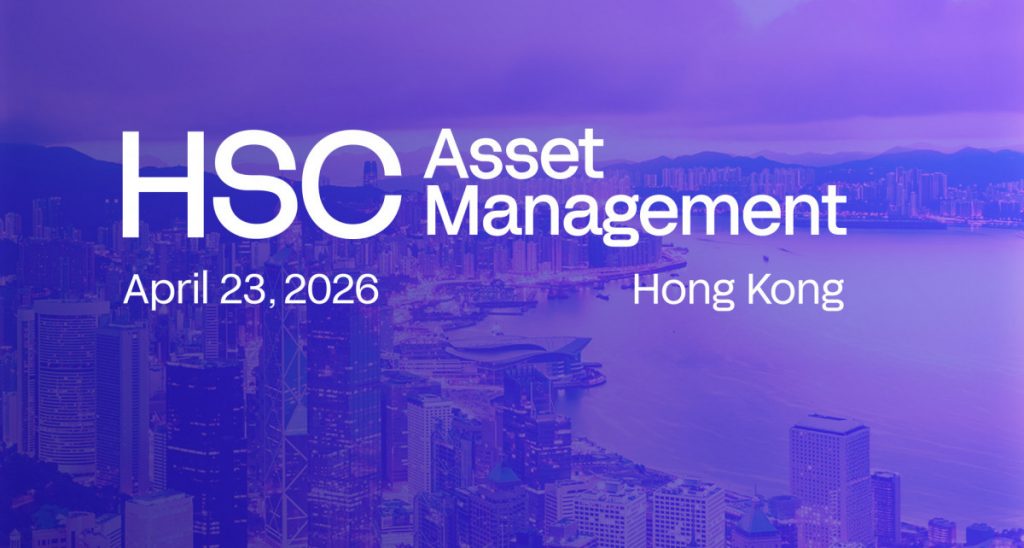
HSC Asset Management, a premier conference dedicated to bridging cryptocurrency and institutional finance, will take place in Hong Kong on April 23, 2026. The event positions itself as one of the region’s key platforms for dialogue at the intersection of digital assets, stablecoins, real-world asset (RWA) tokenization, PayFi, traditional finance (TradFi), and regulatory frameworks.

Hosted at the Hopewell Hotel, the conference is designed as a curated, high-level forum for investors, financial institutions, policymakers, and infrastructure providers at the forefront of the TradFi-digital asset convergence.

The event aims to provide a focused environment for substantive discussion and deal-making. The agenda will center on four core pillars:

Global Risk & Capital MarketsExploring macroeconomic repricing, cross-border capital flows, and Hong Kong’s role as a gateway for institutional capital into Asia.

Stablecoins & TokenizationCovering stablecoins as an emerging monetary layer, real-world asset liquidity, and the tokenization of financial instruments across both public and private markets.

Regulation & ComplianceExamining fragmented global regulatory frameworks, jurisdictional approaches across Hong Kong, Japan, and other key markets, and the legal infrastructure required for institutional participation.

The Future of Financial InstitutionsAnalyzing how traditional banks, asset managers, and capital market intermediaries are rebuilding their infrastructure around digital assets, blockchain-based settlement, and decentralized financial systems.

HSC Asset Management is expected to host over 50 speakers and more than 2,000 registrations, with the majority of attendees comprising C-suite executives and senior decision-makers. Participants will come from across venture capital and crypto funds, asset management, private equity, banking, payment providers, as well as stablecoin issuers and blockchain infrastructure platforms.

The speaker lineup reflects the conference’s strong institutional, technological, and investment focus, bringing together senior leaders from global finance, Web3 infrastructure, and venture capital. Confirmed speakers include:

Barton Lui — Director, Global Product Solutions, BlackRock

Allan Song — Head of Data & Digital, Financing & Securities Services, Standard Chartered Bank

Chris Barford — Partner, Financial Services Consulting, Ernst & Young

Bugra Celik — Head of Digital Assets and Currencies, Global Macro, HSBC

Allan Liu — Global Chairman, AIC

Don Ng — Director, Digital Assets, China Asset Management

Gillian Wu — Founder & General Manager, Mulana Investment Management

Joseph Chalom — CEO, Sharplink

Akshat Vaidya — Managing Partner & Co-Founder, Maelstrom

Kelvin Koh — Founding Partner, The Spartan Group

Mushtaq Kapasi — Managing Director, Chief Representative, Asia-Pacific, International Capital Market Association

Brian Mehler — CEO, Stable

Cleo Cui — Tokenization Manager, HashKey Tokenization

In addition to focused discussions, the event will feature an exclusive VIP Lounge, offering private, high-value conversations between investors and founders, and facilitating strategic introductions and partnership opportunities outside the main sessions.

HSC Asset Management And CGV To Bring Global Institutional Finance Forum To Hong Kong

HSC Asset Management is focused on connecting institutions, investors, and innovators across the globe. Crypto research and investment firm CGV will join as co-host, bringing expertise in digital asset investment and ecosystem development, reinforcing the event’s mission to advance dialogue around institutional finance and emerging investment opportunities.

This latest edition marks the 14th in a global series designed to connect leading investors with digital-native companies, building on the successful Hong Kong edition held this February. Having welcomed more than 80,000 visitors over the past three years, the platform continues to expand internationally, with upcoming editions scheduled for Singapore and Miami in 2026.

Disclaimer

In line with the Trust Project guidelines, please note that the information provided on this page is not intended to be and should not be interpreted as legal, tax, investment, financial, or any other form of advice. It is important to only invest what you can afford to lose and to seek independent financial advice if you have any doubts. For further information, we suggest referring to the terms and conditions as well as the help and support pages provided by the issuer or advertiser. MetaversePost is committed to accurate, unbiased reporting, but market conditions are subject to change without notice.

About The Author


Alisa, a dedicated journalist at the MPost, specializes in crypto, AI, investments, and the expansive realm of Web3. With a keen eye for emerging trends and technologies, she delivers comprehensive coverage to inform and engage readers in the ever-evolving landscape of digital finance.

More articles


Alisa, a dedicated journalist at the MPost, specializes in crypto, AI, investments, and the expansive realm of Web3. With a keen eye for emerging trends and technologies, she delivers comprehensive coverage to inform and engage readers in the ever-evolving landscape of digital finance.


More articles


Source link

Top NFL Prospect Rueben Bain Jr. Driver In Accident That Killed Woman In 2024

    0
    Top NFL Prospect Rueben Bain Jr. Driver In Accident That Killed Woman In 2024


    U Miami’s Rueben Bain Jr.
    Driver In 2024 Car Accident
    … Passenger Died

    Published
    April 13, 2026
    7:24 AM PDT

    Rueben Bain Jr. was the driver in a fatal accident in 2024, according to a new report … as the University of Miami star prepares for the NFL Draft, where he’s a near lock first-round draft pick.

    Bain, now 21, was driving a 2021 Land Rover SUV with three other passengers — Canes teammates Nyjalik Kelly and Wesley Bissainthe, and a 22-year-old woman, Destiny Betts, on March 17, 2024.

    Around 4 AM, Rueben rear-ended another vehicle, according to The Read Optional, sending his SUV careening into multiple concrete barriers.

    Rueben-Bain-Jr-sub-getty-2

    Betts was transported to a local trauma center in Miami, where she was in a coma for nearly three months before dying from her injuries on June 13, 2024.

    At the time of the accident, Bain was cited … but the ticket was dropped before Betts passed away.

    No field sobriety tests were administered.

    Despite what happened, Destiny’s family seems to be at peace … calling the incident a “tragic accident” in a statement, and saying they “wish Mr. Bain the best as he continues his life and career.”

    On the field, Bain is a terror … finishing the season with 9.5 sacks and nearly 60 quarterback pressures. He was named ACC Defensive Player of the Year for the 2025 season.

    Bain is expected to be drafted somewhere between 8 and 15 at next week’s NFL Draft.


    Source link

    Why 2026 Is the “Proof Year” for Tokenized Real-World Assets | NFT News Today

    Why 2026 Is the “Proof Year” for Tokenized Real-World Assets | NFT News Today


    As of early April 2026, tokenized real-world assets (RWAs) sit at roughly $27B+ in distributed on-chain value, holding steady—and even growing modestly—despite broader crypto market weakness. That divergence matters. It suggests RWAs are beginning to decouple from purely crypto-native cycles and instead track something closer to traditional financial demand.

    This shift aligns with a growing industry consensus. Recent institutional discussions, including those involving DWF Labs, have framed 2026 as a “proof year”—not for whether RWAs work, but whether they can scale into repeatable financial infrastructure.

    That distinction is important.

    RWAs are no longer experiments in tokenization. They are evolving into standardized, composable building blocks that can be priced, collateralized, and circulated across decentralized financial systems. The question is no longer whether assets can move on-chain—but whether the underlying infrastructure is mature enough to support them at scale.

    For RWAs to function as real financial infrastructure—not just tokenized wrappers—three conditions must be met simultaneously: reliable pricing, usable liquidity, and productive collateralization.

    1. Pricing: Making RWAs Legible

    At the core of any financial system is pricing. Without it, risk cannot be assessed, and capital cannot be allocated efficiently.

    This issue has been a major obstacle for RWAs in the past. Unlike crypto-native assets, many real-world instruments such as private credit, bonds, and structured products do not have ongoing, transparent price discovery.

    That’s where infrastructure like Chainlink’s NAVLink and SmartData comes in. By providing tamper-resistant, real-time Net Asset Value (NAV) feeds, these systems make illiquid assets legible to on-chain risk engines.

    The implication is deeper than better data:

    Without reliable NAV, RWAs cannot be properly assessed for risk. Without risk assessment, they cannot be used as collateral.

    Pricing is what transforms RWAs from opaque instruments into programmable financial primitives.

    2. Liquidity: Turning Assets into Markets

    Tokenization by itself does not create liquidity; it only provides access. True liquidity comes from active borrowing, lending, and trading.

    This is where protocols like Aave, especially its Horizon initiative, are moving the market forward. With a market size of about $520 million to $540 million based on recent on-chain data and protocol reports, Aave Horizon lets institutions supply RWAs and borrow stablecoins in a mix of permissioned and permissionless settings.

    Notably, institutional loan sizes on these platforms are significantly larger than typical DeFi retail positions, reflecting a different class of capital entering the system.

    But in practice, liquidity here is still evolving.

    Most current RWA markets exhibit episodic liquidity rather than continuous depth, creating a mismatch with DeFi’s assumption of instant composability.

    Liquidity is what makes tokenization work as a real market, but it is still one of the main challenges to scaling up.

    3. Collateral: Making RWAs Productive

    The real turning point for RWAs is not just issuing them, but using them as collateral.

    When RWAs can be used as collateral, they stop being passive yield instruments and become active components of financial balance sheets.

    Platforms like Ondo Finance and Centrifuge are at the forefront here:

    Ondo has surpassed $2.5B+ TVL, spanning tokenized Treasuries (e.g., OUSG, USDY) and a rapidly growing tokenized equities segment

    Centrifuge continues to lead in private credit origination and structured on-chain products

    These assets are increasingly being used to:

    In effect, RWAs are transitioning from “yield-bearing tokens” to productive collateral within a broader financial system.

    The Emerging RWA Stack

    What’s forming is not a single dominant platform, but a modular financial stack:

    Origination Layer → Centrifuge (private credit, structured deals)

    Distribution Layer → Ondo Finance (Treasuries, equities, scale)

    Credit & Liquidity Layer → Aave (lending, leverage)

    Trading Layer → Platforms like xStocks / Backed Finance (secondary market activity)

    This separation is similar to traditional finance, but with added programmability and the ability to combine different parts.

    The next phase of RWA growth will not be driven by more tokenized Treasuries alone. It will come from higher-yield, more complex, and more specialized assets.

    Yield Expansion

    Tokenized private credit is already a major driver, with $5B–$6B in distributed value (and broader representations up to ~$18B–$19B across platforms). Protocols like Centrifuge, Maple, and Figure are enabling 8–15% yields through on-chain origination.

    Emerging categories include:

    These represent a shift from passive exposure → active yield strategies.

    Regulation-Led Growth

    Regulation is increasingly acting as a catalyst rather than a constraint.

    Europe’s MiCA framework is accelerating adoption of compliant tokenized instruments

    U.S. developments (e.g., GENIUS Act, CLARITY Act) are providing clearer pathways

    Regulatory progress has enabled players like Ondo Finance to expand offerings with greater institutional confidence

    This is particularly relevant for:

    Tokenized Treasuries

    ESG / green bonds

    Market Infrastructure Fixes

    Some of the most compelling RWA use cases are in fixing structurally inefficient markets.

    Carbon credits are a good example. The tokenized carbon market, estimated at about $4.5 billion in 2025, is expected to grow a lot over the next decade and bring:

    Transparency

    Standardization

    Improved liquidity

    The broader pattern:

    RWAs are not only moving assets on-chain; they are also rebuilding the market infrastructure.

    Despite rapid growth, RWAs remain constrained by a fundamental mismatch between on-chain expectations and off-chain realities.

    Liquidity vs. Tokenization

    Tokenizing an asset does not guarantee a deep market. Many RWA markets remain thin, particularly under stress.

    Oracle Dependency

    Infrastructure such as Chainlink helps with pricing, but it also creates a strong reliance on data pipelines.

    Redemption Friction

    Unlike crypto-native assets, RWAs often involve:

    Settlement delays

    Legal wrappers

    Off-chain processing

    In practice:

    Tokenization does not remove friction; it simply moves it into new layers of complexity.

    Fragmentation

    Multiple chains (e.g., Ethereum, Solana, Polygon, BNB Chain) and regulatory regimes create interoperability and compliance complexity.

    Some forecasts predict RWAs could reach $50 billion to over $100 billion by the end of 2026. While this is possible, these estimates assume that liquidity and infrastructure will grow along with issuance, which has not yet been fully proven.

    Still, the direction is clear.

    For:

    Builders → the opportunity lies in infrastructure layers (pricing, liquidity, compliance), not just asset issuance

    Investors → value accrues to platforms enabling capital flow, not just yield generation

    Institutions → tokenization is shifting from optional strategy to default architecture

    RWAs are changing blockchains from simple asset issuance platforms into full financial systems that can price, use as collateral, and move real-world value.

    2026 will test whether that system holds under scale.

    The question is no longer whether RWAs come on-chain.

    Now, the real question is which parts of finance will stay off-chain, and for how long.


    Source link

    Mortal Kombat II | Trailer 2

      0
      Mortal Kombat II | Trailer 2


      The internet’s most unsettling nightmare is about to step fully into the spotlight.

      A brand-new trailer for Backrooms, A24’s upcoming horror film based on the viral creepypasta phenomenon, is set to drop tomorrow and fans are already bracing for what could be one of the most disturbing films of the year.

      From YouTube Horror to the Big Screen

      Backrooms isn’t just another horror movie. It’s the evolution of a digital legend.

      The film is directed by Kane Parsons, the creator behind the massively popular Backrooms found-footage series that exploded on YouTube. What started as a low-budget analog horror concept quickly turned into a global phenomenon, with millions drawn to its eerie liminal space aesthetic and unsettling sense of isolation.

      Now, A24 is bringing that same nightmare fuel to theaters.

      What the Movie Is About

      While details remain intentionally cryptic, the story follows a therapist who ventures into a strange alternate dimension after her patient mysteriously disappears.

      That dimension is the Backrooms, an endless maze of empty office-like spaces filled with flickering lights, yellow walls, and something far more sinister lurking just out of sight.

      If the original concept taught fans anything, it’s this:you are not supposed to be there.

      Backrooms [credit: A24]

      Stacked Cast and Big Studio Backing

      The film features a strong cast for such an experimental horror concept, including:

      Chiwetel Ejiofor
      Renate Reinsve
      Mark Duplass
      Finn Bennett
      Lukita Maxwell
      Avan Jogia

      Behind the scenes, the project is backed by A24 along with major production companies like Atomic Monster, signaling that this isn’t just a niche internet adaptation, it’s a full-scale cinematic event.

      Release Date and What to Expect

      Backrooms is officially set to hit theaters on May 29, 2026, positioning it as one of A24’s most anticipated horror releases of the year.

      The teaser already gave fans a glimpse of its unsettling tone, but tomorrow’s trailer is expected to dive deeper into the story and possibly reveal the creatures and deeper lore that made the original series so terrifying.

      Why This Could Be Huge

      This isn’t just another horror release. It’s part of a growing trend where internet-born stories are evolving into mainstream cinema.

      But Backrooms stands out.

      It taps into a very specific kind of fear, the uncanny feeling of being somewhere familiar yet completely wrong. Early footage suggests the film is leaning heavily into psychological dread rather than relying on traditional jump scares.

      If it lands, it could become the next breakout horror hit in A24’s lineup.

      Final Thoughts

      With the full trailer dropping tomorrow, Backrooms is about to go from online legend to mainstream obsession.

      And if the studio nails the tone, don’t be surprised if this becomes the horror movie everyone’s talking about heading into summer.


      Source link

      Paris and Tyson Fury’s eldest son Prince blasted for ‘disgusting’ moment in family’s Netflix reality show

        0
        Paris and Tyson Fury’s eldest son Prince blasted for ‘disgusting’ moment in family’s Netflix reality show


        Prince Fury has left At Home With The Furys viewers “disgusted” after one scene sparked outrage online.

        The eldest son of Tyson Fury and Paris Fury appears in the opening episode of the Netflix series, where his behaviour quickly became the talking point among fans.

        Prince tells cameras he has already left school and insists his only goal is to follow in his father’s boxing footsteps.

        Don’t miss a single story! Add us as a Preferred Source in Google for all your entertainment news

        It’s important to us that you never miss our articles when searching for stories! We have all the latest TV & Celebrity news to share with our community of loyal readers.

        Click here and tick Entertainmentdaily.com to ensure you see stories from us first in Google Search.

        Prince Fury has raised eyebrows after the new series of At Home With The Furys dropped (Credit: Netflix)

        On Saturday night, two time World Heavyweight champion Tyson once again came out of retirement for another fight.

        He beat Arslanbek Makhmudov in the heavyweight battle, which streamed globally on Netflix.

        But it is Prince’s behaviour at home that has triggered the strongest reaction from viewers – not his decision to quit school so young.

        Prince Fury branded ‘disgusting’ by fans

        Viewers were left horrified after seeing Prince handle a household chore in the opening episode of series two.

        Prince was given a series of jobs to complete while his father was away.

        He told cameras: “The jobs increase when my dad’s away. Weeds, dog [bleep], rubbish. I’m clearly turning into my dad.”

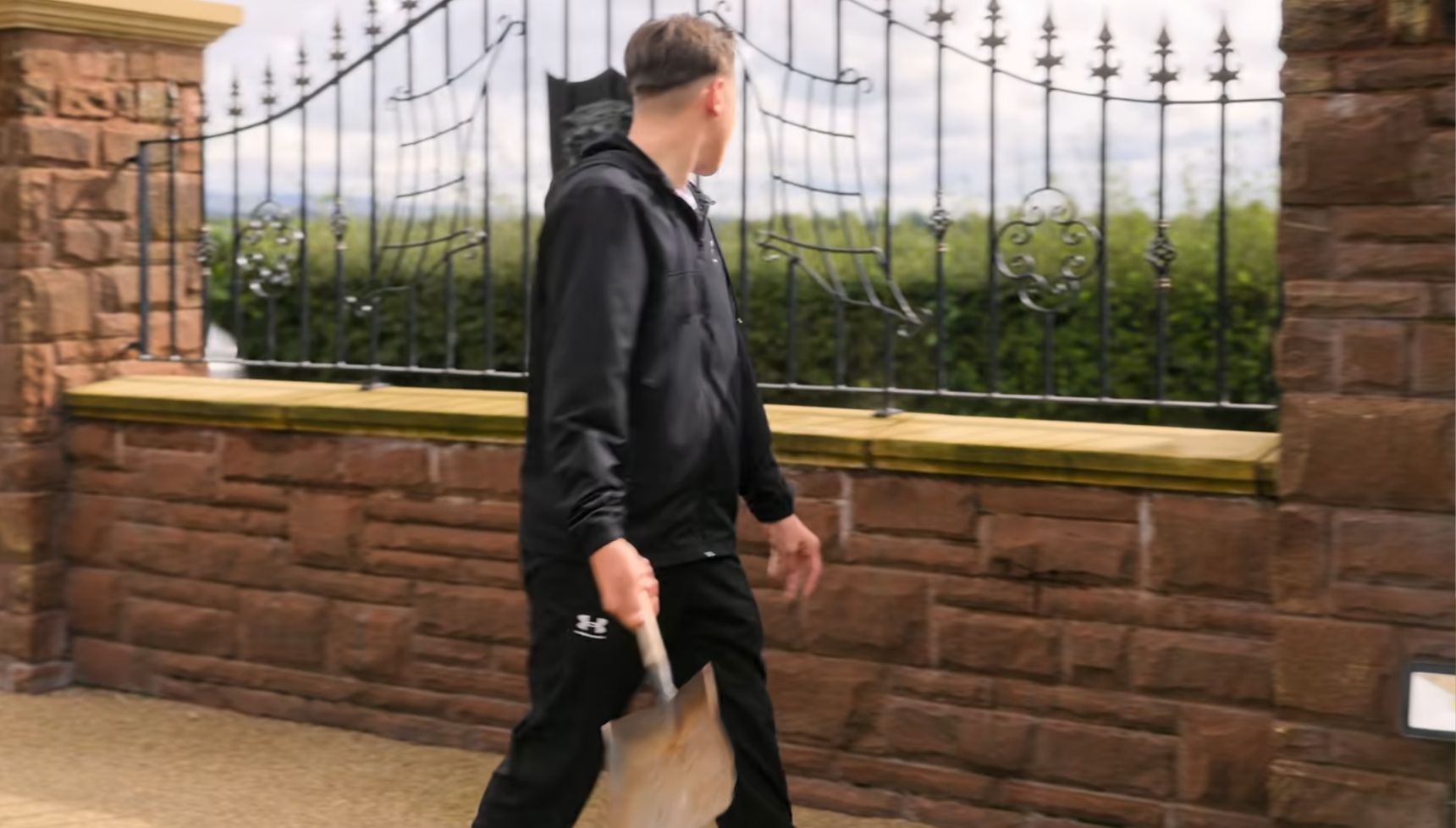
        Prince was then shown scooping up dog faeces with a spade before throwing it over the garden fence and into the street.

        The moment quickly set off outrage online, with fans shocked at what they were seeing.

        Taking to X, one viewer wrote: “Scooping dog poo up then throwing it over the fence is [bleep]-ing disgusting!!”

        Another added: “I am absolutely gobsmacked that they were flicking dog [bleep] over their fence!”

        And a third said in shock: “The eldest kid just throwing the dog [bleep] onto the road.”

        The incident happened while Tyson and Paris were in Lake Como watching 50 Cent perform.

        Their eldest child, daughter Venezuela, was left at home with the other children, along with Paris’ mum, who helps out.

        Venezuela was 15 when filming began and turns 16 during the series. They are also parents to daughters Valencia, who is now eight, four year old Athena, and son Prince Rico Paris.

        Prince is seen throwing dog faeces over the garden fence and into the street in the show (Credit: Netflix)

        At Home with the Furys: How old is Prince Fury?

        Prince’s full name is Prince John James Fury. He was born in August 2011 and is currently 14 years old.

        Prince was 13 when season 2 of At Home With The Furys was filmed, although he had already left school.

        Prince told cameras: “In the last few years, I have left school and I 100 per cent guarantee I’m going to be a boxer and I’m going to be the best there ever is.

        “I’m going to make just as much money as my dad has, if not more.

        “That’s my plan and I’ve got no other path in mind. It’s a clear, straight shot to the future. My dad didn’t have a back-up plan and I don’t have a back-up plan.”

        Prince was also shown shopping in ASDA in Morecambe, Lancashire, with Tyson and his brothers Tutty and Adonis. Their full Christian names also begin with Prince, but only Prince John James responds to Prince.

        Tutty was born Prince Tyson II and is nine years old. His brother Prince Adonis Amaziah is seven years old.

        Read more: Inside Tyson Fury’s staggering net worth: From multi-million pound property empire to how much he’s paid for each fight

        What do you think of this story? Leave us a comment on our Facebook page


        Source link

        Dune: Awakening to get self-hosted servers, plus they’re splitting PvE and PvP

        0
        Dune: Awakening to get self-hosted servers, plus they’re splitting PvE and PvP


        Funcom are finally dealing with some of the wider issues in the MMO Dune: Awakening, which includes expanded self-hosting support and more focus on PvE.

        In an announcement on Steam the developers noted that they’re trying to balance priorities with the struggling MMO, which has seen player numbers drop pretty sharply from the original release. While the game originally blended the PvE and PvP worlds together, they’re now going to be making the PvP a lot more optional. Why? They said “over 80% of our lifetime players exclusively engaging with PvE content” so forcing PvP in some areas appears to have been worknig against it.

        With that in mind they’re making PvP much more optional with these major changes coming:


        All PvP zones in Hagga Basin will be disabled across all official Worlds.
        All official Worlds will have separate Deep Desert instances you can choose from:

        A PvE instance for pure survival and exploration experience with no player combat. There is no PvP in this instance across any of the rows, including Shipwrecks.
        A PvP instance with the classic high-stakes environment and open-world conflict across rows B through I. To make sure the rewards match the risk, the yield from mining and spice harvesting will be multiplied by 2.5 in PvP areas.


        And, in a win for game preservation, they’ve announced that self-hosted servers are finally coming to the game. You could previously rent some private areas from certain hosting platforms, but this mixed with the bigger public areas. It wasn’t the best solution but now they’re going to be changing that with full self-hosting. This is great, as Funcom will inevitably move on from the game at some point, so at least everyone who wants to will be able to just host the full thing themselves.

        Here’s how they explained the changes coming for that:

        Self-hosted Servers Are Coming!

        We are thrilled to announce that Self-Hosting is coming to Dune: Awakening. Whether you want to host a private server for friends or foster a community with unique rules, the power is moving into your hands.

        The initial iteration, which will be available for testing soon, will require a few extra steps to set up and feature a limited range of customization settings. These settings will include resource harvesting rates, adjustable limits on base building pieces, or item durability and base decay options, with more customization settings being rolled out later. All these customization options will also be available on private servers right from the start. We are releasing it early to get feedback on this experimental version and improve it alongside you. More features and improvements will be added throughout the year.

        Full instructions on how to set up and customize self-hosted servers will be included in the patch notes when the feature becomes available. Please be advised that the initial setup for this first iteration of the feature is more technical than most other games and requires a computer running Microsoft Windows Pro with Hyper-V in order to run the servers in a Linux Virtual Machine (VM).

        We are, of course, still working on future updates. The goal is to work on improving these customization tools along with those releases, but we will talk about that in dune time. We are excited to continue crafting a survival experience that can stand the test of time in the new era of Dune: Awakening.

        Thank you for walking this path with us.

        Release Date: 10th June 2025

        Platform: ⚛ Proton / Wine

        Article taken from GamingOnLinux.com.


        Source link

        Cardano Price Holds $0.24 Amid Bearish Trend: What’s Next for ADA? – NFT Plazas

          0
          Cardano Price Holds alt=


          Cardano (ADA) is once again sitting at a critical inflection point. Trading near the $0.24 level in mid-April 2026, the asset appears caught between two opposing forces: a clearly defined bearish trend on the charts and a steadily strengthening foundation beneath the surface.

          At first glance, the technical picture looks uninspiring. ADA has struggled to reclaim key resistance levels for months, and momentum indicators continue to lean negative. Yet a closer look at on-chain data reveals a more nuanced reality – one where large holders are accumulating, network activity remains resilient, and market structure is quietly shifting.

          This growing divergence between price action and underlying data is what makes the current setup particularly compelling.

          A Downtrend That Refuses to Break But Also Refuses to Accelerate

          From a technical standpoint, Cardano remains firmly in a downtrend. Since topping out near $0.43–$0.45 in late 2025, ADA has printed a consistent pattern of lower highs and lower lows. Repeated rejections around the $0.25–$0.26 range have reinforced this bearish structure, turning former support into a ceiling that bulls have yet to reclaim.

          Momentum indicators tell a similar story. The Relative Strength Index (RSI) remains below neutral, hovering in the low-40s, while the MACD sits near the zero line with only weak directional conviction. ADA also continues to trade below its major moving averages, all of which are clustered significantly above current price levels.

          And yet, despite this persistent weakness, one key detail stands out: the market is not breaking down aggressively.

          Instead of sharp capitulation, ADA is showing signs of controlled decline. Price action has compressed tightly around the $0.235 – $0.24 support zone, and volatility has steadily decreased. Sell-offs are becoming less impulsive, and follow-through to the downside has been limited.

          This kind of behavior often signals that something is changing beneath the surface.

          ADA price on-chain breakdown (Source: Santiment)

          ADA price on-chain breakdown (Source: Santiment)

          Whale Accumulation Suggests a Shift in Market Control

          One of the clearest signals comes from Santiment, which shows a steady rise in large Cardano holders. Wallets holding 10 million ADA or more have climbed to approximately 424 addresses, marking a four-month high and a notable increase over recent weeks.

          This trend is significant not just because of the numbers, but because of the timing.

          Whales are accumulating during a downtrend, not after a breakout. This implies a deliberate strategy of absorbing sell pressure while sentiment remains weak. In other words, large players appear to be positioning ahead of a potential shift rather than reacting to one.

          Such behavior has historically preceded accumulation phases, where supply gradually transitions from weaker hands to more patient, long-term holders.

          On-chain activity like this is a solid indicator of growing trust and usage.On-chain activity like this is a solid indicator of growing trust and usage.

          On-chain activity like this is a solid indicator of growing trust and usage.

          Smart Money Rotation vs Early Re-Entry

          Additional insights further illustrate the complexity of the current market.

          On one side, data shows that top-performing traders have been reducing exposure, with net outflows observed over recent days. Exchange inflows, while relatively modest, also point to continued distribution from certain cohorts.

          On the other side, there are signs of new wallet activity and fresh inflows, suggesting that early-stage buyers are beginning to step back in.

          This creates a layered market structure:

          Short-term traders are de-riskingRetail participants are largely holding losses or exitingNew entrants are cautiously accumulating

          Rather than signaling a clear trend, this combination points to a transitional phase, where ownership is gradually shifting but direction remains undecided.

          Fundamentals Hold Firm Despite Price Weakness

          While price action remains under pressure, Cardano’s underlying network metrics tell a more constructive story.

          One of the most notable developments is the rapid growth in stablecoin supply on the network, which has more than doubled year-over-year . This expansion reflects increasing liquidity within Cardano’s decentralized finance ecosystem, an important indicator of long-term utility and demand.

          At the same time, a significant portion of ADA supply remains staked, estimated at around two-thirds of circulation, effectively reducing the amount of liquid tokens available for selling.

          Wallet growth also continues to trend upward, with no meaningful signs of user attrition. Combined with consistently high development activity and ongoing protocol upgrades, these factors reinforce the idea that Cardano’s fundamentals are not deteriorating alongside price. Instead, they appear to be strengthening.

          Compression Signals a Bigger Move Ahead

          Perhaps the most important feature of the current market is compression.

          Price has narrowed into a tight range around $0.24. Volatility is declining. Volume spikes are becoming less directional. This pattern aligns closely with what some analysts describe as a re-accumulation phase, where liquidity is gradually absorbed before a larger move unfolds.

          Markets rarely remain in such compressed states for long. When they resolve, the move is often sharp and decisive. The key question is which direction that move will take.

          Key Levels That Will Decide ADA’s Next Move

          In the near term, ADA’s trajectory hinges on a relatively narrow set of levels.

          A sustained move above $0.26-$0.27 would mark the first meaningful shift in structure, opening the door for a recovery toward $0.30 and potentially higher if momentum builds.

          Conversely, a breakdown below $0.235 would likely trigger a wave of stop-losses and renewed selling pressure, exposing downside targets around $0.22 and $0.20.

          Until one of these levels is decisively breached, the most probable scenario remains continued consolidation within the $0.23-$0.26 range.

          ADA allocationADA allocation

          ADA Long/Short Ratio Chart (Source: CoinGlass)

          A Market Defined by Divergence

          What makes Cardano’s current setup particularly noteworthy is the degree of divergence across key metrics.

          Price action remains bearish. Momentum is weak. Sentiment is fragile.

          And yet:

          Whale accumulation is risingNetwork activity is stable or improvingLiquidity within the ecosystem is expandingVolatility is compressing rather than expanding

          This combination suggests that the market is not in a straightforward downtrend, but rather in a transition phase between distribution and accumulation.

          The Bottom Line: A Coiled Setup Waiting for Resolution

          At $0.24, Cardano is not simply drifting – it is building pressure.

          The technical trend still favors the bears, and a breakdown cannot be ruled out. But the underlying data tells a different story – one of gradual accumulation, improving fundamentals, and declining sell-side momentum.

          When price and on-chain signals diverge this clearly, the resolution is rarely subtle.

          If bulls can reclaim higher levels, the shift in narrative could be swift and aggressive. If support fails, a final capitulation move may be needed before a true bottom forms.

          For now, ADA sits in a state of tension – a compressed, coiled market waiting for a catalyst. And when that catalyst arrives, the move that follows is unlikely to go unnoticed.


          Source link

          Brunello Cucinelli’s Spring/Summer ’26 Capsule Is a Revelation of 21st Century Masculinity

          Brunello Cucinelli’s Spring/Summer ’26 Capsule Is a Revelation of 21st Century Masculinity


          There is no distinct line drawn around masculinity. Rather, it unfolds gradually, gently and eloquently. There is no ceremony, no uniform or robust shell either — a dance of softening discernment — and the Shape of Light, Brunello Cucinelli’s Men’s Spring/Summer ’26 capsule collection, speaks true.

          Elegance positions itself not as a mere trait or end goal, but as an action; a waltz of the wearer. The house presents classical tailoring not as armour, separate and detached from the male form, but as a kind of cocoon that drapes with the skin. Through echoes of the early 1990s, the collection’s jackets are shaped yet lenient, while trousers fall with ease. Delicate wools, silks and linens carry the memory of formality, where these fabrics respond to movement with intent. Yet, they lie in familiar silhouettes quietly assumed, never rigid or imposed, carrying the memory of formality.

          In an era that often conflates masculinity with severity, Brunello Cucinelli offers an alternative proposition: confidence can come with compassion, and authority can be commanded without reverence. Muted neutrals, softened whites, and sun-kissed earthy tones contrast vivid hues of apricot, orange, royal blue and coral red. Together, the palette paints the capsule with a youthful charm and a timeless sensibility; a sense of continuity that lends the collection a sense of gentle authority.

          The collection does not hold its name empty, as textures create a sensory paradigm — one that plays with light and feel — extending from the eveningwear into accessories. The house’s artisanal standards bear precious leathers, supple to the touch, presented in varied weaves and constructions. Light illuminates the garments, but also traces every fold, corner, and revealing grain, finding itself at the borders where structure dissolves into motion. Material becomes narrative, and sophistication emerges, not from excess, but in a willingness to let the craft breathe; to maintain a receptive openness that lies in the heart of the Shape of Light collection.

          This season, Brunello Cucinelli is resisting definitions in favour of new resolutions. The Shape of Light, in line with this ever-evolving image of masculine grace, offers no fixed conclusions, but an opportunity to dress with awareness. Elegance, here, comes by as a lived practice, expressed differently by each body that carries it. In the house’s quiet choreography, refinement is both consciously claimed and continuously becoming.

          This story was first seen on Men’s Folio Singapore.

          For more on the latest in luxury fashion and style reads, click here.


          Source link

          Hotel Review: Six Senses London

          Hotel Review: Six Senses London


          London’s newest hotel opening, Six Senses London, comes with a twist. While it combines history and design with top-tier service, the Six Senses brand adds a strong wellness focus to London’s high-street hotel roster. Here, you can check in for a great meal, beautiful sleep and lovely massage, but leave with tinctures that cure ailments and relieve stressful areas of your life.

          That’s the Six Senses goal, after all, and its prevalence across Asia is now spreading to more urban European centers. And it couldn’t come soon enough. These are our top five reasons why Six Senses London is the city-center resort, just a stone’s throw from Notting Hill, for you.

          The spa

          Six Senses is known globally for its focus on wellness and well-being. It starts from the moment you arrive and step into the spacious lobby with soaring ceilings and a beautiful grand staircase. Take a look at the daily calendar of activities, which can include things like guided yoga or meditation.

          Reception is tucked into a discreet corner off to the right where arrivals enjoy a welcome kombucha prepared onsite to kick start their stay and scented towel. It’s the first sign of many here that highlights the spa aspect of Six Senses.

          One floor below the lobby is where the incredible spa awaits. A beautiful ceiling sculpture dangles from dozens of strings representing rain drops falling into a small fountain below.

          Tailored to each person, the treatment menu here is vast, yet customizable. This is as much a destination spa as it is a luxury hotel. And that’s what makes this one of the most prominent reasons to visit. Traditional massages and beauty treatments are an option, but so are cryotherapy, a flotation pod, quartz crystal bed, lymphatic drainage and a Turkish hammam.

          With 13 treatment rooms, this is no tiny hotel spa, and locals represent a large number of clientele. My lymphatic massage was gentle and relaxing, exactly what you want after a redeye flight from the U.S.

          Also part of the facility is an indoor swimming pool, impressive gym decked out in retro-style hardwood paneling and leather-bedecked workout equipment, and sauna. If you’re looking for long-term results, a wellness screening will analyze your body and determine the best strategies to soothe what ails you from muscle pain to digestion issues. Therapists specially trained in biohacking techniques set this spa apart from most others in the city.

          Six Senses also offers its sleep wellness program, which can track your current sleep patterns with special gadgets in your room. Moisture-wicking linens and a range of aromatherapy accessories are also part of the process.

          The alchemy bar

          This venue is the star of the show here. A rotating team of experts staffs the alchemy bar and provides their expertise on how to heal and cure guests and locals using natural ingredients. You name it, they’ve got it here, and almost all of it is sourced locally around the United Kingdom. What isn’t from the region is brought sustainably (the coffee beans arrive by sailboat rather than freight plane, for example).

          This should come as no surprise for a hotel that has more than 1,000 plants in glass cases, growing from pots and near the entrance (two full trees stand on either side of the inside entrance foyer). Crystals are strategically placed around the property, and a shaman guided the architects in their planning and eventual launch of the hotel.

          What many may not realize is that the hotel also has a private members’ club that focuses mostly on food and beverage outlets, but also gives them access to the spa and fitness center. Following in the footsteps of other well-known club brands (like The Ned), Six Senses has a stringent member application that assures that the right people are mingling and gathering with each other here. It’s a place to do business and meet new friends.

          The dining

          On the ground level is Whiteley’s Kitchen, the all-day dining restaurant serving a range of dishes, all of which rely on produce and ingredients sourced locally. The culinary team visited more than two dozen British farms and suppliers to select everything they plan to use on the menu. An open-plan kitchen means that guests can watch chefs prepare their meals.

          The breakfast buffet includes Six Senses’ tonic shot cart with different recipes designed for rejuvenation, energy boosting or digestion. This is the perfect way to start the day although I admit the apple vinegar option was a bit strong for my liking, but the science behind it is indisputable.

          Most of the dishes on the menu have a special twist (my delicious shakshuka, for example, came as an omelet rather than the traditional baked preparation). While the hotel has its own coffee and pastry shop on the other side of the lobby, the breads and pastries here (including gluten-free options) are delightful. The sourdough bread here is killer and is hard to turn down.

          Later in the day, the menu shifts to an international spread. Of course, you’ll find fish and chips and a piled-high burger, but also roasted veggies with hummus and ricotta gnocchi.

          Place is the second-floor restaurant reserved for hotel guests as well as club members (this is the first members club for Six Senses in the world). Try the clay oven-baked flatbreads, delicious Caesar salad, whole sea bream fish and lengthy cocktail menu.

          Six Senses London mixologists here deserve credit for creating a mocktail version of every cocktail on offer here (no Shirley Temples here). In fact, nearly half the selection on the menu focuses on low to no-alcohol cocktails, a growing trend around the world. The sommelier specializes in finding unique, special labels for the list, which includes both alcohol-free bottles and an organic Champagne.

          The rooms

          Enormous rooms are the norm. While the views are not earth-shattering (rooms face either the internal courtyard or neighboring streets), the natural light and living spaces are. At the touch of a button, you can open or close the drapery. In some rooms, they open directly to a garden terrace.

          Expect every conceivable amenity you can think of when it comes to a luxury resort from chic robes and slippers plus take-home tote bags in the closets to underfloor heating in bathrooms and bespoke toiletries that smell like a Thai garden.

          Soaking tubs and glass-walled showers have views of the outside. They can also be closed off for privacy via curtains drawn from the bedroom. Scales, double vanities with a fine stash of towels and eco-friendly toiletries are on hand. We loved the chewable toothpaste tablets in glass jars and razors made with cork handles.

          With just over 100 rooms and suites, this boutique hotel has sumptuous living spaces. Pillowtop mattresses come with pillow menus and bedside power outlets with the latest USB charging capabilities. Side tables, Smeg coffeemakers, minibars stocked with local products and complimentary glass bottles of water are the norm.

          For those that fall in love with the Six Senses lifestyle, there are furnished apartments and residences. They come with full access to the rest of the property’s amenities. All of the rooms are spacious here, but families are not a focus. The vibe here leans more towards jetsetting adults rather than toddler-toting tourists.

          The history

          This was once the Whiteley’s Department Store, currently a Grade II-listed historic building. Here, the staff could source anything you wanted to buy. Legend has it, they could get anything “from a pin to an elephant,” and they have done both.

          This was the city’s original department store and was known for having the longest architectural façade in Europe. The original grand staircase was restored and reinstated here, even though this building was rebuilt from the ground up.

          It is in a unique location, which is re-energizing the Bayswater area with high-end dining and events. If you want to explore the neighborhood, the hotel’s electric house car can take you wherever you need to go.

          Whiteley’s was the origin of personal shoppers and was a London institution. Today, it has been reborn as a lifestyle development with shops, restaurants and of course the Six Senses. The hotel staff continues to wow and is clearly proud of this latest urban Six Senses. It opened only in March of this year. You’ll find a dedication to sustainability and new-age well-being. But, there is also an emphasis on traditional luxury hospitality. That makes this Six Senses a destination for a wide range of travelers to London.

          And its affiliation with IHG One Rewards means you can earn or redeem points during your stay. Elite status members can also take advantage of the many benefits for the program’s most frequent travelers. And if paying with an IHG co-branded credit card, your points balance will grow even faster.


          Source link

          Popular Posts

          My Favorites

          AI Search Summit: Free Live Training to Rank Inside Search Engines,...

          0
          AI Search Summit: Free Live Training to Rank Inside Search Engines, ChatGPT, Perplexity & AI Answers AI Search Summit: Free Live Training to...