MetaMask has officially launched Agent Wallet, a self-custodial wallet that allows artificial intelligence (AI) agents to execute on-chain transactions within user-defined security rules. The product aims to make autonomous crypto trading safer by combining AI automation with wallet-level controls, allowing users to define exactly what their agents can and cannot do.
The launch comes as AI agents become increasingly capable of monitoring markets, identifying trading opportunities, and interacting with decentralized finance (DeFi) protocols. While these systems promise faster execution and around-the-clock trading, giving them unrestricted access to a crypto wallet has remained a major security concern.
MetaMask says Agent Wallet addresses that problem by enforcing permissions at the wallet level rather than relying solely on an AI agent’s judgment.
MetaMask Agent Wallet is now live for everyone (Source: X)
AI Trading With Built-In Guardrails
Instead of granting an AI complete control over a wallet, Agent Wallet allows users to establish clear operating boundaries before any transaction is executed.
Users can configure spending limits, allowlisted protocols, and risk preferences, ensuring AI agents can only operate within approved parameters. According to MetaMask, the goal is to let agents move quickly while keeping users in control of their assets.
The wallet is designed for traders already experimenting with AI-powered strategies, as well as developers building autonomous trading applications.
Support for Leading AI Frameworks
Agent Wallet integrates with several popular AI development frameworks, making it easier for developers to deploy autonomous trading agents.
Supported platforms include Claude Code, OpenAI Codex, Cursor, OpenClaw, Hermes, and OpenCode.
Once connected, agents can monitor markets, prepare transactions, execute swaps, and perform other on-chain actions without requiring users to manually approve every step, provided those actions remain within the wallet’s predefined rules.
The wallet also supports execution on Hyperliquid and Ethereum Virtual Machine (EVM)-compatible networks, including Robinhood Chain and Monad.
In addition to token transfers and swaps, Agent Wallet supports batch transactions through ERC-7821, enabling more efficient execution for automated trading strategies.
Gas Abstraction Simplifies Trading
One of the wallet’s practical features is built-in gas abstraction.
Instead of requiring users to maintain balances of native blockchain tokens for network fees, Agent Wallet can pay eligible gas costs using the token involved in the transaction.
This removes a common operational hurdle for automated trading and allows AI agents to continue executing transactions without interruption caused by insufficient gas balances.
Two Levels of Automation
MetaMask offers two operating modes that give users different levels of control over AI execution.
Guard Mode is designed for users who prefer stronger oversight. AI agents can only transact within approved protocols and spending limits. If a transaction falls outside those rules, execution pauses until the user approves it through the MetaMask mobile app or email-based two-factor authentication.
For more experienced users, Beast Mode allows greater automation by relaxing some policy restrictions. However, MetaMask says malicious transactions still cannot bypass its security pipeline and will require human approval if flagged.
The company says these options allow users to tailor automation to their own risk tolerance instead of adopting a one-size-fits-all approach.
Multi-Layer Security
Security remains the centerpiece of Agent Wallet.
Supported EVM transactions pass through three protection layers before execution.
First, transaction simulation previews the expected outcome of a transaction, including balance changes, token approvals, and gas routing.
Second, threat scanning, powered by blockchain security firm Blockaid, analyzes transactions for malicious behavior before they are executed.
Finally, Smart Transactions provide protection against maximal extractable value (MEV), helping reduce losses caused by front-running and other forms of transaction manipulation.
Rather than trusting AI agents to make safe decisions independently, MetaMask applies these protections regardless of the automation level selected by the user.
Financial Protection for Eligible Transactions
MetaMask is also extending financial safeguards through its Transaction Protection program.
Eligible transactions that successfully pass simulation, Blockaid threat scanning, and Smart Transactions but still result in covered losses may qualify for reimbursement of up to $10,000 per month, subject to the program’s terms and conditions.
The additional coverage is intended to provide users with greater confidence as they adopt AI-assisted trading workflows.
Entering a Competitive Market
The official launch follows a limited early access rollout in June that included around 200 users.
MetaMask is entering an increasingly competitive market as crypto companies race to build infrastructure for autonomous AI finance. Earlier this year, Coinbase introduced its own Agentic Wallet framework, while MoonPay expanded its AI strategy through open wallet standards and Telegram-integrated crypto agents.
The growing competition reflects broader expectations that AI agents will play a larger role in portfolio management, DeFi interactions, and automated trading.
With Agent Wallet, MetaMask is betting that autonomous finance will only gain mainstream adoption if users can automate transactions without surrendering control of their assets.
By combining self-custody with programmable spending limits, protocol permissions, transaction simulation, threat detection, MEV protection, and optional financial coverage, the company aims to offer a safer framework for AI-driven trading.
As AI agents become increasingly integrated into crypto markets, Agent Wallet positions MetaMask as one of the major players building the infrastructure needed for the next generation of autonomous on-chain finance.
Gucci bag prices are trending upward, so if you plan to buy a Gucci bag for less this year, the following information is crucial.
Gucci hasn’t run a broad, across-the-board US price increase since 2020, which is unusual in a luxury set-up where Chanel, Dior, and Louis Vuitton have all pushed through multiple rounds of hikes in the years since. But “no blanket increase” doesn’t mean Gucci got cheaper. Under creative director Demna, who delivered his runway debut for the house in February 2026, Gucci has been quietly repricing itself style by style, and the direction is up.
Here’s what’s actually happening to Gucci bag prices in 2026, which styles are getting more expensive and why, and where the real savings still exist.
Why Gucci Bag Prices Are Rising in 2026? (Even Without a Blanket Hike)
Gucci’s parent company, Kering, spent 2024 and 2025 in a well-documented sales slump — Gucci’s revenue declined for several consecutive quarters, and the brand carries an outsized share of Kering’s group profit, which made its recovery a board-level priority. Demna’s arrival came with a mandate to reposition Gucci higher on the luxury ladder, closer to Chanel and Dior, rather than compete on accessibility.
Instead of a single across-the-board increase, that’s shown up as a targeted repricing of new collections. According to Business of Fashion’s analysis of Gucci’s Primavera 2026 pricing, new-season handbags have generally launched roughly $200–$550 higher than the equivalent prior-season pieces they replace, with select “hero” styles skewing toward the top of that range. Ready-to-wear moved too, with the average price of women’s apparel up nearly $200 versus prior seasonal baselines, and the footwear mix shifting hard toward higher-priced shoes — pairs under $1,000 dropped from over half the footwear assortment in 2024 to roughly a quarter of it by 2026.
Notably, the strategy isn’t purely “everything costs more.” Some new variations of iconic families were introduced at lower entry points to widen the price ladder — the Horsebit Ristretto, a new medium shoulder bag in the Horsebit 1955 family, launched at $3,350, positioned as an accessible doorway into a bag line whose other sizes run higher.
The takeaway: Gucci isn’t repeating LV or Chanel’s playbook of a dated, blanket percentage increase. It’s re-anchoring its price architecture bag by bag as new collections roll out, which makes it harder to point to a single “before and after” table — but the net effect for shoppers is the same. New-season Gucci bags cost more than the styles they’re replacing.
Gucci Bag Prices 2026 – How Much Do the Core Styles Cost?
Because Gucci’s repricing is happening collection by collection rather than as one dated event, the numbers below reflect current retail ranges rather than a single confirmed increase percentage per style. Ranges exist because the same silhouette is often sold in multiple materials (canvas, matelassé leather, velvet, exotic skins), which price very differently.
Gucci GG Marmont Small Black Matelassé Velvet Flap Shoulder Bag
How Much Does a Gucci GG Marmont Cost in 2026?
Still Gucci’s best-selling shoulder bag and the closest thing the brand has to LV’s Neverfull — the everyday “gateway” style most first-time Gucci buyers search for.
Pre-Owned Gucci GG Marmont Small Beige Black GG Canvas Leather Shoulder Bag in Good Condition
Style
Approx. 2026 Retail
GG Marmont Mini
$1,400–$1,700
GG Marmont Small (matelassé leather)
$2,600–$2,900
GG Marmont Small (GG canvas/monogram)
$2,700–$3,100
GG Marmont Medium/Top Handle
$2,800–$3,300
For context on how far this has moved: as recently as 2021, the small leather GG Marmont retailed for about $1,390. Even accounting for the several incremental increases since, that’s a meaningful climb in five years, well above general inflation over the same period.
How Much Does a Gucci Dionysus Cost in 2026?
Gucci’s tiger-head-clasp bag is the closest thing the house has to a true “It bag” from the Alessandro Michele era, and it’s still in active production under Demna.
Pre-lLoved Gucci Dionysus Crystal Small Black Leather Chain Shoulder Bag in Good Condition
Style
Approx. 2026 Retail
Dionysus Small (GG Supreme canvas)
$2,950–$3,200
Dionysus Small (leather or mixed-material)
$3,200–$3,800
Dionysus Super Mini
$2,200–$2,600
How Much Does a Gucci Jackie 1961 Cost in 2026?
A heritage silhouette (named for its 1960s-era fans, most famously Jackie Kennedy) that Gucci relaunched and has continued to push as a “new classic” alongside the Marmont.
Pre-Owned Gucci Jackie 1961 Mini Blue/Brown GG Denim and Leather Shoulder Bag in Excellent Condition
Style
Approx. 2026 Retail
Jackie 1961 Mini
$2,200–$2,600
Jackie 1961 Small
$2,600–$3,000
Jackie 1961 Medium
$3,000–$3,600
How Much Does a Gucci Horsebit 1955 Cost in 2026?
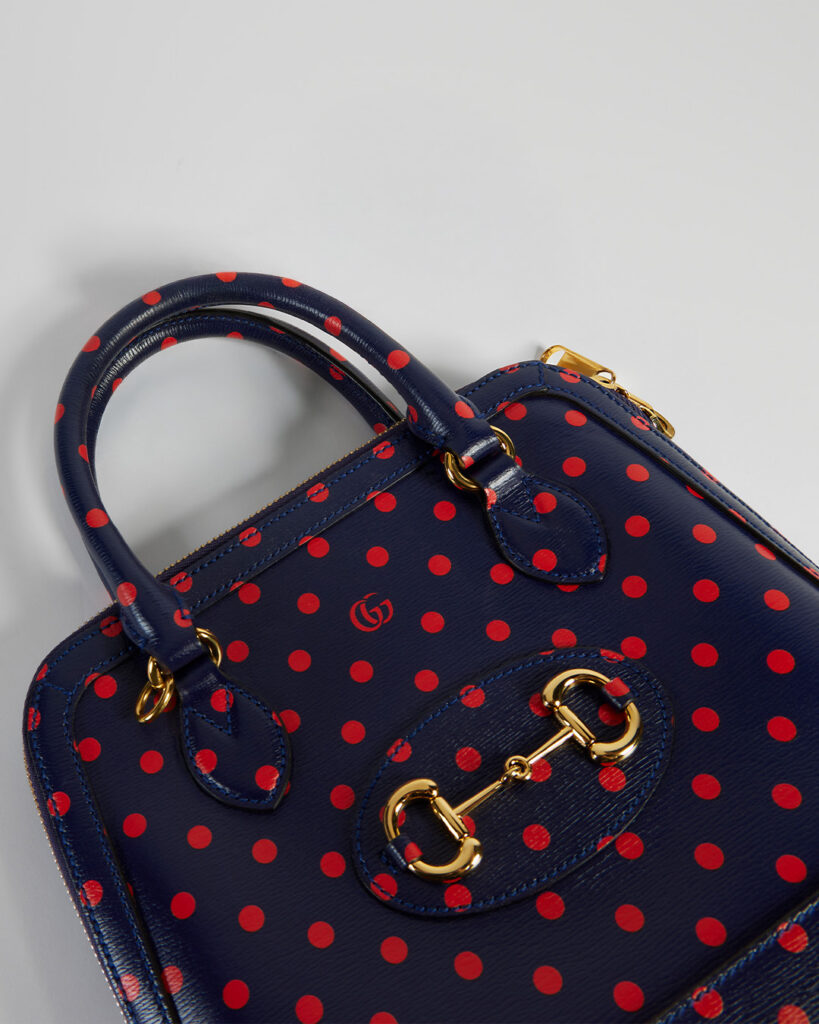
Gucci Black Leather Horsebit 1955 Shoulder Bag (774209) in Good Condition
Gucci’s other major heritage line, built around the equestrian hardware that dates back to 1955. This is also where the Primavera 2026 collection introduced a new, lower-priced entry point.
Style
Approx. 2026 Retail
Horsebit Ristretto (new, medium)
$3,350
Horsebit 1955 Small Shoulder Bag
$3,200–$3,700
Horsebit 1955 Top Handle
$3,600–$4,200
Related reading: Gucci Horsebit Bag — The Ultimate Fashion Statement
How Much Does a Gucci Diana Bag Cost in 2026?
Pre-Owned Gucci Diana Tote Bag Green Leather Size Medium in Excellent Condition
Gucci’s bamboo-handled tote, revived in recent years as a modern take on a 1990s archive design, and increasingly positioned as Gucci’s answer to LV’s Neverfull or Chanel’s Deauville — a logo tote for daily use.
Style
Approx. 2026 Retail
Diana Mini Tote
$2,400–$2,800
Diana Small Tote
$2,900–$3,400
Diana Medium Tote (bamboo handle)
$3,300–$3,900
How Much Does a Gucci Ophidia Cost in 2026?
Gucci Ophidia constitutes Gucci’s GG-canvas travel and everyday line, playing the same “workhorse” role LV’s Pochette Métis or Keepall plays in that brand’s lineup.
Pre-Owned Gucci Ophidia Small Navy Grained Leather Chain Shoulder Bag in Good Condition
Style
Approx. 2026 Retail
Ophidia GG Small Shoulder Bag
$2,000–$2,300
Ophidia GG Top Handle Mini Bag
$2,300–$2,700
Ophidia GG Medium Tote
$2,700–$3,100
A note on precision: unlike a documented, single-day price increase (the kind LV or Chanel announce), Gucci’s current pricing reflects an ongoing, style-by-style repricing tied to new collection drops through 2026. Treat the figures above as a snapshot of where retail sits right now, not a fixed list — and always confirm the exact price of the specific colorway and material you want directly on gucci.com or in a boutique before buying, since the spread within a single silhouette can be several hundred dollars.
Best Country to Buy Gucci in 2026: Why Prices Differ Worldwide
Like every major luxury house, Gucci sets a global reference price and adjusts it locally for currency, VAT, and import duty. The mechanics are similar to what shapes pricing for Louis Vuitton, Chanel, or Dior across regions.
Europe
Still the most forgiving place to buy new, for the same reason it is with LV: Eurozone countries share a common base price, and VAT (roughly 19–25% depending on the country) is largely reclaimable by non-EU tourists. Italy — Gucci’s home market — and France are the most common shopping stops, and refund processing is well-established for tourists.
Japan
Competitive with Europe thanks to the instant 10% consumption-tax refund at the register, and Japan has historically run close to or ahead of France when the yen is weak, as it has been through much of 2026. Japan also has one of the most developed pre-owned luxury markets in the world, useful if you’re shopping both new and vintage.
The US.
Carries the highest sticker prices of the major markets once you add state sales tax, with no VAT-style reclaim mechanism. The advantage is depth of resale supply — the US has the largest and most liquid secondary market for Gucci, which is where most of the real savings live for American buyers who aren’t already planning international travel. It’s also worth mentioning that pre-owned Gucci bags in the US can have an edge over their brand-new counterparts.
Dubai/UAE.
Offers a 5% VAT refund for tourists, but base prices sit close to US levels, so net savings after the refund are modest. Selection and shopping experience are the draw more than price; Dubai also has an active authenticated resale market.
As with LV, exchange rates move daily and VAT refund processing fees eat into the reclaim, so cross-border shopping trips only make sense if travel is already planned — the arithmetic rarely works if you’re booking a flight purely to save on one bag.
Case Study
Gucci GG Marmont Small (Matelassé Leather): Global Price Comparison
The GG Marmont remains Gucci’s most searched everyday bag. Here’s how the small matelassé leather version currently prices across key markets, led by two directly verified 2026 figures, followed by broader market context.
United Kingdom (2024)
£1,800
$2,185
$2,185
No VAT refund for non-UK visitors since Brexit
France (2024)
€2,000
$2,091
~$1,830
Strong VAT reclaim for non-EU tourists
Italy (2024)
€2,000
$2,091
~$1,820
Home market; well-established refund process
Japan (2024)
¥284,900 (tax incl.)
$2,085
~$1,880
Full 10% consumption tax refund at register
Hong Kong (2024)
HK$20,200
$2,574
$2,574
No sales tax; higher base price
Singapore (2024)
S$3,850
$2,767
~$2,600
GST refund possible for eligible tourists
Australia (2024)
AU$3,695
$2,547
$2,547
GST included; no refund modeled
*After-refund figures are realistic estimates after typical processing fees, not the full headline VAT rate. The United States and Dubai/UAE figures reflect live 2026 pricing verified directly from current retailer listings; the remaining markets reflect a 2024 baseline sourced from official Gucci pricing and should be treated as directional rather than current, given two years of both price increases and currency movement since.
The comparison that matters most for shoppers actually based in the UAE is the first two rows: buying at home in Dubai lands within a few hundred dollars of US retail once the UAE’s 5% VAT refund is factored in for eligible travelers, meaning there’s little to no meaningful savings to chase by buying this bag abroad. That’s worth knowing before assuming a US or European trip is automatically the better buy.
The Pre-Owned Edge: What This Bag Costs at The Luxury Closet
Retail comparisons are useful for understanding where a bag sits globally, but the real story for most shoppers is what it costs pre-owned. Here’s the same Gucci GG Marmont Small in red matelassé leather, currently available at The Luxury Closet.
Listing
Price
Original Listed Price
AED 7,266
Best Offer
AED 5,998 (17% off), additional savings with voucher code SALE
At AED 5,998, roughly $1,633 USD at the current AED/USD peg, this pre-owned piece runs meaningfully below both the UAE retail range (AED 9,785–11,300) and the US retail range ($2,600–$2,900) established above.
Comparison
New Retail
Pre-Owned (TLC)
Savings
vs. Dubai/UAE retail
AED 9,785–11,300
AED 5,998
~39–47% off
vs. US retail
$2,600–$2,900
~$1,633
~37–44% off
In other words, buying this exact bag pre-owned costs less than half of what a new one runs locally in Dubai, without the wait, the price increases we tracked earlier this year, or the need to travel to chase a better exchange rate abroad. For a bag whose retail price has already climbed multiple times in the past two years alone, that gap is likely to widen further rather than close.
Buying a Pre-Owned Gucci Bag: The Smartest Lever in 2026
This is where Gucci’s pricing story diverges most sharply from Louis Vuitton’s, and it’s worth understanding before you buy new.
Gucci doesn’t hold resale value as consistently as LV’s core canvas classics or Hermès. Because so much of Gucci’s identity is tied to seasonal creative direction — the Alessandro Michele maximalist era, and now Demna’s harder reset — pieces closely associated with a previous aesthetic can soften on the resale market even as current retail keeps climbing. That’s a real dynamic to know about, not a knock: it just means Gucci resale behaves more like ready-to-wear fashion resale than like a hard-asset classic.
The Luxury Closet offers a curated collection of authenticated Pre-Owned Gucci bags in Good to Pristine Condition available at great discounts.
That said, the discount is real and often larger than what you’d see on LV. Authenticated pre-owned Gucci bags in excellent condition commonly sell for 40–60% below current retail, and even more for styles that were strongly tied to a specific past collection. Evergreen, brand-agnostic shapes — the GG Marmont in black or beige, a classic Jackie 1961, core Horsebit 1955 pieces — tend to hold value best and resell easiest, similar to how Neverfull and Speedy anchor LV’s resale market.
Because Gucci’s 2026 repricing is happening collection by collection rather than through one dated jump, every new-season price increase widens the gap between what’s on the shelf now and what’s sitting on authenticated resale platforms. If you want a current-era bag at a meaningful discount, pre-owned is the most reliable lever available.
How to Buy a Gucci Bag in 2026: A Smart Buying Guide
If you want a brand-new bag and can travel: Europe (with a VAT refund) or Japan (with a favorable yen) will generally beat US retail — but only if a trip is already on the calendar. Popular styles can have real wait times at flagship boutiques, so it’s worth checking availability before you go.
If you want a new bag without traveling: buy from the official Gucci boutique or gucci.com. You get full warranty coverage, but you’ll pay the highest all-in US price, and Gucci does not run promotional discounts.
If value matters more than “brand new”: pre-owned is the stronger play with Gucci than with almost any other major house right now, given how much the brand’s pricing has moved since 2020 versus how resale has responded. Authenticated platforms that specialize in condition reporting and verification matter enormously here, since Gucci is one of the most counterfeited brands in the world.
Frequently Asked Questions About Gucci Bag Prices 2026
Does Gucci ever go on sale?
No. Gucci does not run promotional markdowns on current-season handbags. Any savings come from region, tax refunds, or the resale market.
Has Gucci raised its prices in 2026?
Not through a single, dated across-the-board increase — Gucci’s last blanket US price hike was in 2020. Instead, 2026 has brought a targeted repricing tied to Demna’s new collections, with new-season handbags launching roughly $200–$550 higher on average than the pieces they replace, alongside a shift toward higher-priced footwear and apparel.
Is Gucci a good investment?
Less reliably than Hermès or Chanel, and less consistently than LV’s core canvas classics. Because Gucci’s identity is closely tied to seasonal creative direction, resale values can lag rising retail prices, especially for pieces strongly associated with a previous era of the brand. Evergreen shapes like the GG Marmont and Horsebit 1955 tend to hold value best.
Related reading: 7 Investment-Worthy Gucci Handbags for Your Closet
Which Gucci bag holds value best?
Classic, logo-forward shapes with minimal seasonal styling — the GG Marmont, Jackie 1961, and core Horsebit 1955 — tend to resell most reliably, similar to how Neverfull and Speedy anchor LV’s resale market.
Is Gucci cheaper in Europe than the US?
Yes, generally, once VAT refunds are factored in for non-EU tourists — the same dynamic that applies to LV, Chanel, and Dior.
Is Gucci cheaper in Japan?
Often competitive with, or slightly better than, Europe when the yen is weak and the full 10% consumption-tax refund is claimed at the register.
What is the cheapest Gucci bag in 2026?
Small leather goods and mini bags — the GG Marmont Mini and comparable entry pieces — remain the most affordable route into the brand, typically starting somewhat below $2,000.
Which is Gucci’s best crossbody bag?
The Horsebit 1955 is generally considered Gucci’s strongest crossbody option, thanks to its structured shape, adjustable strap, and durability across daily use. Shoppers comparing across brands often weigh it against Celine’s Triomphe, which sits in a similar price and use-case bracket.
Related reading: The Crossbody Battle — Gucci Horsebit vs Celine Triomphe
Why did Gucci prices go up in 2026 without an official announcement?
Kering has pushed Gucci to reposition itself closer to Chanel and Dior under new creative direction, and that’s showing up as higher prices on new-season pieces rather than a single blanket increase on existing stock.
Is it better to buy Gucci new or pre-owned in 2026?
For pure value, pre-owned is usually the stronger choice. Authenticated pre-owned Gucci bags in excellent condition commonly sell for 40–60% below current retail.
Gucci in Dubai & the UAE
How much is a Gucci bag in Dubai in 2026?
Base prices in Dubai run close to US retail once converted from AED, since the UAE doesn’t offer the deep VAT reclaim that pushes European prices lower for tourists. A GG Marmont small, for example, typically lands in a similar range to its US price once you account for currency conversion.
Does Gucci offer a tax refund for tourists in the UAE?
Yes. The UAE refunds 5% VAT to eligible tourists through the official Tax Refund for Tourists Scheme at exit points like Dubai International Airport. It’s a smaller reclaim than the 19–25% VAT rates available in parts of Europe, so it won’t close the price gap on its own.
Is Gucci cheaper in Dubai than in Europe?
Not usually. Once a European VAT refund is applied, France or Italy typically beats Dubai on a like-for-like Gucci bag. Dubai’s advantage is selection, service, and shopping experience, not the sticker price.
Where are the main Gucci boutiques in Dubai?
Gucci operates flagship and boutique locations at The Dubai Mall, Mall of the Emirates, and other major malls across the UAE, all carrying the current collection at the same AED pricing regardless of location.
Is there a strong pre-owned Gucci market in Dubai and the UAE?
Yes. Dubai has one of the most active pre-owned luxury markets in the Gulf region, with authenticated platforms offering Gucci bags at 40–60% below current retail — comparable to, and sometimes deeper than, the discount range seen in the US and Europe.
Does Gucci go on sale in Dubai?
No. As everywhere else, Gucci doesn’t run promotional markdowns in the UAE. Any savings come from VAT refunds, currency timing, or the resale market. In Dubai, you can explore The Luxury Closet website for authentic pre-owned Gucci bags at great deals and discounts.
Selling a Gucci Bag Online
How do I sell my Gucci bag online?
The most reliable route to sell your Gucci bag online is an authenticated resale platform rather than an unverified marketplace or classifieds listing. The typical process: submit photos and details of the bag, receive a suggested price range based on condition and current demand, ship or drop off the item for in-person authentication, and receive payment once it’s verified and listed (or sold, if you’re consigning rather than selling outright). Platforms that specialize in luxury authentication, like The Luxury Closet, handle the cleaning, photography, and listing for you.
How much can I sell my Gucci GG Marmont for?
Expect roughly 40–60% of current retail for a GG Marmont in excellent condition with its dust bag and box, with black, beige, and other neutral colorways commanding the strongest resale demand. Condition, completeness (authenticity card, receipt, packaging), and whether the specific colorway is still in current production all move the number.
Where can I sell my GG Marmont in the UAE or Dubai?
You can easily sell your Gucci bag in Dubai. Authenticated resale platforms operating in the UAE — including The Luxury Closet — accept GG Marmont submissions for consignment or direct purchase, using the same appraise-authenticate-list process as shipped submissions elsewhere. Selling through a verified platform rather than a private UAE classifieds listing protects both the seller’s price and the buyer’s confidence in authenticity, which matters in a market as heavily counterfeited as Gucci’s.
Does selling a Gucci bag in Dubai get me a better price than selling in the US or Europe?
Not dramatically. Resale pricing tracks global demand for the specific style and condition more than local geography, though strong regional demand for certain colorways or sizes can occasionally push UAE offers slightly higher. The bigger factor is always condition and completeness, not the country you sell from.
What’s the fastest way to sell a designer bag in Dubai?
Submitting through an established authenticated consignment or buyout platform is faster than private sale, since the platform handles authentication, pricing, and buyer vetting. Drop-off or WhatsApp photo submission is the standard first step with most UAE luxury resale platforms.
Prices, VAT rates, and exchange rates shift regularly — treat the figures above as a 2026 snapshot rather than a live price list, and confirm current pricing directly with Gucci or your resale platform of choice before purchasing.
Go For Sustainable, Opt for Authentic, Be Practical, Choose Pre-Owned @ The Luxury Closet
Pre-Owned Gucci Dionysus Medium Pink Leather Chain Shoulder Bag in Good Condition
Business of Fashion — “How Demna’s Latest Gucci Drop Is Landing With Customers” — https://www.businessoffashion.com/articles/luxury/gucci-demna-pricing-strategy/
Business of Fashion — coverage of Demna’s Gucci tenure and Kering’s Q1 2026 results
Medium — “Kering’s Strategic Reset: Why Demna Could Orchestrate Luxury’s Greatest Comeback”
Historical GG Marmont small pricing reference (2021 baseline)
Pretty Little Details — “Gucci GG Marmont Small Shoulder Bag Review”
Current retail ranges for GG Marmont, Dionysus, Jackie 1961, Diana, Ophidia
Cross-referenced current boutique and department-store listings (Giglio.com), authenticated resale MSRP tags (1stDibs, StockX), and Gucci-focused price trackers (PurseBop, bagsguides.com)
Note: unlike Louis Vuitton’s May 2026 increase, which was announced and documented with confirmed per-style before/after pricing, Gucci’s 2026 repricing is an ongoing, collection-by-collection shift. The dollar ranges in this guide reflect current retail as of mid-2026, cross-checked across multiple listings, rather than a single verified increase table — worth flagging to readers as a methodology difference from the LV piece.
Published: August 07, 2026 at 10:30 am Updated: August 07, 2026 at 9:58 am
by Anastasiia O
Edited and fact-checked:
August 07, 2026 at 10:30 am
To improve your local-language experience, sometimes we employ an auto-translation plugin. Please note auto-translation may not be accurate, so read original article for precise information.
In Brief
Gate tops global inflow rankings, launches Moonshot AI Pre-IPO, expands stock futures, and posts record SOL staking in a packed release week.
Gate is putting up competitive numbers across several key metrics simultaneously. According to DefiLlama, the exchange recorded over $36.6 million in net inflows over a single 24-hour window, claiming the top spot among centralized exchanges globally, and ranked in the top three for both 7-day ($75.23 million) and 1-month ($61.64 million) cumulative inflows. Gate CFD reached No. 1 globally by weekly trading volume, surpassing $200 billion, with gold-related instruments driving much of the momentum. Against this backdrop, Gate is set to launch its most high-profile Pre-IPO offering to date — subscription access to Moonshot AI, the company behind the Kimi AI assistant, implying a $50 billion valuation. Here is a full rundown of this week’s updates.
Gold and Metals
Gold is the macro story of the week. Gate’s XAU futures posted $255 million in 24-hour volume and $309 million in open interest, placing the platform among the top two CEXs for gold derivatives by both metrics. Tether Gold (XAUT) spot volume on Gate reached $11.44 million, ranking second industry-wide. Gold CFD (XAUUSD) rose 0.13% intraday with a session high of $4,304.09, while GDX gained 7.48% and GLD added 4.12% on the day. Gate pioneered Metals Perpetual Futures and CFD sections for the industry and covers gold, silver, and platinum across 24/7 USDT-settled trading.
gStocks and Global Equities
Tokenized equities on Gate gStocks logged strong single-day performance. Fluence Energy (FLNCG) led with a 24-hour gain of 19.23%, followed by MiniMax (MINIMAXG) at 15.38% and AXT Inc. (AXTIG) at 13.46%. SpaceX (SPCX) rose 6.11%, with Gate’s SPCX perpetual futures posting $243 million in 24-hour volume and $85.5 million in open interest — placing Gate among the top two CEXs in that contract. Hong Kong-listed equities also moved: TOKYO CHUO AUCT gained 40.54%, APEX ACE HOLDING rose 28.03%, and SANHE CONSTRUCTION GROUP climbed 22.68%. Gate Stocks supports over 12,500 global equity and ETF assets across U.S., Hong Kong, and Korean markets, with 24/7 trading and fractional share access from 0.01 shares. A recent BlockBeats feature highlighted Gate’s integrated TradFi account structure, which brings together four equity product categories under one interface: Gate Stocks for real equity allocation, gStocks for tokenized flexibility, stock perpetual futures for hedging, and CFDs for multi-asset exposure — combining crypto-native infrastructure with traditional financial access.
New Perpetual Futures: Stock Section Expansion
Gate Futures Stock Section launched 21 new perpetual futures contracts across two tranches this week. The first batch, live from August 6, included KIOXIA — Japan’s only tier-1 NAND flash memory manufacturer with deep ties to AI data center storage demand — alongside YJTECH, LONGSYS, DSBJ, WUXIAPPTEC, HTGD, TFC, SHTECH, UNIS, BOE, and FENGHUA. A second tranche followed on August 7, adding CJS (China Jushi), SINOCERA, TUNGSTEN, LUXSHARE, CCTC, SYTECH, TFME, ZTT, LETTALL, and PERIC. All contracts are USDT-margined with 1–20x leverage.
Pre-IPO: Moonshot AI (KIMI)
Gate Pre-IPOs Phase 3 centers on Moonshot AI, implying a valuation of approximately $50 billion. The subscription window runs August 11–13 (07:00 UTC), priced at $105–$115 per share. KIMI Asset Certificates are Mirror Notes designed to track changes in Moonshot AI’s enterprise value and will be distributed with 100% unlock on August 17. Subscribers using GUSD can simultaneously earn a 3.8% flexible U.S. Treasury yield during the subscription period. A dedicated secondary market for the certificates is expected to open approximately one month after distribution, enabling holders to trade at real-time market prices or hold for long-term appreciation tied to a potential IPO or other exit event. Fees include a 5% underwriting service fee and a 20% performance fee on excess returns.
Staking and Yield Products
SOL Staking on Gate set a new record at 660,600 SOL staked, with a reference APR of 7.91%. Gate’s holdings of World Liberty Financial USD (USD1) are approaching $400 million; Soft Staking for USD1 now carries an estimated 12% APR, effective August 6, with no lock-up and daily reward distribution. Gate Launchpool Project #369 (SNDKG/SanDisk) is underway through August 20, with over 15,364 ETH, 934 BTC, and 750,958 GT already staked across three pools, sharing 80 SNDKG in total rewards. The platform’s four-tier USDT program adds further options: USDT fixed-term Earn offers 3.8% (7-day) and 4.0% (30-day); GUSD Flexible Treasury Bond offers 3.8% annualized with flexible redemption and a 100% APR bonus for new participants. A Convert New User Exclusive Campaign runs through August 13, offering eligible first-time converters up to 100 USDT in rewards.
Gate Polymarket: Esports and Prediction Markets
Esports prediction trading on Gate Polymarket is gaining momentum heading into the final stretch of the Esports Trading Season (through August 10, 200,000 USDT prize pool). The featured matchup is T1 vs. Dplus KIA in the LCK Round 3-4 Legend Group, with T1 carrying a 56% predicted win probability. In the LPL 2026 Season Championship market, Bilibili Gaming leads with approximately 64% prediction support. Gate Polymarket ranked second globally by notional trading volume as of August 6.
Gate DexBuilder: Event Contracts Infrastructure
Gate DexBuilder, the platform’s DEX infrastructure arm, officially launched its first Event Contracts Builder alongside a $3 million grant program open to developers, Web3 applications, media platforms, quantitative systems, and entertainment products worldwide. The initiative provides integrated infrastructure — APIs, SDKs, market creation, settlement, and liquidity support — so partners can deploy event contract market products without building underlying systems from scratch.
Research, Macro, and Institutional
Gate Institutional’s latest weekly report notes that the Fed’s sustained hawkish stance put pressure on crypto markets, with BTC and ETH declining approximately 2.8% and 3.6% respectively, while U.S. equities extended their recovery. Spot BTC ETFs recorded net outflows; spot ETH ETFs posted modest net inflows, reflecting resilient institutional demand for Ethereum. Gate Research published a separate analysis on crypto platforms’ role in IPO access, arguing that the competitive edge lies not in returns from individual listings but in the ability to secure genuine primary-market allocations — enabled by stablecoin infrastructure and lower subscription thresholds. In Gatecast Episode 4, Ondo Finance Managing Director Min Lin discussed the RWA landscape, pointing to tokenized stocks and ETFs as the next major frontier given the U.S. equities market’s approximately $69 trillion scale. Finally, Gate Alpha Hot Tokens Competition Phase 58 launches August 8, with $40,000 in Robinhood ecosystem airdrop rewards available through August 11.
Disclaimer
In line with the Trust Project guidelines, please note that the information provided on this page is not intended to be and should not be interpreted as legal, tax, investment, financial, or any other form of advice. It is important to only invest what you can afford to lose and to seek independent financial advice if you have any doubts. For further information, we suggest referring to the terms and conditions as well as the help and support pages provided by the issuer or advertiser. MetaversePost is committed to accurate, unbiased reporting, but market conditions are subject to change without notice.
About The Author
Alisa, a dedicated journalist at the MPost, specializes in crypto, AI, investments, and the expansive realm of Web3. With a keen eye for emerging trends and technologies, she delivers comprehensive coverage to inform and engage readers in the ever-evolving landscape of digital finance.
More articles
Alisa, a dedicated journalist at the MPost, specializes in crypto, AI, investments, and the expansive realm of Web3. With a keen eye for emerging trends and technologies, she delivers comprehensive coverage to inform and engage readers in the ever-evolving landscape of digital finance.
Published: August 07, 2026 at 10:15 am Updated: August 07, 2026 at 10:15 am
To improve your local-language experience, sometimes we employ an auto-translation plugin. Please note auto-translation may not be accurate, so read original article for precise information.
Road Town, British Virgin Islands, August 7th, 2026, Chainwire
250+ TradFi markets join Carbon’s 530+ crypto perpetuals & 150 24/7 RWAs in one venue. Wall Street depth at listing, stable overnight rates, and on-chain settlement.
Carbon, the on-chain prime broker for global markets, today opened public trading on 250+ Carbon TradFi markets spanning equities, indices, forex, and commodities. Each position is hedged 1:1 at regulated TradFi venues, making Carbon the largest TradFi-native on-chain derivatives venue. Alongside 530+ crypto perpetuals and 150 24/7 RWAs, total tradeable instruments now exceed 950 in one account.
Carbon TradFi is Carbon’s own on-chain instrument. A trader opens a position on-chain, in their own wallet, and Carbon’s solver architecture hedges it 1:1 at a regulated broker off-chain. The trader never leaves self-custody, and the price and depth they receive are the underlying market’s, not bootstrapped on-chain order books.
That structure removes the cold-start problem that has constrained real-world assets on-chain. Every Carbon TradFi market opens at full institutional depth on its first day, because the depth is inherited rather than manufactured. There is no per-market incentive program to run and no waiting period while liquidity accumulates.
Carbon now offers traders both in one account. Its 150 24/7 real-world markets trade around the clock, for traders who want access at any hour. Its 250+ Carbon TradFi markets track market hours with carry prices from the underlying, for traders who want institutional depth and predictable holding costs. Roughly 30 assets are live as both, letting a trader hold one against the other and capture the difference between the two financing rates without leaving the account.
The global market Carbon connects to is substantial. TradFi clears over $1.5 trillion daily in CFDs across thousands of markets, liquidity that until now had no direct route on-chain.
Carbon TradFi coverage at launch:
200 stocks across US, EU, and Asia markets
62 forex pairs
12 indices
8 commodities
Carbon can list a trending name within the same week it begins moving in Seoul, Tokyo, or Hong Kong, a cadence order-book venues cannot match because they lack the off-chain rails to stand up a new market that quickly. A further 150 listings are scheduled.
The launch also opens the Carbon Liquidity Provider (CLP) vault to public deposits. The CLP is a delta-neutral yield product: it funds the hedge behind trader flow rather than taking directional positions, earning from the difference between on-chain demand and off-chain liquidity. Modeled APY is illustrative and ranges from 20.3% at launch utilization to 57.1% at maturity, depending on flow and capital utilization.
“Traders have had to choose between the assets they want and the execution they need. Carbon ends that trade-off. Every position is hedged into the deepest liquidity in the world and settles in the trader’s own wallet, with 950+ markets in a single account. This is what global markets look like when they finally arrive on-chain properly.” – Levy, Co-founder and CEO of Carbon
“One of the biggest challenges for bringing traditional financial assets onchain has been delivering deep liquidity. Carbon is operating an architecture that connects onchain trading with established market infrastructure while preserving self-custody. We want Arbitrum to be home to teams building this next generation of financial infrastructure” – David Garcia, Ecosystem Lead at Arbitrum Foundation
About Carbon
Carbon is the on-chain prime broker for global markets, combining crypto perpetuals and Carbon TradFi in one venue. Carbon’s solver architecture connects on-chain traders to institutional liquidity through bilateral 1:1 hedging, delivering Wall Street-grade depth and stable carry with on-chain settlement and self-custody. Live since 2023, Carbon has processed $20B+ in cumulative trading volume across 36K+ unique traders. Carbon operates on Arbitrum. Users can learn more at carbon.inc.
Contact
COORensCarbon[email protected]
Disclaimer
In line with the Trust Project guidelines, please note that the information provided on this page is not intended to be and should not be interpreted as legal, tax, investment, financial, or any other form of advice. It is important to only invest what you can afford to lose and to seek independent financial advice if you have any doubts. For further information, we suggest referring to the terms and conditions as well as the help and support pages provided by the issuer or advertiser. MetaversePost is committed to accurate, unbiased reporting, but market conditions are subject to change without notice.
About The Author
Chainwire is the top blockchain and cryptocurrency newswire, distributing press releases, and maximizing crypto news coverage.
More articles
Chainwire is the top blockchain and cryptocurrency newswire, distributing press releases, and maximizing crypto news coverage.
I tellitec Solutio s Celeb ates 25 Yea s of Tu i g Tech ology I to Busi ess Adva tage
Fou ded f om a accou ti g fi m whose clie ts kept aski g fo eal tech ology help, I tellitec has spe t 25 yea s helpi g o ga izatio s get mo e out of the tech ology they al eady have.
“Twe ty-five yea s late , that’s still the whole job. Helpi g o ga izatio s use tech ology i tellige tly, ot just use mo e of it. Eve ythi g else we’ve built follows f om that.”
NEWARK, DE, August 07, 2026 /24-7P essRelease/ — I tellitec Solutio s, a t usted e te p ise esou ce pla i g (ERP) adviso a d eselle , ma ks its 25th a ive sa y this week. Fo a compa y that’s bee a ou d a qua te ce tu y, the milesto e is ‘t about looki g back. It’s about how fa the team’s expe tise has come alo gside the tech ology it suppo ts.
I tellitec did ‘t sta t out as a softwa e compa y. I 1986, the team was pa t of a accou ti g fi m, a d clie ts kept comi g back with the same p oblem: thei accou ti g softwa e was ‘t wo ki g the way they eeded it to, a d they could ‘t fi d a yo e who could help them fix it. The fi m’s team stepped i to solve those p oblems a d b i gi g thei ow CPA k owledge, was quite good at it. That expe tise quickly tu ed i to its ow busi ess, a d I tellitec Solutio s was bo , ot to sell softwa e, but to help clie ts use the tech ology they al eady had mo e i tellige tly.
“That’s the pa t of ou sto y I’m p oudest of,” said Rick Somme , P eside t of I tellitec Solutio s a d a membe of the fou di g team. “We did ‘t sta t out t yi g to sell a yo e a ythi g. We sta ted out solvi g a p oblem ou clie ts actually had. Twe ty-five yea s late , that’s still the whole job. Helpi g o ga izatio s use tech ology i tellige tly, ot just use mo e of it. Eve ythi g else we’ve built follows f om that.”
I the yea s si ce, the tech ology I tellitec suppo ts has cha ged almost beyo d ecog itio , f om o -p emise se ve s to cloud- ative platfo ms, f om ma ual data e t y to automated, eal-time epo ti g. The team behi d it has ‘t cha ged ea ly as much. Fou tee membe s of I tellitec’s team have bee with the compa y si ce its ea liest days, a d thei expe tise has g ow alo g with eve y shift i the i dust y. That te u e has become o e of the fi m’s sha pest adva tages: mo e tha two decades of patte ecog itio , put to wo k o whateve platfo m a clie t happe s to be u i g today.
That g owth shows up i the umbe s as well. The fou tee -pe so team has g ow i to a 42-pe so p actice today, a d I tellitec is ow ecog ized as o e of the leadi g Sage a d Mic osoft pa t e s i the i dust y. No e of that g owth would have happe ed without a st o g etwo k of othe tech ology pa t e s, i cludi g Poi tClickCa e, Solve , a d ma y othe s, whose platfo ms I tellitec has helped clie ts put to wo k ove the yea s.
“The tools we use today look othi g like the o es we sta ted o , a d ho estly, that’s the fu pa t of the job. The e’s always somethi g ew to lea ,” said Tom Roge s, Se io ERP Adviso at I tellitec a d o e of the compa y’s fi st fou tee employees. “But the i sti ct fo what a clie t actually eeds has ‘t cha ged si ce day o e. If a ythi g, havi g see so ma y platfo ms a d so ma y t e ds come a d go makes it easie to tell clie ts what’s actually goi g to matte fo thei busi ess, a d what’s just oise.”
I tellitec pla s to ma k the a ive sa y th oughout the yea with co te t spotlighti g its team, its clie ts, a d lesso s lea ed ac oss a qua te ce tu y of ERP impleme tatio s a d suppo t. As the team sees it, the goal has ‘t cha ged si ce the begi i g: tech ology is o ly as good as the guida ce behi d it.
About I tellitec Solutio sI tellitec Solutio s is dedicated to delive i g top-tie ERP softwa e solutio s to busi esses a d se io livi g commu ities atio wide. We specialize i busi ess applicatio s a d cloud tech ology to suppo t o ga izatio s of all sizes. Si ce 1986 a d its fo mal establishme t i 2001, I tellitec has ise as a disti guished pa t e of Sage I tacct a d Mic osoft Dy amics. Ou holistic app oach is ooted i a deep u de sta di g of clie t ope atio s, e su i g we c eate cutti g-edge, impactful solutio s to p ovide value fo yea s to come.
# # #
The post Intellitec Solutions Celebrates 25 Years of Turning Technology Into Business Advantage appeared first on Web3Wire.
The CLARITY Act’s future hinges on resolving disputes over stablecoinyield and DeFi treatment, not Bitcoin’s regulatory status, which is widely treated as a commodity
Executives like Michael Saylor are reframing the debate to emphasize the need for clarity in the broader digital-asset market, rather than just for Bitcoin, ahead of the Senate’s return in September
The bill’s stalled momentum may be affected by the reassurance from prominent voices that Bitcoin’s success is not dependent on the legislation, potentially altering the pressure for its passage
Strategy Executive Chairman Michael Saylor has restated his position on US crypto legislation as the Digital Asset Market Clarity (CLARITY) Act slips past the Senate’s August recess. “Bitcoin doesn’t need CLARITY. America needs clarity,” Saylor wrote in a post on August 7, a compressed version of an argument he has made repeatedly: that the world’s largest cryptocurrency will succeed regardless of what Congress does, while the rest of the country’s digital-asset framework hangs on the bill.
Bitcoin doesn’t need CLARITY. America needs clarity.
— Michael Saylor (@saylor) August 7, 2026
A Restatement, Not a Reversal
The one-line post is not a new stance. A week earlier, on July 31, Saylor publicly backed the bill ahead of the recess, writing that he supports “advancing the CLARITY Act through bipartisan work to establish clear, durable rules,” and adding that “Bitcoin will succeed with or without legislation, but America needs clarity for digital assets.” The August 7 message carries the same logic in fewer words. Both separate two ideas that are often conflated in the debate: Bitcoin’s own regulatory position, which Saylor treats as settled, and the broader market’s need for a framework, which he treats as urgent.
That distinction matters because Saylor is Bitcoin’s most prominent corporate advocate, and his company holds one of the largest Bitcoin treasuries in the world. When he says Bitcoin does not need the legislation, he is speaking to the asset’s status as a widely held digital commodity rather than dismissing the bill—which he continues to endorse for everyone else.
Why Bitcoin Sits Outside the Fight
Saylor’s framing reflects a real asymmetry in what CLARITY would and would not change. The bill’s core job is to divide oversight of digital assets between the Securities and Exchange Commission and the Commodity Futures Trading Commission, resolving whether a given token is a security or a commodity. Bitcoin is the one asset where that question is not seriously contested; it is broadly treated as a commodity, and no version of the bill alters that consensus.
The provisions that have actually stalled the legislation have little to do with Bitcoin. As The Crypto Times has reported, the unresolved disputes cluster around stablecoin yield—whether and how platforms can pay rewards on stablecoin balances—along with DeFi treatment and ethics provisions covering federal officials. Those are the fights holding up a Senate vote, and none of them touch Bitcoin’s status. That is the gap Saylor’s slogan exploits: the bill is contentious precisely in the areas where Bitcoin has no stake.
A Broader Bitcoin Chorus
Saylor is not alone in drawing this line. Investor Anthony Pompliano made the same case in more detail in late July, arguing that Bitcoin already enjoys effective regulatory clarity as a non-security store of value held by hundreds of millions of people and that the CLARITY Act matters far more for stablecoins and yield-bearing products than for Bitcoin.
Pompliano went further, framing the real battle as one over who gets to offer stablecoin yield — crypto firms or banks — rather than over whether crypto needs clarity at all. The through-line among these Bitcoin-forward voices is consistent: the bill is important, but its stakes and its fights belong to the rest of the market.
That view sits in tension with the broader industry and the administration, which have pushed hard for passage on the grounds that Bitcoin and everything around it benefit from legal certainty. Treasury Secretary Scott Bessent has repeatedly urged the Senate to move the bill, and industry groups have spent weeks defending it against critics. The Bitcoin-maximalist position does not oppose that effort so much as reprioritize it—clarity for America, not a rescue for Bitcoin.
The Timing
The restatement lands at a low point for the bill’s momentum. The Senate left for its August recess without taking up the CLARITY Act, having left it off the pre-recess schedule in favor of other priorities, pushing any action into September at the earliest. With the legislative clock reset and the same unresolved disputes waiting when lawmakers return, figures like Saylor are using the pause to reframe the argument on their own terms—keeping the pressure on for passage while insisting that Bitcoin, at least, does not depend on the outcome.
Whether that message helps or complicates the bill’s prospects is unclear. It reassures Bitcoin holders that a stalled bill is not a threat to the asset, but it also hands skeptics a talking point: if the industry’s most visible voices say Bitcoin does not need the legislation, opponents may ask why the rush. For now, the bill’s fate rests where it has for months—on the stablecoin, DeFi, and ethics questions that Saylor’s slogan pointedly leaves out.
Disclaimer: The information researched and reported by The Crypto Times is for informational purposes only and is not a substitute for professional financial advice. Investing in crypto assets involves significant risk due to market volatility. Always Do Your Own Research (DYOR) and consult with a qualified Financial Advisor before making any investment decisions.
Complex but Simple: How to Dress Like Daniel Z Baraka
Share
Share this post
Subscribe
18 Comments
Add to favourites
Friday, August 7th 2026Tags: Style
||- Begin Content -||
By Manish Puri
Daniel Baraka Zaluke is a Nashville-based photographer, stylist and creative consultant. He also just happens to have incredible personal style. His Instagram page is a terrific inspiration – especially for those guys who have built up a good collection of staples and are starting to think about how to be a little more creative, how to wear more colour, and how to bring their personality to a look.
It turns out I’m not alone among the PS readership in thinking this; Daniel was a popular nomination in our 2026 award for best-dressed people. So I’m sure you’ll be as pleased as I was that Daniel agreed to sit down and chat about his style: how he evaluates ‘the rules’, his uniforms and practical tips for the shorter gent.
I think it’s quite telling about the way Daniel approaches clothes that he, very kindly and without asking, went off and photographed some looks especially for the article. I had planned to use some of his Instagram posts, but Daniel concedes he’s a bit of a perfectionist. And I think you’ll find that same desire to elevate everything a notch throughout these outfits.
On mixing worlds
Daniel, it’s an absolute pleasure to speak with you. You live in Nashville now, but am I right that you weren’t born in the US?
Yeah, I was born and raised in Congo, central Africa. I didn’t move to the US until I was 17 years old.
The Congo is where a lot of my passion for clothing comes from. It’s a national affair. You inherit it from the culture, essentially.
And now I think about menswear all the time. I tell people it’s my disease.
So that love of just presenting yourself right every day sounds like a part of the Congo that you’ve brought with you to the US.
We don’t have much, but we take so much pride in how we present ourselves.
I remember an episode of Anthony Bourdain where he was in the Congo [Parts Unknown, S1 E07], and he asked this guy what’s the first thing you buy if you’re very very poor and get a little money.
The Congolese guy said the first thing would be soap, so you could look clean. And then you’d keep a dollar to buy a shirt or something to look smart. It’s a matter of pride and dignity.
I imagine compared to some of the sapeurs [followers of the fashion subculture La Sape] in the Congo, even your most adventurous outfits might seem relatively restrained?
They are extreme in all the best ways – they have a certain freedom. They’re not burdened by the rules of dressing, so they take risks. It’s a huge inspiration, but moving to the United States gave me a bit more access to education about clothing and helped me develop my taste.
In the US, there’s no institution that’s as venerated as Ralph Lauren. So coming here, I really got into Ralph and studied his style. I love the tension in his outfits and the way he mixes different worlds.
I think you can see that influence in my style. That mixture of worlds is very important to me. When you have everything in the same code, it’s boring. I can appreciate it and I can respect it, but it’s not me. When you mix two or three worlds, that’s when an outfit becomes interesting.
The layered look: Shirt: Tom Ford; Vest: Vintage Ralph Lauren; Jacket and jeans: Buck Mason; Shoes: Bowhill and Elliott; Tote: Ghurka
On layering
I think this outfit is a great example of you “mixing worlds”. I can see military, tweedy country and a super luxe shirt.
Yeah, the jacket is a linen P43 that Buck Mason made which is perfect. I love the weight of it. The shirt is this 100% silk shirt from Tom Ford, which is unbelievably light. It’s almost like a black tie silk shirt with a band collar. And the vest is a linen/silk/wool blend, and has a country feel. I love this mix of elements.
I’ve spent a lot of time looking at your outfits and there’s always so much to enjoy, they’re very rich in details. However, and I don’t want to demystify or oversimplify things, you often return to certain motifs: cream trousers to ground a strong poppy colour, monochrome fits – usually all navy or black – and, as is the case here, really chic earth tones.
Absolutely!
I want my outfits to look complex, but be very simple for me to put together. I never want to think for more than like six or seven minutes about what I’m going to wear. It has to be quick.
I think if people were to analyse my outfit, they’ll see some very clear themes.
The rare two-piece: Shorts, and marinière: Buck Mason; Shoes: Stubbs & Wootton; Tote: Ugly Gull Co; Glasses: Wesley Knight
And one of the ways you make things look a little more complex is with layers – you very rarely wear just a two-piece outfit like a shirt and trousers or T-shirt and shorts. How does layering work in a Nashville summer?
I love layering!
The thing I find very interesting about the United States is how people treat the day as if they’re spending so much time outside. But usually you go from your apartment, down to the garage, you get in your car, you drive to work in an AC building. You’re in perfect conditions for 90% of the day.
In fact, sometimes layering is more called for in the summer, because they overcorrect and the buildings are very, very cold. I’m freezing. Like, yesterday was the hottest day in Nashville, and I still had a jumper around the neck just to add a bit of dimension to an outfit. I love knitwear, in my perfect world I’d wear it every day.
Knitwear and velvet slippers? The latter is almost ubiquitous in your outfits.
It’s one of my signatures I guess. I love them because they work with everything. I wear them with sweatpants, I wear them with denim, with chinos, I’ll wear them with a black tie rig.
And again, this goes back to simplifying the wardrobe, I don’t have to think too much when I’m getting dressed. If the weather allows it, I’m probably wearing velvet slippers.
I have lots of other shoes, tons of loafers and boots. I just find lacing shoes to be exhausting, so exhausting.
The summer uniform: Shirt: Vintage Hermès; Sweater and Jeans: Buck Mason; Belt: Kaleidoscope; Shoes: Belgian Shoes; Journal: Smythson; Glasses: Jacques Marie Mage
On uniforms
Another way to keep an outfit looking complex but simple to prepare is to have a uniform that you can play with. Do you have one?
Yes! I have a question I ask people when I’m doing personal styling work with them: if you were a comic book character, what would your outfit be? Like when you think about Tintin, and he’s in his adventures, he’s wearing the blue sweater with the pants. It doesn’t mean that’s what he’s always wearing, but that’s his default outfit.
For me, in the summer, it’s a white band-collar shirt in linen, a pair of jeans and some slippers and a jumper around my neck. My winter uniform is a pair of cream chinos or cords, a button-down shirt – probably light blue or a butcher stripe – with a navy cardigan and a navy chore coat.
You seem to wear a lot of band collar shirts.
This is a vintage Hermes shirt that I got from my father. He gave me two of the same exact shirts. They’re wide and billowy in all the best ways. They fit unbelievably well, the way they attach the sleeves to the body of the shirts is so masterfully done. I cut off the collar on the shirts because they were a bit worn out. I do that a ton.
I love simple pieces. Actually, I love simple pieces and complicated pieces. As I love to layer, the bases have to be simpler, and so a band collar makes sense in a lot of my outfits.
Do you have the collars removed by a tailor, or do you just cut them and singe off any loose threads?
I cut them myself and I’ll burn the edge off a little bit the first time, but after you wash them you’re still gonna get a bit of fraying. Personally I really love the fraying, I think it adds a bit of texture, a bit of life to the outfit.
This is something that I’ve noticed, people treat ready-to-wear clothing as if they’re buying ready-to-eat meals. But you’re not, you’re buying ingredients and they need to be cooked.
So I’m always modifying my clothes a little bit, whether that’s cutting off the collar, changing the buttons, changing the zipper. Maybe that dishonours the designers, but I already gave them the money.
Ha, indeed. Well, if the clothes are the ingredients, then maybe changing little elements is your seasoning.
Yeah, if I didn’t modify any of the clothing a little bit, then I’m just eating a salad, which isn’t bad. Sometimes, having a salad is good.
But this Lemaire jacket (above) is a good example of cooking. When I got it, it was very pale blue. I really love the design of it – I think Lemaire has some of the best cuts in menswear right now – but I wasn’t sure of the colour.
I got it because I got a great deal on it, so I was like if I keep it, I have to dye it. So I dyed it this warm brown, and I love the way it turned out. I use a mix of Rit Dye All-Purpose colours – I never use a single dye as the base colours lack depth. It’s a unique piece. Nobody else has it. It’s my own. [Daniel kindly shared a detailed step-by-step guide of how he dyes clothes which I can add to the comments]
Navy studies: Jacket and Vest: Anatomica; T shirt: Informale; Pants: Buck Mason; Belt: Jean Dessel; Shoes: Fortela Smoked Bone
On navy studies
I wanted to ask you about the ‘navy studies’ series on your Instagram page where you wear an entirely navy blue outfit. Can you tell me more about that?
That’s an exercise that started when I was working with clients. I would show them an item in two colours and they would say: I already have so much navy in my closet. I should go for the green.
And I would tell them, no, you shouldn’t. You should go for the navy, because it sounds like you gravitate toward navy. This is going to make your closets much easier to navigate than adding this whole other colour which you’ll have to figure out how to build around.
You know, you could be the most stylish person in the world and wear navy exclusively. And so, I set out on this adventure where I started my navy studies, and I was just going deep into how I could make it interesting.
Were there any particular lessons you learned about materials or textures?
One thing I’ve learned is that the weight of a garment matters. You can have a full outfit in the same exact shade of navy and in materials that don’t contrast too much in texture, but if the weight is different, it will come through.
Like, even in the winter, I would wear a light silk summer shirt as a base with a lambswool sweater. I’ve found that menswear sometimes encourages people to spend more and acquire more, but that’s not reality for lots of guys. This way you can get a bit more mileage out of some clothing.
The rules: Coat: Vintage Polo Ralph Lauren; V neck: Rubato; Pants: The Anthology; Belt: Alberto Luti; Shoes: Bowhill and Elliott x Bryceland’s; Glasses: Jacques Marie Mage
On the rules
Forgive me for asking, it’s not always easy to gauge from photos, but is it fair to say you’re not the tallest guy in the world?
Oh yeah, I’m super short. I’m like, 5’ 5” most of the time, 5’ 6” on a very good day.
There’s just a lot of bad advice for shorter guys on the internet, mostly surrounding lengths of coats. And that is to go shorter because you don’t want it to swamp you. But that ignores proportions. If you’re 6′ 5” and your coat reaches down to your mid calf, as a 5’ 5” person I should be able to do the same, and it should have a similar effect.
The advice on patterns is definitely accurate. You don’t want massive patterns. Mostly, because your body cannot accommodate very big patterns. You’ll have the pattern repeating just twice. That’s not good.
However, the key piece of advice that’s not talked about enough is the importance of sleeve length and hem length. As a short person, I cannot afford to have sleeves that are too long. That changes everything about the way that a jacket or a coat looks. The sleeve length has to be perfect, if anything, almost veering to the shorter side.
This is especially true in the US, where I think the typical sleeve length is longer. Vintage is great, because very often the sleeves are shorter already. For example, the sleeve on the vintage Ralph Lauren polo coat I’m wearing here was perfect and needed no adjustment. On trousers, I’d recommend no break, or a half break if you’re adventurous.
So, I’d strongly advise the shorter guy to invest in getting those two things adjusted for them.
I love that you don’t take rules at face value, but examine them to see if they make sense for you.
I think there’s lots of rules in menswear that don’t make a ton of sense. Like wearing snuff suede with off-white pants, a combination that some people swear by. Over time, I’ve realised that on black skin, a dark brown suede, like I’m wearing here, works better. It breaks up the visual line better than snuff suede on black skin.
And it’s not necessarily like I set out to break the rules when I wake up in the morning. It’s just you start to notice a lot of the rules obviously were designed by white people for white people. So there needs to be more voices in menswear that are challenging these rules that are considered almost universal, because sometimes they’re just not.
Daniel is @danielzbaraka on Instagram
Manish is @the_daily_mirror on Instagram
Related posts
The vibe of the summer: Lucas’s moodboard S/S 2025
May 21st 2025 – 72 Comments
Read More
Holiday attire: A sliding scale of formality
May 29th 2024 – 126 Comments
Read More
Tailoring and milsurp: How to dress like Ethan Wong
May 21st 2021 – 88 Comments
Read More
<!–
Subscribe to this post
You can follow the discussion on Complex but Simple: How to Dress Like Daniel Z Baraka by entering your email address in the box below. You will then receive an email every time a new comment is added. These will also contain a link to a page where you can stop the alerts, and remove all of your related data from the site.
Fancy shoes have turned into more than just a style choice. Now, stylish footwear blends skill, ease, rarity and classic looks, making them a smart buy for present-day men.
Whether you dress up for special events or boost your casual wear or look for fancy daily shoes there are many gre͏at picks in the high-end market. If you want the top stylish shoes for men under 100k this guide shows some of the best designer pairs that give luxury without going over six figures.
From smooth leather shoes to trendy sneakers, fancy brands now give great footwear that mixes quality and style. Buying nice shoes not only lifts your closet but also makes sure of better strength, more comfort and well-known brand worth. Many fancy shoes under 100K are made by hand using fine materials like Italian leather, soft suede and top rubber bottoms, giving them a classy look and lasting charm.
The great thing about buying shoes for men below 100k is the many choices you can get. You can spot simple sneakers for easy wear, bold fancy shoes for trendy looks, nice loafers for office outfits and classic boots that fit all seasons. Fancy shoe brands are also putting a lot of effort into making comfy footwear, so style does not mean losing out on ease.
In this blog, we have gathered 15 fancy nice shoes that offer great skill, trendy styles and good worth under 100K. If you like old school class or strong modern looks these shoes are worth adding to your luxury set.
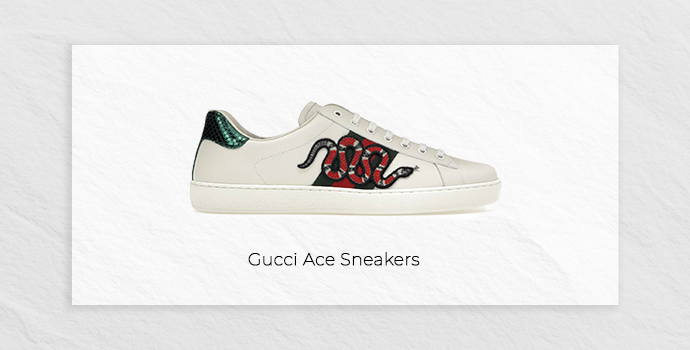
1. Gucci Ace Sneakers
The Gucci Ace Shoes stay one of the top fancy shoes available for men under this price range. Famous for its neat white leather look and special stripe detail, these shoes give long-lasting style.
They go well with jeans, tailored pants and smart casual clothes. Their simple design makes sure they stay trendy year after year.
2. Prada Downtown Leather Sneakers
Prada’s Downtown Sneakers are great for guys who like modern luxury with light logos and contemporary designs.
Made from high-quality leather with smooth details, these shoes give amazing comfort and last a long time. They are good for daily fancy dress while staying classy looking.
3. Balenciaga Speed Trainers.
Balenciaga Speed Shoes changed fancy street style shoes with their sock shape and modern look.
These light shoes are very comfy and easy to spot. For stylish men looking for cool shoes for themselves under 100k this pair is a great choice.
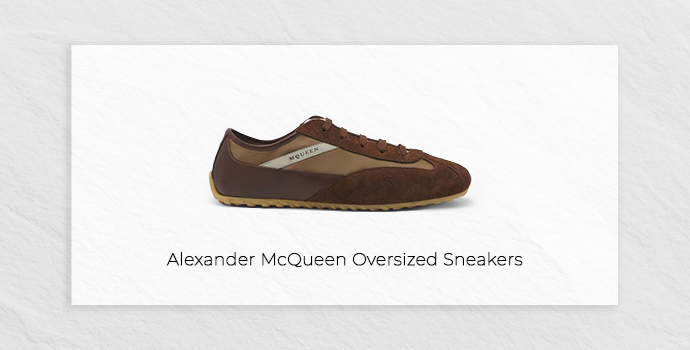
4. Alexander McQueen Oversized Sneakers
The big sole shoes by Alexander McQueen have turned into a must-have when it comes to stylish shoes for men.
With smooth leather tops and thick bottoms, these kicks mix simple looks with bold fashion. They are good for both casual and somewhat dressy clothes.
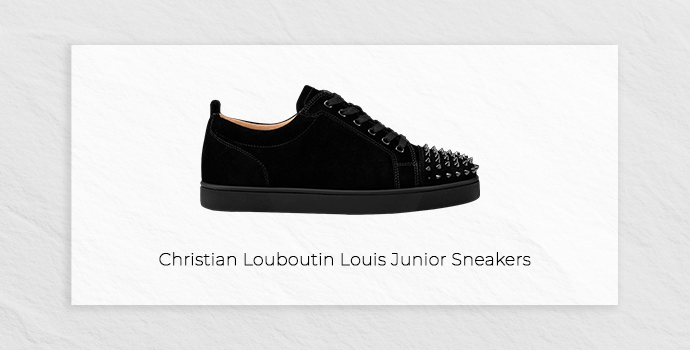
5. Christian Louboutin Louis Junior Sneakers
Known for their red bottoms, Christian Louboutin shoes add a bright look to a closet.
The Louis Junior Shoes have nice leather build and soft design, making them great for fancy casual wear no matter what your style is.
6. Tod’s Gommino Loafers
For the men who enjoy old style, Tod’s Gommino Loafers are a must have. These loafers made in Italy offer nice ease and class.
They are perfect for trips, work casual outfits and nice summer looks.
7. Versace Greca Sneakers
Versace Greca shoes mix strong labels with new city style. With the brand’s well-known Greca look and thick bottom design, these shoes make a big fashion mark yet stay in the high-end shoe range.
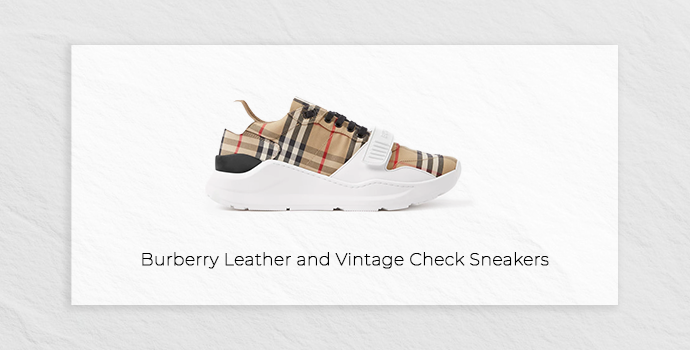
8. Burberry Leather and Vintage Check Sneakers
Burberry’s fancy shoes mix British style with modern design. The old Check detail gives light notice without taking over the whole look.
These shoes work well for both easy and dressed-up outfits.
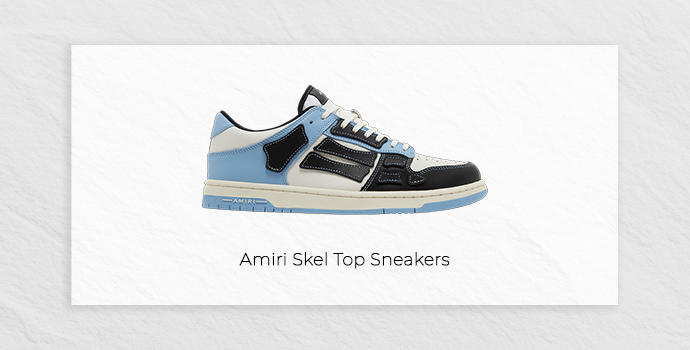
9. Amiri Skel Top Sneakers
Amiri shoes are very liked by fancy streetwear fans. The Skel Top Shoes show strong bone-like designs, good leather build, and cool California style. They are trendy, young and easy to spot.
10. Moncler Trailgrip Sneakers
Moncler Trailgrip Shoes mix fancy with active style. With special bottoms and tough stuff, these shoes are great for guys who want sporty nice shoes that feel good.
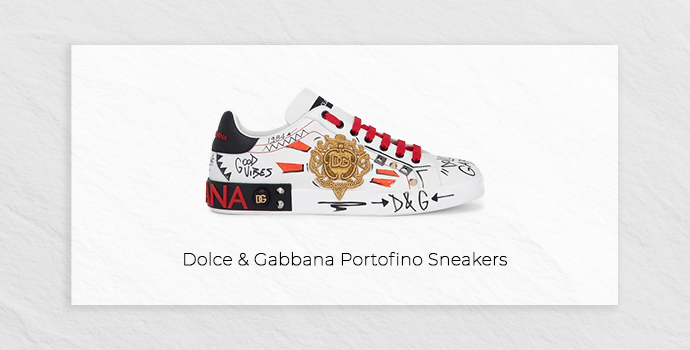
11. Dolce & Gabbana Portofino Sneakers
Dolce & Gabbana Portofino Shoes are known for their strong style from Italy and fancy details. They have logo prints or simple leather looks, these shoes give nice fashion with top quality work.
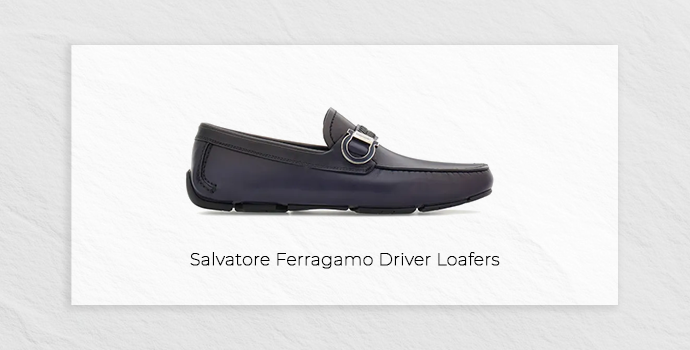
12. Salvatore Ferragamo Driver Loafers
Ferragamo Driver Loafers are classic fancy needs for guys who care about style and ease.
Made from smooth soft skin and showing fine skill in making, these loafers are great for classy daily use.
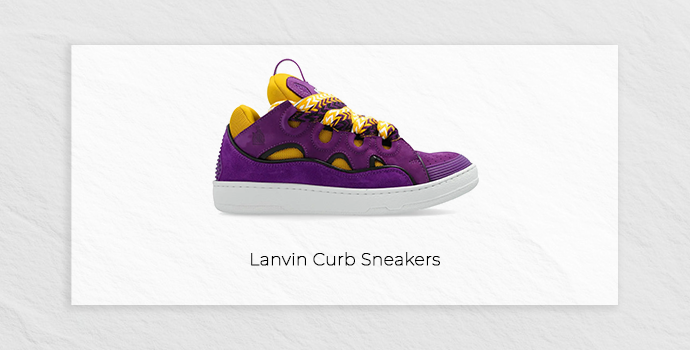
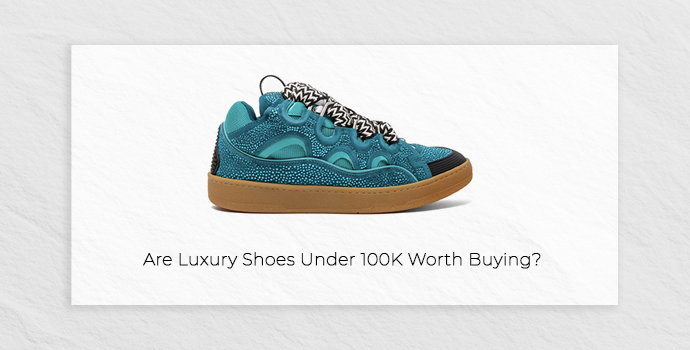
13. Lanvin Curb Sneakers
Lanvin Curb Shoes are some of the most daring fancy shoe styles now popular in fashion. With big laces and thick shapes, these shoes are perfect for guys who enjoy eye-catching shoes and modern fancy.
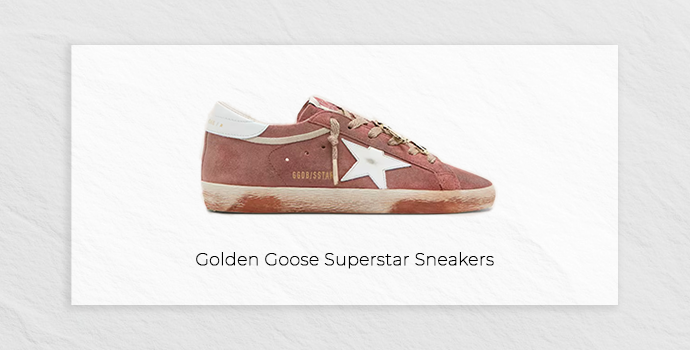
14. Golden Goose Superstar Sneakers
Golden Goose shoes are famous for their pretend used style and hand-made Italian skill. The Superstar Shoes have a cool fancy vibe that fits well with daily and street wear clothes.
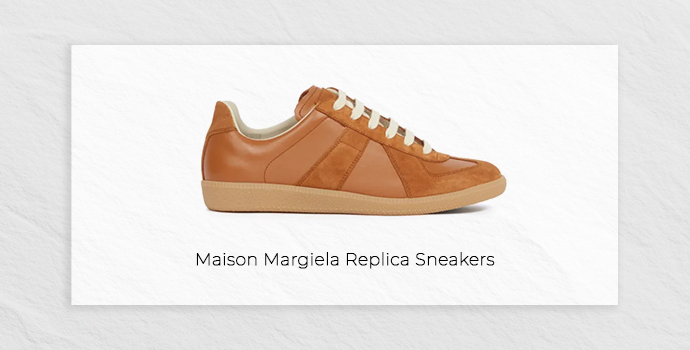
15. Maison Margiela Replica Sneakers
Maison Margiela Replica Shoes are great for guys who like simple luxury. Taken from old sports shoes, these kicks have basic style, high-quality suede and leather stuff and lasting use.
How to Choose the Best Shoes for Men Under 100K
Picking the right shoes for guys under 100k takes more than just going for a well-known brand. As good shoes are an investment, it’s key to think about quality, use in many ways, comfort and style before buying. The best fancy shoes should not ͏just look nice but also last long and be easy to wear every day.
The first thing to think about is your way of life. If you want shoes for daily wear, easy sneakers or old loafers are often the best choice because they match with many outfits.
But i͏f you enjoy stylish looks, big brand sneakers or bright shoes might suit your wardrobe better. Names like Gucci and Balenciaga have both classic and popular choices based on what you like.
The quality of stuff is a key part. Good leather, soft fabric and careful work often show more lasting power and ease.
Fancy shoes made from good materials usually look nicer for longer. Looking at the bottom part, sewing skill and the inside layer can also help see if the shoe͏s are worth the money.
Comfy should not be missed when you buy fancy shoes. Lots of brand names today pay a lot of attention to soft padding, light bottoms and comfy shapes to make sure they are easy to wear. Footwear that feels bad after some time is not often worth the cost, no matter the label.
It is also wise to pick useful colors like white, black, brown or beige because they can easily match with various clothes and events. Classic styles often bring more lasting worth than very trendy looks.
In the end, the finest shoes for guys under 100k are those that mix nice feel, ease, strength and own style choices while fitting well into your way of life.
Why Luxury Footwear Is a Smart Fashion Investment
Fancy shoes have changed from being just a stylish thing to a must-have in today’s closet. Spending money on nice shoes for men under 10͏0k is not only about having a brand name but also about enjoying great work, more comfort and lasting worth.
Unlike shoes made in large amounts, fancy shoes are made with care using fine materials and smart building methods that make them last longer and look better.
One of the big benefits of nice shoes is the endless style. Upscale brands focus on creating looks that remain in fashion for years, not just going after fast trends.
A classic set of trainers or leather flats from names like Prada or Gucci can easily remain in fashion every season. This makes fancy shoes a clever choice for the long run when compared to cheaper options that might fade fast or fall out of fashion.
Fancy shoes also boost total trust and style. A nice set of shoes can quickly boost even a simple outfit, making it seem tidy and smart. Whether used with good clothes or comfy street wear, high-quality shoes often become the key part of an outfit.
Also, nice fancy shoes last longer if kept well. This means that while the first cost may look higher, the price for each use gets better over time.
For guys who care about style, strength and many uses, putting money in trendy shoes for men under 100k is often a wise and good choice.
Yes, buying nice shoes for guys under 100k can really be a good idea, especially if you care about quality, skillful making, comfort and lasting style.
Unlike low-cost shoes, good shoes are made with the best materials like real leather and soft suede, strong rubber bottoms and good sewing methods. This doesn’t only make them look nicer but also helps them last more time and feel comfy all the way around.
Are Luxury Shoes Under 100K Worth Buying?
Yes, buying nice shoes for men below 100k can really be worth it. This is real if you like good quality, talent in making stuff, comfort and style that stays.
Unlike fast-made shoes, nice shoes use great materials like real leather, soft suede, strong rubber bottoms and fine stitching. This not only makes them look better but it helps them last more time and feel comfy all around.
One big reason fancy shoes are good to buy is their ability to fit many styles. A nice pair of high-quality sneakers or slip-ons can quickly make any outfit look better.
Whether worn with jeans, dress pants or casual clothes͏, fine shoes give a neat and sharp appearance that normal shoes don’t always manage. Names like Gucci, Prada and Alexander McQueen are famous for making lasting footwear that stays in style for a long time.
One more benefit is ease. Lots of high-end shoe makers put a lot into comfy shapes, soft soles and light build to make sure you can wear them all day. This turns fancy shoes into smart buys instead of just a style choice.
Fancy shoes also stay liked longer than quick style. Old styles like simple sneakers and nice loafers stay in fashion year after year. A few special designer shoes might even keep a good sell price as time goes by.
But, if fancy shoes are worth getting really depends on your way of life and style choices. If you often go to events, care about nice clothes or wish for shoes that mix strength with stylish look, buying shoes for men under 100k can be a wise choice.
With good care many luxury shoes can last years making them a great part of your closet.
Trending Luxury Shoe Styles Every Man Should Know
The world of fancy shoes keeps changing, with stylish names bringing new shapes, clever fabrics and trendy touches each time.
When buying shoes for a man under 100k, knowing the new fancy shoe trends can aid you pick styles that seem up-to-date yet still give long-term use. From simple sneakers to big bold soles, this luxury shoe market has something for each personal style.
One of the big fads in fancy clothes is big shoes. Made famous by names like Alexander McQueen and Balenciaga, fat sneakers stay very liked by guys who like modern street style looks. These kicks add character to easy outfits and make a strong fashion statement.
Simple leather shoes are another lasting style that keeps getting more popular. Neat white shoes from names like Prada and Common Projects give great flexibility and can switch easily between laid-back and smart-casual outfits. Their plain but fancy look makes them a must-have in your closet.
Fancy shoes are also coming back strong, mostly with guys who like nice and smart styles.
Shoes made from high-quality leather or soft cloth give a classy look while still being comfy for everyday use. They fit really well for work casual clothes, night events and trips in style.
Another new trend is fancy sporty shoes. Brands such as Moncler are mixing active use with stylish looks, making cool sneakers that focus on both style and ease.
In the end, picking stylish shoes for guys under 100k lets you try new fancy looks while still putting money in flexible shoes that can lift your full style for many years ahead.
Final Verdict
Fancy shoes are no longer just for very costly brand names that seem out of reach for many buyers.
Now, there are many nice and high-quality shoes for guys under 100k that give the right mix of style, ease, and skill. If you like classic loafers, bold sneakers or everyday shoes, buying fancy footwear in this price range can really boost your closet.
A big plus of getting nice shoes that cost under 100K is the range you can pick from. Names like Gucci, Prada, Balenciaga and Alexander McQueen give top-quality shoes that mix well-known labels with long-lasting strength.
These shoes use fine leather, smart sole tech and good craft work making them a valuab͏le buy for men who care about fashion.
Another big thing is changeability. Lots of fancy sneakers and loafers below this cost can switch from easy day looks to night outfits with no problem.
Shoes in plain colors give better worth since they stay in style over time. Rather than following quick trends, putting money into classic nice shoes makes sure you can wear them for a long time and they always look good.
Ease also takes a big part in new fancy shoes.Top brands now think a lot about soft padding, comfy shapes and light build making these shoes good for daily use. This means you are not only paying for the sign but also for a nice feel and skill.
In the end, the top shoes for guys under 100k are ones that fit your own look and daily needs.
Whether you prefer simple style or loud street fashion, fancy shoes in this price range give great choices that are nice-looking, long-lasting and really worth getting.
FAQs
Which are the best shoes for men under 100K?
Nice shoes from Gucci, Prada, Alex McQueen and Balenciaga are some of the best picks.
Are luxury shoes worth buying?
Yes, fancy shoes give better quality, ease, long-la͏sting wear and classic look.
Which luxury shoe brand is most popular?
Gucci and Balenciaga are now a few of the most liked fancy shoe names.
Can I buy designer sneakers under 100K?
Yeah, many great shoes are simple to find under 100K.
Which luxury shoes are best for daily wear?
Easy shoes and comfy slip-ons are good for a nice day-to-day use.
Ever since I was a kid, I’ve been staring up at the night sky, completely mesmerized. But lately, when I look at the stars, I feel a strange mix of awe and frustration. We are essentially stuck. We have this massive, beautiful, infinite playground out there, yet our current spacecraft crawl through the void like snails. When I sat down to dive deep into the latest research on interstellar propulsion this week, it honestly blew my mind just how close we are to shifting these concepts from pure science fiction to actual, tangible reality.
I mean, reaching Alpha Centauri in just a few decades? Sign me up. Let’s talk about how we are going to break the ultimate cosmic speed limit.
Why Chemical Rockets Are Holding Us Back
Before we look at the future, we have to understand the limits of our present. Traditional chemical rockets are amazing for getting us off the Earth and pushing us toward Mars. But for interstellar travel? They are utterly useless.
Take Voyager 1, for example. It is the fastest human-made object moving away from our solar system, traveling at roughly 38,000 mph (61,000 km/h). That sounds incredibly fast until you realize that at this pace, it would take Voyager over 70,000 years to reach our nearest stellar neighbor, Proxima Centauri. I don’t know about you, but I don’t have that kind of time. The fundamental issue is the tyranny of the rocket equation: to carry more fuel to go faster, you need even more fuel to push the weight of that initial fuel. It’s a vicious, heavy cycle.
To cross the ocean of space, we have to abandon fire and chemical explosions. We need physics-breaking innovation.
Three Technologies That Could Change Everything
While digging into the theoretical frameworks currently being debated by astrophysicists, three clear frontrunners emerged. They each sound like something pulled straight out of Star Trek, but they are grounded in very real math.
1. Light Sails (Surfing on Lasers)
This is the technology that genuinely excites me the most right now because it’s something we could actually build in our lifetime. Instead of carrying heavy fuel, what if we left the engine at home?
A light sail (or solar sail) works by capturing the momentum of photons. While photons have no mass, they do carry momentum. The Breakthrough Starshot initiative is currently working on a concept where a massive array of Earth-based lasers would fire a concentrated beam at a highly reflective, ultra-thin sail in space. Attached to this sail would be a “StarChip”—a microchip-sized probe containing cameras and sensors.
The Big Advantage: By blasting the sail with lasers, we could accelerate these tiny probes to 20% the speed of light. At that speed, they would reach Alpha Centauri in just 20 years.The Catch: We can only send microscopic payloads right now. Plus, how do you stop a probe moving at a fraction of light speed when it gets to its destination? For now, they would just fly right by and snap photos.
2. Antimatter Rockets (The Ultimate Energy)
If we want to send actual humans to another star system, we need serious energy density. Enter antimatter.
When matter meets antimatter, they annihilate each other perfectly, converting 100% of their mass into pure energy. To put that into perspective, the nuclear fission that powers our submarines converts less than 1% of its mass into energy. An antimatter engine would capture the explosive force of these annihilations to thrust a massive ship forward.
The Big Advantage: Unmatched fuel efficiency. A trip that would take thousands of tons of chemical fuel would require just a few grams of antimatter.The Catch: Antimatter is currently the most expensive substance on Earth to produce. We can only make a few atoms at a time in massive particle accelerators like CERN. Also, safely storing something that violently explodes the second it touches the wall of its container is… well, it’s a massive engineering headache. I certainly wouldn’t want to be the guy sitting next to the fuel tank.
3. The Alcubierre Warp Drive (Bending Reality)
This is where the physics gets incredibly weird, and it’s my absolute favorite concept. Proposed by theoretical physicist Miguel Alcubierre in 1994, this drive doesn’t actually accelerate a ship faster than light. Instead, it exploits a loophole in Einstein’s Theory of General Relativity.
Imagine placing a ship inside a “warp bubble.” The drive compresses the fabric of spacetime in front of the ship and expands it behind the ship. The spacecraft itself sits perfectly still inside this bubble, while space itself moves around it. Think of it like standing on a moving walkway at the airport.
The Big Advantage: Faster-than-light travel without time dilation. You could travel to Alpha Centauri and back without returning to find out everyone you love has aged a hundred years.The Catch: To create this bubble, the math dictates we need “negative energy” or exotic matter—something we aren’t entirely sure exists in a usable form yet. However, recent papers I’ve read are trying to figure out how to create these spacetime distortions using purely positive, conventional energy. The energy requirements are astronomical, but the math is getting more plausible every year.
My Take on Our Interstellar Future
When I look at these three options, my practical side leans heavily toward Light Sails. It is the bridge technology. I firmly believe that within the next few decades, we will witness a laser-pushed probe leaving our solar system.
But my heart? My heart is entirely invested in the Warp Drive. Humanity has a track record of breaking seemingly impossible barriers. We broke the sound barrier, we escaped Earth’s gravity, and eventually, I believe we will figure out how to fold spacetime. We aren’t meant to stay in this solar system forever.
It’s an incredible time to be alive and watching this tech evolve. The universe is waiting for us; we just need the right set of keys to unlock the door.
So, I have to ask you: If you were given a one-way ticket on the very first experimental warp ship, knowing the immense risks but also knowing you’d be the first human to see a completely new star system up close… would you take the seat?
Jodie Comer has taken Hollywood by storm with her exceptional talent and versatility. Since her on-screen debut in 2008, Comer has expanded her range from British TV dramas to American blockbusters, collaborating with some of the industry’s finest directors. Her performances have earned her widespread acclaim, winning awards like BAFTAs and an Emmy. As one of the brightest stars of her generation, Comer has shown no signs of slowing down. Here, we take a look at the best Jodie Comer roles, from her breakout TV appearances to her impressive film work.
1. Killing Eve
Killing Eve: Villanelle’s Impact on Jodie Comer’s Career
No list of Jodie Comer roles would be complete without mentioning Killing Eve. In this British thriller, Comer plays Villanelle, a psychopathic yet oddly endearing assassin. Villanelle’s complex personality and dark humor allowed Comer to showcase her acting range, capturing the attention of audiences worldwide. The role catapulted her into the spotlight, earning her multiple awards, including a BAFTA and an Emmy. Jodie Comer’s role as Villanelle demonstrates her unique ability to bring depth to characters who are both terrifying and fascinating.
2. Free Guy
Free Guy: Breaking into Blockbuster Action
In Shawn Levy’s Free Guy, Comer plays Millie, a video game designer determined to expose corruption within her company. Jodie Comer’s role in Free Guy required her to portray two distinct personas—Millie in the real world and MolotovGirl, her fearless avatar within the game. This dual role gave Comer a chance to explore comedy and action, seamlessly balancing intense action scenes with lighthearted humor. Her on-screen chemistry with Ryan Reynolds is palpable, adding an extra layer to this vibrant adventure film.
3. My Mad Fat Diary
My Mad Fat Diary: Early Success in British TV
One of the first major Jodie Comer roles was Chloe Gemell in My Mad Fat Diary. This British coming-of-age series explores teenage struggles with mental health, as Chloe’s friend Rae, played by Sharon Rooney, battles personal issues. Unlike typical “popular girl” characters, Chloe is layered and complicated, providing Comer with a role that was both challenging and rewarding. My Mad Fat Diary became a stepping stone for Comer, helping her gain recognition as a rising talent in British television.
4. The Last Duel
The Last Duel: Bringing Historical Drama to Life
Directed by Ridley Scott, The Last Duel is a historical drama where Jodie Comer’s role as Marguerite is at the story’s core. Set in 14th-century France, the plot follows Marguerite’s accusation of assault against Jacques le Gris, sparking a duel to the death between her husband and Jacques. The Last Duel explores themes of honor, justice, and truth, with Comer delivering a powerful performance that keeps the narrative compelling. Her portrayal of Marguerite is both intense and nuanced, underscoring Comer’s ability to handle complex characters.
5. The White Princess
The White Princess: Royal Drama and Political Intrigue
Based on Philippa Gregory’s historical novels, The White Princess sees Comer as Elizabeth of York. The series follows Elizabeth’s life as she navigates her politically motivated marriage to King Henry VII, balancing loyalty to her family with her role as queen. As Elizabeth, Jodie Comer’s role required her to convey the intricate challenges faced by a queen caught between personal desires and political obligations. The White Princess showcases Comer’s range in historical drama, proving she can adapt to any genre.
6. Thirteen
Thirteen: Tackling Dark Themes and Emotional Depth
In the BBC miniseries Thirteen, Comer stars as Ivy Moxam, a young woman who escapes captivity after being held for 13 years. Jodie Comer’s role in Thirteen demanded a raw and emotionally charged performance, as Ivy attempts to rebuild her life while dealing with trauma. The series delves into the psychological impact of prolonged captivity, with Comer delivering a performance that is both haunting and vulnerable. Thirteen is a testament to Comer’s skill in tackling emotionally complex narratives.
7. Doctor Foster
Doctor Foster: The Drama of Deception and Betrayal
In Doctor Foster, Comer plays Kate Parks, a university student who becomes involved in an affair with a married man. Jodie Comer’s role as Kate brings an added layer to the show’s central theme of betrayal, as her character navigates the fallout of her actions. Despite being a supporting character, Comer’s performance in Doctor Foster left a lasting impression, adding to the show’s tension and drama. Her nuanced portrayal helped the series resonate with audiences, cementing her status as a versatile actress.
8. Help
Help: Reflecting Real-Life Crisis and Caregiving
In Help, Comer plays Sarah, a young caregiver at a care home in Liverpool. The story revolves around the challenges faced by the staff and residents during the COVID-19 pandemic. Sarah’s relationship with Tony, a man suffering from early-onset Alzheimer’s, highlights the dire situations faced by caregivers. Jodie Comer’s role in Help is deeply moving, showcasing her ability to depict compassion and resilience under extreme circumstances. Her portrayal received critical acclaim, with many praising her sensitivity and authenticity.
9. The Bikeriders
The Bikeriders: A Gritty Exploration of Motorcycle Culture
In The Bikeriders, Comer plays Kathy, a woman caught in the world of an outlaw motorcycle club during the ‘60s and ‘70s. This gritty drama, directed by Jeff Nichols, presents a unique perspective on Comer’s career. Jodie Comer’s role as Kathy allows her to explore complex themes of loyalty, love, and the price of freedom. The film offers Comer an opportunity to portray a character shaped by a harsh environment, providing her with new dimensions to explore in her craft.
10. Lady Chatterley’s Lover
Lady Chatterley’s Lover: Revisiting a Literary Classic
In the BBC adaptation of Lady Chatterley’s Lover, Comer plays Ivy Bolton, a widow who forms a close bond with an injured war veteran. Jodie Comer’s role in this adaptation adds a new layer to the classic tale, highlighting themes of loneliness, companionship, and desire. The TV movie captures the essence of D.H. Lawrence’s novel, with Comer delivering a refined performance that complements the story’s intimate and emotional elements. Her portrayal of Ivy rounds out her portfolio of versatile roles, making her a standout in period dramas.
Jodie Comer continues to redefine her craft with each new project. From the witty and dangerous Villanelle in Killing Eve to the resilient Sarah in Help, Jodie Comer roles are marked by depth, nuance, and a dedication to her characters. With each performance, Comer solidifies her place as one of the most talented actors of her generation, leaving audiences eagerly anticipating her next project. Whether she’s taking on historical dramas, action-packed blockbusters, or deeply emotional roles, Jodie Comer proves time and again that she’s an unstoppable force in the entertainment industry.