Home Blog Page 1553

Oti Mabuse appeared on Loose Women today and discussed her pre-diabetes diagnosis

    0
    Oti Mabuse appeared on Loose Women today and discussed her pre-diabetes diagnosis


    Former Strictly pro Oti Mabuse opened up about living with pre-diabetes on Loose Women today (November 6), leaving the show’s panellists shocked.

    The dancer, who gave birth to her first child, a daughter, in December last year, explained that she was first diagnosed with gestational diabetes, which runs in her family.

    Oti Mabuse appeared on Loose Women today and spoke about her baby girl (Credit: ITV)

    Loose Women today: Oti Mabuse shares health condition

    Discussing her motivation for keeping fit and healthy after her daughter was born, she dismissed the idea of ‘snapping back’ and said: “My reason for getting back into fitness was that I found out I was pre-diabetic, actually.”

    It’s about trying to get back to a point where I feel strong, I can handle my food, and keep my sugar levels alright.

    Host Charlene White interjected “Really?” before Oti continued: “I am still pre-diabetic, and it’s about trying to get back to a point where I feel strong, I can handle my food, and keep my sugar levels alright.

    “And it’s not about being skinny. It’s about being strong. It’s about being able to play with my daughter and have fun with her,” she added to applause from the audience.

    Charlene White on Loose Women today

    Anchor Charlene was shocked at Oti’s diagnosis (Credit: ITV)

    Diabetes explained

    The exact cause of gestational diabetes is unknown. But it’s thought that the placenta – which provides the foetus with water and nutrients – produces hormones that prevent the mother’s ability to use insulin effectively.

    Pre-diabetics, meanwhile, have a higher than normal blood sugar level. However, it’s not high enough to be considered type 2 diabetes. Lifestyle changes are advised to stop type 2 diabetes from developing.

    In September, Oti discussed her weight loss following the birth of her daughter. She shared on Instagram that she went from a size 18 to a size 10. She said: “I started to change how I approached food, movement, and how I looked at my own body. This journey isn’t about getting skinny. It’s about gaining strength, confidence, and discipline in a way that feels sustainable and true to me.”

    Oti Mabuse smiling

    Oti gave birth to her first child last year (Credit: Cover Images)

    Will Oti be on I’m A Celebrity this year?

    Also on Loose Women today, Oti addressed the rumours that she’ll be taking part in I’m A Celebrity this year. The show’s set to begin on November 17. But the dancer did her best to not give anything away.

    Charlene teased: “Now there is a question I have to ask because your winter might actually be quite warm,” as Oti pretended to sip her drink to avoid answering the question.

    When asked if she’s a fan of the show, she said: “I love I’m A Celebrity, I really really really do. Since I came to this country, it’s been one of the shows I’ve watched and am a huge fan of.”

    Read more: Oti Mabuse shares toll Strictly Come Dancing took on her marriage to husband Marius amid ‘pressure’: ‘I’m not good enough’

    Motsi Mabuse Talks Strictly Buzz and Sister Oti | Loose Women

    Are you a fan of Oti? Leave a comment on our Facebook page @EntertainmentDailyFix to let us know.


    Source link

    OpenSea Teases Reboot Arriving December 2024

      0
      OpenSea Teases Reboot Arriving December 2024


      Popular NFT marketplace OpenSea has announced a significant platform revamp expected to launch in December 2024.

      This overhaul comes as OpenSea faces increasing competition from emerging NFT platforms like Blur and Magic Eden, as well as ongoing regulatory scrutiny from the U.S. Securities and Exchange Commission (SEC).

      With the teaser of this new platform, OpenSea appears to be signaling a fresh approach in a challenging market environment where declining volumes and user migration have impacted its standing.

      OpenSea Waitlist Source: OpenSea

      What do we know so far?

      On November 4, OpenSea shared a teaser video hinting at a new platform, inviting users to join a waitlist for early access. Commenting on the X announcement, CEO Devin Finzer described the reboot as a complete reimagining of OpenSea, suggesting that the platform will feature significant technical and user experience changes, though specific details remain limited.

      According to Vaibhav “vasa” Saini, OpenSea Pro’s founder, the revamp has been a year in development. Discord chat screenshots are also circulating indicating that the update would include support for Bitcoin Ordinals, though Saini emphasized that this feature would be “the least interesting” aspect of the platform.

      In a separate screenshot, Saini also mentioned possible incentives for holders of the Gemesis NFT collection. Additionally, screenshots from the platform’s beta version also show new features such as a leaderboard and rewards tab was shared by Wale on X.

      OpenSea NFT Marketplace
      OpenSea NFT Marketplace Source: OpenSea

      Why is this significant?

      OpenSea’s planned relaunch comes as the platform faces a shifting NFT landscape. Whilst it was once a dominant marketplace, OpenSea has lost ground to platforms like Magic Eden, which has drawn users with its more active development and features.

      Additionally, OpenSea is under scrutiny from the SEC, which has questioned whether certain assets on the platform could be classified as unregistered securities. This has led to increased speculation about how the platform will handle compliance and regulatory concerns going forward.

      Some users are also speculating that OpenSea could introduce a token or even a dedicated Layer 2 Ethereum chain, although the company has not confirmed either possibility. Given recent legal actions in the NFT and crypto spaces, a token launch could pose additional risks.


      Source link

      Trump Elected as 47th U.S. President, Crypto Markets Rally

        0
        Trump Elected as 47th U.S. President, Crypto Markets Rally


        Donald Trump has made a historic political comeback, winning the 2024 U.S. presidential election and defeating Vice President Kamala Harris.

        This victory has sent ripples through financial markets, particularly the cryptocurrency sector, as investors and industry participants anticipate a potentially more favorable regulatory environment.

        Trump’s campaign promises—which include actions such as freeing Ross Ulbricht, firing SEC Chair Gary Gensler, and opposing central bank digital currencies (CBDCs)—have contributed to a surge in cryptocurrency prices and optimism within the digital assets community.

        Trump Supporters Rally Source: Donald J. Trump (X)

        What happened in the U.S. Presidential Election?

        Trump’s victory marks a historic comeback, with wins in key states like Georgia, Pennsylvania, and Wisconsin, fueled by strong support from rural and working-class voters and notable inroads among ethnic minorities.

        The election also saw Republicans regain control of the Senate, whilst the House of Representatives remains undecided.

        Trump’s return to office, along with his campaign commitments, has sparked interest in how his administration might reshape the regulatory landscape for digital assets in the U.S.

        Bitcoin Hits New ATH as Trump Wins U.S. Presidential Election
        Bitcoin Hits New ATH as Trump Wins U.S. Presidential Election Source: Pexels

        How did this impact the crypto markets?

        Following the announcement of Trump’s victory, the cryptocurrency market responded with significant upward momentum.

        Bitcoin surged to a record high of $75,389, a reflection of market speculation that Trump’s administration may introduce a more favorable stance on digital currencies. Trump’s prior statements about making the U.S. a “bitcoin superpower” have also contributed to market optimism. Major cryptocurrencies beyond Bitcoin also saw gains, with Ethereum rising 8.9% and Solana climbing 12%.

        In the NFT sector, trading volumes rose as investors anticipate that Trump’s administration might adopt a supportive regulatory approach. Trump’s previous ventures into NFTs, including launching his own collection, have further fueled interest and speculation among digital asset investors about potential policy shifts in favor of blockchain.

        What this means for the future of crypto?

        The response from the web3 community on X has been mixed with some leaders in the space express cautious optimism, hoping that Trump’s administration will bring regulatory clarity and support for blockchain development. However, others remain wary of potential uncertainties, noting that any policy changes could have complex impacts on the digital asset landscape.

        Trump’s presidency may lead to significant changes in the regulatory framework surrounding digital assets, with possible implications for cryptocurrency exchanges, stablecoin regulations, and decentralized finance (DeFi) protocols.

        Whilst some anticipate a reduction in regulatory pressures, the actual impact will depend on specific policy decisions made in the months following his inauguration.


        Source link

        Lumiterra to Launch Closed Beta Test 2, Coming November 11

        0
        Lumiterra to Launch Closed Beta Test 2, Coming November 11


        Web3-based MMORPG Lumiterra is launching its second Closed Beta Test (CBT 2) on November 11, 2024, introducing new gameplay features and wider player access.

        Set to run for three weeks, this phase brings refined progression systems, enhanced dungeon challenges, and new modes aimed at boosting player engagement.

        With updates based on feedback from the first CBT, Lumiterra’s developers are focused on balancing gameplay and providing an expanded experience within a unique open-world setting.

        What is Lumiterra? Source: Lumiterra

        What is Lumiterra?

        Lumiterra is a free-to-play MMORPG that integrates web3 elements into a survival and crafting-focused multiplayer experience.

        In an open-world environment, players engage in combat, farming, and crafting, with the option to specialize in various roles such as agriculture or combat. These roles provide specific in-game advantages: players focusing on combat can access advanced weaponry, whilst those dedicated to farming unlock productive resources and crafting materials.

        In addition to gameplay, Lumiterra includes NFTs and the $RON currency, establishing a DeFi-driven economy where players can trade, enhance equipment, and access various in-game benefits.

        Lumiterra on Ronin Blockchain
        Lumiterra on Ronin Blockchain Source: Lumiterra

        What’s new in CBT 2?

        The upcoming CBT 2 phase brings several new and enhanced features to expand the gameplay experience:

        Upgraded Equipment Enhancement and Lottery System: Players can now enhance equipment above Level 1, allowing for more substantial progression. The Enhancement Lottery offers participants a chance to win a share of a prize pool funded by enhancement fees, encouraging ongoing upgrades.Expanded Dungeon System with Centennial Trials: The dungeon system now features six difficulty levels, enabling players to earn rewards that scale with performance. The Centennial Trials introduce a dungeon with nine levels and multiple stages, where prize pools reset every 30 minutes, creating a regular incentive for participation.Escort Slime PvP Mode: This new team-based event requires players to collaborate in protecting a Slime character from enemy attacks. Rewards are awarded for successfully escorting the Slime and for defeating opposing teams, with unique challenges and rewards linked to different Slime types.

        Access to CBT 2 is available to players who met certain criteria in the first test, such as achieving a Reputation Score of at least 1,000 or making a minimum purchase. Additionally, players who hold specific collectibles, including Axies, and those who complete whitelist challenges through events can join.


        Source link

        Warcraft II: Remastered internal alpha spotted, hinting at an announcement soon

        0
        Warcraft II: Remastered internal alpha spotted, hinting at an announcement soon


        There might be a remastered version of Warcraft 2 on the horizon, as hinted at by an internal alpha appearing.

        Said alpha has popped up on blizztrack.com, a website that tracks all of the available builds of Blizzard games. According to the site, something called “Warcraft II: Remastered Internal Alpha” has appeared on Blizzard’s Battle.net service.

        Sadly, there’s very little information that can be gleaned from the listing, at least from what I can tell.

        Blizzard will be hosting Warcraft Direct this weekend, which would surely be the opportune time to announce a remaster of Warcraft 2.

        If true, let’s just hope this remaster goes better than Warcraft 3: Reforged as pretty much everyone was disappointed with it.

        With that said, the very same blizztrack.com site noted last month that a patch 2.0 was being tested for Warcraft 3: Reforged, sparking some hope that a big overhaul might be coming. I’d say it would be rather odd for the game to get a big update so long after launching, but perhaps it could be something to do with Warcraft 2? This is just speculation, but perhaps Blizzard wants to make Warcraft 2 and 3 feel more cohesive and thus are redoing some of Reforged to make it fit in better.


        Source link

        Polymarket and Prediction Markets: The Role of Betting in Election Forecasting | NFT CULTURE | NFT News | Web3 Culture | NFTs & Crypto Art

        0
        Polymarket and Prediction Markets: The Role of Betting in Election Forecasting | NFT CULTURE | NFT News | Web3 Culture | NFTs & Crypto Art


        Election prediction markets like Polymarket have long been a unique way to gauge public sentiment, providing real-time insights based on people’s willingness to put their money where their predictions are. As we saw with the recent election, platforms like Polymarket were instrumental for many observers wanting a pulse on the election as it unfolded. However, their performance wasn’t without limitations, showing the nuanced reality of prediction markets.

        Polymarket: Real-Time Proxies, Not Crystal Balls

        Polymarket’s allure lies in its dynamism. During the recent election, Polymarket offered real-time insights as vote counts rolled in, allowing users to follow shifts in sentiment almost minute-by-minute. According to an analysis by @punk9059, Polymarket gave viewers an accurate, if not always precise, look into voter behavior, such as fluctuating probabilities for key outcomes like the popular vote and battleground states.

        Polymarket had its strengths, serving as a valuable proxy, but some forecasts were off. For instance, at one point, it predicted a 25% chance of Trump winning the popular vote. This divergence highlights the limitations of even the most responsive prediction markets: they reflect short-term sentiment rather than guarantee outcomes.

        A “Massive Win” for Prediction Markets?

        For proponents of Polymarket, like @SteveKBark, Trump’s eventual win underscored the platform’s utility and accuracy—challenging skeptics who dismissed prediction markets as unreliable. The final outcome lent credibility to prediction markets, which were at times mocked by mainstream political analysts.

        However, the journey of prediction markets during the election also highlighted that these tools are just one piece of the forecasting puzzle. They’re incredibly useful for real-time updates and provide a platform for aggregated public sentiment, but they do not substitute for in-depth polling analysis. The blend of real-time betting with data-rich polling remains a promising area for election analysis.

        The Future of Prediction Markets in Politics

        Prediction markets, by design, are fluid and thrive on the collective wisdom (and biases) of their participants. Polymarket’s performance in the recent election has already sparked discussions about the viability of prediction markets as alternative forecasting tools. With their data-driven appeal, these markets offer unique insights that could complement traditional polling, especially in unpredictable races. As blockchain-backed prediction markets grow, they may become a key fixture in the media’s election coverage toolkit, with potential for better accuracy as more people participate and learn.

        TL;DR

        Polymarket offered valuable real-time election insights but had mixed accuracy, showing both the strengths and limitations of prediction markets as election forecasting tools. As prediction markets like Polymarket grow, they might provide complementary insights to traditional polling, with promising potential for the future.


        Source link

        Boomland Airdrop Season 2: Earn Rewards Worth $1M in Hunters On-Chain

        0
        Boomland Airdrop Season 2: Earn Rewards Worth M in Hunters On-Chain


        Hunters On-Chain has launched Season 2 of the Boomland Airdrop on Game7 with a 100M $BOOM token prize pool worth $1M at its Token Generation Event. This season has an expanded LootDrop campaign with new ways to earn rewards, including Faction Wars.

        With PvE and PvP modes, you can compete to rank on the leaderboard and get your share of the massive prize pool. Here’s what you need to know.

        Rewards: $BOOM Tokens, XP and Premium Loot

        Season 2 airdrop has 90M $BOOM on the leaderboard and 10M $BOOM on Faction Wars, rewarding players for in-game achievements and faction performance. Here’s what you can get:

        $BOOM Bags: Contains $BOOM tokens which can be traded or burned to convert to in-game currency for character levelling.

        G7 Portal XP and Credits: Earned through gameplay, XP and credits improve ranking and unlock items.

        Premium Hunters and T3 Genesis Chests: Top players get Premium Hunters with special perks and T3 Genesis Chests with valuable items.

        With tradeable $BOOM tokens, you can earn real-world value for your Hunters On-Chain efforts. Top players can convert these rewards into valuable assets in the Boomland ecosystem. It’s important to note that the full public launch of the $BOOM token has not yet happened.

        Join the Boomland Airdrop

        Go to Game7’s LootDrop page and connect your Boomland account to the Game7 Portal.

        Go to Boomland’s airdrop page, and you can also join a faction using a community referral code to join other players in Faction Wars.

        Start playing in Hunt Mode and get as high a score as possible to rank on the leaderboard.

        Complete the first trial in the Boomland LootDrop campaign to qualify.

        The top 3 factions in Faction Wars will share 10M $BOOM; faction ranking is based on the average score of each group. To join a faction, head over to Boomland’s X page to find some you can join (including reference codes), such as Blocklords.

        The application deadline to start your own faction is November 21st, and you can do so on Game7.

        Real Ownership with Immutable Passport

        Hunters On-Chain uses blockchain to give players real ownership of their progress and assets. Through the Immutable Passport, players can store, trade or sell their Hunters, equipment and other valuable items, so their in-game efforts have real value. With this integration, players’ time and achievements translate to assets that can be transferred out of the game.

        Game Modes: Earn $BOOM in PvE and PvP Challenges

        Hunters On-Chain has several game modes for PvE and PvP players, each with different ways to earn $BOOM, XP and rewards. In PvE modes, you can play Hunt Mode, a 3 minute co-op battle across biomes with increasing difficulty.

        For a team play experience, Co-Op Mode allows you to join another Hunter to protect the King, with levelling and bonus rewards during the battle. In Boss Hunt, you face powerful enemies, leading up to the ultimate boss fight that tests your skills and strategy.

        For PvP players, Duel Mode allows you to play ranked best of 3 matches against each other, with winners increasing their rank and reward potential. Bounty Hunter Mode is a 10-player battle royale where players compete for valuable rewards.

        During these matches, you can heal and temporarily boost your stats by picking up items on the battlefield, adding a strategic layer to PvP.

        Tips to get the most out of the Boomland Airdrop

        To get the most rewards in the Boomland Airdrop, focus on XP-boosting activities like completing quests, getting badges and referring friends to the game.

        Premium hunters give you extra XP boosts that can help you climb the leaderboard. Being part of the community and following game updates also gives you tips and strategies.

        In a Web3 game where every point matters, focusing on high XP activities and using in-game advantages like premium hunters can make a big difference in topping the leaderboard. By planning your gameplay and being active in the Boomland community, you can get more rewards and have more fun.

        Conclusion: Why Join the Boomland Airdrop

        The event runs till November 28, and the Boomland Airdrop gives you many chances to earn $BOOM tokens, exclusive loot and more rewards the longer you play. There is zero cost to join, and it is already popular among players to climb the leaderboard. If you want to boost your rewards, join a Faction with a referral code and get extra chances—the top 3 Factions get bonuses for the whole team. It is easy to join, play and see what you can win.

        Editor’s note: Written with the assistance of AI – Edited and fact-checked by Jason Newey.

        Jason Newey

        Jason Newey is a seasoned journalist specializing in NFTs, the Metaverse, and Web3 technologies. With a background in digital media and blockchain technology, he adeptly translates complex concepts into engaging, informative articles.

        View all posts


        Source link

        Bitcoin ATMs: Usage and Functionality Explained – Metaverseplanet.net

        0
        Bitcoin ATMs: Usage and Functionality Explained – Metaverseplanet.net


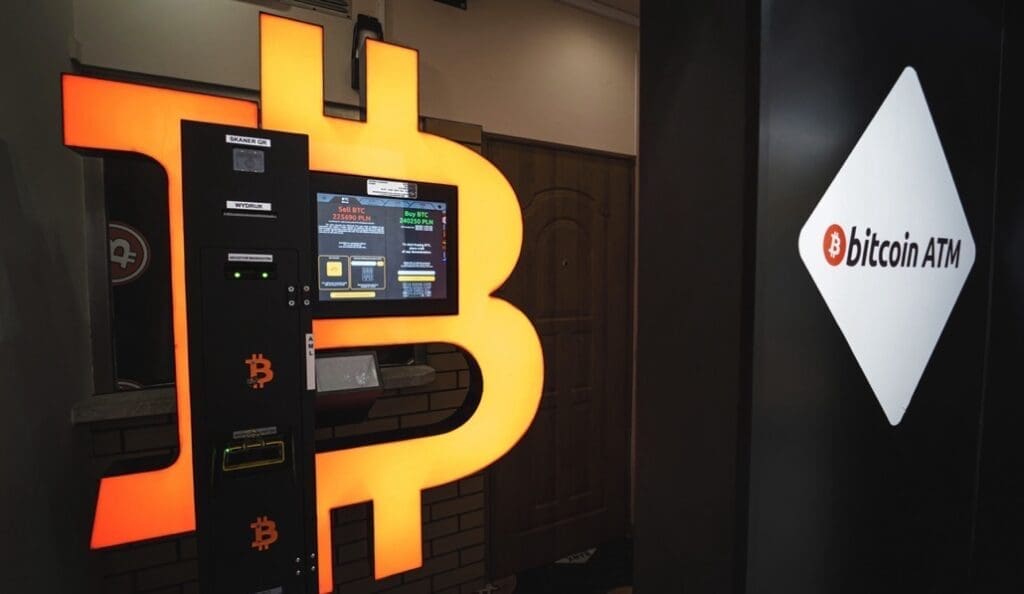
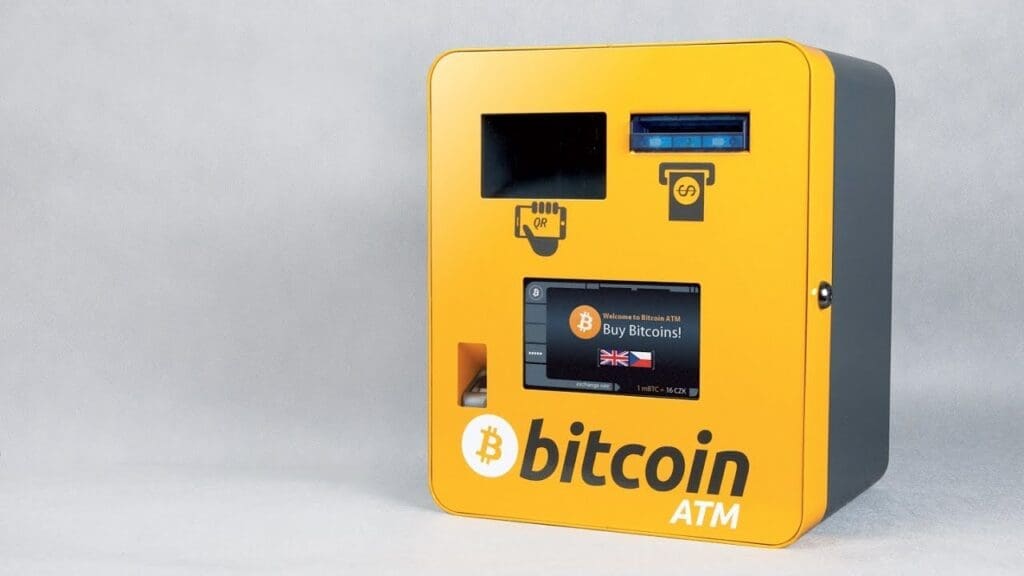
        A Bitcoin ATM (Automated Teller Machine) or BTM (Bitcoin Teller Machine) is a physical kiosk that facilitates Bitcoin transactions, bypassing the traditional banking system. As the value of cryptocurrencies rises and more people rely on digital assets, these machines have become increasingly popular.

        Unlike regular ATMs, BTMs connect directly to a Bitcoin wallet rather than a bank account. Users transact through their Bitcoin wallets, where coins are deposited or debited. Some Bitcoin ATMs even resemble traditional ATMs, modified with specialized software to process Bitcoin transactions.

        A Brief History of Bitcoin ATMs

        Bitcoin ATMs: Usage and Functionality Explained

        The world’s first Bitcoin ATM was installed on October 29, 2013, with a Robocoin machine located at Waves Coffee Shop in Vancouver, Canada. Though it ceased operations in 2015 due to technical issues, it remains a pioneering milestone in cryptocurrency ATM history. Over the years, Bitcoin ATMs have encountered regulatory challenges, leading to regulations similar to those for traditional ATMs, such as setting daily transaction limits.

        How Does a Bitcoin ATM Work?

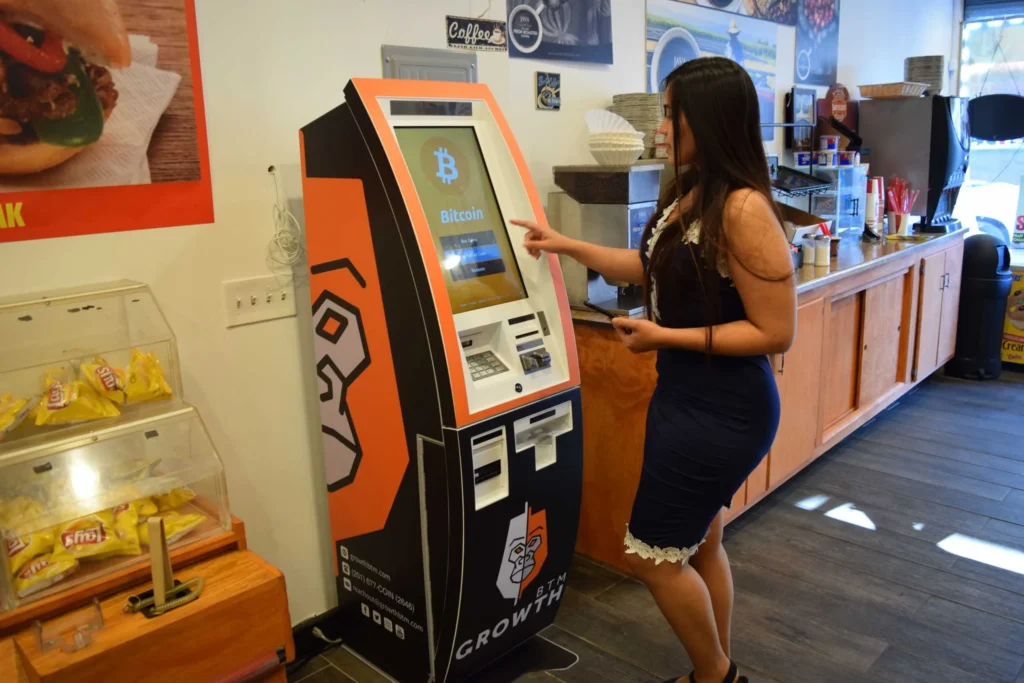
        Bitcoin ATMs connect to a cryptocurrency exchange to facilitate Bitcoin purchases. When users deposit traditional currency, the machine converts it into Bitcoin and deposits it into their digital wallet, recorded on the blockchain — the decentralized ledger that tracks all cryptocurrency transactions. To use a Bitcoin ATM, users typically scan a QR code from their digital wallet, deposit cash, and receive the equivalent amount of Bitcoin in their wallet.

        Risks and Limitations of Bitcoin ATMs

        Though Bitcoin ATMs offer accessibility, they also come with certain risks and limitations. Due to regulations, many Bitcoin ATMs no longer provide anonymity; users are often required to verify their identity, particularly for larger transactions. Additionally, Bitcoin ATM fees are typically higher than other transaction methods, with fees varying by machine and operator.

        The Current State of Bitcoin ATMs

        Today, over 30,000 Bitcoin ATMs operate globally, with nearly 90% located in the United States. North America leads the market, with BTMs often found in cafes, retail stores, and transportation hubs like train stations and airports.

        You May Also Like

        Follow us on TWITTER (X) and be instantly informed about the latest developments…

        Copy URL


        Source link

        Understanding the System 2 Model: OpenAI’s New Approach to LLM Reasoni

        0
        Understanding the System 2 Model: OpenAI’s New Approach to LLM Reasoni


        OpenAI recently launched two new models, OpenAI o1-preview and OpenAI o1-mini, representing a significant step forward in large language models (LLMs). These models are being hailed as the first commercial implementations of “System 2” reasoning models, a concept that contrasts with the traditional “System 1” AI models we’ve been using since the release of ChatGPT in 2022. But what exactly is a System 2 model, and how does it differ from System 1? This article dives into the techniques, concepts, and innovations behind this new wave of reasoning-based AI.

        What Is the System 2 Model?

        The idea of System 1 and System 2 thinking originates from Daniel Kahneman’s 2011 book Thinking, Fast and Slow. System 1 refers to fast, intuitive thinking, while System 2 involves slower, more deliberate, and analytical thinking. Similarly, in AI, System 1 models respond quickly to prompts based on learned patterns, whereas System 2 models engage in more thoughtful, step-by-step reasoning.

        Until now, most of the AI models we have interacted with fall into the System 1 category, offering immediate responses based on previous training. System 2 models, like the new OpenAI o1, are designed to break down complex tasks, analyze different scenarios, and deliver more reasoned responses—mimicking a more human-like reasoning process.

        The Shift from System 1 to System 2 in AI

        When OpenAI launched ChatGPT in November 2022, it quickly became clear that AI models could handle a wide variety of tasks but often struggled with more complex, multi-step problems. System 1 models are excellent for straightforward queries, but tasks that require deeper analysis have often been challenging.

        System 2 models, by contrast, approach problems methodically. They break tasks into smaller steps, assess different approaches, and evaluate outcomes before delivering a final response. This transition from reactive to deliberate problem-solving can revolutionize how AI handles more nuanced, never-before-seen problems.

        Key Concepts Behind System 2 Models

        1. Chain of Thought (CoT) Reasoning

        The foundation of System 2 models lies in their ability to use Chain of Thought (CoT) reasoning. This involves generating intermediate steps before arriving at a final answer, helping the model process complex problems more effectively. This approach, popularized by papers such as Chain-of-Thought Prompting Elicits Reasoning in Large Language Models (2022), allows the model to reason through a problem, much like a human would break down a difficult question.

        2. Tree of Thoughts

        Another technique integrated into System 2 models is the Tree of Thoughts (2023). This method expands on the CoT approach by exploring multiple paths of reasoning simultaneously. The model can evaluate different strategies in parallel, selecting the most promising path based on logical outcomes.

        3. Branch-Solve-Merge (BSM)

        A more recent innovation is the Branch-Solve-Merge (2023) technique. This allows the model to branch off into different potential solutions, work through each one, and then merge the best elements to form a final, optimized solution.

        4. System 2 Attention

        System 2 Attention is another key aspect of these models. While traditional models use attention mechanisms to focus on important words or tokens in a prompt, System 2 models pay attention to the most critical steps in a reasoning process. By weighing certain reasoning paths more heavily, these models can make more informed decisions throughout the problem-solving process.

        What Are Reasoning Tokens?

        One of the biggest breakthroughs in System 2 models is the introduction of reasoning tokens. These tokens serve as a guide for the AI, directing it through each step of the reasoning process. Rather than simply responding to a prompt, the model uses these tokens to think through a problem more thoroughly.

        Types of Reasoning Tokens

        There are several types of reasoning tokens used in System 2 models, each designed for a specific purpose:

        Self-Reasoning Tokens: These tokens help the model reason about the problem by itself, almost like a self-guided brainstorming session.

        Planning Tokens: These tokens help the model plan out its steps in advance, ensuring that it follows a logical path toward solving the problem.

        Examples of reasoning tokens might include commands like <Analyze_Problem>, <Generate_Hypothesis>, <Evaluate_Evidence>, and <Draw_Conclusion>. These tokens are invisible to the user but are crucial in guiding the AI through a complex reasoning process.

        System 2 models often generate intermediate outputs or temporary conclusions during reasoning. These outputs allow the model to assess its progress before giving a final answer. However, these intermediate steps are removed before the user sees the final output. This behind-the-scenes reasoning process makes System 2 models capable of solving more intricate problems than their System 1 predecessors.

        The Role of Reinforcement Learning (RL)

        OpenAI has also integrated Reinforcement Learning (RL) into its System 2 models. RL helps the model focus on the most promising reasoning paths while avoiding less fruitful ones. By continuously learning from its mistakes, the model improves over time, improving at solving complex problems with each iteration.

        This learning mechanism allows the AI to excel at tasks involving uncertainty or long-term planning—areas where traditional models tend to falter. RL ensures that the model doesn’t waste resources exploring unproductive paths and instead zeroes in on the best solutions faster.

        Decision Gates: Ensuring Thoughtful Responses

        System 2 models also use Decision Gates, which act as checkpoints during the reasoning process. These gates determine whether the model has engaged in sufficient reasoning before responding. If the reasoning is incomplete, the model continues to process the task until a satisfactory solution is found.

        How System 2 Models Excel at Complex Tasks

        Thanks to their CoT reasoning, planning tokens, and reinforcement learning techniques, System 2 models are particularly well-suited for complex, never-seen-before tasks. For example, deciphering ancient texts or installing a Wi-Fi network in a large stadium can be broken down into manageable steps by using specialized reasoning tokens.

        Example: Deciphering Corrupted Texts

        In a scenario where a System 2 model is tasked with deciphering a corrupted text, the reasoning tokens might include:

        <analyze_script>: Directs the model to analyze the text’s structure.

        <identify_patterns>: Guides the model in looking for recurring themes or patterns.

        <cross_reference>: Prompts the model to compare the corrupted text with known texts.

        These tokens help the model approach the task step-by-step, just as a human expert would.

        System 2 in Action: Complex Wi-Fi Installations

        Similarly, when designing a Wi-Fi installation in a complex environment like a stadium, the model could use tokens like:

        <Analyze_Environment>: To understand the stadium’s layout.

        <Determine_AP_Locations>: To decide the best places to install access points.

        <Simulate_Traffic>: To simulate a full stadium and assess Wi-Fi performance.

        By simulating different scenarios and solutions, the model ensures that the final outcome is optimized for real-world conditions.

        Conclusion: The Future of AI with System 2 Models

        System 2 models represent a major leap forward in AI capabilities, offering a new level of reasoning and problem-solving that traditional models couldn’t achieve. These models can tackle more complex, multi-step tasks with greater accuracy by utilizing techniques like Chain of Thought reasoning, reinforcement learning, and planning tokens. Although System 2 AI is still evolving, its potential to reshape industries like engineering, science, and data analysis is undeniable.

        FAQs

        What is the difference between System 1 and System 2 models?

        System 1 models provide immediate, intuitive responses, while System 2 models engage in slower, more deliberate reasoning processes.

        What are reasoning tokens in System 2 AI?

        Reasoning tokens guide the model through each step of solving complex problems, breaking down tasks into smaller, manageable steps.

        How does reinforcement learning improve System 2 models? Reinforcement learning helps the model focus on the most promising reasoning paths, learning from mistakes to improve over time.

        What are Decision Gates in System 2 models?

        Decision Gates ensure that the model has completed sufficient reasoning before delivering a final response.

        How does the Chain of Thought technique help System 2 models?

        Chain of Thought allows the model to break down complex tasks into intermediate steps, enabling a more thorough and reasoned approach.



        Source link

        Nintendo Chose The Funniest Time To Confirm Switch 2 Backwards Compatibility

        0
        Nintendo Chose The Funniest Time To Confirm Switch 2 Backwards Compatibility


        Photo: Michael San Diego (Shutterstock)

        A big question around the Switch 2 has just been answered. While everyone (in the U.S. at least) is glued to their TV watching the 2024 election returns, Nintendo officially confirmed that its next gaming console will be backwards compatible with the Switch.

        “At today’s Corporate Management Policy Briefing, we announced that Nintendo Switch software will also be playable on the successor to Nintendo Switch,” Nintendo president Shuntaro Furukawa wrote on Twitter. “Nintendo Switch Online will be available on the successor to Nintendo Switch as well.”

        Players with massive Switch game libraries everywhere just heaved a massive sigh of relief. It wasn’t a complete surprise, however, as there had been some clues that everything on the existing hardware might carry over to the Switch 2. Nintendo of America President Doug Bowser previously suggested that the company was focused on creating a smooth transition between consoles. At the same time, no one would have put it past Nintendo to do the unthinkable and buck the current expectations around taking your older game libraries into the future.

        With Switch Online also being compatible with the next console, it seems like all of the emulation work Nintendo’s already done to make NES, SNES, Nintendo 64, Game Boy, Game Boy Advance, and Sega Genesis games work on its modern platform won’t have to be repeated this time around when switching from one device’s virtual console to another.

        But where does this leave the Switch 2’s actual announcement? “Further information about the successor to Nintendo Switch, including its compatibility with Nintendo Switch, will be announced at a later date,” Furukawa added in his tweet. Many expected a reveal as early as September or October. Now, however, the window for a 2024 announcement seems to be closing fast, especially as the company prepares for its holiday blitz aimed at selling millions more of the existing Switch models.

        Nintendo previously said it would announce the Switch 2, or whatever it ends up calling the successor console, before the end of March 2025. Despite the wait, the company reiterated that time-table today, saying nothing had changed.


        Source link

        Popular Posts

        My Favorites

        Unveiling the Truth Behind Martin Scorsese’s Gangs of New York |...

        0
        Gangs of New York: An Exploration of Fact and Fiction While Gangs of New York presents a gripping narrative set against the backdrop of...