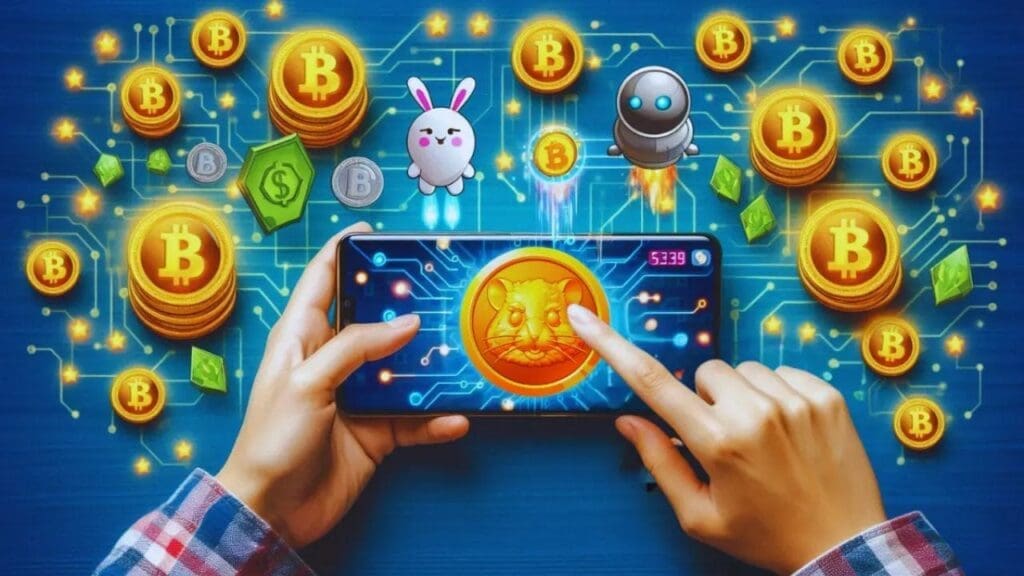
Tap-to-earn (T2E) has become one of the most talked-about concepts in the cryptocurrency world in 2024. As a sub-genre of the play-to-earn (P2E) model, tap-to-earn offers a new way for crypto investors and gamers to earn cryptocurrency: simply by clicking on the screen!
This concept has gained significant traction, particularly on Telegram, one of the world’s leading messaging platforms, and its associated The Open Network (TON) blockchain.
Click & Earn: What is Tap-to-Earn?
The cryptocurrency world offers numerous ways to earn income. On the serious side, there are methods like Bitcoin mining and Ethereum staking. On the fun side, there’s earning cryptocurrency through NFT games, which is part of the play-to-earn (P2E) model.
The play-to-earn model, meaning “play-to-win,” has already given rise to popular projects like Axie Infinity (AXS), Alien Worlds (TLM), Pixels (PIXEL), and Decentraland (MANA). However, this model has also inspired new variants like move-to-earn, which rewards movement. Then came tap-to-earn, which quickly became a sensation.
Tap-to-earn (T2E) refers to blockchain games where players earn cryptocurrency by simply clicking on the screen. These T2E blockchain games resemble clicker mobile games but add the exciting incentive of earning crypto.
Why Are Tap-to-Earn Games So Popular?
These projects, with their simple gameplay mechanics, aim to combine entertainment with financial rewards. They enhance playability by incorporating engaging stories and characters. The appeal of tap-to-earn games can be summarized in three main features:
Simplicity: Earning cryptocurrency with tap-to-earn games requires no special gaming skills. Anyone can earn tokens by simply clicking on the screen or an icon.
Accessibility: Most tap-to-earn games are free to play. While players can purchase items to boost their cryptocurrency earnings, these are typically bought using in-game tokens. Essentially, anyone with a smartphone can access these click-to-earn games.
Financial Incentive: Unlike competitive NFT games or those requiring significant investments, tap-to-earn games provide users with an easy and low-competition way to earn cryptocurrencies, making them appealing to a broad audience.
The Open Network (TON), Telegram, and Earning Cryptocurrencies
The most popular tap-to-earn games have been developed on the TON blockchain network, which originated from Telegram. The Telegram ecosystem has become the hub for tap-to-earn projects thanks to its user-friendly infrastructure, including features like chatbots and TON blockchain-compatible tools such as cryptocurrency wallets.
Although TON is now managed by the TON Foundation rather than Telegram, the messaging app remains a key platform for tap-to-earn games. Some of the most popular tap-to-earn games, such as Notcoin (NOT) and Hamster Kombat (HMSTR), are played via Telegram and operate on the TON blockchain.) orHamster Kombat (HMSTR), are played via Telegram and run on the TON network.
Best Tap-to-Earn Games
Among the most popular cryptocurrency projects of 2024, tap-to-earn games have made a significant impact. Here are some of the best tap-to-earn games you can explore!
Notcoin (NOT)
Notcoin (NOT), one of the first tap-to-earn games, has played a key role in increasing the popularity of the TON ecosystem. With over 6 million daily active users, the NOT token quickly became one of the most popular gaming tokens.
So, what is Notcoin? In this game, users interact with a Telegram chatbot and earn NOT tokens by clicking on an image of a gold coin. Players can exchange 1 NOT token for 1,000 in-game tokens.
Hamster Kombat (HMSTR)
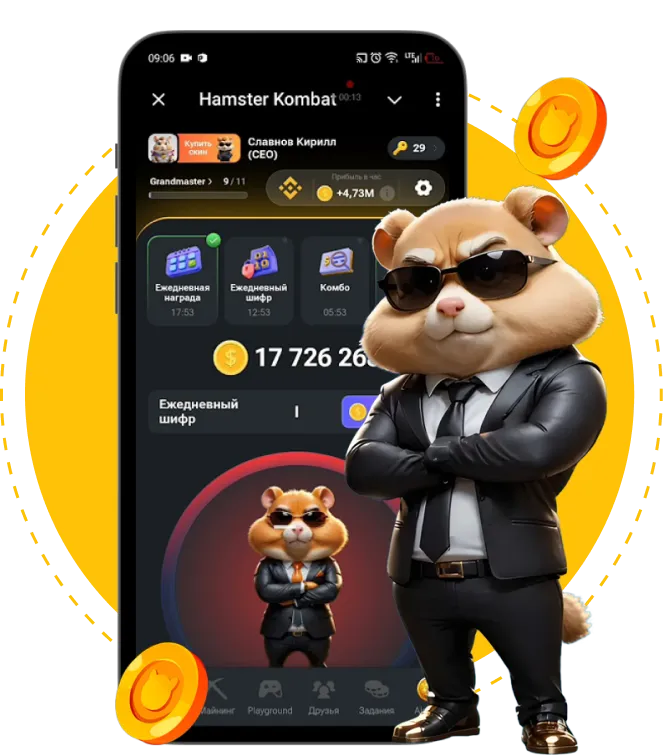
Another Telegram-based game, Hamster Kombat (HMSTR), is among the most popular tap-to-earn projects, boasting over 100 million users. Players assume the role of a hamster who is the CEO of a fictional crypto exchange. By clicking on a hamster image, they accumulate tokens, which can be used to buy boosters and multiply their income.
What sets Hamster Kombat apart is its competitive mechanics. Players can engage in battles with each other to increase their cryptocurrency income, making it more interactive than other tap-to-earn games.
TapSwap (TAPS)
TapSwap (TAPS) is another exciting tap-to-earn game, where players collect coins called “stakes” by clicking on the screen. These stakes can be converted into TAPS tokens. Like Notcoin, TapSwap is played on Telegram and has amassed over 50 million users in a short period.
Pixelverse (PIXFI)
Set in a cyberpunk-themed environment, Pixelverse (PIXFI) offers players the chance to earn cryptocurrency by clicking on the screen, completing various missions, and participating in battles.
Pixelverse also features its own NFTs, which run on the TON blockchain and add depth to the gameplay. This unique combination of missions, battles, and collectibles makes Pixelverse a standout in the tap-to-earn genre.
Yescoin (YES)
Yescoin (YES) stands out from other tap-to-earn games on Telegram by replacing “clicking” with “swiping,” introducing the innovative concept of swipe-to-earn.
Players move their fingers across the screen to collect small pixel tokens and climb the ranks in various leagues. These in-game coins can be converted into YES tokens, which can then be exchanged for fiat currencies. This fresh approach adds a dynamic twist to the tap-to-earn model.
These games highlight the growing diversity and innovation within the tap-to-earn ecosystem. Whether you’re a fan of simple mechanics or competitive strategies, there’s a tap-to-earn game for everyone!
You May Also Like
Follow us on TWITTER (X) and be instantly informed about the latest developments…
Is this Palworld all over again? The copying here is pretty blatant. Tencent Games owned developer Polaris Quest revealed LIGHT OF MOTIRAM and it seems very familiar.
Picture this: you run around with a bow and arrow, or a spear, and come across various mechanical beasts that freely roam the world. You’ve heard that before right? Because that’s Horizon Zero Dawn and Horizon Forbidden West. But actually, it’s not, it’s LIGHT OF MOTIRAM.
Much like Palworld though, this adds quite a lot to the basic idea. There’s online co-op for up to 10 people, 100 different Mechanimals to tame, ride, customize and take into combat with you. A full building system that has “realistic physics” with crafting, making it more of a traditional open-world survival game. Even so, their inspiration is truly obvious. The combat looks a fair bit more like Monster Hunter though, which is interesting. It’s just the overall design work is very Horizon looking.
See their first teaser trailer below:
I must admit, I do love the look and sound of this one.
As the play-to-earn concept gains popularity, Alien Worlds (TLM) allows players to easily earn cryptocurrency. Alien Worlds, a space-themed cryptocurrency mining game, stands out with its innovative governance model and engaging gameplay.
In this article, we will first explain what Alien Worlds is and then guide you on how to play it.
What is Alien Worlds?
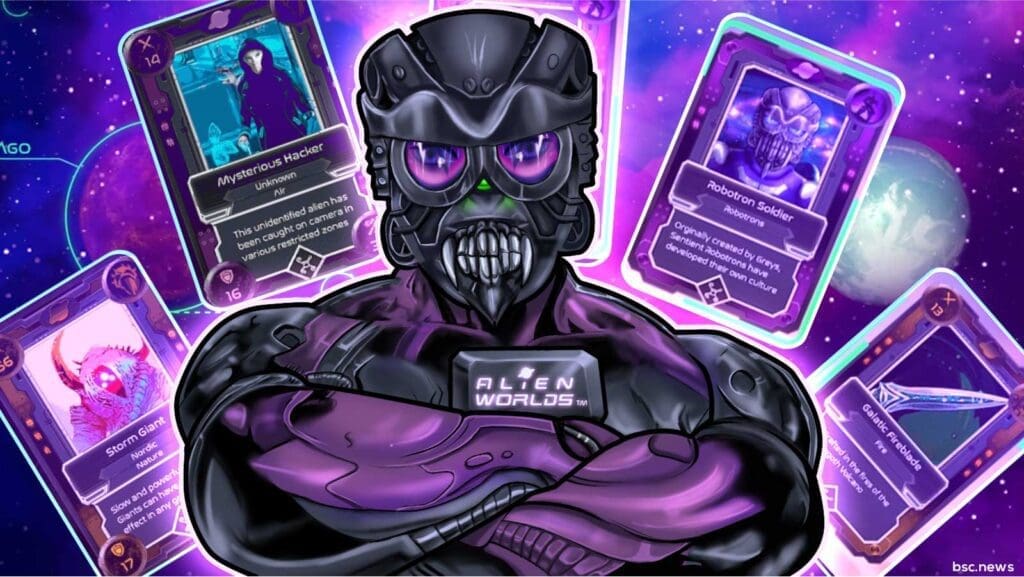
Alien Worlds (TLM) is a mining-themed play-to-earn metaverse game set in space, built on the WAX blockchain network. Set in a post-apocalyptic future where Earth is ravaged by epidemics, the game’s goal is to mine Trilium (TLM) tokens in a new star system consisting of six planets. Players mine using tools represented as NFTs.
Mining activities take place on lands located on planets, which are owned by users and can be traded as NFTs. Landowners earn a share of the income from mining conducted on their lands.
One of the most unique aspects of Alien Worlds is its governance system. Each planet operates as a DAO (Decentralized Autonomous Organization). Users who stake TLM tokens on these planets gain a voice in the planet’s governance. They can even be elected to the Planetary Council, responsible for managing the planets. In Alien Worlds, governance becomes an integral part of the game experience.
What is the TLM Token?
The TLM token is the in-game governance and utility token of Alien Worlds. Players earn TLM tokens through gameplay, which can later be converted into fiat money via cryptocurrency exchanges such as Binance or Kucoin.
The TLM token is also essential for participating in the governance system of Alien Worlds. By staking TLM tokens, players gain decision-making power in the game. Additionally, staking TLM tokens allows players to earn staking rewards. TLM token holders can also participate in tasks to win more TLM tokens or NFTs. The maximum supply of TLM tokens is set at 10 billion.
How to Play Alien Worlds?
Playing Alien Worlds is straightforward, similar to many other metaverse and play-to-earn games. All you need is a WAX cryptocurrency wallet. Once you create a WAX Cloud Wallet account, visit alienworlds.io and log in with your wallet credentials.
Alien Worlds is free to play. Upon logging in, you’ll receive an NFT shovel, which you can use to mine TLM on any planet or terrain of your choice. However, the shovel is the most basic tool in the game, making it difficult to earn significant amounts of TLM. To improve your earnings, you may need to invest in better NFT tools that suit your strategy. Players can equip up to three tools at once for mining.
Alien Worlds Mining Strategies
When playing Alien Worlds, players can choose between two primary strategies: TLM mining or NFT mining.
TLM Mining: This is the core focus of the game, where players mine Trilium tokens to earn rewards.
NFT Mining: Players can opt to mint NFTs during their mining activities. While unique NFTs are harder to obtain, they can yield significant profits.
Both tools and lands have unique characteristics that affect your mining strategy. For example, some tools and lands are better suited for NFT mining, while others may optimize TLM mining.
A critical aspect to consider is the cooldown period of tools. Tools with longer cooldowns typically extract more TLM in a single session. However, players who prefer more frequent mining may choose tools with shorter cooldowns to maximize attempts.
How to Get Alien Worlds NFTs?
Alien Worlds NFTs can be bought and sold on the Atomic Hub marketplace, which is widely used for games on the WAX blockchain.
To purchase an Alien Worlds NFT, connect to the Atomic Hub website using your WAX wallet and select Alien Worlds from the menu. You can then browse and buy any NFT with your WAX coins. Purchased NFTs will be instantly transferred to your WAX wallet and will appear in your in-game account shortly after.
You May Also Like
Follow us on TWITTER (X) and be instantly informed about the latest developments…
Bitcoin (BTC) and cryptocurrencies continue to attract the attention of governments worldwide. In Brazil, a member of the House of Representatives has drafted a bill to create a Bitcoin reserve. This bill proposes establishing a national Bitcoin reserve that would account for 5% of the South American country’s international reserves.
Bitcoin Reserve Bill in Brazil
On Nov. 25, Eros Biondini, a member of Brazil’s Chamber of Deputies from the Liberal Party, submitted a bill to the federal legislature to create a BTC reserve called the Sovereign Strategic Bitcoin Reserve (RESBit). According to the bill, RESBit will account for 5% of the country’s international reserves and diversify its assets. Biondini argues that this reserve will also support DREX, Brazil’s central bank digital currency (CBDC).
The draft law stipulates that RESBit will be managed jointly with the Central Bank of Brazil and the Ministry of Finance, and that it will be stored in cold wallets that are not connected to the internet for increased security.
In the text of the draft law, Biondini explains the strategic importance of establishing RESBit in the following words: “The establishment of RESBit is a strategic measure that positions Brazil at the forefront of the new digital economy, reduces economic risks, and expands opportunities for technological and financial development.”
Part of the bill includes efforts to increase financial literacy for digital assets. Accordingly, training programs will be organized to inform the public about digital assets, especially cryptocurrencies.
Brazil has entered the world of digital assets with its CBDC, DREX. Additionally, the country is conducting studies on artificial intelligence technologies.
You May Also Like
Follow us on TWITTER (X) and be instantly informed about the latest developments…
Off The Grid secured the Game of the Year award at the 2024 GAM3 Awards, held live for the first time in Manila on Nov.22.
Developed by Gunzilla Games, the Web3-enabled, free-to-play, third-person battle royale game also won awards for Best Shooter Game, Best Multiplayer Game, and Best Action Game, marking a significant achievement in the blockchain gaming industry.
Hosted in partnership with Yield Guild Games (YGG), the GAM3 Awards recognized excellence across 21 categories, celebrating the progress of the Web3 gaming sector over the past year. The event featured an increased prize pool of $5 million, comprising grants, products, services, marketing, and blockchain support from partners such as AWS, XAI, Thirdweb, Aethir, and Community Gaming.
Gam3 Awards (Source:gam3s.gg)
The selection process involved over 70 jurors from prominent gaming and blockchain organizations, including representatives from CryptoSlate, Amazon, Google, Ubisoft, Animoca Brands, Immutable, Arbitrum, Blockchain Game Alliance, Base, Ronin, and Avalanche. Community engagement was significant, with over one million votes from 143,000 unique voters contributing to the final decisions in several categories.
Off The Grid’s success reflects the growing integration of blockchain technology in gaming. Set in a dystopian cyberpunk future on Teardrop Island, the game incorporates blockchain elements through the GUNZ blockchain using an Avalanche subnet, offering a player-driven economy with tradable in-game assets.
Off The Grid’s early access release achieved rapid growth, topping Epic Games’ free-to-play PC games list and surpassing popular titles like Fortnite and Rocket League. In its first five days, the game grew by more than one million wallets per day, accumulating 53 million transactions.
Other notable winners at the GAM3 Awards include Parallel, which claimed awards for Best Strategy Game, Best Card Game, and Best Esports Game. Pixels and Pirate Nation each took home two awards, further highlighting the diversity and innovation within the Web3 gaming space.
With over 300 in-person attendees, the event featured gameplay premieres and exclusive trailers from upcoming titles such as Golden Tides, Unfettered, Elumia, Providence, Shrapnel, and more. The ceremony reached a peak viewership of 48,000 concurrent viewers, amassing over 450,000 views in the first 24 hours.
The success of Off The Grid and the GAM3 Awards illustrates the increasing acceptance and integration of blockchain technology in mainstream gaming. Analysts speculate that Off The Grid could be a catalyst for a new crypto gaming bull run, potentially becoming as significant as Axie Infinity was in previous cycles.
The GAM3 Awards are expected to return next November for their fourth consecutive edition, signaling ongoing recognition of excellence in Web3 gaming.
Cryptocurrency exchange Kraken has announced the closure of its non-fungible token (NFT) marketplace.
The news was shared through the marketplace’s FAQ section, stating, “We have decided to close the Kraken NFT marketplace so we can shift resources into new products and services.”
The marketplace has already entered withdrawal-only mode as of November 27, 2024. This change means users can no longer list, purchase, bid on, or sell NFTs through the platform.
Kraken has set a final withdrawal deadline of February 27, 2025. After this date, the marketplace will be permanently shut down.
Kraken introduced its NFT marketplace in May 2022, moving out of its beta phase by June 2023. At the time of launch, the marketplace featured over 250 NFT collections and supported Ethereum, Polygon, and Solana blockchains. However, its operation has now ended after just over a year of full functionality.
You Might Be Interested In
While Kraken has not shared specific reasons for the shutdown, several factors may have contributed.
The NFT market has faced significant downturns over the past two years. For example, NFT sales experienced sharp declines in mid-2024, with a nearly 50% drop recorded in both May and June compared to previous months.
Competitive pressures likely played a role as well. Platforms like OpenSea, Blur, and Magic Eden have dominated the NFT space, making it harder for smaller or newer players to gain traction.
Legal uncertainties surrounding NFTs might have added to the challenges. The U.S. Securities and Exchange Commission (SEC) has recently scrutinized NFTs, with several platforms facing regulatory action. In August, OpenSea received a Wells notice from the SEC, alleging that NFTs sold on the platform might be considered securities.
Igloo, Inc., the parent company of the Pudgy Penguins non-fungible token (NFT) project, has secured a strategic investment from venture capital firm Animoca Brands.
The announcement, shared in a press release on November 27, highlights that the funding will support Pudgy Penguins’ Web3 intellectual property (IP) ecosystem and Abstract, an Ethereum Layer 2 network that Igloo, Inc. contributes to.
The investment aims to strengthen community engagement through initiatives that foster collaboration and participation between Abstract and Animoca Brands’ Mocaverse. It also included contributions from Animoca Brands’ subsidiaries, The Sandbox and Animoca Brands Japan.
This development coincided with a surge in Pudgy Penguins NFT sales. According to CryptoSlam data, the collection experienced a 1,459% increase in sales volume within 24 hours of the announcement.
Pudgy Penguins, a collection of 8,888 cartoon-style penguin NFTs launched on the Ethereum blockchain in 2021, has steadily grown its influence in both the Web3 space and the physical market.
You Might Be Interested In
In 2023, the project expanded its reach with the release of Pudgy Toys, NFT-inspired character toys, in 2,000 Walmart stores across the United States. By February, they had entered 1,100 additional Walmart locations and later expanded to Target, GameStop, Lotte, and Australia’s Big W stores.
The toys incorporate a QR code that allows buyers to access the Pudgy World metaverse, powered by zkSync Era, a Layer 2 scaling solution. Scanning the code lets users enter the virtual space and claim unique traits for their digital Forever Pudgy characters.
In July, Pudgy Penguins also partnered with Unstoppable Domains to introduce “.pudgy” domain extensions, enabling users to enter Pudgy World with personalized domain names.
Published: November 28, 2024 at 2:01 am Updated: November 28, 2024 at 2:01 am
by Ana
Edited and fact-checked:
November 28, 2024 at 2:01 am
To improve your local-language experience, sometimes we employ an auto-translation plugin. Please note auto-translation may not be accurate, so read original article for precise information.
In Brief
Bitget Wallet announced a month-long event focused on Meme coin trading throughout November, with a prize pool valued at up to $350,000.
Non-custodial Web3 wallet and decentralized platform Bitget Wallet announced a month-long event focused on Meme coin trading throughout November, with a prize pool valued at up to $350,000. The event consists of two main segments: the Meme Project Competition and the Bitget Swap Trading Carnival.
For the Meme Project Competition, Bitget Wallet has partnered with Unizen to host an initiative tailored for Meme project teams. This segment will identify and reward standout Meme projects each week. Winning teams will receive a share of the allocated prize pool.
The competition will run for four weeks and is open to project teams and community members supporting their chosen Meme projects. Registered participants will compete weekly, with 2–4 projects selected as winners each round.
Each week, a prize pool of $20,000 will be available. Winning projects will claim 80% of the prize, while non-winning projects will receive the remaining 20%. Additionally, shortlisted projects will gain visibility on Bitget Wallet’s Trend List (featured for one day) and in an official Twitter announcement.
In order to participate, users are encouraged to register. Projects successfully entering the competition will undergo weekly head-to-head challenges over four consecutive weeks. Winning projects can claim the majority share of the prize pool.
‘Meme Project Tournament’: Evaluation Criteria And Reward Distribution
Evaluation criteria for shortlisted projects include factors such as market capitalization, social media engagement, 24-hour trading volume, number of token holders, and whether the project adheres to a fair-launch model.
Rewards will be distributed to projects to support continued development, enhance liquidity for smaller-cap projects, or benefit Meme projects under Community Take Over (CTO) initiatives. In these cases, key opinion leaders (KOLs) and core community builders will receive allocations. Active traders engaging through Bitget Wallet Swap may also be eligible for airdrops.
All rewards are provided by Unizen, totaling 800,000 ZCX. However, the value of rewards may fluctuate based on market conditions at the time of distribution.
Bitget Wallet is widely acknowledged as a leading non-custodial Web3 wallet and decentralized ecosystem platform worldwide. In addition to its Swap function, it offers features such as multi-chain asset management, smart money insights, a Launchpad, an Inscriptions Center, and an Earning Center. The platform supports over 100 major blockchains, more than 250,000 tokens, and a diverse range of decentralized applications (dApps).
Disclaimer
In line with the Trust Project guidelines, please note that the information provided on this page is not intended to be and should not be interpreted as legal, tax, investment, financial, or any other form of advice. It is important to only invest what you can afford to lose and to seek independent financial advice if you have any doubts. For further information, we suggest referring to the terms and conditions as well as the help and support pages provided by the issuer or advertiser. MetaversePost is committed to accurate, unbiased reporting, but market conditions are subject to change without notice.
About The Author
Alisa, a dedicated journalist at the MPost, specializes in cryptocurrency, zero-knowledge proofs, investments, and the expansive realm of Web3. With a keen eye for emerging trends and technologies, she delivers comprehensive coverage to inform and engage readers in the ever-evolving landscape of digital finance.
More articles
Alisa Davidson
Alisa, a dedicated journalist at the MPost, specializes in cryptocurrency, zero-knowledge proofs, investments, and the expansive realm of Web3. With a keen eye for emerging trends and technologies, she delivers comprehensive coverage to inform and engage readers in the ever-evolving landscape of digital finance.
Sales of NFTs reached $158 million during the week of November 18–24, making them a bright point in the digital economy. Even though there was a 12.7% decline from the previous week, this indicates that NFTs are still of great interest. To put this in perspective, early November saw weekly sales of just $93 million, showing how the market has expanded.
Source: CryptoSlam
November’s performance builds on October’s momentum. In October, NFTs recorded $356 million in sales. By the third week of November, the total had already crossed $400 million. With projects utilizing innovative and distinctive offerings, this growth demonstrates the steady demand for NFTs. NFTs are becoming a commonplace part of the digital economy, and although weekly variations are normal, the overall trend is still encouraging.
Kraken Closes the NFT Market
Kraken, a well-known crypto exchange, has decided to close its NFT marketplace. The platform will enter a withdrawal-only phase on November 27, offering users three months to move their money. The marketplace will thereafter completely close.
Source: Bryptos
According to a Kraken representative, the choice represents a change in priorities. In order to stay competitive in the rapidly changing cryptocurrency market, the company is reallocating resources to concentrate on other goods. Users have been informed about this upgrade by Kraken, and they are receiving instructions on how to move their NFTs to external wallets. The difficulties in the NFT sector, where businesses must strike a balance between innovation and operational effectiveness, are highlighted by this shutdown.
FIFA and Mythical Games Partner on Blockchain Soccer Game
With “FIFA Rivals,” FIFA and Mythical Games are introducing blockchain gaming to soccer enthusiasts. iOS and Android users will be able to play this mobile game for free. In addition to managing soccer teams and competing with other players, players can take use of a combination of blockchain technology and gameplay.
Source: Mythical Games
The Mythos Foundation, an organization devoted to developing crosschain solutions, promoting an NFT-based economy, and aiding gaming guilds, will construct the game’s infrastructure. Having created Blankos Block Party, a game that allows users to create and modify characters, Mythical Games has experience in the NFT gaming industry. With FIFA Rivals, the business hopes to fuse the cutting-edge qualities of blockchain technology with the universal appeal of soccer.
The impact of NFTs is still growing across industries. NFTs’ adaptability draws a wide range of users, from gamers to artists. Projects like FIFA Rivals show how blockchain and NFTs can transform traditional gaming experiences into something new. These developments indicate that the NFT market is far from stagnant, offering opportunities for creators and players alike.
Despite some platforms like Kraken pulling back, the broader NFT ecosystem remains vibrant. As sales figures show, interest in NFTs has not diminished. Instead, the market is evolving, with companies exploring different ways to deliver value to their users. Collaborations like FIFA and Mythical Games underline the potential of combining entertainment and blockchain technology.
Even with occasional dips in sales, the NFT market demonstrates resilience. November’s strong performance indicates that NFTs are becoming a staple in the digital landscape. Platforms and projects continue to innovate, driving adoption and exploring new possibilities.
While challenges persist, such as resource allocation and shifting priorities for platforms, the overall outlook for NFTs remains optimistic. As the market matures, companies that adapt and find ways to engage users effectively will continue to thrive. Whether through games like FIFA Rivals or creative NFT projects, the potential for growth is undeniable.
Welcome to the world of the Metaverse! The technology is continuing at its unprecedented, phenomenal rate, and along with it, the Metaverse stands at the next level of the big digital frontier. It is just not a passing trend, Metaverse is the future of how we will work, play, and interact. In this blog post, we will dive deep into the Metaverse, from history to components, major players, investment opportunities, and much more.
Let’s start our journey into the Metaverse!
1. Introduction to the Metaverse:
The term Metaverse has been getting thrown around in every conversation tech conferences to financial discussions. But what does it really mean? Is it just one of these buzzwords and not a realization of some new fundamental change in how we see and interact with digital environments?
What is the Metaverse?
Picture Courtesy: excellentwebworld.com
Metaverse is a collective virtual shared space that merges physical reality with augmented and virtual reality, creating a fully immersive digital experience. Imagine logging into a digital world-not just through a screen but in a space where you can interact with other people, digital assets, and environments in real time.
This virtual world is not solely for the purposes of playing or socializing but serves as a platform through which work, education, entertainment, commerce, and many other things could potentially be conducted. There are limitless possibilities for innovation and creativity that result from this digital real estate to virtual concerts within the Metaverse.
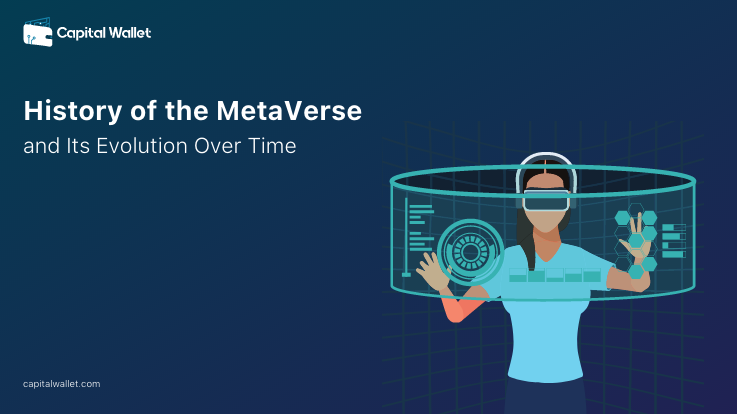
History and Evolution of the Metaverse:
Picture Courtesy: blog.capitalwallet.com
The concept of the Metaverse is not entirely new. Instead, it has been developing since the early days.
Early Beginnings: The Seeds of the Metaverse
The concept of a virtual reality universe itself was first conceptualized through science fiction. In 1992, Neal Stephenson’s novel Snow Crash introduced the term “Metaverse,” referring to a virtual reality space where humans, manifested in the form of avatars, communicate and interact with the digital world and each other. This sparked imaginations and laid the conceptual foundation for the Metaverse we are familiar with today.
From Fiction to Reality: How the Metaverse Emerged
In the 21st century, virtual environments such as Second Life and early social platforms, such as Facebook, showed a glimpse of the interconnected virtual world that could exist. However, this beginning was shaped when technologies like VR, AR, and blockchain started taking forms that would eventually shape the Metaverse.
Watching the pace at which Facebook (now Meta), Microsoft, and other gigantic companies pursue the Metaverse concept, we see how science fiction becomes real technology. It’s a space of utterly felt rather than merely visual experience- integral and immersed in our lives.
How Does the Metaverse Work?
Picture Courtesy: 101blockchains.com
To move around in the Metaverse, people will often require access devices such as VR headsets, AR glasses, and high-powered computers that support an immersive environment. They may use avatars to travel from virtual space to virtual space and attend events, buy and sell products, or create original content.
A. Virtual Worlds:
The platforms that allow users to build, buy, or sell virtual land and assets are Sandbox, Roblox, and Decentraland. The worlds run on the blockchain, which ensures ownership and uniqueness of digital goods.
B. Cryptocurrency and Blockchain:
The use of blockchain ensures the secure and transparent transaction of assets ranging from virtual land to digital fashion. Meanwhile, cryptocurrencies enable the users’ decentralized means of making transactions within the Metaverse.
C. Smart Contracts:
These are self-executing contracts that enable the seamless and secure exchange of assets and services in the Metaverse. Smart contracts are commonly used to buy land, sell NFTs, and transfer ownership rights of digital goods.
D. Social Interaction:
Users can now socialize beyond just visiting virtual spaces. They could chat, attend virtual parties, and engage in social collaboration in learning, working, or even gaming.
Metaverse vs. Virtual Worlds: What is the Difference?
Although the terms “Metaverse” and “virtual worlds” are mostly used interchangeably, there is a distinction hidden in the semantics. A virtual world refers to a single digital environment where one can interact and engage; on the other hand, the Metaverse refers to a network of interconnected virtual worlds. Hence, the Metaverse is a more comprehensive concept more expansive and integrated than individual virtual worlds.
Why Does the Metaverse Matter?
The Metaverse is a potential game-changer in terms of how people interact with the digital world and how businesses engage with consumers. It provides novel forms of entertainment, socialization, and commerce and promises to blur the boundaries between reality and virtuality. Whether for work, education, or leisure, the Metaverse represents a digital ecosystem in which people can experience activities and emotions in the same way as if they were directly in the physical world.
The Metaverse is likely to become a part of our everyday life just as the internet has transformed companies and individuals pouring more investment into this space, from offices in cyberspace to gaming and way beyond, reshaping the globe’s digital communication patterns.
2. Key Components of the Metaverse:
Picture Courtesy: systango.com
The Metaverse is a multidimensional digital environment comprising various technologies dovetailing with one another to create a well-organized immersive, interconnected virtual world. Each of these components plays a critical role in providing an intended seamless, interactive, and decentralized experience of the Metaverse. Here are the major components of the Metaverse:
A. Virtual Reality and Augmented Reality:
In the center of the Metaverse lie the immersive technologies such as virtual reality and augmented reality that make it possible for the user to see and experience the virtual world.
Virtual reality generates fully digital environments, such as Oculus Rift, HTC Vive, or Meta Quest headsets. These are meant to enable users to immerse themselves in virtual space by attending events, playing games, or even socializing with other users by creating avatars that interact as humans would.
Augmented reality is an overlay of digital elements onto the real-world using devices such as smartphones, tablets, or AR glasses, for example, Microsoft HoloLens. It fills in the gap between the physical and virtual worlds by enhancing the real world with digital elements such as 3D objects or holograms. For example, AR can be used to decorate a room with virtual art or try on digital clothing before purchasing.
B. Blockchain Technology and Cryptocurrencies:
Blockchain is the foundation of the Metaverse, ensuring that ownership is decentralized, transactions are secure, and interoperability between platforms is possible.
Blockchain is a distributed ledger that securely and transparently records transactions. It allows for the creation and ownership of digital assets such as NFTs and virtual real estate and facilitates trustless transactions that do not require intermediaries. This also supports the decentralization of virtual worlds, ensuring no single entity can have total control.
The use of cryptocurrencies like Bitcoin, Ethereum, and Metaverse-specific tokens like SAND and MANA powers transactions in virtual spaces. These digital currencies are used to purchase virtual goods, land, and services, thus fostering a self-sustaining economy in the Metaverse and enabling value transfers across platforms.
C. Digital Assets and NFTs:
Ownership in the Metaverse is, by and large, defined by digital assets and non-fungible tokens, or NFTs. Digital assets represent any creation, purchase, or sale made within the Metaverse-such as virtual land, digital clothing, or gaming items. They contribute to personalization, allowing people to express themselves and have a unique experience.
NFTs are unique, non-divisible digital tokens held on the blockchain to signify ownership of a given asset. They establish ownership of digital objects such as art, collectibles, or property, enable creators to monetize their work by selling and earning royalties on it, and facilitate interoperability, meaning NFTs can be used across different Metaverse platforms. For instance, a digital land parcel in Decentraland or a custom skin in Fortnite may be represented as an NFT, ensuring its uniqueness and ownership by the user.
D. Interoperability and Standards:
A unified and connected Metaverse relies on interoperability, which enables seamless moves of assets, identities, and data between platforms. Open protocols, such as ERC-721 for NFTs and ERC-20 for tokens, ensure that a virtual space can work within another virtual space because a user’s avatar, his assets, and digital identity can function across various environments in the Metaverse and create a more integrated and cohesive ecosystem. For example, the avatar created in The Sandbox can be used in Decentraland or any other Metaverse platform that supports the same standards.
E. Artificial Intelligence (AI):
AI plays a vital role in creating intelligent, responsive, and personalized experiences within the Metaverse. It helps generate lifelike avatars with unique features and emotions, powers non-player characters (NPCs) that interact with users in real time, and drives algorithms that suggest tailored content such as events, virtual goods, or social connections. For instance, AI can enable virtual assistants within the Metaverse to guide users or help them navigate complex environments.
F. Cloud Computing and Edge Computing:
The Metaverse requires enormous computing power to render high-quality, real-time virtual experiences. Cloud computing stores and processes huge amounts of data remotely, which makes scalable and efficient virtual worlds possible, and allows access to the Metaverse from multiple devices without requiring high-end hardware. Edge computing brings computation closer to users, reducing latency and ensuring smooth, real-time interactions in the Metaverse. These technologies together ensure that the Metaverse remains accessible, responsive, and immersive.
G. Networking and 5G Technology:
For an immersive Metaverse, there is a need for ultra-fast, low-latency networks. Very fast internet is essential for transferring enormous data in real-time and facilitating multiplayer interactions, streaming, and VR experiences. With the advent of 5G networks, connectivity is faster and more stable. This makes engaging activities like virtual meetings, gaming, and live events much more enjoyable and accessible.
H. Internet of Things (IoT):
IoT merges with the Metaverse by connecting real-world devices into the Metaverse. Thus, IoT will allow real-time transfer of data between real and virtual worlds. For example, one can change a smart home’s temperature, lighting, and security setting via a virtual interface of Metaverse. In the near future, IoT could use physical movements and gestures to control virtual objects or avatars, which will greatly enhance immersion.
I. Social Interactions Platforms:
The core of Metaverse is social interaction by which users connect, interact, and collaborate. Its platforms include Roblox, Horizon Worlds by Meta, as well as VRChat, offering the opportunity for users to socialize, attend an event, or create any shared experience. These priorities are community building and creating user-generated content, boosting engagement and collaboration.
J. Economy and Governance:
The Metaverse is an economy where users can earn, trade, and spend. Backed by cryptocurrencies, NFTs, and digital services, the Metaverse fuels a very active marketplace. There, users can create content, sell goods, or offer services for income generation. Most of the Metaverse platforms apply DAOs for decision-making. This allows users to vote on the policies within the platform, making sure that the Metaverse stays community driven.
3. Major Players in the Metaverse:
Picture Courtesy: superchaincapital.medium.com
The Metaverse, a sprawling digital ecosystem, has attracted the attention of industry giants, innovative startups, and tech pioneers alike. These organizations are actively shaping the future of the virtual world, developing platforms, technologies, and experiences that are revolutionizing how we interact, create, and live online. Let’s explore some of the major players driving the Metaverse’s growth.
A. Meta (Formerly Facebook):
Picture Courtesy: tentango.com
Meta has positioned itself as a leader in the Metaverse with a strong focus on building interconnected virtual spaces where people can work, socialize, and play. The company has invested heavily in virtual reality (VR) and augmented reality (AR) technologies.
Meta’s flagship VR platform is Horizon Worlds, where it allows users to create, explore, and interact within a virtual environment. With Oculus VR headsets, Horizon Worlds provides an immersive social experience. Beyond entertainment, Meta also develops Metaverse applications in business through Horizon Workrooms, where teams can work together in virtual offices.
In addition, Meta has invested billions of dollars into research and development through its Reality Labs division, which is working toward the development of next-generation AR and VR devices and interfaces.
B. The Sandbox:
Picture Courtesy: tentango.com
The Sandbox is a decentralized, blockchain-based platform that enables users to create, own, and earn from virtual experiences. It’s highly known for user-generated content and community-driven activities.
In The Sandbox, users can purchase virtual land parcels as NFTs, develop them into custom spaces, and trade them on the platform’s marketplace. The native cryptocurrency, SAND, powers the platform’s economy, enabling transactions for land, avatars, and digital assets.
Major partnerships with celebrities and brands, such as Snoop Dogg and Adidas, have solidified The Sandbox’s position as a leading Metaverse platform.
C. Roblox:
Picture Courtesy: tubefilter.com
Roblox is one of the pioneers in user-generated content and gaming experiences in the Metaverse. It hosts a huge number of users, especially among the youth, and is a hub where developers can create and generate revenue from their games and experiences.
Roblox allows its users to create virtual worlds and interact with them using their own avatars. It provides in-platform currency, such as Robux, through which users can pay for digital items, game enhancements, and premium membership.
Roblox is more than a gaming platform, evolving to become a social space for virtual concerts, educational programs, and even corporate events. The adaptability and dynamic nature of the creator community are among the strong reasons for why it has become one of the best players in the Metaverse.
D. GMK Metaverse:
GMK Metaverse is a new platform that is quickly gaining recognition for its innovative approach to creating virtual spaces. Focused on seamless interoperability, GMK will connect users across various Metaverse environments while offering unique experiences tailored to different industries.
The platform emphasizes user-centric designs and robust blockchain integration to ensure ownership and security. GMK Metaverse is actively exploring applications in gaming, virtual commerce, and digital real estate, targeting both casual users and enterprises. Though newer than other players, GMK’s potential lies in its commitment to building scalable, accessible virtual ecosystems.
E. Microsoft:
Microsoft is using its software and cloud computing to create a chunk of Metaverse space. Its Mesh for Teams will combine AR and VR in workplace collaboration, where teams can meet in shared virtual spaces.
The company has also acquired AltspaceVR, a virtual reality social platform, to boost its efforts in providing immersive communication tools. Microsoft is also looking into Metaverse applications for industrial and enterprise use cases, such as virtual training programs and digital twins, through its Azure cloud services.
F. Decentraland:
Decentraland is one of the first fully decentralized Metaverse platforms, run by its users through a decentralized autonomous organization (DAO). Decentraland is built on the Ethereum blockchain, where users can buy, sell, and build on virtual land parcels represented as NFTs.
The native cryptocurrency of the platform, MANA, is used for transactions, such as buying land, goods, and services. Decentraland has hosted large-scale virtual events, including music festivals and fashion shows, demonstrating its potential as an entertainment and marketing space. The focus on decentralization is in line with the principles of Web3, so it is popular among blockchain enthusiasts.
G. Nvidia:
Picture Courtesy: jalnaaneshia.blogspot.com
Not a traditional Metaverse platform, Nvidia is essential for providing the infrastructure necessary to power the Metaverse. Omniverse allows creators and developers to collaborate on real-time 3D designs, simulations, and virtual environments.
NVIDIA is an advanced technology leader, creating the world’s greatest gaming GPUs and AI technology required for rendering these complex visualizations and simulations that describe the Metaverse. To help the advancement of Metaverse’s underlying technologies, the company provides interoperable tools that connect separate virtual worlds and applications.
H. Epic Games:
Picture Courtesy: buscape.com.br
Epic Games, the maker of Fortnite, has been at the forefront of mixing entertainment, socializing, and virtual experiences. Millions witnessed live virtual events such as Travis Scott and Ariana Grande concerts through Fortnite, hence the possibility of mass engagements in the Metaverse.
Epic Games is utilizing Unreal Engine, the leading 3D creation tool, in the building of Metaverse environments and experiences. The company is putting substantial investments into Metaverse initiatives with the support of sizeable funding from partners like Sony.
I. Amazon and Google:
Picture Courtesy: abc13.com
Amazon and Google, though not directly Metaverse companies, play a vital role in its development through cloud computing and AI services. Google’s ARCore and Amazon’s AWS (Amazon Web Services) provide the infrastructure needed to host and scale virtual experiences. The two companies are also exploring AR and AI tools that may improve user interactions within the Metaverse.
J. Tencent:
Picture Courtesy: Gizmochina
Tencent is a Chinese tech giant that invests in gaming, social media, and virtual goods. It is one of the major players in the Metaverse space, and its platforms, such as WeChat and partnerships with gaming companies, make it a central figure in Asia’s Metaverse ecosystem. Tencent is also working on developing virtual environments for entertainment and commerce.
4. Investing in the Metaverse:
Picture Courtesy: cashify.in
The Metaverse is more than just a technological marvel; it’s also a rapidly emerging investment frontier. With industries integrating virtual worlds into their operations, many see the Metaverse as a lucrative space for growth and innovation. Whether you’re a seasoned investor or new to the game, understanding the opportunities and risks involved is crucial.
Why Invest in the Metaverse?
The Metaverse is the new paradigm, much like the internet revolution of the late 1990s. It promises to change the way we work, socialize, shop, and entertain ourselves. The industries involved—gaming, real estate, virtual commerce, and more—are projected to grow exponentially. For investors, this translates into opportunities to be early adopters in what could become a trillion-dollar economy.
Key Investment Opportunities in the Metaverse:
A. Metaverse Stocks:
Many publicly traded companies are quite invested in building or supporting the Metaverse, so their stocks are a pretty attractive option for investors.
Meta (Facebook): They have made massive investments in VR, AR, and social virtual platforms. Oculus is central to its Metaverse strategy, along with Horizon Worlds.
Nvidia: A key player that provides GPUs and AI-driven solutions for Metaverse development. Its Omniverse platform is a game-changer for creators.
Roblox Corporation: A Metaverse pioneer with its user-generated gaming platform, Roblox is a favorite among young audiences and creators.
Unity Software: Developers rely on Unity’s real-time 3D engine to build immersive Metaverse experiences.
B. Virtual Real Estate:
Digital land has become a highly sought commodity in platforms like The Sandbox and Decentraland. Investors are buying parcels as NFTs and either building it into virtual experiences or waiting for future resale. This is driving the demand by companies and brands for renting digital space for events, advertising, and storefronts.
C. Cryptocurrencies and Tokens:
Cryptocurrencies are the base layer that makes up the Metaverse economy, providing means to transact, govern, and reward.
SAND: The native coin of The Sandbox, with which people purchase land, assets, and services.
MANA: Mana is the native coin of Decentraland, power source to its ecosystem.
AXS (Axie Infinity): A gaming token linked with one of the most well-known play-to-earn platforms.
There are investment opportunities to acquire and hold these coins or use them within the applications to make money
D. NFTs (Non-Fungible Tokens):
From digital art to virtual goods, NFTs constitute a pillar of Metaverse commerce. While high-profile sales get the headlines, more affordable entry points for the new investor exist in the form of NFTs. Popular categories with burgeoning value include virtual collectibles, in-game items, and avatar accessories.
E. ETFs and Funds:
For a diversified strategy, Metaverse-focused ETFs provide exposure to various companies that are involved with the Metaverse. There are:
Roundhill Ball Metaverse ETF (META): Tracks companies in numerous Metaverse-related sectors that include gaming, VR, and cloud computing.
ProShares Metaverse ETF: Seeks to track stocks closely linked to AR, VR, and digital ecosystems
Benefits of Investing in the Metaverse:
First-Mover Advantage: The Metaverse is still in its infancy, offering ground-floor opportunities to early investors.
Diverse Investment Options: Stocks, crypto, NFTs, and real estate provide multiple avenues for investors to diversify their portfolios.
High Growth Potential: Industries tied to the Metaverse are projected to experience rapid growth, leading to potentially high returns.
Risks and Challenges of Metaverse Investments:
Volatility: Cryptocurrencies and NFTs, in particular, are highly volatile and subject to speculative price swings.
Regulatory Uncertainty: Governments are still defining policies around virtual assets, which could impact investments.
Market Maturity: The Metaverse is evolving, and not all projects or companies will succeed in the long term.
Technological Barriers: Widespread adoption depends on advancements in VR/AR devices, blockchain scalability, and internet infrastructure.
Picture Courtesy: medium.com
Cryptocurrencies are the financial backbone of the Metaverse, enabling seamless transactions, ownership, and governance within virtual ecosystems. They integrate economic systems into these digital worlds, allowing users to trade, earn, and invest in virtual goods and experiences. Let’s explore how cryptocurrencies shape and empower the Metaverse.
Why Cryptocurrencies Are Essential in the Metaverse:
Cryptocurrencies serve as the primary medium of exchange within the Metaverse, allowing for the buying and selling of virtual goods, services, and assets. Unlike traditional currencies, they operate on blockchain technology, ensuring decentralization, transparency, and security.
In the Metaverse, crypto enables:
Ownership of Digital Assets: Blockchain technology records ownership of virtual goods, ensuring that users have verifiable and secure possession.
Interoperability: Cryptocurrencies allow users to move assets and value across different Metaverse platforms seamlessly.
Decentralized Governance: Token holders can participate in the decision-making processes of Metaverse projects.
Key Cryptocurrencies Powering the Metaverse:
Cryptocurrency is powering metaverse and boosting the digital world together. Let’s figure out how they are doing it.
A. SAND (The Sandbox):
The native token of The Sandbox, SAND, is used for buying virtual land, avatars, and assets within the platform. It also facilitates staking, governance, and earning rewards.
B. MANA (Decentraland):
MANA powers the Decentraland ecosystem, enabling users to purchase virtual land parcels and in-game items. It is also used for voting on platform developments through Decentraland’s decentralized autonomous organization (DAO).
C. AXS (Axie Infinity Shards):
AXS is the governance token of Axie Infinity, a play-to-earn Metaverse platform. Players use AXS to participate in decision-making, stake for rewards, and transact within the ecosystem.
D. ENJ (Enjin Coin):
Enjin Coin supports the creation and management of NFTs within the Metaverse. Developers use ENJ to mint NFTs that can be integrated into games and virtual worlds.
E. ETH (Ethereum):
Ethereum is the blockchain of choice for many Metaverse projects. Its smart contract capabilities make it ideal for hosting decentralized applications, NFTs, and tokens.
How Cryptocurrencies Work in Virtual Worlds:
There are some ways crypto works in the virtual world.
A. Transactions and Payments:
In the Metaverse, cryptocurrencies facilitate the exchange of goods and services, such as purchasing virtual real estate, clothing for avatars, or tickets for virtual events.
B. Play-to-Earn Models:
Play-to-earn games like Axie Infinity and The Sandbox reward players with crypto for participating in activities, creating a unique economic model where users earn real-world value.
C. Tokenized Ownership:
Cryptocurrencies enable users to own unique digital assets like NFTs, which can represent anything from virtual art to land. These assets are stored securely on the blockchain and can be traded or monetized.
D. Staking and Rewards:
Users can stake their cryptocurrencies within Metaverse platforms to earn passive income, governance rights, or in-game advantages.
Integration of Crypto and Blockchain in the Metaverse:
Cryptocurrencies rely on blockchain technology, which provides the infrastructure for decentralized and secure transactions. Here’s how blockchain supports the Metaverse:
Transparency: All transactions are recorded on a public ledger, ensuring fairness and accountability.
Security: Blockchain protects assets against fraud and hacking through cryptographic methods.
Interoperability: Blockchain enables assets and currencies to move across platforms, fostering a connected Metaverse ecosystem.
Smart Contracts: These self-executing contracts automate transactions and agreements, reducing the need for intermediaries.
6. Applications and Use Cases of the Metaverse:
Picture Courtesy: dreamcast.co
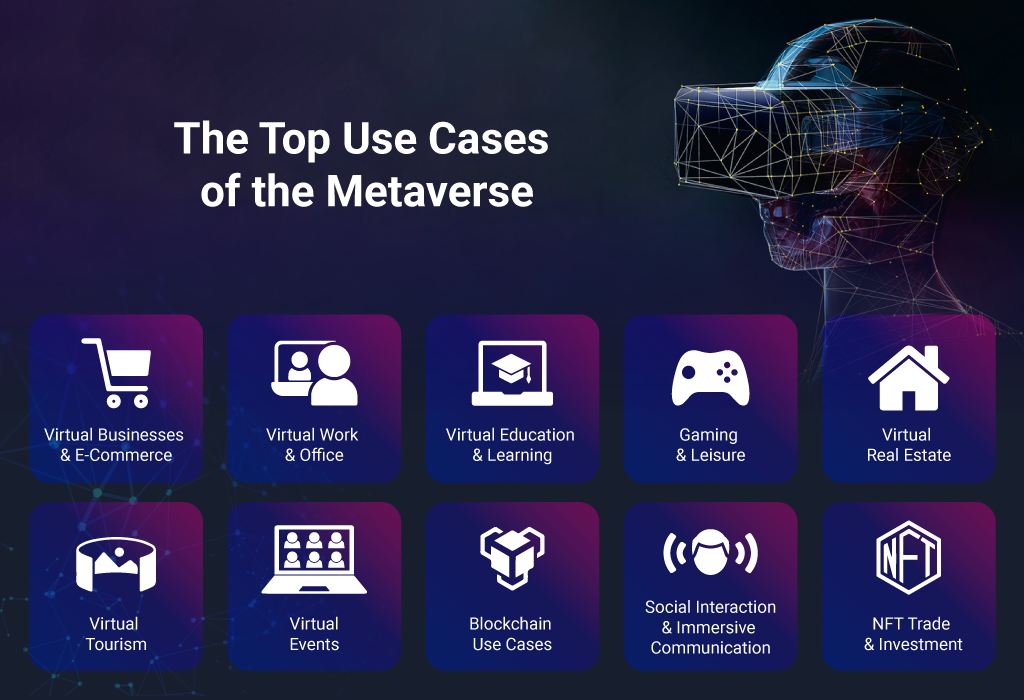
The Metaverse is more than just a digital playground—it’s a transformative space reshaping industries and everyday experiences. From gaming and social interaction to education and healthcare, the Metaverse offers diverse applications that redefine how we live, work, and connect. Let’s explore some of its most prominent use cases.
A. Gaming: A Pioneer in the Metaverse
Gaming is one of the first and most engaging uses of the Metaverse. The vast virtual worlds such as Roblox, The Sandbox, and Fortnite let the user interact, compete, and create within massive digital realms. In Axie Infinity, the P2E models permit the earning of real money from in-game rewards through play-to-earn schemes, and therefore gaming might be a source of income. Other than these, Minecraft and Roblox are enabling the players to design and monetize their experiences; hence, gaming is crossing over into digital entrepreneurship.
B. Socializing in the Metaverse:
The Metaverse revolutionizes socialization since it lets users connect as avatars in virtual spaces. Environments like VRChat and Horizon Worlds let the user meet, chat, and explore together. This extends beyond casual hangouts; virtual concerts and events are also becoming popular. Artists such as Travis Scott and Ariana Grande hosted virtual concerts in Fortnite that drew millions of attendees worldwide. Corporate meetings have also taken on the Metaverse. Virtual offices and meeting rooms are an engaging alternative to video calls.
C. Virtual Real Estate:
This house has the fastest growth through Metaverse since users and corporations are buying land and homes there. Decentraland and The Sandbox are those portals where they have an opportunity to claim lands, build them, sell, and make money at times. Companies are finding their way to set up virtual storefronts and offices with distinct customer experiences as well. Virtual spaces, too, are rented to events, exhibitions, or even social gatherings, resulting in a strong economy over virtual property.
D. Education and Training:
The Metaverse is changing learning to be more interactive and accessible. Virtual classrooms, for example, on platforms like EngageVR, allow students to attend classes from any corner of the world. In skill training, simulations in medicine and aviation allow trainees to practice in realistic scenarios without risks in the real world. Cultural experiences are also improved, as students can tour virtual museums, historical sites, and other educational resources globally, enriching their learning journeys.
E. Healthcare and Therapy:
The healthcare industry is using the Metaverse for groundbreaking treatments and support. Virtual consultation services allow patients to safely interact with doctors in an immersive environment, eliminating geographical restrictions. Therapy sessions in virtual environments, especially VR therapy, help manage PTSD, anxiety, and other phobias by providing controlled scenarios. Rehabilitation programs are also using virtual exercises and games to assist patients in their physical therapy and recovery.
F. Retail and Virtual Commerce:
Shopping in the Metaverse is a unique, interactive experience. Brands such as Gucci and Nike have already set up digital stores from which users can buy physical and virtual items. Avatars can try on clothes or test products in virtual environments to make the shopping experience better. Exclusive digital goods are also sold, often in the form of NFTs, so that customers can own unique collectibles that blur the lines between traditional commerce and digital ownership.
G. Entertainment and Media:
The Metaverse expands entertainment horizons. Users get to engage in immersive cinema and TV series where they are a part of the storyline. Interactive storytelling is taking on platforms such as The Sandbox, enabling creators to develop narrative-based games and experiences. Live sports and events also have a change, as fans watch their favorite games from virtual stadiums that offer more immersive settings.
H. Industrial and Enterprise:
Businesses are using the Metaverse for efficiency and innovation. Virtual workspaces, like Microsoft Mesh, create a collaborative environment for remote teams. Industries such as manufacturing and defense are utilizing immersive simulations for workforce training. Product design and prototyping also benefit from VR environments, where companies can design and test products in a collaborative manner without physical prototypes.
I. Finance and Banking:
The Metaverse changes financial services through decentralized services. Virtual banking services are surfacing where users can manage their finances in immersive environments. Applications using DeFi are also embedding themselves into the Metaverse, giving users lending tools, borrowing tools, and trading tools so that they can participate in different virtual economies. Innovations like these ensure financial service delivery is accessible and effective in digital ecosystems.
J. Marketing and Advertising:
The Metaverse offers new forms of engagement for brands with the audience. Experiential marketing campaigns are immersive experiences through virtual games, events, and interactive environments designed to create brand experiences. Targeted ads are becoming more personalized based on user behavior and preferences in virtual spaces. Virtual influencers and avatars are being used to promote products to an ever-expanding digital audience, further enhancing the visibility of the brand.
7. Challenges and Future of the Metaverse:
Picture Courtesy: bap-software.net
As the Metaverse continues to evolve, it promises to transform how we interact, work, and entertain ourselves in digital environments. However, this transformation is not without its hurdles. From technological limitations to ethical dilemmas, the Metaverse faces numerous challenges. At the same time, its future brims with opportunities and potential for innovation. Let’s explore the major challenges and what the future might hold for this burgeoning digital universe.
Key Challenges in the Metaverse:
There are challenges in the metaverse. Let’s explore that,
A. Technological Limitations:
The Metaverse relies heavily on advanced technologies like virtual reality (VR), augmented reality (AR), and blockchain. However, these technologies are still evolving. VR and AR devices, while improving, are often expensive, bulky, and require significant computing power. Additionally, internet infrastructure in many regions is not yet capable of supporting the high-speed, low-latency connections needed for seamless Metaverse experiences.
B. Interoperability Issues:
For the Metaverse to succeed as a cohesive digital universe, it must ensure interoperability between different platforms and systems. Currently, many virtual worlds operate as isolated ecosystems. Achieving seamless integration, where users can move assets, identities, and experiences across platforms, remains a complex technical challenge.
C. Data Privacy and Security:
With users spending more time in the Metaverse, the amount of personal data generated and collected increases exponentially. This raises significant concerns about privacy and data security. Ensuring that sensitive information is protected while giving users control over their data is a critical challenge. Moreover, cyberattacks, hacking, and identity theft are real threats in virtual environments.
D. Ethical and Social Concerns:
The Metaverse opens up new ethical dilemmas. Issues such as digital harassment, virtual crime, and the psychological impact of extended immersion in virtual worlds need addressing. There’s also the risk of widening the digital divide, where only those with access to advanced technology and resources can fully participate in the Metaverse.
E. Regulatory Uncertainty:
Governments and regulatory bodies are still grappling with how to govern the Metaverse. Questions surrounding taxation, intellectual property rights, and virtual property ownership remain unresolved. The decentralized nature of many Metaverse platforms, often underpinned by blockchain, further complicates regulatory efforts.
F. Environmental Impact:
The Metaverse’s underlying technologies, particularly blockchain, are often energy intensive. Mining and transactions for cryptocurrencies and NFTs consume significant amounts of energy, raising concerns about their environmental impact. Developing more sustainable solutions is essential for the long-term viability of the Metaverse.
Future Trends and Predictions:
Let’s see the future trends and predictions about metaverse.
A. Advancements in Technology:
As VR and AR hardware continue to evolve, we can expect more lightweight, affordable, and high-performing devices. Advances in 5G and eventually 6G networks will provide the speed and reliability needed for immersive experiences, enabling the Metaverse to reach more users globally. AI and machine learning will also play crucial roles in enhancing interactivity and personalization within virtual worlds.
B. Greater Interoperability:
Efforts to create a more unified Metaverse will likely accelerate. Initiatives like the Metaverse Standards Forum aim to establish common standards and protocols, enabling users to seamlessly navigate and interact across different platforms. This would enhance the overall user experience and foster greater adoption.
C. Expansion of Use Cases:
The Metaverse’s applications will expand beyond gaming and social interaction. Industries such as healthcare, education, real estate, and entertainment will increasingly adopt Metaverse technologies to innovate and improve their services. Governments may also explore virtual governance models, using the Metaverse for public services and citizen engagement.
D. Decentralization and User Ownership:
The future of the Metaverse is expected to lean heavily toward decentralization. Blockchain technology will empower users to own their digital identities, assets, and even platforms. This shift will create a more democratized digital economy, where users have more control and autonomy over their virtual experiences.
E. Enhanced Security and Privacy:
To address growing concerns about data security and privacy, future Metaverse platforms will likely integrate more robust security measures. Innovations in decentralized identity and zero-knowledge proofs could provide users with greater privacy without compromising functionality. Governments and organizations will also work toward establishing comprehensive data protection regulations for virtual environments.
F. Ethical Frameworks and Regulation:
As the Metaverse grows, ethical considerations will take center stage. Platforms will need to develop strict policies to combat virtual harassment and protect users’ mental health. Regulatory frameworks will evolve to address legal and ethical challenges, ensuring that the Metaverse remains a safe and inclusive space for all users.
G. Sustainability Initiatives:
Environmental concerns will drive innovation in sustainable technologies. Blockchain platforms may adopt energy-efficient consensus mechanisms, such as proof-of-stake, to reduce their carbon footprint. Companies will also prioritize eco-friendly practices in building and maintaining Metaverse infrastructure.
The Metaverse is still in its early stages, and while challenges abound, its potential is limitless. By addressing technical, ethical, and regulatory hurdles, the Metaverse can evolve into a thriving, inclusive digital ecosystem. It holds the promise of reshaping industries, enhancing social connections, and creating new economic opportunities.
As the Metaverse continues to grow, one thing is certain, it will play a pivotal role in shaping the digital future. Are you ready to explore the limitless possibilities of this virtual universe? Share your thoughts on the future of the Metaverse in the comments below!
And if you’re as excited about DeFi, blockchain, and the evolving Web3 universe as we are, join our community! Subscribe to our newsletter for the latest updates, trends, and insights, let’s navigate the world of Web 3 together!